Ecology of Desmoulin's Whorl Snail - Vertigo moulinsiana - Conserving Natura 2000 Rivers
←
→
Page content transcription
If your browser does not render page correctly, please read the page content below
Ecology of Desmoulin’s
Whorl Snail
Vertigo moulinsiana

      Conserving Natura 2000 Rivers
      Ecology Series No. 6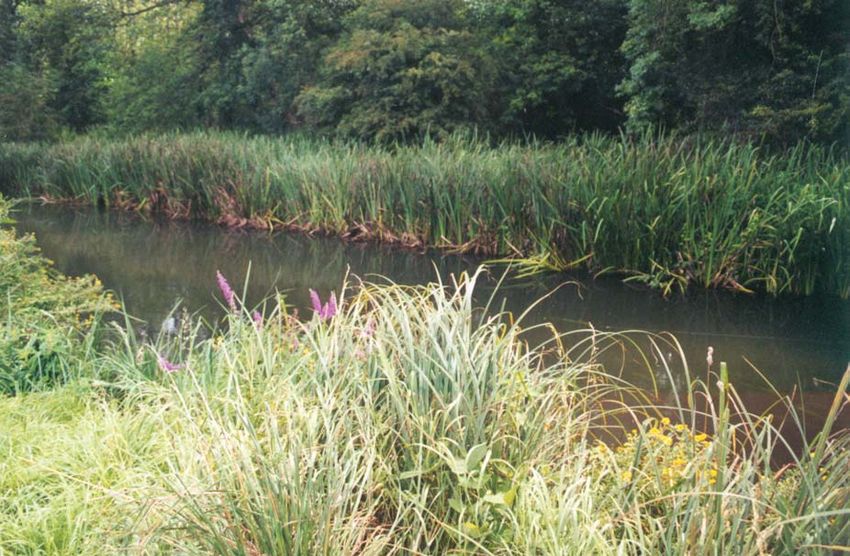
Ecology of Desmoulin’s Whorl Snail
                              Conserving Natura 2000 Rivers
                                   Ecology Series No. 6
                                              Ian J. Killeen
For more information on this document, contact:

English Nature
Northminster House
Peterborough
PE1 1UA
Tel: +44 (0) 1733 455100
Fax: +44 (0) 1733 455103

This document was produced with the support of the European Commission’s LIFE Nature programme. It
was published by Life in UK Rivers, a joint venture involving English Nature (EN), the Countryside
Council for Wales (CCW), the Environment Agency (EA), the Scottish Environment Protection Agency
(SEPA), Scottish Natural Heritage (SNH), and the Scotland and Northern Ireland Forum for Environmental
Research (SNIFFER).

© (Text only) EN, CCW, EA, SEPA, SNH & SNIFFER 2003

ISBN 1 85716 712 0
Catalogue code: IN10.5

A full range of Life in UK Rivers publications can be ordered from:

The Enquiry Service
English Nature
Northminster House
Peterborough
PE1 1UA
Email: enquiries@english-nature.org.uk
Tel: +44 (0) 1733 455100
Fax: +44 (0) 1733 455103

This document should be cited as: Killeen IJ (2003). Ecology of Desmoulin’s Whorl Snail. Conserving Natura
2000 Rivers Ecology Series No. 6. English Nature, Peterborough.

Technical Editor: Lynn Parr
Series Ecological Coordinator: Ann Skinner

Cover design: Coral Design Management, Peterborough.
Printed by Astron Document Services, Norwich, on Revive, 75% recycled post-consumer waste paper,
Elemental Chlorine Free. 1M.

Cover photo: D.G. Rands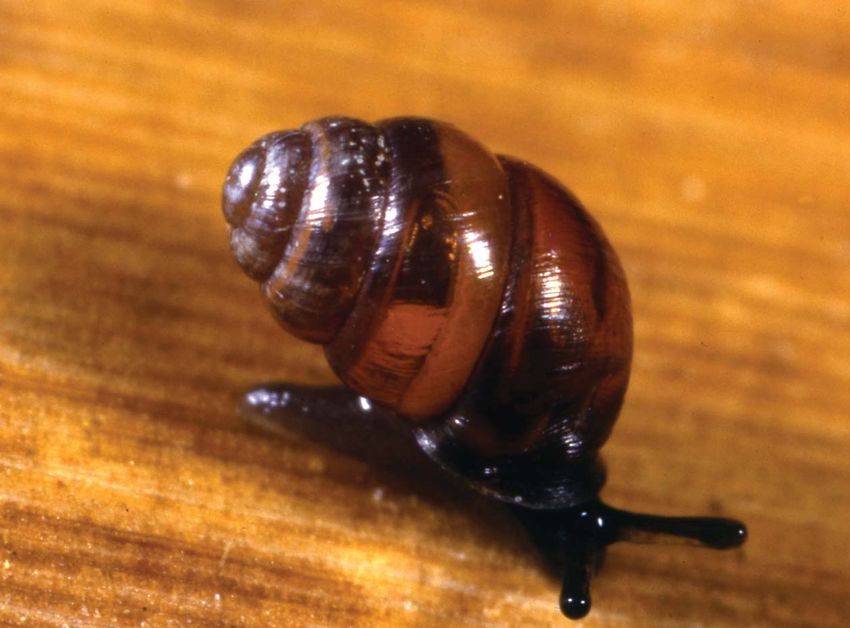
Ecology of Desmoulin’s Whorl Snail

             Conserving Natura 2000 Rivers
This account of the ecological requirements of Desmoulin’s whorl snail (Vertigo moulinsiana) has been
produced as part of Life in UK Rivers – a project to develop methods for conserving the wildlife and
habitats of rivers within the Natura 2000 network of protected European sites.The project’s focus has
been the conservation of rivers identified as Special Areas of Conservation (SACs) and of relevant
habitats and species listed in annexes I and II of the European Union Directive on the Conservation of
Natural Habitats and of Wild Fauna and Flora (92/43/EEC) (the Habitats Directive).
One of the main products is a set of reports collating the best available information on the ecological
requirements of each species and habitat, while a complementary series contains advice on monitoring
and assessment techniques. Each report has been compiled by ecologists who are studying these
species and habitats in the UK, and has been subject to peer review, including scrutiny by a Technical
Advisory Group established by the project partners. In the case of the monitoring techniques, further
refinement has been accomplished by field-testing and by workshops involving experts and
conservation practitioners.
Life in UK Rivers is very much a demonstration project, and although the reports have no official
status in the implementation of the directive, they are intended as a helpful source of information for
organisations trying to set ‘conservation objectives’ and to monitor for ‘favourable conservation status’
for these habitats and species.They can also be used to help assess plans and projects affecting Natura
2000 sites, as required by Article 6.3 of the directive.
As part of the project, conservation strategies have been produced for seven different SAC rivers in
the UK. In these, you can see how the statutory conservation and environment agencies have
developed objectives for the conservation of the habitats and species, and drawn up action plans with
their local partners for achieving ‘favourable conservation status’.
Understanding the ecological requirements of river plants and animals is a prerequisite for setting
conservation objectives, and for generating conservation strategies for SAC rivers under Article 6.1 of
the European Habitats Directive.Thus, the questions these ecology reports try to answer include:
z     What water quality does the species need to survive and reproduce successfully?
z     Are there other physical conditions, such as substrate or flow, that favour these species or cause
      them to decline?
z     What is the extent of interdependence with other species for food or breeding success?
For each of the 13 riverine species and for the Ranunculus habitat, the project has also published tables
setting out what can be considered as ‘favourable condition’ for attributes such as water quality and
nutrient levels, flow conditions, river channel and riparian habitat, substrate, access for migratory fish,
and level of disturbance. ‘Favourable condition’ is taken to be the status required of Annex I habitats
and Annex II species on each Natura 2000 site to contribute adequately to ‘favourable conservation
status’ across their natural range.
Titles in the Conserving Natura 2000 Rivers ecology and monitoring series are listed inside the back
cover of this report, and copies of these, together with other project publications, are available via the
project website: www.riverlife.org.uk.

                                                                                                                1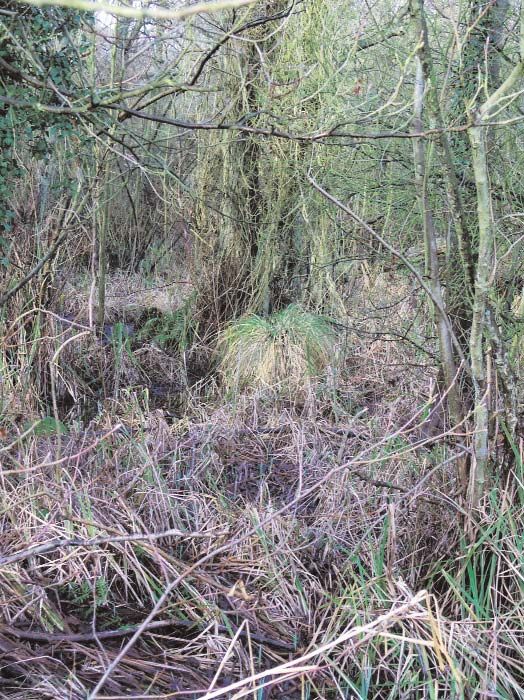
Conserving Natura 2000 Rivers

2
Ecology of Desmoulin’s Whorl Snail

Introduction
Desmoulin’s whorl snail, Vertigo moulinsiana (Dupuy 1849), is the largest of the 11 species of whorl snail
(the Vertigo genus) living in Britain.The body of the animal is a light grey or greyish-white colour with a
darker grey to black head and tentacles.The shell is dextrally coiled (mouth on the right), ovate to
elongate in shape, with a tapering spire and 4.5 to 5 rounded whorls. Its shell height is 2.2–2.7 mm, its
breadth 1.3–1.65 mm, with the last
(body) whorl approximately two
thirds of the overall height.
The aperture, or mouth (in adults)
is rather triangular and narrowed
towards the base, with the basal and
palatal (outer) wall reflexed
outwards as a lip.This aperture
always has four prominent teeth –
one parietal (relating to the external
surface of the previous whorl), two
palatal and one columellar (relating
to the central column of the shell) –
and sometimes additional small
denticles.
Palatal teeth arise from a thickening
(callus), which is usually visible
through the shell wall.The pattern                                                                 Roger Key/English Nature
of teeth is an important taxonomic           Desmoulin’s whorl snail has a black head and tentacles, and a
feature in the Vertigo genus, and the        translucent, reddish-brown shell. Old shells are a greyish-brown.
teeth present in Desmoulin’s whorl
snail, along with its relatively larger shell size compared to other whorl snails, are the key features by
which it can be identified.
The shell itself is translucent, glossy, pale yellowish to reddish brown, sometimes with a delicate, darker
brown band between the crest and aperture margin. Older shells are often bleached to a dull greyish-
brown colour.The surface of the shell has an overall smooth appearance, but a sculpture of very fine,
irregular lines is visible under x20 magnification. Further illustrations of this species are given in Kerney
& Cameron (1979) and Pokryszko (1990).
The shape and proportions of the shell undergo considerable changes during growth. Shells of young
individuals are rather conical and only attain their ovate cylindrical shape during the last stages of
development.The aperture also changes shape with growth, and the formation of teeth and thickening
of the lip occur only during the final stages.The snail is considered to be an adult when the lip has fully
formed.

Status and distribution
Desmoulin’s whorl snail is listed under Annex II of the European Union Habitats and Species Directive.
It is a priority species in the UK Biodiversity Action Plan (HMSO 1996) and is listed in the British Red
Data Book (Bratton 1991) as an RDB3 (Rare) species.
Desmoulin’s whorl snail is considered to be an Atlantic-Mediterranean species with a range extending
from Ireland to Russia and south to North Africa (Pokryszko 1990, Killeen 1996). In Europe, the
species has been confirmed for Austria, Belgium, Bulgaria, Czech Republic, Denmark, France, Germany,
Greece, Hungary, Ireland, Italy, Lithuania, Netherlands, Poland, Slovakia, Spain, Sweden, Switzerland and
the United Kingdom. It is also known from Algeria, Azerbijan, Georgia, Morocco, Russia and Turkey.The

                                                                                                                           3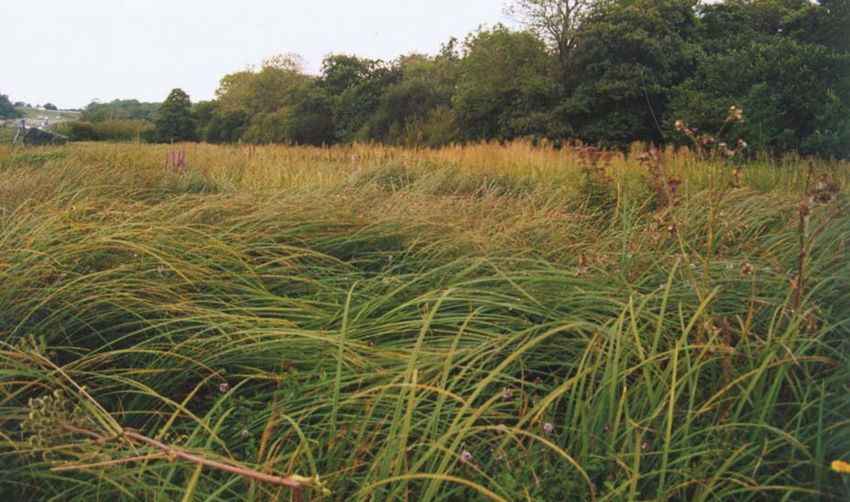
Conserving Natura 2000 Rivers

                                                             southern distribution border is poorly known owing
                                                             to taxonomic confusion with similar species
                                                             (Pokryszko 1990, Killeen 1996).
                                                             The most recent review of the status of Desmoulin’s
                                                             whorl snail is given by Seddon (1997), who gives
                                                             strong evidence for its decline throughout much of its
                                                             range.The principal causes of decline are wetland
                                                             drainage (particularly during the 20th Century),
                                                             change in agricultural and land management practice,
                                                             scrub encroachment onto fen, and change of land use
                                                             and development. In many countries the status
                                                             ranges from Vulnerable (for example, in Ireland and
                                                             Germany) to Endangered (including the Netherlands
                                                             and Sweden) or Presumed Extinct (Luxembourg).
                                                             Although recent surveys under the requirements of
                                                             the Habitats Directive have revealed previously
European distribution for Desmoulin’s whorl
                                                             unknown populations, the overall status remains
snail. It is also found in North Africa, Greece,
Turkey, Azerbijan and Georgia.                               unchanged.

British distribution
With present information, Britain is considered to support the greatest number of Desmoulin’s whorl
snail populations in the European Union.The species occurs principally in a band from east Dorset to
north-west Norfolk and along the centre of Ireland (Kerney 1999). Outside the key area of distribution,
V. moulinsiana is known from Cors Geirch on the Lleyn Peninsula in North Wales (Killeen 2000c), Sweat
Mere in Shropshire (Cameron 1992, Killeen 2001a), Stodmarsh in Kent (Killeen 2001a, b), and at
Penhale and Perranporth in Cornwall (Holyoak in press).The greatest concentrations of individual sites
are found in the river catchments of the Hampshire Basin, the Thames Basin and the Norfolk Broads. A
summary of individual sites on a county and SSSI basis is given by Drake (1999), and within Special
Areas of Conservation (SACs) by Killeen (2001b-h).
Desmoulin’s whorl snail was more widely distributed in Britain in the early part of the postglacial era
than today.There are many records from fossil deposits in southeast England, the Midlands, Lincolnshire
                                                and Yorkshire (Kerney 1999). Its retreat is believed to
                                                be partly due to a gradual cooling since the climatic
                                                optimum, about 5000 years ago. In the 19th and 20th
                                                centuries some sites were lost – for example, it has
                                                not been seen at Braunton Burrows since 1933
                                                (Kerney 1999) – but otherwise there has been no
                                                significant change in the snail’s range in Britain.
                                                             A map showing distribution by 10 km square is given
                                                             by Kerney (1999). A more detailed map showing
                                                             location of sites in river catchments in southeast
                                                             England is given by Drake (1999). Since these works
                                                             were published, additional sites have been added in
                                                             the floodplain of the River Avon
                                                             (Hampshire/Wiltshire) and its tributaries, River
                                                             Wensum, Norfolk Broads, southeast Suffolk and east
                                                             Kent.

                                 Adapted from Kearney 1999
Despite few known sites, Britain has the greatest
number of Desmoulin’s whorl snail in Europe.

4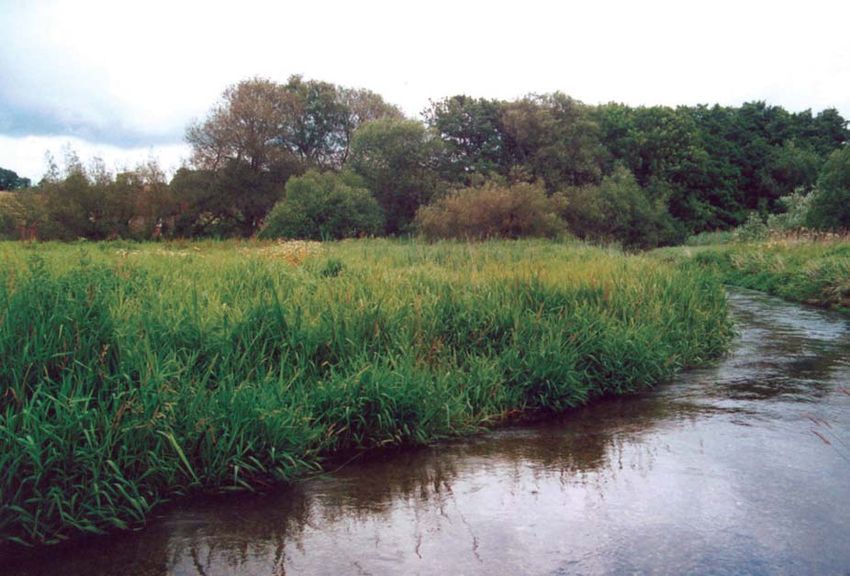
Ecology of Desmoulin’s Whorl Snail

Life history
There have been no detailed studies
specifically on the life history of Desmoulin’s
whorl snail.The following sections are based
upon the limited data available principally
through the work of Pokryszko, and from
studies carried out on English populations. All
available information on other Vertigo species
has been included to provide an indication of
the life history of the genus.

Reproduction and growth
Descriptions and illustrations of the
reproductive system of Desmoulin’s whorl
snail are given by Pokryszko (1990).The
species is hermaphrodite, but studies have
shown that within populations, all species of
Vertigo exhibit both a euphallic condition                                                            Ian Killeen
(individuals with normally developed male
                                                    Distribution of Desmoulin’s whorl snail in southern
genitalia) and an aphallic condition (individuals   England (modified from Drake 1999)
devoid of a penis) (Pokryszko 1987, 1990,
1992). Data for Desmoulin’s whorl snail are
sparse, but Pokryszko (1987) found that of 46 adult individuals examined from Polish and French
localities, 25 were euphallic and 21 were aphallic.
The only species of Vertigo whose life history has been studied in detail is V. pusilla (Pokryszko 1992).
Although this is a dry-habitat species, the information on reproduction and growth is likely to be
applicable to other Vertigo species including V. moulinsiana. Under laboratory conditions it was observed
that copulation was rare, but when it did occur, the euphallic individuals acted as ‘males’ and the aphallic
individuals as ‘females’.
Eggs were either laid following copulation or without it, with most resulting from self-fertilisation.The
eggs were laid singly, occasionally in twos, and at intervals of three to 20 days from March to October,
with the maximum reproductive activity occurring in spring and early summer. Incubation lasted from
seven to 11 days.The shell of the newly hatched young had 1.5 whorls, and under favourable food and
humidity conditions, reached full size in 30–40 days from hatching. Egg-laying was observed in some
individuals as soon as two days after completion of shell growth.
The individual life span under laboratory conditions ranged from three to 17 months, with most
individuals living for 10–15 months. Depending on the time of hatching and environmental conditions,
three or four generations were possible in a year.
The ability of Vertigo species to self-fertilise significantly aids the life strategy. At the end of winter,
when adult individuals may be relatively few and widely dispersed, the probability of two individuals
meeting is at its lowest. By self-fertilisation, the low numbers of individuals are able to reconstruct the
population in a few weeks (Pokryszko 1987). Moreover, a single coloniser is able to establish a new
population.

Population density and age structure
The short life span and rapid growth suggests that populations undergo drastic seasonal fluctuations in
density and age structure. For V. pusilla, Pokryszko (1992) found the population density increased rapidly
from around 120 individuals per square metre in February to a maximum of about 800 individuals per
square metre in April, May and June. At the same time, the percentage of young increased from none
or a few percent in February to a maximum of >80% in April. Sharland (2000) found that field sampling

                                                                                                                    5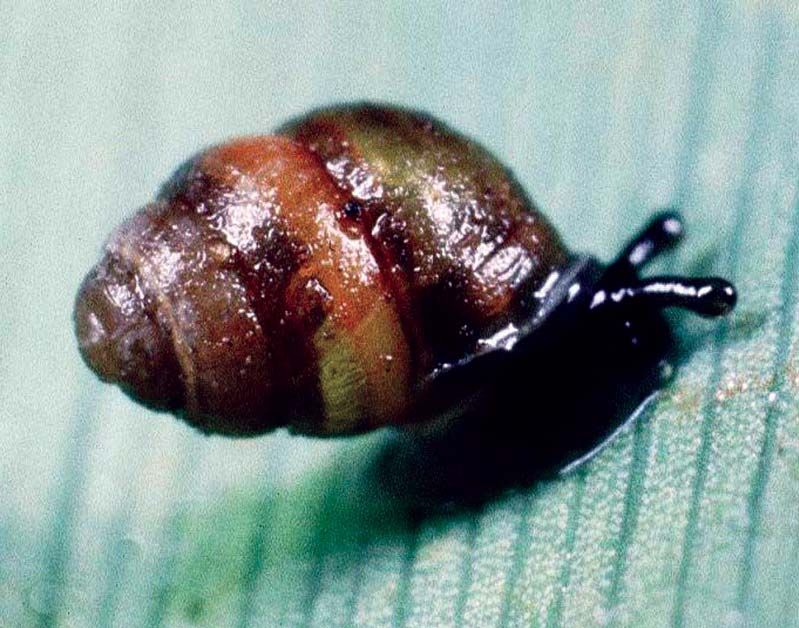
Conserving Natura 2000 Rivers

                                                                                                         Ian Killeen

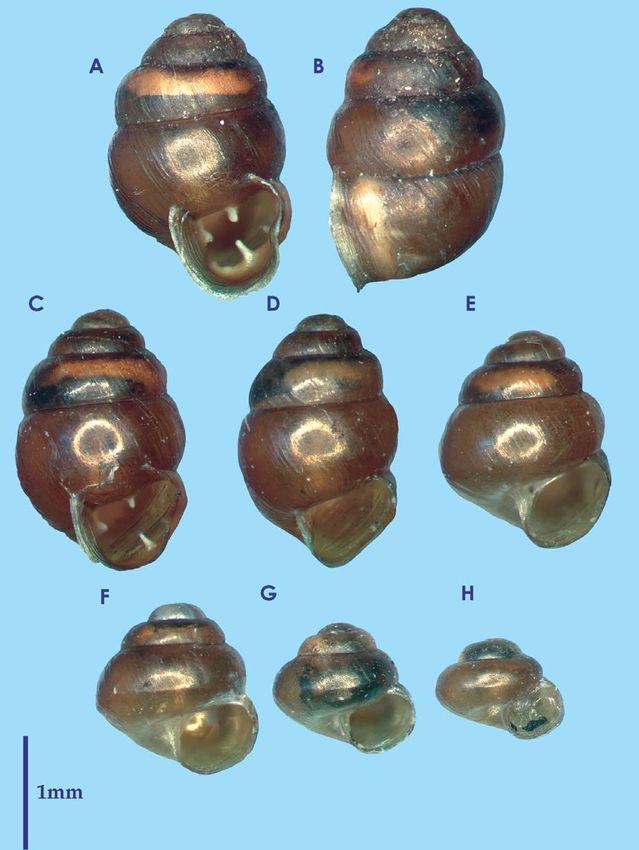
Various stages in the growth of Desmoulin’s whorl snail. A:The shell is dextrally coiled (mouth on right), ovate
to elongate in shape, with a tapering spire and 4.5 to 5 rounded whorls. Palatal teeth arise from a thickening
(callus), which is usually visible through the shell wall. C–H:The shape and proportions of the shell undergo
considerable changes during growth.

6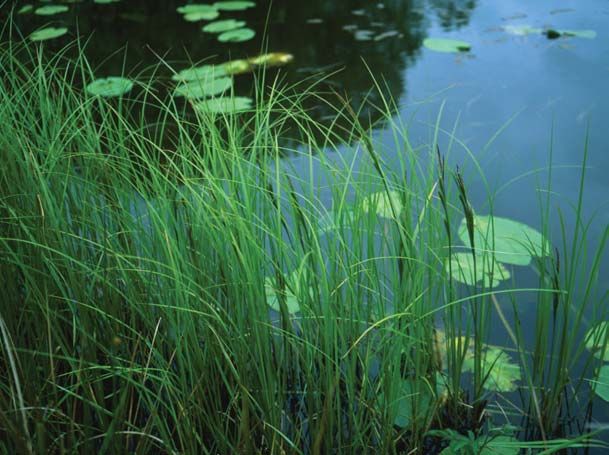
Ecology of Desmoulin’s Whorl Snail

of a V. angustior population at Whiteford Burrows, South Wales, gave highest densities of individuals in
October and November. Adults dominated the population in June and July (80% of all individuals),
whereas in November, 60–70% of individuals were juveniles.
The population dynamics of Desmoulin’s whorl snail appears to resemble more closely V. angustior than
V. pusilla. Figure 1 shows the population density at Thatcham Reedbeds (River Kennet) from June 1997
to November 2001. Although the results were derived from sampling during the period when V.
moulinsiana was active on tall vegetation, a clear seasonal pattern is shown. In early June the population
density was relatively low, mostly less than 50 individuals per square metre.This increased gradually
into mid-July and then rapidly through September to peak in October at densities as high as 600 per
square metre.
Although the same general trends were shown over the five-year period, there are considerable
fluctuations from year to year.The populations appear to have good and bad years; for example, in 1997
and 2000, the population densities peaked at approximately 500 and 600 individuals per square metre
respectively, whereas in 1998, the population peaked at 260 per square metre and in 2001 at 200 per
square metre. Similar patterns were also recorded at Bagnor Island (Kennet Valley), with high peak
densities in 1997, 1999 and 2000, but lower peaks in 1998 and 2001 (Killeen & Stebbings in prep.). It is
not known whether this reflects a natural cycle in the populations, or is merely an effect of the
weather during the active season.
Figure 2 shows the population structure at Thatcham Reedbeds for the same period. In mid-July, the
population was dominated by adults (over 90% in most years). Juveniles began to increase significantly
in abundance from early September and usually peaked around mid-October, when they comprised up
to 80% of the population.The very low numbers of individuals, both adult and juvenile, in late spring
and early summer indicate that there was a high juvenile mortality during the winter months. Some
juveniles were present in the early part of the year, suggesting that both over-wintering and
opportunistic breeding were likely.
The general pattern of population densities and structure, with adults dominating in mid-summer and
an explosion in juvenile numbers in late summer to early autumn, has been recorded at all British sites,
but the populations are by no means synchronous (Killeen 2001b).
Biometric analysis, based on number of whorls, of populations in the Kennet and Lambourn Floodplain
SAC has proved inconclusive in determining the rate of growth of V. moulinsiana (Stebbings & Killeen
1998). At sites on Bagnor Island and at Thatcham, there was little significant difference in the size
distribution of individuals from September to December 1996, indicating that the population continued
to recruit throughout the period.

                           300

                           250
     Individuals per m 2

                           200

                           150

                           100

                            50

                             0
                                 02/06/1997
                                              09/07/1997
                                                           19/08/1997
                                                                        15/10/1997
                                                                                     26/11/1997
                                                                                                  03/06/1998
                                                                                                               15/07/1998
                                                                                                                            01/09/1998
                                                                                                                                         21/10/1998
                                                                                                                                                      02/06/1999
                                                                                                                                                                   14/07/1999
                                                                                                                                                                                09/09/1999
                                                                                                                                                                                             20/10/1999
                                                                                                                                                                                                          07/06/2000
                                                                                                                                                                                                                       19/07/2000
                                                                                                                                                                                                                                    05/09/2000
                                                                                                                                                                                                                                                 24/10/2000
                                                                                                                                                                                                                                                              05/06/2001
                                                                                                                                                                                                                                                                           17/07/2001
                                                                                                                                                                                                                                                                                        06/09/2001
                                                                                                                                                                                                                                                                                                     08/11/2001

Figure 1. Variation of Desmoulin’s whorl snail population density at Thatcham Reedbeds on the River Kennet,
southern England, June 1997 to November 2001.

                                                                                                                                                                                                                                                                                                                  7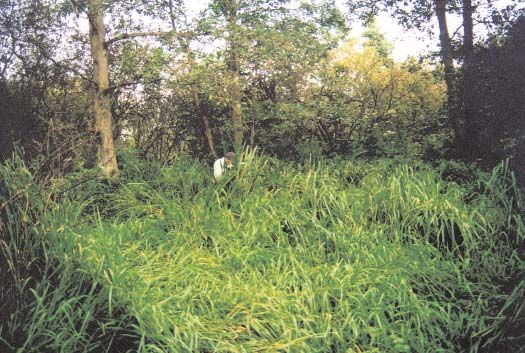
Conserving Natura 2000 Rivers

                                                                                                                     Adult                             Juvenile

     100
      90
      80
      70
      60
    % 50
      40
      30
      20
      10
       0
             02/06/1997
                          09/07/1997
                                       19/08/1997
                                                    15/10/1997
                                                                 26/11/1997
                                                                              03/06/1998
                                                                                           15/07/1998
                                                                                                        01/09/1998
                                                                                                                     21/10/1998
                                                                                                                                  02/06/1999
                                                                                                                                               14/07/1999
                                                                                                                                                            09/09/1999
                                                                                                                                                                         20/10/1999
                                                                                                                                                                                      07/06/2000
                                                                                                                                                                                                   19/07/2000
                                                                                                                                                                                                                05/09/2000
                                                                                                                                                                                                                             24/10/2000
                                                                                                                                                                                                                                          05/06/2001
                                                                                                                                                                                                                                                       17/07/2001
                                                                                                                                                                                                                                                                    06/09/2001
                                                                                                                                                                                                                                                                                 08/11/2001
Figure 2. Variation of Desmoulin’s whorl snail population structure at Thatcham Reedbeds, River Kennet,
southern England, June 1997 to November 2001.

A feature of V. moulinsiana populations observed at a range of English sites is the relative rarity of
individuals in the very last stages of shell development – those with the full number of adult whorls but
having no, or only partially developed, apertural teeth.Thus, it may be inferred that completion of the
last stage of shell growth is extremely rapid (within a few days).

Colonisation and dispersal
Waterborne transportation is believed to be the principal dispersal mechanism of Desmoulin’s whorl
snail. By the nature of its wetland habitat, the snails are likely to be able to float on the water surface
or attached to floating vegetation, and could therefore disperse during periods of flooding.The snails
are also believed to be dispersed by mammals, being brushed from vegetation as the animals pass, and
adhering to their body hair. Similarly, the snails can probably be dispersed by becoming attached to the
feet and feathers of birds – mollusc mucus is a strong adhesive.The ability of the species to self-fertilise
makes it possible for a single coloniser to establish a new population.
Evidence of the snail’s ability to colonise new wetland habitat arises from mitigation measures on the
Newbury by-pass project in southern England (Stebbings & Killeen 1998). A marshland was created in
1996 in an area of former arable land, latterly sheep-grazed pasture, adjacent to the new road. Eight
shallow pools totalling 1590 m2 were dug in a line approximately 160 m long and 20 m wide.The pools
were fed by water from a pipeline connected to the River Kennet and planted with Glyceria spp.
principally from sites not supporting Desmoulin’s whorl snail. A few clumps of sedge containing low
numbers of the snail were planted around the edge of the southernmost pool.The pools rapidly
developed into a dense Glyceria-dominated swamp, but despite sampling over the following months, no
Desmoulin’s whorl snails were detected until July 1997, 13 months after creation of the habitat.
However, in the pool nearest the water source, Desmoulin’s whorl snail successfully bred and increased
in abundance over the following five years (Figure 3). A similar pattern occurred in the adjacent pool
following a year’s delay (Figure 4).The pattern of colonisation continued throughout the entire site so
that, by late 2001, all the pools were populated by Desmoulin’s whorl snail (Killeen & Stebbings in
prep.). Autumn densities of >1000 snails m-2 were as high as at any other site in the Kennet valley.
While it cannot be ascertained whether the population arose from snails present on introduced clumps
of sedge only, or was supplemented by waterborne individuals from nearby populations, there is no
doubt regarding the species’ capacity to establish and rapidly spread into ideal habitat and increase in
abundance.

8
Ecology of Desmoulin’s Whorl Snail
Food
Desmoulin’s whorl snail is believed to graze on fungi, micro-algae, and possibly bacteria growing on
marsh plants, and decaying higher plants (Bondesen 1966). Steusloff (1937) records the species feeding
on the fungi Haplophragmium chlorocephalum, Puccinia urticae-caricis and Helminthosporium spp.
Habit
Humidity is important to all whorl snails (Vertigo spp.) and the different species achieve their
requirements by occupying different levels (i.e. vertical movement) within their microhabitats.
Desmoulin’s whorl snail is a climbing species in emergent vegetation, living over a large vertical range at
different times of year, whereas other wetland Vertigo species live in shorter vegetation or within the
litter layer on the ground. For example, V. antivertigo lives in permanently wet litter, whereas V. angustior
lives in the more open-structured moss and decaying vegetation towards the top of the litter layer.
1600
1400
Individuals per m 2
1200
1000
800
600
400
200
0
30/04/1997
02/06/1997
09/07/1997
19/08/1997
15/10/1997
26/11/1997
03/06/1998
15/07/1998
01/09/1998
21/10/1998
02/06/1999
14/07/1999
09/09/1999
20/10/1999
07/06/2000
19/07/2000
05/09/2000
24/10/2000
05/06/2001
17/07/2001
06/09/2001
Figures 3 and 4. Variation of Desmolin’s whorl snail population density at the Newbury bypass site, June 1997 08/11/2001
to November 2001. In the pool nearest the water source, the snail successfully bred and increased in
abundance over the following five years (above). A similar pattern occurred in the adjacent pool following a
year’s delay (below).
3500
3000
2
Individuals per m
2500
2000
1500
1000
500
0
30/04/1997
02/06/1997
09/07/1997
19/08/1997
15/10/1997
26/11/1997
03/06/1998
15/07/1998
01/09/1998
21/10/1998
02/06/1999
14/07/1999
09/09/1999
20/10/1999
07/06/2000
19/07/2000
05/09/2000
24/10/2000
05/06/2001
17/07/2001
06/09/2001
08/11/2001
9Conserving Natura 2000 Rivers
Tristan Hatton-Ellis/CCW
Desmoulin’s whorl snail lives on a variety of plants, including sedges (left) and branched bur reed (right).
Desmoulin’s whorl snail achieves its desired humidity by climbing above wet vegetation during warm
periods and descending in cooler parts of the year. In spring, the snails are found low down, principally
on the stems and leaves of monocotyledons, and then ascend the plants throughout the summer and
autumn, reaching a height of over 2 m above ground level. In dense populations, as many as 100
individuals may be found on a single leaf blade.
With the onset of winter the snails descend to lower levels in the vegetation, where their location is
determined by the habitat. In densely vegetated, sedge-dominated habitats, the animals over-winter on
both the aerial (above-ground) leaves and stems and amongst the deep layer of dead litter. In large
tussock sedges, the animals are found amongst the compacted inner part of the tussock and associated
litter. In more open habitats, especially those dominated by reed sweet grass (Glyceria maxima), which
collapses and dies off in winter, the snails are found amongst the litter and decaying vegetation.
A best-practice protocol for sampling and monitoring has been developed and published part of the
Conserving Natura 2000 Rivers Monitoring Series (Killeen 2003).
Habitats
Desmoulin’s whorl snail lives in permanently wet, usually calcareous, swamps, fens and marshes,
bordering rivers, lakes and ponds, or in river floodplains. It is most often found in open situations.
Until the early 1990s, Desmoulin’s whorl snail was considered to be a species restricted to old, long-
established calcareous wetlands, sensitive to habitat disturbance, and scarcely known to colonise
secondary, man-made habitats (Bratton 1991). Extensive recent studies, particularly in lowland river
floodplains, have shown that the snail is more robust and is successfully occupying habitats that have
arisen from relatively recent watercourse manipulation, and which are subject to other management
such as grazing, burning and mowing (Killeen 2001b-h). For example, on Bagnor Island (River
Lambourn), it is unlikely that suitable habitat existed prior to the creation of a mill stream in the late
18th/early 19th centuries (Stebbings & Killeen 1998).Water spilling from the mill stream across the
slope of the resulting island allowed wetland habitat to develop.
Plant species
Desmoulin’s whorl snail has been recorded living on a wide range of plants, but is most usually found
on tall monocotyledons, principally:
10Ecology of Desmoulin’s Whorl Snail
z Reed sweet grass (Glyceria maxima)
z Sedges (Carex riparia, C. acutiformis, C. paniculata, C. elata)
z Saw sedge (Cladium mariscus)
z Reed (Phragmites australis)
z Reedmace (Typha latifolia and T. angustifolia)
z Branched bur reed (Sparganium erectum)
z Iris (Iris pseudacorus)
z Reed canary grass (Phalaris arundinacea)
It has also been recorded living on meadowsweet (Filipendula ulmaria), and rushes (Juncus spp.).
However, in late summer and early autumn, when Desmoulin’s whorl snail densities are at their highest,
the species may be found on virtually all species of plants present in the habitat including stinging nettle
(Urtica dioica); willowherbs (Epilobium spp.); umbellifers; hemp agrimony (Eupatorium cannabinum);
valerian (Valeriana officinalis); dock (Rumex spp.); amphibious bistort (Polygonum [Persicaria] amphibium);
bittersweet (Solanum dulcamara); water mint (Mentha aquatica); butterbur (Petasites hybridus); saplings of
alder (Alnus spp.) and willow (Salix spp.); and even on fenceposts.
Glyceria maxima swamp/sedge marshes
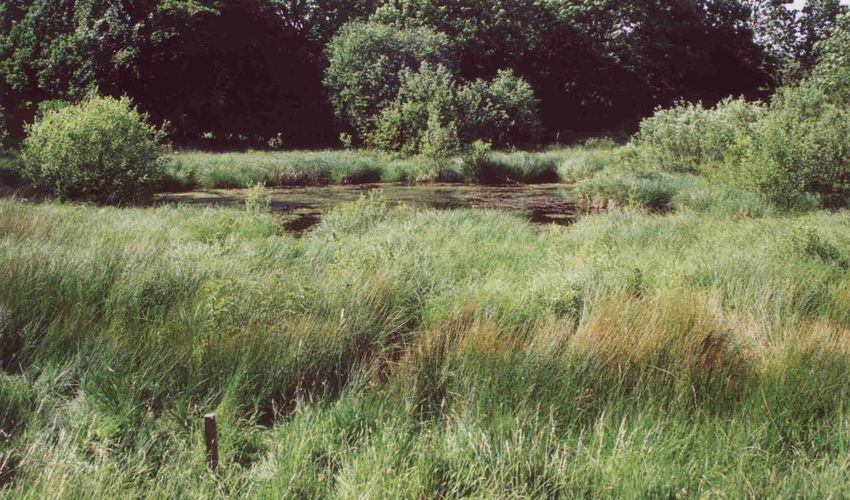
This is the most typical Desmoulin’s whorl snail habitat at many English sites, especially in lowland river
floodplains. The habitat occurs within natural swamps and marshes, and around networks of small
ditches, streams and depressions associated with open, relatively uncultivated land adjacent to rivers.
Similar habitat also occurs frequently within areas of disused water meadows, grazing marshes and mill
streams.The area of habitat may vary from a few tens of square metres to several hectares.
Ian Killeen
Glyceria habitat in the Kennet valley, southern England.This is the most typical habitat for Desmoulin’s whorl
snail, particularly in lowland river floodplains.
11Conserving Natura 2000 Rivers
Ian Killeen
A sedge marsh in the Kennet valley, southern England, an example of typical habitat for Desmoulin’s whorl
snail, particularly in England.
Fens
In East Anglia, in particular, Desmoulin’s whorl snail lives in fen habitat that has developed in glacial
depressions (pingos). Characteristic habitat comprises pools or small meres with dense vegetation,
particularly saw sedge (Cladium mariscus), and tussock sedges (Carex elata) and (C. paniculata).
Ian Killeen
Pingo habitat in Norfolk. Desmoulin’s whorl snail is often found in these glacial depressions, which form small
pools, usually surrounded by dense fen vegetation, particularly sedges.
12Ecology of Desmoulin’s Whorl Snail
Phragmites australis swamp
Desmoulin’s whorl snail may be found in Phragmites beds associated with river and lake margins,
flooded peat workings and fens. In these habitats, the snail occurs principally in areas where the
vegetation is dense and there is a layer of dead litter. It is much rarer or absent in reedbeds that are
regularly cut, or with permanently flooded conditions where the plants grow directly into water and
there is little or no litter layer.
Riparian margins
Desmoulin’s whorl snail is found on tall monocotyledons at the margins of rivers, streams, ponds and
lakes. However, its presence/absence and population density are largely determined by the structure
and topography of the banks and the nature of the riparian management.The most suitable riparian
habitats comprise a relatively broad strip where Glyceria or Sparganium spp. form dense floating rafts on
gently sloping banks.Where the banks are steeper as a result of canalisation, impounding, channel
dredging, and weed cutting, this habitat does not develop sufficiently and Desmoulin’s whorl snail is
uncommon or absent.
In the Norfolk Broads, Desmoulin’s whorl snail lives on the margins of large rivers known as ronds,
where there is often a broad zone of Phragmites protecting a mixed sedge/Glyceria habitat adjacent to
higher man-made banks or bunds (Killeen 2001g). Many of these rivers are slightly brackish or have
tidal back-up. In the upper section of the River Deben estuary in Suffolk, a population occurs in
transitional marsh lying between saltmarsh and woodland (Killeen pers. obs.).
Alder carr
A feature of many of the Norfolk Broadland sites in particular is the presence of populations of
Desmoulin’s whorl snail in areas of alder carr (Ellis 1941, Killeen 2001g). Where the carr remains very
wet, and is still vegetated by relatively dense areas of Carex spp. or Iris pseudacorus, a relict from when
the sites were sedge swamp at the edge of water, the snail continues to survive.With advancing
succession, such sites become drier and eventually too shaded to support the snail. At Sweat Mere,
Ian Killeen
Riverside beds of Phragmites reed in the Norfolk Broads. Desmoulin’s whorl snail may be found in reedbeds
associated with flooded peat workings, fens, and river and lake margins.
13Conserving Natura 2000 Rivers
Ian Killeen
Desmoulin’s whorl snail is frequently found on tall plants on the banks of rivers, streams, ponds and lakes. Its
population density is determined by the structure of the banks and the type of vegetation available.
Ian Killeen
The most suitable riparian habitats for Desmoulin’s whorl snail comprise dense floating rafts of Sparganium
erectum or Glyceria fluitans on sloping riverbanks. The Glyceria raft above is on the River Lambourn, Berkshire.
14Ecology of Desmoulin’s Whorl Snail
Shropshire, Desmoulin’s
whorl snail clearly follows
the vegetational succession,
where it is abundant in the
swampy Carex/Typha open-
water margins, less common
through the wetter alder
carr, and absent from the
carr transition through to
drier oak/birch woodland
(Killeen 2001a).
Desmoulin’s whorl snail also
occurs in poplar woodland
that has been planted on
riverside marshland. It has
been recorded from Glyceria
and sedge marsh in such
habitats along the rivers
Wylye,Wiltshire/Hampshire
Avon and Little Ouse.
Other habitats
The vast majority of
Desmoulin’s whorl snail
habitat in Britain falls into
the above categories.
However, the snail has
occasionally been recorded
in less typical habitats. For
example, it has been
recorded in Dorset from a
small sloping area of fen
associated with a tufaceous
Ian Killeen
spring in limestone
grassland (R. Cameron, pers. Desmoulin’s whorl snail can also be found in alder carr, particularly where
the sedge vegetation is very wet and dense.
comm.), where the
vegetation is described as
dominated by narrow-leaved sedges and rushes, which are heavily grazed and trampled by ponies.
Holyoak (in press) records the species in Cornwall from a short grass- and herb-dominated fen, with
Festuca rubra and Salix repens at the margins of a Phragmites swamp in a dune slack.
The habitat of Desmoulin’s whorl snail elsewhere in its European range concurs with that for Britain.
Bondesen (1966) regarded it as being typical of alder swamps in Denmark, while Nyilas & Sumegi
(1991) describe it from Hungary in cool and humid ‘birch marshland’, and from oak forest that
periodically floods. In both Denmark and Hungary, it is not clear whether the snail is found within
shade in the woodlands, or in open clearings with fen vegetation.
Hydrology
High groundwater levels throughout the year are considered to be one of the most important factors
influencing the distribution of Desmoulin’s whorl snail. In lowland river floodplains with many snail-
inhabited sites, there are also numerous, apparently suitable sedge-dominated habitats where the snail is
absent, probably due to unfavourable groundwater levels. On Bagnor Island (River Kennet), detailed
15Conserving Natura 2000 Rivers
sampling of relatively homogenous Carex riparia fen demonstrated that the species occurred abundantly
where seepages and springs allowed swamp conditions to form locally, but was largely absent from
adjacent, drier fen (Killeen & Stebbings 1997).
Detailed studies of the hydrological requirements of Desmoulin's whorl snail have been undertaken at
Chilton Foliat and Thompson Common, which are respectively within the Kennet and Lambourn
Floodplain and the Norfolk Valley Fens Special Areas of Conservation (Tattersfield & McInnes 2003).
Water levels were gauged by taking repeated measurements from a grid of dipwells installed on each
site, while snail distribution and density were also recorded. Maximum snail densities, at locations
where the hydrological conditions were considered to be at, or close to, the snail's optimum, were
recorded where water levels were continuously above the ground surface throughout the year, and
where mean annual water levels were more than 0.25 m above the surface. Annual fluctuation at these
locations were between about 0 m and 0.6 m above ground level. Medium-density snail populations
were associated with conditions where water levels fluctuated within 0.2 m of the surface, both above
and below ground level.The critical minimum summer water level threshold, where the snail occurs but
only at very low abundance, was estimated to be 0.5 m below surface ground level. However, it is
unlikely that populations would be sustained under such conditions.
The close relationships found between the snail's abundance and water levels suggest that site
hydrology is major factor determining the local distribution of the snail. However, it would seem likely
that the influence of groundwater levels on the snail may be mediated via air humidity, since the snail
spends much of the year climbing in the canopy of the vegetation well away from the ground.This
relationship would merit further investigation, and could have practical conservation relevance, since
humidity regimes are likely to be influenced by vegetation structure, which is clearly affected by
management.
Table X. A summary of the hydrological requirements of V. moulinsiana.
V. moulinsiana water level fluctuation in minimum with ground
water level water level surface
Presence of Summer –0.5 m
V. moulinsiana Winter –0.4 m
High population Greater than 0 m to +0.6 m Water level
+0.25 m never/very
rarely falls
below ground
Medium 0m –0.2 m to +0.2 m Water level
population fluctuates
between –0.2 m
and +0.2 m
during the year
Low population Less than 0 m –0.4 m to 0 m Surface
inundation rare
Conservation and management
Desmoulin’s whorl snail is considered to be dependent upon the conservation of habitat and
preservation of high water levels, and is therefore vulnerable (Seddon 1997). Drainage of wetlands has
been the principal cause of the snail’s decline throughout its European range. However, there are many
additional factors, applicable at any site, that could adversely affect Desmoulin’s whorl snail populations:
z Changes in hydrology, such as water abstraction and general drainage of wetlands leading to
reduced water tables and loss of periodic flushes.
16Ecology of Desmoulin’s Whorl Snail
z Canalisation of rivers, deepening of drainage channels, and creation of vertical profiles to
riverbanks, eliminating wetland marsh habitat.
z Regular cutting of riparian margins of rivers and tidying of riverside paths, often associated
with fisheries.
z Changes in land use – for example, from rough pasture or meadow to improved grassland.
z Encroachment by scrub or alien plant species, which may result in too much shade and/or
drying out of the habitat.
z Intensive grazing of fens or excessive poaching of ditch margins.
z Introduction of cutting or burning programmes at sites where there is no history of these
activities.
z Use of pesticides and herbicides, and the effects of eutrophication.
z Decline of alder coppicing routines, leading to increased shading.
As the snail’s basic requirement is swampy, usually unshaded ground with tall plants (which helps it
survive winter floods), management should be directed at maintaining these conditions.The water level
must remain close to the surface so that the ground remains at least moist for most of the summer,
although some seasonal drying appears to be acceptable. Relatively high groundwater also contributes
to maintaining a high humidity in the vegetation.
Conversely, conditions must not become so wet that aquatic plants such as watercress (Rorippa
nasturtium-aquaticum) and fool’s watercress (Apium nodiflorum) become dominant. Permanent flooding of
reedbeds may also be detrimental as there will be no litter layer in which the snails can over-winter,
and no sites for laying eggs.
Riparian management
Although suitable Desmoulin’s whorl snail habitat exists, or has the potential to exist, along many
kilometres of river banks, the snail’s presence or absence is largely determined by riparian management.
River channel dredging as part of flood alleviation practice creates a vertical bank and results in the loss
of marginal habitat. Regular weed cutting causes a similar effect. Although the marginal vegetation may
Catherine Duigan/CCW
Invasive non-native plants such as Japanese knotweed can alter the composition of Desmoulin’s whorl snail
habitat by replacing native species and increasing shading.
17Conserving Natura 2000 Rivers regenerate quickly, the roots and lower stems stand in permanently flooded conditions, and the plants rarely attain the density and litter level required to support the snail. Much habitat is lost or rendered unsuitable as a result of regular cutting of sedge and tidying of banks to provide access for anglers. Scrub encroachment and vegetational succession Desmoulin’s whorl snail will disappear from areas where conditions become dry enough for plants such as stinging nettle and great willowherb (Epilobium hirsutum) to become frequent or dominant. Light shade is tolerated but scrub, tall trees and reed casting deeper shade may be detrimental to the species’ longer-term survival. Scrub development on fens may also lead to excessive drying-out in summer. A feature of many of the Norfolk Broads sites in particular is the presence of populations of Desmoulin’s whorl snail in areas of alder carr (Ellis 1941, Killeen 2001g). Usually, these habitats would be considered to be too heavily shaded. However, if the carr remains very wet and is still vegetated by relatively dense areas of sedge or iris, a legacy from when the sites were sedge swamp at the edge of water, the snail continues to survive. Some partial felling may, in the short term, allow the snail’s habitat to flourish, but in the longer term, with advancing succession, such sites are likely to become drier and too shaded to support it, unless further managemnent is carried out. A similar conservation dilemma exists at the hydrosere (the transitional zone of plant communities from shallow open water to fen to alder carr to woodland) at Sweat Mere, Shropshire, where management policy is to allow the succession to continue with minimum intervention (Killeen 2001a). While Sweat Mere is an important outpost site for Desmoulin’s whorl snail, its value as a hydrosere is greater. At sites where Desmoulin’s whorl snail is found within marshy areas in poplar plantations, the habitat may eventually become too shaded, and some felling may therefore be required to maintain the populations. Desmoulin’s whorl snails are potentially or actually at risk from non-native invasive plants. Such plants are a major threat to habitat due to their rapid growth and dominance over native species and the difficulty of controlling them. Species of concern include Japanese knotweed (Polygonum [Fallopia] japonica), Himalayan [Indian] balsam (Impatiens glandulifera) and giant hogweed (Heracleum mantegazzianum).These riparian plants may directly alter the composition of Desmoulin’s whorl snail habitat by replacing preferred species and increasing shading. Grazing There is clear evidence from many sites that grazing has a detrimental effect on Desmoulin’s whorl snail populations.There are examples from many sites in the Wiltshire/Hampshire Avon catchment, and the Kennet and Lambourn floodplain, where cattle grazing severely restricts the distribution and density of the snail populations. For example, at Jones’s Mill (River Avon) the Desmoulin’s whorl snail population is spread over a wide area of the site, but cattle grazing has impacted the structure and density of the fen vegetation, and the effect on the snail distribution and abundance is significant (Killeen 2001c).The ungrazed fen in the central part of the site supports the highest density of Desmoulin’s whorl snail (about 230 m-2), compared with the grazed compartments, which ranged from 0–50 m-2.Within the grazed areas it is only the large Carex paniculata tussocks (to high to be trampled by cattle) that support the higher numbers. At other sites in the Avon and Kennet valleys, continual cattle poaching of shallow Glyceria-filled ditches has resulted in the loss of the snail. In contrast, at sites where the habitat is predominantly fen dominated by Cladium spp. Carex spp. (such as East Anglian pingo sites) subject to light cattle grazing, the impact is relatively minimal.The cattle preferentially graze the more herb-rich areas and the dense sedge fens, and thus the Desmoulin’s whorl snail populations are less affected. At all such sites the snail population could be enhanced or recovered by excluding the cattle from the wetter ditches and depressions that support tall sedge species.This could be achieved by fencing, with 18
Ecology of Desmoulin’s Whorl Snail

care needed to ensure that the fenceline habitat is robust enough not to become degraded by
poaching.

Cutting or mowing of fens
Evidence from locations in East Anglia indicates that at sites where there has been a very long history
of management, the snail is not significantly affected by mowing (Killeen 2001e, Kirby 1997). However, it
appears to be more affected when mowing is introduced at sites where there is no previous history of
the practice (Killeen 2001d). Regular mowing can produce a denser sward over time, and this is why
such practices may be compatible with the snail in the longer term but not in the short term.
Table 1 shows the density of snails for compartments at Market Weston Fen, Suffolk, sampled in 2000,
in order of the date they were last mown (Killeen 2001e).The early history of the fen is not well
known, but included peat digging, sedge mowing and grazing. Since the Suffolk Wildlife Trust acquired
the site (in 1980), management of the fen has focused on mowing.The Management Plan proposes
continued mowing on a rotational basis, either annually, biennially, three-yearly or four- to five-yearly.
Some areas will remain uncut.
                                                                   The differences between these values
Table 1. Density of Desmoulin’s whorl snail in compartments at     are not especially high, and are based
Market Weston Fen, Suffolk, and mowing history.
                                                                   upon only one set of samples, so they
                                                                   should not be over-interpreted.
                                                                   However, two general categories may
        A           Uncut                    59                    be recognised.The samples from the
        G           Uncut                    64                    compartments that are uncut, or have
         F        pre-1995                  104                    not been mown since 1995, yielded
         J        pre-1995                   60                    more than 60 snails per square metre.
        K         pre-1995                   96                    With one exception (compartment
         I          1995                     80                    D), the samples from compartments
        D           1998                     60                    mown during or after 1998 have less
                                                                   than 40 snails per m2. Although this
        H           1998                     28
                                                                   suggests that the Desmoulin’s whorl
        C           1998                     40                    snail population may be slow to
         B          1999                     22                    recover from mowing, it may merely
                                                                   reflect the density of vegetation in
                                                                   these areas.The more recently mown
compartments have a much lower vegetation density, and therefore the volume of vegetation sampled
(and thus the number of snails) within the sample area is also less. Although a significant number of
snails must be lost when the sedge is cut, many will drop off onto the ground. In an adjacent strip of
fen that was mown in 2000, Desmoulin’s whorl snails were still living on the ground litter and amongst
the regenerating leaves later in that year.
The short-term effect on recovery of Desmoulin’s whorl snail in relation to cutting practice was
illustrated at Thatcham Reedbeds, where mowing was introduced in the 1990s on a rotational three-
yearly cycle to maintain botanical diversity. In blocks of fen with two years’ re-growth, where the
vegetation had become relatively dense, Desmoulin’s whorl snail occurred only in very low numbers,
whereas adjacent, unmown fen supported relatively dense populations (Killeen 2001d).The introduction
of mowing at other locations where there is no history of the practice should therefore be considered
carefully in the light of these data.

Burning
There is little information on the effects of vegetation burning, but in most cases it is likely to be
detrimental to the snail. A site along the River Lambourn at Hunt’s Green comprises a wide floating
raft of sedge, reed sweet grass and reed that is periodically burned (every two to three years).This
practice rapidly destroys all the tall thatch, but does not affect the roots.There appears to be little

                                                                                                               19
Conserving Natura 2000 Rivers effect on the Desmoulin’s whorl snail population, presumably since burning is usually carried out in spring, when the snails are low in the vegetation or on the wetter litter layer (Killeen 2001d). Pesticides, herbicides and eutrophication There is no information on the effect of pesticides on Desmoulin’s whorl snail populations, either indirectly by airborne spraying of farmland adjacent to sites, or directly through the use of molluscicides to control species such as the pond snail Lymnaea truncatula (an intermediate host of liver fluke). In either case, the effect is likely to be detrimental. Similarly, use of herbicides on farmland adjacent to populations of Desmoulin’s whorl snail could impact the habitat composition and structure. Desmoulin’s whorl snail populations are potentially or actually at risk from water quality issues, particularly elevated phosphate and nitrate levels, and organic pollution.The snails may be directly vulnerable to organic pollution, particularly during periods of high flows when they can be immersed or transported.They are also vulnerable to poor water quality if it affects their habitat.The habitat on which Desmoulin’s whorl snail depends can be impacted by pollution if it results in changes to the plant community. Elevated levels of nutrients, particularly phosphates and nitrates, are likely to be detrimental if changes result in the vegetation community.This is particularly relevant to snail habitat in river margins and drains, if the vegetation is likely to become rank. Translocation A translocation exercise was carried out in 1996 as part of the mitigation measures on the Newbury by-pass project (Stebbings & Killeen 1998). An area of approximately 600 m2 of Glyceria- and sedge- dominated marsh on Bagnor Island (River Lambourn) which supported a Desmoulin’s whorl snail population, was destined to be lost under the route of the new road. Although not previously attempted, a decision was made to carry out an experimental translocation of the habitat. A receptor site 20–50 m away, adjacent to existing habitat, was prepared by removing 500-700 mm of soil and peat, vegetated mostly by stinging nettle and reed canary grass (Phalaris arundinacea).Turfs measuring 2.4 x 1.2 m in area and 0.4–0.8 m in depth were cut from the donor site and transported to the receptor site, which comprised three separate cells or scrapes. As the turfs were laid, the edges were pressed together. A network of shallow channels was created to allow water to flow through and across the site in order to provide a permanently wet habitat. Monitoring of the vegetation and hydrology of the habitat over the period 1996–2001 showed that the translocation was successful (Killeen & Stebbings in prep.). Plant growth was vigorous, and within 18 months the site had developed into a habitat typical of others for Desmoulin’s whorl snail in the Kennet and Lambourn floodplain.The snail population also responded positively. During the first year following translocation, low numbers were recorded. However, as the habitat stabilised and vegetation density increased, Desmoulin’s whorl snail increased in abundance and was successfully reproducing. While the project on the Newbury bypass was a success, habitat translocation should not be viewed as a convenient option. It is expensive, and in all circumstances, translocation should be viewed as a last resort, after all other attempts at conservation in situ have failed. Further research required More information is required on the life history of Desmoulin’s whorl snail. Our present knowledge is based upon inference from other Vertigo species, and from field monitoring carried out as part of the Newbury bypass project.Work should include laboratory-based studies to determine details of reproduction and growth, and frequent field sampling to more accurately determine population density and structure. Additional studies should focus on the relationship between humidity/temperature and how Desmoulin’s whorl snail achieves its desired humidity by climbing above wet vegatation during warm periods and descending in cooler parts of the year.Work is also required to determine the location of 20
Ecology of Desmoulin’s Whorl Snail

populations during winter, particularly with respect to different habitats – for example, reed sweet
grass-dominated vegetation, which usually collapses, and sedge-dominated habitats where there is
usually a deep litter layer. It is important to know whether the over-wintering location affects the
population structure, abundance and rate of recovery in spring.Work should be linked to habitat and
topography, and how the variability of these assist the snail in harsh times.
The effects of management, particularly mowing and grazing, need to be investigated in greater detail.
Market Weston Fen in Suffolk, where there is a long history of sedge cutting, and Thatcham Reedbeds in
Berkshire, where cutting was implemented only relatively recently, would serve as ideal study sites.The
effects of grazing could be more accurately determined at Jones’s Mill in Wiltshire, where new
management plans include exclusion fences in some snail-rich areas.
The monitoring of the Newbury bypass sites ended in November 2001 with the cessation of mitigation
funding.The dataset spanning five and a half years is by far the longest for any Vertigo species. Further
monitoring would continue to provide information on Desmoulin’s whorl snail population dynamics,
and in the newly created site, on rate of colonisation.
The distribution of Demoulin’s whorl snail in the UK is so strongly linked to sites with high
groundwater levels that research is needed into the critical factors and threats to these sites.This
research should help to both protect the best existing sites, and enable the restoration or recovery of
others.

                                                                                                             21
Conserving Natura 2000 Rivers References Bondesen P (1966). Population studies of Vertigo moulinsiana Dupuy in Denmark. Natura Jutlandica 12, 240–251. Bratton JH (ed) (1991). British Red Data Books: 3. Invertebrates other than insects. JNCC, Peterborough. Cameron RAD (1992). Vertigo moulinsiana, V. lilljeborgi and others in Shropshire. Journal of Conchology 34, 186. Drake CM (1999). A review of the status, distribution and habitat requirements of Vertigo moulinsiana in England. Journal of Conchology 36, 63–79. Ellis AE (1941).The Mollusca of a Norfolk Broad. Journal of Conchology 21, 224–243. HMSO (1996). Biodiversity: the UK steering group report (Vol 2. Action Plan). HMSO, London. Kerney MP (1999). Atlas of the land and freshwater molluscs of Britain and Ireland. Harley Books, Colchester. Kerney MP and Cameron RAD (1979). A field guide to the land snails of Britain and north-west Europe. Collins, London. Killeen IJ (1992). The land and freshwater molluscs of Suffolk. Suffolk Naturalists Society, Ipswich. Killeen IJ (1996). Vertigo moulinsiana (Dupuy, 1849). In: Background information on invertebrates of the Habitats Directive and the Bern Convention. Part III - Mollusca and Echinodermata. Nature and Environment, No. 81, 483–490. Council of Europe Publishing, Strasbourg. Killeen IJ (2000a). A survey of Westbere Marshes, Kent for the terrestrial mollusc Vertigo moulinsiana. English Nature Research Reports, No. 350, Peterborough. Killeen IJ (2000b). Vertigo moulinsiana in Kent. Journal of Conchology 37, 81. Killeen IJ (2000c). Status and distribution of Desmoulin’s whorl snail Vertigo moulinsiana on Cors Geirch SSSI. CCW Contract Science. Countryside Council for Wales, Bangor. Killeen IJ (2001a). A survey to assess the status and distribution of Desmoulin’s whorl snail, Vertigo moulinsiana, at Sweat Mere SSSI, Shropshire. Unpublished report, English Nature, Malacological Services, Peterborough. Killeen IJ (2001b). Surveys of EU Habitats Directive Vertigo species in England: 3. Vertigo moulinsiana. Part 1: Summary and Monitoring Protocol. English Nature Research Report, Peterborough. Killeen IJ (2001c). Surveys of EU Habitats Directive Vertigo species in England: 3. Vertigo moulinsiana. Part 2:The River Avon SAC. English Nature Research Report, Peterborough. Killeen IJ (2001d). Surveys of EU Habitats Directive Vertigo species in England: 3. Vertigo moulinsiana. Part 3:The Kennet & Lambourn Floodplain SAC. English Nature Research Report, Peterborough. Killeen IJ (2001e). Surveys of EU Habitats Directive Vertigo species in England: 3. Vertigo moulinsiana. Part 4:The Waveney and Little Ouse Valley Fens SAC. English Nature Research Report, Peterborough. Killeen IJ (2001f). Surveys of EU Habitats Directive Vertigo species in England: 3. Vertigo moulinsiana. Part 5:The Norfolk Valley Fens SAC. English Nature Research Report, Peterborough. Killeen IJ (2001g). Surveys of EU Habitats Directive Vertigo species in England: 3. Vertigo moulinsiana. Part 6:The Broads SAC. English Nature Research Report, Peterborough. Killeen IJ (2001h). Surveys of EU Habitats Directive Vertigo species in England: 3. Vertigo moulinsiana. Part 7:The River Wensum SAC. English Nature Research Reports, Peterborough. Killeen IJ (2003). A Monitoring Protocol for Desmoulin’s Whorl Snail, Vertigo moulinsiana. Conserving Natura 2000 Rivers Monitoring Series No. 6. English Nature, Peterborough. Killeen IJ and Stebbings RE (1997). A34 Newbury bypass. Results of monitoring the translocated habitat for Vertigo moulinsiana. First annual report. Unpublished report, Mott MacDonald,Winchester. Killeen IJ and Stebbings RE (in prep.). A34 Newbury bypass. Results of monitoring the translocated habitat for Vertigo moulinsiana. Final report. 22
You can also read


