Enabling Geological Scale Dynamic Modelling of a Fractured Basement Reservoir using a high-Resolution Simulator - A UKCS Case Study - Dan Bonter ...
←
→
Page content transcription
If your browser does not render page correctly, please read the page content below

Enabling Geological Scale Dynamic Modelling of a
  Fractured Basement Reservoir using a high-
   Resolution Simulator - A UKCS Case Study
                                    Dan Bonter
                                  Hurricane Energy
Disclaimer

The information contained in this document (the Presentation) has been prepared by Hurricane Energy plc (the Company). This Presentation has not been approved by an authorised
person in accordance with section 21 of the Financial Services and Markets Act 2000 and therefore it is being delivered for information purposes only.

This Presentation may contain certain forward-looking statements with respect to the Company's expectations and plans, strategy, management’s objectives, future performance,
production, costs, revenues, and other trend information. These statements and forecasts involve risk, uncertainties and assumptions about the Company, its assets, its subsidiaries
and investments, including, among other things, the development of its business, trends in its operating industry, and future capital expenditures and acquisitions. In light of these
risks, uncertainties and assumptions, the Company's actual results could differ materially from those included in this document or as otherwise discussed at the Presentation. The
statements have been made with reference to forecast price changes, economic conditions and the current regulatory environment. Nothing in this Presentation should be construed
as a profit forecast. Past share performance cannot be relied on as a guide to future performance. These forward-looking statements speak only as at the date of this Presentation.

No representation or warranty, express or implied, is made or given by or on behalf of the Company, or Cenkos Securities plc (Cenkos) or any of their respective members, directors,
officers or employees or any other person as to the accuracy, correctness, completeness or fairness of the information, including estimates, opinions, targets and other forward looking
statements, contained in this Presentation and no reliance should be placed on it. Neither of the Company or Cenkos or any of their respective members, directors, officers or
employees nor any other person accepts liability whatsoever for any loss howsoever arising from any use of this Presentation or its contents or otherwise arising in connection
herewith, or undertakes to publicly update, review, correct any inaccuracies which may become apparent, or revise any forward-looking statement whether as a result of new
information, future developments or otherwise. The Company is not under any obligation to update or keep current the information contained in this Presentation and any opinions
expressed in it are subject to change without notice. Cenkos' responsibilities as the Companyʼs Nominated Adviser under the AIM Rules will be owed solely to London Stock Exchange
plc and not to the Company, to any of its directors or to any other person in respect of a decision to subscribe for or acquire securities in the Company.

The Company's ordinary shares have not be registered under the US Securities Act of 1933, as amended (the Securities Act) and may not be offered or sold in the United States absent
registration or an exemption from the registration requirements of the Securities Act. No public offering of the ordinary shares is or will be made in the United States. In addition, the
Company’s ordinary shares have not been and will not be registered under the applicable laws of Australia, Canada, Japan and South Africa and, subject to certain exceptions, may not
be offered or sold within Australia, Canada, Japan or South Africa or to any national, resident or citizen of Australia, Canada, Japan or South Africa.

   Hurricane | Devex 2015 | 21 May 2015                                                                                                                                                 2
Acknowledgements
• All recent simulation work in INTERSECT has been
  performed in collaboration with Schlumberger
• Results presented by Hurricane have been replicated and
  approved by Schlumberger, and detailed by them in an
  independent report

• Thanks to:
  -    Rodolfo Carvajal, Leigh Truelove, Alan Thompson & Horacio Del
       Campillo, Schlumberger (Software Integrated Solutions)

Hurricane | Devex 2015 | May 2015
                                                                       3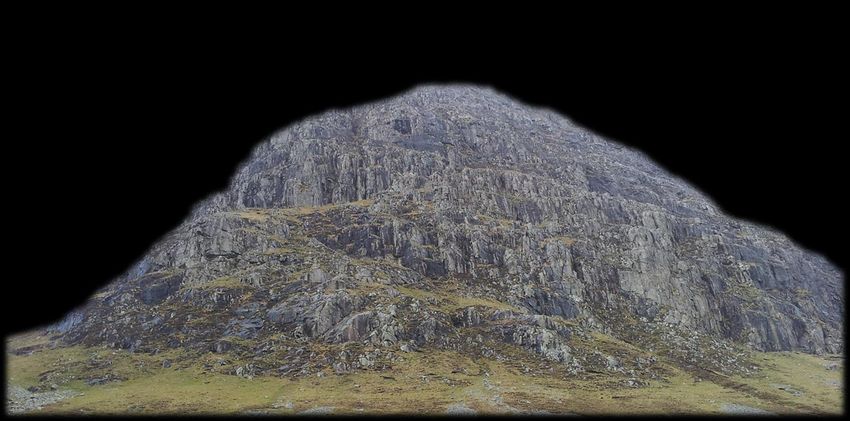
Abstract
‘New Kids on the Block’ theme, using new ideas and new technology to help unlock developments

Lancaster is a substantial (207 MMboe 2C) fractured basement field West of Shetland. As a Type 1 Naturally
Fractured Reservoir, hydrocarbon potential is provided entirely by the fracture network. This network is a
product of initial cooling joints and subsequent tectonic events occurring throughout the 2.5 billion year history
of this Precambrian rock. This has generated an exceptionally well connected fracture network, further
enhanced by fluid flow, producing a potentially world class hydrocarbon reservoir.
Two reservoir facies are identified: (1) Fault Zones, seismically resolvable features with generally enhanced
aperture fractures and increased porosity/permeability; and (2) Fractured Basement, pervasively fractured
background host rock providing flow and interconnectivity between Fault Zones.
The strong permeability contrasts present cause Conventional Reservoir Simulators (CRS) to struggle solving and
converging simulations. Fine scale gridding is also required to accurately depict the fault and fracture network.
Previous Lancaster CRS simulation performance was poor, requiring coarsening to complete the runs in practical
timeframes.
This paper describes the implementation of a High-Resolution Simulator (HRS) to build a dynamic model of
Lancaster by matching data acquired in the highly successful 2014 Lancaster Horizontal well test using fine-scale
(75-million cells) in the model. This has already proved invaluable in forecasting production, assessing the
impact of uncertainties, and improving technical confidence in the dynamic reservoir properties while
preserving practical runtimes of a few hours using a 16-core workstation.
This represents a step change in Hurricane’s evaluation of its basement assets, further de-risking and unlocking
the fractured basement play for the UKCS.

Hurricane | Devex 2015 | May 2015
                                                                                                                   4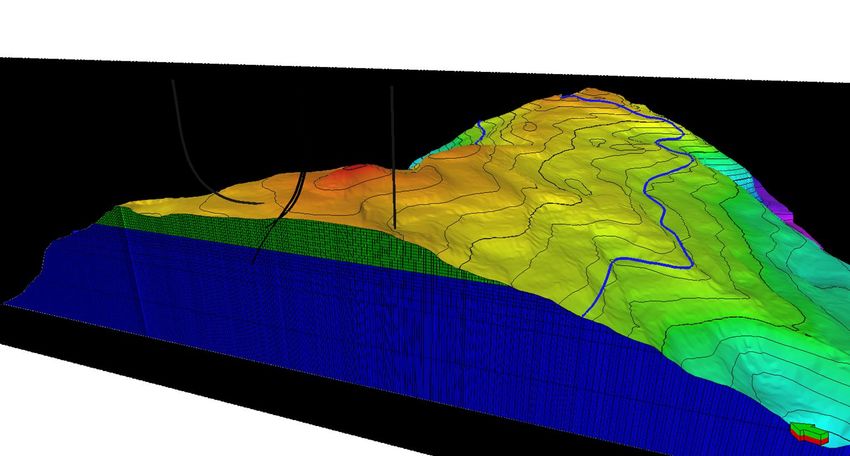
Introduction

Hurricane | Devex 2015 | May 2015
                                    5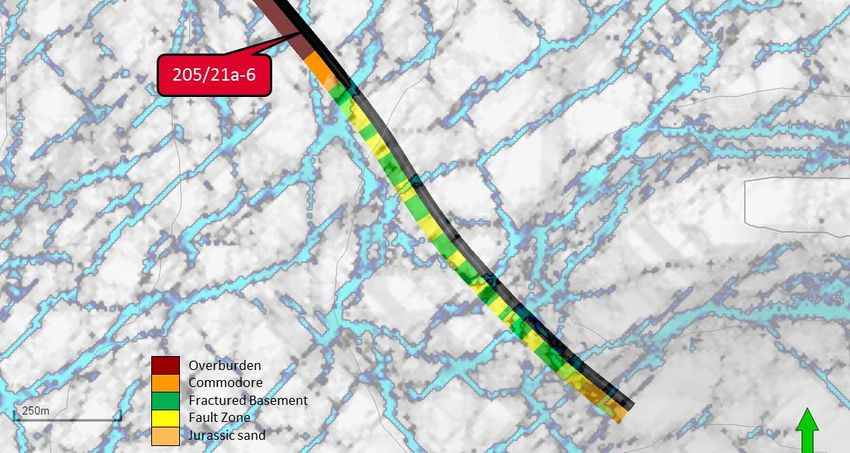
Hurricane
• Founded by Dr. Robert
       Trice in 2004 to explore
       the UKCS Fractured
       Basement Play
                                                                                  Clair

• Currently holds 100% of
       3 licences West of                Foinaven
                                                     Schiehallion

       Shetland                                               Whirlwind

                                                                  Lancaster
                                                                                                Shetland
• Two large Fractured                  Typhoon          Lincoln
       Basement discoveries:                        Strathmore
   -    Lancaster – 207 MMboe 2C *
   -    Whirlwind – 205 MMboe 2C *
                                                                              0      10   20   30   40   50 km

* Hurricane CPR, RPS 2013

   Hurricane | Devex 2015 | May 2015
                                                                                                                 6
What is Fractured Basement?
•   Crystalline rock exhibiting fractures associated with cooling, tectonic
    activity, epithermal and hydrothermal processes
•   Often associated with buried hills or uplifted ridges

                                                            Fractured basement hill, West of Scotland

Hurricane | Devex 2015 | May 2015
                                                                                                        7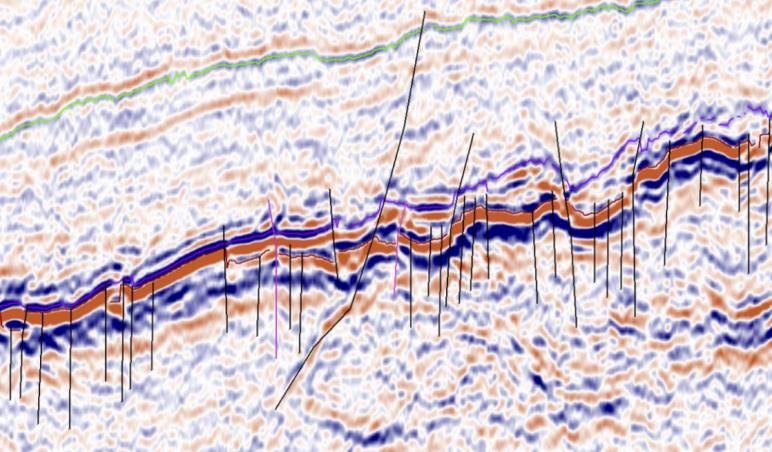
What is Fractured Basement?
                           Matrix                   Matrix
                          porosity               permeability
                    Low                 High   Low              High

         Type
         Type 1I                                                                 Recovery
                                                                               dominated by
                                                                                 fracture
                  Type II                                                        network

                            Type III
                                                                                                             Recovery
                                                                                                           dominated by
                                    Type IV                                                               rock properties

                                                                       Definitions of Naturally Fractured Reservoirs, after Nelson 2001

•   Basement is a Type 1 Naturally Fractured Reservoir
•   Oil storage and mobility entirely depends on the fracture network

Hurricane | Devex 2015 | May 2015
                                                                                                                                          8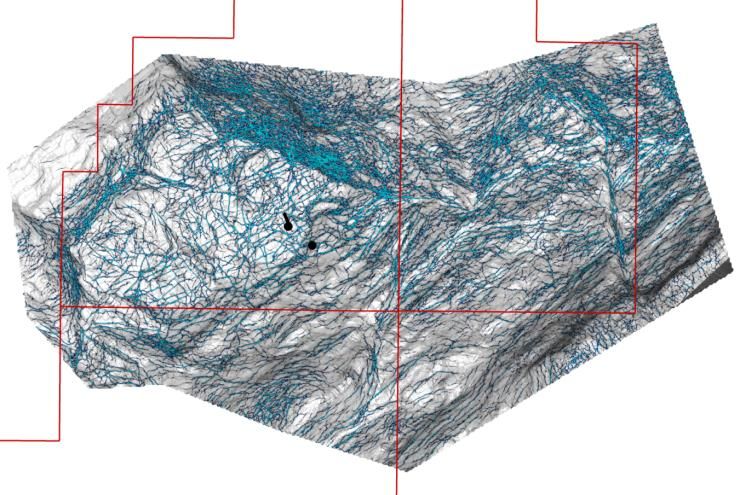
Why Target Fractured Basement?

                                                                       Vietnam

                                    Global basement activity

• Basement
    works
    around the
    world                                                              Yemen

                                                           Venezuela
Hurricane | Devex 2015 | May 2015
                                                                               9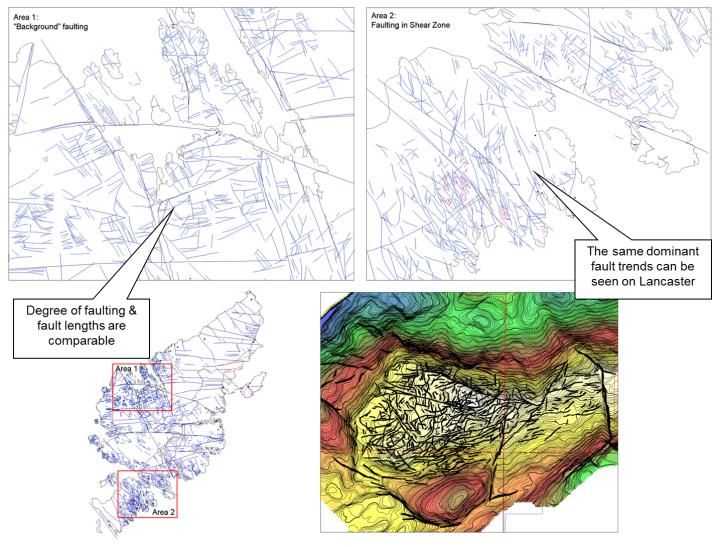
The Lancaster Field

Hurricane | Devex 2015 | May 2015
                                    10
Lancaster
• Uplifted basement ridge
Judd
• Crest ~1km TVDss High
• Water depth ~150m
• Juxtaposed source rock
0 10 20 30 40 50 km
• Prolific kitchen to the north,
additional kitchen to the south
Hurricane | Devex 2015 | May 2015
110
5 -
-1
0
-
60
-1
-14
-150
0
00
00
-1700
-14 -14
00
00
-19
Lancaster
00
00
00
-20
4
00
-1
3
2
-1
-1
0 0
-17
-12
0
00
Development well 0
8
-1 -1600 205/21a-6
00
-11
Exploration well
205/21a-4
00
-15 -12
0 0
Appraisal well
-16 -1300
205/21a-4z
-1400
00
6 00
-1 Shell well
-1300
205/21-1a
0 0.5 1 1.5 2km
00
Top hole location Top basement penetration
-15
-150
0
• Originally drilled by Shell in 1974
-1400
-1600
• Hurricane have appraised with three wells since 2009, demonstrating: 00
-15
00
- Oil below mapped structural closure
4
00
-1
-16
-1700
- Seismically-interpreted fault network is confirmed by well penetrations 00
-1800
00
-17 -19
0
Hurricane | Devex 2015 | May 2015 -150
-1 12
6 00
-17
0Lithology
Tonalite (2.3-2.4 Ba)
• Plutonic rock, quartz rich granite
• 80-95% of GRV based on well data
Dolerite (2.3 Ba)
• Dark plutonic rock, likely part of initial
Fractures define reservoir melt rather than later intrusion
properties, not rock type • 5-20% of GRV based on well data
Hurricane | Devex 2015 | May 2015
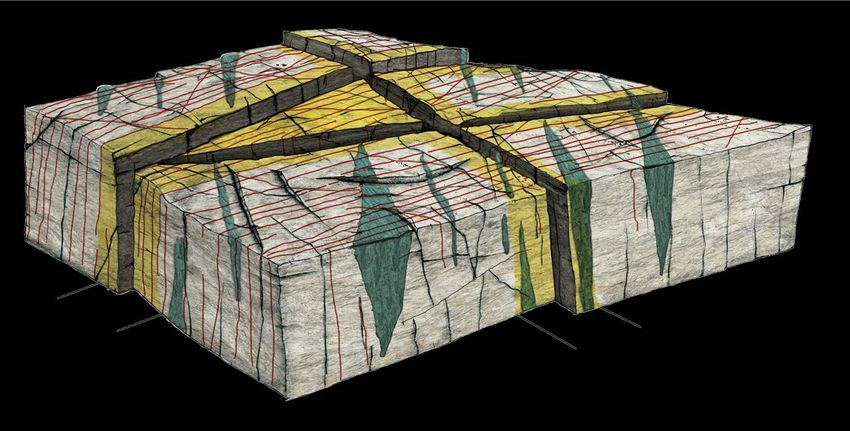
13Conceptual Model Regional joints
High frequency
regional joint set with
preferred NE-SW
Shear fractures Seismic and sub- orientation and high
seismic faults permeability, crossing
displaying clear Fault Zones and
shear offset Fractured Basement
50m
Fault Zones
Represent areas of damaged
Variable-orientation, Fractured Basement
Cross joints rock, associated with seismically-
permeable cross joints The intervening host rock resolvable faults, that include
contribute to flow between Fault Zones is more large aperture fractures
within Fault Zones and pervasively fractured and and therefore improved
Fractured Basement and contributes to flow reservoir characteristics
provide additional
lateral connectivity
Hurricane | Devex 2015 | May 2015
14Modelling Challenges
• Confident identification of the fractures that are contributing to fluid flow
(hydrodynamic fractures)
• Accurate characterisation of the hydrodynamic fracture network
• Fine gridding to capture heterogeneity of the hydrodynamic fracture
network
• Practical methodology to accommodate high contrasts in poroperm and
allow for anisotropy within a continuum model
• Computer and software power to simulate a full field reservoir model
which needs to accommodate over 450 faults as permeability “high ways”
Hurricane | Devex 2015 | May 2015
15Static Modelling
Hurricane | Devex 2015 | May 2015
16Automated techniques
Seismic Fault
Interpretation
Manual fault interpretation
• Fault modelling is key to
understanding major fluid
flow pathways
Comparisons with
Hurricane | Devex 2015 | May 2015
analogue outcrop locations 17-1800 -1-824 -2 -1800 -1-824 -2 -2 -
000 5 00 5 40 25
0 00 -26000 00 -26000 00
-2200 -2200 -2200
0 -1 -1
00
-2000 2 50 -2100 700 -2000 -2100 70
0 -2000 -2100
-23
- -2400 -2400
-23 -23 -23
Lancaster Fault Map Evolution
0
40 -1900 00 -1900 0 0 -1900 00 0
-2 -2200 -23 -2200 20
00 -2
-1600 -1600 -1600
-21 -1 -21 -1 100
00 -180 -2000 00 800 -2000 00 800 -2
-22 0
00 -1800
9
-1 -1 -1 -1
0 7 0 7 0 70 0
60 00
-170
-1
40
2009 pre-drill 00
00
-1
40
2010 post-drill 00
00
1 40
2014 post-CPR 000
-1 -21
-1
5
-1
5 -1900 - -2-1090
0
0
0
60
-1
-1800 -1800
-14
-14
-14
-150 -150 -150
0 0 0
00 00 00
00
00
00
-1700
-1700
-14 -14 -14 -14
14
-17- 00 -14 -1700 00
00
0 -1600 0 -1600 0 5 -1
-19 0 0 0 -1
-1 000
00
0
0
0
40
40
40
-14
0
00
00
00 00 00
30
-2
-1
-1
-1
3
3
2 2 2
-1
-1
-1 -1 -16 -1
0 0 -1500 00 -1500 0
-12 -130
-17
-12 -12
0 0 00 00
0 -1400 -1400
80
-1
00
-1600 -1600
3
-2
-1
-1
3
3
-1200 -1200
00
00
00 00 00
-11 -11 -11
0 0
30 30
-1 -14
0 -1
0
00
00
-15
-15
00
-12 -12 -15 -12
-2100
0 0 00 0 0
-16 -16 -1300 -1300 -1300
-1400
00 00 -1400 -1600
6 00
-1
-1300
-1300
-1300
00
00
-19
-16
-16
00
0 0
0 0.25 0.5 0.75 1km 0 -140
0.25 0.5 0.75 1km 0 -140 0.5
0.25 0.75 1km
-20
-1700
0
0 0
0
00 0 0 -17
-15 -15
-1800
00 00
-15 -15
-150 -150
0 0
• New seismic techniques and increased well control have
00
-1400 -1400 -1400
-18
-1600 -1600 0 -1600 0
60 60
00 0 -1 0 -1
allowed fault map to be continually improved
0 0
-15 -15 -15
0
0
40
40
0 0 0 0 0 0
-1
-1
-16 -16 -16
-1700 -1700 -1700
0
0
-170
-170
Hurricane | Devex 2015 | May 2015
-1800 -1800 -1800 18
00 00 00 00 00 00Fault Ties to
Wells
• Good tie between seismic
interpretation at top basement
with well-interpreted fault zones
205/21a-4 205/21a-4z
• Indicates faults are
vertical or near-
vertical
• Accurate prediction
for future well
placement
Hurricane | Devex 2015 | May 2015
19The Lancaster
Static Model
1. Fault model (vertical faults)
2. Distance from fault property
3. Base Case facies model (40m
wide fault zones)
Hurricane | Devex 2015 | May 2015
20Dynamic Modelling
Hurricane | Devex 2015 | May 2015
21Historical DFN DFN incorporating Fault
Zones and regional
Modelling joints
• Discrete Fracture Network
(DFN) modelling is
designed to model the
behaviour of individual
fractures
• A successful match to the
205/21a-4z PLT was
achieved Pressure snapshot
• However, DFN models are
not designed for
production forecasting
Hurricane | Devex 2015 | May 2015 PLT derivative match 22Historical Sector Modelling
• 4km x 4km sector model
constructed to run in
ECLIPSE
• Testing scenarios from 2013
Competent Persons Report
• Reasonable results achieved,
but:
- Long run times
- Requirement to coarsen grid
- Boundary edge effects
Hurricane | Devex 2015 | May 2015
23High-Resolution Simulator
• Dynamic modelling efforts provided valuable insight into properties of
the field, indicating:
- Highly connected hydrodynamic fracture network
- Likelihood of supportive aquifer
- Support for oil outside structural closure
• However, neither the sector or DFN model are suitable tools for full
field simulation
• Therefore, a new solution was required that would allow practical
simulation of the Lancaster Field
• INTERSECT, by Schlumberger, was selected for testing
Hurricane | Devex 2015 | May 2015
24Eclipse vs. Intersect Sector Elapsed Time
70
60
50
Improved
Run Time
Elapsed Time, hours
40
30
20
• On a comparable dual core machine,
10 INTERSECT improves run time of
Intersect 3 hours sector model from 65 to 3 hours
0
2014
2015
2016
2017
2018
2019
2020
2021
2022
2023
2024
2025
2026
2027
2028
2029
2030
2031
2032
2033
2034
2035
2036
2037
2038
Intersect Sector Elapsed Time
3
2.5
• INTERSECT allows better 2
Elapsed Time, hours
scalability with more processor
cores 1.5
• 16 core desktop workstation 1
runs sector model in 20 minutes
(no change to results) 0.5
0
2014
2015
2016
2017
2018
2019
2020
2021
2022
2023
2024
2025
2026
2027
2028
2029
2030
2031
2032
2033
2034
2035
2036
2037
2038
Hurricane | Devex 2015 | May 2015
25Benefits of INTERSECT
• High resolution model
- Fine scale to model geological complexity of fracture network
- No need to unrealistically upscale
• Unstructured grid
- Enables more complex fault / fracture patterns to be modelled
• Faster run times
- Allows many more simulation cases to be run in a realistic timeframe
- Uncertainty analysis on many factors to increase confidence in range
of outcomes
- Opportunity for full field simulation rather than limited sector model
Hurricane | Devex 2015 | May 2015
26Dynamic Modelling Process
Historic DFN
and sector
modelling INTERSECT
sector model
test runs vs.
ECLIPSE First pass full
field scenario
modelling Further
uncertainty
analysis
New dynamic Full field
reservoir data development
(205/21a-6) planning
Hurricane | Devex 2015 | May 2015
27205/21a-6 – 2014
horizontal well results
Hurricane | Devex 2015 | May 2015
28205/21a-6 – 2014 horizontal well
205/21a-4Z
205/21a-6 205/21a-4 205/21-1A mTVDss
1000
Structural closure
1200
Hurricane block boundary
1,380m TVDss 1400
1,597m TVDss -
1600
1,781m TVDss 1800
2000
• In 2014, Hurricane drilled the first 1km horizontal well targeting fractured
basement on the UKCS
• This highly successful well confirmed commercial rates from the basement
• Provided new dynamic data for simulation modelling
Hurricane | Devex 2015 | May 2015
29205/21a-6 – a high quality
dynamic dataset • Max stabilised flow
205/21a-6 Well Test Overview Oil Production (STB/d) Water Production (STB/d) Downhole pressure (psig)
rates:
10000 1920
- 5,300 bopd (natural)
9000 1910
- 9,800 bopd (ESP)
8000 1900
- Both constrained by
7000 1890 surface equipment
• No formation water
Liquid Production Rate (STB/d)
6000 1880
Pressure (psig)
5000 1870 encountered
4000 1860
• World class P.I.
3000 1850
- 160 stb/d/psi
2000 1840
• Minimal skin
1000 1830
• Excellent quality
0
16/06/14 10:00:00 17/06/14 10:00:00 18/06/14 10:00:00 19/06/14 10:00:00 20/06/14 10:00:00 21/06/14 10:00:00 22/06/14 10:00:00
1820
23/06/14 10:00:00 dynamic dataset
Hurricane | Devex 2015 | May 2015
30Simulation Model
• Currently simulating single
well in full field model
• Ability to increase to
simulation of full
development plan
Hurricane | Devex 2015 | May 2015
31First Pass Simulation Well Test
Match
• Excellent well test match achieved with a range of scenarios
• No barriers observed
• Extremely well connected system
Hurricane | Devex 2015 | May 2015
32Implications from First Pass
Simulation Results
• Plateau response, no
immediate decline
• Does not require 2km
horizontal well to
achieve commercial
rates
• Potential for reduced
well count in Full Field
development
Hurricane | Devex 2015 | May 2015
33Conclusions
• Acquiring a high quality dynamic dataset from the 2014
horizontal well has improved Hurricane’s understanding of the
behaviour of the fractured basement reservoir
• Utilising an innovative high-resolution simulator (INTERSECT)
has been key to modelling this challenging reservoir
• This work represents a step-change in Hurricane’s ability to
continue unlocking value in this emerging play of the UKCS
• Work is ongoing to feed into Full Field development planning
- Presentation this afternoon by Neil Platt, COO, on hub development
concepts
Hurricane | Devex 2015 | May 2015
34Questions & Answers
Hurricane | Devex 2015 | May 2015
35You can also read


