Environmental Monitoring Report
←
→
Page content transcription
If your browser does not render page correctly, please read the page content below
Environmental Monitoring Report

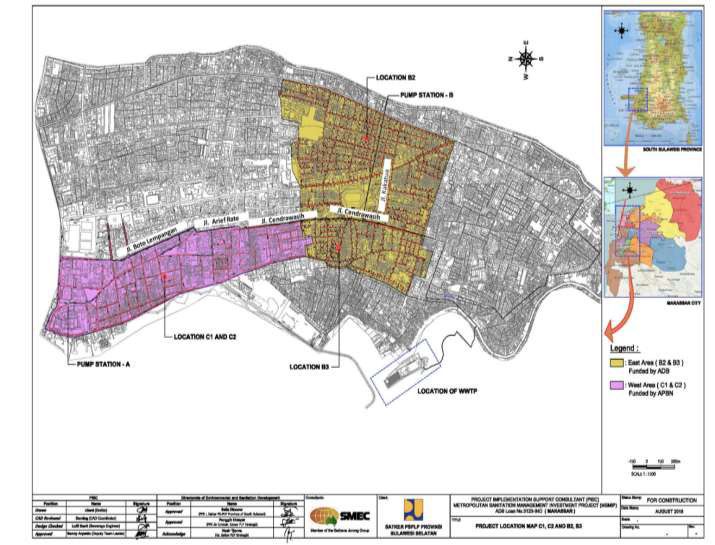
# Semiannual Report
January - June 2021
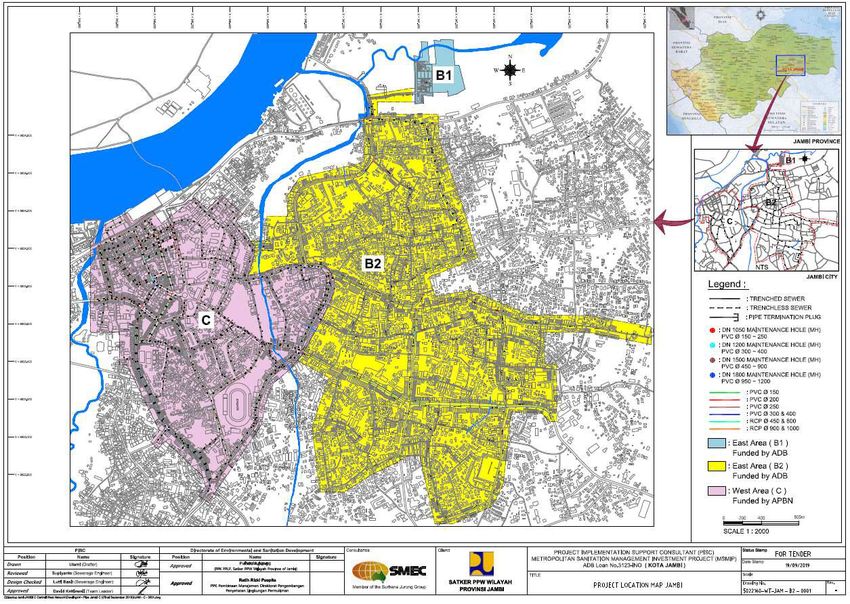
September 2021

Indonesia: Metropolitan Sanitation Management
Investment Project - Part 1

Prepared by Directorate General of Human Settlements, Ministry of Public Works and Housing
for the Republic of Indonesia and the Asian Development Bank.
CURRENCY EQUIVALENTS
                   (as of 23 September 2021)

          Currency unit      –   rupiah (Rp)
               Rp1.00        =   $0.0000702691
                 $1.00       =   Rp14,231

                          ABBREVIATIONS
ADB          –     Asian Development Bank
AIF          –     ASEAN Infrastructure Fund
AHs          –     Affected Households
APs          –     Affected Persons
AMDAL        –     Environmental Impact Assessment (Analisis Mengenai
                   Dampak Lingkungan)
APIP         –     Government internal supervision/audit agency
BAPPEDA      –     Development Planning Agency (Badan Perencanaan
                   Pembangunan Daerah)
CEMP         –     Contractor’s Environmental Management Plan
CAP          –     Corrective Action Plan
CWS          –     Collection Wastewater System
DLHK         –     Dinas Lingkungan Hidup dan Kebersihan (Environment and
                   Cleanliness Agency)
DDR          –     Due Diligence Report
DFAT         –     Department of Foreign and Trade (Australia)
DGHS         –     Directorate General for Human Settlements
DED          –     Detailed Engineering Design
EA           –     Executing Agency
GRM          –     Grievance Redress Mechanism
GOI          –     Government of Indonesia
IA           –     Implementing Agency
IEE          –     Initial Environmental Examination
LARP         –     Land Acquisition and Resettlement Plan
LPIU         –     Local Project Implementation Unit
LPMU         –     Local Project Management Unit
MDG          –     Millennium Development Goals
MSMIP        –     Metropolitan Sanitation Management Investment Project
OCR          –     Ordinary Capital Resources
O&M          –     Operation and Maintenance
PEMDA        –     Local Government (Pemerintah Daerah)
PU           –     Public Works
PISC         –     Project Implementation and Supervision Consultant
PPK          –     Commitment Maker (Pejabat Pembuat Komitmen)
PPMU         –     Provincial Project Management Unit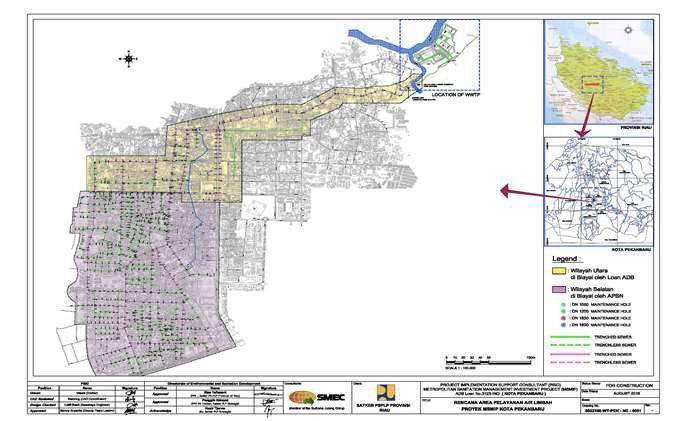
PPIU            –     Provincial Project Implementation Unit
             SATKER          –     Work Unit (Satuan Kerja)
             SPS             –     Safeguard Policy Statement
             UPTD            –     Local Technical Implementation Unit (Unit Pelaksana Teknis
                                   Daerah)
             WWTP            –     Wastewater Treatment Plant

                                              NOTE
       (i)    In this report, "$" refers to United States dollars.

This environmental monitoring report is a document of the borrower. The views expressed herein
do not necessarily represent those of ADB's Board of Directors, Management, or staff, and may
be preliminary in nature.

In preparing any country program or strategy, financing any project, or by making any designation
of or reference to a particular territory or geographic area in this document, the Asian
Development Bank does not intend to make any judgments as to the legal or other status of any
territory or area.
TABLE OF CONTENTS

EXECUTIVE SUMMARY................................................................................................ 1
I.    INTRODUCTION ................................................................................................ 3
      a.    Report Purpose and Rationale ................................................................ 3
      b.    Project Objective and Components ......................................................... 3
II.   PROJECT IMPLEMENTATION PROGRESS ..................................................... 8
III.  INSTITUTIONAL SETUP AND RESPONSIBILITIES FOR EMP
      IMPLEMENTATION AND SUPERVISION ........................................................ 10
      a.    Institutional Responsibilities for Environmental Management ................ 10
      b.    Incorporation of Environmental Requirements into Project Contractual
            Arrangements ....................................................................................... 14
IV.   COMPLIANCE WITH ENVIRONMENT RELATED PROJECT COVENANTS ... 14
V.    ENVIRONMENTAL MITIGATIONS MEASURES IMPLEMENTED IN THE
      REPORTING PERIOD ...................................................................................... 18
VI.   ENVIRONMENTAL MONITORING ................................................................... 29
VII.  SUMMARY OF ENVIRONMENTAL COMPLIANCE MONITORING .................. 33
VIII. PUBLIC CONSULTATION, GRIEVANCE REDRESS MECHANISM................. 42
IX.   HEALTH AND SAFETY .................................................................................... 60
X.    INSTITUTIONAL STRENGTHENING AND TRAINING ..................................... 62
XI.   KEY ENVIRONMENTAL ISSUES ..................................................................... 62
      i.    CONCLUSION ...................................................................................... 63
      ii.   SUGGESTIONS .................................................................................... 64

                                                      LIST OF TABLES
Table 1. Projects Description – Loan ADB ...................................................................... 4
Table 2. MSMIP Packages Implementation Progress ..................................................... 8
Table 3. Environmental Aspects Institutional Set-up ..................................................... 10
Table 4. Status of Compliance with Loan Covenants Progress/Status as of 31 June 2021
..................................................................................................................................... 15
Table 5. Mitigation Measures Implemented and Compliance with EMP ........................ 18
Table 6. Environmental Monitoring Plan for the Cities’ Subprojects .............................. 29
Table 7. Number of Local Workers ............................................................................... 33
Table 8. Laboratory analysis result of noise level on Makassar B2 Package ................ 35
Table 9. Laboratory analysis result of Air Quality Ambient on Package B2 ................... 35
Table 10. Domestic Wastewater Level Standard Laboratory Analysis Results ............. 36
Table 11. Domestic Wastewater Level Standard Laboratory Analysis Results ............. 37
Table 12. Consultation/Information Dissemination Meetings Conducted during Reporting
Period by Subproject .................................................................................................... 42
Table 13. Issues for Further Action............................................................................... 62
                                               LIST OF FIGURES
Figure 1. Map of Project Location for WWTP and Sewerage in Makassar City ............... 5
Figure 2. Map of Project location for WWTP and Sewerage in Pekanbaru City .............. 6
Figure 3. Map of Project Location for WWTP and Sewerage in Jambi City ..................... 7
Figure 4: The Environmental Management Institutional Framework ............................. 13
Figure 5. Process of Accommodating Environmental Management in Implementation of
Construction ................................................................................................................. 14
Figure 6. Grievance Redress Mechanism Process and The Timeline at Each Stage
Metropolitan Sanitation Management Investment Project /MSMIP ............................... 59
Figure 7. Health Safety Work Program ......................................................................... 60
Figure 8. Work Plan for OHS/K3................................................................................... 61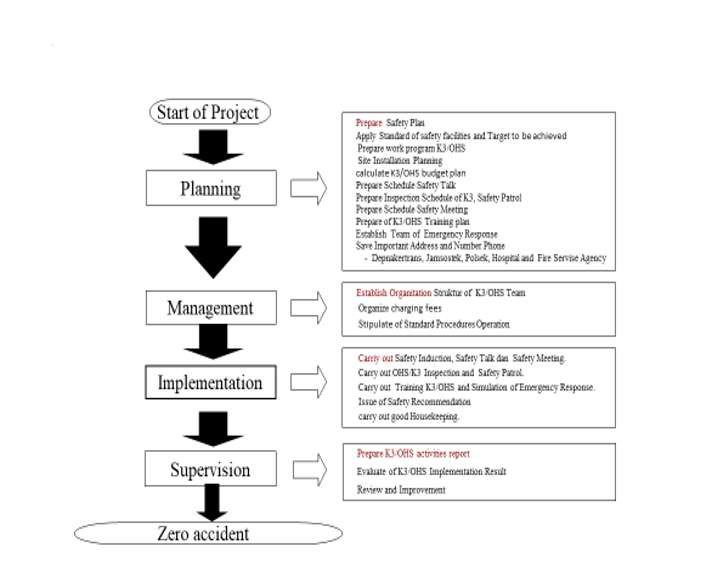
EXECUTIVE SUMMARY
1.    Indonesia has one of the lowest coverage rates of conventional off-site urban sewerage
in Asia. Only 11 out of its 330 cities have partial sewerage systems, and only 2% of the
national urban population is connected to central WWTPs; the remaining urban population
depends on poorly constructed and maintained septic tanks and unlined pit latrines, which
result in leachates penetrating the aquifers. The present sanitation services are inadequate
and unintegrated, due to inadequate and poorly enforced regulations. The project will respond
to the needs of urban communities (including low-income households) by constructing new
separate sewerage systems and wastewater treatment plants (WWTPs), setting up local
wastewater infrastructure management institutions, and strengthening the relevant regional
government departments.

2.     The project was approved on 31 March 2014 for $120 million ($80 million from the
Ordinary Capital Resources and $40 million from the ASEAN Infrastructure Fund). The loan
agreements were signed on 13 May 2014, declared effective on 9 July 2014, and scheduled
for closing on 31 December 2020. The project will be implemented in four cities i.e. Makassar,
Jambi, Pekanbaru and Palembang.1 The Government of Australia, through the Department of
Foreign Affairs and Trade, DFAT, will provide collaborative financing of $48.83 million grant
to finance (i) the preparation of DED for the wastewater treatment plants (WWTPs) and
sewerage systems in Cimahi and Makassar, and (ii) the DED and capital costs for sewerage,
WWTP and construction supervision in Palembang2. On October 2nd 2017, the Project
Implementation Support Consultant (PISC) for the project - Loan No. 3123/-I8280 (AIF)-INO
Metropolitan Sanitation Management Investment Project (MSMIP) was appointed by
Directorate of General Human Settlement (DGHS) to undertake tasks listed under Contract
HK.02.03/MSMIP-KONS/X/11/2017. The PISC contract currently applies for the
implementation support requirements for the local governments of Makassar, Pekanbaru &
Jambi.

3.    In late 2016, the Government issued a new effluent standard (Permen LHK No.68/2016)
regarding quality standards of domestic waste. The new standard is more stringent compare
to the previous standard, which was the basis for the preparation of WWTP DEDs. This
means that WWTPs in Makassar, Pekanbaru and Jambi will require a redesign. This change
in the effluent standards prompted also changes in the wastewater treatment plan (WWTP)
technologies; and address deficiencies in previous detailed engineering design works prior to
PISC engagement. Makassar (Losari) and Jambi WWTP will utilize a Moving Bed Film Biofilm
Reactor (MBBR) while the Pekanbaru will utilize the Fixed Bed Biofilm Activated Sludge
(FBAS) due to poor sub-soil conditions.

4.      The project is Category B for both environmental and social safeguards. There are no
indigenous people that will be affected by it. Land Acquisition and Resettlement Plan3, and
Initial Environmental Examination (IEE) for each of the Subprojects were submitted in 2012
and 2013. Due to the changes that had taken since then, it is imperative to update these
documents during the detailed engineering phase.

1
  Originally in five cities, but Cimahi was dropped during the major change in project approved by the Board in January 2017
(Source of Information: Aide Memoire of Review Mission for Loan 3123/L8280-INO: Metropolitan Sanitation Management
Investment Project, 30 April -5 June 2018 (Intermittent)).
2
  The PISC contract currently applies for the implementation support requirements for the local governments of Makassar,
Pekanbaru and Jambi only. The works and consulting services contracts in Palembang which are financed by DFAT are procured
using the DFAT procurement system. It is anticipated that the environmental monitoring reporting requirements will be done
separately by the Consultant of that Sub-project. Those reports shall be annexed to forthcoming SEMRs.

                                                                                                                          1
5. This is the first semi-annual monitoring report in 2021. The implementation of
monitoring of EMP requirements has been done to all packages in Pekanbaru, Jambi and
Makassar since the projects began its construction activity. However, the environmental
management requirements during the detailed engineering phase are still being assiduously
considered by addressing the new effluent standard issued by the Government, climate
change, and adaptation in the preparation of wastewater technology options that had been
acceptable to the local government units, and to the community as well, even if the selected
options has yet to be fully disclosed to the general public.
6. The IEEs for each of the Subprojects has been updated and approved by ADB on 19
Nov 2019. The IEEs for each of the Subprojects has been updated and approved by ADB on
19 Nov 2019 and has been comply and incorporated into each of the CEMPs documents for
each packages.
7. The Environmental permit for Amdal Makassar sub-project was issued on 30 Jan 2020.
For Pekanbaru Sub-project; Environmental Permit No. 73/IL/TL/2018 for WCS (SC1, SC2,
and NC) was issued by the Head of Environment and Cleanliness Agency on behalf of the
Mayor of Pekanbaru City on 28 Dec 2018; Recommendation No.660/DLHK/UKL-
UPL/01/2020 for WWTP B1 Pekanbaru was issued on 20 Jan 2020 and Environmental Permit
WWTP B1 Pekanbaru on 23 Mar 2020; and, Environmental Permit for Amdal Jambi Sub-
project (WWTP and WCS4) was issued on 20 Dec 2019.
8. AMDAL/UKL-UPL Implementation. Referring to GOI regulation No.27-year 2012 that
the proponent must carry out environmental management and monitoring and the AMDAL /
UKL-UPL implementation report must be sent to DLHK every 6 months.
9. Contractor’s Environmental Management Plan (CEMP). Referring to GOI regulations,
ADB Safeguard Policy Statement (SPS) and technical specifications in the contract
documents, environmental management plan (EMP) must be prepared and implemented by
the Contractor. PISC has conducted CEMP briefing to all contractors, ADB NOL for CEMP of
MKS B2 was issued on 29 July 20 while CEMPs final revision for MKS B1, Pekanbaru B1, NC
and Jambi B1 and B2 was submitted to CPMU on 15 July 21 and forward to ADB on 16 July
21. The reports are now being reviewed by ADB.
10. All land acquisition activities for MSMIP has been obtained prior to construction. The
acquisition for WWTP land in Makassar was completed on 2 February 2012, Pekanbaru on
11 November 2013, and Jambi on 12 December 2018. There will be no more land acquisition
during implementation of this project.
11. The achievement on Gender Action Plan (GAP): 5 actions and 6 out of 15 targets are
on track.
All 4 actions (Action 1: information bulletin on risk of HIV/AIDS; Action 2: Specific gender
sensitisation and capacity development training; Action 3: National Gender and Social
Development Specialist to be hired; Action 5: Sex disaggregated data) are on-track and 1
action (Action 4: Project monitoring system) is completed. Also, 6 out of 15 targets consist of
Target 1: participation of women from vulnerable group in public consultation and campaign;
Target 2: participation of women at public hearings concerning future sanitation; Target 3:
house connections to be provided to poor and vulnerable household; Target 7: Female staff
in management positions in EA/Ias/SDOs; Target 8: promotion of female staff; and Target 9:
public awareness campaign with women participation; are on track.
2I. INTRODUCTION
a. Report Purpose and Rationale
1. Indonesia has one of the lowest coverage rates of conventional off-site urban
sewerage in Asia. Only 11 out of its 330 cities have partial sewerage systems, and only 2%
of the national urban population is connected to central WWTPs; the remaining urban
population depends on poorly constructed and maintained septic tanks and unlined pit
latrines, which result in leachates penetrating the aquifers. The present sanitation services
are inadequate and unintegrated, due to inadequate and poorly enforced regulations. This
results in limited desludging of septic tanks, inadequate stool sludge /septage treatment
facilities, and fragmented operational responsibility. Improved access to safe water and basic
sanitation is part of the Government of Indonesia’s effort to achieve its 2015 Millennium
Development Goal (MDG) targets. While the government’s MDG reports suggest that good
progress has been achieved with respect to sanitation, in practice the available facilities are
substandard, and rely on unsustainable stool sludge /septage removal and treatment facilities.
As a result, there is significant environmental pollution, widespread contamination of surface
and groundwater with the associated spread of water-related diseases, and high infant
mortality. The inadequate sanitation systems and their resulting environmental and health
impacts produce economic opportunity losses of about $5.6 billion annually, equivalent to
2.3% of the country’s gross domestic product. These issues can be solved by the introduction
of (i) public sewerage and wastewater treatment facilities; (ii) an institutional framework for
their effective operation and maintenance (O&M); and (iii) public awareness of good sanitation
practices.
2. Monitoring is an ongoing, systematic and planned activity. Monitoring performed on
environmental components that are relevant for use as an indicator for evaluating compliance,
trends (trend line) and critical level of an environmental management life. Purpose of
Monitoring Report are:
• To explain the progress of environmental monitoring activities including problems and
constraints faced in implementation and solutions taken during the January-June 2021
period.
• To present the achievements of environmental monitoring activities compared to the
output indicators stated in the EMP monitoring framework.
• The report becomes a reference for the upcoming semester activities.
b. Project Objective and Components
3. The project will support the Government of Indonesia in the improvement of urban
wastewater services in the cities of Jambi, Makassar, and Pekanbaru, which currently lack
any pipes sewerage and wastewater treatment facilities. The project will respond to the needs
of urban communities (including low-income households) by constructing new separate
sewerage systems and wastewater treatment plants (WWTPs), setting up local wastewater
infrastructure management institutions, and strengthening the relevant regional government
departments.
4. The project was approved on 31 March 2014 for $120 million ($80 million from the
Ordinary Capital Resources and $40 million from the ASEAN Infrastructure Fund). The loan
agreements were signed on 13 May 2014, declared effective on 9 July 2014, and scheduled
for closing on 31 December 2023.
35. Additional information about the Project is shown in table 1 below.
Table 1. Projects Description – Loan ADB
No Description ADB – OCR Loan ADB – AIF Loan
1 Loan Number ADB L 3123- INO ADB L 8280 - INO
2 Project Number 43251 – 025 43251 - 025
3 Total Loan $ 80 million $ 40 million
4 Signed Loan 13-May-14 13-May-14
5 Effective loan 09-Jul-14 09-Jul-14
6 Closing date 31-Dec-20 31-Dec-20
7 Method of Payment Direct Payment Direct Payment
8 No Special Account N/A N/A
9 Amount of Initial N/A N/
Deposit
Project Location 3 (three) Local Government 2 (two) Local Government
Implemented
IImplemented
a. Jambi, b. Pekanbaru, a. Jambi City,
c. Makassar City b. Pekanbaru
11 Executing Agency The Directorate General of Human Settlements,
Ministry of Public Works and Housing
12 Institutions Involved
a. Central Government DGHS, Central
Project Management
Unit (CPMU)CPMU
b. Provincial PPMU, PPIU PPMU, PPIU
Government
Source: Monthly Report No. 8, June 2018, PISC.
6. MSMIP in Makassar City consists of two components, are (i) construction of a
wastewater treatment plant (WWTP); and (ii) construction of sewerage network of
approximately 81.716 km in Ujung Pandang, Makassar, Mariso, Mamajang and Tamatale
Subdistrict, as shown in the figure below. WWTP in Makassar City will serve 9,900 household
connections and 4,100 commercial connections.
4Figure 1. Map of Project Location for WWTP and Sewerage in Makassar City
7. Pekanbaru MSMIP consists of (i) construction of a WWTP and (ii) construction of
sewerage network of approximately 38.560 km in Pekanbaru Kota, Senapelan, Lima Puluh
and Sukajadi District, as shown in the figure below. WWTP in Pekanbaru City will serve 9,900
household connections and 1,100 commercial connections.
5Figure 2. Map of Project location for WWTP and Sewerage in Pekanbaru City
8. MSMIP of Jambi City consists of (i) construction of a WWTP and (ii) construction of
sewerage network of approximately 35 km in Jambi Timur and Pasar Jambi District as shown
in the figure below, WWTP in Jambi City will serve 9,300 household connections and 1,000
commercial connections.
6Figure 3. Map of Project Location for WWTP and Sewerage in Jambi City
7II. PROJECT IMPLEMENTATION PROGRESS
9. MSMIP packages implementation progress can be seen in the table below.
Table 2. MSMIP Packages Implementation Progress
Progres Progres
s s Varianc
Ref Contract (Planned (Actual) e Status and Issue Follow-up Action
) to end- to end- +/-
Jun 21 Jun 21
MAKASSA
R
1 B1 6.007 % 7.535 % +1.528% • Variation for architectural • PPM are progressing
works leading to increase informally with local
in time and cost architects
• Inlet works construction. • PPM progressing permanent
Deep and challenging and temporary works
especially with the designs
interface with the
Package C1 Contractor
2 B2 21.026% 22.324 +1.298 • The National Roads • Probably needs to be
% % Authority (NRA) are not removed from the scope
allowing installation in the • Contractor will coordinate
street Jalan Veteran with C2, also Waskita
Selatan (B2) and Jalan A. Karya.
Yani (C2)
• Risk of failed trenchless
installation due to ground
conditions and
inappropriate
3 C1 31.540 % 33.600 +2.06% • Flotation of base slab at • Outer skin of sheet piles
% MH 1008 installed to 18m deep.
• Contractor complying and
• Restricted to daytime PISC PR has explained to
work at MH 10335 residents.
4 C2 21.549 % 23.005 + • The National Roads • Drawings Finalized
% 1.456% Authority (NRA) are not
allowing installation in the • PISC recommended the
street and Jalan A. Yani Contractor to cut-back and
(C2) seek specialist advice for
proper dewatering and
• Inadequate dewatering shoring.
and shoring is leading to
trench collapses which is
a safety, quality and
progress issue.
5 C3 43.649 % 42.119 -1.53 % • High water table and soft • Contractor to submit method
% ground statement focusing on
• Safety management and dewatering and shoring. Plan
implementation B for well-point type
dewatering strongly
recommended by PISC.
• Warning Letter issued to
Karaga on 10/05/21 for
improvements
PEKANBARU
8Progres Progres
s s Varianc
Ref Contract (Planned (Actual) e Status and Issue Follow-up Action
) to end- to end- +/-
Jun 21 Jun 21
6 B1 0.63% 0.51 % -0.12% • Changing BOD / COD • Changes in the BOD /COD
parameters parameters could
potentially increase the
OPEX cost of the WWTP.
Waiting on a response from
PPK
7 NC 13.04 % 10.65% -2.39 % • Temporary Works Design • Overdue and delaying the
for Wet Well commencement of
• Clashes below existing construction of the Wet Well
bridges
• Three bridge crossings are to
be redesigned due to clashes
with existing foundations.
8 SC1 80.19% 85.33% +5.14% • House Connections • Very little house connection
• Replacing the Precast works are being undertaken.
Manhole Rings • Significant risk of running out
of time to complete the
repairs
9 SC2 83.75% 77.44% - 6.31% • The Contractor is -6.31 % • Additional resources need to
behind the Revised be mobilized.
Programme approved on • Contractor failing to react to
28 April 2021 necessary remedial works.
• Several Relative Density
tests of the asphalt
reinstatements have failed
JAMBI
10 B1 5.148 % 2.371 % - • DED process • More intensive discussion
2.777% between the contractor and
the consultant;
• Procurement of Spun • Dia 60 cm: Quality testing11
Plies. June’21; Waiting for the lab
test report
• Dia 30 & 40 cm: process
contract with Subcontractor;
Purcahase Order plan 16
• Low Progress June’21
• PISC instructed the contractor
to revise the ACTION PLAN to
be
realistic and implemented and
based on existing conditions.
11 B2 16.405 % 3.979 % - • Low progress, realization • Contractor been instructed
12.426% only 24.14% of the target to prepare ACTION PLAN
(3,979% of 16.405%) how to achieve the lack of
• Pump Station and delay. Planned: week 4 of
Transmission Line as June
Critical part of the System • Contractor is asked to
prepare separately Curve
for Pump Station and
Transmission Line (HDPE
355 mm)
12 C 2.5941 % 3.2006 + • Change of SLAB for • Contractor will prepare
% 0.6065% national road shop drawing for PISC
review
9Progres Progres
s s Varianc
Ref Contract (Planned (Actual) e Status and Issue Follow-up Action
) to end- to end- +/-
Jun 21 Jun 21
• Contractor Starting • Review on several
construction drawings
have been done
• Make sure that all
requirements ready, as:
material, subcontractor,
permit, equipment, shop
drawings, methodology,
socialization, HSE aspects,
etc
Sources: *) QPR No 15. April – June 2021
III. INSTITUTIONAL SETUP AND RESPONSIBILITIES FOR EMP IMPLEMENTATION
AND SUPERVISION
a. Institutional Responsibilities for Environmental Management
10. Environmental Aspects. The table 3 below summaries the institutional management for
the environmental aspects of the project. The links among related sections under the project
is shown in Table 3 below.
Table 3. Environmental Aspects Institutional Set-up
Unit Unit Functions Responsible for Environmental Consultants/Functions
Aspects/Functions
Construction Phase
Ministry of Public Executing
Works and Agency for the
Housing MSMIP;
Directorate provides
General for Technical
Human supervision and
Settlements responsibility over
(Cipta Karya) the investment
Central Project Responsible for CPMU Environment Project Implementation
Management MSMIP Officer (to be designated); responsible Support Consultants (PISC)
Unit implementation for overall and the Capacity
(CPMU) will be in project cities; environmental Building Consultants (CBC);
created under coordinates with supervision of National Environmental
the ADB and other subprojects; coordinates with PPIU Advisor (part of PISC) will: (i)
Directorate of external and LPMU Environment Officers to review the revised IEEs
Development, agencies ensure environmental requirements prepared during detailed
Sanitation, are address effectively; responsible for design stage, (ii) assist
Environment semi-annual environmental monitoring CPMU in ensuring that EMPs
and Housing reports Preparation are included in the bidding
(PPLP)4 documents and civil works
contracts; (iii) assist the
CPMU, PPIU, and LPMU in
monitoring of EMP
implementation, (iv) training
of CPMU, PPIU, and LPMU
4
CPMU has already been created.
10Unit Unit Functions Responsible for Environmental Consultants/Functions
Aspects/Functions
staff in environmental
safeguards and monitoring;
and (v) assist CPMU in
preparation of semi-annual
environmental monitoring
reports.
WWTP Training Consultant
(part of CBC) shall facilitate
hands-on training of all
WWTP Operators
SATKER for the Key PPIU Environment Advisory services to be
Provinces implementation Officer; responsible for provided by the National
as the Provincial unit in the field; overall environmental Environmental Advisor (part
Project provides supervision of construction activities; of PISC)
Implementation construction ensures that the Contractor’s EMP is
Unit (PPIU) contracts’ properly implemented and monitored;
supervision; prepares monthly environmental
closely monitors monitoring reports; provides input to
construction the CPMU Environment Officer in the
progress preparation of the semi-annual
environmental monitoring reports
Preparation
City’s Monitor LPMU Environment Advisory services to be
Local Project implementation Officer; coordinates with the provided by the National
Management of Environment Cleanliness Agency/, Environmental Advisor (part
Unit the project in the Dinas Lingkungan Hidup dan of PISC)
(LPMU). city and Kebersihan (DLHK); assists the PPIU
coordinates the in monitoring the implementation of the
needed local Contractor’s EMP; assists the CSECC
inputs and in Addressing environmental
resources; complaints; Head of LPMU serves as
the Chairperson of the ad hoc City
Sewerage Environmental Complaints
Committee (CSECC)
Construction Implement Contractor’s Health and Safety Officer
contractors of construction (to be designated); responsible for
the proposed activities; implementation of the Contractor’s
city’ sewerage implement the EMP; coordinates with the PPIU and
system Contractors’ LPMU Environment Officers and
EMP DLHK; assist City’s CSECC in
addressing environmental complaints;
contractor’s highest official at the site
such as the Construction Manager or
Construction Superintendent sits as a
member of the CSECC
Operation Phase
City’s Unit Operates the City UPTD’s WWTP Advisor
Pelaksana City’s sewerage Pollution Control Officer (to function (consultant) guides
Teknis Daerah system also as the Environment Officer); City’s WWTP operators
(UPTD) or responsible for all environmental during the initial 3-month
another service matters of the sewerage system period
delivery unit including EMP implementation and
self-monitoring; coordinates with the
city’s environment agency (Dinas
Lingkungan Hidup);
The Pollution Control Officer shall
ideally be the WWTP Supervisor;
ensures compliance to effluent
regulations; permits requirements for
11Unit Unit Functions Responsible for Environmental Consultants/Functions
Aspects/Functions
continued WWTP operation; supervise
the proper operation and maintenance
of pollution control devices; prepares
reports required by BLH including
notification if WWTP is not functioning
well due to technical problems;
recommend to management any
improvements or required additional
equipment for better WWTP
compliance to GOI standards.
Source: Initial Environmental Examination (IEE) of each of the Subprojects dated November 2019.
12Figure 4: The Environmental Management Institutional Framework
.
13b. Incorporation of Environmental Requirements into Project Contractual Arrangements
11. Law No 11 of 2020 concerning Job Creation – article 24 and Regulation No. 22 of 2021
concerning Implementation of Environmental Protection and Management. Article 5 states
that every business and/or activity having significant impact on the environment shall be
obliged AMDAL and Article 6 states that Every business and/or activity excluding from the
criteria for undertaking AMDAL compulsorily shall be to have UKL-UPL.
Regulation No. 22 of 2021 concerning Implementation of Environmental Protection and
Management, Article 13. (d) Holders of violating Environmental Approval are subject to
administrative sanctions.
Contract document Section 6 - Employer’s Requirements division 4 Contractor's Design-Build
Requirements, article 4.1.3 regarding the contractor's requirements for preparing an
Environmental Management Plan before the civil work started.
ADB Safeguard Policy Statement (SPS) explains the environmental management
requirements and its implementation at each stage of the project cycle, among others listed
in paragraph Nos. 15, 17, 19, 34 etc.
12. The Environmental Management and Monitoring Plan (EMP) is a Sub-Chapter of the
MSMIP Initial Environmental Examination (IEE) to ensure that environmental management is
carried out properly and to increase awareness of the implementers (contractors) to carry out
environmental management correctly, seriously and responsibly as well as knowing various
obstacles and problems to the effectiveness in the implementation of environmental
management in the field.
Figure 5. Process of Accommodating Environmental Management in Implementation
of Construction
1. Balai/Satker/PPK explained the need for environmental
Prebid Meeting management and monitoring in civil work
implementation including prepare the CEMP
2. Provide copy of AMDAL/UKL-UPL and Initial
Environmental Examination (IEE), and ADB Safeguard
Policy Statement (SPS) to be submitted to the
Bidding Process Contractor is considering environmental management and
monitoring in Bill of Quantity (BOQ) contract based on
AMDAL/ UKL-UPL recommendations and ADB’s IEE and SPS)
1. The Contractor presented the EMP concept in the
PCM*) construction work plan
2. PISC review and prepared a work plan for supervision of
implementation environmental management
1. The Contractor carries out the EMP and prepare EMP
implementation report as an attachment in MC
Implementation 2. PISC oversees EMP implementation
of Construction 3. The proponent prepares external EMP implementation
report to be forwarded to relevant DLHK every 6 months
IV. COMPLIANCE WITH ENVIRONMENT RELATED PROJECT COVENANTS
(as stated in the environmental permit)
*) Pre-Construction Meeting 1413. Provided under Table 4 below are the Safeguards Related Project Covenants with the
corresponding status of compliance.
Table 4. Status of Compliance with Loan Covenants Progress/Status as of 31 June
2021
Para.
Schedule Covenants Status/Remarks
No.
Schedule 5 Para. 2 Environment. Works in progress (to be
The Borrower shall ensure that the preparation, complied with)
design, construction operation and
decommissioning of the Project all project facilities
comply with (a) applicable laws and regulations of
the Borrower relating to environment, health and
safety; (ii) the Environmental Safeguards; and (c)
all measures and requirements set forth in the IEE,
the EMP and any corrective or preventive actions
set forth in a Safeguards Monitoring Report
Schedule 5 Para. 3 Land Acquisition and Involuntary Works in progress (to be
Resettlement. complied with)
The Borrower shall ensure that all land and all
rights-of-way required for the Project are made
available to the Works contractor in accordance
with the schedule agreed under the related Works
contract and all land acquisition and resettlement
activities are implemented in compliance with (a)
applicable laws and regulations of the Borrower
relating to land acquisition and involuntary
resettlement; (b) the Involuntary Resettlement
Safeguards; and (c) all measures and requirements
set forth in the RP, and any corrective or preventive
actions set forth in the Safeguards Monitoring
Report.
Schedule 5 Para. 4 Without limiting the application of the Involuntary Works in progress (to be
Resettlement Safeguards or the RP, the Borrower complied with)
shall ensure that no physical or economic
displacement takes place in connection with the
Project until:
(a) compensation and other entitlements have been
provided to affected people in accordance with the
RP; and (b) a comprehensive income and livelihood
restoration program has been established in
accordance with the Resettlement Plan.
Schedule 5 Para. 5 Indigenous Peoples. No Indigenous Peoples
The Borrower shall ensure that the Project does not identified at project
have any indigenous people impact, all within the locations.
meaning of the ADBs Safeguard Policy Statement
(2009). In the event that the Project does have any
such impact, the Borrower shall take all steps
required to ensure that the Project complies with the
applicable laws and regulations of the Borrower and
ADBs Safeguard Policy Statement.
15Para.
Schedule Covenants Status/Remarks
No.
Schedule 5 Para. 7 Safeguards-Related Provisions in Bidding Safeguards-Related
Documents and Works Contracts Provisions have been
The Borrower through the project executing agency incorporated in Contract
shall ensure that all bidding documents and document Section 6 -
contracts for works contain provisions that require Employer’s Requirements
contractors to division 4 Contractor's
(a) Comply with the measures relevant to the Design-Build Requirements,
contractor set forth in the IEE, the EMP and article 4.1.3 regarding the
the RP (to the extend they concern impacts on contractor's requirements for
affected people during construction), and any preparing an Environmental
corrective to preventive actions set forth in a Management Plan
Safeguards Monitoring Report; Jambi:
(b) Make available budget for all such WWTP B1 and Sewerage B2
environmental and social measures; Works in progress (to be
(c) Provide the Borrower with a written notice of complied with).
any unanticipated environmental, Pekanbaru:
resettlement or indigenous peoples risks or WWTP B1 and Sewerage
impacts that arise during construction, B2: Works in progress (to be
implementation or operation of the project that complied with)
were not considered in the IEE, the EMP and Makassar:
the RP; WWTP B1: Works in
(d) Adequately record the condition of roads, progress (to be complied
agriculture land and other infrastructure prior with)
to starting to transport materials and Sewerage B2/C1/C2/C3:
construction; and Complete (to be complied
(e) Reinstate pathways, other local infrastructure, with)
and agriculture land to at least their pre- PISC has conducted CEMP
project condition upon the completion of briefing to all contractors,
construction. ADB NOL for CEMP of MKS
B2 was issued on 29 July 20
while CEMPs final revision
for MKS B1, Pekanbaru B1,
NC and Jambi B1 and B2
was submitted to CPMU on
15 July 21 and forward to
ADB on 16 July 21. the
reports are now being
reviewed by ADB.
Schedule 5 Para. 8 Safeguards Monitoring and Reporting Works in progress (to be
The Borrower shall do the following: complied with.
(a) Submit semi-annual Safeguards Monitoring
Reports to ADB and disclose relevant
information from such reports to affected
persons promptly upon submission;
(b) If any unanticipated environmental and/or
social risks and impacts arise during
construction, implementation or operation of
the project that were not considered in the
IEE, the EMP and the RP, promptly inform
ADB of the occurrence of such risks or
impacts, with detailed description of the event
and proposed corrective action plan; and
(c) Report any actual or potential breach of
compliance with the measures and
requirements set forth in the EMP or the RP
promptly after becoming aware of the breach.
Schedule 5 Para. 18 Grievance Redress Mechanism Works in progress (to be
Within 3 months of the Effective Date, the Borrower complied with).
shall: (a) establish compliant and problem
16Para.
Schedule Covenants Status/Remarks
No.
management mechanism acceptable to ADB and
appoint grievance redress focal person in LPMU
and each neighbourhood committee to effectively:
review and document eligible complaints of project
stakeholders; (b) proactively address grievances;
(c) provide the complainants with notice of the
chosen mechanism/action; and (d) prepare periodic
reports to summarize the number of complaints
received and resolved, and final outcomes of the
grievances and chosen actions and make these
reports available to ADB as part of the quarterly
progress reports.
Source: Loan Covenants Progress / Status
17V. ENVIRONMENTAL MITIGATIONS MEASURES IMPLEMENTED IN THE
REPORTING PERIOD
14. Environmental management is an integrated effort to preserve the function of the
environment which includes policies on the arrangement, utilization, development,
maintenance, recovery, supervision and control of the environment.
15. Summary of mitigation/protection measures implemented in the reporting period, can
be seen in Table 5 below.
Table 5. Mitigation Measures Implemented and Compliance with EMP
Impact being Potential Impacts Mitigation Measures defined in Implementation status and compliance
managed / Stage and/or Issues the EMP with EMP
Pre-construction Phase
1. Design Stage Establishing CPIU • An environmental EMU established in Central Project
management unit (EMU) Implementation Unit (CPIU), consisting of
will be established within 40 persons.
CPIU ➔ complied with EMP
2. Bidding and Bidding documents • Environmental section will Environmental section was included in TOR
Construction and contractors’ be included in the TOR for for bidders, environmental clauses were
Preparation qualifications bidders. included in contracts (see Section 6 -
• Environmental- Employer’s Requirements division 4
relatedclauses for Contractor's Design-Build Requirements,
contractors in reference to article 4.1.3 regarding the contractor's
the EMP and monitoring requirements for preparing an
plan will be included in the Environmental Management Plan
construction and supply ➔ complied with EMP.
contracts.
Environmental • Contractors will be required Makassar:
operation and to prepare an B2, C1,C2 and C3: complied with EMP.
supervision environmental operation B1: Work in progress
manual and supervision manual, Pekanbaru: SC1 and SC2: complied
will be reviewed by with EMP B1 and NC : Work in progress.
PISC/PPK and approval by Jambi: B1,B2 and C: Work in progress.
CPMU and ADB.
3. PCM Stage Contractor guidelines Contractors will prepare CEMP Makassar:
in implementing EMP and PISC will conduct briefing B1, B2, C1, C2 and C3: complied with
to contractors for CEMP format EMP.
and a work plan for Pekanbaru:
environmental management B1, NC, SC1 and SC2: complied with
supervision EMP.
Jambi:
B1, B2 and C : complied with EMP.
4. Public Public unrest and • Conduct socialization to Land acquisition activities in Makassar,
perception due social conflict affected persons (AP) Pekanbaru and Jambi complied with
land acquisition • Provide a grievance EMP.
mechanism ➔ Mitigation measures implemented.
• Provide compensation for
lost assets.
Construction Phase
1. Public unrest Social jealousy • Prioritize local workers with Makassar
and conflict, the required qualifications B1, B2, C1, C2&C3: complied with EMP
Work and • Recruitment of workers is Pekanbaru
Business carried out transparently NC, B1, SC1&SC2: complied with EMP.
opportunities & Jambi:
Income B1, B2 and C: Complied with EMP.
Increased Available in CEMPs all packages.
18Impact being Potential Impacts Mitigation Measures defined in Implementation status and compliance
managed / Stage and/or Issues the EMP with EMP
• Involvement of local
workers is included in the
employment contract
• Wages according to the
Provincial minimum wage
(UMP) and included
National health care (BPJS)
2. Soil excavation - Traffic congestion • Schedule of material spoil Makassar
estimated - Road damage transportation to disposal B1, B2, C1 and C2: complied with EMP.
transport of site C3: partialy complied with EMP
excavated soil at • Installation of equipment Pekanbaru
each packages • Existing roads maintenance SC1, SC2: partialy complied with EMP.
MSMIP an NC and B1: Complied with EMP.
average of 5 ret / Jambi:
days by dump B1, B2 and C: Complied with EMP.
truck Traffic management by contractors in
Appendix 2.
3. Increased noise Health disturbed • Vehicles of material and Makassar
level equipment use exhaust B2, C1 and C2: Complied with EMP and
standard ones C3: works in progress.
• Creating a barrier on the Pekanbaru
project site SC1,SC2 and NC: complied with EMP.
(minimum height of 2 B1: work in progress.
meters). Jambi:
• Worker use ear protectors B1,B2&C: work in progress.
The laboratory result in Appendix 3.
4. Decreased air Health disturbed • Installation of tarpaulin on Makassar:
quality and Air pollution pile of excavated soil and B2, C1 & C2. Complied with EMP
material transportation Sewerage C3 and B1 WWTP: work in
vehicles progress.
• Clearing of excavation Pekanbaru:
areas SC1,SC2 & NC: complied with EMP.
• Use boundaries of the work B1: work in progress.
area, so that the impact is Jambi:
localized B1, B2 and C: work in progress.
• Watering in the dry season The laboratory result in Appendix 3.
in the base camp & stock
yard area
• Use of machinery and
equipment that have
passed emissions tests
5. Decreased Health disturbed, • Housekeeping improvement Makassar
water quality water pollution and at base camp areas and B2, C1 and C2: Compliance with EMP
Soil contamination awareness to all workers and C3, B1: work in progress.
at base camp • increase housekeeping, Pekanbaru
surrounding waste segregation and spill SC1: complied with EMP.
prevention SC2, NC: partially compliance with EMP
• A solar tank is stored on a and B1: works in progress.
concrete floor with a roof Jambi:
and oil trap and awareness B2 Sewerage, C and B1- WWTP: work in
to all workers progress.
• Storage material not on the
ground put in container and
there is a separation
between the materials
• Toilet with septic tank
• Drainage system built in the
base camp area
19Impact being Potential Impacts Mitigation Measures defined in Implementation status and compliance
managed / Stage and/or Issues the EMP with EMP
• provide waste bins and
temporary storage areas for
B3
• Provide oil trap at workshop
and fuel tank areas
6. Environment Health disturbed • construction Temporary Makassar
sanitation and Poor storage of hazardous waste B2, C1, C2, C3 and B1: Compliance with
housekeeping (TPS) and hazardous waste EMP.
management, then it will be Pekanbaru:
handed over to a certified SC1: complied with EMP.
third party SC2: Partially complied with EMP.
• carry out maintenance of the NC: partially compliance with EMP and
environment and K3 B1- WWTP: work in progress
• Provide solid waste bins Jambi:
• Domestic waste is disposed B2, C Sewerage and B1- WWTP: work in
of at the landfill site progress.
7. Traffic condition - Traffic congestion • Transportation of heavy Makassar
and road - Transportation equipment at crowded B2, C1, C2 & C3: complied with EMP.
damage spoil material areas is carried out after B1-WWTP: work in progress.
business activities closed or Pekanbaru
night SC1, SC2 and NC: complied with EMP.
• Traffic management, traffic B1 WWTP: work in progress.
diversion, partial road Jambi:
closure Performed traffic B2, C B1 WWTP: work in progress.
management when
transporting of soil
excavation
• Installation of traffic signs
and flagmen
• Roads maintenance
8. Accessibility Closed access to • Provide access roads to Access to the settlement is provided
settlement settlements and during construction.
commercial areas Makassar
• Install temporary small B2, C1, C2 & C3 : Complied with EMP
bridges to houses & shops B1 WWTP: work in progress
• Socialization of Affected Pekanbaru
persons SC1. SC2 & NC: complied with EMP.
• Excavation carried out at B1 WWTP: work in progress
night in the commercial Jambi: B2,C & B1 WWTP: work in
areas progress
9. Soil Erosion Excavation • Strip and stockpile topsoil, Soil erosion protection measures are
build retaining walls where implemented at each site, fully complying
necessary before dumping. with the measures defined in this EMP.
• Provide temporary Makassar
detention ponds or B2, C1, C2, C3 & B1 WWTP: status:
containment to control silt Construction activity, Complied with
run off. EMP.
• Construct intercepting Pekanbaru
ditches and chutes to SC1, SC2 and NC: complied with EMP.
prevent outside runoff B1 WWTP: works in progress.
entering disposal sites, and Jambi: B2, C B1 WWTP: works in
divert runoff from sites to progress.
existing drainage or ponds.
Commissioning Phase
1. Residual Road damage, • Roads reconditioning Makassar
Impacts Construction waste according to existing The project has not been completed
& Soil contaminated conditions Pekanbaru
The project has not been completed
20Impact being Potential Impacts Mitigation Measures defined in Implementation status and compliance
managed / Stage and/or Issues the EMP with EMP
• construction waste is Jambi:
transported to disposal area
or landfill areas The project has not been completed and
• Hazardous waste currently is on initial activity and no road
management such clean up reconditioning has begun.
scattered diesel fuel will be
put in the drum and collect
in the temporary landfill
areas/temporary storage of
hazardous waste (TPS),
then will be sell to a
licensed third party or
handed over to a certified
third party
Operation Phase
1. Work and Public unrest& • Prioritize local workers with The project not yet in operation
Business Social jealousy the required qualifications
opportunities & • Recruitment of workers is
Income carried out transparently
Increased • Involving women in WWTP
operation
• Wages according to the
UMP and included BPJS
Employment
2. Odour Impact Health disturbance • Install odour control The project not yet in operation
and public facilities
perception • Pump house equipped with
activated carbon and
ventilation greening with
plants
3. Decreased Health • Housekeeping The project not yet in operation
water quality disturbance, water improvement at WWTP
pollution at WWTP areas and awareness to all
surrounding workers
• increase housekeeping,
waste segregation and spill
prevention
• Drainage system built in the
WWTP area
• provide waste bins and
temporary storage areas for
B3
• Groundwater monitoring
well was made from PVC
pipes in diameter from 2 to
2.5 inc,
within 4-6 m at WWTP
areas.
4. Decreased air Health disturbance • Installation of tarpaulin on The project not yet in operation
quality and Air pollution mudflows transportation
vehicles
• Use of machinery and
equipment that have
passed emissions tests
21Summary of Implementation status and compliance with EMP
16. Construction Phase
➢ Covid Protocol Implementation During Construction
The outbreak of the Coronavirus Disease 2019 (COVID-19) has, and could, continue to
cause disruptions to the projects. Countries all over the world have reacted with various
mitigation measures to curb the spread of the virus, including closing borders, revoking
visas, implementing travel bans, imposing lockdowns of towns and provinces, and
enforcing self-isolation and/or quarantine periods. As a company, the PISC have put
measures in place to enable staff to:
a) Abide by the regulations imposed by the Government of Indonesia; and,
b) Follow the advice of the World Health Organization and the relevant governmental
ministries to limit the spread of the virus.
Currently there is no lockdown and contractor activities on all packages in Makassar,
Pekanbaru and Jambi have not been suspended. However the PISC has provided the
following ‘New Normal’ guidelines to PISC employees located in Indonesia:
• All employees are advised to defer international business travel until further notice.
Also, all employees are to avoid domestic travel as far as possible.
• For those working in project offices and sites, employees shall follow the work
arrangements specific to each site, as agreed with Clients, and also in line with
Government regulations.
• If PISC employees develop any of the COVID-19 symptoms, they are immediately
required to seek medical attention. They may not return to work until we have a
medical certificate clearing them for work.
• In order to effectively practice social distancing, PISC employees limit face to face
meetings. Where possible, meetings are limited to two persons from each party.
None of the Contractors have indicated that there have been any procurement delays
as a consequence of Covid-19 related issues.
➢ Mitigation impact compliance with EMP
a. Public Unrest and Conflict, Chance of Work, Business Opportunities &
Income Increased
Public unrest and conflict will arise if the project does not accommodate local workers
and not provides standard wages and workers are not given the right to health in
accordance with applicable regulations. Recruitment for labour by prioritizing local
workers has been included in the contract.
Contractors at Makassar B1, B2, C1, C2 and C3 and Pekanbaru SC1, SC2, NC and
B1 and Jambi B1, B2 and C has hired labor from local community to do project works
such as substations works, tree cutting, marking and stringing. Prioritize local workers
with the required qualifications and recruitment of workers is carried out transparently.
Involvement of local workers is included in the employment contract. Wages is
according to the provincial minimum wage (upah minimum provinsi/UMP) and included
National health care (Badan Penyelenggara Jaminan Sosial/BPJS). These works have
provided benefits for local people.
22b. Presence of archaeological / cultural relics in excavations
The mitigation action for disturbance of archeological finding is temporarily stopping all
activities if archeological and cultural remains are found in the location of works.
Furthermore, it will be coordinated with the local government and Archaeological
Heritage Preservation Center.
All packages in Makassar, Pekanbaru and Jambi have no archaeological/cultural relics
in pipeline location (because sewerage line using Right Of Way/ROW) and WWTP area
is used to be palm oil plantation.
c. Soil Excavation
The soil excavation is from construction activity (open cut, jacking and boring) and
disposal areas the project will mitigate soil excavation refer to standard operation
procedures (SOP).
Makassar
Package B2:
Transportation of the excavated soil used a Dump Truck with capacity of 6 - 8 m³. The
average volume of the excavated soil in period of January - June 2021 for B2 Package
is 6,746.4 m3.
Package C1:
Transportation of the excavated soil used a Dump Truck with capacity of 6 - 8 m³. The
average volume of the excavated soil in period of Jan - June 2021 for C1 Package is
5.796 m3.
Package C2:
Transportation of the excavated soil used a Dump Truck with capacity of 6 - 8 m³. The
average volume of the excavated soil in period of Jan - June 2021 for C2 Package is
3198 m3.
Package C3:
Transportation of the excavated soil used a Dump Truck with capacity of 6 - 8 m³. The
average volume of the excavated soil in period of Jan - June 2021 for C3 is 4,210 m3.
Package B1:
The construction activity has just started for this package (earthwork). There is no
excavation soil activity for WWTP project yet (the photograph is shown in Appendix 3).
Pekanbaru
Package SC1:
The average volume of the excavated soil in period of January - June 2021 is 10.601,65
m3. It’s generated from open trench and jacking/boring activity and directly transported
to disposal area at stockyard by dump truck 5 trips/day.
Package SC2:
The average volume of the excavated soil in January – June 21 period is 5,850 m3. It’s
generated from the open trench and jacking/boring activity, and directly transported to
disposal area at the stockyard by utilizing dump truck 5 trips/day.
23Package NC
The average volume of the excavated soil in January – June 21 period is 2,546 m3. It’s
directly transported to disposal area at the stockyard by utilizing dump truck with
capacity of 6 – 8 m3 5 trips/day.
Package B1
The construction activity has just started for this package (earthwork). There is no
excavation soil activity for WWTP project yet.
Jambi Packages
Package B1:
The construction activity has just started for this package (earthwork). There is no
excavation soil activity for WWTP project yet.
Package B2 and C: The construction activity has just started for this package,
especially for initial works like marking, fit test activity and base camp construction.
There is no excavation soil activity for this package yet.
d. Increased noise level
The source of noise is mainly come from drilling, excavation machines and heavy
vehicles, but most equipment presently used during construction works are excavator
and drilling machines.
Makassar
Contractors of B2, C1, C2 and C3 have constructed barrier on the Base camp/Direction
Kit/stock yard and project site (jacking, boring activity and pit test) with a minimum depth
of 2 meters. The equipment and material transport vehicles have applied the emission
standard. The contractors B2 has conducted noise level sampling in 16 March 21 and
the result could be seen in table 8. Meanwhile for C1, C2, and C3, the second sampling
will be conducted on August 2021 and for B1, the first sampling will be conducted on
September 2021.
Pekanbaru
Contractors of SC1 and SC2 have constructed the barrier on the project site (jacking
activity and pit test) with a minimum depth of 2 meters. The equipment and material
transport vehicles have applied the emission standard. The contractor of SC1 and SC2
will be conducted the second noise level sampling on August 2021, while NC and WWTP
B1 will be conducted on September 2021.
Jambi
Noise measurement for packages WWTP B1 and sewerage B2 and C will be conducted
in September 21. Currently, the activity for the Jambi Packages are base camp
construction and preparation for the civil works such as marking and test fit. There is
no civil works commenced yet.
e. Decreased Air Quality
Air quality deterioration could be caused by emission of construction machines (truck,
car, motor cycle), operation of drilling machineries, heavy vehicles and material
transportation and road recondition.
• Drilling and excavation
24You can also read


