FACILITATORS' FIELD GUIDE FOR FARMER FIELD SCHOOLS ON PARTICIPATORY PLANT BREEDING - Module: Participatory Variety Enhancement
←
→
Page content transcription
If your browser does not render page correctly, please read the page content below
FACILITATORS’ FIELD GUIDE
             FOR FARMER FIELD SCHOOLS
          ON PARTICIPATORY PLANT BREEDING
                            Module:
              Participatory Variety Enhancement

Donor: Sida    Partners: Oxfam, CTDT-Zimbabwe, CTDT-Zambia, PELUM, ESAFF, Li-Bird, NAFRI,
                                        ASOCUCH, FOVIDA, FSN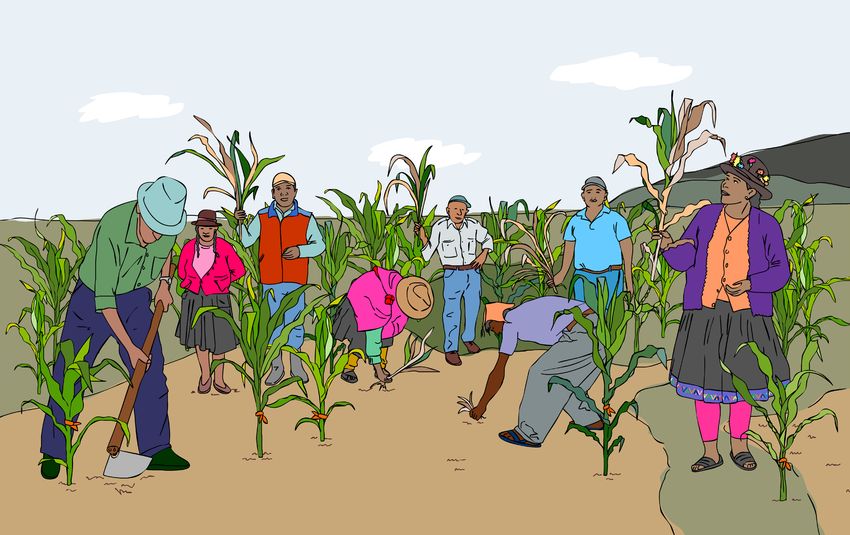
FACILITATORS’ FIELD GUIDE
     FOR FARMER FIELD SCHOOLS
  ON PARTICIPATORY PLANT BREEDING
                             Module:
               Participatory Variety Enhancement

This module is written by Frederik van Oudenhoven, Anita Dohar and Hilton Mbozi.
  This work is part of the Sowing Diversity = Harvesting Security program Phase II
  (2019-2022). Funding for the program is provided by the Swedish International
                      Development Cooperation Agency (Sida).
This illustrated field guide is developed jointly with SD=HS’ consortium partners. It is
 based on Farmer Field School training experiences in Zambia, Zimbabwe, Uganda,
                         Peru, Guatemala, Lao P.D.R. and Nepal.
   Parts of this guide draw on the manual for ‘Stratified Mass Selection in Maize’
   (Selección masal estratificada en el cultivo de maíz) written by Marío Roberto
                     Fuentes López for FUNDIGASOCUCH-ICTA.

  Citation: Oxfam Novib. 2021. Facilitators’ Field Guide for Farmer Field Schools
 on Participatory Plant Breeding. Module: Participatory Variety Enhancement. The
                               Hague: Oxfam Novib.

Contact: Anita Dohar, Lead Farmers’ Crop Diversity Management, SD=HS Program,
                         anita.dohar@oxfamnovib.nl.

    Most illustrations in this module are inspired by indigenous farmers and their
 farms in the Peruvian Andes and the Cuchumatanes Highlands in Guatemala. Some
illustrations were copied from other illustrated guides, which represent people from
                                  different cultures.
            All illustrations by Irene Cécile (www.irenececile.com) 2021

   DISCLAIMER© Oxfam Novib June 2021. This publication is copyright protected
  but the document may be used free of charge for the purposes of education and
  research, provided that the source is acknowledged in full. The copyright holder
requests that all such use be registered with them for impact assessment purposes.
  For copying in any other circumstances, or for re-use in other publications, or for
 translation or adaptation, permission must be secured and a fee may be charged.
                        Email sdhsprogram@oxfamnovib.nl.
        Oxfam Novib, P.O. Box 30919, 2500 GX The Hague, The Netherlands.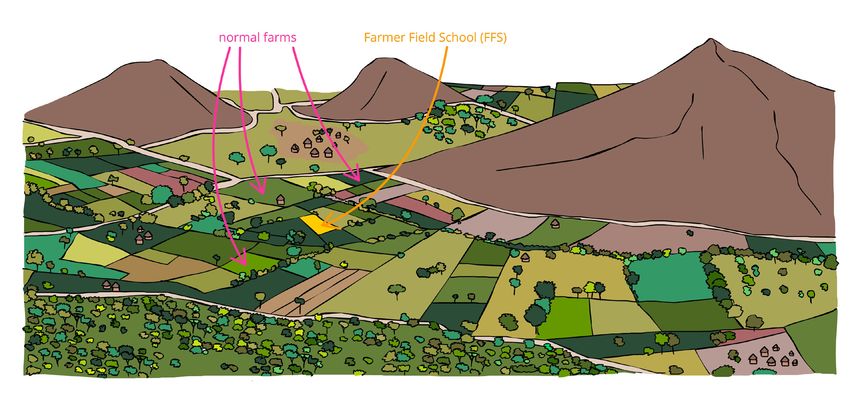
This mo
4       Facilitators’ Field Guide for Farmer Field Schools                         dule
                                                                         is part
                                                                                  of the
                                                                  Facilita
                                                                           tor’s fie
                                                                 for Far             ld guid
                                                                         mer Fie             e
                                                                                  ld Scho
                                                                  on Par                   ols
                                                                         ticipato

03. Participatory
                                                                                   ry Plan
                                                                       Breedin             t
                                                                                  g.

Variety
Enhancement
Participatory Variety Enhancement (PVE) works with appreciated local
varieties of cross- and self-pollinating crops. The objective is to either i)
restore characteristics, or ‘traits’, that have deteriorated over time, ii)
improve preferred traits, or iii) adapt the varieties to changing growing
conditions.
What makes PVE attractive is that it requires no materials from outside.
Farmers work with their own varieties, including ‘official’ varieties
that have been in their community for a long time and which may
have deteriorated. These varieties are generally well-adapted to local
growing conditions and farming practices and they have an important
role in fulfilling the cultural and nutritional needs of the community.
By carrying out rigorous selection over three or more growing seasons,
farmers will be able to improve the quality of seeds and the productive
potential of the variety (a 20% increase in yield is common). This can
result in the continued use and conservation of the variety; it may also
mean the community is able to produce good quality seeds for the
market.In this module we will walk through a full Farmer Field School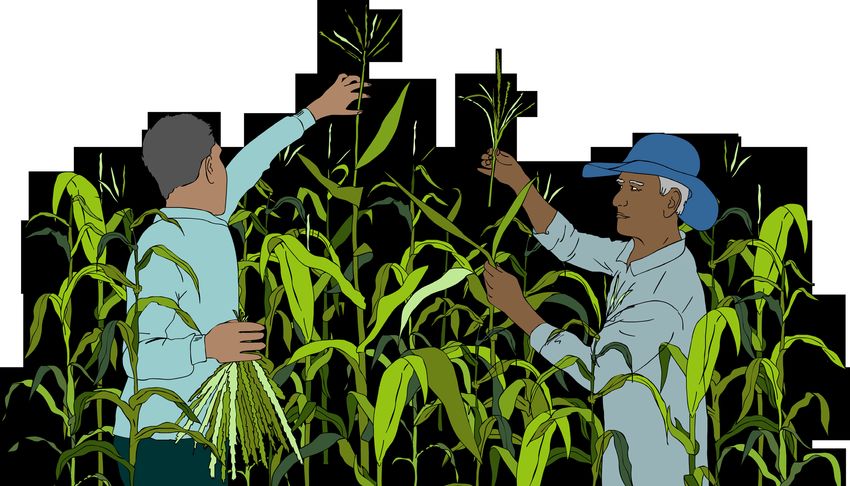
Module on Participatory Variety Enhancement                5

(FFS) season working on PVE. From the setting of breeding objectives
to obtaining seeds, land preparation and sowing, to the selection that
must be done at different growing stages of the crop and finally the
harvest and final evaluation of the work.
For other topics related to Participatory Plant Breeding in Farmer Field
Schools, please refer to the other illustrated guides and the elaborate
field guide on the SD=HS website (www.sdhsprogram.org).

 Incomplete cover of the maize causes ear rot and makes it easy for insects to enter.
                    This trait can be removed through selection.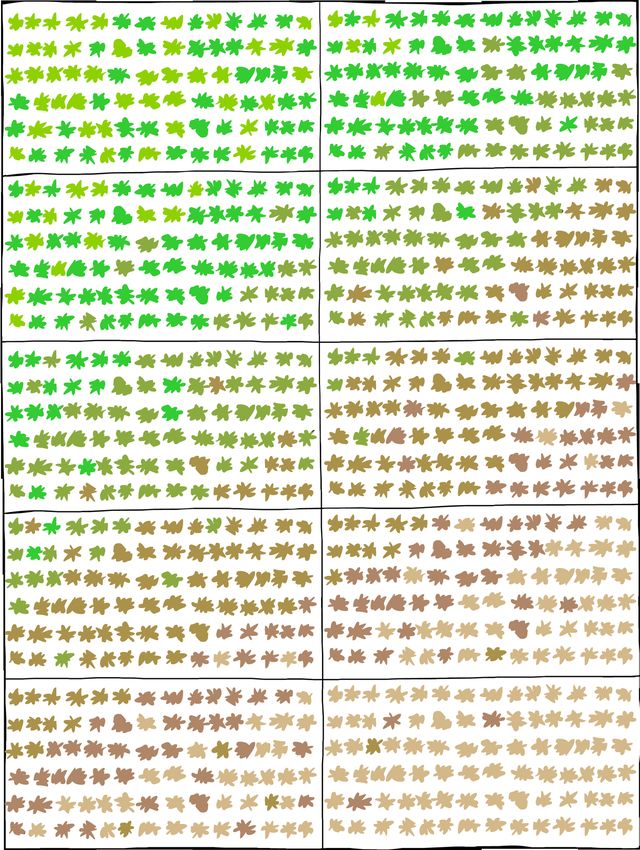
6         Facilitators’ Field Guide for Farmer Field Schools

    When the maize ears are high on the plants they are difficult to harvest and can
                         make the plants fall over, or ‘lodge’.
                  Through PVE, plant and ear height can be reduced.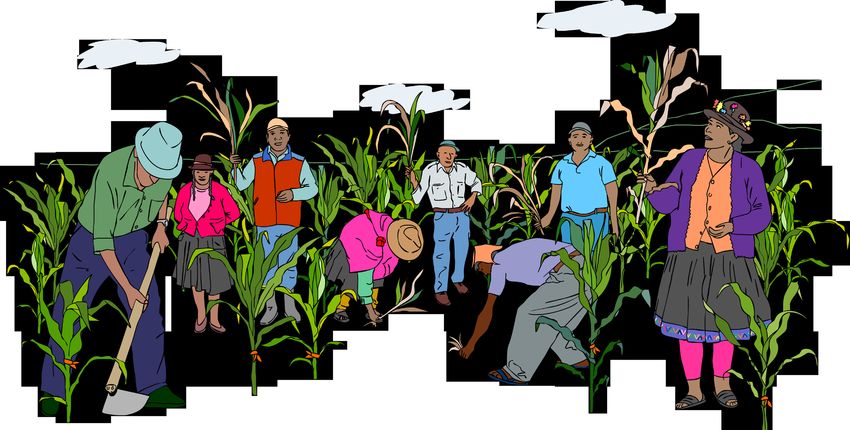
Module on Participatory Variety Enhancement        7

Structure of the module

Checklist for facilitators: key points of attention                       8
Gender: women and men in the Farmer Field School                          11
Step 1: Organising the group                                              14
Step 2: Choosing a crop and defining breeding objectives                  16
Step 3: Finding seeds                                                     20
Step 4: Plot design and planting                                          21
Step 5: Weekly activities                                                 26
Step 6: Selection in PVE plots                                            28
Step 7: Harvesting and evaluation                                         36
When is PVE ready?                                                        39
8 Facilitators’ Field Guide for Farmer Field Schools
Checklist for facilitators: key points of
attention
1. When to choose Participatory Variety Enhancement
as a breeding approach?
You should choose PVE when these three conditions apply:
You can find the traits you are looking for in a crop variety in your
community or in a community nearby.
The variety can be improved or restored through selection.
Consult a plant breeder if you are not sure whether selection will
help enhance desired traits and remove negative traits.
The variety, despite weaknesses and the arrival of new varieties,
remains popular in the community and farmers are keen to
improve it and continue to grow it.
If these conditions are not met, it is better to look for different varieties
(see the module on Participatory Variety Selection) or create a new
variety through cross-breeding (see the module on Participatory
Variety Development).
Note: Selection of traits, and hence PVE, does not work with
crops that are propagated through clones, such as potato,
cassava, sweet potato, yam, ulluco. Selection and good agronomic
practices can improve the quality of harvested seeds of these
crops, which can improve the next season’s yield, but cannot
change a variety’s traits.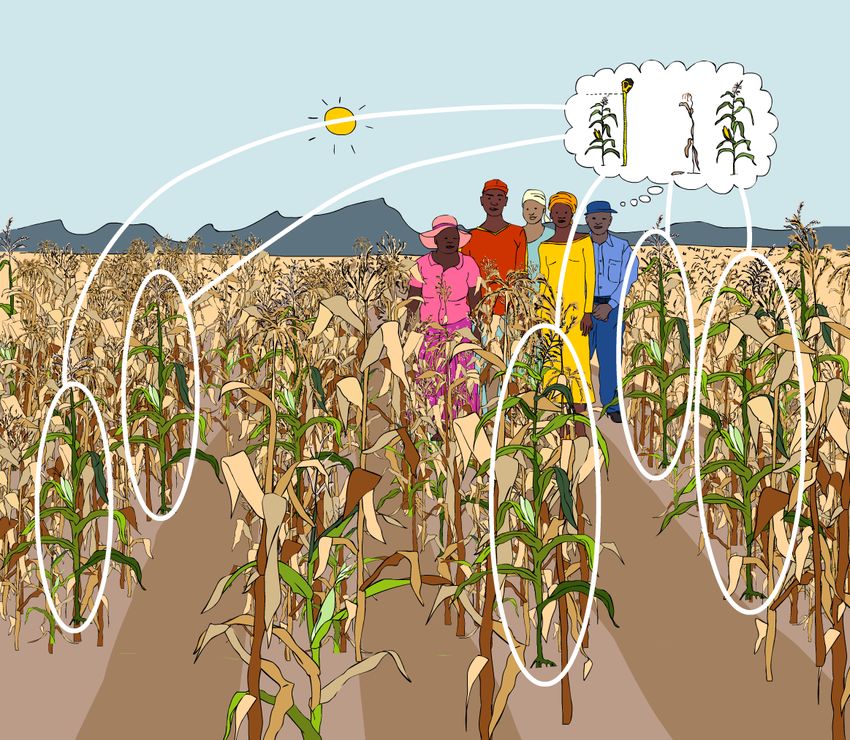
Module on Participatory Variety Enhancement 9
If some plants of a local variety have the desired traits and others don’t, strict
selection can improve the variety by increasing the number of plants that have these
traits.
2. Preparation
Has the FFS carried out the diagnostic process?
Do all FFS members agree with the choice of crop and variety?
Has the FFS defined clear, realistic and measurable breeding
objectives?
When is the best time for the FFS group to ask support from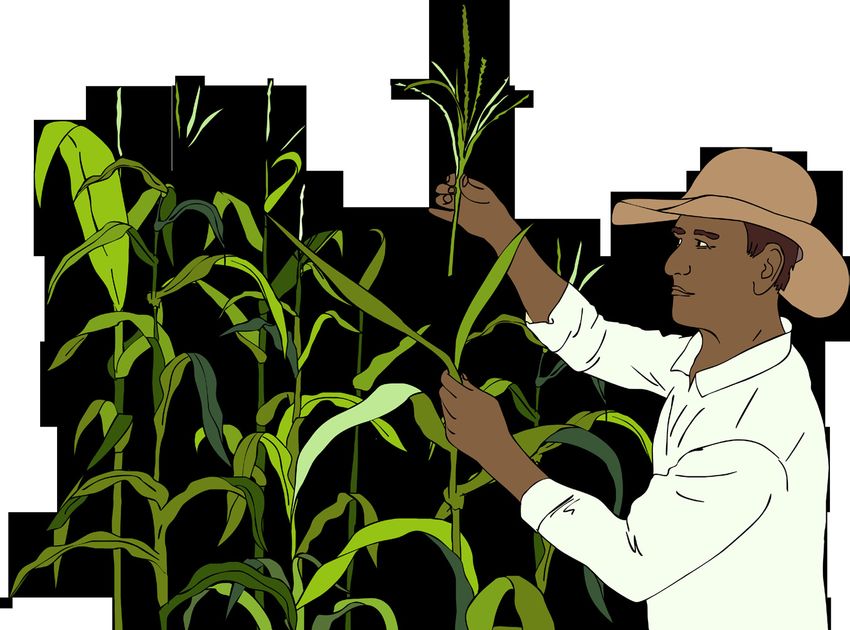
10 Facilitators’ Field Guide for Farmer Field Schools
breeders?
3. Source of the PVE seeds
Where and when can the FFS get seeds of the variety? How many
seeds do you need?
Who will be responsible for obtaining the seeds?
4. Site selection and size of the PVE plot
Is the chosen site easily accessible for community members? Is it
representative of agricultural land in the community?
Is the site large enough to grow 2000 - 5000 plants?
5. Selection method
Is your crop self- or cross-pollinating? Will you use only positive
selection or also negative selection?
At which stages will you do selection?
What is your selection pressure (what percentage of plants will you
select for next season)?
How should the group agree on the final selection of plants?
How will the group use the breeding objectives to guide the
selection of plants and seeds for next season?
6. Harvesting and evaluation
How will you evaluate progress?
How many seeds need to be saved/harvested for next season?
When will the FFS organize the Farmer Field Day?Module on Participatory Variety Enhancement 11 Gender: women and men in the Farmer Field School For any work done in a farmer field school to be successful, it needs to respond to the needs of all participants – women, men, youth. PVE will require at least 3 seasons and if not everybody feels their interests are included, people will stop coming to the weekly sessions very quickly. This is why the breeding objectives must reflect equally the preferences of men, women and youth. It is also important to organize the FFS in such a way that women and men can take part equally in the activities, that the workload is shared and that decisions are taken by all. Even if this is not the case in regular community life, it can be rewarding to address unfair or unproductive relationships between men and women within the FFS, for example by supporting women to take on leadership roles. Here are some tips to keep in mind during critical stages of the FFS season:
12       Facilitators’ Field Guide for Farmer Field Schools

 FFS                  Try to balance the number of men and women FFS
 formation            participants. Identify and see if it is possible to address
                      issues why men or women would not want to take part
                      in the FFS.
                      The FFS members and the FFS site should represent the
                      reality and needs of the majority of the community.
                      The FFS should consist of a mixed of people, coming
                      from different socio-economic background, including
                      the poorer majority, women and youth.
                      Support the election of women and youth for FFS
                      leader and other functions.
                      When drafting the FFS constitution, agreements can be
                      made about men and women having an equal say in
                      decision making.

 Diagnostic           Consider conducting the ‘Gender journey*’ to agree on
 stage and            specific gender action points for the season.
 the setting          Create men and women-only subgroups when
 of breeding          discussing the choice of crop and its preferred
 objectives           characteristics.
                      When the FFS votes on the crop and the breeding
                      objectives, men and women vote using differently
                      colored seeds. This will highlight any differences in
                      preferences, which will be discussed in plenary.
                      If there is strong divergence in preferences, women
                      and men may focus on their own crops or breeding
                      objectives in separate sub-plots.

* The ‘Gender Journey’ is a module in the FFS Field Guide. It is a dedicated exercise to
work towards gender equality and women leadership in the farmer field school.
Module on Participatory Variety Enhancement 13
Developing Choose meeting times that suit all participants and
the that interfere as little as possible with other family or
workplan household duties (childcare, cooking, market times).
Divide tasks and labour fairly among men and women.
Final The evaluation of the progress that has been made
evaluation towards achieving the breeding objectives starts with
by FFS men and women subgroups.
participants If relevant, evaluation should be done both in the field
and in the kitchen.
Frost resistance, marketability or nutritious values: men and women often prioritize
different traits. Their preferences should be reflected equally in the breeding objectives
of the FFS.14 Facilitators’ Field Guide for Farmer Field Schools
Step 1: Organising the group
The establishment and organisation of the farmer field school are
described in detail in the FFS Field Guide and the two illustrated field
guides on ‘Plot design for Participatory Variety Selection’ and the
‘Diagnostic Stage’. Here is a summary:
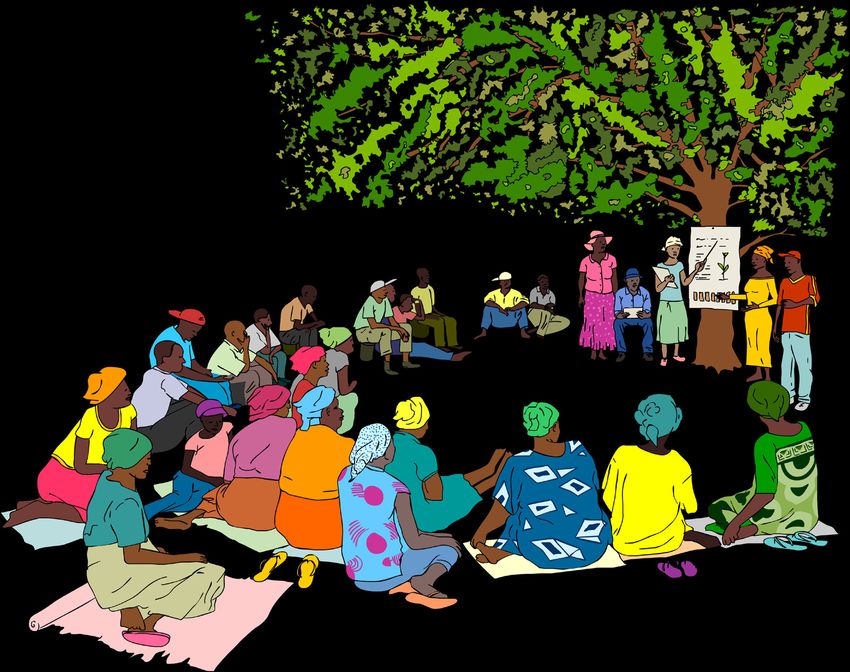
• A FFS consists of 20 to 30 members. The group is divided into
sub-groups of five people. This allows everyone to participate.
Subgroups are generally mixed, except at times when it is
important to consider the perspectives and interests of women
and men separately (e.g., during the diagnostic stage and the final
evaluation).
• Subgroups have a leader,
reporter and recorder
(someone who is able to
write). The functions of
reporter and recorder may
rotate from week to week
to allow all members to
assume responsibility and
gain experience.Module on Participatory Variety Enhancement 15
• Each sub-group is assigned a part of the FFS plot to maintain and to
conduct weekly tasks and observations.
• FFS sessions go back and forth between working, observing and
discussing in sub-groups, and presenting and discussing their
findings in the entire group (plenary). Decisions are made in
plenary, based on the inputs from the subgroups.16 Facilitators’ Field Guide for Farmer Field Schools
Step 2: Choosing a crop and defining
breeding objectives
The decision of the FFS to do Participatory Variety Enhancement, to
work on a specific crop or variety, and the breeding objectives they
choose, must be the result of a careful decision-making process.
All members of the FFS must have their say. We call this process the
Diagnostic Stage*. The diagnostic stage is crucial to ensuring the FFS
will address the primary needs and concerns of the farmers in the
community. This is the only way to ensure the farmers’ commitment.
Again, a short summary:
• For the diagnostic exercises, the FFS group is divided into sub-
groups of women and men
only (or, alternatively, by
socio-economic status).
This helps makez sure that
both women and men feel
completely free to express
their ideas and preferences.
• Doing the Timeline Analysis, the FFS participants try to
understand the
challenges in their
farming systems
– socio-economic,
climatic, cultural and
infrastructural – that
their breeding efforts
need to address.
* The Diagnostic Stage is explained in detail in a separate illustrated module.Module on Participatory Variety Enhancement 17
• The Diversity Wheel for Crops
helps farmers identify the crop they
want to work on in the FFS. This is
the crop the FFS members agree is
most important to improve or solve
problems with.
• The Diversity Wheel for Varieties
helps identify the traits, farmers find
most important in the chosen crop.
Traits can be positive (to further
improve) or negative (when you
want to eliminate them). Farmers
prioritise the important traits on the
list through voting. Men and women
vote with differently coloured seeds
to visualize their preferences. The prioritised list of traits forms the
basis for the breeding objectives that will guide the PVE work.18 Facilitators’ Field Guide for Farmer Field Schools Setting breeding objectives Every farmer or farming community has different preferences when it comes to their crops or crop varieties. And every growing environment poses different challenges. This is the reason there exists such an enormous diversity of crops and crop varieties. When beginning PVE, it is important to define as precisely as possible the ‘profile’ of the variety the FFS is looking for. This begins with the list of most important traits defined when doing the Diversity Wheel for Varieties. If there is a variety in the community that matches a few of these important traits, the FFS systematically analyses that variety, listing its positive and negative traits. When the FFS thinks they can further improve that variety through selection*, this is the variety they choose for their PVE work. * What traits can be selected? Some traits are easier to improve or remove through selection than others. For example, plant height, disease tolerance, early maturity and traits related to yield (cob or grain size) are relatively easy to select. Taste and drought- resistance, however, are much more difficult. You do not want your work to be in vain, so ask a plant breeder for help if you are not sure!
A variety can be used for PVE work if it includes important traits the community is
     looking for and if the variety can be further improved through selection.
20 Facilitators’ Field Guide for Farmer Field Schools
Step 3: Finding seeds
Finding good seeds is an important start. Discuss what may be the best
places to find this seed: from one of the farmers from the FFS, a good
farmer in the wider community or from a neighbouring community, a
community seed bank, or even the national gene bank.
There should be at least 2000 seeds, as this gives enough diversity to
select the right plants. The maximum number is guided by the space
available, but need not be higher than 5000.
Some criteria:
• Follow farmer’s criteria for selecting best seeds (e.g., colour, not
wrinkled, size)
• Use seed with the best possible germination and vigour, preferably
from a recent harvest
• Seed should not be mixed with seed from other varieties or crops
• Choose seed that is adapted to the local altitude and environment
(if seeds are coming from outside the community)Module on Participatory Variety Enhancement 21
Step 4: Plot design* and planting
In selecting the site of the FFS plot it is important to consider a few
general criteria that apply to all participatory plant breeding methods.
These include:
• The plot should be representative of agricultural fields in the
community, in terms of soil, slope, moisture and (sun) exposure.
There is no need for the land to be entirely uniform, as with PVE the
best performing plants will be selected from all corners of the field,
including the parts where conditions are poorer.
• It should also be easily and
safely accessible, near
a road or a pathway, and
within walking distance for
all participants, especially
women. The plots should also
be familiar to women and be
representative of their own plots; otherwise, results may only cater
to men’s interests and demotivate women’s participation.
• And protected from animals (fenced).
* The Plot design is explained in detail in a separate illustrated module.22 Facilitators’ Field Guide for Farmer Field Schools
When doing PVE, plot design should also consider isolation:
If the crop is cross-pollinating, pollen from other varieties of the same
crop can reach and ‘pollute’ the plants in the plot where PVE is being
done (see step 6: Selection, below, for an explanation). This can be
prevented in two ways:
• By keeping a distance of 200-300 meters from those other plots.
• By making sure the flowering time of the PVE variety does not
overlap with that of other varieties. Early or delayed planting of 15
days is usually enough, although it may not be feasible everywhere
because of shortening growing seasons and unreliable rains.
Isolation is not necessary if the crop is self-pollinating.
Size of the plot
• The recommended size of a PVE plot is about 600 square meters
(e.g., 20 x 30 meters). As an example: if the planting distance is
20cm between plants and 80cm between rows, this gives a total of
3750 seeds.
• Often a community will have less space available, and sometimes
more. In that case, keep in mind that the minimum number ofModule on Participatory Variety Enhancement 23
seeds required is 2000.
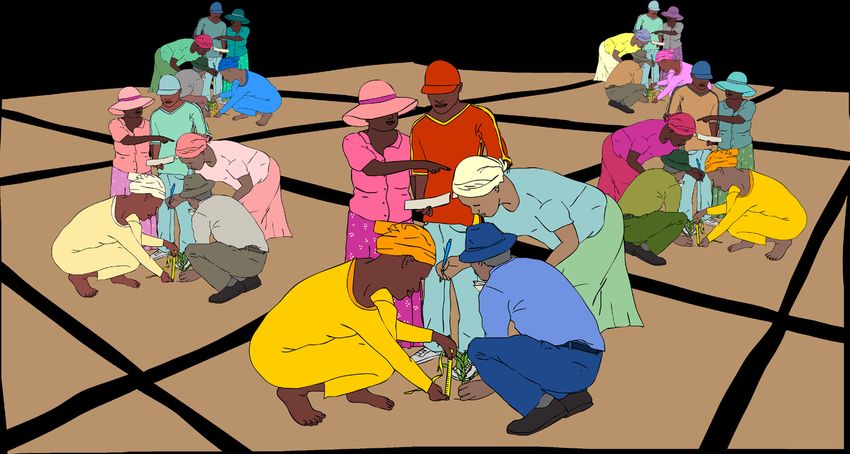
• The plot is divided into 10 smaller subplots and each sub-group of
five people is allocated two subplots. In these subplots, they will
observe plants, take recordings, and perform selection. At the time
of harvest, equal numbers of plants will be selected for seed from
each subplot. It is a good idea to mark the subplots well.24 Facilitators’ Field Guide for Farmer Field Schools Planting The facilitator and the members of the FFS ensure that the land is well prepared for planting, according to the requirements of the crop. All FFS participants take part in land preparation and planting. Unless the FFS decided to isolate the plot through early or delayed planting, sowing should be done at the same time as the other fields in the community. The planting density should follow common farmers’ practice or be determined together with the agricultural extension worker or breeder assisting the FFS. In most PPB studies, seed is planted in rows at a set interval*. Depending on the crop, it is good practice to sow several seeds per hill, especially if the germination rate of the seed is not optimal. The crop can be thinned one week after emergence to achieve the desired spacing. The FFS can also decide not to thin the plants to stimulate competition among the plants (see box ‘Maize in Guatemala’). * The illustrated guide on Plot design for Participatory Variety Selection includes examples of planting densities for maize, sorghum, millet and groundnut.
Module on Participatory Variety Enhancement      25

Maize PVE in Guatemala: best practices

Maize was domesticated in Guatemala and Mexico 6,000 to
10,000 years ago. Cultivation practices are very old and there is an
incredible diversity of local varieties. A common way to grow maize
in Guatemala is together with pumpkin and beans: the maize stem
supports the growing bean vines (the strength of the stem can be an
important breeding objective!), the bean plants help fertilize the soil,
while the pumpkin leaves protect the soil from erosion.
When doing PVE,
farmers in Guatemala
sow 4 or 5 seeds per
hill and, contrary to
practice in many other
places, they do not
thin the plants after
they emerge from the
ground. This way the
roots of the plants
compete for space,
water and nutrients.
The plants that do this
best are visibly taller
and stronger than the
other plants growing
from the same hill.
These strong plants
are the ones from
which the ears are
selected at harvest
time.
26      Facilitators’ Field Guide for Farmer Field Schools

Step 5: Weekly activities

Agro-ecosystem analysis (AESA)
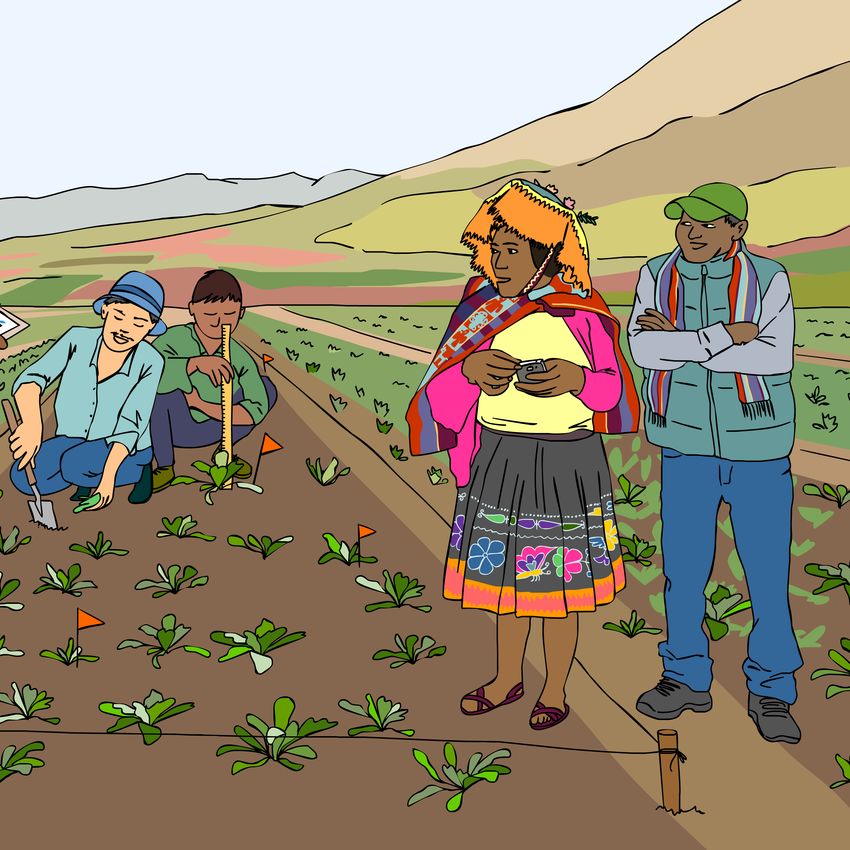
Field observations are the heart of the weekly FFS meetings.
They are guided by the breeding
objectives and practical questions
raised by the participants and are the
starting point of the weekly discussions.
Divided into their small groups,
participants randomly select five plants
from their sub-plots each week. They
study the performance of these crops,
the growing conditions, pests, diseases,
and beneficial insects. In essence, they
study how the plants (genes) interact
with the local growing conditions
(the environment) that characterize
their farms. They note down their
observations on agro-ecosystem
analysis (AESA) forms and discuss these
in the plenary, and jointly take decisions
about crop management or selection
(see step 6).
In each crop, different traits are
important, and these traits become
visible at different growing stages.
Therefore, each crop has its own AESA
forms, which differ slightly for each
stage of crop development.
Summarized results of the AESA
observations at critical growth stages
Module on Participatory Variety Enhancement     27

are used in the final evaluation of the PVE work. These stages are the
early vegetative (“emergence”) stage, the late vegetative stage, the
flowering stage, and the maturity stage. The results can also be very
valuable for breeders and breeding institutes working together with
the FFS. An app called KoboToolbox is available to share the results via
smartphone or tablet.
28       Facilitators’ Field Guide for Farmer Field Schools

Step 6: Selection in PVE plots
In Participatory Variety Enhancement, the FFS works with a local
variety that shows variability, or diversity: the variety is not anymore
(or probably never has been) uniform and plants differ in the positive
and negative traits they have, or in the degree to which they display
these traits. The objective of PVE is to restore or improve the variety
by increasing, year by year, the percentage of plants in the field
that have the desired traits. Or, put differently, by decreasing the
percentage of plants that have undesirable traits. This is done through
selection. (Note that farmers are very familiar with selection, as they
do it every year when deciding which seed to keep for the next season.
In essence, PVE is an ‘improved’, more rigorous version of farmer
selection.)

Over 3 years, selection in PVE looks like this:
1. In year 1, the FFS defines clear breeding objectives for their variety:
     they identify the positive traits they wish to keep, and the negative
     ones they want to eliminate.
2. Over the season, in line with the breeding objectives, plants with
     positive traits are marked and plants with negative traits are
     removed.
3. At harvest time, seed is selected for the next season: choose
     maximum 10 percent of the best plants in every sub-plot.
4. Securely store enough of the selected seed for 3 replantings (in
     case of crop failure).
5. Evaluate the breeding objectives. Revise them if necessary.
6. Repeat the process in year 2. At harvest time, evaluate whether
     progress has been made towards the breeding objectives. Even if
     already many more plants have the desired traits, it is important to
     still only select the best 10% of the plants for seed.
7. Towards the end of year 3, a significant improvement in the variety
Module on Participatory Variety Enhancement 29 and its yield should be visible. Compare with the original variety (before it was improved through selection) and decide whether to complete the study or continue to improve the variety further. Self-pollinating plants: positive selection Perhaps the most important thing to remember when doing PVE is that selection can be done in two ways - positive and negative - depending on whether the crop is self-pollinating or cross-pollinating. Peas, beans, rice, wheat, and many more important food crops are self-pollinating. Their flowers contain both male and female parts and generally pollination happens inside the flowers before they open, and before pollen from other plants arrives. This means the traits (genes) from poorly performing (inferior) plants cannot easily transfer to superior plants. Inferior plants can therefore be allowed to mature.
30      Facilitators’ Field Guide for Farmer Field Schools

They will simply not be selected for seed at the time of harvest.
Since desired traits become visible at different moments in the life of
a crop, positive selection must be done at different growing stages,
from the vegetative stage, to flowering, to the time the plants reach
maturity. This is one way in which PVE differs from the selection
traditionally practiced by farmers to maintain crop varieties, which is
generally performed only at harvest time.
Plants with desirable characteristics are marked or tagged using
ribbons from cloth or plastic, or any other material that is locally
available. Use different colors for different traits or breeding objectives,
e.g., red ribbons for head or panicle size, blue for early flowering, green
for pest resistance.
At the time of harvest, select no more than 10 percent of the plants
in each subplot for seed: if the entire plot counts 3000 plants, and

                                                               stigma      anthers
                                                              (recieves   (produce
                                                               pollen)     pollen)

                          Self-pollination in a bean flower
Module on Participatory Variety Enhancement 31 each subplot 300, 30 plants should be selected per subplot. Positive selection continues after harvest: seeds are selected only from heads, panicles, pods or ears with desirable characteristics. Look at head or panicle size, number of mature seeds per pod, grain size, grain pests or diseases, etc. Cross-pollinating plants: positive and negative selection Millets, maize, squash, and many vegetable crops are cross-pollinating. Some crops, such as sesame, quinoa and sorghum can be partially cross-pollinating: the harsher the growing conditions, the higher the chances of cross-pollination. In these crops, pollen from plants with inferior traits can pollinate the flowers of plants with desired traits.
32      Facilitators’ Field Guide for Farmer Field Schools

The seeds harvested from these cross-pollinated plants will carry the
inferior traits, which will show in the plants they produce. Unless cross-
pollination is prevented well before the time of flowering, breeding
progress will be very limited. Eliminating inferior plants to avoid cross-
pollination is a second major difference with traditional selection by
farmers.
With Participatory Variety Enhancement of cross-pollinating crops,
negative selection starts as soon as the crop emerges from
the ground. All weak, diseased plants and plants showing other
undesirable characteristics compared to the majority of plants within
a plot are removed. This process is also called ‘roguing’, as the ‘rogue’
plants are taken out.
Roguing is done during the entire vegetative growth stage and up
to the point where flowers first appear. It must be done before any
pollination can occur.
All the while, positive selection
is also carried out.
This happens in
the same way as
for self-pollinating
plants, by marking
the plants with
desirable traits
with colored
ribbons (see
illustration on
page 34-35).

 For maize, as an alternative to roguing, a common method of negative selection is
detasseling: the removal of the tassels, the pollen-producing male flowers from the
 top of inferior plants (before they begin to produce pollen!). This will still allow the
plants and ears to reach maturity and contribute to harvest, but no pollen carrying
                     negative traits will spread to superior plants.
Module on Participatory Variety Enhancement 33
?
Discuss the following question: If 300 plants should be selected
by the end of the season, how many plants should be negatively
selected (removed) before flowering?
Answer: There is no fixed percentage of plants that should be
negatively selected. Two things are important: only the better
plants should be allowed to flower, and enough plants should
remain after the removal of poor performing plants so that
the FFS can select the 300 plants for seed for next season.
Remember: good plant breeders are merciless when it comes to
eliminating plants that do not fit their breeding objectives.1. With PVE of cross-pollinating crops, negative selection starts as soon as the crop
emerges from the ground. All weak, diseased plants and plants showing other
undesirable characteristics compared to the majority of plants within a plot are
removed. This process is also called ‘roguing’, as the ‘rogue’ plants are taken out.
4. At the time of harvest, only
plants and ears (or panicles,
heads, etc.) that fulfill one
or more breeding objectives
should be selected for seed.2. Roguing is done during the entire vegetative growth stage and up to the point
where flowers first appear. It must be done before any pollination can occur.
3. All the while, positive selection is also carried out. This happens in the same way
as for self-pollinating plants, by marking the plants with desirable traits with colored
ribbons.36 Facilitators’ Field Guide for Farmer Field Schools
Step 7: Harvesting and evaluation
When the standing crop shows at its best, just before harvest, and when field
evaluations have been completed, the Farmers’ Field Day is an occasion where the
FFS farmers invite their fellow community members to share what they have learned
and achieved. The day may include a field tour, an exhibition, dances and tastings. It
is an occasion to showcase what a group of farmers can do when working together
as a team to solve their problems and can be important to secure support for follow-
up activities from their community and local dignitaries.
The final selection of plants is guided by the breeding objectives
agreed by the FFS at the beginning of the season. Only plants and ears/
heads/panicles/etc that fall within the specified range of one or more
breeding objectives should be selected for seed. In year 1, a plant
can be selected for one or two positive traits. In years 2 and 3, theModule on Participatory Variety Enhancement 37
number of traits selected in each plant progressively increases until the
envisaged ‘ideal’ profile of the PVE variety is achieved.
Avoid selecting plants from the very edges of the plot. The possibility
of cross-fertilization from neighbouring plots is higher here and
plant growth is often distorted by differences in sunlight, nutrients or
moisture.
?
Discuss the following question: Why should we select an equal
number of plants from each subplot? Why don’t we simply select
the best plants from the entire plot?
Answer: Soil, nutrients, water availability, or exposure to sun can
vary in different parts of a field. When one corner of the field is
poor, the crops there will perform worse than those in other parts
of the field. This does
not mean the plants
themselves are inferior
– they may be quite
strong, but we cannot
see this because the
poor conditions in that
part of the field prevent
them from performing
well. Selecting equal
numbers of plants
from all subplots is
a way to minimize
the effect of these
external environmental
influences on our
selection efforts.38 Facilitators’ Field Guide for Farmer Field Schools
After harvesting of the selected plants, seed is put together into a
single pile, or seed lot. Seed for the next season is taken from this
lot. Enough seed for at least 3 plantings should be saved for the next
season to safeguard against crop failure.
?
Discuss the results of the year’s work with these guiding
questions:
After season 1:
• How much seed has been saved for next season (grams)?
• Will we have sufficient seed to do replanting, if required?
• Are we still happy with our breeding objectives? Should they
be revised?
After season 2 and 3:
• What was the estimated yield of the variety before PVE
improvement (ton/hectare)
• What is the estimated yield of the variety this season, after
PVE improvement (ton/hectare)
• Has the variety improved compared to the original variety?
• What undesirable traits still need to be improved?
• What positive traits do we want to keep?
• What is our plan for the next season? (Do we want to continue
the work, or stop, or move to seed multiplication?)
• If the FFS continues with PVE: What percentage of plants have
been selected for further improvement (for next year)?Module on Participatory Variety Enhancement 39 When is PVE ready? The FFS participants jointly decide when their work is finished. When the variety has been subjected to this kind of rigorous selection for three seasons, the percentage of plants with the desired traits should have increased significantly. An increase in yield by 20 or more percent is also common. The results can be observed by comparing a PVE plot with another plot that is sown with the same variety, but with seeds that have not been improved through PVE. Another useful tool to evaluate the results is the AESA summary form, where the results from the three seasons are listed next to each other for comparison. If after three seasons, the FFS wants to continue with PVE, it is probably
40      Facilitators’ Field Guide for Farmer Field Schools

better to do so as a side activity, as the work may not be sufficiently
interesting anymore to engage all FFS members. It may also be taken
up by individual farmers.
Note that the aim is not to make the variety uniform, as the
variability is a valued characteristic of local varieties in enabling them
to adapt to changes in growing conditions.
a program by
You can also read


