Fernie 2020 COMMUNITY PROFILE REPORT
←
→
Page content transcription
If your browser does not render page correctly, please read the page content below
2020 COMMUNITY PROFILE REPORT

Fernie
CONTENTS
Introduction .................................................................................................................................................. 1
Location ......................................................................................................................................................... 2
Demographics ............................................................................................................................................... 2
       Total Population .................................................................................................................................... 2
       Population Density ................................................................................................................................ 3
       Population Pyramid............................................................................................................................... 3
       Labour Force Population Pyramid ........................................................................................................ 3
       Population Projections .......................................................................................................................... 4
       Average Age .......................................................................................................................................... 4
Families & Households .................................................................................................................................. 5
       Family Characteristics ........................................................................................................................... 5
       Marital Status ........................................................................................................................................ 6
Mobility ......................................................................................................................................................... 6
Cultural Characteristics ................................................................................................................................. 7
       Ethnic Origin .......................................................................................................................................... 7
       Aboriginal Identity ................................................................................................................................ 7
       Language Spoken Most Often at Home ................................................................................................ 8
Infrastructure ................................................................................................................................................ 8
       Water Services ...................................................................................................................................... 8
       Sewer Services ...................................................................................................................................... 8
       Service Providers ................................................................................................................................... 8
       Landfill & Waste Management ............................................................................................................. 8
       Traffic Volumes ..................................................................................................................................... 9
       BC Transit .............................................................................................................................................. 9
Housing ....................................................................................................................................................... 10
       Dwelling Characteristics ...................................................................................................................... 10
       Residential Property Values ................................................................................................................ 11
       Household Characteristics .................................................................................................................. 11
       Housing Affordability .......................................................................................................................... 12
       Vacancy Rates ..................................................................................................................................... 12
Income ........................................................................................................................................................ 13

                                                                                                                                                                   i
Individual Income ................................................................................................................................ 13
Source of Income ................................................................................................................................ 14
Low Income Measure .......................................................................................................................... 15
Labour Force ............................................................................................................................................... 16
Class of Worker & Occupations .......................................................................................................... 16
Labour Force by Industry .................................................................................................................... 18
Place of Work ...................................................................................................................................... 19
Commute to Work .............................................................................................................................. 19
Unemployment ................................................................................................................................... 19
Labour Force Replacement Rate ......................................................................................................... 20
Education .................................................................................................................................................... 20
Early Development Instrument ........................................................................................................... 20
Public School Enrollment .................................................................................................................... 21
High School Completion ...................................................................................................................... 21
Educational Attainment ...................................................................................................................... 22
Quality of Life & Civic Engagement ............................................................................................................. 22
Life Expectancy.................................................................................................................................... 22
Voter Turnout ..................................................................................................................................... 22
Crime Severity Index ........................................................................................................................... 23
Charitable Donations .......................................................................................................................... 23
Public Library Usage ............................................................................................................................ 24
Business ...................................................................................................................................................... 25
Business Counts .................................................................................................................................. 25
Business Formations ........................................................................................................................... 25
Building Permits .................................................................................................................................. 26
Visitor Centre Statistics ....................................................................................................................... 26
Local Government ....................................................................................................................................... 27
Municipal Revenue and Expenses ....................................................................................................... 27
Taxes & Charges on a Representative House ..................................................................................... 27
Environment ............................................................................................................................................... 28
Parks & Protected Areas ..................................................................................................................... 28
Weather & Climate ............................................................................................................................. 29
Frost-Free Dates .................................................................................................................................. 29
Modeled Climate Data – History & Projections .................................................................................. 30
iiGaps and Further Research ......................................................................................................................... 31
Vacancy Rates ..................................................................................................................................... 31
Municipal Revenue and Expenses ....................................................................................................... 31
2021 Census ........................................................................................................................................ 31
References .................................................................................................................................................. 32
Appendix A: Data Notes .............................................................................................................................. 36
Publication Details:
Contributors: Mark Trueman, Leeza Perehudoff, Tara Howse, Robert MacQuarrie, Jayme Jones, Hannah
Dueck, Mara Mannaerts, Justin Robinson
Publication Date: May 2021
Recommended Reference: Columbia Basin Rural Development Institute. (2021). 2020 Community profile
report: Fernie. https://stateofthebasin.ca/reports-resources/community-profiles
iiiIntroduction
As part of the State of the Basin program, the Columbia Basin Rural Development Institute (RDI) at Selkirk College
has developed Community Profiles for municipalities and electoral areas within the Columbia Basin-Boundary
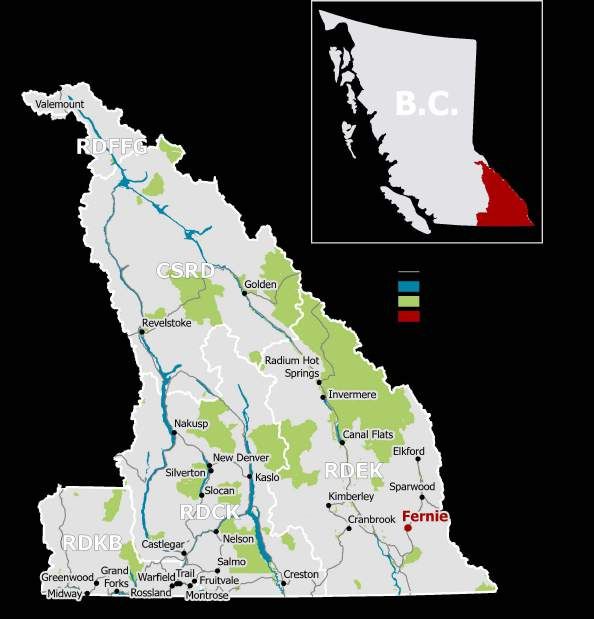
region. The Columbia Basin-Boundary region is located in the southeast corner of British Columbia (BC) and includes
the entire Regional Districts of East Kootenay (RDEK), Central Kootenay (RDCK), Kootenay Boundary (RDKB), as well
as Golden, Revelstoke, Valemount, Columbia Shuswap Regional District (CSRD) Areas A and B, and a portion of
Regional District of Fraser-Fort George (RDFFG) Area H (see map, below). This report covers the City of Fernie.
The primary goal of the State of the
Basin reporting is to provide easily
accessible and relevant data to help
inform decisions that lead to greater
community and regional well-being.
State of the Basin research draws on
available data from a variety of sources
including federal, provincial, and local
governments, crown corporations, and
non-profit initiatives. Both open access
sources and custom data requests are
used.
Community profiles are intended to
share area-specific data with local
governments and other organizations
to help build a better understanding of
local conditions and trends and assist
in making evidence-based planning and
management decisions. These reports
may also be useful for supporting
communications with current
residents, prospective residents, and
for business and workforce attraction.
Indicators in this report are quantitative, and while quantitative indicators help establish foundational knowledge of
well-being, they only tell part of the story. Qualitative information, including the RDI’s subjective well-being
research, can further contribute to the understanding of our communities and region. In order to describe
geographic trends in indicators, this report compares community data with regional, provincial, and national data
where appropriate. The geographic divisions used vary by indicator and depend on the topic being measured and
the available data. For additional community and regional comparisons for indicators in this report, please see the
State of the Basin website. Further community profiles (including electoral area profiles) can be found here.
Statistics Canada also offers a suite of data sets through their Census Program, where it is possible to search by
place name and topic, and Census Mapper provides these data in mapped format. Interior Health has also
developed Community Health Profiles for municipalities across BC. The Columbia Basin Climate Source website has
area-specific climate data, including projections. BC Stats and Local Government Statistics are other online sources
of community- and area-specific statistics.
If you have questions or feedback on this Community Profile, please contact the RDI.
1Location
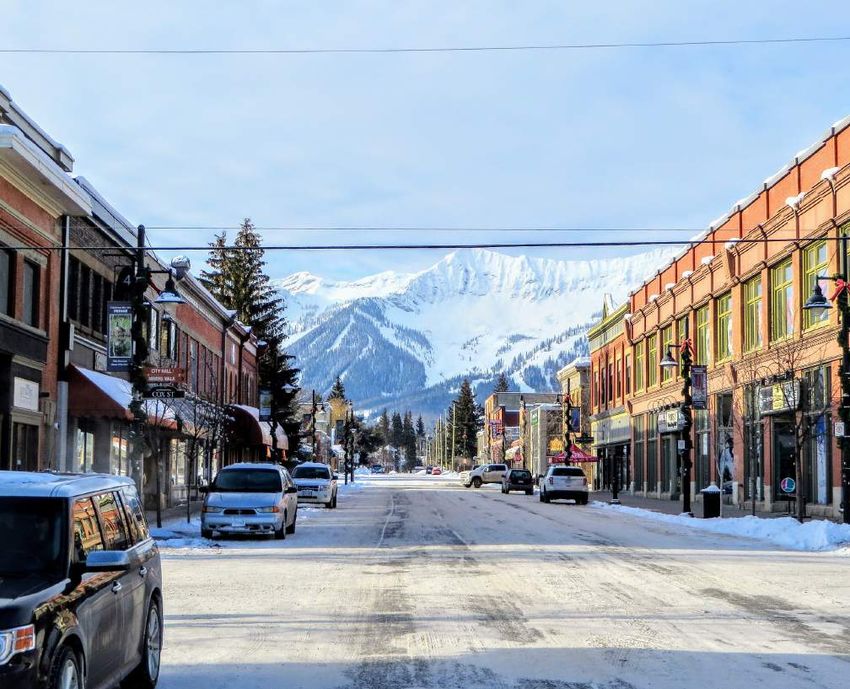
Situated about halfway up the western slope of the Crowsnest Pass and surrounded by snow capped peaks, the City
of Fernie1 has a timeless charm. The main street is comprised of end-to-end heritage buildings that have changed
little in a century. When more than half a century of active coal mining came to an abrupt end in the 1950s, Fernie
set about creating a brand-new identity for itself – as a mecca for outdoor recreation. Winter offerings include
skiing, snowboarding, cat skiing, cross-country skiing, and snowmobiling. In the spring, when snow reluctantly
retreats from the Elk Valley in the Kootenay Rockies, new possibilities are revealed. These include fly fishing, hiking,
river rafting and mountain biking. See www.fernie.com for more information.
Fernie
Regional District East Kootenay
Longitude is 115°03'43"W
Coordinates
Latitude is 49°30'29"N
Elevation 1010 meters
Area (km2) 13.5 km2
Demographics
Population characteristics help planners and local decision makers to evaluate current and future community needs,
particularly with respect to service delivery and potential impacts to the local economy. i,ii,iii
TOTAL POPULATION
Population (Census)3,4 2006 2011 2016 Percent change
2006 to 2016
Fernie 4,217 4,448 5,249 24.5%
Regional District of East Kootenay 55,485 56,685 60,439 8.9%
British Columbia 4,113,487 4,400,057 4,648,055 13.0%
Population Estimate5 2018 2019 2020
Fernie 5,510 5,604 5,668
i Please see Appendix A-1 for an important note regarding the use of random rounding in population and other demographic
data sourced from Statistics Canada.
ii The RDI recognizes that gender identity is not a binary of male and female and that some transgender, non-binary, two spirit,
and intersex populations may not be correctly represented by the data in this report. Databases that this report draws from,
such as the 2016 census, limit responses to male or female. Canada's 2021 census will include more nuanced questions on sex,
sexual orientation, and gender identity to better represent LGBTQ2IA+ populations.
iii Population estimates are usually higher than Census counts for the same year. This is due to adjustments made to reflect
those who were missed in the Census. In 2016 in BC, the population estimate was 4.1% higher than the Census count.2
2POPULATION DENSITY
Fernie (2016)3 East Kootenay (2016)3 British Columbia (2016)3
People per square-
388.7 2.2 5.0
kilometer
POPULATION PYRAMID
Population pyramids illustrate the age and sex structure of a population. As of 2016, 14% of the population in Fernie
was 65 or above, and 22% of the population was 19 or younger.3
100+
95-99
90-94
85-89
80-84
75-79 14%
70-74
65-69
60-64
55-59
50-54
45-49
40-44 64%
35-39
30-34
25-29
20-24
15-19
10-14
22%
5-9
0-4
6% 4% 2% 0% 2% 4% 6%
Male Female
LABOUR FORCE POPULATION PYRAMID
The chart below shows the age range distribution of children, emerging labour force, primary labour force, and
seniors within the Fernie population.3
Children (0-14) 9.5% 8.9%
Emerging labour force (15-24) 3.9% 4.0%
Primary labour force (25-64) 30.3% 29.4%
Seniors (65+) 6.3% 7.6%
Male Female
3POPULATION PROJECTIONS
Population projections are available for each Local Health Area within the Columbia Basin-Boundary.6 Fernie is
covered by the Fernie Local Health Area.iv
Fernie Local Health Area British Columbia
Percent change in population
11% 23%
projected 2020 to 2040
AVERAGE AGE
Fernie (2016)3 British Columbia (2016)3
Total Male Female Total Male Female
Total population 5,250 2,635 2,615 4,648,055 2,278,245 2,369,815
Average age of population (yrs) 39.2 38.6 39.9 42.3 41.5 43.1
iv The Fernie Local Health Area covers Elford, Fernie, Sparwood and the RDEK-A and B.
4Families & Households
Family characteristics such as size and composition of families can help inform social, economic, health, and
education programming, as well as planning and development around infrastructure needs.3
FAMILY CHARACTERISTICS
Fernie (2016) East Kootenay British Columbia
(2016) (2016)
Average household size 2.3 2.3 2.4
Total number of families in private households 1,515 18,195 1,311,345
Total couple families 1,385 15,990 1,113,405
Couples without children 770 9,600 577,790
Couples with children 615 6,390 535,610
One child 250 2,570 221,065
Two children 280 2,775 230,705
Three or more children 85 1,045 83,840
Total lone-parent families 130 2,210 197,940
Female parent 100 1,640 155,670
Male parent 35 575 42,265
One child 75 1,385 125,890
Two children 40 625 54,900
Three or more children 10 205 17,145
Total persons not in census familiesv in private
970 10,185 882,895
households (singles)
v A “census family” is a married or common law couple (regardless of sex) and the children of either/both spouse (if any), or a
lone parent with a minimum of one child living in the same household. All members of a census family must live in the same
dwelling to be considered a census family. Children are not limited by age so long as they are living in the same household and
do not themselves have a spouse, common-law partner, or child in the same dwelling.7
5MARITAL STATUS
The chart below shows males and females who are married, living common law, single, separated, divorced or
widowed as a percent of the total Fernie population aged 15 years and older.3
Married 25% 25%
Living common law 8% 8%
Single (never married) 12% 9%
Separated 1% 1%
Divorced 3% 3%
Widowed 1% 4%
Male Female
Mobility
This indicator measures the movement of people into and out of the community with respect to where they lived
five years prior. Non-movers are those who have not moved. Non-migrants are people who have moved within the
same region. Migrants include those who moved within the province (intra-provincial), those who moved to or from
another province (inter-provincial), and those who moved to Canada from another country (external migrants).3
Fernie (2016) East Kootenay (2016) British Columbia (2016)
Non-movers 54.9% 62.4% 57.4%
Movers non-migrants 18.2% 17.7% 21.7%
Intra-provincial migrants 7.3% 9.3% 11.6%
Inter-provincial migrants 13.8% 8.6% 3.9%
External migrants 5.7% 2.0% 5.4%
6Cultural Characteristics
Cultural characteristics can enhance our understanding of a community and provide important context for other
indicators. Language, ethnic origin, and Aboriginal identityvi are a few indicators that provide insight into a region’s
cultural diversity.3
ETHNIC ORIGIN
2.1%
Oceania origins 0.7%
0.9%
3.4%
Asian origins 3.5%
28.8%
0.5%
African origins 0.6%
1.3%
1.1%
Latin; Central and South American origins 0.6%
1.5%
0.3%
Caribbean origins 0.5%
0.5%
83.2%
European origins 82.5%
62.7%
27.3%
Other North American origins 29.5%
20.2%
6.0%
North American Aboriginal origins 8.9%
6.6%
Percentage of Residents
Fernie East Kootenay British Columbia
ABORIGINAL IDENTITY
7.9%
5.8% 5.9%
4.3%
3.8%
3.4% 3.4%
2.4%
2.0%
0.1% 0.1%
0.0% 0.0% 0.0% 0.1%
Aboriginal identity First Nations Métis Inuk (Inuit) Multiple Aboriginal
Fernie East Kootenay British Columbia
vi
Calculations performed using the published estimated total population. The sum of the ethnic groups is greater than the total
because a person may report more than one ethnic origin in the census. For additional information, refer to Ethnic Origin
Reference Guide, Census of Population, 2016
7LANGUAGE SPOKEN MOST OFTEN AT HOME
Fernie (2016) East Kootenay (2016) British Columbia (2016)
English 96.9% 97.8% 83.2%
French 1.4% 0.6% 0.4%
Non-official languages 1.8% 1.6% 16.4%
Infrastructure
Infrastructure is the physical foundation for community well-being. Water, sewer, utilities, roads, and waste
management are all critical for a functioning healthy municipality.
WATER SERVICES
Provider City of Fernie
Average per capita demand (2015)8 1,690 L/capita/day *
Annual residential water rate (2021)9 $335.12
* For comparison, the average per capita daily demand for BC is 503 liters (2017)10
SEWER SERVICES
Provider City of Fernie
Type of treatment Secondary
Annual sewer flat rate (2021) (residential)11 $352.78
Annual sewer flat rate (2021) (industrial/commercial/institutional)11 varies by type
SERVICE PROVIDERS
Electric power12 BC Hydro
Natural gas13 FortisBC
Telecommunications14 Telus, Xplornet, Bell, Rogers, Shaw,
Tough Country Communications,
Columbia Basin Broadband
Corporation
LANDFILL & WASTE MANAGEMENT
Landfill location(s)15 Fernie Transfer Station
Regional District municipal solid waste disposal rate (2018)16 667 kg/person/year*
Type of service17 Curbside garbage and recycling
pick-up
* For comparison, average per capita waste disposal rate for BC is 505 kg/person/year (2018)18
8TRAFFIC VOLUMES
Traffic volume data are taken from traffic count stations within, or routes that directly enter, the municipality.
Permanent count stations are reported when available. When permanent count stations are not available, numbers
from short count stations are reported.vii,19
Station location Annual Average Annual Average Monthly Monthly
Average Average
Daily Traffic Daily Traffic
Daily Traffic Daily Traffic
(2019) (2018-10-18)
(2019) (2019)
(number of (number of
vehicles) vehicles) January July
Route 3, 2.0 km west of the
BC/Alberta Border, Crowsnest 4,964 N/A 3,842 7,463
Pass (P-36-1EW) (Permanent)
Route 3, 50m west of East Fernie
Bridge, Fernie (36-011EW) (Short N/A 10,450 N/A N/A
Count)
Route 3, 1.2 km east of Fernie
Snow Valley Ski Hill Road, Fernie N/A 6,553 N/A N/A
(36-004EW) (Short Count)
BC TRANSIT
Fernie is serviced by BC Transit’s Elk Valley Transit System. This system includes one fixed-route which extends from
Elkford in the north to Fernie in the south. One Health Connection route connects Elkford, Fernie, and Sparwood
with Cranbrook to provide transportation to non-emergency medical appointments. For more information on how
Fernie is serviced by the BC transit system, visit https://www.bctransit.com/elk-valley/home.
vii
Traffic volumes are monitored continuously at permanent count stations, and over a minimum of 48-hour period every three years at short
count stations.
9Housing
Housing stock, diversity, availability, and costs are an important basic foundation of functioning and affordable
communities. Several indicators related to housing are included in this community profile.
DWELLING CHARACTERISTICS
Dwellings by Structure3 Fernie (2016) East Kootenay British
(2016) Columbia
(2016)
Total number of occupied private dwellings 2215 25,860 1,881,970
Single-detached house 1375 17,700 830,660
Apartment in a building that has 5 or more
0 5 177,830
storeys
Other attached dwelling 710 5,630 824,190
Semi-detached house 60 1,040 57,395
Row house 95 1,135 147,830
Apartment or flat in duplex 30 465 230,075
Apartment in a building that has fewer
525 2,865 385,140
than 5 storeys
Other single-attached house 0 120 3,755
Movable dwelling 135 2,530 49,290
Dwellings by Period of Construction3 Fernie (2016) East Kootenay British Columbia
(2016) (2016)
Total number of occupied private dwellings 2,215 25,860 1,881,970
1960 or before 530 4,550 267,560
1961 to 1980 845 9,615 559,485
1981 to 1990 220 3,315 289,565
1991 to 2000 220 3,635 331,865
2001 to 2005 150 1,420 125,335
2006 to 2010 155 2,175 171,945
2011 to 2016 95 1,145 136,210
Private dwellings in need of major repairs 9.7% 7.2% 6.3%
10RESIDENTIAL PROPERTY VALUES
Fernie Single-Family 2020 2021 % Change Columbia Basin-
Residential Boundary (2021)
Property Value20
Median assessed
$567,000 $622,000 10% $352,100
valueviii
% of Single-Family Residential Fernie Columbia Basin-Boundary (2021)
Dwellings in Different Value Categories (2021)
Number of single-family dwellings 1,863 57,830
$0 to $99,999 0.0% 4.1%
$100,000 to $199,999 0.0% 11.3%
$200,000 to $299,999 2.6% 21.1%
$300,000 to $399,999 7.1% 23.7%
$400,000 to $499,999 13.5% 16.3%
$500,000 to $599,999 21.1% 9.8%
$600,000 and over 55.7% 13.7%
HOUSEHOLD CHARACTERISTICS
Household Occupation3 Fernie East Kootenay British Columbia
(2016) (2016) (2016)
Total private dwellings 3,032 34,197 2,063,417
Private dwellings occupied by usual
73.2% 75.6% 91.2%
residents
*“Private dwelling occupied by usual residents” refers to a private dwelling in which a person or a group of persons is permanently residing.
Private Households by Tenure3 Fernie East Kootenay British Columbia
(2016) (2016) (2016)
Private households who are owners 72.7% 78.0% 68.0%
Private households who are renters 27.3% 21.9% 31.8%
Private households in band housing 0.0% 0.0% 0.2%
viii Assessed value as of the July 1 of the previous year. Ex: 2020 assessed value as of July 1, 2019.
11HOUSING AFFORDABILITY
Housing is considered unaffordable when more than 30% of a household’s income is spent on shelter costs. Shelter
costs include electricity, oil, gas, wood, or other fuels, water and other municipal services, mortgage payments,
property taxes, condominium fees, and rent.ix, 3
42% 43%
unaffordable housing (2016)
38%
Percentage of residents in
21%
14%
12%
Owners Tenants
Fernie East Kootenay British Columbia
VACANCY RATES
Vacancy rates are an important indicator of the availability of affordable housing. A balanced vacancy rate is 3%.21, x
3.4%
Vacancy rate (%)
1.6%
1.4% 1.4%
1.3%
0.5%
2016 2017 2018
Fernie British Columbia
ix Please see Appendix A-2 for limitations of Statistics Canada’s shelter-cost-to-income ratio calculations.
x CMHC is no longer collecting data for small municipalities; current data are only available for Nelson and Cranbrook.
12Income
Income is a substantial determinant of personal well-being and income levels reflect economic opportunity.
INDIVIDUAL INCOME
After-tax individual Fernie East Kootenay British Columbia
income22,23
(2018) (2018) (2018)
Number Percent Number Percent Number Percent
Under $5,000 360 6.2% 2,590 5.2% 273,160 7.2%
$5,000 to $9,999 300 5.1% 2,420 4.9% 210,040 5.5%
$10,000 to $14,999 350 6.0% 3,490 7.1% 300,860 7.9%
$15,000 to $19,999 410 7.0% 4,030 8.2% 342,760 9.0%
$20,000 to $24,999 480 8.2% 4,430 9.0% 333,430 8.8%
$25,000 to $34,999 860 14.8% 7,500 15.2% 541,660 14.2%
$35,000 to $49,999 960 16.5% 8,920 18.1% 680,440 17.9%
$50,000 to $74,999 880 15.1% 8,150 16.5% 647,200 17.0%
$75,000 to $99,999 660 11.3% 4,680 9.5% 274,600 7.2%
$100,000 to $149,999 450 7.7% 2,530 5.1% 142,420 3.7%
$150,000 to $199,000 60 1.0% 360 0.7% 32,590 0.9%
$200,000 to $249,999 30 0.5% 110 0.2% 11,480 0.3%
$250,000 and over 30 0.5% 120 0.2% 15,680 0.4%
Median $41,120 $38,760 $36,100
Average $49,611 $49,648 $50,016
13SOURCE OF INCOME
Source of income data can provide insight into the general income structure of a population.24
Source of Income (2018) Fernie East Kootenay British Columbia
(% tax filers) (% tax filers) (% tax filers)
Employment income 83.0% 76.1% 73.6%
Self-employment income 12.4% 11.3% 12.7%
Investment income 36.1% 32.6% 34.2%
Employment insurance 8.8% 8.5% 6.5%
Old Age Security / Net Federal Supplement 16.0% 24.6% 22.1%
Canada Pension Plan/Quebec Pension Plan 21.0% 32.0% 26.7%
Canada Child Tax Benefit 12.4% 12.2% 11.8%
GST/HST credit 26.3% 28.7% 34.3%
Workers compensation 2.6% 3.3% 2.6%
Social assistance 1.7% 3.2% 5.1%
Provincial Refundable Tax Credits/Family Benefits 29.9% 32.0% 37.2%
Other Government Transfers 6.9% 5.7% 6.3%
Private pensions 13.9% 20.9% 16.9%
RRSP 1.2% 2.2% 1.7%
Other income 23.0% 20.3% 22.3%
14LOW INCOME MEASURE
The Low Income Measure (LIM) is a commonly used, internationally comparable measure of low income. The LIM
threshold is 50% of median national adjusted after tax-income, where 'adjusted' means household size is taken into
account. A person is considered to be in low income when their after-tax income is below the LIM threshold for their
household size.xi,25
The table and chart below provide a comparison by age bracket and year-to-year total population of persons with
low income in Fernie, regional district, and BC.26,27,28,29,30
Percent of Individuals with Low Income Fernie East Kootenay British Columbia
(2018) (2018) (2018)
0-17 years old 10.5% 14.3% 18.5%
18-64 years old 12.2% 12.8% 18.0%
65+ years old 10.3% 10.4% 18.2%
All Ages 11.6% 12.6% 18.1%
25%
Percent low income individuals
20%
15%
10%
5%
0%
2014 2015 2016 2017 2018
Fernie East Kootenay British Columbia
xi In 2018, Statistics Canada introduced a new methodology for calculating the LIM threshold, which allows for individual
economic well-being to be analyzed (in comparison, previous calculations considered the entire household as a single unit with
the assumption of an equitable distribution of resources).25 Data represented here uses the new methodology, and for that
reason, cannot be compared with previous State of the Basin analyses of Low Income Measure.
15Labour Force
CLASS OF WORKER & OCCUPATIONS
This indicator gives an overview of the make-up of the local workforce and industries.3 The pie charts show the
percentage of the employed labour force who are self-employed versus those who are employed by others. The
tables provide numbers and percentages of the labour force in specific occupations for Fernie, the regional district,
and BC.xii
Fernie (2016)
% Self-employed v. % Employees Occupation Number of Percent
persons
Sales and services 700 22.5%
Self- Trades, transport and equipment
655 21.1%
employed operators and related
12%
Business, finance and admin 305 9.8%
Management 390 12.6%
Education, law and social, community
300 9.7%
and government
Employee Health 240 7.7%
88%
Natural and applied sciences 180 5.8%
Natural resources, agriculture and
125 4.0%
related production
Manufacturing and utilities 90 2.9%
Art, culture, recreation and sport 95 3.1%
xii
The labour force includes persons aged 15 and older, employed or unemployed.31 Occupation is determined by the kind of
work done and descriptions of the main activities in the job.32
16East Kootenay (2016)
% Self-employed v. % Employees Occupation Number of Percent
persons
Sales and services 7,475 23.3%
Trades, transport and equipment
Self- 7,155 22.3%
employed operators and related
13%
Business, finance and admin 3,685 11.5%
Management 3,510 10.9%
Education, law and social, community
2,895 9.0%
and government
Employee
87% Health 2,085 6.5%
Natural and applied sciences 1,480 4.6%
Natural resources, agriculture and
1,700 5.3%
related production
Manufacturing and utilities 950 3.0%
Art, culture, recreation and sport 720 2.2%
British Columbia (2016)
% Self-employed v. % Employees Occupation Number of Percent
persons
Sales and services 595,225 24.1%
Trades, transport and equipment
Self- 360,970 14.6%
employed operators and related
14% Business, finance and admin 368,940 14.9%
Management 275,000 11.1%
Education, law and social, community
269,255 10.9%
and government
Employees
86% Health 162,865 6.6%
Natural and applied sciences 161,520 6.5%
Natural resources, agriculture and
64,235 2.6%
related production
Manufacturing and utilities 76,745 3.1%
Art, culture, recreation and sport 93,100 3.8%
17LABOUR FORCE BY INDUSTRY
Industry3 Fernie East Kootenay British Columbia
(2016) (2016) (2016)
Mining; quarrying; and oil and gas extraction 17.8% 10.6% 1.0%
Retail trade 13.2% 12.6% 11.5%
Accommodation and food services 11.6% 10.0% 8.4%
Health care and social assistance 11.1% 10.6% 11.0%
Construction 8.8% 8.5% 8.1%
Educational services 6.1% 6.1% 7.0%
Arts; entertainment and recreation 5.0% 3.9% 2.3%
Other services (except public administration) 5.0% 4.4% 4.5%
Professional; scientific and technical services 4.2% 3.9% 8.0%
Manufacturing 3.5% 5.4% 6.4%
Wholesale trade 2.3% 2.6% 3.3%
Public administration 2.3% 4.3% 5.1%
Finance and insurance 1.6% 2.0% 3.8%
Real estate and rental and leasing 1.6% 1.6% 2.2%
Administrative and support; waste
1.3% 3.7% 4.4%
management and remediation services
Information and cultural industries 1.1% 1.1% 2.7%
Agriculture; forestry; fishing and hunting 1.0% 3.3% 2.6%
Transportation and warehousing 1.0% 3.7% 5.2%
Utilities 0.3% 0.5% 0.5%
Management of companies and enterprises 0.0% 0.1% 0.2%
18PLACE OF WORK
Place3 Fernie East Kootenay British Columbia
(2016) (2016) (2016)
Number Percent Number Percent Number Percent
Worked at home 225 7.8% 1,955 6.6% 196,510 8.5%
Worked outside Canada 0 0.0% 70 0.2% 16,040 0.7%
No fixed workplace address 310 10.7% 4,105 13.8% 326,180 14.1%
Worked at usual placexiii 2,350 81.5% 23,555 79.3% 1,766,965 76.6%
COMMUTE TO WORK
Commute Duration xiv,3 Fernie East Kootenay British Columbia
(2016) (2016) (2016)
Less than 15 minutes 60.0% 55.2% 28.8%
15 to 29 minutes 16.5% 21.5% 32.9%
30 to 44 minutes 8.5% 12.1% 20.3%
45 to 59 minutes 6.0% 4.1% 8.8%
60 minutes or more 9.2% 7.2% 9.1%
UNEMPLOYMENT
Unemployment rates are a strong indicator of economic health. Unemployment rates based on the 2016 Census are
shown.3 Labour Force Survey data at the economic development region level are updated more frequently and can
be found in the State of the Basin Unemployment indicator.
Unemployment Rate Fernie East Kootenay British Columbia
(2016) (2016) (2016)
Total 7.2% 7.6% 6.7%
Male 7.5% 9.1% 7.1%
Female 6.6% 5.8% 6.3%
xiii“Usual place” means working at a specific address and reporting to the same workplace location at the beginning of each
shift.33
xiv Total used in calculations is the employed labour force aged 15 years and over in private households with a usual place of
work or no fixed workplace.34
19LABOUR FORCE REPLACEMENT RATE
The Labour Force Replacement Rate is a measure of the number of people who will be entering vs. leaving the
workforce in the next 15 years. For the purpose of this measurement, those considered to be entering the
workforce are members of the population aged 0-14, and those leaving are those aged 50-64. A rate of 1.0 means
the child and retiree populations are the same. A rate of less than 1.0 means an area is likely unable to maintain the
current labour force with local replacement workers.3
Fernie East Kootenay British Columbia
(2016) (2016) (2016)
Labour Force Replacement Rate 0.97 0.66 0.67
Education
EARLY DEVELOPMENT INSTRUMENT
The early years are crucial in influencing a range of health and social outcomes. Research shows that many
challenges in adults, including mental health and criminality, have their roots in early childhood. The Early
Development Instrument (EDI) assesses the developmental readiness of children in five core areas. These are:
physical health and well-being, social competence, emotional maturity, language and cognitive development, and
communication skills and general knowledge.xv The EDI is used to assess the percentages of vulnerable children in
each core area. Children are categorized as “vulnerable” when it is believed that they will need additional support in
order to avoid future challenges in school and society. Data are available at the school district or neighbourhood
level.
The chart below shows the percentage of children vulnerable in each core area, as well as the percentage of
children vulnerable in one or more core areas, for the Fernie neighbourhood.xvi Percentages for the province as a
whole are shown for comparison. These data are from the most recent wave (Wave 8) of data collection, which took
place in 2019/20.35
33.2%
Vulnerable children (%)
24.8%
18.1% 17.7%
15.2% 16.3%
13.3% 14.3% 14.2%
10.7%
6.7%
2.9%
Physical Social Emotional Language Communication One or More
Core Area
Fernie British Columbia
xv For more information on what is measured within each core area, see Appendix A-3.
xvi The Fernie neighbourhood covers the City of Fernie.
20The chart below shows the trend over EDI collection periods for the Fernie neighbourhood.
24.4% 27.9% 27.1% 24.8%
Vunerable children (%) 20.5% 22.5%
17.1%
Wave 2 Wave 3 Wave 4 Wave 5 Wave 6 Wave 7 Wave 8 Yr 1
(2004-2007) (2007-2009) (2009-2011) (2011-2013) (2013-2016) (2016-2019) (2019-2020)
Core Area: One or More
Fernie
PUBLIC SCHOOL ENROLLMENT
Fernie falls within the Southeast Kootenay School District (#5).xvii Student enrollment measures the number of all
school-age persons and adults who are enrolled in public schools and working towards high school graduation.
Enrollment trends provide information about changes in the school-age population and is valuable for forecasting
and planning.xviii 36
Southeast Kootenay (SD 5) 2016/17 2017/18 2018/19 2019/20 2020/21
Total student enrollment 5581 5625 5691 5772 5650
Elementary student enrollment 3242 3315 3373 3443 3375
Secondary school enrollment 2321 2286 2297 2290 2245
Indigenous students 1196 1141 1128 1154 1096
English language learners Mask 60 77 Mask 70
French immersion 524 560 589 589 593
Non-residents Mask 75 79 60 19
* Differences between total and elementary and secondary enrollments are due to a small number of enrolled adults
HIGH SCHOOL COMPLETION
High school completion rates indicate how successful our families, schools, and communities are in supporting
youth in achieving graduation. This indicator measures the proportion of students who graduate high school within
six years of the first time they enroll in grade 8.38 High school graduation is generally a minimum education level for
most employment and a foundation for positive workplace conditions and future employment success.
2015/2016 2016/2017 2017/2018 2018/2019 2019/2020
Southeast Kootenay (SD 5) 88.6% 82.3% 93.6% 87.2% 91.1%
All BC Public Schools 86.8% 87.3% 88.5% 88.8% 89.6%
xviiThe Southeast Kootenay school district covers multiple municipalities and electoral areas, therefore numbers reported reflect
the full school district and are not limited to Fernie.
xviii Due to revisions in 2020 to the Ministry of Education's Protection of Personal Information when Reporting on Small
Populations policy, data masking occurs when any cells have fewer than 10 observations, even if the summed total for a
category exceeds 10. This impacts reporting enrollment past the 2019/20 school year on categories with lower numbers such as
French immersion.
21EDUCATIONAL ATTAINMENT
Education levels are highly correlated with social determinants of health such as income, employment security, and
socio-economic opportunity. This indicator measures the highest level of attainment of people aged 25 to 64 years
(2016).3
University certificate; diploma or degree at bachelor level or 31.6%
17.7%
above 29.9%
3.6%
University certificate or diploma below bachelor level 3.0%
3.9%
21.5%
College; CEGEP or other non-university certificate or diploma 25.6%
20.9%
16.2%
Apprenticeship or trades certificate or diploma 15.2%
9.1%
73.0%
Postsecondary certificate; diploma or degree 61.5%
63.9%
22.2%
Secondary (high) school diploma or equivalency certificate 29.1%
26.5%
5.0%
No certificate; diploma or degree 9.5%
9.6%
Fernie East Kootenay British Columbia
Quality of Life & Civic Engagement
LIFE EXPECTANCY
Life expectancy is a widely used indicator of population health. This indicator reports on the number of years a
person is expected to live based on mortality statistics for a Local Health Area (LHA).39 Fernie is covered by the
Fernie Local Health Area.
Life Expectancy
2015-2019 Average
Fernie Local Health Area 80.3
British Columbia 82.7
VOTER TURNOUT
Voter turnout is an indicator of resident involvement in politics and can be seen as a reflection of civic mindedness
and citizen engagement. This indicator measures the percentage of eligible voters who voted in local elections.40
2008 2011 2014 2018
Fernie 46.7% 43.6% 28.2% 64.2%
Columbia Basin-Boundary average 41.5% 36.7% 44.5% 44.0%
22CRIME SEVERITY INDEX
Crime rates are a common indicator of public safety. The police reported Crime Severity Index (CSI)41 includes all
Criminal Code violations including traffic, as well as drug violations and all Federal Statutes. It measures the volume
and severity of police-reported crime.xix
120
100
Crime Severity Index
80
60
40
20
0
2010 2011 2012 2013 2014 2015 2016 2017 2018 2019
Fernie (rural) British Columbia
CHARITABLE DONATIONS
Charitable donations play a role in improving well-being by providing support to a variety of initiatives. Charitable
giving reflects a capacity to give, and is tied to the economy, in that people may give more or less depending on
their financial situation and the state of the economy.42
Fernie East Kootenay British Columbia Canada
(2018) (2018) (2018) (2018)
Total # of tax-filers 5,630 48,020 3,702,970 27,394,970
Total charitable donors 1,110 9,660 683,150 5,324,280
Percent charitable donors 19.7% 20.1% 18.4% 19.4%
Total charitable donations ($’000) $1,305 $13,575 $1,758,810 $9,952,505
Median donation $200 $250 $470 $310
Median income $88,100 $66,190 $62,360 $61,940
xixDue to the small population in rural communities, the CSI can change dramatically from year to year due to a small amount of
crime. Data for police services with populations less than 5,000 should be used with caution.
23PUBLIC LIBRARY USAGE
Libraries play an important role in the vibrancy of a community, as libraries are often a gathering place for residents
where a diversity of programs and services are offered. Library statistics are useful for providing an indication of the
health and capacity of these facilities in serving community needs and interests.43
Fernie Heritage Average all libraries in
Library Columbia Basin-Boundary
(2019) (2019)*
Population served 8,272 7,489
Total active cardholders as % of population served 44.0% 35.9%
Attendance at children’s and young adult programs 10,492 3,004
Total full-time equivalent employees (FTE) 3.5 3.8
Volunteer hours worked 2500 1144.2
Number of in-person visits 66,095 47,324
Total visits per capita 12.3 9.9
Average hours open per week 44.0 40.3
Total local government support 290,048 265,314
Local government support per capita 35.1 36.4
Total other revenue 26,581 48,960
*Columbia Basin-Boundary averages do not include the Golden or Revelstoke libraries, as these branches are part of the Okanagan Regional
Library and comprehensive data by branch are not available.
24Business
BUSINESS COUNTS
Trends in the number of businesses within a region is an indicator of economic health.44 In the chart below, “total”
refers to total number of businesses both with and without employees, and “with employees” refers only to those
businesses that have employees other than the owner.
2,000
2010-2020 Change
1,800 Total 33.8%
1,600
Business counts (#)
With employees 12.6%
1,400
1,200
1,000 2015-2020 Change
800 Total -4.6%
600
400 With employees 1.3%
200
0
2019-2020 Change
2008 2009 2010 2011 2012 2013 2014 2015 2016 2017 2018 2019 2020 Total 0.2%
Total With Employees With employees 0.0%
BUSINESS FORMATIONS
The number of business incorporations is an indicator of the overall business climate, providing a sense of an
expanding or contracting economy.45
Year Fernie East Kootenay British Columbia
2016 54 262 43,556
2017 52 247 46,247
2018 50 277 46,245
2019 62 309 44,657
2020 76 354 47,789
25BUILDING PERMITS
This indicator measures the building permit construction value issued annually by a defined region. Building permits
are a well-accepted indicator of economic performance. Values below are reported in thousands.xx
Year Fernie46 East Kootenay47 British Columbia46
($’000) ($’000) ($’000)
2015 $11,880 $54,983 $12,971,649
2016 $18,400 $48,847 $12,492,196
2017 $25,080 $64,034 $14,668,692
2018 $20,651 $73,392 $18,361,550
2019 $32,475 $72,439 $23,044,653
VISITOR CENTRE STATISTICS
Visitor Centre Statistics are a common indicator of tourism, an economic sector for many regions. Numbers for the
Fernie Visitor Center have been provided below.48
Year Total Visitors Change from previous year Change for all visitor centres in
Fernie Visitor Centre Fernie BC
2016 14,818 34.1% 0.6%
2017 17,099 15.4% -2.6%
2018 24,483 43.2% -8.2%
2019 27,004 10.3% 10.6%
2020 22,298 -17.4% -70.1%
xx Building permit data source has shifted from BC Stats to Local Government Statistics based on data availability, so caution
should be used when comparing results from this community profile to previous profiles. Regional district totals do not include
municipalities with their own building inspection services. For the Regional District of East Kootenay, these municipalities are:
Canal Flats, Cranbrook, Elkford, Fernie, Invermere, Kimberley, Radium Hot Springs, and Sparwood.
26Local Government
Local governments are required to submit data annually to the BC Ministry of Municipal Affairs and Housing,
including annual reports and financial statements. Municipal revenues and expenses and taxes on a representative
housexxi provide an indication of a local government’s capacity, financial needs and priorities, and costs to residents.
MUNICIPAL REVENUE AND EXPENSES
No municipal revenue and expenses data available for the City of Fernie
TAXES & CHARGES ON A REPRESENTATIVE HOUSE
Representative House49 Fernie (2020)
House value $569,308
School $1,197
General Municipal Total $2,244
Regional District $377
Hospital $136
BCA, MFA, and other $24
Total Residential Variable Rate Taxes $3,978
Total Residential Parcel Taxes $117
Total Residential User Fees $859
Total Residential Property Taxes and Charges $4,954
xxi
A representative house is based on the assessment and occurrence of single-family residential properties, and does not
include vacant properties, multi-family, strata, etc.
27Environment
The environment is a foundation for many aspects of well-being. Parks and protected areas help to safeguard wild
spaces and species and provide opportunity for residents and visitors to recreate and connect with nature. Weather
and climate conditions and trends help us understand the context in which a community operates, and climate
projections can help with forecasting and adaptive planning.
PARKS & PROTECTED AREAS
Fernie has 9 provincial parks and protected areas within a 40-kilometer radius of the municipality. It also has at least
12 local parks and greenspaces which intersect its boundaries.50
Fernie
Provincial parks and protected areas Crowsnest Park Mount Fernie Park
Elk Valley Park Norbury Lake Park
Elko Park Top of the World Park
Kikomun Creek Park Wardner Park
Morrissey Park
Local greenspaces Annex Park Prentice Park
Dogwood Trail Ridgemont Park
Fernie Aquatic Centre and Rotary Park
Bike Park Thomson Park
Fernie Info Centre Playground (unnamed)
Mountview Park Green Space (unnamed)
28WEATHER & CLIMATE
Weather and climate data are based on the Government of Canada’s 1981-2010 Climate Normals and Averages.xxii
The numbers presented below are from the Fernie weather station.52
January (Year of Occurrence) July (Year of Occurrence)
Daily average (°C) -5.2 16.8
Daily maximum (°C) -0.7 25.1
Daily minimum (°C) -9.6 8.4
Extreme maximum (°C) 15 (2005) 36 (2003)
Extreme minimum (°C) -39.4 (1935) 0 (1918)
Rainfall monthly average (mm) 55.8 67
Snowfall monthly average (cm) 83.5 0
Extreme daily rainfall (mm) 64 (2005) 87.4 (1983)
Extreme daily snowfall (cm) 49 (1982) 0
Extreme snow depth (cm) 120 (1997) 0
FROST-FREE DATES
Frost-free dates are based on data from Fernie.53,xxiii
Average Date of Last Average Date of First Fall Average Length of Frost-
Spring Frost Frost Free Period
Frost-free dates May 26 September 13 107 Days
xxii The terms “climate normals” and “climate averages” are interchangeable, and refer to numbers based on observed climate
values for a specific location over a specific time frame.51
xxiii Caution should be used when comparing frost free dates between community profiles. Cranbrook, Radium Hot Springs,
Invermere, Fernie, Revelstoke, and Valemount data is taken from Climate Atlas of Canada55 which calculates frost free dates
based on data from 1976-2005. All other profiles use data from The Government of Canada climate normals and averages52
which calculate frost free dates based on data from 1981-2010.
29MODELED CLIMATE DATA – HISTORY & PROJECTIONS
Climate data were modeled across the Columbia Basin-Boundary on a scale consisting of a 10x10 km grid. The
figures below show median values from the results of 12 climate models for each time period and for low carbon
and high carbon emission scenarios for the grid closest to Fernie.54 Low carbon scenarios assume global greenhouse
gas emissions will be drastically reduced from current levels, while high carbon scenarios assume greenhouse gas
emissions will continue increasing at current rates. For more area-specific climate data, visit the Columbia Basin
Climate Source website.
Variable Recent Past Near Future Far Future
(1951 - 1980) (2021 - 2050) (2051 - 2080)
Low Carbon High Carbon Low Carbon High Carbon
Annual
3.8 °C 5.6 °C 6.1 °C 6.8 °C 8.0 °C
mean temperature
Annual
996 mm 1048 mm 1012 mm 1034 mm 1064 mm
total precipitation
30Gaps and Further Research
During the compilation of data for these community profiles, a number of gaps and opportunities for further
research were identified. These are discussed below.
VACANCY RATES
These results come from the Canada Mortgage and Housing Corporation’s (CMHC) annual Rental Market Surveys.
As some communities have very small rental markets, information for some municipalities is suppressed for
confidentiality reasons. CMHC is no longer collecting data for small municipalities; therefore, current data are only
available for Nelson and Cranbrook.
MUNICIPAL REVENUE AND EXPENSES
No municipal revenue and expenses data available for the City of Fernie.
2021 CENSUS
The 2021 Census of Population occurs in May 2021. The information collected during the census is vital for rural
community development and planning. Data is collected about demographics, and well as social and economic well-
being.56 Beginning May 3, 2021, Canadians can complete the census questionnaire online, and doing so follows
COVID-19 restrictions while fulfilling the obligation of completing the census.
31References
1. City of Fernie. (n.d.). Home. https://fernie.com/
2. BC Ministry of Citizens’ Services. (2020). About population estimates.
https://www2.gov.bc.ca/gov/content/data/statistics/people-population-
community/population/population-estimates/about-population-estimates
3. Statistics Canada. (2020). Census Profile, 2016 Census. https://www12.statcan.gc.ca/census-
recensement/2016/dp-pd/prof/index.cfm?Lang=E
4. Statistics Canada. (2016). Census Profile, 2006 Census. https://www12.statcan.gc.ca/census-
recensement/2006/dp-pd/index-eng.cfm
5. BC Ministry of Citizens’ Services. (n.d.). Population estimates.
https://www2.gov.bc.ca/gov/content/data/statistics/people-population-
community/population/population-estimates
6. BC Ministry of Citizens’ Services. (n.d.). Population projections.
https://www2.gov.bc.ca/gov/content/data/statistics/people-population-
community/population/population-projections
7. Statistics Canada. (2019). Census Family. https://www23.statcan.gc.ca/imdb/p3Var.pl?Function=Unit&Id=32746
8. Columbia Basin Water Smart Program. (2016). Water Smart 2015 [custom data request].
9. City of Fernie. (2017). Consolidated Water Connection and User Charges Bylaw No. 1594.
https://fernie.civicweb.net/filepro/document/4459/Water%20Connection%20_%20User%20Charge%20B
ylaw%20No.1594,%201992%20(Consolidated%20Version).pdf
10. Statistics Canada. (2021). Potable water use by sector and average daily use.
https://www150.statcan.gc.ca/t1/tbl1/en/tv.action?pid=3810027101
11. City of Fernie. (2017). Consolidated Sewer Connection and User Charge Bylaw No. 1593.
https://fernie.civicweb.net/filepro/document/1264/Sewer%20Connection%20_%20User%20Charge%20B
ylaw%20No.%201593,%201992%20(Consolidated%20Version).pdf
12. BC Hydro. (n.d.). Our Service Areas. https://www.bchydro.com/content/dam/BCHydro/customer-
portal/documents/corporate/safety/bchydro-service-area-map.pdf
13. FortisBC. (n.d.). Our service areas. https://www.fortisbc.com/about-us/corporate-information/our-service-
areas
14. Government of Canada. (2021). National broadband internet service availability map.
https://www.ic.gc.ca/app/sitt/bbmap/hm.html
15. Regional District of East Kootenay. (n.d.). Garbage & Recycling.
https://www.rdek.bc.ca/departments/environmentalservices/garbage_recycling/
16. BC Ministry of Environment and Climate Change Strategy. (2020). BC municipal solid waste disposal rates [data
set]. https://catalogue.data.gov.bc.ca/dataset/bc-municipal-solid-waste-disposal-rates
17. City of Fernie. (n.d.). Waste & Recycling Collection. https://www.fernie.ca/EN/main/residents/city-
services/garbage-recycling-collection.html
18. BC Ministry of Environment and Climate Change Strategy. (2020). Municipal solid waste disposal in B.C. (1990-
2018). http://www.env.gov.bc.ca/soe/indicators/sustainability/municipal-solid-waste.html
3219. BC Ministry of Transportation and Infrastructure. (2016). Traffic data program. https://prdoas6.pub-
apps.th.gov.bc.ca/tsg/
20. BC Assessment. (2021). Columbia Basin-Boundary assessed property values [custom data set].
21. Canadian Mortgage and Housing Corporation. (n.d.). Vacancy Rates [custom data request]. (2020).
22. Statistics Canada. (2020). I-07: Tax filers and dependants with income by after-tax income, sex and age groups,
2018 [data set]. https://communitydata.ca/content/i-07-tax-filers-and-dependants-income-after-tax-
income-sex-and-age-groups-2018
23. Statistics Canada. (2020). I-10: Labour income profile of individuals, 2018 [data set].
https://communitydata.ca/content/i-10-labour-income-profile-individuals-2018
24. Statistics Canada. (2020). I-04: Tax filers and dependants with income by source of income, 2018 [data set].
https://communitydata.ca/content/i-04-tax-filers-and-dependants-income-source-income-2018
25. Pinard, D. (2018). Methodology changes: Census Family Low Income Measure based on the T1 Family File.
https://www150.statcan.gc.ca/n1/pub/75f0002m/75f0002m2018001-eng.htm
26. Statistics Canada. (2018). F-20: After-tax low income status of census families (census family low income
measures, CFLIM-AT) by family type and family composition, adjusted, 2014 [data set].
https://communitydata.ca/content/f-20-after-tax-low-income-status-census-families-census-family-low-
income-measures-cflim
27. Statistics Canada. (2019). F-20: After-tax low income status of census families (census family low income
measures, CFLIM-AT) by family type and family composition, adjusted, 2015 [dataset].
https://communitydata.ca/content/f-20-after-tax-low-income-status-census-families-census-family-low-
income-measures-cflim-9
28. Statistics Canada. (2019). F-20: After-tax low income status of census families (census family low income
measures, CFLIM-AT) by family type and family composition, adjusted, 2016 [data set].
https://communitydata.ca/content/f-20-after-tax-low-income-status-census-families-census-family-low-
income-measures-cflim-10
29. Statistics Canada. (2020). F-20: After-tax low income status of census families based on Census Family Low
Income Measure (CFLIM-AT), by family type and family composition, 2017 [data set].
https://communitydata.ca/content/f-20-after-tax-low-income-status-census-families-based-census-
family-low-income-measure
30. Statistics Canada. (2020). F-20: After-tax low income status of census families based on Census Family Low
Income Measure (CFLIM-AT), by family type and family composition, 2018 [dataset].
https://communitydata.ca/content/f-20-after-tax-low-income-status-census-families-based-census-
family-low-income-measure-0
31. Statistics Canada. (2017). Dictionary, Census of Population, 2016 labour force status.
https://www12.statcan.gc.ca/census-recensement/2016/ref/dict/pop057-eng.cfm
32. Statistics Canada. (2017). Dictionary, Census of Population, 2016 occupation (based on the National
Occupational Classification [NOC] 2016). https://www12.statcan.gc.ca/census-
recensement/2016/ref/dict/pop157-eng.cfm
33. Statistics Canada. (2016). Classification of place of work status.
https://www23.statcan.gc.ca/imdb/p3VD.pl?Function=getVD&TVD=244087&CVD=244087&CLV=0&MLV=
1&D=1
34. Statistics Canada. (2017). Dictionary, Census of Population, 2016 commuting duration.
https://www12.statcan.gc.ca/census-recensement/2016/ref/dict/pop152-eng.cfm
33You can also read


