Forest Management Plan & Sustainability Report 2019/20 - HVP ...
←
→
Page content transcription
If your browser does not render page correctly, please read the page content below
Forest Management Plan & Sustainability Report 2019/20
In this sustainability report
and Forest Management Plan
Mission Vision Values                                                                  3
Message from our CEO                                                                   4
HVP Regional Map                                                                       5
About this Report & Forest Management Plan                                             6
       Forest Management and Stewardship – Purpose, Policy and Planning                7
Health & Safety – Towards Zero Harm                                                   11
       Health and Safety Performance                                                 12
       Health & Safety Policy                                                         13
       Governance and Legal Requirements                                              14
       Case Study 1                                                                  15
Our People                                                                           16
       Case Study 2                                                                   17
       Community                                                                     19
Climate                                                                              22
       Estate Protection                                                             23
       Climate Change and Carbon                                                     24
       Case Study 3a                                                                 27
       Case Study 3b                                                                 28
Environment                                                                          30
       Forest Stewardship Policy                                                     31
       Custodial Lands, Infrastructure and High Conservation Areas                   32
       Certification, Monitoring and Statistics                                      34
       Table 1. Monitoring statistics for the 2018/19 financial year                 34
       Environmental Safeguards and Environmental Assessments                        38
       Table 2. List and Area of Native Forest EVC’s found on HVP’s custodial land   40
       Case Study 4                                                                  42
Forest Management                                                                    44
       Land base                                                                     45
       Forest Description                                                            47
       Annual Program 2019/20                                                        49
       Estate Management                                                             51
       Maps                                                                          54
       Product processing and marketing                                              55
       Case Study 5                                                                  57
       Case Study 6                                                                  59
       Training to implement the plan                                                60
       Plan Review and Update                                                        60
       APPENDIX
Forest Management Plan1:&Plantation      Resource
                         Sustainability Report 2019/20 Planning System               61    2
Mission Vision Values
Our mission is to manage the plantation estate in a safe and
sustainable way to optimise the return to our investors whilst balancing
the needs of our employees, customers and local communities.

Our Vision                                                          Our Values
• Safety – Zero Harm.                                               •	Integrity – We do the right thing when
                                                                       no one is watching.
• Continually invest in and care about our people.
                                                                    •	Respect – We respect our people,
•	Provide attractive long term returns for our investors.             stakeholders 	 and the environment.
• Respect our communities and they value us.                        •	Commercial and Customer Focussed
                                                                       – We make every tree count.
•	Improve our business through new technology
   and innovation.                                                  •	Responsible and Customer Focussed
                                                                       – We take ownership of decisions.

                                                                    •	Innovation – We will do things better
                                                                       tomorrow than we did today.

             Good Neighbour                              Rainforest Protected                                  Sustainability

Forest Management Plan & Sustainability Report 2019/20                                                                          3
Message from our CEO
HVP Plantations have always held a strong commitment
to good stewardship in our forest operations.

Effective stewardship of the land we manage              Forest growers have a crucial role to play as the world
and of the people who work in our plantations is         comes to terms with a changing climate and strives
the cornerstone of a sustainable and long term           to reduce carbon emissions. Our forest plantations
business and is the right thing to do. We are proud      provide wood products that are natural, recyclable
of the contribution we make to sustainability in the     and renewable, making them a vital substitute for
communities and markets in which we operate.             more carbon‑intensive materials in an increasingly
                                                         waste‑conscious society. We are a fully sustainable
Stewardship of people is a prime focus.                  agricultural business. What we harvest, we re-plant.
This incorporates both the safety and                    We are also excited by the investment our long term
                                                         customers are making in their respective processing
health and well-being of our people.                     and manufacturing areas with mill and product
                                                         expansion. Together, we see an exciting future for
Safety remains a top priority. Our continued focus       the Forestry Industry.
on Zero Harm through safety improvements
and safety culture has significantly reduced injuries    Our Forest Management Plan has long been a key
by our contractors. The Reportable Injury Frequency      public document that documents our forest operations
Rate for 2018/19 was our second lowest since             and how we manage them. In recent years we have
records began. This encouraging result means             sought to broaden the Plan to incorporate more of the
that we are more committed than ever to make             standard sustainability reporting guidelines, based
sure all our people (staff and contractors) go home      on the ISO 26000 principles of social responsibility
safe. Nothing is more important.                         that we have long held to through our voluntary forest
                                                         certification systems.
In addition, we have developed a number of health
and wellness programs for our staff in recent years.      This Forest Management Plan and Sustainability
As well as further expansion of these programs, we       Report outlines how we continue to live up to the
are also focused on programs for contractors and         values we believe in: operating with integrity and
others who work in our plantations.                      a commercial and customer focus, building a resilient
                                                         business by being responsible and accountable
Stewardship of the environment is also a significant     and taking ownership of our decisions, fostering
and vital priority for HVP Plantations. Continuing our   our organisation and culture through respect of our
strong past work in this area, in 2019 we worked with    people, stakeholders and the environment and
Trust for Nature and the West Gippsland Catchment        always innovating, ensuring we will do things better
Management Authority to expand our conservation          tomorrow than we did today.
covenants as part of the Perry River ‘Protecting our
Ponds’ project in the Gippsland region. This has         Once again I would like to thank our staff and
resulted in the retirement of an area of existing        contractors for their commitment and dedicated
plantation estate and the creation of a riparian         approach. I also extend my gratitude to all those
buffer and new conservation covenant.                    in our communities who have worked closely with
                                                         HVP and continue to do so.
This focus on stewardship extends to our significant
investment in fire-fighting capability. Our fire
protection goals are to ensure the health and safety
                                                                          Stephen Ryan
of our firefighters, protect the plantation estate
                                                                          Chief Executive Officer
through reducing the incidence and impact of fire,
                                                                          25 October 2019
and maintaining a strong fire-fighting presence to
help protect and enhance the resilience of our
local communities.

Forest Management Plan & Sustainability Report 2019/20                                                             4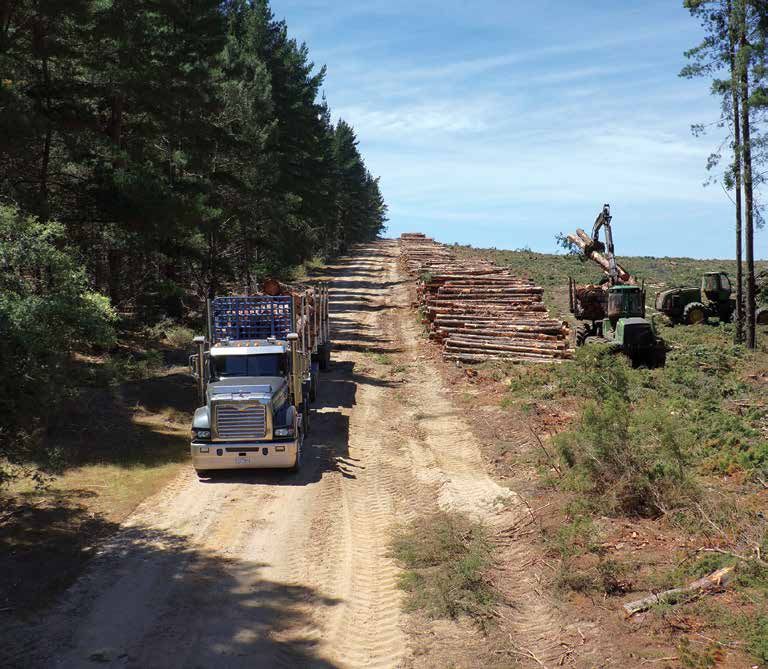
HVP Regional Map
     See the addendum to this plan on the HVP internet site for more
     detailed maps – forest management – defined forest area,
     or click http://www.hvp.com.au/hvp-forest-management/area-maps/

                                   MILDURA
                               •

                                                                                                                   Northern                          WODONGA •
                                                                                                                                                                                 •
                                                                                                                                                                                     SHELLE Y

                                                Western                                                                        WANGARATTA •
                                                                                                                                                      MYRTLE FORD
                                                                                                                         BE NALLA •                       •
                                       HORSHAM
                                   •                                                       BE NDIGO
                                                                                       •

                                                                                                                                                                                         OME O
                                                                                                                                                                                     •

                                                                                                                                                                                             Gippsland
                                                                                                                    BUXTON •
                                                                           • BALLARAT
                              HAMILTON
  MOUNT GAMBIER           •                                                                           ME LBOURNE                                                                         BAIRNSDALE
•                                                                                                          •                                                                         •
             DARTMOOR
           •
                                                                                                                                                                          SALE
                                                                                                                                      WARRAGUL                        •
                                                                                GEE LONG •                                        •
                                                                                                                                                     CHURCHILL
                 • PORTLAND                    WARRNAMBOOL            • COLAC                                                                    •
                                           •
                                                                                                                                                             YARRAM
                                                        BE ECH FORE ST                                                                                   •
                                                                      •                                                                GELLIONDALE •

     Forest Management Plan & Sustainability Report 2019/20                                                                                                                                              5
About this Report
& Forest Management Plan

Forest Management Plan
& Sustainability Report 2019/20

Forest Management Plan & Sustainability Report 2019/20   6
Forest Management and Stewardship
– Purpose, Policy and Planning
Purpose
The purposes of this plan is to:
 •	Outline the Stewardship and Management policies that HVP adheres to.

  •	Outline the scope and objectives of management.

  •	Describe the estate, harvest rates, species selection and silvicultural regimes.

  •	Provide a summary of HVP’s Management System and how it works.

  •	Present the planned operational area and volume for the financial year (table 3).

  •	Present this information to the public for the purposes of input and feedback which can
      be used to modify the existing plan or in the development of the subsequent year’s plan.
      This is done by publishing the Forest Management Plan on the HVP website with a link
      sent to a wide range of stakeholders requesting their review and input.

Forest Management Plan
This Forest Management Plan forms one part of the Company’s business planning as shown
in the diagram below.

            Forest Management Plan
                           Systems                                                   Strategic Plans
                   Forest Resources System

                Forest Stewardship System
           Occupational Health and Safety System                                         Consolidated
                                                                                          Operating
                                                                                            Model
               Plans for Operations
              and Risk Management
            Region Harvesting and Haulage Plans                                             Financial Model
                   Region Silviculteral Plans
           Specific Environmental Protection Plans
                  Regional Fire Protection &
                 Emergency Response Plans
                                                                                  Long Term Plan

                         Site Plans
                   Harvest Coupe Plans
                     Log Delivery Plans
                                                                                            Annual Budgets
                   Site Operational Plans
     Specific Environmental and Stewardship Projects

Forest Management Plan & Sustainability Report 2019/20                                                        7
Within the Forest Management Plan the 3 principal          The Forest Management Plan is based on the forest
management systems are:                                    management activities conducted on Company land
1.	The Forest Resources System accumulates resource       or on other land, and their interactions with commercial
    data (wood and carbon), site productivity, spatial     or economic outcomes, environmental values and the
    data and relevant financial information on both        broader community in which the Company operates.
    revenue and costs. This enables the Company to
                                                           Forest Management Objective - To manage the forest
    model plantation growth which provide the basis for
                                                           estate to deliver optimal value to our investors in a
    business valuation, development of the business
                                                           way that embraces and demonstrates good forest
    plan and for the production of harvesting and forest
                                                           stewardship through the continuous development
    management operational plans (See Appendix 1).
                                                           of the Company’s skills and practices.
2.	The Forest Stewardship System (FSS) is based
                                                           Forest stewardship is the responsible management
    on a standard environmental management system
                                                           of our clients’ forest investments while maintaining
    structure and specifically includes:
                                                           or enhancing the environmental and community
  •	A legal register.                                     values associated with the land for future generations.
                                                           Clearly, protecting the resource from the impact of
  •	Identification and assessment of the significance     uncontrolled fire is critical.
     of environmental, social and commercial aspects
     and impacts of company activities.                    The Company plans and manages its plantation
                                                           operations to be economically viable, socially
  •	Management objectives and targets.                    acceptable and environmentally responsible.
                                                           It is committed to the wellbeing of its employees,
  •	A monitoring process.                                 contractors and other parties legally involved with
  •	Operating conditions and controls in a series         Company assets and will take all practical steps
     of Best Management Practices (BMPs).                  to prevent personal injury and damage to property
                                                           or environment.
  •	A process for internal audit and review.
                                                           HVP forest management is certified under both of the
  •	A process for managing non-conformance and            major, internationally recognised forest certification
     corrective actions to drive continual improvement.    schemes; Responsible Wood ((Australian Forestry
                                                           Standard - endorsed by the Programme for the
3.	The Occupational Health and Safety System (OHS)        Endorsement of Forest Certification systems, (PEFC))
    which is based on a structure which mirrors the        and the Forest Stewardship Council® (FSC®), and is
    Forest Stewardship System and covers all safety        committed to adhering to the certification standards
    aspects of the business.                               within its estate.
Staff can access all of these systems via HVPortal,        Timber plantations including exotic monocultures are
which outlines the methods, policies, procedures           accepted for voluntary certification under Responsible
and standards in doing business, keeping safe and          Wood (Australian Forestry Standard (AFS)) and
protecting the environment.                                under the Forest Stewardship Council (FSC®) rules.
                                                           Plantations are an integral consideration within the
Scope of Forest Stewardship – HVP manages                  criteria of the Australian Forestry Standard. The FSC®
softwood and eucalypt plantations for timber               membership expressly determined that well-managed
production, particularly sawlogs and includes              plantation forestry operations should be accepted
operational activities such as establishing, growing       as an important ingredient in the global strategy for
and harvesting of trees. Native forest (or Custodial       meeting human needs. This intent is consistent with
Land) within the forest estate is not harvested and        that of the Australian Forestry Standard.
is managed for conservation purposes including all
ecosystem services, particularly, flora, fauna, soil and   To balance the sometimes conflicting objectives
biodiversity.                                              that this can present, the Company differentially
                                                           manages its plantations and its custodial lands to
                                                           promote the benefits and manage the issues, with
                                                           the aim of achieving a balance across the full estate.

Forest Management Plan & Sustainability Report 2019/20                                                               8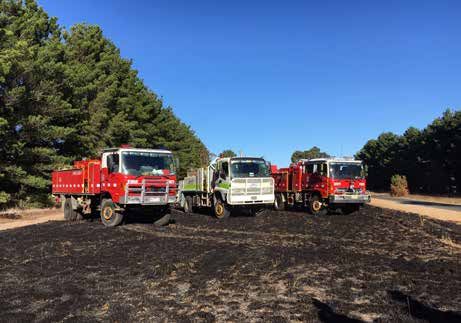
Development of the plan                                       Company management practices require some
                                                              impacts; for example some soil disturbance is intended
– including Aspects, Impacts,                                 where cultivation promotes crop growth. However,
Objectives and Targets                                        the objectives and targets reflect the Company’s
                                                              commitment to continual improvement in performance,
To establish forest management objectives the
                                                              and to long-term research on the interaction between
Company has analysed its activities, products and
                                                              plantations and environmental values.
services, and identified the environmental, social and
commercial aspects of these. The associated impacts
have been identified and their significance assessed.         Management planning
The outcome of this assessment is recorded in a
register of Aspects and Impacts which flows onto
                                                              and implementation
setting objectives and targets to minimise the impacts.       HVP aims to follow the following forest
The procedure followed to assess aspects & impacts            management principles:
and the objectives & targets can be found by HVP staff         •	Provide and maintain a safe working environment
in HVPortal.                                                      for staff and contractors and a safe environment
In summary, the significant aspects are related to                for visitors.
those activities which:                                        •	Provide a flow of forest products within
  •	Generate soil movement, and accordingly the                  specification and in a timely manner to meet
     potential for sediment generation.                           contractual commitments and the requirements
                                                                  of the business plan.
  •	Result in alterations to the soil structure (e.g.
     alterations to the soil profile, and to bulk density).    •	Maintain site productivity.
  •	May result in contamination of soil and                   •	Protect all custodial native forests, threatened
     groundwater (e.g. spills and leaks, off-target                 species and threatened ecological communities
     application of herbicides).                                    located on Company land.
  •	May contribute to contamination of surface waters         •	Maintain water quality and conserve wetlands
     by chemicals (e.g. agricultural chemicals and                and riparian zones.
     machinery fuel/oil) and sediment.
                                                               •	Maintain a balance of plantation ages to provide
  •	May result in detrimental impacts on flora, fauna,           a sustainable dividend to investors as well as
     and biodiversity.                                            maintaining long term social & economic benefits
                                                                  to the community.
  •	May impact on air quality (e.g. herbicides, vehicle
     emissions, dust, and smoke).                              •	Limit adverse visual amenity impacts of plantation
                                                                  operations.
  •	May adversely impact on public amenity(e.g.
     noise) and cultural and aesthetic values (e.g.            •	Maintain or enhance environmental values in the
     landscape values).                                           custodial lands.
  •	Affect health and safety of humans.                       •	Continually improve the resource and its
                                                                  management through directed research.
  •	Affect good relationships with stakeholders and
     the community.                                            •	Protect the assets from damaging agents such
                                                                  as fire, insect attack and disease.
  •	Affect cultural heritage.
                                                               •	Maintain opportunities for quiet recreation.
  •	Occur during uncontrolled wildfire.
                                                               •	Develop and manage good relationships with
Accordingly objectives and targets are developed
                                                                  stakeholders and the community.
and approved by the company’s Operations Group
at the annual September meeting to manage these
significant aspects, with the aim to minimise impacts.
The Monitoring and Audit Plan then addresses the
compliance with the objectives and targets.

Forest Management Plan & Sustainability Report 2019/20                                                                 9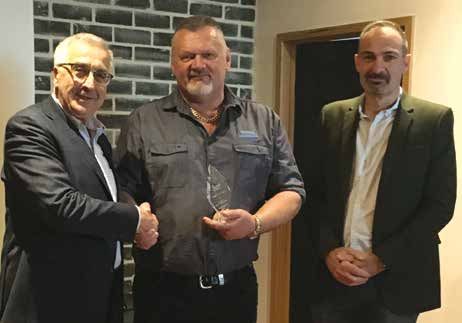
The means by which management objectives are               BMPs used in forest management cover
achieved are documented in the company’s:                  the following activities:
  •	Forest Resources Systems (through data                  •	Operational planning and management;
     collection, data management, plantation and
     business modelling).                                   •	Tree breeding;

  •	Policies, Procedures and Operating Standards           •	Site Preparation;
     within the Company Best Management Practices           •	Fire protection;
     (BMP’s).
                                                            •	Weed control;
The Company aims to continuously develop
management practices that achieve the best-                 •	 Planting;
balanced outcome for its business, for the
environment and for the community. The BMPs:                •	Plantation thinning;
  •	Capture company intellectual property in               •	Pest management;
     terms of objectives, procedures and technical
     specifications for HVP plantation management.          •	Plantation nutrition;

  •	Facilitate due diligence in achieving corporate        •	Road construction and maintenance;
     responsibilities under the business, environment
     and community components of the stewardship            •	Quarrying;
     program.
                                                            •	Timber harvesting;
  •	Convey corporate intent for the activity to all
                                                            •	Stakeholder management;
     persons operating on Company land.
                                                            •	Cultural Heritage;
  •	Provide staff with documentation for control
     of forest management including harvesting,             •	Biodiversity;
     establishment, fire management and associated
     operations.                                            •	Management of native vegetation;

Operational planning is undertaken according to the         •	Forest Health;
relevant BMPs. Accountabilities & responsibilities for
                                                            •	Public access;
the implementation of the BMP’s and the organisation
structure are documented for our staff in HVPortal.        Training programs inform HVP staff and contractors
BMP documents range from broad over-arching                on the content of the BMPs and the Company intent.
policies such as the Forest Stewardship Policy and
OH and S Policy which are relevant to all Company          Operations are monitored by company staff and
activities, to policies, procedures and operating          independent auditors and bodies.
standards which are specific to one element of the
business. The BMP documents are available to all           A schedule of periodic systems and operational audits
staff. The BMPs are periodically reviewed internally       and reviews test proper implementation and enable
to incorporate new knowledge, or field experience          remedial actions to be taken on the system and on
from monitoring and auditing. Some key documents           operations.
are externally peer reviewed.

The BMPs cover the further identification of aspects or
hazards at the site level, require the assessment of the
significance of these aspects and the development of
controls for the site.

The environmental aspects or hazards are generally
recognised in the Victorian legislated Code of Practice
for Timber Production and compliance with this Code
is mandatory and complementary to the requirements
of the BMP.

Forest Management Plan & Sustainability Report 2019/20                                                          10
Health & Safety – Towards Zero Harm Forest Management Plan & Sustainability Report 2019/20 Forest Management Plan & Sustainability Report 2019/20 11
Health and Safety Performance
HVP’s health and safety performance is essential to our business
success and growth. No business objective will take priority over heath
and safety. We are committed to managing our activities to protect our
people (staff and contractors) and our communities.

Our approach                                             Life Protecting Rules
HVP’s management system provides a comprehensive
set of requirements for managing risks from all of our
activities. This includes processes, guidelines and
tools that have supported continuous improvement in
performance. We have a safety commitment to zero
harm, with a goal of industry leading practices and
performance.

Forest Management Plan & Sustainability Report 2019/20                           12
Health & Safety Policy
At Hancock Victorian Plantations Pty Limited
we have a safety commitment to Zero Harm.

 We believe that:
   •	No business objective will take priority over health and safety.

   •	All incidents are preventable.

   •	Whilst management have ultimate accountability, we all have responsibility for health and safety.

   •	All personnel have the responsibility to stop any job they believe is unsafe or cannot be continued
      in a safe manner.

 To achieve this we will:
   •	Maintain and continually improve our Occupational Health and Safety System.

   •	ProactiveIy identify hazards and unsafe behaviours and take steps to manage these to as low
      a risk as reasonably practical.

   •	Set targets for improvement and measure, appraise and report on our performance.

   •	Assess and recognise the health and safety performance of employees and contractors.

   •	Consult and actively promote participation with employees and contractors to ensure they have
      the training, skills, knowledge and resources to maintain a healthy and safe workplace.

   •	Accurately report and learn from our incidents.

   •	Support the safe and early return to work of injured employees.

   •	Design, construct, operate and maintain our assets so that they safeguard people and property.

   •	Require our contractors to demonstrate the same commitment to achieving excellence in health and
      safety performance.

   •	Comply with relevant legislation, regulations, codes of practice and industry standards.

We must always remember that ‘SAFETY IS EVERYONE’S RESPONSIBILITY’
Compliance with HVP’s Health and Safety policy is a mandatory condition of employment
or contract engagement.

                   Stephen Ryan
                   Chief Executive Officer

Forest Management Plan & Sustainability Report 2019/20                                                      13
Governance and Legal Requirements
In Victoria there are a number of legal requirements applying to forestry
operations. Foremost of these is the Code of Practice for Timber Production
(the Code) which is regulated on private forests by local government.
Legal requirements from all relevant Acts are listed these standards are assessed through a series
on the Company’s Legal Register and this is kept of audits which are described further in Section
up to date by the Company’s In-House Lawyer. 8 of this document.
This process is largely undertaken by subscribing
to relevant legislation update services and a periodic A sub-committee of the HVP Board known as the
review of the register. This process is outlined in Heath, Safety and Environment (HSE) Committee
the company Procedure for Identification of Health, has overall responsibility to ensure that HVP’s
Safety and Environmental Legal Obligations and performance in the HSE area is satisfactory.
Other Requirements.
In applying these laws, HVP work very closely with
local government, the Victorian Dept. Environment,
Land, Water and Planning (DELWP), the applicable “In applying these laws, HVP work very
Catchment Management Authority (CMA) and Water closely with local government, the Victorian
Authority. HVP also have developed a series of
Best Management Practices that go beyond the Dept. Environment, Land, Water and
requirements of the Code and these are designed to Planning (DELWP)...”
ensure that all legal and company requirements are
being met by staff. Company performance against
Eucalypt Plantings Code of Practice Pine Plantation
Forest Management Plan & Sustainability Report 2019/20 14Safety Case Study 1
10 million kms
Rollover Free
HVP handed commemorative back-packs
to its log truck drivers at its drop in sessions
to celebrate over 10 million kilometers of
rollover free journeys in Gippsland.
Truck driver drop-in sessions were held in Australian Paper’s
Maryvale training center which is adjacent to their weighbridge.
“... 10 million The weighbridge is one of the busiest in Australia with HVP
sending 17,000 tons across it each week.
kilometers of rollover
free journeys in This is the third year of the voluntary drop in sessions which attract
around 80% of Gippsland’s drivers who stop by to discuss local
Gippsland.” issues with HVP Staff, have a free health check or attend one of
the on-site rollover training sessions.
These sessions were a bit special with each driver given a movie
voucher and an embroided back pack to celebrate the 10mill km
achievement, the previous best was 6.0 million kms.
Safety Safety Safety Safety Safety
Lost Time Number of Average score Number of Average score
Injury independent for independent independent of independent
frequency Safety System Safety System Safety Field Safety Field
rate Audits Audits Audits Audits
5.9
mill hrs
21 91% 22 94%
Safety system Safety system Field audits Field audits
audits of audits of of contractor of contractor
contractor contractor workforce workforce
workforce workforce performance performance
performance performance
Statistics from 2018-2019 Financial Year
15Our People Forest Management Plan & Sustainability Report 2019/20 Forest Management Plan & Sustainability Report 2019/20 16
Our People                                 Case Study 2

                                                Chairman’s
                                                Safety Award
                                                Gippsland Plantation Harvesting company
                                                Mountain Logging has won the 2019 HVP
                                                Plantations Chairman’s Safety Award at an annual
                                                dinner on Wednesday night October 9th. Mountain
                                                Logging provides harvest services in the Gippsland
                                                Region, and received the honour in recognition of
                                                its outstanding contributions to safety management
                                                on steep plantation sites. Mountain Logging
                                                harvests over 300,000 tonnes of plantation wood
                                                each year using 4 harvesting crews.
                                                In presenting the award, HVP Plantations recognised the valuable
                                                 safety work Mountain Logging has done through the introduction
                                                of a winch-assist harvesting system; a camera based grapple system
                                                and a 6 wheel-drive super forwarder to move logs to safer loading sites.
                                                As well as operational improvements, Mountain Logging introduced
                                                a number of new in-house apps that their staff use including apps that
                                                make all documentation available on site; monitor people working
                                                alone monitor equipment start-up, inspections and maintenance.
                                                These are just a few of the innovations Mountain Logging has made.

   Our People                     Our People               Our People               Our People               Our People

      HVP                           HVP                   HVP Seasonal                Direct                   Total
    Employees                     Employees                Employees                contractors             employment
     Female                         Male                    (Nurseries
                                                          & Fire Season)

       31
        FTE
                                     78FTE
                                                              17
                                                               FTE
                                                                                     729FTE
                                                                                                             855 FTE

     FTE =                          FTE =                    FTE =                    FTE =                    FTE =
    Full time                      Full time                Full time                Full time                Full time
   equivalents                    equivalents              equivalents              equivalents              equivalents

Statistics from 2018-2019 Financial Year

                                                                                                                           17
Our People Case Study 2
Chairman’s
Safety Award
“Mountain Logging
harvests over
300,000 tonnes
of plantation wood
each year using
4 harvesting crews.”
Chairman’s Safety Awards
HVP Chairman Adrian Kloeden presenting award to Mountain
Logging Principal Andrew Mahnken, with Simon Gatt Gippsland
Regional General Manager on the right.
Our People Our People
Outside groups Number of significant
issued with stakeholder interactions
permits to use
HVP land
342 897
Includes interactions
that are ongoing or not solved
on the spot
Statistics from 2018-2019 Financial Year
18Community
HVP aims to treat all stakeholders honestly, fairly and with respect.
The company also recognises the positive contribution that stakeholder
perspectives and expertise make to forest management.
HVP have a Stakeholder Engagement Plan to ensure The Company’s stewardship extends to all of the
that stakeholders have sufficient opportunities to values associated with the company forest estate.
have input into HVP Plantations management of We strive to understand these values and the
the estate. These opportunities include but are not perspective of our stakeholders as we establish,
limited to: grow, harvest and protect our client’s forest
• Email info@hvp.com.au investments while maintaining or enhancing the
environmental and community values associated
• HVP Website – Contact Page www.hvp.com.au with the land.
• This Forest Management Plan – emailed to all The proactive management of community
available stakeholders. relationships and establishment of partnerships
with our stakeholders will promote the company
• Telephone 03 92891400. as a responsible manager of environmental and
• Notifications regarding operations which community values, build positive relationships and
include HVP contact name and phone number. mutual understanding and reduce business risk.
In the long run, these outcomes are essential to
• HVP Plantations facebook page. achieving our goals and generating and preserving
long-term investment value.
• Newspaper advertisements.
While maintaining a balance between economic,
• Forums and meetings. social and environmental considerations HVPs
social policy goals are to:
• Direct contact at regional offices.
• Provide a safe place to work.
HVP recognise that from time-to-time some
stakeholders may have grievances regarding • Respect the rights of all employees and
our operations or behaviour. HVP commit to contractors.
dealing with the grievances fairly and openly,
• Respect the rights of indigenous people.
within a reasonable time period. Our Stakeholder
Engagement Plan outlines a complaints procedure • Engage effectively with the community on social
that ensures our staff deal with any grievance properly impacts associated with forest investments.
and in the case where the grievance cannot be
resolved to the satisfaction of both parties, then the
party with the unresolved grievance will be provided
with an opportunity to take the matter further though
the Dispute Resolution Procedure that will be made
available to them at that time. “In the long run, these outcomes are essential
to achieving our goals and generating and
preserving long-term investment value.”
Forest Management Plan & Sustainability Report 2019/20 19Stakeholder and community categories include: Positive relationships and mutual understanding and
• Those who derive income from the business respect will be built through effective communication
such as investors, employees, contractors and with all our stakeholders through:
other providers of services or goods. • Active participation in advisory groups.
• Customers. • Strategic partnerships with stakeholders
to achieve mutual goals.
• Indigenous parties, groups and communities.
• Interacting with indigenous groups including
• Statutory authorities, including the Country Fire at least sending harvesting plans for comments.
Authority (CFA).
• Identification and notification of stakeholders
• Neighbours including those living on public road in advance of significant or new activities.
access routes into our plantations and local
people living downstream of our plantations. • Listening to and considering the views of
stakeholders.
• Community interest groups such as, recreational,
Landcare and environmental groups. • Responding to stakeholder concerns with action,
where required.
Socio-economic conditions • Conveying the Company’s intent, values and
forest management practices to the community.
Where socio economic conditions are defined as
the financial and human capacity that influence the If issues arise that cannot be dealt with without
business and community environment and resilience further conflict the Company has a dispute resolution
in which HVP operate in Victoria. procedure that can be requested and is outlined in the
Community Relations BMP.
HVP aims to manage at company-wide and at site
level the:
• Safety of all staff, contractors and the public.
• Worker’s rights.
“Stakeholder and community categories
• Contribution to long term social and economic include, neighbours including those
benefits to the Community.
living on public road access routes into
• Long term productive capacity (essentially of our plantations and local people living
the soil) of adjoining public and private land as
downstream of our plantations...”
influenced by threats arising such as fire, soil
erosion, chemical use, vermin, noxious weeds and
pine wildings, plantation pests and diseases.
• Utility of adjoining land for the owners (quiet
enjoyment by adjoining landowners of their
property (may be threatened by smoke, noise,
odour and nuisance dust).
• Visual amenity (final fell harvest areas) – the view
from adjoining land at the landscape level.
• Use of local roads by the community for property
access (public OHS, traffic level).
• Neighbouring assets such as fencing and
public roads.
• Encouragement of local employment.
• Encouragement of local procurement of
services and equipment wherever available
and practicable.
Forest Management Plan & Sustainability Report 2019/20 20Public Access to the HVP Estate HVP Plantations as Neighbours
Public demand to use HVP plantations is HVP strive to be good neighbours with adjoining
increasing and is a factor of: historic community landowners. This includes complying with
use, developing interest in plantation recreational all laws, dealing fairly with all neighbours on
pursuits (eg. mountain biking) and increasing issues, and being prepared to listen & negotiate
urban forest interface pressures. Public access mutually acceptable outcomes.
management presents opportunities to: improve
good will; develop and maintain public advocates HVP have a neighbour notification system
and maintain community support through a greater to keep affected neighbours informed of our
understanding of forestry. Parallel to the increasing activities and to work with neighbours on a
demand for authorised use, HVP has experienced range of issues to minimise any adverse impact
an increase in the unlawful activities (mainly arson, our activities may have on neighbours. HVP
shooting, rubbish dumping, 4-wheel driving and have a long history of working with neighbours
motorbike riding) and unauthorised use of the on issues such as noise, dust, pine wildlings,
plantation. This has the capacity to damage the road use, chemical application, pest plants and
reputation of HVP amongst community and local animals, fencing etc. In addition HVP have a
government stakeholders. formalised system for allowing neighbours to
passively use the plantation area and this system
HVP encourage the management of public access is accessed via the HVP website.
where it reduces the risk to our plantations, our
workforce and to the local community (eg reducing Neighbour interactions are recorded in our
fire risk, arson, vandalism, rubbish dumping, illegal Stakeholder Management System. Data within
shooting) and improves the community relationship this system is managed according to privacy
with our plantations. Activities may be considered laws and HVP’s Privacy Policy which can be
where they are legal, risk appropriate, sustainable, found on our website www.hvp.com.au.
consider the value of the setting, are compatible
with HVP’s commercial values and generate a
community benefit.
Online Plantation Access Process Alpine Community Enjoying the Forest
Public access is now handled through a formal
online system where a range of access permits
Indigenous Heritage and
is available, ranging from passive recreational Engagement
use (e.g. walking, running and riding bicycles)
HVP recognise that indigenous people and
through to event requests and filming requests.
groups are interested in many of the lands that
Where possible HVP will recover our costs of
HVP manage. We have developed a policy and
managing public access and any net gains should
procedure to ensure we deal with indigenous
be reinvested in reducing the risk to our plantations
interests sympathetically, fairly and according
and the community through improving signage,
to the law.
recreational infrastructure and environmental
programs. HVP began this process by undertaking to send
our annual harvesting plans and this Forest
Management Plan to relevant indigenous groups
for comment and input. We continue to improve
our interaction methods over time.
Forest Management Plan & Sustainability Report 2019/20 21Climate Forest Management Plan & Sustainability Report 2019/20 Forest Management Plan & Sustainability Report 2019/20 22
Estate Protection
Fire Protection                                             Fire suppression includes all activities that are
                                                            concerned with controlling going fires.
Damage by fires is a serious and increasing risk to all
Victorian plantation estates.                               HVP plans and undertakes a range of prevention
                                                            works and actions to protect company assets from fire
The major plantation species have a low tolerance           and to provide safety and access for fire fighters. The
to fire. Even fires of low intensity can cause death        choice of prevention measures is based on the cost
or a loss of increment and a downgrading of wood            effectiveness of each measure at reducing the number
quality. Charring is a defect unacceptable for              of fires, the area burnt, the damage to assets and fire
papermaking and detracts from sawlog quality.               suppression cost.

The effect of downgrading of quality and value              Fire prevention objectives are to:
is exacerbated by the interruption to wood flows              •	Minimise the number of wild fires which originate
and may have long term ramifications for both the                on or enter company land.
company and the industry. Fire in custodial areas can
have a beneficial, benign or damaging effect on the           •	Minimise the area burnt, the damage to assets and
environmental values.                                            reduce fire suppression costs .

                   HVP Firefighters                              Blackout                              Fire Management

All land managed by the company is in the “Country          Fire suppression objectives - Upon detection of a fire
Area of Victoria” (CFA Act 1958) and as such the            the action will be safe, fast, determined and thorough
control of the prevention and suppression of fires is       with primary objectives to:
vested in the Country Fire Authority. The company
has formed a number of Forest Industry Brigades as            •	Control the fire in the shortest possible time and
detailed in Section 23AA of the CFA Act 1958, and                Minimise the area burnt and damage to assets.
Country Fire Authority (FI B’s) Regulations 1998.           In achieving these suppression objectives due regard
Fire protection activities are categorised as either fire   is paid to:
prevention or fire suppression.                               •	The safety of personnel and the protection of the
                                                                 environment.
Fire prevention includes all activities undertaken prior
to the ignition of a fire and aimed at minimising the         •	Fire suppression strategies and tactics appropriate
incidence and spread of fire. (The fire incidence is             to plantations that consider the commercial value
described in terms of the number of fires and the asset          of the plantations threatened and the suitability of
damage, area burnt and fire intensity).                          each stand for salvage of forest produce thereby
                                                                 minimising the loss to the company and the
                                                                 dependent industries.

Forest Management Plan & Sustainability Report 2019/20                                                                23
Suppression of wildfires on or threatening Company Plantation Health
land is given priority over all other Company activities.
HVP has an extensive fire fighting fleet including 20 External experts in entomology, pathology and
large fire trucks, 49 small four-wheel drive slip-on units nutrition are engaged for their input and who at least
and, in Gippsland and Northern, a first attack helicopter once each year provide a structured forest health
on standby. surveillance program.
Regional Fire Protection Plans document: A range of forest management programs combine
• Fire Protection policy and objectives. to ensure a healthy forest capable of resisting pests
and diseases thereby decreasing forest management
• Analysis of risk - providing details on the incidence risks and the reliance on chemical control methods.
of fire and the risk of plantation damage. This integrated pest management program includes:
• The tree breeding program which aims to select
• Fire prevention strategies - measures the region
vigorous plants adapted to the range of sites on
will take to minimise incidence of fire and minimise
the estate, including breeds with specific disease
the area burnt, assets lost and suppression costs.
resistance such as Dothistroma resistance.
• Fire suppression Operations folder - contains
• Maintaining tree vigour by implementing
detailed information that is updated annually:
an optimum stocking control regime from
a. Fire suppression maps; plantation establishment through to timely
thinning operations to utilise suppressed
b. Resource information; individuals. This is the primary control mechanism
for insect pests such as the Sirex wood wasp.
c. Contact arrangements;
• A scientifically targeted forest nutrition and
d. Contractor information;
nutrient conservation program to reduce the
e. Preparedness arrangements. incidence of nutrient deficiencies thereby
improving crop disease resistance.
Other forest management programs are directly
aimed at managing threats to forest health i.e:
• Control of competing vegetation particularly
“HVP has an extensive fire fighting fleet in the first year and pre-canopy closure.
including 20 large fire trucks, 49 small • Minimising wild fires, which at lower fire intensities
four-wheel drive slip-on units and, in can damage plantations and act as the primary
agent for subsequent attack by pests and
Gippsland and Northern, a first attack
diseases.
helicopter on standby.”
• Browsing animals which can inflict physical
damage to crop trees by removing protective
tissues (eg. bark stripping) and thereby expose
the tree to subsequent insect or pathogen attack.
These programs comprise the long-term pest and
disease prevention strategy for sustainable forest
health. Nevertheless this prevention program must
be supplemented by carrying out control programs
in response to outbreaks of pests and disease and
incursions of new agents. These control programs are
conducted in a safe and responsible manner utilising
biological control agents where possible (such as for
Sirex Wasp and Pine Aphid) and other methods which
have minimal environmental impact.
Forest Management Plan & Sustainability Report 2019/20 24Climate Change and Carbon
Climate Change
Climate change will have an impact on the Whilst working on our own carbon footprint, HVP
plantation and custodial estate of HVP based will need to adapt to the changing climate. Research
on a number of factors including potential for: programs have started to look at adaptation to the
• Reduced growth and survival based on new climatic conditions. Adaptation will include
reduced rainfall or more spasmodic rainfall. considerations such as:
• Maximising tree vitality through silviculture
• Increased growth due to the fertilisation effect practices such as good site preparation, weed
of additional CO2 (but probably limited by control, and on-time thinning.
moisture-stress and nutrition.
• Genetic selection of radiata pine for changing
• Increased or decreased growth due to climatic conditions.
increased temperatures.
• Changing to a different species or combination
• More or less impact from pests and diseases of species in marginal locations.
depending on how they interact with climate
change and consequent stress on trees. • Rationalising the landbase where necessary
and possible for more suitable land.
• Increased damage and disease impact from
increased hail events and storms. • Modifying our approach to fire prevention,
detection and suppression .
• Increased windthrow events due to stronger
winds more frequently.
Pine Tree Giant Pine Scale Sirex Wood Wasp
• Damage to infrastructure (roads, tracks
and drainage) from storm events.
• Increased fire danger due to drier and
warmer conditions, more severe droughts
and wind effects.
• Health risks to staff and contractors
(e.g. heat stress).
Forest Management Plan & Sustainability Report 2019/20 25Capacity of the plantation Carbon emissions
to act as a net Carbon sink reduction initiatives
Each year HVP prepares a Carbon Accounting Report HVP Plantations continually seek ways of reducing
(CAR) to monitor the carbon pool under management. greenhouse gas emissions in line with the carbon
The CAR provides information related to net carbon clause of the Forest Stewardship Policy
stock change during the calendar year. The most
recent carbon stock figure is shown in table 1 as one Current programs that will reduce carbon
of the last data lines. This is based on converting emissions include:
the growth of the trees to carbon stock. Tree growth • Renewal of contract for central dispatch of log
is converted to above-ground biomass, and then haulage in Gippsland. This optimises the haulage
expanded to include the root system using allometric reducing the number of trucks and maximises
relationships. This whole-tree biomass is then netted loaded kilometres.
down for moisture content, and then the dry weight
is converted to molecular carbon content. As each • Fertiliser application based on foliar analysis to
tonne of carbon in the biomass is equivalent to 3.66 ensure no fertiliser is applied in excess of that
tonnes of carbon dioxide, it can be finally converted to needed for optimal economic growth.
tonnes of carbon dioxide equivalent. This estimate is
• Converting to biosafe diesel for use in basal bark
conservative, as it does not include carbon stored in
chemical applications.
harvested wood products.
• Examining alternative uses (biofuel, wood pellets,
This process for carbon accounting is based upon
etc) for harvested biomass and harvesting residue.
generally accepted carbon accounting methodologies
and available quantification methods. • Examining alternative site preparation techniques
to minimise the requirement for burning excess
In addition to monitoring our greenhouse gas profile,
woody material left on site after harvesting.
HVP has mapped the areas of our plantation estate
that are Kyoto compliant (under Article 3.3 of the • Rationalising the vehicle fleet to reduce numbers
Kyoto Protocol) and were not forested on January 1, and size of vehicles (i.e. fuel consumption). Petrol
1990 although it is noted that the concept of Kyoto- Klugers have been phased out in preference
compliant stands has little currency under current for diesel models where a 4WD is required, and
global warming mitigation agreements. for more fuel efficient sedans where 4WD is not
needed.
HVP monitors the Australian Government policy
regarding carbon trading to understand opportunities • Large fire tankers are being replaced by smaller
for trading carbon credits in the future. more fuel efficient and nimble tankers.
• Increasing the use of mobile devices and
technology to minimise the kilometres travelled
on company business. E.g. Skype for Business
has reduced travel for meetings considerably.
• Use of a biofuel heating plant at Gelliondale
nursery burning pine sawdust.
• Introduction of solar panels for supplying
electricity to our Myrtleford and Shelley offices.
In addition to emission reduction options, HVP
participate in industry projects to improve opportunities
for creating and potentially selling carbon offsets.
36
Within this general framework are projects to expand
utilisation of wood as an alternative to carbon-intensive
products such as steel and concrete and to recognise
the carbon that remains sequestered in harvested
Mt CO2 Equivalent wood products.
Carbon stored on HVP Estate - 2018
Forest Management Plan & Sustainability Report 2019/20 26Fire Case Study 3a
Saving a Koala during
the 2019 Bushfires
Right in the middle of the 2019 Yinnar-South bushfire
in Gippsland, a koala, later named ‘Bobo’, appeared.
From behind the wheel underneath a firefighting vehicle, came over and
sniffed the boot of Devon Borrett-Gamble, an HVP and CFA firefighter,
then climbed his leg and sat there.
No doubt the koala was looking for a safe haven and thought a
firefighter’s leg is about as safe as it gets. Devon was very surprised,
but not even scratched by Bobo. Devon was able to walk around with
Bobo attached and made calls to a wildlife carer.
When Bobo settled, Devon wrapped him in a jumper and sat in the
vehicle with him. Bobo quickly starting yawning and fell asleep.
Eventually Devon passed Bobo over to a Wildlife Officer and the koala
was assessed as being in good condition despite his ordeal. After the
fires Bobo was released back into the wild.
Devon handing over Bobo to the wildlife officer Bobo gripping Devon
At a glance
Number of CFA FIB’s: 7
Number of Tankers: 20
Number of Slip on Units: 49
Number of Trained Fire Fighters: 152
Fires Attended per Year: 65 on average over 20 years
104 in 2018/2019
Proportion of fires attended on n
eighbouring properties: 60% on average over 20 years
48% in 2018/19
Area of HVP estate: 237,450 ha
27Fire Case Study 3b
Cape Clear
CFA Burning
Cape Clear is a small town located on the
Western Victorian plains about 40 km SW
of Ballarat. The local volunteer Fire Brigade
is composed of a handful of farmers, few of
which are under the age of 60, however they
have a reputation of fighting above their weight.
“... local volunteer
Cape Clear are achieving up to 70 km per year or roadside
Fire Brigade is burning and they have developed considerable expertise in
composed of a grassland burning.
handful of farmers, The roadside burns achieve a number of objectives, firstly to reduce
few of which are the fuel on roadsides to aid bushfire control and make a safer
under the age of space for firefighters and travellers and secondly for ecological
reasons. The Western Plains were once covered by expansive native
60...” grasslands, however these are now reduced to less than 2% of their
original extent, mainly found along roadsides. Introduced species
such as phalaris can be reduced by burning and the reduction in
biomass helps other native forbs and herbs to survive and thrive.
Cape Clear CFA Burning
28Fire Case Study 3b
HVP Fire
Statistics
Fire Fire Fire Fire
Plantation Plantation Plantation area Total
area burnt area lost to lost to hail plantation
windthrow damage damage area
2,551 ha 0 ha 0 ha 2,551 ha
Fire Fire Fire Fire
Native Native forest No. fires HVP No. fires HVP
forest burnt burnt - planned attended with attended
- unplanned (ecological/fuel origin on with origin on
(wildfire) reduction) HVP land non-HVP land
last season last season
1,045 ha 450 ha 49 45
Statistics from 2018-2019 Financial Year
29Environment Forest Management Plan & Sustainability Report 2019/20 Forest Management Plan & Sustainability Report 2019/20 30
Forest Stewardship Policy
HVP Plantations strives to manage the forest assets of the Company
to deliver optimal value to our investors and responsible stewardship
of the forest for economic, environmental and social benefits.
As stewards of the land, the company will:
1. Manage the forest estate according to all statutory requirements including the Code of Practice for Timber
Production and other forest management requirements as outlined in the Forest Management System.
2. Incorporate performance indicators into the Forest Management System and Forest Management Plan
including a framework for setting and reviewing forest management objectives.
3. Promote the development of employees and the use of appropriately skilled contractors with emphasis on
scientific excellence in relation to forest management, the environmental value of the estate and sensitivity
to stakeholder views.
4. Maintain forest ecosystem health and vitality by protecting Company forest from fire, pests and diseases
through long-term resource sustainability strategies and shortterm integrated pest management programs
with minimal environmental impact.
5. Consider the public resources of the forest - its water, soil, biological diversity, cultural heritage, landscape
amenity and recreational values - and manage them with a long-term sustainable perspective and the
prevention of soil and water pollution.
6. Implement programs to better understand the capacity of the forest to act as a net carbon sink and
develop practices to reduce greenhouse gas emissions of forest management activities.
7. Contribute long term social and economic benefits to the community from Company forest management
activities through the use of integrated forest management procedures and planning.
8. Consider the views of stakeholders in the development of the Forest Management Plan and to address
social and environmental issues arising from management of the forest estate.
9. Conduct research to maintain the productive capacity of the forest land and monitor environmental,
economic and social aspects of forest management.
10. Provide adequate resources to implement and maintain the system and to facilitate continual improvement
of forest management performance.
Stephen Ryan
Chief Executive Officer
Forest Management Plan & Sustainability Report 2019/20 31Custodial Lands, Infrastructure
and High Conservation Areas
Custodial lands include areas of native forest and vegetation, roads
which exclusively provide access to Custodial land and water bodies.
Native forest and vegetation found within the Custodial Significant biodiversity values (also
Lands is managed for conservation and biodiversity
purposes. Custodial lands include some areas of high
known as High Conservation Values)
conservation value forest (HCV) which over time have Every forest has some environmental and social value.
been defined via surveys or ecological vegetation The values it contains may include rare species, rare
class (EVC) mapping process. habitats and recreational sites or resources used by
local residents. Where these values are considered to
No native forest is harvested and no native forest
be of outstanding significance or critical importance,
is converted to plantation. This has been the policy
the forest can be considered to have significant
since HVP took ownership and management of the
biodiversity values or high conservation values (HCVs).
estate in 1998.
The Proforest HCV Toolkit is used as a guide to
This conservation designation is a voluntary decision determine high conservation values.
by the Company for freehold land and for the land
Values which are of outstanding significance and
subject to the Plantation Licence granted under the
critical importance have mostly already been
Victorian Plantation Corporation Act. Conservation
recognised in some way in Victoria due to the
means protecting, maintaining and where appropriate
extensive assessment and reporting over the last 30
enhancing or restoring the range of environmental
years of the State Government’s Land Conservation
values associated with native vegetation. HVP has
Council (LCC) now operating as the Victorian
maintained a voluntary policy not to harvest native
Environmental Assessment Council (VEAC). The role
forest in its custodial lands and in 2009 entered an
of that Council is to conduct investigations that are
agreement with the Victorian Government on this issue
requested by the Victorian Government relating to the
in the Strzeleckis. This agreement was the outcome
protection and ecologically sustainable management
of many years of work by company staff, consultants,
of the environment and natural resources of public
local government, community groups and the State
land. As a result of their extensive investigations
Government and offers both long-term protection of
forest values such as areas of global regional or
native forest values as well as considering the needs
national significance and other values considered of
of a major customer, Australian Paper.
outstanding significance or critical importance, have
The key points in the agreement include: been placed in reserves.
• 8,000 ha (6,500 of which is core biodiversity An assessment to identify exceptional values in HVP
areas and linking corridors) returned to public Plantations’ estate identified the following sites or
ownership. forest types to have significant biodiversity / high
conservation values:
• A further 17,945 ha of native forest in the
Strzeleckis permanently reserved from harvesting • Concave Pomaderris (Northern Region).
with on-title protection.
• Central Highlands Cool Temperate Rainforest
• Regeneration of indigenous native forest species (Gippsland Region).
following the harvest of the 1,500 ha of plantations
• Western basalt plains grassland community
within the 8,000 ha area.
(Western Region).
The custodial land represents a valuable conservation
• Native vegetation remnants – South West Victoria
resource and covers a range of bioregions and EVC’s
(Western Region).
as outlined in Table 2.
• Riparian links to Pheasant Creek Nature
Conservation Reserve (Northern Region).
Forest Management Plan & Sustainability Report 2019/20 32You can also read


