Funding Constrained Framework for Implementation - May 2018
←
→
Page content transcription
If your browser does not render page correctly, please read the page content below
Funding Constrained
Framework for Implementation

                               May 2018
Mission Statements

The mission of the Department of the Interior is to protect and
 provide access to our Nation’s natural and cultural heritage
 and honor our trust responsibilities to Indian Tribes and our
            commitments to island communities.

  The mission of the Bureau of Reclamation is to manage,
   develop, and protect water and related resources in an
  environmentally and economically sound manner in the
              interest of the American public.
San Joaquin River Restoration Program

Table of Contents
Executive Summary ...........................................................................................................1

1.0    Introduction........................................................................................................... 1-1
       1.1 Stage 1: Providing the Conditions Necessary for Reestablishment of
            Salmon ........................................................................................................... 1-2
       1.2 Stage 2 and Beyond: Full Implementation ................................................... 1-7
       1.3 Framework Background ................................................................................ 1-7
            1.3.1 2012 Framework for Implementation ................................................ 1-7
            1.3.2 2015 Revised Framework .................................................................. 1-8
            1.3.3 Fisheries Framework .......................................................................... 1-9
       1.4 Development of this Funding Constrained Framework................................. 1-9
       1.5 Tracking Implementation of this Funding Constrained Framework ............. 1-9
       1.6 Changes to this Funding Constrained Framework....................................... 1-10

2.0    Funding Sources and Summary of Costs............................................................ 2-1
       2.1 Federal Funding Sources ............................................................................... 2-1
           2.1.1 San Joaquin River Restoration Fund.................................................. 2-1
           2.1.2 CVP Restoration Fund ....................................................................... 2-3
           2.1.3 Federal Appropriations – Section 10009 and 10203 of PL 111-11 ... 2-3
           2.1.4 Federal Appropriations – Secure Water Act ...................................... 2-4
           2.1.5 Federal Appropriations – WIIN Act .................................................. 2-4
           2.1.6 Federal Appropriations – Fish and Wildlife Coordination Act ......... 2-4
           2.1.7 CalFed ................................................................................................ 2-5
           2.1.8 San Joaquin River Restoration Trust Fund ........................................ 2-5
       2.2 State Funding ................................................................................................. 2-5
       2.3 Obligations and Expenditures........................................................................ 2-7
       2.4 Summary of Costs (FY 2017 to FY 2024) .................................................. 2-10
       2.5 Budget Outlook Summary ........................................................................... 2-12

3.0    Actions Implemented within this Funding Constrained Framework .............. 3-1
       3.1 Program Staffing and Administration............................................................ 3-2
       3.2 Flow-Related Actions .................................................................................... 3-2
            3.2.1 Conservation Strategy and Flow-related Mitigation Measures ......... 3-2
            3.2.2 Flow Management and Monitoring ................................................... 3-4
            3.2.3 Seepage and Levee Stability .............................................................. 3-5
       3.3 Channel and Structural Improvements .......................................................... 3-6

Funding Constrained Framework for Implementation                                                                                     i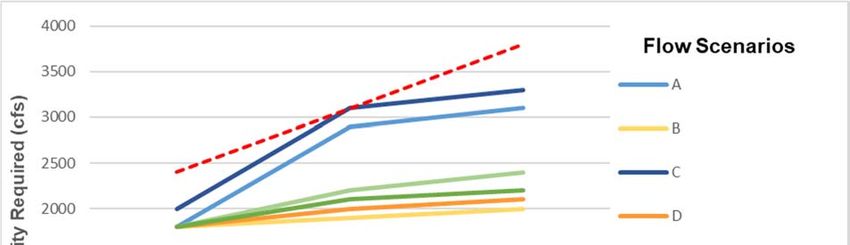
San Joaquin River Restoration Program

              3.3.1
                 Mendota Pool Bypass, Mendota Pool Fish Screen, and a Portion or
                 All of the Reach 2B Levees ............................................................... 3-7
          3.3.2 Arroyo Canal Fish Screen and Sack Dam Fish Passage Project ........ 3-7
          3.3.3 Passage for Anadromous Salmonids at Key Barriers to Migration ... 3-8
      3.4 Fish Reestablishment ..................................................................................... 3-8
      3.5 Water Management Goal and Friant Division Improvements ....................... 3-9
      3.6 Miscellaneous and Opportunistic Actions ................................................... 3-10

4.0   Actions Not Implemented within This Funding Constrained Framework ..... 4-1

5.0   Re-establishment of Salmon Populations ........................................................... 5-1
      5.1 Introduction ................................................................................................... 5-1
      5.2 Physical Flow Characteristics of Interim Channel Capacities ....................... 5-1
           5.2.1 Assumptions, Aspects of Channel Capacity Analyzed and Flow
                  Scenarios Used ................................................................................... 5-2
           5.2.2 Results................................................................................................ 5-4
      5.3 Conclusion ..................................................................................................... 5-7

6.0   References.............................................................................................................. 6-1

Tables

      Table ES-1. Key SJRRP Major Construction Actions Schedule for Completion in
           Stage 1 ...............................................................................................................2
      Table ES-2. SJRRP Project and Activity Costs to be Undertaken in Stage 1 ...........3
      Table ES-3. SJRRP Funding Needs and Sources to Implement the Actions in
           Stage 1 ...............................................................................................................4
      Table 1-1. Key SJRRP Major Construction Actions Schedule for Completion in
           Stage 1 ........................................................................................................... 1-3
      Table 1-2. SJRRP Project and Activity Costs to be Undertaken in Stage 1 .......... 1-4
      Table 2-1. Approved Funds Through FY 2016, SJRRP Federal Funding Sources2-2
      Table 2-2. Collections into the SJRR Fund Through FY 2016 ............................. 2-2
      Table 2-3. Approved State Funds Through FY 2016, SJRRP State Funding
           Sources........................................................................................................... 2-6
      Table 2-4. SJRRP Obligations and Expenditures Through FY 2016 .................... 2-8
      Table 2-5. Federal SJRRP Obligations and Expenditures for Individual SJRRP
           Projects Through FY 2016 (All Fund Sources)............................................. 2-9
      Table 2-6. SJRRP Project and Activity Costs to be Undertaken in Stage 1 ........ 2-10
      Table 2-7. SJRRP Funding Needs and Sources to Implement the Actions
           Identified in Stage 1 (values in thousands) ................................................. 2-13

ii                                                                    Funding Constrained Framework for Implementation
San Joaquin River Restoration Program
Table 3-1. Groundwater Seepage Projects and Estimated Costs for Remaining
Properties Impacted Below 2,500 cfs ............................................................ 3-5
Table 3-2. Levee Remediation to Address Levee Stability Issues at 2,500 cfs ..... 3-6
Figures
Figure 1-1. Summary of Major Activities and Costs in this Funding Constrained
Framework ..................................................................................................... 1-5
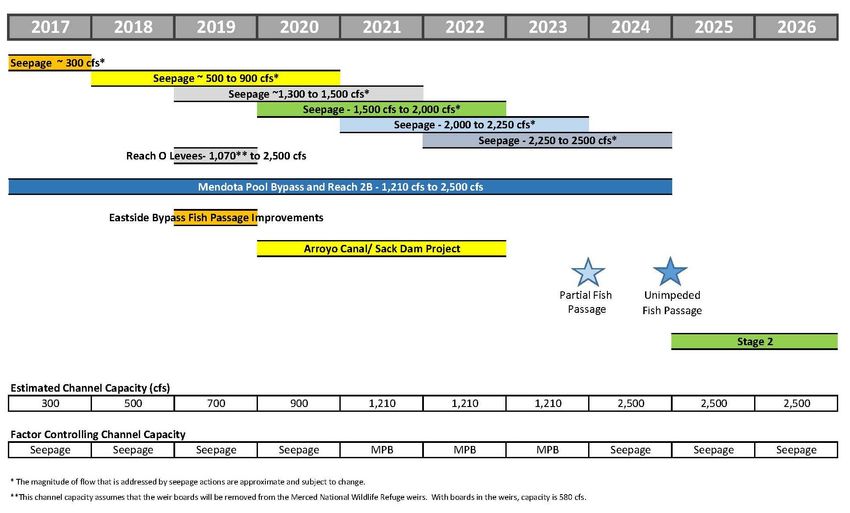
Figure 1-2. Summary of Key Timing for Channel Capacity and Fish Passage
Actions in Stage 1 .......................................................................................... 1-6
Figure 5-1. Required Channel Capacity for Each Flow Scenario. A hypothetical
flow strategy solely addressing temperature control, foregoing other
fisheries objectives, is plotted as a reference ................................................. 5-5
Figure 5-2. Summary Graphic for Informing the Selection of Suitable Channel
Capacity for Stage 1 ....................................................................................... 5-5
Appendices
Appendix A – Foundation for the Funding Constrained Framework for
Implementation
Appendix B – Analysis of Physical Flow Characteristics Supportive of Chinook
Salmon to Inform Channel Capacity Selection in the Funding Constrained
Framework
Appendix C – Federal Obligations and Expenditures Through Fiscal Year 2016
Appendix D – Project and Activity Cost Summary
Appendix E – Draft Mendota Pool Bypass and Reach 2B Project Sequencing
Funding Constrained Framework for Implementation iiiSan Joaquin River Restoration Program
List of Abbreviations and Acronyms
2012 Framework Third Party Working Draft Framework for
Implementation, dated June 19, 2012
2015 Revised Framework Revised Framework for Implementation, dated July
2015
AF acre-feet
cfs cubic feet per second
Conservation Facility Salmon Conservation and Research Facility
CVP Central Valley Project
DFW California Department of Fish and Wildlife
DWR California Department of Water Resources
EIS/R Environmental Impact Statement/Report
FY Fiscal Year
Flood Control Project Lower San Joaquin Flood Control Project
MAP Monitoring and Analysis Plan
NMFS National Marine Fisheries Service
PEIS/R Program Environmental Impact Statement/Report
Program San Joaquin River Restoration Program
Reclamation Bureau of Reclamation
ROD Record of Decision
RWA Recovered Water Account
USFWS U.S. Fish and Wildlife Service
Settlement Stipulation of Settlement in Natural Resources
Defense Council, et al., v. Kirk Rodgers, et al.,
Settlement Act San Joaquin River Restoration Settlement Act
SJRR Fund San Joaquin River Restoration Fund
SJRRP San Joaquin River Restoration Program
WIIN Act Water Infrastructure for Improvements to the
Nation Act
iv Funding Constrained Framework for ImplementationSan Joaquin River Restoration Program Executive Summary This document is a limited and focused assessment of implementation of the San Joaquin River Restoration Program (SJRRP) given a more limited future funding stream than previously anticipated. This document builds upon the Revised Framework for Implementation, dated July 2015 (2015 Revised Framework; SJRRP 2015). Specifically, this Funding Constrained Framework assesses the actions that can be accomplished to achieve as much as possible of the Restoration and Water Management goals in the Stipulation of Settlement in NRDC, et al. v. Kirk Rodgers, et al. (Settlement), the San Joaquin River Restoration Settlement Act, Title X, Subtitle A, Part I of Public Law 111-11 (Settlement Act), and the “Friant Division Improvements” in Title X, Subtitle A, Part III of Public Law 111-11 (Friant Division Improvements) with a more limited future funding stream and using existing, authorized funding sources (assuming no additional authorization for federal appropriations) and existing authorities. Building on the development of the 2015 Revised Framework , the Implementing Agencies – the Bureau of Reclamation, the U.S. Fish and Wildlife Service, the National Marine Fisheries Service, the California Department of Fish and Wildlife, and the California Department of Water Resources (DWR) – the parties to the Settlement, and affected downstream water districts and landowners have held meetings from August 2017 to March 2018 and continue to hold a number of meetings to address various concerns expressed and determine a path forward for the SJRRP including funding challenges facing the SJRRP. These parties collectively prepared a Foundation for the Funding Constrained Framework for Implementation (Framework Foundation; SJRRP 2018b). In the Framework Foundation, the parties collectively came to the understanding that the funding currently identified and authorized in the Settlement Act is not sufficient to complete all of the actions necessary to implement the Settlement and Settlement Act. In order to proceed towards fulfilling the Restoration and Water Management goals, along with the third party protections, the parties identified a multi-staged approach, which is described in this document and in the Framework Foundation. The staged approach is consistent with the Settlement and Settlement Act and will not involve any modifications or amendments to either. In addition, this approach does not in any way amend or alter the Settlement or Settlement Act, or alter the obligation to fully implement the Settlement. Each party commits to working collaboratively and in good faith towards full implementation of the SJRRP through this multi-staged approach. The first stage (termed Stage 1), which is the focus of this document, has the primary goal of beginning the reestablishment of spring-run and fall-run Chinook salmon in the San Joaquin River between the Merced River and Friant Dam through the establishment of volitional fish passage, sufficient flows to manage temperatures, and provide for the basic habitat needs of the species. To accomplish this goal, Stage 1, which extends from federal fiscal year (FY) 2017 through 2024, consists of a number of major construction activities as identified in Table ES-1. Costs for these activities are provided in Table ES-2. Funding Constrained Framework for Implementation ES-1
San Joaquin River Restoration Program
Table ES-3 shows the summary of funding needed to implement Stage 1 from federal and State
sources. Funding needs are escalated into the future and thus provided in various year dollars.
Funding sources identified in the Settlement Act at October 2006 or October 2008 price levels
have also been escalated into future price levels.
In summary, the federal funding need is estimated to be $540,912,000. Of this amount,
$534,776,000 has been identified through existing sources, leaving a deficit of $6,135,000. The
funding need designated as a State cost is $102,343,000. The State has identified $93,709,000 in
funding, leaving a remaining funding deficit of $8,634,000.
Table ES-1. Key SJRRP Major Construction Actions Schedule for Completion in Stage 1
Stage 1, FY 2017 to FY 2024
Primary Goal – Begin the reestablishment of spring-run and fall-run Chinook salmon through the
establishment of volitional fish passage, sufficient flows to manage temperatures, and provide for the
basic habitat needs of the species
Flow-Related Activities Seepage projects up to 2,500 cfs
Levee stability projects up to 2,500 cfs
Restoration Goal Activities Mendota Pool Bypass and associated structures
Mendota Pool Fish Screen
Levees in Reach 2B to convey 4,500 cfs through Reach 2B
and 2,000 cfs into the Mendota Pool
Fish passage improvements to the San Joaquin River Side of
the Chowchilla Bifurcation Structure
Arroyo Canal Fish Screen and Sack Dam Fish Passage
Salmon Conservation and Research Facility
Fish passage actions in the Middle Eastside Bypass
Water Management Goal Activities Award remaining funding to non-federal partners to move
forward with the construction of the Friant-Kern Canal and
Madera Canal Capacity Correction projects
Although not construction actions, Stage 1 will also consist of the operations of the facilities
constructed along with a number of minor projects and activities
ES-2 Funding Constrained Framework for ImplementationExecutive Summary
Table ES-2. SJRRP Project and Activity Costs to be Undertaken in Stage 1
(values in thousands)
Cost
Action
(Various $)1
Staffing and Administration $59,869
Flow Actions
Conservation Strategy / Mitigation Measures $10,931
Flows $6,150
Seepage Projects $72,204
Levee Stability $20,319
Channel and Structural Improvements
Mendota Pool Bypass, Fish Screen and Reach 2B Levees2 $336,803
Reach 4B, Eastside Bypass and Mariposa Bypass3 $1,387
Arroyo Canal Fish Screen and Sack Dam Fish Passage $41,645
Salt and Mud Slough Seasonal Barriers $0
Reach 4B, Eastside Bypass High Flow Routing $0
Chowchilla Fish Passage $0
Gravel Pits Filling or Isolation3 $2,946
Paragraph 12 Activities3 $0
Passage at Key Barriers $12,161
Fish Reestablishment $37,565
Water Management Goal & Friant Division Improvements
Water Management Goal Oversight $10,464
Friant-Kern and Madera Canal Capacity Restoration $28,530
Reverse Flow Facilities $40
Financial Assistance for Friant Division Improvements $32
Miscellaneous $2,210
Total $643,255
1. Cost have been escalated into future years.
2. Includes Mendota Pool Bypass, Mendota Pool Fish Screen, and part or all of the Reach 2B Levees. Actual facilities
constructed and phasing will be determined in coordination with the Implementing Agencies, Settling Parties, and Third
Parties by late spring 2018. Modifications to the San Joaquin River side of the Chowchilla Bifurcation Structure are
included in this Funding Constrained Framework as part of the Mendota Pool Bypass, Fish Screen and Reach 2B
Levees.
3. DWR may have available funds beyond their commitments in this Funding Constrained Framework. DWR may use their
remaining funds to continue to support restoration actions by conducting studies and implementing small projects that
continue to improve the success of a naturally-reproducing, self-sustaining salmon fishery.
Funding Constrained Framework for Implementation ES-3San Joaquin River Restoration Program
Table ES-3. SJRRP Funding Needs and Sources to Implement the Actions in Stage 1
(values in thousands)
Funds in Various Dollars1
Federal Funding Needs
Total Estimated Federal Funding Need $540,912
Federal Funding Sources Remaining
SJRR Fund 2 $303,061
3
CVP Restoration Fund $16,000
Federal Appropriations – Section 10009 of PL 111-11 $215,683
Federal Appropriations – Section 10203 of PL 111-11 4 $32
Federal Appropriations – WIIN Act $0
Federal Appropriations – Fish and Wildlife Coordination Act $0
Total Estimated Remaining Federal Funding Sources $534,776
Federal Funding Remaining / (Shortfall) ($6,135)
State Funding Needs
Total Estimated State Funding Need $82,024
Total Estimated State Funding Need with Levee Stability $102,343
State Funding Sources Remaining
State Authorized Funding Remaining $93,709
State Funding Remaining / (Shortfall) ($8,634)
Note:
1. Funding need and sources (as authorized by law) have both been escalated into future year dollars.
2. Estimated funds accumulated in the SJRR Fund through the end of FY 2024. Includes estimated future
Unreleased Restoration Flows sales, RWA sales, and Friant surcharge collections.
3. CVP Restoration Fund amounts assume an average of $2,000,000 annually, although this amount can be
indexed.
4. Implementation of additional Part III groundwater banking projects is not included in Stage 1. The funding for
this line reflects on the amount Reclamation would expend to complete the existing projects. However, it is
important to note that there are a few years when Reclamation anticipates not being able to obligate the entire
appropriations within the fiscal year. In these years, some or all of these funds could be used to implement
additional Part III actions. In addition, this does not preclude Reclamation from pursuing additional
appropriations for the Part III groundwater banking projects in Stage 1.
ES-4 Funding Constrained Framework for Implementation1.0 Introduction This document is a limited and focused assessment of implementation of the San Joaquin River Restoration Program (SJRRP) given a more limited future funding stream than previously anticipated. This document builds upon the Revised Framework for Implementation, dated July 2015 (2015 Revised Framework; SJRRP 2015). Specifically, this Funding Constrained Framework assesses the actions that can be accomplished to achieve as much as possible of the Restoration and Water Management goals in the Stipulation of Settlement in NRDC, et al. v. Kirk Rodgers, et al. (Settlement), the San Joaquin River Restoration Settlement Act, Title X, Subtitle A, Part I of Public Law 111-11 (Settlement Act), and the “Friant Division Improvements” in Title X, Subtitle A, Part III of Public Law 111-11 (Friant Division Improvements) with a more limited future funding stream and using existing, authorized funding sources (assuming no additional authorization for federal appropriations) and existing authorities. For various reasons, the implementation of the Settlement is behind schedule and implementation of the Settlement, Settlement Act, and Friant Division Improvements collectively will cost more than originally anticipated. In 2015, an extensive effort was made to develop a reasonable and effective schedule for implementing the SJRRP given realistic time- frames and financial solvency. Building on the development of the 2015 Revised Framework and to address various concerns expressed and determine a path forward for the SJRRP, the Implementing Agencies – the Bureau of Reclamation (Reclamation), the U.S. Fish and Wildlife Service (USFWS), the National Marine Fisheries Service (NMFS), the California Department of Fish and Wildlife (DFW), and the California Department of Water Resources (DWR) – the parties to the Settlement (Settling Parties), and affected downstream water districts and landowners (Third Parties) have held a number of meetings from August 2017 to March 2018 and continue to hold meetings to address the funding challenges facing the SJRRP. These parties collectively prepared a Foundation for the Funding Constrained Framework for Implementation (Framework Foundation; SJRRP 2018b) that is provided in Appendix A. In the Framework Foundation, the parties collectively came to the understanding that the funding currently identified and authorized in the Settlement Act is not sufficient to complete all of the actions necessary to implement the Settlement and Settlement Act. In order to proceed towards fulfilling the Restoration and Water Management goals, along with the third party protections, the parties identified a multi-staged approach, which is described in this document and in the Framework Foundation. The staged approach is consistent with the Settlement and Settlement Act and will not involve any modifications or amendments to either. In addition, this approach does not in any way amend or alter the Settlement or Settlement Act, or alter the obligation to fully implement the Settlement. Each party has committed to working collaboratively and in good faith towards full implementation of the SJRRP through this multi-staged approach. Similar to the 2015 Revised Framework, this Funding Constrained Framework is a “living” document and it is anticipated that updates will be made as additional information is gained and milestones are reached. While this Funding Constrained Framework represents a path forward in compliance with the Settlement and Settlement Act, it does not encompass all of the actions that Funding Constrained Framework for Implementation 1-1
San Joaquin River Restoration Program
are necessary to comply with the Settlement and Settlement Act and also does not encompass all
of the actions that may ultimately be taken to implement the SJRRP. The ultimate
implementation of the SJRRP will be shaped by decisions made through planning processes that
are part of the SJRRP, such as the Fisheries Management Plan, environmental processes, permit
requirements, and adaptive management.
1.1 Stage 1: Providing the Conditions Necessary for
Reestablishment of Salmon
In the Framework Foundation, the parties identified a staged approach that can be implemented
in the near term and within the bounds of currently identified funding. The first stage, termed
Stage 1, has the primary goal of beginning the reestablishment of spring-run and fall-run
Chinook salmon in the San Joaquin River between the Merced River and Friant Dam through the
establishment of volitional fish passage, sufficient flows to manage temperatures in the river, and
provide for the basic habitat needs of the species. To accomplish this goal, Stage 1, which
extends from federal fiscal year (FY) 2017 through 2024, consists of completion of the following
major construction activities:
Construction of the Mendota Pool Bypass and fish screen;
Construction of sufficient levees in Reach 2B to provide floodplain habitat and channel
capacity of 4,500 cubic feet per second (cfs) through Reach 2B and construction of
facilities to allow Reclamation to make deliveries of San Joaquin River water into the
Mendota Pool when necessary;
Completion of seepage and levee stability actions to achieve up to 2,500 cfs flow
capacity through Reach 2A, Reach 3, Reach 4A, in the Eastside Bypass from the Sand
Slough Connecter north to the confluence with the San Joaquin River;
Construction of the Arroyo Canal Fish Screen and Sack Dam Fish Passage Project;
Construction of the Salmon Conservation and Research Facility;
Construction of fish passage actions in the Eastside Bypass from the Sand Slough
Connecter north to the confluence with the San Joaquin River and at the San Joaquin
River side of the Chowchilla Bifurcation Structure; and,
Award remaining funding to non-federal partners to move forward with the construction
of the Friant-Kern Canal and Madera Canal Capacity Correction projects.
Although not construction actions, Stage 1 will also consist of the operations of the facilities
constructed along with a number of minor projects and activities (see Chapter 3 for a full
description of these).
1-2 Funding Constrained Framework for ImplementationSan Joaquin River Restoration Program
Table 1-1 provides a summary of the major construction action in Stage 1 and Table 1-2 provides
costs for all of the Stage 1 actions. Figure 1-1 provides a summary of the costs and benefits of
the Stage 1 actions. Figure 1-2 provides a summary of the timing of key channel capacity and
fish passage action in Stage 1.
Table 1-1. Key SJRRP Major Construction Actions Schedule for Completion in Stage 1
Stage 1, FY 2017 to FY 2024
Primary Goal – Begin the reestablishment of spring-run and fall-run Chinook salmon through the
establishment of volitional fish passage, sufficient flows to manage temperatures, and provide for the
basic habitat needs of the species
Flow-Related Activities Seepage projects up to 2,500 cfs
Levee stability projects up to 2,500 cfs
Restoration Goal Activities Mendota Pool Bypass and associated structures
Mendota Pool Fish Screen
Levees in Reach 2B to convey 4,500 cfs through Reach 2B
and 2,000 cfs into the Mendota Pool
Fish passage improvements to the San Joaquin River Side of
the Chowchilla Bifurcation Structure
Arroyo Canal Fish Screen and Sack Dam Fish Passage
Salmon Conservation and Research Facility
Fish passage actions in the Middle Eastside Bypass
Water Management Goal Activities Award remaining funding to non-federal partners to move
forward with the construction of the Friant-Kern Canal and
Madera Canal Capacity Correction projects
Although not construction actions, Stage 1 will also consist of the operations of the facilities
constructed along with a number of minor projects and activities
Funding Constrained Framework for Implementation 1-3San Joaquin River Restoration Program
Table 1-2. SJRRP Project and Activity Costs to be Undertaken in Stage 1
(values in thousands)
Cost
Action
(Various $)1
Staffing and Administration $59,869
Flow Actions
Conservation Strategy / Mitigation Measures $10,931
Flows $6,150
Seepage Projects $72,204
Levee Stability $20,319
Channel and Structural Improvements
Mendota Pool Bypass, Fish Screen and Reach 2B Levees2 $336,803
Reach 4B, Eastside Bypass and Mariposa Bypass3 $1,387
Arroyo Canal Fish Screen and Sack Dam Fish Passage $41,645
Salt and Mud Slough Seasonal Barriers $0
Reach 4B, Eastside Bypass High Flow Routing $0
Chowchilla Fish Passage3 $0
Gravel Pits Filling or Isolation3 $2,946
Paragraph 12 Activities 3 $0
Passage at Key Barriers $12,161
Fish Reestablishment $37,565
Water Management Goal & Friant Division Improvements
Water Management Goal Oversight $10,464
Friant-Kern and Madera Canal Capacity Restoration $28,530
Reverse Flow Facilities $40
Financial Assistance for Friant Division Improvements $32
Miscellaneous $2,210
Total $643,255
1. Cost have been escalated into future years.
2. Includes Mendota Pool Bypass, Mendota Pool Fish Screen, and part or all of the Reach 2B Levees. Actual facilities
constructed and phasing will be determined in coordination with the Implementing Agencies, Settling Parties, and Third
Parties by late spring 2018.
3. DWR may have available funds beyond their commitments in this Funding Constrained Framework. DWR may use their
remaining funds to continue to support restoration actions by conducting studies and implementing small projects that
continue to improve the success of a naturally-reproducing, self-sustaining salmon fishery.
1-4 Funding Constrained Framework for ImplementationSan Joaquin River Restoration Program
Figure 1-1. Summary of Major Activities and Costs in this Funding Constrained
Framework
Funding Constrained Framework for Implementation 1-5San Joaquin River Restoration Program
Figure 1-2. Summary of Key Timing for Channel Capacity and Fish Passage Actions in Stage 1
1-6 Funding Constrained Framework for ImplementationSan Joaquin River Restoration Program
1.2 Stage 2 and Beyond: Full Implementation
As previously described, the actions identified in Stage 1 do not fully implement the Settlement,
Settlement Act, and Friant Division Improvements. Additional stages will be identified by the
parties collectively in the future to fully implement the Settlement, Settlement Act, and Friant
Division Improvements. Chapter 4 provides a list of actions that will not be implemented within
Stage 1, but will be included in a future stage. Reclamation plans to begin preparation of a
Framework document for future stages in 2021. Additional local, state, and federal funding will
be necessary after Stage 1 to fully implement the Settlement and Settlement Act, and the non-
federal Settling Parties and Third Parties will use good faith efforts to obtain the funding
necessary to fund completion of this first and later stages, including collectively supporting
Congressional authorization of additional appropriations, in order to fully implement the
Settlement and Settlement Act.
1.3 Framework Background
The SJRRP has prepared a number of Framework documents dating back to 2012 that form the
basis of the actions in the Framework Foundation and in this Funding Constrained Framework.
The development of these documents, which have taken tremendous effort and time over the
years, has led to increased fine-tuning of the SJRRP. This has made the SJRRP more efficient
and effective with a more collaborative, consensus based effort. The Implementing Agencies,
Settling Parties, and Third Parties have been involved in each one of these Framework efforts
and provided critical input, which has led to a solid foundation for the major construction actions
commencing in Stage 1. These previous Framework efforts and resulting documents are
summarized below.
1.3.1 2012 Framework for Implementation
In June 2012, the SJRRP, in coordination with the Implementing Agencies and Settling Parties,
prepared and released the Third Party Working Draft Framework for Implementation (2012
Framework; SJRRP 2012). The 2012 Framework made use of new information to provide a
revised schedule and budget to guide SJRRP activities. The 2012 Framework identified:
1. Conditions necessary to reintroduce Chinook salmon into the San Joaquin River in light
of existing and anticipated river conditions, and in a manner consistent with the
Settlement and Settlement Act.
2. Implementing Agencies’ priorities in achieving the Restoration and Water Management
goals.
3. Actions that require additional information, and established the relative benefits and costs
before committing resources to those actions.
4. Actions that can be undertaken incrementally, while preserving the flexibility to adjust
and adapt as the Implementing Agencies learn more about actions that may benefit the
Restoration and Water Management goals.
Funding Constrained Framework for Implementation 1-7San Joaquin River Restoration Program
5. Actions as “core”, “secondary”, and, “improvement” actions. In addition, the 2012
Framework focused the near-term scope, schedule, and budget of the SJRRP to the
“core” actions.
“Core”: actions considered essential to the success of the SJRRP, where the
Implementing Agencies are certain that the action will result in a positive outcome,
and where the absence of action would result in program failure.
“Secondary”: actions where the Implementing Agencies have a high level of
confidence in a beneficial outcome, but where the absence would not result in the
failure to achieve the goals of the Settlement and Settlement Act. For the Restoration
Goal, some of these secondary actions may be required to address the potential
cumulative effects of fishery impairments. Information gained through monitoring
and analysis may result in secondary actions becoming core or improvement actions.
“Improvement”: actions with uncertain benefits to the overall SJRRP. These actions
are thought to increase the SJRRP’s success, but additional study and analysis is
needed. Information gained through monitoring and analysis may result in these
actions becoming secondary or core actions.
However, the 2012 Framework was limited in that it both continued to assume all projects would
move forward at the same time and assumed funds would be available to meet the SJRRP’s
funding needs.
1.3.2 2015 Revised Framework
In July 2015, the SJRRP, in coordination with the Implementing Agencies, Settling Parties,
Third Parties, and interested members of the public, prepared and released the Revised
Framework for Implementation (2015 Revised Framework; SJRRP 2015). The 2015 Revised
Framework updated and revised the 2012 Framework, and established a realistic schedule for the
implementation of the SJRRP based upon the best available technical, biological, scheduling,
and funding information. Specifically, the 2015 Revised Framework established the following:
Five year visions to provide clear, realistic, and accomplishable steps towards meeting
the Restoration and Water Management goals in the Settlement and the Settlement Act
and towards completing the Friant Division Improvements;
Achievable schedules based upon realistic federal and State of California appropriation
levels, improving the Implementing Agencies ability to plan and be transparent on
actions; and,
Roles and responsibilities for each Implementing Agency, increasing each agency’s
ability to budget, plan, and approve construction actions.
This 2015 Revised Framework provided a more realistic schedule and associated future funding
needs for the SJRRP Implementing Agencies to focus on implementation of the Settlement,
Settlement Act, and Friant Division Improvements. The 2015 Revised Framework identified the
1-8 Funding Constrained Framework for ImplementationSan Joaquin River Restoration Program
cost of implementing the SJRRP from FY 2015 to FY 2029 as $1.5 billion and identified
insufficient funding authorized to complete the actions in the 2015 Revised Framework.
1.3.3 Fisheries Framework
The 2012 Framework and the 2015 Revised Framework both primarily focused on activities
necessary to plan, permit, design, and construct major physical project elements of the SJRRP.
In June 2017, the SJRRP, in coordination with the Implementing Agencies and Settling Parties,
prepared the Fisheries Framework: Spring-run and Fall-run Chinook Salmon (Fisheries
Framework; SJRRP 2017). The Fisheries Framework established a realistic schedule for
implementation of the fisheries management actions in the Settlement and Settlement Act based
upon the best available science and information and provides guidance to the Implementing
Agencies to implement the fisheries components of the Settlement and Settlement Act. The
Fisheries Framework contains a description of: (1) goals and objectives for establishing spring-
run and fall-run Chinook salmon populations in the Restoration Area (the area from Friant Dam
to the Merced River confluence); (2) habitat and ecosystem conditions that will support naturally
reproducing, self-sustaining salmon populations; (3) the scientific foundation for the planned
management actions; and (4) a proposed Adaptive Management process and implementation
plan.
The Fisheries Framework is in draft form and is expected to be finalized in 2018.
1.4 Development of this Funding Constrained Framework
This Funding Constrained Framework was developed in coordination with the Implementing
Agencies, Settling Parties, and the Third Parties beginning with the Framework Foundation
(SJRRP 2018b) that is provided in Appendix A and the Analysis of Physical Flow
Characteristics Supportive of Chinook Salmon to Inform Channel Capacity Selection in the
Funding Constrained Framework provided in Appendix B (Fish Flow Characteristics Report;
SJRRP 2018a). Over a dozen one-on-one, small group, and large group meetings and conference
calls were held from August 2017 through March 2018 to develop the Framework Foundation
and the Fish Flow Characteristics Report. The Framework Foundation then formed the basis of
this Funding Constrained Framework. The Fish Flow Characteristics Report informed the
Implementing Agencies, Settling Parties, and the Third Parties on key physical flow
characteristics for fish provided by different channel capacities. This Fish Flow Characteristics
Report provided supporting information for the channel capacities necessary to begin the fish
reestablishment actions called for in Stage 1.
1.5 Tracking Implementation of this Funding Constrained
Framework
Tracking progress in implementing this Funding Constrained Framework is key to the successful
implementation of Stage 1. As part of the development of this Funding Constrained Framework,
Reclamation initiated a Cost Containment and Cost Cutting Team consisting of members of the
Implementing Agencies, Settling Parties, Restoration Administrator and Technical Advisory
Funding Constrained Framework for Implementation 1-9San Joaquin River Restoration Program Team, and Third Parties. This team met a number of times throughout the development of this document and was successful in reducing costs substantially. In tracking implementation of this Funding Constrained Framework, the Cost Containment and Cost Cutting Team will continue to meet on at least a biannual basis to review costs to date, discuss upcoming activities, and continue to seek ways to reduce SJRRP costs. The team may met more frequently if warranted. 1.6 Changes to this Funding Constrained Framework This Framework is a working document and it is expected that some things will change as more information is developed over time or as funding changes over time. Changes to this Funding Constrained Framework will follow the same process identified in the 2015 Revised Framework. 1-10 Funding Constrained Framework for Implementation
2.0 Funding Sources and Summary of Costs A discussion of the SJRRP’s funding sources along with the obligations and expenditures through FY 2016 are provided in this chapter. This section provides a summary description of each funding source. See Chapter 3 of the 2015 Revised Framework for a more extensive description of each. See Appendix A for a more detailed accounting of federal obligations and expenditures for the SJRRP through FY 2016. 2.1 Federal Funding Sources The Settlement Act identifies a series of federal funding sources for implementation of the SJRRP. These sources are described in Section 10009 and Section 10203 of Public Law 111-11 and collectively include the San Joaquin River Restoration (SJRR) Fund, Central Valley Project (CVP) Restoration Fund, and new federal appropriations. A summary of these sources is provided below. In addition to those sources in the Settlement Act, Reclamation also has other authorizations, including the Secure Water Act, the Water Infrastructure for Improvements to the Nation (WIIN) Act, and the Fish and Wildlife Coordination Act. These possible sources are also described below. Table 2-1 provides a summary of the amounts approved (available or authorized and appropriated by Congress) as of the end of FY 2016 from these sources. 2.1.1 San Joaquin River Restoration Fund Section 10009 of the Settlement Act created the SJRR Fund. Sources of monies deposited into the fund are described in summary below (see Chapter 3 of the 2015 Revised Framework for further information). Table 2-2 identifies collections into the SJRR Fund by source and year. The Settlement Act included the appropriation of $88 million from the SJRR Fund. The remainder must either be appropriated by Congress or becomes available for expenditure, not subject to appropriation after October 1, 2019 (in essence, FY 2020). Friant Surcharge The Friant surcharge is the continuation of and the dedication of an environmental fee charged pursuant to the CVP Improvement Act for every acre-foot (AF) of CVP project water delivered to Friant contractors, except for Recovered Water Account water. Reclamation assumes a long term average sale of 800,000 AF to the Friant Division. However, actual deliveries and therefore, proceeds will vary substantially by year, as shown in Table 2-2. This Funding Constrained Framework assumes that the surcharge would remain at $7 per acre-foot from FY 2020 to FY 2039 and, pursuant to Section 10010(d)(1) of the Settlement Act, Reclamation would reduce the contractors’ annual operation and maintenance obligation on a dollar-for-dollar basis. Funding Constrained Framework for Implementation 2-1
San Joaquin River Restoration Program

                                 Table 2-1. Approved Funds Through FY 2016, SJRRP Federal Funding Sources
                                                                              (values in thousands)
                                             Prior FYs         FY 10          FY 11        FY 12               FY 13          FY 14        FY 15        FY 16      Total
San Joaquin River Restoration                    $0          $88,000             $0              $0             $0               $0            $0         $0      $88,000
Fund
CVP Restoration Fund                          $24,500         $1,000          $1,500           $2,000          $2,000         $2,000       $2,000       $2,000    $37,000
Federal Appropriations - Section                 $0           $5,000          $5,016           $8,892          $5,553         $25,973     $34,944      $33,544   $118,922
10009 of PL 111-11
Federal Appropriations - Section                 $0              $0              $0              $0            $9,977            $27          $56       $1,456    $11,516
10203 of PL 111-11
Federal Appropriations - Secure                  $0              $0              $0              $0             $0               $0        $2,300       $1,000    $3,300
Water Act
Federal Appropriations - WIIN Act                 --              --                                             --                             --                  $0
Federal Appropriations - Fish and                $0              $0              $0              $0             $0               $0            $0         $0        $0
Wildlife Coordination Act
CalFed                                        $1,000            $0--            $0--             $0             $0--             $0            $0--       $0      $1,000
San Joaquin River Restoration                 $2,000          $1,000          $1,500             $0             $0               $0            $0         $0      $4,500
Trust Fund
Total                                         $27,500        $95,000          $8,016           $10,892        $17,530         $28,000     $39,300      $38,000   $264,238
Note: Does not include prior year recovery or carryover of funds from year to year.

                                               Table 2-2. Collections into the SJRR Fund Through FY 2016
                                                                              (values in thousands)
                                                FY 10             FY 11           FY 12         FY 13                   FY 14           FY 15         FY 16       Total
Friant Capital Repayment                       $1,219           $192,500          $22,405             $958               $0              $0             $0       $217,082
Friant Surcharge                               $10,804           $7,952               $6,358          $4,305            $1,435          $653          $3,248     $34,755
Water and Land Sales                              $0             $1,449               $2,016          $480              $2,780          $585          $7,466     $14,776
Non-Federal Funds                                 $0                   $0              $0                $0              $0              $0             $0         $0
Total                                          $12,023          $201,901          $30,779             $5,743            $4,215          $1,283        $10,714    $266,613
Note: Actual receipts. Only $88M of the Friant Surcharge and the Water and Land Sales funds can be spent without further appropriation until FY 20.

2-2                                                                                                                     Funding Constrained Framework for Implementation
San Joaquin River Restoration Program
Friant Capital Repayment
The Friant Capital Repayment redirects the capital (construction) component of water rates paid
by Friant Division, Hidden Unit, and Buchanan Unit water users to the SJRR Fund. In 2010,
Reclamation converted all of the Friant Division, Hidden Unit, and Buchanan Unit long-term
water service contracts into repayment contracts, except for four water service contracts. All
proceeds from the capital component in this contract conversion were deposited into the SJRR
Fund. In addition, the capital component of the water rates paid by the four contractors that did
not convert to repayment contracts is also deposited into the SJRR Fund.
Sales of Water and Property
There are three types of revenues in this category as follows:
Sale of Recovered Water Account (RWA) water – Paragraph 16(b) of the Settlement
directs Reclamation to make water available to all of the Friant Division long-term
contractors who are impacted by the Settlement’s Interim and Restoration flows at a total
cost of $10 per acre-foot. Water is to be made available only in wet hydrologic
conditions. Proceeds from the sale of RWA water are deposited into the SJRR Fund.
This Funding Constrained Framework assumes a long-term average sale of RWA water
of 68,000 AF per year, corresponding to long-term average proceeds of $680,000 per
year.
Unreleased Restoration Flows – Under Paragraph 13(i) of the Settlement, and consistent
with the conditions of that paragraph, in general, the Secretary of the Interior can sell the
amount of Restoration Flows not released into the San Joaquin River in any year. An
analysis was completed as part of the development of the 2015 Revised Framework to
estimate the potential amount and revenues from the sale of Unreleased Restoration
Flows assuming the schedule of projects in this document. Based on this analysis and the
increasing channel capacity schedule, this Funding Constrained Framework assumes
$13,294,000 per year in FY 2018 and FY 2019 and $5,799,000 per year from FY 2020
through FY 2024.
Sale of Property and Interests in Property – The proceeds from this source are assumed to
be negligible.
Non-Federal Funds
Non-federal funds, including State funds, may be deposited into the SJRR Fund. As most State
activities on the SJRRP are anticipated to be implemented by the State on an “in kind service”
basis, cash deposits from the State into the SJRR Fund are assumed to be negligible.
2.1.2 CVP Restoration Fund
Section 10009(b)(2) of the Settlement Act authorizes up to $2 million annually, in 2006 price
levels, from the CVP Restoration Fund to implement the Settlement. CVP Restoration Funds
must be appropriated annually by Congress and are contingent on actual collections from water
and power sales.
2.1.3 Federal Appropriations – Section 10009 and 10203 of PL 111-11
Two sources of federal appropriations are provided in Public Law 111-11 as follows:
Funding Constrained Framework for Implementation 2-3San Joaquin River Restoration Program
Part I, Section 10009(b)(1) of the Settlement Act authorizes federal appropriations up to
$250 million, in 2006 price levels, for implementing the Settlement. In June 2017 levels,
this is $314,545,000. Additionally, the Settlement Act sets a limit on the rate of
expenditure of these funds. Section 10009(b)(1) identifies that the Secretary of the
Interior can only expend these funds in an amount equal to the sum of the Friant
surcharge, non-federal contributions, in-kind contributions, and other non-federal
payments actually committed to implementing the Settlement.
Part III, Section 10203 of Public Law 111-11 authorizes an additional $50 million, in
2008 price levels, to carry out certain improvements within the Friant Division, and
financial assistance to local agencies for groundwater banking projects. In June 2017
levels, this is $60,257,000. No constraints are provided on the rate of expenditure of these
funds.
2.1.4 Federal Appropriations – Secure Water Act
Public Law 111-11, Title IX, Subtitle F (Secure Water Act), Section 9504(a)(1)(C) and (D),
authorizes the Secretary of the Interior to provide any grants to or agreement with, any eligible
applicant to assist in planning, designing, or constructing any improvement to, among other
things, enhance water management. Western Drought Response appropriations totaling $3.3
million was provided for the Friant-Kern Canal Reverse Flow Pumpback Project in FY 2015 and
FY 2016.
2.1.5 Federal Appropriations – WIIN Act
Public Law 114-322, the Water Infrastructure Improvements for the Nation Act (WIIN Act),
Subtitle J – California Water, Section 4007 and 4010(b)(6), provides a few authorities that may
be applicable to implementing both the Restoration and Water Management goals. Section 4007
of the WIIN Act provides Reclamation with the authority for the design, study or construction or
expansion of any federally owned storage project or the ability to participate in a State-led
storage project. For federally owned projects, there is a 50/50 cost share requirement; the cost
share for State-led storage projects is no more than 25 percent. Section 4007 may be applicable
to the Friant-Kern Canal Capacity Restoration Project or Water Management Goal Investment
Strategy projects. Section 4010(b)(6) of the WIIN Act provides Reclamation with the authority
to acquire land, water, or interests in lands or water from willing sellers in California to: (1)
benefit listed or candidate species under the Federal Endangered Species Act or California
Endangered Species Act; (2) to meet requirements of or otherwise provide water quality benefits;
(3) for the protection and enhancement of the environment. There is no cost share requirement
for this section. Section 4010(b)(6) of the WIIN Act may be applicable to components of the
Restoration Goal. The SJRRP has not used these authorities in the past, but could conceivably
use them in the future.
2.1.6 Federal Appropriations – Fish and Wildlife Coordination Act
Public Law 85-624, the Fish and Wildlife Coordination Act of 1934, as amended, and Section
7(a) of the Fish and Wildlife Coordination Act (16 USC 742f(a)) establishes a comprehensive
national fish, shellfish, and wildlife resources policy with emphasis on the commercial fishing
industry but also with a direction to administer the Act with regard to the inherent right of every
citizen and resident to fish for pleasure, enjoyment, and betterment and to maintain and increase
public opportunities for recreational use of fish and wildlife resources. The FWCA provides
2-4 Funding Constrained Framework for ImplementationSan Joaquin River Restoration Program Reclamation with a variety of authorities that may be applicable to the implementation of the Restoration Goal. These include conducting activities for the improvement of fish and wildlife habitat associated with water systems or water supplies affected by Reclamation projects; plan, design, construct, and monitor, including acquiring lands or interest in lands, for instream habitat improvements; acquire or lease water or water rights from willing sellers; and monitor and evaluate the effect of Reclamation actions on fish and wildlife resources. Reclamation can take these actions directly or through the issuance of financial assistance agreements. The SJRRP has not used these authorities in the past, but could conceivably use them in the future. 2.1.7 CalFed Funds in the amount of $1 million were provided through the CalFed appropriation in FY 2009. The SJRRP does not anticipate additional CalFed funding moving forward. 2.1.8 San Joaquin River Restoration Trust Fund DWR has provided funds via contract to Reclamation to implement certain SJRRP activities. A total of $4.5 million was provided to Reclamation. These funds were provided prior to the authorization of the SJRR Fund and therefore, they were deposited into a trust fund and not into the SJRR Fund. These funds are used not subject to appropriations. 2.2 State Funding The State of California has committed to seek multi-benefit projects and funds equaling at least $200 million to support the implementation of the Settlement. State funds are anticipated to come from three different bond sources as described below. Table 2-3 provides a summary of the amounts approved through FY 2016 from these sources. Funding Constrained Framework for Implementation 2-5
San Joaquin River Restoration Program

                             Table 2-3. Approved State Funds Through FY 2016, SJRRP State Funding Sources
                                                                            (values in thousands)
                            Prior FYs          FY 10            FY 11           FY 12        FY 13   FY 14       FY 15       FY 16        Total
Department of Water Resources
   Proposition 1E                --                                --                      $4,999      --          --        $1,005      $6,004
   Proposition 13             $2,476            $228             $224           $225          --                   --          --        $3,153
   Proposition 84             $7,131           $6,748           $7,625         $5,159      $3,927    $4,101     $2,137       $3,311      $40,139
   Proposition 1                ----                              ----                                             --                      $0
   Total DWR                  $9,607           $6,976           $7,849         $5,384      $8,926
                                                                                               --    $4,101     $2,137       $4,316      $49,296
Department of Fish and Wildlife
   Proposition 1                 ----                              ----            --          --                  ----                    $0
   Proposition 13             $1,688              --             $039          $1,090       $454     $449          --          --        $3,720
   Proposition 84             $5,304           $3,001           $3,484         $1,349      $1,072    $1,292     $2,873       $1,402      $19,777
   Total DFW                 $6,992
                                 --            $3,001          $3,523
                                                                   --          $2,439
                                                                                   --      $1,526
                                                                                               --    $1,741     $2,873
                                                                                                                    --       $1,402      $23,497
Total State                  $16,599           $9,977          $11,372         $7,823      $10,452   $5,842     $5,010       $5,718      $72,793
Note: Amounts approved by the legislature to use from the specific bonds.

2-6                                                                                                  Funding Constrained Framework for Implementation
San Joaquin River Restoration Program
Proposition 1E – The Disaster Preparedness and Flood Protection Bond Act of 2006
(Proposition 1E) authorizes $4.09 billion in to be invested in flood and related water
management improvements. The funds are being managed by DWR. Five million dollars
of these funds were allocated to assist the SJRRP in investigating the stability of Lower
San Joaquin River Flood Control Project (Flood Control Project) levees.
Proposition 13 – In March 2000, California voters approved Proposition 13 (2000 Water
Bond), which authorizes $1.97 billion to support safe drinking, water quality, flood
protection, and water reliability projects throughout the State. Approximately $8 million
in funds were provided to DWR and DFW to support the Settlement.
Proposition 84 – In 2006, California voters approved Proposition 84 that included $100
million in funds to the Natural Resources Agency to be provided to DWR and DFW to
support the Settlement.
Proposition 1 – The Water Quality, Supply, and Infrastructure Improvement Act of 2014
(Proposition 1) authorizes $7.545 billion to fund ecosystems and watershed protection
and restoration, water supply infrastructure projects, including surface and groundwater
storage, and drinking water protection. Of the funds authorized, $475 million will be
available to the Natural Resources Agency to support certain projects of the State of
California, one of those projects being the Settlement Agreement to restore the San
Joaquin River. Currently, $45 million in funds have been made available to DWR and
DFW to support the Settlement.
2.3 Obligations and Expenditures
Table 2-4 provides a summary of the SJRRP obligations and expenditures through FY 2016.
Additional information on the federal obligations and expenditures, by funding source and year, is
provided in Appendix C. Obligated funds are those that are encumbered for specific activities, such
as a contract, plus expended funds. Some obligations can be pulled back or “recovered” if, for
example, contracts are cancelled and remaining funds are “deobligated.” Expenditures are payments
for goods or services, or a charge against available funds. These funds are not recoverable.
Funding Constrained Framework for Implementation 2-7San Joaquin River Restoration Program
Table 2-4. SJRRP Obligations and Expenditures Through FY 2016
Obligations Expenditures
Fund
(FY 07 to FY 16) (FY 07 to FY 16)
Federal Funding Sources1
SJRR Fund $82,668,859 $74,484,322
CVP Restoration Fund $36,565,996 $29,386,806
Appropriations – Section 10009 of $115,814,212 $64,596,338
PL 111-11
Appropriations – Section 10203 of $11,515,352 $1,356,645
PL 111-11
Appropriations – Secure Water $3,300,000 $0
Act
Appropriations – WIIN Act $0 $0
Appropriations – Fish and Wildlife $0 $0
Coordination Act
CalFed Funds $997,822 $997,820
San Joaquin River Restoration $4,499,134 $3,226,468
Trust Fund
Federal Total $255,361,374 $174,048,398
Department of Water Resources
Proposition 1E $6,003,251 $6,003,251
Proposition 13 $3,152,564 $3,152,564
Proposition 84 $40,139,745 $39,966,713
Proposition 1 -- --
Department of Fish and Wildlife
Proposition 1E -- --
Proposition 13 $3,720,538 $3,720,538
Proposition 84 $19,820,547 $19,776,899
State Total $72,836,645 $72,619,965
Total $328,198,019 $246,668,363
1. Note, for federal obligations, funds can be obligated more than once. For example, funds can be obligated to
a contract, deobligated at a later date, and then re-obligated to a different contract. The obligated balances
do not adjust for this.
Federal obligations and expenditures for individual SJRRP projects through FY 2016 are
provided in Table 2-5. Table 2-5 is based on a series of assumptions as in the early years of the
Program, activities were charged to general cost authority numbers. These are all included in the
Administration and Program Management activity in the table. This significantly overstates this
activity and under states all others. Given the current state of cost tracking, further breakdown
for these prior years is not possible. In addition, until FY 2014, the Flow-Related item was a
general cost authority covering all aspects of flows management, seepage management,
Monitoring and Analysis Plan activities, and to some extent, fish reintroduction. Given the
current state of cost tracking, further breakdown for these prior years is not possible. However, a
2-8 Funding Constrained Framework for ImplementationYou can also read


