Genetic Engineering vs. Organic Farming
←
→
Page content transcription
If your browser does not render page correctly, please read the page content below
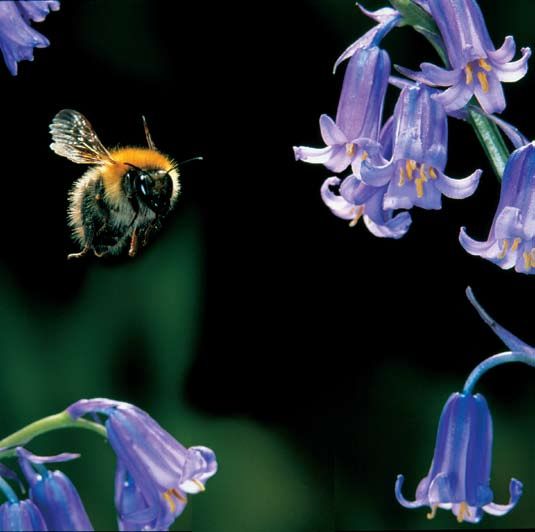
Genetic Engineering
From bees and carrots - 4 stories

                                            vs.
                                     Organic Farming

         Your questions - Our answers                     The facts and the fiction
© IFOAM, January 2008

Die Deutsche Bibliothek – CIP Cataloguing-in-Publication-Data
A catalogue record for this publication is available from Die Deutsche Bibliothek
ISBN-13 978-3-934055-95-7

Commissioned by IFOAM and funded through its program “IFOAM -- Growing Organic II” (I-GO
II) which aims to strengthen the Organic Movement in Developing Countries. I-GO II is funded
by HIVOS, Netherlands and the “Fund for Sustainable Biodiversity Management” of the Dutch
Government, managed by HIVOS and NOVIB
Foreword

There are useful questions to ask when assessing new technologies. In the case of
genetically modified organisms (GMO’s) there are no benefits for either consumers or
producers – only for the companies producing them.

There is no doubt about the incompatibility of GMO’s with Organic Agriculture’s
principles. IFOAM is opposed to genetic engineering in all of agriculture, in view of
the unprecedented danger it represents for the entire biosphere and the particular
economic and environmental risks it poses for organic producers. IFOAM believes that
genetic engineering in agriculture causes negative and irreversible environmental
impacts through the release of organisms which have never before existed in nature and
which cannot be recalled. There is a pollution of the gene-pool of cultivated crops, micro-
organisms and animals and of off-farm organisms. Releasing GMO’s implies denial of free
choice, both for farmers and consumers and a violation of farmers’ fundamental property
rights and endangerment of their economic independence. These are all unacceptable
threats to individuals, humanity and our earth. These practices are incompatible with
the Principles of Organic Agriculture.

Organic Agriculture offers a real alternative. There are already millions of organic farmers,
big or small, poor or rich, demonstrating daily that organic agriculture can produce
sufficient, safe and healthy food for everyone – of course without using GMO’s.

                                                            Angela B. Caudle
                                                        IFOAM Executive Director
Push-and-Pull: an innovative
                                            and low-tech solution
                                   to control stemborers in Africa

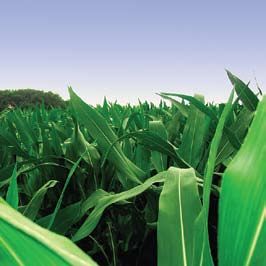
The stemborer is Africa’s worst maize pest. In combination with the Striga weed it can
destroy whole crops. The International Research Institute ICIPE in Kenya, together with
local farmers, developed a successful Push-and-Pull strategy: The farmers plant 3 rows
of the fodder grass Napier around the maize field. Napier grass has a chemical aroma
that attracts the stemborer larvae out of the maize crop. Most of them are killed in the
sticky sap of the Napier grass. Between the rows of maize farmers also plant the legume
Desmodium, which exudes a chemical aroma that repels stemborers. Desmodium also
suppresses Striga. It is a perfect Push-and-Pull strategy, which provides healthy maize,
additional feed and protection for the soil.

Another approach to control the stemborer is genetically engineered Bt-maize: This
maize, with genes from the soil bacterium Bt, produces a toxin to combat the stemborer.
The Swiss multinational company Syngenta started a project with Bt-maize in Kenya,
together with a Kenyan Institute. But is it sensible to invest everything in an unproven
and risky technology, which also increases once again the dependency of small farmers?
Vitamin A rice:
                                                               a grand illusion?

Vitamin A rice – a genetically engineered rice producing pro-vitamin A – is being offered
to the Third World as a remedy for widespread Vitamin A Deficiency (VAD). But there
are fundamental problems: An adult would need to eat 9 kg of cooked rice a day for the
required intake of vitamin A (whereas eating just two carrots would be enough). It is
an open question whether transgenic rice will work in practice, and nothing is known
about long-term threats to ecosystems and human health. Furthermore, there are many
patents on Vitamin A rice. “The problem is that the transgenic rice will not remove VAD.
It is a technology that fails in its promise, because there are no silver bullet solutions to
such complex problems”, says the Indian scientist Vandana Shiva.

The MAIN point is, however, that there are many better, cheaper and already proven
solutions. The root cause of VAD and many other diseases is a totally unbalanced diet:
rice, rice and nothing but rice. So changing dietary habits is essential. Small gardens with
green leafy vegetables and with fruits, leaves from wild plants, dried mango slices, dried
Baobab leaves, sweet potatoes... Even the World Bank has admitted that rediscovering
and using local plants and conserving vitamin A rich fruit and vegetables has dramatically
reduced the number of VAD threatened children in inexpensive and efficient ways.
Using bees
as ‘Flying Doctors’
Grey mould is the worst disease affecting strawberries. A clever new organic control uses
honey bees or bumble bees. When the bee leaves the hive, she passes through a footbath
containing an antidote to grey mould. This is a harmless fungus. When bees pollinate
the strawberry blossoms, they deliver the harmless fungus precisely into the blossoms.
The beneficial fungus thus inoculates the blossoms preventing infection by grey mould.
Recent studies in the US and Switzerland show that strawberry yields can be more than
doubled with the help of these ‘Flying Doctors’.
More findings from modern organic research: plants can ‘talk’ to each other. When
attacked by a caterpillar, a tomatoe plant starts to produce defense chemicals. It also
warns neighbouring plants by exuding a scent as an SOS-signal. These tomatoes then
also start to produce the defence chemicals, even though they are not being attacked.
(This scent, methyl-jasmonate, is often used in perfumes. During the experiments women
were asked not to use perfume because this could confuse the plants.) Scientists are
trying to find out if these scents could be used to warn tomatoe plants in advance of
a caterpillar invasion. The plants would be perfectly prepared: a clever strategy, using
nature’s own methods.Genetic contamination:
a serious problem
Maize comes originally from Mexico and Peru. Here the greatest diversity of maize
cultivars and wild species can be found. This ‘centre of origin’ with its amazing genetic
diversity is essential for the future of maize breeding and thus for world-wide food
security.
But this ‘centre of origin’ is already contaminated. A US-study shows that even in remote
Mexican valleys local maize varieties contain genes from transgenic Bt-maize. “We were
surprised by these results. We did not expect any such thing, and it’s most disturbing.
What this means is that an entire species in its native state may soon become, in effect,
genetically contaminated “ says scientist Ignacio Chapella from the University of
California (USA), who’s team did this research.
The Mexican study indicates that genes from transgenic plants can spread across
geographic areas and between varieties more quickly than scientists had previously
thought.?!
Your questions,
our answers
1. What is genetic engineering?
Genetic engineering is a new technology,
involving the manipulation of genes. Scientists
can transfer genes from one species to
another, unrelated species. This is possible
because of the universal ‘gene language’ – the
genetic code. It is the same for all living beings,
be it animal, plants or microorganisms. For
example, genes from a fish can be transferred
to a tomato plant to render the tomato plant
more resistant to frost. The engineered
tomato plant is genetically forced to produce
the fish chemical, because of this universal
‘gene language’. So it produces an ‘antifreeze’
chemical which the fish normally produces to
survive in freezing cold water.
With genetic engineering it is possible to
break down the species boundaries set up by
millions of years of evolution. Never before
was it possible to transfer genes from animals
to plants or from bacteria to humans. By
combining the genes of unrelated species,
permanently altering their genetic codes,
novel organisms are created that will pass the
genetic changes onto their offspring through
heredity.
Genetic engineering is a corporate technology,
mainly applied by industrial agriculture. In the
year 2000:• Just five multinationals dominated the and Pyrethrum extracts) and biocontrol
whole biotech business in agriculture. agents (for example ladybirds against aphids)
• 98% of all transgenic crops were grown can be used.
in three countries: the USA, Canada and
Argentina. Organic livestock production focuses on
animal welfare and husbandry methods that
• Two features were dominant: well over prevent the need for veterinary treatments.
70% of all GM-crops grown world wide are It is a method of agricultural production
herbicide-resistant plants, and over 20 % are that is environmentally friendly, requiring
insect-resistant Bt-plants. high standards of animal welfare with
health benefits for people. Organic farming
2. What is organic farming? recognizes that human health is directly
Organic agriculture is a sustainable form connected to the health of the food we eat
of production. It promotes and enhances and, ultimately, the health of the soil.
biodiversity, biological cycles and soil
biological activity. It is based on minimal
use of off-farm inputs and on methods that “Genetically
restore, maintain and enhance ecological engineered plants
harmony. are patented.
Farmers are not
Organic farming does not use synthetic allowed to save
chemical pesticides, herbicides and fertilizers or exchange seed
relying instead on developing a healthy, fertile from their crops.
soil and sound crop rotations. In this way, the Through patenting a thousand-year-old
farm remains biologically balanced, with a tradition is turned into a criminal act.
wide variety of beneficial insects and other This cannot work. I’m convinced that
organisms to act as natural predators for organic farming is the only option - for
crop pests and a soil full of micro organisms the South and for the North.”
and earthworms to maintain its vitality.
Vandana Shiva, President of the Research
If direct control measures have to be taken Foundation for Science, Technology and
to prevent serious crop damages, different Ecology, India; winner of the Alternative
agents of natural sources (for example Neem Nobel prize 1993Organic agriculture both relies on the vast technical solution. The very basis of genetic
knowledge and skills of farmers and on engineering depends on the search for single-
modern research to provide innovative new factor-solutions, whereas all major problems
technologies. ‘Organic farming’ is a term of the environment and agriculture are multi-
defined by IFOAM standards and all organic factoral. An example: Bt-maize expresses a
food production and processing is governed toxin that kills the maize pest stemborer.
by a strict set of standards and guidelines. But what if other, often beneficial, insects
(such as lacewings, the monarch- or the
3. Why are genetic engineering and black swallowtail-butterfly) are harmed as
organic farming incompatible? well? What consequences follow if the toxin
Organic farming and genetic engineering are also influences the soil-food-web or if the
two contradictory world views, two different stemborer acquires a resistance to the Bt-
philosophies, the two main options for the toxin?
future.
The basic principles of organic farming are “When I’m visiting
holistic. Rather than looking at isolated parts,
agricultural
the whole farm as a living entity is the focus.
research institutes
It is seen as a whole, enmeshed in the intrinsic
in Africa and India,
web of life and part of the interactions and
I find the labs for
relationships between all living beings.
biological control
Organic farming seeks to maintain an overall
balance, by enhancing biodiversity (for
half empty and with
example, flowering plants are sown on the
broken windows. But the biotechlabs
borders of fields to attract beneficial insects will be all new, with new equipment
into the crops). Organic pesticides are only and stuffed with staff. Biocontrol
used in emergencies cases, as supplementary projects, as we do it, are not so
measures. spectacular, not so sexy. Here I see a
big problem.”
Genetic engineering, on the contrary,
isolates and reduces complex problems Hans Herren, Director of the ICIPE , Kenya,
winner of the World Food prize 1995
to single issues and then tries to find a4. What are the differences between
conventional breeding and genetic “I’m an organic
engineering? farmer. For me
Proponents of genetic engineering often it’s obvious
claim that they are doing the same work as that genetic
conventional breeding, just faster and with engineering has
more precision. It is true that gene transfers to be kept out
also occur in conventional plant breeding, but of agriculture.
these only take place between individuals of The risk of
the same species, or, in some cases, between contamination
closely related species. A rice plant can cross is far too big. But above all we have
with a different rice species, but not with a much better solutions, dealing
walnut. Genetic engineering is not bound by
carefully and respectfully with
these limits. So, for example the genetically
nature.”
engineered Vitamin A rice contains newly
inserted genes from daffodils, viruses and
Regina Fuhrer, president of the Swiss
bacteria. As a result a new form of life has Organic Farmers association
been created.
5. Is genetic engineering affecting to distribute pollen over a distance of 3
organic farming? kilometers.
The standards established by IFOAM • In seed production: Breeding and
categorically exclude genetically engineered multiplication of organic seed and seedlings
organisms and products containing GMOs is also affected by contamination from pollen
from the organic production system. from GM-plants.
With the application of transgenic organisms • During harvesting, transport and
problems of contamination arise at different processing: At all points from the field to the
levels: final processing facility (during transport
• In the field: Pollen from genetically on trucks, ships or trains, in mills, in food-
engineered plants is blown by wind or processing factories etc.) There are many
carried by insects into other fields, thus opportunities for contamination. Only strict
contaminating these crops. Bees are known segregation can minimise the risk.Farmers, processors and traders wanting production techniques. There is more than
to produce and sell organic and GMO-free enough food for everybody in the world
products; and consumers wanting to buy it, today. Genetic engineering may actually lead
are confronted with massive problems of to more food insecurity and hunger because it
genetic pollution. Another problem is that the will encourage the planting of monocultures,
pests may develop resistance to the Bt-toxin highly vulnerable to disease and pests, and
of transgenic plants. Btsprays are also used it will make farmers more dependent on
in organic farming, however, as an effective, multinational companies that will demand
natural insecticide. If this resistance were to payment for the patented GM-plants and
occur they would become ineffective. seeds, and for chemicals and fertilizers.
GMO-agriculture is the continuation of
6. Will genetic engineering feed the industrialized agriculture with all its known
hungry? problems in an even more threatening
No agricultural revolution has ever solved the dimension.
problem of world hunger. Hunger is a social
and political problem and not a problem of Through unequal promotion of an
industrialized GMO-agriculture the natural
“With patents resources for all our food – biodiversity,
big companies healthy soils and clean water – will be further
make our farmers destroyed.
dependent from
their seed. Here 7. Will organic farming feed the
I see a great risk hungry?
for worldwide The main question confronting organic and
food security and sustainable farming is: how can farmers
biodiversity”. increase their yields with cheap, locally
available and simple technologies, without
Dr. Tewolde Gebre Egziabher, Ethiopia, damaging the environment? Organic farmers
leader of Third World countries in take their fate again in their own hands,
international negotiations around patents, and as many examples show, they can often
genetic engineering and biodiversity, increase their production – especially in the
winner of the Alternative Nobel prize 2000 developing countries – significantly.One example: in Cuba the traditional ‘three- threaten the skylark, but also other seed-
sister-agriculture’ with maize, beans and eating birds and insects.
cassava produces yields twice as high as the
sum of each one in monoculture. The maize In general, genetic engineering represents a
plants function as bean sticks for beans new dimension in an industrial agriculture
and the beans fix nitrogen into the soil. with a strong tendency towards more
Meanwhile, cassava grows well in the shady monocultures, and thus a continuing loss of
and damp conditions with the maize and biodiversity.
beans, and helps suppress weeds.
Furthermore, genetic engineering removes
Food for all is a long-term project, and only the barriers that have protected the integrity
the protection of biodiversity and the cultural of species for millions of years. “There are
diversity of agriculture adapted to local
conditions can secure this. “For us organic “We have shown
farming is not a luxury, but the only possible on hundreds
solution to fight hunger and poverty”, says of examples
Tewolde Egziabher, leader of Third World that small scale
countries in international negotiations sustainable
concerning patents, genetic engineering and agriculture in
biodiversity. the South can
lead to enormous production
8. Is genetic engineering affecting increases. In some examples the
biodiversity?
yields increased by more than 100%.
Many experts fear that genetic engineering
The key to success was each time:
will dramatically accelerate the loss of
diversity instead of monocultures.
biodiversity. An example: an English study
predicts that a massive release of herbicide-
But genetic engineering is pushing
resistant GM-crops could lead to the monocultures. It’s no recipe for the
extinction of the already threatened skylark. South”.
This bird feeds on weed seeds. In herbicide- Miguel Altieri, Professor of Agricultural
resistant GM-monocultures some of these Ecology, University of Berkeley, USA
weeds may be eradicated. This could not onlyprobably good reasons why it is impossible • Crop rotation is required practice in all
for a conventional plant-breeder to combine organic farming.
plant genes with animal genes. Those reasons
• Trees, hedges and field margins maintain
have to do with the very survival of life on
a rich diversity of natural predators such as
earth, and we ignore them at our peril”,
spiders, birds and beetles that help to control
writes the US institute Sierra Club.
pests.
• By solely using organic fertilizers the
“The ‘green
fertility of the soil and the diversity of soil
biotechnology’
organisms is enhanced.
pretends to be
eco-friendly and
10. Will my health be affected by
to reduce the genetic engineering?
chemical input. Maybe. Maybe not.
I’m sceptical. Our
future lies in decentralised and GM-food is a new product, with new proteins
organic solutions.” we have never eaten before. We have never
Hardy Vogtmann, Honorary president eaten bacterial proteins in maize, nor fish
IFOAM proteins in tomatoes, nor viral proteins in
potatoes. Our bodies have no experience
9. Is organic farming affecting of these; and there is no way to predict if
biodiversity? the novel food will cause allergies or other
Organic farming is by its very nature based on chronic bodily ailments in 5 or 10 years.
biodiversity. Many of its practices conserve
and enhance a rich diversity, for example: Genetic engineering is not a precise
technology: there is no means of inserting a
• Mixed farming with crops and animals.
gene into a specific position within the host
For example rice farmers in Bangladesh
cell. The genes end up in random locations.
stopped using pesticides and started to rear
But genes do not operate in isolation, they
fish in their rice fields and planted vegetables
interact with each other. The inserted genes
on paddy field dikes, thus introducing a
may disrupt vital other genes, they might
substantial increase in biodiversity.
affect neighbor relationships, they mightdisturb vital interactions. Possibly no acute • Pollen from genetically engineered plants
toxic food will enter the market, but nobody can contaminate wild species.
can predict possible harmful long-term
• Resistance amongst pests and diseases
effects.
can develop.
According to scientists, GM-food might have • Soil organisms may be adversely affected
the following harmful effects: by GM- crops. Toxic Bt has been found to
persist in the soil for months, thus causing
• Allergenic and immune system reactions
potential damage to soil-food-webs.
to the new substances contained in GMOs
• Fish are being engineered to grow fast
• Antibiotic-resistant genes, often used in
and increase in size. Giant GM-fish, having
genetic engineering, could be transferred to
pathogens in the gut. Disease triggered by
these pathogens could no longer be treated “I’m a scientist who
with these antibiotics. loves science and
believes science
• New genes could alter the expression of
and technology
native genes and so may have unexpected
can help build a
secondary effects.
better world and
11. What are the ecological combat world
consequences of GMOs released into hunger. But it must be the right
the environment? kind of science and technology,
GMOs are living beings, they can spread and it must be decided by people
and propagate. They can pass their foreign themselves. Nature is interconnected
genes to wild species. Once released, it will and dynamic. But proponents of
be virtually impossible to recall genetically genetic engineering got stuck in the
engineered organisms back into the age of mechanics - the technology is
laboratory. We are opening Pandora’s box. just not innovative enough!”
Mae Van Ho, Professor of biology at the
Some possible negative consequences for open University, GB
the environment include:escaped from fish farms, may out-compete or
even make native species extinct. “Many Third World
countries object to
• Bacteria and viruses are genetically
patenting of seed
manipulated for a wide range of traits. If
they escape or if they are released to the
and of living beings.
environment, they could have even worse They are developing
‘side-effects’ than plants and animals, ways and model-
because they reproduce and mutate much laws to protect their
faster. crop diversity and
farmers’ knowledge
12. Where do patents come in? from corporate control. This gives me
In former times, nobody thought of patenting hope.”
plants, animals or human genes and cells. No Cecilia Oh, lawyer, Researcher for TWN
one thought it could be possible that an animal (Third World Network)
or a human gene might ever be considered as
an ‘invention’ or the ‘intellectual property’ of
some large company. But in the developing
Farmers have to pay royalties for every
age of genetic engineering, industry is under
patented seed, for every patented hen. And
pressure to expand the patent system from
also for the chickens produced by this hen,
lifeless materials to living beings, in order to
and for all further chicken generations, for as
protect their financial investment in genetic
long as 20 years. A farmer planting patented
engineering.
GM-crops is not allowed to save seed from
this harvest for the next season. Some
But is it right to patent a tomatoe plant in the
farmers in the USA and Canada were sued by
same way as a chemical or a vacuum cleaner?
the Monsanto company for doing this. With
If life is put on the same base as a patentable
patented seed the control is taken away from
commodity, if there is no longer a difference
farmers, from local areas, and passes into
between a living being and a non-living thing,
the hands of private companies. Many critics
this will dramatically change our relationship
regard this as a major threat to world-wide
to animals, to plants, to other people and to
food security and biodiversity.
ourselves.Author:
Florianne Koechlin,
Blueridge-Institute,
Switzerland
Design by
IFOAM
Cover photo by
© Yong Hian Lim
Published by
IFOAMifoam’s mission is leading,
uniting and assisting the
organic movement in its
full diversity.
our goal is the worldwide IFOAM Head Office
Charles-de-Gaulle-Str. 5
adoption of ecologically,
53113 Bonn, Germany
socially and economically Phone: +49 - 228 - 92650 - 10
sound systems that are Fax: +49 - 228 - 92650 - 99
based on the principles Email: headoffice@ifoam.org
of organic agriculture. www.ifoam.orgYou can also read


