GENETIC/GENOMIC IMPROVEMENT OF BEEF CATTLE IN IRELAND - MAY 2021. AGTECH - IT'S IN OUR DNA
←
→
Page content transcription
If your browser does not render page correctly, please read the page content below
Genetic/genomic Improvement of
     Beef Cattle in Ireland.

             May 2021.

                                 AgTech - it's in our DNA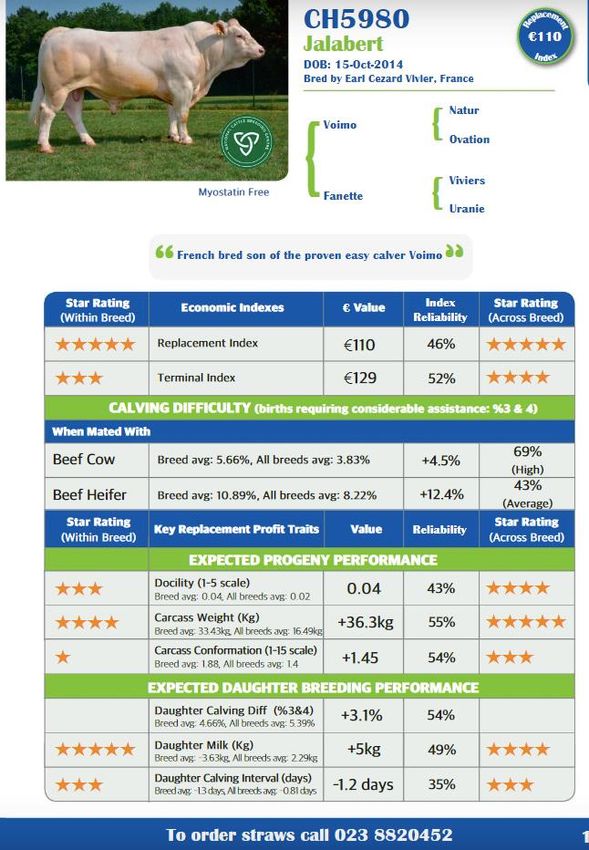
2

                        Overview of Talk.
    • About ICBF.
    • Overview of beef genetic evaluations & beef genetic
      improvement in Ireland.
    • The Irish Beef Data and Genomics Program.
    • Areas of current interest.
    • Feedback/discussion.

                                                        AgTech – it’s in our DNA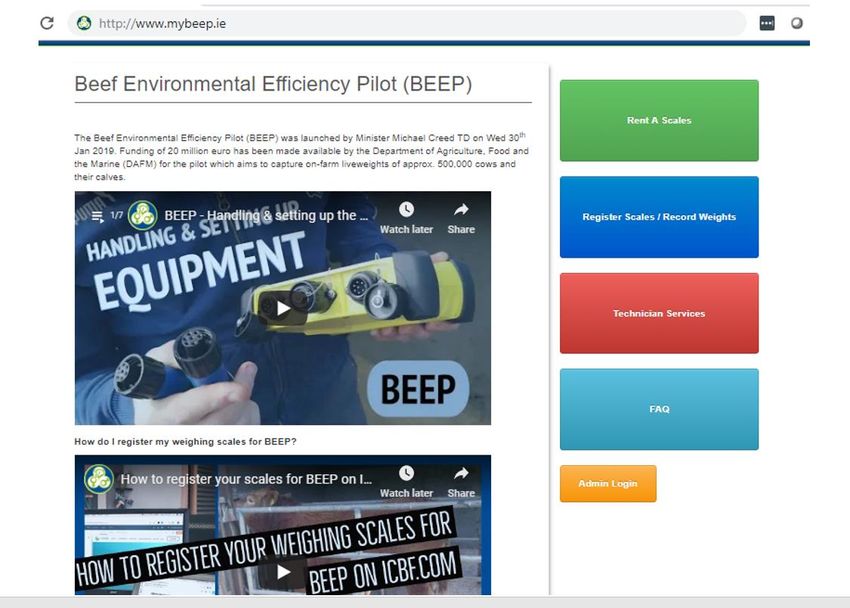
3

                              Our “Burning Platform”.

    • Beef cattle are not carbon efficient => Policy to cut size of beef herd.
    • But need cattle => extensive systems & rural infrastructure.
    • Can we breed more carbon efficient beef cattle? Simultaneously improve other traits
      important for beef production, e.g., cost of calving, efficiency, meat eating quality…?

                                                                                     AgTech – it’s in our DNA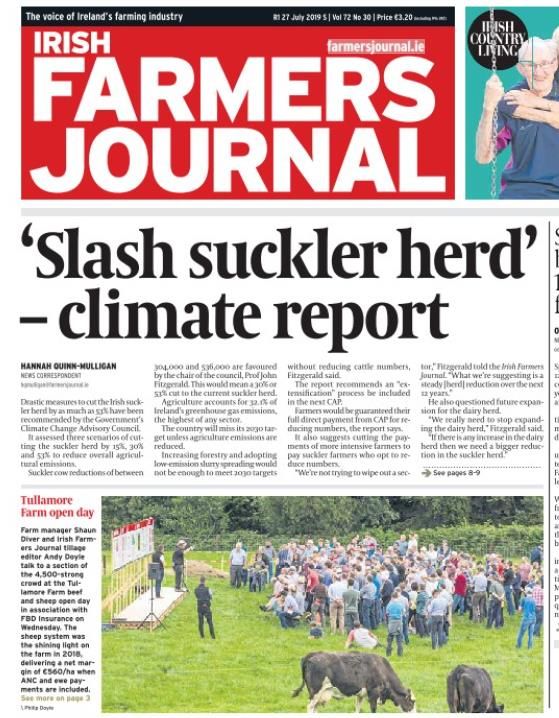
4

                                     About ICBF.
    • Co-operative, established in 2000.
       • AI, data recording, herdbooks & farmers.
    • Objective => Ensure next generation of
      animals are better that previous;
       • Profit, environment, climate & welfare friendly.
       • Not a “quick” fix but permanent, cumulative & cost
         effective.
    • Close relationships with key stakeholders (e.g.,
      DAFM, Teagasc, AHI, Universities,
      Weatherby’s…)
    • World-leading (research => implementation).
       • 2nd in world to launch dairy genomics.
    • Cork based, 80 staff servicing 100k farmers.            AgTech – it’s in our DNA
5

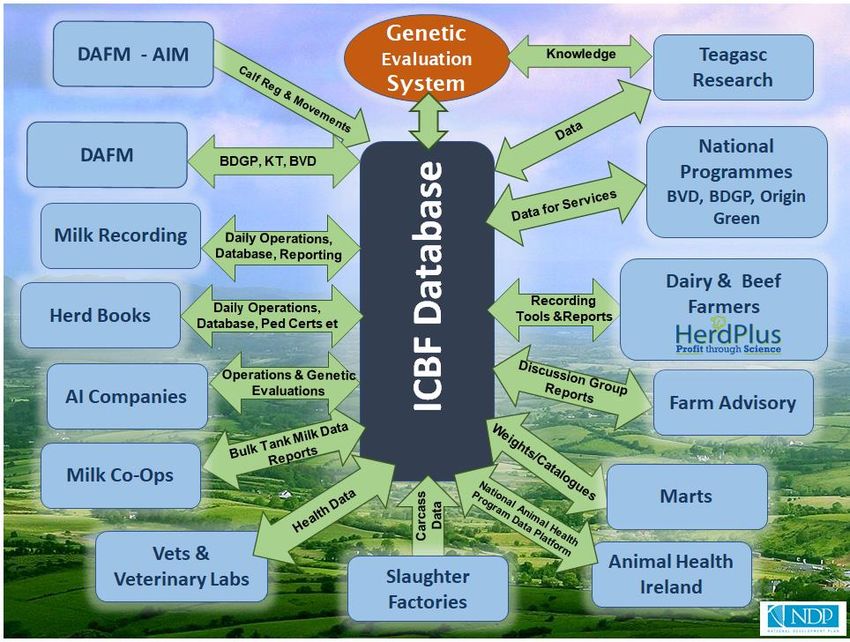
    ICBF Central Database; Uniquely different.

                           • Unique sharing of data by relevant
                             stakeholders => shared “common good”.
                           • ICBF don’t own animals.
                           • Routine consolidation & extraction =>
                             Independent genetic evaluations for farmers
                             & industry.

                                                       AgTech – it’s in our DNA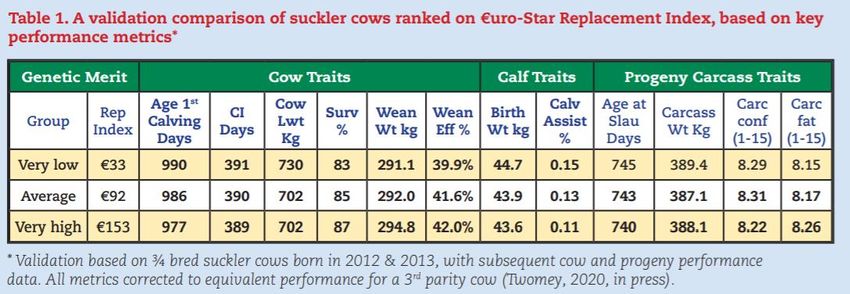
6

    Genetic Improvement in the Irish Beef Herd; Data.
                                         • Evaluations are;
                                             • Seedstock & commercial
                                               data (50k seedstock
                                               registrations per year
                                               and 900k commercial).
                                             • Multi-breed.
                                         • Data volumes;
                                             •   Growth/carcass – ~10m
                                             •   Cow fertility – ~8m.
                                             •   Calving – ~15m
                                             •   Genotypes – ~2.5m
                                             •   Foreign EBV’s – ~50k
                                         • 2-step genomic
                                           evaluations, every 2
                                           months. Moving to single
                                           step.

                                                  AgTech – it’s in our DNA
7

     Genetic Improvement in the Irish Beef Herd; Indexes.

    • Past focus on terminal traits => deterioration of maternal traits.
    • Replacement index introduced in 2014 to improve maternal traits & maintain terminal
      traits.
                                                                           AgTech – it’s in our DNA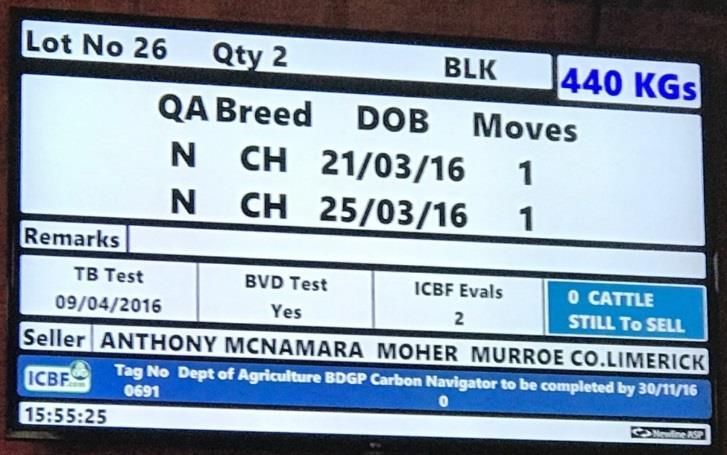
8

      Genetic Improvement in the Irish Beef Herd; Lists.

    • Top 20 Active AI bulls => Range of breeds + both foreign and Irish bred/tested (shaded yellow).

                                                                                         AgTech – it’s in our DNA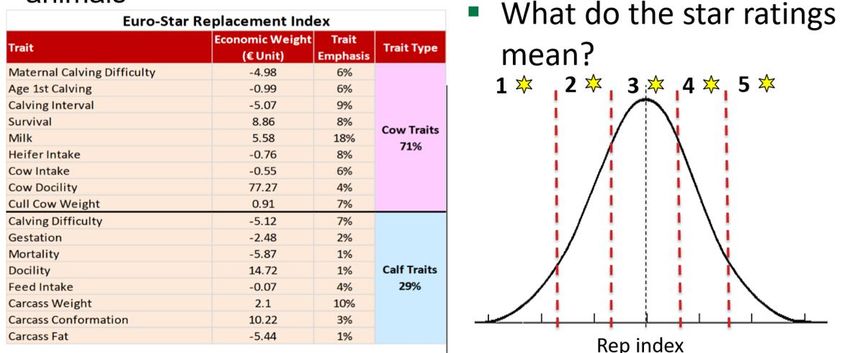
9

            Irish Beef Data and Genomics Program.
    • More profitable, sustainable & carbon
      efficient cows.
    • €300m total funding 6 years (2015-
      2020), as part of RDP.
       • Farmers paid ~€90/cow/year to complete
         key actions, e.g., genotyping, data
         recording, replacing with 4/5 star cows &
         bulls.
       • ~24k farms & 550k cows. ~2.5m animals
         genotyped to-date.
    • Supplemented with additional BEEP              BDGP; Smart, green growth. Using the latest technology
      scheme in 2019 (BEEP-S).                       to help support an important indigenous industry.

                                                                                   AgTech – it’s in our DNA
10

                       Validation; Selection on Rep Index.

     • Validation based on 92k commercial females, taking their evaluations at birth
       and establishing how well these evaluations predicted lifetime performance.
     • Confident that index is taking us in the right direction; How can we go faster??

                                                                                          AgTech – it’s in our DNA
BDGP & BEEP-S; Implementation.
• Range of “enablers” introduced to support
implementation of programs on the ground.
• Includes systems to support action-based
payments to program participants.
• Have the programs delivered?
11 AgTech – it’s in our DNAGenetic Trends within the Suckler Beef Herd (i).
• Genetic Improvement in the
Suckler Beef Herd defined by three
significant events;
• 2007. Introduction of Suckler Cow
Welfare Scheme (SCWS). Resulted in
increased sire recording => more
accurate evaluations & faster genetic
gain for terminal traits.
• 2011. Establishment o the
Replacement Index (Rep Index) =>
Shifting emphasis away from
terminal traits towards maternal
SCWS BDGP traits.
Rep Index
• 2015. Beef Data and Genomics
Program (BDGP) =Utilizing genomics
+ better data recording to accelerate
genetic gain for maternal traits.
12 AgTech – it’s in our DNAGenetic Trends within the Suckler Beef Herd (ii).
BDGP
BDGP
• Impact of BDGP most pronounced => now accelerating gains in milk and fertility
traits, whilst holding carcass weight and conformation traits constant.
13 AgTech – it’s in our DNATrends in Slaughter Performance. T1. Trends in average performance of steers (
Key performance & sustainability metrics.
T1. Impact of Herd Replacement Index on key performance & sustainability metrics*
                                                         Replacement Index €urostars
Herd Average Trait                   Source   SD Btm 20% Btm 21-40% Average Top 21-40% Top 20%
Average Replacement Index         ICBF/BDGP         €42      €63        €80        €96  €122
Cow Liveweight (All parities; kg)     BEEP   56.0 688.8     669.5      664.3      655.5 651.6
Calf 200 day Liveweight (kg)          BEEP   34.8 279.7     280.1      284.9      286.3  287
Weaning Efficiency (%)                BEEP    5.5  40.8      42.0       43.0       43.9  44.3
Calving Interval (days)               ICBF   28.7 399.1     394.2      389.8      384.6 387.7
Calves/cow/year                       ICBF   0.12  0.85      0.88       0.89       0.91  0.91
Profit/livestock unit               Teagasc        €207     €219       €238       €244  €262
Carbon Footprint (GHG/kg)           Bord Bia 1.82 13.16     12.97      12.82      12.42 11.91
David Kelly, PhD, Teagasc.
 •   Analysis based on 3,150 herds with valid carbon footprint, BEEP, and genetic merit
     data from 2020 for analysis
                                              15                           AgTech – it’s in our DNA
Current priorities; Methane Yield.
• To date, 674 animals have direct
measurement of growth, feed
intake & methane output/day from
Tully. Clear breed & gender
differences.
• Indexes are moving us in right
direction => validation of BDGP.
• Also clear evidence of genetic
variation in traits (15-20%), above
what we can predict from biological
models (as part of DAFM funded
GreenBreed project)
T1. Animal performance, by breed & gender for key performance & climate metrics. • Tully now the largest site globally measuring
Suckler Steer Suckler Heifer Suckler Young Bulls Dairy Beef Steers Dairy Steers
Records 206 245 90 92 Under test
methane output in cattle.
Beef merit index (€/animal) €167 €167 €175 €14 Under test
• Can we expand on this and other sites?
ADG (kg/day) 1.40 1.32 2.00 1.83 Under test
Carcass weight (kg) 362 310 393 342 Under test • Genetics, role of additives, indoor vs outdoors.
Age at slaughter (mths) 18.9 16.7 16.3 21.2 Under test
Carcass daily gain (cwt/day) 0.63 0.61 0.79 0.53 Under test
• Goal of having genomic predictions for
Feed intake (DMI kg/day) 11.1 10.2 12.6 14.0 Under test methane traits by 2022. Accuracy will depend
Methane output (g/day) 242 220 153 282 Under test on number of phenotypes.
16 AgTech – it’s in our DNACurrent priorities; Age at Slaughter.
• Taking current prime cattle kill (of 1.32m cattle in 2020), each 1 month reduction in age at slaughter, has
potential to remove 247 KT of GHG. Equivalent to NOT having to cull 97k cows from the National herd.
• A very positive outcome for farmers and industry => can we get alignment around this as a proposition?
17 AgTech – it’s in our DNACurrent priorities; Beef from Dairy.
• Continued expansion of
National dairy herd (+5%/year
for last 10 years).
• Improved fertility performance
(impact of EBI).
• Level of beef from dairy has
now doubled => approaching ½
our total beef production.
• Need to identify bulls that
are;(i) easy calving & short
gestation, AND (ii) that will
produce a “good” calf.
• A challenging task!
18 AgTech – it’s in our DNACurrent priorities; Meat Eating Quality.
• Major 5 year project involving ICBF,
Teagasc and meat processing
industry.
• ~6k animals with meat eating quality
data and with genotypes.
• Phenotypes based on trained panel
data (~8 obs/animal).
• Very good heritability estimates.
• As expected, AA and HE ranking best,
but good & bad bulls within all
breeds. How would Wagyu
compare?!
• Moving to have MEQ data available
on animals as they are slaughtered =>
link with future payment systems.
• Work underway to add directly into
economic indexes.
19 AgTech – it’s in our DNACurrent priorities; ICAR & Interbeef.
• Continuous process of working to find the best bulls globally for the breeding program.
Still early days, but exciting & rewarding process.
20 AgTech – it’s in our DNACurrent priorities; DNA every Calf.
• Current pilot project with DAFM and 400 herds,
where cow herd is fully genotyped and then
registering resultant calves at birth based on DNA.
• Farmer tags calf and submits DNA (from tissue tag),
database works out parents!
• Cost of genotyping is €20 & decreasing.
• Can we transition our National cattle herd to DNA
based calf registration over next 5 years?
• A key part of AgClimatise strategy.
• Real benefits associated with genetic gain,
traceability, labour saving, R&D, market point of
• Opportunity to be world leaders in the use of science difference (world first) etc.
& technology to help support an important • How do we ensure an equitable approach to cost
indigenous industry. and benefit sharing? A single approach or across
many different programs, e.g., BDGP?
21 AgTech – it’s in our DNAThe Future; Challenges and opportunities.
• One of the initial objectives of BDGP was to “mimic”
Relative Genetic Gain in Dairy EBI & Suckler Beef Replacement
Index, based on year of 1st calving for replacement females.
the genetic gain achieved in dairy, into suckler beef.
2.5 • A massive undertaking given; (i) low levels AI, (ii)
Dairy EBI Beef Replacement Index many breeds, (iii) small herd size, (iv) low profitability,
2 (v) part time farming……
Genetic Standard Deviations
1.5 • Goal of using genomics as a new technology to help
kick start change.
1
• Program has been hugely successful in achieving this.
0.5
Rates of gain have turned around in beef and are akin
to dairy.
0 • Also, clear evidence that increases in genetic merit
will result in greater sustainability and carbon
-0.5
Year of first calving efficiency for the industry.
• As a result of BDGP, we are in a very strong • How do we now build on this momentum and help
position re: continued investment in suckler beef accelerate gains in GHG traits in the future =>
programs for the future. genotyping, more AI, age at slaughter, methane traits,
more AI, ICAR/Interbeef………..
22 AgTech – it’s in our DNAYou can also read


