UNFPA Strategic Plan 2018-2021 - Executive Board Workshop December 20, 2016 - United Nations Population ...
←
→
Page content transcription
If your browser does not render page correctly, please read the page content below
UNFPA Strategic Plan 2018-2021
     Executive Board Workshop
        December 20, 2016
Bull’s Eye Continues to be the Goal

                                      2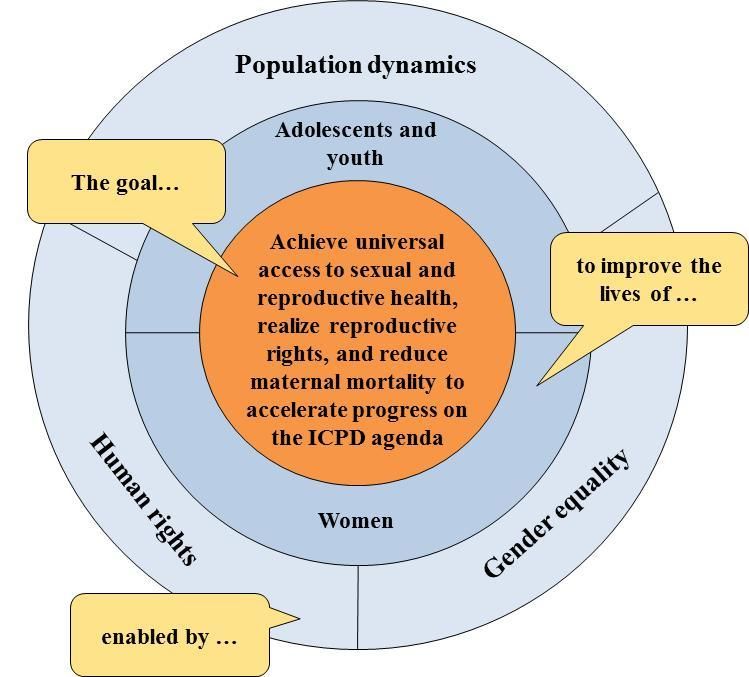
Leaving No One Behind
 Reaching most marginalized
   and furthest behind first
including in humanitarian and
        fragile settings

        Focusing on
      Women & Girls
   Adolescents and Youth

                                3
Alignment with SDGs
                     16 UNFPA-Prioritized Indicators
                                                                                            3.1.1 Maternal mortality
                                                                                            3.1.2 Skilled birth attendance
                                                                                            3.3.1 HIV incidents
5.2.1 GBV from current or                                                                   3.7.1 Need for Family Planning
        former intimate partner                                                                   satisfied w/ modern
5.2.2   GBV from non-intimate                                                                     methods
        partner                                                                             3.7.2 Adolescent birth rate
5.3.1   Child marriage                                                                      3.8.1 Universal health coverage
5.3.2   FGM
5.6.1   Women’s informed
        decision on sexual
        relations, contraceptive
        use and reproductive
        health care
5.6.2   Laws and regulations                                                                        16.9.1 Birth registration
        that guarantee women’s
        access to SRH care,
        information and education

                                                                                             *11.a.1 Positive economic,
                                                                                                     social and
                                                                                                     environmental links
                                    17.18.1 SD indicators produced at national level with            between urban, peri-
                                            full disaggregation                                      urban and rural areas
                                    17.19.2 Census in last 10 years and CRVS
                                                                                                                           4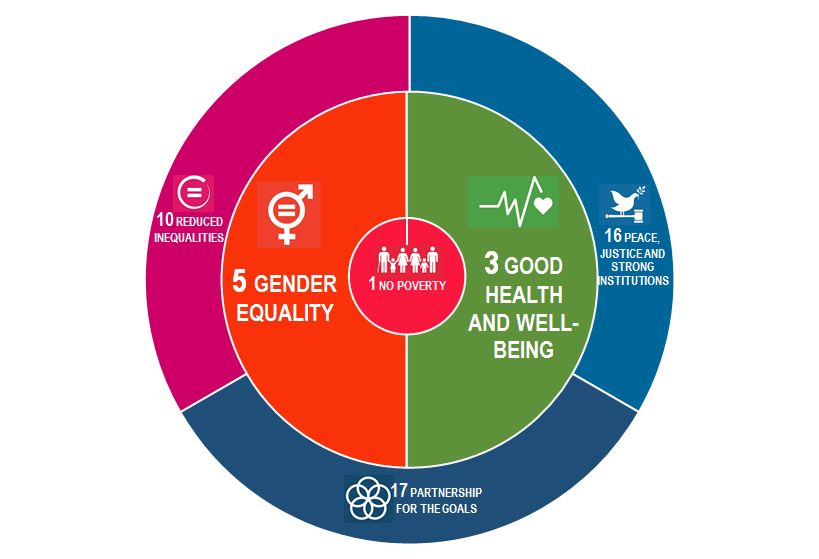
Vision 2030

How can we design the next
   three strategic plans as
   building blocks towards
achieving the ICPD within the
        2030 Agenda?
Delivering ICPD within the 2030 Agenda
Strategic Strategic Strategic
Plan 2018- Plan 2022- Plan 2026-
2021 2025 2029
Accelerate
Build on progress Intensify
interventions progress
towards
Set vision
Consolidate SDG targets
achievements
Chart path to
SDG targetsTransformational Results for 2030
Some indicative transformational results, by 2030
1. Universal access to sexual and reproductive health and
reproductive rights
2. Zero unmet need for family planning
3. Less than 70 per 100,000 live births of global maternal
mortality ratio
4. Eliminate FGM and Child Marriage
5. End Obstetric Fistula
6. Every adolescent and youth has information, knowledge
and skills to act on their sexual and reproductive healthBuild on UNFPA Strengths
● On SRH and RR programming…”Evaluations often noted that
whenever SRH interventions were made available, they were
widely and effectively used...”
Lessons learned from UNFPA Country Programme Evaluations
● On Data systems… “UNFPA is widely perceived as key census
partner with a clear convening role (census evaluation). Without
UNFPA support, it is widely believed that some national
censuses would not have been completed.”
● On Humanitarian and Resilience...“Syrian NGOs mentioned
UNFPA and a few INGOs as examples of ‘good practice’...One
Syrian NGO summed it up: ‘UNFPA is faster, flexible, and very
active.” *
*Funding to national and local humanitarian actors in Syria: Between sub-contracting and partnerships, Global to Local Action, Editors:
Christian Els, Kholoud Mansour & Nils Carstensen, May 2016Build on UNFPA Strengths
At country level, UNFPA is playing a leading
role- Leads/co-leads, in:
● 80% of UN Youth results groups
● 32% of UN Gender results groups
● 97% of Gender-Based Violence coordination
mechanisms where cluster system is activated
Sources: UNFPA Agency Report, UNDG Report 2016 (2015 data), UNFPA Humanitarian Action Overview 2017 (2016 data)Rising Humanitarian Needs and Response = More than 135 million people in need of humanitarian assistance; 25% of them women and adolescent girls of childbearing age—between 15 and 49. = One in five women of childbearing age is likely to be pregnant and require life-saving reproductive health services. = Women lose access to family planning and exposed to heightened risk of unintended pregnancies. = Women and girls become more vulnerable to gender-based violence, including sexual violence and exploitation. = In 2016, UNFPA reached more than 11 million people with SRH and GBV information and services.
Proposed Programme Focus

Universal access to SRH & RR of women & young people

  Availability of         Gender equality and          Adolescent and
 quality integrated       women’s empower-                 youth
   SRH services                 ment                   empowerment

                  Availability, analysis, and use of
                          Population data

                         Key Principles:
                    Mainstream gender
             Humanitarian and Resilience Building
               Human-rights based approach
                      Evidence-based
                  Leverage partnerships
                                                                        11
SRH & RR Unfinished Agenda = SRH & RR crucial for gender equality, empowerment of women and girls, and achieving sustainable development = Progress made under the MDGs, but
SRH & RR Remaining Gaps

❑ Equity in access - the furthest behind, including lowest
  wealth quintiles, rural/urban poor, age groups, migrants,
  those in humanitarian contexts
❑ Quality of services - continuity of service throughout
  life course, human rights and public health service
  standards
❑ Integration of SRH services - family planning,
  maternal health, STI/HIV
❑ Accountability - by all stakeholders

                                                           13
SRH and RR Strategic Priorities
(under consideration)
Build
resilience for
SRH and RR
in
Increased humanitarian
governance and and fragile
Partnerships mutual settings
and multi- accountability
sectoral mechanisms for
coordination Strengthened SRH & RR, include
access of women & community
adolescents,
especially those
Improved most vulnerable, to
capacities and integrated SRH
performance of services
SRH services
that meet Pub.
Health and
Human Rights
standards
14Adolescents and Youth: Remaining Gaps ● Significant proportion of adolescent girls not in school. ● Daily, more than 39,000 girls under 18 are married. ● In some countries, nearly half of girls report that their first sexual encounter was coerced. ● Pregnancy and childbirth-related complications - leading cause of death among girls aged 15 to 19. ● HIV prevalence among adolescent girls nearly double that of boys in Eastern and Southern African countries where the burden of the epidemic is very high. ● Engaged, educated, healthy and productive young people crucial for strong, resilient communities and nations. 15
Adolescent & Youth Development
 Priorities (under consideration)

                                                    Strengthen
                                                       youth
         Social investments                         participation
         in adolescents and                        and service in
                youth                              humanitarian,
                                                    fragile and
                               promote healthy     peacebuilding
                                development of        settings
                                adolescent and
                              youth including in
                               the area of SRH
                                   AND RR

          Adolescents and
          youth leadership
          and participation

                                                                    16
Gender Equality, Human Rights and
Empowerment: Remaining Challenges
= Women’s and girls’ autonomy and empowerment in
decision-making around their sexual and reproductive
health and reproductive rights
= Women’s and girls’ empowerment in the public
sphere, including in political decision making at different
levels
= Women’s and girls’ prevention and protection
against all forms of gender-based violence, including
early and forced marriage, FGM and son preference,
both in development and humanitarian contexts
17Gender Equality, Human Rights and
Women’s Empowerment
Strengthened
national human
rights protection
systems Strengthen national
capacity for
resilience to
Prevent and
respond to gender-
based violence,
Strengthened across
response to development and
eliminate harmful humanitarian nexus
practices, including
child, early and
forced marriage,
FGM and son
preferenceData Systems and Population Change:
Remaining Challenges
= In many countries, the data systems needed to count the
population, locate those furthest behind, and define their
needs, are weak, or focused more on generating than using
data.
= Weak population data systems make it hard for countries to
project their future, anticipate changes in age structure, or
know where people are moving.
= Regional assessments suggest many developing countries
lack the capacity to track even 100 of the 230 SDG indicators.
= The impact of interventions is poorly measured.
19Data Systems and Population Change
Strategic Priorities (under consideration)
Embed
population
trends &
projections
Capacity to into national
generate & use development
population data plans
Identify, locate
(census, CRVS,
& understand
surveys, those furthest
administrative behind
data)
Use innovative
sources (Big Data)
in high risk &
unstable settings
Sub-national Risk analysis
and small area
estimation to & mitigation in
measure local humanitarian
impact settings
20Increased availability Safe, healthy and Advanced gender National
of quality integrated productive transition equality, development plans
Potential SRH services and to adulthood for empowerment of
outcome realization of with informed
adolescents ensured women & girls, and
reproductive rights targets to reach the
reproductive rights
furthest behind
Strengthened access of Social investments in Strengthened national Strengthened data
women and adolescents, adolescents and youth human rights protection systems
especially those most systems
vulnerable, to integrated
SRH services
Improved capacities and Improved adolescent Strengthened response to Population trends
performance of SRH and youth leadership eliminate harmful
inform national
services that meet Public and participation practices
Some Health and Human Rights development plans,
Indicative standards policies & programmes
areas for
output Increased governance and Increased national Strengthen national Strengthened national
mutual accountability capacity to design & capacity for resilience to capacity for risk
mechanisms for SRHR implement evidence Prevent and respond to analysis & mitigation in
with involvement of based programmes gender-based violence, humanitarian settings
representatives of the that promote healthy across development and
health system and development humanitarian nexus
communities
Build resilience for SRH Strengthen youth Subnational data used
and RR in humanitarian participation and to track SDGs &
and fragile settings service in monitor the impact of
humanitarian, fragile interventions
and peacebuilding
settingsTHANK YOU
Delivering a world where every
pregnancy is wanted, every
childbirth is safe and every young
person’s potential is fulfilled
Thank you!
We welcome your comments and suggestions.
22You can also read


