Genetic Recombination of the Mantle Color Pattern of Two Boring Giant Clam (Tridacna crocea) Strains
←
→
Page content transcription
If your browser does not render page correctly, please read the page content below
ORIGINAL RESEARCH
                                                                                                                                              published: 09 July 2021
                                                                                                                                    doi: 10.3389/fmars.2021.657762

                                            Genetic Recombination of the Mantle
                                            Color Pattern of Two Boring Giant
                                            Clam (Tridacna crocea) Strains
                                            Junjie Wang 1† , Zihua Zhou 2,3,4,5† , Haitao Ma 2,3,4,5 , Jun Li 2,3,4,5 , Yanping Qin 2,3,4,5 ,
                                            Jinkuan Wei 2,3,4,5 , Xingyou Li 2,3,4,5 , Qingliang Liao 2,3,4,5 , Yunqing Li 2,3,4,5 ,
                                            Gongpengyang Shi 2,3,4,5 , Yinyin Zhou 2,3,4,5 , Yuehuan Zhang 2,3,4,5* and Ziniu Yu 2,3,4,5*
                                            1
                                              Guangdong Provincial Key Laboratory for Healthy and Safe Aquaculture, Guangdong Provincial Engineering Technology
                                            Research Center for Environmentally-Friendly Aquaculture, Guangzhou Key Laboratory of Subtropical Biodiversity
                                            and Biomonitoring, School of Life Sciences, South China Normal University, Guangzhou, China, 2 Key Laboratory of Tropical
                                            Marine Bio-resources and Ecology, Guangdong Provincial Key Laboratory of Applied Marine Biology, South China Sea
                                            Institute of Oceanology, Innovation Academy of South China Sea Ecology and Environmental Engineering, Chinese Academy
                                            of Sciences, Guangzhou, China, 3 Southern Marine Science and Engineering Guangdong Laboratory (Guangzhou),
                                            Guangzhou, China, 4 University of the Chinese Academy of Sciences, Beijing, China, 5 Hainan Provincial Key Laboratory of
                                            Tropical Marine Biology Technology, Sanya Institute of Oceanology, Chinese Academy of Sciences, Sanya, China

                           Edited by:       According to the RGB law display, the polymorphism of the giant clam mantle color
                      Xiaotong Wang,        pattern is through four iridocytes. The boring giant clam (Tridacna crocea) exhibits
               Ludong University, China
                                            diverse mantle colors, including blue, green, purple, gold, and orange. In order to
                  Reviewed by:
                   Liqiang Zhao,
                                            evaluate the genetic laws driving these mantle color patterns, a complete diallel cross
 Guangdong Ocean University, China          between two color strains [blue strain (only blue iridocyte) and the yellow-green strain
                    Karsoon Tan,            (yellow and green iridocytes)] was performed. Using a single-to-single mating system,
         Shantou University, China
                                            two intra-strain crosses (BB and YY) and two reciprocal inter-strain crosses (BY and YB)
                   *Correspondence:
                        Yuehuan Zhang       were produced in triplicates. Higher fertilization rate and hatching rate were observed
                  yhzhang@scsio.ac.cn       in all experimental groups, suggesting that there was no sperm–egg recognition barrier
                              Ziniu Yu
                   carlzyu@scsio.ac.cn
                                            between the two strains. In the grow-out stage, the size of the reciprocal hybrids was
     † These   authors have contributed
                                            larger than that of the two pure strains with a degree of heterosis. In addition, compared
                    equally to this work    with the two pure strains, the hybrids have higher larval metamorphosis rate and higher
                                            survival rate. At 1 year of age, the mantle color pattern of pure strains showed 100%
                   Specialty section:
         This article was submitted to
                                            stable inheritance, while the reciprocal hybrids exhibited colorful patterns (a combination
                   Aquatic Physiology,      of blue, yellow, and green), suggesting that there was a genetic recombination of the
               a section of the journal
                                            mantle colors during the stable expression period. These results provide a theoretical
          Frontiers in Marine Science
                                            basis for the formation of the mantle color of giant clam and its genetic segregation law,
         Received: 23 January 2021
           Accepted: 03 June 2021           as well as provide guidance for genetic breeding of giant clams.
           Published: 09 July 2021
                                            Keywords: Tridacna crocea, the boring giant clam, crossbreeding, mantle color’s pattern, genetic recombination
                             Citation:
         Wang J, Zhou Z, Ma H, Li J,
Qin Y, Wei J, Li X, Liao Q, Li Y, Shi G,
    Zhou Y, Zhang Y and Yu Z (2021)
                                            INTRODUCTION
Genetic Recombination of the Mantle
   Color Pattern of Two Boring Giant
                                            Throughout nature, biophotonic structures have evolved sophisticated arrangements of pigments
      Clam (Tridacna crocea) Strains.       and structural reflectors that can manipulate light in animal skin, cuticle, feathers, and fur (Mäthger
           Front. Mar. Sci. 8:657762.       et al., 2013). These colors are found in a variety of animal taxonomy, from diminutive marine
   doi: 10.3389/fmars.2021.657762           copepods to terrestrial insects and birds, and have attracted great research interest in recent

Frontiers in Marine Science | www.frontiersin.org                                 1                                             July 2021 | Volume 8 | Article 657762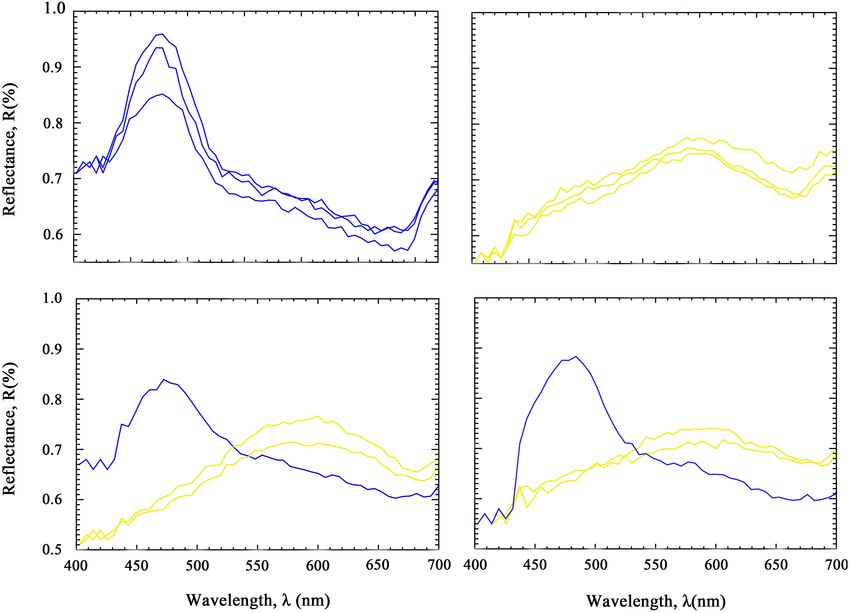
Wang et al.                                                                                                          Clam Mantle Color’s Genetic Recombination

years. Recent studies on biophotonic structures focuses on the                 Thirty parent clams from each of two mantle color strains
characterization of nanostructures responsible for iridescence                 (blue and yellow-green) were selected from the Huangyan Island
and the behavioral function of iridescent colors (Kinoshita and                population. The average shell length (SL) and total weight of the
Yoshioka, 2005; Cuthill et al., 2017).                                         blue strain were 80.30 ± 7.96 mm and 165.32 ± 45.69 g,
    Recently, scientists have discovered that the mantle color of              respectively, whereas the average SL and total weight of yellow-
giant clams is the result of structural color, which is aroused                green clams were 89.53 ± 7.48 mm and 230.44 ± 72.56 g,
by a display of different iridocytes according to the RGB law                  respectively. The broodstock of these two strains was held
display (Ozog, 2009; Todd et al., 2009; Holt et al., 2014; Rossbach            separately in 2,000-L raceways and provided with gentle aeration
et al., 2020; Long et al., 2021). During the photosymbiotic process            and continuous flow of sand-filtered seawater from Sanya
of giant clams, the forward scattering of iridocytes illuminates               Bay, Hainan Island.
the internal zooxanthellae deeper inside the mantle, and the                      When these broodstocks from the two strains mature, they
backward reflection produces the unique color of the giant clam                were induced to spawn by exposure to air for 10 min, followed
mantle (Ghoshal et al., 2016). Although the giant clam iridocytes              by a temperature shock from 27.0 to 30.0◦ C. Once spawning was
distributed in the mantle have been well studied, little is known              initiated, the individuals were placed separately in 5-L plastic
about the genetic basis or pattern of mantle color inheritance                 beakers filled with seawater (30.0◦ C) and closely observed to
(Kim et al., 2017; Mies, 2019). Scientists have observed that giant            collect uncontaminated eggs or sperm. Since Tridacninae is a
clam strains with blue and yellow-green color patterns can be                  simultaneous hermaphrodite animal (Braley et al., 2018), it is
stably inherited, and there are phenotypic differences between                 necessary to carefully collect sperm and eggs separately from each
the two color strains (Zhou et al., 2020). However, it is unclear              clam separately. If clams simultaneously release eggs and sperm,
whether the mantle color pattern is segregated or genetically                  the eggs and sperm will be removed from the experiment. The
recombined with the pigmentation of the shells during natural                  collected sperm was filtered through a 25-µm mesh to ensure that
replenishment process.                                                         there are no eggs. The collected eggs were set aside for at least
    The iridophores in the mantle of the giant clams are composed              30 min before being inspected using a microscope. The eggs were
of iridocytes, which contain stacks of regularly arranged platelets            discarded if fertilized. In total, the eggs or sperm of 18 individuals
of uniform thickness (Griffiths et al., 1992). These platelets form            from each population were used in this study.
a crystal lattice, which produces maximum light interference at
wavelengths of about 400 nm or slightly higher than 400 nm.                    Cross-Fertilization
Interference may extend the reflected light into the blue and green
                                                                               Four progenies, i.e., BB (B♀ × B♂), BY (B♀ × Y♂), YB
parts of the visible spectrum (Griffiths et al., 1992; Neo et al., 2015;
                                                                               (Y♀ × B♂), and YY (Y♀ × Y♂), were produced by factorial
Rossbach et al., 2020). Iridocytes can be divided into four types
                                                                               hybridization between the blue (B) and yellow-green strain (Y)
(red, yellow, green, and blue) and can be expressed as one, two,
                                                                               clams. The fertilized eggs of each progeny were divided equally
or more types in a single individual (Ghoshal et al., 2016). Blue,
                                                                               and placed into two 5-L beakers. A small number of fertilized
yellow, and green iridocytes are common, while red iridocytes are
                                                                               eggs were sampled to evaluate the success rate of fertilization and
rare (Zhou et al., 2020). In our study, we examined the blue strain
                                                                               the survival of D-stage larvae. The remaining fertilized eggs were
(blue iridocytes) and kelly strain (green and yellow iridocytes) of
                                                                               suspended in a 100-L tank with a density of 30–40 eggs/ml for
the boring giant clams.
                                                                               incubation. The water temperature and salinity were maintained
    In order to determine the genetic law of the reciprocal
                                                                               at 28.6–29.7◦ C and 32 ppt, respectively. The entire experiment
hybrids between two mantle color patterns of boring giant
                                                                               was repeated three times using three groups of broodstock, with
clams, complete diallel crosses were carried out in triplicate
                                                                               each group consisting of one male and female blue and yellow-
using a single-to-single mating system. The fertilization, survival,
                                                                               green stains (Table 1).
metamorphosis, and growth of progenies of each group during
the larval, nursery, and grow-out phases were compared. In
this study, the use of inter-strain hybridization technique clearly
                                                                               TABLE 1 | Experimental design for the crossbreeding of the boring giant clam
revealed the occurrence and genetic laws of the mantle coloration
                                                                               between the blue and yellow-green strains.
of reciprocal hybrids. The findings of this study can provide
guidance for the genetic breeding of giant clams.                              Parents         B1 ♂        Y1 ♂         B2 ♂          Y2 ♂        B3 ♂        Y3 ♂

                                                                               B1 ♀            BB1         BY1          —             —           —            —
                                                                               Y1 ♀
MATERIALS AND METHODS                                                                          YB1         YY1          —             —           —            —
                                                                               B2 ♀            —            —           BB2           BY2         —            —
                                                                               Y2 ♀            —            —           YB2           YY2         —            —
Broodstock Collection and Spawning
                                                                               B3 ♀            —            —           —             —           BB3         BY3
Sexually matured boring giant clams used as broodstock in this
                                                                               Y3 ♀            —            —           —             —           YB3         YY3
study were collected from Huangyan Island (East of Zhongsha
Islands) (N 15.160812, E 117.760336) in the South China Sea.                   BB and YY indicate blue and yellow-green strain’s progeny, respectively. BY and
                                                                               YB indicate reciprocal hybrids between blue and yellow-green strains, respectively.
The clams were held in an insulated container filled with
                                                                               The subscript number 1, 2, 3 denotes three replicates, and each replicate was
seawater and transported by boat to the Hainan Tropical Marine                 conducted by single pair mating. Each replicate consisted of single sperm from
Life Experimental Station at the Chinese Academy of Sciences.                  one clam and single eggs from other clam of each strain.

Frontiers in Marine Science | www.frontiersin.org                          2                                                  July 2021 | Volume 8 | Article 657762
Wang et al. Clam Mantle Color’s Genetic Recombination
Larval and Juvenile Rearing Oberkochen, Germany) equipped with a broadband halogen
Thirty hours after fertilization, D-stage larvae of each cohort lamp (providing ample light in the measured range of 400–
(BB, BY, YB, and YY) were collected using a 60-µm sieve and 700 nm) that provided illumination. For spectroscopy, a small
maintained separately in 1,000-L tanks. The initial larval density region of the sample (∼1-µm diameter) was imaged on the
was adjusted to 2 larvae/ml and maintained at this level by entrance slit (0.2 mm width) of the imaging spectrometer (Horiba
controlling the water volume. In the first 5 days, the larvae were JobinYvon iHR320; Horiba Group, Kyoto, Japan), with light
fed with Isochrysis galbana at a density of 3,000 cells/ml/day. entering the spectrometer dispersed horizontally by a grating
From the sixth to eight day, they were immersed in seawater (150 lines/mm, blazed for 500 nm). The resulting image was
containing symbiotic algae (zooxanthellae) at a density of 30 captured with a thermoelectrically cooled silicon charge-coupled
cells/ml for 2 h per day. The outdoor larval rearing tanks was device (Horiba JobinYvon Synapse detector) using an integration
equipped with gentle aeration, transparent polycarbonate roof time of 0.05 s. The spectrum was obtained from an area less
sheeting, and a 50% light transmittance shade-cloth, of which than a single iridocyte and normalized to a calibrated specular
reduced the daily-maximum photosynthetically active radiation reflectivity standard (Ocean Optics STAN-SSH) for analyses. The
(PAR) from 0 to 572.6 µmol/s/m2 [Dataflow Systems Pty Ltd. 50 × objective was a Zeiss EC EpiPlan-NEOFLUAR lens with
(Christchurch, New Zealand) light logger] (Braley et al., 2018; a numerical aperture of 0.8 and 3.8-µm depth of field. Other
Militz et al., 2017, 2019). The water temperature and salinity were details of microspectrophotometer and analytical methods are as
maintained at 28.5–29.7◦ C and 32 ppt, respectively. previously described in Ghoshal et al. (2016).
Most larvae (≥90%) attached and developed secondary shells,
feet, gills, and symbiotic system. They reached the juvenile stage Statistical Analysis
on the 20th day. No substrate was used during the spat nursing Two-way analysis of variance (Fisher’s) was used for multiple
stage. Larvae settle within 7 days, and then the newly settled comparisons to analyze the differences of the average hatching
spats were transferred to 1,000-L tanks filled with sand-filtered index, survival rate, and growth parameters among groups. In
seawater, with maintained gentle aeration, water flow, and 50% order to improve the normality and homoscedasticity, prior
natural lighting for 10 weeks. When the SL reached 3–5 mm, to analysis, the hatching rate and survival rate were arcsine-
the spats were transferred to coral stone substrate and kept in transformed, and the growth parameters were logarithmically
1,000-L tanks for another 4 weeks. When the SL of spat reached transformed (base 10). All statistical analyses were performed
8–10 mm, they were transferred to an artificial raceway system using SPSS 23.0. p < 0.05 was considered statistically significant
with continuous circulating water until they reach 1 year old. The for all tests, unless noted otherwise.
water temperature and salinity were maintained at 25.7 to 30.2◦ C Mid-parental heterosis (H) was analyzed to evaluate the
and 32 ppt, respectively. potential application of hybrids in aquaculture in the first year
using the following formula (Zhang et al., 2007, 2017; Wang et al.,
Sampling and Measurements 2011; Wang and Côté, 2012):
The hatching index (cleaved rate and D-stage larva rate), survival
rate (at days 7, 15, 90, and 360), and growth (egg diameter,
D-stage larvae size, and spat size on the same day) of each group H(%) = [XF1 − (XBB + XYY )/2] × 100/[(XBB + XYY )/2]
were determined following the method of Zhou et al. (2020). The
survival rate on day 7 and day 15 was defined as the ratio of the where XF1 represents the mean phenotypic value (SL, survival
number of individuals at different developmental stages to the rate, etc.) of the reciprocal hybrids, while XBB and XYY represent
number of D-stage larvae. The survival rate on day 90 and day 360 the mean phenotypic value (SL, survival rate, etc.) of the blue and
was defined as the ratio of the number of individuals at different yellow-green strain progenies on the same day, respectively.
stages to the number of spat on day 30. In order to determine the effects of egg origin (B vs. Y) and
On day 90, spats (SL approx. 3–5 mm) of each of the three mating strategies (homozygous vs. heterozygous crosses) on the
replicates in each group (BB, YY, BY, and YB) were divided survival and growth of clams, a two-factor analysis of variance
equally into 40 substrates (coral stone 16–18 cm in diameter) was used (Cruz and Ibarra, 1997; Zhang et al., 2007, 2017), as
with a density of 30 individuals/substrate. In other words, there follows:
were 3,600 spats on 120 substrates for each group, and 14,400
spats on 480 substrates in the entire experiment. The substrates
were cleaned monthly, dead clams were removed, and the density Yijk = µ + EOi + MSj + (EO × MS)ij + eijk .
of each group was readjusted to maintain similar levels among
the groups. As the spat grew, the density was reduced from 30 Here, Yijk is the mean SL, wet weight, or survival rate of k
individuals/substrate to 15 individuals/substrate. replicate from the i egg origin, and the j is the mating strategy.
EOi is the effect of egg origin on SL (survival rate) (i = 1, 2).
Spectroscopic Microscopy MSj is the effect of mating strategy on SL (survival rate) (j = 1,
Mantle iridocyte samples among each group were imaged 2). (EO × MS)ij is the interaction effect between the egg origin
and determined by microspectrophotometry under a Zeiss and mating strategy, while eijk is the random observation error
AxioObserver D1M inverted microscope (Carl Zeiss AG, (k = 1, 2, 3).
Frontiers in Marine Science | www.frontiersin.org 3 July 2021 | Volume 8 | Article 657762Wang et al. Clam Mantle Color’s Genetic Recombination
Single-parent heterosis is the improved performance over the Growth Rate
purebred offspring of the maternal strain, calculated using the Thirty hours after fertilization, the size of D-stage larvae of
following formula (You et al., 2015; Zhang et al., 2017, 2020b): the BY group was smaller than that of the other three groups
without a significant difference, showing obvious effects of
IBY (%) = (XBY − XBB )/XBB × 100 mating strategies (Tables 3, 4). At the end of the planktonic stage,
the SL of the BB group was the largest among the four groups with
a significant difference, which was affected by the maternal effect
IYB (%) = (XYB − XYY )/XYY × 100 (Tables 3, 4). On day 15, the SL of BY (257.33 ± 55.48 µm) and
YB (230.38 ± 53.18 µm) was significantly larger (p < 0.05) than
where I BY and I YB indicate single-parent heterosis for the BY and
that of BB (215.03 ± 40.02 µm) and YY (203.70 ± 17.66 µm). The
YB offspring, respectively. XBB , XYY , XBY , and XYB indicate the
mid-parental heterosis was 16.47%, and the single heterosis of the
mean phenotypic value (SL, survival rate, etc.) of BB, YY, BY, and
BY and YB groups were 19.67 and 13.10%, respectively (Table 4).
YB, respectively.
On day 90, the SL of reciprocal hybrid progeny was
significantly larger (p < 0.05) than that of pure strains, showing
the interaction effect of egg origin and mating strategies
RESULTS (Tables 3, 4). The mid-parental heterosis was 10.18%, and the
single heterosis of the BY and YB groups were 9.86% and 10.50%,
Hatching Rate respectively (Table 4). On day 360, SL of BB (37.86 mm) was
There was no significant difference in the mean egg size between significantly smaller (p < 0.05) than that of other three groups
the blue strain (94.84 ± 2.53 µm) and yellow-green strain (40.83–45.46 mm), which was affected by the interaction between
(95.30 ± 1.09 µm) (p > 0.05) (Table 2). Highly cleaved egg origin and mating strategies (Tables 3, 4). The mid-parental
rates (>90%) were observed among all four groups, suggesting heterosis was 12.35%, and the single heterosis of the BY and YB
that there were no sperm–egg recognition barriers between groups were 13.44 and 11.34%, respectively (Table 4).
the two strains. The D-stage larva rate of the YY group
(81.26 ± 15.77%) was significantly lower (p < 0.05) than that of Coloration
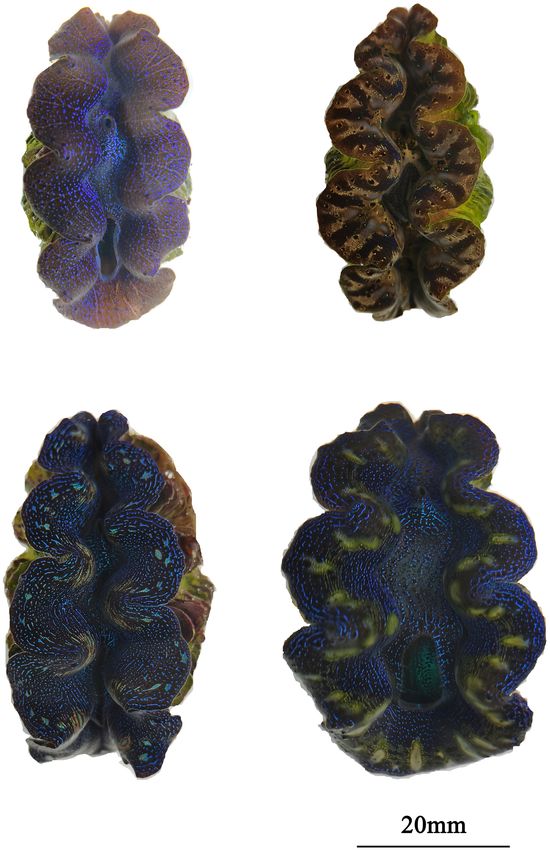
the other three groups, which was mainly affected by both mating At 1 year of age, the mantle color of the BB progeny was 100%
strategies and egg origin. blue, and the blue iridocytes have a light absorption peak at
475 nm. The mantle color of the YY progeny was 100% yellow-
Survival Rate green, and the yellow-green iridocytes have a light absorption
On day 7, the mean survival rate of larvae in all four groups peak range from 550 to 650 nm (Table 5 and Figures 1, 2). In
exceeded 90%, but the survival rate of the BY group was lower contrast, the BY and YB progenies both showed mixed colors,
than that of other three groups. The heterosis of larval survival including blue, yellow, and green colors. These iridocytes of all
rate was −2.21%, and the single heterosis of the BY and YB hybrids have two peaks at 475 and 550–650 nm (Table 5 and
progenies were −2.25 and −2.18%, respectively. The survival Figures 1, 2). In other words, the mantle color patterns of the
rate of larvae was affected by egg origin (Tables 2, 3). On day reciprocal hybrids displayed genetic recombination, which can be
15, the metamorphosis rates of BB (31.87 ± 10.57%) and BY defined as a phenomenon of the common dominant expression
(37.28 ± 16.84%) were significantly higher (p < 0.05) than those derived from two strains’ parents.
of YY (8.69 ± 5.81%) and YB (16.83 ± 10.48%). Mid-parental
heterosis was 33.41%, and the single heterosis of the BY and
YB groups were 16.98 and 93.67%, respectively. The rate of DISCUSSION
metamorphosis was primarily affected by egg origin (Tables 2, 3).
On day 90, the survival rates of progeny of all four groups Performance Traits
were over 85%. The survival rates of the BY (94.61 ± 9.17%) Fertilization rate is a key parameter used to evaluate the
and YB (90.45 ± 5.80%) progenies were significantly higher commercial production potential of crossbreeding progeny (You
(p < 0.05) than those of the BB (85.10 ± 9.47%) and YY et al., 2015). Our study demonstrates that using one of the mantle
(87.72 ± 7.40%) progenies. Mid-parental heterosis was 3.86%, color strain as a sperm donor (two-way fertilization) can achieve
and the single heterosis of the BY and YB groups were 3.08 a higher fertilization rate and hatching rate, which indicates that
and 4.60%, respectively. The survival rate of spat was mainly there is no reproductive isolation between blue and yellow-green
affected by the interaction of egg origin and mating strategies mantle color strains (Zhou et al., 2020; Zhang et al., 2021).
(Tables 2, 3). On day 360, the survival rates of all four groups Zhou et al. (2021) previously investigated the growth
exceeded 80%, with the survival rates of reciprocal hybrids difference between blue and yellow-green mantle color strains
being slightly higher (p > 0.05) than those of the two pure of boring giant clams and concluded that in wild populations,
strains. The mid-parental heterosis for survival was 3.37%, and the yellow-green broodstock is always larger than the blue
the single heterosis of the BY and YB groups were 1.15 and broodstock. Generally, the heterosis of a crossbreed between two
5.64%, respectively. The survival rate of giant clam spats was also particular strains depends on the square of the difference in
affected by the interaction of egg origin and mating strategies gene frequency between strains. If the crossed strains have no
(Tables 2, 3). difference in gene frequency, there will be no heterosis, while
Frontiers in Marine Science | www.frontiersin.org 4 July 2021 | Volume 8 | Article 657762Wang et al. Clam Mantle Color’s Genetic Recombination
TABLE 2 | Hatching index, survival ability and metamorphism of two strain’s progeny (BB and YY) and their reciprocal hybrids (BY and YB), as well as heterosis (H and I).
Items Hatching index Survival rate (%)
Egg diameter (µ m) Cleaved rate (%) D-stage (%) Day 7 Day15 Day 90 Day 360
BB 94.84 ± 2.53a 97.96% ± 10.66%a 90.76% ± 9.83a 93.70 ± 7.45a 31.87 ± 10.57a 85.10 ± 9.47b 82.03 ± 1.62a
YY 95.30 ± 1.09a 98.08% ± 1.87%a 81.26 ± 15.77b 95.48 ± 3.52a 8.69 ± 5.81b 87.72 ± 7.40b 80.24 ± 2.85a
BY —— 98.47% ± 0.98%a 92.82 ± 6.03a 91.59 ± 2.78a 37.28 ± 16.84a 94.61 ± 9.17a 82.97 ± 3.55a
YB —— 98.44% ± 0.97%a 90.16 ± 7.38a 93.40 ± 3.21a 16.83 ± 10.48b 90.45 ± 5.80a 84.77 ± 3.27a
H(%) —— 0.44 6.37 −2.21 33.41 3.86 3.37
IBY (%) —— 0.52 2.27 −2.25 16.98 3.08 1.15
IYB (%) —— 0.37 10.95 −2.18 93.67 4.60 5.64
X̄ ± SD indicates mean ± standard deviation. H indicates mid-parent heterosis; and IBY and IYB indicate the single parent heterosis of BY and YB groups, respectively.
For cleavage rate, D-stage rate, cumulative survival on different days, n = 9 (3 replicates × 3) in each experimental group. Different superscript letters in each column
indicate significant difference (pWang et al. Clam Mantle Color’s Genetic Recombination
TABLE 5 | Mantle coloration pattern of two strain’s progeny (BB and YY), and their so the mantle color looks brown due to the accumulation
reciprocal hybrids (BY and YB).
of zooxanthellae. During the coloring period, iridocytes in
Items Blue type Yellow type Mixing type Total the mantle begin to appear and increase in number, until
they become visible to the naked eye about 6 months later.
BB 100 (100%) 0 0 100 (100%) Interestingly, green iridocytes were found in early stage of both
YY 0 100 (100%) 0 100 (100%) pure strains and reciprocal hybrids, suggesting that the green
BY 0 0 100 (100%) 100 (100%) iridocyte may be ancestors of the others (Zhou et al., 2021).
YB 0 0 100 (100%) 100 (100%) After the early green iridocytes changed to blue (60–120 days),
Mixing type includes the blue and yellow-green colors. the mantle colors of the reciprocal hybrids were both blue
during the coloring stage (120–180 days), which indicates that
the expression of blue iridocytes is dominant in the mantle. The
dominant expressions of phenotypic traits for progeny usually
occur in the process of hybridization, which is likely to be an
essential transitional phase in the overall life history of giant
clams and may reflect the evolutionary strategy of nature. In
some animals, particular color morphs may enhance camouflage,
improve communication within species, and/or confer them a
reproductive advantage (Korzan et al., 2008). Therefore, this
staged dominant coloration is likely to be a camouflage, which
may improve the survival rate of giant clam populations in wild
coral reef areas (Fatherree, 2006; Neo et al., 2015).
During the stable expression period, the mantle color of two
pure strains was 100% inherited, while all reciprocal hybrids
have colorful colors in the mantle, which indicates that the
genetic recombination of the mantle color has occurred. Genetic
recombination usually occurs during meiosis, which involves the
pairing of homologous chromosomes and is a key developmental
program for gametogenesis (Brick et al., 2012). Novel phenotypic
features are often formed in hybrid, which may accelerate the
processes of species diversity via adaptive evolution (Abbott et al.,
2013). In aquatic animals, the research on genetic recombination
of body surface coloration is mainly focused on the ornamental
carp (David et al., 2004). The mantle coloration of marine
bivalves was only found on oysters and giant clams using
hybridization or crossbreeding methods (Wang et al., 2015; Zhou
et al., 2021). Furthermore, our results reveal that the colorful
FIGURE 1 | Photos of progeny for boring giant clam Tridacna crocea. (A) BB mantle of the giant clams may be caused by multiple random
progeny. (B) YY progeny. (C) BY Progeny. (D) YB Progeny. The bar indicates crossings between two individuals with different mantle colors
30 mm, and it applies to all samples in Figure 1. during the reproductive stage.
Applicant Prospects
affected by the surrounding environment (Rawson and Feindel, Giant clams are often covered with unique patterns and various
2012). In our study, the survival rate of reciprocal hybrids colors. For a long time, why they look as fancy has been a mystery
was higher than that of pure strains, which is manifested as a (Fatherree, 2006; Neo et al., 2015; Rossbach et al., 2021). In the
significant increase in the level of metamorphosis. The reciprocal aquarium market, the price of giant clam is partially determined
hybrids have three iridocytes, while the blue and yellow-green according to the different mantle colors. For example, blue and
strains have one or two iridocytes, which means that the hybrids purple giant clams are known as “amethyst,” and their price is
have a higher degree of heterozygosity than other strains (Brake four to five times that of others varieties. The blue Tridacna
et al., 2004). The higher heterozygosity of the hybrid means squamosa can be sold for $180/ind, because the blue T. squamosa
higher physiological and immune levels, thus a higher survival is an interspecific hybrid and is rare in nature. It is derived
rate than the progenies of two pure stains. from female T. squamosa and male Tridacna crocea. Recently,
these hybrids with heterosis have been mass produced, and they
Inheritance of Mantle Color Patterns have the mantle color of T. crocea and shell of T. squamosa
The mantle coloration of giant clams can be divided into three (Zhou et al., 2020).
stages: non-coloring period (days 0–60), coloring period (days With the use of mantle color as an indicator, it is important
60–180), and stable expression period (>day 180) (Zhou et al., to carry out genetic breeding of giant clams, because the
2021). During the non-coloring period, no iridocytes occur, specific mantle color of individual clam can significantly increase
Frontiers in Marine Science | www.frontiersin.org 6 July 2021 | Volume 8 | Article 657762Wang et al. Clam Mantle Color’s Genetic Recombination
FIGURE 2 | Spectra from individual iridocytes from Tridacna crocea, corresponding to Figure 1. (A) BB progeny. (B) YY progeny. (C) BY Progeny. (D) YB Progeny.
Each line indicates a single iridocyte’s color with one main peak in the outer mantle.
economic value (Frias-Torres, 2017). According to our study, ZZ, GS, and YHZ analyzed the data. JW, YHZ, ZZ, JL, and ZY
the mantle color lines can be produced by selective breeding, wrote the manuscript. All authors contributed to the article and
crossbreeding, and interspecific hybridization, which can then approved the submitted version.
be used to breed new varieties of giant clams (Zhang et al.,
2020a,b; Zhou et al., 2021). Therefore, this study provides a basic
understanding and analysis of the mantle coloring inheritance of FUNDING
the boring giant clam and provides practice for the breeding of
new giant clam varieties. This work was supported by the Chinese Ministry of Science
and Technology through the National Key Research and
Development Program of China (2018YFD0901400 and
CONCLUSION 2020YFD0901100); the National Science Foundation of
China (31872566, 31702340, and 32002387); Key Special
First, we found that the mantle color of blue and yellow-green Project for Introduced Talents Team of Southern Marine
giant clams can be stably inherited. Reciprocal hybrids express Science and Engineering Guangdong Laboratory (Guangzhou)
genetic recombination in the mantle color pattern and showed (GML2019ZD0404); the China-ASEAN Maritime Cooperation
common dominant expression. This discovery demonstrates the Fund (CAMC-2018F); the Network Service Local Plan STS of
formation and evolution of the mantle color polymorphism of the Chinese Academy of Sciences (KFJ-STS-QYZD-158); the
T. crocea and provides a new direction for understanding the Strategic Priority Research Program of the Chinese Academy
environmental adaptability and genetic breeding of the boring of Sciences (XDA13020202); the Innovation Academy of South
giant clams in the coral reef area. China Sea Ecology and Environmental Engineering, Chinese
Academy of Sciences (ISEE2018PY01 and ISEE2018ZD02); the
Open Foundation of the State Key Laboratory of Loess and
DATA AVAILABILITY STATEMENT
Quaternary Geology (SKLLQG1813 and SKLLQG1918); the
The original contributions presented in the study are included China Agricultural Shellfish Industry Technology System Project
in the article/supplementary materials, further inquiries can be (CARS-49); and the Science and Technology Planning Project of
directed to the corresponding author/s. Guangdong Province, China (2017B030314052).
AUTHOR CONTRIBUTIONS ACKNOWLEDGMENTS
ZY and YHZ conceived and designed the experiments. ZZ, JL, The authors would like to thank the editor and several reviewers
HM, YQ, JW, XL, QL, and YL performed the experiments. YYZ, for their assistance in the manuscript revision process.
Frontiers in Marine Science | www.frontiersin.org 7 July 2021 | Volume 8 | Article 657762Wang et al. Clam Mantle Color’s Genetic Recombination
REFERENCES Neo, M. L., Eckman, W., Vicentuan, K., Teo, S. L.-M., and Todd, P. A. (2015). The
ecological significance of giant clams in coral reef ecosystems. Biol. Conserv.
Abbott, R., Albach, D., Ansell, S., Arntzen, J. W., Baird, S. J., Bierne, N., et al. (2013). 181, 111–123. doi: 10.1016/j.biocon.2014.11.004
Hybridization and speciation. J. Evol. Biol. 26, 229–246. doi: 10.1111/j.1420- Ozog, S. T. (2009). Balancing Anti-Predation and Energetic Needs: Color
9101.2012.02599.x Polymorphism in the Giant Clam Tridacna Maxima. Berkeley, CA: University
Brake, J., Evans, F., and Langdon, C. (2004). Evidence for genetic control of California.
of pigmentation of shell and mantle edge in selected families of Pacific Rawson, P., and Feindel, S. (2012). Growth and survival for genetically improved
oysters, Crassostrea gigas. Aquaculture 229, 89–98. doi: 10.1016/S0044-8486(03) lines of Eastern oysters (Crassostrea virginica) and interline hybrids in
00325-9 Maine, USA. Aquaculture 326, 61–67. doi: 10.1016/j.aquaculture.2011.11.
Braley, R. D., Militz, T. A., and Southgate, P. C. (2018). Comparison of three 030
hatchery culture methods for the giant clam Tridacna noae. Aquaculture 495, Rossbach, S., Anton, A., and Duarte, C. M. (2021). Drivers of the abundance
881–887. doi: 10.1016/j.aquaculture.2018.05.044 of Tridacna spp. giant clams in the Red Sea. Front. Mar. Sci. 7:592852. doi:
Brick, K., Smagulova, F., Khil, P., Camerini-Otero, R. D., and Petukhova, G. V. 10.3389/fmars.2020.592852
(2012). Genetic recombination is directed away from functional genomic Rossbach, S., Subedi, R. C., Ng, T. K., Ooi, B. S., and Duarte, C. M. (2020).
elements in mice. Nature 485, 642–645. Iridocytes mediate photonic cooperation between giant clams (Tridacninae)
Cruz, P., and Ibarra, A. M. (1997). Larval growth and survival of two Catarina and their photosynthetic symbionts. Front. Mar. Sci. 7:465. doi: 10.3389/fmars.
scallop (Argopecten circularis, Sowerby, 1835) populations and their reciprocal 2020.00465
crosses. J. Exp. Mar. Biol. Ecol. 212, 95–110. doi: 10.1016/S0022-0981(96)02742- Wang, C., and Côté, J. (2012). Heterosis and combining abilities in growth and
6 survival in sea scallops along the Atlantic coast of Canada. J. Shellfish Res. 31,
Cuthill, I. C., Allen, W. L., Arbuckle, K., Caspers, B., Chaplin, G., Hauber, M. E., 1145–1149. doi: 10.2983/035.031.0425
et al. (2017). The biology of color. Science 357:eaan0221. doi: 10.1126/science. Wang, C., Liu, B., Li, J., Liu, S., Li, J., Hu, L., et al. (2011). Introduction of
aan0221 the Peruvian scallop and its hybridization with the bay scallop in China.
David, L., Rothbard, S., Rubinstein, I., Katzman, H., Hulata, G., Hillel, J., et al. Aquaculture 310, 380–387. doi: 10.1016/j.aquaculture.2010.11.014
(2004). Aspects of red and black color inheritance in the Japanese ornamental Wang, Q., Li, Q., Cong, R., Kong, N., and Kong, L. (2015). Inheritance of mantle
(Koi) carp (Cyprinus carpio L.). Aquaculture 233, 129–147. doi: 10.1016/j. pigmentation in selected families of the Pacific oyster Crassostrea gigas. Mar.
aquaculture.2003.10.033 Sci. 39, 86–90.
Fatherree, J. (2006). Giant Clams in the Sea and the Aquarium: The Biology, You, W., Guo, Q., Fan, F., Ren, P., Luo, X., and Ke, C. (2015). Experimental
Identification, and Aquarium Husbandry of Tridacnid Clams. Florida: Liquid hybridization and genetic identification of Pacific abalone Haliotis discus
Medium. haHHai and green abalone H. fulgens. Aquaculture 448, 243–249. doi: 10.1016/
Frias-Torres, S. (2017). Captive bred, adult giant clams survive restoration in the j.aquaculture.2015.05.043
wild in Seychelles, Indian Ocean. Front. Mar. Sci. 4:97. doi: 10.3389/fmars.2017. Zhang, H., Liu, X., Zhang, G., and Wang, C. (2007). Growth and survival of
00097 reciprocal crosses between two bay scallops, Argopecten irradians concentricus
Ghoshal, A., Eck, E., Gordon, M., and Morse, D. E. (2016). Wavelength-specific Say and A. irradians irradians Lamarck. Aquaculture 272, S88–S93. doi: 10.
forward scattering of light by Bragg-reflective iridocytes in giant clams. J. R. 1016/j.aquaculture.2007.08.008
Soc. Interface 13:20160285. doi: 10.1098/rsif.2016.0285 Zhang, Y., Li, J., Zhang, Y., Ma, H., Xiao, S., Xiang, Z., et al. (2017).
Griffiths, D. J., Winsor, H., and Luongvan, T. (1992). Iridophores in the mantle of Performance evaluation of reciprocal hybrids derived from the two
giant clams. Aust. J. Zool. 40, 319–326. doi: 10.1071/ZO9920319 brackish oysters, Crassostrea hongkongensis and Crassostrea sikamea in
Holt, A. L., Vahidinia, S., Gagnon, Y. L., Morse, D. E., and Sweeney, A. M. (2014). southern China. Aquaculture 473, 310–316. doi: 10.1016/j.aquaculture.2017.02.
Photosymbiotic giant clams are transformers of solar flux. J. R. Soc. Interface 031
11:20140678. doi: 10.1098/rsif.2014.0678 Zhang, Y., Ma, H., Li, X., Zhou, Z., Li, J., Wei, J., et al. (2020a). Analysis of
Kim, H. N., Vahidinia, S., Holt, A. L., Sweeney, A. M., and Yang, S. (2017). inbreeding depression on performance traits of three giant clams (Tridacna
Geometric design of scalable forward scatterers for optimally efficient solar derasa, T. squamosa, and T. crocea) in the South China Sea. Aquaculture
transformers. Adv. Mater. 29:1702922. doi: 10.1002/adma.201702922 521:735023. doi: 10.1016/j.aquaculture.2020.735023
Korzan, W. J., Robison, R. R., Zhao, S., and Fernald, R. D. (2008). Color change as Zhang, Y., Zhou, Z., Qin, Y., Li, X., Ma, H., Wei, J., et al. (2020b). Phenotypic traits
a potential behavioral strategy. Horm. Behav. 54, 463–470. doi: 10.1016/j.yhbeh. of two boring giant clam (Tridacna crocea) populations and their reciprocal
2008.05.006 hybrids in the South China Sea. Aquaculture 519:734890. doi: 10.1016/j.
Long, C., Zhang, Y., Li, Y., Li, J., Zhou, Z., Qin, Y., et al. (2021). Effects of aquaculture.2019.734890
Symbiodinaaceae phylotypes in clades A-E on progeny performance of two Zhou, Z., Li, J., Ma, H., Li, Y., Qin, Y., Wei, J., et al. (2021). The evaluation of culture
giant clams (Tridacna squamosa and T. crocea) during early history life stages in performance and mantle coloration of two boring giant clam (Tridacna crocea)
the South China Sea. Front. Mar. Sci. 8:633761. doi: 10.3389/fmars.2021.633761 strains. Aquaculture Rep. 20:100646. doi: 10.1016/j.aqrep.2021.100646
Ma, H., Gao, H., Zhang, Y., Qin, Y., Xiang, Z., Li, J., et al. (2021). Multiplex species- Zhou, Z., Li, J., Ma, H., Qin, Y., Zhou, Y., Wei, J., et al. (2020). Artificial interspecific
specific PCR identification of native giant clams in the South China Sea: a useful hybridization of two giant clams, Tridacna squamosa and Tridacna crocea, in
tool for application in giant clam stock management and forensic identification. the South China Sea. Aquaculture 515:734581. doi: 10.1016/j.aquaculture.2019.
Aquaculture 531:735991. doi: 10.1016/j.aquaculture.2020.735991 734581
Mäthger, L. M., Senft, S. L., Gao, M., Karaveli, S., Bell, G. R., Zia, R., et al.
(2013). Bright white scattering from protein spheres in color changing, flexible Conflict of Interest: The authors declare that the research was conducted in the
cuttlefish skin. Adv. Funct. Mater. 23, 3980–3989. doi: 10.1002/adfm.201203705 absence of any commercial or financial relationships that could be construed as a
Mies, M. (2019). Evolution, diversity, distribution and the endangered future of potential conflict of interest.
the giant clam-Symbiodiniaceae association. Coral Reef 38, 1067–1084. doi:
10.1007/s00338-019-01857-x Copyright © 2021 Wang, Zhou, Ma, Li, Qin, Wei, Li, Liao, Li, Shi, Zhou, Zhang
Militz, T. A., Braley, R. D., and Southgate, P. C. (2017). Captive hybridization of and Yu. This is an open-access article distributed under the terms of the Creative
the giant clams Tridacna maxima (Röding, 1798) and Tridacna noae (Röding, Commons Attribution License (CC BY). The use, distribution or reproduction in
1798). J. Shellfish Res. 36, 585–591. doi: 10.2983/035.036.0306 other forums is permitted, provided the original author(s) and the copyright owner(s)
Militz, T. A., Braley, R. D., Schoeman, D. S., and Southgate, P. C. (2019). Larval are credited and that the original publication in this journal is cited, in accordance
and early juvenile culture of two giant clam (Tridacninae) hybrids. Aquaculture with accepted academic practice. No use, distribution or reproduction is permitted
500, 500–505. doi: 10.1016/j.aquaculture.2018.10.050 which does not comply with these terms.
Frontiers in Marine Science | www.frontiersin.org 8 July 2021 | Volume 8 | Article 657762You can also read


