Impact of Plant Variety Protection and UPOV 1991 to Farmers and Plant Breeders in the EU IPKeySouth-East Asia
←
→
Page content transcription
If your browser does not render page correctly, please read the page content below
Impact of Plant Variety Protection and
            UPOV 1991 to
    Farmers and Plant Breeders
              in the EU

                   Martin Ekvad
  President of Community Plant Variety Office (CPVO)

            IPKey South-East Asia
                 12 November 2020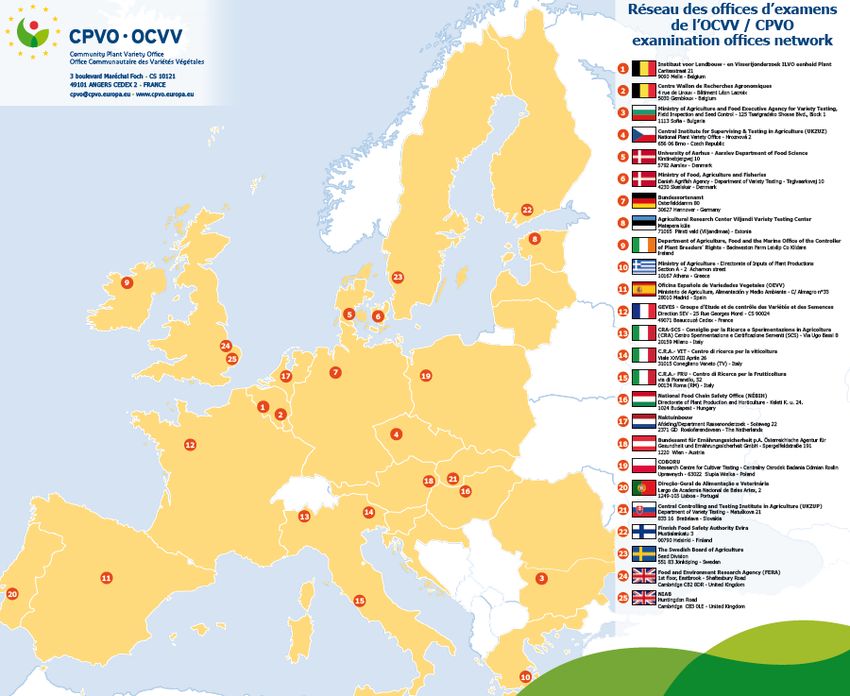
OUTLINE

1. The European Union Plant Variety System

2. The CPVO

3. Application Procedure

4. Scope of the Plant Variety Rights

5. Statistics

6. EU Strategies

7. Impact on society, farmers and breeders

                                             2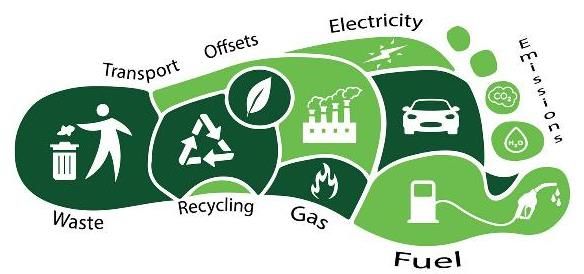
1. THE EUROPEAN UNION
             PLANT VARIETY SYSTEM
▪ Sui generis system for the industrial property protection of plant varieties
l

▪ Industrial property rights granted are valid throughout the territory of the 27
  Member States of the European Union
l

▪ System established by an EU Regulation in 1994, to comply with the
  International Convention for the Protection of New Varieties of Plants of 1991
  (1991 UPOV Act)*
l

▪ EU became party to UPOV as inter-governmental organization in June 2005
ñ

* The         Convention was originally adopted in Paris in 1961

                                                                                 3
Legal Basis
▪ Basic Regulation (BR):

       Council Regulation (EC) No
      2100/94 on Community plant
             variety rights

▪ Implementing Regulations (IRS):
  • 3 Commission Regulations relating to:

    Regulation No.        Regulation No.      Regulation No.
      874/2009              1238/95             1768/95

   • Proceedings         • Fees payable to   • The agricultural
    before the CPVO        the CPVO           exemption

                                                                  4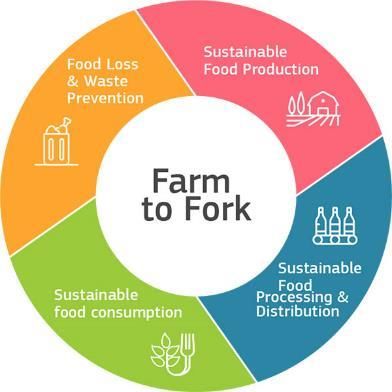
2. THE CPVO

         The EU Plant Variety system is run by the
          Community Plant Variety Office (CPVO)

• Official Agency of the EU

• Based in Angers (France)

• Operational since 1995

• Independent legal status

• Fully self-financed

• President and Vice-President (appointed by the Council)

                                                            5
Mission statement
‘To deliver and promote an efficient
Intellectual Property Rights system that
supports the creation of new plant varieties
for the benefit of Society’.

                                               6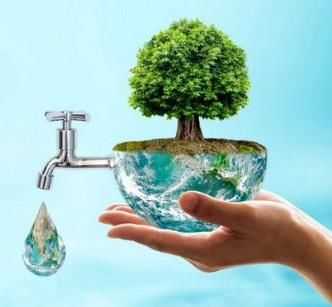
3. APLICATION PROCEDURE

▪ CPVRS shall have uniform effect within the EU territory* (including: grant,
  transferral, termination) (Art. 2 BR)

  *28 EU MS (27 after Brexit): access to a market of 520 million citizens!

▪ The procedure concludes with the decision of grant or refusal (Art. 61-62 BR)

▪ Duration of the CPVR** (Art. 19 BR):

   •   25 years

   •   30 years > for vines, trees and potato varieties
   **The CPVR system also foresees a provisional protection period covering the time

   from publication of the application until the CPVR grant (Art. 95 BR)

                                                                                  7
Filing of an application

▪ System open to any natural or legal person (Art. 12 BR)

• Applicants who are not domiciled or do not have a seat or
  establishment within the EU territory must appoint a procedural
  representative (Art. 82 BR)

                                                                    8
CPVR Grant Requirements
The Plant Variety must comply with
    the following requirements
            (Art. 6 BR):

        THE DUS CRITERIA
      • D – Distinctivity
      • U – Uniformity
      • S – Stability

              NOVELTY

               VARIETY
          DENOMINATION

                                     9
Examination of the application

Examinations carried out by the CPVO:

• Formal examination (Art. 53 BR)

• Substantive examination (Art. 54 BR): Entitlement, Novelty,
  Variety Denomination

Examinations carried out by Examination Offices:

• Technical examination (Art. 55 BR): DUS

                                                            10
11
4. SCOPE OF THE PLANT VARIETY
                                      RIGHTS
▪ The authorization of the holder is required in respect of the
  following acts [Art. 13(2) BR]:
       a)     Production or reproduction

       b)     Conditioning for the purpose of propagation

       c)     Offering for sale, selling or other marketing

       d)     Exporting from/Importing to the European Union

       e)     Stocking for any of the above mentioned purposes

▪ The material scope of CPVRS includes:
   •        Variety constituents

   •        Harvested material

                                                                  12
Exceptions to CPVRS
▪ The main exceptions to CPVRS – restricting the breeder’s scope of rights – are:
,
• The limitations of the effects of CPVRS as listed in Art. 15 BR:
➢ Acts done privately for non-commercial purposes
➢ Acts done for experimental purposes
➢ Acts done for the purpose of breeding, or discovering and developing
new varieties (the breeder’s exemption)
• The agricultural exemption (Farm-saved seed) (Art. 14 BR):
➢ Covering varieties belonging to a limited list of 21 agricultural crops in
well-defined circumstances and classified into four categories:
a) Fodder plants b) Cereals c) Potatoes d) Oil and fiber plants
13Advantages of the exemptions
▪ Breeder’s exemption [Art. 15(c) BR]:
➢ Variety improvement is enhanced
➢ Germplasm sources remain accessible to the community of breeders
➢ Genetic basis for plant improvement is broadened and actively conserved
➢ Opportunity for all breeders to share in benefits of breeding activities
▪ Agricultural exemption (Art. 14 BR):
• Farmers are authorized to use for propagating purposes in the field the
product of the harvest which they have obtained by planting, propagating
material of a variety other than a hybrid or synthetic variety, which is covered
by a CPVR
• Farmers shall pay an equitable remuneration sensibly lower than the amount
charged for the licensed production of propagation material
145. Statistics
CPVO - Key Statistics

55 800     28 900                    70 800        2 300

 Titles     Active                  Applications   Different
granted     titles                   received       species

                     (15.09.2020)
                                                           16
Applications
17Applications by crop
18Applications EU
19Applications non-EU
20All Applications
21Evolution of botanical taxa
22Evolution of varieties protected under the Community system
over the last 10 years
30000 28892
28231
26896
25911
25148
25000 23766
22555
21576
20363
20000 18899
15000
10000
5000 2980 3188
2585 2640 2706 2684 2844 2865 2757 2242
0
2011 2012 2013 2014 2015 2016 2017 2018 2019 2020*
Rights granted every year Cumulative total CPVRs remaining in force at the end of each year
NB (*) Situation at 15/09/2020. Comparison 2020 grants with 2019 - period from 01/01 to 15/09: -334 grants or -13.0%
236. Strategies in the EU
• European Green Deal
➢ Commitment to tackling climate change and
environmental-related challenges
➢ Maps a new, sustainable and inclusive growth strategy
to boost the economy
➢ Improve people’s health of life, care for nature
➢ Leave no one behind
24Strategies in the EU
Farm to Fork Strategy
• Adopted to implement the Green Deal
• Addresses challenges of sustainable
food systems and recognises the links
between healthy people, healthy
societies and a healthy planet.
• Plant breeding is recognised as
important to implement the strategies
25Strategies in the EU
• SDG:s
The Green Deal and the Farm to Fork Strategy are both
central to the Commission’s agenda to implement the
United Nation’s 2030 Sustainable Agenda and the
Sustainable Development Goals.
▪ Draft IP Strategy
267. Breeding in the interest of society
• Breeding new varieties was crucial in order to come to terms
with food supply after the second world war
• European countries invested in breeding and agriculture to
provide farmers with high quality varieties
• Seed legislation set quality standards to ensure that farmers got
good varieties
• Ornamental sector grew and copying was considered contra
productive
27Breeding in the interest of society
• Breeding is costly
• PVP system adopted to provide financial incentives
to create new varieties
• PVP system benefits breeders because they can
reinvest in creating new varieties
• Breeders compete to satisfy the demands of
• Farmers
• Producers of ornamental varieties
28Breeding in the interest of society
• Farmers benefit from new and better performing
varieties
• Specialised varieties are created for various industries
such as,
• Rice for various purposes
• Pasta
• Breweries
• Chips producers
• etc
• Efficient agriculture provides consumers with
affordable products
29Benefits of breeding in the EU
Without plant breeding:
✓ EU would have moved from being
net EXPORTER to net
IMPORTER in all major
agricultural crops (including wheat
and barley)
✓ European farmers would be 30%
worse off
✓ Europe would need an extra 19
million hectares of farmland to
produce the same amount of food
Plant breeding has increased wheat
harvest by 15%
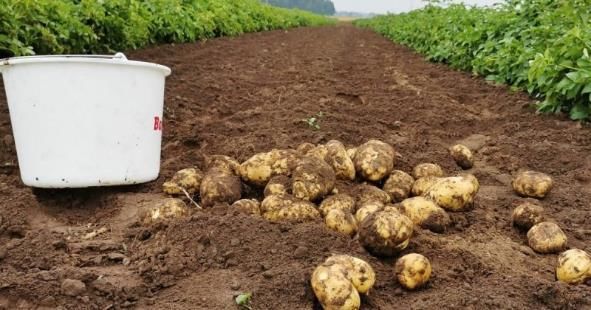
30Benefits in relation to potatoes
More Yield
➢Over the past 15 years, an extra 10 million tons of
potatoes have been grown by EU farmers annually
thanks to potato breeding
➢60 % of the growth in potato harvests can be
attributed to plant breeding
31Benefits in relation to potatoes
Carbon footprint
➢Without plant breeding, Europe would need an extra
47 million acres of farmland to produce the same
amount of food.
➢Turning 47 million more acres of forests, wetlands
and other habitats into farmland would release 3.4
billion tons of carbon dioxide
32Benefits in relation to potatoes
Water use
➢Plant breeding has enabled EU farmers to save nearly
55 billion cubic meters of water since 2000
➢Plant breeding is helping EU agriculture to meet the
objectives of the EU Adaptation Strategy for climate
change and helping manage droughts as our climate
changes
33Benefits of plant variety rights
Study to be carried out in the EU 2021
➢Benefits for the economy
➢Implementation of the EU Green Deal and UN
Sustainability Development Goals
3435
You can also read


