In Control with no Control: Perceptions and Reality of Windows 10 Home Edition Update Features - NDSS
←
→
Page content transcription
If your browser does not render page correctly, please read the page content below
In Control with no Control: Perceptions and Reality
    of Windows 10 Home Edition Update Features

                                             Jason Morris,     Ingolf Becker,    Simon Parkin
                                                       University College London
                                              {jason.morris.17, i.becker, s.parkin}@ucl.ac.uk

    Abstract—Home computer users are regularly advised to                    Software producers have aimed to make it easier for users
install software updates to stay secure. Windows 10 Home edition         to have up-to-date versions of their software by automating
is unique as it automatically downloads and installs updates, and        the update process. This process is however not without costs
restarts the computer automatically if needed. The automatic             and risks for the user. From a cost perspective, software that
restarts can be influenced through a number of features, such as         is updating or installing can interrupt primary tasks. From a
‘active hours’ (the period during which a computer will never
automatically restart to finish installing an update) or by explicitly
                                                                         risk perspective, should an update fail or break functionality, it
setting a time when to restart the computer.                             could cause a prolonged availability issue. Similarly, an update
                                                                         might change a familiar user interface or piece of functionality,
    This research investigates if the features Microsoft provides        forcing the user to learn new skills before being able to
for managing updates on Windows 10 Home edition are appro-               productively resume their work. As user software portfolios
priate for computer owners.                                              have grown over time, these costs and risks have often grown
    We build a model of the update behaviour of Windows 10. The          proportionately with them [5].
model identifies all interaction points between the update system
and the users. We contrast the theory with reality in a survey               Updates are arguably most useful if they patch vulnerabili-
study with 93 participants which establishes the experiences and         ties in a timely fashion [6]. Users may act to postpone updates
perceptions of users of Windows 10 Home.                                 or not feel a need to concern themselves with updates [7].
     Windows will not restart a computer outside active hours if         To ensure updates are installed, software producers are now
the computer is in use. However, if any user of a machine sets           seen to automate software updates to the point that they can
an explicit restart time, the computer will restart at that time in      be scheduled (and rescheduled), but not avoided for long.
order to install quality updates even if the computer is still in        Most noticeably, the entry level version of Windows 10 aimed
active use (potentially by a different user to the one who set the       at home users (‘Home Edition’) and released in July 2015
restart time). While overall perceptions of updates were positive,       removed the ability of users to turn automatic updates off.
the pattern of use of almost all users was incompatible with the         It will download and install updates as soon as possible,
default setting of the ‘active hours’ feature. Only 28% of users         and schedule an automatic restart within the next 24 hours
knew of its existence. Users are mostly unaware of quality (bug-
                                                                         if required to complete the installation, resuming the system
fix) updates, perceiving that updates act mostly to add features.
Half of our participants report unexpected restarts, while half          from standby if necessary. The user is notified of the scheduled
also reported growing concern about the state of their device            restart, but unable to cancel it. As an operating system provides
if an update took a long time. Participants who had previous             an execution environment for many applications, an operating
negative experiences had weaker beliefs about their ability to           system restart has the potential to disrupt other running appli-
control updates than those who had not.                                  cations and cause unsaved work to be lost.
    We recommend that operating systems obtain explicit permis-
sion for restarts consistently; there are opportunities for default
                                                                             In this paper we build a model of the update behaviour
features such as active hours and update progress displays to            of Windows 10 Home Edition. We find that Windows is
learn from usage activity.                                               inconsistent in its restarting behaviour: when an explicit restart
                                                                         time was set by a user it will restart to complete the installation
                        I.   I NTRODUCTION                               of a quality update even when the computer is in active use.
                                                                         In all other cases it does not restart when the computer is
    A key piece of information security advice given to users            in use. We then use this model to highlight the interactions
by both government organisations [1]–[3] and security com-               users have with the system (Section III), and the potential
panies [4] is to ‘install the latest software and app updates’.          consequences of these interactions for the user should they
Doing so is seen as the way to eliminate software vulnerabil-            be mis-configured. Further, we contrast this model with usage
ities, toward creating a safer computing environment for the             experiences through an online survey with 97 UK Windows 10
user. Otherwise, vulnerabilities may be exploited readily by             Home users (Section IV). We find that the default setting of the
attackers with ready access to increasingly off-the-shelf tools          main feature to control when updates are installed — active
to target users of popular operating systems indiscriminately.           hours — is unsuitable for 97% of our users. Regardless, 72%
                                                                         do not appear to be aware of the feature. This is supported by
Workshop on Usable Security (USEC) 2019                                  about half of participants reporting unexpected restarts. We
24 February 2019, San Diego, CA, USA
ISBN 1-1891562-53-3                                                      examine existing research of the challenges of updates for
http://dx.doi.org/10.14722/usec.2019.23008                               users in Section II. We round off this paper with discussion
www.ndss-symposium.org                                                   and conclusions in Sections V and VI.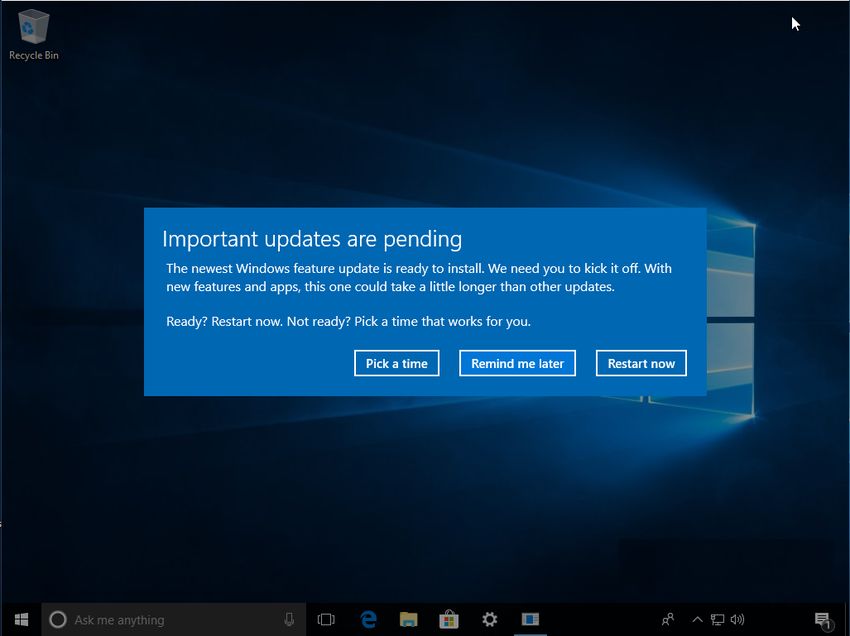
II.   BACKGROUND AND R ELATED W ORK                                     B. The need for human control
A. Motivating the need for software updates                                            While automatically installing software updates minimizes
                                                                                   the window of opportunity for vulnerabilities to be exploited,
    Software may be released that has faults. Features may be                      where those updates require a device or software restart, con-
changed, or new ones added over time, which may also have                          sideration must be given to both the direct cost of disrupting
faults. These faults may be exploited by malicious parties to                      users’ primary tasks and the indirect costs of reducing users’
access and manipulate a computer. This affects home users and                      opportunities to observe and understand the automated update
organisations alike. To address these faults, software producers                   mechanism. Existing research within organisations tells us
create software security updates or patches that, once applied                     that users have a limited budget for complying with security
to a machine, are assumed to eliminate a vulnerability from                        demands [17], where the notion of a limited budget for
that machine. By way of an example, during 2017 Microsoft                          security has broader applicability to home users too [14], [18].
released 681 security updates across their product range [8].                      Demands on a user’s ‘compliance budget’ need to be spent
    Vaniea [9] describes security updates as ‘unsolved, solved                     wisely; if a user has given all the time and energy to security
problems’, referring to the principle that a vulnerability for                     that they believe is reasonable, any push beyond that limit
which a security update exists should not be considered                            will promote action to reduce the burden, most directly by
‘solved’ until the relevant security update is applied to all                      circumventing security. Online there are a plethora of forum
machines that it needs to be applied to. Indeed, applying                          posts and magazines offering unofficial advice on disabling
security updates in a timely manner is necessary to reduce                         automatic updates. Tips range from the relatively benign such
the window of exposure of a vulnerability1 .                                       as marking the computer’s network connection as ‘metered’, to
                                                                                   high risk, manual registry changes. To our knowledge, there are
    Zero-day vulnerabilities are an extreme example where                          two working solutions to disable the automatic restarts: Decker
details of an exploit become widely available before a software                    created a ‘Reboot Blocker’ service for free download [19],
update exists to mitigate it. Thus, to reduce the information                      which continuously adjusts the ‘active hours’ period to include
security risks, software producers need to create security                         the current time; and one can manually disable the Update
updates quickly; the other side of this is that for updates to                     Orchestrator Restart Task [20]. Even the mainstream media
work, the expectation is that end users must apply them quickly                    have felt the need to publish advice on managing updates in
to their machines [6].                                                             advance of Windows 10 feature updates [21].
    Software producers also create ‘feature updates’ or ‘up-
grades’ which add new functions and features, and which
arguably should be separated from security updates [9], [12]
(where to date may not necessarily be transparent to users).
Whereas security updates should typically be invisible to
users, feature updates are not. Feature updates may change
functionality or the user interface, necessitating changes to
users’ ways of working. Consequently, by decoupling the two
types, producers can avoid dissuading users from applying a
security update for fear it will also draw in a feature update
that would disrupt existing ways of working [13].
    The economic case for automating the management of
software updates is informed by the size of the task for users
to keep their software portfolios up-to-date. Frei et al. [5]
assessed the software inventories of over two million Windows
hosts, calculating that users had an average of 56 packages
from 20 different vendors. 90% of observed users needed to                         Fig. 1.   Screenshot of Windows update messages when updates fail.
handle between 51 and 86 updates per year from 9 to 36
different vendors on average. In light of this burden, and given                       Workarounds are exacerbated by the challenge to make ex-
that security updates typically have no visible benefit for home                   isting functions work correctly. Users who lack understanding
users, their rejection of security advice to ‘install the latest                   of the update mechanism are less likely to be able to identify
software and app updates’ can appear rational [14].                                and troubleshoot problems [22]. A non-functioning update
                                                                                   mechanism suggesting to ‘search the web’ (see Figure 1)
    In 2007–2009, Duebendorder et al. compared the effective-                      alongside an 8-digit, hexadecimal error codes may not support
ness of different update strategies [15], [16] in web browsers.                    a coherent resolution strategy for non-expert users.
They found that 97% of Chrome browsers configured with a
highly automated ‘silent’ update strategy were updated within                          It has been widely established that changes to features and
three weeks of an update becoming available. Comparatively,                        interfaces are common reasons for not updating, especially
Firefox users were initially quicker to update their browser by                    after previous negative experiences [5], [13], [23]–[26]. Bergan
using a one-click update functionality, but the share of updated                   and Whittaker [23] explained the impact of changes to inter-
browsers never exceeded 85% within 21 days of the release.                         faces in terms of five key cognitive concepts: a loss of cognitive
                                                                                   automation (a need for more attention to the task after a user
 1 The day after Microsoft’s ‘Patch Tuesday’ [10] has been labelled ‘Exploit       interface is made less familiar); negative transfer effects (the
Wednesday’ [11] to reflect this race.                                              need to discard skills learned ‘doing things the old way’); the

                                                                               2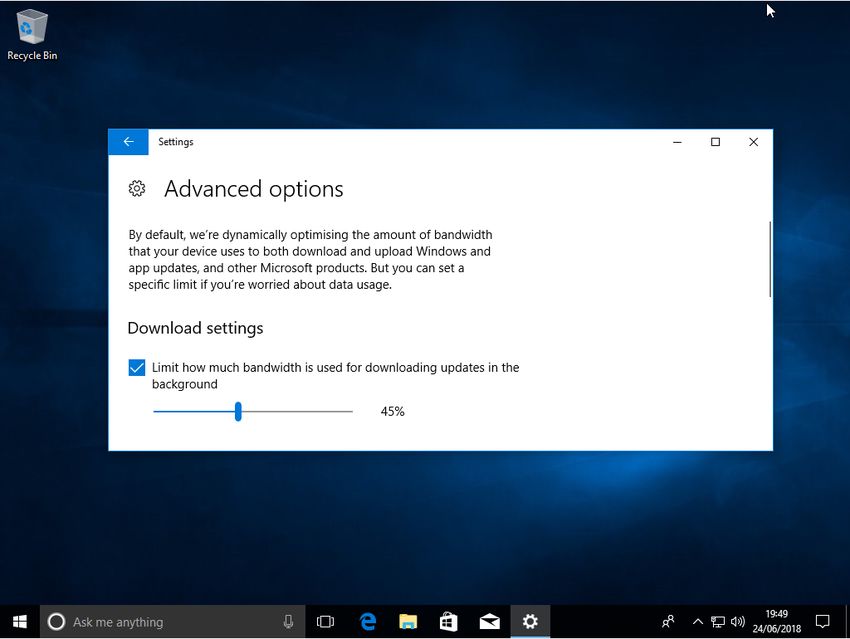
need to rebuild cognitive maps (such as rediscovering where a
menu item is); the need to retrain procedural memory (‘even
if we know ‘in our heads’, our ‘hands’ still do what they used
to do with the old interface’) and; the demotivating effects on
the user of a feeling of loss of overall control.
    Wash et al. [22] examined the Windows 7 Update compo-
nent which allowed users to configure the degree of update
automation for key update stages. The authors sought to
compare what users intended their computers to do and what
they thought it was doing with what it actually did (gained
from configuration data on participants’ machines). For 25                    Fig. 3.   Initial notification of a pending update requiring a restart.
of their 37 participants the authors identified a discrepancy
between actual and expected behaviours, causing them to be
less secure and affecting their productivity. They suggested this
was a result of ‘removing users from the loop’.
   Farhang et al. [27] examined the upgrade practices and
perceptions of Windows users, focusing on their decision
to whether or not to upgrade to Windows 10. They make
four practical design recommendations for OS producers to
addresses the issues identified by their survey study.

C. Security automation

                                                                              Fig. 4. Example reminder notification of a pending update requiring a restart.
         Fixed Policy          Customizable            Dynamic
                                  Policy                Policy
                                                                              Firstly, updates can no longer be selectively installed. Sec-
                                                                              ondly, update processes were changed to run much more
         more           Security Automation Rigidity         less
                                                                              aggressively. Most directly, this culminated in Home Edition
                                                                              users no longer being able to disable automatic updates.
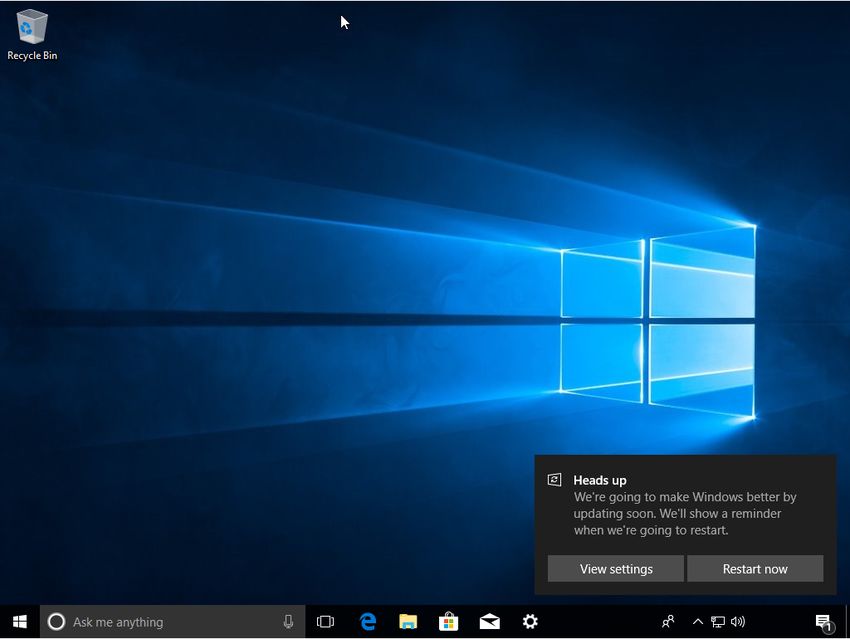
                                                                              Figure 3 shows the notification commonly used to inform users
Fig. 2. The spectrum of automation approaches, reproduced from Edwards,       of the need to restart their computer (for updates to finish
Poole, and Stoll [28].                                                        installing). Figure 4 shows an example of a reminder, where
                                                                              now the option to choose a specific time for the restart has
    Edwards et al. [28] argue that security automation, re-
                                                                              become available.
moving the user from the decision process, may be more
limited than implementers anticipate. This is framed across                       In the absence of any intervention from the user, down-
a spectrum of rigidity for security automation strategies, as                 loaded updates for previous Windows versions were installed
in Figure 2, ranging from fixed, ‘one-size-fits-all’ policies to              during a dedicated maintenance cycle scheduled (by default) at
dynamic policies that allow users to personalise the system’s                 3am. Windows 10 automatically installs updates immediately
behaviour. A system at the ‘fixed policy’ end adheres to                      after download. As the default maintenance cycle was designed
what Wash describes as the ‘stupid user approach’ [29],                       to never take machine resources away from an active user [31],
installing all updates automatically and as quickly as possible               this represents a significant change in update behaviour for
(and restarting the device if necessary). Crucially, the system               Windows 10 as resources (and potentially battery life) are
operates independently of the user’s working context. The                     consumed while the computer is in use.
outcome is a maximally secure system, but one that impedes
the primary task. We suggest that the update model in Windows                     For lack of an existing description of the Windows 10
10 Home Edition sits towards this end of the spectrum.                        Home automated update, we built a model of its user-facing
                                                                              functionality. In an approach similar to Wash et al.’s doc-
    Conversely, a ‘dynamic policy’ allows the user, rather than               umentation of the Windows 7 update model [22], we (i)
the software producer, to control the updating process. The user              compiled a list of features and functions described in release
can selectively install updates and has more control over any                 announcements and on the official Microsoft Community Sup-
associated disruption. The outcome however is a potentially                   port Forum [32], then (ii) verified them in an Oracle Virtual
less secure system, as updates may not be applied as quickly.                 Box environment using a black-box testing approach. The
This aligns with Wash’s ‘education approach’ [29] (though this                verification began by taking a virtual machine snapshot of a
also relies on the user having been trained appropriately). The               fresh, default installation of Windows 10 Home Edition. Once
update model in Windows 7, as previously noted, is perhaps                    Microsoft had published subsequent updates, the snapshot
at this end of the automation spectrum.                                       was restored to allow the virtual machine to download them.
                                                                              Shortly before the downloaded completed, a further snapshot
          III.   W INDOWS 10 H OME UPDATE MODEL
                                                                              was taken. By repeatedly restoring to the second snapshot, we
   Updates for Windows 10 Home Edition, released in July                      were able to efficiently investigate the machine’s behaviour as
2015, differ significantly from previous versions of Windows.                 the update was applied with different control paths selected.

                                                                          3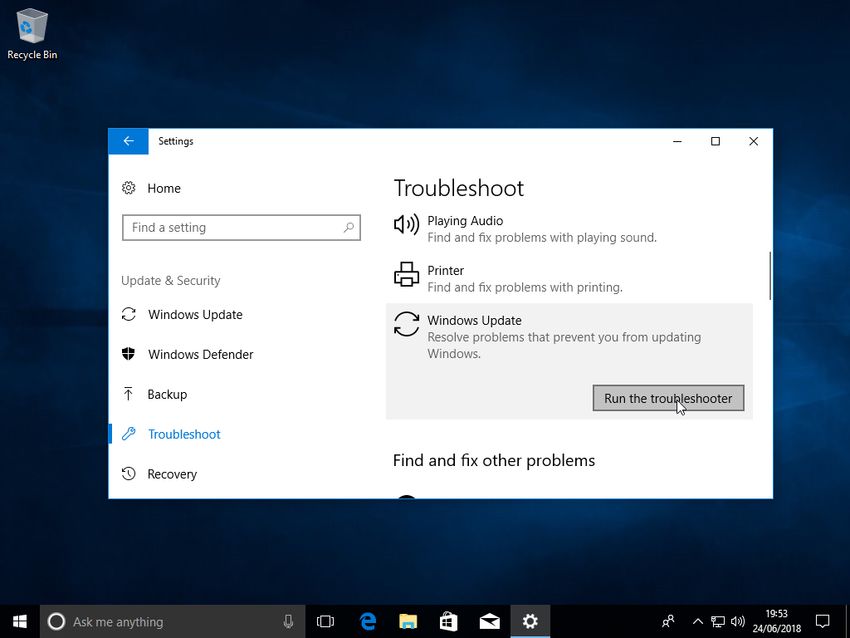
Start
Is the computer
Yes
using a metered
internet
Computer automatically checks in connection?
the background or after a manual
request for outstanding updates. Option to force
No
Yes download over
metered
connection set?
Yes
Any updates
found? No
Filter the list to include only
No “priority” updates.
Computer checks for available
feature update.
Yes Any remaining
updates to
download?
Download the updates, throttled at
the configured “background”
Any feature Yes download rate, then install them. No
updates found?
Stop
No Is a restart
No
required to Schedule a new time outside active
Stop complete the hours.
installation?
Wait until 15 minutes before the Yes
scheduled time.
Wait until 15 minutes before the
Schedule a restart outside of “active scheduled time.
hours” (8am-5pm by default)
User sets a
new time
Display “Restart Now” User sets a
notification with
restart time Display
options No action Is the scheduled No
scheduled time time still outside
and offer active hours?
“Confirm” options
or no action
“Restart Now” Yes
Is a quality
Yes
update being
No Is the computer
installed? Restart and install updates now or is still in use?
at the scheduled time, resuming
No from standby if necessary.
Yes
Is the computer No
“Restart now” Display
in use? Stop
notification with
options No action
Yes or ”OK”
Schedule a restart an hour later.
“Another time” chosen
Fig. 5. Windows 10 Update model. As the computer shuts down in preparation for installing an update that requires a restart, the message ‘Configuring
Windows Updates – Don’t turn off your computer’ is displayed. During the subsequent start up ‘Working on updates. Don’t turn off your PC. This will take
a while.’ is shown. Each stage has a separate progress bar; one during shutdown and one during the restart. If the ‘Sign-in’ option to ‘reopen my apps after
an update or restart’ is set, Windows will attempt to restore the state of the user’s desktop to the state it was in before the restart. The text and options in
notifications to users to nudge them towards restarting becomes pushier as time passes and the ‘Engaged Restart’ mode is reached [30].
4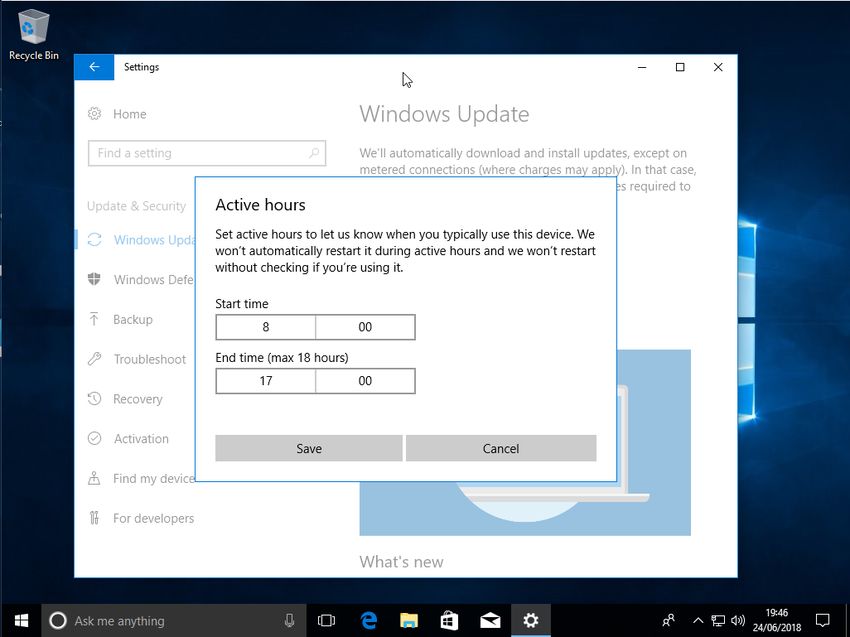
We decided to focus on the most recent release of the                 would need to support to guarantee that their applications are
operating system, version ‘1803 – April 2018 Update’. The                 seamlessly restored after a restart. Unfortunately, not many
forced update model of the ‘Home Edition’ should then have                non-Microsoft applications have implemented this feature.
meant that users regularly connected to the internet would be
running it. As the ‘1803’ feature update occurred shortly after
                                                                          B. Prompts and reminders for updates
the start of our study, we were able to experiment with the
installation of this feature update as well as quality updates.               As a safeguard, Windows 10 displays a reminder notifi-
                                                                          cation 15 minutes before the restart time and checks for the
    The flow chart in Figure 5 represents the update model
                                                                          computer being in use (see Section III-D) before restarting.
of Windows 10 Home version 1803 built using our approach.
                                                                          This helps to avoid restarting the computer if actual computer
The process of populating the model was informed by VM
                                                                          use does not adhere to the active hours configured for the
experiments and a review of related literature, but not assumed
                                                                          machine. If the computer is in use, the user is offered the
to be exhaustively complete; the discussion that follows is in-
                                                                          chance to select an explicit time for the restart, or to restart
formed by the model. The behaviour of the update mechanism
                                                                          the computer at that moment. If the message is ignored, a new
is dependent on a complex range of user and system properties.
                                                                          time outside active hours is imposed.
Windows will check for updates daily, then download and
install them without any further interaction or notification of               Similarly, if updates are downloaded outside of active
the user. Updates are not downloaded on a metered connection,             hours, a user may return to their computer at the resumption
unless they are critical security fixes. Updates are installed in         of active hours to find it has restarted, with any in-progress
the background, and unless a restart is required, no notification         tasks having been disrupted. Windows 10 does not provide
is displayed to the user.                                                 a user interface for users to control when the background
                                                                          check for updates occurs; indeed, it occurs with an element
A. Mapping user interaction with updates                                  of randomness to help ensure uniform demand on the servers
                                                                          providing updates [34].
    To install updates that require a restart, users must either
restart their computer themselves, or ensure that the computer
                                                                          C. Managing disruption caused by updates
is on or in sleep mode when the update is due to be installed.
For the latter, this time will either be outside of the configured            Thus, from a security perspective, users need to understand
‘active hours’, or at a specific restart time nominated by the            the need to restart their computer to complete the installation of
user.                                                                     some updates. From the perspective of minimising disruption,
                                                                          users need to understand the ‘active hours’ concept and con-
    With Windows 10 Home Edition, there are now two
                                                                          versely the configuration of active hours should ideally align
separate control flows. In the first flow, either the user sets
                                                                          with their usage patterns. Failing this, a user cannot reliably
an explicit restart time within the next 7 days or the restart
                                                                          expect to leave tasks running outside of ‘active hours’ or expect
occurs outside the specified ‘active hours’ when the computer
                                                                          their desktop state to be fully restored upon resumption of
is not in use. If the user has selected a specific time for
                                                                          ‘active hours’. This is a major change from previous behaviour.
the restart, a notification is displayed 15 minutes before the
                                                                          These last two expectations are arguably unnatural, being
scheduled restart, at which point the user may select a new
                                                                          as they are counter-intuitive to the physical world: if we
time or explicitly initiate a restart at that moment. If the chosen
                                                                          temporarily leave our possessions unattended but secure, we
time of restart arrives, we have identified two alternative cases
                                                                          expect to return to find them how we left them.
depending on the type of update being installed. If a quality
update is being installed (i.e., a bug-fix or security update),
the computer is restarted at the chosen time regardless of                D. Computer in use
user action. For other updates, if the computer is in use (see
Section III-D for more detail), the restart is automatically                  Windows tries to determine if the computer is in use to
rescheduled to occur a short while later (between 30 and 60               avoid restarting it if it is. We used mouse movements and
minutes in our experiments).                                              clicks in our virtual environment to simulate the presence
                                                                          of a user in these experiments. Microsoft’s US patent [35]
    The second control flow relies on the ‘active hours’ feature,         for ‘Initiating update operations’ refers to several tests for
intended to minimise disruptive impacts of restarts by prevent-           detecting user presence but we found watching a video in full-
ing restarts during these hours. It is a machine-wide setting             screen mode did not register as one, despite being explicitly
that was added in the ‘1607 - Anniversary Update’ (released               being mentioned in the patent.
in July 2016), allowing users to specify a time period of up
to twelve hours (and then later eighteen hours in the ‘1703 -
                                                                                               IV.   S URVEY S TUDY
Creators Update’ (March 2017)) during which a computer will
never automatically restart to finish installing an update. If the           In this section we contrast the expectations of the Windows
setting does not align with a time when the computer is in use,           10 Home update model (Section III) to users’ perceptions and
a user who perhaps moves away from their computer outside                 reported experiences using the OS. In particular, we focus on:
these hours may return to find their machine having restarted,
and any stateful tasks running at the time of the reboot                    • The need to restart a computer when updates are installed;
(such as a series of large file downloads) disrupted by the                 • The need for restarts to be approved by users;
restart. To prevent this, Microsoft provides developers with an             • The need to reopen applications before being able to
‘Application Recovery and Restart’ API [33] that applications                 resume work after a restart.

                                                                      5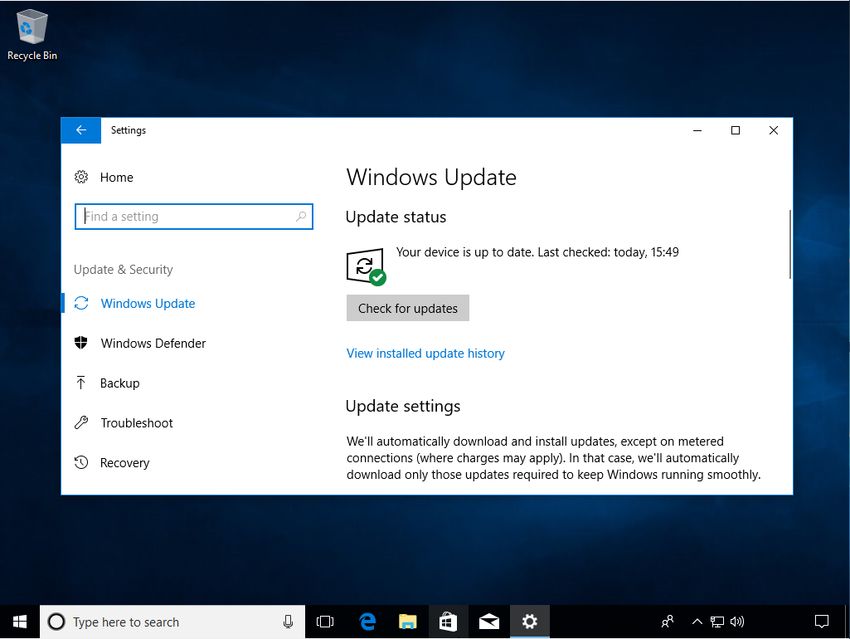
We designed an online survey to capture user experience                            observed minor differences in the responses for participants
with the above, prefaced with questions about general com-                             who had ever worked or studied in a computer related field,
puter use (such as when the computer is used, whether it is                            which do not influence our conclusions. We also asked the
shared with others, and if the participant is wholly responsible                       age of participants’ computers to give us a very approximate
for ‘looking after’ the device). Subsequent sections of the                            indication of how many monthly update cycles and six-
survey then captured existing knowledge of what operating                              monthly feature updates they had experienced as well as a
system updates do, perception of the risks that security updates                       crude indicator of how much of an impact updates might be
are intended to address, and how participants interact with up-                        having on their system’s performance.
dates and update (prompts) (such as identifying the conditions
under which an update may be postponed, and how). Proactive                                A third (31) of our participants reported having worked
security behaviours were also explored in the survey, alongside                        or studied for a qualification in a computer related field. 96%
questions to determine if participants were aware of features                          (89) participants reported extensive or moderate experience of
for tailoring the update process, such as configuring the ‘active                      at least one version of Windows prior to version 10. 82% (76)
hours’. The full survey instrument and survey results file are                         described their own experience with Windows 10 as extensive
available (see Section VI-B and Appendix). The survey design                           and a further 15% (14) as moderate. Two thirds (64) were the
was informed by our model (Figure 5).                                                  sole, regular user of their computer. Many of the remaining
                                                                                       participants (26) reported sharing their computer only with
    The study was approved by our department’s ethics review                           other people in their household. 90% reported doing all (48)
process. The survey was open to residents of the United                                or most (36) of the maintenance of their computer themselves.
Kingdom aged over 18, who had completed at least 5 prior                               Of those reporting how often they used their computer, 90%
studies on Prolific and who had an approval rating in excess of                        reported using their computer on at least five days each
90%. We requested an additional participant filtering criterion                        week. With respect to the participant’s computer itself, around
on Prolific for the operating system on a participant’s primary                        two thirds (64) were laptop devices and 26 were desktop
computer. At the time of data collection, 1862 potential                               computers. 81% (75) described the speed of their computer
participants claimed to use Windows 10 Home Edition, 419                               as either ‘fast’ or ‘neither noticeably fast nor noticeably slow’
Windows 10 Pro Edition, 42 Windows 10 other editions.                                  in almost equal numbers. None of the participants described
621 participants stated that they were using Windows 10,                               their computer as ‘very slow’. The median reported age of
but where unsure of the edition. 479 participants used other                           computers was between 1 and 2 years. We then consider that
Windows versions. We required our participants to be users                             computer performance would not directly exacerbate reported
of ‘Windows 10 Home Edition’ on their primary computer.                                experience of updates (rather than an ageing computer being
Participants were compensated 2 GBP for completing the                                 the fundamental cause of any bad experiences with the oper-
survey. Although we had 98 responses, one participant failed                           ating system).
one of two attention questions and was removed from the
results. We chose to exclude a further four participants who                               When computers were not in use, just over half (49) of
reported high uncertainty in the answers they provided. This                           participants reported ‘shutting down’ their computer. Most
gave a final count of 93 participants.                                                 of the remainder (39) reported that their computer was left
                                                                                       switched on. Whether the computer subsequently entered sleep
           TABLE I.         D EMOGRAPHICS OF THE USER STUDY.                           mode was not important to us because in both cases, by default,
                                                                                       the computer would be woken to complete the installation of
          Age groups                            Age of computer
                                                                                       an update.
 18-24                      14   Less than 1 month                             2
 25-34                      32   Between a month and 6 months                  7           With respect to the activities for which participants used
 35-44                      18   6-12 months                                   9       their computers, all reported browsing the internet and most
 45-54                      16   1-2 years                                    33
 55-64                      11   2-3 years                                    14       reported using office productivity applications and social me-
 65-74                       2   More than 3 years                            28       dia. The two categories of uses with the lowest levels reported
            Gender                                Student Status                       were for games and video calling, each of which about half
 Female                     58   Student                                      13
                                                                                       of participants reported.
 Male                       35   Non-student                                  80
           Education                               Employment                          A. Perception of activities related to updates
 No formal qualifications    1   Unemployed (and job seeking)                 10           While participants agreed that updates helped to keep them
 Secondary school/GCSE       9   Not in paid work (e.g. homemaker, retired)   16
 College/A levels           28   Part-time                                    23       safe, there was less clarity about what they did. 29% of
 Undergraduate degree       42   Full-time                                    41       participants either did not know, or believed that updates rarely
 Graduate degree            11   Other                                         3
 Doctorate degree            2
                                                                                       or never fixed errors in software. In contrast, 87% thought
                                                                                       that updates add new features at least occasionally, implying
                                                                                       our participants thought software updates add features more
    The demographics of our participants can be found in                               frequently than they fix errors.
Table I. Compared to the general public, our participants
are more likely to be students (14% vs 3% in the wider                                     Our participants on average perceived updates to be pub-
UK population) and are better educated [36]. Many previous                             lished less frequently than Microsoft’s monthly release cycle.
studies about software updating e.g. [7], [22], [26] have also                         Those with a computing background were about three times
drawn participants from academically biased pools. These                               less likely to say they did not know (2 out of 31) than
participants might be more technically savvy, with more tech-                          those without (11 out of 62), but their answers were not
nically accurate mental models of updates. However, we only                            statistically significantly different. 49% (39) of those who

                                                                                   6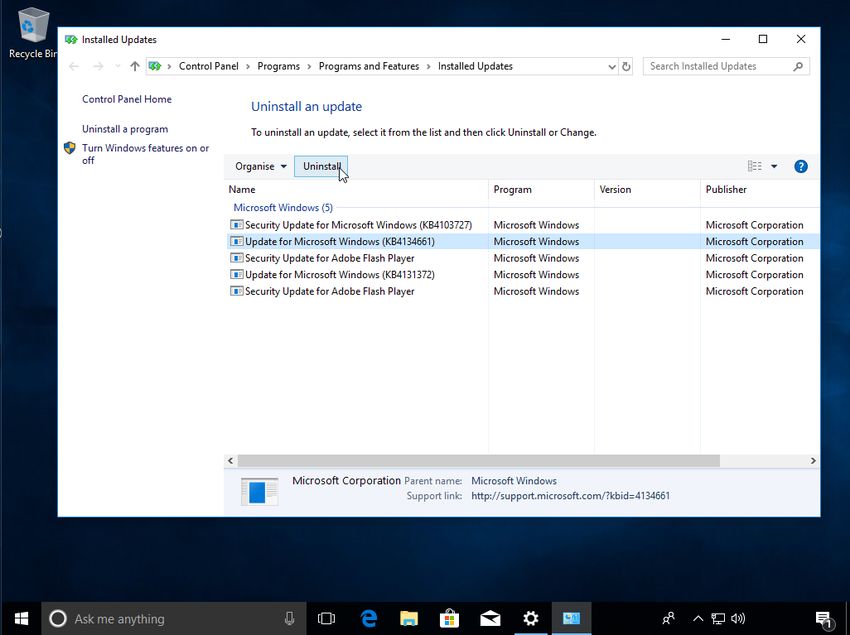
gave an answer thought that new updates were published                  All but six of our participants reported typically using their
approximately every two months or less frequently. This was             computer on weekday evenings. The hours of use of just three
despite an incorrect belief held by half of all participants (47)       participants fell within these limits. All were sole users of their
that they always needed to restart their computer when updates          devices. Looking at whether ‘active hours’ could be set to align
are installed. This needs to be considered in the light that            with participants’ reported usage, 50 of our 64 participants sole
monthly cumulative updates are a subset of all updates and              computer users had an unbroken six-hour interval of non-use
always require a restart. Even if we restricted our analysis to         (as required for the feature to function best).
participants who are sole users of their computer (and thus
might reasonably be expected to be aware of all activity on                                           2-5am     5-8am        8-11am 11am-2pm 2-5pm         5-8pm      8-11pm 11pm-2am
                                                                         P9                       No           No        Yes        No          No       Yes         Yes        No
it), and who believe updates always require a restart (35), the          P15                      No           No        Yes        Yes         Yes      Yes         Yes        Yes
prevalence of the belief about the incorrectly low frequency of          P32                      No           No        No         No          No       Yes         Yes        No
                                                                         P52                      No           No        No         No          No       No          Yes        No
updates was still evident (18).                                          P55                      No           Yes       Yes        Yes         Yes      Yes         Yes        No
                                                                         P57                      No           No        No         Yes         No       Yes         No         No
    When asked about the frequency with which updates are                P59                      No           No        No         No          No       Yes         No         No
                                                                         P60                      No           Yes       No         No          No       Yes         Yes        No
installed automatically, only 17% (16) of our participants chose         P69                      No           No        No         No          No       Yes         Yes        No
‘Always’. 42% (39) selected ‘Often’. Aside from 5% who                   P77                      No           Yes       No         No          No       No          Yes        No

didn’t know, almost all participants believed they are never                                                             Yes        Use outside of active hours
charged for updates.                                                                                                     Yes        Use inside active hours

                                                                        Fig. 6. Usage pattern of participants who reported being aware of ‘active
B. Use of dedicated Windows 10 update controls                          hours’, but are using the default settings despite these being incompatible with
                                                                        their usage behaviours.
    As we wanted to assess how well the Windows 10 update
model fitted the needs of users, it was essential to understand              We also asked participants who were aware of the feature
how participants used their computer beyond their interactions          whether they had changed it from its default setting. Of the 26
with updates. Given the key role the ‘active hours’ feature             participants that were aware of the feature, 10 had not changed
plays in managing the disruptive impact of updates, we as-              it from the default despite their reported usage patterns being
sessed whether participants’ reported patterns of use aligned           incompatible with the defaults (Figure 6). We hypothesise that
with its assumptions, mainly that for ‘active hours’ there is a         the users were not aware of this mismatch themselves (being
period of at least six hours each day when the computer is              prompted in the survey may have been a first chance to reflect
switched on (or on standby), but is not in use.                         upon this, for instance).
    We asked ‘What happens to your computer when no                         We tested the answers given by those aware of the ‘active
one is using it?’ and provided a range of different options,            hours’ feature to other questions for signs of significantly dif-
some of which were equivalent from an updating perspective,             ferent experiences, for example whether they had experienced
such as ‘It’s left on all the time’ and ‘It’s put into sleep            an unexpected restart or whether they felt the computer always
mode’. This was to reduce the need for participants to convey           sought their permission before restarting, but none of the tests
their interactions with specific interface features and computer        conducted showed statistically significant variations.
functionality. We then asked how many days in an average
week the computer was used, and what the typical hours of use           C. Proactive check of updates
on weekdays and weekends were. Given that ‘Patch Tuesday’
occurs on a weekday, the former was particularly important.                                      25
We separated the day into three-hour intervals, specifically                                                                        20
                                                                        Number of Participants

                                                                                                 20                                                        17              18
aligned with the default value for ‘active hours’, namely 8am
to 5pm. We hypothesized that this might be a poor choice of                                      15
                                                                                                          10            11                      11
default for discernible groups of home users (such as those                                      10                                                                                   8
with ‘9 to 5’ jobs, or those in study). As the feature is not
referred to during the initial set up of Windows, we also                                        5

hypothesized users may be simply unaware of its existence.                                       0
Consequently, we also asked if participants were aware of the                                            Install      Install   Fix another    Habit    To control    Check     Long time
                                                                                                        security     feature     problem                  when       updates    since last
feature, and if they were, whether they had configured it. By                                            patch       update                              updates     working     update
asking users how often they used their computer, we had hoped                                                                                            applied
to revisit Furnell et al.’s hypothesis [37] that infrequent users                                                                             Reasons
had more negative perceptions of updates than frequent users,           Fig. 7. Reasons why participants proactively checked for updates. Participants
                                                                        were able to select multiple reasons.
however only five participants reported using their computer
for less than five days a week.
                                                                            Half (46) of participants reported having proactively
    We made two key findings. Firstly, only 28% of our                  checked for updates in the past. There was no statistically
participants were aware of the existence of the active hours            significant correlation with the participants’ computing back-
feature. Those with a computing background were significantly           ground. As to the reasons why participants checked for updates
more likely to be aware of it (15 out of 31) than those without         (Figure 7), the most popular reason overall, and particularly
(13 out of 62) (X 2 (1, N = 93) = 6.83, p = 0.009). Secondly,           amongst participants who chose exactly one of our seven
most of the usage patterns reported among our participants              possible answer options, was to fix non-security, technical
do not fall within the default time window of 8am to 5pm.               problems. The second and third most popular choices were

                                                                    7
to check that updates are working and to better control when expected to wait for more than 45 minutes. Two participants
updates are installed. Being more perceptive to security risks gave a lower estimate for the ‘longer’ feature update.
was not a predictor of participants’ inclination to check for
updates, and checking for updates to fix security problems was E. Sentiment toward updates
only our sixth most reported reason. It was selected by none
of the 25 participants who chose exactly one reason. Our participants were generally positive towards updates
overall. Referring to Figure 8, participants generally expressed
Users can limit the installation of updates by marking positive sentiments about being given sufficient warning of
a network connection as ‘metered’. Only six of our partic- pending restarts to apply an update; about controlling restarts
ipants reported having employed this workaround. Although and; not noticing updates downloading and installing in the
some online forums we had encountered had suggested this background. On our two questions about a worry that the
technique was particularly prevalent amongst gamers, they computer will not work after an update and there being too
only accounted for half of the six, approximately the same many restarts, desktop users were more complimentary than
proportion as across the survey sample. laptop users, but the result was outside statistical significance.
A summary of our results of Likert-scale questions of partici-
D. Handling restarts pants’ past experiences with updates can be seen in Figure 8.
Due to the potential for restart requests to be particu- Our survey had two sets of comparative questions. The
larly disruptive, we specifically wanted to capture how home first asked participants with experience of prior versions of
users handled them. We wanted to understand what choices Windows to indicate whether they felt updating Windows 10
participants made and whether the features designed to help was firstly easier and secondly causes fewer interruptions.
minimise their disruption were being used. We did this by con- On the former, 53% agreed and only 8% disagreed. On the
structing two hypothetical update scenarios within our survey. latter, 43% agreed and 21% disagreed. The second question
The first concerned the installation of a monthly cumulative asked participants to compare their trust in Microsoft’s ability
update requiring a restart. The second, the installation of to provide updates with other software producers. 95% of
a feature update. To aid participants’ recall, we illustrated participants perceived Microsoft to be better (33%) or as good
our questions with screen images showing notifications for as (61%) other software producers.
the restart scenarios (sampled from our virtual environment).
The images reflected an ‘out-of-the-box’ Windows 10 desktop F. Perception of online risks
with no personalisation. The answer options were intended to
elicit how a participant planned to eventually comply with We wanted to understand participants perception of the
the request for an (inevitable) restart. For both, we asked computer security risks which updates protect them from.
participants to imagine they were in the middle of an hour-long We asked a Likert-scale question to assess if participants
task on their computer that was important to them when the thought cyber criminals target ‘other people’ [39], whether
request appeared. If they chose to ‘Restart now’, we interpreted they thought their machine could be used to facilitate crime
that choice as the most disruptive option given the context of (e.g., as part of a distributed denial of service attack), and
the question. Ignoring the notification is potentially the least whether participants related their personal security to the
disruptive option, however if the user forgets about the pending security of the web sites they trust.
restart but leaves their computer switched on but idle, the A majority of our participants agreed with all our positively
computer will restart itself, then possibly resulting in the loss worded, Likert-scale items about the information security risks
of unsaved work. mitigated by updates. Levels of disagreement ranged from
We followed each scenario with a question to ask about 24% to 4%. Most users however considered themselves not
participants’ expectations for how long each restart would take, to be worthwhile targets, consistent with Wash’s ‘Big Fish’
as a high-level analysis of customer support forums suggested model [39]. These responses did not predict statistically sig-
users felt it was too long. Indeed, this has been an area of nificantly the awareness of the existence of the active hours
recent focus for Microsoft [38]. feature. We did not find any sub-groups with statistically
significantly different answers.
Around 7% of participants reported that they would
‘Restart now’ for both scenarios. In the first scenario, 30% G. Impact of updates on other tasks
(28) chose to restart the computer themselves once their task
was complete. 40% (37) chose to ‘update and shutdown’ after Just under half (44) of our participants reported experience
they had finished using their computer. 30% of this latter of their computer restarting unexpectedly to install an update.
group had previously stated that their computer was left on These same participants were significantly (Fisher’s exact test
when not in use. When users were nudged towards picking a p < 0.05) more likely to agree with our statement that there
restart time in our second scenario, 40% (37) said they would were too many restarts to install updates, disagree with our
choose this option, however 53% said they would chose to statement that they had sufficient control over when their
be reminded later with the intention of taking control of the computer restarted, and disagree with our statement that their
restart themselves (regardless of having chosen a restart time). computer gives them sufficient warning when it needs to
restart.
With respect to the expected duration of the restart, approx-
imately half (45) of our participants gave identical estimates While a majority of 57% (52) of participants said the
for both scenarios. 58% of those (26 of 45) expected both duration of restarts met their expectations, 42% (39) said
restarts to take less than 15 minutes, and only 2 participants they took longer than expected. This is similar but slightly
8Statements expressing positive perception
Q29a. My computer gives me sufficient warning about its need to restart to install an update
2.2% 12.9% 10.8% 62.4% 11.8%
Q29e. I can sufficiently control when my computer restarts for the installation of an update
1.1% 12.9% 15.1% 57.0% 14.0%
Q29h. Aside from the need to restart to complete the installation of an update, I don't notice updates being downloaded and installed on my computer.
2.2% 17.2% 12.9% 58.1% 9.7%
Statements expressing negative perception
Q29b. When my computer restarts to install an update, I worry it won’t work afterwards
14.0% 30.1% 18.3% 24.7% 12.9%
Q29c. When my computer installs an update, I need to spend time getting familiar with any changes the update introduces
4.3% 35.9% 31.5% 22.8% 5.4%
Q29d. When my computer restarts to install an update, I have to spend time re-opening my applications before I can resume where I left off
1.1% 21.1% 21.1% 43.3% 13.3%
Q29f. My computer asks me to restart to install updates too frequently
8.6% 37.6% 24.7% 24.7% 4.3%
Fig. 8. Participants’ perception statements relating to updates.
more positive than Vaniea and Rashidi’s finding [40] for their participants. It is perhaps then worth considering that when
users’ perception of update installation times (at 43% and users are asked for their opinions of updates, what is reported
45% respectively). Only one participant did not express an may only refer to a subset of updates (specifically those
opinion. In a related question, half of participants agreed that involving a prompt, and requiring a restart).
the longer a restart took, the more concerned they became, and
70% of participants were positive about the helpfulness of the B. Keeping the appreciative user adequately informed
notifications in providing progress information during a restart.
This latter result appeared to contradict the work of McGrenere Participants did not appear to recognise and appreciate the
et al [41], however they appear to have considered updates implications of different types of updates (monthly cumulative
to Windows 10 from a previous version number. An aspect vs. feature). The cues used by Windows are subtle, but the
of restarting a computer that our participants generally agreed implications are potentially significant. As part of our own
with overall was the need to spend time re-opening applications research, we measured the time taken by a cumulative monthly
after a restart before primary tasks could be resumed (57% update in our virtual environment. Where this took 12 minutes,
agreed, while 22% disagreed – see Figure 8). the feature update took 12 times longer2 . Microsoft claim that
the average time for the April 2017 feature release was 82
minutes [38]. Therefore, we think a notification that describes
V. D ISCUSSION an update as one ‘that could take a little longer than other
updates’ is failing to set accurate expectations to support users
A. The silent success story in planning around the availability impact of these updates.
Our participants perceived that updates added new features This may be supported by our general finding that participants
more often than fixing errors. Given that feature updates believe restarts take longer than expected. Currently, Windows
occur approximately every six months and quality updates gives neither an estimate before nor during the updating pro-
occur monthly, perception does not match reality. One possible cess, and our own research showed the progress indicator can
explanation is that users do not notice changes after quality progress unevenly. Vitale et al. [41] made similar observations,
updates, but at the same time do notice them after feature enforcing the findings of [40]. They argue ‘reasonable [time]
updates. This may be a natural consequence of Microsoft’s estimates must be possible’, which we agree with.
adoption of practices similar to Vaniea’s recommendation [7],
to disentangle updates that change the user interface from those C. Designing for consistent update behaviours
that address quality issues. Participants also underestimated the We think Windows is not sufficiently explicit in seeking
frequency of updates, believing that they occur less frequently user permission for updates and restarts. It has been designed
than Microsoft’s minimum release cycle. It suggests that some
updates, including those requiring a restart, are being applied 2 Given our minimally specified virtual environment, our measurement may
so silently [15] as not to be noticeable or memorable to our be close to the worse case.
9to nudge users towards updating as quickly as possible. It perceived event frequencies and impacts, may be informed by
may give users the impression of having a greater degree of experiences distant in time. However, these are nonetheless
control over restarts than they actually do. Although the initial the perceptions held by participants who are active users of
restart notification offers a ‘Restart now’ option, the implied Windows 10 Home Edition. If users were given more capacity
and less explicit alternative is to restart later at a time of the to shape the (albeit increasingly unavoidable) update process,
computer’s choosing, outside of active hours. It then becomes their perceptions of past experiences may govern how they
the responsibility of the user to intervene should they wish configure future interactions with update mechanisms.
to stop it. Unlike other consumer-focused operating systems
that provide a visual reminder of a pending restart (e.g., [42]), VI. C ONCLUSIONS
Windows 10 Home Edition does not. Our finding may be
Here we analysed the behaviour of the automatic update
explained by the notion that experiencing an unexpected restart
feature of Windows 10 Home Edition, contrasting behaviour
may make users more aware about their lack of control.
with an online survey of the experiences and perceptions of
An existing control which could remedy this is to pick an 93 UK-based users. A model of Windows 10 Home Edition
alternative time within the next seven days for the restart. As behaviours highlighted inconsistencies in the restart behaviour:
discussed in Section III, unlike restart times chosen by the In one circumstance, Windows would reboot to finish installing
computer, the computer may restart at this time even if in quality updates even if the device was in active use. The
active use. This is a potential source of confusion given the default setting of the ‘active hours’ feature was compatible
promise to ‘show a reminder when we’re going to restart’. If with the usage pattern of only three survey participants. 28% of
a user is absorbed by other tasks the computer could, in the participants were aware of the active hours feature. If properly
mind of the user, appear to restart unexpectedly despite them adjusted, the usage pattern of 78% of participants could be
having been responsible for the chosen time. We think that captured by the active hours feature. It is not surprising then
one’s computer should not reboot while in active use. that around half of participants reported unexpected restarts.
The ‘update pending’ notification in Microsoft Windows Despite this, the automatic update behaviour of Windows
nudges users towards restarting their computer immediately, 10 can be considered a (perceived) success. Our participants
with no second chance to postpone a restart if they choose valued the updates and trust in Microsoft’s ability to provide
‘Restart Now’. While we did not specifically ask whether this updates which benefit them. The quality of updates and the
could have been the cause of any unexpected restarts reported delivery of updates appear to be sufficiently reliable that our
by our participants, it is of note that only 6 participants in our participants did not report an impact from quality updates.
first scenario and 7 participants in the second scenario chose
the ‘Restart Now’ option. Constantine and Lockwood’s [43] A. Recommendations
‘Simplicity Principle’ of user interface design recommends While it is important that security updates are installed in
making common tasks short and simple. Our data suggests a timely manner, we believe that Windows’ current policy is
‘Restart Now’ is not a common choice, putting into question overly static. Given that many applications do not yet support
whether it is an appropriate option to display. Microsoft’s restart API (see Section III), restarts should only
occur automatically if all running applications support this
D. Perceived value of OS updates API. It is not obvious to users if an application supports
this feature, where Microsoft could use its market position
Participants conveyed a perception of value in updates. to improve support. Regardless, we believe that restarts should
Updates are being applied, and at the same time are not not occur if the system is in active use (especially so if retrieval
perceived to cause much (if any) disruption. However, the of application state is not guaranteed).
‘shock’ of updates that create problems is not avoided, an
example being the initial release of the ‘1809’ (September The ‘active hours’ feature is arguably flawed. Prompts to
2019) feature update; installation of update 1809 deleted the users act to shape the installation of updates, but not the
personal files of a very small number of users with a particular shaping of preemptive controls such as active hours: relating
configuration [44]. The update was subsequently withdrawn. adaptability to visibility, the user is in control with no control.
To adopt an update model like that of Windows 10 Home Based on the limited use of active hours reported by our
Edition is to shift some of the burden of effective updates participants, an alternative may be for Windows to learn
onto developers, to ensure that updates are not destructive, sensible defaults from usage activity and set appropriate restart
especially if the user has no choice as to whether to avoid the times automatically. This suggests a strand of further work to
update or not. While Windows offers the ability to uninstall anticipate reactions to updates from prior and current interac-
updates, this would not recover lost user data in the above tions with the computer, rather than with updates specifically.
example. Perhaps it is time for Windows to integrate an
automatic snapshot feature that allows for immediate roll-back. B. Data availability
The full survey text is available in the Appendix, and
E. Limitations can also be found alongside participant responses at DOI
10.14324/000.ds.10066165.
This survey study suffers from similar limitations to other
survey studies in security, namely that behaviours are self-
Acknowledgements
reported [45]. One further limitation is that we were un-
able to query participant’s experiences immediately after the We would like to thank our reviewers as well as Tristan
update events. Some of the reported information, such as Caulfield for their constructive, detailed feedback.
10R EFERENCES organisations,” in Proceedings of the 2008 New Security
Paradigms Workshop, ACM, 2009, pp. 47–58.
[1] NCSA. (2017). Malware and Botnets, [Online]. Avail-
[18] C. Herley, “More Is Not the Answer,” IEEE Security &
able: https : / / staysafeonline . org / stay - safe - online /
Privacy, vol. 12, no. 1, pp. 14–19, 2014, ISSN: 1540-
online-safety-basics / malware-and-botnets / (visited on
7993. DOI: 10.1109 / MSP.2013.134.
07/01/2018). [19] U. Decker. (2017). Windows 10 - Prevent Auto-Reboot
[2] Cyber Aware. (2016). Software and App Updates, [On- after Installing Updates (Anniversary Update), [Online].
line]. Available: https : / / www . cyberaware . gov . uk / Available: https://www.udse.de/en/windows-10-reboot-
software-updates (visited on 11/10/2018). blocker (visited on 07/01/2018).
[3] US-CERT. (2015). Before You Connect a New Com- [20] StackExchange Community Wiki. (2016). Sleep - Con-
puter to the Internet, [Online]. Available: https: // www. clusively stop wake timers from waking Windows 10
us-cert.gov/ncas/tips/ST15-003 (visited on 08/10/2018). desktop, [Online]. Available: https: // superuser.com / a /
[4] Symantec. (2017). The Importance of General Software
973029 / (visited on 11/05/2018).
Updates and Patches, [Online]. Available: https: // us.
[21] J. Schofield, “How can I stop an unexpected Windows
norton.com / internetsecurity-how-to-the-importance-of-
10 update?” The Guardian, 2018.
general-software-updates-and-patches.html (visited on [22] R. Wash, E. Rader, K. Vaniea, and M. Rizor, “Out of
04/01/2018). the loop: How automated software updates cause unin-
[5] S. Frei, “The Security Exposure of Software Portfolios,” tended security consequences,” in Symposium on Usable
Secunia, Tech. Rep., 2010. Privacy and Security (SOUPS), 2014, pp. 89–104.
[6] C. Ioannidis, D. Pym, and J. Williams, “Information [23] O. Bergman and S. Whittaker, “The Cognitive Costs of
security trade-offs and optimal patching policies,” Eu- Upgrades,” Interacting with Computers, vol. 30, no. 1,
ropean Journal of Operational Research, vol. 216, no. pp. 46–52, 2018, ISSN: 0953-5438. DOI: 10.1093 / iwc /
2, pp. 434–444, 2012, ISSN: 0377-2217. DOI: 10.1016 /
iwx017.
j.ejor.2011.05.050.
[24] A. Mathur, J. Engel, S. Sobti, V. Chang, and M. Chetty,
[7] K. E. Vaniea, E. Rader, and R. Wash, “Betrayed by up-
“‘‘They Keep Coming Back Like Zombies”: Improving
dates: how negative experiences affect future security,” Software Updating Interfaces,” in Twelfth Symposium on
ACM Press, 2014, pp. 2671–2674, ISBN: 978-1-4503- Usable Privacy and Security (SOUPS 2016)., OCLC:
2473-1. DOI: 10.1145 / 2556288.2557275. 255312726, Denver, CO, USA: Usenix Association,
[8] Microsoft. (2018). Security Update Guide, [Online]. 2016, ISBN: 978-1-931971-31-7.
Available: https: // portal.msrc.microsoft.com / en- us / [25] Y. Tian, B. Liu, W. Dai, B. Ur, P. Tague, and L. F. Cra-
(visited on 07/01/2018). nor, “Supporting Privacy-Conscious App Update Deci-
[9] K. E. Vaniea, Human factors of software updates - sions with User Reviews,” ACM Press, 2015, pp. 51–61,
Microsoft Research Presentation, 2015.
ISBN : 978-1-4503-3819-6. DOI : 10 . 1145 / 2808117 .
[10] Wikipedia. (2018). Patch Tuesday. Page Version ID:
2808124.
845541287, [Online]. Available: https: // en.wikipedia.
[26] M. Fagan, M. M. H. Khan, and N. Nguyen, “How
org / w / index . php ? title = Patch Tuesday & oldid =
does this message make you feel? A study of user per-
845541287 (visited on 11/10/2018). spectives on software update/warning message design,”
[11] P. Oliveria. (2006). Patch Tuesday... Exploit Wednesday, Human-centric Computing and Information Sciences,
[Online]. Available: https : / / blog . trendmicro . com / tr vol. 5, no. 1, p. 36, 2015, ISSN: 2192-1962. DOI: 10.
endlabs - security - intelligence / patch - tuesday - exploit - 1186 / s13673-015-0053-y.
wednesday / (visited on 11/10/2018). [27] S. Farhang, J. Weidman, M. M. Kamani, J. Grossklags,
[12] I. Ion, R. Reeder, and S. Consolvo, “”... No one Can and P. Liu, “Take It or Leave It: A Survey Study on
Hack My Mind”: Comparing Expert and Non-Expert Operating System Upgrade Practices,” p. 16, 2018.
Security Practices.,” in SOUPS, vol. 15, 2015, pp. 1–20.
[28] W. K. Edwards, E. S. Poole, and J. Stoll, “Security
[13] S. Dodier-Lazaro, I. Becker, J. Krinke, and M. A. Sasse,
automation considered harmful?” In Proceedings of the
“No Good Reason to Remove Features: Expert Users
2007 Workshop on New Security Paradigms, ACM,
Value Useful Apps over Secure Ones,” in International 2008, pp. 33–42.
Conference on Human Aspects of Information Security, [29] R. Wash and E. Rader, “Influencing mental models
Privacy, and Trust, Springer, Cham, 2017, pp. 25–44. of security: a research agenda,” in Proceedings of the
DOI : 10.1007 / 978-3-319-58460-7 3.
2011 New Security Paradigms Workshop, ACM, 2011,
[14] C. Herley, “So long, and no thanks for the externalities: pp. 57–66.
the rational rejection of security advice by users,” in [30] D. Halfin, B. Lich, nickbrower, nathan-mercer, J.
Proceedings of the 2009 Workshop on New Security Decker, and L. Poggemeyer. (2017). Manage Device
Paradigms Workshop, 2009, pp. 133–144. Restarts after Updates (Windows 10), [Online]. Avail-
[15] T. Duebendorfer and S. Frei, “Why silent updates boost
able: https : / / docs . microsoft . com / en - us / windows /
security,” ETH Zurich, Technical Report 302, 2009.
deployment / update / waas - restart # engaged - restart
[16] S. Frei, T. Duebendorfer, and B. Plattner, “Firefox (visited on 07/01/2018).
(in) security update dynamics exposed,” ACM SIG- [31] Microsoft. (2018). Automatic Maintenance (Windows),
COMM Computer Communication Review, vol. 39, no. [Online]. Available: https: // docs.microsoft.com / en-
1, pp. 16–22, 2008. gb / windows / desktop / TaskSchd / task - maintenence
[17] A. Beautement, M. A. Sasse, and M. Wonham, “The (visited on 10/05/2018).
compliance budget: managing security behaviour in
11You can also read


