INVESTMENT PROGRAM Prepared by the Vermont Sustainable Jobs Fund
←
→
Page content transcription
If your browser does not render page correctly, please read the page content below
INVESTMENT PROGRAM
        Prepared by the Vermont Sustainable Jobs Fund

Strategic Plan
Network
Vermont Food System Atlas

                                                        2012
                                                        ANNUAL REPORT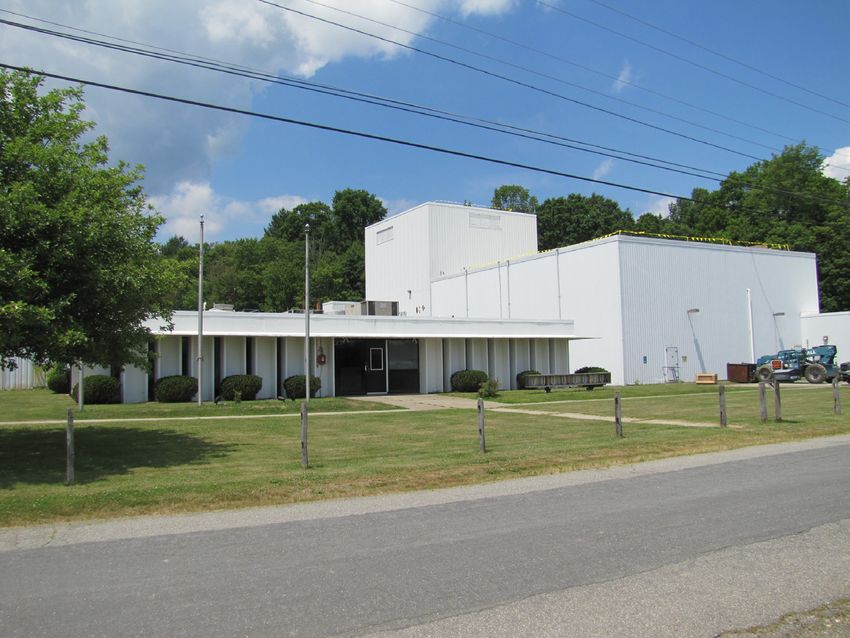
FARM TO PLATE INVESTMENT PROGRAM | 18 MONTH REPORT

       Farm to Plate: Year Two                                                                  In order to ensure that the 25 goals
                                                                                                of the Farm to Plate Strategic Plan are
                                                                                                                                                “The Farm to Plate Network is
                                                                                                                                                a new way of working together.
                                                                                                implemented, the Vermont Sustainable
       January 17, 2013                                                                                                                         We are making a bigger impact
                                                                                                Jobs Fund (VSJF) launched the Farm to
                                                                                                                                                collectively than our businesses
                                                                                                Plate Network in the fall of 2011. Over
       To: Governor Peter Shumlin and Members of the Vermont General Assembly                                                                   and organizations can make
                                                                                                200 organizations, including food system
                                                                                                                                                alone.”
                                                                                                businesses, nonprofits, government
       From: Vermont Sustainable Jobs Fund and the Farm to Plate Steering Committee             agencies, educational institutions, capital     -Jill Arace, Co-chair, Farmland
                                                                                                providers and community groups make               Access & Stewardship Working
       Across Vermont’s food system, businesses are starting, expanding, and creating good                                                        Group
                                                                                                up this diverse, self-governing Network.
       jobs. Local food is available in new outlets and in greater supply, for more months
                                                                                                Six Working Groups have met for over a
       of the year. Important programs are reaching more food insecure Vermonters with
                                                                                                year, including: Dairy Development; Technical Assistance for Producers and Processors;
       fresh, healthy food. Capital providers like VEDA, Yankee Farm Credit, and VSJF’s
                                                                                                Education and Workforce Development; Farmland Access and Stewardship; Consumer
       Flexible Capital Fund are funding a more diverse group of farms and value added
                                                                                                Education and Marketing; and Aggregation and Distribution. The Network also
       food producers. More schools have initiated or expanded farm to school programs.
                                                                                                supports four Cross-Cutting Teams, including Food Access, Financing, Energy, and
       New restaurants have opened and the ‘rock star’ status of local chefs and award
                                                                                                Soil and Water, as well as a growing number of Task Forces such as Meat Processing,
       winning artisan cheeses is driving more consumer demand for all things local. New
                                                                                                Farm to Institution, and Dairy Professional Development.
       infrastructure, such as the Mad River Food Hub and the Vermont Food Venture Center,
       has come on-line and is serving dozens of farms and specialty food producers. The        VSJF serves as ‘Network Coordinator,’ providing overall administrative support for
       meat processing industry has increased its capacity and is now concerned that the        the Network, raising funds for Network led projects, and providing the necessary
       supply of animals won’t keep up with growing consumer demand. Hospitals such as          communication tools and trainings so it can to thrive. The Farm to Plate Network
       Fletcher Allen Health Care and food service companies such as Sodexo are sourcing        Steering Committee, made up of elected Working Group Chairs, the Secretary of
       greater volumes and varieties of locally produced food than ever before. All over        Agriculture, the Secretary of Commerce, a representative of the Vermont Food
       the state, local food sales—and opportunities to sell into larger regional markets—are   Funders Network, and a representative of the Vermont Agriculture and Forest Product
       growing and have sparked renewed hope in a bright future for our working landscape.      Development Board, serves in a governance role and makes high-level decision, such
       Truly, it’s hard to communicate just how incredible a year 2012 has been for             as distributing mini-grants from the Farm to Plate Network Fund.
       Vermont’s food system.                                                                   Last year’s Farm to Plate report highlighted grant dollars that had been distributed to
                                                                                                farms, food related businesses, and nonprofit support organizations, as well as the
         The Vermont Legislature identified 3 primary goals for the Farm to Plate               significant improvements that were made in the meat processing sector. This year’s
         Investment Program in 2009:                                                            report focuses on accomplishments made throughout Vermont’s food system
                                                                                                as well as the real progress made within the Farm to Plate Network. With its
         • Increase economic development in Vermont’s food and farm sector
                                                                                                coordinated approach to collective impact, the Network is helping everyone to work
         • Create jobs in the food and farm economy
                                                                                                more efficiently and is breaking down silos across agencies and sectors.
         • Improve access to healthy local foods

2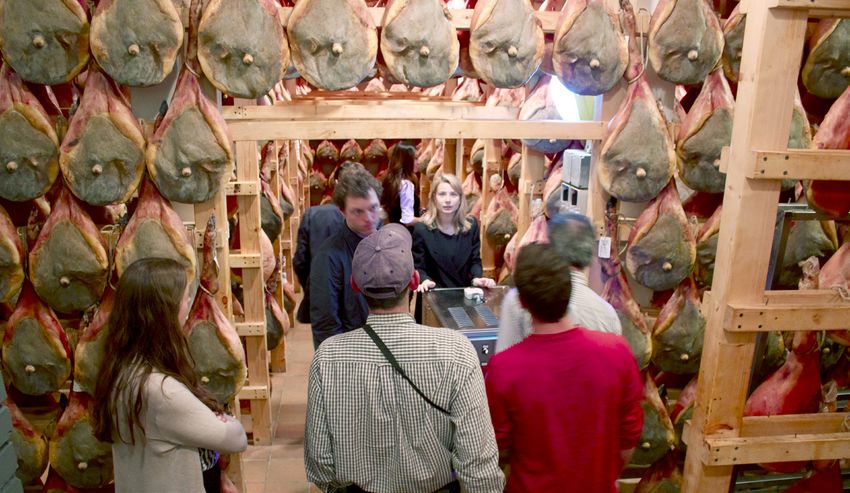
FARM TO PLATE INVESTMENT PROGRAM | 18 MONTH REPORT

Illustrating progress toward meeting the goals of the Farm to Plate Strategic Plan.

From new meat and value-added dairy processing facilities (page 6) to expanded                     More exciting developments are in store for 2013, like the launch of the Vermont
agriculture education and workforce development programs (pages 12-13), Vermont                    Food System Atlas and business expansions that will result, in part, from Working
continues to be a national leader in the local food movement. As Secretary Chuck Ross              Lands Enterprise Fund investments. What’s eminently clear is that the Farm to Plate
likes to point out, “there is no doubt that Vermont’s community based food system is               Initiative, thanks to the leadership and steadfast support of the Vermont Legislature
growing; production is diversifying and our value-added products are deepening our                 and the Shumlin Administration, has made great strides in a very short period of time
reputation for quality in the national and international market place.”                            towards building a vibrant, sustainable food system for the 21st century.

Sincerely,
The Farm to Plate Network Steering Committee and Network Coordinators,                             Jacob Park, Co-Chair, Consumer Education & Marketing Working Group, (Green Mountain College)
Chuck Ross, Secretary of Agriculture, Food & Markets                                               Tara Kelly, Chair, Aggregation & Distribution Working Group, (RAFFL—Rutland Area Farm and Food Link)
Lawrence Miller, Secretary of Commerce & Community Development                                     Dan Smith, Co-Chair, Education & Workforce Development Working Group, (Vermont State Colleges)
Len Bull, Vermont Agriculture & Forest Product Development Board                                   Jonathan Kaplan, Co-Chair, Education & Workforce Development Working Group, (Lyndon State College)
Stacy Burnstein, Vermont Food Funders Network (Castanea Foundation)                                Ela Chapin, Chair, Technical Assistance to Producers & Processors Working Group, (Vermont Farm
Jill Arace, Co-Chair, Farmland Access & Stewardship Working Group, (Vermont Association of         Viability Program)
Conservation Districts)                                                                            Jane Clifford, Chair, Dairy Development Working Group, (Green Mountain Dairy Farmer Cooperative
Ben Waterman, Co-Chair, Farmland Access & Stewardship Working Group, (UVM Center for Sustainable   Federation)
Agriculture/UVM Extension)                                                                         Ellen Kahler, Executive Director, VSJF (facilitator, ex officio)
Cheryl King Fischer, Co-Chair, Consumer Education & Marketing Working Group, (New England
                                                                                                   Erica Campbell, Farm to Plate Program Director, VSJF (ex officio)
Environmental Grassroots Fund)

                                                                                                                                                                                                          3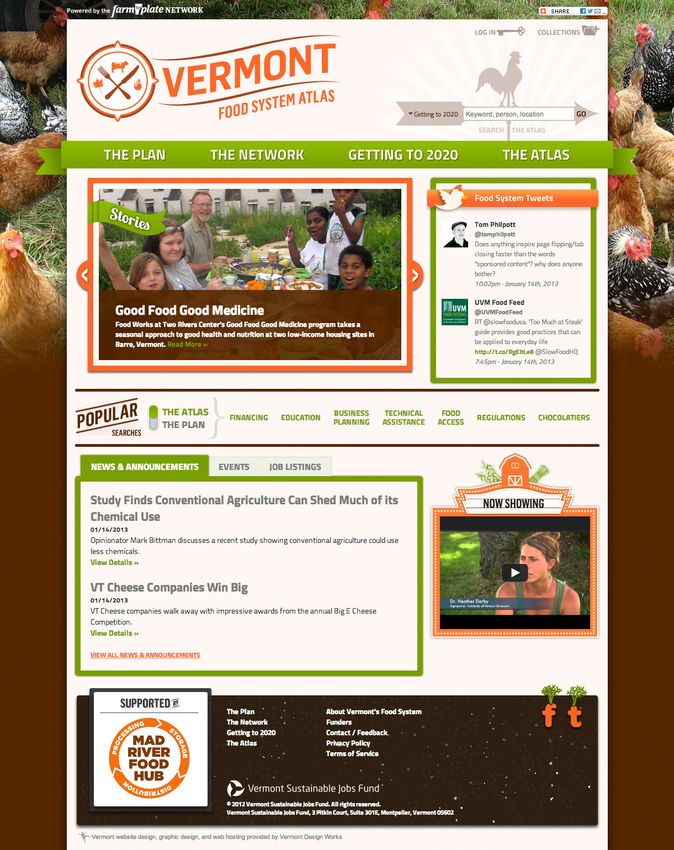
FARM TO PLATE INVESTMENT PROGRAM | 18 MONTH REPORT

       The Farm to Plate Network Completes a Busy Inaugural Year
       The Farm to Plate Initiative was designed to meet the five conditions of high impact     Farm to Plate Network Diagram
       social change initiatives:

              Common agenda: the F2P Strategic Plan articulates a shared vision and
              identifies ways to strengthen Vermont’s food system over the next ten years.

              Mutually reinforcing activities: the F2P Network reflects and supports                                            Farmland Access
                                                                                                                                Network
              existing programs, projects, and organizations; and seeks to advance new ideas               Close the Loop
                                                                                                           Coalition
              in a coordinated fashion.

              Continuous communication: the F2P Network and the Vermont Food
              System Atlas provide new opportunities for communication and collaboration.

              Shared measurement: The F2P Goals and measurements described in
              Chapter 2 link the analysis of the Plan with the actions and progress of the                  Land Use Planning
              Network.                                                                                      Guidance
                                                                                                            Task Force                                                      Meat Processing Task Force

                                                                                                                                                                                Producer & Processor
              Backbone support: VSJF provides logistical support to coordinate the F2P                                                                                          Association Support
                                                                                                                                                                                Task Force
              Network and maximize the collective impact of the F2P Strategic Plan, maintains
                                                                                                     Dairy Professional                                                       Technical Assistance
              the Vermont Food System Atlas, and publishes annual indicators of progress.            Development                                                              Coordination
                                                                                                                                                                              Task Force
                                                                                                     Task Force

       The collective impact framework is based on research and accumulated
       experiences that show that problems are best solved when businesses,
       nonprofits, government agencies, educational institutions, and others work
       together in a collaborative and coordinated way.                                                                                             Farm to Institution
                                                                                                                                                    Task Force

         “Our Working Group has provided an opportunity for strategic
         coordination, relationship-building, and sharing best practices that
                                                                                                                          Working Groups          Cross-Cutting Teams     Task Forces
         has led to real action in the food system such as an increased focus on
         local meat processing and market development.”

         –Hans Estrin, UVM Extension, Aggregation & Distribution Working Group

4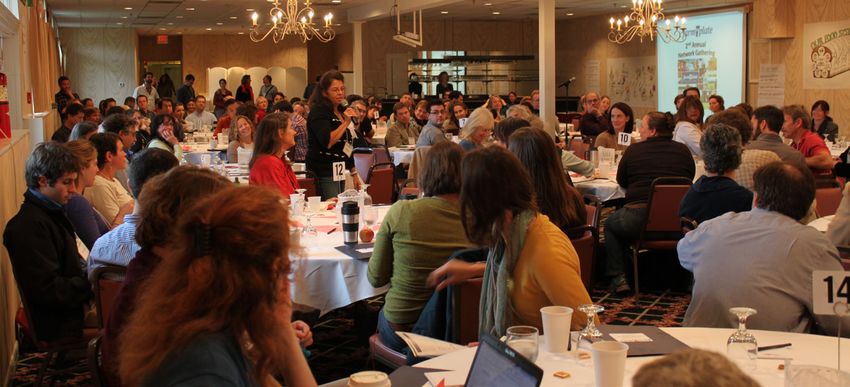
FARM TO PLATE INVESTMENT PROGRAM | 18 MONTH REPORT

                                                                                        Vermont Food System Atlas
                                                                                        Launching in March 2013, the new Vermont Food System Atlas will showcase stories,
                                                                                        videos, job listings, news, events, resources, the F2P Strategic Plan, people, and
                                                                                        organizations that are strengthening Vermont’s food system.

Network members at the 2nd Annual Gathering, October 2012.

As you can read about on pages 6-13, dozens of food system accomplishments
occurred in 2012. Many of these success stories are a direct result of efforts by
members of the Network and link directly to reaching our shared F2P goals. To better
gauge its impact, VSJF worked with a team of UVM researchers to survey Network
member organizations. Out of 105 responses:

        100% percent of network members said they are actively working on at least
        one goal from the Farm to Plate Strategic Plan

        Over 50% of Network members are working on F2P Goal 1 (increase local food
        consumption) and Goal 7 (increase local food production)

        Approximately 40% of member organizations are working on Goal 10 (increase
        food literacy) and Goal 2 (increase institutional consumption)

        Over 35% are working on Goal 15 (increase food access), Goal 5 (increase land
        access and conservation) and Goal 17 (increase food system jobs)

        Each goal had at least 20% of organizations actively working on them

Over three quarters of Network members said that the Network is helping
them build new relationships and 80% said their existing relationships
have been made stronger though participation in Network. Approximately
three quarters of respondents also felt that the Network was helping advance their
organization’s goals.

                                                                                                                                                                             5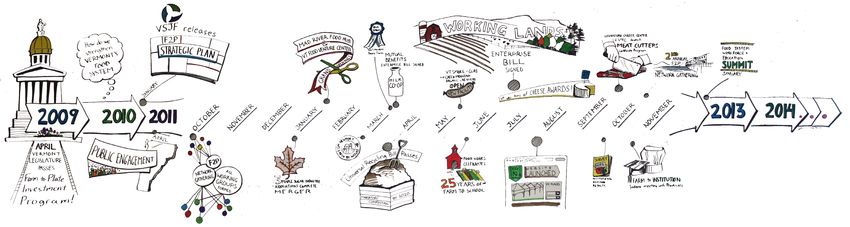
FARM TO PLATE INVESTMENT PROGRAM | 18 MONTH REPORT

       Are Vermont’s Food System Businesses Viable and Growing?
        BY THE NUMBERS: JOBS IN THE FOOD SYSTEM                                                                                   Action in Vermont’s Food System

         NET NEW                                                                                                                           GOAL 7: Increase Food Production and Sales

        649
         JOBS                       From 2007 (the last year of the Census of Agriculture) to the second quarter
                                    of 2012 (the latest available data from the Vermont Department of Labor)                     Goat milk supply increases: Vermont Butter & Cheese Creamery, with financial
                                    total food system jobs increased 1%, from 57,209 to 57,858, while total private
                                    sector jobs decreased 2.4% from 364,903 to 355,990. During this time                         backing from three private foundations, has established Vermont’s largest goat dairy
                                    period, food system jobs increased from 15.7% of all private sector jobs                     (600-700 goats). The new dairy will supply additional goats milk for this rapidly
                                    to 16.25% of all private sector jobs.
                                                                                                                                 growing company, as well as serve as a demonstration farm for other goat dairies to
         NET NEW                    From 2007 to the second quarter of 2012 total food system establishments                     learn from.
         BUSINESSES                 increased 2.7%, from 11,157 to 11,455, while total private sector establishments

        298
                                    decreased 1.9% from 86,242 to 84,592. During this time period, food                          Food hub sales growth: The Intervale Food Hub, in its 5th year of operation,
                                    system establishments increased from 12.9% of all private sector                             provides distribution services to over 2 dozen farmers and reached $500,000 in sales
                                    establishments to 13.5% of all private sector establishments.
                                                                                                                                 in 2012—a 25% increase over 2011. The Intervale is building a new aggregation and
                                                                                                                                 storage facility, expanding its infrastructure, and has a goal of reaching $1.2 million in
        Food System Total Employment
                                                          Beginning of Farm to Plate Initiative
                                                                                                                                 sales over the next five years.
                                                                                                                  Farm Inputs
         60,000
                                                                                                                 Distribution              GOAL 8: Increase Dairy Viability
                                                                                                                 and Storage
          50,000
                                                                                                                                 Value–added dairy expansion: Green Mountain Organic Creamery opened its
                                                                                                                 Manufacturing
                                                                                   Hired Farm Workers                            doors in Hinesburg in May and serves as the production facility for Kimball Brook
         40,000                                                                                                                  Farms’ organic milk, cream, and butter. Commonwealth Dairy will be investing an
                                                                                         Farm Operators                          additional $12 million, and adding 34 jobs, while expanding its yogurt processing facility
         30,000
                                                                                                                                 in Brattleboro. Kingdom Creamery of East Hardwick received a $300,000 grant
                                                                                                  Food and
                                                                                                                                 from USDA in February to purchase additional equipment for its newly launched ice
         20,000                                                                         Beverage Stores
                                                                                                                                 cream and yogurt product lines.

                                                                                     Food Services and
         10,000                                                                                                                            GOAL 11: Increase Processing Infrastructure
                                                                                         Drinking Places
                                                                                                                                 Incubator processing success: In its inaugural year the Vermont Food Venture
            0
                    2007             2008              2009              2010                2011         2012*                  Center served 21 processing clients, worked with 41 farms, and processed over
         * Note: 2010 and 2011 numbers are annual averages; 2012 numbers are through 2nd Q only. Data sources: Vermont           330,000 pounds of Vermont food products. The businesses using the Center have
         Department of Labor, USDA 2007 Census of Agriculture
                                                                                                                                 created or retained 27 jobs.

6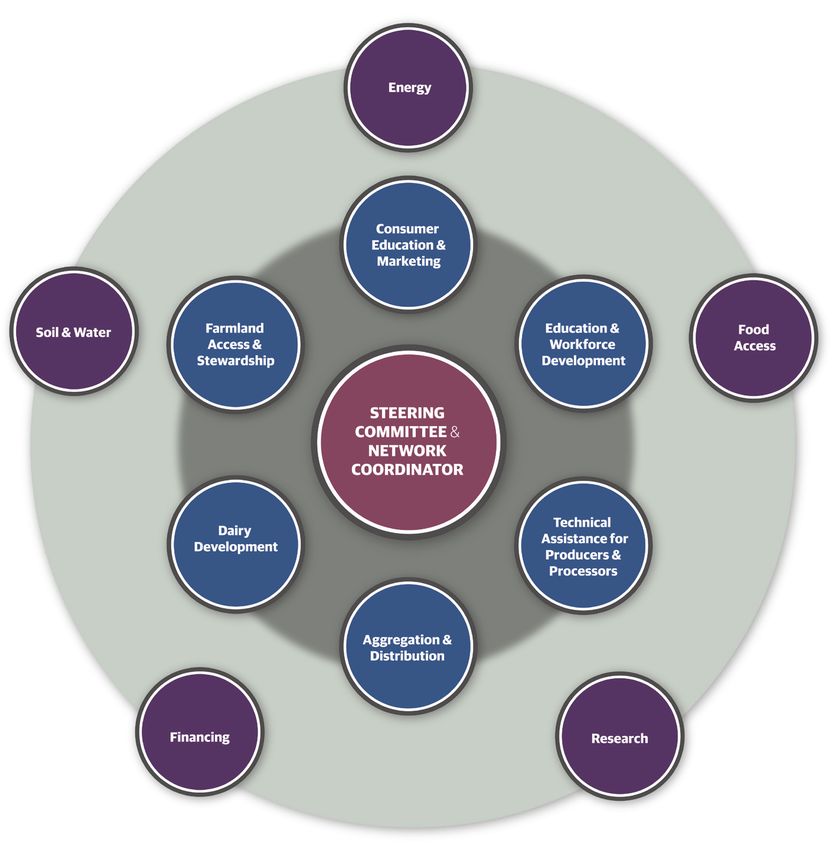
FARM TO PLATE INVESTMENT PROGRAM | 18 MONTH REPORT

                                        GOAL 11: Increase Processing Infrastructure                                     Action in the Farm to Plate Network
                            Meat processing expansion: Black River Produce is in the final phases of
                            renovating the old Ben & Jerry’s Peace Pop production facility in North Springfield into               GOAL 7: Increase Food Production and Sales
                            a certified meat processing space. The company is investing $1 million and plans on        Scaling up the value added meat industry: The Meat Processing Task Force
                            hiring 10 new employees by the end of 2013.                                                continues to play a strong role in devloping Vermont’s meat industry, including the
                                                                                                                       development of specific goals and metrics. With matching funds from the Farm to
                                                                                                                       Plate Network Fund, Task Force members led by the VAAFM and NOFA Vermont were
                                                                                                                       awarded a USDA Federal-State Marketing Improvement Grant for “Scaling Up New
                                                                                                                       England’s Value Added Meat Industry.”

                                                                                                                       The goal of the project is to promote viability and profitability of the value-added meat
                                                                                                                       industry in New England by focusing on market research, education through work-
                                                                                                                       shops and the first ever New England Meat Conference, the creation of a New England
PHOTO CREDIT: Mark Curran

                                                                                                                       branded meat program, and exposure to innovation at the producer-processor nexus.

                            Black River Produce’s new meat processing facility.

                                                                                                                                                                                                                   PHOTO CREDIT: Chelsea Bardot Lewis
                                              GOAL 12: Increase Distribution Infrastructure

                            Success in the Mad River Valley: The Mad River Food Hub, L3C processed over
                            70 tons of food and transported $350,000 worth of products on behalf of its 86
                            clients. The MRFH provides processing, meat co-processing, storage, distribution,
                            consulting, business planning, and HACCP plan development services.

                            Six small food hubs (Intervale Food Hub, Green Mountain Farm Direct, Vermont Food
                            Venture Center, Mad River Food Hub, Vermont Farm to Table, and Windham Farm and
                            Food Network) supported the distribution needs of 257 small farms across Vermont.          Vermont delegation learnng about cured meats in Italy.

                             Available data shows major gains in food manufacturing employment (31% increase) & establishments (25% increase) in VT from ‘07 to ‘12.

                                                                                                                                                                                                                                                        7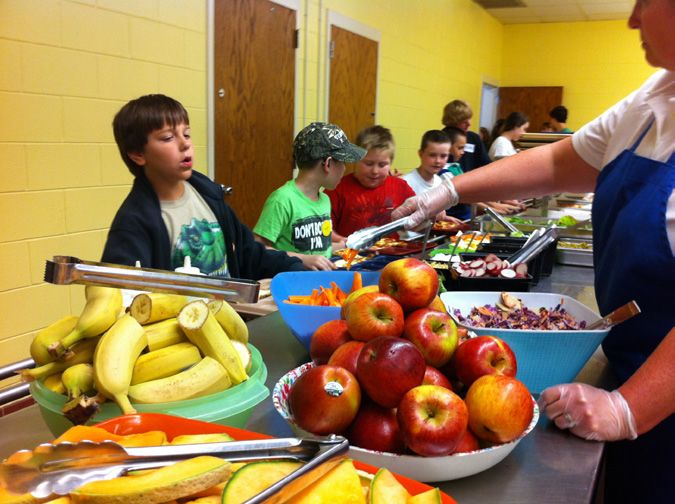
FARM TO PLATE INVESTMENT PROGRAM | 18 MONTH REPORT

       Is Consumption of Local Food Increasing? Is Local Food More Accessible?
        BY THE NUMBERS: FOOD ACCESS                                                                     Action in Vermont’s Food System

         250,000                                                                                                 GOAL 1: Increase Local Consumption

                                                                                                       Online markets increase: Yourfarmstand.org has expanded its hyper-local service
         pounds of high quality local produce were gleaned or donated, and this food was distributed   to 20 sites that connect farmers directly to consumers through an innovative online
         to thousands of Vermonters through the charitable food system by the Vermont Food Bank        ordering system and weekly pick up locations.
         and its partners.
                                                                                                                 GOAL 2: Increase Institutional Consumption

         3,950                                                                                         Local food in hospitals: Ten hospitals and one nursing care facility in Vermont have
                                                                                                       signed the Healthy Food in Healthcare Pledge (administered by Health Care
         students at 40 school community gardens learned how to grow fresh, healthy produce
                                                                                                       Without Harm) and have begun sourcing more local food in their cafeterias, providing
         with the help of grants provided by the Vermont Community Garden Network.
                                                                                                       on-site CSA drop-offs and farmers’ markets for their employees, instituting on-site

         38
                                                                                                       composting, and more. Fletcher Allen Health Care increased their local food purchases
                                                                                                       by 30% in 2012.

         of 58 Vermont Farmers’ Market Association member markets have EBT machines,                   CSAs for state employees: The State of Vermont Workplace CSA Program
         with 7 new sites added in 2012.                                                               provided community supported agriculture shares to Vermont state employees. The
                                                                                                       program, which piloted in Addison, Washington, and Windsor counties, connected 4

         31%                                                                                           CSA farms with 40 state employees. The CSA shares were conveniently delivered to
                                                                                                       the workplace for participants. Employees are now enrolling in winter CSA shares, and
         of stores audited for the Healthy Retailers survey sold at least one kind of Vermont grown    the Program is preparing for a statewide launch in 2013.
         fruit or vegetable.
                                                                                                                 GOAL 3: Decrease Food-Related Health Problems

                                                                                                       Healthy food in small markets: The Vermont Department of Health’s Healthy
                                                                                                       Retailers Initiative funded community coalitions to survey and work with consumers
                                                                                                       and retailers in order to increase access to and signage of healthy, local food products
                                                                                                       at smaller community stores.

8
FARM TO PLATE INVESTMENT PROGRAM | 18 MONTH REPORT

         GOAL 15: Increase Food Access                                                                 GOAL 10: Increase Food Literacy

Local food to patients in need: Vermont Youth Conservation Corp has teamed up                Defining local: Most institutions do not currently track local food procurement,
with Central Vermont Medical Center to develop the Health Care Shares Program,               and the few that do use different definitions for the term “local.” In order to compare
which offers fresh, local food to hospital patients in need.                                 apples to apples when trying to measure whether we’re meeting Farm to Plate Goal 1,
                                                                                             the Aggregation and Distribution Working Group will encourage institutions and
Mobile produce market: Green Mountain Farm to School’s mobile produce market                 distributors to adopt this standard definition and begin tracking and annually reporting
The Lunchbox provided fresh, local food to food insecure residents throughout                local food procurement in a more systematic way.
Northern Vermont.
                                                                                                       GOAL 13: Increase Local Food Availability
Low income CSA: Post Oil Solutions in Windham County ran a Neighborhood
Market (combination CSA and farmers’ market) in a low income neighborhood in                 Gauging the demand for local food at independent grocery stores: The
order to address local food access barriers such as price and transportation.                Independent Grocers Project Task Force will assess the potential for more local
                                                                                             food products being sold at independent grocery stores (including food coops and
 Action in the Farm to Plate Network                                                         country stores) and will develop new consumer education and marketing support in
                                                                                             collaboration with participating stores.
         GOAL 2: Increase Institutional Consumption
                                                                                                       GOAL 15: Increase Food Access
Scaling up to sell to institutions:
Members of the Aggregation and                                                               Assessing food access: The Food Access Cross-Cutting Team is working with a
Distribution Working Group held a                                                            UVM research team led by Dr. Linda Berlin to assess how well food access goals are
forum in November 2012 with Sodexo                                                           integrated within various aspects of the food system.
food service professionals with the intent
                                                                                             The research team will conduct focus groups with people who are involved with
of increasing the amount of local food
                                                                                             implementing Vermont’s Farm to Plate Strategic Plan, examining how they understand
being procured at Sodexo’s 18 food service
                                                                                             food insecurity and identify the myriad ways they are already addressing food security
sites (serving 34,000 meals per day)
                                                                                             through their work. After synthesizing the results of this assessment, the team will
around Vermont. The forum brought together producers and processors, distributors,
                                                                                             work to improve coordination among various food access stakeholders.
technical assistance providers, and Sodexo staff and provided important information to
producers and processors who are ready to sell to institutions. A few highlights:

       Garuka Bars (Montgomery Center) plans to work with a distributor for the first time
       Hartshorn Farm (Waitsfield) plans to scale up to institutional sales
       Valley Dream Farm (Cambridge) plans to sell produce in and around New York City

                                                                                                                                                                                        9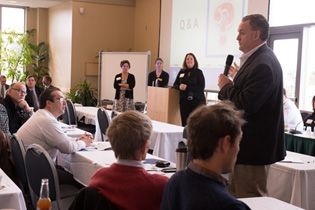
FARM TO PLATE INVESTMENT PROGRAM | 18 MONTH REPORT

         Are We Building a Sustainable Food System for the 21st Century?
         BY THE NUMBERS: CONSERVATION, LAND ACCESS, & WATER                                           Action in Vermont’s Food System

           270                                                                                                 GOAL 5: Increase Land in Agriculture

                                                                                                     Conserving farmland: The Vermont Housing and Conservation Board and
           farmers, identified in the Vermont Land Trust and UVM Extension’s Land Access Database,
                                                                                                     Vermont Land Trust, combined, conserved 27 farms, including 11 dairies, totaling
           are looking to purchase or lease land.
                                                                                                     5,336 acres of farmland. Thirteen of these projects facilitated direct transfers to new

           25%
                                                                                                     owners.

                                                                                                     Tools for finding farmland: University of Vermont Extension’s New Farmer Project
           of known farm seekers have business plans that would support gross sales of at least      created the Land Access Database to help existing and aspiring farmers connect
           $100,000 a year.                                                                          with landowners who have available farmland for sale or lease. UVM Extension also
                                                                                                     contributed to the creation of the New England Farmland Finder, which provides

           25%
                                                                                                     interested farmers in the New England region with information about available
                                                                                                     farmland that is for sale or lease.

           of listed imparied waters, or 18 of 71, are impaired due to agriculture.
                                                                                                               GOAL 6: Decrease Environmental Impact

           Annual Farmland Acres Conserved, 2010-2012                                                Reducing phosphorus loading: The Natural Resources Conservation Service
                                                                                                     has established ‘edge of field’ monitoring on a number of farms to determine which
           6,000                                                                                     conservation cropping practices—soil aeration, no-till or reduced tillage, cover
                                                           5,284                      5,336
           5,000
                                                                                                     cropping, and grassed waterways—are most effective at reducing phosphorus
                                                                                                     loading into Lake Champlain. The results will be used to design more cost effective
           4,000                3,721
                                                                                                     phosphorus reduction programs for agriculture.
           3,000
                                                                                                     Modeling climate change’s effects on agriculture: With funding from a multi-
           2,000                                                                                     year EPSCoR (Experimental Program to Stimulate Competitive Research) grant, the
           1,000
                                                                                                     University of Vermont and a number of partnering organizations are exploring how
                                                                                                     climate change will effect natural and social systems that contribute to eutrophication
                 0                                                                                   in Lake Champlain using sophisticated modeling programs. The research will be used
                               2010                        2011                       2012
           Data sources: Vermont Housing and Conservation Board, Vermont Land Trust                  to identify the management strategies that are best suited for the state.

10
FARM TO PLATE INVESTMENT PROGRAM | 18 MONTH REPORT
GOAL 22: Increase Efficiency and Renewables GOAL 6: Decrease Environmental Impact
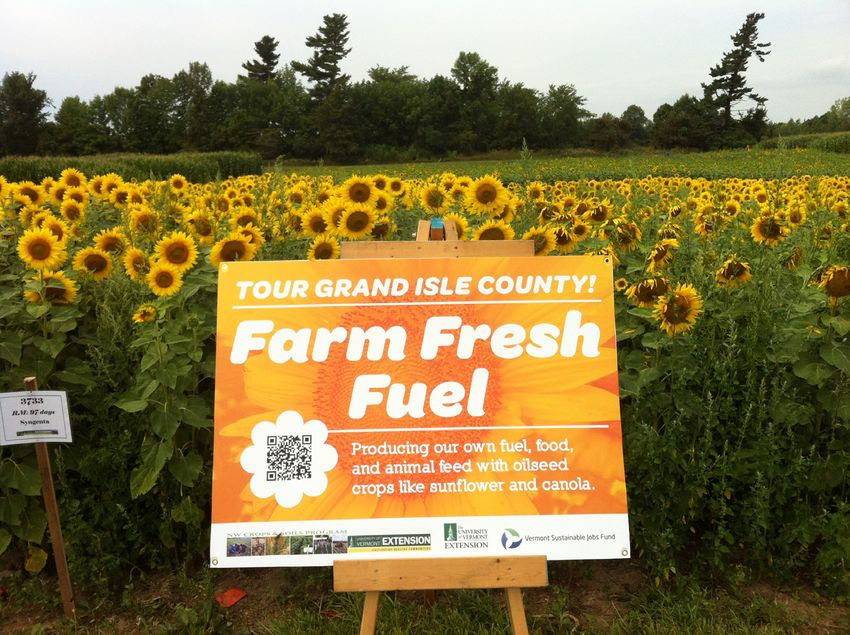
Growing on-farm renewable energy: The Grand Isle Farm Fresh Fuel project, a Building better soils for better water quality: The Soils and Water Task Force
partnership between 10 farms and landowners, UVM Extension, and VSJF, harvested has brought together a diverse group of researchers and technical assistance providers
60 acres of sunflowers that will produce about 3,000 gallons of biodiesel and 18 tons to explore new ways to address water quality issues in Lake Champlain and manage
of oilseed meal for livestock. the state’s soils for long term productivity and sustainability.
GOAL 14: Improve Nutrient Management
Turning food scraps into a valuable resource: The Close the Loop Coalition
Task Force is focused on coordinating educational opportunities and technical
assistance amongst vital service providers, land use planners, and state and municipal
officials to create the necessary capacity to meet Vermont’s Act 148 organics diversion
target of 100% by 2020.
GOAL 22: Increase Efficiency and Renewables
Addressing energy from the ground up: The Energy Cross-Cutting Team
recently formed and will focus on bringing critical energy savings to Vermont’s farmers,
processors, manufacturers, and food retail outlets over the coming years. The group
is a dynamic mix of engineering, efficiency, and renewable energy experts. Their first
step will be to conduct a comprehesive analysis of energy use in the food system.
Sunflowers in Grand Isle grown for biodiesel production.
Action in the Farm to Plate Network The Farm to Plate Investment Program could
not continue without the generous support of our
GOAL 5: Increase Land in Agriculture
many funding partners including:
Planning for agriculture: The Land Use Planning Task Force is developing a
community resource guide that will help stimulate agricultural development and Claniel Foundation | Green Mountain Coffee Roasters | Henry P. Kendall Foundation
Jane’s Trust | John Merck Fund | Vermont Agency of Agriculture, Food and Markets
prevent farmland loss through model planning and zoning policies. The guide, which Vermont Agency of Education | Vermont Agriculture Innovation Center
will include online modules and will be tested in 2-3 Chittenden County communities, Vermont Community Foundation | Anonymous (1)
will revive a popular addendum to the state Planning Manual called “Sustaining
Agriculture.”
11FARM TO PLATE INVESTMENT PROGRAM | 18 MONTH REPORT
What Is Being Done To Support Vermont’s Food System?
BY THE NUMBERS: ACCESS TO CAPITAL & TECH. ASSISTANCE GOAL 16: Increase Educational Opportunities
$2.4 million
Supporting farm to school: the
statewide Farm to School Network
continues to advance farm to school
PHOTO CREDIT: Faye Conte
was raised and made available to 225 farms through the Vermont Farm Disaster
Relief Fund. initiatives and was recently awarded a
$1.17 million
$100,000 USDA grant for new farm to
school activities.
was appropriated by the Governor and Vermont Legislature to the newly created National Farm to Cafeteria
Working Lands Enterprise Fund. Conference: Vermont Food Education
48
Every Day (VT-FEED) hosted the An abundance of healthy food at school.
national Farm to Cafeteria conference
which was attended by 800 in Burlington this past August. This annual gathering
farms were provided with advanced business planning by the Vermont Farm Viability
provides educational and training opportunities for farm to school practitioners
Program
throughout the U.S.
GOAL 19: Increase Business Planning and Technical Assistance
Action in Vermont’s Food System
Developing food systems businesses: The Vermont Agriculture Development
GOAL 1: Increase Local Consumption Program provided in-depth support to 8 value-added food businesses and helped
improve the growth and overall management of six in 2012. Participating businesses
Promoting Ag and Culinary Tourism: In order to better
in the program included meat processors, a co-packer, and value-added food
coordinate and promote the growing interest in farm and food
manufacturers.
related tourism, the Vermont Agriculture and Culinary Tourism
Council (VTACT) was formed in 2009 with representatives from Food safety: Ten new growers developed food safety GAP plans, 14 farms received
the Vermont Fresh Network, VAAFM, industry organizations, state funding for GAP related improvements, and the Vermont Food Safety Task
UVM, NECI, Shelburne Farms, and the Vermont Department Force held a 3-day Meat HACCP workshop (30 attendees) and held food safety
of Tourism and Marketing. VTACT members worked together trainings for food processors (98 participants).
to create Dig In Vermont (www.diginvt.com), a state of the art website for exploring
and creating “trails” (e.g., Vermont Beer and Cheese Pairing Trail) that map end user
experiences.
12FARM TO PLATE INVESTMENT PROGRAM | 18 MONTH REPORT
GOAL 20: Increase Access to Capital GOAL 17: Increase Food System Jobs and Establishments
Bridging funding gaps for business Workforce needs assessment: The Education and Workforce Development
PHOTO CREDIT: Farmers to You
expansion: The VSJF Flexible Capital Working Group retained two researchers who conducted a comprehensive
Fund invested in Farmers to You and
food system workforce needs assessment in order to gauge the evolving needs of
Vermont Smoke and Cure in 2012. This
Vermont’s food system businesses.
new royalty financing investment vehicle
provided long-term working capital to
The assessment also provides an analysis of existing food system educational offerings
help these businesses expand.
in the state compared to employers’ stated needs and identifies the need for clearer
Working Lands Enterprise Fund career pathways into jobs in the food system. The results of this research will be
established: With the passage of the Farmers to You staff.
reported at a Summit, co-sponsored by the Working Group and Vermont Technical
Working Lands Enterprise bill in 2012,
College, on January 15, 2013 and its recommendations will serve as the focus for action
$980,000 in grant funding will be made available to farm, food, forest and forest
in the year ahead.
products related businesses as well as technical assistance providers who support
these businesses.
GOAL 19: Increase Business Planning and Technical Assistance
GOAL 21: Leverage Financial Resources
Producer and processor association support: The Technical Assistance for
Coordinating food system funding: The Vermont Food Funders Network, made Producers and Processors Working Group is assessing the needs and capacity of
up of 10 private foundations, hired a coordinator to maximize their collective funding in producer and processor associations across the state in order to identify ways these
Vermont’s food system. groups can better serve their members.
Evaluation of technical assistance programs: The Technical Assistance for
“As a funder, the Farm to Plate Strategic Plan has helped provide a
Producers and Processors Working Group is conducting a survey of technical
blueprint for our philanthropic dollars and the Network is helping us
assistance programs to better understand what metrics each organization already uses
further identify high priority areas to invest in.”
and what capacity each has for conducting program evaluation.
–Stacy Burnstein, Vermont Food Funders Network
GOAL 24: Increase State Leadership
Action in the Farm to Plate Network Governor’s Institute on Sustainable Food Systems: The Education and
Workforce Development Working Group is planning a new Governor’s Institute
GOAL 8: Increase Dairy Viability on Sustainable Food Systems at Vermont Technical College in 2013. The annual
summer institute will provide hands-on learning experiences for high school students
Dairy professional development resource guidebook: The Dairy
throughout Vermont.
Development Working Group is developing a comprehensive dairy resource
guidebook that will provide a matrix of professional development and technical
assistance opportunities. The guidebook will be paired with outreach to dairy farmers
in order to improve program participation rates.
13FARM TO PLATE INVESTMENT PROGRAM | 18 MONTH REPORT
Farm to Plate Investment Program Financial Report Farm to Plate Investment Program Revenue
Actual Revenue and Expenses July 1, 2011 to November, 2012 (17 months) Total Revenue:
$587,884
Revenue Received to Date Purpose
Contributions $1,105 General support
F2P Gathering Registration $50,875 Registrations from 2 Network Gatherings
VAIC (F2P Network and Leadership Development Training);
Federal Sources $45,000 Private Foundations
VT DOE (Working Group support)
$262,410 (44.6%)
Fees for Service $4,356 NEK Network development services
Private Foundations $262,410 F2P Network implementation; Food System Atlas development State of Vermont
State of Vermont $224,138 Implementation support in FY12 and YTD FY13 $224,138 (38.1%)
Total Revenue Received $587,884
F2P Gathering
Expenses Expenses to Date Purpose Registration
General F2P Operations $50,875 (8.7%)
Administration $26,130 Includes portion of rent, internet, phone, office supplies, postage, printing
Federal Sources
Research $2,145 By consultants related to F2P Plan sections $45,000 (7.7%)
Contributions
Copy Editing/Report Layout/ Fees for Service
$4,035 For the F2P Strategic Plan $1,105 (0.2%)
Maps $4,346 (0.7%)
Various conference sponsorships, general F2P advertising, Farm
PR/Marketing/Outreach $2,151 Farm to Plate Investment Program Expenses
Show tabling, etc.
Report Printing $7,769 2nd printing of Executive Summary Total Expenses:
$587,884
Travel $6,578
Total F2P General Operations $48,808
Includes F2P Plan research and writing by staff, Food System Atlas
F2P Personnel $246,175
data development and all other F2P Network Coordination services
F2P Projects
F2P Projects F2P Personnel
Food System Atlas Development $100,436 Web portal development for all F2P related initiatives
$292,901 (49.8%) $246,175 (41.9%)
Farm to Plate Network
$102,187 Includes trainings, working group meetings, 2 Annual Network Gatherings
Meetings/Gatherings
Working Group Chair Stipends $50,000 To support Working Group chair leadership
Network Member Stipends $430 To support broad stakeholder involvement
F2P Network Grants $39,848 For special projects by Working Groups and/or Task Forces
Total F2P Project Operations $292,901
Total Expenses $587,884
General F2P Operations
$48,808 (8.3%)
14Farm to Plate Goals
01
13 01
02
13 01
05
13
FOOD-RELATED FARM PRODUCTION
TOTAL LOCAL INSTITUTIONAL LAND IN
HEALTH PROBLEMS EXPENSES
CONSUMPTION CONSUMPTION AGRICULTURE
13 13
03 04
01 01
01
07
13 01
08
13 01
09
13 01
10
13
ENVIRONMENTAL
FOOD DAIRY FARM FOOD
IMPACT
PRODUCTION VIABILITY PROFITABILITY LITERACY
13
06
01
01
11
13 01
12
13 13
13 14
13 15
13
PROCESSING DISTRIBUTION LOCAL FOOD NUTRIENT FOOD
INFRASTRUCTURE INFRASTRUCTURE AVAILABILITY MANAGEMENT ACCESS
16
13 17
13 18
13 19
13 20
13
EDUCATIONAL JOBS + LIVABLE WAGES + BIZ PLANNING + ACCESS TO
OPPORTUNITIES ESTABLISHMENTS SAFE WORKPLACES TECH. ASSISTANCE CAPITAL
21
13 22
13 23 24
13 25
13
LEVERAGE $ EFFICIENCY + BALANCE STATE STRATEGIC
RESOURCES RENEWABLES REGULATIONS LEADERSHIP COORDINDATION
STRONG VERMONT FOOD SYSTEMYou can also read


