BIONEWS - DUTCH CARIBBEAN NATURE ALLIANCE
←
→
Page content transcription
If your browser does not render page correctly, please read the page content below
ISSUE 15 - 2018
BIONEwS
Editor’s Letter                                                                Dutch Caribbean, July 2018

        BIONEWS ISSUE 15
                                        Every year on Bonaire, dozens of dedicated vol-        In this edition of BioNews you can read about their
                                        unteers wake up before dawn with one simple but        recent Sunscreen Awareness Conference and their
   2    Editor’s Letter                 important mission: count as many yellow-shoul-         results on how to move towards an oxybenzone-
                                        dered parrots (Amazona barbadensis rothschildi)        free island.
   3    Bonaire’s Yearly Parrot Count   as possible. In this BioNews edition we published
                                        an article on this year’s twenty-third Lora count,     We also proudly present the findings of several
   5    Sunscreen Awareness             which has been organized by Echo Bonaire with          recent research projects that recently investigated
        Bonaire- Moving towards         the help of STINAPA Bonaire and Bonaire’s              the marine and terrestrial mollusc fauna of Aruba,
        a oxybenzone free island        Department of Environment and Nature. In this          Bonaire, Curaçao, Saba and St. Eustatius. What
                                        article we also present the recent findings of an-     transpires is that the mollusc fauna of these islands
   8    Molluscs of the Dutch           other study by Rivera-Milán et al. in collaboration    is much richer than previously thought, with many
        Caribbean Islands               with STINAPA, US Fish and Wildlife Service and         rare and endemic species. The biodiversity of the
                                        WILDCONSCIOUS on the population assessment             Dutch Caribbean Islands is already recognized as
   11   AcroporaNet Symposium           of yellow-shouldered parrots on Bonaire.               rich and unique, but the findings on the islands’
                                                                                               malacofauna indicate that there is still much to
   12   Research Overview               Coral reefs in the Wider Caribbean Region have         discover.
                                        suffered considerable declines in health and abun-
   13   Long-Term Projects Overview     dance in recent decades. Climate change, overfish-     Lastly University of Applied Sciences Van Hall
                                        ing and eutrophication seem to be the main drivers     Larenstein (HVHL) invites you to the third an-
   21   Monitoring Overview             of the degradation of our reefs for the last dec-      nual AcroporaNet Symposium to be held in
                                        ades. However, international scientist claim that      Leeuwarden, the Netherlands, on December 7th,
   25   List of Acronyms                impaired water quality by chemicals such as the        2018: A platform for scientists conducting funda-
                                        UV filter oxybenzone in sunscreen products adds        mental and applied research into tropical marine
   26   Reports and Publications        to the problems of already stressed reefs which        biology.
                                        undermines their resilience and ability to withstand
   27   Calendar                        and recover from e.g. global warming related
                                        impacts. Therefore, Wageningen Marine Research,
   28   Members and Contact             Boneiru Duradero and World Wide Fund for Nature                                            Happy reading!
                                        the Netherlands started a project on Bonaire.                                             The DCNA Team
   29   References                                                                                                                                     Cover photo by: © Mallory K Smith
                                                                                                                                                       & Editor’s Letter photo by: © Christian König

BioNews 15 - Content                                              2 3 4 5 6 ...
Bonaire’s Yearly Parrot Count
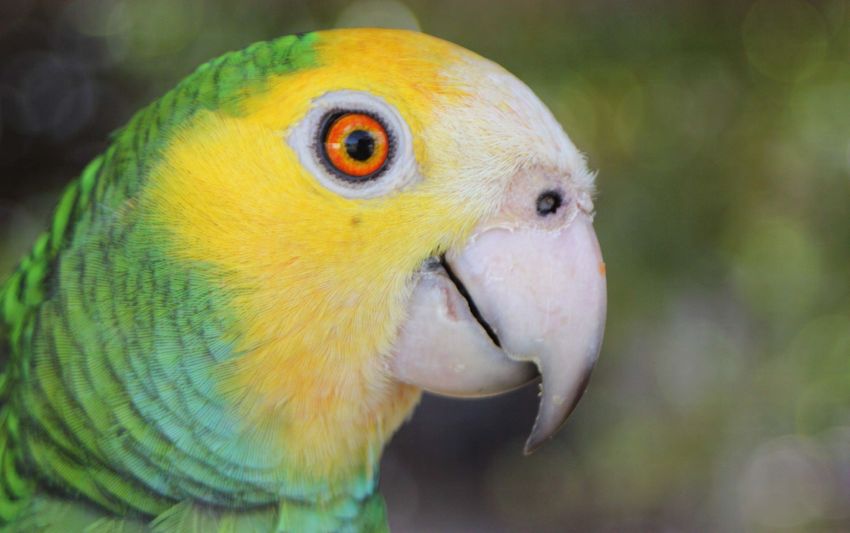
Every year on Bonaire, dozens of dedicated When the last Saturday of January comes along it is
volunteers wake up before dawn with one time for the actual count to take place. Volun-teers
simple but important mission: count as many that have prior experience are sent to the most
yellow-shouldered parrots (Amazona barbadensis important roost sites. Each team has at least two
rothschildi), or Loras as they are locally known counters so that data logged may be cross-checked.
in Papiamentu, as possible to estimate their
numbers. This year marks Bonaire’s twenty-third The methodology used is simultaneous counting,
Lora count, which was organized by Echo Bonaire during which all volunteers count the parrots at
with the help of STINAPA Bonaire and Bonaire’s the same time in different places. Volunteers leave
Department of Environment and Nature home before dusk to their designated site, wearing
(DRO). The Lora count started in 1980 and has dark clothes to ensure minimal disturbance to the
contributed to the protection of this endangered birds and are equipped with a compass, binoculars
and endemic sub-species of parrot. and a watch. Once the Loras wake up, shrieking
loud and flying up, the volunteers begin to fill out
The yearly monitoring event of Bonaire’s yellow- the data collection sheet. They record the number
shouldered parrots is made possible thanks to the of observed parrots, their point of departure,
contribution of volunteers. By involving locals in flight direction, destination and time at which this
monitoring efforts, the count helps increase local happened, and complete an observa-tion map.
awareness of the need to protect one of Bonaire’s Once all the data has been collected, the organizers
most iconic species. These citizen scientists receive of the Lora count tally up the num-bers to estimate
training prior to the count to ensure that they can the minimum number of Loras present at the
perform the tally to the best of their ability. This surveyed roosts.
also helps guarantee that volunteers all apply the
same methodology and know directions to the The yellow-shouldered parrot has a limited and
monitoring site they have been designated. As distinct range with genetically isolated populations
Loras are sometimes confused with brown-throated in Bonaire and Curaçao as well as northern
parakeets (Aratinga pertinax), volunteers are taught Venezuela and the Venezuelan islands of Margarita
how to identify the parrots visually and vocally. and La Blanquilla. This parrot is endangered with
Pre-roost counts begin in early January to work out a global population estimated at less than 8,000
how many volunteers will be needed per roost site individuals, and is classified by the IUCN Red List
on the day of the count. Newly identified roosts as Vulnerable (Birdlife International, 2018). On
and those that have become re-active are added Bonaire, the population was once close to extinction
to the annual count. due to poaching and habitat degradation. Photos by: © ECHO
BioNews 15 - Content 2 3 4 5 6 ...Therefore in 2002 DRO ringed and registered all and parrots periodically change roost locations. In
existing pet Loras. Anyone after this campaign found the area of Sabadeco, just 11 parrots were counted
in possession of an unringed parrot faces prosecution. compared to the previous year’s 229, while in the
Thanks to concerted and continued conservation Washington Slagbaai National Park, just 50 birds were
efforts, legal protection and enforcement – the Lora recorded (Echo, 2017). This unpredictable behavior of
receives local protection under the Island’s Nature the Loras makes it challenging for the participating Graph 1: Number of yellow-shouldered parrots in roosts on Bonaire based on data
Ordinance - the yellow-shouldered parrot is now volunteers to count them each year (Echo, 2017). collected by the yearly Lora count.
considered a flagship species for the island’s dry forest
ecosystem. The local non-profit organization Echo is Recently, a study by Rivera-Milán et al. (accepted for
working hard to protect the parrots on the island, publication) in collaboration with STINAPA, US Fish
find out more about their behavior and increase and Wildlife Service and WILDCONSCIOUS found
local awareness. other results. Their systematic distance-sampling
surveys in 2009-2017 show a slight decline in the
Information gathered over the years, thanks to the population estimate for Lora’s in Bonaire over the
annual Lora count, suggests that the number of past years most probably because of the drought,
parrots at the surveyed roosts on Bonaire is increasing although other factors cannot be discarded including
steadily. While numbers of parrots counted has an increase in human-induced mortality. They also
fluctuated each year, the overall trend seems an conducted Bayesian state-space logistic model
upward one and, even though not statistically proven, simulations to predict changes in abundance in
might be related to the start of conservation efforts 2018−2066. Rivera-Milán et al. consider Bonaire’s
on the island, including population monitoring parrot population vulnerable to the risk of extinction.
(Echo, STINAPA, DRO, Salba Nos Lora), nest site That said, the parrot population has an estimated
management (Echo), awareness campaign (STINAPA, maximum population growth rate of 0.179 and under
Echo, Salba Nos Lora), rescue and release of injured favorable conditions (consecutive wet years with The green dots on the graph show the actual annual counts,
birds (Echo), enforcement of protected status food abundance, and low human-induced mortality) while the green lines represent the trendlines
(STINAPA, Echo) and tree planting (Echo and Salba can recover through high survival and successful (average, minimum and maximum) associated with it.
Nos Lora ) [Graph 1]. In 2017, however, the number of reproduction. As different methods are used,
Loras recorded was significantly lower than usual, with the involved organizations are now discussing
700 Loras counted as opposed to 1,000 in previous the methodologies and possibility for
years (Echo, 2017). It is speculated that this drop in cooperation with the same goal:
numbers may not have been the result of fewer parrots adequately monitor the Loras
on the island, but could be caused by a long period to assess changes in abundance
of drought followed by heavy rains that caused the and the results of conservation
parrots to spread out more across the island, making actions taken to safeguard these
them harder to observe and count. Weather and food parrots on Bonaire.
supply have been known to drastically affect the count
Would you like to share a news item?
Bonaire’s Yearly Parrot Count 1
Salba Nos Lora is no longer an active organization. Would e-mail
Please you like
us:toresearch@DCNAnature.org
share a news item?
Please e-mail us: research@DCNAnature.org
Photo By: © ECHO
BioNews 15 - Content 2 3 4 5 6 ...Sunscreen Awareness Bonaire
Moving towards an oxybenzone-free island Photos by: © Raynel Cecilia
By Diana Slijkerman (WMR) & Sharon Bol (BD)
Wageningen Marine Research (WMR) and Boneiru UV-filter levels and thus environmental risk seem to be
Duradero (BD) supported by World Wide Fund for related to tourist intensity, country of origin and product
Nature the Netherlands (WWF-NL) organised a use. The levels of oxybenzone found in water samples were
Sunscreen Awareness Conference, on March 21st 2018, higher when more beachgoers used oxybenzone-products.
inviting stakeholders from the government, NGO’s and These tourists, predominantly cruise tourists, were mostly
tourism sector on Bonaire to participate. The goal of the originating from the US. Stay-over tourists from the EU
conference was twofold: show a relatively limited use of oxybenzone-based sun-
screen products.
1. Educate participants about international
sunscreen research and the studies that were Dr. Slijkerman’s problem analyses made clear that sun-
implemented on Bonaire. screen pollution is neither the biggest nor the only threat
to coral reefs. Climate change, overfishing and eutrophica-
2. Create “buy-in” and create partnerships by engaging tion are the main drivers of the degradation of our reefs
stakeholders to develop an island wide sunscreen for the last decades. However, impaired water quality by
strategy for Bonaire. chemicals such as UV filters adds to the problems of al-
ready stressed reefs which undermines their resilience and
The conference started with a presentation by Diana ability to withstand and recover from e.g. global warming
Slijkerman (WMR), to inform participants on international related impacts.
sunscreen research and the studies that were implemented
on Bonaire. Sunscreen research is relatively new and Although not studied extensively, international scientist
still ongoing, but one thing is very clear: the UV-filter claim that sunscreen products containing UV-filters based
oxybenzone has been identified as the major “culprit” on zinc and titanium are better alternatives. A positive
harming corals. and clear action perspective on the local scale makes it
possible to improve water quality in order to make reefs
Studies done in 2016 and 2017 on Bonaire showed that UV more resilient.
filters from sunscreens are present in the water of Lac Bay
at levels that cannot exclude environmental effects on the Participants of the sunscreen conference agreed on the
organisms in the highly valuable ecosystems. The latest clear action perspective. “When we convince tourists on
study also included nearly 400 interviews among beach Bonaire to use sunscreens without oxybenzone, every
goers on Sorobon, asking the tourists where they are from, swimmer, snorkeler and diver can contribute to the
what sunscreen products they use, and whether or not it improvement of water quality today” Sharon Bol says.
includes oxybenzone. Although the study was indicative,
BioNews 15 - Content 2 3 4 5 6 ...There was a general consensus among all participants that sustainable island. Participants agreed unanimously that
action should be taken on Bonaire concerning potentially there is a positive and clear action perspective. WMR and
harmful sunscreens. The attendees of the conference BD are in the process of developing communication mate-
participated in a lively discussion, and the following paths rials for an island wide awareness campaign. This includes
forward were identified: an educational poster and an animation video that should
educate tourists and inhabitants on Bonaire about the
1. Legal ban of oxybenzone-containing products. effect that sunscreens with the UV-filter oxybenzone can
2. Changing consumer behaviour. have on corals.
3. An environmental tax for cruise tourist.
The informative poster was finalised using the par-
Representatives from the tourism sector were mostly ticipants inputs, and distributed among dive shops and
in favour of a legal ban. They feel that a legal ban on the supermarkets. The online artwork of the poster reached
UV-filter oxybenzone will make it easier to convince their 35.000 people through Facebook. The animation was also
customers of the harmful impact of sunscreens to our reef. launched online and had 5000 views. It could be promoted
In contrast, most NGO’s and members of the government further e.g. via Tourist TV and TV screens at airport, in
are opposed to a ban. They have concerns about the feasi- hotel lobbies and restaurants.
bility. In the first place, it would be very difficult to build a
legal framework that covers all arguments. Enforcement The fact that cruise tourists do not pay any fee for the use
would also be an issue: “We could try to prohibit the sale of of the marine park is a concern to most participants of the
sunscreens with oxybenzone on Bonaire, but it is impossible sunscreen conference. Stay-over tourists and other users
to control the sunscreen products tourists bring from home”. of the marine park pay an annual fee of 10 USD for water
A rule in the Bonaire National Marine Park management activities such as swimming or bathing but cruise tourists
plan could, however, strengthen the communication about don’t have to pay. Since cruise tourists that enter Bonaire’s
the subject. sea attribute to the decreased water quality too, an envi-
ronmental tax for cruise ship visitors should be considered.
The solution for reducing impact of sunscreens on the This tax would allow Bonaire to continually fund awareness
reef is largely connected to behavioural change. It is as campaigns, educating tourists about the use of sunscreens
simple as avoiding sunscreens with oxybenzone. That is and the unique value of Bonaire’s coral reefs. Most im-
why most participants of the sunscreen conference viewed portantly is that the cruise sector has to be engaged, on
awareness as the best way to move forward. Moreover, a strategic island level. Cruise tourists should be made
an awareness campaign can be implemented much faster aware of the unique quality of Bonaire’s nature and the fact
than a law. Another advantage of sunscreen awareness that they are visiting protected areas. Furthermore, they
is that it can help to reinforce Bonaire’s positioning on should be informed NOT to bring oxybenzone-sunscreens
the “vacation market”. After all, we are striving to be a to Bonaire while booking their trip.
Sunscreen Awareness Bonaire
BioNews 15 - Content ... 6 7 8 9 10 ...Photo by: © Sharon Bol
During the conference, many remarks and ques- different brand of sunscreen. And, inspired by the
tions were brought into the lively discussion. recent decision of Hawaii to ban harmful sun-
Among many things it was argued whether or not screens, the Island Council unanimously adopted
the current law already provides us the ability to a motion calling for a ban per January 1, 2021
prevent the use of oxybenzone inside the Bonaire for sunscreen product containing oxybenzone
National Marine Park via a revision or addition in and octinoxate. The team is willing to share their
the marine park management plan. The urgent knowledge and contribute to the steps to be taken
need for more research was also expressed. in the process that lies ahead.
Research should focus on additional water quality
monitoring, and potential levels and effects of Coming year, the project team goes ahead with
current proposed alternatives such as zinc and the Sunscreen Awareness project, focusing on
titanium. The conference concluded with a list of both remaining research topics and awareness
action points and possible opportunities for island- raising via various media.
wide cooperation.
Questions and remarks? Please contact the team
Soon after the conference, several positive steps via: Diana.Slijkerman@wur.nl and
forward were made by the public and private Sharon@bolholding.com
sector on Bonaire. Van den Tweel Supermarket
Bonaire is one of the first supermarkets on Bonaire We thank Sabine Engel (STINAPA Bonaire),
that removed sunscreens with the UV-filter Olivier Kramer and Carolyn Caporusso for their
Oxybenzone from their assortment. Furthermore, assistance and support.
Jibe City did not hesitate and switched to selling a
Would you like to share a news item?
Sunscreen Awareness Bonaire Would e-mail
Please you like
us:toresearch@DCNAnature.org
share a news item?
Please e-mail us: research@DCNAnature.org
BioNews 15 - Content ... 6 7 8 9 10 ...Molluscs of the Dutch Caribbean Islands
The journal of the Netherlands Malacological the islands’ terrestrial molluscs, but these were St. Eustatius nerite (Nerita tessellata) and the marbled chiton
Society, Vita Malacologica, dedicated its incomplete and at times unclear (Hovestadt & Prior to 2015, the marine malacofauna of St. (Chiton marmoratus) (Hewitt and van Leeuwen,
December 2017 edition to the malacofauna De Boer, 1982 and Hovestadt, 1987). To rectify Eustatius had seldom been explored (Coomans, 2017). Dive stations yielded richer and more varied
of the Dutch Caribbean1 . The three articles this, Hovestadt and van Leeuwen carried out a 1958; Kaas, 1972; Hewitt, 2010b). In 2015, Hewitt results than the coastal stations (Hewitt and van
presented in the edition report on the find- complete overview of the terrestrial malacofauna published the most comprehensive list to date of Leeuwen, 2017). The research team also collected
ings of several research projects that recently of Aruba, Bonaire, and Curaçao2 . They compiled marine molluscs which had been observed by her 130 individual molluscs from 53 species for DNA
investigated the marine and terrestrial mollusc information for the study through 1) fieldwork and others from 2000 to 2011, for a total of 183 sampling. This was a contribution to Naturalis
fauna of Saba, St. Eustatius and the ABC Islands they carried out on the islands between 1979 and taxa (Hewitt, 2015). Also in 2015, the St. Eustatius Biodiversity Center’s Dutch Barcoding Project,
(Aruba, Bonaire, and Curaçao). What transpires 2016, 2) material collected by others and identified Marine Biodiversity Expedition, organized by and it also helped settle some questions of identity
is that the mollusc fauna of these islands is much by Hovestadt, and 3) knowledge and data derived Naturalis Biodiversity Center and ANEMOON (Hewitt and van Leeuwen, 2017).
richer than previously thought, with many rare from previous publications (Hovestadt and van Foundation, took place. This three-week expedi-
and endemic species. The biodiversity of the Leeuwen, 2017). They found that the ABC islands tion surveyed the island’s shallow (Found on the ABC Islands were seven land snail species which had
New, rare, invasive and endemic species not been included in previous overviews by Baker (1924b), Wagenaar
All three studies yielded some very exciting discoveries, including Hummelinck (1940c), and Hovestadt (1987): Helicina fasciata
new species for the islands and some very rare species. The ABC fasciata, Leptinaria lamellata, Polygyra cereolus, Oleacina solidula,
Islands are also a treasure-trove of endemic land snail species. Bulimulus guadalupensis, Zachrysia provisoria and Lissachatina fulica
(Hovestadt and van Leeuwen, 2017). It is likely that these land snail
ABC Islands species are introduced, and while their range is still very small, two of
Although no new species were found, two very rare species were the species have the potential to spread rapidly and harm the islands’
observed on Sint Christoffelberg in Curaçao. The land snail Guppya garden plants and agricultural produce: Zachrysia provisoria and
molengraaffi had been observed only once before (Baker, 1924) Lissachatina fulica (Hovestadt and van Leeuwen, 2017).
however, nine specimens were found alive on Sint Christoffelberg.
The land snail Helicina dysoni was recorded for the first time ever Saba
in its natural habitat on the same mountain. The uniqueness and Hewitt added 40 previously unreported records to the list of marine
genetic variation of the ABC Islands’ malacofauna is highlighted by molluscs for the island, almost doubling the total. Uncommon sea
the large number of endemic species. In fact, 35 (20 species and 15 snails recorded were Polygona infundibulum, Hemipolygona sp. and
subspecies) of the island’s 65 taxa are endemic (Hovestadt and van Coralliophila salebrosa (Hewitt, 2017).
Leeuwen, 2017). Several endemic genera show significant variations
related to their geographical distribution pattern. St. Eustatius
Hewitt and van Leeuwen (2017) reported 207 species of marine Doriprismatica sedna, photo by: © Marco Faasse
All endemic species previously described by Baker (1924b) and molluscs that were new for St. Eustatius, some of which were not
by Hummelinck (1940c) were found again by Hovestadt and van previously known to inhabit the Eastern Caribbean region. The
Leeuwen (2017), meaning that none have become extinct over the recently described bivalve Parvilucina latens (2016) is a new record
past century, despite a significant increase in local threats (Hovestadt for the island and also for the Eastern Caribbean Region. It had only
and van Leeuwen, 2017). Terrestrial molluscs typically inhabit ever been recorded in Guadeloupe, and is therefore a 200 km range
limestone-rich areas, and this has helped spare them from habitat extension to the north-northwest (Hewitt and van Leeuwen, 2017).
loss due to the construction of resorts. Hovestadt and van Leeuwen Two other new records for the island and the Eastern Caribbean
(2017) did, however, identify one area on Curaçao which is seriously region represent much larger range extensions. The nudibranch
threatened by extensive mining for the building industry: Tafelberg Melibe arianeae (2013) has only been recorded once, in Florida, USA,
near Santa Barbara, which is an important habitat for a number of however, two live individuals were found at the dive site Twin Sisters,
endemic land snails (Tudora pilsbryi, Tudora rupis rupis, Tudora r. a range extension of over 2,000 km east-southeast. The invasive
newportensis and Brachypodella sanctaebarbarae) (Hovestadt and species Doriprismatica sedna, found at dive site Aquarium, is a new
van Leeuwen, 2017). Aruba appears to have the greatest decline in record for the Eastern Caribbean with a range extension of over
terrestrial mollusc species, with several species not found again, 1,000 km to the east-southeast (Hewitt and van Leeuwen, 2017).
of which three are rare or/and have a restricted range (Gastrocopta
octonaria, Gastrocopta curacoana, Thysannophora crinita).
Parvilucina latens, photo by: © Sylvia van Leeuwen
Molluscs of the Dutch Caribbean Islands
BioNews 15 - Content ... 6 7 8 9 10 ...Pl. 1. Taxa from the Annulariidae family.
No. 5 from Aruba
No 6 and 7 from Curaçao
New observations for St. Eustatius include the sea snails Arene tricarinata and No. 8 from Bonaire
Fossarus ambiguus, the scallop species Antillipecten antillarum and Caribachlamys Size approx. 8.0 mm
ornata, and the scaphopods Polyschides tetraschistus and Graptacme semistriolata
(Hewitt and van Leeuwen, 2017). Numerous uncommon species were recorded, Photos by: © A. Hovestadt
including several species that had previously not been reported, or only very rarely
reported from the Eastern Caribbean ecoregion: the marine bivalve species Gari
circe, Pleurolucina hendersoni, Cratis antillensis, Tucetona sericata and T. subtilis,
the sea slugs Elysia ornata and Flabellina verta, and the sea snails Fissurella punc-
tata, Lucapina philippiana, Synaptocochlea picta, Turritella exoleta, and Bivetopsia
rugosa (Hewitt and van Leeuwen, 2017).
Next steps
The inventory of the malacofauna of the Dutch Caribbean is now much more
comprehensive thanks to research carried out these past few years. It is, however,
by no means complete.
There is still much to investigate, for example, a complete overview of the marine
molluscs of the ABC islands has never been made. Improved knowledge is critical
to the conservation of the islands’ mollusc species, and will help identify sites that
must be protected. Also the terrestrial mollusc fauna of St. Eustatius is not very
well known. During the Statia Marine Expedition, a new species was discovered on
the Quill. It was described as new to science and named Glyphyalus quillensis Pl. 2 Taxa from the Urocoptidae family.
(De Winter, Van Leeuwen and Hovestadt, 2016). A complete overview of the
terrestrial molluscs of the island is still work in progress. An inventory of the land Upper Row:
molluscs of Saba was published in 2005 (Van Leeuwen, Boeken & Hovestadt, Specimens from Curaçao
2015). The marine mollusc fauna of Saba requires a great deal more investigation.
Bottom Row
No. 16-19 specimens from Bonaire
No. 20-22 specimens from Aruba.
The special issue of Vita Malacologica on the Dutch Caribbean
molluscs is available via www.conchbooks.de. A report with the Size varies from 6.1 mm to 9.3 mm.
preliminary results of the Statia marine expedition 2015 is available at:
http://www.repository.naturalis.nl/record/616970. Photos by: © A. Hovestadt
Would you like to share a news item?
Molluscs of the Dutch Caribbean Islands Please e-mail us: research@DCNAnature.org
BioNews 15 - Content ... 6 7 8 9 10 ...3rd Annual Symposium
ACROPORANET
BIOLOGY
AcroporaNet Symposium
ECOLOGY
University of Applied Sciences Van Hall Larenstein (HVHL) invites you to the third annual
CONSERVATION AcroporaNet Symposium to be held in Leeuwarden, the Netherlands, on December 7th, 2018!
MANAGEMENT
AcroporaNet is a platform for scientists conducting fundamental and applied research into tropical
SUSTAINABLE RESOURCE USE marine biology.
OF TROPICAL MARINE ECOSYSTEMS HVHL welcomes all scientists, policy makers, lecturers, students and other parties interested
in tropical marine ecosystems. They invite participants to share new findings on the biology,
conservation, management and sustainable use of tropical marine ecosystems during a talk or poster.
Registration is free and includes lunch and drinks. Please register via:
https://www.hvhl.nl/acroporanet before November 9th, 2018.
We hope to see you there!
DECEMBER 7, 2018
Agora 1 Leeuwarden
FREE REGISTRATION:
www.hvhl.nl/AcroporaNet Would you like to share a news item?
Please e-mail us: research@DCNAnature.org
BioNews 15 - Content ... 11 12 13 14 15 ...Research Overview June 2018
CATEGORY SUBJECT DC ISLANDS ORGANIZATION(S): LEAD SCIENTIST(S)
Suitability study and reforestation of exclosures facilitating the Yellow-shouldered Amazon Parrots (Amazona barbadensis)
Birds BON Echo: Julianka Clarenda, Quirijn Coolen
on Bonaire
Marhaverlab, Curacao: Kristen Marhaver
Coral Reef ecosystems Larval biology of corals and reef microbiology CUR
CARMABI
Coral Reef ecosystems Coral reproduction CUR CARMABI: Laurent Delvoye
University of Illinois: Haley Thoren
Coral Restoration 3D Printing of reef restoration materials CUR
CARMABI
Smithsonian Tropical Research Institute,
Fish Fish eye physiology and evolution CUR Panama: Michele Pierotti
CARMABI
SAB
Geology Geology of Saba and St. Eustatius VU: Pieter Vroon
EUX
Leiden University: Serena Rivero (student)
WUR: Dolfi Debrot
Invasive species Testing and comparing various lionfish traps to study their potential use in a directed lionfish fishery SAB SCF (SBMU): Ayumi Kuramae Izioka
7Senses: Madelon van Eelderink
& Evert-Jan van Hasselt
NFSXM: Tadzio Bervoets
Invasive species Research into mitigation measures for Sargassum Seaweed SXM
Government of St. Maarten
Plants Testing effective ways to grow native plants BON Echo: Quirijn Coolen, Johan van Blerk
Plants Germination of seeds of indigenous trees of Curaçao CUR CARMABI: John de Freitas
UU: Kevin Verdel
Reptiles A population assessment of the Red-bellied racer snake in The Quill-Boven National Park EUX
CNSI: Hannah Madden
VHL: Mavelly Velandia (student)
The impact of recreational SCUBA divers on the abundance of sea turtles
Reptiles BON STCB:Mabel Nava
(Part of STCB’s new in-water surveys)
Wildconscience: Fernando Simal, Frank F. Rivera-Milan
Uva: Jasper de Goeij
Sponges Sponge ecology and energetics CUR
CARMABI
BioNews 15 - Content ... 11 12 13 14 15 ...Long Term Projects
CATEGORY SUBJECT DC ISLANDS ORGANIZATION(S): LEAD SCIENTIST(S)
Coral Reef Ecosystems Deep Reef Observation Project (DROP) (ARMS: Autonomous Reef Monitoring Structures) CUR Smithsonian: Carole Baldwin
NFSXM: Tadzio Bervoets,
Coral Reef Eccosystems St. Maarten’s Coral Restoration Project SXM Melanie Meijer zu Schlochtern
CRF
CRF Bonaire: Augusto Montbrun, Francesca Virdis
BON, CUR, SECORE Project
Coral Reef Ecosystems Development of restoration methods for threatened Caribbean coral species
SAB CARMABI: Mark Vermeij
UvA: Valerie Chamberland
Developing a plan to manage the waters around Curaçao sustainably, profitably, and enjoyably for this and future
Waitt Institute (Blue Halo Curaçao): Kathryn
Coral Reef Ecosystems generations CUR
Mengerink
- including mesophotic reef dropcam project
Naturalis: Sander Pieterse, Hannco Bakker, Bert
Database Dutch Caribbean Species Register: Taxonomic knowledge system Dutch Caribbean (http://www.dutchcaribbeanspecies.org/) All
Hoeksema
Naturalis: Arjen speksnijder
Interstitial biodiversity Moleculair biodiversity analysis of marine communities by metabarcoding EUX
ANEMOON: Niels Schrieken
IUCN Invasive Species Specialist Group ISSG:
Invasive species Global Register of Introduced and Invasive Species GRIIS All
Shyama Pagad
Development and Knowledge Sociology,
ZMT: Rapti Siriwardane
BON
Invasive species CIRCULATIONS (Connectivities between Islands Alters Traveling Invasive Seagrasses) Mangrove Ecology, ZMT: Lucy Gillis
Algae and Seagrass Ecology, ZMT:
Inés González Viana
STINAPA Sabine Engel, Caren Eckrich
Marine ecosystems Taxonomy and biodiversity in Lac Bay BON Ecosub: Godfried van Moorsel
CEAB: Daniel Martin
Naturalis: Bert Hoeksema
Marine ecosystems Marine species discoveries in the Dutch Caribbean All CNSI
CARMABI
BioNews 15 - Content ... 11 12 13 14 15 ...Long Term Projects
CATEGORY SUBJECT DC ISLANDS ORGANIZATION(S): LEAD SCIENTIST(S)
WUR: Aad Smaal, Leo Nagelkerke, Martin de Graaf
EUX, SAB, Erik Boman (PhD candidate)
Molluscs Population dynamics and role in the food chain of the Queen Conch Lobatus gigas in the Dutch Caribbean Territories
SXM SCF (SBMU): Ayumi Kuramae Izioka
CNSI
Naturalis: Klaas-Douwe B. Dijkstra
Public Health DNA waterscan: Monitoring disease vectors in the Caribbean (mosquitoes and midges) CUR ECPHF: Teresa Leslie
EUX CBHRI: Delia-Maria Goil0 (NWO DUCAMID project)
BON,CUR, NIOZ: Fleur van Duyl
Sponges Bioersion of reefs by coral-excavating sponges
SAB, EUX WUR: Erik Meesters, Didier de Bakker (PhD student)
Uva: Jasper de Goeij, Benjamin Mueller
CARMABI: Mark Vermeij
PhD students:
The role of sponges as key ecosystem engineers of coral reef ecosystems WUR: Misha Streekstra
Sponges CUR UvA: Sarah Campana*, Meggie Hudspich*, Niklas
Pumping iron: can iron availability fuel the sponge loop and affect coral reef community structure? (Misha Streekstra) Korner*
* Part of the ERC project “SPONGE ENGINE — Fast and
efficient sponge engines drive and modulate the food
web of reef ecosystems”
Naturalis: Michael Stech, Berry van der Hoorn, Jeremy
Miller
Terrestrial biodiversity Baseline assessments and DNA barcoding of biodiversity of St. Eustatius EUX
STENAPA
CNSI
NWO Projects in the Dutch
Caribbean
WUR: R.H. Wijffels
Bioproducts Stand-alone production of algal products for food, feed, chemicals and fuels BON
CIEE: Rita Peachey
NIOZ: Fleur van Duyl, Steven van Heuzen (PostDoc),
Caribbean coral reef ecosystems: interactions of anthropogenic ocean acidification and eutrophication with bioerosion by
BON, SAB, Alice Webb (PhD student)
Coral Reef Ecosystems coral excavating sponges
EUX STENAPA
- Bioerosion and climate change
CNSI
BioNews 15 - Content ... 11 12 13 14 15 ...Long Term Projects
CATEGORY SUBJECT DC ISLANDS ORGANIZATION(S): LEAD SCIENTIST(S)
NIOZ: Gert Jan Reichart, Lennart de Nooijer, Alice
Seawater chemistry of CO2 system and nutrients as drivers of benthic community structure and carbon metabolism of coral SAB, SABA
Coral Reef Ecosystems Webb (PhD student)
reef ecosystems of different trophic status in the Caribbean BANK
WUR: Didier Bakker
SAB, SABA
Coral Reef Ecosystems Benthic-pelagic coupling on coral reefs of the Saba Bank and Saba NIOZ: Fleur van Duyl
BANK
VHL: Alwin Hylkema, Marlous Heemstra
WUR: Dolfi Debrot
STENAPA: Jessica Berkel, Erik Houtepen
SAB
Coral restoration Artificial Reefs On Saba and Statia (AROSSTA) SCF: Kai Wulf, Aymi Kuramae Izioka
EUX
CNSI: Johan Stapel
Students: Marijn van der Laan, Daniel Heesink, Marit
Pistor, Callum Reid, Jan Koschorrek
AUA, BON, VU: Jacintha Ellers, Matt Helmus, Wendy Jesse (PhD.
Environmental Caribbean island biogeography meets the anthropocene CUR, EUX, Student), Jocelyn Behm (Postdoc)
SXM CNSI
KITLV, Leiden University: Gert Oostindie (Project
Confronting Caribbean Challenges: Hybrid Identities and Governance in Small-scale Island Jurisdictions BON, SAB, director)
Environmental psychology
- Behavioral differences between/within the BES islands when it comes to nature conservation and cultural heritage. EUX KITLV, Leiden University: Stacey Mac Donald (PhD
student)
UU: Henk Dijkstra, NIOZ: Peter Herman, Rebecca
Stability of Caribbean coastal ecosystems under future extreme sea level changes (SCENES) BON, EUX, James (PhD student) TU Delft: Julie Pietrzak
Geosciences
- The effects of climate change on calcifying algae SXM STENAPA
CNSI
UU: Wim Spakman
4D crust-mantle modelling of the eastern Caribbean region: toward coupling deep driving processes to surface evolution NIOZ: Lennart de Nooijer
Geomorphological EUX
- Reconstructing past climate change Alfred Wegener Institute Germany
Would you like to share a news item?
CNSI
Please e-mail us: research@DCNAnature.org
BioNews 15 - Content ... 11 12 13 14 15 ...Long Term Projects
CATEGORY SUBJECT DC ISLANDS ORGANIZATION(S): LEAD SCIENTIST(S)
(1) UU: Jetske Vaas (PhD student), Peter Driessen,
Exotic plant species in the Caribbean: foreign foes or alien allies? Frank van Laerhoven and Mendel Giezen (2) UU:
BON, SAB,
Invasive species (1) Socio-economic impacts of invasive plant species (2) Ecological impacts of invasive plant species Elizabeth Haber (PhD student), Martin Wassen, Max
EUX
Rietkerk,Maarten Eppinga.
CNSI
WUR: Marjolijn Christianen,
Fee Smulders (PhD student)
Invasive species Global defaunation and plant invasion: cascading effects on seagrass ecosystem services BON
Smithsonian: Olivier Kramer
STINAPA: Sabine Engel
RuG: Per Palsbøll, Jurjan van der Zee (PhD student)
WUR: Lisa Becking, Marjolijn Christianen
AUA, BON, STCB: Mabel Nava
Reptiles Ecology and conservation of green and hawksbill turtles in the Dutch Caribbean CUR, SAB, STINAPA
EUX, SXM CARMABI
STENAPA
CNSI
Tourism and sustainable Vulnerability is dynamic: Enhancing adaptive governance to climate change for Caribbean tourism through interactive WUR: Jillian Student, Machiel Lamers
CUR
development modelling UOC: Filomeno A. Marchena
BO-projects in the Dutch
Caribbean (Min EZ)
BO-43-021.04-003 –Inventory corals
Coral Reef Ecosystems BON, CUR WUR: Erik Meesters
Includes monitoring and research of the longest coral reef time-series in the world (since 1973)
AUA, BON,
DCBD BO-43-021.04-001 - Expansion knowledge system Dutch Caribbean CUR, SAB, WUR (Alterra): Peter Verweij
EUX, SXM
Would you like to share a news item?
Please e-mail us: research@DCNAnature.org
BioNews 15 - Content ... 16 17 18 19 20 ...Long Term Projects
CATEGORY SUBJECT DC ISLANDS ORGANIZATION(S): LEAD SCIENTIST(S)
Envirnomental Hazards BO-43-021.04-008 - Sunscreen and risks for coral reefs BON WUR: Diana Slijkerman
WUR: Dolfi Debrot
EUX, SAB, CNSI: Kimani Kitson-Walters
Fisheries BO-11-019.02-006 - Fish stocks and fisheries Caribbean Netherlands
BON PiskaBon, STINAPA
SCF: Kai Wulf, Ayumi Kuramae
WUR: Erik Meesters (benthic communities), Dolfi
Marine biodiversity BO-43-021.04-002 – Saba Bank – Marine biodiversity SAB
Debrot, Thomas Brunel, Leo Nagelkerke (fish stocks)
WUR: Dolfi Debrot, Dick de Haan, Meike Scheidat,
Marine mammals & sharks BO-43-021.04-005 – Management plan marine mammal and shark sanctuary Yarari SAB, EUX Ayumi Kuramae Izioka
SCF (SBMU): Ayumi Kuramae Izioka
WUR: Dolfi Debrot, Dick de Haan, Hans verdaat
Marine mammals BO-43-021.04-009 Acoustic monitoring of cetacean distribution SAB
SCF: Kai Wulf, Ayumi Kuramae
BON, SAB,
Marine mammals BO-43-021.04-007 –Marine mammals in the Dutch Caribbean WUR: Dolfi Debrot, Dick de Haan, Meike Scheidat
EUX
WUR: Dolfi Debrot
Wolfs Co.: Esther Wolfs
UNESCO: Josephine Langley
World Heritage nomination BO-43-021.04-004 – World Heritage nomination Bonaire National Marine Park BON
DRO: Frank v Slobbe
CARMABI: Mark Vermeij, John de Freitas
Curacao Footprint Foundation: Leon Pors
“Nature Funding” Projects in
the Dutch Caribbean (Min
EZ)
STINAPA: Sabine Engel
Coastal ecosystems (Lac Bay: Ecological restoration Lac Bay and South coast, Bonaire WUR: Klaas Metselaar
BON
Mangroves and seagrass beds) STCB: Mabel Nava
DRO: Frank van Slobbe
BioNews 15 - Content ... 16 17 18 19 20 ...Long Term Projects
CATEGORY SUBJECT DC ISLANDS ORGANIZATION(S): LEAD SCIENTIST(S)
Bonaire Agri & Aqua Business BV: Sherwin Pourier
Sustainable Agriculture The sustainable agriculture and rural development program (POP Bonaire) BON Wayaká Advies BV: Jan Jaap van Almenkerk
DRO: Frank van Slobbe
Echo: Julianka Clarenda
Invasive species Feral Pig Control BON
DRO: Frank van Slobbe
Echo: Julianka Clarenda, Quirijn Coolen
Reforestation Reforestation Project BON
DRO: Frank van Slobbe
STINAPA
Invasive species Goat eradication and control in Washington Slagbaai National Park BON
DRO: Frank van Slobbe
Wolfs Company: Esther Wolfs, Boris van Zanten,
World Heritage nomination World Heritage Nomination Bonaire Marine Park and/or other interconnected sites BON Amilcar Guzman, Viviana Lujan
DRO: Frank van Slobbe
Bonaire Agri & Aqua Business BV: Sherwin Pourier
Terrestrial ecosystems Combating Erosion and Nature Restoration on Bonaire BON Wayaká Advies BV: Jan Jaap van Almenkerk
DRO: Frank van Slobbe
DRO: Frank van Slobbe
Terrestrial ecosystems Cave and karst nature reserve BON
CARIBSS: Fernando Simal
Nature communication Campaign environment and nature on Bonaire BON DRO: Frank van Slobbe, Peter Montanus
Agriculture Horicultural Project SAB Government of Saba: Randall Johnson
Recreation Hiking trails SAB Government of Saba: Robert Zagers
Pollution Tent Reef Protection SAB Government of Saba: Robert Zagers
Invasive species Goat buy-back program SAB Government of Saba: Randall Johnson
Government of Saba
Yacht mooring project SAB
SCF: Kai Wulf
BioNews 15 - Content ... 16 17 18 19 20 ...Long Term Projects
CATEGORY SUBJECT DC ISLANDS ORGANIZATION(S): LEAD SCIENTIST(S)
Government of Saba
Saba national park SAB SCF: Kai Wulf
SABARC: Ryan Espersen
Government of Saba: Robert Zagers
Crispeen trail project SAB
SCF: Kai Wulf
Government of St Eustatius
Nature Awareness project
Community outreach EUX STENAPA: Clarisse Buma
CNSI: Johan Stapel, Hannah Madden
Government of St Eustatius
Nature management Strengthening management of nature EUX
STENAPA: Clarisse Buma
Government of St Eustatius
Invasive species Rodent assessment and control EUX CNSI: Johan Stapel, Hannah Madden
ECPHF: Teresa Leslie
Government of St Eustatius
Coral ecosystems Coral restoration EUX STENAPA: Jessica Berkel
CNSI: Johan Stapel
Government of St Eustatius
Erosion Erosion control EUX
CNSI: Johan Stapel
EU-BEST funded Projects in
the Dutch Caribbean
Directie Natuur en Milieu: Gisbert Boekhoudt
Marine ecosystems Marine Park Aruba AUA
TNO: Kris Kats
Coral Reef Restoration Scaling-up efforts to rehabilitate threatened coral communities using recruits rared from wild-caught gametes CUR CARMABI: Mark Vermeij
Coral Reef Restoration Pop-Up Nursery and Coral Restoration (Oil Slick Leap) BON CRF: Francesca Virdis
BioNews 15 - Content ... 16 17 18 19 20 ...Long Term Projects
CATEGORY SUBJECT DC ISLANDS ORGANIZATION(S): LEAD SCIENTIST(S)
WUR: Erik Meesters
SCF (SBMU): Ayumi Kuramae Izioka
Coral Reef Restoration Restoration Ecosystem Services and Coral Reef Quality (Project RESCQ) SAB, EUX
STENAPA: Clarisse Buma
Turks & Caicos Reef Fund
Conservation Watershed & Biodiversity Conservation of Roi Sangu valley BON Echo: Julianka Clarenda, Quirijn Coolen
Fundo Regional para a Ciência e Tecnologia, Portugal
MOVE, Facilitating MAES (Mapping and Assessing the state of Ecosystems and their Services) to support regional policy in AUA, BON,
Ecosystem services (consortium leader)
OVerseas Europe: mobilizing stakeholders and pooling resources SAB, EUX
Wolfs Company: Esther Wolfs
Reptiles Enacting a news regional recovery plan for the Lesser Antillean iguana:an endangered ecological keystone species EUX STENAPA: Clarisse Buma
Government of Saba: Menno van der Velde
Terrestrial ecosystems North Saba National Park, Phase I SAB SCF: Kai Wulf
SABARC
Photo by: © Marjolijn Lopes Cardozo
BioNews 15 - Content ... 16 17 18 19 20 ...Monitoring Overview June 2018
CATEGORY SUBJECT DC ISLANDS ORGANIZATION(S): LEAD SCIENTIST(S)
DRO: Frank van Slobbe
Birds Flamingo Abundance BON Cargill
STINAPA: Paulo Bertuol
Birds Monitoring vulnerable parrot nests (remote camera sensing work) BON Echo: Julianka Clarenda, Sam Williams
Echo: Julianka Clarenda
Birds Yellow-shouldered Amazon parrot roost counts BON DRO: Peter Montanus
STINAPA: Paulo Bertuol
STINAPA: Paulo Bertuol
Birds Bird Monitoring (Caribbean Waterbird Census) BON
EPIC: Adam Brown
SXM
STINAPA: Paulo Bertuol
Cargill
Birds Tern monitoring(artificial nesting islands) BON
DRO
WUR: Dolfi Debrot
BON Echo
CUR STINAPA
Birds Terrestrial Bird and Habitat Monitoring SAB STENAPA
SXM Curassavica: Michelle da Costa Gomes
EUX Nature Foundation: Binkie van Es
SAB STENAPA
Birds Red-billed Tropicbird monitoring
EUX SCF: Kai Wulf
Birds Pelican monitoring SXM NFSXM: Melanie Meijer zu Schlochtern
BioNews 15 - Content ... 21 22 23 24 25 ...Monitoring Overview June 2018
CATEGORY SUBJECT DC ISLANDS ORGANIZATION(S): LEAD SCIENTIST(S)
STINAPA: Caren Eckrich
BON
CARMABI: Mark Vermeij
CUR
SCF (SBMU): Ayumi Kuramae Izioka
Coral reef ecosystems Global Coral Reef Monitoring Network SAB
STENAPA: Jessica Berkel
EUX
NFSXM: Tadzio Bervoets
SXM
CNSI: Johan Stapel, Kimani Kitson-Walters
Monitoring and research of the longest coral reef time-series in the world (since 1973) BON WUR: Erik Meesters, Didier de Bakker (PhD student)
Coral reef ecosystems
(Part of BO-11-019.02-022 –Inventory corals) CUR NIOZ: Fleur van Duyl, Rolf Bak
NFSXM: Tadzio Bervoets
Environmental Water quality testing SXM
EPIC: Natalia Collier
Environmental Nutrient (phosphate, ammonium, nitrate and nitrite) monitoring of St Eustatius’ coastal waters EUX CNSI: Johan Stapel
WUR: Erwin Winter, Dolfi Debrot, Martin de Graaf
BON
STINAPA: Caren Eckrich
Shark monitoring: CUR
CARMABI: Mark Vermeij
Fish -Shark sightings SAB
SCF(SBMU): Ayumi Kuramae Izioka, Guido Leurs
- Shark Abundance, distribution and movements (tagging, acoustic telemetry) SXM
STENAPA: Jessica Berkel
EUX
NFSXM: Tadzio Bervoets
Fish Spawning monitoring: Red hind surveys on Moonfish Bank SAB SCF (SBMU): Ayumi Kuramae Izioka
Fish Fish and fishery monitoring (Barracuda’s, sharks and eagle rays, tarpons, marine mammals, (fishing) boats, fisherman) BON STCB: Mabel Nava
Insects Bee tracking BON Echo: Julianka Clarenda
Goat and/or donkey removal: STINAPA: Paulo Bertuol
-Washington Slagbaai National Park BON WUR: Dolfi Debrot
Invasive species
- Lac Bay area (exclusion plots) EUX DRO: Frank van Slobbe
- Quill National Park (exclusion plots) STENAPA
BioNews 15 - Content ... 21 22 23 24 25 ...Monitoring Overview June 2018
CATEGORY SUBJECT DC ISLANDS ORGANIZATION(S): LEAD SCIENTIST(S)
BON STINAPA: Paulo Bertuol (50 meter traps)
CUR CARMABI: Mark Vermeij
Invasive species Lionfish abundance and control SXM NFSXM: Tadzio Bervoets
SAB SCF (SBMU): Ayumi Kuramae Izioka
EUX STENAPA: Jessica Berkel
Invasive species Monkey Monitoring: abundance and distribution SXM NFSXM: Tadzio Bervoets
Invasive species Feral pig population assessment (trapping) BON Echo
AUA FPNA
Mammals Bat monitoring
BON WildConscience: Fernando Simal, Linda Garcia
Mammals Dolphin monitoring (since 1999) BON Ron Sewell
WUR: Dick de Haan, Dolfi Debrot
Mammals Marine Mammal Monitoring (noise loggers Saba Bank) SAB
SCF (SBMU): Ayumi Kuramae Izioka
SAB WUR: Martin de Graaf, Erik Boman (PhD student)
Molluscs Conch (Strombus gigas) on St. Eustatius, Saba Bank, Anguilla
EUX SCF (SBMU): Ayumi Kuramae Izioka
Plants Monitoring of tree growth and survivorship in reforestation areas BON Echo: Quirijn Coolen
Plants Terrestrial Habitat Monitoring Program for Bonaire BON Echo: Julianka Clarenda
STENAPA: Clarisse Buma
Reptiles Lesser Antillean Iguana: Monitoring population density & removing invasive Green Iguana and hybrids EUX
RAVON: Tim van Wagensveld
FPNA
Reptiles Boa and Cascabel Monitoring AUA
Toledo Zoological Society: Andrew Odum
Reptiles Red-bellied racer snake monitoring EUX CNSI: Kimani Kitson-Walters
BioNews 15 - Content ... 21 22 23 24 25 ...Monitoring Overview June 2018
CATEGORY SUBJECT DC ISLANDS ORGANIZATION(S): LEAD SCIENTIST(S)
FPNA
Reptiles Behavior of the endemic Aruban Whiptail lizard AUA
Auburn University: Jeff Goessling
STINAPA: Sabine Engel, Caren Eckrich
BON
Seagrass and mangrove Seagrass and mangrove monitoring WUR: Klaas Metselaar
EUX
ecosystems (BON: also conch and benthic fauna) NFSXM: Tadzio Bervoets
SXM
CNSI: Kimani Kitson-Walters
TurtugAruba Foundation
Sea turtle monitoring:
STCB: Mabel Nava
-Satellite tracking AUA, BON,
CARMABI (STCC): Sabine Berendse
Reptiles -Nest monitoring CUR, SAB,
STENAPA: Jessica Berkel
-In water surveys (BON, CUR, SXM) EUX, SXM
SCF: Kai Wulf
-Fibropapillomatosis presence (BON)
NFSXM: Tadzio Bervoets
Photo by: © Christian König
BioNews 15 - Content ... 21 22 23 24 25 ...List of Acronyms
AUA Aruba NFSXM Nature Foundation St. Maarten
BON Bonaire
Naturalis Naturalis Biodiversity Center, The Netherlands
CUR Curaçao
NIOZ NIOZ Royal Institute for Sea Research, the Netherlands
SAB Saba
EUX St. Eustatius NWO NWO Netherlands Organisation for Scientific Research
SXM St. Maarten
RAVON Reptielen Amfibieën Vissen Onderzoek Nederland
AMMF Aruba Marine Mammal Foundation
BEST Biodiversity and Ecosystem Services in Territories of European overseas RuG University of Groningen, the Netherlands
BO project Policy Supporting Research project RU Radboud University Nijmegen, the Netherlands
CARIBSS Caribbean Speleological Society SBMU Saba Bank Management Unit
CARMABI Caribbean Research and Management of Biodiversity Foundation
SCF Saba Conservation Foundation
CEAB The Blanes Centre for Advanced Studies, Spain
Smithsonian Smithsonian’s National Museum of Natural History
CRF Coral Restoration Foundation
STCB Sea Turtle Conservation Bonaire
DCNA Dutch Caribbean Nature Alliance
STCC Sea Turtle Conservation Curacao
DCBD Dutch Caribbean Biodiversity Database
STENAPA St. Eustatius National Parks Foundation
DRO Directorate of Spatial Planning and Development, Bonaire
STINAPA National Parks Foundation Bonaire
DLVV Department of Agriculture, Livestock, Fishery and Farmers market
UsA University of St. Andrews, Scotland
(Santa Rosa) (Santa Rosa), Aruba
UU University of Utrecht, the Netherlands
EcoPro Ecological Professionals Foundation
UvA University of Amsterdam, the Netherland
ECPHF Eastern Caribbean Public Health Foundation
VHL University of Applied Sciences VHL, the Netherlands
EPIC Environmental Protection in the Caribbean
VU VU University Amsterdam, the Netherlands
FPNA Fundacion Parke Nacional Arikok, Aruba
Wildconscience Wildlife Conservation, Science and Education
Photo by: © Christian König
HAS HAS University of Applied Sciences, the Netherlands
WNF World Wide Fund for Nature
LVV Department of Agriculture, Animal Husbandry & Fisheries, St. Eustatius WUR Wageningen Universitwy and Research Centre, the Netherlands
MinLNV Ministry of Agriculture, Nature and Food Quality WUR (Alterra) Wageningen Environmental Research, the Netherlands
BioNews 15 - Content ... 21 22 23 24 25 ...Reports and Publications Overview These reports and publications can be found in the Dutch Caribbean Biodiversity
Database (DCBD) (http://www.dcbd.nl). The DCBD is a central online storage facility for
all biodiversity and conservation related information in the Dutch Caribbean.
If you have research and monitoring data, the DCNA secretariat can help you to get it housed in
Below you will find an overview of the reports and publications on biodiversity related subjects in the DCBD. Please e-mail us: research@DCNAnature.org
the Dutch Caribbean that have recently been published.
“Baldwin, C.C., Tornabene, L., Robertson, D.R.(2018) “García-Hernández, J.E. (2018).
Below the Mesophotic. Scientific Reports 8.” Antagonistic behavior between two honeycomb cowfish,
Acanthostracion polygonius Poey, 1876, at Curaçao. Coral Reefs”
“Bosker, T., Guatita, L., Behrens, P. (2018).
Microplastic pollution on Caribbean beaches in the Lesser Antilles. Marine “Starr, C.R. (2018)
Pullution Bulletin 133: 442-447.” The number of insect species on a small oceanic island: two solutions to a
Fermi problem. entomologische berichten 78 (1): 7-9.”
“Darío Montoya, R., Menendez, M., Osorio, A.F. (2018).
Exploring changes in Caribbean hurricane-induced wave heights. Ocean “Thorpe, R.S., Barlow, A., Surget-Groba, Y., Malthotra, A. (2018).
Engineering 163: 126-135.” Multilocus phylogeny, species age and biogeography of the Lesser
Antillean anoles. Molecular Phylogenetics and Evolution, 1-30.”
“Christianen, M.J.A. et al. (2018).
Megaherbivores may impact expansion of invasive seagrass in the
Caribbean. Journal of Ecology, accepted.”
Student Reports
“Brefeld, D., Meyer, L. (2018)
“CNSI (2018). Growth assessment of Acropora cervicornis and Acropora palmata frag-
Caribbean Netherlands Science Institute Annual Report 217. 1-68.” ments using in-situ coral nurseries, Saba – Dutch Caribbean. 1-44.”
“Engene, N., Tronholm, A., Paul, V.J. (2018).
Uncovering cryptic diversity of Lyngbya: the new tropical marine
cyanobacterial genus Dapis (Oscillatoriales)Uncovering cryptic diver-
sity of Lyngbya: the new tropical marine cyanobacterial genus Dapis
(Oscillatoriales). Journal of Phycology, accepted.”
Photo by: © Henkjan Kievit
BioNews 15 - Content ... 26 27 28 29Calendar
July October
the 13th meeting of the CITES Animals Committee, Geneva, Geneve, 29-1 Dec Meeting RedLAC meeting, Santa Cruz de la Sierra, Bolivia.
16-27 Meeting
Switzerland. 15th meeting of the Scientific Committee of the Inter-American Sea Turtle
Dates tbc Meeting
Convention (IAC). Honduras
4th Meeting of the Scientific & Technical Advisory Ctee of the Land-Based
16-20 Meeting Seventieth meeting of the CITES Standing Committee (SC70) , Sochi,
Sources of marine pollution Protocol (LBS STAC), Jamaica 1-5 Meeting
Krasnodar, Russian Federation
Latin America and Caribbean Congress for Conservation Biology (LACCCB), 4 Event World Animal Day
25-27 Congress
Trinidad & Tobago.
13 Event International Migratory Bird Day
26 Event International Day for the Conservation of the Mangrove Ecosystem 13 Event International Day for Disaster Reduction (IDDR)
3rd bi-annual Global Invertebrate Genomics Alliance Conference and
19-21 Conference
Workshop (GIGAIII), Curaçao
13th Meeting of the Conference of the Contracting Parties to the Ramsar
August 21-29 Meeting
Convention on Wetlands (COP13), Dubai, United Arab Emirates
29-30 Meeting DCNA Board meeting, Aruba.
20-23 Meeting Latin American & Caribbean Climate Week, Uruguay.
24 Event Sustainability Day
24 Event International Day of Climate Action
September
15 Event World Cleanup Day
The International Coral Reef Initiative (ICRI)
has declared 2018 the third International
18 Event World Water Monitoring Day Year of the Reef (IYOR 2018)
25-4 Oct Workshop Coral reproduction and restoration workshop, SECORE, Curaçao.
More events to add to this calendar?
Photo by: © Kai Wulf
Please e-mail us: research@DCNAnature.org
BioNews 15 - Content ... 26 27 28 29Members of the Dutch Caribbean Nature Alliance
DCNA Contact information
Address:
Dutch Caribbean Nature Alliance
Kaya Finlandia 10A
Kralendijk, Bonaire, Dutch Caribbean Aruba St. Eustasius
Fundacion Parke Nacional STENAPA
Contact us: Arikok +599 318 28 84
+599 717 5010 +297 585 1234 www.statiapark.org
research@DCNAnature.org www.arubanationalpark.org
www.DCNAnature.org
Social Media
facebook.com/DutchCaribbeanNatureAlliance Bonaire St. Maarten
twitter.com/DCNA STINAPA Bonaire Nature Foundation
+599 717 84 44 +721 544 4267
www.stinapa.org www.naturefoundationsxm.org
Credits
Photography: Courtesy of SHAPE Photography or Brenda S. & R. Kirkby
unless otherwise Credited. Curaçao St. Maarten
Concept and Design: Deviate Design. www.Deviate.Design CARMABI Environmental Protection
+599 9 462 4242 in the Caribbean
www.carmabi.org + 721 545 3009
www. epicislands.org
Sponsors
DCNA’s activities are generously supported Saba Curaçao
by The Dutch Postcode Lottery. Saba Conservation Foundation Stiching uniek Curaçao
+599 416 32 95 +599 9 462 8989
BioNews is funded by the Ministry of www.sabapark.org www.uniekcuracao.org
Agriculture, Nature and Food Quality (LNV)
Ministry of Agriculture,
Nature and Food Quality
If you do not wish to receive future issues of BioNews, or if you know someone else who is interested in signing up to
BioNews, please contact us at research@DCNAnature.org or sign up here.
BioNews 15 - Content ... 26 27 28 29The reports and publications on biodiversity related subjects in the Dutch Caribbean can be found in
References the Dutch Caribbean Biodiversity Database (DCBD) (http://www.dcbd.nl). The DCBD is a central online
storage facility for all biodiversity and conservation related information in the Dutch Caribbean.
Yearly Parrot Count
Hewitt, S.J. (2010). A three-minute survey of the ma- Wagenaar Hummelinck, P.H. (1940). Studies of the
Species Management Plan: Yellow-shouldered rine molluscs of the island of Sint Eustatius, Leeward fauna of Curaçao, Aruba, Bonaire and the Venezuelan
Amazon Parrot, Amazona barbadensis, Dutch Islands, West Indies. The Festivus 42(3): 35-38. Islands. PhD Thesis Rijksuniversiteit Utrecht. 1-130, pls
Caribbean I-XVI, Rijksuniversiteit Utrecht, The Netherlands.
Hewitt, S.J. (2013). Marine molluscs from the island of
Williams, S. R. and Evans, R. (2011). 2010 Yellow- Saba, Leeward Islands, West Indies. The Festivus 55(8): Winter, A.J. de, S.J. van Leeuwen & A. Hovestadt, 2016.
shouldered amazon parrot breeding season report 67–73. A new species of Glyphyalus (Gastropoda, Pulmonata,
Bonaire, Netherlands Antilles. Unpublished report to Oxychilidae) from the Dutch Caribbean island of St.
Island Government Bonaire and DROB. Hewitt, S.J. (2015). Checklist of marine molluscs from Eustatius. Basteria 80(1-3), p. 39-46.
the island of St. Eustatius, Leeward Islands, West
BirdLife International (2017) Amazona bar- Indies. Basteria 79 (1-3): 39-47.
badensis (amended version of 2016 assessment).
The IUCN Red List of Threatened Species 2017: Hewitt, S.J. (2017). Additions to the marine mollusc
e.T22686325A110628721. Downloaded on 26 March checklist for the island of Saba, Leeward Islands, West
2018. Indies. Vita Malacologica 16: 40-43.
Echo (2017). Where Have All the Loras Gone. The Hovestadt, A. (1987). De landslakken van Aruba,
Bonaire Reporter, Jan 30-Feb 13, Year 24 issue 3, p.6. Curaçao en Bonaire. Correspondentieblad van de
Nederlandse Malacologische Vereniging 235: 245-251.
Rivera-Milán, F.F., Simal, F., Bertuol, P., Boomer, G.S.
(accepted for publication). Population assessment Hovestadt, A. & Boer, TH.W.DE. (1982). Curaçao voor
of yellow-shouldered parrot on Bonaire, Caribbean beginners. Correspondentieblad van de Nederlandse
Netherlands. Malacologische Vereniging. Spirula 208: 1300-1307.
Molluscs of the Dutch Caribbean Islands Hovestadt, A. van & Leeuwen, S. (2017). Terrestrial
molluscs of Aruba, Bonaire and Curaçao in the Dutch
Baker, H.B. (1924). Land and freshwater molluscs of Caribbean: an updated checklist and guide to identifi-
the Dutch Leeward Islands. Occasional Papers of the cation. Vita Malacologica 16: 1-39.
Museum of Zoology, University of Michigan 152: 1-117,
pls I-XXI. Kaas, P. (1972). Polyplacophora of the Caribbean
Region. Studies on the fauna of Curaçao and other
Coomans, H.E. (1958). A survey of the littoral gastro- Caribbean islands 41(137) 1-162 + pls.
pods of the Netherland Antilles and other Caribbean
islands. Studies on the Fauna of Curaçao and other Leeuwen, S.J. van, M. Boeken & A. Hovestadt, 2015. De
Caribbean Islands 8: 42-111. landslakken van Saba. Spirula 404: 23-30.
Photo by: © Marion Haarsma
BioNews 15 - Content ... 26 27 28 29You can also read


