Joint Meeting of the Borders Committee and the Committee on Binational Regional Opportunities - SANDAG
←
→
Page content transcription
If your browser does not render page correctly, please read the page content below
Joint Meeting of the Borders
        Committee and the Committee on
        Binational Regional Opportunities
                                   Friday, March 26, 2021
                                      12:30 to 2:30 p.m.
                                **Teleconference Meeting**
                    MEETING ANNOUNCEMENT AMIDST COVID-19 PANDEMIC:
The Borders Committee meeting will be conducted virtually in accordance with Governor Newsom’s
State of Emergency declaration regarding the COVID-19 outbreak, Executive Order N-29-20, and the
Guidance for Gatherings issued by the California Department of Public Health. Members will primarily
participate in the meeting virtually, while practicing social distancing, from individual remote locations.
There are a few options for public participation:
-   At the time of the meeting, listen to the meeting audio stream through sandag.org
-   Submit comments via email to clerk@sandag.org
-   Observe the meeting via Zoom
-   To participate via Zoom webinar, click the link to join the meeting:
    https://zoom.us/j/99762943890
-   Webinar ID: 997 6294 3890
-   To participate via Telephone, dial a number based on your current location:
    US: 1 669 900 6833 or +1 253 215 8782 or +1 346 248 7799 or +1 301 715 8592 or +1 312 626 6799
    or +1 929 205 6099
International numbers available: https://zoom.us/u/akxoZ6JHp

SANDAG is relying on commercial technology to broadcast the meeting via Zoom. With the recent
increase of virtual meetings, platforms such as Microsoft Teams, WebEx, GoToMeeting, and Zoom are
working to scale their systems to meet the new demand. If we experience technical difficulty or you are
unexpectedly disconnected from the broadcast, please close and re-open your browser and click the link
to re-join the meeting. SANDAG staff will take all possible measures to ensure a publicly accessible
experience.
Public Comments: Persons who wish to address the members on an item to be considered at this
meeting, or on non-agendized issues, may email comments to the Clerk at clerk@sandag.org
(please reference: “March 26, Borders Committee Meeting” in your subject line and identify the item
number(s) to which your comments pertain). Comments received by 4 p.m. on Thursday, March 25, will
be provided to members prior to the meeting. If you desire to provide a live verbal comment during the
meeting, please join the Zoom meeting either by computer or phone. At the time for public comments,
members of the public will be advised to ‘Raise Hand’ if they wish to provide comments. The ‘Raise
Hand’ feature can be found on the Zoom toolbar for those who join via computer or by entering *9 for
those who join via telephone only. The Chair will call on members of the public by name for those
joining via a computer and by the last three digits of your telephone number for those joining via
telephone. All comments received prior to the close of the meeting will be made part of the meeting
record.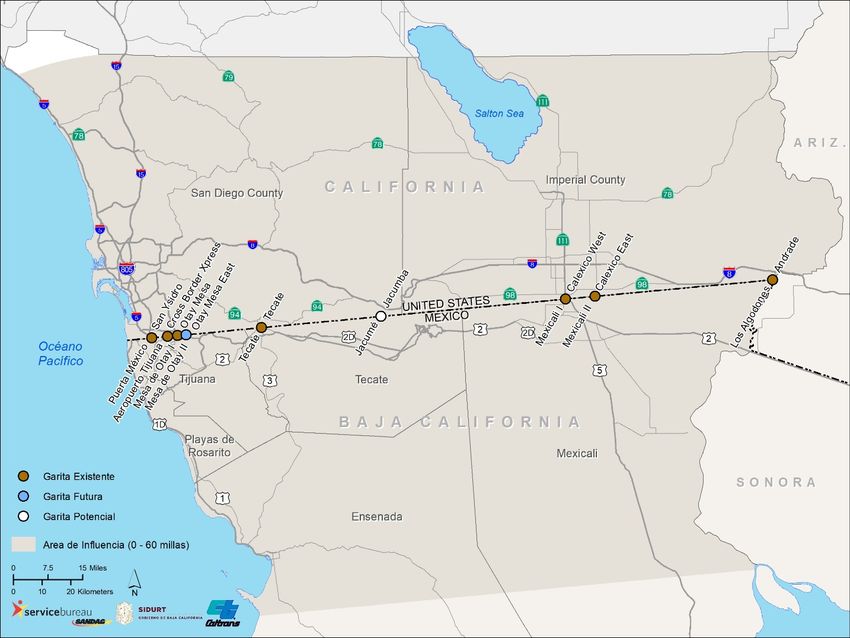
Welcome to SANDAG. Members of the public may speak to the Borders Committee and the Committee on
Binational Regional Opportunities on any item at the time the Committees are considering the item. Public
speakers are limited to three minutes or less per person. The Committees may only take action on any item
appearing on the agenda.
In order to keep the public informed in an efficient manner and facilitate public participation, SANDAG also
provides access to all agenda and meeting materials online at sandag.org/meetings. Additionally, interested
persons can sign up for email notifications at sandag.org/subscribe.
SANDAG operates its programs without regard to race, color, and national origin in compliance with Title VI of the
Civil Rights Act. SANDAG has developed procedures for investigating and tracking Title VI complaints, and the
procedures for filing a complaint are available to the public upon request. Questions concerning SANDAG
nondiscrimination obligations or complaint procedures should be directed to the SANDAG General Counsel,
John Kirk, at (619) 699-1997 or john.kirk@sandag.org. Any person who believes himself or herself or any specific
class of persons to be subjected to discrimination prohibited by Title VI also may file a written complaint with the
Federal Transit Administration.
In compliance with the Americans with Disabilities Act (ADA), SANDAG will accommodate persons who require
assistance in order to participate in SANDAG meetings. If such assistance is required, please contact the SANDAG
ADA Coordinator, the Director of Diversity and Equity, at (619) 699-1900, at least 72 hours in advance of the
meeting. To request this document or related reports in an alternative format, please call (619) 699-1900 or
(619) 699-1904 (TTY), or fax (619) 699-1905.
SANDAG agenda materials can be made available in alternative languages. To make a request, call (619) 699-1900
at least 72 hours in advance of the meeting.
Los materiales de la agenda de SANDAG están disponibles en otros idiomas. Para hacer una solicitud, llame al
(619) 699-1900 al menos 72 horas antes de la reunión.

如有需要, 我们可以把SANDAG议程材料翻译成其他語言.

请在会议前至少 72 小时打电话 (619) 699-1900 提出请求.

                                              Mission Statement
 The 18 cities and county government are SANDAG serving as the forum for regional decision-making. SANDAG
   builds consensus; makes strategic plans; obtains and allocates resources; plans, engineers, and builds public
      transit; and provides information on a broad range of topics pertinent to the region’s quality of life.

                                           Our Commitment to Equity
   We hold ourselves accountable to the communities we serve. We acknowledge we have much to learn and
       much to change; and we firmly uphold equity and inclusion for every person in the San Diego region.
 This includes historically underserved, systemically marginalized groups impacted by actions and inactions at all
                                       levels of our government and society.
       We have an obligation to eliminate disparities and ensure that safe, healthy, accessible, and inclusive
  opportunities are available to everyone. In 2021, SANDAG will develop an equity action plan that will inform
  how we plan, prioritize, fund, and build projects and programs; frame how we work with our communities;
define how we recruit and develop our employees; guide our efforts to conduct unbiased research and interpret
                   data; and set expectations for companies and stakeholders that work with us.
  We are committed to creating a San Diego region where every person who visits, works, and lives can thrive.

           San Diego Association of Governments ⋅ 401 B Street, Suite 800, San Diego, CA 92101-4231
                                    (619) 699-1900 | Fax (619) 699-1905 | sandag.org

                                                         2                                                     061620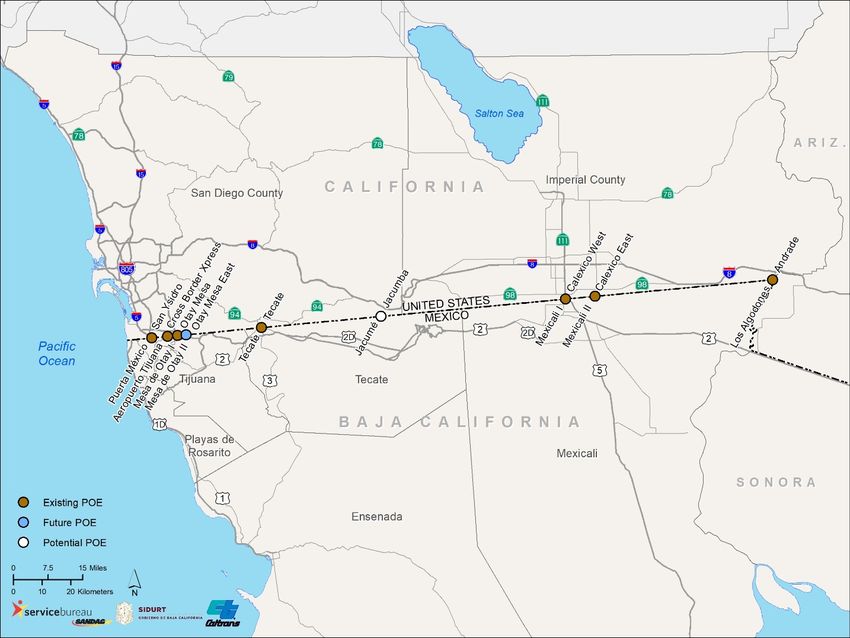
Joint Meeting of the Borders Committee and the
           Committee on Binational Regional Opportunities
                                            Friday, March 26, 2021

Item No.                                                                                     Action
  +1.      Approval of Meeting Minutes                                                      Approve
           +1A.    January 22, 2021, Borders Committee Meeting Minutes
           +1B.    February 26, 2021, Borders Committee, Committee on Binational
                   Regional Opportunities with Municipalities and State Government of
                   Baja California Joint Meeting Minutes

   2.      Public Comments/Communications/Member Comments
           Public comments under this agenda item will be limited to five public
           speakers. Members of the public shall have the opportunity to address the
           Borders Committee on any issue within the jurisdiction of SANDAG that is
           not on this agenda. Other public comments will be heard during the items
           under the heading “Reports.”

   3.      Executive Director's Report                                                     Discussion
           Hasan Ikhrata, SANDAG
           An update on key programs, projects, and agency initiatives, including
           San Diego Forward: The 2021 Regional Plan, will be presented.

                                            Reports

   4.      Planning Across the California – Baja California Border                         Information
           COBRO Chair Paul Ganster
           An overview of previous Border Master Plan efforts will be presented.

  +5.      California – Baja California 2021 Border Master Plan                            Information
           José Márquez, Caltrans
           An overview on highlights and key findings of the California–Baja California
           2021 Border Master Plan will be presented.

   6.      The California – Baja California BMP Website and Story Map                      Information
           Cheryl Mason, SANDAG Service Bureau
           The California-Baja California Border Master Plan (BMP) Story Map is a web-
           based tool developed as part of the 2021 BMP, containing high-level trade and
           border crossing statistics, innovative ideas for managing the binational
           transportation system, project mapping, BMP recommendations, and links to
           the BMP website. An overview of the Story Map will be presented.

                                                          3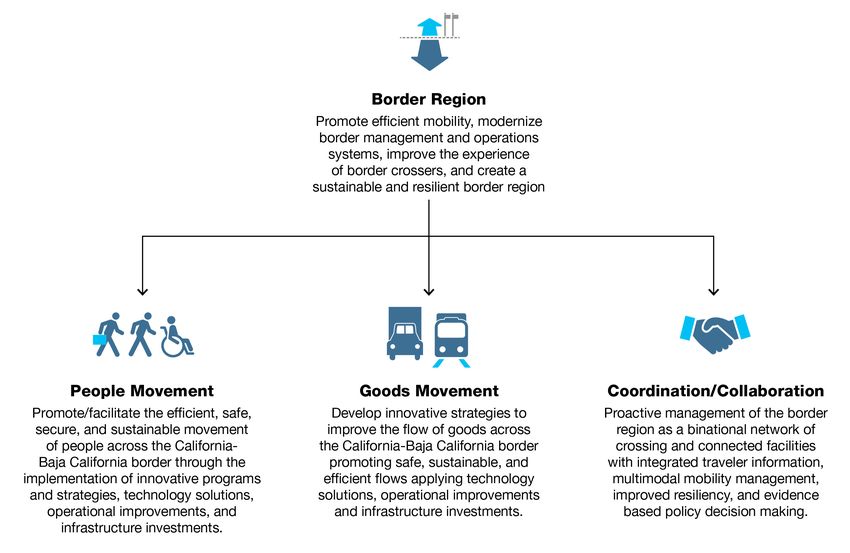
7.      Update on the State Route 11 and future Otay Mesa East Port of                   Information
             Entry Project
             María Rodríguez-Molina, SANDAG
             Mario Orso, Caltrans
             An overview of the State Route 11 and the future Otay Mesa East Port of Entry
             project and activities will be presented.

     8.      Continued Public Comments
             If the five-speaker limit for public comments was exceeded at the beginning
             of this agenda, other public comments will be taken at this time. Subjects of
             previous agenda items may not again be addressed under public comment.

     9.      Upcoming Meetings                                                                Information
             The next Borders Committee meeting is scheduled for Friday, April 23, 2021, at
             12:30 p.m.

    10.      Adjournment

+ next to an item indicates an attachment

                                                             4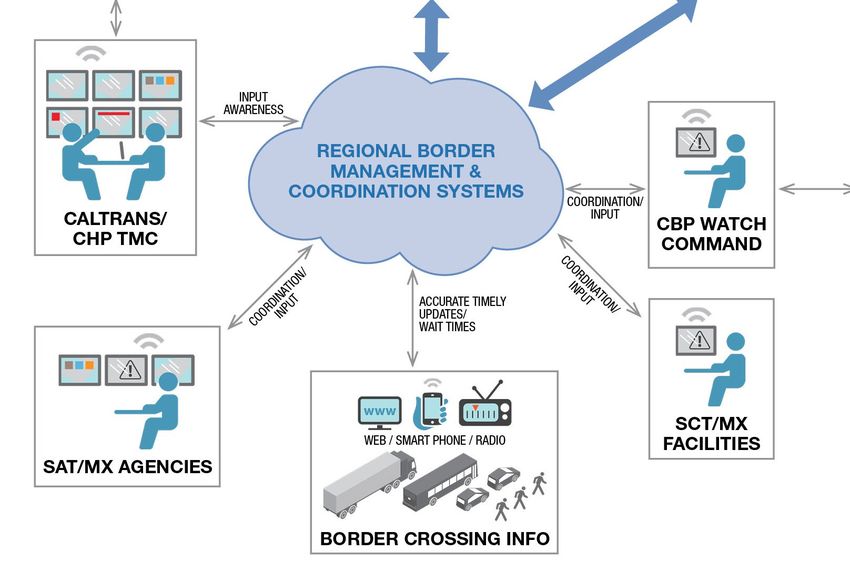
Joint Meeting of the Borders Committee and the
Committee on Binational Regional Opportunities                                                 Item:   1A
March 26, 2021

January 22, 2021, Meeting Minutes
Chair Serge Dedina (South County) called the Borders
Committee meeting to order at 12:32 p.m.                    Action: Approve
                                                            The Borders Committee is asked to approve
1. Approval of Meeting Minutes                              the minutes from its January 22, 2021, Borders
Action: Upon a motion by Councilmember Vivian               Committee meeting.
Moreno (City of San Diego) and a second by
Councilmember Bill Sandke (South County), the Borders Committee approved the minutes from its
October 23, 2020, and November 20, 2020, meetings.
The motion passed.
Yes: Chair Dedina, Vice Chair Jesus Eduardo Escobar (Imperial County), Councilmember Moreno,
Supervisor Nora Vargas (County of San Diego), and Mayor Paul McNamara (North County Inland).
No: None.
Abstain: None.
Absent: East County and North County Coastal.

Election of Chair
Election of Chair pro tem in anticipation of Chair Dedina and Vice Chair Escobar departing the Borders
Committee meeting early.
Action: Upon a motion by Mayor McNamara and a second by Vice Chair Escobar, the Borders Committee
was asked to select and approve Councilmember Moreno as Chair pro tem for purposes of continuing the
January 22, 2021, Borders Committee meeting.
The motion passed.
Yes: Chair Dedina, Vice Chair Escobar, Councilmember Moreno, Supervisor Vargas, and Mayor McNamara.
No: None.
Abstain: None.
Absent: East County and North County Coastal.

2. Public Comments/Communications/Member Comments
Chair Dedina welcomed and announced the new Borders Committee members. Representing the County of
San Diego, Supervisor Joel Anderson and welcomed his staff Mariko Nikawatase, Supervisor Nora Vargas as
the alternate member. City of San Diego new alternate is Councilmember Sean Elo-Rivera, and existing
Councilmember Priya Bhat-Patel (City of Carlsbad) representing the North County Coastal cities.
Chair Dedina announced that the Board of Directors met and took a bold step to adopt a Social Equity
Statement, the first time SANDAG has addressed this from a regional perspective; and recognized that the
borders and tribal communities have a strong voice and a long history with these issues.
SANDAG and Caltrans will be holding the first public meeting for the South Bay to Sorrento corridor on
Thursday, January 28, 2021, from 6 to 7 p.m. via Zoom.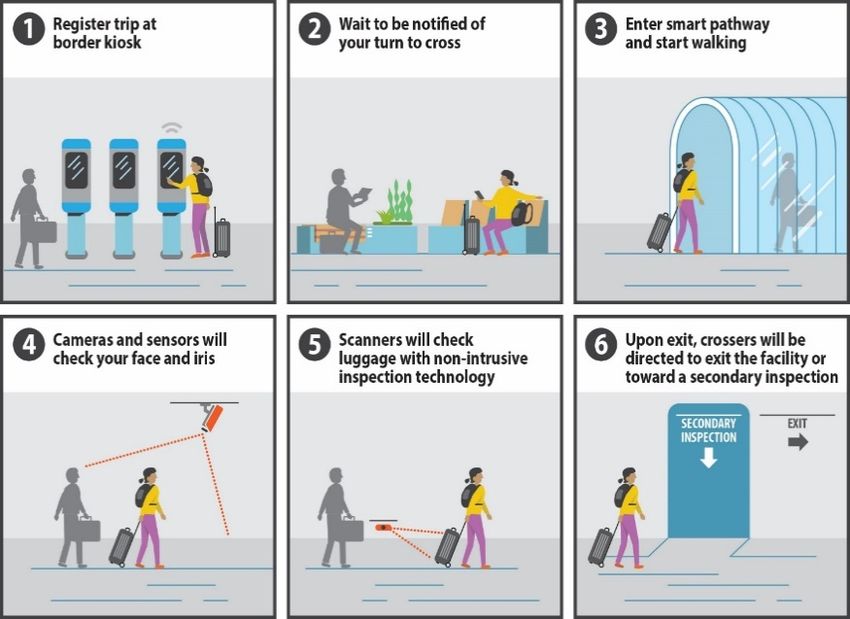
Caltrans District 11 Director Gustavo Dallarda announced that the 2021 Border Master Plan will be adopted
on Thursday, February 11, 2021.

3. Executive Director’s Report (Discussion)
Chief Planning and Innovation Officer Ray Traynor provided an update on key programs, projects, and agency
initiatives, including the Mid-Coast Corridor Transit project, San Diego Forward: The 2021 Regional Plan,
Del Mar Bluffs Stabilization, Central Mobility Hub, Otay Mesa East Port of Entry, the Airport Connectivity
project, and the agency’s response to COVID-19.
Action: Discussion only.
                                              Chair’s Report

4. Recognition of Former Members (Information)
Chair Dedina recognized former members of the Borders Committee for their support and service to advance
the border region.
Action: Information only.
Chair Dedina and Vice Chair Escobar departed the meeting at 12:52 p.m.

                                                  Reports

5. 2021 Freight Gateway Study Update (Information)
Associate Transportation Planner Keri Robinson, Transportation Engineer/Planner Jolene Hayes, Fehr and
Peers, Chief Operating Officer Elizabeth Hannon and Chief Executive Officer, Principal Business Analyst &
Systems Engineer Ty Manzo, Sutra Research, presented an overview of the Freight Gateway Study Update,
which developed information to better plan and manage the regional and crossborder freight network.
Action: Information only.

6. Regional Senate Bill 1 Trade Corridor Enhancement Program Funding Awards and City of
   San Diego La Media Road Update (Information)
Keri Robinson, Assistant Deputy Director Abi Palaseyed and Senior Civil Engineer Mastaneth Ashrafzadeh,
City of San Diego, and Associate Principal Kevin Gibson, Rick Engineering, presented an update on the
regional Senate Bill 1 Trade Corridor Enhancement program funding awards and the City of San Diego
La Media Road project.
Action: Information only.

7. North America Development Bank Report (Information)
Managing Director Calixto Mateos, North America Development Bank, presented an overview of the
North America Development Bank operations and activities.
Action: Information only.

8. Continued Public Comments
None.

9. Upcoming Meetings (Information)
The next Borders Committee meeting is scheduled for Friday, February 26, 2021, at 12:30 p.m.

10. Adjournment
Chair pro tem Moreno adjourned the meeting at 1:56 p.m.

                                                     2
Meeting Start Time: 12:32 p.m.
                                                                         Meeting Adjourned Time: 1:56 p.m.

Attendance at SANDAG Borders Committee Meeting
January 22, 2021
                                                                        Member/
 Jurisdiction                       Name                                                Attended
                                                                        Alternate
                                    Serge Dedina, Chair                 Member          Yes
 South County
                                    Bill Sandke                         Alternate       Yes
                                    Vacant                              Member          No
 East County
                                    Ronn Hall                           Alternate       No

                                    Vivian Moreno                       Member          Yes
 City of San Diego
                                    Sean Elo-Rivera                     Alternate       No
                                    Nora Vargas                         Member          Yes
 County of San Diego
                                    Joel Anderson                       Alternate       No
                                    Jesus Eduardo Escobar, Vice Chair   Member          Yes
 Imperial County
                                    Luis Plancarte                      Alternate       Yes
                                    Vacant                              Member          No
 North County Coastal
                                    Priya Bhat-Patel                    Alternate       Yes
                                    Paul McNamara                       Member          Yes
 North County Inland
                                    Vacant                              Alternate       No

 Advisory Members

                                    Crystal Ruiz                        Member          Yes
 Riverside County
                                    Yxstian Gutierrez                   Alternate       No

                                    Carlos González Gutiérrez           Member          Yes
 Republic of Mexico
                                    Mario Figueroa/Natalia Figueroa     Alternate       Yes

 Southern California Tribal         Raymond Welch                       Member          Yes
 Chairmen’s Association             Cody Martinez                       Alternate       No

                                    Gustavo Dallarda                    Member          Yes
 Caltrans
                                    Ann Fox                             Alternate       Yes

                                    Elsa Saxod                          Member          Yes
 San Diego County Water Authority
                                    Jose Preciado                       Alternate       No

 Southern California Association    Naresh Amatya                       Member          No
 of Governments                     David C. Salgado                    Alternate       Yes
                                    Jim Ferryman                        Member          No
 Orange County
                                    Jim Dahl                            Alternate       Yes

                                                     3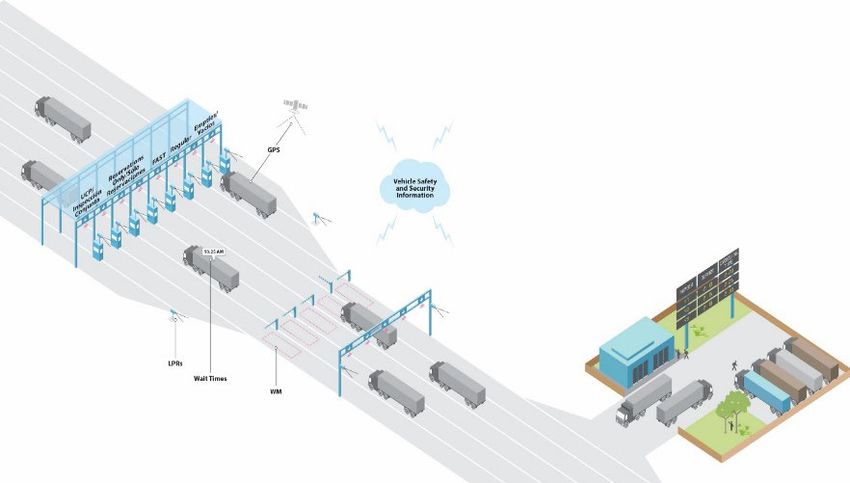
Joint Meeting of the Borders Committee and the
Committee on Binational Regional Opportunities                                                  Item:   1B
March 26, 2021

February 26, 2021, Borders Committee and the Committee on
Binational Regional Opportunities with Municipalities and
State Government of Baja California Joint Meeting Minutes
Chair Serge Dedina (South County) called the Borders         Action: Approve
Committee meeting to order at 12:32 p.m.
                                                             The Borders Committee is asked to approve
1. Approval of Meeting Minutes                               the minutes from its February 26, 2021,
                                                             Borders Committee meeting.
This item was continued to a future meeting.

2. Public Comments/Communications/Member Comments
Chair Dedina welcomed meeting participants to the Joint Meeting of the Borders Committee and the
Committee on Binational Regional Opportunities (COBRO) with Municipalities and State Government of Baja
California. Ambassador Carlos González Gutiérrez, Consular General of Mexico in San Diego, acted as Co-
Chair of this joint meeting.
Chair Dedina and Co-Chair Gonzalez Gutiérrez welcomed distinguished guests including Mexican partners
representing the municipalities and State of Baja California, guests representing the federal governments of
the U.S. and Mexico, SANDAG leadership, and introduced new members of the Borders Committee that
were attending for the first time.

3. Executive Director’s Report (Discussion)
Executive Director Hasan Ikhrata welcomed everyone to the joint meeting and provided an update on key
programs, projects, and agency initiatives.
Action: Discussion only.
                                                  Reports

4. Report from Consul General of Mexico (Information)
Co-Chair González Gutiérrez provided an overview on binational activities within the purview of the Borders
Committee.
Action: Information only.

5. Impacts of Border Delays at the California – Baja California Land Ports of Entry Study
   (Information)
Corridor Planning Manager Rachel Kennedy, Anthony Homan, HDR Inc., and Tom Kear, T. Kear Transportation
Planning and Management, provided an overview of the Impacts of Border Delays at California –
Baja California Land Ports of Entry study, which quantifies the economic and climate/air quality impacts
resulting from delays in the crossborder movements of people and freight.
Action: Information only.
6. Otay Mesa East – Mesa de Otay II Port of Entry Project Updates (Information)
Project Corridor Director Mario Orso, Caltrans, Capital Development Program Manager María Rodríguez,
SANDAG, Director General of Highway Development Ricardo Erazo Garcia Cano and Special Projects
Coordinator Erika Garcia, Secretariat of Communications and Transportation, Mexico, presented an update on
the Otay Mesa East – Mesa de Otay II Port of Entry project.
Action: Information only.

7. Continued Public Comments
None.

8. Upcoming Meetings (Information)
The next Borders Committee meeting is scheduled for Friday, March 26, 2021, at 12:30 p.m.

9. Adjournment
Chair Dedina adjourned the meeting at 2:39 p.m.

                                                     2
Meeting Start Time: 12:32 p.m.
                                                                         Meeting Adjourned Time: 2:39 p.m.

Attendance at SANDAG Borders Committee Meeting
February 26, 2021
                                                                        Member/
 Jurisdiction                       Name                                                Attended
                                                                        Alternate
                                    Serge Dedina, Chair                 Member          Yes
 South County
                                    Bill Sandke                         Alternate       Yes
                                    Laura Koval                         Member          Yes
 East County
                                    Jack Shu                            Alternate       Yes

                                    Vivian Moreno                       Member          Yes
 City of San Diego
                                    Sean Elo-Rivera                     Alternate       No
                                    Joel Anderson                       Member          Yes
 County of San Diego
                                    Nora Vargas                         Alternate       No
                                    Jesus Eduardo Escobar, Vice Chair   Member          Yes
 Imperial County
                                    Luis Plancarte                      Alternate       No
                                    Dave Druker                         Member          Yes
 North County Coastal
                                    Ryan Keim                           Alternate       No
                                    Paul McNamara                       Member          Yes
 North County Inland
                                    John Mullin                         Alternate       No

 Advisory Members

                                    Crystal Ruiz                        Member          Yes
 Riverside County
                                    Yxstian Gutierrez                   Alternate       No

                                    Carlos González Gutiérrez           Member          Yes
 Republic of Mexico
                                    Mario Figueroa/Natalia Figueroa     Alternate       Yes

 Southern California Tribal         Raymond Welch                       Member          No
 Chairmen’s Association             Cody Martinez                       Alternate       No

                                    Gustavo Dallarda                    Member          Yes
 Caltrans
                                    Ann Fox                             Alternate       Yes

                                    Elsa Saxod                          Member          Yes
 San Diego County Water Authority
                                    Jose Preciado                       Alternate       No

 Southern California Association    Naresh Amatya                       Member          No
 of Governments                     David C. Salgado                    Alternate       No
                                    Jim Ferryman                        Member          No
 Orange County
                                    Jim Dahl                            Alternate       Yes

                                                     3
Joint Meeting of the Borders Committee and the
Committee on Binational Regional Opportunities Item: 5
March 26, 2021
California–Baja California 2021 Border Master Plan
Overview
Action: Information
The California-Baja California Border Master Plan (BMP)
An overview on highlights and key findings of
is a comprehensive, binational approach to coordinate
the California–Baja California 2021 Border
planning and delivery of land ports of entry (POE) and
Master Plan will be presented.
transportation infrastructure projects serving those POEs
in the California-Baja California border region.
The U.S.–Mexico Joint Working Committee (JWC), led by Fiscal Impact:
the U.S. Federal Highway Administration (FHWA) and None.
Mexico’s Secretariat of Communications and Schedule/Scope Impact:
Transportation (SCT), provided leadership for the effort.
The California–Baja California 2021 BMP was
Caltrans developed the 2021 BMP in partnership with
completed in February 2021 and will be used
the State of Baja California Secretariat of Infrastructure,
to improve binational planning and
Urban Development, and Territorial Reorganization
coordination of projects and programs along
(SIDURT); with consultant assistance from the SANDAG
the California-Baja California border.
Service Bureau and its subconsultant, IBI Group; and
with technical support from the HNTB Corporation.
The planning process involves nearly 40 agencies from the United States and Mexico at the federal, state,
regional, and local levels. The study officially kicked off in January 2020 and was completed in February 2021.
Key Considerations
The California–Baja California 2021 BMP is this region’s third plan. The region’s first BMP was completed in
2008. One of the key successes of the 2008 BMP was the development of a methodology and criteria to
evaluate and rank POE projects as well as roadway, interchange, and rail projects serving the POEs. An
update completed in 2014 focused on goals such as identifying new policy, legislation, and funding trends;
developing an online data-entry tool for use by BMP agencies; expanding data collection; and reaching
consensus with agencies on future BMP activities.
Key accomplishments of the 2021 BMP include:
• Engaged stakeholder groups in border region
• Developed forecasts of border statistics and profiles of existing conditions
• Developed innovative strategies for improving the binational transportation system and categorized it by
people movement, goods movement, and collaboration/coordination
• Prepared white papers to elaborate on selected strategies and propose possible solutions
• Updated POE and transportation projects using an enhanced online data portal
• Identified funding opportunities and recommendations
• Created the California-Baja California BMP website: calibajabmp.org
• Created an online story map to visualize the BMP and border regionGiven the current and projected travel demand at the POEs along the California-Baja California border,
improving the capacity and operations of the existing infrastructure is critical to decrease traffic congestion,
facilitate international trade, reduce environmental impacts, encourage multimodal crossings (including
pedestrian and cyclist), and improve the overall quality of life for residents in the border region. Federal, state,
regional, and local agencies responsible for planning and implementation of POEs and related transportation
facilities in the California–Baja California region agree that a border master planning process is needed.
This process helps optimize investments in border transportation infrastructure while providing and
prioritizing multimodal options and giving certainty to future actions related to POEs.
The full report, technical appendix, and an executive summary in English and Spanish are available on the
BMP website. Attachment 1 includes an executive summary of the 2021 BMP.
Next Steps
The final report and key findings will help inform ongoing and future planning efforts in the California–
Baja California border region. Caltrans plans to convene annual meetings of BMP agencies to help strengthen
binational collaboration and coordination and to advance projects to help manage the border as a system.
Elisa Arias, Director of Integrated Transportation Planning
Key Staff Contact: Cheryl Mason, (619) 699-1951, cheryl.mason@sandag.org
Attachment: 1. California-Baja California 2021 Border Master Plan Executive Summary
2Attachment 1
Executive Summary
2021
Resumen Ejecutivo
California-Baja California
2021 Border Master Plan
Plan Maestro Fronterizo
California-Baja California 2021
FEBRUARY 2021
FEBRERO 2021
3Executive Summary
Resumen Ejecutivo
California-Baja California
2021 Border Master Plan
Plan Maestro Fronterizo
California-Baja California 2021
FEBRUARY 2021
FEBRERO 2021
Submitted to
Caltrans, District 11
4050 Taylor Street
San Diego, CA 92110
Submitted by
SANDAG Service Bureau
401 B Street, Suite 800
San Diego, CA 92101
(619) 699-1900
sandag.org/servicebureau
IBI Group Team
530 B Street, Suite 1000
San Diego CA 92101
(619) 234-4110
ibigroup.com
4I
February 11, 2021
The California Department of Transportation (Caltrans) and the Secretariat of Infrastructure,
Urban Development and Territorial Reorganization of Baja California (SIDURT) would like to
thank the California-Baja California 2021 Border Master Plan (BMP) Policy Advisory
Committee and Technical Working Group for their valuable contributions and participation
in this unique binational planning process. Special acknowledgment is due to the United
States (U.S.) Federal Highway Administration and Mexico's Secretariat of Transportation and
Communications for their leadership and support through the U.S.-Mexico Joint Working
Committee.
The California-Baja California BMP is a binational comprehensive approach to coordinate
planning and delivery of international land Ports of Entry (POEs) and transportation
infrastructure projects serving the POEs in the region. The initial California-Baja California
BMP was completed in 2008, and later updated in 2014 with the participation of
government agencies from both sides of the international border. This update reflects a
more innovative and sustainable approach to address the transportation needs at the
border region.
Developing new or improving existing international land POEs and related transportation
infrastructure is a complex and lengthy undertaking that requires close coordination and
collaboration between governmental agencies on both sides of the border. A
comprehensive and systematic approach, like the California-Baja California BMP, maximizes
resources to facilitate the efficient cross-border mobility and provide for the security of
people and goods of Mexico and the U.S. Effective mobility improves the quality of life for
residents in the border region and ultimately for the citizens of both countries.
Caltrans and SIDURT appreciate the outstanding support and commitment of the agencies
involved in the California-Baja California BMP effort and look forward to continuing this
partnership in the future.
Sincerely,
GUSTAVO DALLARDA KAREN POSTLETHWAITE MONTIJO
District Director Secretary
California Department of Transportation Secretariat of Infrastructure, Urban
CALTRANS Development and Territorial
Reorganization of Baja California
SIDURT
Caltrans | SIDURT | SANDAG Service Bureau 5 iI
11 de febrero de 2021
El Departamento de Transporte de California (Caltrans por sus siglas en ingles) y la
Secretarfa de lnfraestructura y Desarrollo Urbano y Reordenacion Territorial del Estado de
Baja California (SIDURT) desean agradecer al Comite Asesor de Polfticas y al Grupo Tecnico
de Trabajo por su participacion y sus valiosas contribuciones en este proceso (inico de
planeacion binacional en la actualizacion del Plan Maestro Fronterizo California-Baja
California. Reconocemos de manera especial a la Administracion Federal de Carreteras
de los Estados Unidos y a la Secretarfa de Comunicaciones y Transportes por su liderazgo y
apoyo a troves del Comite Conjunto de Trabajo.
El Plan Maestro Fronterizo California-Baja California es un instrumento integral binacional
que coordina, planea, y jerarquiza los proyectos de Cruces Fronterizos e infraestructura de
transporte que dan servicio a la region. El primer Plan Maestro Fronterizo fue concluido en
2008 y fue actualizado en 2014 con la participacion de dependencias de los tres ordenes
de gobierno en ambos !ados de la frontera. La presente actualizacion refleja una nueva
perspectiva innovadora y sustentable de como enfrentar la problem6tica de movilidad en
la region fronteriza.
Desarrollar nuevos Cruces Fronterizos o mejorar los existentes, asf como la infraestructura del
transporte relacionada a los mismos es un esfuerzo complejo que requiere de coordinacion
y colaboracion muy estrecha entre dependencias gubernamentales en ambos !ados de la
frontera. Un esfuerzo consensuado y sistem6tico como lo es el Plan Maestro Fronterizo
California-Baja California maximiza recursos y facilita la movilidad y seguridad
transfronteriza de bienes y personas entre Mexico y los Estados Unidos de manera mas
eficaz. Una movilidad efectiva mejora la calidad de vida de los residentes en la region
fronteriza y por ende a los ciudadanos de ambos pafses.
Caltrans y SIDURT reconocen y aprecian el apoyo excepcional y compromiso por parte de
las dependencias involucradas en el Plan Maestro Fronterizo California-Baja California y
esperan mantener esta estrecha relacion binacional en el futuro.
Atentamente,
GUSTAVO DALLARDA KAREN POSTLETHWAITE MONTIJO
Director de Distrito Secretaria
Departamento de Transporte de California Secretarfa de lnfraestructura y Desarrollo
CALTRANS Urbano y Reordenacion Territorial del
Estado de Baja California
SIDURT
ii 6 Caltrans | SIDURT | SANDAG Service BureauAcknowledgments: Policy Advisory Committee and
Technical Working Group
The California–Baja California 2014 Border Master Plan (BMP) Update was prepared with the assistance
of many individuals from the BMP agencies. Special acknowledgment for the leadership and support of
the following:
California State Transportation Agency Secretariat of Infrastructure and Urban
(CalSTA) Development of Baja California (SIDURT)
Secretary David Kim Secretary Karen Postlethwaite
Current representatives of the Policy Advisory Committee (PAC) and Technical Working Group (TWG)
are listed below.
U.S. Representatives (as of December 2020)
(Agencies listed in alphabetical order)
California Department of Transportation City of Imperial Beach
(Caltrans) Tyler Foltz
Gustavo Dallarda
Ann Fox City of National City
Mario Orso Roberto Yano
Jose Marquez Martin Reeder
California Environmental Protection City of San Diego
Agency (CalEPA) Rita Fernandez
Yana Garcia Denice Garcia
Elizabeth King Samir Hajjiri
City of Calexico U.S. Consulate General of the
Liliana Falomir United States in Tijuana
Sue Saarnio
City of Chula Vista Bridget Premont
William Valle Jett Thomason
Frank Riviera Sandy Lien
Scott Barker
County of Imperial
City of El Centro Jim Minnick
Marcela Piedra Michael Abraham
Abraham Campos
City of Holtville
Nick Wells
Caltrans | SIDURT | SANDAG Service Bureau iii
7Acknowledgments
Policy Advisory Committee and Technical Working Group
California–Baja California
2021 Border Master Plan
County of San Diego San Diego Association of Governments
Sarah Aghassi (SANDAG)
Michael De La Rosa Hasan Ikhrata
Richard Chin Hector Vanegas
Eric Lardy Phil Trom
Robert Reider
Domingo Vigil Southern California Association of
Governments (SCAG)
U.S. Customs and Border Protection (CBP) Annie Nam
Pete Flores Scott Strelecki
Sidney Aki David Salgado
Jose Haro
Ryan Koseor Invited Agency
Anne Maricich Port of San Diego
Yvette Stephens Stephen Shafer
Mikhail Pavlov
U.S. Department of State (DOS)
Christian Loubeau
Rebecca Daley
U.S. Federal Highway Administration
(FHWA)
Sylvia Grijalva
Monica Gourdine
U.S. General Services Administration
(GSA)
Ramon Riesgo
Anthony Kleppe
Imperial County Transportation
Commission (ICTC)
Mark Baza
Virgina Mendoza
Marlene Flores
International Boundary and
Water Commission (IBWC)
Dr. Pardinare Unnikrishna
Dr. Apurba Borah
North American Development Bank
Manuel Hernandez
Jesse Hereford
iv Caltrans | SIDURT | SANDAG Service Bureau
8Acknowledgments
Policy Advisory Committee and Technical Working Group
California–Baja California
2021 Border Master Plan
Mexico Representatives (as of December 2020)
(Agencies listed in alphabetical order)
Consulate General of Mexico in San Diego Municipality of Tijuana – Secretariat of
Carlos González Gutiérrez Territorial, Urban and Environmental
Natalia Figueroa Development (SDTUA)
Patricia Peterson Villalobos
Institute of Administration and Estimates Ramiro Gutiérrez
of National Real Estate (INDAABIN) Oscar Gonzalez Lozano
Mauricio Márquez Corona
Salvador Lamas Padilla National Immigration Institute of Mexico
Gerardo Castro Bolaños (INM)
Antonio López Díaz
International Boundary and Water Carmen Ivonne Ramírez García
Commission (CILA) Marian Hamdan
Roberto Castelo
Jesús Luévano Sustainable Mobility Institute of
Baja California (IMOS)
Metropolitan Planning Institute of Tijuana Raúl Alejandro Corona Rodarte
(IMPlan)
Rodolfo Argote Gutierrez Office of the Governor of Baja California
Belén Couoh Amador Rodolfo Castro Valdez
Municipal Development Planning Institute Secretariat of Agrarian, Land, and
of Tecate (Inpladem) Urban Development (SEDATU)
Alejandro Ruiz Garcia María Dolores Franco Delgado
Ivonne Anaya Gómez Ismael López Padilla
Municipal Planning Institute of Mexicali Secretariat of Communications and
(IMIP) Transportation (SCT)
Helia Marisol Vázquez Montes de Oca Ricardo Erazo Garcia Cano
Erika Guadalupe Garcia Reyes
Municipality of Mexicali
Juventino Pérez Brámbila Secretariat of Sustainable Economy and
Miguel Sánchez Robles Tourism of Baja California (SEST)
Mauricio Atehorteua Galeano Mario Escobedo Carignan
Rubén Roa Dueñas
Municipality of Tecate Vivian Salazar Aguirre
Hugo Esteban Briceño Alcantar
Secretariat of Exterior Relations (SRE)
Municipality of Tijuana – Secretariat of Jesús Mario Chacón Carrillo
Economic Development of Tijuana Liliana Yasmín García Hernández
(SEDETI)
Arturo Pérez Behr
Mónica Gabriela Morales Juárez
Caltrans | SIDURT | SANDAG Service Bureau v
9Acknowledgments
Policy Advisory Committee and Technical Working Group
California–Baja California
2021 Border Master Plan
Secretariat of Infrastructure and Urban
Development of Baja California (SIDURT)
Jorge Hirales Vargas
Carlos López Rodríguez
Víctor Hugo Rangel Ramírez
Secretariat of Infrastructure and Urban
Development (SIDURT–Tecate)
Carlos Villalobos
Secretariat of Infrastructure and Urban
Development (SIDURT–Tijuana)
Juan Ramón Bojórquez López
Service for the National Health for Food
Safety and Food Quality (SENASICA)
Jorge Luis Leyva Vázquez
Teodomiro Carranza
Rosalinda Flores Camacho
Tax Administration Service (SAT) Including
General Customs Administration
(Aduanas)
Oliver Aguilar Yuñez
Carlos Morales Tayavas
vi Caltrans | SIDURT | SANDAG Service Bureau
10Acknowledgments: Other Contributors
The California–Baja California 2021 Border Master Plan (BMP) was prepared with the assistance of many
individuals from the BMP agencies.
(Current representatives of the Policy Advisory Committee (PAC) and Technical Working Group (TWG)
are acknowledged separately in the BMP report. Individuals who contributed other than PAC and TWG
representatives are listed below.)
U.S. Representatives (as of December 2020)
(Agencies listed in alphabetical order)
California Department of Transportation National City
(Caltrans) Steve Manganiello
Roy Abboud Ray Pe
Omar Bendeck
Seth Cutter U.S. Customs and Border Protection (CBP)
Maurice Eaton Jonathan Alesso
Omar Flores Brittany Brown
Beth Landrum Eduardo Castorena
Yasnaia Massie Deborah Jasperson
Donaldo Martinez Laura Wilson
Jose Ornelas
Robin Owen U.S. Department of State (DOS)
Melina Pereira Sandy Lien
Enrique Ramirez Erica Magallon
Jose Luis Robles Kanchana Shanumurthy
Caridad Sanchez
Rogelio Sanchez San Diego Association of Governments
Barbara Valentine (SANDAG)
Hanwen Yi Linda Cimmino
Grace Chung
City of Calexico Rick Curry
Chris Valesa Erika Espinosa
Tedi Jackson
County of San Diego Including Rachael Kennedy
Air Pollution Control District Kendall Reynolds
Marty Eslambolchi Maria Rodriguez Molina
Hugo Salgado Eli Tamagni
Eric Luther Arthur Tovar
Jennifer Williamson
Caltrans | SIDURT | SANDAG Service Bureau vii
11Acknowledgments
Other Contributors
California–Baja California
2021 Border Master Plan
Mexico Representatives (as of December 2020)
(Agencies listed in alphabetical order)
Consulate General of Mexico in San Diego Secretariat of Infrastructure and Urban
Alejandro Sanchez Development of Baja California (SIDURT)
Felipe Dávalos Macalpin
International Boundary and Water Ivan Pacheco
Commission (CILA) Karla Romero
Roberto Espinoza
Secretariat of Exterior Relations (SRE)
Municipal Planning Institute of Mexicali Alejandro Romero
(IMIP) Patricia Barquet
Rogelio Guzmán Obispo Job Orozco
Municipality of Tijuana – Secretariat of Service for the National Health for Food
Territorial, Urban and Environmental Safety and Food Quality (SENASICA)
Development (SDTUA) Luis Antonio Ocampo Salmeron
Miguel Navarro
Tax Administration Service (SAT) Including
National Immigration Institute of Mexico General Customs Administration
(INM) (Aduanas)
Manuel Marin Salazar Jorge Alvarez
Eva Amador
Secretariat of Communications and Luis Cortez
Transportation (SCT)
Francisco Calvario
viii Caltrans | SIDURT | SANDAG Service Bureau
12Acknowledgments
Other Contributors
California–Baja California
2021 Border Master Plan
Visionaries Workshop Participants
Laura Araujo
Mark Baza
Kimberly Collins
Denise Ducheney
Gustavo de la Fuente
Paul Ganster
Mario Orso
Helia Vázquez Montes de Oca
Consultant Team
SANDAG Service Bureau IBI Group Team
Adam Attar Rachael Alberts, IBI Group
Elida Arias David Galicia Cabrera, TTI
Cindy Burke Elizabeth Hannon, Sutra Research
Ruben Casillas Oliver Hartleben, IBI Group
Carlo Felix Debbie Leung, IBI Group
Andy Gordon Luis Lezama, IBI Group
Zach Hernandez Tracy ”Ty” Manzo, Sutra Research
Pat Landrum Don Murphy, IBI Group
Cheryl Mason Jolanda Prozzi, TTI
Rodolfo Orozco Catherine Thibault, IBI Group
Kendall Sauer Patricia Vasquez Cabrera, IBI Group
Tim Sutherland Isabel Victoria-Jaramillo, Cambridge Systematics
Laura Valdes Juan Villa, TTI
Kimberly Walters
TransLang
HNTB Corporation Andrew Monroy
Robert Augspurger Carlos Diaz De Leon Moncada
Bryan Gottschalk
Kellen Gorman
Ian Grasshoff
Earl Medina
Jeff Siegel
Darin Welch
Caltrans | SIDURT | SANDAG Service Bureau ix
13Table of Contents
Executive Summary ES-1
Study Purpose ES-3
Goals and Scope of Work ES-6
Summary of Findings ES-7
2021 Recommendations ES-16
Conclusion ES-18
Resumen Ejecutivo RE-1
Objetivo del Estudio RE-3
Metas y Alcance del Trabajo RE-6
Resumen de Resultados RE-8
Recomendaciones para el 2021 RE-17
Conclusión RE-19
x Caltrans | SIDURT | SANDAG Service Bureau
14List of Tables
Executive Summary
Table ES.1: Scope of Work Tasks ES-7
Table ES.2: Innovative Strategies Objectives ES-8
Table ES.3: People Movement Innovative Strategies ES-10
Table ES.4: Goods Movement Innovative Strategies ES-10
Table ES.5: Collaboration/Coordination Innovative Strategies ES-11
Table ES.6: Summary of 2021 BMP Projects ES-14
Table ES.7: 2021 Recommendations ES-17
Resumen Ejecutivo
Tabla RE.1: Tareas del Alcance de Trabajo RE-7
Tabla RE.2: Objetivos de Estrategias Innovadoras RE-9
Tabla RE.3: Estrategias Innovadoras del Movimiento de Personas RE-10
Tabla RE.4: Estrategias Innovadoras del Movimiento de Mercancías RE-11
Tabla RE.5: Estrategias Innovadoras de Colaboración/Coordinación RE-12
Tabla RE.6: Resumen de Proyectos del BMP 2021 RE-15
Tabla RE.7: Recomendaciones para el 2021 RE-18
Caltrans | SIDURT | SANDAG Service Bureau xi
15List of Figures
Executive Summary
Figure ES.1: California–Baja California Region and Ports of Entry ES-2
Figure ES.2: Border Region Vision ES-9
Figure ES.3: White Paper Topics ES-12
Figure ES.4: Number of Projects by Time Horizon ES-15
Resumen Ejecutivo
Figura RE.1: Región California–Baja California y Puertos Fronterizos RE-2
Figura RE.2: Visión de la Región Fronteriza RE-10
Figura RE.3: Temas de Informes Oficiales RE-13
Figura RE.4: Cantidad de Proyectos por Horizonte Temporal RE-16
xii Caltrans | SIDURT | SANDAG Service Bureau
16Executive Summary
The United States and Mexico share an international border that is nearly 2,000 miles long and spans
four U.S. states and six Mexican states. Total population is estimated at approximately 329 million in the
United States and 129 million in Mexico. 1 International trade between the two countries is a key
contributor to local, state, and national economic growth and is important for the continued economic
success of both nations. Mexico became the United States’ top trading partner in 2019 and is one of the
United States’ primary export markets. Trade has increased by more than 225% since the North
American Free Trade Agreement (NAFTA) was ratified in 1994 and is expected to increase by more than
$68 billion in the California–Baja California region thanks to the United States–Mexico–Canada
Agreement (USMCA), amounting to more than $1 million of goods and services traded per minute. 2
Mexico and Canada are two of the largest markets for U.S. exports, purchasing nearly one-third of
exported U.S. merchandise. Furthermore, Mexican exports to the United States include 40% U.S.
content, far exceeding the U.S. content of any other foreign imports. 3
California and Baja California share a 140-mile long international border. Approximately 6.9 million people
lived in the counties and municipalities along the California–Baja California border in 2015. The
population is expected to grow by more than 1.5 million people by 2040, bringing the total number of
residents to nearly 8.5 million. This growth in population and the associated economic activity will
increase crossborder travel demand and continue to add pressure to the existing Ports of Entry (POE)
facilities and connecting roads.
Along this border are six traditional Ports of Entry (POE): San Ysidro/Virginia Avenue–Puerta México/
El Chaparral; Otay Mesa–Mesa de Otay I; Tecate–Tecate; Calexico West–Mexicali I; Calexico East–
Mexicali II; and Andrade–Los Algodones. A seventh border crossing that has served the region since
December 2015 is Cross Border Xpress (CBX)–Tijuana Airport, which is a hybrid POE in that it is a
privately operated paid-use facility for direct access between the San Diego region and the Tijuana
International Airport. In addition to these seven POEs, the Otay Mesa East–Mesa de Otay II POE, a new
passenger and commercial port, is planned to open in 2024 to facilitate crossborder travel demand in the
region (Figure ES.1).
1
Source: U.S. Census Bureau
2
Source: Brooking Institute
3
Source: U.S. International Trade Commission
Caltrans | SIDURT | SANDAG Service Bureau ES–1
17Executive Summary
California–Baja California
2021 Border Master Plan
Figure ES.1
California–Baja California Region and Ports of Entry
In 2015, there were more than 16.6 million northbound pedestrian crossings through the six traditional
POEs. Projections for the year 2040 estimate an overall growth of approximately 57% in northbound
pedestrian volumes from 2015. Most of this growth is expected to occur at the San Ysidro/Virginia Avenue–
Puerta México/El Chaparral POE. In 2015, there were more than 30.7 million northbound privately owned
vehicle (POV) crossings. Projections for the year 2040 estimate an overall growth of approximately 68% in
northbound POV volumes from 2015, or an additional 20.8 million over 2015 levels. The San Ysidro/Virginia
Avenue–Puerta México/El Chaparral, Otay Mesa–Mesa de Otay I, and Calexico West–Mexicali I POEs are
expected to process about 40%, 17%, and 13% of the 2040 annual total, respectively. Projections for
northbound commercial vehicle volumes estimate 178% overall growth from 1.2 million in 2015 to nearly 3.4
million in 2040. About 27% of the future total (about 900,000) is expected to be processed at the Otay Mesa
East–Mesa de Otay II facility, while Otay Mesa–Mesa de Otay I, Calexico East–Mexicali II, and Tecate–
Tecate are anticipated to process the remaining 50%, 20%, and 3% of the 2040 annual total, respectively. 4
4
U.S. Department of Transportation, Bureau of Transportation Statistics (2010, 2015); BMP Ad Hoc Task Force (2040)
ES–2 Caltrans | SIDURT | SANDAG Service Bureau
18Executive Summary
California–Baja California
2021 Border Master Plan
Study Purpose
Wait times for all modes of crossborder travel reflect significant levels of congestion at most of the border
crossings in the California–Baja California region. Border crossing volumes are expected to increase
significantly between 2015 and 2040 for four of the five crossing modes. In order of relative increase, the
highest growth in crossing volumes is expected for commercial vehicles (178%) followed by personal
vehicles (68%), pedestrians (57%), and finally rail cars (31%). These anticipated increases are in addition
to the millions of crossings that occur each year through the existing California–Baja California POEs.
Bilateral value of trade via commercial truck has also been following a strong increasing trend and will
likely increase as planned POE facilities become operational and capacity to process commercial trade is
improved. The $59 billion in bilateral trade moved via commercial truck in 2015 contributed to the local,
state, and national economies in both the United States and Mexico. As key trade partners, emphasis on
improving and better managing border infrastructure is critical to ensuring current and future economic
stability as well as competitiveness for both countries.
The California–Baja California BMP helps resolve a number of challenges to border planning and brings a
number of benefits. Challenges that it helps resolve include inconsistencies in POE and transportation
project priorities, limited opportunities to improve the tools and data that contribute to more informed
decision making; a desire to balance service, technological advancements, and equity; community,
economic, and environmental impacts related to border crossing operations; congestion and delays at
border crossings; and coordination across binational stakeholders.
In addition to resolving challenges, the BMP also provides value-add benefits in terms of continuity in
decision making; harmonization of binational priorities; added value for seeking public funding for project
implementation; increased alignment with greenhouse gas emissions reductions and vehicle idling efforts;
greater emphasis on binational multimodal needs and efforts; increased awareness of needs for future truck
electrification; the establishment of sound, data-driven, and systematic planning processes; and the shared
benefits of binational information sharing that collectively help to move border-associated projects forward in
a collaborative, informed manner that is considerate of surrounding communities and emerging technologies.
The 2021 BMP incorporates the aforementioned concerns and benefits and updates previous
recommendations to incorporate multimodal considerations, leverage technology for efficient border
crossings, and specific steps for increased collaboration and coordination across the border. The
California–Baja California BMP itself was first envisioned by the U.S.–Mexico Joint Working Committee
(JWC), led by the U.S. Federal Highway Administration (FHWA) and Mexico’s Secretariat of
Communications and Transportation (SCT), as a pilot project to improve the binational coordination on
planning and delivery of land POEs and transportation projects serving those POEs across the entire
U.S.–Mexico border. The pilot study was completed in 2008 to include the first binational prioritization
process for border planning that included a methodology for ranking POE and related infrastructure
projects that was accepted binationally. It was updated in 2014. Caltrans, in partnership with the State of
Baja California Secretariat of Infrastructure, Urban Development and Territorial Reorganization (SIDURT),
consultant assistance from the San Diego Association of Governments (SANDAG) Service Bureau,
subconsultant assistance from the IBI Group Team, and technical support from HNTB Corporation,
developed the 2021 BMP.
Caltrans | SIDURT | SANDAG Service Bureau ES–3
19Executive Summary
California–Baja California
2021 Border Master Plan
Decision-Making Structure
The 2021 BMP Policy Advisory Committee (PAC) was established to provide direction throughout the
study, including the preparation of a Scope of Work and approving the study parameters. By invitation,
the PAC included top-level executive managers of federal, state, regional, and local entities responsible
for land use, transportation, POE facilities, and security operations from the United States and Mexico. A
Technical Working Group (TWG) composed of senior staff from the same agencies was also established
to provide ongoing support and guidance to the consultant in collecting data and providing the requested
information. The participating agencies are:
United States
• U.S. Department of State (DOS)
• U.S. Consulate General of the United States in Tijuana
• U.S. Customs and Border Protection (CBP)
• U.S. General Services Administration (GSA)
• U.S. Federal Highway Administration (FHWA)
• California Department of Transportation (Caltrans)
• California Environmental Protection Agency (CalEPA)
• Imperial County Transportation Commission (ICTC)
• San Diego Association of Governments (SANDAG)
• Southern California Association of Governments (SCAG)
• County of Imperial
• County of San Diego, including the Air Pollution Control District
• City of Calexico
• City of Chula Vista
• City of El Centro
• City of Holtville
• City of Imperial Beach
• City of National City
• City of San Diego
Mexico
• Secretariat of Foreign Relations (Secretaría de Relaciones Exteriores, SRE)
• Consulate General of Mexico in San Diego (Consulado General de México en San Diego)
• Secretariat of Communications and Transportation (Secretaría de Comunicaciones y Transportes,
SCT)
ES–4 Caltrans | SIDURT | SANDAG Service Bureau
20Executive Summary
California–Baja California
2021 Border Master Plan
• Tax Administration Service including General Customs Administration (Servicio de Administración
Tributaria (SAT) incluyendo la Administración General de Aduanas)
• Secretariat Agrarian, Territorial, and Urban Development (Secretaría de Desarrollo Agrario,
Territorial, y Urbano, SEDATU)
• Institute of Administration and Estimates of National Real Estate (Instituto de Administración y
Avalúos de Bienes Nacionales, INDAABIN)
• National Immigration Institute of Mexico (Instituto Nacional de Migración, INM)
• Service for the National Health for Food Safety and Food Quality (Servicio Nacional de Sanidad, Inocuidad
y Calidad Agroalimentaria, SENASICA)
• Office of the Governor of Baja California (Oficina del Gobernador del Estado de Baja California)
• Secretariat of Infrastructure, Urban Development and Territorial Reorganization of Baja California
(Secretaría de Infraestructura y Desarrollo Urbano y Reordenación Territorial del Estado de Baja
California, SIDURT)
• Secretariat of Sustainable Economy and Tourism of Baja California (Secretaría de Economía
Sustentable y Turismo de Baja California, SEST)
• Sustainable Mobility Institute of Baja California (Instituto de Movilidad Sustentable de Baja California.
IMOS)
• Municipality of Mexicali including Mexicali Municipal Institute of Investigation and Urban Planning
(Municipio de Mexicali incluyendo el Instituto Municipal de Investigación y Planeación Urbana de
Mexicali, IMIP)
• Municipality of Tecate including Directorate of Urban Administration and Municipal Development
Planning Institute of Tecate (Municipio de Tecate incluyendo la Dirección de Administración Urbana y
el Instituto de Planeación del Desarrollo Municipal de Tecate, Inpladem)
• Municipality of Tijuana including (Municipio de Tijuana incluyendo):
o Directorate of Urban Administration de Tijuana (Dirección de Administración Urbana)
o Metropolitan Planning Institute of Tijuana (Instituto Metropolitano de Planeación de Tijuana,
IMPLAN)
o Secretariat of Territorial, Urban and Environmental Development (Secretaría de Desarrollo
Territorial, Urbano y Ambiental de Tijuana, SDTUA)
o Secretariat of Economic Development of Tijuana (Secretaría de Desarrollo Económico de
Tijuana, SEDETI)
o Office of Binational Affairs of the Tijuana City Council (Oficina de Asuntos Binacionales del
Ayuntamiento de Tijuana)
Caltrans | SIDURT | SANDAG Service Bureau ES–5
21Executive Summary
California–Baja California
2021 Border Master Plan
Binational Agencies
• International Boundary and Water Commission (IBWC) / Comisión Internacional de Límites y Aguas
(CILA)
• North American Development Bank (NADB) / Banco de Desarrollo de América del Norte (BDAN)
Invited Agencies to Participate on Specific Tasks
• Port of San Diego
Goals and Scope of Work
Given the current and projected travel demand at the above-mentioned POEs, improving the capacity and
operations of the existing infrastructure is critical to decrease traffic congestion, facilitate international
trade, reduce environmental impacts, encourage multimodal (including pedestrian and cyclist) crossings,
and improve the overall quality of life for residents in the border region. Federal, state, regional, and local
agencies responsible for planning and implementation of POEs and related transportation facilities in the
California–Baja California region agree that a border master planning process is needed. This process
will help optimize investments in border transportation infrastructure while providing and prioritizing
multimodal options and giving certainty to future actions related to POEs.
The goals of the 2021 BMP are:
1. Maintain and strengthen binational coordination via the U.S.–Mexico Joint Working Committee and
the Binational Bridges and Border Crossing Group.
2. Expand outreach to community groups and private-sector stakeholders in the border region to learn
about their concerns and gain additional insights on border region issues.
3. Review the status of the recommendations from previous BMPs.
4. Develop a process to manage the border as one system consisting of coordinated ports of entry in
the California–Baja California Border Region, considering current innovative efforts of stakeholders.
5. Identify and address regional mobility impacts of crossborder traffic on border communities.
6. Update new policy and/or legislative issues, and funding trends and opportunities impacting planning
and capital improvement in the BMP study area. Identify and seek ongoing long-range sustainable
funding sources to provide an ongoing BMP process.
7. Encourage ongoing communication amongst participating agencies by upgrading the existing online
project data portal to an updatable data source for partner agency information sharing.
To meet these objectives, the 2021 BMP required input from, and collaboration with, many U.S. and
Mexican local, state, federal stakeholders who contributed to this Project. The scope of work was
approved by the PAC at the January 2020 Kickoff meeting (Table ES.1).
ES–6 Caltrans | SIDURT | SANDAG Service Bureau
22Executive Summary
California–Baja California
2021 Border Master Plan
Table ES.1
Scope of Work Tasks
Task Description
1 Outreach to PAC and TWG to develop 2021 BMP Scope of Work
2 Finalize Scope of Work and Procure Subconsultants
3 Develop Public and Stakeholder Outreach and Communication Plan and Execute Plan
4 Gather, Review, and Update Existing BMP Data
5 Conduct Assessment of Existing Conditions of the Multi-modal Transportation System at
the Border
6 Develop BMP Website; Enhance Online Data Management Tool, Update Project Lists,
and Rank POE Projects
7 Identify Innovative Border Improvement Strategies
8 Develop BMP Story Map
9 Prepare White Papers for up to Three Ideas or Concepts
10 Update Information on Funding Issues and Opportunities
11 Draft Recommendations
12 Draft and Final Reports
Summary of Findings
The following section describes the main findings and recommendations for the main tasks in the study.
Stakeholder and Community Outreach
Outreach for the 2021 BMP began prior to the official kickoff in January 2020. Informal face-to-face
meetings with nearly all of the BMP agencies were held between July and December 2019 to gauge their
interest in participating and review and obtain input on the preliminary Scope of Work. In addition, a
questionnaire that focused on how agencies have used the previous BMP (2014 BMP) and solicited ideas
for the final Scope was distributed to the BMP agencies. Overviews of the Border Master Plan were
presented to various stakeholder groups, including the San Diego Association of Governments
(SANDAG) Committee on Binational Regional Opportunities (COBRO), Borders Committee, and Freight
Working Group; Imperial–Mexicali Binational Alliance (IMBA); and the Smart Border Coalition.
The core of the BMP project was conducted as the binational border region and the world were in the
midst of the COVID-19 pandemic, which, for this project, meant that engagement with the PAC, TWG,
and the Border Stakeholder Groups shifted to virtual workspaces rather than in-person sessions. A
Caltrans | SIDURT | SANDAG Service Bureau ES–7
23You can also read


