LITHUANIAN-AMERICAN NEWS JOURNAL - $5 March 2020
←
→
Page content transcription
If your browser does not render page correctly, please read the page content below
LITHUANIAN-AMERICAN NEWS JOURNAL
$5                       March 2020
contents
                                                                                                       March 2020

                                                                               3 I Believe that Culture Works Wonders
                                                                                 Interview with Giedrė Elekšytė Knieža,

            3
                                                                                 Chair of the Lithuanian American
                                                                                 Community Cultural Council
                                                                                 By Arvydas Reneckis

                                                                               7 Society of Lithuanian Campanologists
                                                                                 By Dr. Gintautas Žalėnas
                                                                                 Translated by Vijolė Arbas
                                                                             13 Lithuanians in New Jersey
                                                                                 By Karilė Vaitkutė

                                                                               2 from the editor

            7
                                                                                 By Karilė Vaitkutė
                                                                                our community
                                                                             20 Shrove Tuesday Celebration and Spring Fair at the
                                                                                Chicago Lithuanian Youth Center
                                                                                By Viktorija Šileika

                                                                             21 Legendary Vairas at the Chicago Saturday
                                                                                School Fundraiser
                                                                                By Viktorija Šileika

                                                                             22 Children of the World Dance Festival
                                                                                By Karilė Vaitkutė

     13
                                                                             23 One Nation – One Family
                                                                                Waukegan-Lake County Lithuanian Community
                                                                                Celebrates Independence
                                                                                By Gintautas Steponavičius
                                                                             25 The Second Film Night at the Colorado
                                                                                Lithuanian School
                                                                                National Costumes for the Colorado Lithuanian
                                                                                School Students
                                                                                By Simona Bataitytė
                                                                             26 current events
                                                                                By Alan Stankus

    20
                                                                             28 in memoriam
                                                                                Algimantas Gečys

                                                                             29 DeVonis – Novek Family Fund

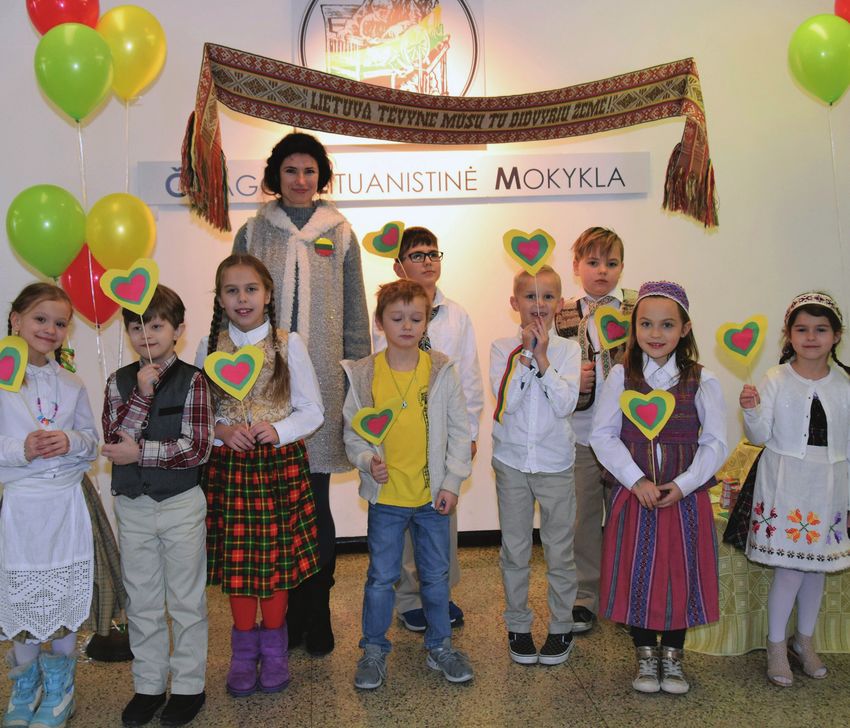
Front Cover: Chicago Lithuanian School second graders with their teacher, Rasa Marganavičienė, are ready to celebrate the 30th anniversary of Lithuania's
Independence. Photo by Viktorija Šileika.

Back Cover: The Liberty Bell gifted to Lithuania by Lithuanian Americans.

1           March 2020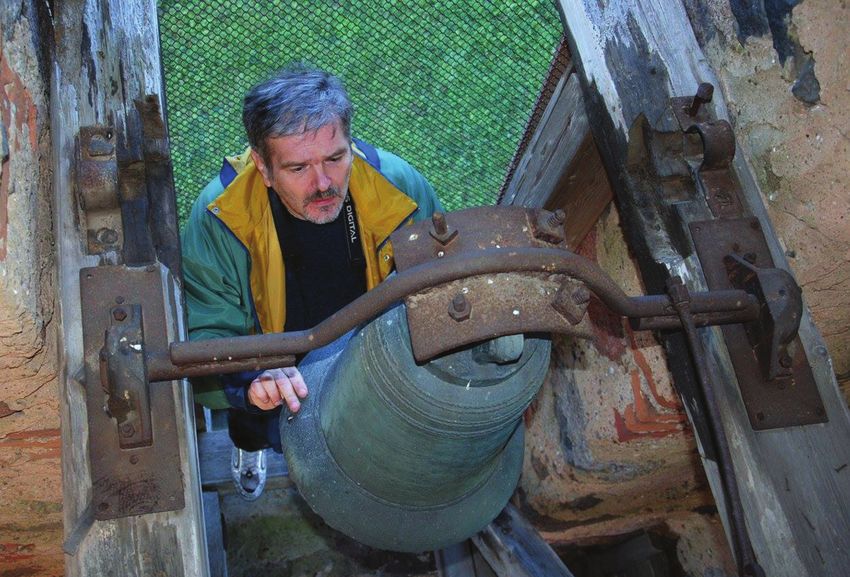
from the editor
                                                                         Dear readers,

                                                                         In Lithuania, March is a special month. As we all know, March
                                                                         11th is our biggest holiday. It's the day that brought us inde-
                                                                         pendence in 1990. Thirty years have passed, and with each
                 Vol. 44 No. 2 / March 2020                              year it is harder to remember how miraculous that time was.
     Bridges is the English-language publication of the                  Who would have thought that the dawn of independence
         Lithuanian-American Community, Inc.                             will dawn upon us after fifty gloomy years of soviet occu-
             lithuanian-american.org/bridges                             pation? But it did. Unexpectedly even for us who lived in
                                                                         Lithuania at the time. Perhaps, unexpectedly for American
                              EDITOR                                     Lithuanians as well. Even though we have never lost hope
                           Karilė Vaitkutė
                                                                         and we always believed in it. It was still unexpected. It was
                          ART DIRECTOR                                   nothing short of a miracle.
                         Daniel P. Craig, Jr.                            		However, independence did not come from out of any-
         CONTRIBUTING EDITOR, CURRENT EVENTS                             where. It was always deep in our hearts, in the hearts of our
                 Alan J. Stankus, P.E. (ret)                             parents and grandparents. It was deep within us like seeds
                                                                         waiting for the spring to sprout. And the spring came. It's
          ADVERTISING & SUBSCRIPTION MANAGER
                       Marius Naris                                      hard to imagine the euphoria we were experiencing at that
                                                                         time.
                                                                         		Now, thirty years later, it almost seems like it was always
                        Editorial Office
           139 Willow Blvd., Willow Springs, IL 60480                    there. A new generation has matured in those thirty years.
                    kariledalia@yahoo.com                                A generation that had never lived under oppression. A gen-
                                                                         eration that had never known what it means not to be able
              Subscriber Services and Advertising                        to do what one wants, to go where one wants. It is our duty
                       spauda@javlb.org                                  and obligation to make sure that this new generation would
                       Facebook                                          never forget that independence is something that was not
     facebook.com/BridgesLithuanianAmericanMagazine                      just handed to us. It is something that our fathers and fore-
                                                                         fathers fought for. We have a duty to never forget the sacri-
                                                                         fices they made.
                               Our thanks to                             		Let us enjoy and celebrate spring and freedom! And let us
                      LITHUANIAN FOUNDATION                              always remember how easy it is to lose independence and
                     for its support of this magazine.                   how hard it is to gain it back!
                      www.lithuanianfoundation.org

                                                                                                                        Karilė Vaitkutė
        LAC, INC. NATIONAL EXECUTIVE BOARD                                                                                       Editor
          621 Field Street, Naugatuck, CT, 06770
                   Phone: 402-203-1119
                    finansai@javlb.org

All statements and opinions, including product claims, are those of
the organization/advertiser making those statements or claims. The
publisher does not adopt, or put forth, any such statement or claim as
his own, and any such statement or claim does not necessarily reflect
the opinion of the publisher.

BRIDGES (ISSN: 87508028) is published 10 times per year (Jan/Feb
and Jul/Aug combined) by Lithuanian-American Community, Inc. The
periodicals postage is sent from Lithuanian American Community, Inc.
Headquarters in Naugatuck, CT to United States Post Office, Super-
visor Window Services, 433 W. Harrison Street, 2nd Floor, Chicago, IL
60607-9998, and additional locations. Vol. 44, No. 2. POSTMASTER:
Send address corrections and changes to LAC, Inc./Bridges, 621 Field
Street, Naugatuck, CT, 06770. SUBSCRIPTIONS: For subscription
questions or address changes, write to spauda@javlb.org. Subscrip-
tion rates are: US: $35 per year or $68 for two years.; International:
$55 per year payable in advance in US funds. COPYRIGHT: ©2019 by
Lithuanian-American Community, Inc. All rights reserved. No part of
the publication may be reproduced without written permission of the
publisher. PRINTING: Printed in Chicago, USA by Lithuanian Ameri-
can Community, Inc.
                                                                                                                    March 2020        2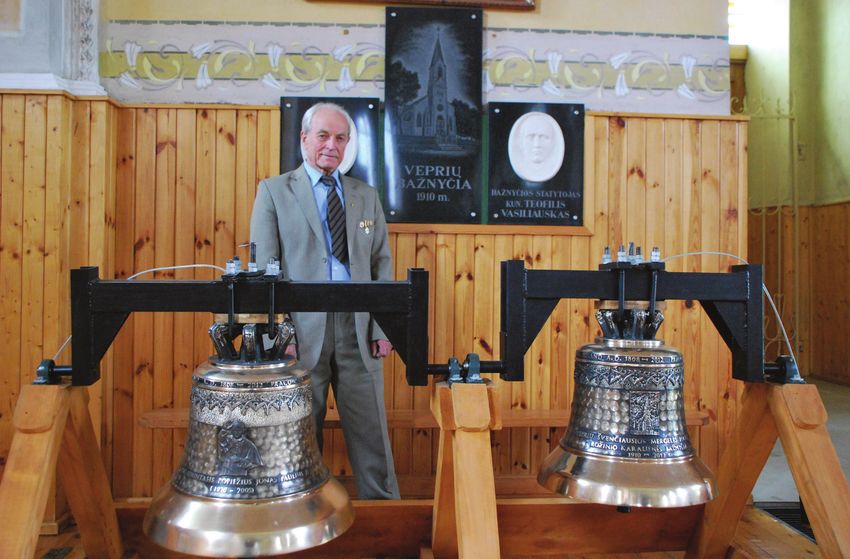
I Believe that Culture
    Works Wonders
    Interview with Giedrė Elekšytė Knieža,
    Chair of the Lithuanian American
    Community Cultural Council

Giedrė Elekšytė Knieža. Photo by Sandra Ščedrina.

Arvydas Reneckis: It has been one year since you have            and therefore this city is the most popular and financially
been elected the Chair of the LAC Cultural Council. It           stable in terms of events. After artists come to Chicago,
must have been a busy year. Let’s talk about the Council's       the LAC Cultural Council can help them further with
plans for 2020. It looks like it will be a pretty active year.   funding and enable them to perform in other cities and
                                                                 reach larger audiences.
Giedrė Elekšytė-Knieža: Yes, 2020 will be filled with
activities. Before I start enumerating future events, I          AR: Does it mean that the most popular events were
would like to say that the Cultural Council is not respon-       those in which performers from Lithuania participated?
sible for organizing events. I work with the 53 chapters of
the Lithuanian Community, and it would not be possible           GEK: Yes, and it's a big job to organize these events. Prep-
for me to organize events for them all. In reality, the work     aration can take half a year or a year because organizers
of the President of the Cultural Council is to follow the        have to obtain work visas for artists, to arrange all the
annual guidelines drawn up by the LAC Council, to fill           documentation, to see to the technical side of shows, to
out applications, to receive financial support for events,       take care of performers themselves.
to distribute that support, and to "get roasted" (laughs).
                                                          AR: What were some of the most successful events of this
AR: In other words, are you get proposals for future type last year?
events and try to get financial help for them?
                                                          GEK: The Cultural Council helped organize a concert
GEK: Not too many proposals come from the LAC chap- that was held during the LAC Council's annual session.
ters. Everyone wants you to do everything for them - The performers, Česlovas Gabalis and Tomas Varnagiris,
bring them shows, concerts, and programs. Mostly, pri- came from Lithuania. After the concert in Chicago, they
vate individuals bring artists from Lithuania to Chicago. performed in other places where Lithuanians live, namely,
Chicago is home to a very large number of Lithuanians, Atlanta, California, and Minnesota. It was thanks to the

3         March 2020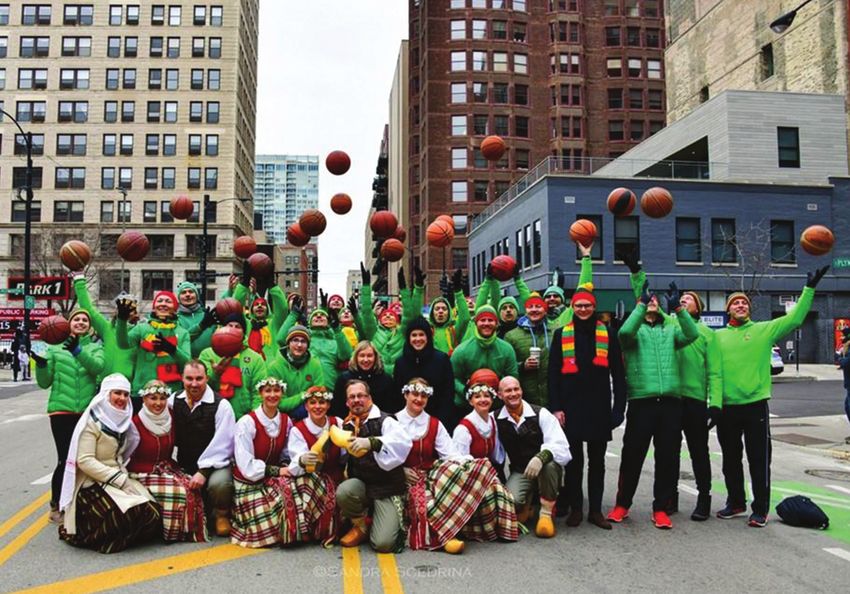
Cultural Council that Minnesota - a
very small chapter - hosted such out-
standing musicians. The Minnesota
Lithuanians were very happy.
		At the end of the year, we had a
very successful concert called "Viva,
Vivaldi!" held in Chicago. It was
organized by Dainora Baliutavičienė,
a member of Chicago's Marquette
Park Chapter. She did all the work,
and the LAC Cultural Council con-
tributed financially to allow the art-
ists to perform in several other US
cities.

AR: What events are you looking for-
ward to in 2020?

GEK: The biggest event of the year
will be the dance festival in July in
                                          The cast of Šnekučiai musical. Photo by Sandra Ščedrina.
Philadelphia.
		In the fall, we will host a play, “Kalės vaikai”, directed organized by Sandra Avižienytė will be sponsored by the
by the late Eimuntas Nekrošius in the Klaipėda Drama LAC Cultural Council. We will help with the funding and
Theater in Chicago. The play will be dedicated to the try to send the Poetry Spring to travel across the US. Every
30th anniversary of the restoration of Lithuania's inde- year, the Poetry Spring publishes a book of poems by the
pendence. It will be a grandiose event, probably similar to authors participating in the event. These authors reside
last year's musical "The Legend of Žygimantas Augustas in different states, and it would be fun if this great event
and Barbora Radvilaitė". There will be fewer performers would travel to the cities where the participating poets
than last year, 24 people. We are currently looking for a live.
beautiful venue that would accommodate one thousand
viewers. We would like to find a nice space where people AR: The dance festival is the biggest event. Can you talk
would feel like they've come to a real theater and after the about it?
show, they would have a chance to talk to the actors over
a cup of coffee or a glass of wine. We would also like to see GEK: I think that the festival's art director, Gintaras
to it that not only the Chicago Lithuanians are satisfied. Grinkevičius, would be able to tell you more about it. The
We are asking if the actors who participate in Nekrošius's LAC and the Folk Dance Institute appoint an art director,
play have solo plays or smaller plays in which they par- and he or she takes care of the creative side. The LAC is
ticipate. If they are, we would be able to arrange a tour concerned with the administration and the funding.
during which they would show their solo performances We also have good news: in 2021, we will have a song fes-
in various LAC chapters.                                         tival. Song and dance festivals are hosted not only by the
		Another big event organized by the Cultural Council LAC but also by the Canadian Lithuanian Community,
will be a rock opera "Oath". It will be shown in February i.e. all of North America. On the one hand, this makes
in Lemont High School Hall, as well as in Los Angeles.           it easier to organize such events. On the other hand, it
		We are also planning singer Gintarė Jautakaitė's concert becomes more complex. By the way, I have to say that the
tour in the United States. It remains to be seen how many quality level of these festivals has been rising lately. This is
LAC chapters the singer visits. There's got to be an inter- good news. I also have to say that the LAC Cultural Coun-
est shown by the chapters because, as you might under- cil is seeking greater cooperation with the Cultural Coun-
stand, I'm not going to be able to drive the singer to or cil of Lithuania in implementing large-scale projects.
from an airport, to or from a concert hall, etc.
		In the fall, the music group “Pelenai” will come from AR: It is interesting because, most probably, in Lithuania,
Lithuania. We will try to organize the group's concerts in they think that American Lithuanians are drowning in
various LAC locations around the US.                             money, and no additional funding is needed to maintain
		The annual Poetry Spring which is currently being Lithuanian culture in the US.

                                                                                                       March 2020        4
my opinion, a certain amount should
                                                                                      be given for cultural events annu-
                                                                                      ally, and that amount should be used
                                                                                      in the way that the Cultural Council
                                                                                      sees it. Now the Cultural Council has
                                                                                      to deal with the LAC chapters regard-
                                                                                      ing every, even the smallest event,
                                                                                      and that takes long hours. Unfortu-
                                                                                      nately, the LAC does not have its own
                                                                                      funds; we live out of the support of
                                                                                      the Lithuanian Foundation.

                                                                                      AR: We talked about bringing in per-
                                                                                      formers from Lithuania. What about
                                                                                      local performers? Don't we have any?
                                                                                      Is the quality of their performing not
                                                                                      satisfactory?

                                                                                          GEK: I try to encourage local artists
Suktinis dance group and Chicago Lithuanian Runners Club participated in the Thanksgiving
                                                                                          and cultural event organizers. The
Parade. Photo by Sandra Ščedrina.                                                         Lithuanian musical “Šnekučiai” was
                                                                                          performed very successfully. Local
GEK: Yes, we should work together more. However, our folk dance group “Suktinis”, Chicago's Lithuanian Opera
cooperation today is only in the plans. By the way, it is Choir and local singers performed in the musical along-
very difficult to fill out Lithuanian applications because side with the singers from Lithuania. We showed this
they are written in extremely complicated language. musical to the Cleveland Lithuanians as well. As far as I
I was born and raised in Lithuania, I have a great com- know, it was the first traveling musical of such scale, with
mand of my mother tongue, but I have a very hard time about fifty performers on stage.
understanding those applications and sometimes I do not 		We are also planning to bring a musical show for chil-
understand them at all.                                               dren called "Kakė Makė". It was staged last year by the
                                                                      Maironis Lithuanian School, and this year we want to
AR: Is there any cooperation between the World Lithu- bring this performance to various Lithuanian schools.
anian Community and the LAC?                                          Most importantly, students in each school will be able to
                                                                      participate. While the main actors will come from Chi-
GEK: I have a lot of fantasies about our potential collabo- cago, all other actors in the performance will be local stu-
ration but my time as the head of the Cultural Council is dents.
very limited. My term is only for three years. Because my 		A Los Angeles-based writer, Justina Brazdžionis, who
immediate job is to respond, request, and report, paper- has published an illustrated book for children in English
work takes a lot of time, and there is very little time left and Lithuanian, "Noah and Amaday," will also be traveling
to organize events.                                                   around the area with her theatrical program. We want
                                                                      to involve children; otherwise, the Lithuanian spirit will
AR: What is the LAC Cultural Council's main source of evaporate quickly.
income?
                                                                      AR: What about theater festivals we used to have? Are
GEK: We are funded by the Lithuanian Foundation. they gone forever?
The Cultural Council fills out applications and submits
them to the Lithuanian Foundation asking for money for GEK: Theater festivals will resume. However, before
various events. By the way, sometimes LAC chapters do I talk about that, I would like to explain that the LAC
not realize that the Cultural Council and the Lithuanian Council consists of 60 elected persons who convene once
Foundation are two different organizations. The Cultural a year and decide what the LAC Board - 15 people - will
Council applies to the Lithuanian Foundation for sup- have to work on during the entire year. It seems to me
port. Chapter Councils must contact the Cultural Coun- that the opposite should be true: 15 people should give
cil. As I mentioned before, there is a lot of paperwork. In work to 60 people. But it is as it is. The Council wanted

5         March 2020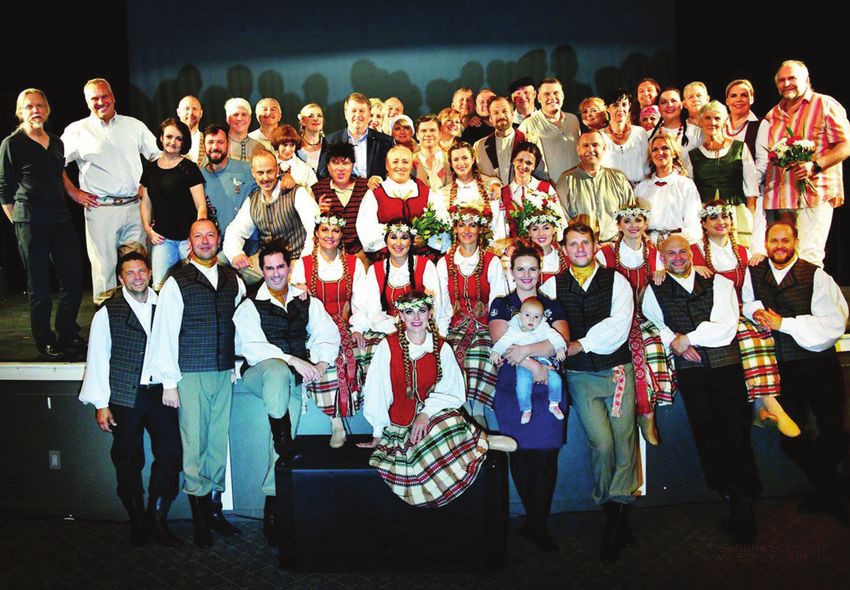
to discontinue the theater festival, and we want to revive
it. The theater festival is difficult to maintain. I do not
know what the reason for the festival's discontinuance
was. Perhaps, the place was not good, or maybe the time
was not good. My idea of a theater festival is arranging
a workshop that would connect our theater groups and
inspire them to work. We are working on this idea right
now. We would like to invite one or more theatre pro-
fessionals from Lithuania who would direct those work-
shops. The workshops could result in a performance that
could travel throughout the LAC chapters.

AR: It seems to me that the festival discontinued because
viewers couldn't see all the shows brought from all over
the United States and Canada during one long weekend.
Not many viewers could come to all performances. Maybe
theatre groups should tour in different US cities?             Giedrė Elekšytė Knieža gives interview to the World Lithuanians TV
                                                               program during the 3rd International Children’s Dance Festival in
                                                               Lemont, Illinois. Photo by Tadas Raudžius.
GEK: That's why we want to organize workshops in dif-
ferent parts of the US. One year, the workshop could take      like to do a laser show on a Lithuanian topic on the Chi-
place in New York, another year - in Los Angeles, and so       cago Merchandise Mart building on the Chicago River.
on. Theater groups from all over the United States could       However, such a project requires a great deal of time and
attend such a workshop.                                        money.
                                                               		The biggest project during my term will be the online
AR: For American Lithuanians who live in different parts       LAC events calendar. The calendar will be organized by
of the US, it would also be interesting to meet and com-       states and will make the planning work for the organizers
municate.                                                      easier. At the same time, the information will be received
                                                               by all chapters and viewers. Many organizations or insti-
GEK: Yes, these interactions are always a lot of fun.          tutions have their websites. The problem is that we don't
                                                               know them all. As a result, we do not know where to look
AR: Are you making any contact points with Americans           for information about upcoming events. It is necessary
and other ethnic groups?                                       to combine and unite all of this on one website. Partial
                                                               funding has already been received, and we hope that the
GEK: This year, the Cultural Council participated in           calendar of events will be implemented by spring. We will
the Thanksgiving Parade in Chicago. We plan to attend          be creating new visuals for the LAC. We want the LAC,
again next year. Anyone who has ideas can write to me at       one of the largest Lithuanian organizations outside Lith-
kultura@javlb.org. I invite everyone to contribute their       uania, to be easily recognizable, accessible, and relevant
suggestions.                                                   to everyone.
		Every year, the dance group "Suktinis" performs at the
Christmas show held at the Science and Industry Museum         AR: What motivates you to volunteer your time working
in Chicago. The LAC Waukegan chapter participates in a         for the Lithuanian American Community?
huge annual exhibition in Wisconsin where we present
Lithuanian culture. Perhaps we need to be more involved        GEK: I believe that culture works wonders. This is the
in presenting our culture to Americans but communi-            only reason I was persuaded to do this job. I don't like pol-
cation with Americans is also the work of Lithuanian           itics, voting, meetings, paperwork... it's frustrating. But I
consulates and cultural attachés. Our job is to preserve       believe in culture. It brings people together. It connects
Lithuanian language and traditions within the Lithua-          and inspires people. Nothing will connect the Lithuanian
nian community as is directed by the Lithuanian Charter        chapters from all over the United States more than cul-
written 70 years ago. Sometimes we have very nice joint        ture does. Of course, you could come together just to eat
projects as, for example, was last year's celebration of the   cepelinai or koldūnai. But in reality, it is cultural events
100th anniversary of Lithuania's independence.                 that unite everyone. I believe in that. Maybe I am naive,
		The problem is lack of time. You sow the seeds and           but I believe it. I put on my pink glasses and believe that
the fruits can be picked by others. For example, I would       culture works wonders. This is the engine that runs me.

                                                                                                              March 2020            6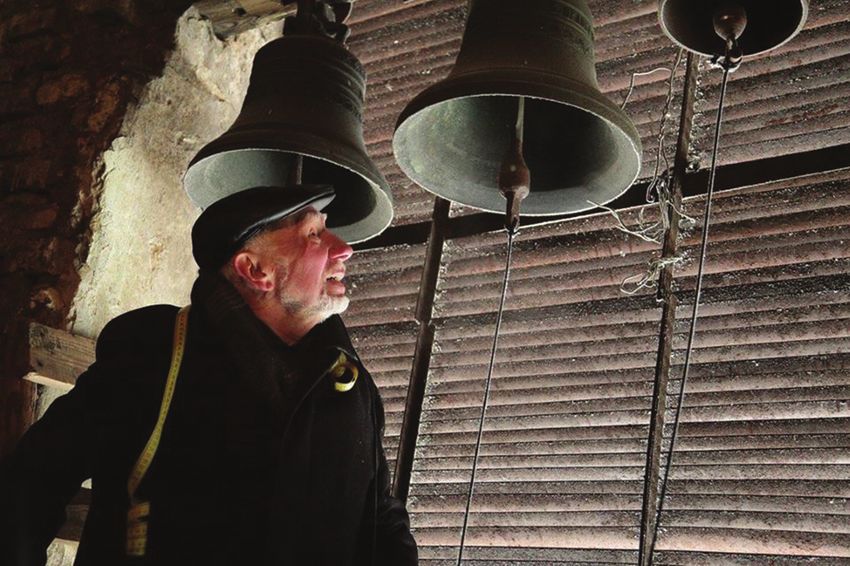
Society of Lithuanian
                                                            Campanologists
                                                                                          By Dr. Gintautas Žalėnas
                                                                                         Translated by Vijolė Arbas

Dr. Gintautas Žalėnas examines old bells in Lithuania.

About Lithuania’s bells                                           Nesvizh (now Belarus) and other towns in the Lithuanian
The bells of Lithuania have a long and complicated his-           state of old. These foundries had cast hundreds of valu-
tory. Quite many, very old and valuable bells have sur-           able, artistic bells, some of which continue to chime in
vived, despite their destruction by frequent fires and            our days.
other natural disasters and thefts by victors of battles.         		Comparatively many of the bells still surviving in Lithu-
The 600-year anniversary of the oldest bell in Lithua-            ania had been cast in Königsberg in the former East Prus-
nia falls in 2020. This is the only bell surviving since the      sia. This had been one of the most important and sig-
times, when Lithuania was one of the largest states in all        nificant locales for casting bells along the entire Baltic
of Europe with a territory stretching from the Baltic Sea         seacoast. The misfortune of World War II swept Königs-
to the Black Sea. This bell is not only the oldest in Lithu-      berg practically off the face of the earth. Meanwhile, the
ania but also among its neighboring countries—Latvia,             bells remaining in the part of East Prussia that had fallen
Estonia and Belarus. This is also the year, when we will          to Russia were either demolished or stolen by the con-
commemorate the bell with the oldest inscription in the           quering newcomers. Thus, these days, the bells cast by
Lithuanian language—it is 400 years old. Previously this          Königsberg master craftsmen, which still survive in Lith-
bell had belonged to a church in Klaipėda for a parish of         uania to this day, represent a unique part of a cultural
Lietuvininkai, as the Lithuanian population living in Lith-       heritage significant for all of Europe.
uania Minor was known back then. After the World War              		Lithuania has been a site consisting of various cross-
II, the bell was stored for safekeeping in Pašilė, a small vil-   roads since ancient times. It would not be easy to find
lage of Samogitia (locally known as the Žemaitija ethno-          another country in Europe containing bells manufac-
graphic region.) These two bells were not imports. They           tured in so many different places. Adding to the afore-
had been bellfounded here, at a local Lithuanian foundry.         mentioned instruments cast in Lithuania and Königs-
Foundries had been operating in Vilnius, Kaunas, Varniai,         berg (currently Kaliningrad), there are many bells that

7          March 2020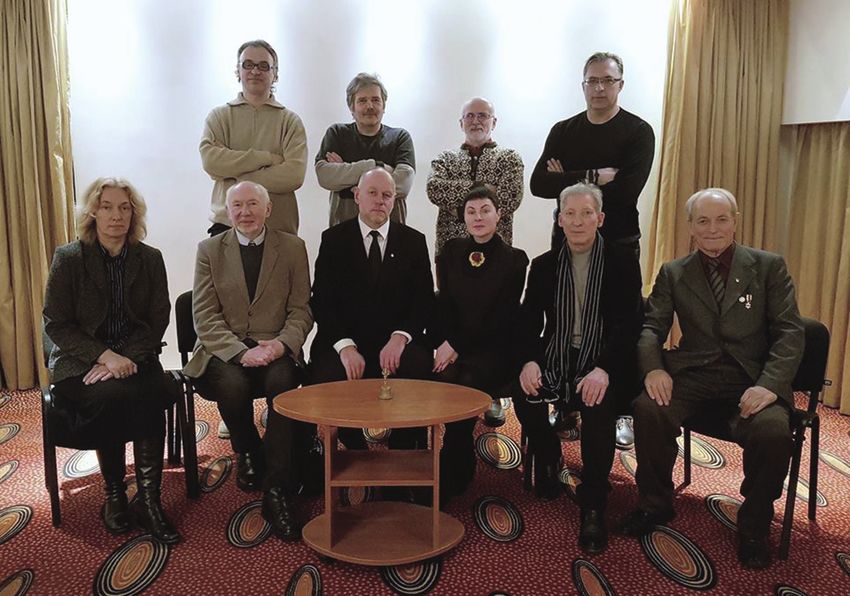
had originated in Poland and in
current-day Latvia, primarily in Riga
and Curland (aka Curonia). Quite a
few old Russian bells can be discov-
ered as well. It is good to remember
that most of the bells in Russia Proper
had been demolished during the
times of communist rule. There are
also a good number of bells in Lithu-
ania cast by different German found-
ries in Lübeck, Apolda and Bochum.
However, a bell that calls for special
mention is one cast between the 16th
to 18th century in Danzig (currently
Gdańsk) — the city that had been the
grandest center of bell-making in all
of Europe. Furthermore, also worthy
of special mention, there are the bells
that came into Lithuania after World
                                          Examining old bells in Lithuania.
War I from the area that is currently
Western Ukraine. Such a variety of bells makes the work
of research quite difficult. On the other hand, this work is
far more interesting, because it requires taking an interest
in the bells from neighboring countries and from lands
even farther away, rather than concentrating merely on
the bells of one’s own country. A study is especially chal-
lenging when it involves bells that very few others had
written about or ever had little interest.
		Any discussion about Lithuania’s bells cannot be com-
plete without mentioning the long-lasting tradition of
carillon music. The carillon — this is probably the largest,
heaviest and most valuable musical instrument ever cre-
ated by man. It consists of no fewer than 23 bells, which
frequently weigh ten or more tons. The first carillon of
Lithuania was known as Kovų varpai, i.e., ‘Bells of Battles’.
It was cast in 1935 in Belgium. Its designation was the bell
tower of the War Museum in Kaunas. The music drifting
from the tower of this museum were performances by
carillonneurs Viktoras and his son Giedrius Kuprevičius.
It was one of a kind in all of Eastern Europe. Now Lithu-
ania has as many as five sets of bells of carillon size—this
number surpasses those in Russia, Poland and Ukraine,
not to mention Latvia, Estonia or Belarus, where not a
single such instrument exists.
		A relic of the first Republic of Lithuania has tremen-
dous symbolic significance for the Lithuanian nation —
                                                                   Bell examinations require good acrobatic skills.
the Freedom Bell, a symbol of Lithuania’s Independence.
North American Lithuanians had it cast in 1919. It was About the Society of Lithuanian Campanologists
of great service in raising funds in the United States for Campanology is a rarely used word. It references the sci-
battling numerous enemies and reestablishing the Lithu- ence about bells and everything related to them. There-
anian State. This bell hangs proudly from the bell tower fore campanologists can be not only scholars but also
of the War Museum in Kaunas to the present day.                    people who engage in the upkeep of bells or, simply, peo-
                                                                   ple for whom bells are a hobby. Societas campanarum

                                                                                                        March 2020        8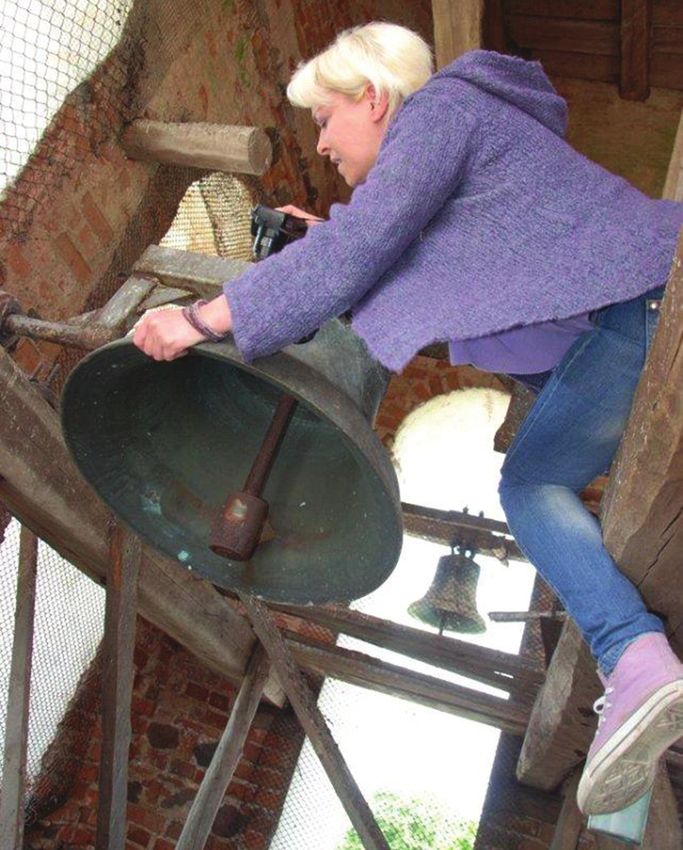
Lituaniae or the ‘Society of Lithu-
                                                                                            anian Campanologists’ unify people
                                                                                            with an interest in bells, those who
                                                                                            study them, play them, repair them
                                                                                            and maintain them. Society members
                                                                                            include members of foundations who
                                                                                            donate their private funds for acquir-
                                                                                            ing new bells or repairing old ones.
                                                                                            Members can even include those who
                                                                                            simply like the sound of chimes ring-
                                                                                            ing. Such a society is the only one of
                                                                                            its kind in the entire region, not only
                                                                                            in just Lithuania. No similar organi-
                                                                                            zation exists, not in Latvia or Estonia
                                                                                            nor in Poland, Belarus or Ukraine.
                                                                                            However, similar societies operate
                                                                                            in the Scandinavian countries, Ger-
                                                                                            many, France and other Western
                                                                                            European countries as well as in Rus-
                                                                                            sia. The establishment of Lithuania’s
The Society of Lithuanian Campanologists founding meeting.
                                                                                            society was on February 13, 2017.
                                                                       		The Society does not have a large membership, con-
                                                                       sisting of only 16 enthusiasts who have differing levels
                                                                       of education and engage in different professions. There
                                                                       are three PhDs and several historians. They include some
                                                                       businesspeople, engineers and physics.
                                                                       		One member is Liudmila Felčinskaja, an excellent pho-
                                                                       tographer, who lives in Elektrėnai Town but descended
                                                                       from a distinguished family that has engaged in cast-
                                                                       ing bells for over 200 years, from the times the first bell
                                                                       foundry established in present-day Western Ukraine (cur-
                                                                       rently her relatives own three bell foundries in Poland).
                                                                       Another active member is translator Vijolė Arbas, one of
                                                                       the few American-Lithuanians (with a master’s degree),
                                                                       who moved to Lithuania right after independence to live
                                                                       and work in Kaunas. Another avid contributor to the
                                                                       society is well-known ethnographer and campanologist,
                                                                       Professor Libertas Klimka. Another member is Renatas
                                                                       Dūda, a finance manager working for a large company in
                                                                       Kaunas. One of his great accomplishments—he has sin-
                                                                       gularly, with no assistance or funding, managed to drive
                                                                       through and photograph all the bells found at Lithuania’s
                                                                       Roman Catholic dioceses, three of them, often risking
                                                                       life and limb (there are seven dioceses in Lithuania). He
                                                                       has compiled all his documentations of bells into a book
                                                                       that is in progress for publication. Then there is Arvy-
                                                                       das Karaška, a musicologist and collector, who has exhib-
                                                                       ited his collection of various bells, one of the first such
                                                                       exhibitions in Lithuania. One member, engineer Saulius
                                                                       Stulpinas, is our professional “bell doctor”. He is capable
                                                                       of installing and repairing bells and their fasteners. Chair-
                                                                       man of the Society’s Board, Dr. Gintautas Žalėnas, has
Members of the Society of Lithuanian Campanologists meet in Vilnius.   not only written the first book on bells in Lithuanian but

9         March 2020
he has also authored the first disserta-
tion on bells in Lithuania.
Members of the Society are located
nearly all over Lithuania. They not
only reside in Vilnius or Kaunas but
also in Rokiškis, Alytus, Pasvalys,
Elektrėnai and Vepriai. Vepriai is a
charming little town, which is home
to our eldest member, Romas Šaulys,
born while in exile, in Siberia. He
contributed his efforts and his own
money to cast as many as four bells
for the town’s local Vepriai Church.
Meanwhile he is gathering contribu-
tions for reconstructing the church
tower, which a German bombing had
destroyed during World War II. What
makes this society exceptional from
other, similar organizations in Lithu- Members of the Society of Lithuanian Campanologists live in different towns of Lithuania.
They come together for meetings in Vilnius.
ania is the location of its headquar-
ters—it is not in one of the largest cities, like Vilnius or Life itself along with practical goals dictated the neces-
Kaunas, but in Rokiškis, which is near the Latvian border. sity of having an established society. Lithuania suffered
This city is also home to the Society’s President, Leon- the destruction of its largest and most valuable bells dur-
ardas Šablinskas, who was instrumental in having the ing the 20th century. The conditions of the surviving bells
nearly 200-year old bell of Rokiškis Church renovated. are far from good and simply unsatisfactory. The occupa-
This project was accomplished with the help of other tion by Soviet Russia froze Lithuania for fifty years, as if
Society members from Rokiškis several years ago. He also it were under ice. All that time, churches had nowhere to
found financial support for casting two more bells for this acquire bells, since their manufacture was prohibited in
church. The blessing of the bells took place on December the atheistic Soviet Union, and imports from elsewhere
8, 2019. It is noteworthy that these bells were cast at the were impossible. No literature or instructions about the
papal Pontificia Fonderia Marinelli foundry, one of the maintenance or proper use of bells were in accessible
oldest in world still operating today. It opened approxi- existence. Therefore bells were not kept up during all
mately in the year 1040, nearly a thousand years ago! those years. A few enthusiasts were responsible for inven-
torying about half of all Lithuania’s bells back in Soviet
Difficulties remain hidden in heaven times and, partly, during Independent Lithuania. Unfor-
A well-known riddle in Lithuania — “Everyone hears it; tunately, once they stopped working, all the work practi-
but, few have ever seen it. What is it?” Naturally that’s a cally came to a halt. Upon Lithuania’s independence, not
bell. What’s true is that bells are hung high in bell tow- only did the first new bells arrive on the scene, but new
ers that are difficult to access. There they hide numerous problems came up as well. Thefts of bells began, both for
problems that people standing on the ground and merely their metal and for their historical value. Unfortunately,
listening to their chimes never think about. So, people the old bells are still not properly maintained and safe-
who were interested in bells would get together and talk guarded.
over various problems. Back in 2015, an idea came up to Soon enough the people interested in bells realized
establish a society. It took several more years before a that the personnel working at Lithuania’s State institu-
group of like-minded people formed as a result of those tions involved in cultural heritage is not resolving the
private discussions. That was the nucleus for the future issue of proper maintenance of historical bells. Further-
society. It was not easy to bring together people living in more, it seems, these institutions are unable to do so,
different places to work together in common. Our neigh- because there wasn’t a single expert delegated to do this
bor Poland provides an illustration of this difficulty. It is job. Thereby the partially accomplished inventory of bells
ten times larger than Lithuania and it is home to numer- remains incomplete to this day. Furthermore the chime
ous experts interested in bells who live all over the coun- of nary a single historical bell has been recorded; there
try. The result is that no similar, national society has ever is still no database of Lithuania’s historical bells, and the
formed in the country. conditions of even the most valuable instruments are not
March 2020 10will depend on the generosity and
support of patrons. A contribution
by American-Lithuanians might also
prove weighty. Obviously the Soci-
ety’s members who reside in Lithu-
ania may not be physically capable
of sightseeing all the church towers
of American-Lithuanian churches of
old just to check out the bells hang-
ing there. Undoubtedly such valu-
able bells exist, as shown by the bell
cast in 1907 for Chicago’s parish of
Our Lady of Vilna Church, contain-
ing a lengthy, Lithuanian engraving.
The American-Lithuanian press has
issued its history not long ago.
Work, holidays, entertainment
and anniversaries
One of the most esteemed Lithuanian ethnologists, Dr. Libertas Klimka, is a member of the
Society of Lithuanian Campanologists. Although the Society has only been
in existence a very short time, a good
being monitored. There is also no register of bells that deal has already been accomplished academically. A
had been hidden during the war, that had disappeared or group of members participated in three conferences held
that had been stolen, some of which had been taken to in Poland on the histories of bells and issues regarding
foreign lands. So, it is no surprise that, although the State their security. Several trips around Lithuania have been
has been generously financing other projects pertinent to arranged for examining ancient, historical bells. There are
the maintenance and revival of Lithuania’s cultural herit- also several, previously unknown, impressive discoveries.
age, it has not delegated a single ruble, litas or euro for the A bell cast in 1578 was found in Samogitia [Žemaitija] dur-
upkeep, security and restoration of historical bells since ing an excursion organized in the fall of 2019. It has been
Soviet times. The Campanology Society has begun pub- identified as the oldest bell in the entire area. The most
licizing all such problems and ringing the bell of danger, important findings were in 2017. Meanwhile, not far from
which is still, alas, insufficiently heard. Vilnius, a bell was cast in 1542 at the oldest, royal, canon-
One important area of work is the dissemination of making foundry in Pabaiskas Town. This bell, containing
information about Lithuania’s bells to familiarize the a Latin engraving in Gothic lettering, weighs nearly a ton.
public with historical bells and their histories. The newly- In Ramygala Town, there was an even more important
formed Society raised an ambitious idea for commemo- discovery. A huge bell was found in the bell tower of this
rating the 100-year anniversary of Lithuania as a modern town’s church weighing over two tons, which Prussia’s
state. It spent its misery financial resources to prepare most famous bellmaker, Henrick van Swichelt, had cast
a project for the first exhibition of Lithuania’s bells. in 1522. This bell is meaningful to the entire southeast-
Although such an exhibition might still be arranged in ern Baltic region. It is the oldest surviving Renaissance
the future, 100 churches across the country did toll their bell in any country of this region and the only one safe-
bells to mark a century of our state’s existence. This year guarded in Lithuania that could be considered a monu-
the Society approached the Seimas parliamentary body ment of importance to all of Europe. The 14th generation
of the Republic of Lithuania with a request to declare of this master’s descendents, now living in Berlin, visited
2020 the symbolic year of bells. It also approached the this bell in 2018.
newly-elected President of the Republic of Lithuania with The Society tries to repay a societal debt of inadequate
a request to initiate issuance of commemorative coins or attention, not only to historical bells but also to living
stamps to immortalize the anniversaries of the aforemen- people who deserve respect for their work investigating
tioned bells. The latest idea is to compile a catalogue of bells or creating music with bells. An honorary member-
Lithuania’s historically most important bells, not only ship in the Society of Lithuanian Campanologists was
within the borders of present-day Lithuania but also in awarded to Dr. Marija Gražina Martinaitienė in 2017.
Poland, Belarus, Latvia and Ukraine as well as, even, in the She published a book about the most famous bellmaker
United States. However, the fate of these and other ideas in Lithuania, Jean Breutel, descended from Lorraine
11 March 2020Romas Šaulys contributed his efforts and his own money to cast as many as four bells for the Vepriai Church.
(a site presently in France, though formerly part of the members accompanied with an exhibit of Lithuania’s
Grand Duchy), who was the only person in Lithuania to Freedom Bell. The national anthems of both countries
be granted a title of Royal Bellfounder. In 2018 honorary rang from the bell tower, and the melodies Raimundas
memberships were also bestowed to a famous campanol- performed were a hit with the French public in attend-
ogist in Poland, Professor Krzyszstof Maciej Kowalski of ance. Reports about the concert appeared in the local
Gdańsk University, and to an outstanding French caril- press and abroad.
lonneur, Jean-Bernard Lemoine. Sightseeing is also an important engagement of the
Nonetheless the Society’s members are not only schol- Society. On the way to visit historical bells, our mem-
ars and its activities are not limited to the knowledge of bers visit interesting sites, thus, combining tourism with
history. Concerts frequently resound with the music of relaxation and entertainment. A visit during one such trip
bells for their enthusiasts. Our own Society’s members, included Latgala, now part of Latvia, though once under
Austėja Staniunaitytė-Proietta and Raimundas Eimontas Lithuanian jurisdiction. To our great surprise, we discov-
are outstanding carillonneurs, who participate enthusi- ered bells with Lithuanian engravings in Indrica Village,
astically. A handy instrument for such shows is an elec- far from the current borders of Lithuania. Then, in 2017,
tronic carillon, constructed by another Society’s member, a trip to Torun, Poland included hearing the oldest bell
engineer Saulius Stulpinas. It may well have been a first in from the Middle Ages in the country reverberate—the
the world, when a mobile carillon and vibraphone concert Tuba Dei ‘God's Trumpet’ in Latin, weighing 7500 kg
played in the Grand Hall of the Rokiškis Manor in Febru- resounds only a few times per year. A commemoration
ary of 2018. The audience enjoyed performers Raimundas of the 400-year jubilee of the oldest bell in Kaunas, in
Eimontas and Marius Šinkūnas with great enthusiasm. 2018, prompted a visit to its birthplace — Gdańsk City in
Another concert was held in Taninges, France in honor Poland. Sites visited along the way were different castles,
of Lithuania’s 100-year anniversary was organized by our churches and other points of interest. It left every traveler
member Jean-Bernard Lemoine and performed by our with a multitude of great memories.
member Raimundas Eimontas. A small entourage of our
March 2020 12Lithuanians
By Karilė Vaitkutė
in New Jersey
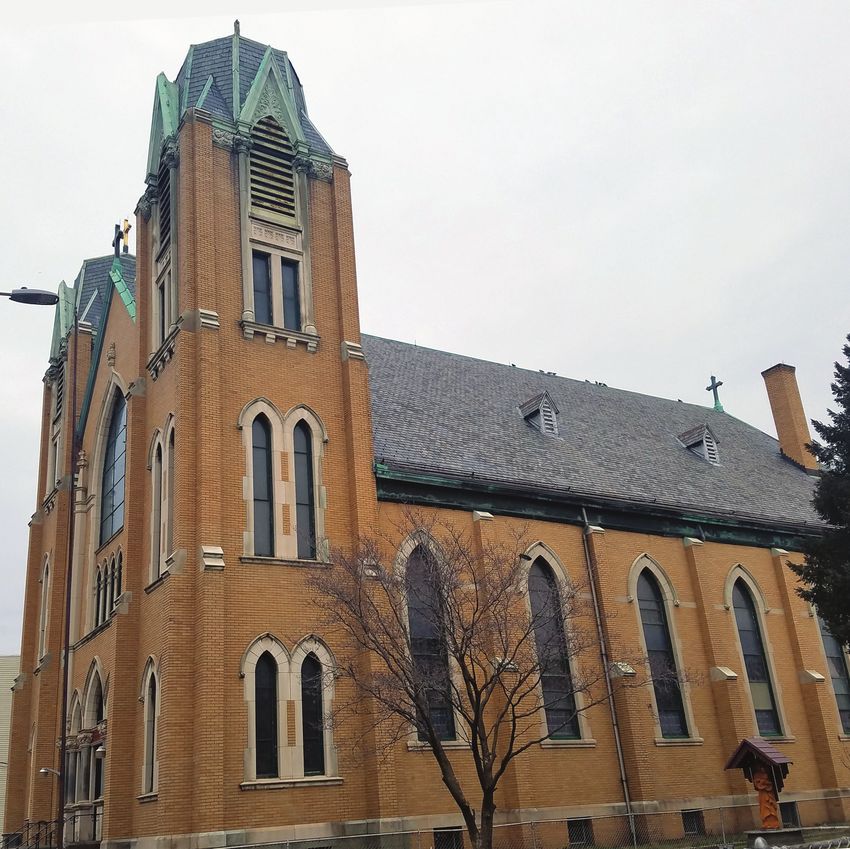
Sts. Peter and Paul Lithuanian Church in Elizabeth, New Jersey in 2020. The church was built in 1910. Photo by Rita Janz.
The beginnings of the Lithuanian American Lithuanians settled in Elizabeth, New Jersey as early as
Community in New Jersey 1878. They were drawn to this and surrounding towns
If we look at the census records of 1900, 1910, and 1920, by the possibility to find jobs in many local factories. At
we will see that many residents of various cities in New first, many of those Lithuanians attended Mass and reli-
Jersey, especially Elizabeth, Newark, Bayonne, were of gious services at St. Patrick’s Church in Elizabeth. How-
Lithuanian descent. Some were born in Lithuania, oth- ever, as the Lithuanian population kept increasing, a need
ers were born in New Jersey but their parents immigrated for forming a Lithuanian organization appeared. In the
from Lithuania. In his book, Lithuanian Religious Life spring of 1892, the first Lithuanian benevolent associa-
in America, William Volkovich-Valkavičius writes that tion, St. Casimir's Society, was established. Shortly after-
13 March 2020The doors of Sts. Peter and Paul Church in Elizabeth, New Jersey. The Saint Adalbert parish hall in Elizabeth, New Jersey. Saint Adalbert par-
church was built in 1910. Above the left door, the Gediminas Pillars ish now has two churches: St. Adalbert and Sts. Peter and Paul. It is
(Gedimino stulpai) are still visible. Above the central door, the name now connected with Sts. Peter and Paul. Lithuanian Independence cel-
of the church is inscribed, indicating that this is a Lithuanian Roman ebration took place in the St. Adalbert parish hall. Photo by Rita Janz.
Catholic church, and above the right door, a stylized Vytis, coat of arms
of Lithuania is depicted. The mass schedule indicates that Lithuanian/
English Mass is held on Sundays at 10:30 a.m. Photo by Rita Janz.
ward, another was formed with St. George as its patron. formed for this purpose. On October 7, 1894, a new Board
This banding together strengthened the Lithuani- was elected. As soon as the “New Parish Fund” reached
ans’ desire to have their own parish. The following year, $1,200.00, members of the Board were delegated to pur-
Rev. Joseph Zebrys visited the growing Lithuanian col- chase a plot of land on Ripley Place for the construction
ony in Elizabeth. Knowing of their aspirations to have a of a church.
parish of their own, he suggested they hold a meeting, On October 6, 1895, the cornerstone of the church of
going house to house, inviting the people to discuss the Sts. Peter & Paul (presently the parish hall) was placed. Sts.
requirements of establishing a parish. On September 4, Peter & Paul, the first Lithuanian Roman Catholic church
1893, such a meeting took place, and a special Board was in the state of New Jersey was completed and ready by
March 2020 14A partial image of 1900 census sheet from Elizabeth, NJ. Among the questions of 1900 census, the following questions were asked What was the person's place of birth, what was the person's father's and mother's place of birth, what year did the person immigrate to the United States, how many years has the person been in the United States and is the person naturalized. We can see that residents of Elizabeth, NJ indicate that their place of birth was "Lithuania Russia". In 1900 Lithuania was still not free from Russia, it did not exist as an independent state, and its residents had to state that they were born in Russia. The image is taken from www.ancestry.com. A partial image of the 1920 census sheet from Elizabeth, NJ. In 1920, the US residents born in Lithuania could already indicate their country of birth as Lithuania and not Russia. Lithuania gained its independence in 1918 and Lithuanian Americans, even though born prior to 1918, were reporting Lithuania as their place of birth. The image is taken from www.ancestry.com. New Year’s Day, 1896. ber 4, 1907, Bishop O’Connor encouraged Fr. Zindzius The Lithuanian emigration to Newark increased so rap- and the Board to build a new church. Soon after, 10 lots idly, that in 1902, Rev. Zindzius was able to organize a sep- of land were purchased on Ripley Place and in 1910, a new arate parish on Adams Street, Newark (Holy Trinity). Fr. brick church, in Gothic style, 60 by 137 feet and 60 feet Zindzius’ zealous efforts helped organize Lithuanian par- high, seating 1,000 was built and stands today. ishes in Bayonne and Jersey City in 1908, and Patterson in These were the beginnings of the Lithuanian commu- 1912. The Elizabeth Lithuanian parish was mother to all nity in New Jersey. According to 1920, 1930, 1940 cen- the Lithuanian parishes in New Jersey with the exception suses, the number of residents of New Jersey who were of Harrison. recorded as born in Lithuania was between 7,000 and More and more Lithuanians settled in Elizabeth and Sts. 10,000. If we were to keep in mind that many of these Peter & Paul Church was becoming too small. On Novem- Lithuanians had children who were already born in the 15 March 2020
A partial image of the resolution of Lithuanians in New Jersey asking that the United States
                                                  government would recognize Lithuania as an independent state.

A clipping from Draugas newspaper. On Oc-
tober 22, 1920, Draugas reported that Lithu-
anians in Elizabeth, NJ collected $3,194.70 in
cash and $2,500 in checks to be sent to the
Lithuanian Red Cross, Lithuanian Orphan's
Aid Society in Kaunas and the Lithuanian De-
fense Committee. This attests to the strength
of the Lithuanian community in Elizabeth, NJ.
The equivalent of $5,694.70 in 1920 is equal to
$77,428.03 in 2020. The image is taken from
Draugas, October 22, 1920.

                                                  Lithuanians of the first wave of immigration worked in coal mines of Pennsylvania, in factories
                                                  of New Jersey, in stockyards of Chicago. In this photo, we see Lithuanian miners. From the
                                                  Balzekas Museum of Lithuanian Culture Photo Archive.

                                                                                                                           March 2020            16
Lithuania's Acting Consul General in New York, Gitana Skripkaitė,
presents Dr. Rozalija Šomkaitė with the medal "For the Merits of the
World Lithuanians to Lithuania". Photo by Rita Janz.
In 2019, 24 persons were awarded the medal "For the Merits of the
World Lithuanians to Lithuania".
US, the number would be three or four times higher as
families as that time used to be big.
Celebration of Lithuanian Independence Day
in Elizabeth, New Jersey
Today Lithuanians still live in New Jersey. The Lithuanian
A badge of St. Casimir's Society founded in 1899 in Amsterdam (New American Community with its Northern New Jersey and
York), NY. St. Casimir's society was also founded in Elizabeth, New
Jersey in 1892.
Central New Jersey chapters is one of the strongest organ-
izations today. Even though in 2005, a Polish priest was
appointed Pastor of Sts. Peter and Paul Church, Lithu-
anian Mass is still being held on Sundays, and the Lithu-
17 March 2020From left: The Lithuanian American Community Northern New Jersey
Chapter President Saulius Galavackas, the Balzekas Museum of Lithu-
Lithuania's Acting Consul General in New York, Gitana Skripkaitė. anian Culture Executive Director Rita Janz, and Dr. Vincas Kudirka
Photo by Rita Janz. Lithuanian School Principal Aušra Covalesky.
anian community of New Jersey still comes together for by the Ministry of Foreign Affairs of the Republic of Lith-
various celebrations. uania in 2019. So far, 24 persons were awarded this medal.
On February 16, 2020, the Celebration of the Independ- Dr. Rozalija Šomkaitė celebrated her 95th birthday on
ence Day of February 10, 2020. She immigrated to the United States
Lithuania was commemorated in Elizabeth, NJ. Gitana as a young person after World War Two. After graduat-
Skripkaitė, Acting Consul General of the Republic of Lith- ing from St. John's University with a Bachelor's degree,
uania in New York attended the celebration and extended the University of Wisconsin with a Master's degree and
her congratulations to the community. One of the key Rutgers University with a Ph.D. in pharmacy, she worked
moments of the celebration was the presentation of the at Warner-Lambert and later, Ethicon Medical Research
medal "For the Merits of the World Lithuanians to Lithu- Institute. Dr. Rozalija Šomkaitė has pioneered the Lithu-
ania" to Dr. Razalija Šomkaitė. The medal was established anian Educational Assistance Relief Association with the
March 2020 18Members of the Lithuanian folk dance groups, Varpelis, Vėjas, and Liepsna. mission of assisting the least fortunate in Lithuania. tos depicting the life and work conditions of Lithuanians During the celebration, participants enjoyed a presen- in Pennsylvania, New Jersey, New York, and other states, tation made by Rita Janz, the Executive Director of the please share them with the Museum. You can donate the Balzekas Museum of Lithuanian Culture. Ms. Janz came originals to the Museum or you can donate digital copies from Chicago and talked about the history of Lithuanian of photographs you have in your family. Your donations immigration to the United States, Lithuanian American would contribute to preserving the heritage and history communities in various states, and their role in support- of Lithuanian Americans. If you would like to reach the ing Lithuania's independence in 1918. Ms. Janz showed Balzekas Museum, please either write at info@balzekas- excerpts from the Balzekas Museum exhibit "For Free- museum.org or call at 773-582-6500. dom: The Contribution of US Lithuanians to the Resto- Lithuanian folk dance groups, Varpelis, Vėjas, and ration of Lithuanian Independence and Its Recognition." Liepsna, performed at the celebration of Lithuania's The exhibit is open at the Balzekas Museum in Chicago. independence. The community is thankful to the Lithu- Its traveling version is available to be shown at any loca- anian American Community Northern New Jersey Chap- tion, and all there is to do is to inquire Rita Janz about how ter Chairman Saulius Galavackas and the entire Board, to do it. The Balzekas Museum director emphasized the the Principal of Dr. Vincas Kudirka Lithuanian School, importance of collecting historic artifacts. The Museum Aušra Covalesky, and all the dancers, singers, chefs, and is collecting photographs and other artifacts pertaining organizers. to the early immigration of Lithuanians. If you have pho- 19 March 2020
our community
Shrove Tuesday Celebration and Spring Fair at the
Chicago Lithuanian Youth Center
By Viktorija Šileika

Even though the winter in Chicago was very mild this
year, the students of the Chicago Lithuanian School had
to continue the tradition of Shrove Tuesday (Užgavėnės)
during which the winter is chased away and the com-
ing spring is celebrated. The Užgavėnės celebration
took place at the Lithuanian Youth Center. A spring fair
was held during which Lithuanian school students had a
chance to sell their baked goods and handicrafts.

All photos by Viktorija Šileika.

                                                                 March 2020   20
our community
Legendary Vairas at the Chicago Saturday
School Fundraiser
By Viktorija Šileika
On February 21, 2020, nostalgic sounds shook the Great
Hall of the Chicago Lithuanian Youth Center. The annual
fundraiser organized by the Chicago Lithuanian School
attracted not only school supporters but also the fans of
Vairas, a music group that made Šiauliai known through-
out Lithuania. The fans remembered the concerts held
during hot summers in Palanga, annual music festivals
in Nida, and the thunderous resurrection of the band
in 2000 when it released its latest album "Kings without
Crowns" with which it toured all over Lithuania.
The band members left a bit of their hearts in Chicago.
The audience sang and danced to every song, commu-
nicated with the musicians, and took pictures. Vairas
members congratulated Chicago Lithuanian School on
its 29th anniversary. Ieva Dilytė, a representative of the
Consulate General of the Republic of Lithuania in Chi-
cago, also congratulated the Chicago Lithuanian School
on its 29th anniversary.
Vairas music band. From left: Darius Vaitoška (bass), Audrius Jonaitis
(keyboards and saxophone), Vytautas Mundinas (drums), Rolandas
Janušas (vocals, guitar). Photo by Viktorija Šileika.
Ieva Dilytė, a representative of the Consulate General of the Republic
of Lithuania in Chicago, congratulated the Chicago Lithuanian School
on its 29th anniversary. Photo by Viktorija Šileika.
Vida Rupšienė, the principal of the Chicago Lithuanian Saturday Chicago Lithuanian School’s fundraiser at the Lithuanian Youth
School. Photo by Viktorija Šileika. Center. Photo by Viktorija Šileika.
21 March 2020our community
Children of the World Dance Festival
By Karilė Vaitkutė
Participants of the fourth annual children‘s folk dance festival “Children of the World“. Photo by Tadas Raudžius.
On February 9th, the fourth annual children’s folk dance
festival “Children of the World” took place in the Lithu-
anian World Center in Lemont, Illinois. This year, the par-
ticipants were the Švyturys children‘s folk dance group
from Cleveland, Ohio, Pope John Paul II Polish School
student dancers, Scottish children‘s dance group, and
three Lithuanian children‘s dance groups from Lemont:
Spindulys, Grandis, and Suktinis. The event was hosted
by a well-known singer Agnė Giedraitytė and sponsored
by the Lithuanian American Community Cultural Council
and the Lithuanian Foundation. Festival organizers hope
that the next year even more different ethnic group danc-
ers will participate and the festival will grow. It is a good
opportunity for our smallest to show their dancing sills
and to enjoy each other, comparing dance moves and
national costumes with other ethnicities
The Lithuanian American Community Cultural Council Chair Giedrė
Elekšytė Knieža and Agnė Giedraitytė. Photo by Tadas Raudžius. Agnė Giedraitytė with Scottish dancers.
March 2020 22our community One Nation – One Family Poetry recited by students and teacher Gabrielė Tymarskis. Photo by Vesta Steponavičiūtė This slogan has become a favorite of the Waukegan – tumes, bringing in the flags of the U.S.A. and Lithuania. Lake County Lithuanian Community, and it has proven The singing of the National Anthems in both languages to be correct for more than once. From the early morn- proceeded. ing of February 15, 2020, the Lithuanian language could The Commemoration participants were greeted by the be heard at the Santa Maria del Popolo Parish Center in Waukegan – Lake County Lithuanian Community Board the Village of Mundelein, in the northeast area of Illinois. President, Gintautas Steponavičius, the Gediminas Lithu- Members of the Lake County Lithuanian community were anian Cultural School principal, Lauryna Curl, the Nauja preparing to commemorate the 102nd anniversary of the Karta (New Generation) Lithuanian Cultural School princi- Republic of Lithuania‘s Declaration of Independence. pal Kristina Puotkalytė-Gurgel, and Fr. Gediminas Keršys, The center was being decorated, tables arranged for the who presented the invocation, asking the Almighty God celebration. In the back of the stage, the participants of to protect Lithuania as well as Lithuanians scattered in all the artistic part of the program were rehearsing. parts of the world. Violeta Rutkauskienė emphasized the The gathering attendees were greeted by long-stand- importance of the payment of dues which contributes ing members of the Chapter‘s Board of Directors, Elena towards the support and upkeep of the cultural goals of Skališienė and Palmira Janušonienė. They welcomed the American Lithuanians. attendees, briefly introduced the structure of the Lithua- The artistic part of the commemorative program was nian-American Community, Inc., and collected contribu- provided by Rusnė and Laumė folk dance groups. The tions and membership dues. There was a selection of attendees also heard young students of the Gediminas informational posters displayed on the reception table. Lithuanian Cultural School recite poetry about Lithu- The Commemoration began with the entry of members ania. Poet Donio Remio's verses were read by teacher of the Lithuanian Riflemen‘s Union in Exile as well as a Gabrielė Tymarskis. formidable group of folk dancers dressed in national cos- It was not the first time that students of the Nauja Karta 23 March 2020
our community

Rusnė and Laumė folk dance groups. Photo by Vesta Steponavičiūtė.

Lithuanian American Community Waukegan-Lake County Chapter Board of Directors. Photo by Vidas Kazlauskas

(New Generation) Lithuanian Cultural School in Milwau-              Ramutė, Vesta, Violeta, and Renata decorated the tables
kee commemorated this occasion. Not only the students               with a variety of snacks. Thanks to the Waukegan – Lake
but teachers and parents came as well. At the end of the            County Board of Directors, everyone was welcomed to
program, everyone, the young and the old participated               partake. For quite a while, no-one desired to make an
in the singing of the song "In the Land of Lithuania,               early exit. New friendships were formed and the old ones
Oak Trees Will Keep Growing" (Žemėj Lietuvos ąžuolai                were strengthened.
žaliuos)                                                            		For the sake of everything Lithuanian – let unity blos-
		What would a celebration be without a feast? Hard-                som!!!
working and tireless community members, Žaneta,

                                                                                                           March 2020      24
our community
The Second Film Night at the Colorado
Lithuanian School
By Simona Bataitytė
On February 1, 2020, the Colorado Lithuanian School
invited viewers to its second Lithuanian Film Night. This
time, we watched Rimvydas Čekavičius's documentary,
"Arvydas Sabonis 11. A Head Taller". Viewers had the
opportunity to get to know the Lithuanian basketball leg-
end more closely. In addition to the player‘s daily sports
life, his family relationships were shown, and this made
the film appealing not only to sports fans.
The children had the opportunity to spend time in the
children's room while their parents watched the movie.
We are delighted that people came to this community
event, and after the movie was over, no one was in a hurry
to leave, everyone enjoyed conversations over refresh-
ments.
Our special thanks go to the sponsors of this event:
the Colorado Lithuanian Community and the Lithuanian
Foundation. All proceeds will be used to support the Col-
orado Lithuanian School. We hope that our future Film
Nights will be well attended.
National Costumes for the Colorado Lithuanian
School Students
By Simona Bataitytė
It took almost a year until the Lithuanian national cos-
tumes reached Colorado, and when finally they were in
the hands of the Colorado Lithuanian School students,
we were overjoyed. Last year, we received funding from
the Ministry of Education, Science and Sports of the
Republic of Lithuania for the project "Ethno-Cultural
Education Program for the Colorado Lithuanian School"
which enabled us to to find a tailor in Lithuania, Vilius
Paškevičius, and commission him to make national cos-
tumes of different regions of Lithuania.
In the middle of February, the costumes finally arrived.
Students were eager to try them on. Girles swirled in
colorful skirts, boys tried to put on their vests, and it was
a real proof of how important it is for a person to expe-
It is important to feel good in one’s national costume.
rience Lithuanian culture not only from books but by
touching it directly. enjoy our beautiful ethnic patterns.
Students can‘t wait to put on the newly-sewn national We are grateful to everyone who made it possible for
costumes for the Independence Commemoration in Col- the national costumes from Lithuania to come to our
orado. We hope to wear them on all occasions and to school.
25 March 2020You can also read


