London's Rooftops: Potential to Deliver Housing - for Apex Airspace Development August 2016
←
→
Page content transcription
If your browser does not render page correctly, please read the page content below
London’s Rooftops:
   Potential to
 Deliver Housing
              for
  Apex Airspace Development
      part of Apex Housing Solutions

            August 2016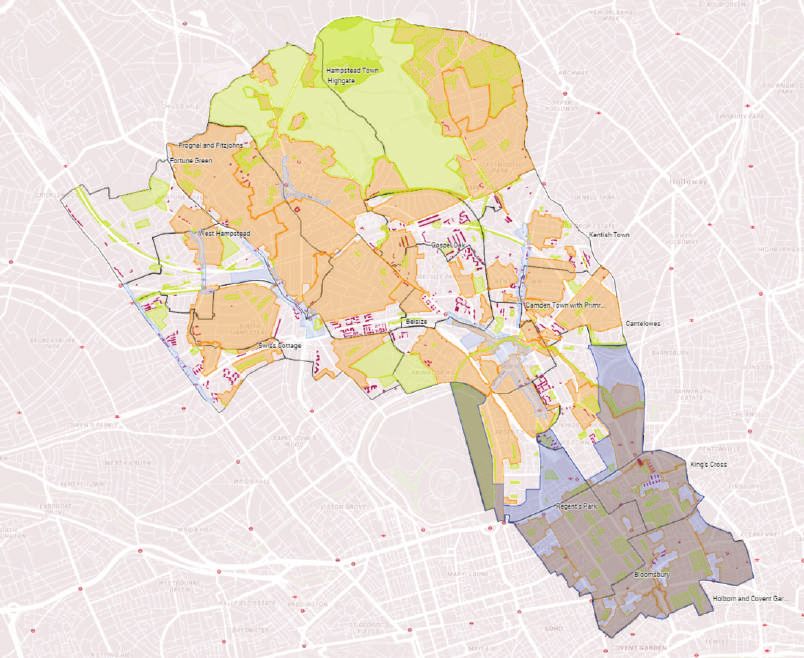
Report Authors
                                                               Riette Ooshuizen, Natalya Palit,
                                                               Caroline Dove, Rory Bergin, David
                                                               Mason, & Val Bagnall.

                                                               With Thanks to
                                                               Benjamin Derbyshire & Arshad
                                                               Bhatti.

HTA Design LLP                                                 © 2016 HTA Design LLP. All rights reserved
106-110                                                        This document has been prepared for the exclusive use of the
Kentish Town Road                                              commissioning party and unless otherwise agreed in writing by HTA
                                                               Design LLP, no other party may copy, reproduce, distribute, make use
London NW1 9XP                                                 of, or rely on its contents. No liability is accepted by HTA Design LLP
-                                                              for any use of this document, other than for the purposes for which it
020 7485 8555                                                  was originally prepared and provided.
info@hta.co.uk                                                 Opinions and information provided in this document are on the
                                                               basis of HTA Design LLP using due skill, care and diligence in the
www.hta.co.uk                                                  preparation of the same and no explicit warranty is provided as to
-                                                              their accuracy. It should be noted and is expressly stated that no
                                                               independent verification of any of the documents or information
                                                               supplied to HTA Design LLP has been made.
Report by:          HTA Design LLP
                                                               HTA Design LLP. Registered Partnership in
Status:		           REV D - FINAL                              England No. OC381717

Document ref:       AAD-RSD-HTA-P-Rooftop Development Report
First Issued:       18.05.2016
Print Issue:        28.07.2016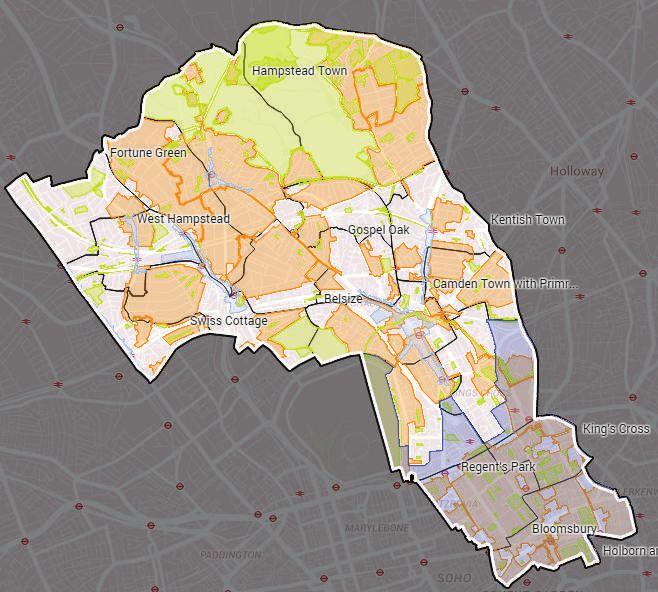
3

   Contents

Introduction                        4

Background                          6

Planning Policy Review              10

Proposed and Consented Schemes in   16
Camden

Camden as a Case Study              18

The Potential                       20

Technical Design Considerations     32

Typical Modular Layout              35

Conclusion                          36
4

    Introduction
    This research has been commissioned by Apex Airspace Development
    Ltd. Apex Airspace was set up exclusively to promote, procure, and
    deliver rooftop apartment living across the Greater London area. This
    research builds on its commitment to better understand the market in
    London, and develop shared learning that can benefit wider adoption of
    rooftop development. Apex Airspace Development Ltd is part of the Apex
    Housing Group. The Apex Group was founded in 2008, and has built up
    an extensive range of partnerships with the private and public sectors,
    delivering innovative housing solutions to assist London’s growing housing
    needs.

    The study by HTA Design LLP aims to provide an informed analysis of the
    scale of opportunity for the creation of new homes through development
    on underused rooftop space in existing residential locations. This has
    been done by identifying potential locations for the delivery of rooftop
    development for housing suitable for consideration by Apex Airspace
    Development Ltd, and setting out the relevant associated considerations
    in relation to planning, design, sustainability and construction. The scope
    of this study is to look at rooftop space which could accommodate self-
    contained accommodation - that is new homes - not just additional
    residential floorspace through extension, although this is recognised as
    another very important component of the potential of rooftop development.
    Pending the outcome of the Government and Mayor of London’s recent
    Consultation on Upward Extension in London, individual owner occupiers
    with access to roof space would be able to adopt such measures at large
    scale.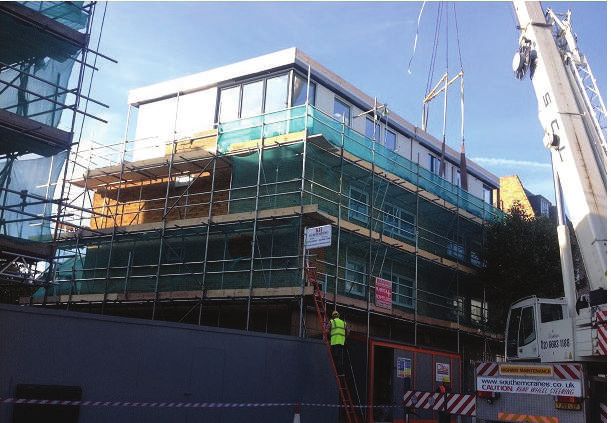
5

The research has been undertaken within a            is the time to seriously consider both the potential
context where severe housing pressures exist in      of this type of development in further detail,
London. Around 49,000 new homes are required         alongside the technical constraints that will need
every year in London over the next two decades1      to be overcome, to realise more of this type of
although some sources refer to the need for up       development on a far greater scale.
to 60,0002 homes per annum. The Government’s
focus is very much on brownfield land to deliver     This study focuses on the London Borough of
housing, but there is wide recognition that more     Camden as a typical inner London borough. It
varied and innovative methods of delivering          identifies all potential rooftop development sites
housing need to be considered, as the ever           across the entire borough, and calculates the
mounting pressure increases. More creative and       overall quantum of development potential that this
lateral thinking needs to be applied to how we can   relatively untapped opportunity holds. Camden
increase the supply of housing.                      offers a central London location. In some ways it
                                                     is an unusual case as approximately half of the
                                                     borough consists of Conservation Areas, but this
Currently, only 2% of new                            is not necessarily a constraint. That said, it is
                                                     very conceivable that the scale of the opportunity
homes per year in London                             is substantially more in boroughs with fewer
come about as a result of an                         conservation areas.

element of ‘upward extension’3                       It is recognised that rooftop development is not an
                                                     opportunity without obstacles. As with brownfield
                                                     development sites, rooftop ‘sites’ have various
Rooftop development is recognised as one of          complex and challenging constraints that need to
many innovative housing solutions that can           be overcome to realise this kind of development.
contribute to the delivery of more homes. It is      We address some of these considerations in
not the solution but one of many allowing new        this report. Different typical common building
entrants into the market to deliver housing.         typologies with potential for rooftop development
Numerous researchers, policy makers and              are categorised, and typical design solutions
designers, and others have previously explored       which would address the unique challenges faced
and highlighted the potential of this concept.       by each of the different typologies are illustrated.
Currently, only 2% of new homes per year in
London come about as a result of an element of     The overall findings of the report are summarised
‘upward extension’3. Following the recent planning in the concluding section.
policy consultations on rooftop development, now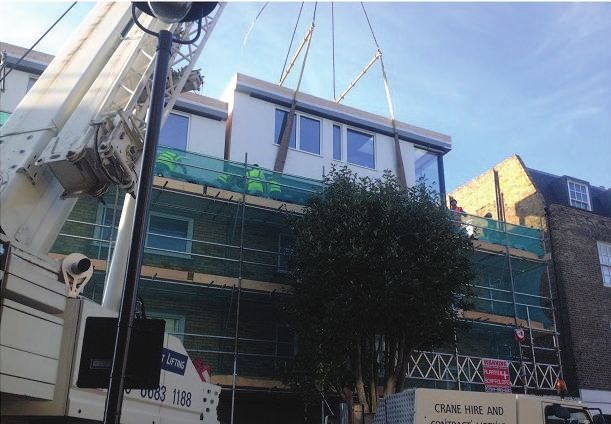
6

     Background
    Rooftop development is not new. Across London there are many examples
    of new structures added at roof level to the existing built fabric. In Camden,
    planning application records over the last 10 years indicate at least 15
    instances where applications have been submitted to create new self-
    contained homes through rooftop extensions. Many more instances are
    present where home owners or land owners have expanded existing
    residential floorspace through extensions4. At present, householders have
    a range of permitted development rights for extending residential properties
    at rooftop level without the need for planning permission5, as long as an
    extension at roof level adheres to a number of criteria regarding the height
    and volume, amongst other things, in particular not extending beyond the
    principal elevation of the dwelling house fronting a public highway.

    As the supply of developable land in London diminishes, a great deal of
    attention is being focussed into innovative ways of ensuring that existing
    developed land is utilised in the best possible way. In 2015 the NLA (New
    London Architecture) launched a competition ‘New Ideas for Housing’ to
    gather ideas illustrating new approaches to the delivery of homes. Winners
    had the opportunity to present these ideas to officers at the Greater London
    Authority. Some of the ideas explored could be delivered within the current
    regulatory system, whilst others focussed on shifting planning policy and
    funding channels to support alternative delivery methods. Many of the
    competition submissions concentrated on the potential of unused rooftop
    space across the capital as an additional source of development sites.

    Amongst the entries focussing on roof tops, a number of scenarios
    were explored such as building over local authority housing assets and
    public building assets such as schools, libraries and hospitals. Ways
    of encouraging private landowners and tenants to consider rooftop
    development on private assets were also explored, with a particular focus
    on the terraced dwelling typology that is prevalent across much of London.
    Key ideas included those from Bell Philips Architects, WSP and Adam
    Collingwood Architects.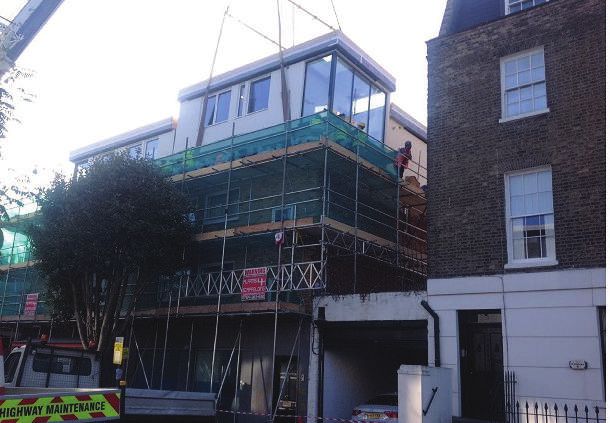
7

Selected Rooftop Development Competition Entries
from NLA ‘New Ideas for Housing’6

                  Rooftop Re(generation), by Bell Philips Architects
                  Bell Phillips identifies Local Authority Post-war housing estates as having potential
                  to make a significant contribution to the delivery of new homes. Their entry identifies
                  the issues and challenges faced by existing approaches, such as the fragmentation
                  of existing communities when wholescale demolition and redevelopment is adopted;
                  or the extensive time and costs involved, for a small number of homes, when infill
                  development is undertaken on tightly constrained plots such as disused garage
                  sites. Their proposal suggests that on a typical housing estate this could increase the
                  number of homes by approximately 30% without impacting on typical key planning
                  considerations such as open space, car parking and trees. In order to minimise
                  disruption to existing residents their proposed solution would use modular cross
                  laminated timber construction to provide these new homes.

                  A typical housing estate could increase the
                  number of homes by approximately 30%
                  without impacting on key planning issues.

                  The Terrace Upcycle, by Adam Collingwood Architects
                  This proposal suggests an ‘upcycling’ of the typical terraced house typology which
                  is prevalent across many parts of London. They propose introduction of a new
                  permitted development right that enables upwards extensions within certain design
                  parameters. They suggest the addition of a single storey extension to the top floor,
                  incorporating a roof garden, to provide a maisonette, and conversion of the ground
                  floor to a garden flat. The competition entry estimates that 1.7 million ground floor
                  dwellings could be achieved on this basis. They also suggest that the existing
                  elements could be upgraded to zero carbon to provide additional environmental and
                  planning benefits.

                  An estimated 1.7 milliion ground floor
                  dwellings could be created through
                  ‘upcyling’ of the terraced house typology.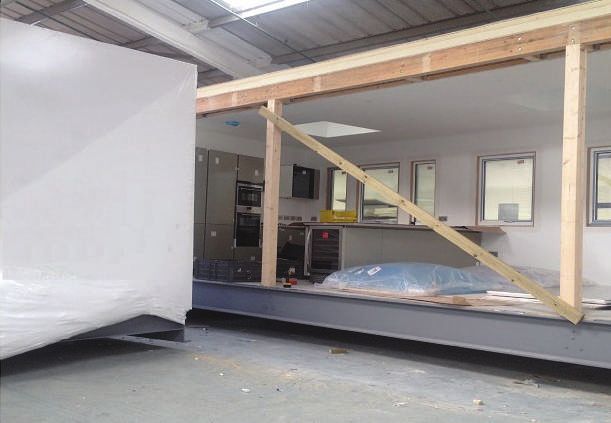
8

                                Housing over Public Assets, by WSP | Parsons Brinckerhoff
                                WSP teamed up with UCL to study the potential of municipal buildings to accommodate
                                homes above them. Their submission considered Lambeth as a case study, and
                                calculated that an additional 630,000 residential homes could be supported across
                                London, by adding additional homes above London’s municipal buildings. Their study
                                worked on an assumption of an additional 6 storeys above existing buildings and
                                an average of 100m2 per home. Their research concluded that with a mixed height
                                strategy there would be twice the potential to meet the entire 2021 monitoring target and
                                estimated capacity deficit for Lambeth (9,835 homes).

                                An additional 630,000 residential homes
                                could be supported across London, by adding
                                additional homes above municipal buildings.

                                Urban Darning, by Patrick Massey of CZWG
                                This proposal draws inspiration from the sewing technique for repairing holes in worn
                                fabric. The project aims to encourage development of small sites, such as infill, and
                                end conditions, as well as rooftop development. The project proposes that each
                                London borough would commission a team of planners and architects to collaboratively
                                produce a strategic report which identifies desirable development sites, alongside a set
                                of schematic annotated drawings for each site. The logic behind this idea is that it will
                                incentivise development in more complex small locations by reducing the risk of failing
                                to secure planning permission for prospective developers, and thus act as a catalyst for
                                development of small sites.

    Multiplying London: Space and Time, by Urbem, Elemental, Ratti and Triptyque
    This proposal suggests the encouragement of upwards extension, termed ‘onfill’ as opposed to ‘infill’, through
    positive encouragement in planning policy, by the introduction of a city-wide ‘storey(s) addition policy’. The idea is
    threefold –
             (1) simple densification – whereby existing two storey buildings are extended upwards from one to three
             storeys. It is suggested that revenues would be shared by landowners, tenants and developers, to
             incentivise this kind of development.
             (2) the ambitious next step – suggests ‘multiplying’ existing housing in London by height, and creating
             publicly accessible and maintained elevators to access the upper storeys, as well as creating public green
             space on the resulting rooftops.
             (3) From CO2 to CO3 – sets out a picture of the resulting benefits the increased density of the city would
             provide.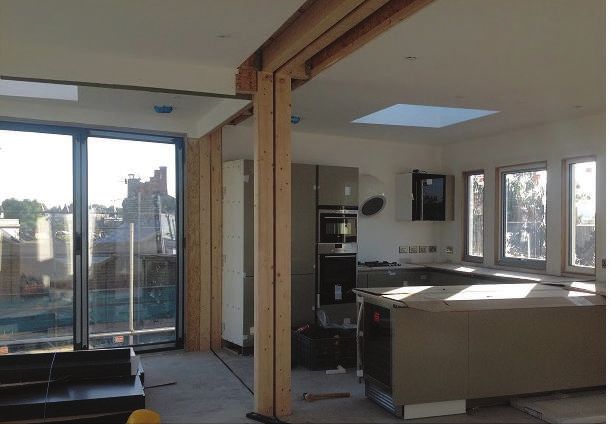
9

It is widely recognised that rooftops are a hugely  The analysis contained within this report moves
under exploited source of potential additional      beyond providing just a broad estimate of
housing. The concept has received significant       capacity, and provides realistic figures that draw
media and political coverage with reported figures  on the combined experience of both HTA Design
for its potential ranging from 500,000 extra rooms  LLP and Apex Airspace Development Ltd. Not
according to estate agents7 130,000 new homes       only do we specifically identify and measure
according to Landmark Lofts8, or 140,000 new        the potential across the Borough of Camden,
homes according to Zac Goldsmith’s campaign9.       but we also couple this with real world planning,
                                                    design and technical construction constraints
The purpose of this study by HTA Design LLP         that need to be considered to provide a realistic
is to identify and analyse the range of suitable    assessment of the scale of opportunity presented
rooftop development opportunities for the creation by rooftop development.
of new dwellings in the London Borough of
Camden. The study not only indicates the scale
of the opportunity but also the additional benefits
to existing land owners.

Whilst various manifestations of rooftop
extensions have been considered by others we
believe this to be the first piece of research that
comprehensively reviews the capacity of rooftop
development on top of existing residential and
mixed use buildings in a London Borough using a
rigorous and methodical approach to calculating
the potential scale of this opportunity.

The scale of potential latent
in rooftop development in
London is reported in the
media to range from 500,0007
extra rooms, to 130,0008
new homes, to 140,0009 new
homes.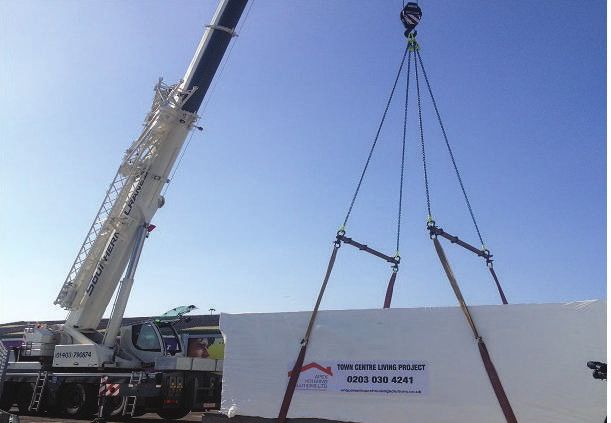
10

      Planning
      Policy

     At the time of undertaking this research, no adopted planning policy
     existed providing explicit support for the use of rooftop space as suitable
     for additional housing. Recent planning policy guidance by the Mayor does
     however recognise its potential.

     The London Plan Housing SPG (March 2016) has recently been updated
     with a section on ‘airspace development over existing and new non-
     residential premises’10. It recognises the significant potential for housing
     intensification above existing low density commercial and leisure uses, as
     well as above supermarkets and associated car parks. As such there is
     recognition that untapped potential exists for rooftop development in areas
     or sites where intensification would be suitable.

     Despite the lack of explicit policy support, rooftop extensions do already
     take place and a number of examples have been consented and delivered
     through the conventional planning process. These applications are judged
     against relevant borough-specific planning policies (to ensure quality
     development) and also policies contained within the 2016 Mayor’s Housing
     Supplementary Planning Guidance (addressing the required minimum sizes
     of units, private amenity space and accessibility.)
11
DCLG & Mayor of London Consultation Typical Planning Considerations
on Upwards Extensions
It is likely that the opportunities identified in this
The DCLG and the Mayor of London, ran a joint report will have to go through the conventional
consultation on upward extensions earlier this planning process in any regard. As such, there
year from February to April 2016. At the time are a range of material planning considerations
of publishing this research, the outcome of this likely to apply. We consider these to be the
consultation is not clear. Pending on measures following:
that will be adopted to support permitted rooftop
extensions, it is likely that further technical • Conservation Areas & Listed Buildings
details would need to be considered to ensure • Design Standards
that potential impact on the quality of the built
environment. • Public Transport Accessibility
• Car Parking
The Government consultation was undertaken • Supportive Spatial Planning Policy
with the purpose of establishing support for Designations
implementing what is regarded as an innovative
approach to enable additional housing supply. • Other Restrictive Spatial Planning Policy
Through enabling greater freedom to build Designations
upwards in London, the assumption is that it • Existing Uses
would reduce the pressure on the Green Belt.
• Space Standards
Three options were presented in the consultation • Private Open Space Requirements
paper in order to enable greater housing delivery • Sustainability
through rooftop extensions in London, not
necessarily mutually exclusive: • Section 106 & Community Infrastructure Levy
• Permitted Development (PD) rights for
additional storeys in London;
• Local Development Orders (LDOs) for
additional storeys in specific areas; and
• The support for upward extension through
policy in the London Plan.
All three options present significant opportunities
for increasing housing supply subject to
local considerations. However, the permitted
development for rooftop extensions will only apply
if such buildings are already situated next to taller
structures.12
Conservation Areas & Listed Buildings Supportive Spatial Planning Policy
If the existing building is within conservation Designations
areas, whilst this will not prohibit development Area specific designations, such as town centre
altogether, it will present added challenges to deal designations, areas identified within area action
with. Potential rooftop extensions in proximity to plans for redevelopment, or intensification areas
listed buildings will also need to carefully consider to encourage development would suit rooftop
the impact on these buildings. Rooftop extensions development. Other suitable buildings in areas
to Listed Buildings, whilst not impossible, will with untapped density potential may also offer
require very special design considerations to further opportunity.
protect the value of the heritage asset.
Other Restrictive Spatial Planning Policy
Design Standards Designations
In tightly constrained urban sites considerations Conservation areas are likely to be the most
of privacy, overlooking, and sunlight and prevalent restrictive spatial planning policy within
daylight levels are often key issues that shape inner London boroughs. However, other planning
development. If adding additional storeys, these policy designations such as protected view
matters will need to be considered, and may areas, or parking requirements may restrict the
restrict the location and height of development acceptability of upwards extensions, depending
opportunities. In some instances it may be on the impact that development proposals cause.
possible to overcome this with creative design
strategies. Existing Uses
In instances where the existing use of the building
Public Transport Accessibility is residential at lower floors, the principle of
Within the London Plan public transport residential use in the location will have already
accessibility levels are the basic starting point been established. However in locations identified
from which appropriate density levels for new above other uses – such as public buildings or
developments are assessed. Areas of high public employment uses - the principle of residential
transport accessibility levels are deemed most development will need to be considered. The
appropriate for higher density development. retention of employment floorspace and office
space is an important consideration for many
Car Parking London Boroughs as pressure to provide more
The London Plan sets overall car parking housing is evidenced to be impacting on the
expectations which are based on public transport amount of available employment space available.
accessibility levels. Areas with high levels of Housing above commercial shops (A class uses)
public transport provision will be acceptable to are quite common, and likely to be supported in
be proposed as car-free, with the exception of most instances. Housing above other buildings,
the need to provide wheelchair access parking. such as schools and hospitals will be highly
In other locations further negotiation may be dependent on individual locations. Regard will
necessary, and demonstrating how any impact on need to be had as to whether existing uses could
parking demand in the area can be mitigated will complement residential development.
be necessary.
Space Standards
The London Plan Housing SPG sets out minimum
space standards for dwellings of various sizes.13
These standards will typically need to be met, The National Planning Policy
unless sound justification can be provided Landscape
demonstrating why this is not possible.
The NPPF was introduced in 2012 to simplify
Private Open Space Requirements the quantity of national planning policy guidance
The provision of good quality private amenity that existed previously; it focuses on delivery
space in line with London-wide and locally of new development. The key principle at the
adopted standards is likely to be a planning heart of the NPPF is ‘a presumption in favour
requirement. In certain circumstances, such as of sustainable development’, recognised as
in locations in close proximity to open space or relating to economic, social and environmental
where larger internal unit sizes could be provided, spheres. The NPPF states planning must ensure
the requirement for these might be demonstrable ‘sufficient land of the right type is available in
as unnecessary. the right places and at the right time to support
growth’ and should provide ‘the supply of housing
Sustainability required to meet the needs of present and future
High performing sustainable units that meet generations’. A number of policies contained
London Plan policy guidelines would be within the NPPF can both act to incentivise and
considered necessary. The London Plan limit roof top development.
supports a ‘fabric first’ approach, which involves
maximising the performance of the components One of the 12 core principles of the NPPF is that
and materials that make up the building fabric planning should not ‘simply be about scrutiny,
itself, before considering the use of mechanical but instead be a creative exercise in finding ways
or electrical building service systems. This to enhance and improve the places in which
method involves approaches such as maximising people live their lives’ (para 17). Another of the
air tightness; using super-high insulation; and 12 core principles encourages the effective use
optimising solar gain and natural ventilation. of previously developed land (brownfield land).
Following this, the provision of photovoltaic In addition, the core principles focus on the need
panels could be considered, as well as green to manage patterns of growth to make the fullest
roofs in order to increase biodiversity. use of public transport, walking and cycling and
seek high quality design and a good standard of
Section 106 & Community Infrastructure Levy amenity for all existing and future occupants of
The quantum of dwellings produced by this kind buildings and land. The framework also specifies
of development is likely to be fewer than 10 that development proposals should optimise the
dwellings, beneath which point affordable housing use of a currently underutilised brownfield sites.
contributions are not normally essential. A recent
appeal decision has restored a 2014 government
policy which removed the need to seek affordable
housing contributions for sites of under 10 homes.
Section 106 contributions and Community
Infrastructure Levy (CIL) will be payable on all
new residential floorspace. This cost constraint
should be factored into proposals from the outset.14
The London Planning Policy Landscape residential floorspace that could arise from
rooftop development in certain locations where
The latest version of the London Plan was homes are empty. High levels of empty properties
adopted by the Greater London Authority (GLA) are recognised as having serious impact on the
on the 10th March 2015. It is very likely that it will viability of communities. Statistics published by
significantly change in emphasis over the coming the DCLG put the number of empty homes in
year following the election of the new Mayor and England in October 2015 at 600,17911. In London,
the change in administration in particular in the approximately 1.63% of homes, or 56,715 homes
focus towards providing more affordable housing. are empty12. If even 20 per cent of these could be
The Plan provides the London-wide strategic brought back into use through addition of rooftop
planning policies relevant to rooftop development development – possibly creating additional homes
in London Borough of Camden, and across the - then an additional 11,344 dwellings could be
capital. The policies within the plan encourage brought back into use across London, in addition
brownfield development particularly though to the new homes created through rooftop
intensification (policy 3.3), and optimising development.
housing potential on sites based on local context,
character, and design principles (policy 3.4). In If 20% of the 56,71512 empty
addition, the plan makes clear that the quality
and design of housing design is fundamental and homes across London could
should be in line with standards and guidance set be brought back into use
out in the London Plan Housing SPG (2016). In
addition, development proposals will need to have through rooftop development
regard to the 2015-16 Minor Alterations (MALPs) an additional 11,344 dwellings
which were prepared to bring the London Plan in
line with the national housing standards and car could be brought back into
parking policy. use.
Policy 3.14 of the London Plan which discusses
existing housing is relevant to rooftop The Camden Planning Policy
development. The policy supports maintenance Landscape
and enhancement of poor quality existing housing
stock and efficient use of existing housing stock Camden will in the near future have a very up
by reducing the number of vacant, unfit and to date Local Plan. It is currently at submission
unsatisfactory dwellings, as well as bringing back stage and expected to be the subject of an
into use long-term empty homes. Examination by an Inspector in Summer 2016.
The addition of space through rooftop A key strategic policy within this Plan is to create
development in many locations, for example the conditions for growth to deliver the homes,
on high streets, has the potential to enliven jobs, infrastructure and facilities that Camden
and bring back into use disused lost dwellings. needs for those who live and work in the borough
Therefore, while this study focusses on the (Policy G1). Supporting development that makes
potential for rooftop development alone, there the best use of its site is a key component of
is also clearly great potential for additional supporting growth, taking into account quality15
of design, local surroundings, sustainability, capacity and creating mixed used developments
amenity, heritage, transport accessibility, and to increase its housing supply. Rooftop
other considerations relevant to a site. Housing development could be a useful and substantial
need in Camden has been assessed as 16,800 additional source for housing delivery.
additional homes up to 203113, including 11,130
additional self-contained homes. It is expected Local character and distinctiveness are
that most of the growth in the Borough will take important considerations in the case of rooftop
place in: development. Approximately half of the Borough
• The Growth Areas of King’s Cross, Euston, of Camden falls within a Conservation Area17.
Tottenham Court Road, Holborn, West Whilst rooftop development can and is taking
Hampstead Interchange and Kentish Town place in these areas, specific guidance contained
Regis Road; and, within some of the Borough’s Conservation Area
• Highly accessible locations such as the town Statements specifically prohibit roof extensions
centres of Camden Town, Finchley Road/ and alterations which will change the shape and
Swiss Cottage, Kentish Town, Kilburn High form of the roof. In particular, if properties affected
Road and West Hampstead. form part of a group or terrace that remain
largely unimpaired, if the property forms part of
It is estimated that the above areas will deliver in a symmetrical composition of which the balance
the region of 7,200 homes in the period 2011 to would be upset, or if the roof is prominent or the
203114. roof extension would be unacceptably prominent,
the design of development proposals will need to
The borough sees further housing growth be especially carefully considered.
taking place as a result of its Community
Investment Programme (CIP). This comprises The role of community support of rooftop
the regeneration of Council-owned sites and/ extensions will be an important factor in creating
or selling of sites no longer suitable, underused support for planning applications proposing
or expensive to maintain. In the long term, the additional units on existing roofs. There are
CIP is programmed to deliver 3,050 new homes, potential significant benefits to existing residents
although this includes a significant component of of buildings that will be affected by roof top
replacement homes15. extensions, such as financial incentives, and
improvements to the current built fabric.
The borough’s objectively assessed housing need
for 2016-2031 of 16,800 homes amounts to 1,120
homes per annum. At present the Borough have
enough deliverable sites to deliver this target for
the period 2015/16 to 2019/20 but not thereafter16.
Higher density development and intensification
seem at present the ways additional homes would
be delivered.
There is undisputable need for more homes in
Camden, and the Borough’s emerging policy
framework is supportive of maximising site16
Proposed &
Consented
Rooftop
Schemes
in Camden
A review of submitted and consented schemes across the borough
indicates that a noteworthy number of homes in schemes proposing rooftop
extensions to provide new dwellings have been submitted and consented
across the borough of Camden to date. Fifty three homes (in 8 applications)
have been consented, and 14 homes (in 7 applications) are currently being
determined. This number does not include schemes which may have
received pre-application advice from the LPA as this information is not
made publicly available, therefore it is probable that this does not accurately
reflect the number of proposed rooftop developments in the pipeline for
Camden.
Records of consented and submitted schemes have been found across the
whole borough - indicating that the principle of rooftop extensions appears
to be acceptable across the whole borough, including within conservation
areas, dependent on site specific considerations. The records of submitted
and consented schemes have involved proposals above both residential
and commercial premises, indicating that both existing residential and high
street locations may be appropriate and can be supported for this kind of
development. In the table below, we have listed only applications for the
creation of new self-contained accommodation.17
Address: 146-162 Kilburn High Road (& 4-10
1
Kingsgate Road)
No of Homes: 38
2 Address: 11-13 Goodge Street London W1T 2PG
3
4
No of Homes: 4
3 Address: Flat 10 Ladywell Court 22 East Heath Road
8 15
7
London NW3 1AH
12
10 No of Homes: 1
14
1
Address: Gordon House 6 Lissenden Gardens
4
London NW5 1LX
No of Homes: 4
5
5 Address: Tune Hotel 322-326 Gray’s Inn Road
13
9
& 76-78 Swinton Street London WC1X 8BU
2 11
No of Homes: Additional hotel accommodation (C1
6
use class)
Map of Consented and Submitted Schemes for Rooftop Developments in Address: 41-45 Neal Street London WC2H 9PJ
LB Camden 6
No of Homes: 2
7 Address: 2 Atrium Grove, London. NW3 4XR
The proportion of submitted and consented No of Homes: 1
schemes across the borough of Camden
Address: 1 - 2 Wilmot Place London NW1 9JS
to date is currently quite low. The schemes 8
No of Homes: 1
are distributed around the borough with no
discernable spatial distribution pattern. Schemes 9
Address: 46 Hatton Garden London EC1N 8EX
can be found towards both the north and south No of Homes: 1
fo the borough, as well as in conservation areas.
Address: 123 Kentish Town Road London NW1 8PB
The schemes found include a mixture of those 10
No of Homes: 1
above solely residential properties, as well as
mixed use buildings, with retail and commercial 11 Address: 25 - 26 Red Lion Street London WC1R 4PS
uses on the ground floor. The single trend No of Homes: 1
that has been found among the proposed and
consented developments is the majority provide 12 Address: Belsize Park House 59 - 60 Belsize Park
No of Homes: 2
just 1 or 2 additional units.
13 Address: 125 Clerkenwell Road London EC1R 5DB
No of Homes: 8
14 Address: 145 A Sylvan Court Abbey Road London
NW6 4SP
No of Homes: 1
15 Address: 309 West End Lane London NW6 1RD
No of Homes: 118
Camden as a
Case Study
Camden is a diverse Borough. The southern portion forms part of Central
London and includes offices, hotels and the retail attraction of the West End
at Tottenham Court Road. It is also the home of major regeneration projects
such as Kings Cross.
The Borough owns 33,000 properties18- 23.6% of the boroughs housing
stock is local authority owned19. A number of the Borough’s estates are
currently the subject of regeneration, including the Abbey area, Agar Grove
estate, Bacton low rise, Bourne estate, Chester Road and Balmore Street,
Maiden Lane estate, Holly Lodge Estate and the Tybalds estate. Potential
new development are also underway at 24 Crowndale Road/Godwin and
Crowndale Estate, Harrington Square, Hadley Street, the Three Fields
Estate20. These landholdings in itself points to tremendous potential,
although it is recognised that some of these Estates may be the current
subject of demolition and redevelopment.
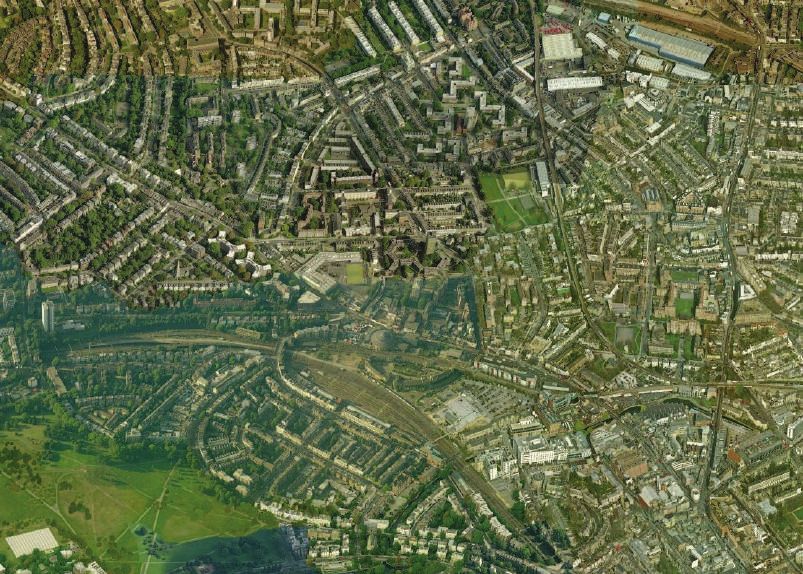
Aerial View of Part of Camden demonstrating the built form and mix of typologies (from Bing Maps)19
More than half of the Borough is covered by
Camden Key Facts: Conservation Areas. Roughly twenty seven per
cent of the Borough is also covered by open
spaces17, including Metropolitan Open Land:
23.6% of the Borough of Hampstead Heath and adjoining areas, the
Camden’s housing stock is local eastern edge of Regent’s Park, Primrose Hill/
authority owned19 Barrow Hill Reservoir and Highgate Cemetery/
Waterlow Park/Fairseat. In addition, a further
14 open spaces in Camden are also on English
More than 50% of Camden is in a Heritage’s Register of Parks and Gardens of
Conservation Areas Special Historic Interest22.
27% of Camden is covered by The character of Camden’s residential
neighbourhoods is hugely influenced by the
open spaces21 period within which the buildings originate. This
includes Victorian buildings, buildings from the
first half of the 20th Century, post war housing
and housing from the latter part of the 20th
The pattern of development across the Borough
Century.
has responded to its proximity to the centre
of London, to the topography and to the
infrastructure that cuts across the Borough. The
area to the south of Euston Road is more urban
in form, a tight grid of blocks with open spaces
provided as squares that sit within this gridded
pattern. This form extends in a looser more open
fashion towards Camden Town and then makes
way for a network of residential streets that
extend across much of the rest of the Borough21.
To the north of the Borough, the character
changes with many residential areas and
neighbourhoods, including Camden, Hampstead
and Highgate, Swiss Cottage, West Hampstead,
and Kentish Town each with their own distinctive
identity and characteristics.20
The
Potential
Methodology
The Borough has been surveyed using satellite imagery to undertake a
desktop assessment of suitable rooftop extension sites. Suitable sites
have been identified with regard to the planning, design and technical
considerations set out in this document. Only those sites which have been
deemed to have realistic potential for rooftop development have been
included. Furthermore, large parts of the borough including estates or
growth areas with planned regeneration have also been excluded.
The sites have been identified by Ward. The full address, and area of
roofspace have then been recorded, along with a visual record of the site.
Each site has then been assessed to analyse the building typology, the
potential developable area, and the condition of the building (which could
inform further research about when development opportunities might come
forward).
The full database of information is not included within this report, but
extracts of the workings and methodology have been included below for
reference.
Map of potential rooftop development sites across the Borough of Camden (from Google Maps)21
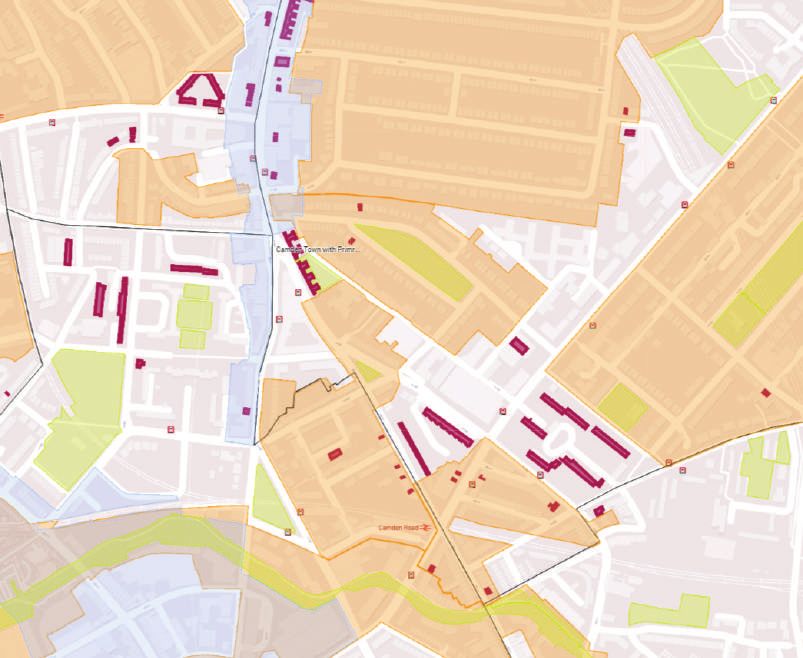
Detailed extract of map of potential
rooftop development sites across
the Borough of Camden
(from Google Maps)
Extracts from database detailing
properties identified
(from Bing Maps)
9-12 Frognal Parade, Finchley 1 Gilden Crescent 24-28 Buckland Crescent
Road 50m2 560m2
180m2
Typologies
The planning, design and technical constraints that will need to be
considered will obviously be unique from site to site. However, the borough
has a number of typical typologies that the majority of development can be
categorised into. Our analysis focuses on eight separate typologies. Within
each typologies the challenges and likely solutions are broadly similar. The
eight typologies we have identified as suitable for rooftop development in
the borough are set out on the following pages. The typical characteristics,
considerations and potential proposed solutions for rooftop extension
development for each is discussed in turn.London Borough of Camden
475 Potential Rooftop
Development Sites
198,660 m 2
@ average of 60m2 per home
utilising 75% of suitable floorspace
(based on Apex Airspace Development experience)
2,485 new homes
28% of London
Plan 2015 Housing
Target for CamdenGreater London
the study identifies a ‘potential rooftop development density of 1.14 homes per
hectare in the London Borough of Camden. If this is extrapolated to the entirety
of Greater London this could produce
14,330,080m 2
@ average of 60m2 per home
utilising 75% of suitable floorspace
(based on Apex Airspace Development experience)
179,126 new homes
42% of London
Plan 2015 Housing
Target for London
whilst the typical design solutions reviewed in the report respond to the most
common typlogies in the Borough of London, other studies, including those
reviewed from the NLA New Ideas for London demonstrate how typical suburban
typlogies found in outer London could also be adapted.24
Typology 1: Victorian Terraced Dwelling In Solely Residential Use
Victorian development accounts for a large proportion of development across the borough of
Camden, particularly within the conservation areas. These dwellings provide an attractive yet
robust layout that is easily adaptable with a strong character. Properties are typically laid out in
terraces, or as semi-detached pairs with ornamentation including bay windows and parapet walls.
43 Potential Buildings Typical technical considerations
Identified for Rooftop
Development • Weak brickwork with lime mortar;
• A flat roof or pitched or butterfly roof, which may
require additional work to the roof structure, and
equivalent to of which the profile might be considered as very
typical of the existing stock with resistance to
10% of identified change;
• Services are typically located to the subservient rear
properties
side.
4830m2 Typical solution
rooftop space identified
• Single module custom made to suit site;
equivalent to • Extend existing staircase.
60 Homes
Before After25
Typology 2: Victorian Terrace with Ground Floor Commercial Uses
As with the previous typology, Victorian development accounts for a large proportion of
development across the borough of Camden. In central and town centre locations many of these
buildings now have ground floor commercial uses.
86 Potential Buildings Typical technical considerations
Identified for Rooftop • Weak brickwork with lime mortar;
Development
• A flat roof or pitched or butterfly roof, which may
require additional work to the roof structure;
equivalent to • Services are typically located to the subservient rear
side;
19% of identified • Compatibility with ground floor uses;
properties • Access and land assembly may be more
challenging to resolve than the above typology.
11,160m2 Typical solution
rooftop space identified
• Single module custom made to suit site;
• Extend existing staircase.
equivalent to
140 Homes
Before After26
Typology 3: Mansion Block
The majority of development in the borough occurred within the Victorian era, and therefore the
early part of the 20th century offered limited opportunities for further development. These are
typically substantial robust brick construction of four to five storeys with a strong street frontage.
61 Potential Buildings
Identified for Rooftop Typical technical considerations
Development • Strong masonry construction;
• Flat roof or pitched roof;
equivalent to • Services are typically centrally located buried within
the plan;
13% of identified • Usually a single freeholder.
properties
Typical solution
38,430m 2
• Multiple modules custom made to suit site;
rooftop space identified • Extend existing staircase.
equivalent to
480 Homes
Before After27
Typology 4: Inter-war Residential Block with Ground Floor Shopping Parade
The majority of development in the borough occurred within the Victorian era, and therefore the
early part of the 20th century offered few opportunities for further development. This typlogies
occurs in limited locations, typically with a masonry finish and with simple fenestration and
detailing.
12 Potential Buildings
Identified for Rooftop Typical technical considerations
Development • Concrete frame construction with brick infill;
• Flat roof or pitched roof;
equivalent to • Services are typically centrally located buried within
the plan;
3% of identified • Land assembly may be more challenging to resolve.
properties
3930m2 Typical solution
• Multiple modules custom made to suit site;
rooftop space identified • Alter roof shape in instances of pitched roof;
• Extend existing staircase.
equivalent to
49 Homes
Before After28
Typology 5: Local Authority Estate Low-Rise and Mid-rise Blocks
The significant bomb damage experienced by Camden during WWII enabled the building of
council houses shaped by the modernist approach to town planning. These estates are typically
founded on the principle of the neighbourhood unit with the same building and house type
repeated extensively over a large site. Blocks are typically of concrete frame construction, rising to
up to 12 storeys with brick facades and simple detailing.
125 Potential Buildings Typical technical considerations
• Strong masonry construction;
Identified for Rooftop
Development • Flat roof or pitched roof;
• Services are typically centrally located buried within
the plan;
equivalent to • Usually a single freeholder.
27% of identified
properties
Typical solution
• Multiple modules custom made to suit site;
99,995m 2 • Extend existing staircase and extend of add new lift.
rooftop space identified
equivalent to
1250 Homes
Before After29
Typology 6: Local Authority Estate Tower Blocks
The significant bomb damage experienced by Camden during WWII enabled the building of
council houses shaped by the modernist approach to town planning. These estates are typically
founded on the principle of the neighbourhood unit with buildings set within open space,
rather than relating to the street pattern. The point tower blocks are typically of concrete frame
construction, with inset balconies.
10 Potential Buildings Typical technical considerations
Identified for Rooftop • Strong concrete frame construction;
Development
• Flat roof;
• Services are typically centrally located buried within
equivalent to the plan;
2% of identified
• Often have plant equipment on top, which might
restrict development on those blocks.
properties
Typical solution
5,790m 2
• Multiple modules custom made to suit site;
rooftop space identified • Extend existing staircase and lift.
equivalent to
72 Homes
Before After30
Typical Typology 7: Small Flatted Block with Single Core
Numerous small flatted blocks are dispersed around the borough. Many of these are post-war
blocks, however, some more contemporary examples have also been included. Whilst the form
of construction and structural considerations for these will vary, access is typically from a single
core, and therefore the approach to rooftop development on these buildings will be similar, as the
building proportions tend to be similar.
91 Potential Buildings Typical technical considerations
• Strong concrete frame construction;
Identified for Rooftop
Development • Flat roof;
• Services are typically centrally located buried within
the plan;
equivalent to
20% of identified
properties Typical solution
• Multiple modules custom made to suit site;
• Extend existing lift and staircase
21,510m 2
rooftop space identified
equivalent to
269 Homes
Before AfterTypical Typology 8: Miscellaneous
A substantial number of sites do not fall into any of the above typologies. These are comprised of
heterogeneous building types ranging from public houses, to prominent irregularly shaped corner
sites, to space above existing purpose built retail and commercial uses as well as converted
factory buildings.
36 Potential Buildings Typical technical considerations
Identified for Rooftop • Likely to be of masonry construction
Development
• A variety of rooftypes;
• Services will be varied, and may be a more complex
equivalent to especially if mixed-use;
8% of identified
properties Typical solution
• The solutions for this type will be heteregeneous and
12,321m2
are likely to require bespoke designs;
• May be more suited to on-site construction
rooftop space identified depending on existing building type;
• Extend existing lift and staircase or reconfigure
existing layout
equivalent to
154 Homes
Before After32
Technical
Design
Considerations
Like any brownfield site rooftop development sites come with various design
and technical constraints that need to be overcome. These need to be
considered following identification of suitable sites following an assessment
of their capacity which takes into account planning constraints. The issues
that need to be considered include those relating to structure, access,
fire safety, maintenance, acoustics, services, sustainable technology, and
construction methods. Whilst these considerations are clearly challenges
when it comes to the viability of rooftop development, many of the
constraints are typical of any other refurbishment or conversion projects.
Delivery of pre-fabricated pod construction to Wilmot Example of external lift addition from HTA Design
Place by Apex Airspace Development Ltd Berlin Study Trip, September 2015.33
Structural considerations Where it is not practical or possible to extend the
The capacity of existing buildings to support existing stairwell (and/or lift) it may be possible to
additional loading will be a primary factor in provide access via an independent stair/lift shaft
determining the feasibility of delivering rooftop on the outside of the building.
development, and each site will have unique
conditions. The original structural loading of The feasibility of adding extra accommodation
buildings will not typically have capacity for to the top of existing structures may depend
significant extra loadings, however the ultimate on the building height as different categories of
capacity to take additional loadings will be building height have different Building Regulation
dependent on the typology of the existing requirements. Adding roof top accommodation
building. Additional loads would typically need could move a building into the next category,
to be distributed across the existing structure, to creating the need for new considerations
enable the structure to accommodate it without in relation to means of escape and smoke
creating further structural challenges. The chosen ventilation, fire-fighting provisions, the need for
method of proposed construction is likely to be dry or wet risers, fire resistance of elements of
influenced by the structural constraints, and more structure and other building elements, and the
lightweight structures might typically be chosen possible need for sprinklers.
for rooftop developments. The feasibility of any
strengthening measures which may be required Services Infrastructure
to the existing structure will need to be assessed The capacity of existing services infrastructure
by a structural engineer. to supply additional demand needs to be
investigated, and planning for additional capacity
Access, Height and Fire Safety (where needed) should be put in place early
When building on top of an existing building, in the development process. This includes
access to the new accommodation via the electricity, gas, water, telecommunications and
existing vertical circulation routes (stairs and lifts) refuse storage facilities.
is likely to be the most cost-effective solution.
Existing stairs are likely to form the main means Two options are possible in the case of roof
of escape in the event of fire, and for fire-fighting space development: providing separate services
by the local Fire Brigade, with fire-fighting or extend (or add to) the existing systems and
lifts necessary in accommodation above 18m services.
above fire-access level. However, this may vary
dependent on the existing (different) building There are significant benefits to be gained
use(s). in utilising existing drainage systems. On
larger projects with a new configuration of
Proximity to the final exit will be a consideration, accommodation over an existing layout,
as this impacts on travel distances, which would connecting to existing soil stacks will need to
influence the amount of accommodation that can be factored in if designing alternative layouts
be served. The use of open deck access between and the impact of additional accommodation
accommodation and stair/core can extend travel will need to be considered to ensure capacity
distances and may assist in increasing the is not exceeded. New systems may need to be
number of accommodation units that can be located on the exterior of the building (possibly
provided.34
in enclosed ducts) and may require additional Construction Method
below-ground drainage. Rooftop additions can be prefabricated in
a number of ways and using a number of
Where there are a significant number of service construction techniques, reducing the impact of
elements located at or around roof level on construction on existing residents and buildings.
existing buildings, these may play a role in Off-site manufacturing is a growing area of
determining the feasibility of utilising the roof interest in relation to residential accommodation
space for additional accommodation. Those and it could play a significant role in the delivery
with prohibitive services on the roof have been of roof top development.
excluded from this study, as re-providing, moving,
altering or re-routing can be costly. Typical Modular elements can be constructed using a
elements which may need to be taken into variety of commonly used construction materials:
consideration are: M&E plant/rooms/enclosures; concrete, steel and timber. Typically a factory will
lift over-runs; stair/stepped access ways; construct a structural frame, install wiring, and
chimneys, gas-flues, ventilation shafts; rooflights/ plumbing, fix the internal linings, add lighting,
automatic-opening smoke vents; services routes; and other services, apply paint finish and then
lightning conductors; man-safe lines, fixing points; crane the module onto a truck for delivery. Upon
aerials and satellite dishes; telecom masts/relay reaching the construction site the module is then
equipment; PV panels; CCTV systems; window/ craned into position. It is entirely possible for a
façade cleaning cradle/track; rainwater gutters module to leave the factory in the morning and be
and outlets; SVP’s; and, the provision of green installed on site in the afternoon.
roofs.
Most modules are supplied weatherproof and with
Sound windows installed. This is to ensure that they are
Internal and external noise levels need to be secure and weathertight. The entrance door to
considered and acoustic separation needs to be the module can be locked to prevent workmen
provided between the existing dwellings beneath. from entering it, as modules are often fully
finished internally.
Access for Maintenance Purposes
Safe access for cleaning or maintaining the All modular structural methods are suitable for
existing building as well as the new structure use on rooftop extensions, with the caveat that
requires consideration. the additional loading on the structure beneath
will be a determining factor. Timber or light-gauge
Renewable Energy and Green Roofs steel modules are likely to be the most suitable
The ability for the new roof to support renewable solution for weak structures.
energy (e.g. through provision of photovoltaic
panels) should be considered. It could be an There are transport restrictions that apply to
important component in demonstrating energy modules, with a width of 4.2m considered as a
efficiency and it could save residents money. The normal maximum and 3.6m as a helpful ‘normal’
addition of a green roof to all or part of the roof dimension. These widths are to the outside of the
area will help to reduce the amount of drainage, structure and any packaging. Going beyond the
and will help to get planning permission. 4.2 dimension leads to the need for an escorted
delivery which increases costs.
Legal Considerations
The legal constraints of any potential opportunity
need to be carefully understood. Land ownership,
tenure, licences, covenants, easements,
and rights of way need to be assessed and
understood prior to commencement of significant
design work.35 Construction of ‘Wilmot Place’ Rooftop Development by Apex Airspace Development
36

       Providing
       Affordable
       homes for
        London

     The issue of an undersupply of new homes, twinned with an increasing
     challenge of affordability provides a real challenge for all involved in
     determining the how and what of new supply. Even when new supply has
     been identified, there remains a real factor of how that can be translated
     into affordable homes.

     Evidence from this research suggests that potentially a third of the
     roof space capacity is owned by local authorities or housing related
     organisations, equating to a potential 60,000 number of new homes.
     Translating the value of the roof space appears to be a viable way in
     which new affordable homes could be generated. Based on this research,
     the value of publicly owned roof space across Greater London could be
     conservatively calculated to be in the order of £54 billion.

     We are aware that Apex Airspace Development are in conversation with a
     range of housing players, such as Lambeth & Southwark HA, Westway HA,
     Arhag HA, LB Hillingdon, LB Harrow, Croydon Churches HA and others,
     to explore how funds from rooftop development could deliver real benefits
     for these organisations. The key benefits of the approach are listed on the
     following page.
You can also read


