MAQUINA DO TEMPO TIME MACHINE CAPTURING THE NOWS - CAPTURANDO OS AGORAS
←
→
Page content transcription
If your browser does not render page correctly, please read the page content below
Maquina

           [ MAQUINA DO TEMPO ]
          CAPTURANDO OS AGORAS

             [TIME MACHINE]
           CAPTURING THE NOWS

               A Photo Biography
              by Jonathan Wilkins
                  Limited Edition 2020
                                         1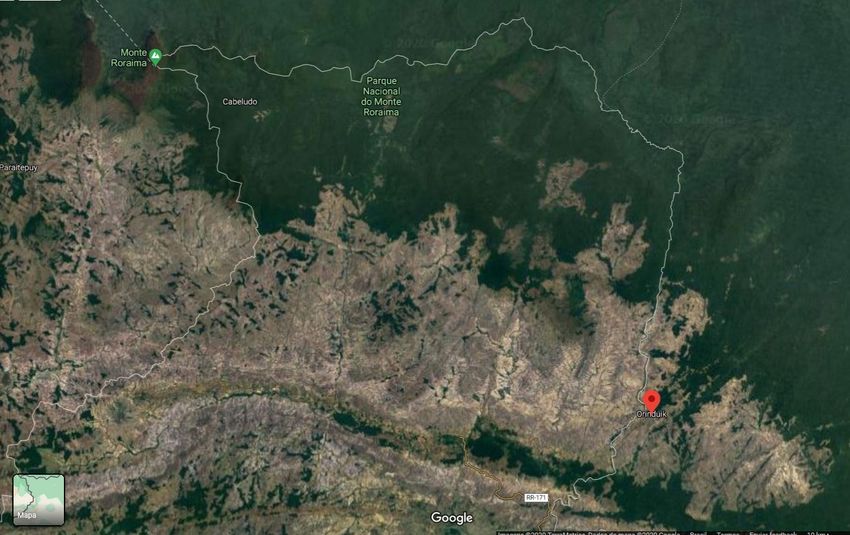
Maquina
                                                                      shall “fix” it she remarked. The red light was still our
            The Early Days - Touched by the Magic                     only illumination, but after about two minutes in the
                                                                      “fixer”, the white light finally revealed the marvel of my

      L    ife is like a row of dominoes on a fixed size table
           where the dominoes are set end to end. At the
      beginning of the queue there is the “entry point”,
                                                                      first photographic print. From that moment on I was
                                                                      hooked. Fascinated, I decided there and then that this
                                                                      is what I really wanted to do for the time to come on
      filled with the excitement of what is to come. The fear         my creative journey through life.
      as to whether one is good enough always haunts the                  My next step was to find a camera. My quest for a
      journeyman on the quest for “the perfect image”. It was         camera ended when I found a 1948 Rolleiflex in my
      once said that your first ten thousand photographs are          father’s cupboard. It had been sitting there collecting
      the worst. That consoling phrase is what I set out to           fungus for 17 years, but Dad said I could have it if I
      rebel against, and therefore I installed in my psyche           promised to “get it cleaned”. On my return to boarding
      a critique of my own work, almost like a mother who             school at Worth in England, I sent it to Wallace Heaton
      does not like her children. This attitude of self-curation      for service. They did a great job of
      helped enormously to create photographs better than             dismantling the whole camera and
      yesterday’s ones.                                               cleaned the Zeiss Tessar F 3.5 - 75mm
           With this vision in mind, I hope to share my journey       fixed lens. Everything was working like
      with you, as a photographer, along the row of dominoes.         new and 17 quid later, I was set for the
           Initially, it all started the day I was invited to visit   challenge of creating images on the two
      a Black and White “darkroom” in Guyana, at the
                                                                                                                                                                                            L
                                                                      and a quarter square format. Luckily
                                                                                                                                                                                                ater the following year, I was asked to give a talk

                                                                                                                                   D
      Bookers Head Office on Church Street. The technician,           there were some lines etched on the                               uring a recent visit to Worth in 2016, I was
      Sheila Man-Son-Hing, closed the light tight door                                                                                                                                          to the final year of the Worth Photographic Art
                                                                      ground glass viewing screen, which I                              introduced to the present Abbot, who turned
      behind us and switched on a dim red lamp. My eyes                                                                                                                                     department class. The budding photographers were
                                                                      discovered later as the “rule of thirds”                     out to be my Chapman House fellow, known as Jolly
      got accustomed after a while as my pupils dilated and                                                                                                                                 shown how to “Make or Take” photographs, with
                                                                      for good composition. I spent all of my pocket money         (Surname) in those days, now Abbot Luke. I was
      soon she took a white sheet of photosensitive paper                                                                                                                                   images based on my 45 years of experience in the
                                                                      on “expired” film and army surplus photographic paper,       asked to do his portrait and in exactly the same place
      from a yellow box marked Kodak, set it on an easel                                                                                                                                    field.
                                                                      bought by postal service catalog up in Lancashire.           “coincidentally” as the one done 48 years before, and
      and projected a reversed image from a negative in an                                                                         much to my surprise, in the same morning light.                 Raibert MacDougall, Jonathan Wilkins, Father
                                                                          At Worth my friend, John Wild, also J.W , had
      enlarger, for about 12 seconds. Nothing happened. She           a Rolleicord, and so together we started the first                                                                    Kevin, John Wild and Peter Furlonge, the founding
      turned around to a long sink where there were three flat        Photographic Society, by building a darkroom in an                                                                    fathers of Photographic Society, at Worth on 21st.
      trays with some chemicals in them. Then she carefully           abandoned attic room, which the monks kindly allowed                                                                  March 2017.
      immersed the paper into what she called “developer”             us to occupy.
      and we watched with anticipation as an image slowly                 Our carpentary master, Walter Stanford, also an avid
      appeared on the paper. At first a soft grey, and as the         photographer, helped us with the proper guidelines,
      timer moved forward to the one minute mark, the                 and soon enough we were producing acceptable B&W
      image became more discernable, until there seemed to            prints. Surely my talent was being recognized and I was
      be no more changes. She then lifted the wet piece of            asked to do a portrait of the first Abbot at Worth. Dom
      paper with come bamboo tongs and slipped the floppy             Victor posed for me in front of the new Abbey church
      paper into tray number two. That she called “stop               which was being built at the time. Here is the shot of
      bath”. She swished it around gently for half a minute           Dom Victor Farewell done in 1970.
      and once again lifted the piece of paper, now with
      recognizable image, into tray number three. Now we
                                                                                                                                                                                                                                                  3
2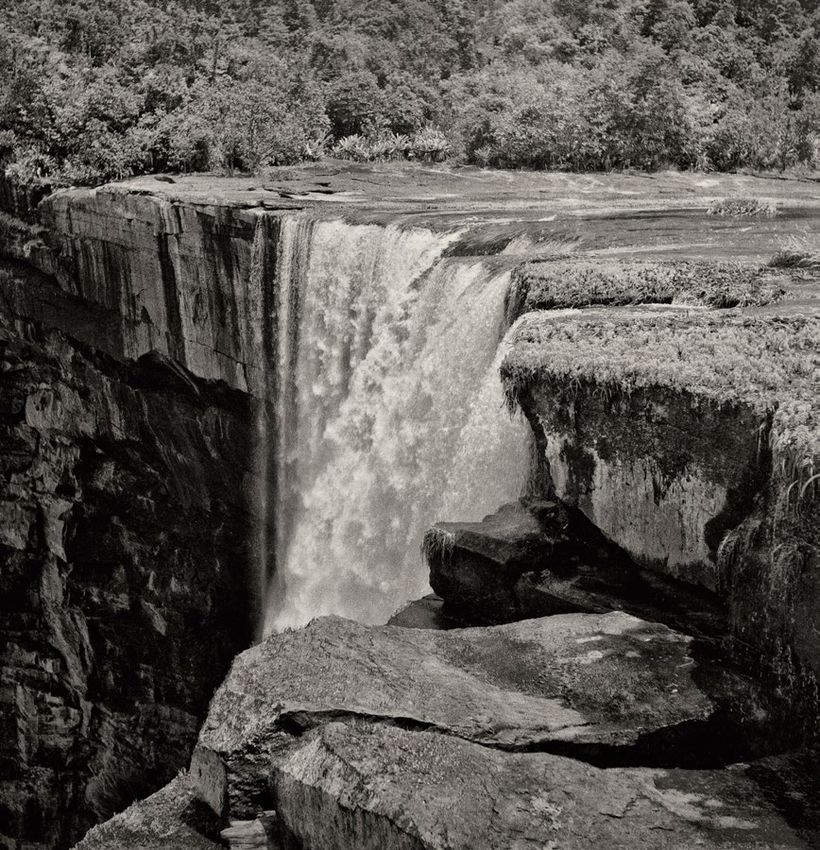
Maquina

          A    fter returning to Guyana in 1970, I started
               taking pictures with the Rolleiflex, but soon
          learned that there were better optics available by
          then. I decided to move to 35 millimeter format
          which gave me 36 shots on each roll of film, instead
          of only 12. Then, in 1973, I was invited to be part
          of a climbing expedition sponsored by the BBC
          from London, with five world-famous mountain
          climbers: Don Whillans, Hamish MacInnes, Joe
          Brown, Mo Antoine and Mike Thompson to
          conquer the north face of Mount Roraima from
          within Guyana. The photographic possiblities
          were indeed very promising. We were to travel
          by plane to Kamarang, then by canoe upriver to
          Maiurupai, and then on foot for some 30 miles
          through thick jungle to the North Face of the
          “Mighty Roraima” at 9000 feet above sea-level. I
          had aquired about 30 rolls of Black & White films
          and 20 rolls of Color negative and slide films.        Pico de Roraima • Mount Roraima - Cloudless at dawn
          Every frame had to count, gleaned from my 12
          shots per roll days. I was completely at home in
          the tropical rain forest - 15 hours a day of rain
          to be more precise - when one early morning the
          “Face” was totally cloudless. This was my god-sent
          photographic break.
                                                                                                                  5
4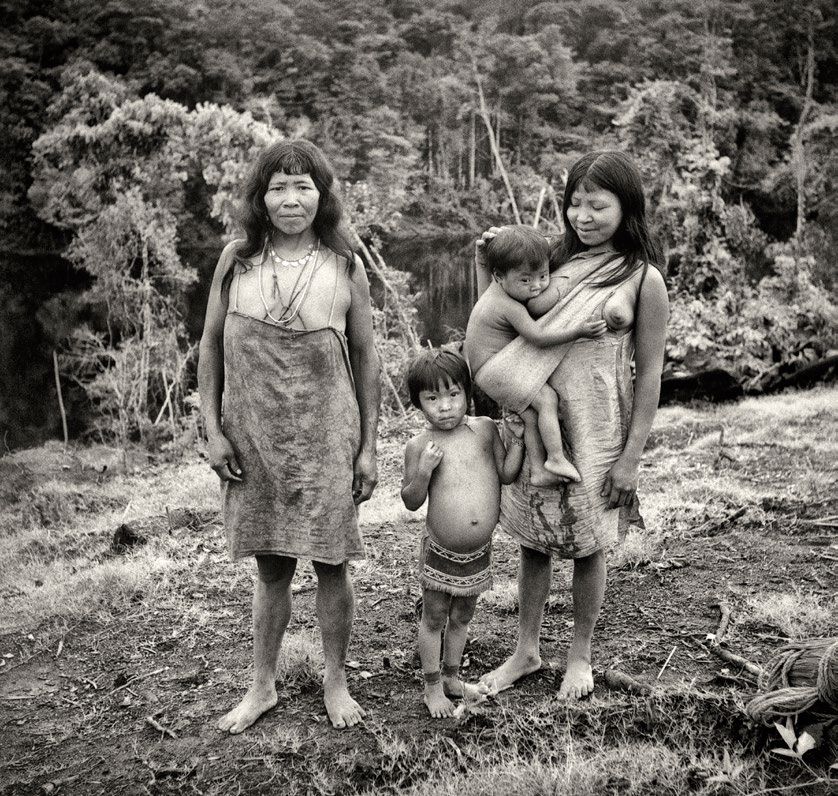
Maquina

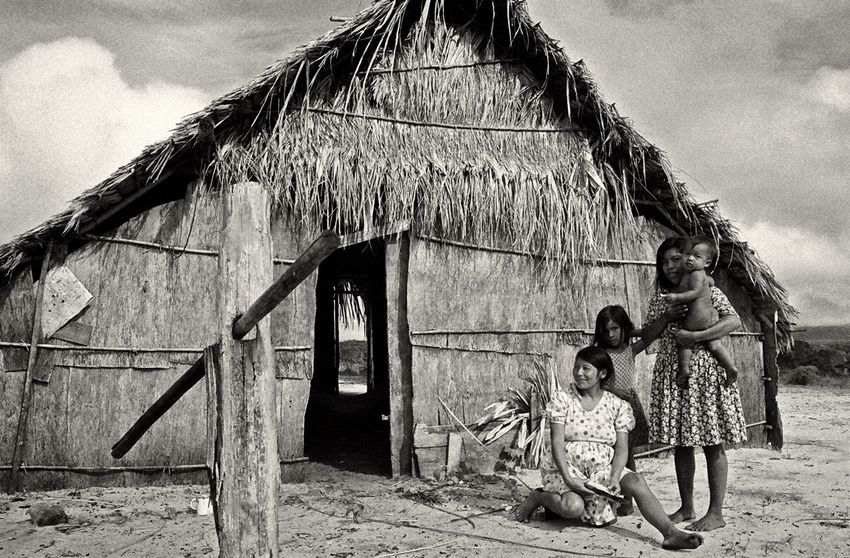
          Pico de Itútipu • Mount Ilutipu - Silver lining in the afternoon   Oca Akawaio em Maiurupai • Akawaio Hut at Maiurupai - made with tree bark and palm tree leaves

                                                                                                                                                                              7
6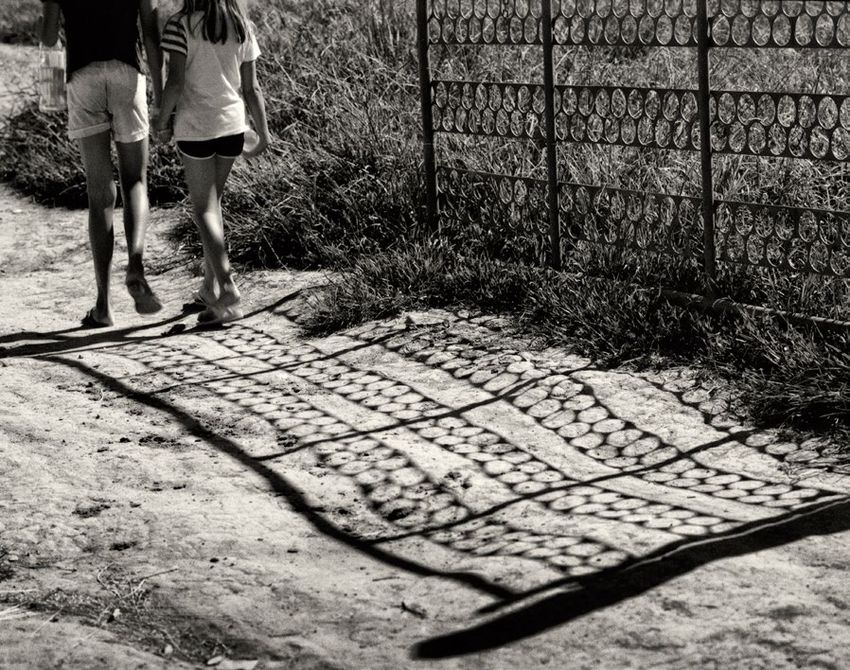
Pico de Roraima • Mount Roraima - Viewed at middayMaquina   Pão de mandioca na canoa • Cassava bread in a canoe - Akawaio woman returning from farm

                                                                                                                                                          9
8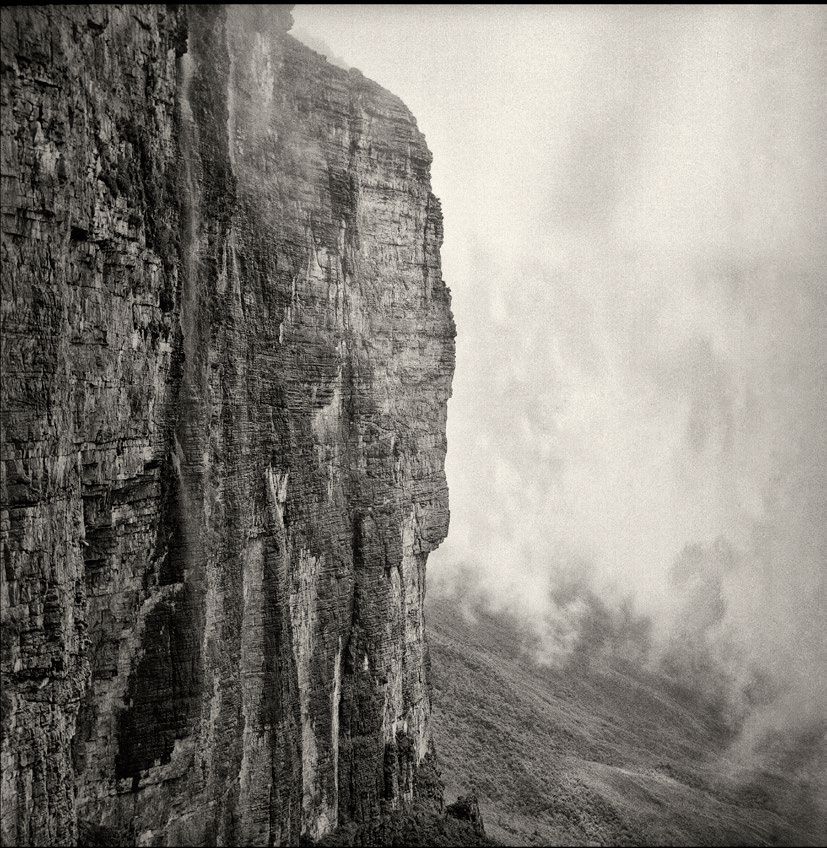
Maquina

          Mãe e Filha • Mother and Daughter - Spinning cotton to make hammock   Descascando Mandióca Brava • Peeling bitter poisonous Cassava

                                                                                                                                                11
10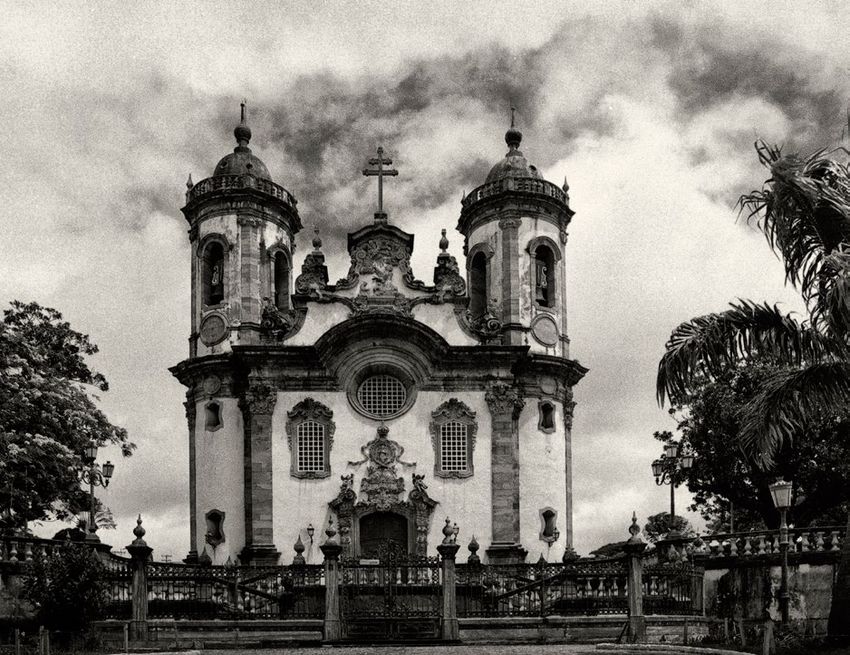
Maquina

                                                                Avó Akawaio cuida do netinho • Akawaio Grandmother cares for grandson
          Café da manhã em Maiurupai • Breakfast at Maiurupai

                                                                                                                                        13
12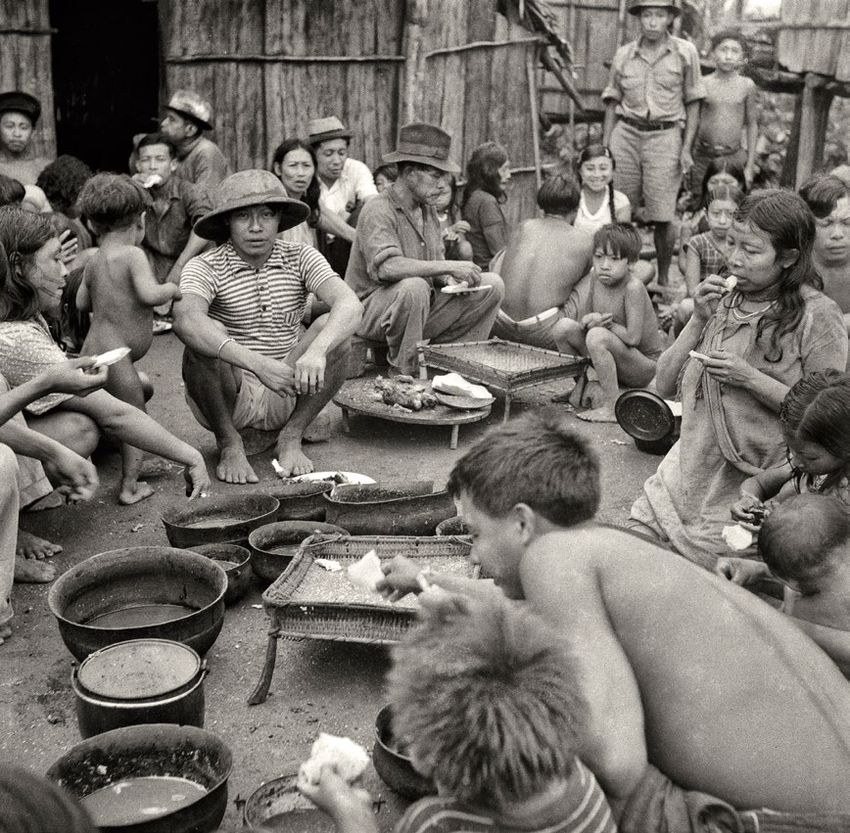
Maquina

                                                                                         Vovó Akawaio e Carregador Chefe, Isaac Jerry •
                                                                                         Akawaio Grand Mother and Isaac Jerry, chief Porter

     Arekuna Children at Kamarang • Guyana

                                             BBC Sound Engineer Gordon Forsyth and
                                             Camerman Alex Scott at Maiurupai • Guyana

                                                                                                                                              15
14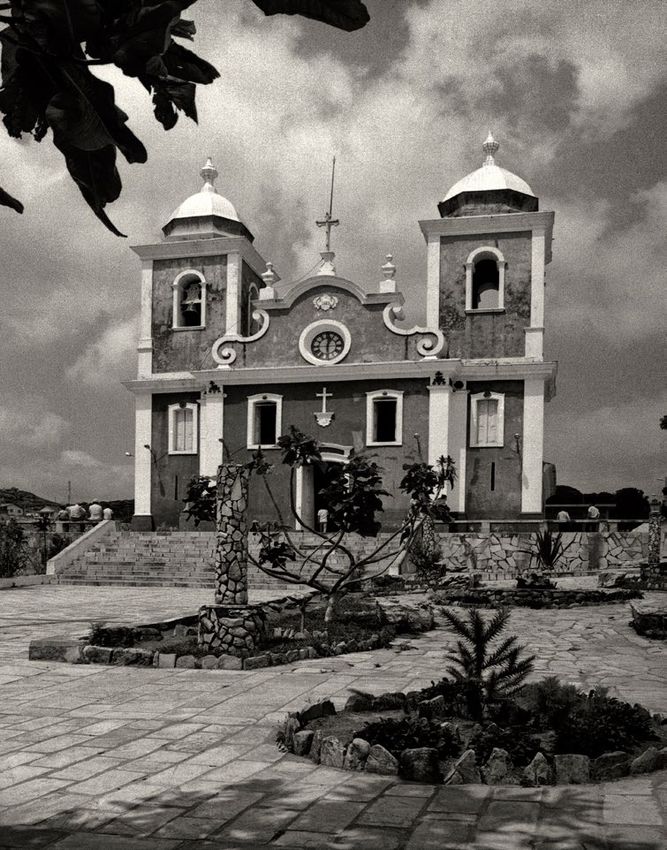
N     ow let us flash back to 1948. My dad, Raymond A. Wilkins,
                                                                              was comissioned to survey the Schomburgk Line in 1948. The
                                                                        Royal Geographical Society, of which he became a fellow, was very
                                                                        interested in verifying the landmarks on the Venezuelan-Guyana-
                                                                        Brazil border. His qualifications as sworn land-surveyor and Royal
                                                                        Engineers experience during the war, made him an excellent candidate
                                                                        for the job. He set up an expedition with Bill Segel, who was district
                                                                        commissioner at Kamarang at the time, and who knew the region well,
                                                                        his friend Major F. B. Green of the British Guiana Volunteer Force, and
                                                                        six Wapishiana Amerindians, who served as porters.
                                                                                There was an incident on the trip when a porter carrying Ray’s
                                                                        pack with photographic 120 roll film (for the Rolleiflex) had gone
                                                                        ahead across the Ireng River when some of the films had got wet.
                                                                        When he arrived about half an hour later, the porter had diligently
                                                                        opened the films and carefully stretched them out on the ground,
                                                                        with two little stones as weights and each end, to dry the precious
                                                                        negatives. Lesson learnt here. They successfully climbed to the top of
                                                                        the Roraima Plateau and conferred the landmark and the famous tri-
                                                                        point location, set up by Robert Schomburgk back in in 1835. I started
                                                                        my photographic career with the same Rolleiflex that was on that trip,
                                                                        and which was used to take these historical photographs.
                                                                                Raymond kept his negatives well-preserved and I was able to
                                                                        digitalize them with some success using a macro lens and studio flash
                                                                        lighting. Although I had traced his route through Brazil and Venezuela,
        At the Summit of Roraima - Raymond Wilkins with his faithful    some of the locations are unidentified, but many are well-recognized.
Maquina dog, the amerindian porters and Austin, his survey assistant.   The complete digital portfolio is now on permanent archive at The
        • Photograph above taken by Major “Freddie” Green.              Royal Geographical Society at One Kensington Gore, SW7, in London.
                                                                                A most amazing thing happened in 2018. One day on Facebook
                                                                        a person commented on one of Ray’s photographs which I had posted
                                                                        on my page. The one with the “guys in a boat”, the one with a hat and
                                                                        spectacles, what’s his name she asked? “Freddie Green”, I answered.
                                                                        “Hey that’s my father”, said Twailing. The only photo of him before she
                                                                        was born. Now that’s what I call a “Peak Moment”, for both of us.
                                                                        Talk about dominoes!

                                                                                                                                                  Photograph by Raymond Wilkins - Mount Roraima from the Venezuelan side in 1948

                                                                                                                                                                                                                                   17
16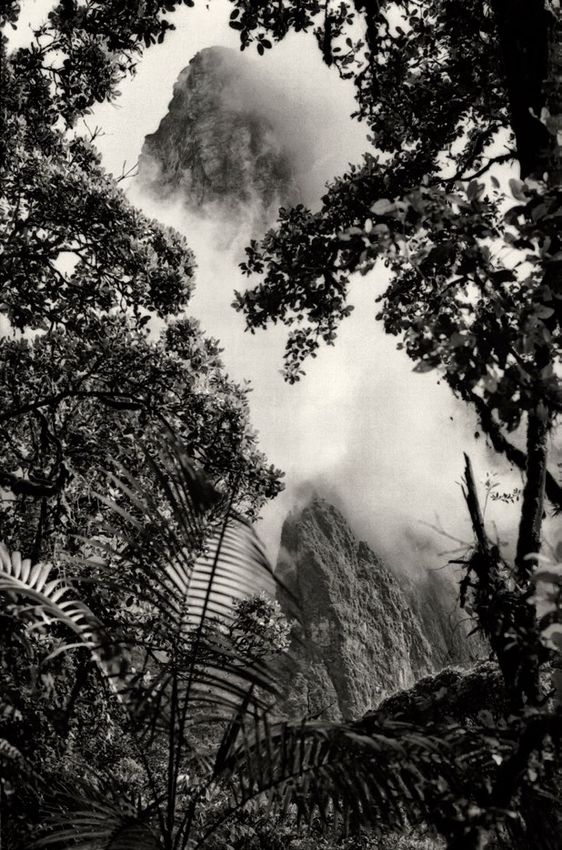
Maquina

          G    athered from notes and stories told by Raymond
               together with careful analysis of the images, it
          was possible to trace his route to the Southern Face
                                                                  right) to the mountain (on the left). The villages
                                                                  visited and photographed on the way were mostly
                                                                  inhabited by the Wapishiana people. The Hallelujah
                                                                                                                        Satelite map of the same region

          of Roraima, only accessible from the Venezuelian        religious movement was prominent in the region
          side, and only after after trekking over dry and        during 1940’s. The local Amerindians even built
          hot savannah lands from Orinduik (on map to the         their church with locally available logs and straw.

                                                                                                                                                          19
18
Maquina
Photograph by Raymond Wilkins - Indigenous boys on the boat trip up the Kamarang River
Photograph by Raymond Wilkins - Arekuna people - mother, daughter and grandchildren, taken at Kamarang - 1948
21
20Maquina
Photographs by Raymond Wilkins - Macushi Indigenous people - Campsite of the Expedition
Photograph by Raymond Wilkins taken in 1950 - Kaieteur Falls on the Potaro River - 226 meters (741 ft)
23
22Maquina
Potaro Gorge, Orinduik Falls, Ireng Savanah and river bed after heavy rains Portraits of the Wapishiana Porters and Macushi people
25
24Maquina
Photographs by Raymond Wilkins - Macushi and Wapishiana Indigenous people
Contact - Paiwari Alcoholic drink and cassava bread festival, hosted by the Macushi people
27
26Maquina
Photographs by Raymond Wilkins - Grumann Goose aircraft at Kamarang landing, expedition Photographs by Raymond Wilkins - Wapishana Indigenous people living near Mount Roraima
crossing Ireng river, vegetation at base of Mount Roraima and rest-break on the savanah leg
29
28Maquina
weekend in 1985. The 300 kilometer trip was rewarded
with a breath-taking view, upon arriving in Cravinhos,
N ow the dominoes were
changing direction
once more. At my Vernissage
of a city with 250.000 inhabitants situated in what
appeared to be an extinct volcano crater. Though I
must admit that it certainly gets “rather warm” there
of the Roraima Exhibition in on some days.
Georgetown, I was invited During following weeks I returned to visit
by the first secretary of advertising agencies and show my portfolio. The
the Brazilian Embassy to reception was very promising and so I decided to
emigrate to Brazil. Armed definitely move to Ribeirão Preto.
with a One-Way ticket and Actually, one of the agencies was called “Jonathan
a Permanent-Visa, and & Marlene”. A husband and wife creative team with
without speaking a single whom I made contact, only to discover that my
word of Portuguese, with namesake celebrated his birthday just one day after
my Hasselblad kit in my mine. The encounter was indeed wonderful. Those
luggage, I finally got to São Paulo in 1977. After a radical dominoes were fitting into place again.
couple of years of teaching English at Berlitz, the
yearning to continue photography was rewarded with
a placement at the SESC Fábrica Pompeia to teach a
Workshop of B&W Zone System Photography, duly
inspired by Ansel Adams. There, I had found “Mecca”.
Kodak had invested in a top quality laboratory
with Omega enlargers, Rodagon lenses, proper safe
lighting, wet sink facilities and complimentary Kodak
paper and chemicals. I later invited an outstanding
student, Paulo Habl, to set up a fashion studio with
me, offering quality Black & White photographs for
local newspapers and magazines.
During lots of studio flash sessions with wonderful
Brazilian fashion models and loud music, we fell in
love on a weekly basis with the beauty of our work.
The challenges grew and soon we were producing top
quality “chromes”, which are positive color slides for
magazines and publications. We upgraded the format
Hallelujah Church construction and size to 6X7 cm and 4X5 inch to handle product and
celebration at Amakokopai - 1948 industrial assignments.
Then one day, during an English class, I was
complaining to the Marketing director of Eternit,
Jaime Archinto, about São Paulo City - He suggested
that I consider a smaller town, maybe upstate São
Paulo, like Ribeirão Preto for example. I researched
the Who’s Who of that town and decided to visit on a
31
30Maquina
R ibeirão Preto - I was being considered one of the top five photographers in this upstate town, so I began
showing my portfolio to other advertising agencies, which immediately sent me assignments, mainly shot on
Ektachrome stock, for printing in full colour. Surely my talent for making the lovely local women look stunning,
in Black & White, soon became a sought-after product. I had set up my lab in the edicula outhouse. Model
portfolios called “books” were the rage then. There is the story about my Tokina lens that
was accidentally tossed to the floor after being trapped by the camera strap, as I grabbed the
camera from the cupboard. I took it to the service center and soon found out that the optics
were “out of wack”. The focus was extra soft and the technician suggested that it would be a
great lens to hide defects, so that was my favorite lens, from then on, for photographing the
lovely ladies who always complained that my pictures were “too sharp”.
Gina
Ritinha Deborah Iria
33
32Maquina
Iria
Priscila
Iria Elís
35
34Maquina
Mariana
Iria
37
36Maquina
Mariana
Iria
39
38Maquina
Marion Camila 41
40Maquina
Z one VI - Now that I had my own “darkroom” all set up and with all of the pre-visualization settings
in place, I ventured out with a Wista 4X5 Field Camera, handcrafted in Japanese Cherry wood, with
sheepskin leather bellows, and equiped with 90mm, 150mm and 210 mm Schneider
Kreuznach lenses, I was once again inspired by Ansel Adams’ Zone System philosophy.
The workflow included careful setting up of a tripod, careful light metering and pre-
visualization techniques of the subtle tones of grey areas that would only appear in the
final print, and often just exposing a single sheet of film. These are digital scans from
the original negatives, which come nowhere close to a proper print, on high quality
photographic archival paper, as seen at an exhibition, for example, although modern
Giclée Fine Art printing on Hahnemühle Cotton Rag, come very close to the originally
intended results. There are locations I revisited “ten years after” also included here.
Ipê Amarelo • Yellow Ipê
O Ninho • The Nest 43
42Maquina
Old man at the Door • Velhinho na Porta Casa Velha Campos Gerais, Minas • 100 year old House
45
44Maquina
Ribeirão das Araras • Parrot Creek
Rocha e Árvore • Rock and Tree
47
46Maquina
Casa das bonecas • Rural Doll’s House
Sombra da porteira • Gate Shadow
49
48Maquina
Sintese I • Synthesis I
Serra da Camanducaia • Camanducaia Hills
51
50Maquina
Cachoeira Araçariguama • Waterfall Araçariguama Cachoeira Cassia dos Coqueiros • Waterfall
53
52Maquina
São Thomé das Letras Matriz (1983) • Church at São Thomé Das Letras São Thomé das Letras Matriz (1993) • Church at São Thomé Das Letras
55
54Maquina
Igreja velha em São Thomé das Letras (1983) • Old Church at São Thomé Das Letras São Thomé das Letras Matriz (1993) • Church at São Thomé Das Letras
57
56Maquina
São Thomé das Letras Matriz (1993) • Church at São Thomé Das Letras
São Thomé das Letras Matriz (1983) • Church at São Thomé Das Letras
59
58Maquina
Igreja em São João Del Rei • Church at São João Del Rei
Igreja em Thermópolis • Church at Thermópolis
61
60Maquina
Ladeira em Ouro Preto • Steep street in Ouro Preto
Igreja em Ouro Preto • Church in Ouro Preto
63
62Maquina
Fachada na Igreja em Ouro Preto • Carvings on Church in Ouro Preto
Igreja em Ouro Preto • Church in Ouro Preto
65
64Maquina
Vista em Ouro Preto • View in Ouro Preto
Rua em Ouro Preto • Street in Ouro Preto
67
66Maquina
Vista em Ouro Preto • View in Ouro Preto
Ladeira em Ouro Preto • Uphill in Ouro Preto
69
68T he Story behind these photos: While visiting the historical cities in Minas Gerais, I came upon
a lovely baroque church with wooden sculptures made by the famous artist called Alejadinho
which means little cripple. The sacristão in charge of the church only allowed photos to be taken
“without flash”, so I convinced him to open up the smaller chapels, which had life size depictions
of the stations of the cross. Tripod bound and long exposures resulted in this series of images.
Igreja em Ouro Preto • Church in Ouro Preto Capela em Congonhas do Campo • Chapel in Congonhas do Campo
71
70Maquina
Capela em Congonhas do Campo • Chapel in Congonhas do Campo
Capela em Congonhas do Campo • Chapel in Congonhas do Campo
73
72Maquina
T ime to shuffle the dominoes again. By now the so-called “analog”
photography was becoming more expensive and the chemical waste was
beginning to stir up some opposition from the environmentalists. Digital
cameras were becoming less expensive, so it was time to consider uprade. After
careful consideration I chose the Canon 5D with
their best L Series lenses. Good optics has always
been the best investment. Now it was time for some
“Northern Exposure”. The Zone System was adapted
to digital and soon I was making “digital negatives”
and the “darkroom” became LightRoom. The creative
freedom was unleashed. From Canada to London to
Barbados to New York to Brazil.
Capela em Congonhas do Campo • Chapel in Congonhas do Campo Rochas • Rocks
75
74Maquina
W hile in Canada I was invited Yöran and Britta’s Cottage on Georgian Bay, where I found a most
amazing geological phenomena. Thousands of years of artic ice had eroaded the Canadian Shield
rock formation to reveal artistic patterns.
Georgian Bay • Armstrong Shoal Rock Formations - Canada
Georgian Bay • Armstrong Shoal Rock Formations - Canada
77
76Maquina
Rochas Georgian Bay • Georgian Bay Rocks - Canada
Rochas Georgian Bay • Armstrong Shoal - Georgian Bay Rocks
79
78Maquina
Sintese III • Synthesis III Sintese II • Synthesis II
81
80Maquina
Baia de Conset • Conset Bay - Barbados Thermopolis Waterfall • Minas Gerais Brazil
83
82Maquina
Birds • Drinking - Displaying - Caged
Campos Gerais • Campos Gerais
85
84Maquina
Folhas Ficos e Gotas • Ficos Leaves and Drops
Raizes Ficos e Água • Ficos Roots and Water
87
86Maquina
Aguas e rochas • Water and Rocks Aguas e Rochas III • Water and Rocks III
89
88Maquina
Aguas e Rochas IV • Water and Rocks IV
Aguas e Rochas II • Water and Rocks II
91
90Maquina
Rio Kako, Roraima • Kako River, Roraima Rio Kako, Roraima • Kako River, Roraima
93
92Maquina
Down by the seaside in Suffolk • Traditional Bathing Huts
Retired Bridge • Eynsford - England
95
94Maquina
Lirio • Lily Orquidea • Orchid
97
96Maquina
Fort Island - Essequibo River - Guyana
Colonial Ruins • St. Philip - Barbados
Carlisle Bay • Barbados
After the fire • Sam Lord’s Castle - Barbados
99
98Maquina
Slave Wall • Thermopolis - Brazil Astronomical Clock • Hampton Court - England
101
100Maquina s
Bagpipers • Glasglow - Scotland
Bagpipers • Glasglow - Scotland
103
102Maquina
Trafalgar Square • London
L ike an excited kid on the upstairs of the red double-decker London bus, I grabbed this shot on a gloomy
day, but soon noticed that all the traffic lights were in perfect synchronization. The Royal Photographic
Society promotes “walks” in London, where a group of members select a venue to scour for artistic images.
While admiring a typical puddle in Mile End Park, I spotted a jogger out of the corner of my eye. I waited
for the unsuspecting athlete to run past. The result reminded me of the famous French photographer,
Henri Cartier-Bresson’s shot of a man jumping over a puddle in Paris.
Mile End puddle instant • London
105
104Maquina
Feed the birds Daddy • Richmond-on-Thames - England Chelsea • London England
107
106Maquina
Millennium Bridge and St. Paul’s Cathedral • London
Piccadilly Circus • London
109
108Maquina
Big Ben Blue Sky - Taken 9th. May 2016 Big Ben Blue Sky - Taken 18th April 2018
111
110Maquina
Girl with a Dolphin Fountain and Tower Bridge • London The Gloriana Royal Barge • London
113
112Maquina
Hammersmith Suspension Bridge • London
Beast from the East • Valentina’s first contact with snow in Holland Park - London
115
114Maquina
Hackney Daily Grind • London England
117
116Maquina
Hitchcock’s birds at The Round Pond in Kensington • London - England
O n a London Underground train, or the Tube as it's
called here in England, or in other countries The
Subway or Metro in Europe, the normally uneventful
background admiring the happening and immediately
seized the moment as a lovely "street photograph". The
music "stopped the time" of the trip between stations
journey was suddenly livened up when two talented and provided a wonderful way of reminding us all how
musicians who came into the carriage apologizing for "we are all really one big family", each living in their
their lateness, one with a fiddle (violin) and the other own little worlds but together, never the less. That little
with a guitar. They quickly perked up the travellers spirits citizen will always remember that lovely day she saw
with an Irish folk melody and then Johnny Cash's Folsom "underground music" being played with love and joy. Its
Prison Blues. Suddenly, I noticed the little girl in the all about sharing.
119
118Maquina
Swan Regatta on The Round Pond • London England
Adam and Eve Mews • Kensington London England
121
120Maquina
Finsbury Square • London England
The Gherkin Building • London England
123
122Maquina
First Snow at Kensington • London England
125
124Maquina
Schloss Arkaden • Braunschweig Germany 127
126Maquina
The Royal/Brighton Pavilion • England The Original Brighton Palace Pier • England
129
128Maquina
Golden Jubilee Bridge - London Empire State Building - seen from Hoboken NJ • USA
131
130Maquina
Ground Zero New York
Hudson River Wooden Piling • New York Manhattan Towers Glittering • New York - USA
133
132Maquina
Hudson Riverside benches • Hoboken, NJ - USA
After having lived near the Demarara river in Guyana, two Caterpillar 1500 HP diesel engines. The powerful
for so many years, the thrill of ferryboat crossing roar gave off a powerboat-like sensation and as the
from New York to Hoboken, NJ was an amazing aluninium catamaran peaked to 3000 RPM, we were
experience. As the other passengers huddled inside belting along at 30 knots. The wake and composition
the cabin, away from the salt spray, I ventured outside of the Manhattan Skyline coupled, with glorious
to the stern to feel the power of the wake created by the afternoon sunlight, resulted in this photograph.
135
134Maquina
New York Fire Escapes • USA New York Fire Escapes • USA
137
136W hile still using a 35mm Canon T90
camera with prime lenses, I had the
honour of being invited by one on Canada’s
really rare phenomena called “Artic Sea Smoke”,
where a low cloud hangs above the lake, as if it
were steam from a boiling pot on a stove. The
leading meteorologists, Les Tibbles, and an virgin untrodden snow, the midday winter sun
accomplished artist, in his retirement, to check and long shadows fitted a perfect composition
out the Scarborough Bluffs near Toronto. It was for this photograph. Les had stayed back in the
MINUS 20 C degrees outside but the Ontario car to keep warm and when my fingertips were
lake water temperature was about at 8 degrees getting blue and started hurting, it was time to
C ABOVE ZERO. Upon arrival we witnessed a skidaddle back.
Névoa do Mar Artico • Artic Sea Smoke Rio Congelado • Frozen River
Neve no capim • Snow on Grass
139
138Maquina
St. James Park • Toronto - Canada First Snow • Canada
141
140Maquina
Quedlinburg Medieval Castle Church St. Servatius • Germany
Quedlinburg Half-timber architecture • Germany
143
142Maquina
Arnaldo Portrait Agadman Portrait
153
152Maquina
Isaura Itamar Sea Mango Woman Century Old Woman • Bahia
Mike Zé Orelha Akawaio Grandmother with parrot pet
155
154Maquina
Water Biker • Brazil
Isis Eye • Alvorada - Brasil
157
156Maquina
West Coast Diamonds • Barbados
Sargasso Beach Patterns • Barbados
159
158Maquina
Essequibo Morning Mirror • Guyana Sargasso Wave • Barbados
161
160Maquina
Cumuruxatiba • Bahia - Brazil
Maré Baixa, Bahia • Low Tide, Bahia Jubarte Whale • Alcobaça - Bahia Brazil
Pelourinho Prado • Bahia - Brazil
163
162Maquina
Colônia do Sacramento • Uruguay
Colônia do Sacramento • Uruguay
White Horse • Montevideo - Uruguay
165
164Maquina
Fundamental Forces for Sale • Barbados
La Rambla • Montevideo - Uruguay Retired Fishing Boat • Barbados
167
166Maquina
Weathered Wood I • Barbados Weathered Wood II • Barbados
Root Art • Bahia - Brazil
Coral Wood • Barbados 169
168Maquina
Cove Bay • Barbados
Sandy Lane Sunset Cruise • Barbados 171
Humber Hawk • Carlisle Bay • Barbados
170Maquina
His Master’s Voice • Santa Rosa de Viterbo - Brazil
During one of the workshops I was giving in the sleepy He then cranked a lever to wind the mechanism and
town of Santa Rosa de Viterbo in the state of São Paulo, moved his head closer to the ornate cone to verify the
Brazil, the subject matter was to discover and photograph sound. To my surprise it was actually playing Neil Sedaka’s
Rainy Day Woman • Barbados historical monuments in the community. One of my Oh! Carol... The synergy of the moment was terrific as I
students pointed out that his grandfather still had a clicked away with my mirrorless camera triggering my
working RCA Victor Gramaphone, the famous Talking own childhood memories. The compostion reminded
Machine. The group descended on the old man’s humble my of the fox terrier Nipper listening to a gramophone
dwellings where he proudly displayed the instrument. He - His Master’s Voice - as on the original record label.
boasted that he himself had actually built the cartridge This was truly a magical moment in photography. Later
and needle, so I asked whether he had any 78 rpm records we presented the old man with a Giclée print on fine
around. I investigated a dusty shelf and took the first one art cotton rag, which he assured us he would cherish to
from its paper sleeve and he gently laid it on the turtable. remember our invasion of his life’s memories.
173
172Maquina
Roll your own • Bahia - Brazil
“Be Ye as Children” • Guyana Winning Hand • Barbados 175
174Maquina
D omino Hands - A closing thought: All of these so-called moments belong to the PAST - We can only record
the PAST - Some of those moments are unforgettable and remain in our memories and when presented as
these photographs, they even tend to trigger other sensations that become associated with those fleeting moments.
If we want to record the FUTURE, the only way would be to have some pre-visualized notion of what COULD
happen. With that intuition and preparation, we move forward bravely to face the NEXT moments in our lives,
and hopefully, capture more memorable images to add to our already rich collection of NOWS. All decisive
MOMENTS. It is all about CHOICE and always moving forward. Right: Chemtrails en route to Hannover.
177
176You can also read


