Mediterranean Biodiversity and Marine Litter - An interaction knowledge base - In collaboration with
←
→
Page content transcription
If your browser does not render page correctly, please read the page content below
Mediterranean
Biodiversity and
Marine Litter
An interaction knowledge base

                  In collaboration with:
Mediterranean
Biodiversity and
Marine Litter
An interaction knowledge base
This report is a joint effort of the Biodiversity Protection Community projects co-financed by the
Interreg-MED Programme focusing on pollution aspects according to the PANACeA Roadmap for Working
Group 1 on Biodiversity Protection and Management.

The projects featured in this report have supported the review of a spatial understanding of marine litter
threats to Mediterranean marine life particularly in Marine Protected Areas (MPAs).

Citation:

Mediterranean biodiversity and marine litter: an interaction knowledge base, Interreg Med Biodiversity
Protection project, 2019.

Authors:

Carlos Guitart (ETC-UMA), Dania Abdul Malak (ETC-UMA), Antonio Sánchez (ETC-UMA), Carolina Pérez
Valverde (MedCities), Emanuele Bigagli (Independent Consultant, MedCities), Sonsoles San Román (ETC-
UMA)

Contributors:

ACT4LITTER: Thomais Vlachogianni (MIO-ECSDE), Ignasi Mateo Rodriguez (UNEP MAP SCP/RAC)

AMARE: François Galgani (IFREMER), Simonetta Fraschetti (University of Naples Federico II)

MEDSEALITTER: Morgana Vighi (University of Barcelona), Antonella Arcangeli (ISPRA), Odei Garcia-Garin
(University of Barcelona), Roberto Crosti (ISPRA)

PHAROS4MPAs: Catherine Piante (WWF France), Pierre Yves Hardy (WWF France)

PLASTICBUSTERS MPAs: Maria Cristina Fossi (University of Siena), Teresa Romeo (ISPRA), Cristina Panti
(University of Siena), Alessandro Galli (University of Siena), Ilaria Caliani (University of Siena)

PANACeA: Konstantia Nikopoulou (MedCities)

Cover Photo: AP Images/European Union-EP

Back cover photo: annapolis_rose/flickr.com

Design and layout: Blueverdestudio.com
T able of Contents
 0 Glossary                         .........................................................................................................................................................................................   06

 1 Introduction                                 ............................................................................................................................................................................    08

          Threats of marine litter on Mediterranean biodiversity ...........................................                                                                                                                    12
 2            2.1 An integrated regional approach to a global threat .................................................................................                                                                          13
              2.2 The known and unknown in the Mediterranean region ..........................................................................                                                                                  15
              2.3 Discovering marine litter effects on biodiversity through scientific research ............................                                                                                                    16

          Assessment of marine litter interactions with Mediterranean
 3 biodiversity ................................................................................................................................................................................                                18
              3.1      State of knowledge on marine litter impacts in Mediterranean MPAs ...........................................                                                                                            20
              3.2      State of knowledge on marine litter impacts in the Mediterranean Sea ......................................                                                                                              23
              3.3      State of knowledge on marine litter impacts on marine habitats .....................................................                                                                                     23
              3.4      State of knowledge on marine litter impacts in Mediterranean ecoregions ..............................                                                                                                   29

          MedBioLitter: The Mediterranean database on marine litter
 4 impacts – state and outlook ............................................................................................................................                                                                     30
              4.1 Database and information gathering, integration and parameters ..................................................                                                                                             30
              4.2 Updating process of the MedBioLitter database ..........................................................................................                                                                      32
              4.3 Communicating key information ...........................................................................................................................                                                     32

 5 Key messages to policy makers                                                                            .................................................................................................................   34

          Annexes                     .......................................................................................................................................................................................   38
 6              Annex I Marine litter science by the Mediterranean biodiversity protection
                          community ...........................................................................................................................................................                                 39
                Annex II List of Marine Protected Areas in Interreg Med Biodiversity Protection
                          projects ...................................................................................................................................................................                          52
                Annex III Example of entry extracted from MedBioLitter showing its structure ............................                                                                                                       54

 7 References                               ................................................................................................................................................................................    56
6 | Mediterranean biodiversity and marine litter: an interaction knowledge base

           G lossary
 LEXICON
 Benthic                Of, relating to, or occurring at the bottom of a body of water.
 Benthopelagic          Living and feeding near the bottom as well as in midwaters or near the surface. Feeding on
                        benthic as well as free swimming organisms. The depth zone about 100 m. off the bottom at all
                        depths below the edge of the continental shelf.
 Biota                  The animal and plant life of a particular region, habitat, or geological period
 Colonization           The establishment of a species in an area not currently occupied by that species. Colonisation
                        often involves dispersal across an area of unsuitable habitat. Marine litter items can become
                        colonized and transport potentially invasive species into new habitats.
 Demersal               Sinking to or lying on the bottom; living on or near the bottom and feeding on benthic
                        organisms.
 Entanglement           Many marine species such as seals, whales and marine turtles become entangled in marine
                        litter, causing suffocation, strangulation and drowning. Marine litter can also restrict
                        movement, reduce the ability to catch food and avoid predators, or cause lacerations
                        and infections. The most frequent cause of entanglement is discarded fishing gear; other
                        causes include ‘six-pack’ rings and balloon ribbons.
                        (https://ec.europa.eu/environment/marine/pdf/flyer_marine_litter.pdf )
 Ingestion              Mistaken as food or ingested accidentally during feeding, debris and litter may block the
                        digestive tract or cause internal injuries and lead to death. It can also impair digestion and
                        stunt growth as well as reproduction rates. There is in-creasing concern that, along with plastics,
                        animals could be ingesting persistent organic pollutants (POPs) and toxic compounds such
                        as medicines. (https://ec.europa.eu/environment/marine/pdf/flyer_marine_litter.pdf )
 Isopod                 Any freshwater, marine, or terrestrial crustacean of the order or suborder Isopoda, having seven
                        pairs of legs typically adapted for crawling, and a dorsoventrally flattened body, and including
                        wood lice, several aquatic parasites of crabs and shrimps, and numerous swimming or bottom-
                        dwelling species.
 Mesopelagic            Living or feeding at midwater at depths between 200 m and 1,000 m. Generally characterized
                        by dim light and steep temperature gradients.
 Neritic                Of, relating to, inhabiting, or constituting the belt or region of shallow water adjoining the
                        seacoast.
 Neustonic              The collection of microscopic and small organisms that inhabit the region on or just below the
                        surface of a body of water.
 Pelagic                Living and feeding in the open sea; associated with the surface or middle depths of a body of
                        water; free swimming in the seas, oceans or open waters; not in association with the bottom.
                        Many pelagic fish feed on plankton. In FishBase, referring to surface or mid water from 0 to 200
                        m depth.
Mediterranean biodiversity and marine litter: an interaction knowledge base | 7

ACRONYMS
EBSA       Ecologically or Biologically Significant Areas are areas which, through scientific criteria, have been
           identified as important for the healthy functioning of our oceans and the services that they provide. In
           2008, the ninth meeting of the Conference of the Parties to the Convention on Biological Diversity (COP
           9 CBD) adopted the scientific criteria for EBSAs in need of protection in open-ocean waters and deep-
           sea habitats.
FRA        Fisheries Restricted Area. FRAs are established to ensure the protection of deep-sea sensitive habitats
           and of essential fish habitats (EFH) in well-defined sites.
GES        Good Environmental Status
IMAP       Integrated Monitoring and Assessment Programme and related Assessment Criteria. At their 19th
           Ordinary Meeting (COP 19, Athens, Greece, 9-12 February 2016), the Contracting Parties to the
           Convention for the Protection of the Marine Environment and the Coastal Region of the Mediterranean
           (Barcelona Convention) - namely 21 Mediterranean countries and the European Union - adopted the
           IMAP.
MBL        MedBioLitter database on interactions between marine litter and biodiversity in the Mediterranean.
ML         Marine litter, debris. Human-created waste discharged into and/or found on the coastal or marine
           environment.
MPA        The term Marine Protected Area includes marine reserves, fully protected marine areas, no-take zones,
           marine sanctuaries, ocean sanctuaries, marine parks, locally managed marine areas, among other.
           They have different levels of protection, and the range of activities allowed or prohibited within their
           boundaries varies considerably too.
           WWF uses the term Marine Protected Area as an overarching description of:
           “An area designated and effectively managed to protect marine ecosystems, processes, habitats, and
           species, which can contribute to the restoration and replenishment of resources for social, economic,
           and cultural enrichment.”
MSFD       The EU Marine Strategy Framework Directive. The MSFD was put in place to protect the marine
           ecosystem and biodiversity upon which our health and marine-related economic and social activities
           depend. To help EU countries achieve a good environmental status (GES), the directive sets out 11
           illustrative qualitative descriptors.
RAC        Regional Activity Centre. There are several RACs in the Mediterranean under the umbrella of UNE MAP,
           among which:
            • The Plan Bleu Regional Activity Centre (PB/RAC)
            • The Priority Actions Programme Regional Activity Centre (PAP/RAC)
            • The Specially Protected Areas Regional Activity Centre (SPA/RAC)
            • The Regional Activity Centre for Sustainable Consumption and Production (SCP/RAC)
RAMSAR     A Ramsar site is a wetland site designated to be of international importance under the Ramsar
           Convention. The Convention on Wetlands, known as the Ramsar Convention, is an intergovernmental
           environmental treaty established in 1971 by UNESCO, which came into force in 1975. It provides for
           national action and international cooperation regarding the conservation of wetlands and the wise
           sustainable use of their resources.
SPAMI      Specially Protected Areas of Mediterranean Importance. Through the Protocol concerning Specially
           Protected Areas and Biological Diversity in the Mediterranean (SPA/BD Protocol), the Contracting
           Parties to the Barcelona Convention established the SPAMI List to promote cooperation in the
           management and conservation of natural areas, as well as in the protection of threatened species
           and their habitats. The conservation of the natural heritage is the basic aim that must characterize the
           SPAMIs. Since the 20th ordinary meeting of the Contracting Parties to the Barcelona Convention and its
           protocols, the SPAMI List includes 35 sites, among which one encompasses an area established also on
           the high sea: the Pelagos Sanctuary for marine mammals.
UNEP       United Nations Environment Programme Mediterranean Action Plan. Also known as UN Environment
MAP        MAP. Through the MAP, the Contracting Parties to the Barcelona Convention and its Protocols are
           determined to meet the challenges of protecting the marine and coastal environment while boosting
           regional and national plans to achieve sustainable development. The 22 Contracting Parties to the
           Barcelona Convention are: Albania, Algeria, Bosnia and Herzegovina, Croatia, Cyprus, Egypt, France,
           Greece, Israel, Italy, Lebanon, Libya, Malta, Monaco, Montenegro, Morocco, Slovenia, Spain, Syrian Arab
           Republic, Tunisia, Turkey, and the European Union.
1
Photo by: Bru-nO/pixabay.com

Mediterranean biodiversity and marine litter: an interaction knowledge base | 9

Introduction
Marine litter is at present a top ranked                 need to be urgently prioritized to allow the
pollution menace to the conservation and                 understanding of potential future scenarios
sustainability of marine biodiversity and                and to support finding solutions to guarantee
healthy and functional ecosystems. There is a            functional marine ecosystems and so the
growing evidence of global marine ecosystems             provision of proper ecosystem services.
impacted by marine litter as a result of our
                                                         The Mediterranean Sea is not an exception,
unsustainable lifestyles associated with the
                                                         and in addition to the efforts to generate
‘plastic’ revolution. The way litter pollution
                                                         evidence and knowledge on the quantities
(from macro down to micro and nano scales) is
                                                         of litter present on beaches and in the sea
affecting marine life is not fully understood yet,
                                                         - floating, present in the water column or
especially beyond short spatial and temporal
                                                         accumulated in canyons and deep-sea areas -,
scales. As the global production of plastics has
                                                         it should be imperative to address the current
been growing exponentially since 1960s and
                                                         gaps regarding the lack of knowledge on the
as there are already huge quantities of marine
                                                         impacts of marine litter on marine organisms.
litter in the oceans and seas; such studies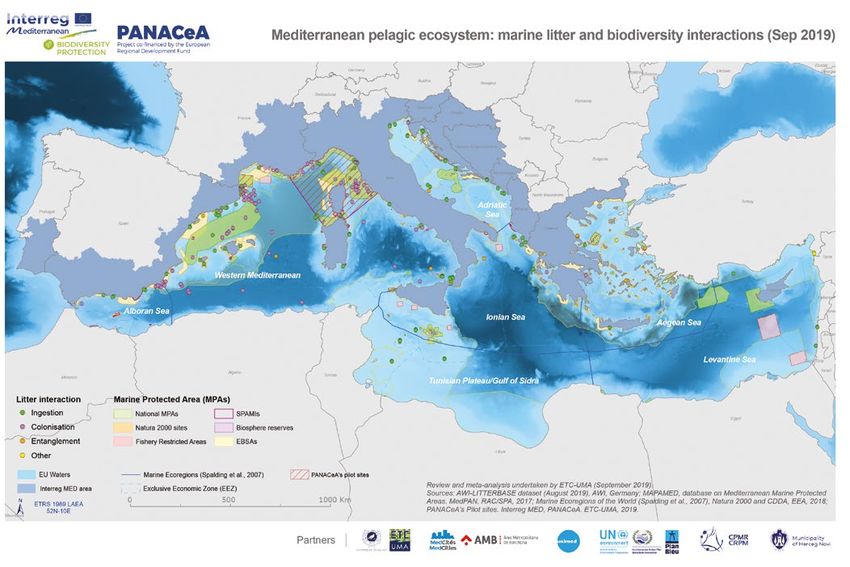
10 | Mediterranean biodiversity and marine litter: an interaction knowledge base

                        This global and Mediterranean issue and the managerial challenges arising from it
                        are the focus of governments and international organizations worldwide seeking
                        to coordinate a global response to this common challenge. First, regarding the
                        mobilization of better awareness, scientific research and priority actions, and secondly,
                        by challenging established consumption patterns, lifestyles and economic inertias
                        through the implementation of circular economy models. With this approach, the UN
                        Environment/Barcelona Convention set the Regional Plan on Marine Litter Management
                        for the Mediterranean in 2013 and is running an operational and collaborative platform
                        to coordinate efforts at the basin scale, as well as implementing the Integrated
                        Monitoring and Assessment Program of the Mediterranean Sea and Coast (UN
                        Environment/Barcelona Convention IMAP), including monitoring and assessment of
                        marine litter (Ecological Objective 10). Moreover, European countries bordering the
                        Northern part of the Mediterranean Sea are combating the ‘plastic pollution’ through
                        the EU Marine Strategy Framework Directive (EU MSFD, Descriptor 10) and other more
                        recent policies, such as the European Strategy for Plastics in a Circular Economy.
                        In the Mediterranean, the Interreg-Med programme (2014-2020) has co-financed
                        several initiatives that tackle the issue of marine litter. The Mediterranean Biodiversity
                        Protection Community, co-financed by Interreg Med and featured by PANACeA, is
                        one of these networks and aims at ensuring harmonized approaches to provide
                        transferable evidence-based solutions on this growing challenge in the region. Part
                        of the contribution of this Interreg Med community is to increase the evidence and
                        the understanding of marine litter concerns and to reduce the pressures coming from
                        marine litter as well as its impacts on biodiversity and ecosystems in the Mediterranean
                        region.
                        The main areas of work of this community to date include the compilation of knowledge
                        and available information on monitoring, measures and actions in marine protected
                        areas (MPAs) and beyond, and to provide tools to support biodiversity protection and
                        management to a wide range of stakeholders from local managers to regional policy
                        makers in the Mediterranean region. An insight on projects tackling marine litter policy,
                        management, pressures, impacts and best practices to combat litter in the marine and
                        coastal environment is presented in Table 1. Five projects (out of 11 thematic projects
                        within the Mediterranean Biodiversity Protection Community) have pursued marine
                        litter pollution knowledge objectives. The knowledge generated by the Biodiversity
                        Protection community has been synthesized here to offer coordinated knowledge and
                        practice in the Mediterranean region and to contribute to both the Mediterranean and
                        international marine litter reduction challenges.

Five thematic projects within the
Mediterranean Biodiversity Protection
Community have pursued marine litter
pollution knowledge objectives
Mediterranean biodiversity and marine litter: an interaction knowledge base | 11
Table 1. Summary of the projects within the Mediterranean Biodiversity Protection Community working on transferable solutions to
reduce the pressures of marine litter in their respective selected Marine Protected Areas (MPAs)* - more information on each project
is available in Annex I.
Marine litter related
Acronym Title Marine Protected Areas participating
objectives
ACT4LITTER Joint measures to MPA management, National Park of Kornati (Croatia);
preserve natural action plans and Thermaikos Gulf Protected Areas (Greece);
ecosystems from governance. Synthesis MPA Miramare (Italy); MPA Torre Guaceto
marine litter in of measures to tackle (Italy); Strunjan Landscape Park (Slovenia);
Mediterranean and combat litter MPA Torre del Cerrano (Italy); Ebro Delta
Protected Areas pollution, including Nature Park (Spain); Cabo de Gata-Níjar
beach monitoring Natural Park/UNESCO Global Geopark
(Spain); and MPA Levante de Mallorca-Cala
Ratjada (Spain)
AMARE Actions for Marine Novel approaches Alonissos Northern Sporades National
Protected Areas to monitoring Marine Park (Greece); Porto Cesareo
ML providing MPA (Italy); Torre Guaceto MPA (Italy);
georeferenced The North-East Marine Protected Area –
information on Maltese Islands (Malta); Freus d’ Eivissa i
distribution and Formentera – Balearic Islands (Spain)
amounts in MPAs
MEDSEALITTER Developing Combined monitoring Capo Carbonara MPA, Italy; Cinque
Mediterranean-wide and assessment Terre MPA, Italy; Egadi MPA, Italy and
protocols to protect protocols for marine MPAs included in the ferry transects
biodiversity from litter quantities and Barcelona–Civitavecchia; Livorno-Bastia;
litter impact at basin biodiversity interactions Palermo-Cagliari; Palermo-Tunis; Ancona-
and local MPA scales in the sea Igoumenitsa-Patras.
PANACeA Mainstreaming Synthesis and Mediterranean
management efforts capitalization of current
in Mediterranean research, management
protected areas for and policy efforts
better biodiversity and tools to tackle
protection marine litter in the
Mediterranean
PHAROS4MPAs Blue Economy Study of drivers, Marine Natural Park of the Gulf of Lion
and Marine activities and pressures (France), Camargue Natura2000 Site
Conservation: in the marine (France), Samaria MPA, Amvrakikos
Safeguarding environment related to Wetlands MPA (Greece), Delta Nestou,
Mediterranean pollution among others Vistonidas, Ismaridas MPA (Greece),
MPAs to achieve a Zakynthos Marine National Park (Greece),
Good Environmental Miramare MPA (Italy), Cap de Creus MPA
Status (Spain)
PLASTICBUSTERS Preserving Development of novel Karaburun-Sazani Island National Park
MPAs biodiversity scientific approaches (Albania), Cres-Lošinj MPA (Croatia),
from plastics in and understanding the Bouches Bonifacio Parc Marin International
Mediterranean impact on biodiversity (France), Hyeres National Park (France)*,
Marine Protected and MPAs Zakynthos Island National Park
Areas (Greece), Lampedusa MPA (Italy), Tuscan
Archipelago National Park (Italy), Cabrera
Archipelago National Park (Spain), Pelagos
Sanctuary SPAMI (Italy/France/Monaco).
* These areas are still to confirm their
involvement in the transfer of project
actions
* Table 1 is not an exhaustive list of all projects in the Mediterranean but rather highlights the most relevant projects co-financed by
the Interreg Med programme under the Biodiversity Protection theme that address marine litter.12 | Mediterranean biodiversity and marine litter: an interaction knowledge base
2
Photo by: MedSeaLitterMediterranean biodiversity and marine litter: an interaction knowledge base | 13
Threats of marine litter
on Mediterranean
biodiversity
2.1 An integrated regional efforts in place, including the creation of a
approach to a global Mediterranean marine litter and biodiversity
threat interactions database known as MedBioLitter.
MedBioLitter builds on an extensive literature
Marine litter, human-created waste discharged search to review the current state of knowledge
into and/or found on the coastal or marine on the effects of marine litter on marine
environment, is listed among the main perceived organisms in the Mediterranean region.
threats to biodiversity, causing major concern
due to its abundance, durability and persistence The MedBioLitter database on the interactions
in the marine environment. between marine litter and living organisms
has been developed building on a meta-
In order to improve our regional understanding analysis from literature data sources that
on the degree of threat litter is imposing to the are georeferenced to allow further spatial
Mediterranean region, ETC-UMA developed assessments. The type of interaction between
under the PANACeA framework a clearinghouse marine litter and biota in MedBioLitter is
mechanism to provide an overview of current classified according to the following four14 | Mediterranean biodiversity and marine litter: an interaction knowledge base
categories: ingestion, entanglement, colonization and others. The MedBioLitter
classification follows the original approach by the LITTERBASE developed by the Alfred
Wegener Institute (AWI, Germany), and is consistent with international frameworks in
general terms, particularly the reported categories proposed in the review and synthesis
work undertaken by the Convention on Biological Diversity (CBD, 2012 and 2016).
The interaction categories are used to show the direct and indirect forms of interactions
with biota based on the spatial analysis linking the relative geographical areas of
occurrence of biodiversity and the presence of marine litter. The direct interactions
studied include ingestion and entanglement with marine litter including microlitter
(ca. microplastics) and the indirect interactions related, for example, to the dispersal via
rafting of colonized marine litter items (i.e. colonization), and the potential to facilitate
the transport of invasive alien species, provision of new habitats or indirect ecosystem
level effects.
The evidence reported on the interaction of different
types of marine litter and biota informs about the
impacts of this pressure (marine litter) on key species
Marine litter is listed of marine flora and fauna populations inhabiting a
specific ecosystem. The interactions with organisms
among the main perceived have been reported to cause different levels of
harm (ca. sub-lethal) and death (ca. lethal effects).
threats to biodiversity, Reporting on these interactions on the long run
provides evidence on the pressures and impacts of
causing major concern due marine litter on biota.
to its abundance, durability In the Mediterranean region, there is a lack of
harmonized monitoring and assessment protocols
and persistence in the for marine litter, being gaps that are delaying the
timely management actions and policy responses to
marine environment. holistically protect Mediterranean biodiversity.
At EU level, within the the MSFD, the Task Group
on marine litter provided in 2013 the guidelines for
monitoring marine litter in EU waters. Theoretically
these guidelines would set the standardized
methods to be used for monitoring and assessment.
The MEDSEALITTER project was developed to fill the gaps of the 2013 guidelines for
monitoring harmonization. The guidelines are being updated at present to include
MEDSEALITTER’s results and should be available at the beginning of 2020.
Within the frameworks of the EU MSFD and UN Environment/Barcelona Convention
IMAP and their components, Descriptor and Ecological objective 10, respectively,
several approaches and relevant publications have been produced related to
biodiversity monitoring and assessment methods (Werner et al., 2016 and Veiga et al.,
2016; UNEP/MAP SPA/RAC, 2018).
The work undergone by the PANACeA project based on the Biodiversity Protection
Community efforts provide an integrated mechanism to enable assessing and
monitoring marine litter in the Mediterranean. The MedBioLitter database, set as a long-
term tool to assess the effect of marine litter on biodiversity and to support evidence-
based decision making, is an important milestone to improve the Mediterranean
response capacity to face the challenge of transboundary pollution, namely marine
litter.
The database and the information available are currently hosted by the University
of Malaga through the Mediterranean Biodiversity Protection Knowledge Platform
(biodiversity.uma.es) developed in the framework of the Interreg Med projectMediterranean biodiversity and marine litter: an interaction knowledge base | 15
PANACeA1. The MedBioLitter database is planned and structured to be regularly
updated as new scientific literature sources become available.
2.2 The known and unknown in the Mediterranean
region
Scientific research has revealed that many marine species are impacted by marine
litter in all known habitat types in the Mediterranean Sea. According to literature, up to
134 species were reported to be affected by marine litter in the region (Deudero et al.,
2015), and a recent study confirms 91 assessed species were affected by ingestion from
different habitats, with most available studies conducted on demersal (32.9%), pelagic
(27.7%) species, followed by benthic (14.7%), benthopelagic (16.5%), neritic (5.3%) and
mesopelagic (2.9%) species (Fossi et al., 2018 and references therein). Entanglement and
colonization interactions such as diverse blockage forms and
physical functions impairment as well as rafting or provision
134 species
of new habitats have been also investigated. Entanglement
has been proposed to become a target indicator to be
included in the upcoming policy (Galgani et al., 2018).
were reported to be There are as well very few in-depth scientific studies on
colonization of floating plastic materials in the Mediterranean
affected by marine litter Sea (Masó et al., 2016 and Dussud et al., 2018); implications
in the region for the marine ecosystem are still uncertain. Nevertheless,
the types of interactions and their impact on species are not
yet completely known nor even quantified, with available
knowledge differing largely depending on the geographical area in question.
In addition to the gaps identified, the effect of climate change and ocean acidification
among other additional pressures on biodiversity is still a major bottleneck that limits
the capacity of decision-makers towards integrated responses to these issues. Such
is the case, that the development of a harmonized and region-wide science-based
knowledge system is fundamental to support and integrate parallel efforts to assess,
monitor, and support future projections and potential scenarios for managers and
decision-makers on which to build priority actions.
The MedBioLitter knowledge base by the Mediterranean biodiversity protection
community, addresses this need. It builds on the combination of the results of
the community of projects (Table 1) that worked in over 60 Mediterranean MPAs
on different topics linked to biodiversity protection, including marine litter, and
complements their knowledge base with available external peer reviewed scientific
sources. The MedBioLitter is updated twice a year to include the most recent
peer reviewed results published and maintained by the ETC-UMA, lead partner
of the PANACeA project, to offer a unique regional knowledge base to develop a
Mediterranean wide assessment on the interaction of marine litter with biota.
The results2 of this assessment (Figure 1) show that regional variability in knowledge
is prominent, and that Eastern and Southern Mediterranean regions are data poor,
meaning that there is very little research implemented or reported in these areas and
therefore the state of interactions between marine litter and biota is unknown. As
observed in Figure 1, most of the scientific literature available corresponds to the
Northern part of the Mediterranean Sea, particularly to the Western Mediterranean and
the Adriatic ecoregions, where all the categories of interactions can be found. It should
1
https://panaceacatalogue.adabyron.uma.es/gvsigonline/core/public_project_load/marinelitter/
2
Based on MedBioLitter version 3 (September 2019) of the database: http://panaceaweb.adabyron.uma.es/medbiolitter/16 | Mediterranean biodiversity and marine litter: an interaction knowledge base
Figure 1. Assessment of interactions between marine litter and biota in the Mediterranean Sea
be mentioned that almost all the results obtained correspond to research monitoring
(i.e. sampling operations performed to test scientific hypothesis) or opportunistic
sampling, as a starting point for future investigations.
In the Mediterranean Sea, few countries have consolidated routine monitoring networks
and programmes in place and fewer have started to report consistently, generally under
the obligations of the EU Marine Strategy Framework Directive.
These gaps need to be urgently tackled at regional scale, accompanied by the
corresponding regional financial and regulatory mechanisms that would enable the
consolidation of a regional mechanism to properly monitor and assess this transboundary
pressure in the Mediterranean Sea.
2.3 Discovering marine litter effects on biodiversity
through scientific research
The Med Biodiversity Protection Community is contributing with new regional findings
related to the interactions of marine litter with different marine species in almost all
marine habitats and commonly known Mediterranean ecological groups. As mentioned
elsewhere in this document, the MEDSEALITTER project activities have studied the
ingestion of microplastics by pelagic fish (Boops boops) and by benthic invertebrates
(polychaeta spp), the ingestion of micro- and macroplastics by the loggerhead turtle
(Caretta caretta) in Greece, Italy, France and Spain; and have evaluated the plastic
ingestion probability by marine macro fauna in the Western Mediterranean subregion,
based on several surveys combining the measurement of amounts and occurrence ofMediterranean biodiversity and marine litter: an interaction knowledge base | 17
floating marine litter and marine organisms. In addition, MEDSEALITTER investigated
the risk of exposure of marine species listed in the Habitats Directive (such as cetaceans
and marine turtles) to marine litter in several Mediterranean areas. Similarly, the
PLASTICBUSTERSMPAs project is studying the impacts of marine litter in several species
from invertebrates (e.g. isopods, mussels, etc.), fish (Engraulis encrasicolus, Sardina
pilchardus, etc.) and mammal species like the fin whale (Balaenoptera physalus), sperm
whale (Physeter macrocephalus), as well as other groups in the whole Mediterranean
region, and particularly in the Pelagos Sanctuary and several Mediterranean MPAs.
Building on the knowledge generated by these initiatives, this report synthesizes
the revised meta-analysis undertaken from available literature sources and based on
the initial revision from AWI-LITTERBASE Project, identifying the species affected by
interactions with marine litter and their common ecological groups (see Figure 2).
The Med community is currently studying key marine species to be protected because
of their long biological cycles and high potential vulnerability risks for the population’s
survival. Scientific knowledge on the number of species affected
by interactions with marine litter is larger however, and the list is
increasing, especially if planktonic organisms are considered.
More research is
needed at species, The outcomes indicate that research and results achieved so far
habitat and ecosystem are rather centered on certain species, and future research efforts
levels to comprehend need to address marine litter pollution effects on additional species,
the real impacts on including those with economic value, such as commercial fish
biodiversity, addressing species already impacted by overexploitation, to fully comprehend
climate change and the dimension of challenges in Mediterranean marine ecosystems.
overexploitation effects. Such effort needs to be done at species, habitat and ecosystem
levels to support more holistically long-term management and
conservation efforts, recalling the necessity to intensify research
in the Southern part of the Mediterranean especially focused
on species that are locally distributed (see Figure 1). This is particularly important
as the range of distribution of some species is expected to change along with the
meridionalisation phenomenon triggered by climate change effects.
Figure 2. Distribution of known affected species by marine litter interactions according to main common ecological groups in the
Mediterranean Sea. The meta-data analysis has been performed based on research publications from major scientific databases
gathered in the MedBioLitter database (version September 2019). Note: in some cases, kingdom, phylum, class or subclass are shown
for simplicity.18 | Mediterranean biodiversity and marine litter: an interaction knowledge base
3
Photo by: Ignasi Mateo/ACT4LITTERMediterranean biodiversity and marine litter: an interaction knowledge base | 19
Assessment of marine
litter interactions
with Mediterranean
biodiversity
Harmonized and more balanced knowledge ecological boundaries of the Mediterranean (i.e.
on marine litter and biodiversity interactions in Mediterranean ecoregions).
Mediterranean Marine Protected Areas (MPAs) is
The MedBioLitter database has been linked to
needed to support informed daily management
general layers for protected areas; the European
priorities and policy making mechanisms. The
Environmental Agency (EEA) for Natura 2000
MedBioLitter database recently developed
Sites; the MedPAN layer for a complete map of
is being used to set a baseline for a regional
protected areas in the Mediterranean Sea; a layer
understanding on the impacts of marine litter on
with the MPA sites involved in the Interreg Med
biodiversity in the Mediterranean region.
co-financed projects focusing on biodiversity
This Mediterranean-wide spatial assessment by protection, and ecoregions in the Mediterranean
ETC-UMA was performed using the MedBioLitter (Spalding et al., 2007).
meta-analysis outcomes (September 2019). It
The regional assessment shows that the
aims at obtaining a regional understanding
knowledge and spatial information published
on the state of knowledge on biodiversity
on the interactions between marine litter
within Mediterranean MPAs, particularly those
and biodiversity are scarce, irregular and very
engaged by the projects co-financed by the
scattered within MPAs and beyond.
Interreg Med Programme and within the20 | Mediterranean biodiversity and marine litter: an interaction knowledge base
3.1 State of knowledge on marine litter impacts in
Mediterranean MPAs
Monitoring and management plans in Marine Protected Areas (MPAs) require evidence
and knowledge of the marine litter interactions with protected species and biodiversity.
Table 2 lists the MPAs that have peer reviewed information on the pressures and
impacts of marine litter on the species and habitats they contain and includes the MPAs
(Green coral icon) coinciding with the sites participating in the community. Based on
this assessment, out of the total MPAs in the Mediterranean (=1321 based on MAPAMED
November 2017), only 2.6% have peer reviewed knowledge related to pressures and
impacts from marine litter. Peer reviewed knowledge is only available for MPAs that
belong to European Mediterranean countries while totally missing for non-EU MPAs
in the Mediterranean. Participation of additional MPAs as partners and pilot sites in
projects like PLASTICBUSTERSMPAs will allow for more updates to MedBioLitter in the
near future.
Table 2. Mediterranean protected areas with available peer reviewed information on marine litter and biodiversity interactions
including the coincidences with the participating sites within the Biodiversity Protection Community (in bold/green icon).
Croatia • J.Molat-Dugi-Kornat-Murter-Pašman-Ugljan-Rivanj-Sestrunj-Molat – Natura 2000
• Kaprije – Natra 2000
France • Bouches de Bonifacio, Iles des Moines – Natura 2000
• Calanques et îles marseillaises - Cap Canaille et massif du Grand Caunet – Natura 2000
• Cap Bear- cap Cerbère – Natura 2000
• Cap Corse et Agriate
• Cap Rossu, Scandola, Pointe de La Reveletta, Canyon de Calvi – Natura 2000
• Marine Natural Park of the Gulf of Lion
• Iles d'Hyères – Natura 2000
• Iles Lavezzi, Bouches de Bonifacio – Natura 2000
• Iles Marseillaises - Cassidaigne – Natura 2000
• Oiseaux marins de l’Agriate – Natura 2000
• Plateau de Pertusato/ Bonifacio et îles Lavezzi – Natura 2000`
• Plateau du Cap Corse – Natura 2000
• Port-Cros – SPAMI
• Porto/Scandola/Revellata/Calvi/Calanches de Piana (zone terrestre et marine) – Natura 2000
• Rade d'Hyères – Natura 2000
• Récifs des canyons Lacaze-Duthiers, Pruvot et Bourcart – Natura 2000
• Récifs du mont sous-marin de l’Agriate – Natura 2000
• Strait Of Bonifacio – SPAMI
France, Italy, • Pelagos Sanctuary for the Conservation of Marine Mammals – SPAMI
Monaco
Greece • Amvrakikos Kolpos, Delta Lourou Kai Arachthou (Petra, Mytikas, Evryteri Periochi) – Natura 2000
• Ethniko Parko Ygrotopon Kotychiou - Strofylias – National MPA
• Korinthiakos Kolpos – Natura 2000
• Kotychi lagoons – Ramsar site
• Limnothalassa Kotychi - Alyki Lechainon – Natura 2000
• Limnothalassa Kotychi, Brinia – Natura 2000
• Limnothalasses Stenon Lefkadas (Palionis - Avlimon) Kai Alykes Lefkadas – Natura 2000
• Nisia Antipsara Kai Nisides Daskalio, Mastrogiorgi, Prasonisi, Kato Nisi, Mesiako, Koutsoulia – Natura 2000
• Nisides Parou Kai Notia Antiparos – Natura 2000
• Nisoi Paxoi Kai Antipaxoi – Natura 2000Mediterranean biodiversity and marine litter: an interaction knowledge base | 21
Greece • Oros Pilio Kai Paraktia Thalassia Zoni – Natura 2000
(contd.) • Periochi Perivallontikou Elegchou Ethnikou Parkou Ygrotopon Amvrakikou
• Thalassia Periochi Dytikis Kai Notiodytikis Kritis – Natura 2000
• Thalassia Periochi Kolpou Kyparissias: Akr. Katakolo - Kyparissia – Natura 2000
• Thalassia Periochi Notias Messinias – Natura 2000
• Thalassia Periochi Thrakis – Natura 2000
• Thalassia Zoni Notias Manis – Natura 2000
Italy • Arcipelago delle Eolie - area marina e terrestre – Natura 2000
• Area naturale marina protetta Punta Campanella
• Berchida e Bidderosa – Natura 2000
• Capo Carbonara MPA Natura 2000
• Costa Viola – Natura 2000
• Fondali dell'isola di Salina – Natura 2000
• Fondali marini di Punta Campanella e Capri – Natura 2000
• Fondali Noli - Bergeggi – Natura 2000
• Punta Campanella – SPAMI
• Santuario per i Mammiferi Marini
• Secche di Torre Flavia – Natura 2000
• Parco nazionale dell' Arcipelago Toscano
• Lophelia reef off Capo Santa Maria di Leuca – Fisheries Restricted Area
Malta • Il-Baħar ta' Madwar Filfla
• Il-Baħar tal-Lbiċ
• Żona fil-Baħar fil-Lbiċ – Natura 2000
• Żona fil-Baħar fl-Inħawi ta' Għar Lapsi u ta' Filfla – Natura 2000
Spain • Arxipiélago de Cabrera – Natura 2000
• Badies de Pollença i Alcúdia – Natura 2000
• Bahía de Málaga-Cerro Gordo – Natura 2000
• Canal de Menorca – Natura 2000
• Cap de Creus – Natura 2000, SPAMI
• Cap Gros-Cap de Creus
• Corredor de migración de cetáceos del Mediterráneo
• Costa de l'Oest d'Eivissa – Natura 2000
• Costes del Garraf – Proposed as SPAMI
• Delta de l'Ebre – Natura 2000
• Espacio marino de l'Empordà – Natura 2000
• Espacio marino de Tabarca-Cabo de Palos – Natura 2000
• Espacio marino del Baix Llobregat-Garraf – Natura 2000
• Espacio marino del Delta de l'Ebre-Illes Columbretes – Natura 2000
• Espacio marino del norte de Mallorca – Natura 2000
• Espacio marino del norte y oeste de Menorca – Natura 2000
• Espacio marino del poniente de Mallorca – Natura 2000
• Espacio marino del poniente y norte de Ibiza – Natura 2000
• Espacio marino del sureste de Menorca – Natura 2000
• Fondos Marinos del Levante Almeriense – Natura 2000, SPAMI
• Muntanyes d'Artà – Natura 2000
• Reserva Marina de Levante de Mallorca-Cala Ratjada
• Freus d’Eivissa i Formentera Marine Reserve – Natura 2000
• Sistema De Cañones Submarinos Occidentales Del Golfo De León – Natura 2000
• Valles submarinos del Escarpe de Mazarrón – Natura 200022 | Mediterranean biodiversity and marine litter: an interaction knowledge base
Figure 3. Distribution of monitoring data between types of protected areas in the Mediterranean Sea (based on the MedBioLitter
database, September 2019).
Additionally, Figure 3 shows that, among the MPAs that have peer-reviewed information
on marine litter interaction with biodiversity, the coincidence between the available
monitoring sites information and protected geographical areas is larger for the Natura
2000 Sites designed under the EU Bird and Habitats Directives (42.51% of the area),
followed by the data localized at nationally Designated areas (34.49%), SPAMIs (19.51%)
and, to a lesser extent, FRAs (3.14%) and Ramsar sites (0.35%).
The assessment of marine litter impacts on MPAs shows that, despite the increase in
published information on marine litter pollution occurrence, distribution and impacts
on biodiversity in the Mediterranean Sea, the research efforts are not targeted and do
not provide an understanding on the most common taxa in MPAs and beyond. This fact
reveals the lack of a clear targeted policy that directs research efforts to contribute to a
comprehensive regional assessment but rather research results coming from individual
projects with different objectives. In brief, an integrated approach that targets common
taxa in MPAs and in the Mediterranean ecoregions is still majorly lacking, except for
cetaceans (under the leadership of ACCOBAMS in the Mediterranean) and would require
further efforts to assess the environmental impacts and to guide regional remediation
actions.
An integrated approach that targets
common taxa in MPAs and in the
Mediterranean ecoregions is still
majorly lacking, except for cetaceansMediterranean biodiversity and marine litter: an interaction knowledge base | 23
Marine Protected Areas participating in the Biodiversity Protection
Community
Out of the 57 protected areas engaged in the community up to September 2019
(Annex II), only 13 pilot sites (around 23%) have peer reviewed information on marine
litter.
This calls for the need to publish more information from the community´s results to
support a peer-reviewed process with the community´s outcomes and to inform more
effectively the regional assessments on marine litter to be maintained through the
MedBioLitter in the upcoming years.
As publishing in scientific journals and the peer review processes are time consuming,
some additional peer reviewed articles are expected from several institutions
participating within the community in the upcoming period. Once published, this
additional knowledge will be added to future versions of the MedBioLitter database and
the regional assessments planned for the coming period.
3.2 State of knowledge on marine litter impacts in the
Mediterranean Sea
The assessment of the state of knowledge available on the impacts of marine litter on
Mediterranean biodiversity according to the MedBioLitter database (September 2019)
reveals that there are around 102 original peer-reviewed publications that reported
encounters between organisms and marine litter and 138 species studied. 3% of
the species assessed are classified as Endangered by the IUCN Red list of Threatened
Species.
Among the categories of marine litter assessed, plastic litter accounted for 87%
of the associations between marine litter and biota. Numerous direct and indirect
consequences were recorded, namely colonization, entanglement, ingestion, and
others; showing the potential for sublethal effects as common impacts.
3.3 State of knowledge on marine litter impacts on
marine habitats
The information hosted by the MedBioLitter database has been overlaid with the
EUNIS Habitat classification system to assess the linkages between the information on
biodiversity impacted by marine litter and the different habitat types. The interactions
between biodiversity and marine litter published were assessed in the pelagic and
benthic ecosystems; this is reflected through some additional layers of information
complementary to each of the ecosystems.
Marine litter and biodiversity interactions have been classified following international
policy standards in four main categories: ingestion, entanglement, colonization and
others, which collects studies with experimental information on interactions, such
as forced field experiments, or information difficult to classify under the other three
categories.24 | Mediterranean biodiversity and marine litter: an interaction knowledge base
Figure 4. Distribution of knowledge on interactions types between biodiversity and marine litter present in the pelagic ecosystem in
the Mediterranean Sea.
3.3.1 Biodiversity impacted by marine litter in pelagic ecosystems
The results of the meta-data analysis on the interaction types with species belonging
to the pelagic ecosystem are presented in Figure 4. The figure shows that ingestion
and colonization are the most frequent interactions found in pelagic ecosystems (47%
and 46% respectively), whereas entanglement is less frequently recorded. Main species
groups studied in this ecosystem type are fishes, turtles and cetaceans accounting for
21%, 15% and 11% of the studied species.
It is noticeable that the meta-analysis showed many datasets recorded for colonization
in the pelagic ecosystem and a low representativity of the entanglement category.
This high percentage of colonization found is perceived as a direct consequence of the
inclusion in the database of a high number of individual species from the planktonic
realm, such as cyanobacteria and microalgae, colonizing and inhabiting floating litter.
The inclusion of a further in-depth analysis of these categories in
the future might result in some further distinctive features, where
drifting and rafting could be also considered as a separate category,
Species groups studied and should not be overlooked, especially in the case of species
in this ecosystem type interacting with floating litter.
are fishes, turtles and
cetaceans The Mediterranean map in Figure 5 shows the spatial results
available on the impacts on biodiversity in pelagic ecosystems and
the location of marine protected areas. Most of the knowledge
available on pelagic ecosystems is known in near-coastal areas,
including coastal MPAs, rather than offshore, except for the Pelagos Sanctuary.
The results show that the Aegean and the Levantine Seas contain very little and
sporadic information on biodiversity interactions with marine litter, with limited cases
on entanglement, colonization and ingestion registered in few coastal areas.
The situation in pelagic ecosystems of the Adriatic Sea is very similar. The very few
studies reported on the interactions of marine litter with biodiversity reveal greater
ingestion than entanglement and colonization data recorded in the region.
In the Western Mediterranean, the highest number of datasets on interactions are found
primarily in two places: the area of the North Western Mediterranean connected to the
Gulf of Lion and the Pelagos Sanctuary. In this region, most studies are performed in
commercial fishing areas, coastal and near coastal areas, whilst offshore information isMediterranean biodiversity and marine litter: an interaction knowledge base | 25
Figure 5. The map shows the interactions encountered between pelagic biota and marine litter inside and outside protected areas.
related to either marine mammals or turtles, in addition to some records on colonization
of floating litter by planktonic species.
More information on zoom-in maps per Mediterranean ecoregion are shown in Figure 9.
3.3.2 Biodiversity impacted by marine litter in benthic ecosystems
The assessment performed on benthic habitats combined information on benthic
species with the available knowledge on the benthic habitats, bathymetry and
geomorphology of the Mediterranean Sea provided by the EUNIS layer (European
Environment Agency).
Figure 6 shows the proportion of interaction types encountered in benthic habitats,
where ingestion and entanglement are the main two impacts studied in this ecosystem
type with 60% and 21% of the studied cases gathered within
the MedBioLitter in this ecosystem type, followed by cases of
colonization (14%), and several studies (5%) focusing on other
Main species groups types of interaction. Main species groups studied in the benthic
studied in the benthic ecosystem are fishes, cold water corals and arthropods, accounting
ecosystem are fishes, for 24%, 21%, and 16% of species studied.
cold water corals and
arthropods The Mediterranean map in Figure 7 synthesizes main research
published on the impacts of marine litter on biodiversity in benthic
ecosystems and includes marine protected areas. Most of the
knowledge available on benthic ecosystems refers to near-coastal
areas, including coastal MPAs, rather than offshore, except for the Pelagos Sanctuary.
It can be observed that for the benthic habitats in the Aegean and the Levantine Seas,
there is very sporadic information on the state of biodiversity interactions with marine26 | Mediterranean biodiversity and marine litter: an interaction knowledge base
60%
Ingestion
21%
Entanglement
14%
Colonisation
5%
Other
Figure 6. Distribution of knowledge on interaction types in benthic ecosystems in the Mediterranean Sea.
litter. The results show limited cases on entanglement (4), colonization (8) and ingestion
(4), registered in few coastal areas.
In order to develop a deeper understanding on biodiversity interaction with marine
litter, the marine habitat classification of the European Nature Information System
(EUNIS) is applied in MedBioLitter.
The four main EUNIS habitat groups (at level 1) affected by marine litter shown in
Figure 8 indicate that according to the knowledge published most of the interactions of
Figure 7. The map shows a selection of the data available on interactions of marine litter with benthic biota using the European
Nature Information System (EUNIS) classification system to allow a better understanding of the bottom geomorphology and litter
pollution in the Mediterranean Sea.Mediterranean biodiversity and marine litter: an interaction knowledge base | 27
marine litter with biodiversity takes place in sublittoral sediments (A5) (51.9%) and over
the deep-sea bed (A6) (45.8%), i.e. over sandy and muddy habitats followed, to a lesser
extent, by hard substrata, namely the circalittoral rock (A4) and the infralittoral rock (A3),
where the published studies account for 1.9% and 0.5% of the cases respectively.
Furthermore, few subclassifications (at EUNIS level 2) have been observed for A4, A5
and A6, pointing in occasions to specific substrates and habitats characteristics, such
as Mediterranean coralligenous communities moderately exposed to or sheltered from
hydrodynamic action (A4.26 or A4.32), Mediterranean communities of
shelf-edge detritic bottoms (A5.47), Posidonia beds (A5.535) or Facies
of sandy muds with Thenea muricata (A6.511), the latter belonging to
Further refinement would the deep-sea habitats in the Mediterranean Sea.
support the identification
Such analysis undertaken in the future with further refinement
of the impacts on
would support the identification of the impacts on sensitive
sensitive Mediterranean
Mediterranean biodiversity and potentially threatened habitats that
biodiversity and
need to be prioritized for targeted management and more effective
potentially threatened
protection.
habitats
As a result of the spatial analysis, the regional deep-sea habitats
impacted by marine litter included in A6 (Deep-sea bed (sand, mud
including biocenosis)), represent around 25% of the data assessed
and show that these habitats are heavily impacted by entanglement. These habitats
include, among others, the submarine canyons and deep-sea bottom of the Gulf of Lion
(NW Mediterranean), the fish restricted area (FRA) of Santa Maria di Leuca (Southern
Italy), the Portofino Promontory (Ligurian Sea), or the deep-sea bottom of the Sicilian
Strait area in the Central Mediterranean Sea.
The most representative species impacted, largely by entanglement, in these areas
include ‘cold-water-corals (CWC)’ species, namely Madrepora oculata; Lophelia pertusa;
Paramuricea clavata (Bavestrello et al., 1997; Fabri et al., 2014; Taviani et al., 2017;
D’Onghia et al., 2017; Consoli et al., 2018; Cau et al., 2018). The protection of these
fragile, long-lived, and rich species in the Mediterranean is high priority as threats to
them are mounting mainly linked to climate change effects and pollution affecting
heavily the Mediterranean region.
More information on zoom-in maps per Mediterranean ecoregion are shown in Figure 9.
Figure 8. Percentages of available data according to type of benthic bottom habitats and substrates from literature sources after a
meta-analysis and spatial assessment in the Mediterranean.28 | Mediterranean biodiversity and marine litter: an interaction knowledge base
* (
! * #
# *
*
#
#
(
!
*
#
*
#
*
#
Alboran Sea Western Mediterranean
*
#
*
#
*
# *#
#*
(
! France
Spain !
( !!
( Italy
*
# *
#
!!( ! (!
(
*
#
(
! (!
*#
*#
( (
! ! ( (
#
((! (
!
*
! ! ( (
! (
!
(
!
*
#
(!
! (
!
*
!
(
#
( (
! (
!
!!
(( *
# *
# *
(
!
#
(
! (
!
(
! (
! (
! *#
# *
((!
!
*
#
!!
(( (!
!
(
(!
(!
(!
!
( *
# *#
# !!
( ( (
!
(
!
!
*
#
(( ! (!
!
*
# *
(
((
! (! ( (!
* *
!
*#
(!
# # *
*
#
#
! (!
! ( (
!
*
#
(!
! (!
((
*#*
(!
*#
#
(
! Spain (!
! (!
!*
# (
!
*
#
(
!
*
##
*
* #
# !
( (
(
! (
!
*
#
(!
! (!
(
*
#
mel #*
*
(!
! ( (
!
* #
# * #
!!
((!
( !!
((
* #
(
! !!
(
*
#
*
*# (
*
(
!
*#
# #
**
# *
(
!
* #
# *#*
* #
*
#
* #
!
#
( *
# *
#
!
(
!!
(( (
! !
(
*
#
(
!
* #
# *
* #
# *
*
# *
#
* #** # *#
# *
*#
* *
# !
(
*# *#
* # * * #
# *
# *
#
# *#
(
!
*
# # * #
# *
(
! (
!
*
#
*#
#
(
!
* # *
cet
(
!
*#
#*# *#
#*
*
#
(
!
*
*#*
# *
#
(
! * #
#
(
!
*
*
#
Algeria (
!
*
#
Morocco (
! (
!
(
!
* *
#
(
!
#
*
# *
#
(
!
!!
(
*#
#*
!!
((!(!
(!
(
! ( ( *
#
!!
(
*
#
( (
!
!
( (
!
(
! *
#
!
(
*#
# *
(
!
Hungary (
!
*
#
Romania Albania
*
*
#
(
!
#
*
#
Slovenia
Adriatic Sea Ionian Sea !!
((
*#
*# !
(
(
!
# * *
#
Croatia
*
#
*#
# *
* * ** #
(
!
# *
# *#
# *#
*#
! *#*
(
* #
(
!
#
(
!
# *
#
*# *
#
Greece
# ** *
#
(
!
*
*# *
#
!
(
*#
# *#
* # # *
#
(
!
*#
#* *
#
*#
# *
# *
* #
!
(
*
#* *
# #
(
!
*
# *
#
*#
#
*
# (
!
*
# (
! *
*
*#
# (
! Serbia
(
!
*
# *#
#
(
!
*
(
!
*
# *#
*#
#
(
!
*
# *
# *
Bosnia & Herzegovina
*
*
#
#
*
# *
# *
# *
#
!
( (
!
(!
!
( (
*
#
!
*
#
*
# *#
# * (
! (
!
(
! *
#
*#
*#
# *
*
#
(
!
(
! *
#
Italy *
# * #*
#
(
! *
# *
#
Montenegro Kosovo
!
(
Italy
(
!
(
!
*
# *
#
(
!
*
# *
#
!
( !
(
*
#
(!
! ( Albania
*
*
#
#
Malta
*
# *
#
North Macedonia
*
# *
#
!
(
(
!
*
#
!
*
*#
*# (
(
!
#
*
#
*
#
* !
(
!
#
(
Tunisia
*#
(
!
#*
!
(
(
!
*
#
*
#
(
! Aegean Sea
(
!
*#
#*
(
! !
(
*
# *
#
(
! Greece
*
#
Turkey
*
# *
#
Malta
*
#
*
#
*
# *
#
*
# *
#
*
#
!
(
(
!
*#
#*
(
!
*
# **
*# *
Italy
* #
# #
(
!
# *
#
*
# *
# *
#
(
! *
#
(
!
*
#
Tunisia *
# *
#
#*#
*#*
*
#
*
#
*
# *
#
*
# (
!
(
!
*
# *
#
!
(
(
! *
#
*
#
Tunisian Plateau/Gulf of Sidra *
#
*
#
(
!
*
#
Marine litter and biodiversity interactions in the
Levantine Sea
*
#
Turkey !
(
Mediterranean Sea Ecoregions (Sep 2019)
*
#
(
!
*
# (
!
Litter interaction Ecosystem Marine Protected Area (MPAs)
(
! Ingestion ! Pelagic National MPAs
*
#
Syria
Greece (
! Colonisation Benthic Natura 2000 sites
*
# #
Cyprus
(
! Entanglement Fishery Restricted Areas
*
#
Lebanon
(
! Other SPAMIs
*
#
Biosphere reserves
EU Waters PANACeA's pilot sites
Interreg MED area
Exclusive Economic Zone (EEZ) Marine Ecoregions (Spalding et al., 2007)
Israel
!
(
(
!
Jordan
Sources: AWI-LITTERBASE dataset (August 2019), AWI, Germany; MAPAMED,
database on Mediterranean Marine Protected Areas. MedPAN, RAC/SPA, 2017; Marine
(
! Ecoregions of the World (Spalding et al., 2007), Natura 2000 and CDDA, EEA, 2018;
PANACeA's Pilot sites. Interreg MED, PANACeA. ETC-UMA, 2019.
Figure 9. Marine litter and biodiversity interactions in the Mediterranean Sea by ecoregions and MPAs.You can also read


