Mediterranean Marine Science
←
→
Page content transcription
If your browser does not render page correctly, please read the page content below
Mediterranean Marine Science

Vol. 16, 2015

                                                                Census of biodiversity in marine caves of the
                                                                       eastern Mediterranean Sea

                                                           GEROVASILEIOU V.                    Department of Zoology,
                                                                                               School of Biology, Aristotle
                                                                                               University of Thessaloniki,
                                                                                               54124, Thessaloniki
                                                           CHINTIROGLOU C.                     Department of Zoology,
                                                                                               School of Biology, Aristotle
                                                                                               University of Thessaloniki,
                                                                                               54124, Thessaloniki
                                                           VAFIDIS D.                          Department of Ichthyology
                                                                                               and Aquatic Environment,
                                                                                               University of Thessaly, Nea
                                                                                               Ionia, 38445, Magnesia
                                                           KOUTSOUBAS D.                       Department of Marine
                                                                                               Sciences, Faculty of
                                                                                               Environment, University of
                                                                                               the Aegean, University Hill,
                                                                                               81100, Lesvos Island
                                                           SINI M.                             Department of Marine
                                                                                               Sciences, Faculty of
                                                                                               Environment, University of
                                                                                               the Aegean, University Hill,
                                                                                               81100, Lesvos Island
                                                           DAILIANIS T.                        Institute of Marine Biology,
                                                                                               Biotechnology and
                                                                                               Aquaculture, Hellenic Centre
                                                                                               for Marine Research, 71003,
                                                                                               Heraklion, Crete
                                                           ISSARIS Y.                          Institute of Marine Biology,
                                                                                               Biotechnology and
                                                                                               Aquaculture, Hellenic Centre
                                                                                               for Marine Research, 71003,
                                                                                               Heraklion, Crete
                                                           AKRITOPOULOU E.                     Department of Marine
                                                                                               Sciences, Faculty of
                                                                                               Environment, University of
                                                                                               the Aegean, University Hill,
                                                                                               81100, Lesvos Island
                                                           DIMARCHOPOULOU D.                   Department of Marine
                                                                                               Sciences, Faculty of
                                                                                               Environment, University of
                                                                                               the Aegean, University Hill,
                                                                                               81100, Lesvos Island
                                                           VOUTSIADOU E.                       Department of Zoology,
                                                                                               School of Biology, Aristotle

                http://epublishing.ekt.gr | e-Publisher: EKT | Downloaded at 25/05/2020 08:35:33 |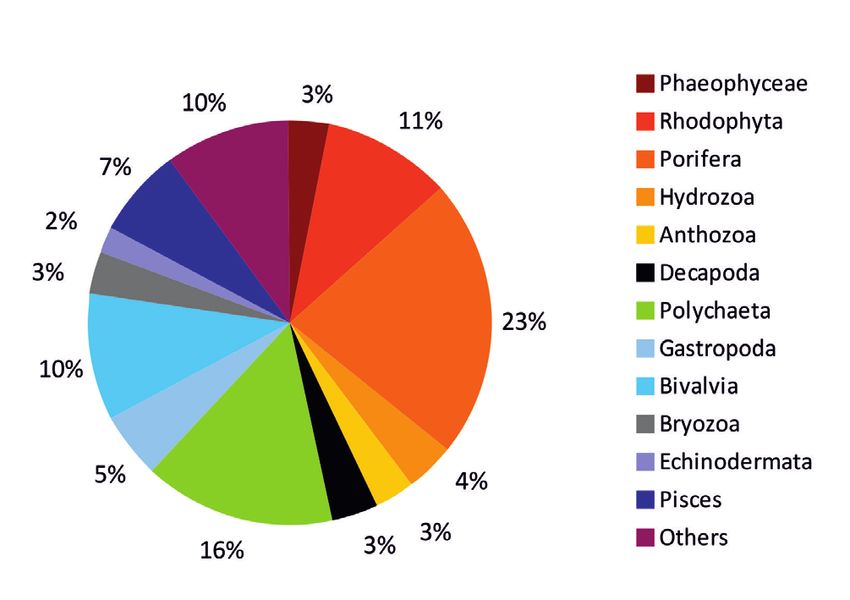
University of Thessaloniki,
                                                                                                54124, Thessaloniki
                                                                    https://doi.org/10.12681/mms.1069

                  Copyright © 2015

To cite this article:

GEROVASILEIOU, V., CHINTIROGLOU, C., VAFIDIS, D., KOUTSOUBAS, D., SINI, M., DAILIANIS, T., ISSARIS, Y.,
AKRITOPOULOU, E., DIMARCHOPOULOU, D., & VOUTSIADOU, E. (2015). Census of biodiversity in marine caves of
the eastern Mediterranean Sea. Mediterranean Marine Science, 16(1), 245-265. doi:https://doi.org/10.12681/mms.1069

                         http://epublishing.ekt.gr | e-Publisher: EKT | Downloaded at 25/05/2020 08:35:33 |
Research Article
Mediterranean Marine Science
Indexed in WoS (Web of Science, ISI Thomson) and SCOPUS
The journal is available on line at http://www.medit-mar-sc.net
DOI: http://dx.doi.org/10.12681/mms.1069
Census of biodiversity in marine caves of the eastern Mediterranean Sea
V. GEROVASILEIOU1,2, C.C. CHINTIROGLOU1, D. VAFIDIS3, D. KOUTSOUBAS4, M. SINI4, T. DAILIANIS2,
Y. ISSARIS2, E. AKRITOPOULOU4, D. DIMARCHOPOULOU1 and E. VOULTSIADOU1
1
Department of Zoology, School of Biology, Aristotle University of Thessaloniki, 54124, Thessaloniki, Greece
2
Institute of Marine Biology, Biotechnology and Aquaculture, Hellenic Centre for Marine Research, 71003, Heraklion, Crete, Greece
3
Department of Ichthyology and Aquatic Environment, University of Thessaly, Nea Ionia, 38445, Magnesia, Greece
4
Department of Marine Sciences, Faculty of Environment, University of the Aegean, University Hill, 81100, Lesvos Island, Greece
Corresponding author: vgerovas@bio.auth.gr
Handling Editor: Argyro Zenetos
Received: 25 September 2014; Accepted: 3 January 2015; Published on line: 5 March 2015
Abstract
Scientific information on the biodiversity of marine caves in the eastern Mediterranean is limited, especially when considering
the extensively studied caves of the north-western and central Mediterranean. Aiming to enhance current knowledge regarding cave
communities, this study represents a first assessment of the marine cave biota of the eastern Mediterranean, as defined by the Euro-
pean Union’s Marine Strategy Framework Directive (MSFD). Information retrieved from an extensive overview of relevant scientific
documents was combined with original data recorded from 23 marine caves in the north-eastern Mediterranean. Our results report a
total of 520 taxa recorded in eastern Mediterranean marine caves to date, the majority of which are sponges, polychaetes, rhodophytes,
bivalves, fishes, and gastropods. These include several protected, endemic and alien species. However, not all taxonomic groups from
different areas have been equally investigated and future studies are expected to increase the number of endemic and alien species.
The observed general trend is that the reported species number is generally related to sampling effort and scientific expertise. The
most well-studied marine cave communities in the eastern Mediterranean are those of the Aegean Sea (especially its northern sec-
tor), which presented the highest number of species, followed by those of the Levantine. Furthermore, our research in Aegean caves
revealed numerous new records for the marine cave fauna of the eastern basin, while several species are reported for the first time
in a marine cave habitat. The critical need for further scientific research, monitoring, and conservation of this unique ecosystem was
highlighted by (i) the presence of certain species endemic to the eastern Mediterranean coupled with a high proportion of alien spe-
cies, especially in the Levantine Basin, and (ii) marine cave habitat availability in isolated insular areas of the eastern Mediterranean.
Keywords: Marine caves, biodiversity, Eastern Mediterranean, Aegean Sea, Levantine, Marine Strategy Framework Directive.
Introduction Pulitzer-Finali & Pronzato, 1981; Pulitzer-Finali, 1983;
Voultsiadou-Koukoura & van Soest, 1991; Voultsiadou-
Marine caves constitute a typical feature of the Medi-
Koukoura et al., 1991; Voultsiadou & Vafidis, 2004).
terranean rocky coastline. According to the most recent
Only a limited number of studies concern marine
census, 738 marine caves have been recorded in the east-
cave biodiversity in the Levantine Basin (e.g. Tsurnamal,
ern Mediterranean to date, representing one fourth of the
known Mediterranean marine caves (Giakoumi et al., 1969; 1975; Ben-Eliahu & Ten Hove, 1992), mostly in-
2013). However, information regarding their biodiversi- cluding information from the coasts of Lebanon, where
ty and community structure is limited compared to their a number of new species have been described recently
north-western and central Mediterranean counterparts (e.g. Pérez et al., 2004; Vacelet et al., 2007; Harmelin et
(Gerovasileiou & Voultsiadou, 2014). al., 2009). Additional scattered information on Levantine
The first scientific data concerning the biota of eastern cave biota is presented in studies on alien species (e.g.
Mediterranean marine caves were acquired during the “CA- Bilecenoğlu & Taškavak, 1999; Bitar et al., 2007; Tsiak-
LYPSO” expedition in the 1950s to Kastelorizo, a Greek is- kiros & Zenetos, 2011; Gewing et al., 2014).
land in the Levantine Basin (Laborel, 1961; Vacelet, 1961). Recently, focused research on the biodiversity and
Later on, Riedl (1966) provided additional biodiversity community structure of marine caves in the Aegean Sea
data for Aegean caves, while scattered information, focus- has increased our knowledge of this habitat (Gerovasileiou
ing mainly on the description of rare and new species, was & Voultsiadou, 2012; Gerovasileiou et al., 2012; 2013).
published in more general faunistic and taxonomic stud- Gerovasileiou & Voultsiadou (2012) analysed data obtained
ies from the same area (e.g. Bailey, 1969; Hayward, 1974; from marine cave sponge communities in various Mediter-
Medit. Mar. Sci., 16/1, 2015, 245-265 245
http://epublishing.ekt.gr | e-Publisher: EKT | Downloaded at 25/05/2020 08:35:33 |ranean areas and showed that sponges exhibit clear biogeo- Results
graphic patterns, thus underlining the need to conserve this
A total of 62 studies, published during the last 55
habitat across the Mediterranean in order to ensure repre-
years, were found to include data on marine cave biota
sentativeness. Rastorgueff et al. (2014) studied cave mysid
of the eastern Mediterranean; however, only 14 of them
populations throughout the northern Mediterranean and re-
focused exclusively on marine caves, the rest being gen-
vealed contrasting patterns of genetic structuring between
eral ecological, faunistic, and taxonomic studies. Most
the western and eastern parts of the basin, which could be
studies (41) concerned the Aegean ecoregion (20 in the
attributed to the presence of phylogeographic breaks. Spa-
north and 16 in the south Aegean seas), while 35 stud-
tial heterogeneity among and within ecoregions is consid-
ies concerned marine caves of the Levantine Basin. Fur-
ered a crucial factor that needs to be taken into account in
thermore, this study provided new biodiversity data for
future conservation plans (Giakoumi et al., 2013). How-
23 marine caves and cave systems (sites with numerous
ever, the lack of scientific data on the biodiversity and com-
neighbouring marine caves and tunnels), mainly from in-
munity structure of fragmented habitats, such as marine
sular areas of the north-eastern Mediterranean (Fig. 1).
caves, could hamper conservation actions.
The combined field research and literature review re-
Taking into account the high level of individuality
sulted in a total of 520 taxa belonging to 34 groups (Table
of this particular habitat and the need to acquire further
1), representing 24% of total Mediterranean marine cave
knowledge that will ensure its adequate conservation, the
biodiversity. Sponges were the dominant group in terms
aim of this work is to: (i) present new data on the biodi-
of species number followed by polychaetes, rhodophytes,
versity of marine caves from the north-eastern Mediter-
bivalves, fishes and gastropods (Table 2 and Figure 2). Con-
ranean, (ii) assess marine cave biodiversity throughout
cerning the spatial variability of cave biota, a higher number
the eastern Mediterranean by combining field data and
of taxa was reported from the entrance and semidark zones
bibliographic information, and (iii) discuss local patterns
(260 and 265 taxa respectively), compared to the dark zone
and unique features.
(116) whereas, for 92 taxa, the cave zone was not specified.
Materials and Methods The northern Aegean Sea displayed the highest
number of taxa (324 taxa, representing 15% of total
Since 2009, several marine caves in north-eastern Mediterranean marine cave diversity), followed by the
Mediterranean coastal and insular areas were surveyed Levantine Basin (175 taxa, 8%) and the southern Aegean
within the framework of a broader scientific study focus- (157 taxa, 7%). The best studied northern Aegean caves,
ing on the biodiversity of Aegean Sea caves. Sampling was Fara and Agios Vasilios, hosted 200 and 170 taxa respec-
performed through SCUBA diving. Additional qualitative tively while the best studied Levantine caves were those
information provided by recreational divers (through web of Selaata, harbouring 57 taxa. The various taxonomic
fora and direct communication) was also considered. groups were not equally represented among areas. For
Furthermore, the scientific literature concerning ma- instance, northern Aegean caves hosted 100% of the
rine caves of the Mediterranean Sea was reviewed and all Mediterranean cave Echiura and Phoronida, 50% of the
biodiversity data were incorporated into a single database Tanaidacea, approximately 30% of Porifera, Anthozoa,
along with ecological and spatial information (see Meth- Sipuncula, Cephalopoda, Brachiopoda, Echinodermata
ods in Gerovasileiou & Voultsiadou, 2012; 2014). In this and Pisces, and 25% of Polychaeta and Scyphozoa. Re-
database, protected species (including those under regu- spectively, Levantine caves harboured 50% of the Medi-
lated exploitation) were identified according to OCEA- terranean cave Bivalvia and 44% of Brachiopoda, while
NA (2009 and references therein) as well as the Greek southern Aegean caves hosted 51% of the Mediterranean
national legislative framework (e.g. Presidential Decree marine cave Phaeophyceae and 30% of Rhodophyta.
67/1981; Thessalou-Legaki & Legakis, 2005; Katsane- A considerable proportion of taxa recorded in this
vakis et al., 2011 and references therein). The marine study are new records for the marine cave biodiversity of
cave biodiversity list was also checked for the presence the northern Aegean Sea (55.5%), the southern Aegean
of alien species (see Methods in Gerovasileiou et al., Sea (25%), and the Levantine Basin (7%). Additionally,
2015). Τhe ratio of eastern Mediterranean to total Medi- 15 species are reported for the first time in marine caves,
terranean marine cave biodiversity was calculated based either as cave-dwellers or occasional visitors (Table 1). A
on data given in Gerovasileiou & Voultsiadou (2014). high number of species (88) are protected by national and
The borders of the eastern Mediterranean were defined international legislation (including those under regulated
according to the European Union’s Marine Strategy Frame- exploitation) (Table 1). It is notable that 46 alien species
work Directive (MSFD) and encompass the Aegean and (Table 1) have been recorded in caves of the eastern ba-
Levantine ecoregions as defined by Spalding et al. (2007). sin, covering 9% of its marine cave biodiversity. Most alien
To facilitate analysis, the eastern Mediterranean was further species were recorded in the Levantine Basin (43), cover-
subdivided into three biogeographic subareas: Northern ing 25% of local marine cave biodiversity (100% of the
Aegean (NA), Southern Aegean (SA), and Levantine (LB). recorded Tunicata and Echinodermata, 75% of Bryozoa,
246 Medit. Mar. Sci., 16/1, 2015, 245-265
http://epublishing.ekt.gr | e-Publisher: EKT | Downloaded at 25/05/2020 08:35:33 |ties present certain differences from their western Medi-
terranean counterparts, such as (i) a scarcity or lack of
erect, branching anthozoans (e.g. gorgonian and red coral
facies), which often thrive at the entrance and in semidark
zones of north-western Mediterranean caves, and (ii) the
presence of species endemic to the eastern Mediterrane-
an. This might be related to temperature and trophic dif-
ferences between the two basins, as suggested by Bibilo-
ni & Gili (1982) and Uriz et al. (1993), who compared
marine caves of the Balearic Islands (characterized by
oligotrophic conditions and higher water temperatures)
and the continental north-western Mediterranean coast.
Specific characteristics of marine cave communities
from the different areas of the eastern Mediterranean are
discussed in detail below.
As indicated by the results, the Aegean Sea is the
most thoroughly studied area in the eastern Mediterra-
nean regarding its marine cave biodiversity, and hosts
some of the richest caves, as far as species number is
concerned, studied in the Mediterranean Sea. However,
Fig. 1: Map showing the locations of marine caves for which there are marked differences between its northern and
new data are presented in this study (names of caves are given
southern sectors the northern Aegean is influenced by
in the Footnote to Table 1).
the brackish cold water input from the Black Sea through
the Dardanelles Strait and higher river runoff in contrast
67% of Gastropoda, 43% of Pisces, 37% of Hydrozoa, 33%
to the southern sector, which receives saline warm wa-
of Decapoda, 28% of Polychaeta and 18% of Bivalvia).
ter flowing northwards from the Levantine (Lykousis et
The species encountered in several different marine
al., 2002). These differences are reflected in the higher
caves in the eastern Mediterranean were: the chlorophyte
productivity and diversity of the northern Aegean (Voult-
Palmophyllum crassum; the benthic foraminiferan Mini-
siadou, 2005a; 2009). In further support of this, Gerova-
acina miniacea; the sponges Agelas oroides, Spirast-
sileiou & Voultsiadou (2012) showed that species com-
rella cunctatrix, Phorbas tenacior, Axinella damicornis,
position of the marine cave sponge fauna of the northern
Petrosia ficiformis, Chondrosia reniformis, Ircinia oros,
Aegean resembled that of the north-western Mediterra-
Terpios gelatinosa, Axinella verrucosa, and Dendroxea
nean, while the southern Aegean cave sponge fauna dis-
lenis; the anthozoans Madracis pharensis and Leptop-
played closer affinities to that of the Levantine.
sammia pruvoti; the brachiopod Novocrania anomala;
In this study, the well-studied northern Aegean ma-
the tunicate Halocynthia papillosa; and the cardinal fish
rine caves were found to support a rich fauna of sponges,
Apogon imberbis (Table 1).
scleractinians, polychaetes, decapods, echinoderms, and
Discussion fishes, comparable in species number to that of the well-
studied north-western Mediterranean caves. They also
The limited research effort carried out in the marine host endemic eastern Mediterranean species (e.g. the
caves of the eastern Mediterranean, compared to that of the sponges Axinella cannabina, Coscinoderma sporadense,
western Mediterranean, is illustrated by the average trend of Hemiasterella aristoteliana, and Ircinia paucifilamento-
cave-related publications: approximately 1 study per year sa, and the bryozoan Hippaliosina depressa), as well as
for the eastern basin, versus an upward general trend of 5 species that are not as common in the north-western ba-
studies per year for the entire Mediterranean (Gerovasileiou sin (e.g. Madracis pharensis). The fact that several spe-
& Voultsiadou, 2012; 2014). A zoogeographical gradient, cies found in northern Aegean caves are reported for the
i.e. a north-west to south-east decrease of species number first time as cave-dwellers may partly be attributed to the
was observed for sponges, anthozoans, and polychaetes, recently increased research effort, but may also reflect
in accordance with previous studies (Vafidis et al., 1994; the presence of occasional visitors. The scleractinian cor-
Voultsiadou, 2005a; 2009; Gerovasileiou & Voultsiadou, al Ceratotrochus magnaghii observed on the ceiling of
2012). However, it should be taken into account that ge- the dark interior zone in two marine caves (10-30 m) is
ographical patterns of species number generally follow reported for the second time from the eastern Mediterra-
trends in sampling effort and scientific expertise, whereas nean. Its present finding in the Aegean Sea constitutes the
quantitative information only exists for two marine caves of shallowest record for the species after its recent finding
the northern Aegean Sea (Gerovasileiou et al., 2013; 2014). in deep (426-1334 m) Neopycnodonte-Desmophyllum
The studied eastern Mediterranean cave communi- framestones, west of Crete (Taviani et al., 2011).
Medit. Mar. Sci., 16/1, 2015, 245-265 247
http://epublishing.ekt.gr | e-Publisher: EKT | Downloaded at 25/05/2020 08:35:33 |Table 1. List of taxa recorded in marine caves of the eastern Mediterranean Sea (NA: Northern Aegean, SA: Southern Aegean,
LB: Levantine; CE: cave entrance, SD: semidark zone; D: dark zone, Un: unspecified; † first record as cave-dwellers/occasional
visitors, * first record for local marine cave biodiversity, ‡ alien species, ** threatened species or protected by national/international
legislation). Numbers represent different marine caves (see Footnote).
Species NA SA LB Number Cave
of caves zone
Kingdom Chromista
Phylum Ochrophyta
Cladostephus spongiosus (Hudson) C. Agardh 14 1 CE
Cutleria chilosa (Falkenberg) P.C.Silva 14 1 CE
Cystoseira amentacea var. stricta Montagne ** 15 1 CE
Cystoseira crinita Duby 15 1 CE
Cystoseira spinosa Sauvageau ** 15 1 CE
Dictyopteris polypodioides (De Candolle) J.V. Lamouroux 14 1 CE
Dictyota dichotoma (Hudson) J.V. Lamouroux 1* 15, 16 3 CE
Dictyota implexa (Desfontaines) J.V.Lamouroux 15 1 CE
Halopteris filicina (Grateloup) Kützing 14 1 CE
Hincksia sandriana (Zanardini) P.C.Silva 14 1 CE
Lobophora variegata (J.V. Lamouroux) Womersley ex E.C.Oliveira 14 1 CE
Nereia filiformis (J.Agardh) Zanardini 14 1 CE
Padina pavonica (Linnaeus) Thivy 1* 15 2 CE
Sargassum acinarium (Linnaeus) Setchell ** 15 1 CE
Sphacelaria cirrosa (Roth) C. Agardh 14 1 CE
Taonia atomaria (Woodward) J. Agardh 14 1 CE
Zanardinia typus (Nardo) P.C.Silva 1* 1 CE
Zonaria tournefortii (J.V.Lamouroux) Montagne 14 1 CE
Phylum Foraminifera
16, 17, 18, CE, SD,
Miniacina miniacea (Pallas, 1766) 1, 2, 3, 4* 9
19, 20* D
Kingdom Plantae
Phylum Chlorophyta
Bryopsis duplex De Notaris 15 1 CE
Bryopsis plumosa (Hudson) C. Agardh 15 1 CE
Cladophora echinus (Biasoletto) Kützing 14 1 CE
Codium bursa (Olivi) C.Agardh 2, 4* 2 CE
Flabellia petiolata (Turra) Nizamuddin 1, 2, 4* 3 CE
16, 17, 18,
Palmophyllum crassum (Naccari) Rabenhorst 1, 2, 3, 4 19, 20, 21, 40* 13 CE, SD
22, 23*
Valonia macrophysa Kützing 1, 3* 14, 24 4 CE
Phylum Rhodophyta
Acrodiscus vidovichii (Meneghini) Zanardini 14 1 CE
Aglaothamnion caudatum (J. Agardh) Feldmann-Mazoyer 14 1 CE
Amphiroa cryptarthrodia Zanardini 14 1 CE
Apoglossum ruscifolium (Turner) J. Agardh 14 1 CE
Asparagopsis taxiformis (Delile) Trevisan de Saint-Léon ‡ 25 1 CE
Chrysymenia ventricosa (J.V. Lamouroux) J. Agardh 14 1 CE
Corallina sp. 41 1 CE
Crouania attenuata (C. Agardh) J. Agardh 14 1 CE
Cryptonemia lomation (Bertoloni) J. Agardh 14 1 CE
Digenea simplex (Wulfen) C. Agardh 14 1 CE
Dipterosiphonia rigens (Shousboe ex C.Agardh) Falkenberg 14 1 CE
Eupogodon planus (C.Agardh) Kützing 14 1 CE
Feldmannophycus rayssiae (Feldmann & G.Feldmann) Augier &
14 1 CE
Boudouresque
Gelidium bipectinatum Furnari 14 1 CE
Gelidium pusillum (Stackhouse) Le Jolis 14 1 CE
(continued)
248 Medit. Mar. Sci., 16/1, 2015, 245-265
http://epublishing.ekt.gr | e-Publisher: EKT | Downloaded at 25/05/2020 08:35:33 |Table 1 (continued)
Species NA SA LB Number Cave
of caves zone
Gymnothamnion elegans (Schousboe ex C. Agardh) J. Agardh 14 1 CE
Herposiphonia tenella (C.Agardh) Ambronn 14 1 CE
Hydrolithon farinosum (J.V.Lamouroux) D.
14 1 CE
Penrose & Y.M.Chamberlain
Hypoglossum hypoglossoides (Stackhouse) F.S.Collins & Hervey 14 1 CE
Irvinea boergesenii (Feldmann) R.J.Wilkes, L.M.McIvor & Guiry 14 1 CE
Jania adhaerens J.V.Lamouroux 14 1 CE
Jania rubens (Linnaeus) J.V.Lamouroux 15 1 CE
Jania virgata (Zanardini) Montagne 14 1 CE
Laurencia obtusa (Hudson) J.V. Lamouroux 15 1 CE
Lithophyllum byssoides (J.V. Lamouroux) Foslie ** 15, 26 2 CE
Lithophyllum incrustans R.A.Philippi 26 1 CE
Lithophyllum stictaeforme (Areschoug) Hauck 20* 42 2 CE
Mesophyllum alternans (Foslie) Cabioch & M.L.Mendoza ** 20* 40, 42 3 CE
Mesophyllum expansum (Philippi) Cabioch & M.L.Mendoza ** 5 14, 26 3 CE
Mesophyllum lichenoides (J.Ellis) M.Lemoine 26 1 CE
Monosporus pedicellatus (J.E.Smith) Solier 14 1 CE
Myriogramme distromatica J.J.Rodríguez ex Boudouresque 14 1 CE
Neogoniolithon mamillosum (Hauck) Setchell & L.R.Mason ** 26 1 CE
Neurocaulon foliosum (Meneghini) Zanardini 14 1 CE
Nitophyllum punctatum (Stackhouse) Greville 14 1 CE
Osmundea pinnatifida (Hudson) Stackhouse 15 1 CE
Parviphycus pannosus (Feldmann) G.Furnari 14 1 CE
Peyssonnelia bornetii Boudouresque & Denizot 14, 20 2 CE
Peyssonnelia crispata Boudouresque & Denizot 14 1 CE
Peyssonnelia orientalis (Weber-van Bosse) Cormaci & G.Furnari 14 1 CE
Peyssonnelia rosa-marina Boudouresque & Denizot ** 2, 3, 6 3 CE
Peyssonnelia rubra (Greville) J. Agardh 14, 20 2 CE
Peyssonnelia sp. 4 42, 43 3 CE
Peyssonnelia squamaria (S.G.Gmelin) Decaisne 14 1 CE
Phyllophora crispa (Hudson) P.S.Dixon ** 14 1 CE
Pleonosporium borreri (Smith) Nägeli 14 1 CE
Pterocladiella capillacea (S.G.Gmelin) Santelices & Hommersand 15 1 CE
Pterocladiella sp. 41 1 CE
Pterothamnion plumula (J.Ellis) Nägeli 14 1 CE
Ptilothamnion pluma (Dillwyn) Thuret 14 1 CE
Radicilingua reptans (Kylin) Papenfuss 14 1 CE
Rhodophyllis divaricata (Stackhouse) Papenfuss 14 1 CE
Rhodymenia ardissonei (Kuntze) Feldmann 14 1 CE
Schizymenia dubyi (Chauvin ex Duby) J.Agardh ** 26 1 CE
Sphaerococcus coronopifolius Stackhouse 14 1 CE
Kingdom Animalia
Phylum Porifera
Aaptos aaptos (Schmidt, 1864) 2, 3, 7 3 CE, SD
CE, SD,
Acanthella acuta Schmidt, 1862 1, 2, 3, 7, 8 17, 18 46 8
D
16, 17, 18,
1, 2, 3, 4, 19, 20, 22,
CE, SD,
Agelas oroides (Schmidt, 1864) 6, 7, 8, 9, 23, 24, 27, 40, 42 25
D
10 28, 29, 30,
31, 32
1, 2, 3, 6, CE, SD,
Aplysilla rosea (Barrois, 1876) 24 40* 8
7, 10 D
CE, SD,
Aplysina aerophoba Nardo, 1843 ** 3 1
D
Axinella cannabina (Esper, 1794) ** 2, 6, 9 3 CE, SD
16, 17, 18,
Axinella damicornis (Esper, 1794) 1, 2, 3, 4, 6 20, 22, 24, 40* 15 CE, SD
27, 29, 30
(continued)
Medit. Mar. Sci., 16/1, 2015, 245-265 249
http://epublishing.ekt.gr | e-Publisher: EKT | Downloaded at 25/05/2020 08:35:33 |Table 1 (continued)
Species NA SA LB Number Cave
of caves zone
46,
Axinella polypoides Schmidt, 1862 ** 8 47, 4 SD
48
Axinella sp. 2, 3 2 SD
22, 23, 24,
Axinella verrucosa (Esper, 1794) 1, 2, 8 40* 9 SD
28, 30
Bubaris sp. 2 1 SD
Cacospongia mollior Schmidt, 1862 7 1 SD
1, 2, 3, 4, 16, 17, 18, CE, SD,
Chondrosia reniformis Nardo, 1847 42 12
7, 10 19, 31 D
Cinachyrella levantinensis Vacelet, Bitar, Carteron, Zibrowius &
47, 49 2 SD
Perez, 2007
CE, SD,
Clathrina clathrus (Schmidt, 1864) 2, 3 20* 45 4
D
Clathrina coriacea (Montagu, 1814) 45 1 CE, SD
Cliona celata Grant, 1826 2, 8 2 CE, SD
Cliona schmidtii (Ridley, 1881) 1, 2, 3 17, 22 50 6 CE, SD
Cliona viridis (Schmidt, 1862) 2* 33 2 CE, SD
Coscinoderma sporadense Voultsiadou-Koukoura, van Soest &
2, 3, 4, 8 4 SD
Koukouras, 1991
Crambe crambe (Schmidt, 1862) 6, 7, 8, 10 16, 18, 34 46 8 CE, SD
Crella sp. 3 1 SD
Dendrilla sp. 2, 3 2 SD, D
18, 19, 20, CE, SD,
Dendroxea lenis (Topsent, 1892) 2, 3, 4 40* 9
22, 27* D
Didiscus stylifer Tsurnamal, 1969 45 1 CE, SD
Dictyonella incisa (Schmidt, 1880) 1, 2, 3, 7 22* 5 SD
Dictyonella marsilii (Topsent, 1893) 8 1 SD
Dictyonella obtusa (Schmidt, 1862) 3 1 SD
Diplastrella bistellata (Schmidt, 1862) 2, 4, 8 20* 4 SD, D
Diplastrella ornata Rützler & Sará, 1962 33 45 2 D
Discodermia polymorpha Pisera & Vacelet, 2011 8 1 SD
Dysidea avara (Schmidt, 1862) 2 1 SD, D
Dysidea fragilis (Montagu, 1818) 2 1 SD
Erylus discophorus (Schmidt, 1862) 8 33 51 3 SD
Eurypon clavatum (Bowerbank, 1866) 2, 3 2 SD, D
Eurypon sp. 3 1 D
Euryspongia raouchensis Vacelet, Bitar, Carteron,
41 1 SD, D
Zibrowius & Perez, 2007
17, 20, 22,
Fasciospongia cavernosa (Schmidt, 1862) 1, 3, 8 7 CE, SD
24
Gastrophanella phoeniciensis Perez, Vacelet, Bitar
51 1 D
& Zibrowius, 2004
Geodia cydonium (Jameson, 1811) ** 7 33 2 SD
Halichondria sp.1 3 1 SD
Halichondria sp.2 7 1 CE
Halichondrida sp. 2, 3 2 SD, D
Haliclona (Gellius) microsigma (Babic, 1922) 2 1 D
CE, SD,
Haliclona (Halichoclona) fulva (Topsent, 1893) 2, 3 24 3
D
Haliclona (Halichoclona) perlucida (Griessinger, 1971) 2 1 SD
Haliclona (Reniera) cratera (Schmidt, 1862) 33 1 Un
Haliclona (Reniera) mediterranea Griessinger, 1971 2 1 CE
16, 19, 20, CE, SD,
Haliclona (Soestella) mucosa (Griessinger, 1971) 1, 2, 3 7
22 D
Haliclona sp.1 1 1 SD, D
Haliclona sp.2 2 1 SD
Haliclona sp.3 2 1 D
Haliclona sp.4 1 1 SD, D
Hamigera hamigera (Schmidt, 1862) 42 1 SD
Hemiasterella aristoteliana Voultsiadou-Koukoura & Van Soest, 1991 8 1 SD
(continued)
250 Medit. Mar. Sci., 16/1, 2015, 245-265
http://epublishing.ekt.gr | e-Publisher: EKT | Downloaded at 25/05/2020 08:35:33 |Table 1 (continued)
Species NA SA LB Number Cave
of caves zone
Hemimycale columella (Bowerbank, 1874) 16* 1 CE, SD
Hexadella sp. 2, 3 2 SD, D
CE, SD,
Hexadella pruvoti Topsent, 1896 1, 2, 3, 4 18, 20, 30 7
D
CE, SD,
Hexadella racovitzai Topsent, 1896 2, 3 2
D
Hyrtios collectrix (Schulze, 1880) 2 1 CE
Ircinia dendroides (Schmidt, 1862) 33 1 SD
1, 2, 4, 6, 16, 18, 19,
Ircinia oros (Schmidt, 1864) 11 CE, SD
7, 10 20, 29
CE, SD,
Ircinia paucifilamentosa Vacelet, 1961 1, 2, 3, 4, 8 42 6
D
1, 2, 7, 8,
Ircinia variabilis (Schmidt, 1862) 18, 24 48 8 CE, SD
10
Jaspis johnstonii (Schmidt, 1862) 1, 2, 3, 7, 8 17, 18 46 8 CE, SD
Jaspis sp. 3 1 D
Leucetta solida (Schmidt, 1862) 45 1 D
Merlia normani Kirkpatrick, 1908 33 42 2 SD
Microscleroderma lamina Perez, Vacelet, Bitar & Zibrowius, 2004 51 1 D
Myrmekioderma spelaeum (Pulitzer-Finali, 1983) 1, 2, 8 18, 19, 20 46, 48 8 SD, D
Lithistida sp. 1* 1 SD
Oceanapia sp. 2 1 SD
Oscarella balibaloi Pérez, Ivanisevic, Dubois, Pedel,
2, 3 2 CE, SD
Thomas, Tokina & Ereskovsky, 2011
Oscarella lobularis (Schmidt, 1862) 4, 8 30* 3 CE, SD
Oscarella microlobata Muricy, Boury-Esnault,
2 50 2 D
Bézac & Vacelet, 1996
Oscarella tuberculata (Schmidt, 1868) 2, 3 2 CE, SD
CE, SD,
Penares euastrum (Schmidt, 1868) 2, 3, 8 20* 47 5
D
Penares helleri (Schmidt, 1864) 2, 8 46 3 SD
Petrobiona massiliana Vacelet & Lévi, 1958 ** 31 1 SD
18, 20, 22,
1, 2, 4, 5, CE, SD,
Petrosia (Petrosia) ficiformis (Poiret, 1789) ** 24, 27, 33, 42 15
7, 8, 10 D
34
Petrosia (Strongylophora) vansoesti Boury-Esnault,
1, 8 2 SD, D
Pansini & Uriz, 1994
Petrosia pulitzeri Pansini, 1996 33 1 Un
16, 17, 18,
1, 2, 3, 4,
Phorbas tenacior (Topsent, 1925) 19, 24, 28, 40* 17 CE, SD
6, 7, 8, 10
30, 33
Phorbas topsenti Vacelet & Perez, 2008 3 17 2 CE
Placospongia decorticans (Hanitsch, 1895) 48 1 Un
CE, SD,
Plakina bowerbanki (Sarà, 1960) 2, 3 2
D
Plakina monolopha Schulze, 1880 3, 8 2 SD, D
Plakina reducta (Pulitzer-Finali, 1983) 46, 48 2 Un
Plakina sp.1 2, 3 2 SD, D
CE, SD,
Plakina trilopha Schulze, 1880 3 1
D
Plakina weinbergi Muricy, Boury-Esnault,
19 52, 53 3 Un
Bézac & Vacelet, 1998
Plakinastrella copiosa Schulze, 1880 8 1 SD
Plakinidae sp.1 2 1 D
Plakortis simplex Schulze, 1880 51 2 Un
Pleraplysilla spinifera (Schulze, 1879) 1, 2, 3, 10 16, 22 6 CE, SD
Protosuberites rugosus (Topsent, 1893) 2 1 D
Pseudocorticium jarrei Boury-Esnault, Muricy, CE, SD,
2, 3 18* 53 4
Gallissian & Vacelet, 1995 D
Raspaciona aculeata (Johnston, 1842) 2, 3* 3 CE, SD
(continued)
Medit. Mar. Sci., 16/1, 2015, 245-265 251
http://epublishing.ekt.gr | e-Publisher: EKT | Downloaded at 25/05/2020 08:35:33 |Table 1 (continued)
Species NA SA LB Number Cave
of caves zone
1, 2, 3, 8,
Sarcotragus foetidus Schmidt, 1862 ** 5 CE, SD
10
Sarcotragus spinosulus Schmidt, 1862 7 1 SD
16, 17, 18,
1, 2, 3, 4, 19, 20, 22,
CE, SD,
Spirastrella cunctatrix Schmidt, 1868 5, 6, 7, 9, 23, 24, 27, 40, 42 25
D
10 28, 29, 30,
32, 33
Spongia (Spongia) nitens (Schmidt, 1862) 2, 3 2 SD
Spongia (Spongia) officinalis Linnaeus, 1759 ** 1, 2, 7 3 CE, SD
CE, SD,
Spongia (Spongia) virgultosa (Schmidt, 1868) 2, 3 2
D
Spongionella pulchella (Sowerby, 1804) 2 1 SD
Spongosorites sp.1 2 1 CE, SD
Stryphnus mucronatus (Schmidt, 1868) 4 1 SD
Sycon elegans (Bowerbank, 1845) 3* 1 SD, D
Sycon humboldti Risso, 1826 45 1 D
1, 2, 3, 4, 16, 17, 23, CE, SD,
Terpios gelatinosa (Bowerbank, 1866) 11
6, 7, 10 24 D
Tethya aurantium (Pallas, 1766) ** 2 1 CE
17, 18, 19, CE, SD,
Thymosiopsis cuticulatus Vacelet & Perez, 1998 1, 2, 4, 6 8
20 D
Timea geministellata Pulitzer-Finali, 1978 7 1 CE
Timea sp.1 3 1 D
CE, SD,
Timea unistellata (Topsent, 1892) 2, 3 22* 3
D
Topsentia lacazei (Schmidt, 1868) 45 1 D
Phylum Cnidaria
Actinia equina (Linnaeus, 1758) 10* 40* 2 CE, SD
Actinia prasina Gosse, 1860 † 7* 1 SD
Aglaophenia octodonta Heller, 1868 54 1 CE
Aglaophenia picardi Svoboda, 1979 54 1 CE
Bimeria vestita Wright, 1859 54 1 CE
Calliactis parasitica (Couch, 1842) 1* 29, 35 3 SD
Campanularia hincksii Alder, 1856 54 1 CE
16, 18, 24, CE, SD,
Caryophyllia inornata (Duncan, 1878) ** 2, 3, 4, 6* 8
36 D
Ceratotrochus magnaghii Cecchini, 1914 ** 2, 3* 2 D
CE, SD,
Cerianthus membranaceus (Spallanzani, 1784) 2, 5 23, 30, 34 5
D
Cladocora caespitosa (Linnaeus, 1758) ** 9 1 Un
Clytia gracilis (Sars, 1850) 54 1 CE
Clytia hemisphaerica (Linnaeus, 1767) 54 1 CE
Clytia linearis (Thorneley, 1900) ‡ 54 1 CE
Corallium rubrum (Linnaeus, 1758) ** 11 1 CE, SD
Dynamena quadridentata (Ellis & Solander, 1786) ‡ 54 1 CE
Eudendrium carneum Clarke, 1882 ‡ 54 1 CE
Eudendrium merulum Watson, 1985 ‡ 54 1 CE
Eudendrium racemosum (Cavolini, 1785) 54 1 CE
Eudendrium sp. 2, 3 2 CE
Filellum serratum (Clarke, 1879) ‡ 54 1 CE
Guynia annulata Duncan, 1872 ** 36 1 D
Halopteris diaphana (Heller, 1868) ** 54 1 CE
CE, SD,
Hoplangia durotrix Gosse, 1860 1, 2, 3, 6 36 55 6
D
Laomedea sp. 54 1 CE
Lafoeina tenuis Sars, 1874 54 1 CE
18, 20, 21,
CE, SD,
Leptopsammia pruvoti Lacaze-Duthiers, 1897 ** 1, 2, 3, 4 22, 23, 24, 40* 14
D
27, 29, 31*
(continued)
252 Medit. Mar. Sci., 16/1, 2015, 245-265
http://epublishing.ekt.gr | e-Publisher: EKT | Downloaded at 25/05/2020 08:35:33 |Table 1 (continued)
Species NA SA LB Number Cave
of caves zone
16, 20, 22, 40,
1, 2, 3, 4, CE, SD,
Madracis pharensis (Heller, 1868) ** 24, 27, 28, 42, 18
6, 10 D
30, 31, 32* 47
Obelia dichotoma (Linnaeus, 1758) 54 1 CE
Oculina patagonica de Angelis 1908 ‡ ** 25 54 1 CE, SD
Paracyathus pulchellus (Philippi, 1842) ** 2, 3* 20* 3 SD, D
16, 21, 24,
Parazoanthus axinellae (Schmidt, 1862) ** 5, 9 40* 7 SD
28*
Pennaria disticha (Goldfuss, 1820) 54 1 CE
CE, SD,
Phyllangia americana mouchezii (Lacaze-Duthiers, 1897) **
2* 24* 55 3
D
Polycyathus muellerae (Abel, 1959) ** 1, 2, 4, 6* 40, 55 6 SD, D
Rhizostoma pulmo (Macri, 1778) † 1* 1 SD
Sertularia marginata (Kirchenpauer, 1864) ‡ 54 1 CE
Sertularia tongensis (Stechow, 1919) ‡ 54 1 CE
Phylum Ctenophora
Ctenophora spp. 1* 1 SD
Phylum Platyhelminthes
Stylochus sp. 2 1 SD
Phylum Nemertea
Nemertea spp. 2, 3* 2 SD, D
Phylum Nematoda
Nematoda spp. 2, 3* 2 SD, D
Phylum Arthropoda
Subphylum Crustacea
Anomura sp.1 2, 3* 2 SD
Athanas nitescens (Leach, 1814) 2, 3* 2 SD
Carupa tenuipes Dana, 1852 ‡ 37 1 Un
Charybdis (Charybdis) hellerii (A. Milne-Edwards, 1867) ‡ 54 1 SD
Chthamalus sp. 1, 10* 2 CE, SD
CE, SD,
Colomastix pusilla Grube, 1861 2, 3* 2
D
Copepoda sp.1 3* 1 SD
Copepoda sp.2 3* 1 SD
Cumacea sp. 2, 3* 2 SD, D
Dardanus arrosor (Herbst, 1796) 35 1 Un
Dardanus calidus (Risso, 1827) 1* 29* 2 SD
Dromia personata (Linnaeus, 1758) 2* 18* 2 D
Eualus occultus (Lebour, 1936) 2, 3* 2 SD
Eurynome aspera (Pennant, 1777) 2* 1 CE
Galathea strigosa (Linnaeus, 1761) 2 1 SD
Gammarus subtypicus Stock, 1966 † 3* 1 SD
CE, SD,
Gnathia vorax (Lucas, 1849) 2* 1
D
Hemimysis margalefi sensu lato Alcaraz, Riera & Gili, 1986 18, 19, 38 56 4 Un
Herbstia condyliata (Fabricius, 1787) 2, 3* 2 CE, SD
CE, SD,
Janira maculosa Leach, 1814 2, 3* 2
D
Leptocheirus bispinosus Norman, 1908 2, 3* 2 SD, D
Leptochelia savignyi (Kroyer, 1842) 2, 3* 2 SD, D
Leucothoe spinicarpa (Abildgaard, 1789) 2, 3* 2 SD, D
Liljeborgia dellavallei Stebbing, 1906 2, 3* 2 CE, SD
Lysianassa caesarea Ruffo, 1987 2* 1 CE, SD
1, 2, 3, 4,
Mysida spp. 5 SD, D
7*
Palaemon serratus (Pennant, 1777) ** 1, 4, 7* 3 SD, D
CE, SD,
Palinurus elephas (Fabricius, 1787) ** 1, 2, 3* 42 4
D
Paradoxapseudes intermedius (Hansen, 1895) † 2, 3* 2 SD, D
(continued)
Medit. Mar. Sci., 16/1, 2015, 245-265 253
http://epublishing.ekt.gr | e-Publisher: EKT | Downloaded at 25/05/2020 08:35:33 |Table 1 (continued)
Species NA SA LB Number Cave
of caves zone
Phtisica marina Slabber, 1769 3* 1 SD
Pilumnus minutus De Haan, 1835 ‡ 2 1 CE
Plesionika narval (Fabricius, 1787) 2, 3 24, 31* 4 D
Scyllarides latus (Latreille, 1802) ** 2* 29* 42 3 D
Scyllarus arctus (Linnaeus, 1758) ** 3* 1 D
Stenopus spinosus Risso, 1826 2, 3, 7 3 SD, D
Stenothoe sp. 3* 1 SD
Tanais dulongii (Audouin, 1826) 2* 1 D
Phylum Annelida
Class Polychaeta
Amphiglena mediterranea (Leydig, 1851) 2* 1 SD
Amphinome sp. 3* 1 CE
Amphitrite sp. 2* 1 CE
Boccardia polybranchia (Haswell, 1885) † 2, 3* 2 SD, D
Branchiomma bombyx (Dalyell, 1853) 3* 1 SD
46,
Branchiosyllis exilis (Gravier, 1900) 48, 3 Un
50
Ceratonereis (Composetia) costae (Grube, 1840) 3* 1 SD
Chone collaris Langerhans, 1881 2, 3* 2 SD, D
Chrysopetalum debile (Grube, 1855) 3* 1 SD
Dipolydora armata (Langerhans, 1880) 2* 1 SD
Dodecaceria concharum Örsted, 1843 3* 1 SD
Eupolymnia nebulosa (Montagu, 1818) 2* 16* 2 SD
Eupolymnia nesidensis (Delle Chiaje, 1828) 2* 1 D
Eusyllis kupfferi Langerhans, 1879 ‡ 46, 50 2 Un
Exogone (Exogone) naidina Örsted, 1845 2* 1 SD
Exogone sp. 2* 1 CE
Filograna sp. 3* 16, 24* 3 SD
Filogranula annulata (O. G. Costa, 1861) 36 1 Un
Glycera tridactyla Schmarda, 1861 † 2, 3* 2 SD
Harmothoe spinifera (Ehlers, 1864) 2, 3* 2 SD
CE, SD,
Hermodice carunculata (Pallas, 1766) 1, 2, 3, 4 17, 20* 6
D
Hydroides heterocerus (Grube, 1868) ‡ 45 1 Un
Hydroides minax (Grube, 1878) ‡ 45 1 Un
Janua (Dexiospira) pagenstecheri (de Quatrefages, 1865) 5 1 Un
Leodice torquata (Quatrefages, 1866) 2* 1 SD
Lumbrineris funchalensis (Kinberg, 1865) 3* 1 SD
Lysidice ninetta Audouin & Milne-Edwards, 1833 2* 1 SD
Myrianida prolifera (O.F. Müller, 1788) 46 1 Un
Myrianida sp. 3* 1 CE
Neanthes caudata (Delle Chiaje, 1827) † 3* 1 SD
Nereis zonata Malmgren, 1867 2, 3* 2 SD, D
Neodexiospira pseudocorrugata (Bush, 1905) 5 1 Un
Nidificaria clavus (Harris, 1968) 5 1 Un
Notomastus latericeus Sars, 1851 2* 1 SD
Odontosyllis fulgurans (Audouin & Milne Edwards, 1833) 50 1 Un
Oxydromus sp. 3* 1 SD
Palola siciliensis (Grube, 1840) 2* 1 SD
Perinereis sp. 2, 3* 2 CE
Phyllochaetopterus socialis Claparède, 1869 4* 1 D
Phyllodoce sp. 3* 1 CE
Phyllodocidae sp. 2* 1 CE
Pileolaria heteropoma (Zibrowius, 1968) 5 1 Un
Placostegus tridentatus (Fabricius, 1779) 2, 3* 2 SD
(continued)
254 Medit. Mar. Sci., 16/1, 2015, 245-265
http://epublishing.ekt.gr | e-Publisher: EKT | Downloaded at 25/05/2020 08:35:33 |Table 1 (continued)
Species NA SA LB Number Cave
of caves zone
Platynereis dumerilii (Audouin & Milne Edwards, 1834) 2* 1 SD
Polychaeta sp. 3* 1 CE
Polydora hoplura Claparède, 1869 † 2, 3* 2 SD
Polyophthalmus pictus (Dujardin, 1839) 2* 1 SD
Pontogenia chrysocoma (Baird, 1865) 3* 1 SD
Potamilla torelli (Malmgren, 1866) 2* 1 SD
Prionospio malmgreni Claparède, 1869 † 2* 1 SD
Proceraea aurantiaca (Claparède, 1868) 46 1 Un
Protolaeospira striata (Quievreux, 1963) 5 1 Un
Protula intestinum (Lamarck, 1818) 42 1 SD
CE, SD,
Protula tubularia (Montagu, 1803) 2, 3, 4* 3
D
Pseudopotamilla reniformis (Bruguière, 1789) 2, 3* 2 SD, D
Sabella spallanzanii (Gmelin, 1791) 3, 6* 27, 29* 4 CE, SD
Salvatoria sp. 3* 1 CE
Serpula vermicularis Linnaeus, 1767 4* 1 CE, SD
Sphaerosyllis bulbosa Southern, 1914 3* 1 SD
Sphaerosyllis hystrix Claparède, 1863 2, 3* 2 SD
Sphaerosyllis pirifera Claparède, 1868 46, 50 2 Un
Spio filicornis (Müller, 1776) 2* 1 SD
Spiophanes sp. 3* 1 CE
Spirobranchus kraussii (Baird, 1865) ‡ 41 1 SD, D
Spirobranchus polytrema (Philippi, 1844) 2, 3* 2 SD
Spirorbis cuneatus Gee, 1964 5 1 Un
Spirorbis sp. 2, 3* 2 CE
Subadyte pellucida (Ehlers, 1864) 3* 1 SD
Syllidia armata Quatrefages, 1866 2* 1 SD
Syllis amica Quatrefages, 1866 2, 3* 2 SD, D
Syllis armillaris (O.F. Müller, 1776) 2* 46, 50 3 SD
Syllis cf. mayeri Musco & Giangrande, 2005 ‡ 46, 48 2 Un
Syllis corallicola Verrill, 1900 46, 50 2 Un
Syllis gracilis Grube, 1840 3* 46, 51 3 SD
Syllis hyalina Grube, 1863 2, 3* 46, 50 4 SD
Syllis jorgei San Martín & López, 2000 50 1 Un
Syllis variegata Grube, 1860 2* 1 SD, D
Trypanosyllis zebra (Grube, 1840) 46, 50 2 Un
Vermiliopsis infundibulum (Philippi, 1844) 2* 45 2 SD
Vermiliopsis labiata (O. G. Costa, 1861) 3* 1 SD
Vermiliopsis monodiscus Zibrowius, 1968 2, 3* 2 SD
Vinearia koehleri (Caullery & Mesnil, 1897) 5 1 Un
Phylum Sipuncula
Aspidosiphon (Aspidosiphon) muelleri muelleri Diesing, 1851 2, 3* 2 SD
Phascolosoma (Phascolosoma) granulatum Leuckart, 1828 2* 1 SD
Phylum Echiura
Bonellia viridis Rolando, 1821 2* 1 D
Phylum Mollusca
Acar clathrata (Defrance, 1816) 3* 1 CE
46,
Abra alba (W. Wood, 1802) 48, 3 Un
58
Acteocina mucronata (Philippi, 1849) ‡
46 1 Un
Afrocardium richardi (Audouin, 1826) ‡ 46 1 Un
Aplysia dactylomela Rang, 1828 ‡ 44 1 Un
Arca noae Linnaeus, 1758 ** 58 1 Un
Arcopagia balaustina (Linnaeus, 1758) 58 1 Un
Barbatia barbata (Linnaeus, 1758) ** 2* 48 2 CE, SD
(continued)
Medit. Mar. Sci., 16/1, 2015, 245-265 255
http://epublishing.ekt.gr | e-Publisher: EKT | Downloaded at 25/05/2020 08:35:33 |Table 1 (continued)
Species NA SA LB Number Cave
of caves zone
Berthella aurantiaca (Risso, 1818) 47 1 Un
Bittium reticulatum (da Costa, 1778) 2* 1 SD
Bornia sebetia (O. G. Costa, 1830) 46 1 Un
46,
48,
Brachidontes pharaonis (P. Fischer, 1870) ‡ 4 Un
50,
58
Bryopa melitensis (Broderip, 1834) † 2, 3* 2 CE, SD
Cardita calyculata (Linnaeus, 1758) 48, 50 2 Un
Chama asperella Lamarck, 1819 ‡ 58 1 Un
Chama gryphoides Linnaeus, 1758 2* 1 SD
46,
47,
48,
Chama pacifica Broderip, 1835 ‡ 6 Un
50,
51,
58
Chamelea gallina (Linnaeus, 1758) ** 46 1 Un
Charonia variegata (Lamarck, 1816) † ** 32* 1 SD
Chelidonura fulvipunctata Baba, 1938 ‡ 57 1 Un
Conomurex decorus (Röding, 1798) ‡ 54 1 SD
Corbula gibba (Olivi, 1792) 46, 48 2 Un
Coripia corbis (Philippi, 1836) 46 1 Un
Coripia jozinae (Van Aartsen, 1985) 46, 48 2 Un
46,
Ctena decussata (O. G. Costa, 1829) 48, 3 Un
58
Diodora sp. 2, 3* 2 SD, D
Dosinia lupinus (Linnaeus, 1758) 58 1 Un
Eledone moschata (Lamarck, 1798) 9 1 CE
Elysia viridis (Montagu, 1804) 9 1 CE
Felimare picta (Schultz in Philippi, 1836) 3* 1 CE
Flabellina affinis (Gmelin, 1791) 1* 1 CE
Flabellina pedata (Montagu, 1815) 16* 1 SD
Fusinus pulchellus (Philippi, 1844) 12 1 Un
Glans trapezia (Linnaeus, 1767) 46, 48 2 Un
Glycymeris sp. (juveniles of G. bimaculata and/or G. pilosa) 46 1 Un
Gonilia calliglypta (Dall, 1903) 46 1 Un
Goniobranchus annulatus (Eliot, 1904) ‡ 48 1 CE
Goodallia triangularis (Montagu, 1803) 46 1 Un
Gouldia minima (Montagu, 1803) 46, 48 2 Un
Hiatella arctica (Linnaeus, 1767) 2, 3* 2 CE, SD
Hypselodoris infucata (Rüppell & Leuckart, 1830) ‡ 54 1 SD, D
Irus irus (Linnaeus, 1758) 58 1 Un
Lima lima (Linnaeus, 1758) 48, 50 2 Un
46,
47,
CE, SD,
Lithophaga lithophaga (Linnaeus, 1758) ** 2, 3, 4* 48, 8
D
50,
58
Loripes lucinalis (Lamarck, 1818) 46, 58 2 Un
Loripinus fragilis (Philippi, 1836) 46, 48 2 Un
Lucinella divaricata (Linnaeus, 1758) 46 1 Un
Luria lurida (Linnaeus, 1758) ** 2* 1 D
46,
47,
48,
Malleus regula (Forsskål in Niebuhr, 1775) ‡ 6 Un
50,
51,
58
Manupecten pesfelis (Linnaeus, 1758) 2 1 SD
(continued)
256 Medit. Mar. Sci., 16/1, 2015, 245-265
http://epublishing.ekt.gr | e-Publisher: EKT | Downloaded at 25/05/2020 08:35:33 |Table 1 (continued)
Species NA SA LB Number Cave
of caves zone
Megaxinus unguiculinus Pallary, 1904 46 1 Un
Mimachlamys varia (Linnaeus, 1758) 46 1 Un
Mitra sp. 2 1 SD
Modiolus barbatus (Linnaeus, 1758) ** 3* 48 2 CE
Musculus costulatus (Risso, 1826) 46 1 Un
Musculus subpictus (Cantraine, 1835) 58 1 Un
Neopycnodonte cochlear (Poli, 1795) 2, 3* 2 CE, SD
46,
Nucula nucleus (Linnaeus, 1758) 48, 3 Un
58
Nuculana pella (Linnaeus, 1767) 48 1 Un
Papillicardium papillosum (Poli, 1791) 58 1 Un
46,
Parvicardium scriptum (Bucquoy, Dautzenberg & Dollfus, 1892) 48, 3 Un
58
Peltodoris atromaculata Bergh, 1880 1, 2, 5, 12 20, 21, 34 7 CE, SD
Pinctada imbricata radiata (Leach, 1814) ‡
54 1 SD
Pinna nobilis Linnaeus, 1758 ** 2* 1 SD
Pleurobranchus forskalii Rüppell & Leuckart, 1828 ‡ 51 1 Un
Pyrunculus fourierii (Audouin, 1826) ‡ 58 1 Un
Raphitoma sp. 2* 1 CE
46,
Ringicula auriculata (Ménard de la Groye, 1811) 48, 3 Un
58
Rocellaria dubia Pennant, 1777 2, 3* 2 CE, SD
Sandalia triticea (Lamarck, 1810) 12 1 Un
Semicassis granulata (Born, 1778) 40* 1 Un
Sphenia rueppellii A. Adams, 1851 ‡ 47 1 Un
Spisula subtruncata (da Costa, 1778) ** 58 1 Un
Spondylus spinosus Schreibers, 1793 ‡ 46 1 Un
46,
48,
Striarca lactea (Linnaeus, 1758) 50, 5 Un
51,
58
Thracia phaseolina (Lamarck, 1818) 58 1 Un
Thuridilla hopei (Vérany, 1853) 2* 1 CE
Tylodina perversa (Gmelin, 1791) 3* 1 CE, SD
Umbraculum umbraculum (Lightfoot, 1786) 1* 41 2 CE, SD
Venerupis geographica (Gmelin, 1791) ** 46 1 Un
Venus verrucosa Linnaeus, 1758 ** 46 1 Un
Vermetidae 3* 1 SD
Phylum Bryozoa
Adeonella pallasii (Heller, 1867) 1, 2, 3* 3 CE, SD
Bugula sp. 1, 2, 3* 3 CE, SD
Crisia sp. 1, 2, 3* 3 CE, SD
Frondipora verrucosa (Lamouroux, 1821) 3* 1 CE, SD
CE, SD,
Hippaliosina depressa (Busk, 1854) 1, 2, 3 3
D
Microporella coronata (Audouin, 1826) ‡
50, 51 2 Un
Microporella harmeri Hayward, 1988 ‡ 46 1 Un
17, 22, 23,
Myriapora truncata (Pallas, 1766) 3, 5 6 CE, SD
24*
Onychocella marioni (Jullien, 1882) 2 1 D
46,
47,
Parasmittina egyptiaca (Waters, 1909) ‡ 50, 5 Un
51,
58
(continued)
Medit. Mar. Sci., 16/1, 2015, 245-265 257
http://epublishing.ekt.gr | e-Publisher: EKT | Downloaded at 25/05/2020 08:35:33 |Table 1 (continued)
Species NA SA LB Number Cave
of caves zone
Parasmittina raigii (Audouin, 1826) 47 1 Un
Parasmittina serruloides Harmelin, Bitar & Zibrowius, 2009 ‡ 46, 51 2 Un
CE, SD,
Reteporella sp. 3* 18, 24* 40* 4
D
Reteporellina delicatula Hayward, 1974 5 1 Un
Rhynchozoon neapolitanum Gautier, 1962 2, 3* 23, 24* 4 CE, SD
46,
47,
Schizoretepora hassi Harmelin, Bitar & Zibrowius, 2007 ‡ 48, 5 SD
50,
58
Schizomavella sp. 3* 1 CE, SD
46,
Smittina nitidissima (Hincks, 1880) ‡
48, 3 Un
50
Turbicellepora coronopus (Wood, 1844) †
2, 3* 2 CE, SD
Phylum Brachiopoda
Argyrotheca cistellula (Searles-Wood, 1841) 58, 60 2 Un
46,
47,
48,
50,
Argyrotheca cuneata (Risso, 1826) 8 Un
51,
58,
59,
60
46,
47,
Joania cordata (Risso, 1826) 13 48, 6 Un
51,
58
46,
47,
48,
50,
Novocrania anomala (Müller, 1776) 2, 3* 20* 51, 12 SD, D
58,
60,
61,
62
Megathiris detruncata (Gmelin, 1790) 13 1 Un
Phylum Phoronida
Phoronis australis Haswell, 1883 † 2* 1 CE
Phylum Echinodermata
Amphipholis squamata (Delle Chiaje, 1828) 2* 1 D
1, 2, 3, 4, CE, SD,
Arbacia lixula (Linnaeus, 1758) 30* 7
7, 10* D
CE, SD,
Centrostephanus longispinus (Philippi, 1845) ** 2, 3 22* 3
D
Hacelia attenuata Gray, 1840 ** 1, 2, 3 27* 4 CE, SD
Holothuria (Panningothuria) forskali Delle Chiaje, 1823 ** 4* 1 CE, SD
CE, SD,
Holothuria (Platyperona) sanctori Delle Chiaje, 1823 ** 1, 2, 3* 3
D
Marthasterias glacialis (Linnaeus, 1758) 3* 34 2 CE
Ophidiaster ophidianus (Lamarck, 1816) ** 1, 3* 2 CE
Ophiothrix fragilis (Abildgaard, 1789) 1, 2, 3, 4* 4 CE, SD
Peltaster placenta (Müller & Troschel, 1842) † 3* 1 D
Sphaerechinus granularis (de Lamarck, 1816) 3* 1 CE
Synaptula reciprocans (Forskål, 1775) ‡ 54 1 SD
(continued)
258 Medit. Mar. Sci., 16/1, 2015, 245-265
http://epublishing.ekt.gr | e-Publisher: EKT | Downloaded at 25/05/2020 08:35:33 |Table 1 (continued)
Species NA SA LB Number Cave
of caves zone
Phylum Chordata
Subphylum Tunicata
Didemnum sp. 1* 1 CE, SD
16, 23, 24,
Halocynthia papillosa (Linnaeus, 1767) **
2, 3, 4, 6, 9 9 CE, SD
27*
40,
Herdmania momus (Savigny, 1816) ‡ 45, 3 SD
63
Microcosmus vulgaris Heller, 1877 2, 3, 6, 9 4 CE, SD
Phallusia nigra Savigny, 1816 ‡ 54 1 SD, D
Salpidae 1* 1 SD
Symplegma brakenhielmi (Michaelsen, 1904) ‡ 54 1 SD
Tunicata sp.1 3* 1 D
Tunicata sp.2 3* 1 CE, SD
Subphylum Vertebrata
Superclass Pisces
Anthias anthias (Linnaeus, 1758) ** 2, 3, 4 3 CE, SD
1, 2, 3, 4, CE, SD,
Apogon (Apogon) imberbis (Linnaeus, 1758) **
16, 27* 40* 9
5, 7 D
Boops boops (Linnaeus, 1758) **
3 1 CE
Bothus podas (Delaroche, 1809) ** 2* 1 SD
CE, SD,
Chromis chromis (Linnaeus, 1758) ** 1, 2, 3 16* 4
D
Conger conger (Linnaeus, 1758) ** 1, 3* 2 CE, SD
Coris julis (Linnaeus, 1758) ** 1, 3 2 CE, SD
Diplodus annularis (Linnaeus, 1758) ** 1* 1 CE, SD
Diplodus sargus sargus (Linnaeus, 1758) ** 1, 2, 9 3 CE, SD
CE, SD,
Diplodus vulgaris (Geoffroy Saint-Hilaire, 1817) ** 1, 2, 4* 3
D
Enchelycore anatina (Lowe, 1838) 51 1 CE
Epinephelus costae (Steindachner, 1878) ** 2* 1 D
Epinephelus marginatus (Lowe, 1834) ** 2* 42 2 CE
Gobius auratus Risso, 1810 † ** 2, 3* 2 CE, SD
Lepadogaster candolii Risso, 1810 ** 3* 1 SD
Mugil sp. ** 1, 7* 2 CE
Mullus surmuletus Linnaeus, 1758 ** 1, 2* 2 CE, SD
Muraena helena Linnaeus, 1758 ** 1, 3, 4* 3 CE, SD
Oblada melanura (Linnaeus, 1758) ** 1, 7, 9 3 CE, SD
Parablennius gattorugine (Linnaeus, 1758) ** 7* 1 CE, SD
Parablennius rouxi (Cocco, 1833) ** 2* 1 SD
40,
Pempheris vanicolensis Cuvier, 1831 ‡ 39 64, 4 CE, SD
65
CE, SD,
Phycis phycis (Linnaeus, 1766) ** 2, 3, 7 3
D
40,
Sargocentron rubrum (Forsskål, 1775) ‡ 31, 39 64, 5 CE, SD
66
Sarpa salpa (Linnaeus, 1758) **
2* 1 CE
Sciaena umbra Linnaeus, 1758 ** 1, 2, 4 42 4 SD, D
Scorpaena maderensis Valenciennes, 1833 ** 2* 1 CE, SD
Scorpaena porcus Linnaeus, 1758 ** 2, 7* 2 CE, SD
Scorpaena scrofa Linnaeus, 1758 ** 3* 1 CE, SD
Seriola dumerili (Risso, 1810) ** 29* 1 CE, SD
CE, SD,
Serranus cabrilla (Linnaeus, 1758) ** 1, 2, 3 3
D
CE, SD,
Serranus scriba (Linnaeus, 1758) ** 1, 2, 4* 3
D
Siganus luridus (Rüppell, 1829) ‡ 40 1 CE
Sparisoma cretense (Linnaeus, 1758) ** 1* 1 CE
(continued)
Medit. Mar. Sci., 16/1, 2015, 245-265 259
http://epublishing.ekt.gr | e-Publisher: EKT | Downloaded at 25/05/2020 08:35:33 |Table 1 (continued)
Species NA SA LB Number Cave
of caves zone
Spicara maena (Linnaeus, 1758) ** 3* 1 CE
Symphodus mediterraneus (Linnaeus, 1758) ** 1* 1 SD
Tripterygion delaisi Cadenat & Blache, 1970 ** 7* 1 CE
Class Aves
Alcedo atthis (Linnaeus, 1758) ** 1* 1
Class Mammalia
CE, SD,
Monachus monachus (Hermann, 1779) ** + + +
D
Northern Aegean caves 38. Schinaria Bay, Crete, Greece (Rastorgueff et al., 2014)
1. Trypia Spilia, Agios Efstratios Island, Greece (Gerovasileiou & 39. Southern Aegean coasts of Turkey (Bilecenoglu, 2010)
Voultsiadou, 2012; this study)
2. Fara Bay Islet, Lesvos Island, Greece (Gerovasileiou et al., 2009;
Levantine Sea caves
2012; 2013; Gerovasileiou & Voultsiadou, 2012; this study)
3. Agios Vasilios Islet, Lesvos Island, Greece (Gerovasileiou et al., 40. Blue Cave, Kastelorizo Island, Greece (Katsanevakis et al., 2014;
2009; 2012; 2014; Gerovasileiou & Voultsiadou, 2012; this study) this study)
4. Cape Drepanon, Chalkidiki Peninsula, Greece (Voultsiadou-Kou- 41. Raoucheh cave, Lebanon (Zibrowius & Bitar, 2003; Vacelet et al.,
koura & van Soest, 1991; Voultsiadou-Koukoura et al., 1991; 2007; Bitar, 2010; Crocetta et al., 2013b)
Voultsiadou-Koukoura & Koukouras, 1993; this study) 42. Cape Greco, Cyprus (Ramos-Esplá et al., 2007)
5. Emborios cave, Chios Island, Greece (Jones et al., 1968; Bailey, 43. Cape Matapan, Kastelorizo Island, Greece (Laborel, 1961; Vacelet,
1969; Hayward, 1974)
1961)
6. Avlaki, Chalkidiki Peninsula, Greece (this study)
7. Ftelio cave, Agios Efstratios Island, Greece (Gerovasileiou & Voult- 44. Saadiyat, Lebanon (Crocetta et al., 2013b)
siadou, 2012; this study) 45. Rosh-HaNiqra, Israel (Tsurnamal, 1969; 1975; Ben-Eliahu & Ten
8. Youra Island caves, Sporades Islands, Greece (Voultsiadou, 1986; Hove, 1992; Gewing et al., 2014)
Voultsiadou-Koukoura & van Soest, 1991; Voultsiadou-Koukoura 46. Selaata caves, Lebanon (Logan & Long, 2001; Carteron, 2002;
et al., 1991; Voultsiadou-Koukoura & Koukouras, 1993; Voultsia- Logan et al., 2002; Aguado & San Martin, 2007; Harmelin et al.,
dou & Vafidis, 2004; Voultsiadou, 2005b) 2007; 2009; 2011; Crocetta et al., 2013a,b)
9. Marmaras, Chalkidiki Peninsula, Greece (Riedl, 1966)
47. Kafar Abida, Lebanon (Carteron, 2002; Logan et al., 2002; Aguado
10. Red caves, Chalkidiki Peninsula, Greece (this study)
11. Northen Aegean Sea, Greece (Dounas et al., 2009) & San Martin, 2007; Bitar & Zibrowius, 1997; Harmelin et al., 2007;
12. Chalkidiki Peninsula, Greece (Antoniadou & Chintiroglou, 2005) Vacelet et al., 2007; Harmelin et al., 2009; Crocetta et al., 2013a,b)
13. Northern Evoikos, Greece (Logan et al., 2002) 48. Ras El Chakaa, Lebanon (Carteron, 2002; Logan et al., 2002;
Aguado & San Martin, 2007; Harmelin et al., 2007; 2009; Crocet-
Southern Aegean caves ta et al., 2013a,b)
14. Sykia cave, Milos Island, Greece (Lazaridou & Charitonidis, 1993) 49. Sdot Yam, Israel (Meroz-Fine et al., 2005)
15. Lindos caves, Rhodes Island, Greece (Tsekos & Haritonidis, 1974)
50. Ramkine Island, Lebanon (Logan & Long, 2001; Carteron, 2002;
16. Vouliagmeni pit, Attica, Greece (Gerovasileiou & Voultsiadou,
2012; this study) Logan et al., 2002; Aguado & San Martin, 2007; Harmelin et al.,
17. Madhes cave, Crete, Greece (Gerovasileiou & Voultsiadou, 2012; 2007; 2009; 2011; Crocetta et al., 2013a ; Crocetta & Russo, 2013)
this study) 51. Chak El Hatab caves, Lebanon (Carteron, 2002; Logan et al., 2002;
18. Alykes cave, Crete, Greece (Gerovasileiou & Voultsiadou, 2012; Perez et al., 2004; Aguado & San Martin, 2007; Harmelin et al.,
Rastorgueff et al., 2014 as “Blue Cave”; this study) 2007; 2009; 2011; Bitar, 2013; Crocetta et al., 2013a,b; Crocetta
19. Stavros cave, Crete, Greece (Gerovasileiou & Voultsiadou, 2012; & Russo, 2013)
this study)
52. Cape Arnaoutis, Agios Georgios Island, Cyprus (Muricy et al., 1998)
20. Kalathas cave, Crete, Greece (this study)
21. Amorgos Island, Greece (this study) 53. Lebanon (Ereskovsky et al., 2009)
22. Fourni Island, Greece (this study) 54. Lebanese caves and tunnels (Bitar et al., 2007; Morri et al., 2009;
23. Polyaigos Island, Greece (this study) Bitar, 2010)
24. Andros Island, Greece (Gerovasileiou & Voultsiadou, 2012; this study) 55. Tabarja, Lebanon (Bitar & Zibrowius, 1997)
25. Saronikos Gulf, Greece (Salomidi et al., 2013) 56. Kas, Turkey (Rastorgueff et al., 2014)
26. Kallithea caves, Rhodes Island, Greece (Tsekos & Haritonidis, 1974) 57. Cyclops Cave, Protaras, Cyprus (Tsiakkiros & Zenetos, 2011)
27. Syros Island, Greece (this study)
58. Jbail – Tablieh cave, Lebanon (Logan & Long, 2001; Logan et al.,
28. Gyaros Island, Greece (this study)
29. Pandieronisi Islet, Cyclades, Greece (this study) 2002; Harmelin et al., 2009; Crocetta et al., 2013a,b; Crocetta &
30. Porto Rafti, Attica, Greece (this study) Russo, 2013)
31. Rhodes Island, Greece (André et al., 2009; this study) 59. Termik Santral (east of Keryneia/Girne), Cyprus (Logan et al., 2002)
32. Kolymbari, Crete, Greece (this study) 60. Rizokarpason/Dipkarpas, Cyprus (Logan et al., 2002)
33. Gournia, Agios Nikolaos, Crete, Greece (Pulitzer-Finali & Pronzato, 61. El Kassmieh, Lebanon (Logan & Long, 2001)
1981; Pulitzer-Finali, 1983; Pansini, 1996) 62. Cape Shikmona, Haifa, Israel (Logan & Long, 2001)
34. Aegina Island, Greece (Riedl, 1966)
63. Lebanese caves (Harmelin et al., 2007)
35. Cape Sounion, Greece (Riedl, 1966)
36. Kali Limines, Crete, Greece (Zibrowius, 1968; 1971; 1978; Bitar 64. Levantine and coasts of Turkey (Bilecenoglu, 2010)
& Zibrowius, 1997) 65. Antalya Bay, Turkey (Bilecenoglu & Taskavak, 2009)
37. Dalyan, Muğla, Turkey (Yokes & Galil, 2006) 66. Beirut, Lebanon (Riedl, 1966)
260 Medit. Mar. Sci., 16/1, 2015, 245-265
http://epublishing.ekt.gr | e-Publisher: EKT | Downloaded at 25/05/2020 08:35:33 |Table 2. Number of taxa per taxonomic group recorded in marine caves of the eastern Mediterranean (NA: Northern Aegean, SA:
Southern Aegean, LB: Levantine). The percent contribution of each group to the total Mediterranean marine cave diversity was
calculated based on data given in Gerovasileiou & Voultsiadou (2014).
Total
% contribution to total Mediterranean
Taxonomic group NA SA LB number of
marine cave diversity
taxa
Phaeophyceae 3 17 18 54.5
Foraminifera 1 1 1 7.1
Chlorophyta 4 5 1 7 25.9
Rhodophyta 3 51 5 53 31.4
Porifera 95 42 39 116 36.5
Hydrozoa 1 19 19 17.6
Anthozoa 15 11 8 17 34.7
Scyphozoa 1 1 25
Ctenophora 1 1 100
Platyhelminthes 1 1 2.8
Nemertea 1 1 11.1
Nematoda 1 1 2.7
Copepoda 2 2 1.8
Cirripedia 1 1 14.3
Decapoda 15 6 3 18 24.7
Mysida 1 1 1 1 4.8
Tanaidacea 3 3 50
Isopoda 2 2 13.3
Amphipoda 8 8 9.6
Cumacea 1 1 16.7
Polychaeta 67 5 18 79 30.3
Sipuncula 2 2 33.3
Echiura 1 1 100
Gastropoda 15 3 12 28 20.9
Bivalvia 11 45 53 58.9
Cephalopoda 1 1 33.3
Bryozoa 12 3 8 18 8.2
Brachiopoda 3 1 4 5 55.6
Phoronida 1 1 100
Echinodermata 11 4 1 12 35.3
Tunicata 6 1 3 9 22
Pisces 32 5 7 37 38.5
Aves 1 1
Mammalia 1 1 1 1
Total 324 157 175 520 24
In the rest of the Mediterranean, this anthozoan was considered high compared to other well studied Mediter-
found in semidark and dark caves of Marseille (7-37 m) ranean caves, where a range of 34-56 macroalgal species
and Croatia (40 m), as well as on coralligenous beds and per cave have been recorded (e.g. Martí et al., 2004; Alon-
in deeper waters, down to 400 m (Zibrowius, 1978). In- gi et al., 2012). This fact could possibly be attributed to
terestingly, along the southern coasts of Crete, 2 rare ben- the cave geomorphology and climatic factors of the south-
thic species were recorded, not yet found in other eastern ern Aegean resulting in higher levels of sunlight locally.
Mediterranean caves, namely, the polychaete Filogranula It should be taken into account that there are still major
annulata (Zibrowius, 1968; 1971) and the deep-sea scler- knowledge gaps with regard to Aegean marine flora, and
actinian Guynia annulata reported from a dark cave with particularly understudied habitats, such as caves, and
freshwater infiltrations (Zibrowius, 1971; 1978). that future studies are expected to increase the number
The detailed study of the macroalgal assemblages in of species in this region (Tsiamis et al., 2013; 2014).
a semi-submerged cave in Milos Island, southern Aegean Furthermore, the known sponge diversity from southern
Sea (Lazaridou & Charitonidis, 1993), yielded 68 species Aegean marine caves is two times lower than that of the
(11 phaeophytes, 6 chlorophytes, and 51 rhodophytes). well-studied caves of the more eutrophic northern Aegean
The majority of the species recorded were sciaphilic Sea. However, in situ observations by the authors showed
(62%), but several photophilic species were also found in that the cave communities of the southern Aegean islands
well-lit sectors due to the shallow depth and complex cave were richer in sessile biota than those of the adjacent,
morphology. The macroalgal diversity within this cave is well-lit infralittoral beds, where sciaphilic species (e.g.
Medit. Mar. Sci., 16/1, 2015, 245-265 261
http://epublishing.ekt.gr | e-Publisher: EKT | Downloaded at 25/05/2020 08:35:33 |You can also read


