Foraging Behavior of Goats Browsing in Southern Mediterranean Forest Rangeland - MDPI
←
→
Page content transcription
If your browser does not render page correctly, please read the page content below
animals
Article
Foraging Behavior of Goats Browsing in Southern
Mediterranean Forest Rangeland
Youssef Chebli 1,2, * , Samira El Otmani 1,2 , Mouad Chentouf 2 , Jean-Luc Hornick 1 ,
Jérôme Bindelle 3 and Jean-François Cabaraux 1
 1    Department of Veterinary Management of Animal Resources, University of Liège, Avenue de Cureghem 6,
      B43, 4000 Liège, Belgium; selotmani@doct.uliege.be (S.E.O.); jlhornick@ulg.ac.be (J.-L.H.);
      jfcabaraux@uliege.be (J.-F.C.)
 2    National Institute of Agricultural Research (INRA), 78 Bd. Mohamed Ben Abdellah, Tangier 90010, Morocco;
      mouad.chentouf@gmail.com
 3    Precision Livestock and Nutrition Unit, Gembloux Agro-Bio Tech, University of Liège, Passage des Déportés
      2, 5030 Gembloux, Belgium; jerome.bindelle@uliege.be
 *    Correspondence: ychebli@doct.uliege.be

 Received: 5 December 2019; Accepted: 20 January 2020; Published: 23 January 2020

 Simple Summary: Grazing goats in forests is an ancestral practice in the Mediterranean region.
 This study aims to assess the seasonal variations in the feeding behavior of goats browsing in the
 Mediterranean forest rangeland of Northern Morocco for two years. The goats’ diet was largely
 composed of woody species. Overall, the smaller the bite mass, the higher the biting rate, leading to
 an increased instantaneous intake rate. During the dry season, goats tend to compensate for the low
 intake rate by extending daily grazing time, thus reducing the sensitivity of intake rates to forage
 availability. A particular high selection of cork oak was observed over seasons. The higher diet
 diversity was recorded during summer and fall compared to the spring. Nevertheless, it should be
 remembered that the diet selection of goats is ultimately influenced by the herder’s decisions. Results
 confirm the high adaptability of goats to the seasonality of complex Moroccan forest rangelands.

 Abstract: Mediterranean forest rangelands offer an important feed source for goats. Concerns about
 grazing strategies and management schemes in order to ensure the rangeland sustainability of
 Southern Mediterranean forest have revived interest in the foraging behavior of goats. This study was
 conducted to investigate the seasonal changes of feeding behavior of grazing goats in the Southern
 Mediterranean forest rangeland of Northern Morocco during two consecutive years beginning in
 2016. The direct observation method was used to compare diet composition, intake rate, and diet
 selectivity of goats during three seasons (spring, summer, and fall). Bite mass of each plant species
 selected by goats was estimated using hand-plucked simulation. The optimal foraging theory was
 used as a tool to explain the goats foraging decisions. Bite mass range was extremely wide and varied
 seasonally. The goats’ diet was largely composed of Cistus spp., Lavandula stoechas, Quercus spp.,
 and Myrtus communis. The result shows that the smaller the bite mass, the higher the biting rate,
 leading to increased short term intake rates. The selection of various plant species during fall and
 summer enlarged the diet diversity of goats. As expected, goats preferred trees and some shrubs
 despite their low availability. Consequently, the most available species is not necessarily the most
 positively selected. Particular high and positive selection of Quercus suber was observed over seasons.
 The outcomes confirm the high adaptability and ability of goats to select a woody species across
 seasons. Knowledge about forage availability and the feeding behavior of goats could be used as the
 first guide for rangeland managers to ensure herd and forest sustainability.

 Keywords: goat; feeding behavior; forage availability; diet composition; Northern Morocco

Animals 2020, 10, 196; doi:10.3390/ani10020196                                    www.mdpi.com/journal/animals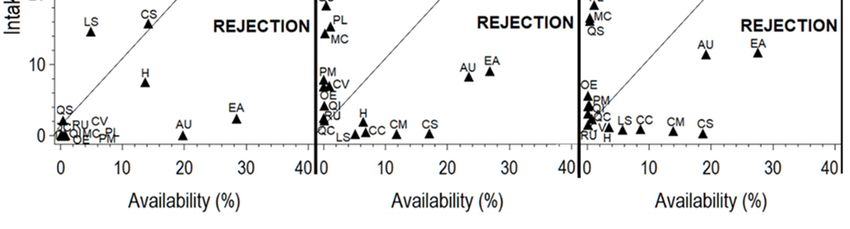
Animals 2020, 10, 196                                                                               2 of 19

1. Introduction
      Domestic goats (Capra hircus) have been associated with mankind for more than 10,000 years [1] and
have grazed Mediterranean forests for millennia [2]. Overall, goats have an important multifunctional
role in marginal habitats and have always been considered a useful and specialized ruminant browsing
Mediterranean forest rangelands [3]. However, in the case of low forage availability and overgrazing,
they could also be viewed as a problem for forest regeneration [4,5]. They have a very efficient selective
foraging behavior and the ability to thrive better in harsh environments. Based on these criteria, goats
are qualified as “opportunistic feeders” [6].
      Moroccan forest rangelands yield 1.5 billion feed units per year, corresponding to 80% of the feed
requirements of grazing animals. The herds browsing in Moroccan forest rangelands are about 32%
of the national herd, i.e., approximatively 8 million heads. In the Mediterranean region, Morocco
occupies the third position in terms of goat population with 5.2 million heads [7].
      Northern Morocco is characterized by the coexistence of two livestock systems [8]. The first system
is an agropastoral system based on sheep and cattle reared inside the farms (
Animals 2020, 10, 196 3 of 19
Animals 2019, 9, x FOR PEER REVIEW 3 of 21
Mean annual rainfall is around 700 mm, with a daily temperature range of 3–14 (minimum) and ◦C
and 18–38
18–38 °C (maximum)
◦ C (maximum) [9].two
[9]. The Theexperimental
two experimental yearsvery
years were werecontrasted
very contrasted regarding
regarding theannual
the mean mean
annual rainfall,
rainfall, with 270with
and270
755and
mm755 mm (dry
in 2016 in 2016 (dry
year) year)
and 2017and 2017
(wet (wetrespectively
year), year), respectively (Figure 1).
(Figure 1).
250 35
2016 Rainfall 2017 Rainfall 2016 Temperature 2017 Temperature
30
200
25
Precipitation (mm)
150
Temperature (°C)
20
15
100
10
50
5
0 0
Dec Jan Feb Mar Apr May Jun Jul Aug Sept Oct Nov
Winter Spring Summer Fall
Figure 1. Monthly mean of air temperature (◦ C) and precipitation (mm) of 2016 and 2017 in Chefchaouen
Figure 1. Morocco).
(Northern Monthly mean of air DRATT
Data source: temperature
[10]. (°C) and precipitation (mm) of 2016 and 2017 in
Chefchaouen (Northern Morocco). Data source: DRATT [10].
2.2. Experimental Pasture and Goat Management
2.2. Experimental Pasture and Goat Management
The study was conducted in the forest rangeland of Chefchaouen (5◦ 08’ N; 5◦ 18’ W; 1195 to
1250 The
m a.s.l)
study during three seasons
was conducted in the(spring, summer, and
forest rangeland fall) of 2016(5°08’
of Chefchaouen and 2017.
N; 5°18’This
W;rangeland
1195 to 1250 is
amdomanial forestthree
a.s.l) during covered with(spring,
seasons heterogeneous
summer, vegetation
and fall)that goes from
of 2016 the low
and 2017. formations
This rangelandof isthea
rockrose
domanialspecies
forest (Cistus
covered spp.),
withresulting from thevegetation
heterogeneous degradationthatofgoes
the sylvatic
from theseries,
low up to the high
formations of oak
the
rockrose species (Cistus spp.), resulting from the degradation of the sylvatic series, up to the high oak
groves. Vegetation includes oak species (Quercus spp.), inclusive of Algerian (Q. canariensis), holm (Q.
ilex),
groves. cork (Q. suber)
andVegetation includes
oaksoak specieswith
associated (Quercus spp.), inclusive
shrublands dominated of by
Algerian (Q. canariensis),
the strawberry holm
tree (Arbutus
unedo
(Q. ilex),
L.); and the Cistus
and cork (Q. suber) oaks associated
spp., inclusive (C. crispus),
with shrublands
of wrinkle-leaved dominated by the(C.
Montpellier monspeliensis),
strawberry tree
(Arbutus
and unedo L.);
sage-leaved (C. salviifolius)
and the Cistus spp.,[9,20].
rockroses inclusive of wrinkle-leaved (C. crispus), Montpellier (C.
monspeliensis),
Grazing inand thesage-leaved (C. salviifolius)
forest is practiced rockroses
during spring, [9,20]. and fall under the supervision of the
summer,
herder Grazing
himself inorthea family
forest ismember
practiced [9].during
For thespring, summer,
winter, and fall
the duration of under
grazing thedecreases
supervision of the
to values
herder
as low ashimself
1 to 3 or a family
hours member
per day [9]. For
(browsing the winter,
fallow the duration
land around of grazing
the farm), decreasesthe
which explains to exclusion
values as
low
of as season
this 1 to 3 hours
from theper study.
day (browsing
During this fallow landpasture
season, around access
the farm), which
is very explains
limited, the exclusion
herders delimb tree of
this season from the study. During this season, pasture access is very limited, herders delimb tree
branches as fodder and bring them to the goat shed [9,21]. Livestock watering is guaranteed by water
branchesand
sources as fodder
streamsand bring
inside thethem to the
grazed goat shed
forested [9,21]. Livestock watering is guaranteed by water
rangeland.
sources and streams inside the grazed forested rangeland.
2.3. Forage Availability
2.3. Forage Availability
The seasonal forage availability of plant species consumed by goats is required to calculate diet
selectivity [22,23]. forage
The seasonal For biomass measurements,
availability several
of plant species numbers
consumed byand sizes
goats of quadrats
is required were tested
to calculate diet
to
selectivity [22,23]. For biomass measurements, several numbers and sizes of quadrats wereTherefore,
get the most representative quadrat to minimize the effect of rangeland heterogeneity. tested to
forty quadrats
get the of 40 m2 (4 × 10
most representative m) were
quadrat toimplemented
minimize theseasonally in the rangeland.
effect of rangeland The measurements
heterogeneity. Therefore,
were undertaken in the last month of each studied season (May, August,
forty quadrats of 40 m² (4 × 10 m) were implemented seasonally in the rangeland. The measurementsand November). The
non-destructive method known as the reference module was used for shrubs
were undertaken in the last month of each studied season (May, August, and November). The non- and trees, as described
by Chebli etmethod
destructive al. [24].known
For trees,
as thewe considered
reference moduleonlywas
the used
accessible and consumed
for shrubs and trees, asplant parts for
described by
goats (heightAnimals 2020, 10, 196 4 of 19
2.4. Familiarization Procedure
The animal familiarization procedure aims to accustom the flock to the permanent presence of an
unfamiliar person. This mutual familiarization procedure was detailed by Bonnet et al. and Meuret
and Provenza [25,26]. The observer is considered fully familiarized with the animal if he can get as
close as 0.5 to 1.5 m, providing that it does not hamper the spontaneous movements of the goats [27–29].
As reported by Perevolotsky et al. [30], grazing behavior is not affected by the observer’s presence after
a familiarization period. A three-day familiarization period for observers was necessary to accustom
the flock to their presence. The success of the familiarization procedure makes precise bite counts and
consumed plant identification possible.
2.5. Plant Identification, Direct Observation, and Bite Mass Simulation
The direct observation method was used to estimate the bite number and botanical composition
of goat diets for three consecutive grazing days during three seasons. Eight alpine goats from a flock of
72 adult goats, with similar physical conditions of 42 ± 2.5 kg live weight and an average age of 36 ± 6
months, were selected for this study. The flock was chosen among the most representative in the study
area, in addition to the voluntary desire of the herder to cooperate throughout the study period. The
herder managed the grazing time and circuits by himself. For the experimentation, after consulting the
procedures described by several authors [12–15,19,28], continuous bite observations were performed
over the entire grazing days. Data were collected over 10-min snapshots by focal-animal sampling,
each goat being observed thrice per day (morning, mid-day and afternoon). The same goats were
observed every day and season during both years. Observers recorded the botanic composition and the
number (n) of bites on each consumed plant species that allowed generating the total number of bites
(TB). The percentage of bites per plant species (TBi , %) was calculated using the following equation:
TBi = NBi /TB, (1)
where NBi is the number of observed bites of plant i. Bite mass (BM, g DM/bite), i.e., the average mass
of hand-plucked simulation of each consumed forage by the animal, as described by Cook [31], was
measured. One hundred hand-plucked simulations per consumed part of plant species were collected
separately in paper bags, dried in an oven at 40 ◦ C to constant weight, and weighed to obtain the
average mass dry matter per bite.
BM = hand-plucked samples/100. (2)
The observation and hand plucked simulation of bites were performed during each season. The
average intake rate (IR, g DM/min) was expressed as
IR = BR × BM, (3)
where BR is the biting rate (BR, n/min).
Diet composition (DC, %) was reported as the percentage of each consumed species in the diet
according to the following equation:
NBi × BMi
DC = Pn , (4)
i=1 (NB × BM)
where NBi is the number of observed bites of plant i, BMi is the mean bite mass of the plant i, and n the
number of plant species (n =16).
To understand the foraging behavior of goats, some foraging decisions were briefly noted during
the observation procedure. The optimal foraging theory (OFT) is used as a tool to discuss these
decisions [32].Animals 2020, 10, 196 5 of 19
2.6. Diet Measurement Index
2.6.1. Diet Diversity
Diet diversity was calculated through Levins’ diversity index, also called diet breadth [33]. As
suggested by Hurlbert [34], the diversity index is standardized to express it on a scale from 0 to 1,
following measurement for Levins’ standardized diversity index (SDI):
Pn 1 −1
i=1 i r2
SDI = , (5)
n−1
where ri is the proportion of plant i in the diet, and n the number of plants (n = 16).
2.6.2. Diet Selectivity
Diet selectivity is calculated through Ivlev’s index of selectivity (SI) [35]. It is widely used as a
mean of comparing feeding habits with the availability of potential feed resources in natural habitats.
The purpose of this index is to characterize the degree of selection of a particular plant species by an
animal. The relationship is defined as
r i − pi
SI = , (6)
ri + pi
where ri is the proportion of plant i in the diet, and Pi is the proportion availability of plant i in the
rangeland. The index has a possible range of −1 to +1, the negative values for the rejected part of plant
species, zero for random selection, and positive values for active selection [22].
2.6.3. Diet Overlap
Diet overlap (similarity) of goats was compared between seasons and years using the
Morisita–Horn index [36]; it is considered the least biased overlap index [37]. Index values range from
zero (no overlap) to one (complete overlap). The formula is as below:
Pn
2 Pij Pik
i
CH = Pn , (7)
P2 ij + ni P2 ik
P
i
where CH is the diet overlap, Pij is the proportion of the diet in season i of the total proportion of the
diet in year j, Pik is the proportion of the diet in season i of the total proportion of the diet in year k, and
n is the total number of seasons (n = 3).
2.7. Statistical Analysis
Bite mass was analyzed using a three-way analysis of variance (ANOVA) with factors plant species,
season, and year. Before analysis, data expressed in percentage were arcsine-square root-transformed
to normalize the distribution [38]. Foraging behavior data were analyzed using the PROC MIXED
procedure of SAS [39] with “day × goat” as the experimental unit (days = 3, goats = 8). The model
contained the fixed variable season (i.e., spring, summer, and fall) and year (i.e., 2016 and 2017) and their
interactions. Goat was considered as a random effect to prevent this variance from being incorporated
in the error term of the analysis. For all data, the random statement specified the covariance structure
“CS” (compound symmetry), chosen by the lower “AIC” (Akaike’s information criteria) among other
structures. For all analyses, the significance level was declared at p < 0.05.Animals 2020, 10, 196 6 of 19
3. Results
3.1. Forage Availability
The study area was covered by heterogeneous vegetation composed mainly of three distinct
groups of plant species: herbaceous (mainly grass and forbs) shrubs (Arbutus unedo L.; spiny broom
(Calicotome villosa (Poir.) Link); Cistus spp.; tree heath (Erica arborea L.); topped lavender (Lavandula
stoechas L.); common myrtle (Myrtus communis L.); broad-leaved phillyrea (Phillyrea media L.); lentisk
(Pistacia lentiscus L.); elm-leaf blackberry (Rubus ulmifolius Schott.); and trees (Quercus canariensis L.,
Quercus ilex L., Quercus suber L.; and European olive (Olea europaea L.: O. europaea var. sylvestris (Mill)
Lehr). Based on our direct observations and discussion with herders, these listed plant species are
the main dietary components of goats. Forage availability was affected by the season, the year and
their interaction (p < 0.01) (Table 1). The results indicated a higher forage availability during spring
compared to the fall and summer of both studied years. The seasonal change of feeding behavior
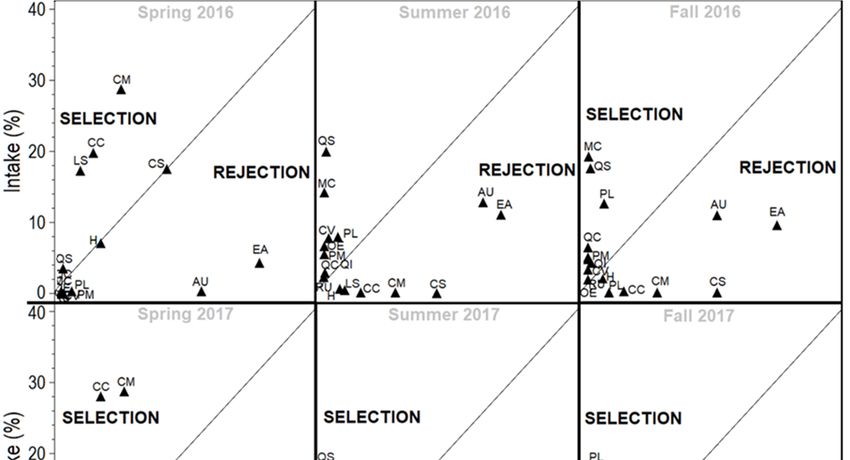
(intake rate) in terms of forage availability of each plant species is displayed in Figure 2.
Table 1. Forage availability (kg DM/ha), bite rate (bites/min), intake rate (g DM/min), and diet diversity
(index) of goats browsing a Southern Mediterranean forest rangeland during 2016 and 2017.
Year Season Availability BR 1 IR 2 Diet Diversity
Spring 2064 A,3 16.9 C 4.41 A 0.27 B
Summer 1289 B 19.8 B 3.21 B 0.46 A
2016 Fall 1018 C 22.1A 3.32 B 0.41 A
SEM 4 33.1 0.753 0.240 0.030
p-Value (S)Animals 2020, 10, 196 7 of 19
Animals 2019, 9, x FOR PEER REVIEW 13 of 21
Figure 2. Seasonal
Figure selection
2. Seasonal vs. vs.
selection rejection
rejectionofofplant speciesconsumed
plant species consumed by goats
by goats browsing
browsing a Southern
a Southern
Mediterranean forestforest
Mediterranean rangeland during
rangeland during20162016and
and 2017. Arbutus
AU:Arbutus
2017. AU: unedo;
unedo; CC: Cistus
CC: Cistus crispus;crispus;
CM: CM:
Cistus monspeliensis;
Cistus monspeliensis; CS: Cistus
CS: Cistus salviifolius;CV:
salviifolius; CV:Calicotome
Calicotome villosa; EA:
villosa; Erica
EA: arborea;
Erica H: Herbaceous;
arborea; LS:
H: Herbaceous; LS:
Lavandula stoechas; MC: Myrtus communis; OE: Olea europaea; PL: Pistacia lentiscus; PM: Phillyrea media;
Lavandula stoechas; MC: Myrtus communis; OE: Olea europaea; PL: Pistacia lentiscus; PM: Phillyrea media;
QC: Quercus canariensis; QI: Quercus ilex; QS: Quercus suber; RU: Rubus ulmifolius.
QC: Quercus canariensis; QI: Quercus ilex; QS: Quercus suber; RU: Rubus ulmifolius.
3.3. Diet Composition
The composition of the diet was significantly affected by season (p < 0.001) (Table 3). No significant
differences (p > 0.05) were observed between years concerning the contribution of C. monspeliensis, C.
salviifolius, E. arborea, herbaceous, L. stoechas, and P. media. In the same trend, the diet contribution of C.
monspeliensis, Q. ilex, and Q. suber were not significantly affected by the interaction between seasons
and years.
During the spring of 2016, the contribution of Cistus spp. was the highest with 66%, followed
by L. stoechas (17.3%), and herbaceous (7%). These species contributed lowly to the diet during fall
and summer (Animals 2020, 10, 196 8 of 19
3.4. Biting and Intake Rate
Season (p < 0.001), year (p < 0.01), and their interaction (p < 0.05) significantly affected the average
bite rate. The higher values were recorded during the fall with 22.3 and 20.81 bites/min in 2016 and
2017, respectively (Table 1).
Season affected (p < 0.001) the total bites of each consumed plant species by goats (Table 4).
The same trend (p < 0.05) was found in the year except for C. salviifolius, E. arborea, herbaceous, L.
stoechas, and P. media. The interaction effects between season and year were also significant except for
C. salviifolius and Q. ilex. The highest number of bites was recorded for Cistus spp., herbaceous plants,
and L. stoechas in spring and the lowest number in the fall and summer of both years. The opposite
trend was observed for the rest of the consumed plant species. The higher and lower values of total
bites per consumed plant species were observed during the spring of both years. Thus, the higher
percentage of bites was recorded for C. crispus with 26.5% in 2017 and the lower percentage ( 0.05).
Regardless of the low availability of some species such as C. villosa, Quercus spp., M. communis,
and P. lentiscus, they were highly consumed by goats mainly in the fall and summer of both years, as
displayed in Figure 2. Cistus spp. and L. stoechas were ingested proportionally to their abundance only
during the spring. Despite the high availability of A. unedo and E. arborea, they were avoided during
all seasons.
3.5. Diet Diversity, Selectivity, and Overlap
The diet diversity of goats was significantly affected by season, year, and their interaction (p <
0.05). The higher diet diversity was recorded in the fall and summer of both years in which their values
were significantly similar. The lower diet diversity was observed in spring with a value of 0.27 and
0.21 in 2016 and 2017, respectively (Table 1).
The season had a significant effect on the individual plant selectivity index (p < 0.01) during both
years (Table 5). The same trend was observed for the effect of year (p < 0.05) except for C. salviifolius
and P. lentiscus. The interaction between season and year had not a significant effect (p > 0.05) for C.
salviifolius, Q. canariensis, and Q. ilex. The Q. suber was positively selected during all seasons (0.01 to
1). Similarly, M. communis was positively selected (from 0.4 to 1), except in the spring of 2017 (−0.66).
Cistus spp. and L. stoechas were negatively selected in the all year-season (from –0.70 to −1) except
during the spring of both years.
The results indicate a very high diet overlap of goats for the same season across years (from 0.77
to 1) and between fall and summer. The spring diet was the one that differed the most from the other
seasons (from 0.05 to 0.12) (Table 6).Animals 2020, 10, 196 9 of 19
Table 2. Bite mass (g DM) of plant species consumed by goats browsing a Southern Mediterranean forest rangeland during 2016 and 2017.
2016 2017 p-Value (2016–2017)
Item
Spring Summer Fall SEM 1 p-Value Spring Summer Fall SEM p-Value S 2 Y3 Y*S
Arbutus unedo 0.092 C,4,g,5 0.190 A,b 0.161 B,cd 0.006Animals 2020, 10, 196 10 of 19
Table 3. Diet composition (% of DM) of goats browsing a Southern Mediterranean forest rangeland during 2016 and 2017.
2016 2017 p-Value (2016–2017)
Item
Spring Summer Fall SEM 1 p-Value Spring Summer Fall SEM p-Value S 2 Y3 Y*S
Arbutus unedo 0.370C,4 12.9 A 11.1 B 0.431Animals 2020, 10, 196 11 of 19
Table 4. Total bites (%) of goats browsing a Southern Mediterranean forest rangeland during 2016 and 2017.
2016 2017 p-Value (2016–2017)
Item
Spring Summer Fall SEM 1 p-Value Spring Summer Fall SEM p-Value S2 Y3 Y*S
Arbutus unedo 1.07 B,4 11.1 A 10.5 A 0.372Animals 2020, 10, 196 12 of 19
Table 5. Selectivity index of plant species consumed by goats browsing a Southern Mediterranean forest rangeland during 2016 and 2017.
2016 2017 p-Value (2016–2017)
Item
Spring Summer Fall SEM 1 p-Value Spring Summer Fall SEM p-value S 2 Y3 Y*S
Arbutus unedo −0.95 B,4 −0.03 A −0.05 A 0.03 0.003 −0.99C −0.32B −0.06 A 0.05Animals 2020, 10, 196 13 of 19
4. Discussion
4.1. Forage Availability
Seasonal forage availability can be explained by the growing conditions of each plant favored,
mainly by precipitation recorded during winter, early spring, and late fall (Figure 1). During the dry
season, the considerable decrease in forage availability is provoked by water stress combined with
high air temperature, interrupting and even ending the growth cycle of most plant species, especially
annuals. The lower rainfall recorded in 2016 compared to 2017 might explain the inter-annual variability
of feed resource availability. Similarly, several studies conducted in Mediterranean forest rangeland
confirmed the primary reliance of forage availability on rainfall and air temperature and declines of
forage availability during summer and fall are usually observed in similar studies [24,40,41]. Seasonal
variations of forage availability were also confirmed by Salt et al. and Butt et al. [42,43].
4.2. Foraging Behavior Decisions of Goats
According to Papachristou et al. [44], the bulk of small ruminant diet includes few woody and
herbaceous species, representing less than ten species.
Bite mass and biting rate are considered as key factors in the process governing the constitution of
the daily diet of grazing animals, especially on heterogeneous rangelands [16,30].
The bite mass ranges of different consumed parts of plant species were extremely wide. Similarly,
Manousidis et al. [14] found a very large range of bite mass for local Greek goats (0.042 to 0.972 g DM)
browsing in Northern Mediterranean woody rangelands. In forested rangelands of Southern France,
dominated by Q. pubescens, bite mass of alpine goats varied from 0.88 to 1.68 g DM [12]. These results
are much higher than those found by Fomum et al. [45], who estimated the bite mass of Nguni goats
ranged from 0.10 to 0.60 g DM in a South African woodland.
As reported in this study, the findings of Manousidis et al. [14] confirmed the inter-annual
variability of diet composition. In the same way, other studies have stated the seasonality of diet
composition, such as in the central Monte desert of Argentina [46] and Northern Mediterranean
forest [47].
The average biting rate were approximatively similar to those reported by Meuret [48] and Fomum
et al. [45] for alpine goats in Northern Mediterranean woodland (8–30 bites/min) and for Nguni goats
in South African rangelands (9–22 bites/min), respectively.
In the present study, the average intake rate ranged from 3.21 to 5.10 g DM/min. Similar seasonal
and yearly changes in the average intake rate were reported by Manousidis et al. [14] in Northern
Mediterranean woodland (2.83–5.65 g DM/min).
According to our direct observations, due to the low forage availability in the summer and fall,
goats spent more time moving between feeding stations to maximize their instantaneous intake rate,
in line with the Optimal Foraging Theory (OFT) that explains instantaneous decisions of foraging
herbivores with regards to energy and time trade-offs of the grazing process [32,49–51]. Indeed, as
noted by Charnov [32], the reduced forage availability causes the reduced time spent by animals at each
feeding station and, consequently, conducts an increase in traveling duration spent between feeding
stations and patches. Utsumi et al. [52] reported that the increasing distance between feeding stations
decreased the average intake rate. It also could be assumed that goats make decisions to maximize their
instantaneous intake rate during a foraging bout by increasing their biting rate or by mostly selecting
plants with a large bite mass. The intake rate variation is related to the seasonal variations in both
biting rate and bite mass. Our result shows that the smaller the bite mass, the higher the biting rate,
through a possible compensatory mechanism to maintain short term intake rates. It is consistent with
previous findings that show that animals must display compensatory mechanisms [14,19]; increasing
the biting rate is one of these mechanisms.
Bite mass increases with the availability of each plant species in the pasture and, consequently,
the intake rate when selectivity increases. As reported by Ungar and Noy-Meir [49], the sensitivity ofAnimals 2020, 10, 196 14 of 19
the intake rate to variations of biomass is greater at lower availability. The increase in the intake rate
of selected parts of palatable species during the green season is due to their high availability, but it
could be more important if goats select for large bites in such a way as to maximize their instantaneous
intake rate. As defined by Owen-Smith and Cooper [53], the term of palatability is applied to plant
parts readily eaten when accessible by animals. Ungar and Noy-Meir [49] declared that herbivores
tend to have this behavior when intake is limited by availability.
As observed during the summer and fall, goats tend to compensate for the low intake rate by
extending daily grazing time, thus reducing the sensitivity of intake rate to the forage availability.
Nevertheless, this strategy depends on the daily decision of herders and on the environmental stress
imposed by browsing goats at specific times of the day usually allocated for other grazing activities, i.e.,
rumination and resting [49]. Herders tend the flock throughout grazing itineraries every day, crossing
a mosaic of feeding stations. Herders observe their flock’s attitudes during grazing to evaluate initial
hunger, intermediate disaffection, and signs of satiety. The herders’ strategy consists of interacting
with spontaneous animal decisions to find requested forages and to meet their dietary requirements
in a heterogeneous pasture [54]. However, the misinterpretation of satiety signs of goats could drive
a wrong decision of the herder by reducing daily grazing time that would lead to a reduction in the
daily intake rate. This situation is frequently observed when the flock is headed by another family
member with limited herding experience. So the daily engagement of herders to other light agricultural
activities are at the expense of time devoted to grazing goats.
During spring, goats exhibit preference and selectivity for C. crispus, C. monspeliensis, and L.
stoechas, the species associated with large bite mass. Cistus spp. is known for a continuous vegetation
growth that lasts 9 months from early fall until summer [55]. Spring is the flowering period for this
group species when a high number and emergence of leaves and a high rate of shoot length are
observed [55]. However, they contain a low level of nitrogen compared to winter because, in this
growth season, this nutriment is retranslocated from leaves to new organs [55]. The nitrogen content
of Cistus spp. is higher than 1%, equivalent to more than 6.25% of proteins [55,56], which is in the range
of threshold level for efficient feed utilization that does not negatively affect feed intake [57]. The low
content of nitrogen could mean a high content of nitrogen-free extract or soluble carbohydrates that
reflect the high digestibility and nutritional quality of Cistus spp. as ruminant forage. Bruno-Soares
et al. [56] reported for C. salviifolius leaves, a low content of condensed tannins (CT) from March to
May compared to fall. The low content of CT and the high content of soluble carbohydrates could
explain the high selectivity of C. crispus and C. monspeliensis during the green season. Compared to the
current results, Mancilla Leytón et al. [58] reported that L. stoechas is more selected by goats during
spring and also during summer. L. stoechas is characterized by the absence of physical defense [59] and
offers high metabolizable energy [60], which could explain the goat preference for this species during
spring that coincides with the flowering stage. The low selectivity of A. unedo and E. arborea during all
seasons could be explained by their chemical composition and nutritional quality. A. unedo contains
low and high levels of crude protein (CP) and CT, respectively [61]. As for E. arborea, it is characterized
by low digestibility of dry [62] and organic matter [63], which means low nutritional quality. Also, this
pastoral species contains a high concentration of CT [61].
During the dry season and fall, trees and some shrubs were more selected by goats despite
their low availability because they represent evergreen forages with persistent leaves [64], even they
are characterized by low proteins and high content of lignin and secondary compounds [65]. This
statement was also reported by several authors in Mediterranean rangelands [14,16,30]. Particular
high and positive preference was observed for Q. suber throughout the season of both years. Similarly,
Manousidis et al. [14] reported high selectivity for Q. frainetto during all seasons in a Northern
Mediterranean forest. Q. suber is an evergreen plant [66] with stem and leaf growth essentially in
spring and with a low rate in the fall [65]. Cabiddu et al. [67] reported a high CP content in Q. suber
leaves during spring and summer, which covers the maintenance requirement of goats, and could
explain Q. suber preference. Gasmi-Boubaker and Kayouli [68] found a similar and stable CP contentAnimals 2020, 10, 196 15 of 19
during all seasons with values higher than 8%, which makes Q. suber a stable nitrogen resource for
goats in pastures. According to Oliveira et al. [69], nitrogen in leaves has a relative tendency to be
higher during summer when the other pastoral species could contain low levels of proteins.
High selectivity of some plant species can also be explained by their seasonal spatial arrangement,
which increases their opportunity to be selected. As reported by Wallis De Vries et al. [70], diet selection
during grazing is more affected at the large scale by the spatial arrangement of the feeding stations and
by the scale of patchiness, which impacts time and energy budgets of grazing animals in their search
for more favorable feeding stations. Nevertheless, it should be remembered that the diet selection of
goats is ultimately influenced by the herder’s decisions, who puts the herd under the constraint of
time in different sectors and forces them to sometimes follow a specific grazing circuit. Herders take
the animals to graze a sector of high palatable species according to their knowledge of the circuit [26]
and the seasonal change of phenological states of plants [71].
Most optimal foraging models predict that behaviors trend towards maximizing the intake
rate [72,73]. For goats, this trend is easier through their ability to switch rapidly between vegetation
strata, mainly during the seasons of low forage availability [6]. During spring, it was noted that when
forages are more available, goats avoided small patches and concentrated on the larger ones where
foraging costs are low (low of switching movement). Consequently, goats spend greater time in each
feeding station in comparison to the summer and fall. As observed during grazing, this duration
depends on the degree of palatable plant presence and the number of goats grazing in the same feeding
station. Similarly, it was reported that the optimal diet depends on the combination of the encounter
rate of the feeding station and plant palatability [50].
4.3. Diet Diversity and Overlap
Diet diversity or niche breadth is directly affected by the proportion of plants in the diet. The
diversity index was higher during the fall and summer of both studied years, probably due to the
feeding strategy of goats, which visit many different feeding stations to meet their dietary requirements.
Consequently, they included different plant species in their diet during these seasons to maximize the
quantity of ingested forage, which could explain the extent of their dietary niche. El Aich et al. [19]
also confirmed that goats consume a wider variety of plant species during the summer and fall, which
enlarges their diet breadth. The green season is characterized by high feed offers and the appearance
of some high palatable species [74], which are preferred by goats. Therefore, goats included in their
diet only the high palatable species, which could explain the low diet diversity recorded during this
season. As shown in the results, the diet composition of goats during spring was largely dominated by
four plant species (Cistus spp. and L. stoechas, >83%; Table 3). El Aich et al. [19] also signaled a low
diet diversity during early spring in the Argan forest. Diet diversity is probably influenced by the
sequence of encounter rates with feeding stations of different profitability, which is dependent on the
relationship between grazing tactic and spatial arrangement of plants.
The results show a high level of diet overlap between the same seasons of 2016 and 2017 (from 0.82
to 0.91). This high diet overlap could be explained by the similar selection of a mixture of plant species
during the same seasons of the two studied years. The low diet similarity of spring with summer and
fall seasons could be explained by the selection of different diets favored by the high availability and
selection during the green season of distinct plant species such as Cistus spp. and L. stoechas.
5. Conclusions
The results emphasize the high goat preference for the woody species for which the level depends
on grazing seasons. Despite their low availability, Q. suber contributed largely to the diet of goats
across seasons. Diet selection was not necessarily correlated with the availability of each consumed
plant species; it depended rather on the instantaneous foraging behavior of goats, which adapted their
diet according to their energy intake requirements and plant species palatability. Despite the high
variability of climate conditions in the Southern part of the Mediterranean region, this study confirmsAnimals 2020, 10, 196 16 of 19
the high adaptability and plasticity of goats for the North Moroccan forest rangelands. This high
dynamism and ability of goats to select woody species independently to the season and the year enables
them to benefit from free feeding, thus allow herders to maintain their goats in a production system
without feed supplementation costs. Overall, these findings are the first database about seasonal and
year-to-year variations of foraging behavior of goats in Southern Mediterranean forest rangeland.
These results could be used as the first guide about foraging strategies of grazing goats for future
studies, decision-makers, and rangeland managers.
Future research should consider the relationship between forage availability, diet quality, animal
productivity, and relevance for current and possible emerging production systems, and the effect of
climate change.
Author Contributions: Conceptualization, Y.C.; methodology, Y.C., M.C., J.-L.H., J.B., J.-F.C.; formal analysis,
Y.C., S.E.O., M.C., J.-L.H., J.-F.C.; investigation, Y.C., S.E.O., M.C., J.-L.H., J.-F.C.; data curation, Y.C., S.E.O., M.C.,
J.-L.H., J.-F.C.; writing—original draft preparation, Y.C., S.E.O., M.C., J.-L.H., J.B., J.-F.C.; project administration,
Y.C., J.-F.C.; funding acquisition, Y.C. All authors revised and approved the final manuscript.
Funding: This study was supported by the Academy for Research and Higher Education-Development Cooperation
Committee (ARES-CCD), Brussels, Belgium. This study is realized in the framework of the Research Project for
Development (2013–2018).
Acknowledgments: We would like to thank the collaborators of PRD Project. We also gratefully acknowledge the
patience and participation of the farmer to this study.
Conflicts of Interest: The authors declare no conflict of interest.
References
1. Nomura, K.; Yonezawa, T.; Mano, S.; Kawakami, S.; Shedlock, A.M.; Hasegawa, M.; Amano, T. Domestication
process of the goat revealed by an analysis of the nearly complete mitochondrial protein-encoding genes.
PLoS ONE 2013, 8, e67775. [CrossRef] [PubMed]
2. Ethier, J.; Bánffy, E.; Vuković, J.; Leshtakov, K.; Bacvarov, K.; Roffet-Salque, M.; Evershed, R.; Ivanova, M.
Earliest expansion of animal husbandry beyond the Mediterranean zone in the sixth millennium BC. Sci.
Rep. 2017, 7, 7146. [CrossRef] [PubMed]
3. Torrano, L.; Valderrábano, J. Grazing ability of European black pine understorey vegetation by goats. Small
Ruminant Res. 2005, 58, 253–263. [CrossRef]
4. Harris, S.E. Cyprus as a degraded landscape or resilient environment in the wake of colonial intrusion. Proc.
Natl. Acad. Sci. USA 2012, 109, 3670–3675. [CrossRef]
5. Lovreglio, R.; Meddour-Sahar, O.; Leone, V. Goat grazing as a wildfire prevention tool: A basic review.
IForest 2014, 7, 260–268. [CrossRef]
6. Dziba, L.E.; Scogings, P.F.; Gordon, I.J.; Raats, J.G. Effects of season and breed on browse species intake rates
and diet selection by goats in the False Thornveld of the Eastern Cape, South Africa. Small Ruminant Res.
2003, 47, 17–30. [CrossRef]
7. FAO (Food and Agriculture Organization of the United Nations). FAOSTAT. 2017. Available online:
http://www.fao.org/faostat/fr/#home. (accessed on 8 July 2019).
8. Chentouf, M.; Zantar, S.; Doukkali, M.R.; Farahat, L.B.; Jouamaa, A.; Aden, H. Performances techniques et
économiques des élevages caprins dans le nord du Maroc. Options Mediterr. 2011, 100, 151–156.
9. Chebli, Y.; Chentouf, M.; Ozer, P.; Hornick, J.L.; Cabaraux, J.F. Forest and silvopastoral cover changes and its
drivers in northern Morocco. Appl. Geogr. 2018, 101, 23–35. [CrossRef]
10. DRATT (Direction Régionale de l’Agriculture de Tanger-Tétouan). Monographie de la région du nord
du Maroc. Rapports et Données statistiques sur l’agriculture et l’élevage. 2017. Available online: http:
//www.http://www.dratt.ma/ (accessed on 8 July 2019).
11. Chebli, Y.; Chentouf, M.; Mrabet, R.; Keli, A. Production et utilisation des parcours dans les montagnes
rifaines du nord du Maroc. In Technology creation and transfer in small ruminants: Roles of research, development
services and farmer association; Chentouf, M., López-Francos, A., Bengoumi, M., Gabiña, D., Eds.; CIHEAM
Press: Zaragoza, Spain, 2014; pp. 109–113.Animals 2020, 10, 196 17 of 19
12. Meuret, M.; Bartiaux-Thill, N.; Bourbouze, A. Evaluation de la consommation d’un troupeau de chèvre
laitière sur parcours forestier - Méthode d’observation directe des coups de dents - Méthode du marqueur
oxyde de chrome. Ann. Zootech. 1985, 34, 159–180. [CrossRef]
13. Mancilla-Leytón, J.M.; Pino Mejías, R.; Martín Vicente, A. Shrub vegetation consumption by goats in the
southwestern Iberian Peninsula. Livest. Sci. 2013, 153, 108–115. [CrossRef]
14. Manousidis, T.; Kyriazopoulos, A.P.; Parissi, Z.M.; Abraham, E.M.; Korakis, G.; Abas, Z. Grazing behavior,
forage selection and diet composition of goats in a Mediterranean woody rangeland. Small Ruminant Res.
2016, 145, 142–153. [CrossRef]
15. Kababya, D.; Perevolotsky, A.; Bruckental, I.; Landau, S. Selection of diets by dual-purpose Mamber goats in
Mediterranean woodland. J. Agric. Sci. 1998, 131, 221–228. [CrossRef]
16. Aharon, H.; Henkin, Z.; Ungar, E.D.; Kababya, D.; Baram, H.; Perevolotsky, A. Foraging behaviour of the
newly introduced Boer goat breed in a Mediterranean woodland: A research observation. Small Ruminant
Res. 2007, 69, 144–153. [CrossRef]
17. Glasser, T.A.; Landau, S.Y.; Ungar, E.D.; Perevolotsky, A.; Dvash, L.; Muklada, H.; Kababya, D.; Walker, J.W.
Foraging selectivity of three goat breeds in a Mediterranean shrubland. Small Ruminant Res. 2012, 102, 7–12.
[CrossRef]
18. Koluman, N.; Boga, M.; Silanikove, N.; Gorgulu, M. Performance and eating behaviour of crossbred goats in
Mediterranean climate of Turkey. R. Bras. Zootec. 2016, 45, 768–772. [CrossRef]
19. El Aich, A.; El Assouli, N.; Fathi, A.; Morand-Fehr, P.; Bourbouze, A. Ingestive behavior of goats grazing in
the Southwestern Argan (Argania spinosa) forest of Morocco. Small Ruminant Res. 2007, 70(2–3), 248–256.
[CrossRef]
20. Mharzi Alaoui, H.; Assali, F.; Rouchdi, M.; Tahiri, D.; Lahssini, S.; Aafi, A.; Oukrim, S. Cartographie de
l’intensité du feu et de la sensibilité aux feux de cime en forêt méditerranéenne. Cas de la province de
Chefchaouen au nord du Maroc. Rev. Ecologie (Terre Vie) 2017, 72, 387–409.
21. Chebli, Y.; Mrabet, R. Les ressources pastorales dans le domaine rifain. In L’élevage caprin au nord du Maroc;
Chentouf, M., Boulanouar, B., Bister, J.L., Eds.; INRA-Editions Press: Rabat, Morocco, 2014; pp. 64–79.
22. Barroso, F.G.; Alados, C.L.; Boza, J. Food selection by domestic goats in Mediterranean arid shrublands. J.
Arid Environ. 1995, 31, 205–217. [CrossRef]
23. da Silveira Pontes, L.; Agreil, C.; Magda, D.; Gleizes, B.; Fritz, H. Feeding behaviour of sheep on shrubs in
response to contrasting herbaceous cover in rangelands dominated by Cytisus scoparius L. Appl. Anim. Behav.
Sci. 2010, 124, 35–44. [CrossRef]
24. Chebli, Y.; Chentouf, M.; Hornick, J.L.; Cabaraux, J.F. Extensive goat production systems in northern Morocco:
production and use of pastoral resources. In Grassland resources for extensive farming systems in marginal
lands: major drivers and future scenarios; Porqueddu, A., Franca, C., Lombardi, A., Molle, G., Peratoner, G.,
Hopkins, G., Eds.; Wageningen Academic Publishers Press: Wageningen, The Netherlands, 2017; pp. 131–133.
25. Bonnet Olivier, J.F.; Meuret, M.; Tischler Marcelo, R.; Cezimbra Ian, M.; Azambuja Julio, C.R.; Carvalho
Paulo, C.F. Continuous bite monitoring: a method to assess the foraging dynamics of herbivores in natural
grazing conditions. Anim. Prod. Sci. 2015, 55, 339–349. [CrossRef]
26. Meuret, M.; Provenza, F. How French shepherds create meal sequences to stimulate intake and optimise use
of forage diversity on rangeland. Anim. Prod. Sci. 2015, 55, 309–318. [CrossRef]
27. Agreil, C.; Meuret, M. An improved method for quantifying intake rate and ingestive behaviour of ruminants
in diverse and variable habitats using direct observation. Small Ruminant Res. 2004, 54, 99–113. [CrossRef]
28. Braghieri, A.; Pacelli, C.; Girolami, A.; Napolitano, F. Time budget, social and ingestive behaviours expressed
by native beef cows in Mediterranean conditions. Livest. Sci. 2011, 141, 47–52. [CrossRef]
29. González-Pech, P.G.; Torres-Acosta, J.F.D.J.; Sandoval-Castro, C.A.; Tun-Garrido, J.; De Jesús
Torres-Acosta, J.F.; Sandoval-Castro, C.A.; Tun-Garrido, J. Feeding behavior of sheep and goats in a
deciduous tropical forest during the dry season: The same menu consumed differently. Small Ruminant Res.
2015, 133, 128–134. [CrossRef]
30. Perevolotsky, A.; Landau, S.; Kababia, D.; Ungar, E.D. Diet selection in dairy goats grazing woody
Mediterranean rangeland. Appl. Anim. Behav. Sci. 1998, 57, 117–131. [CrossRef]
31. Cook, C.W. Symposium on nutrition of forages and pastures: collecting forage samples representative of
ingested material of grazing animals for nutritional studies. J. Anim. Sci. 1964, 23, 265–270. [CrossRef]
32. Charnov, E.L. Optimal foraging: the marginal value theorem. Theor. Popul. Biol. 1976, 9, 129–136. [CrossRef]Animals 2020, 10, 196 18 of 19
33. Levins, R. Evolution in changing environments; Princeton University Press: Princeton, NJ, USA, 1968; p. 120.
34. Hurlbert, S.H. The measurement of niche overlap and some relatives. Ecology 1978, 59, 67–77. [CrossRef]
35. Ivlev, V.S. Experimental ecology of the feeding of fishes; Yale University Press: New Haven, CT, USA, 1961; p. 302.
36. Horn, H.S. Measurement of ‘overlap’ in comparative ecological studies. Am. Nat. 1966, 100, 414–419.
[CrossRef]
37. Krebs, C.J. Niche measures and resource preferences. In Ecological Methodology; Krebs, C.J., Ed.;
Addison-Welsey Longman Press: San Francisco, CA, USA, 2014; pp. 597–653.
38. Steel, R.G.; Torrie, J.H. Principles and Procedures of Statistics, 2nd ed.; McGraw-Hill Press: New York, NY, USA,
1980; p. 633.
39. SAS. SAS User’s Guide Eds.; Statistics, Version 9.4; SAS Institute Inc.: Cary, NC, USA, 2017.
40. Schlecht, E.; Hiernaux, P.; Kadaouré, I.; Hülsebusch, C.; Mahler, F.A. Spatio-temporal analysis of forage
availability and grazing and excretion behaviour of herded and free grazing cattle, sheep and goats in
Western Niger. Agr. Ecosyst. Environ. 2006, 113, 226–242. [CrossRef]
41. Rigueiro-Rodriguez, A.; McAdam, J.; Mosquera-Losada, M.R. Agroforestry in Europe: Current status and future
prospects; Springer Science & Business Press: Media, UK, 2009; p. 449.
42. Salt, C.A.; Mayes, R.W.; Elston, D.A. Effects of season, grazing intensity and diet composition on the
radiocaesium intake by sheep on re-seeded hill pasture. J. Appl. Ecol. 1992, 29, 378–387. [CrossRef]
43. Butt, B.; Shortridge, A.; Winkler Prins, A.M.G.A. Pastoral herd management, drought coping strategies, and
cattle mobility in Southern Kenya. Ann. Am. Assoc. Geogr. 2009, 99, 309–334. [CrossRef]
44. Papachristou, T.G.; Platis, P.D.; Nastis, A.S. Foraging behaviour of cattle and goats in oak forest stands of
varying coppicing age in Northern Greece. Small Ruminant Res. 2005, 59, 181–189. [CrossRef]
45. Fomum, S.W.; Scogings, P.F.; Dziba, L.; Nsahlai, I.V. Seasonal variations in diet selection of Nguni goats:
effects of physical and chemical traits of browse. Afr. J. Range For. Sci. 2015, 32, 193–201. [CrossRef]
46. Egea, A.V.; Allegretti, L.; Paez Lama, S.; Grilli, D.; Sartor, C.; Fucili, M.; Guevara, J.C.; Passera, C. Selective
behavior of Creole goats in response to the functional heterogeneity of native forage species in the central
Monte desert, Argentina. Small Ruminant Res. 2014, 120, 90–99. [CrossRef]
47. Manousidis, T.; Parissi, Z.M.; Kyriazopoulos, A.P.; Malesios, C.; Koutroubas, S.D.; Abas, Z. Relationships
among nutritive value of selected forages, diet composition and milk quality in goats grazing in a
Mediterranean woody rangeland. Livest. Sci. 2018, 218, 8–19. [CrossRef]
48. Meuret, M. Préhensibilité des aliments chez les petits ruminants sur parcours en landes et sous-bois. INRA
Prod. Anim. 1997, 10, 391–401.
49. Ungar, E.D.; Noy-Meir, I. Herbage intake in relation to availability and sward structure: Grazing processes
and optimal foraging. J. Appl. Ecol. 1988, 25, 1045–1062. [CrossRef]
50. Fortin, D.; Merkle, J.A.; Sigaud, M.; Cherry, S.G.; Plante, S.; Drolet, A.; Labrecque, M. Temporal dynamics in
the foraging decisions of large herbivores. Anim. Prod. Sci. 2015, 55, 376–383. [CrossRef]
51. Pyke, G.H. Optimal foraging theory: An introduction. In Encyclopedia of animal behavior, 2nd ed.; Choe, J.C.,
Ed.; Academic Press: Oxford, UK, 2019; pp. 111–117.
52. Utsumi, S.A.; Cangiano, C.A.; Galli, J.R.; McEachern, M.B.; Demment, M.W.; Laca, E.A. Resource heterogeneity
and foraging behaviour of cattle across spatial scales. BMC Ecol. 2009, 9, 1–10. [CrossRef] [PubMed]
53. Owen-Smith, N.; Cooper, S.M. Palatability of woody plants to browsing ruminants in a South African
Savanna. Ecology 1987, 68, 319–331. [CrossRef]
54. Meuret, M. Organizing a grazing route to motivate intake on coarse resources. Ann. Zootech. 1996, 45, 87–88.
[CrossRef]
55. Correia, O.A.; Martins, A.C.; Catarino, F.M. Comparative phenology and seasonal foliar nitrogen variation in
Mediterranean species of Portugal. Ecol. Mediterr. 1992, 18, 7–18.
56. Bruno-Soares, A.M.; Matos, T.J.; Cadima, J. Nutritive value of Cistus salvifolius shrubs for small ruminants.
Anim. Feed Sci. Technol. 2011, 165(3–4), 167–175. [CrossRef]
57. Minson, D.M. Protein in ruminant nutrition. In Forage in Ruminant Nutrition; Academic Press: Queensland,
Australia, 1990; p. 162.
58. Mancilla-Leytón, J.M.; Vicente, A.M.; Parejo-Farnés, C.; Fernández-Ales, R.; Leiva, M.J. A vegetation
management experiment: Goats grazing shrublands in Doñana Natural Park. Russ. J. Ecol. 2014, 45, 384–390.
[CrossRef]Animals 2020, 10, 196 19 of 19
59. Barroso, F.G.; Martínez, T.F.; Paz, T.; Parra, A.; Alarcón, F.J. Tannin content of grazing plants of southern
Spanish arid lands. J. Arid Environ. 2001, 49, 301–314. [CrossRef]
60. Robles, A.B.; Passera, C.B. Native forage shrub species in south-eastern Spain: forage species, forage
phytomass, nutritive value and carrying capacity. J. Arid Environ. 1995, 30, 191–196. [CrossRef]
61. Ammar, H.; Dallali, S.; Dhaouadi, K.; Hajri, R.; Ben Younes, M.; Lopez, S. Seasonal variation of nutritional
characteristics of some Mediterranean shrub species. In Grassland Resources for Extensive Farming Systems
in Marginal Lands: Major Drivers and Future Scenarios; Porqueddu, A., Franca, C., Lombardi, A., Molle, G.,
Peratoner, G., Hopkins, G., Eds.; Wageningen Academic Publishers Press: Wageningen, The Netherlands,
2017; pp. 503–505.
62. Gasmi-Boubaker, A.; Kayouli, C.; Buldgen, A. In vitro gas production and its relationship to in situ
disappearance and chemical composition of some Mediterranean browse species. Anim. Feed Sci. Technol.
2005, 123, 303–311. [CrossRef]
63. Frutos, P.; Hervás, G.; Ramos, G.; Giráldez, F.J.; Mantecón, A.R. Condensed tannin content of several shrub
species from a mountain area in northern Spain, and its relationship to various indicators of nutritive value.
Anim. Feed Sci. Technol. 2002, 95, 215–226. [CrossRef]
64. Palacio, S.; Maestro, M.; Montserrat-Martí, G. Seasonal dynamics of non-structural carbohydrates in two
species of Mediterranean sub-shrubs with different leaf phenology. Environ. Exp. Bot. 2007, 59, 34–42.
[CrossRef]
65. Ne’eman, G.; Goubitz, S. Phenology of east Mediterranean vegetation. In Life and Environment in the
Mediterranean; Trabaud, L., Ed.; WIT Press: Ashurst Lodge, UK, 2000; pp. 155–202.
66. Oliveira, G.; Correia, O.; Martins-Loução, M.A.; Catarino, F.M. Phenological and growth patterns of the
Mediterranean oak Quercus suber L. Trees 1994, 9, 41–46. [CrossRef]
67. Cabiddu, A.; Decandia, M.; Sitzia, M.; Molle, G. A note on the chemical composition and tannin content of
some Mediterranean shrubs browsed by Sarda goats. Options Mediterr. 2000, 52, 175–178.
68. Gasmi-Boubaker, A.; Kayouli, C. Chemical composition of several species of the maquis in the northwest
of Tunisia. In Agroforestry systems as a technique for sustainable land management; Mosquera-Losada, M.R.,
Fernández-Lorenzo, J.L., Rigueiro-Rodríguez, A., Eds.; Unicopia ediciones: Galicia, Spain, 2009; pp. 383–393.
69. Oliveira, G.; Martins-Loução, M.A.; Correia, O.; Catarino, F. Nutrient dynamics in crown tissues of cork-oak
(Quercus suber L.). Trees 1996, 10, 247–254. [CrossRef]
70. Wallis De Vries, M.F.; Laca, E.A.; Demment, M.W. The importance of scale of patchiness for selectivity in
grazing herbivores. Oecologia 1999, 121, 355–363. [CrossRef]
71. Baumont, R.; Prache, S.; Meuret, M.; Morand-Fehr, P. How forage characteristics influence behavior and
intake in small ruminants: review. Livest. Prod. Sci. 2000, 64, 15–28. [CrossRef]
72. Stephens, D.W.; Krebs, J.R. Foraging theory; Princeton University Press: Princeton, NJ, USA, 1986; p. 239.
73. Fryxell, J.M.; Lundberg, P. Individual behavior and community dynamics; Chapman and Hall Press: New York,
USA, 1997; p. 202.
74. Karmiris, I.E.; Nastis, A.S. Diet overlap between small ruminants and the European hare in a Mediterranean
shrubland. Cent. Eur. J. Biol. 2010, 5, 729–737. [CrossRef]
© 2020 by the authors. Licensee MDPI, Basel, Switzerland. This article is an open access
article distributed under the terms and conditions of the Creative Commons Attribution
(CC BY) license (http://creativecommons.org/licenses/by/4.0/).You can also read


