Multiscale organization and modeling of cerebellum - insights and perspectives for motor learning and control - Centro Fermi
←
→
Page content transcription
If your browser does not render page correctly, please read the page content below

Multiscale organization and modeling of
              cerebellum
  insights and perspectives for motor learning and
                      control

       Egidio D’Angelo

Human Brain Project @ EU
                                         Rome
Dept. Brain & Behavioral Sciences
        University of Pavia         December 17, 2018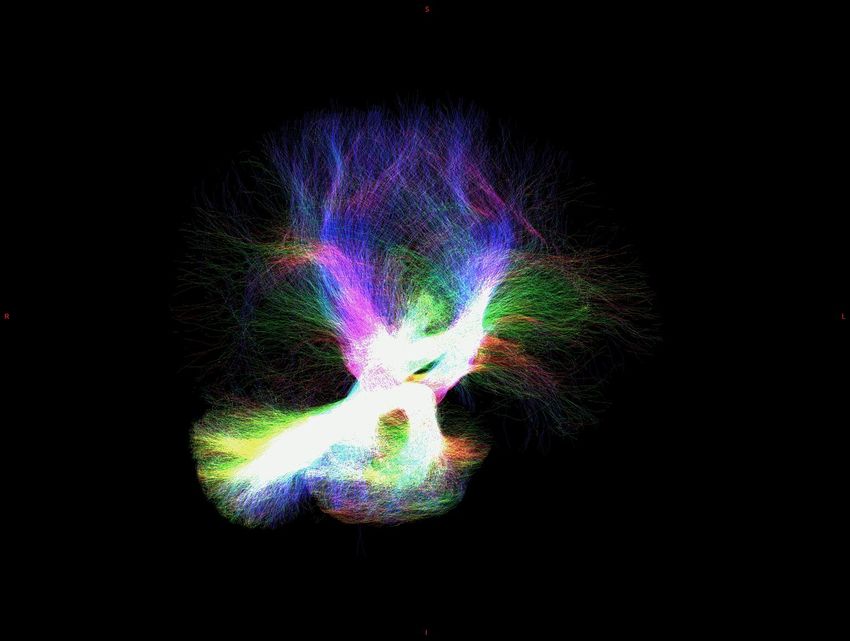
High performance in skilled movements
            requires the cerebellum
→Real -time high-speed control of movement requires special circuit
properties. In the brain this control is performed in circuit loops involving the
cerebellum

→The cerebellum learns to predict the sensory consequences of a motor
action

→The  cerebellum performs high-order correlations among spatio-temporally
organized activity patterns

             In the example of the pianist, the over 600 mucles of the
             body are corrdinated in highly ordered sequences under
             multisenorail control. The sequences have been learned
               and optimized through a trial-and-error process. The
             system is highly automatized and make s the pianist free
                       to concentrate on the interpretation .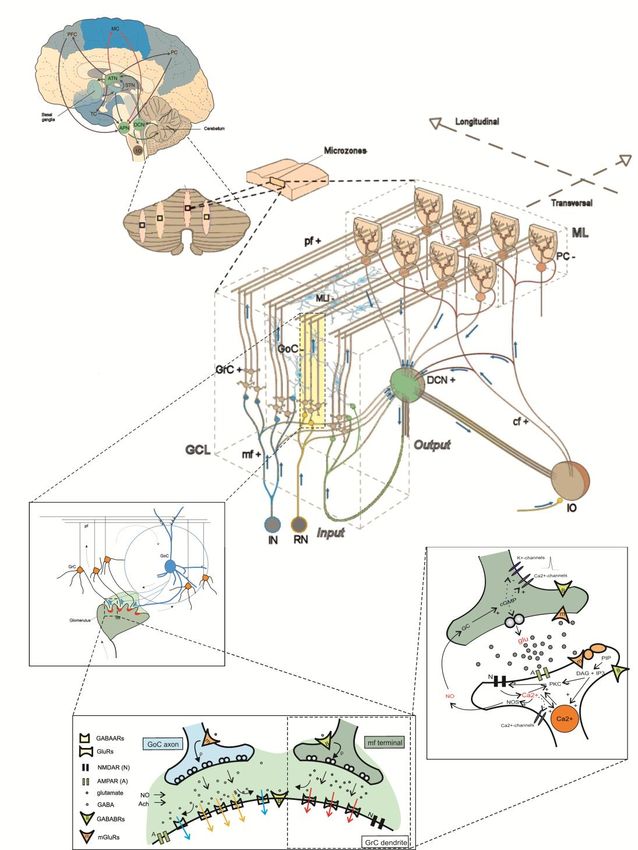
The when, what and
 how of cerebellum
….…
While the cerebellum has been classically
associated to the control of movement and
its pathological counterpart, ataxia, it has
recently been related also to cognitive
processing and supposed to be involved
in autism, dyslexia, multiple sclerosis
and Alzheimer disease just to mention
some. And it could also be specifically
involved in epilepsy !
…….
The way of understanding the when, what
and how of cerebellum is changing ! Not
just a motor structure but one that
integrates in major brain loops involved in a
variety of functions and pathologies.
……..

→There is a urge to represent the
cerebellum at different levels and to
integrate it into large-scale brain models
!!
>80% tracts to/from associative areas
The cerebellum is engaged in sensori-motor
              tasks (finger tapping)
WHEN

The task employed in this initial experiment was indeed demanding: 1 min of self-paced finger taping requires
motor planning and concentration.
GM - M1 (BA4) ... BA2 … BA6… anterior cerebellum … Crus I/II, lobule VI, and lobule VIIIa,
WM, - CST … superior longitudinal fasciculus … CC.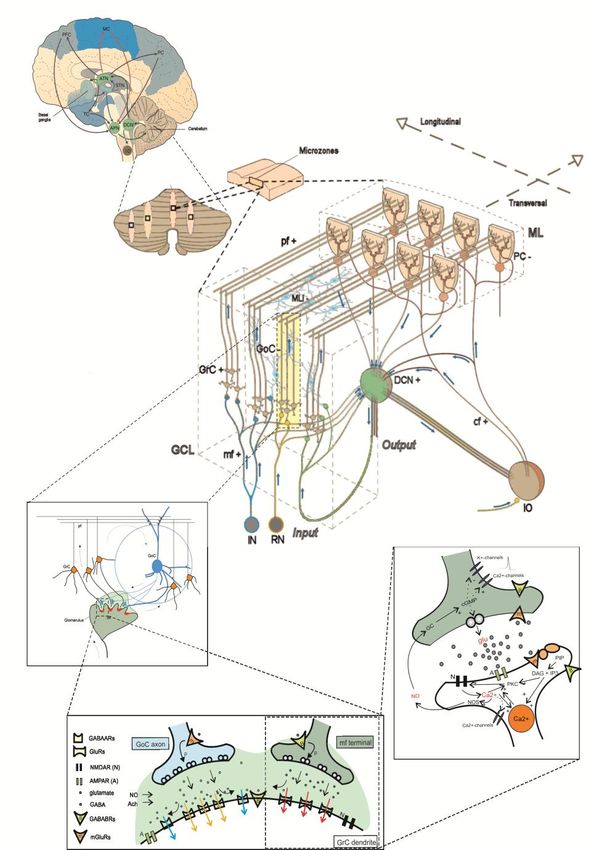
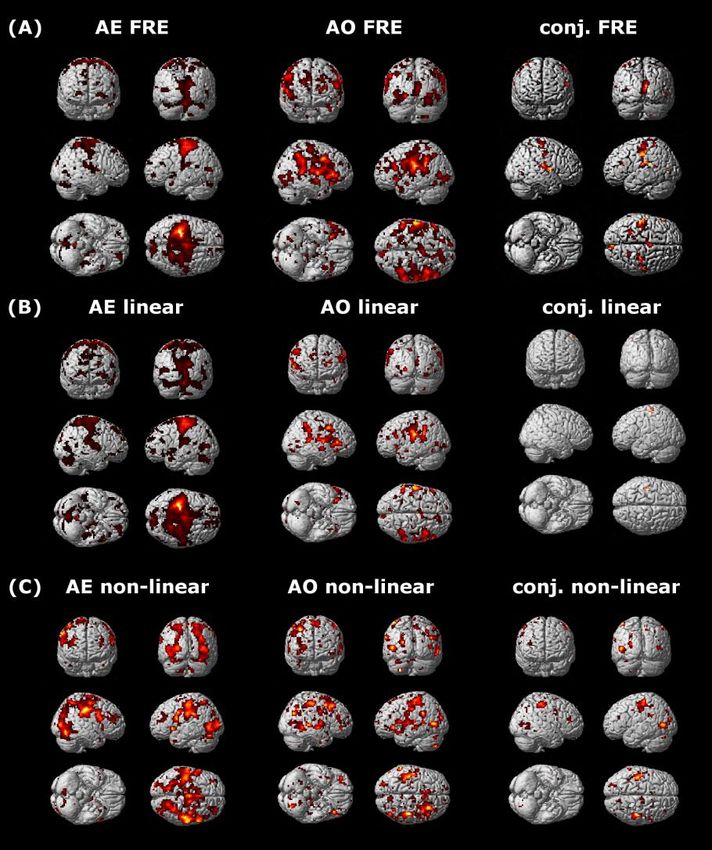
The cerebellum is engaged in both sensori-
          motor and cognitive tasks
    task-dependent fMRI (AEON
    “mirror” network)

Letizia Casiraghi , Adnan AS Alahmadi, Anita Monteverdi, Fulvia Palesi , Gloria Castellazzi, Giovanni Savini, Karl
Friston, Claudia AM Gandini WheelerKingshott , Egidio D'Angelo. Cerebral Cortex, 2018,.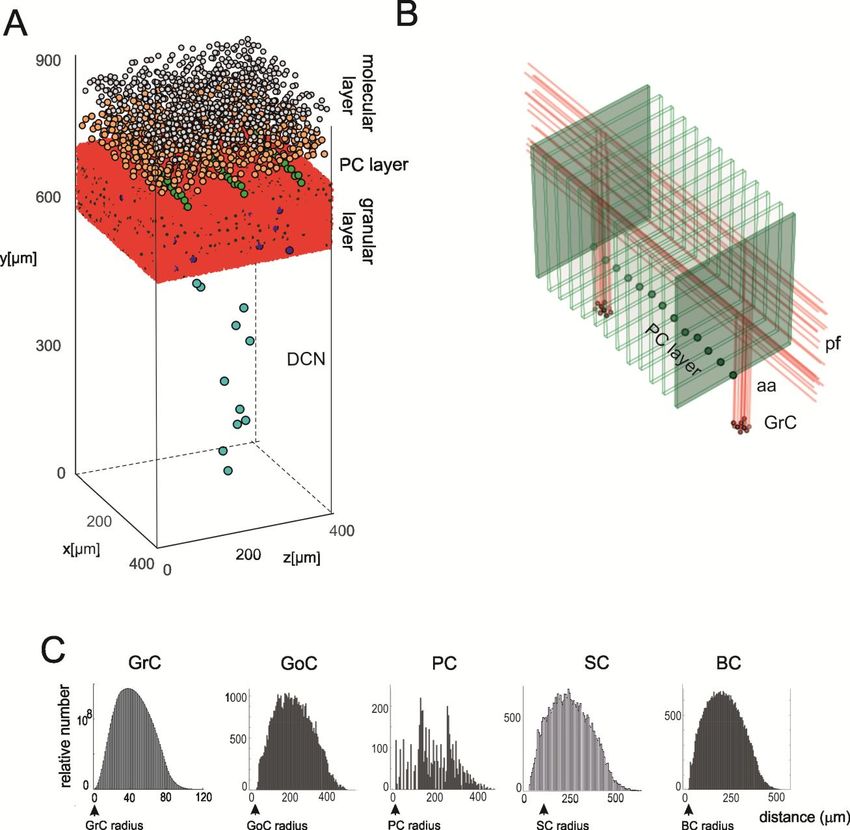
The cerebellum is engaged in both sensori-
    motor and cognitive resting-state networks
                                  SMN    rVAN

                                  LVN    lVAN
frequency coherent oscillations
Resting-state fMRI – Very-low

                                  MVN    TPN

                                  AN     AN

                                  DMN    SN

                                                 Front Cell Neurosci, 2018
                                  ECN    LN

                                  FCN    WMN

                                  CBLN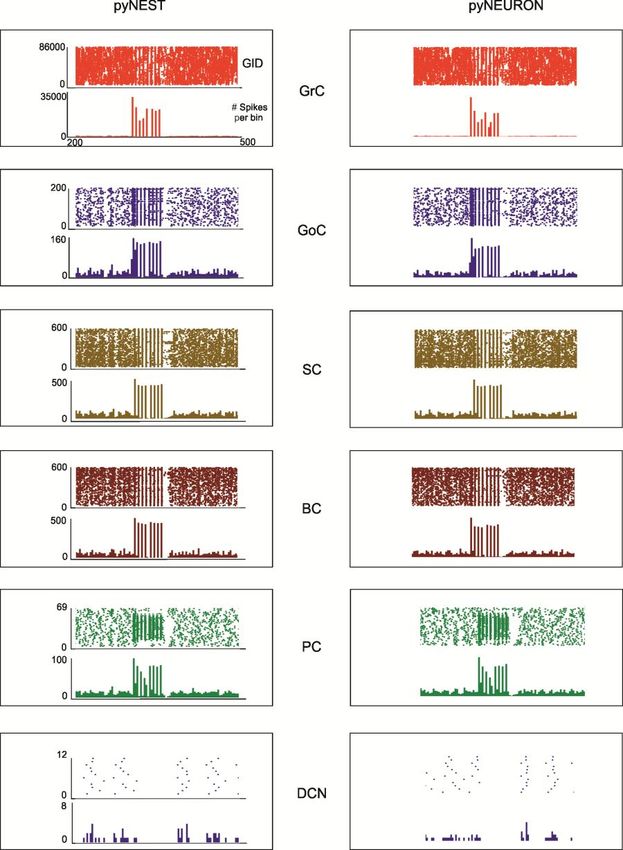
The cerebellum is engaged in continuous
         cognitive processing

                                          Front Neurosci, 2018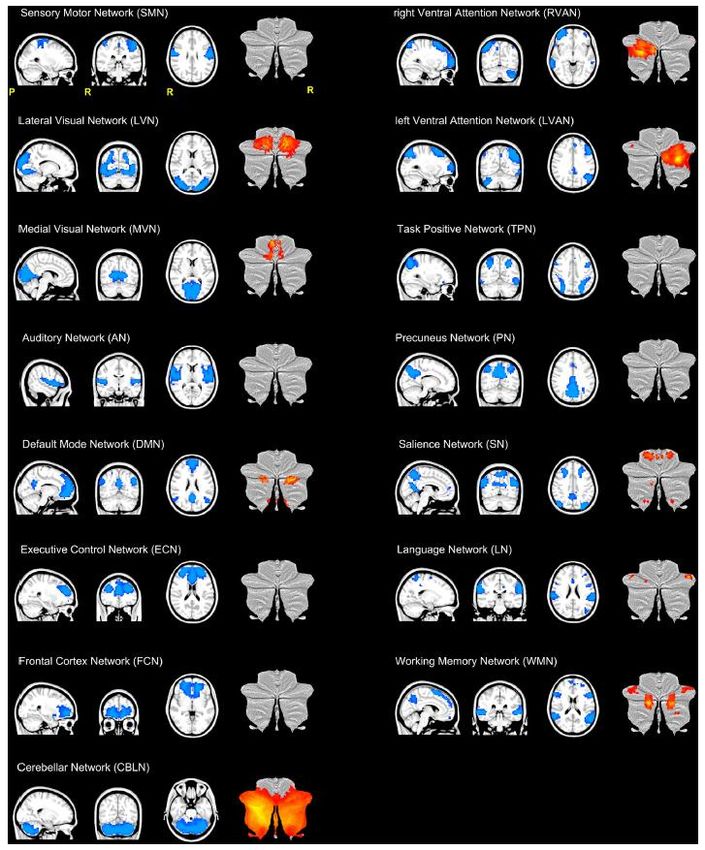
In MCI and AD, relevant alterations occur in
     cerebellum functional connectivity
WHEN

                         Front Neurosci, 2014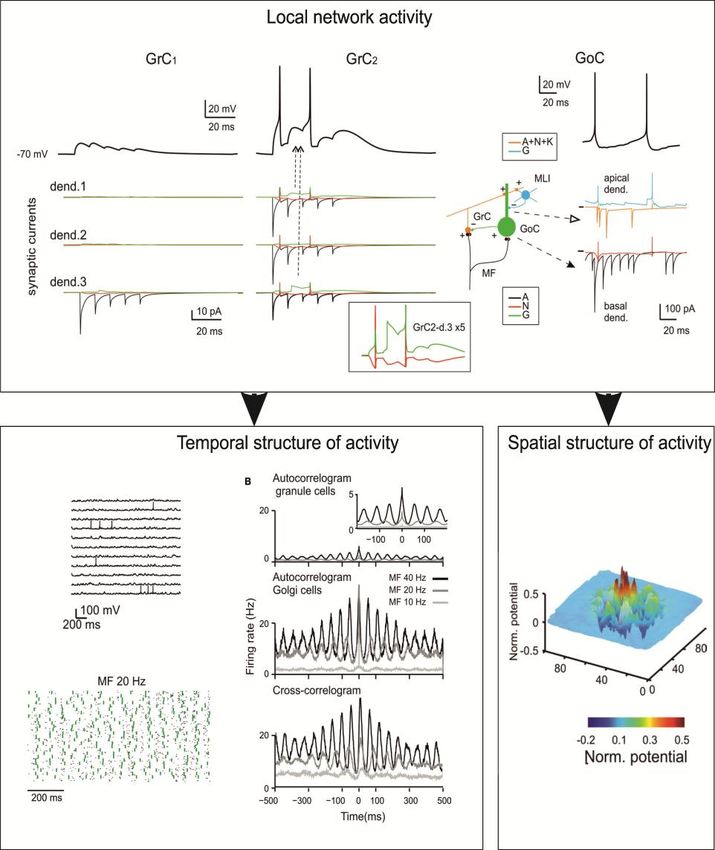
The cerebellum operates both as an inverse and
                            a forward controller
WHAT                                                       Motor command

                                          Efference copy

                        Cerebral cortex         Pontine nuclei
                                                                              Spinal
                                                                               cord
D’Angelo, Hndbooks of

                                                 CEREBELLUM

                                                                              Brain
Neurology 2018

                                                 Ventro-lateral               stem
                                                thalamic nuclei               nuclei

                                                                       Corrective signals

         The cerebellar forward controller is thought to learn to
        predict the precise timing of correlated events. How does
                          the cerebellum do it ?
The cerebellum is organized
in modules operating
through a generalized
computational algorithm
HOW
The generalized algorithm,
depending on the brain
regions to which a given
module is connected, can
lead to different behavioral
consequences.
D'Angelo et al., 2013, 2016 – Frontiers in
Cellular NeuroscienceMarr-Albus-Ito develop the Motor Learning Theory predicting
that cerebellar learning occurs through plasticity at the PF-
PC synapses under CF control
“For me the most significant property
of the cerebellar circuitry would be its
plastic ability, whereby it can
participate in motor learning, that is the
acquisition of skills. This immense
neuronal machine with the double
innervation of Purkinje cells begins to
make sense if it plays a key role in
motor learning… it could be
optimistically predicted that the
manner of operation of the cerebellum
in movement and posture would soon
be known in principle” (J.C. Eccles,
from the foreword to Ito, 1984).
But Marr: (D’Angelo, in Ito and Vaina 2016)
!!) does not consider other forms of plasticity
!!) does not consider neuronal firing dynamics and molceular complexity
!!) does not consider geometry (only topology and statistics)Non-linear neuron properties in the granular layer
Granule cell
1995, 1998, 2001
D’Angelo et al.,
20 mV
200 ms
-62 mV
Golgi cell
Forti et al., 2006.
Gandolfi et al, 2013; Solinas
Kindly provided by B. Barbour
et al., 2007; D’Angelo et al.,
2001Theta-band oscillation - resonance - plasticity hypothesis
DCN
Pellerin & Lamarre, 1997; Hartmann & Bower, 1998;
Courtemance et al., 2009).
HEBBIAN STDP
Montagma Mapelli, D’Angelo - Granular layer
submitted
-Theta-band oscillating
transmitter: cortico-thalamic
system
-Theta-band resonant
receiver: granular layer
- Theta-band plasticity
encoder
Garrido et al, FCN 2016
Prestori et al., J Neuroci 2017
Cortico-thalamic circuit
Gross et al., 2004 Ros et al., 2008This example shows complex and multiple properties of
neurons, whose understanding requires integration into
realistic models considering:
1) Detailed description of microscopic properties
2) Connection of neurons into large-scale networks
and eventually
3) Simplification of models
4) Embedding into large-scale circuits
5) Reconstruciton and analysis of integrated brain
signals and functionsFrom the lab to models, simulations and back again
REALISTIC MODEL SIMPLIFIED MODEL NETWORK SIMULATIONS
~10^3 compartments
→ EGLIF
1 compartment Propagation 10^6 neurons
~10^4 ODEs 3 ODEs 10^9 synapses
morphology
patch-clamp
SCAFFOLD models of Incorporation into
microcircuits large-scale
pyNEST networks and
pyNEURON brain models and
robots
Geminiani et al., 2018; Casellato et al., submitted
Emergence of
elementary properties in
ensemble signals and
closed-loop behaviorsRealistic neuron models are based on
mathematical representations of molecular
mechansims (e.g. ionic ionic chanlles and
receptors) and neuronal morphology
" "
dx z
X u x (t t SPIKE )
dt REC
X Z
recovered
p
resource "
dy
"
y
u x (t t SPIKE )
1
I Ic IK INa ICl 1/
Y d iffu s io n dt
" "
R
u dz y z
dt 1 REC
dV Y T
1/ Z
I C gk (V EK ) gNa(V ENa) gCl(V ECl) C O
"
du
"
u
U (1 u ) (t t SPIKE )
dt 1
active resource inactive resource dt FACIL
dV 1 i gi (V Ei ) ) dove R / g I= (g m a x O ) (V -V re v)
dt (V g tot
m m tot
m
dyi ( ) y
dt i i i i
M odel of
V (t)
GRC
in trin s ic
g i g imax yinatt yiminatt e x c ita b ility
i , i f (V , t ) D’Angelo et al., J
Neurosci 2001, 2013Spike initiation and propagation in granule cell axon
Detailed Na channel
description FIRST kinetics, Na channel
and granuel cell localization, modulation
hypothesis models in modulation. by FHF in
on ionic NEURON Magistretti the axon
current . et al. (2006) Dover et al.
dynamics . D’Angelo e J Physiol; (2016)
D’Angelo e al. (2001) Goldfarb et Nature
al. (1998) J J Neurosci al., (2007)
Neurophys Neuron
BUT:
BUT: BUT: Another channel is
BUT: AP Granule cell
One channel
AP amplitude propagation discharge shows a
missing !!!
does not does not
is missing !
match !! match !!
richness of patterns
See poster !!→ Spatio-temporal dynamics in the granular
layer microcircuit
Validation
against
complex
output
spaceTHE CEREBELLUM SCAFFOLD MODEL
Casali, Marenzi, Medini,
Casellato, D’Angelo – to be
submittedTHE CEREBELLUM SCAFFOLD MODEL
Cell placement
About
100000
neuronsTHE CEREBELLUM SCAFFOLD MODEL
Cell connectivityTHE CEREBELLUM SCAFFOLD MODEL
Cell activityTHE CEREBELLUM SCAFFOLD MODEL
Activity propagationTHE CEREBELLUM SCAFFOLD MODEL Spatial organization of responses in the granular layer
THE CEREBELLUM SCAFFOLD MODEL
Temporal organization of responses in the granular layer
THE CEREBELLUM SCAFFOLD MODEL
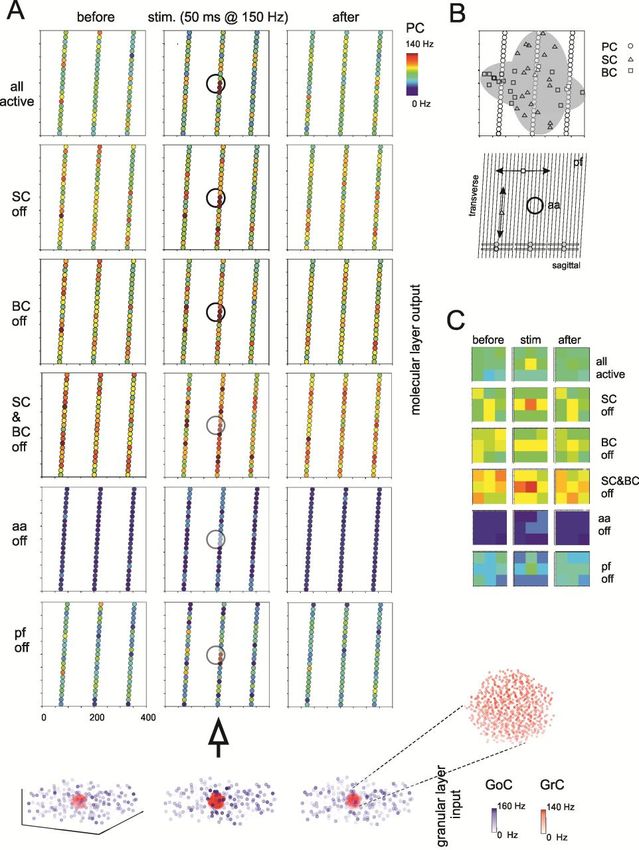
Propagation of responses to the molecular layer
THE CEREBELLUM SCAFFOLD MODEL
Implementation with E-GLIF neurons and plasticities (in
                       progress)

                                End learning                End learning –                End learning –
      Start                                                                                  no MLI
                                 – control                    no PF-PC
      learning                                                plasticity                    inhibition

        EBC learning results from the interaction of multiple mechanisms at different scales

                                                                  A. Geminiani, C. Casellato, H.-J. Boele, C.I. De Zeeuw, A.
                                                                     Pedrocchi, E. D’Angelo – in preparation
-The scaffold can account for flexible handling of cell positioning connectivity and learning rules accouning for the data provided by experiments -The scaffold implemented with LIF neurons already shows the emergence of local network dynamics revealed experimentally -The further implementation with E-GLIF neurons and REALISTIC NEURONS is needed to investigiate non-linear spatio-temporal dynamics during continuous signal processing
Synaptic plasticity and
   dynamic network
 processing in robots
      Plasticity occurs at 3
      main sites in the
      cerebellar network:

      1) granular layer
      2) molecular layer
      3) DCN

      These plasticities are
      bidirectional and
      depend on spike timing

Hansel, Linden, D’angelo, Nature Neurosci, 2001
D’Angelo nd DeZeeuw, TINS 2010
D’Errico et al., J Physiol, 2008
Sgritta et al., J Neuosci, 2017
A plastic SNN of the cerebellum in the control
system of a neuro-robot
• Simplified network (1 small
module, 10000 neurons)
• Simplified neurons (LIF)
• Simplified learning rules (3
bidirectional STDP)Prediction of Purkinje cells
and DCN cell dynamics during
EBCC learning
PC
-The cerebellum opeates as an
inverse controller correcting
movement coordination through the
identification and earning of
correlated sensory events.
-the cereblelum uses distributed
bidirectional synatic plasticity to
control learning in a biologically DCN
meaningful manner
-Plasticity is managed dynamically
with faster time constnat in the
cerebellar cortex that in the DCNFallout and planning for 2019-2021 Implementaiton in REAL ROBOTS - NAO NAO Test the oscillation/resonance/plasticity hypothesis and other moelcular/cellular hypotheses with the network with enhanced dynamics and robotic models. But, for further understanding of the brain-cerebelum system, 3 operations are being developed in parallel : A) fully develop bottom-up modeling toward whole-brain (doable for robotic implementations in mice) B) integrate bottom-up with top-down modeling (typically needed to interpret human data) C) Instruct bottom-up models at different scales using bioophisically meanngful featires (BMF) from MRI to predict microcircuit alterations in pathology
(A) BOTTOM-UP INFERENCE of fMRI
                signals
Implement the scaffold into the virtual mouse brain model
with full bottom-up reconstruction of the ensemble signals
  through the development of a novel “NA-NVC module”

                                                             “NA module”
(B) MODEL INVERSION in the Virtual Brain - humans
Implement novel neural masses or mean-field equations keeping an explicit
connection to data-driven models and Integrate them into The Virtual Brain to
simulate the contributions of elementary mechanisms to ensemble brain signals
(e.g. fMRI, EEG).
model
Field
mean
SCAFFOLD
instruct
Cellular / Molecular Biological
recordings in vitro construct
A priori model Realistic models
(NM) substitute (MFM/NMM & NVC)
mass
Neural
Balloon model
Fit / optimize
INFER
TVB predict
Ensemble recordings in vivo
(fMRI)
Information about neuronal and synaptic functions
during fMRI(C) INSTRUCTION/PREDICTION – human pathology
Information derived from MIP classification is used in data-driven models to
predict neuronal and network parameter changes in human brain pathologies.
Pediction of
pathogenetic
mechasnims,e.g. :
circuit dynamics
Neuronal activity
Connection strength
Synaptic weights
biophysical
meaningful
LITERATURE,
features
Scaffold modification
specific biolgical information:
MIP
gene mutations (ionic channels,
recepotrs ...), neuronal loss,
condicion velocity etc ...MILESTONES 2018 1) Definition of methods for NVC investigation Achieved at end of 2017 – paper published on J Neuoscience (Mapelli et al., 2017) 2) Definition of mechasims of NVC in the cerebelum Achieved – new data sampling concluded and paper in preparation on the comparison of differnt cerebellar regions – Abstracts at FENS, Berlin, July 2018; Abstrct and poster at Erice School “Camillo Golgi”, December 12-15, 2018. 3) Initial models of NVC Achieved - First model version generated – advanced module for pyNEURON under development . 2019-2021 1) Definition of the NA / NVC relationship in the cerebellum 2) “fMRI module " of cerebellum to reconstruct the fMRI-BOLD signal. 3) "Neural mass and mean-field models" of cerebellum to analyze the fMRI-BOLD signal.
PUBLICATIONS 2017
     Geminiani A, Casellato C, Antonietti A, D’Angelo E, Pedrocchi A. Multiple-Plasticity Spiking Neural Network Embedded in a Closed-Loop Control
     System        to      Model        Cerebellar       Pathologies.     Int        J       Neural       Syst.    2017      Jan       10:1750017.
1    doi: 10.1142/S0129065717500174. PubMed PMID: 28264639.

     Mapelli L, Gagliano G, Soda T, Laforenza U., Moccia F, D’Angelo E. Granular Layer Neurons Control Cerebellar Neurovascular Coupling Through an
2    NMDA Receptor/NO-Dependent System. J Neurosci. 2017 Feb 1;37(5):1340-1351. doi:10.1523/JNEUROSCI.

     Alahmadi AA, Pardini M, Samson RS, Friston KJ, Toosy AT, D’Angelo E, Gandini Wheeler-Kingshott CA. Cerebellar lobules and dentate nuclei mirror
3    cortical force-related-BOLD responses: Beyond all (linear) expectations. Hum Brain Mapp. 2017 Feb 27. doi: 10.1002/hbm.23541

     Sgritta M, Locatelli F, Soda T, Prestori F, D’Angelo E. Hebbian spike-timing dependent plasticity at the cerebellar input stage. J Neurosci. 2017 Feb 10.
4    pii: 2079-16. doi: 10.1523/JNEUROSCI.2079-16.2016

     Masoli S, Rizza MF, Sgritta M, Van Geit W, Schürmann F, D’Angelo E. Single Neuron Optimization as a Basis for Accurate Biophysical Modeling: The
5    Case of Cerebellar Granule Cells. Front. Cell. Neurosci., 15 March 2017|https://doi.org/10.3389/fncel.2017.00071

     Colnaghi S, Colagiorgio P, Ramat S, D’Angelo E, Koch G, Versino M. (2017). After Effects of Cerebellar Continuous Theta Burst Stimulation on
6    Reflexive Saccades and Smooth Pursuit in Humans. Cerebellum. 2017 Mar 16. doi:10.1007/s12311-017-0852-y. PubMed PMID: 28303385

     Colnaghi S, Colagiorgio P, Versino M, Koch G, D’Angelo E, Ramat S. (2017). A role for NMDAR-dependent cerebellar plasticity in adaptive control of
7    saccades in humans. Brain Stimul. 2017 Jul-Aug; 10(4):817-827. doi: 10.1016/j.brs.2017.05.001. Epub 2017 May 5. PubMed PMID: 28501325
     Gandolfi D, Cerri S, Mapelli J, Polimeni M, Tritto S, Fuzzati-Armentero MT, Bigiani A, Blandini F, Mapelli L, D’Angelo E (2017). Activation of the
     CREB/c-Fos Pathway during Long-Term Synaptic Plasticity in the Cerebellum Granular Layer. Front. Cell. Neurosci. 28 June 2017;
8    https://doi.org/10.3389/fncel.2017.00184

     D’Angelo E., Gandini Wheeler-Kingshott C., Modelling the brain: Elementary components to explain ensemble functions. Rivista del nuovo cimento,
9    14 July 2017, 40 (7)- pp 297-333, doi: 10.1393/ncr/i2017-10137-5.

     Masoli S, D’Angelo E. Synaptic Activation of a Detailed Purkinje Cell Model Predicts Voltage-Dependent Control of Burst-Pause Responses in Active
10   Dendrites. Front. Cell. Neurosci., 13 September 2017 | https://doi.org/10.3389/fncel.2017.00278. PubMed PMID: 28303385

     Palesi F, De Rinaldis A, Castellazzi G, Calamante F, Muhlert N, Chard D, Tournier JD, Magenes G, D’Angelo E, Gandini Wheeler-Kingshott CAM.
     Contralateral cortico-ponto-cerebellar pathways reconstruction in humans in vivo: implications for reciprocal cerebro-cerebellar structural
     connectivity in motor and non-motor areas. Sci Rep. 2017 Oct 9;7(1):12841. doi: 10.1038/s41598-017-13079-8. PubMed PMID: 28993670; PubMed
11   Central PMCID: PMC5634467.
PUBLICATIONS 2018
D’Angelo E, Physiology of the cerebellum Handb Clin Neurol. 2018 154:85-108. doi: 10.1016/B978-0-444-63956-1.00006-0. Review. PubMed PMID:
1 29903454
D’Angelo E, Mazzarello P. Electric fish inspire inventors across the centuries. Nature. 2018 Mar 8;555(7695):165. doi: 10.1038/d41586-018-02832-2.
2 PubMed PMID: 29517028.
Parmar K, Stadelmann C, Rocca MA, Langdon D, D’Angelo E, D’Souza M, Burggraaff J, Wegner C, Sastre-Garriga J, Barrantes-Freer A, Dorn J, Uitdehaag
BMJ, Montalban X, Wuerfel J, Enzinger C, Rovira A, Tintore M, Filippi M, Kappos L, Sprenger T; MAGNIMS study group. The role of the cerebellum in
multiple sclerosis-150 years after Charcot. Neurosci Biobehav Rev. 2018 Jun;89:85-98. doi: 10.1016/j.neubiorev.2018.02.012. Epub 2018 Feb 23.
3 Review. PubMed PMID: 29477616.
Geminiani A, Casellato C, Antonietti A, D’Angelo E, Pedrocchi A. A Multiple-Plasticity Spiking Neural Network Embedded in a Closed-Loop Control
System to Model Cerebellar Pathologies. Int J Neural Syst. 2018 Jun;28(5):1750017. doi: 10.1142/S0129065717500174. Epub 2017 Jan 10. PubMed
4 PMID: 28264639.
Ferrari C, Cattaneo Z, Oldrati V, Casiraghi L, Castelli F, D’Angelo E, Vecchi T. TMS Over the Cerebellum Interferes with Short-term Memory of Visual
5 Sequences. Sci Rep. 2018 Apr 30;8(1):6722. doi: 10.1038/s41598-018-25151-y. PubMed PMID:29712981; PubMed Central PMCID: PMC5928079.
Antonietti A, Monaco J, D’Angelo E, Pedrocchi A, Casellato C. Dynamic Redistribution of Plasticity in a Cerebellar Spiking Neural Network Reproducing
6 An Associative Learning Task Perturbed by TMS. International Journal of Neural Systems 2018 Apr 24: 1850020. doi: 10.1142/S012906571850020X.
Palesi F, De Rinaldis A, Vitali P, Castellazzi G, Casiraghi L, Germani G,
Bernini S, Anzalone N, Ramusino MC, Denaro FM, Sinforiani E, Costa A, Magenes G, D’Angelo E, Gandini Wheeler-Kingshott CAM, Micieli G. Specific
Patterns of White Matter Alterations Help Distinguishing Alzheimer’s and Vascular Dementia.Neurosci. 2018 Apr 25;12:274. doi:
7 10.3389/fnins.2018.00274. eCollection 2018.PubMed PMID: 29922120; PubMed Central PMCID: PMC5996902.
Ezra-Nevo G, Prestori F, Locatelli F, Soda T, Ten Brinke MM, Engel M, Boele HJ, Botta L, Leshkowitz D, Ramot A, Tsoory M, Biton IE, Deussing
J, D’Angelo E, De Zeeuw CI, Chen A. Cerebellar learning properties are modulated by the CRF receptor in granular cells. J Neurosci. 2018 Jun 22. pii:
8 3106-15. doi: 10.1523/JNEUROSCI.3106-15.2018. [Epub ahead of print] PubMed PMID: 29934353.
Castellazzi G., Bruno SD.,Toosy AM.,Casiraghi L., Palesi F., Savini G., D’Angelo E, Gandini C A. Prominent Changes in Cerebro-Cerebellar Functional
9 Connectivity During Continuous Cognitive Processing Front. Cell. Neurosci., 01 October 2018 | https://doi.org/10.3389/fncel.2018.00331
Bareš M, Apps R, Avanzino L, Breska A, D’Angelo E, Filip P, Gerwig M, Ivry RB,Lawrenson CL, Louis ED, Lusk NA, Manto M, Meck WH, Mitoma H, Petter
EA. Consensus paper: Decoding the Contributions of the Cerebellum as a Time Machine. From Neurons to Clinical Applications. Cerebellum. 2018 Sep
10 27.doi:10.1007/s12311-018-0979-5
Gandini Wheeler-Kingshott C, Riemer F, Palesi F, Ricciardi A, Castellazzi G. Golay X, Prados F, Solanky B, D’Angelo E. Challenges and Perspectives of
11 Quantitative Functional Sodium Imaging (fNaI). Frontiers in Neuroscience, 09 November 2018 https://doi.org/10.3389/fnins.2018.00810UNIPV EPFL
Egidio D’Angelo (DIRECTOR) Henry Markram
Neurophysiology lab Felix Shuermann
Francesca Presttri Jean-Denis Courcol
Lisa Mapelli M-O Gewaltig
Francesca Locatelli CNR
Marialuisa Ttognolina Michele Migliore
Simona Tritto YALE
Teresa Soda (Centro Fermi)
Ileana Montagna
Michael Hines
Giuseppe Gagliano ERASMUS-MC
Anita Monteverdi Chris DeZeeuw
Neurocomputation lab NMR research Unit, Dept of Neuroinflammation
Claudia Casellato UCL Institute of Neurology
Stefano Masoli Claudia Gandini Wheeler-Kingshott
Martina Rizza Adnan Alahmadi
Stefano Casali Neuroengineering Lab, POLIMI - CEREBNEST
Elisa Marenzi Alessandra Pedrocchi
Chaittanya Medini Alberto Antonietti
Neuroimging lab Alice Geminiani
AMRITA University
(Center for Health and Technology) Shyam Diwakar
Claudia Gandini Wheeler-Kingshott (UCL)
NYU – Hunter College
Fulvia Palesi (IRCCS Mondino)
Mitchell Goldfarb
Gloria Castellazzi (UCL)
Letizia Casiraghi
Giovanni Savini (UNIMI)
Silvia Marchese (UNIMI)You can also read


