Nestle in society Creating Shared Value Report 2013 - Nestlé Nigeria
←
→
Page content transcription
If your browser does not render page correctly, please read the page content below

Nestle in
society
Nestlé Nigeria
Creating Shared Value
Report 2013
Highlights 2013
                 Help reduce            20 million                   Promote
                                       In 2013, we reached 20        healthy diets
                 the risk of
                                       million households with       and lifestyles/
                 under-nutrition
                                       iron - fortified Maggi        physical
                 through
                                       cubes, making it the          activity.
                 micronutrient
                                       single largest carrier of
                 fortification
Nutrition                              iodine and iron in Nigeria.

                                    10 ,000
                Roll out the         farmers have benefitted
                Rural                from training in
                                     mycotoxin reduction
Rural           Development          through the Nestlé
development                          Quality Grains
and responsible
                Framework
                                     Improvement project.
sourcing

                                                           3
                 Work to             190,000m
                 achieve water        Reduction in the           Treat the
                                                     3
                 efficiency           water ratio (m /tonne      water we
                                      of finished product)
                 across our                                      discharge
                                      and water saving of
   Water         operations           190,000m3 in 2013 at       effectively.
                                      all sites

                  Improve          Spent grains generated
                                   from maize, millet,           Provide
                  resource
                                   soybean and sorghum           climate
                  efficiency       during processing are         change
Environmental                      sold to farmers for use as
                                   livestock feeds.              leadership
sustainability

               Assess and              Our Flowergate Factory
                                       signed a Memorandum      Market breast-
               address human           of Understanding with    milk substitutes
               rights impacts          the Orile Imo
                                       Community via Owode      responsibly.
               in our                  Egba, Ogun State based
Our people,
human rights   operations and          on a community needs
                                       assessment.
and compliance supply chain
We
                                                 Promote
                 62,483 pupils                   healthy
                                                                           launched
                                                                           Pure Life
                 In 2013, the Nestlé Healthy     hydration as              Protect -
                 Kids programme reached          part of healthy
                 62,483 children in Lagos,                                 zinc fortified
                                                 lifestyles.               premium
                 Ogun, Oyo and Ondo states.
                 We also trained 606 Healthy                               drinking
                 Kids teachers in Nigeria.                                 water.

9,780                                          5,340                6,330
tonnes of                                      tonnes of            tonnes of sorghum
maize                                          soybean              purchased from
purchased                                      purchased from       farmers in
from farmers                                   farmers in           Nigeria.
in Nigeria.                                    Nigeria.

               Our Agbara factory         Raise                    3,134 pupils
               returns to the             awareness of             In 2013, Project WET
               environment treated                                 (Water Education for
                                          water access             Teachers) directly
               effluents well within
               the legal limits of        and                      reached 3,124 pupils
               quality.                   conservation             and 87 teachers in 25
                                                                   primary schools in
                                                                   Lagos State.

               + 76%                   Provide
               Overall energy          meaningful                      Nestlé emerges
               efficiency increased by                                 as the leader in
               76%, from 42% to 74%.
                                       and accurate
                                                                       environmental
               C02 emissions were      environmental
                                                                       sustainability in
               reduced by 5,000        information                     Nigeria in 2013.
               tonnes.
                                       and dialogue

                                          Ensure that all             In 2013, we achieved
                  Nestlé collaborated                                 a 0.5% in Total
                  with the Federal        Nestlé units have the
                                                                      Recordable Injury and
                  Ministry of Health as   necessary systems in        Illness Frequency rate
                  well as Imo, Edo and    place to deliver basic      (TRIFR) among
                  Plateau State                                       employees while
                  governments to          Safety and                  Lost Time Injury and
                  organise 2013 World     Health Protection to        Illness Frequency rate
                  Breastfeeding Week                                  (LTUIFr) was 0.3%.
                  in Nigeria.             all employees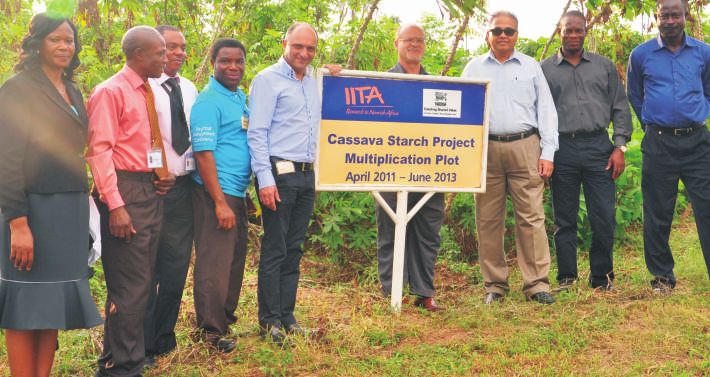
Contents

  2    A message from our Managing Director and CEO

  4    Creating Shared Value at Nestlé

  6    Summary of our commitments

  8                Nutrition
                   Find out how Nestlé’s focus on nutrition is helping
                   to prevent micronutrient deficiency and enhance quality
                   of life for our consumers

  17               Rural development and responsible sourcing
                   Our support to farmers includes sharing our expertise in areas such as
                   agricultural research and development (R&D) to provide them with the tools and knowledge
                   they need to optimise production and secure the future of their farms

  18               Water
                   Read about our commitment to water efficiency in our operations, and our water conservation and
                   awareness programme

  21               Environmental sustainability
                   We are aiming to optimise the environmental impact of our products

  24               Our people, human rights and compliance
                   We have integrated human rights into all aspects of our operations

  27               Stakeholder engagement

  Front cover
  Primary school pupils from selected Project WET schools in Oshodi - Isolo local government area of Lagos State,
  participating in one of PWET games on water conservation during the World Water Day. Nestlé Waters uses Project
  WET’s interactive activities at Agbara factory each year, to mark World Water Day and raise awareness about water
  access and conservation.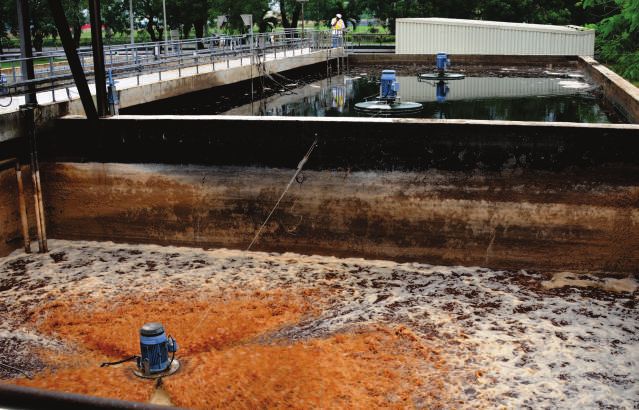
2013 performance summary for Nestlé Nigeria
  Nestlé has developed performance                   be found at www.nestle.com/csv/kpis.    Environment Performance Monitoring)
  indicators to provide a focus and                                                          tool. The environmental data for 2013
  evidence-based reporting of Creating               Unless stated otherwise, performance    covers Agbara (including Nestlé Waters
  Shared Value, sustainability and                   indicators are for the year ending 31   Plant) and Flowergate factories, while the
  compliance.                                        December 2013.                          environmental data for 2012 is for
                                                                                             Agbara factory only.
  The key performance indicators in this             The environmental figures are in line
  report are specific to Nigeria only.               with Nestlé SHE-PM (Safety Health and
  Global equivalent where they exist can

  Nestlé in society and Creating Shared Value Key Performance Indicator                                      GRI       2012        2013

  Economic
  Total Group Sales (NGN billion)                                                                            EC1      116.7       133.1
  Net Profit for the year (NGN billion)                                                                      EC1       21.1        22.2

  Nutrition
  Products featuring Nestlé Nutritional Compass labelling (% of sales)                                      PR3       100%        100%
  Popularly Positioned Products (NGN billion)                                                               PR3         69         81.4

  Rural development and responsible sourcing
  Farmers trained through capacity building programmes                                                                 2500         *

  Water
  Total water withdrawal (million m3)                                                                       EN8     388,145    608,160
  Total water withdrawal (m3 per tonne of product)                                                          EN8         3.18       2.14

  Environmental sustainability
  Production volume
  Total production volume (tonnes)                                                                                  121,921    252,017
  Materials
  Raw materials used (tonnes)                                                                               EN1     119,176    227,017
  Packaging Materials (tonnes)                                                                              EN1      12,533     19,099

  Energy
  Total on-site energy consumption (gigajoules)                                                                     537,718    743,845
  Total on site energy consumption (gigajoules per tonne of product)                                                     4.4      2.95

 * We could not train farmers participating in the Nestlé Quality Grains Improvement Project in North East region of Nigeria in
   2013 due to security challenges.

Nestlé in society: Nestlé Nigeria CSV Report 2013   /4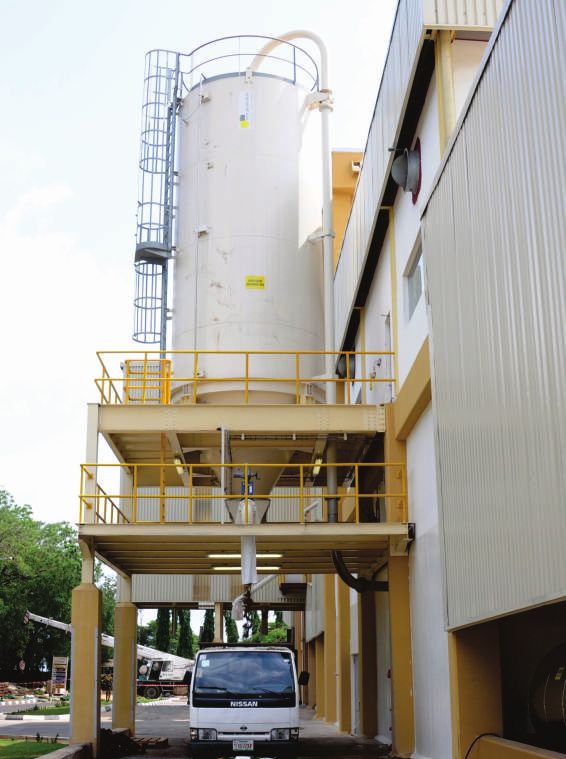
Nestlé in society and Creating Shared Value Key Performance Indicator                                          GRI       2012           2013

Emissions, effluents and waste
Direct GHG emissions (tonnes CO2)                                                                            EN16      31,413         47,058
Direct GHG emissions (kg CO2 eg per tonne of product)                                                        EN16      257.64         186.73
Total water discharge (m3)                                                                                   EN21      62,455         89,750
                         3
Total water discharge(m per tonne of product)                                                                EN21         0.51           0.51
Quality of water discharged (average mg COD/I)                                                               EN21           71            74
By–products (kg per tonne of product)                                                                        EN22           12              0
Manufacturing sites certified against ISO 14001                                                              EN22            4              4

Environmental sustainability governance
Manufacturing sites certified against ISO 14001 (Nestlé Waters Factory Agbara,
Nestlé Nigeria Factory, Fowergate Factory and Ota Distribution Centre)                                                        4               4

Human rights and compliance
Nestlé contraventions of infant formula marketing policy requiring remediation                               PR7             0              0
Infant formula marketing staff trained in the WHO Code (% of staff)                                          PR6           100            100

Our People
Total workforce (number of employees)                                                                        LA1        2,179           2,288
Total rate of new employee hires (%)                                                                         LA2           4%             1%
Total rate of employee turnover (%)                                                                                        3%             1%
Lost-time injuries and illnesses among employees and on-site contractors (per million hours worked)          LA7          0.01             0.3
Total recordable injuries and illnesses among employees and on-site contractors (per million hours worked)   LA2          0.54             0.5
Fatalities of employees and on-site contractors                                                              LA7             0               0
Average hours of training per year per employee per category                                                 LA10           20             24
Leadership positions held by women (%)                                                                       LA13       33.3%           33.3%
Local Management Committee members native to country                                                         EC7         33.3%          33.3%

                                                                                          Nestlé in society: Nestlé Nigeria CSV Report 2013   /5
A message from our Managing Director
and Chief Executive Officer

                                                         At Nestlé we believe that companies are only sustainable
                                                         and successful over the long term if they create value not
                                                         just for their shareholders but also for the communities in
                                                         which they operate. We call this “Creating Shared Value”.
                                                         Our commitment to Creating            to their health and wellness. But we
                                                         Shared Value (CSV) stands front-      also create value for people and
                                                         and-centre as we pursue our           society across our value chain.
                                                         objective to be the leader in
                                                         Nutrition, Health and Wellness,       We proactively identify opportunities
                                                         and the industry reference for        to link our core business activities to

                                                                                                             “
                                                         financial performance, trusted by     action on related social and
                                                         all stakeholders.                     environmental issues. In 2013, we
                                                                                               published our first Nestlé in Society
                                                         The primary way we create value is    report highlighting the major CSV
                                                         by offering consumers tasty           initiatives that we are implementing
                                                         nutritious products that contribute   in the areas of nutrition, water, rural
                                                                                               development, as well as our activities

                                                                                               The primary way
                                                                                               we create value is
                                                                                               by offering
                                                                                               consumers tasty
                                                                                               nutritious
                                                                                               products that
                                                                                               contribute to their
                                                                                               health and
   Promoting Creating Shared Value in local media
   Dharnesh Gordhon, addresses science and health journalists during the second
   CSV media workshop in June 2013. The workshop aimed at raising the level of
   media coverage of nutrition, water and agriculture/rural development.
                                                                                               wellness.
                                                                                                             “
Nestlé in society: Nestlé Nigeria CSV Report 2013   /6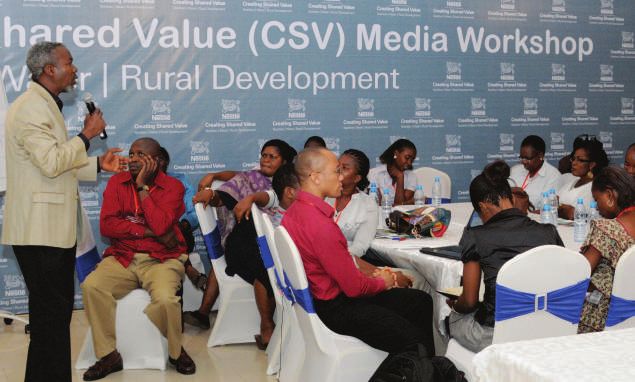
in environmental sustainability, and       transparency, which incentivises us to
                                          compliance and human rights.               achieve continuous improvement in
                                                                                     our CSV, environmental sustainability
                                          In this year's report we have taken        and compliance performance.
                                          another step forward in terms of
                                          transparency. In addition to sharing       We hope you find this report engaging
                                          progress, we speak openly about the        and informative, and we welcome your
                                          commitments we have made. The              input and views.
                                          commitments bring our work in the
                                          areas of nutrition, water and rural        Dharnesh Gordhon
                                          development into greater focus.            Managing Director & Chief Executive

                                          The commitments also demonstrate
                                          our intent and allow stakeholders to
                                          hold us accountable and offer
                                          guidance. We welcome this level of

Supporting smallholders cassava farmers
Dharnesh Gordhon (5th left) visiting Nestlé-IITA Cassava Multiplication Plot, in Ibadan, Oyo
State. The cassava starch project is aimed at increasing productivity per hectare in cassava,
through multiplication and dissemination of improved, high yielding varieties to smallholder
farmers.

                                                                                   Nestlé in society: Nestlé Nigeria CSV Report 2013   /7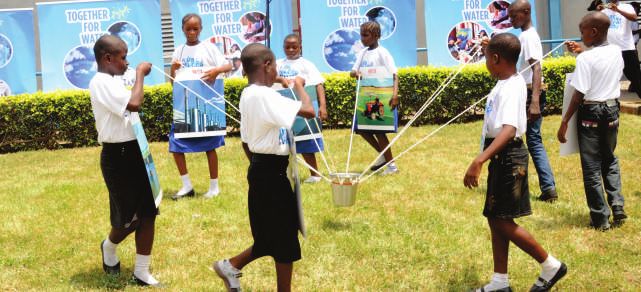
Nestlé in society: Creating Shared Value

    Creating Shared Value begins with the
    understanding that for our business to
    prosper over the long-term, the
    communities we serve must also
                                                         Creating Shared Value
    prosper. It explains how business can
    create competitive advantage, which
                                                                                                              Nutrition, water,
    in turn will deliver better returns for                                                                   rural development
    shareholders, through actions that
    substantially address a social or                                       Creating
    environmental challenge.                                              Shared Value
    As a company, we are best positioned
    to create shared value in three areas:                                                                    Protect the future
                                                                         Sustainability
    Nutrition: by providing nutritious
    products that deliver real health
    benefits to our consumers and by
                                                                                                              Laws, business
    making our products more affordable                                    Compliance                         principles, codes
    and accessible through innovations
                                                                                                              of conduct
    and partnerships.

    Water: by advocating for the
    protection of scarce water resources
    and by using water more efficiently in
    our manufacturing and distribution
    processes in ways that also benefit                  commitment to compliance and           about ensuring our competitiveness
    others in our supply chain.                          sustainability, both of which are      and commercial success in the long
                                                         important ways of mitigating risk to   term.
    Rural Development: by supporting                     our business, protecting our
    farmer development in rural areas                    reputation and in the case of
    where the raw materials we need are                  sustainability, reducing costs.
    grown.                                               Creating Shared Value is ultimately
    Creating Shared Value builds on our

Nestlé in society: Nestlé Nigeria CSV Report 2013   /8
About this report

                         Through our Nestlé in Society report,        Report boundary, scope and
                         we aim to share information                  assurance
                         transparently about our long-term
                         impact on society and how this is            The information contained in this
                         intrinsically linked to the creation of      report covers our operations for the
                         our long-term business success.              year ending 31 December 2013,
                                                                      unless otherwise stated. The
                         Our reporting history                        environmental data refers to our
                                                                      two factories (Agbara and
                         In 2013, we published our first Nestlé       Flowergate). Safety and health
                         in society: Creating Shared Value            figures cover all our employees
                         Report 2012.                                 (permanent and temporary) as well
                                                                      as contractors working on our sites.
                         Our audience
                                                                      We have not engaged the services
                         We have identified a wide range of           of independent parties to verify this
                         stakeholders who we expect to use            report as part of an assurance
                         this report. In addition, we will engage     process. The quantitative data
                         with them regularly, for examples            presented was calculated by Nestlé,
                         through the annual CSV Media                 in accordance with the collection,
                         Workshop, annual Business Forum              recording and analysis methods
                         and Nestlé Nutrition Institute Africa        normally employed by the
                         (NNIA) workshops.                            company.

                         The stakeholders are drawn from
 Nestle in               NGOs, academic centres,
 society                 governmental and intergovernmental
                         organizations, think tanks and social
 Nestlé Nigeria          enterprises working on Nestlé's CSV
                   lue
 Creating Shared Va      focus areas of nutrition, water and
 Report 2013
                         rural development, as well as on
                         environmental sustainability, human
                         rights and compliance.

                                                               Nestlé in society: Nestlé Nigeria CSV Report 2013   /9
Summary of our commitments
Our commitments bring our work in
the areas of nutrition, water, rural
development, environmental
sustainability, our people, as well as
human rights and compliance into
greater focus. The commitments Nutrition Rural development and
help us assess our progress and responsible sourcing
share this with our stakeholders.
Help reduce the risk of under- Roll out the Rural Development
nutrition through micronutrient Framework
fortification
Help increase consumption of
whole grains and vegetables,
including via healthier home
cooking
Promote healthy diets and
lifestyles / physical activity
Promote healthy hydration as
part of healthy lifestyles
Implement nutrition education
programmes to promote good
nutrition practices
Nestlé in society: Nestlé Nigeria CSV Report 2013 / 10Water Environmental Our people, human
sustainability rights and compliance
Work to achieve water Improve resource efficiency Assess and address human
efficiency across our operations rights impacts in our operations
Provide climate change and supply chain
Treat the water we discharge leadership
effectively Market breast-milk substitutes
Provide meaningful and responsibly
Raise awareness of water accurate environmental
access and conservation information and dialogue Ensure that all Nestlé units have
the necessary systems in place
to deliver the same level of
basic safety and health
protection for all employees
Nestlé in society: Nestlé Nigeria CSV Report 2013 / 1120 million
In 2013, we reached 20 million
households in Nigeria with iron-fortified
Maggi cubes, while 8 million households
Nutrition benefitted from our iron-fortified and
vitamin A-enriched Nestlé Golden Morn.
Our Commitment
Help reduce the risk of
under-nutrition through
micronutrient fortification
Our Progress
Our efforts to help consumers avoid
under-nutrition focus mainly on
preventing micronutrient deficiency
through vitamin and mineral
fortification of our products,
especially our Popularly Positioned
Products - high quality food
products that provide nutritional
value at an affordable cost and
Micronutrient fortification of Maggi
appropriate format. To ensure that fortified products reach vulnerable people in Nigeria, we introduced
iron and iodine-fortified Maggi cubes.
We prioritise the needs of young
children and women of child-
bearing age in countries and fortify
the products preferred by these
vulnerable groups to address
specific local needs such as Maggi
and Nestlé Golden Morn.
In 2013, we reached 20 million
households in Nigeria with iron-
fortified Maggi cubes, while
8 million households benefitted
from our iron-fortified and vitamin
A-enriched Nestlé Golden Morn.
MAGGI takes fortified “magic” to consumers in Oyo State
In 2013, Nestlé Nigeria collaborated with Oyo State government to organise the
Maggi Women Forum in all 33 local government areas of Oyo State. The Maggi
Women Forum helps families to improve their diets, by demonstrating for
example the importance of iron and iodine and how to cook using less salt.
During the forum, our food and cooking experts demonstrate nutritionally
balanced recipes, share tips on healthy eating and a balanced diet, and also
discuss the proper interpretation of nutritional labelling.
Nestlé in society: Nestlé Nigeria CSV Report 2013 / 12115,000
In 2013, Maggi Star Kitchen
Nutrition reached 115,120 households in
Nigeria
Our Commitment
Help increase consumption
of whole grains and
vegetables, including via
healthier home cooking
Our Progress
In addition to improving the nutritional
value of our products by adding
micronutrients, our Maggi product
portfolio promotes home cooking and
consumption of vegetables through
the mobile Maggi Star Kitchen. Maggi
Star Kitchen reached 115,120
households in Nigeria in 2013. In Maggi Star Kitchen on the road
addition, we produced simple In Nigeria, Maggi Star Kitchen - one of our communication initiatives focusing on
educational materials such as pocket health and nutrition - has gone on the road to provide nutrition expertise and
cards and fact sheets in local healthy eating tips, reaching hundreds of thousands consumers. Maggi Star
languages to promote better Kitchen travels to towns and cities week by week, providing information about
understanding of the health benefits of balanced diets, micronutrient deficiencies and the importance of culinary hygiene,
micronutrient fortified products. through interactive cooking demonstrations, women’s forums, group discussions
and presentation on micronutrient fortification.
To promote consumption of whole
grains, we introduced more varieties of
Nestlé Golden Morn, a delicious,
nutritous and instant family cereal
made from best quality locally sourced
whole grains. Nestlé Golden Morn is
available in three varieties. In addition
to the Golden Morn Maize variety, we
introduced Golden Morn Maize choco
in 2012 and Golden Morn Millet in
2013. Each variety is enriched with
vitamin A and iron - essential
micronutrients necessary for the
survival, growth and development of
every individual.
Promoting consumption of iron-
fortified and vitamin A-enriched
cereals in Nigeria
More than 210 million servings of Nestlé
Golden Morn enriched with vitamin A
and iron are consumed in Nigeria every
year, so the three varieties of Golden
Morn give families across the country
the opportunity to increase consumption
of whole grains at breakfast every day.
Nestlé in society: Nestlé Nigeria CSV Report 2013 / 1362,483
In 2013, the Healthy Kids programme
directly reached 62,483 children in
Nutrition Lagos, Ogun, Oyo and Ondo States.
We also trained 606 Healthy Kids
teachers in Nigeria
Our Commitment
Promote healthy diets and
lifestyles / physical activity
Our Progress
Nestlé Healthy Kids global programme
directly reached 62,483 primary school
pupils in Lagos, Ogun, Oyo and Ondo
states in 2013. The programme aims to
raise nutrition and health knowledge
and promote physical activity among
school-age children.
The Nestlé Healthy Kids programme is
implemented in Nigeria in partnership Helping kids to get active and healthy
with the State Universal Basic To strengthen the physical activity component of our Healthy Kids programme,
Education Board (SUBEB) and the we launched the Nestlé - IAAF Kids’ Athletics programme in 2013. The IAAF
Kids’ Athletics programme is one of the biggest grassroots development
Centre for Health Education, Population
programmes in the world of sports. It encourages school children to participate
and Nutrition (CHEPON).
in atheltics and lead a healthy life. The programme is being implemented in
Nigeria in partnership with the Athletics Federation of Nigeria (AFN).
In 2013, we conducted a preliminary
monitoring and evaluation of the
programme in Lagos and Ogun States.
The Human Nutrition Department,
University of Ibadan developed the
monitoring and evaluation framework
and also carried out the exercise.
The programme has started to
demonstrate interesting results such as
improved nutrition knowledge as well
as increased fruit and vegetable
consumption among the participating
children.
Nestlé launches Healthy Kids
programme in Oyo and Ondo States
We increased reach of Healthy Kids
programme in south west region in 2013 with
the launch of the initiative in Oyo and Ondo
States. Our goal is to develop the programme
into an evidence-based, impactful initiative
that contributes to the health of local school
communities.
Nestlé in society: Nestlé Nigeria CSV Report 2013 / 14108
primary school teachers trained
Nutrition on Healthy Hydration in 2013.
Our Commitment
Promote healthy hydration
as part of healthy lifestyles
Our Progress
Water is an essential part of a healthy
diet, and we are determined to engage
closely with all relevant stakeholders to
raise awareness of the importance of
drinking water regularly throughout the
day.
With this in mind, in 2013, we
introduced Healthy Hydration module
to the Nestlé Healthy Kids programme.
The healthy hydration module provides
six education tools to teach children
Nestlé trains teachers on healthy hydration
In 2013, we trained 108 primary school teachers on healthy hydration. Picture
about the benefits of drinking water.
shows some participants at Healthy Hydration workshop for Healthy Kids
In furtherance of our commitment to teachers in Abeokuta.
creating innovative healthy hydration
solutions in Nigeria, in 2013, we
launched Nestlé Pure Life Protect - a
variant of Nestlé Pure Life premium
drinking water, enriched with zinc.
Leading the healthy hydration journey with zinc-fortified Nestlé Pure Life Protect
Dr Abimbola Ajayi, Head of Nutrition, Lagos State Ministry of Health (2nd right) at
the launch of Nestlé Pure Life Protect in 2013. The new product contains 2.3 mg
of zinc, an essential micronutrient. It is part of our commitment to ensure provision
of quality drinking water with the right balance of essential nutrients.
Nestlé in society: Nestlé Nigeria CSV Report 2013 / 15Nutrition
Our Commitment
Implement nutrition
education programme to
promote good nutrition
practices.
Working together with healthcare
professionals, we aim to be part of
the solution to help families improve
their Nutrition, Health and Wellness.
Our Progress
Through the work of the Nestlé
Nutrition Institute Africa (NNIA) we
provide registered healthcare
professionals with information on
the latest science and
developments in early childhood
nutrition through publications, Engaging with healthcare professionals
workshops scientific conferences Healthcare professionals such as paediatricians, play a key role in offering parents
and digital media. The NNIA also and caregivers trustworthy nutrition advice for infants and young children. In
works in partnership with academia 2013, NNIA collaborated with the Paediatric Association of Nigeria (PAN) to
and leading practitioners to initiate organise a breakfast symposium on “the importance of the first 1,000 days of
research into maternal and infant life” during the 44th annual scientific conference of PAN.
nutrition.
The importance of the right nutrition and feeding practices during the critical first
In 2013, we reached over, 28,000 1,000 days of life is now widely accepted by the public health community.
healthcare professionals through Getting the right nutrition during this period, from conception to the child’s
NNIA initiatives. second birthday is crucial for healthy growth and development in terms of
immunity and cognitive function. The right feeding practices in early childhood
also support the establishment of healthy eating habits. These symposia
underlined the importance of breastfeeding and adequate introduction of
nutritious complementary foods.
Nestlé in society: Nestlé Nigeria CSV Report 2013 / 1610,000
Rural development and farmers (including, agricultural extension
agents, farm village heads, farm family heads,
responsible sourcing grains suppliers and transporters) have
benefitted from the Nestlé Quality Grains
Improvement project since its launch in 2009.
Our Commitment
Roll out the Rural
Development Framework
We invest in rural development
because of the necessity to secure
long-term supply of raw materials for
our food and beverage products. One
of the key pillars of our rural
development framework is to help
support farming as a business and
livelihood of choice that offers an
attractive income.
Our Progress
To ensure a sustainable supply of
safe, high quality grains to our
factories and improve the livelihood of
smallholder farmers in Nigeria, we
launched our Grains Quality
Improvement project in 2009.
Working with the International
Institute of Tropical Agriculture (IITA),
we‘re training farmers to follow good
agricultural and storage practices that
reduce the risk of damage from
naturally occurring mycotoxins and
increase yields, quality and
consequently market access for local
farmers. To date, 10,000 farmers
(including agricultural extension
agents, farm village heads, farm
family heads, grain suppliers and
transporters) have benefitted from the
project in Nigeria.
In addition, factory gate rejection has
progressively decreased from 4% in
2010 to 0.3% in 2012, showing that
mycotoxin risk was under control in
our manufacturing operation. Also,
remarkable reduction in grain storage
was achieved at factory level: stock
cover significantly reduced from 8
weeks in 2009 to 3 weeks for
soybeans, and 4 weeks for maize and
sorghum in 2012.
Nestlé in society: Nestlé Nigeria CSV Report 2013 / 173
190,000m
Water Reduction in the water ratio
3
(m /tonne of finished product)
and water saving of 190,000m3 in
2013 at all sites.
Our Commitment
Work to achieve water
efficiency across our
operations
Our Progress
We drive operational efficiency by
reducing water withdrawal, increase
reuse and continually working to
improve the water efficiency of our
products. Our goal is to be the most
efficient water user among food
manufacturers in Nigeria.
We have achieved substantial
improvements in water efficiency in
our manufacturing operations in
Nigeria.
Since 2006, water withdrawal at our
Agbara factory has fallen significantly
while our food and beverages
production volume increased
considerably.
Improving water efficiency at Agbara factory
The close proximity of our food processing plant and the Nestlé Waters Plant at
Agbara has enabled us to install a connection so that all surplus water from the
Nestlé Waters deep well is used by Nestlé Nigeria plants, leading to a reduction in
the water ratio (m3/tonne of finished product) and water saving of 190,000m3 in
2013 at all sites.
Nestlé in society: Nestlé Nigeria CSV Report 2013 / 18Water
Our Commitment
Treat the water we discharge
effectively.
We aim to ensure that our factories
treat the water we discharge
effectively, returning clean water to
the surrounding environment.
Our Progress
We have further strengthened our
requirements for water quality and
effluent discharge. Through
investments in our wastewater
treatment facility at our Agbara
factory, we are well within the legal
limits for treated effluents returned
to the environment. Environmental journalists visit Agbara factory wastewater
treatment plant
In 2013, we upgraded our Agbara As part of our effort to proactively engage with media on environmental issues,
factory wastewater treatment facility environmental journalists visited the wastewater treatment facility at our Agabra
to improve effluent quality. One of factory during the 2013 World Environment Day. The media tour enabled the
the new features in the plant is a environmental editors to gain insight on our various initiatives aimed at reducing
surface aeration system with an our environmental footprints across the value chain.
oxygen control which helps to
reduce electricity usage.
Nestlé in society: Nestlé Nigeria CSV Report 2013 / 193,124 Pupils
Water In 2013, Project WET directly
reached 3,124 pupils and 87
teachers in Lagos State
Our Commitment
Raise awareness of water
access and conservation.
Our Progress
We believe that educating young
people today is the most efficient way
to facilitate a life-long commitment to
water conservation.
In 2013, we commenced classroom
implementation of Project WET
(Water Education for Teachers), a
global water education programme
that facilitates and promotes
awareness, appreciation, knowledge,
and stewardship of water resources
through the dissemination of
classroom-ready teaching aids.
Currently, a total of 3,124 students
and 87 teachers at 25 schools are
reached by Project WET in Lagos
State. The project will be launched in
Osun State in 2014.
Supporting water education
Nestlé Waters uses Project WET’s interactive activities at Agbara factory each year, to mark World Water Day and raise
awareness about water access and conservation.
Nestlé in society: Nestlé Nigeria CSV Report 2013 / 20Environmental sustainability
Our Commitment
Improve resource
efficiency
We are committed to eliminating waste
and reducing energy consumption at
every level of our operations. Our goal
is to improve our efficiency, quality and
productivity, which translates into
doing more with fewer resources and
less waste. We define waste as any
material that arises during the
manufacturing or distribution of a
product that is destined for final
disposal at offsite landfill or
incineration without energy recovery.
Our ambition is to achieve zero waste,
which means that no factory waste will
go to landfill or be incinerated without
energy being recovered from the
process.
Our Progress
In our Agbara factory, we continue to
explore ways to recover valuable
materials in food processing that can
be used as a by-product. We
transform perishable agricultural raw
materials such as maize, millet, soya
and sorghum into safe and value-
added food products for consumers.
In processing the grains, we generate
spent grains. Once generated, spent
grains are not disposed at offsite
landfill, but sold to farmers as livestock
feeds. Optimising resource efficiency at Agbara factory
Spent grains generated from maize, millet, soya and sorghum during
processing at Agbara factory are sent to a silo, from where it is discharged to
trucks, and sold to farmers for use as livestock feeds.
Nestlé in society: Nestlé Nigeria CSV Report 2013 / 21+76%
Overall energy efficiency
Environmental sustainability increased by 76%, from 42% to
74%. C02 emissions were
reduced by 5,000
Our Commitment
Provide climate change
leadership
We are committed to lowering the
greenhouse gas (GHG) emissions
associated with the production and
distribution of our food and beverages,
by improving energy efficiency and
investing in renewable sources.
Our Progress
In pursuit of our goal to become the
most efficient energy user among
food manufacturers in Nigeria, we
continue to drive energy efficiency in
our factories.
We reduced direct greenhouse gas
Improving energy efficiency in Agbara factory
(GHG) emissions (kg CO2 per tonne of
product) from 257.64 in 2012 to We are continuously reducing our environmental footprint by ensuring efficient
186.73 in 2013. Our total on site use of energy for manufacturing operations. The N3.6billion Agbara factory tri-
energy consumption (gigajoules per generation power plant is a major contribution to Nigeria's drive to reduce carbon
tonne of product) also decreased from emissions. The tri-generation power plant generates electrical power as prime
4.4 in 2012 to 2.95 in 2013 while energy, chilled water and hot water are produced by recovering the heat
increasing our production volume. generated from the power plant exhaust gases. This allows us to increase overall
This reflects energy reduction energy efficiency from 42% to 74% and to reduce C02 emissions by 5,000 tonnes
initiatives at factory level, resulting per year since 2012.
from Nestlé Continuous Excellence;
The use of new eco-friendly absorption chillers also eliminates the need for
and changes in our product mix,
ozone-depleting refrigerants.
reflecting an overall strategy towards
more value-added products.
Nestlé in society: Nestlé Nigeria CSV Report 2013 / 22Environmental sustainability
Our Commitment
Provide meaningful and
accurate environmental
information and dialogue
Our goal is that Nestlé products are
not only tastier and healthier, but also
better for the environment along their
value chain. We are determined to live
up to the expectations our employees
and external stakeholders have about
our environmental responsibility and
practices.
Our Progress
We provide fact-based environmental
information to our stakeholders and
consumers.
Nestlé recognised as the leading company in environmental
In 2013, we held a seminar for
environmental journalists on sustainable sustainability in Nigeria
In 2013, Nestlé was recognised as the leading company in environmental
consumption to mark World
sustainability in Nigeria. The award was bestowed on the company at the 7th
Environment Day. In 2013, we Annual SERAs (Social Entrerprise Reports and Award) - Nigeria’s flagship CSR
educated our consumers, through the award. Nestlé was commended for promoting environmental awareness and
media on how Nestlé promotes providing meaningful and accurate environmental information on her operations
sustainable consumption by providing in Nigeria. The company was particularly lauded for its commitment to
various portion size options and clear evidence-based reporting of key performance indicators as published in Nestlé in
portion guidance and preparation Society: Nestlé Nigeria Creating Shared Value Report 2012.
instructions to avoid food waste.
Dharnesh Gordhon, Managing Director and Chief Executive of Nestlé Nigeria addressing environmental journalists during
the 2013 World Environment Day at Ilupeju head office.
Nestlé in society: Nestlé Nigeria CSV Report 2013 / 23Our people, human rights
and compliance
Our Commitment
Assess and address human
rights impacts in our
operations and supply chain
Our Progress
We integrate human rights into all
aspects of our business operations.
We exercise due diligence to identify,
prevent and address actual or potential
human rights impacts resulting from
our activities or the activities of those
with whom we have relationships.
In 2013, Nestlé Nigeria Flowergate
Prioritising intervention for Orile Imo community
factory signed a Memorandum of When it comes to the level at which we intervene and work with local
Understanding (MoU) with the Orile- communities, our philosophy is to be guided by our assessment of the needs
Imo community via Owode Egba, identified by the communities themselves, and the objective of local authorities
Ogun State. The MoU between Nestlé and national governments.
and the Orile Imo community was
based on a community needs The people of Orile Imo community requested for renovation of the only nursery
assessment carried out through a and primary school in the area following the signature of a memorandum of
combined human rights and human understanding between Nestlé and the community.
development approach.
Kais Marzouki, Head of Nestlé Central and West Africa region unveils the plaque
In the MoU, members of Orile-Imo at the inauguration ceremony of St. Paul’s Anglican Primary School renovated
community specifically requested for by Nestlé.
renovation of the only nursery and
primary school in the community.
Old
New
Nestlé in society: Nestlé Nigeria CSV Report 2013 / 24Our people, human rights
and compliance
Our Commitment
Market breast-milk
substitutes responsibly
We believe that breastfeeding is the
best start a baby can have in life. We
are committed to the highest
standards of responsible marketing of
breast-milk substitutes and comply
with the WHO Code as implemented
by the Nigerian government.
Our Progress
As part of our on going efforts to
promote breastfeeding, we Partnering with government to promote breastfeeding in Nigeria
collaborated with the Federal Ministry Breast milk is the best start a baby can have in life. This is why we support and
of Health to commemorate the 2013 promote the WHO’s recommendation of exclusive breastfeeding during the first
six months of a child’s life, followed by the introduction of nutritious
World Breastfeeding Week. We also
complementary foods along with sustained breastfeeding until two years and
collaborated with Imo, Edo and
beyond.
Plateau State governments to organise
breastfeeding symposia in Owerri, Picture shows Samuel Adenekan, Corporate Communications and Public Affairs
Benin and Jos. Manager (middle) discussing with Sani Bala, Permanent Secretary, Federal
Ministry of Health (right) and Ali Magashi, Director, Federal Ministry of Health at
We also held a number of other the ministerial launch of the 2013 World Breastfeeding Week in Abuja, Nigeria.
activities to promote greater
awareness and advocacy for
breastfeeding in Nigeria. This included
breastfeeding workshops for
healthcare professionals, reinforcing
our commitment to the WHO Code
among employees, and highlighting
the importance of breastfeeding
through newspaper and social media
campaigns.
Supporting nursing mother employees to breastfeed
Children relaxing at “Tinu-Baby Room” at the Ilupeju head office. The facility enables
nursing mother employees to breastfeed their babies during working hours. We also
support our nursing mother employees to breastfeed by offering four months
maternity leave and five-day paternity leave. This provides an environment that is
supportive to new parents and reflects our commitment to mothers, beginning with
our very own employees.
Nestlé in society: Nestlé Nigeria CSV Report 2013 / 251,000
Our people, human rights In March 2013, Agbara factory marked
1,000 days accident free. The site also
and compliance achieved 0.5% in Total Recordable Injury
and Illness Frequency rate (TRIFr) while
Lost Time Injury and Illness Frequency rate
(LTIFr) was 0.3%.
Our Commitment
Ensure that all Nestlé units
have the necessary systems
in place to deliver the same
level of basic safety and
health protection to all
employees.
Safety and health at work is one of
our Corporate Business Principles
which form the foundation of all we
do. We are committed to preventing
accidents, injuries and illness related
to work, and protect employees,
contractors and others involved
along the value chain.
Our Progress
Our safety and health goal is zero
injuries and illnesses, a holistic aim
that includes all forms of harm to
the individual. It’s grounded in
Nestlé Continuous Excellence - our
drive to achieve the very highest
operational standards wherever we
Culinary pressing and wrapping Agbara factory marks 1,000
work in the world. accident free days
At Agbara factory, safety is at the heart of our operations. With support from
In 2013, we achieved a 0.5% in Total management and employee participation in accident prevention initiatives, the
Recordable Injury and Illness site celebrated 1,000 days accident free in March 2013. The Category
Frequency rate (TRIFr) among Business Manager for culinary provided yards of Maggi ankara as a motivation
employees and on-site contractors to further instill safety culture in the plant.
while Lost Time Injury and Illness
Frequency rate (LTIFr) was 0.3% .
Nestlé in society: Nestlé Nigeria CSV Report 2013 / 26Stakeholder engagement
Effective dialogue with our
stakeholders underpins our
action in Creating Shared Value.
Our stakeholder engagement
programme helps us to identify
emerging issues, shape our
response, drive performance
improvements, and strengthen
our collective action.
Our approach
Our annual Creating Shared Value
Media Workshop is part of our efforts
to mainstream nutrition, water and rural
development news reporting in Nigeria.
In 2013, the CSV media workshop was
attended by more than 120 participants
including journalists from print,
broadcast and online media, as well as
the President of Nutrition Society of
Nigeria, Head of Nutrition at the Federal
Ministry of Health and the Special
Adviser to the Minister of Agriculture
and Rural Development.
The event was tweeted live and at the
end of the programme, it had reached
48,998 people and generated 12 new
followers.
Nestlé in society: Nestlé Nigeria CSV Report 2013 / 27Note
Note
Note
© April 2014, Nestlé Nigeria Corporate Communications and Public Affairs

Nestlé Nigeria PLC
22-24, Industrial Avenue, Ilupeju
P.M.B 21164, Ikeja

Concept and writing
Nestlé Nigeria Corporate Communications and Public Affairs

Visual concept and design
dbrig communications ltd

Photography
Dele Raji
Moussa Moussa
Nana Kofi Acquah
Sam Faulkner

Production
Remigious Tel-Metes Ltd.
You can also read


