NEXT CENTER OF WHAT'S - AT THE - Cushman & Wakefield
←
→
Page content transcription
If your browser does not render page correctly, please read the page content below
AT THE
                       2019-2020
                         EDITION

CENTER OF
WHAT’S
NEXT
FOR MANHATTAN RETAIL
Major Markets Report
New York City is America.
With its blend of global
commerce, international diversity
and culture, entertainment and
tourism, this city sets the bar
for all American markets and
generates the pulse for the United
States economy.

AT THE
CENTER OF
WHAT’S
NEXT
2   MANHATTAN RETAIL MAJOR MARKETS REPORT
TABLE OF
CONTENTS
Click number to jump to section

          Retail in Manhattan:
                                  Retail Challenges
          Connecting the Old
                                  in Manhattan
          with the New

          Market Dynamics         Interconnected
          in Manhattan            Submarkets

          Manhattan's Multiple    The Future of Retail
          Retail Drivers          in Manhattan
Introduction
Retail has always been about keeping up with the latest trends;
however, today’s market has             undergone unprecedented
reformations at a remarkable pace. Evolving customer preferences
on where and how to shop make it challenging for many landlords
and retailers to adapt. Moreover, the internet and eCommerce
enhancements continue to capture consumers’ attention. Existing
retailers are faced with the challenge of retooling in order to
regain foot traffic; perhaps even take a page out of their neighbor’s
playbook with Instagram-worthy spaces featuring experiential
designs and attractions. Meanwhile, online-exclusive retailers are
debating whether to begin their foray into physical store space
with a pop-up destination, or just play it safe and stay on the
e-commerce-only road.
Disruptive shifts have been felt throughout New York for both
landlords and their retail tenants. Once lucrative luxury shopping
destinations, retailers have been battling to attract shoppers and
keep afloat. Secondary areas are being reintroduced as less-costly
alternatives and shorter-term lease options are all the rage. Even
the once thriving high market corridors are now reassessing what
works and trying to stay ahead of evolving consumer demand.
An expanding population and booming tourism industry, coupled
with paradigm-shifting retail trends, has guided the sector through
significant difficultires, and will continue to uncover What’s Next
for Manhattan retail.

4   MANHATTAN RETAIL MAJOR MARKETS REPORT

RETAIL IN MANHATTAN:
                                       CONNECTING THE OLD WITH THE NEW

Manhattan/NYC Population Projection
There will be a projected 1.69M additional new residents in NYC by 2040
Square Feet (Millions)

                         10.0
                                                                                            9.0M+ Projected Rate
                         9.0                                              8.6M*                    of Growth by
                                                     7.9M          8.0M                            Borough
                         8.0

                         7.0

                         6.0

                         5.0                                                                        6%
                                                                                                    Staten Island
                         4.0    3.4M                                                                4%
                                                                                                    Queens
                         3.0
                                                                                                    3%
                         2.0                                                                        Manhattan
                                                                                                    10%
                          1.0
                                                                                                    Brooklyn
                         0.0                                                                        11%
                                                                                                    Bronx

*2017
Source: OneNYC 2050

The population in Manhattan, currently at 1.63 million            There is no shortage of shopping in Manhattan’s
residents, has incentivized a diverse array of retailers          23 square miles. With hundreds of stores and brands,
to move into this New York City borough. New York                 Manhattan is a mecca for shopping diversity at every
City’s 8.4 million inhabitants fuel the demand for                level. New, old, pop-up, and experiential stores forge
a variety of goods and services, allowing retailers               on as the growing population favors eclectic store
the opportunity to evolve simultaneously with the                 options. With a population density of 70,826 people
demands of new residents. Manhattan continues to                  per square mile, Manhattan is the most densely
have a significant impact on the world’s economy,                 populated county in the United States of America.
technology, tourism, and commerce, securing its                   During the week, the number of commuters increases
place as the most important place for retailers in the            the Manhattan daytime population to more than
United States.                                                    3.9 million people.

           6              MANHATTAN RETAIL MAJOR MARKETS REPORT
Retail Sales in Billions vs. Household Income
     Sales                                                                                                         Income
     $80B
$80,000.00                                                                                                          $90K
                                                                                                                     $90,000
                                         Household Income                           Retail Sales
     $70B
$70,000.00
                                                                                                                    $80K
                                                                                                                     $80,000

     $60B
$60,000.00

                                                                                                                    $70K
                                                                                                                     $70,000
     $50B
$50,000.00

     $40B
$40,000.00                                                                                                          $60K
                                                                                                                     $60,000

     $30B
$30,000.00
                                                                                                                    $50K
                                                                                                                     $50,000

     $20B
$20,000.00

                                                                                                                    40K
                                                                                                                     $40,000
      $10B
$10,000.00

     $0B
    $0.00                                                                                                           30K
                                                                                                                      $30,000
           20002001
         2000    ‘01 2002
                       ‘02 2003
                             ‘03 2004
                                  ‘04 2005
                                       ‘05 2006
                                            ‘06 2007
                                                 ‘07 2008
                                                     ‘08 2009
                                                          ‘09 ‘10
                                                              2010 ‘11
                                                                   2011 ‘12
                                                                         2012 ‘13
                                                                               2013 ‘14
                                                                                      2014 ‘15
                                                                                             2015‘162016‘172017‘182018

                                                                                                      2019-2020 EDITION   7
MARKET DYNAMICS
                     IN MANHATTAN

Vibrant Tourism & Job                                               A record 65.2 million
Growth
Tourism, a critical driver of retail activity, remains strong.
                                                                   riders on the 12 subway
A record 65.2 million tourists visited New York City in              lines passed through
                                                                      Manhattan’s Times
2018, up 3.8% from 61.8 million travelers the prior year,
and on pace to draw a record 67 million visitors by year-
end 2019.
                                                                      Square in 2018 and
                                                                   that number is expected
New York City had solid job and earnings growth through
midyear 2019, with more than 90,000 jobs added.
Manhattan accounted for 52% of job gains in New York                 to increase for 2019.
City. However, job growth in the retail trade sector has
slowed dramatically over the past four years as retailers           International visitors
reevaluate strategy. New York City unemployment
closed 2018 at 4.1%, the lowest citywide level since the
                                                                        spent more than
1970s, but still higher than the national unemployment                   $16 billion in
                                                                    Manhattan this year
rate.

The leisure and hospitality sector grew the fastest at
50%, accounting for one fifth of citywide job gains, with
restaurants comprising two-thirds of the gains in this           Source: statistica.com

sector.

     Manhattan’s Times Square
    is the #1 attraction globally,
     where 350,000 people pass
    through daily—greater than
        the attendance of both
     United States Disney parks.
Source: disneynews.com

8    MANHATTAN RETAIL MAJOR MARKETS REPORT
DEMOGRAPHIC HIGHLIGHTS—2018

                                   DOMESTIC                                               INTERNATIONAL

                                   79.2%                                                  28.8%
 Number of Domestic Visitors to NYC                                          Number of International Visitors to NYC
 51.6 Million                                                                13.5 Million

                   Tourists Spent $44 Billion in New York City in 2018

 NYC POPULATION                                                             NYC LABOR FORCE
 8.5 MILLION                                                                4.55 MILLION

                                                                            UNEMPLOYMENT RATE
 NUMBER OF HOUSEHOLDS
 IN MANHATTAN                                                               4.1%
 813,287
                                                                            NY STATE GDP ESTIMATE
                                                                            $1.5 TRILLION
  AVERAGE HOUSEHOLD
  INCOME IN MANHATTAN
  $143,353

                     MANHATTAN                                                   NEW HOTEL ROOMS
                     HOTEL ROOMS                                                 COMING ONLINE IN 2019
                     98,961                                                      6,400

Sources: New York State Comptroller, Altrex, Cushman & Wakefield Research                         2018-2019 EDITION   9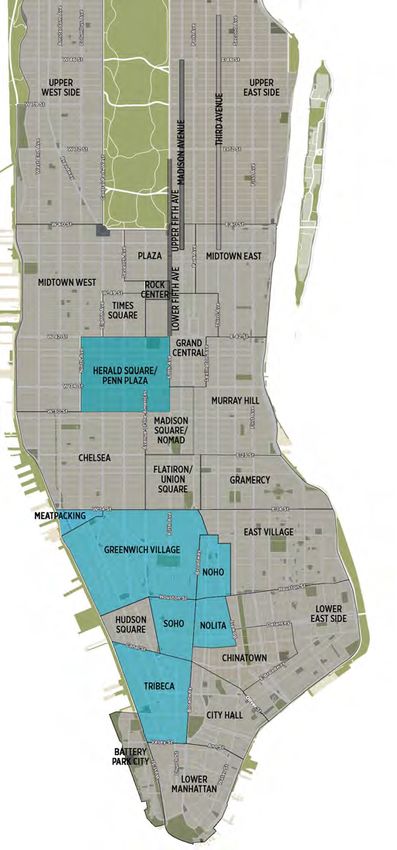
MARKET DYNAMICS
IN MANHATTAN

“The impact of rapidly advancing consumer
technology is forcing us as an industry to rethink more
than our approach to physical stores. It is redefining
the way we live; and we are privileged to be at the
forefront of some of the newest global trends here in
New York City.”
Michael Azarian, Senior Director
Manhattan Retail Services at Cushman & Wakefield

“New York City remains the number one Gateway
City in the world, and is more of a magnet for talent
than ever before. With a vast and highly diverse
economy, new retail opportunities—such as Hudson
Yards, the Financial District, and Brooklyn’s
Williamsburg—will continue to evolve with dynamic
live/work/play/shop environments. We expect retail
innovation to continue in a positive direction as the
dynamics of supply and demand continue to work
through the macro retail environment.”
Alan Schmerzler, Vice Chairman
Manhattan Retail Services at Cushman & Wakefield

10   MANHATTAN RETAIL MAJOR MARKETS REPORT
2019-2020 EDITION 11
MANHATTAN’S
                  MULTIPLE RETAIL
                  DRIVERS

Manhattan Cool
Streets Continue
to Emerge
As a steady stream of New Yorkers and
tourists that gravitate to areas with
new residential and hotel development,
below-average streets have unwittingly
been transformed into prime live/work/
play destinations. Since land is scarce
in Manhattan, New Yorkers fall into
underserved corridors that have gone
under the radar, and migrate there. In
return, these streets turn “cool” and
rejuvenate the areas of Manhattan that
were once undesirable.

Neighborhoods and certain streets that
have progressed include: Greenwich
Village’s Bleecker Street, Harlem’s East
and West 125th Street, and The Lower
East Side’s Bowery. Neither passing
fads nor hipster neighborhoods, these
areas have had increases in population
and median family income, essentially
causing a rise in urban living and
gentrification.

This year, mega-retail has arrived in the Lower East Side with a new development—
Essex Crossing. This project includes residential, commercial, green space, and the
150,000-square foot (-sf) Market Line marketplace that includes 100 locally sourced
food, art, and fashion vendors.

Let’s face it, affordability is the driver. Millennials move in, the demographic changes,
the neighborhood evolves, and the area becomes a hot spot. Foot traffic booms and
a new dynamic of retail follows. This is typical in Manhattan and certainly with many
‘cool’ streets around the United States.

12   MANHATTAN RETAIL MAJOR MARKETS REPORT
2019-2020 EDITION 13
MANHATTAN
MULTIPLE RETAIL DRIVERS

14   MANHATTAN RETAIL MAJOR MARKETS REPORT
Manhattan                                      has spread across Manhattan, particularly
                                               Midtown South,       has also drawn this
Millennials                                    generation. From Facebook to Spotify,
                                               Datadog to Indeed, companies are hiring
New York City has always been a top            urban-dwelling millennials and drawing
destination for young professionals to live    young talent to Manhattan.
and work, with the millennial generation
proving no different. The ideologies of        Millennials highly prioritize   proximity to
convenience, flexibility, and uniqueness       jobs and entertainment when choosing
that this consumer group values so highly      a place to live. At the forefront of public
are part of what makes life in Manhattan       transportation, New York City is accessible
so desirable. Millennials are drawn to the     by subway and bus, in addition to being
“cool-factor” of the city and its reputation   bikeable and walkable. Some of the most
for world-class experiences, shopping and      popular neighborhoods for this generation
dining.                                        to live include the Financial District (FiDi),
                                               Murray Hill/Kips Bay, East Village, and the
While many tenants are attracted to            Lower East Side.
New York for the world-class financial
institutions, the thriving tech market which

20-39                                      600,000+
AGE GROUP make                             MILLENNIALS in Manhattan,
up 37.1% of Manhattan’s                    with more than 3 million in the
population                                 Greater NYC area

59% OF                                                     $1.4
MILLENNIALS                                                TRILLION
look for physical store                                    purchasing
presence when buying online                                power by 2020

MILLENNIALS
ARE TREND-FOCUSED, DIGITALLY NATIVE,
AND PREFER TO SPEND ON EXPERIENCES
                                                                      2019-2020 EDITION    15
MANHATTAN
MULTIPLE RETAIL DRIVERS
Rise of the Pop-up Shop
Pop-up stores have become a staple in the Manhattan retail Pop-ups from
scene over the past few years. Many landlords have grown November 2018 to
more flexible in entertaining these short-term leases, allowing November 2019
brands to test the marketplace and provide customers with
new experiences. Ranging from a single day to one year, these
pop-up stores bring exclusive collaborations from established
brands and eCommerce tenants into physical stores.
These shops are appearing across the city; certain
neighborhoods are known to attract higher volumes of short-
term tenants because of their established shopping districts,
high pedestrian traffic and trend-savvy reputation. With
nearly 80 pop-up stores opening during the past year, SoHo is
the most popular destination for these short-term stores, with
a range of luxury apparel to experience-driven installations
constantly rotating throughout the neighborhood. To the east,
Nolita hosted over 30 pop-ups with a focus on streetwear and
accessories.
Of the 300+ pop-up stores that have taken over Manhattan
over the past year, 40% of those are considered “shop within
a shop” or collaborations with brands already leasing the
space. Fenty, Rihanna’s new LVMH label, popped up in June
at luxury multi-brand boutique The Webster in SoHo, marking 11 Pop-Up Shops
the first time the garments were available in the U.S. aside
from online sales. Shoewear brand Aerosoles debuted its first
pop-up store, located in Grand Central Terminal, to promote
its #ShowUp campaign featuring women from all walks of
life and what they believe in. Customers were encouraged
to try on the brand’s core 20 styles, with all orders to be
fulfilled through eCommerce. Whether it is an established 10
brand seeking to grasp a wider customer base, or new label 11
coming to the market, this style of pop-up stores can help
10
raise awareness and boost sales.
32
The remaining 60% of pop-up stores in Manhattan are
located within their own storefronts, ranging from boutiques 77
to museum-like installations. Many online retailers are using
this shorter-term approach to establish their physical store
12
presence—from Revolve to Shopbop, ThirdLove to Brooklinen,
a pop-up allows customers to connect with the brand in real
life. In addition to their product offerings, it is typical for a
pop-up to host various events such as influencer panel
discussions, on-site customization services or styling events
to entice shoppers to visit the store. If a long-term presence
in New York is desired, this pop-up method can pave the way.
=Pop-Ups Present
16 MANHATTAN RETAIL MAJOR MARKETS REPORTExperiential Retail the interaction of its visitors. Recently, Polaroid
opened a SoHo pop-up store allowing guests to
According to headlines about New York City retail, transform images from their cell phones into polaroid
it’s all about the “experience” in this day and age. prints using the brand's new Lab device. Similarly,
While to an extent this saying has been overused, online subscription retailer Fabletics opened its
the principal remains true. Consumers like to engage first physical store in Manhattan during 2019, a pop-
with products and services on a deeper level and up featuring an Instagram-friendly boxing ring for
there has been no shortage of this opportunity over shoppers to put their athletic apparel to action.
the past few years. While product sales remain a focus, these stores are
also focused on familiarizing consumers with the
With the rise of social media among millennial and
brand and its offerings.
Gen Z (ages 7-22) consumers, the importance of
making a space visually pleasing or “instagrammable” Interactive retail has also expanded in more
is a factor that trend forward retailers are more permanent ways, with concepts such as Five Iron
than familiar with. Creating unique and immersive Golf and Lucky Strike. Set to make its debut in
representations of their brand can help spread the NoMad neighborhood is Swingers: The Crazy
awareness online, and encourage interaction with Golf Club, a UK-based indoor golf experience with
products and services. Short-term installations multiple courses, cocktail bars and clubhouse
such as the Rose Mansion, Candytopia, Museum with two locations in London. Open now on Fifth
of Pizza, and Friends—"The One with the Pop Up" Avenue in the Flatiron district is family experience
have allowed visitors to explore curated installations toy store CAMP, where children are encouraged to
designed to be social media-friendly. interact with various exhibits and workshops. These
immersive concepts draw customers to involve
Established brands looking to connect with the
themselves in activities beyond eating and shopping,
modern New Yorker also have shifted away from
therefore extending their time and investment.
traditional store concepts to those that encourage
Trending Tenants
2019-2020 EDITION 17MANHATTAN
MULTIPLE RETAIL DRIVERS
Manhattan Retail Construction Peaked in 2019—completion
of Hudson Yards complex
2,000,000
2,000,000
1,500,000
1,500,000
1,000,000
1,000,000
500,000
500,000
-0
2005 2006 2007 2008 2009 2010 2011 2012 2013 2014 2015 2016 2017 2018 2019 2020 2021
Sources: Cushman & Wakefield Research, CoStar
Manhattan has undergone a bulk of new retail construction since 2016 from the height of its last cycle in 2009.
At that time, new retail construction was being developed in Upper Manhattan’s Harlem. The 500,000-sf
East River Plaza paved the way for other prospective retailers looking to venture into a new urban shopping
area. Afterwards, construction slowed until 2014 when the renovations at Brookfield Place (formerly known
as the World Financial Center) added another 250,000 sf of prime renovated retail space and restaurants in a
mall-like atmosphere. More recently, Lower Manhattan’s retail construction surged with the completion of the
Fulton Transit Center on Broadway, the $1.7 billion redevelopment of the South Street Seaport/Pier 17, and the
Westfield World Trade Center.
Top New Retail Projects
More Construction=More Retail!
COMPLETION
New for 2019 in Midtown, the highly anticipated Hudson Yards mixed-use commercial,
residential, hotel and retail development has bolstered consumer spending on the far
The Shops west side of Manhattan. Housing 1.0 million square feet (msf) of retail space, Hudson
at Hudson Yards is set to draw over 20 million annual visitors. At a cost of $25.0B, it is anchored Q1 19
Yards by a 350,000-sf Neiman Marcus department store, 100 shops and 25 restaurants.
Additional transportation via the expansion of the No. 7 train affords this development
ease of access.
Situated at West 57th Street in Columbus Circle, this highly anticipated 7-story,
320,000-sf department store opened its doors at the base of the luxury residential
Nordstrom Central Park Tower. Extell Development’s supertall skyscraper on “Billionaire’s Row” is Q4 19
Flagship the second-tallest tower in the United States, boasting Central Park views and
anchored by the new Nordstrom in the base, earning the nickname Nordstrom Tower.
Situated in Midtown South’s Lower East Side, this billion dollar, six-acre site
encompasses nine properties, seven of which have either opened or are still under
construction, affordable housing, residential condos, a food market, the Market Line
Essex beer hall, gallery space, a Regal cinema, a bowling alley, public park, senior living Q2 24
Crossing residences, and commercial office space. The final building, 121 Stanton Street, is not
expected to open until 2024 and will be mixed-use, featuring condos and additional
retail.
18 MANHATTAN RETAIL MAJOR MARKETS REPORTManhattan Food Halls
Dining options galore
Millennials and tourist dollars feed Manhattan’s thriving culinary scene.
Food and beverage remain the driving force for local retail. The international
Manhattan F&B
composition of the market creates an ideal testing ground for new food leases increased
concepts that cater to a diverse population. Food halls are riding that wave
and allow consumers to interact with food and with the physical space in 21.1% YOY
different ways depending on the seating, setup and social events. Food
halls are multisensory experiences of taste, smell, sound and texture that
allow customers to have unique experiences around food and in communal
dining environments.
As such, food halls serve as key amenities within some of Manhattan’s
largest new mixed-use developments. They are also being used to revitalize
dated and/or more traditional retail projects. Any area in Manhattan with
high foot traffic is witnessing the growth of the food hall concept. Older
food hall concepts, including the Plaza Hotel Food Hall, Chelsea Market,
and Turnstyle Underground Market, have set the pace for newer eateries of
kiosks and stalls. New halls in Manhattan include 8SIA, with Asian inspired
street food, and The Essex Market at the Essex Crossing development,
housing dozens of international tastes.
With the rapidly growing popularity of food halls, there has been some
concern about overbuilding in Manhattan. For the most part, food halls in
the county are thriving and positively impacting the bottom line of many
developments. While they compete with traditional restaurant concepts,
food halls give restaurateurs an overall cheaper operating model, requiring
FOOD HALLS
significantly less in start-up capital. For that reason, they are not a fad. They
represent a new operating model that provides users with lower costs and,
if set up and located correctly, significantly higher levels of foot traffic.
Food Hall Commitments
2019
DELIVERY
K Food Korean Food Hall leased 22,927 sf at
2020
Gallery 218 West 40th Street
Expanding brand leased 15,000 sf at Summer
Urbanspace 135 West 50th Street 2020
Food Halls in
Expanding brand leased 11,134 sf at
Urbanspace 152 West 52nd Street
Q1 20 the U.S. by
year-end 2020
A garment district, art deco inspired
The Deco food hall leased 8,000 sf at 231 West Q3 19
39th Street
2018-2019 EDITION 19RETAIL CHALLENGES
MANHATTAN
eCommerce Online Destination retail is one of the only defenses bricks-and-
mortar stores have against their online counterparts.
And in the Bricks-and- Midtown South’s SoHo submarket is Manhattan’s
Mortar Store main pop-up target destination, where stores create
a physical experience that captures the shopper’s
eCommerce flourished over the past decade, increasing its attention, including “Instagramable” pop-up shops and
share of retail sales, which are slated to comprise almost interactive displays which cannot occur online.
15% of all sales by 2020. eCommerce is also a contributor
to reduced store-traffic and several retailer big-box chain Stand-alone bricks-and-mortar storefronts create
bankruptcies. An additional factor is the spending habits direct “retail touchpoints” with customers. Entering
and preferences of millennials, who are not enticed by their favorite store to browse and shop affirm their
traditional retail stores. They demand convenience and a brand awareness and loyalty. New physical stores
fair price, and if they are out shopping, a unique, in-store that subscribe to short-term leases can also be part
experience is always a plus. In order to draw them away of online retailers’ fulfillment strategy. Online brands
from the comfort and flexibility online shopping provides, prefer a Manhattan location to start, as it comes
bricks-and-mortar stores must offer something that cannot equipped with the density, consumer-buyer power, and
be attained online—a compelling and unique environment. diverse customer base that can support the creation
of physical stores. Many new developments that
Retailers in Manhattan have learned how to adapt and are proposed or under construction actively pursue
connect the offline storefront with an online presence. online brands because they are the most in demand.
Many are reinventing their business models, embracing The pop-up trend will continue to accelerate as more
modern technology to incentivize and retain customers, online brands test the waters as they move into new,
through such features as ads for online coupon codes, free untapped retail concepts.
shipping, and bulk discounts.
20 MANHATTAN RETAIL MAJOR MARKETS REPORT$7.16B
spent globally
on Amazon
Prime day
2019
2018-2019 EDITION 21RETAIL CHALLENGES
IN MANHATTAN
eCommerce Acceleration
Impact on Store Closures
14,000
eCommerce portion of retail 15.0% 16.0%
sales up 490 basis points
12,000 14.0%
12.0%
10,000
10.1% 10.0%
8,000
8.0%
6,000
6.0%
4,000
4.0%
2,000
2.0%
0 0.0%
2010 2011 2012 2013 2014 2015 2016 2017 2018 2019 2020
Major Chain Forecast Major eCommerce % of
Closures Chain Closures Total Retail Sales
Source: Company filings, Department of Commerce, Cushman & Wakefield Research
What’s Really Happening?
It’s Not Just About eCommerce
Convergence of Four Factors
ACCELERATION OF OVER-RETAILED
NEW COMMERCE MARKETPLACE
SHIFTING CONSUMER
RACE-TO-THE-BOTTOM PATTERNS
DISCOUNTING Millennials’ Spending Habits
22 MANHATTAN RETAIL MAJOR MARKETS REPORTRe-energizing Empty
Storefronts
The “retail apocalypse” makes a good press headline, but that’s not really
what is happening. In 2018, the pace of new store openings is outdistancing
store closings. While some chains and retail sectors are being hit harder
than others, the overall trend nationally is more positive. Manhattan is seeing
many of those same dynamics where retail is always in a state of change.
Stores are constantly innovating, focusing on flexibility and adaptability to
capture customers. Sometimes ideas work and sometimes they do not.
Nothing can remain in a static state if retail is to survive.
Empty storefronts are more common in Manhattan for many reasons.
Retailers are learning to adapt to online competition and to changing
neighborhood characteristics. Several chains are closing larger spaces and
opening smaller retail footprints in the same areas. Besides lowering costs,
that allows stores to tailor the shopping experience for the local area as well
as to quickly change and customize the store experience. Some retailers are
even using these concepts as another leg in last-mile logistics.
Rents also play a factor in empty storefronts along some of Manhattan’s
top shopping streets. Stores there saw rents doubled or tripled in the last 10
years. Over the last 24 months, rents stagnated as landlords’ expectations
stayed at one level and many tenants’ ability to cover operating expenses
and make a profit were lower.
Another way owners are re-energizing retail space to build foot traffic is
by repurposing it to other, complementary uses. In some centers, the total
amount of retail square feet may be reduced and replaced with entertainment,
office and even some residential space to create an atmosphere in which
people want to come, stay and spend money. Owners are trying to provide
an alternative environment to online shopping where people can gather and
interact. In Manhattan, we see that in the development of more outdoor and
community space within new projects in the urban core, like Brickell City
Centre and ManhattanCentral, and in suburban locations in South Dade and
in Coral Gables. It is one of the reasons food halls took off in the county, and
a proven and profitable concept that works in Manhattan.
2019-2020 EDITION 23INTERCONNECTED
SUBMARKETS
UPPER WEST SIDE
UE
EN
AV
UPPER EAST SIDE
ON
DIS
MA
E
AV
E
TH
NU
FIF
VE
P ER
DA
MIDTOWN WEST
PLAZA
IR
UP
ROCK
TH
CENTER
VE
TIMES
HA
IFT
SQUARE
MURRAY HILL
RF
E
HERALD
SQUARE/ LOW
GRAND
PENN PLAZA
CENTRAL
CHELSEA MADISON
SQUARE/
NOMAD MURRAY HILL
MEATPACKING
FLATIRON/
UNION
SQUARE
GREENWICH
GRAMERCY
VILLAGE
HUDSON NOHO
SQUARE EAST VILLAGE
SOHO
NOLITA
TRIBECA
CHINATOWN
LOWER EAST
BATTERY SIDE
PARK CITY HALL
CITY
LOWER
MANHATTAN
24 MANHATTAN RETAIL MAJOR MARKETS REPORT2019 Retail Asking Rents
NEIGHBORHOOD LOW HIGH AVERAGE
LOWER FIFTH AVENUE $500 $1,300 $840
UPPER FIFTH AVENUE $1,400 $4,000 $2,697
MADISON AVENUE $500 $1,800 $937
SOHO $115 $1,300 $359
THIRD AVENUE $100 $450 $235
TIMES SQUARE BOWTIE $1,500 $2,800 $2,044
UPPER WEST SIDE $190 $782 $334
FLATIRON/UNION SQUARE WEST $282 $600 $355
MEATPACKING $150 $700 $363
HERALD SQUARE/WEST 34TH STREET $240 $1,000 $564
LOWER MANHATTAN $175 $625 $359
Source: Cushman & Wakefield Research. All rental rates are NNN per square foot.
2019-2020 EDITION 25INTERCONNECTED SUBMARKETS LOWER FIFTH AVENUE The stretch of Fifth Avenue from 42nd to 49th Street, often referred to as Lower Fifth Avenue, falls into the Grand Central submarket of Midtown Manhattan. Local residents, employees, and tourists travel down Fifth Avenue on their way to Grand Central Station and Bryant Park, finding themselves in a major urban retail shopping corridor. Moving south on Fifth Avenue, below Saks Fifth Avenue at 49th Street, the dynamic of the retail stores shifts from upscale designer names to more trend-casual and fast-fashion shops, including H&M, Zara, lululemon, and Urban Outfitters. UPPER FIFTH AVENUE The upper stretch of Fifth Avenue, between 49th and 60th Streets, has always been regarded as Manhattan’s globally- known ultimate luxury shopping destination. Both local residents and tourists are attracted to this area for its high-end, name brand designers, and upscale retail boutiques. This corridor falls within the Plaza district of Midtown Manhattan, which begins with the illustrious, internationally-recognized Fifth Avenue. The lavish stores located on this prestigious Avenue include Tiffany & Co., Louis Vuitton, Harry Winston, Bulgari, Prada, and Gucci. However, a new dynamic has recently transpired here, as athletic wear retailers such as Under Armour and Nike are slated to expand and have opened new flagships on Upper Fifth Avenue. MADISON AVENUE The Madison Avenue corridor from East 57th Street to East 72nd Street is considered New York City’s luxury submarket, home to top jewelry and haute couture fashion retailers and exclusive international jewelers. This Midtown shopping corridor continues to be the preferred scene for global retailers searching for elite upscale locations where prominence is assured. Madison Avenue is fueled by brand recognition high-end boutiques searching for the most successful upscale location. SOHO SoHo, which stands for “South of Houston,” was once famous as a destination for artists and galleries. Today, SoHo is one of New York City’s most coveted shopping destinations. It is the center of the Cast Iron Historic district and has the largest population of cast iron buildings in the world. Retailers leverage SoHo’s distinctive storefronts, hip vibe, and pedestrian- friendly environment to elevate merchandise sales and establish unique, highly stylized stores. As a result, many of the world’s most recognized retail brands see this Midtown South submarket as the ideal showcase. High-end designers such as Prada, Gucci, Chanel, and Dolce & Gabbana, coexist with fast fashion stores including Zara, H&M, and Forever 21, creating an eclectic shopping experience for foreign and domestic visitors alike. The main shopping block, Broadway, is home to retailers including Under Armour, Bloomingdales, Nike, G-Star Raw, and Muji. Over the past few years, SoHo has become the premier neighborhood for pop-up stores in New York City. Many landlords are accepting shorter lease terms for innovative, first-time tenants eager to test their brand in a physical store. 26 MANHATTAN RETAIL MAJOR MARKETS REPORT
THIRD AVENUE
The Upper East Side of Manhattan is known as one of New York City’s most affluent neighborhoods. Third Avenue is
the main shopping avenue of the Upper East Side and houses an abundance of home-related retailers and home décor
stores including Ethan Allen, Home Depot, and Gracious Home. The surrounding Upper East Side submarket includes fine
residential towers, top-tier private and public schools, luxury hotels, and many of the best hospitals in the United States.
Strong neighborhood retailers along Second Avenue anchor this neighborhood as well, and the largely residential Upper
East Side population also attracts beauty spas, medical tenants, and a surplus of health clubs. Further west, Lexington
Avenue is home to Bloomingdales and Hunter College, fueling area foot traffic. With the new Second Avenue subway now
serving the Upper East Side, north of East 59th Street, more tourists and shoppers are finding their way to stores along
Second, Third, and Lexington Avenues.

TIMES SQUARE BOWTIE
Times Square, often referred to as the "Crossroads of the World," is appropriately nicknamed because of its position in
the intersection where Broadway and Seventh Avenue intersect at West 45th Street running from West 42nd Street to
West 47th Street, and is also known as the “Bow Tie”. This Prime Midtown location offers unparalleled retail exposure and
signage opportunities, as it is the most highly trafficked location in New York City. Times Square, an iconic world landmark
emblematic of New York City, is also frequently referred to as the “Theatre District,” as it is home to many of Manhattan’s
Broadway theatres hosting the world’s most renowned musicals and plays. With its mix of name-brand stores, restaurants,
and live entertainment venues, this corridor attracts millions of visitors and tourists each year. An astonishing 350,000
people walk through Times Square every day. And below ground, there are 12 subway lines servicing more than 65 million
riders annually.

UPPER WEST SIDE
The Upper West Side of Manhattan is a lively, well-established, and affluent residential neighborhood just steps away from
Central Park. Geographically, it is located between Central Park West to Riverside Drive east to west, and from West 96th to
West 60th streets, north to south. Within those boundaries, there are two prominent shopping blocks including Columbus
and Amsterdam avenues. The Upper West Side is home to several colleges, universities, and private schools. Additionally,
there are several major cultural institutions such as Lincoln Center for the Performing Arts, and the world famous Museum
of Natural History. It is home to many fine restaurants, dozens of boutique shops, and numerous corporate headquarters—
all served by major subway and bus lines. Tech giant, Apple, recently constructed its signature glass cube in the heart of
the shopping corridor on Broadway at West 67th Street near Lincoln Center. At the southern portion of the Upper West
Side lies Lincoln Square. This small two-block area bounded by West 68th Street to the north, West 66th Street to the
south, Columbus Avenue to the east, and Amsterdam Avenue to the west, and is home to several new residential towers,
gyms, multiplex theaters, and storefronts which possess key retail exposure.

                                                                                                     2018-2019 EDITION   27
INTERCONNECTED SUBMARKETS FLATIRON/UNION SQUARE WEST The Flatiron district, in Midtown South, spans the portion of Fifth Avenue between 14th and 23rd Streets, Broadway from East 17th Street to East 23rd Street, and Union Square West from East 14th to East 17th Streets, and is home to a variety of retailers, including apparel, home-furnishing stores, gyms, and restaurants. Originally known as the Toy District, the Flatiron/Union Square district was named for its iconic landmark, The Flatiron Building at 175 Fifth Avenue. Situated on 23rd Street between Fifth Avenue and Broadway, the Flatiron Building is one of New York City’s most recognizable and photographed office buildings. Union Square Park anchors the center of this Midtown South submarket providing a home for farmer’s markets, street games, and a meeting place for students at nearby New York University and the New School Flatiron is fueled by affluent area residents, proximity to the New School and Union Square Park, and by this neighborhood's high desirability within the growing tech and new media industries which seek to secure trendy office space. MEATPACKING The Meatpacking district was originally home to butcher shops and meatpacking plants, and over the past few decades has evolved into one of the most popular tourist destinations for shopping and dining. Its borders run from Gansevoort Street, north to West 16th Street, Hudson to West Streets. Once considered among the grittiest of Manhattan's neighborhoods, this submarket now welcomes graphic designers, fashion design houses, museums, hotels, luxury boutiques, and several of Manhattan's finest restaurants and trendy night clubs. This Midtown South neighborhood has evolved into a high-end shopping destination driven by the success of the revitalized High Line Park (which attracts five million tourists annually), the massive Chelsea Market complex, and the new Whitney Museum, repositioning this submarket as a 24/7 entertainment district. HERALD SQUARE/WEST 34TH STREET The Herald Square/West 34th Street (Fifth Avenue-Seventh Avenue) retail corridor falls into the Herald Square/Penn Plaza submarket of Midtown Manhattan. It houses two of the most iconic landmarks in New York City— Macy’s Department Store and the Empire State Building at 350 Fifth Avenue. West 34th Street is a shopping destination for daytime workers and tourists, and is also populated by commuters traveling to Penn Station at Seventh Avenue. This stretch of retail is the home to many flagship stores of mainstream retailers, including Sephora, Footlocker, Gap, and Victoria’s Secret. Last year, Herald Square added two prominent names to its tenant roster—Midtown’s first Target department store and e-commerce giant Amazon’s second brick-and-mortar bookstore in Manhattan. LOWER MANHATTAN Lower Manhattan, located south of Vesey Street, is often referred to as "Downtown" or "The Financial District", or “FIDI”, and has transformed from a 9-to-5 work locality into a new and vibrant residential neighborhood, shoping, and tourist destination. Lower Manhattan has rapidly changed into a globally-recognized business location with robust energy. The expanded hotel and residential population, combined with continued retail leasing opportunities at the Westfield/World Trade Center development and Brookfield Place has created an exciting "buzz" in Lower Manhattan's retail leasing scene. 28 MANHATTAN RETAIL MAJOR MARKETS REPORT
2019-2020 EDITION 29
THE FUTURE OF RETAIL
                 IN MANHATTAN

Manhattan is a                                      consumer demand is significant, landlords
                                                    are eager, and new retail tenants seek their
24-hour market                                      next store space in between this changing

and does not                                        retail landscape.

stand still.                                        Manhattan is truly a gateway between
                                                    domestic and international retailers, and
So, what does this mean looking forward             they all blend together. It is where trends
into the third decade of the 21st century?          are set, not followed. While the exact future
We will cater to consumers and witness              may not be known, Manhattan’s relevance
new concepts emerge as we push through              will continue to place New York City at the
retail challenges. The city legislature will        forefront, and remains dominant in tourism
attempt to regulate increasing ground floor         and commerce, continuing upward as the
vacancies while the retail market is working        most important city for retailers in the United
to correct itself over time. But it is not always   States.
about the rents. We are in the middle of the
most dynamic, evolving retail environment:

“This is not the retail apocalypse. We are not
experiencing the ‘death of retail’. The death of
homogenous, mid-price point commodity mega chains
perhaps, but not the death of retail.”

Garrick Brown
Vice President, Retail Intelligence
Cushman & Wakefield

30   MANHATTAN RETAIL MAJOR MARKETS REPORT
2019-2020 EDITION 31
cushwakeretail.com | Twitter @cushwakeRETAIL                                                                                                #CWretail

WHAT’S
NEXT
IN RETAIL

CONTACT DETAILS
NEW YORK CITY RESEARCH
ALICIA DAURO                                                                         RICHARD PERSICHETTI
Associate Director, NYC Retail Research                                              Vice President, Tri-State Region Reasearch Lead
alicia.dauro@cushwake.com                                                            richard.persichetti@cushwake.com

CATHERINE MERCK                                                                      STEPHANIE CAMACHO
Analyst, NYC Retail Research                                                         Marketing Specialist, Tri-State Research
catherine.merck@cushwake.com                                                         stephanie.camacho@cushwake.com

CUSHMAN & WAKEFIELD MANHATTAN
1290 Avenue of the Americas
New York, NY 10104 | USA

About Cushman & Wakefield

Cushman & Wakefield (NYSE: CWK) is a leading global real estate services firm that delivers exceptional value by putting ideas
into action for real estate occupiers and owners. Cushman & Wakefield is among the largest real estate services firms with 48,000
employees in approximately 400 offices and 70 countries. In 2017, the firm had revenue of $6.9 billion across core services of
property, facilities and project management, leasing, capital markets, valuation and other services. To learn more, visit www.
cushmanwakefield.com or follow @CushWake on Twitter.

Copyright © 2019 Cushman & Wakefield. All rights reserved.
Image credits: Brandi Ibrao, Brooks Leibee, Edwardo Velazco, Frankie Cordoba, Freestocks.org, James Sulivan, Jason Briscoe, Jeff Sheldon,
Jeshoots, Lalo Hernandez, Dina Markhmutova, Meric Dagli, Muzammil Soorma, Rafael Nascimento, Rawpixel, Simson Petrol, Spencer Dahl,
Tamara Belis, Touzet Studio, The creative exchange, Ussama Azam
You can also read


