Next-Generation Technologies for a New Decade of Big Data - Silicon.de
←
→
Page content transcription
If your browser does not render page correctly, please read the page content below

Technology Brief

Next-Generation Technologies for a New Decade of
Big Data
Building on a Foundation of Technology Leadership, Timely Investments and
Proven Execution

Sridhar Chatradhi
Lenny Sharp
Scott Harlin

Prepared for:
Capacity Enterprise HDD Event
October 11, 2017
WDC Headquarters / Great Oaks Facility

                                                             -1-

                    Technology Brief | Next-Generation Technologies for a New Decade of Big Data | v1.0 |
                           ©2017 Western Digital Corporation or its affiliates. All rights reserved.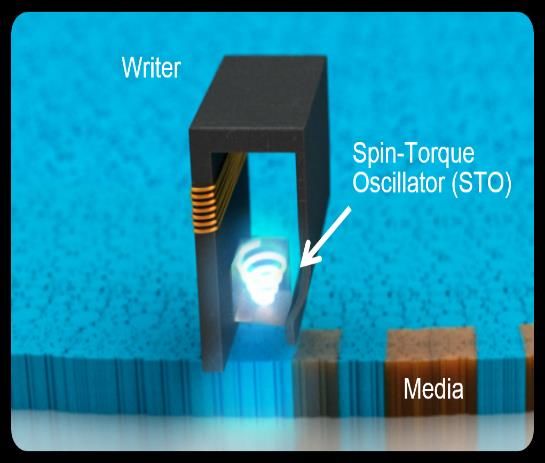
Contents
                                                                                                                                                    Page
                                                     -------------------------------------------------------------------------------------------------------

                                                     1             Introduction                                                                          3

                                                     2             Helium-Sealed Technology                                                              4

                                                     3             Multi-Stage Micro Actuator                                                            5

                                                     4             Damascene Head Process                                                                6

                                                     5             Energy-Assisted Recording:
                                                                   HAMR vs MAMR                                                                         8
                                                                   Heat-Assisted Magnetic Recording                                                     8
                                                                   HAMR Technology Assessment                                                           9
                                                                   Microwave-Assisted Magnetic Recording                                                9
                                                                   MAMR Technology Assessment                                                          10

                                                     6             Proven Execution                                                                    11

                                                     7             Summary                                                                             11

                                                     ---------------------------------------------------------------------------

SAFE HARBOR - DISLCLAIMERS
Forward-looking Statements

This document contains forward-looking statements that involve risks and uncertainties, including, but not limited
to, statements regarding our enterprise capacity hard drive products and technology positioning, the anticipated
benefits of our technologies, and customer acceptance and adoption of the technologies. Forward-looking
statements should not be read as a guarantee of future performance or results, and will not necessarily be accurate
indications of the times at, or by, which such performance or results will be achieved, if at all. Forward-looking
statements are subject to risks and uncertainties that could cause actual performance or results to differ materially
from those expressed in or suggested by the forward-looking statements.

Additional key risks and uncertainties include the impact of continued uncertainty and volatility in global economic
conditions; actions by competitors; difficulties associated with go-to-market capabilities and implementing new
HDD technologies; business conditions; growth in our markets; and pricing trends and fluctuations in average
selling prices. More information about the other risks and uncertainties that could affect our business are listed
in our filings with the Securities and Exchange Commission (the “SEC”) and available on the SEC’s website at
www.sec.gov, including our most recently filed periodic reports, to which your attention is directed. We do not
undertake any obligation to publicly update or revise any forward-looking statement, whether as a result of new
information, future developments or otherwise, except as otherwise required by law.

                                                             -2-

                  Technology Brief | Next-Generation Technologies for a New Decade of Big Data | v1.0 |
                         ©2017 Western Digital Corporation or its affiliates. All rights reserved.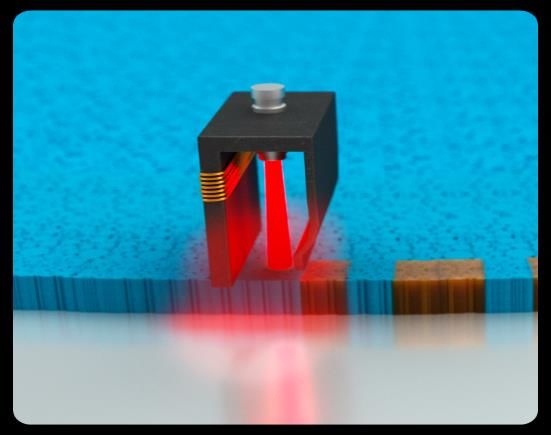
Introduction
                                                          Data is the ‘life-blood’ of an organization and the key asset that
                                                          they want to keep around for years. It must be easily
                                                          accessible, secured, and reliable within an enterprise so it can
“The value and intelligence that can                      be processed for real-time use, or analyzed in the future to
be extracted from Big Data, and other,                    extract further value or intelligence. It is for these reasons, and
large data generating applications,                       others (such as legal, regulatory, due diligence, etc.), why
                                                          organizations invest in their data. The information extracted
has created strategic opportunities
                                                          can lead to better business decisions, improved organizational
for HDD capacity expansion in the
                                                          processes, advanced technologies, and maximized returns.
enterprise.”
                                                          The world is generating, preserving and analyzing more data
                                                          per year than in the previous ten years combined – and is
                                                          expected to more than double each year going forward. Over
                                                          163 zettabytes of digital data is forecasted to be generated by
                                                          20251 - a 10x growth from 2016. That’s a lot of data being
                                                          generated by billions of people, using millions of apps, from
                                                          billions of devices.

                                                          PCs, laptops, smartphones and tablets generate most of
                                                          today’s data, but tomorrow’s data will come from connected
                                                          and autonomous vehicles, factory robots and machine sensors,
                                                          surveillance systems and drones, health and wellness wear-
                                                          ables, and many more -- creating a need for efficient storage
                                                          devices with much larger capacities.

                                                          The value and intelligence that can be extracted from Big Data,
                                                          and other large data generating applications, has created
                                                          strategic opportunities for HDD capacity expansion in the
                                                          enterprise, and a challenge that Western Digital has invested
                                                          billions of dollars to pursue.

       163 zettabytes of digital data by 2025             By delivering the best and most stable helium-sealed HDD
                                                          environment, with improved mechanical head positioning
                                                          through multi-stage micro actuation, Western Digital has
                                                          delivered higher capacities with each product generation.

                                                          As Western Digital develops the head assemblies for its leading
                                                          helium HDD portfolio, the use of the Damascene process,
                                                          coupled with energy-assisted magnetic recording technology,
                                                          will enable the company to deliver even higher HDD capacities
                                                          in the future, setting standards for others to follow.

                                                          Western Digital not only defines the future of hard drives, but
                                                          has created innovative solutions by making prudent
                                                          technology choices, investing in multiple parallel technologies,
                                                          and delivering products to market with exceptional quality and
                                                          reliability. This disciplined approach to solving industry
                                                          problems, such as capacity expansion, will evolve the hard
                                                          drive market for the next decade, and beyond.
1
    Source: IDC Data Age 2025 (March 2017)
                                                                -3-

                       Technology Brief | Next-Generation Technologies for a New Decade of Big Data | v1.0 |
                              ©2017 Western Digital Corporation or its affiliates. All rights reserved.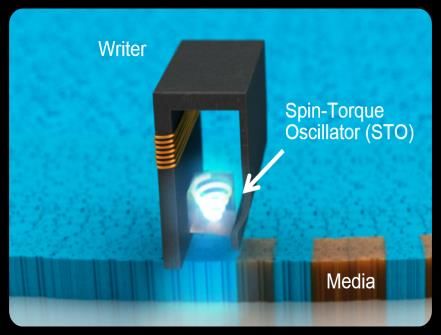
Helium-Sealed Technology
                                                            The data storage industry is undergoing a major shift in which
                                                            new market segments and storage tiers are emerging, creating
                                                            high demand for scalable, mass storage at cost-effective prices.
“Western Digital invested in,                               The Capacity Enterprise Hard Drive segment is currently
designed, and built a fundamentally                         experiencing a 40% compound annual growth rate (CAGR) in
                                                            petabytes stored.
sound helium-based hard drive
platform much earlier than its                              Helium-sealed drives are part of this segment and represent
competitors, and has delivered                              one of the most significant storage technology advancements
continual improvements each                                 in decades. Western Digital’s heritage in HDD development
                                                            pioneered helium-sealed drives with the introduction of
generation.”
                                                            HelioSeal® technology in 2013 (under the HGST brand).

                                                            HelioSeal is the foundational building block for Western
                                                            Digital’s helium-sealed drive portfolio, with four successful
                                                            generations of drives delivered to date, representing a solid
                                                            and stable field-proven design. Over 20 million HelioSeal-
                                                            based HDDs have been shipped to date worldwide.

                                                            Helium-sealed technology hermetically seals the drive housing
                                                            with an inert gas (at one-seventh the density of air). The less
                                                            dense atmosphere enables thinner disks to be used, as well as
                                                            more disks in number, delivering higher capacities in the same
                                                            physical form factor.

                                                            Less air friction also means less power required to spin the
                                                            disks, reducing total cost of ownership (TCO). As hermetically
Western Digital’s HGST-branded
Ultrastar®Hs14 helium-sealed HDD
                                                            sealed drives reduce air turbulence, the internal mechanisms
                                                            are less susceptible to corrosion and humidity changes,
                                                            delivering a higher reliability drive versus air-based devices.

                                                            With the understanding that helium-sealing HDDs is a core
                                                            technology that can keep pace with the value and growth of
                                                            data, Western Digital invested in, designed, and built a
                                                            fundamentally sound helium-based hard drive platform much
                                                            earlier than its competitors, and has delivered continual
                                                            improvements each generation.

                                                            In the third generation Ultrastar® He10 HDD (10TB2 capacity),
                                                            for example, connector pins with no through-holes were used
                                                            to improve the integrity of the seal and mitigate disk leakage.
                                                            In the fourth generation Ultrastar He12 HDD (12TB capacity),
Western Digital’s HGST-branded
Ultrastar® He12 helium-sealed HDD
                                                            an eighth disk was added, enabling a capacity increase to 12TB,
                                                            as well as development of an industry-leading 14TB shingled
                                                            magnetic recording (SMR) drive.

                                                            Western Digital is committed to deliver more capacity-
2
 One GB is equal to one billion bytes and one TB equals     enriched helium HDDs in the future, based on proven and
1,000GB (one trillion bytes) when referring to hard drive
capacity. Accessible capacity will vary from the stated     successful HelioSeal technology.
capacity due to formatting and partitioning of the hard
drive, the computer operating system, and other factors.

                                                                 -4-

                       Technology Brief | Next-Generation Technologies for a New Decade of Big Data | v1.0 |
                              ©2017 Western Digital Corporation or its affiliates. All rights reserved.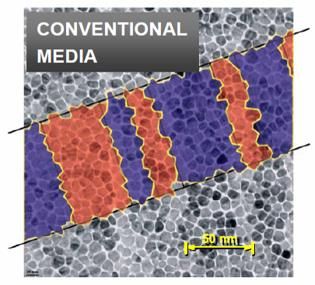
Multi-Stage Micro Actuator
                                                       An actuator reads data from or writes data to a magnetic
                                                       recording disk using a head assembly. The disk has spinning
                                                       platters and a surface area that is divided into many sectors to
“The rock-solid Western Digital                        store data. The head and actuator arm assembly, and its
micro actuator design provides                         sliders, are moved by a servo motor to the location over the
                                                       spinning platters from where data needs to be read or written.
extremely accurate head positioning
over the track, enabling increased                     As the number of tracks per inch (TPI) are increased, and,
track densities, while maintaining                     capacity is pushed to extremes, the finer the control of the
high reliability in noisy, high-                       head and actuator arm assembly must be. With a single stage
                                                       actuator to move the head assembly across tracks, it becomes
vibration environments.”
                                                       more difficult to position the head over the center of the track,
                                                       and can impact performance adversely.

                                                       To address this challenge, Western Digital was the first to
                                                       deliver multi-stage micro actuation in its third generation
                                                       HelioSeal Ultrastar He10 HDD. This micro actuator adds a finer
                                                       control stage that delivers greater accuracy of the head
                                                       assembly over smaller, narrower tracks. When implemented
                                                       into Western Digital’s helium HDD portfolio, the micro actuator
                                                       delivers better performance, data integrity and overall drive
                                                       reliability versus single stage actuation, and supports track
                                                       densities beyond 400,000 TPI.

                                                       As external disturbences (such as shock and vibration in the
                                                       server rack) can cause track misalignments, the rock-solid
                                                       Western Digital micro actuator design provides extremely
                                                       accurate head positioning over the track, enabling increased
                                                       track densities, while maintaining high reliability in noisy, high-
                                                       vibration environments.

                                                       As a core hard drive technology, micro actuation has enhanced
                                                       Western Digital’s helium platform, demonstrating another
                                                       good technology choice that the company made. With the
                                                       addition of micro actuation, its mechanical head positioning
                                                       technology is more advanced and better today than the
Western Digital’s multi-stage micro actuator           competition, and works well in tandem with the other HDD
                                                       core technologies.

                                                             -5-

                    Technology Brief | Next-Generation Technologies for a New Decade of Big Data | v1.0 |
                           ©2017 Western Digital Corporation or its affiliates. All rights reserved.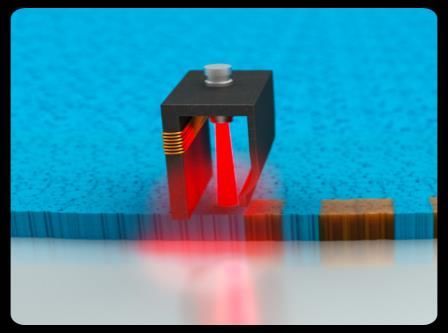
Damascene Head Process
                                                       An HDD head assembly uses a magnetic field to read data from
                                                       and write data to the surface of a magnetic recording disk.
                                                       Electrical currents flow through a coil in the write head
“Heads produced using the                              assembly that magnetizes a small area on the storage media,
Damascene process provide a TPI                        producing the magnetic field, enabling data to be recorded.
advantage over the previously-                         When bits are written, they are oriented on the disk by flipping
used dry pole process, delivering                      polarity to either a 1 or 0. The bit density is defined by two
the highest track density available                    important hard drive parameters: (1) bits per inch (BPI) along
and superior performance, with                         the track; and (2) tracks per inch. Multiplying the BPI by the
                                                       TPI results in the disk’s areal density -- or how much capacity
improved quality, better head write-
                                                       per square inch is available on the disk’s surface.
ability, and higher head yields.”
                                                       The higher the TPI, the more areal density and capacity per
                                                       square inch that is available. Scaling is limited by the write-
                                                       ability of the recording system and the track pitch, requiring a
                                                       reliable, narrow write head, with tighter spacing, to achieve
                                                       smaller tracks.

                                                       It was at this stage in its history that Western Digital was faced
                                                       with a critical strategic decision on the direction to take, and
                                                       investment to be made, in the head manufacturing process, to
                                                       increase hard drive capacities in the future. As the gains from
                                                       perpendicular magnetic recording (PMR) were slowing down,
                                                       the decisions were to either invest substantial dollars in the
                                                       Damascene head-making process for extending gains in PMR,
                                                       or rely on large gains and early productization of heat-assisted
                                                       magnetic recording (HAMR) technology.

                                                       Western Digital decided to invest in improving its current hard
Tapered write head using the Damascene process         drive technologies and pursue multiple options for increasing
                                                       enterprise capacities, versus relying solely on HAMR
                                                       technology (as it continued to be challenged with complexity
                                                       and reliability issues). The decision proved prudent and will
                                                       lead the way for Western Digital to increase enterprise
                                                       capacities over the next decade, without HAMR.

                                                       From internal testing, heads produced using the Damascene
  Milled write head using the dry pole process         process provided a TPI advantage over the previously-used dry
                                                       pole process, delivering the highest track density available and
                                                       superior performance, with improved quality, better head
                                                       write-ability, and higher head yields. A significant reduction in
                                                       adjacent track interference (ATI), was also achieved using the
                                                       Damascene process.

                                                       The main pole, and the structures of the write head in the
                                                       Damascene process are shaped and tapered by depositing and
                                                       etching magnetic and non-magnetic materials. This process
                                                       also enables the formation of a full wrap-around shield that
                                                       helps to focus the magnetic field on to the target area being
                                                       written while reducing interference on adjacent tracks.

                                                             -6-

                    Technology Brief | Next-Generation Technologies for a New Decade of Big Data | v1.0 |
                           ©2017 Western Digital Corporation or its affiliates. All rights reserved.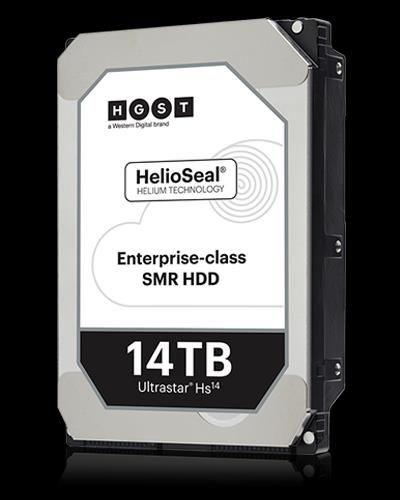
Damascene Head Process (continued)
                                                     The multi-layer of materials deposited and plated into a head
                                                     deliver finer control of its shape and dimensions, and the ability
                                                     to create complex head structures using very thin layers of
“{Western Digital} produced several                  materials, with whatever shape is required.
Hard drive innovations using the
                                                     In the previously-used dry pole process, the main pole of the
Damascene head-making process                        write head is shaped by ion milling. Side shields, along with
to obtain finer control of the head                  trailing shields, are built within a non-flat topography. As side
shape and dimensions when writing                    gaps are created through milling, the head shape and thickness
to a small, narrow track on disk.”                   control processes become more challenging than Damascene.

                                                     The dry pole process limits innovation that is possible through
                                                     material and geometry changes. Used in semiconductor
                                                     design, the Damascene process has many advantages including
                                                     better control of the head geometry (affects areal density gains
                                                     and helps mitigate interference from neighboring tracks),
                                                     better scaling of the head dimensions (affects TPI and areal
                                                     density), and better control of manufacturing process
                                                     tolerances (affects head quality and head yields).

                                                     In quick review of the HDD core competencies driven by
Value of Damascene                                   Western Digital, the company pioneered helium-sealed HDD
                                                     technology -- was the first to deliver multi-stage micro
   Better geometric          More gains
         control              More TPI               actuation for better head positioning in a hard drive – and
 Features wrap-around         Less track             produced several hard drive innovations using the Damascene
          shield            interference             head-making process to obtain finer control of the head shape
 Enables complex head      Made MAMR                 and dimensions when writing to a small, narrow track on disk.
       structures              possible
    Finer tolerance      Better head quality         The decision to improve current core HDD technologies,
         control          and higher yields          coupled with the successful development and execution of
                                                     these technologies, position Western Digital as the leader in
                                                     hard drives today, and the company that will deliver increased
                                                     hard drive capacities in the future.

                                                                            Bits per
                                                                           Inch (BPI)

                                                  Tracks per
                                                  Inch (TPI)

                                                          -7-

                 Technology Brief | Next-Generation Technologies for a New Decade of Big Data | v1.0 |
                        ©2017 Western Digital Corporation or its affiliates. All rights reserved.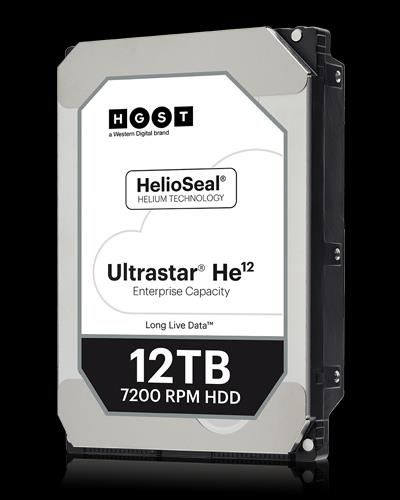
Energy-Assisted Recording:
                                                       HAMR vs MAMR
                                                       A narrow Damascene-made writing head provides fine control,
                                                       high quality, improved head yields, and writes with a focused
“In addition to significant costs,
                                                       field, avoiding interference from adjacent tracks. Leveraging
HAMR has engineering complexities                      this technology can only increase storage capacities to a certain
and manufacturing challenges that                      level, even when the most innovative platforms are used.
need to be resolved before it can
                                                       To expand capacities even further requires that the write head
satisfy the reliability demands of
                                                       size be reduced, as well as the size of the magnetic grains that
today’s data center.”                                  store bit information. Each grain within the media is a tiny
                                                       magnet that must be aligned in either an up or down direction
                                                       to perform a write operation, and helped by a magnetic field
                                                       invoked from the write head.

                                                       The challenge is whether enough magnetic field can be
                                                       generated by the smaller head in order to flip the magnets in
                                                       one direction, overcoming the energy barrier required. If the
                                                       storage media is made with low coercivity, a lower energy
                                                       barrier is required to flip the magnets, however, the media
                                                       grains become susceptible to thermal instability and the
                                                       magnets can flip inadvertently, losing integrity of data.

                                                       Therefore, increasing disk capacity requires storage media that
                                                       has a high enough energy barrier to overcome thermal
                                                       instability, as well as a write head that provides an assist to
                                                       lower the energy barrier while writing to disk. There are two
                                                       magnetic recording technologies being developed to provide
                                                       the energy-assist, either heat-assisted or microwave-assisted.

                                                       Heat-Assisted Magnetic Recording (HAMR)
                                                       Heat-assisted magnetic recording is a technology that has been
                                                       anticipated for the past 10- to 15-years, with the promise of a
                                                       HAMR-based drive. That hasn’t happened, and for very good
                                                       reason. In addition to significant costs, HAMR has engineering
                                                       complexities and manufacturing challenges that need to be
                                                       resolved before it can satisfy the reliability demands of today’s
                                                       data center.

                                                       HAMR technology is based on positioning a laser diode directly
                                                       in front of the write head assembly, and very rapidly heating
                                                       the high coercivity media that cannot be written to unless it is
                                                       heated during the writing process. As the media cools down
                                                       from the intense laser heat, the coercivity of the media
Each bit is stored in magnetic grains within           increases, holding the bits in state, and making it difficult for
continuous magnetic film -- Increasing disk            the magnetization to inadvertently change.
capacity requires smaller grains on the media,
and a smaller head to magnetize the grains             Implementing a laser in every hard drive head assembly is
                                                       expensive, driving up bill-of-materials (BOM) cost. But the real
                                                       concern is that when high heat is induced to a small, narrow
                                                       area, it causes serious reliability issues.

                                                             -8-

                    Technology Brief | Next-Generation Technologies for a New Decade of Big Data | v1.0 |
                           ©2017 Western Digital Corporation or its affiliates. All rights reserved.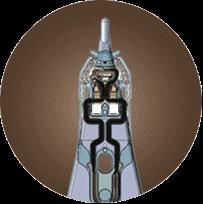
MAMR vs HAMR (continued)
                                                      The high temperatures caused by laser heating also prevent
                                                      use of the cost-effective aluminum disk material that is
                                                      generally used in today’s capacity enterprise hard drives, and
“The list of infrastructure and                       instead, requires the use of more expensive glass substrates.
reliability challenges associated
                                                      HAMR drives also require development of new materials used
with HAMR are expected to take                        to coat the media. Iron platinum is used for HAMR drives due
a longer time to resolve for a                        to its coercivity and thermal properties. Most hard drives
viable high-capacity HAMR drive.”                     typically use cobalt platinum media, which has been enhanced
                                                      over several generations and supported by a very efficient
                                                      manufacturing process.

                                                      The list of infrastructure and reliability challenges associated
                                                      with HAMR are expected to take a longer time to resolve for a
                                                      viable high-capacity HAMR drive, and includes reliably heating
                                                      a small, narrow spot with a laser diode, eliminating the
                                                      material deposits from carbon vaporization that can cause
                                                      residue on the head assembly, and reducing head/media wear-
                                                      out that may also require host software changes.

                                                      HAMR Technology Assessment
                                                      It is Western Digital’s assessment that HAMR drives will not be
                                                      commercially viable in the near term. The company will
                                                      continue to make appropriate investments in the technology,
                                                      consistent with its product investment strategy, anticipating
                                                      new innovations. At the same time, the company has chosen
                                                      to introduce a more cost-effective, more reliable solution
                                                      based on microwave-assisted magnetic recording (MAMR)
                                                      technology.

                                                      Microwave-Assisted Magnetic Recording (MAMR)
                                                      Western Digital has invested in and developed MAMR
In a HAMR drive, a laser diode heats the media
to assist in magnetization
                                                      technology that uses a microwave field generated from a spin
                                                      torque oscillator (STO). In this method, the STO located near
                                                      the write pole of the head generates an electromagnetic field
                                                      that allows data to be written to the perpendicular magnetic
                                                      media at a lower magnetic field.

                                                      The magnetic grains on disk are similar to spinning gyroscopes
                                                      that are stable in either an up or down direction in the absence
                                                      of an external field. When a sufficient magnetic field is applied
                                                      in the opposite direction of the current state of the magnets,
                                                      the polarity flips in the direction of the applied field. Applying
                                                      an additional field from the STO can flip the magnets more
                                                      quickly, and at a lower magnetic field.

                                                      While the theory behind MAMR has been known in the
                                                      industry, and in academia for many years, producing a
                                                      manufacture-able head that demonstrates the MAMR effect,
                                                      was elusive.

                                                            -9-

                   Technology Brief | Next-Generation Technologies for a New Decade of Big Data | v1.0 |
                          ©2017 Western Digital Corporation or its affiliates. All rights reserved.
MAMR vs HAMR (continued)
                                                       Western Digital’s expertise in thin film magnetics, as well as the
                                                       company’s understanding of spin transport physics through its
                                                       research work on spintronic devices (widely used as read-back
“Western Digital’s MAMR technology                     sensors in read heads for the past twenty years), helped to
is now ready for prime time, and                       advance MAMR technology.
provides a more cost-effective, more                   The technical capabilities of the STO, coupled with the
reliable solution, leveraging existing                 flexibility of the Damascene head-making process, enabled a
PMR competencies and                                   complex head structure that embeds a tiny, yet effective STO,
infrastructure.”                                       creating a breakthrough in head design, while achieving high
                                                       capacity gains with high reliability.

                                                       From internal testing, MAMR technology is demonstrating
                                                       higher gains than the best PMR heads currently available, and
                                                       shows promising areal density growth. Lifetime reliability tests
                                                       show that the median time to failure of MAMR heads is one
                                                       hundred times better than HAMR heads. Additionally,
                                                       reliability tests over a population of heads show that the write
                                                       lifetime hours demonstrated for 99.99% of MAMR heads is
                                                       several orders better than the write lifetime hours for 99.99%
                                                       of HAMR heads.

                                                       As a result, Western Digital’s MAMR technology is now ready
                                                       for prime time, and provides a more cost-effective, more
                                                       reliable solution, leveraging existing PMR competencies and
                                                       infrastructure. Academic studies also show that MAMR also
                                                       has the capability to extend areal density gains to 4Tb per
                                                       square inch (in2), and beyond, delivering significantly better
                                                       gains than drives shipping today (SMR drive gains equal
                                                       1,300Gb/in2, while PMR drive gains equal 1,100Gb/in2).

                                                       Building on a solid technology foundation, Western Digital is
                                                       investing in the advanced Damascene process, advanced micro
In a MAMR drive, the spin-torque oscillator (STO)
                                                       actuation, and continued research in MAMR technology to
generates a microwave field to provide assistance
when magnetizing the grains prior to a write           extend track densities to over one million tracks per inch. The
                                                       company has developed a technology roadmap, with multiple
                                                       generations of capacity enterprise products that can address
                                                       the exploding growth of data being generated.

                                                       MAMR Technology Assessment
                                                       Given the company’s MAMR innovations, Western Digital feels
                                                       that the data storage industry can now benefit from increased
                                                       capacities with MAMR technology and will productize MAMR-
                                                       based drives for availability in 2019.

                                                       As MAMR is an energy-assisted magnetic recording technology
                                                       that has been added to four generations of successful helium-
                                                       sealed technology, Western Digital sees enough growth to
                                                       productize MAMR sooner, considering the many engineering,
                                                       manufacturing and reliability challenges HAMR will need to
                                                       overcome in the next few years.

                                                            -10-

                    Technology Brief | Next-Generation Technologies for a New Decade of Big Data | v1.0 |
                           ©2017 Western Digital Corporation or its affiliates. All rights reserved.
Proven Execution
Western Digital has a long, successful heritage in hard drive
innovation having developed the world’s first hard disk drive
(in 1956), and since then, has introduced many breakthrough
“Western Digital’s leading position technologies. The company owns over 7,000 patents in hard
in data storage technologies, drive technology and is the undisputed units shipped leader.
solutions, and devices, for a wide In 2013, the company introduced HelioSeal technology and the
variety of applications and work- industry’s first helium-sealed HDDs (HGST branded), and has
loads, places them in a powerful delivered four generations and over 20 million units shipped
position to define the future of data- worldwide.
centric compute and storage As the economics associated with capacity enterprise data
architectures.” storage is burgeoning for the next decade, Western Digital is
committed to a new generation of capacity enterprise HDDs,
driven by pioneering MAMR technology.
Western Digital is widely regarded for the unsurpassed quality
and reliability of its HDD solutions over the years. Continuous
improvements to each product generation, coupled with a
commitment to excellence, will enable the company to achieve
a 15% CAGR in enterprise hard drive storage capacity.
Western Digital’s Leading Position
in Hard Drive Storage:
Summary
As the scale of data continues to increase through Big Data and
Fast Data demands, and the diversity of application workloads
expand, the world will need new data storage technologies and
Advanced
HelioSeal Micro architectures that deliver both high-performance and
Technology Actuation increased capacities, with the right fit of value and capabilities.
As such, flash-based SSDs and capacity enterprise HDDs will
coexist far into the future.
Western Digital’s leading position in data storage technologies,
solutions, and devices, for a wide variety of applications and
MAMR with
Advanced workloads, places them in a unique position to influence the
Damascene future of data-centric compute and storage architectures.
With the introduction of MAMR technology, the company is
positioned to expand enterprise capacity over the next decade,
and beyond.
*Areal density gains ###
*Data center class reliability
HDD Manufacturer 2016 Units 2016 Market
Shipped Share
Western Digital (WDC) 175.51 41.4%
Seagate 155.01 36.6%
Toshiba 93.71 22.1%
Totals: 424.07 100.1%
Source: TrendFocus
-11-
Technology Brief | Next-Generation Technologies for a New Decade of Big Data | v1.0 |
©2017 Western Digital Corporation or its affiliates. All rights reserved.Comparing
MAMR vs HAMR:
MAMR HAMR
Cost Similar to PMR technology Added Costs (laser assembly, glass media,
iron platinum coating)
Complexity Leverages current PMR Requires new materials, re-engineering, and
technologies supply chain changes
Reliability High reliability without inducing Serious reliability issues when heat is induced
heat on the media to a small, narrow area
Ecosystem Readiness Plug-and-Play Requires host software changes to manage
wear-leveling
Manufacture-ability MAMR drives in demonstration today – No HAMR drives available today –
1st product anticipated in 2019 Many cost and reliability challenges
Western Digital, the Western Digital logo, the HGST logo, HelioSeal, and Ultrastar are registered trademarks or trademarks of
Western Digital Corporation or its affiliates in the US and/or other countries. All other marks are the property of their respective
owners.
REFERENCES
1. “Advantage of MAMR Read-Write Performance,” IEEE Journals & Magazines, May 18, 2016,
http://ieeexplore.ieee.org/document/7471502/?reload=true
2. “Hard Drive Actuator Assembly,” Secure Data Recovery Services,
https://www.securedatarecovery.com/services/hard-drive-recovery/hard-drive-actuator-assembly
3. “HDD Actuator,” HDD Surgery, http://hddsurgery.com/blog/hdd-actuator
4. “Heat Assisted Magnetic Recording (HAMR),” Intevac,
http://www.intevac.com/thin-film/hard-drive-media/heat-assisted-magnetic-recording-hamr/
5. “Magnetic write head having a recessed high moment portion of the wrap-around shield,” patent US 9036299 B2,
HGST, July 24, 2013, http://www.google.sr/patents/US9036299
6. “Microwave assisted magnetic recording technologies and related physics,” IOPscience,
http://iopscience.iop.org/article/10.1088/0022-3727/48/35/353001/meta
7. “20TB Hard Drives Will be Made of Glass,” ExtremeTech, Joel Hruska, September 5, 2017,
https://www.extremetech.com/computing/255048-20tb-hard-drives-made-glass-substrates
8. “The Need for HAMR is Heating Up,” Forbes, Tom Coughlin, September 3, 2016,
https://www.forbes.com/sites/tomcoughlin/2016/09/03/the-need-for-hamr-is-heating-up/#6416cf854ea2
9. “WD Launches 10TB Red and Red Pro,” PC Perspective, Allyn Malventano, May 17, 2017,
https://www.pcper.com/news/Storage/Western-Digital-Launches-10TB-Red-and-Red-Pro
10. “What is an Actuator,” Computer Hope, April 26, 2017, https://www.computerhope.com/jargon/a/actuator.htm
11. “Head and Media Challenges for 3 Tb/in2 Microwave Assisted Magnetic Recording,” IEEE Transactions on Magnetics,
July 2014, Mike Mallary, Kumar Srinivasan, Gerardo Bertero, Dan Wolf, Christian Kaiser, Michael Chaplin, Carl Elliott,
Mahendra Pakala, Qunwen Leng, Francis Liu, Yiming Wang, T.J. Silva, Justin M. Shaw, Hans T, Nemnbach,
http://dx.doi.org/10.1109/TMAG.2014.2305693
-12-
Technology Brief | Next-Generation Technologies for a New Decade of Big Data | v1.0 |
©2017 Western Digital Corporation or its affiliates. All rights reserved.You can also read


