OFFICIAL PLAN March 2018 - Russell Township
←
→
Page content transcription
If your browser does not render page correctly, please read the page content below
OFFICIAL PLAN
March 2018
Photo Credits on Cover Page (from left to right, line by line):

Image 1: Township of Russell
Image 2: J. Paul Deveau
Image 3: Sylvie Brault
Image 4: J. Paul Deveau
Image 5: Roland Piette
Image 6: Roland Piette
Image 7: Eric Deschamps
Image 8: J. Paul Deveau

TABLE OF CONTENTS
Section 1 OVERVIEW ................................................................................................... 1
   1.1      Role of the Official Plan ............................................................................................................... 1
   1.2      Structure of the Official Plan ........................................................................................................ 2
   1.3      How to Read the Official Plan ...................................................................................................... 3
   1.4      Administration of the Official Plan ................................................................................................ 3

Section 2 STRATEGIC DIRECTIONS........................................................................... 7
   2.1      Vision ........................................................................................................................................... 7
   2.2      Guiding Principles ........................................................................................................................ 7
   2.3      Objectives .................................................................................................................................... 8
   2.4      Growth Forecast ........................................................................................................................ 11

Section 3 GENERAL POLICIES ................................................................................. 13
   3.1      Principles of Growth ................................................................................................................... 13
   3.2      Community Design .................................................................................................................... 15
   3.3      Generally Permitted Uses .......................................................................................................... 21
   3.4      Residential Development ........................................................................................................... 25
   3.5      Community Hubs ....................................................................................................................... 26
   3.6      Contaminated Sites ................................................................................................................... 27
   3.7      Employment Areas .................................................................................................................... 28
   3.8      Parks, Leisure Areas and Greenspaces .................................................................................... 29

Section 4 LAND USE DESIGNATIONS ...................................................................... 31
   4.1      Village Core ............................................................................................................................... 31
   4.2      Residential ................................................................................................................................. 34
   4.3      Multi-Unit Residential ................................................................................................................. 36
   4.4      Open Space ............................................................................................................................... 37
   4.5      Commercial ................................................................................................................................ 38
   4.6      Business Park ............................................................................................................................ 39
   4.7      Industrial Park ............................................................................................................................ 40
   4.8      Commercial Park ....................................................................................................................... 42

Section 5 INFRASTRUCTURE ................................................................................... 44
   5.1      Municipal Services ..................................................................................................................... 45
   5.2      Transportation ............................................................................................................................ 51
   5.3      Utilities ....................................................................................................................................... 61

Section 6 NATURAL HERITAGE................................................................................ 62
   6.1      Natural Heritage Features ......................................................................................................... 62
   6.2      Forested Areas .......................................................................................................................... 62
   6.3      Trees and Canopies .................................................................................................................. 63
   6.4      Wildland Fire Hazards ............................................................................................................... 63
   6.5      Castor River Corridor ................................................................................................................. 63
   6.6      Adjacent Lands .......................................................................................................................... 65
   6.7      Water ......................................................................................................................................... 65
   6.8      Source Water Protection............................................................................................................ 65
   6.9      Climate Change ......................................................................................................................... 66
   6.10     Energy........................................................................................................................................ 66

Section 7 CULTURAL HERITAGE ............................................................................. 69
Section 8 HEALTH AND SAFETY .............................................................................. 71
   8.1      Hazard Areas ............................................................................................................................. 71

                                                        Official Plan – January 2018                                                                       i
Township of Russell
TABLE OF CONTENTS
                         Section 9 IMPLEMENTATION .................................................................................... 73
                           9.1      Introduction ................................................................................................................................ 73
                           9.2      General ...................................................................................................................................... 73
                           9.3      Development Control ................................................................................................................. 74
                           9.4      Community Improvement........................................................................................................... 83

                         Section
                         10             SCHEDULES .............................................................................................. 87
                         APPENDIX A – Glossary ............................................................................................... A

                                                                           Official Plan – January 2018
                    ii                                                                                                                                Township of Russell
1

                                                                                                                    OVERVIEW
Section 1 OVERVIEW
1.1    ROLE OF THE OFFICIAL PLAN
The Ontario Planning Act requires municipalities to prepare and adopt an
Official Plan to provide guidance for the physical development of
communities. As a lower-tier municipality, the Township of Russell is subject
to the policies of the United Counties of Prescott and Russell Official Plan,
which was adopted by the Untied Counties of Prescott-Russell Council on
August 26, 2015 and was approved by the Ministry of Municipal Affairs and
Housing on March 22, 2016 (herein referred to as the ‘County Official Plan’).
However, the County Official Plan grants authority to local Councils to adopt
an Official Plan for the municipality or a specific part of the municipality.

On this basis, the role of the Township of Russell Official Plan is to guide and   Areas subject to Official Plan
direct the use of land within the Township’s four Villages (Embrun, Russell,
Limoges, and Marionville), the Commercial Parks and the Industrial Park
adjacent to Highway 417. The boundaries of these areas are illustrated on
Schedules A1-A5 and correspond to the boundaries of their respective policy
designations as per the County Official Plan (Urban Policy Area, Community
Policy Area, or Trade and Industry Policy Area). This Official Plan provides a
vision for the future growth within these areas and a policy framework to guide
their physical development for a period of 20 years, i.e. until the year 2036.
These areas remain subject to the County Official Plan policies, which must
be read in conjunction with this document. With the exception of the
Commercial Parks and the 417 Industrial Park, the scope of the Township of
Russell Official Plan does not include the areas located outside the Village
boundaries, which are entirely subject to the policies of the County Official
Plan.
Key map of the United Counties of Prescott and Russell     Key map of the Township of Russell

                                          Official Plan – January 2018
Township of Russell                                                                                       1
1
OVERVIEW
Conformity to County Official This Official Plan was written to conform to the County Official Plan. In order
Plan to avoid overlap with the County Official Plan policies, several areas that were
deemed not to require more specific policy direction are not repeated in this
Official Plan, or are only addressed in a cursory manner. In some of these
cases, direct reference to the County Official Plan is included.
Consistency with Provincial This Official Plan is also consistent with the Provincial Policy Statement, and
Policy Statement in particular to the new policies adopted in 2014 relating to matters such as
intensification, brownfields, employment lands, air quality, and energy
consumption. Furthermore, this Official Plan reflects matters of provincial
interest identified in the Planning Act and changes to the Planning Act
enacted through Bill 51 and Bill 73, Smart Growth for Our Communities Act,
which came into effect on July 1, 2016.
Review and update In accordance with the requirements of the Planning Act, this Official Plan will
be reviewed ten (10) years from the date of adoption, and every five (5) years
thereafter, and may be amended by the Township to reflect changing
circumstances or new priorities. The main implementation tool, the Zoning By-
law, will be updated within three years of each Official Plan update.
1.2 STRUCTURE OF THE OFFICIAL PLAN
This document shall be known as the Official Plan for the Corporation of the
Township of Russell. It consists of both written policy and schedules. It is
organized into ten (10) main sections, moving from broad planning principles
to more specific land use policies and implementation measures, as follows:
This section (Section 1 – Overview) explains the role and structure of the
Official Plan and the political and administrative framework within which land
use planning is carried out in Ontario.
Section 2 – Strategic Directions outlines a vision for the Township of
Russell Villages, the Commercial Parks and the 417 Industrial Park as well
as the key strategic policy directions to guide land use planning. Matters
found in this section are intended to apply to all sections of the Official Plan.
Section 3 –General Policies contains development policies that apply to
all land use designations. Matters found in this section are intended to apply
to all sections of the Official Plan.
Section 4 – Land Use Designations is the core of the Official Plan as it
establishes land use designations and associated policies that will guide
decisions for the use of land for the next 20 years.
Section 5 – Infrastructure consists of policies related to physical
infrastructure, including water, wastewater, stormwater, roads, and utilities.
Section 6 – Natural Heritage contains policies related to the natural
environment and energy, contributing to the sustainability of the Township of
Russell.
Section 7 – Cultural Heritage addresses the protection of cultural
heritage resources.
Section 8 – Health and Safety addresses the protection of health and
safety.
Official Plan – January 2018
2 Township of Russell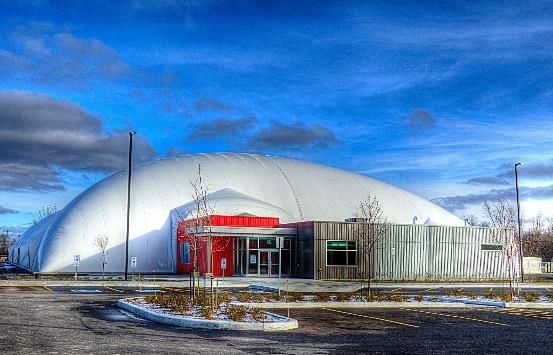
1
OVERVIEW
Section 9 – Implementation contains policies related to the
administration and implementation of the Official Plan.
Section 10 – Schedules contains maps that provide a geographical
reference for the Official Plan’s policies.
In addition, Appendix A – Glossary contains the definitions of the key
terminology used throughout the Official Plan. The Glossary is not intended
as an operative part of the Official Plan.
1.3 HOW TO READ THE OFFICIAL PLAN
The introductory paragraphs of each section are meant to provide context for
the subsequent policies. The policies provide specific direction and are to be
implemented through a variety of mechanisms, including the Zoning By-law.
The margin headings are intended as helpful markers to categories of text
and are not intended as operative parts of the Official Plan. The English
version of the Official Plan shall be referred to in the case of inconsistencies
with the French version.
1.4 ADMINISTRATION OF THE OFFICIAL PLAN
1.4.1 AMENDMENTS TO THE OFFICIAL PLAN
POLICIES
1. Amendments to this Plan shall be considered in accordance with related
policies elsewhere in this Plan. In general, amendments will only be
considered when they are justified and when the required supportive
information is provided. Amendments shall not be considered within two
(2) years of the date of adoption of this Official Plan, unless otherwise
permitted by a Council resolution to allow all applications, certain types of
applications, or applications for certain areas of the Township.
2. Proposed amendments to this Plan shall be accompanied by sufficient
information to allow Council to fully understand and consider the
following:
a) The impact of the proposed change on the achievement of the
stated goals, objectives and policies expressed in this Plan; the
County Official Plan, and the Provincial Policy Statement;
b) The need for the proposed change; and
c) The effect of the proposed change on the need for public services
and facilities.
3. In addition when considering amendments which affect the use of a
specific site or sites, Council shall consider:
a) Whether there is a need to add the site or sites to the lands already
designated for the proposed use; and
b) The physical suitability of the land for the proposed use.
4. Applications for minor variance from the provisions of the Zoning By-law
or any by-law that implements the Official Plan shall not be made in
respect of a parcel, building or structure for which the provisions of the
Zoning By-law have been amended within the previous two (2) years,
unless Council has declared by resolution that the application for such
variance is permitted.
Official Plan – January 2018
Township of Russell 3
1
OVERVIEW
               1.4.2 CONSULTATION
               POLICIES
               1. Council shall undertake a community consultation program for all
                  amendments to and reviews of the Plan. The consultation process shall
                  include timely provision of adequate information as well as opportunities
                  for members of the public to discuss this information with Township staff
                  and to present views to Council.

               1.4.3 REVIEW AND MONITORING OF THE OFFICIAL PLAN
               POLICIES
               1. Council shall update this Official Plan in accordance with the provisions
                  of Section (26) of the Planning Act, as amended, to ensure that:
                     a) The Plan’s goals and objectives remain valid and realistic in light
                         of prevailing circumstances; and
                     b) The Plan’s policies are adequate for the achievement of its goals
                         and objectives.
               2. In order to facilitate the review of this Plan, Council will monitor the
                  achievement of its objectives and the effectiveness of its policies.

               1.4.4 INTERPRETATION OF SCHEDULES
               The boundaries of the land use designations established by this Plan and as
               shown on the Schedules are intended to be approximate and shall be
               considered as absolute only where they coincide with roads, railway lines,
               rivers, lot lines shown in an implementing Zoning By-law, or other clearly
               defined physical feature.

               Where land use designation boundaries are considered as approximate,
               amendments to this Plan will not be required in order to make minor
               adjustments to the boundaries provided that the general intent and purpose
               of the Plan are maintained. Such minor adjustments shall be determined by
               Council and will not need to be incorporated into the land use schedules.

               Where the land use boundaries are considered as absolute, the location of
               the boundaries is not open to interpretation and an amendment to this Plan
               will be required in order to deviate from or change these boundaries.

               The boundaries of potential or proposed trails, roads, or any other future
               element illustrated on the Schedules are also intended to be approximate.

               1.4.5 REFERENCES TO STATUTES
               Where any Act or portion of any Act is referred to in this Plan, such references
               shall be interpreted as referring to the stated Act or portion of the Act and any
               subsequent changes to or renumbering of these sections of such Act.

               1.4.6 REFERENCES TO MINISTRIES AND REVIEW AGENCIES
               Throughout this Official Plan, references are made to various Ministries and
               agencies. While such references are considered current at the date of
               adoption of this Official Plan, it is acknowledged that changes may occur as
               a result of ongoing changes in the planning and application review processes
               in the Province of Ontario. No amendment to this Plan is required in order to
               acknowledge such changes; however, it is the intent of the Township to

                        Official Plan – January 2018

           4                                                              Township of Russell
1

                                                                                      OVERVIEW
update such Ministry and agency references at the time that general reviews
and updates of this Official Plan are undertaken.

1.4.7 INTERPRETATION OF FIGURES, QUANTITIES, AND USES
It is intended that all figures and quantities herein shall be considered as
approximate unless stated otherwise. Amendments to this Official Plan will
not be required where Council is satisfied that the variance from the figure or
quantity is minor and that the intent of the policy in question is met.

Where examples of permitted uses are provided for in the land use policies
of the Plan, it is intended that these be recognized as representative
examples as opposed to a definitive and/or restrictive list of uses. The
implementing Zoning By-law shall ensure that all permitted uses are
consistent with the intent of this Official Plan.

                                         Official Plan – January 2018
Township of Russell                                                               5
1
OVERVIEW
               This page intentionally left blank.

                         Official Plan – January 2018

           6                                            Township of Russell
2
STRATEGIC DIRECTIONS
Section 2 STRATEGIC DIRECTIONS
2.1 VISION
Long-term planning begins with a vision for the future. The following
statement is intended to be the expression of the vision for the future of the
Township of Russell and serves as a guide for the policies of this Official Plan.
The vision for the Township of Russell Official Plan is to provide a high quality
of life for residents by promoting the environmental, social, and economic
sustainability of the Township and enhancing the unique features of its Villages.
2.2 GUIDING PRINCIPLES
The policies of the Official Plan are based on several guiding principles. Under
each principle are several key objectives to help achieve the overall vision for
the Villages, including the Business Park, the Commercial Parks and the
Industrial Park.
1. Protecting the Natural Environment
While striving to meet human needs, the environmental integrity of the
Township shall be protected by:
Protecting natural heritage features and areas, surface water
features, and ground water features;
Conserving the Castor River floodplain and main tributaries;
Implementing a tree planting program;
Promoting compact development;
Minimizing negative impacts to air quality and climate change; and
Encouraging energy efficiency and diversity.
2. Promoting Healthy Communities
Healthy, active communities shall be promoted by:
Providing a full range of built and natural settings for recreation,
including community facilities, parks, open space areas, and trails;
Encouraging a land use pattern which promotes non-motorized
movement, including cycling and walking;
Establishing a network of connected open spaces, including trails that
connect the Villages, that is accessible to all residents;
Improving awareness of the need for accessibility and ensuring
municipal infrastructure meets this need;
Providing opportunities for public access to the Castor River shoreline
and main tributaries; and
Promoting the production of and access to locally grown and other
healthy foods.
3. Creating Liveable and Complete Communities
Liveable and complete communities shall be created by:
Encouraging development at a human scale and that fosters
community interaction;
Promoting a full range and mix of housing types, tenures, and
densities, including affordable housing;
Providing opportunities to live and work in proximity;
Providing opportunities for residents to age in place;
Conserving significant built heritage resources and significant cultural
heritage landscapes;
Official Plan – January 2018
Township of Russell 72
STRATEGIC DIRECTIONS
Ensuring the provision of a full range of accessible and conveniently
located community services and facilities; and
Encouraging built form that is well designed; encourages a sense of
place; and provides for public spaces that are of high quality, safe,
accessible, attractive, and vibrant.
4. Promoting Economic Development
Economic development and competitiveness shall be promoted by:
Providing sufficient areas for employment to meet long-term
objectives;
Ensuring that a range and mix of employment opportunities are
provided within the Villages, including the Business Park, the
Commercial Parks and the Industrial Park;
Developing a financially viable plan for the acquisition and disposition
of municipal land;
Revitalizing the downtown commercial districts as mixed-use,
pedestrian friendly areas, including through the development and
implementation of Community Improvement Plans; and
Participating in the development of a Prescott-Russell Area
Partnership (PRAP), whose policy framework is established in the
County Official Plan. This PRAP is a collaborative process between
the County and local municipal governments to grow individually in a
sustainable manner while contributing to the regional vision for long-
term growth and development.
5. Providing Infrastructure
Appropriate transportation and servicing infrastructure shall be provided by:
Promoting densities and a mix of uses which are appropriate for and
efficiently use planned or available infrastructure;
Developing a land use pattern, street network and trail system that
support pedestrians, cyclists, vehicular traffic, and transit, as
applicable; and
Ensuring that the necessary servicing facilities and other
infrastructure are in place to facilitate the timely and orderly
development of the Villages, the Commercial Parks and the Industrial
Park.
6. Supporting Community Empowerment
Local community empowerment shall be supported by:
Ensuring meaningful public involvement in land use and development
initiatives, including a beautification program.
2.3 OBJECTIVES
The objectives provide the framework for the planning and development of
the areas subject to this Official Plan by both the public and private sectors.
The objectives are intended to be implemented by the policies set out in this
Official Plan.
Land Use
To ensure that the Villages are developed with a compact form at an
appropriate scale that is pedestrian-oriented and fosters community
interaction.
To create a sense of identity and continuity through design and
architectural treatments that residents and visitors can recognize as
characteristic of the Villages.
Official Plan – January 2018
8 Township of Russell2
STRATEGIC DIRECTIONS
To ensure the provision of a full range of community services and
facilities to cater to the residents of the individual neighbourhoods as
well as the entire community.
To ensure opportunities to live and work in proximity, and to
recognize the employment opportunities available within the Villages,
the Commercial Parks and the Industrial Park.
To ensure a high standard of architectural design and building
materials throughout the Township and across all uses, including
residential, and non-residential structures.
To encourage energy conservation through community and site
planning and urban design.
To conserve the significant built heritage.
Residential Development
To create residential communities with a safe, healthy and functional
environment to accommodate a future population of approximately
23,830 by 2036.
To ensure that opportunities for a full range and mix of low, medium
and high-density housing forms, including second units, affordable
housing, and housing for older persons, are provided within the
Villages.
To ensure all new residential development meets Provincial, County
and Municipal policies regarding the provision of affordable housing.
Employment Opportunities
To create a commercial environment that is compatible with
surrounding land uses, including recreational and tourism uses.
To ensure industrial employment opportunities are protected and
supported by expanding and servicing the employment lands in the
Industrial Park.
To ensure a sufficient supply of appropriately sized and located
industrial land is available to ensure opportunities to attract or retain
businesses are optimized.
To ensure that available land meets the needs of the industries the
municipality is specifically targeting for attraction and retention.
To ensure that a full range and mix of employment opportunities are
provided within the Villages, the Commercial Parks and the Industrial
Park.
Open Space/Environmental Features
To establish a network of connected open space accessible to all
residents with natural and cultural features integrated into open space
areas and providing a strong link to the open spaces associated with
recreational corridors, trails, and the Castor River.
To create open spaces with a clear function, a relationship to the
community, and a safe environment that integrates Crime Prevention
Through Environmental Design (CPTED) principles, such as natural
surveillance, natural access control, and territorial reinforcement.
To ensure the preservation and enhancement of significant
environmental features.
Transportation
To develop a land use pattern and transportation system that
supports local and regional transit, cyclists, pedestrians, and
vehicular traffic.
Official Plan – January 2018
Township of Russell 92
STRATEGIC DIRECTIONS
To achieve a street, bike path and trail network that is laid out in a
modified grid pattern that maximizes connectivity and permeability so
that there are alternate pedestrian and vehicular routes to most
destinations.
To design safe streets at a pedestrian scale and that are attractive
public spaces while still serving vehicular traffic functions.
To ensure that all new development is designed to facilitate efficient
and effective public transportation operations.
Services
To ensure that all new development generally occurs on the basis of
full municipal services, with the exception of Marionville,
unserviceable areas, and any unserviced areas of the Industrial Park.
To design and implement stormwater management systems which
are integrated with the open space system and which mitigate
impacts on the natural environment.
To ensure that the necessary infrastructure and services are in place
to facilitate the timely and orderly development of the Villages.
Finance
To ensure that the costs of services and facilities required to permit
and support development are financed in a sustainable manner in
accordance with the ability of the Township, the County and
landowners to pay; and the Development Charges by-laws adopted
by the Township.
Official Plan – January 2018
10 Township of Russell2
STRATEGIC DIRECTIONS
2.4 GROWTH FORECAST
The Township of Russell is located within the United Counties of Prescott and
Russell, to the east of the City of Ottawa. One of the key factors contributing
to continued steady growth in the Township is its proximity to the Ottawa area,
which continues to grow steadily. The natural setting and bilingual nature of
Embrun, Russell, Limoges, and Marionville make these Villages attractive
communities to live and work.
2.4.1 RESIDENTIAL Population and
The Township of Russell’s population is expected to grow by approximately housing unit
52% by 2036 compared to 2011, representing an increase from approximately projections
15,680 people to 23,830 people. The number of new housing units is also
projected to increase by approximately 56% over this time period. This means
that nearly 2,980 new homes may be required within the Township of Russell
by 2036.
The following is a summary of the projected population and unit growth for the
Township:
2011 2036 Forecast change
2011-2036
Population 15,680 23,830 8,150
Housing Units 5,280 8,260 2,980
Source: Reference Scenario from ‘Updated Growth Outlook and Employment Land Needs
Analysis’, Hemson Consulting Ltd., January 2017
2.4.2 EMPLOYMENT
Employment is projected to continue to grow moderately to 2036, as it has in
the past. Overall, the Township is expected to remain a net exporter of labour,
which is to be expected given the Township’s role as a more rural and
residential municipality within the Ottawa-Gatineau commuter-shed.
The following is a summary of the projected employment growth for the
Township:
Employment projections
2011 2036 Forecast change
2011-2036
Employment 4,130 5,600 1,470
Source: ‘Updated Growth Outlook and Employment Land Needs Analysis’, Hemson Consulting
Ltd., January 2017
The Township of Russell’s employment is projected to grow by 35% to the
year 2036, which is a forecasted increase of 1,470 jobs. The majority of the
growth is expected to occur in the Industrial Park.
It is important to note that the above forecasts were prepared for the Township
as a whole, whereas this Official Plan deals with the Villages and the areas
outside of the village boundaries designated as Commercial Park and
Industrial Park. However, it is anticipated that consistent with the pattern of
growth over the past 20 years and the existence of prime agricultural land
outside these areas, the Villages and more specifically Embrun and Russell
will continue to play a role as the primary focus for growth in the future. This
is generally in conformity with the County Official Plan, which encourages
growth in existing communities thereby maximizing efficient use of available
infrastructure through the promotion of compact development. The objective
Official Plan – January 2018
Township of Russell 112
STRATEGIC DIRECTIONS
for the western portion of the County, which includes the Township of Russell,
is to guide 85% or more of population growth to the Urban Policy Area and
the Community Policy Area (i.e. Embrun, Russell, Limoges, and Marionville)
and 15% or less to the Rural Policy Area (i.e. areas outside the four Villages).
Community facilities 2.4.3 COMMUNITY FACILITIES
The level of service for parks generally compares favorably to other
municipalities. However, within the next 20 years additional parks will be
required to keep up with the pace of population growth, mainly within future
residential subdivisions.
As outlined in the Township of Russell Parks and Recreation Master Plan
(2015, as amended from time to time), the preferred option for continuing to
provide this service is to build a twin ice pad in a new multipurpose recreation
facility, and to consider providing an indoor pool, library, indoor and outdoor
playing fields, fitness facilities, and multi-purpose or civic gathering space
within this complex. Such a facility would complement the new sports dome
(covered sports field facility) on a Township owned parcel between Russell
and Embrun, as illustrated on Schedule A1.
2.4.4 LAND REQUIREMENTS
The forecasted growth in population and employment shall be accommodated
through:
Residential and non-residential intensification within the settlement
areas, including infill, redevelopment, and the conversion of existing
buildings; and
Development of additional land designated as employment areas,
primarily but not exclusively within the Commercial Parks and the
Industrial Park.
Furthermore, an Updated Growth Outlook and Employment Land Needs
Analysis prepared by Hemson Consulting Ltd. (January 2017) was prepared
in the context of the 5-year review of the Official Plan in order to evaluate the
sufficiency of vacant land within the Villages, and the Township’s Trade and
Industry Policy Areas identified in the County Official Plan to accommodate
future residential and employment uses. The Hemson report concluded that
there is sufficient land supply within the existing settlement areas to
accommodate the projected housing unit demand. In addition, the Hemson
report identified that additional employment land was needed, particularly in
the vicinity of the Industrial Park. The accommodation of additional
employment land required redesignation of land within the Township and in
the County Official Plan. An amendment to the County Official Plan has been
approved that has the effect of relocating Trade and Industry Policy Areas in
order to better meet expected demand.
2.4.5 SPECIAL STUDY AREAS
Schedule A1 – Land Use Designations – Embrun and Schedule A2 – Land
Use Designations – Russell illustrate areas, among other parcels of land, that
should be considered as part of a future boundary expansion. A County
Official Plan Amendment shall be required prior to any village boundary
expansion. Such amendment shall be supported by a comprehensive review
as per the County Official Plan policies.
This page intentionally left blank.
Official Plan – January 2018
12 Township of Russell3
Section 3 GENERAL POLICIES
GENERAL POLICIES
The following policies will guide future development in the Township.
3.1 PRINCIPLES OF GROWTH
3.1.1 SETTLEMENT AREAS
The Villages of Embrun, Russell, western part of Limoges, and north-east part
of Marionville constitute the Township of Russell’s settlement areas.
POLICIES
1. The settlement areas shall be the focus of growth and their vitality and
regeneration shall be promoted.
2. The expansion of a settlement area boundary shall only be allowed at the
time of a comprehensive review. Proposed expansions to the settlement
area boundaries shall be subject to the requirements outlined in the County
Official Plan. Township-initiated expansions may be allowed through an
Official Plan amendment supported by a comprehensive review.
3. Proposed adjustments to the settlement area boundaries, which do not
increase the overall area of the community in question, shall be subject to
the requirements outlined in the County Official Plan.
3.1.2 VILLAGE STRUCTURE
The land use designations and policies established in this Official Plan are
premised on key notions regarding Village structure and form.
POLICIES
1. The structure of the larger Villages (Embrun and Russell) shall include a
primary focus and local commercial service centers. The Village Core will
act as the primary focus of activity and will accommodate a range and mix
of higher intensity uses.
2. Residents should have the opportunity to access basic services within a
reasonable walking distance (approximately 400 meters) or cycling
distance (approximately 4 km) from their place of residence.
3. The Villages shall include a mix of land uses, while recognizing the
primarily residential nature of certain areas.
4. All built form within the Villages shall be designed at a human scale.
3.1.3 INTENSIFICATION
Intensification is a means of providing opportunities for the efficient use of
land through the promotion of a more compact form of development.
Intensification refers to the development of a property, site or area at a higher
density than currently exists and can therefore be achieved at different scales
and through different types of uses (residential, commercial, industrial, etc.).
Means of achieving intensification include:
Redevelopment, including the reuse of brownfield sites;
The development of vacant and/or underutilized lots within previously
developed areas;
Infill development, including lot creation; and
The expansion or conversion of existing buildings.
The benefits of intensification and compact development include:
Cost-effective provision of infrastructure and public service facilities;
Official Plan – January 2018
Township of Russell 133
Decreased pressure for Village boundary expansions into agricultural
GENERAL POLICIES
and rural lands;
Greater accessibility to jobs, services, and everyday activities;
Protection of environmental features;
Reduction of the Township’s carbon footprint; and
More vibrant and complete communities.
POLICIES
1. Intensification shall be promoted within all land use designations as a
means of making efficient use of existing land, infrastructure, and public
service facilities. A target of 15 per cent of all new residential units in the
Township shall be created through intensification.
2. As with all forms of development, the compatibility of intensification
proposals in existing areas must be assessed based on the compatibility
criteria outlined in Section 3.2.3 in order to mitigate potential adverse
impacts on existing uses and/or the character of the area.
3.1.4 DIRECTING GROWTH
Phasing policies must be established in order to ensure the orderly
progression of development and the timely provision of infrastructure and
public service facilities.
POLICIES
1. Future development within each Village shall proceed, insofar as possible,
by building out from existing built-up areas in a logical manner in order to:
a) Facilitate a continuous road pattern;
b) Minimize the cost while maximizing the use of infrastructure and
public service facilities; and
c) Minimize the distance between residential dwellings and community
services.
2. The phasing of development within the designated growth area will not
adversely affect the achievement of the intensification target and density
targets set out in this Section and the other policies of this Plan.
3. The Township shall ensure that the progression of development within
designated growth area will not adversely affect the timely provision of the
infrastructure and public service facilities required to meet the current and
projected needs.
Official Plan – January 2018
14 Township of Russell3
3.2 COMMUNITY DESIGN
GENERAL POLICIES
The purpose of the Community Design section is to outline urban design
objectives and compatibility criteria to guide future development. Urban
design objectives and compatibility criteria contribute to the creation of
liveable communities and are referenced throughout the Official Plan. The
urban design principles and compatibility criteria are intended to supplement
the policies applicable to each land use designation (Section 4). These
policies apply to all types of development in the Villages, the Commercial
Parks and the Industrial Park.
3.2.1 DESIGN PRINCIPLES
In addition to providing guidance with respect to land use, this Official Plan
proposes to create more liveable communities by focusing on urban design,
particularly in and around the Village Core but also throughout all
designations. A focus on urban design draws attention to how buildings and
the spaces around them look and function in their setting. It contributes to
creating lively places with distinctive character and establishing meaningful
connections between people and the built environment. The best urban
design is informed by a solid appreciation of the place being built, the people
in it, and the community around it.
The urban design principles outlined below are intended to assist those
involved in development with an understanding of the important design
elements within the Township of Russell. The principles are high-level in
scope and recognize that development proposals should be given the
flexibility to address design matters in different ways, allowing for creativity
and dialogue, particularly since different design responses may be
appropriate depending on the context of each area. In addition, the Township
shall develop Urban Design Guidelines addressing specific settlement areas
and uses. Development proponents shall implement the policies of this
section as well as the detailed Urban Design policies delineating the
Township’s policies for these specific areas and uses, where they apply.
POLICIES General design principles
1. Council shall promote the implementation of the following urban design
principles in the preparation and review of development proposals:
a) New development should recognize and reflect on the history of
each community;
b) New development should reflect a thorough and sensitive
understanding of place, context and setting;
c) The built form should evolve through architectural style and
innovation;
d) New development should enhance and enliven the quality,
character and spatial delineation of public spaces, including
streets. In particular, blank walls facing the street shall be
avoided;
e) Places and spaces should be visible and safe and integrate Crime
Prevention Through Environmental Design (CPTED) principles;
f) New development should meet the needs of pedestrians as a
priority;
g) New development should contribute to attractive public spaces
and important views;
h) New development should accommodate the needs of a range of
people, including children, seniors, and people with disabilities;
Official Plan – January 2018
Township of Russell 153
i) The form and design of new development should complement,
GENERAL POLICIES
integrate and enhance existing environmental features and
landscapes;
j) New development should achieve a more compact form over time;
k) New development should generally be based on a modified grid
network in order to provide a well-connected and integrated road
system to accommodate vehicles, transit, cyclists, and
pedestrians;
l) New development should achieve compatibility with existing uses,
as outlined in Section 3.2.3;
m) New development should integrate energy efficient and green
design features, as outlined in Section 6.11.1; and
n) All large, aboveground utility infrastructure shall be located and
designed to be compatible with its environment. This shall include
the coordination of the location of trees, street fixtures,
telecommunications equipment, utility and light poles, and signs.
3.2.2 DESIGN GUIDELINES
While the design principles outlined above are high-level in scope and
intended to highlight the important elements of design within the Township of
Russell, more specific design guidelines are provided below for development
within the Villages, Business Park, Commercial Parks, and the Industrial Park.
These design guidelines are intended to be supplemented by additional
guidelines to be implemented via other tools, including separate use-specific
or area-specific guidelines or as part of a Community Planning Permit
System, as applicable. In addition to the urban design principles outlined
above, within the Villages, Council shall also promote the implementation of
the following urban design guidelines in the preparation and review of
development proposals.
POLICIES
Village design guidelines
Village Design
1. New development should be oriented towards the street, with parking
Guidelines
generally provided at the rear or side of the building;
2. In cases where parking can only be provided in the front of the building
due to the nature of the use or the property fabric, parking shall be
buffered and screened by plant material screens and, only as necessary,
structural elements;
3. The operational characteristics and visual appearance of loading and
services areas (including garbage and outdoor storage areas) must be
designed to mitigate adverse effects on adjacent properties and should
be located away from residential uses and screened from roads, where
possible;
4. Development blocks should be between 100 and 250 metres in length,
with longer blocks permitted depending on topography and road
alignment. Residential blocks should range between 50 and 60 metres
and may be deeper depending on the proposed land uses and
requirements for parking and lanes;
5. The location of garages, and particularly the garage door, is an important
visual component of the streetscape. Where no reasonable alternatives
exist, garages may protrude to a limited extent from the main front façade
of any dwelling.
6. Street trees should be aligned parallel to the street and spaced at
appropriate intervals such as to provide a continuous canopy at maturity.
On residential streets, the boulevard between the sidewalk and the street
Official Plan – January 2018
16 Township of Russell3
should be grassed. Tree species should be native to the area. Of
GENERAL POLICIES
particular interest are tree types that will create a street canopy;
7. Residential neighbourhoods should have sufficient lighting to support
safe and comfortable use of sidewalks after dark, without unreasonable
light intrusion on adjacent residential areas. The height of street lights
should be limited to reflect a pedestrian scale and should be spaced
appropriately and closer together along collector roads; and
8. Consideration shall be given to the location of utilities within the public
rights-of-way as well as on private property. Utilities shall be clustered or
grouped where possible to minimize visual impact. The Township shall
encourage utility providers to consider innovative methods of containing
utility services on or within streetscape features such as gateways,
lampposts, transit shelters, etc. when determining appropriate locations
for large utility equipment and utility cluster sites.
9. Primary exterior building materials used should be durable, natural
materials that have low maintenance requirements and are climate
resistant, particularly brick, stone, and engineered stone, with other
materials used based on architectural merit and in combination with the
preferred materials.
10. New development shall, wherever possible, incorporate significant
cultural heritage resources and significant built heritage resources into its
plans. The Township shall encourage the retention, renewal and
conservation of such resources.
11. The character, materials, and architectural treatment of development
within the Village of Russell shall be compatible with the unique heritage
character of the Village. Innovative architectural treatments shall be
considered based on design merit and compatibility with the Urban
Design objectives of this plan and any applicable Urban Design
Guidelines.
12. Development within the Village of Embrun shall contribute to the particular
enhancement of the Village’s built community character and convey a
sense of permanence and resilience through high quality architectural
design and building materials.
13. Pedestrian connections shall be provided between public streets,
parking areas and building entrances, located and designed in such a
way as to promote pedestrian access and safety.
14. Pedestrian spaces, including plazas and courtyards, are encouraged
within the Villages. Such spaces should include features such as public
art, seating, and landscaping.
15. Main public entrances to buildings shall be designed and illuminated, as
required, to be easily identifiable from the street.
16. Building design, including scale, massing, and architectural style, shall
be compatible with buildings on neighbouring sites, and should employ
high-quality exterior finishes and building materials.
17. Architectural and site lighting shall be designed to enhance visual
interest while minimizing glare to adjacent properties or streets.
18. Buildings shall be designed to provide visual interest and weather
protection for pedestrians along the building street frontage and any
other building faces adjacent to an outdoor pedestrian space. Buildings
should avoid the use of large blank or undifferentiated wall areas.
Industrial Park design guidelines Industrial Park Design
19. New development shall take into consideration that water and Guidelines
wastewater services may be provided 417 Industrial Park in the future.
For example, to the extent possible, new buildings shall be sited in such
a way as to allow the future severance of the lot once servicing becomes
available.
Official Plan – January 2018
Township of Russell 173
20. Architectural and site lighting shall be designed to enhance visual
GENERAL POLICIES
interest while minimizing glare to adjacent properties or streets
21. Buildings visible from the road shall be designed to provide visual interest
along street facing façades. Buildings should avoid the use of large blank
or undifferentiated wall areas facing the street.
22. Landscaped frontages are required along all streets and shared
accesses.
23. Buffers between uses shall be provided, as appropriate. These shall
consist of plant material screens and, only as necessary, structural
elements.
24. Entrances to parking areas shall be clearly defined through the use of
signage and curbing.
26. 25. Building service areas, such as loading facilities, shall be located
away from public view or screened from view by a plant buffer or
structural element where necessary. Buildings located at intersections
should provide exterior architectural details on both street fronts.
27. Plant material should be selected with regard to the climate of the
Township and its ability to provide all-season screening. Native species
are preferred.
Business Park Design Business Park design guidelines
Guidelines 28. Main public entrances to buildings shall be designed and illuminated,
as required, to be easily identifiable from the street.
29. Building design, including scale, massing, and architectural style, shall
be compatible with buildings on neighbouring sites, and should employ
high-quality exterior finishes and building materials.
30. Architectural and site lighting shall be designed to enhance visual
interest while minimizing glare to adjacent properties or streets.
31. Buildings shall be designed to provide visual interest and weather
protection for pedestrians along the building street frontage and any
other building faces adjacent to an outdoor pedestrian space. Buildings
should avoid the use of large blank or undifferentiated wall areas.
32. Pedestrian connections shall be provided between public streets,
parking areas and building entrances, located and designed in such a
way as to promote pedestrian access and safety.
33. Pedestrian spaces, including plazas and courtyards, are encouraged
within the Business Park. Such spaces should include features such as
public art, seating, and landscaping.
34. High-quality landscaped frontages are required along all public streets.
Commercial Park design guidelines
Commercial Park
Design Guidelines
35. The operational characteristics and visual appearance of loading and
services areas (including garbage and outdoor storage areas) must be
designed to mitigate adverse effects on adjacent properties and should
be located away from residential uses and screened from roads, where
possible.
36. Primary exterior building materials used should be durable, natural
materials that have low maintenance requirements and are climate
resistant, particularly brick, stone, and engineered stone, with other
materials used based on architectural merit and in combination with the
preferred materials.
37. Architectural and site lighting shall be designed to enhance visual interest
while minimizing glare to adjacent properties or streets.
38. Buildings visible from the road shall be designed to provide visual interest
along street facing building sides. Buildings should avoid the use of large
blank or undifferentiated wall areas facing the street.
Official Plan – January 2018
18 Township of Russell3
39. Landscaped frontages are required along all streets and shared
GENERAL POLICIES
accesses.
40. Buffers between uses shall be provided, as appropriate. These shall
consist of plant material screens and, only as necessary, structural
elements.
41. Entrances to parking areas shall be clearly defined through the use of
signage and curbing.
42. Buildings located at intersections should provide exterior architectural
details on both street fronts.
43. Plant material should be selected with regard to the climate of the
Township and its ability to provide all-season screening. Native species
are preferred.
44. Pedestrian connections shall be provided between public streets, parking
areas and building entrances, located and designed in such a way as to
promote pedestrian access and safety.
45. Pedestrian spaces, including plazas and courtyards, are encouraged
within the Commercial Park. Such spaces should include features such
as public art, seating, and landscaping.
All Development Design Guidelines for
46. The Township may require a design brief to be prepared to explain how All Development
any proposed development would conform to these Design Guidelines;
and
47. Where a draft plan of subdivision is proposed adjacent to a provincial
highway or County road, the layout of the subdivision should be designed
such that the lots back on to the provincial highway or County road and
front onto a local internal street.
48. The Township will require that all applications for new development:
a) Orient the principal façade and entrance(s) of main building(s) to
the street. Where a building abuts more than one street, the
building façade and entrances will be oriented in order of priority
to the arterial, collector and local street, subject to restrictions to
access on County roads;
b) Include windows on the building elevations that are visible from
the public spaces;
c) Use architectural elements, massing, and landscaping to
accentuate main building entrances.
49. Loading facilities, service areas, mechanical equipment (including
rooftop), vents, generators, and metering devices should usually be
screened from the public street, pedestrian and cycle pathways and/or
adjacent ground-oriented residences. This may be achieved through:
a) Containment, with a preference to using the same architectural
detail, style and materials as the proposed development; and/or
b) Screening (e.g. trees, landscaped berms, decorative walls and
fences).
3.2.3 LAND USE COMPATIBILITY
Introducing new development in existing areas, in particular through
intensification, requires a sensitive approach and consideration of the area’s
established characteristics. In reviewing all types of development
applications, Council and/or the Planning Department shall be satisfied that
the proposed development is compatible with the surrounding uses.
Compatible development means development that, although it is not
necessarily the same as or similar to existing buildings in the vicinity,
Official Plan – January 2018
Township of Russell 193
nonetheless enhances an established community and coexists with existing
GENERAL POLICIES
development without causing undue adverse impact on surrounding
properties.
Compatibility can be achieved in a variety of ways, including the provision of
appropriate setbacks, buffering features, and transition in building height and
massing.
Compatibility criteria
POLICIES
1. Compatibility of new developments shall be assessed based on the
following criteria:
a) Height and massing: Building height, massing and scale shall be
assessed based on the planned or existing uses of adjacent
properties as well as the character established by the prevailing
pattern of abutting development and development that is across
the street;
b) Setbacks: Prevailing patterns of rear and side yard setbacks,
building separation, landscaped open spaces and outdoor
amenity areas as established by existing zoning where that
pattern is different from the existing pattern of development;
c) Transition: The need to provide a transition between areas of
different development intensity and scale, including through the
use of incremental changes in building height, massing, setbacks
and step-backs;
d) Outdoor amenity areas: the privacy of outdoor amenity areas of
adjacent residential units must be respected;
e) Shadowing: shadowing on adjacent properties must be minimized,
particularly on outdoor amenity areas;
f) Lighting: the potential for light spill over or glare onto adjacent
light-sensitive areas must be minimized;
g) Noise and air quality: The development should be located and
designed to minimize the potential for significant adverse impacts
on adjacent sensitive uses related to noise, odours, and other
emissions;
h) Parking: adequate on-site parking must be provided, with minimal
impact on adjacent uses; and
i) Vehicular access: the location and orientation of vehicle access
must take into account impact on adjacent properties including
noise, glare and loss of privacy.
j) Traffic impacts: the road network in the vicinity of the proposed
development can accommodate the traffic generated.
2. Compatibility of new buildings with their surroundings will be achieved in
part through the design of the portions of the structure adjacent to existing
buildings and/or facing the public realm. Proponents of new development
will demonstrate, at the time of application, how the design of their
development fits with the existing desirable character and planned
function of the surrounding area in the context of:
a) Setbacks, heights and transition;
b) Façade and roofline articulation, including on both street-facing
sides of a building on a corner lot;
c) Colours and materials;
d) Architectural elements, including windows, doors and projections;
e) Pre- and post-construction grades on site; and
f) Incorporating elements and details of common characteristics of
the area.
Official Plan – January 2018
20 Township of RussellYou can also read


