OPEN GOVERNMENT STRATEGY IN THE DIGITAL CITY - 2012-2015 SMART CITIZENSHIP
←
→
Page content transcription
If your browser does not render page correctly, please read the page content below
OPEN
GOVERNMENT
STRATEGY IN
THE DIGITAL
CITY
2012-2015

SMART CITIZENSHIP
Contents

Our Commitment                                                    3
Motivations                                                       5

ZARAGOZA TOWARDS A KNOWLEDGE SOCIETY                              7
Zaragoza towards a knowledge society (ZTKS)                       8
Electronic administration                                         9
Open data                                                         11
Zaragoza spatial data infrastructure: IDEZAR                      13
Municipal web - Social Media                                      15
Free software                                                     19
Telecommunication infrastructures                                 20
Metropolitan WiFi network                                         21
IT consolidation                                                  23
Citizen’s card                                                    25
Smart mobility                                                    26
A smart neighbourhood: Valdespartera EcoCity                      28
Zaragoza Activa, Network of social innovation spaces              30
Digital Mile Business Incubation Centre (CIEM)                    31

DIGITAL CITY, DIGITAL CITIZENSHIP                                 32
Open Government in Zaragoza                                       33
Plan goals                                                        34
Strategic lines of action                                         37
Partners                                                          38
Open public services                                              39
Smart citizenship                                                 42
Digital engagement                                                45
Digital industries                                                51
Ordinance on transparency and free access to public information   55
Summary of actions and monitoring                                 56

Open Government at Zaragoza City Council                                                                      3

OUR
COMMITMENT

Of the six lines of action that go to make up the “Zaragoza 2020” strategy, the
key ones for the city at present are sustainability and competitiveness.

Sustainability as approached from three core perspectives: that of mobility, as
a basic action in the shaping of a city that is better prepared to respond to the
environmental challenge (in this respect we have, for example, the building of
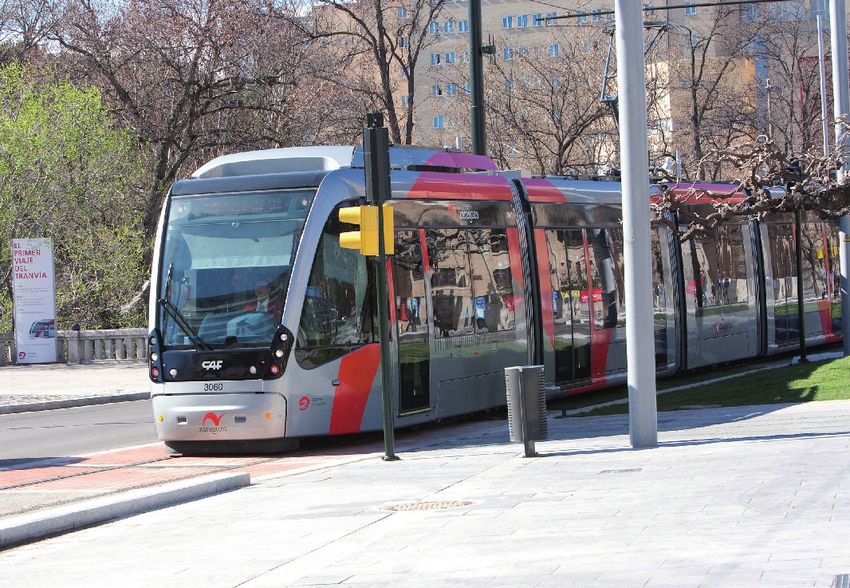
the north-south tram line, or the establishing of the bicycle as real transport
alternative); that of the environment, as can only be expected after Expo
2008 dedicated to water and sustainable development; and that of economic
sustainability, given that the current economic climate calls for a reconsideration
of municipal organization as a whole and of the provision of public services from
a financially feasible perspective in these times of such scarce resources. The
foregoing ranges from public fiscal policy, rates and prices to the broadening of
public-private collaboration and new management models.
                                                                                      Juan Alberto Belloch Julbe
                                                                                               Mayor of Zaragoza
Obviously, technology is an extremely important agent for change and efficiency.
Indeed, I would go as far as to say that it is a decisive factor.

Something that can already be seen in real situations:
In traffic management, with its dense network of sensors and artificial vision
cameras, or in terms of sustainability, where we have one of the most ambitious
and progressive of pilot projects, as is the Valdespartera EcoCity, a newly
created neighbourhood with over 30,000 residents.
Open Government at Zaragoza City Council                                                                                           4

The second great concern at present is competitiveness, in the sense of how to make a city more innovative, a greater
incentive to business activity, one which creates more jobs and is better prepared to face the future. A smart city can be
nothing else but such a place in these terms.

We have been working in Zaragoza since 2003 on a vision that holds technological innovation to be the lever to modernise
municipal administration and the city’s economy, as well as to boost entrepreneurial activity. In the course of this process
– a strategy which began under the slogan of “Zaragoza towards a Knowledge Society”- we have made some notable
progress, such as:

•    Improvements to telecommunications networks by way of one of the most extensive WiFi networks in our country.

•    Implementation of free software, with respect to which I believe we are a reference for city councils nationwide.

•    Development of electronic Administration (we are the third Spanish city with the most services provided over the Internet) and of
     the open data policy.

•    Promotion of the Digital Mile project.

Whatever the case, as regards this so-called smart city phenomenon – a term which I am a little embarrassed to use,
given that I am not too sure that we are any smarter than were the Roman colonists who at the time of Cesar Augustus
designed a city that was not only very efficient but complete also – our approach now is to try and shift the focus from
technology, which after all is merely a tool, towards the citizen.

In this new strategy on which we are embarking, the name chosen is significant: “Open Government / Smart Citizenship”.
I think that this whole smart city phenomenon affords us great opportunities to improve public services and city efficiency.
However, we must place the citizen at the centre of these processes.
And if we do so, then we not only have to think of providing citizens with the best services, but also of providing them with
access and tools to improve their ability to fend for themselves independently in this complex digital society in which we
live. Lastly, we must not overlook the way in which our cities are governed. Citizens are demanding important advances
both as regards transparency, as well as with respect to participation.

Open government and the digital city are, in fine, the direction that Zaragoza has decided to take in these complex times
in order to progress on its way towards a genuine Smart Citizenship.

A commitment that I as Mayor back and undertake to promote and facilitate over the forthcoming years.

Juan Alberto Belloch Julbe
Mayor of Zaragoza
Zaragoza, June 2012
Open Government at Zaragoza City Council                                                                                                 5

MOTIVATIONS
Since 2003, the city of Zaragoza has been developing an ambitious project, the aim of which is to become a knowledge society. The
project covers a wide variety of areas ranging from the implementation of telecommunication infrastructures to Electronic Administration
and the encouragement of entrepreneurship and innovation. Consequently, over recent years a series of actions have been seen
which, in the case of Zaragoza, make up a coherent programme of the knowledge city. This project does not restrict itself to the simple
use of technology, but rather fully focuses on one of the central issues of our time: what type of economic model does Zaragoza need.

The obvious progress that has been made does not take away from the fact that we find ourselves in the pre-history of the application
of ICTs both in the city as well as in public services. Consequently, even though the theoretical models and goals seem clear, with the
mature technology and regulations that have been developed, the real and effective integration, both of different systems, as well as
of people, is far from ideal. Indeed, it is not even close to what is desired or imagined. Inter-operability between administrations is a
clear example of this distance.

Nevertheless, in spite of the lack of maturity of technological integrations, the horizon that opens out before us abounds in unquestionable
opportunities, both in the public services management sphere, as well as in the governing of institutions, around which there is a whole
Open Government at Zaragoza City Council                                                          6

new framework of business opportunities and economic development. Therefore, today
it is possible to integrate ICTs in any city management area, ranging from public lighting
to waste collection, from the control and monitoring of the water supply network to the
processing of electronic files and a full electronic relationship of public administrations
with the general public. As a result of the foregoing, we are in a better position to handle
previously unheard of volumes of information. In this context one of the main challenges
facing us is how to properly handle and present this information, both for a widening of
the criteria in the decision making of political and public leaders, as well as for instituting
a more transparent and open management.

For example, better public lighting management can make savings of 20% to 40% in the
electricity bill, or an administration that does away with paper in its day-to-day business
would reduce its running costs from 2% to 5%. A great economic and environmental
stimulus for this new crisis context in which we find ourselves.

Enormous real and potential benefits are what have brought about a radical change of
perception of social and public leaders with respect to these types of project.

Whatever the case, the challenges to be faced are boundless and not only of a
technological nature, but to do with integration on a grand scale. A progressive vision
and strong political leadership that places people at the centre of the new city shall be
essential features in meeting them.

ZARAGOZA
TOWARDS
THE
KNOWLEDGE
SOCIETY
Open Government at Zaragoza City Council                                                                           8

ZARAGOZA
TOWARDS
THE KNOWLEDGE
SOCIETY(ZTKS)
In 2003, Zaragoza embarked on an ambitious process of social and economic
transformation aimed at turning it into one of the European cities best adapted to the
digital economy. With this goal in mind, it launched a programme of Knowledge Society
development actions, the main aims of which were to:                                            ADMINISTRATIVE
                                                                                                MODERNISATION
•     Create and set up innovative businesses to foster economic growth and the
      creation of skilled jobs

•     Use the new technologies to provide more efficient public services.

•     Guarantee all citizens, entities, companies and institutions the exercise of their full
      rights of access to the communications networks.

•     Make the most of technological change to develop a new, cohesive city planning
      and create economic opportunities.
                                                                                                     DIGITAL
•     Make Zaragoza a national and international reference point in the light of its                  MILE
      approach to technological change and innovation.

The reference point and basis for this process was mainly marked by the actions set in
motion as of the year 2000 by the European Union within the framework of the eEurope
initiative.

In March of that year, the Lisbon European Council set out the goal for the European
Union: to become the most dynamic knowledge-based economy in the world by 2010.                   CONNECTIVITY /
Although Europe as a whole is at quite a remove from meeting the goals set for 2010,                 TELECOM
certain outstanding achievements have been made on an individual level.                         INFRASTRUCTURES.

Along these lines, the ZTKS Plan has enabled the city to be prepared to make the
most of the various public funding initiatives set up by the Spanish Ministry for Industry,
Tourism and Trade, among which the Avanza Plan in 2005 is particularly noteworthy
and, more recently, the state’s local investment funds in 2009 and 2010.

As a result, Zaragoza has been able to deploy a powerful innovation infrastructure
                                                                                                     FREE
platform. This represents a privileged starting point from which to develop new public             SOFTWARE
and private initiatives, which go to make up the basis on which the city model defined in
this document is developed.
Open Government at Zaragoza City Council                                                    9

ELECTRONIC
ADMINISTRATION
What is it?
Electronic Administration is an efficient and transparent element
that brings simplicity and security to the Administration's dealings
with people and companies.                                                  CITY COUNCIL
                                                                            WITH THE MOST
The passing of the Citizens Electronic Access to Public Services
                                                                            ONLINE
Act of 11/2007 represented an unprecedented boost in the
development of same. Its coming into force in January 2010
                                                                            SERVICES

                                                                         80%
intensified the efforts made by the different administrations in the
material and endowed it, along with Royal Decree (RD) 1671/2009,
with an appropriate regulatory framework to ensure a full and
secure electronic relationship between administrations and the
public.

What      has
Administration?
                 Zaragoza       done      in   terms   of   Electronic   ONLINE PROCESSING
As far as Electronic Administration is concerned, Zaragoza City
Council has made an enormous investment effort from 2007 to
2011 and done a great deal of work focusing on four areas:

•     Cataloguing administrative procedures and re-engineering.
      In this respect, over 500 procedures have been catalogued
      into families and all the main trunk processes have been
      re-designed and simplified.

•     Implementation of the tools required for electronic                ELECTRONIC
                                                                         FILES PROCESSED
      processing: electronic registration, telematic notifier or
      digital archive, among others.

•     Digital identity for civil servants. In this respect, over 5,000
      digital certificates of the “Public Administration” type have

                                                                         +40,000
      been issued and the Certification Office has been set up.

•     Electronic Administration Ordinance, which transposes Act
      11/2007 and which develops the peculiarities of Zaragoza
      City Council.

As a result of the process, citizens can at present carry out 80% of
administrative procedures electronically. Nevertheless, the electronic   ELECTRONIC
                                                                         SIGNATURES DONE
file is a reality that must still be generalised.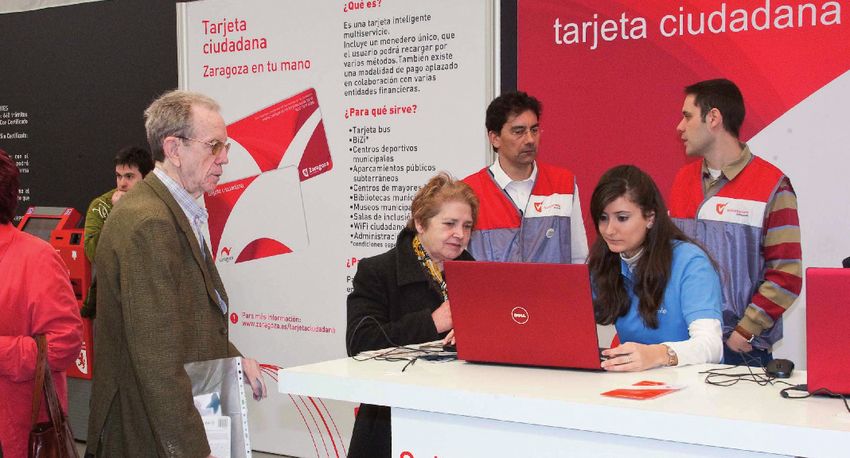
Open Government at Zaragoza City Council                                                                                  10

                                                     CITY COUNCIL ELECTRONIC ADMINISTRATION SERVICES

                                                                            ELECTRONIC
                                                                              RECORD

                                                                                                        DOCUMENT
                                                                                                        MANAGER
                                                                            SIGNATURE
                                                                               TRAY

     COMPANIES                   MUNICIPAL
                                 WEB PORTAL
       CITIZENS
                                  www.zaragoza.es

                                                                           NOTIFICATION                 ELECTRONIC
                                                                            MANAGER                         FILE
                             24/7 Service
       CITIZEN
                             Greater accessibility
       FOLDER
                             Citizen guidance

                                                                               FILE
                                                                           MANAGEMENT
                                                                            PLATFORM

                                                                                                Centralised information
                                                                                                One repository
                                                                                                Using information

                                 ELECTRONIC ADMINISTRATION COMMON SERVICES

                       ASF                                      ENTITIES                              INCOMING/
                   ELECTRONIC               TERRITORIES           AND             PROCEDURES’         OUTGOING
                    SERVICES                                   PERSONNEL           CATALOGUES           RECORD

                                                            COMMON
                                                             SERVICES
                                                           MANAGEMENT
Open Government at Zaragoza City Council 11
OPEN DATA.
DATOSABIERTOS.ZARAGOZA.ES
103
What do we mean by open data?
Open Data refers to data that can be freely accessed by the
general public and re-used by third parties, even though this
re-use can be subject to certain conditions laid down in a licence.
In this sense, Zaragoza City Council considers that the data it
holds (budgets, mobility, communications, the environment,
DATA
economy, etc.), as long as they are not personal and, whatever
the case, respecting current legislation, must be accessible to the
SETS
public and companies.
The aim of Zaragoza City Council’s Open Data policy is that
the data be: unique, shared, accessible and re-usable by third
STANDARDISED
parties.
CSV, JSON, Public Administrations are big data producers and collectors,
GEORSS
which when made available to third parties, enhance transparency
and serve to drive economic growth and social improvement. As
FORMATS a result, we can say that Open Data represents a source of value
for science, economic development and the active exercise of
our citizenship.
SPARQL SERVICE
What has Zaragoza done in terms of Open Data?
datosabiertos.zaragoza.es is a 2010 Zaragoza City Council
initiative to encourage the re-use of the information posted
on its web site. This project contains:
• Data catalogue. It includes all of the data sets (posted on
the web site) ordered by subject, tags and by representation
formats. Re-user agents can search for sets of data
according to their preferences. The idea is to offer any public
item of information in as many formats as is possible, always
seeking the most open ones in order to avoid restricting
LINKED DATA
usage.Open Government at Zaragoza City Council 12
• SPARQL Protocol and RDF Query Language (SPARQL). • Citizen Query. A forum that encourages dialogue and
This affords developers/professionals enormous potential participation of any party interested in the related issues. This
and flexibility when it comes to constructing quality medium was opened on http://consultadatos.zaragoza.es
applications. In addition to providing top quality data in the at the beginning of July 2010. During the first month over
Linked Data format (Web 3.0 or Semantic Web Technology), 30 ideas were submitted, and it received 500 votes or more.
it has query mechanisms for these data. As far as SPARQL
is concerned, this is a standard query language that enables
access to all of the data that are provided in Linked Data
format.
• Applications. The developer community can notify the
City Council about the applications (apps) that they have
developed. These are the ones that go to make up the
catalogue of applications that use the city's public data.
• SOLR classified data. The Apache Solr platform has been
implemented as a search platform for indexing and posting
Open Data on the web site.Open Government at Zaragoza City Council 13
ZARAGOZA’S
SPATIAL DATA
INFRASTRUCTURE:
IDEZAR
What is it? IDEZAR is now the reference platform for Zaragoza City Council
Spatial Data Infrastructures (SDI) refer to the set of technologies, geographical information that is used for the following purposes:
policies, standards and human resources to acquire, process,
store, distribute and improve the use of geographical information. • Municipal resource management and geolocation.
In the same way that roads and motorways facilitate vehicular
transport, the SDIs facilitate the carrying of geospatial information.
• Public Thoroughfare incident management.
In this way, the territory's social, economic and environmental • Generation and publication of telematic maps for
development is efficiently promoted. (*) complaints and specific needs.
(*) Text adapted from the Wikipedia definition of SDIa (http://es.wikipedia.
org/wiki/Infraestructura_de_Datos_Espaciales)
• Open GIS Foundation standard services (OGF).
• Georeferencing tools and services.
What has Zaragoza done?
In 2004, IDEZAR was the first effort aimed at improving the public’s
electronic access to municipal information. Moreover, it served
to encourage collaboration and the interchange of information
on standards between the different areas of government and
between administrations.
The IDEZAR initiative is the result of the collaboration initiated back
in 2004 between the City Council and Zaragoza University with
a view to implementing a Spatial Data Infrastructure locally. The
project arose from the thrust provided by the European directive
EUROGI/ESDI-NET
initiative, INSPIRE, which aims to create a large European space
that shares geographical information. Moreover, this must provide
support for community policies on environmental issues and for
policies and activities that affect the environment. AWARD
INSPIRE became a directive in 2007.
ACCESSIBILITY
CATEGORYOpen Government at Zaragoza City Council 14
Land Registry Plots
Monument map
(Geo-referenced)
Bus stop map
(Geo-referenced)Open Government at Zaragoza City Council 15
MUNICIPAL WEB
SOCIAL MEDIA
CITIZENS’ BLOG
What is it?
The web site and, more recently, the social networks
NETWORK constitute an important digital link between the public and
the city. On intensifying the presence of Zaragoza on the
Internet, this in turn boosts the civic awareness of its citizens.
3 rd In this way, the general public can interact with municipal
MOST VISITED services, take part in decision-making processes and the
MUNICIPAL PORTAL
design of the city space itself by means of different listening
and communication channels.
AFTER THOSE OF What has Zaragoza done in terms of web sites and
BARCELONA AND social networks?
MADRID
Even though Zaragoza City Council’s on-line presence dates
back to 1994, the 2003-2011 period saw the City Council
web portal become the city’s genuine electronic seat. As a
43,420,314
result, a truly great leap has come about in the level of on-line
interaction between the public and the City Council, and by
the same token, with the city.
PAGES SERVED IN
2011
Thus arises the dynamic creation of related services and
portals in response to the growing demand of citizens and
organisations alike: Senior Citizens, Women’s Affairs, City
Planning, the Environment, Culture, Tourism, Sports, etc. In
3,871,470
this respect the following services have been created:
-- Customised services (e.g. “A visitor, a trail”, “Addentra”,
“Mashup”, etc.)
VISITS IN 2011 -- Multi-device services: mobiles, TDT, Bluetooth, etc.
-- Services to encourage citizens’ participation and
+4,000
collaboration (social networks, e-Cognocracy,
Complaints and Suggestions Service, participation
processes in the active design of municipal policies, etc.)
FOLLOWERS ON
TWITTEROpen Government at Zaragoza City Council 16
+3,000 FRIENDS
The following criteria were taken into account in designing the
aforementioned services:
ON FACEBOOK -- Quality. Service guided by the “Municipal Web Services
Charter”.
--
15,000
Data type: unique datum / shared datum / accessible
datum / open datum / georeferenced datum /
semantically described datum.
COMPLAINTS AND -- Technological: accessibility, device independence,
SUGGESTIONS
semantic web, use of W3C standards (Zaragoza City
RECEIVED IN 2011,
Council is a member of the consortium), quality certified
by the Spanish Quality Assurance Agency, AENOR.
COMMITMENT:
REPLY IN 48 HRSOpen Government at Zaragoza City Council 17
ACKNOWLEDGEMENTS MILESTONES
2004:
“Zaragoza: the mobile city”:
e-Mobility Award at SIMO ICT
ACCESSIBILITY
OPEN
2006:
Local Administration web site most accessible to
DATA
the public: TAW Award
2007:
World Wide Web Consortium (W3C) Good Prac-
tice Award: Plan your Visit
2010:
DATA
PROTECTION
5 star OPEN DATA - LINKED DATA level >> RISP
and datos.zaragoza.es according to Tim Berners
Lee (the World Wide Web inventor)
2011:
Award for Best Public Administration Practices in
the field of Data Protection by the Autonomous MOBILE
Community of Madrid Data Protection Agency
EUROGI/eSDI-Net European Agency Best Practi-
ZARAGOZA
ces Award
WEB FOR @LLOpen Government at Zaragoza City Council 18
2001/2007: 2007
CiberP@ Spanish
is (El País) Consumers’
Radiographies on Association
Spanish municipal web sites (>50,000 inhab.)
1st place: 2005 and 2006
Magazine (OCU):
2nd place in the Environment Portal
2nd place: 2003 and 2007
3rd place: 2001
4th place: 2002 and 2004
2010 2008
“The Information “Computer Hoy”
Society in Spain” Magazine.
report. 2nd most valued web site by magazine users.
Zaragoza City Council, the pioneering local admi-
nistration is opening its data (Open Data).
2011
Carta
Local Spanish
Municipalities
and Provinces
Federation (FEMP)
magazine.
The Accessibility Watchdog ranks Zaragoza City
Council’s web site close to excellence: 9.07.Open Government at Zaragoza City Council 19
FREE SOFTWARE
What is it? attendance figures saw over 5,000 CDs with FS being given out,
Free Software is that which respects the freedom of users with or the FreeSW World Conference 2011, where over 700 people
respect to the product acquired and, therefore, once obtained attended its workshops and seminars.
can be freely used, copied, studied, modified and re-distributed.
As part of the progressive vision promoted by the City Council with
The interest of Free Software lies, as far as the knowledge respect to free technologies, one cannot overlook the releasing,
economy is concerned, in that it transfers the costs of licences in 2011, of the code that manages and serves as the interface
towards the services (development, maintenance, training, etc.) for contents in the Digital Water Pavilion (DWP). A building that
locating and focusing on economic activity and knowledge in the the architect, Carlo Ratti designed for Zaragoza and which, since
territory. 2009, has been used as a technological promotion, innovation
and municipal resource.
What has Zaragoza done in terms of Free Software?
Since 2003, the promotion and use of Free Software has become As a result, Zaragoza is today an international benchmark in the
one of the most outstanding marks of identity of the Zaragoza field of Free Software.
City Council with respect to ICT matters.
In 2005, the City Council in plenary session unanimously adopted
REFERENCE CITY
COUNCIL IN THE
a motion urging the city’s local government to promote the use
of Free Software, especially by municipal employees. As a result,
considerable savings have been made on licence costs and
IMPLEMENTATION
OF FREE
expert knowledge has been gained, which is being shared with
the local community. The Free Software thrust has also extended
to the servers’ field, where over 80% are now using Linux.
SOFTWARE
In that same year, an agreement was signed with Hispalinux
involving the assignment of a premises dedicated to the promotion
and use of Free Software in the city. This space became the focal
point for free knowledge related activities, while at the same time
+3,000 PCS WITH OPENOFFICE
+600
serving as a telecentre. At present, some seven years on, it is still
up and running.
PCS USING LINUX
Moreover, 17 computer literacy centres were set up for adults
and senior citizens, where a 100% free, low cost and low
maintenance solution was adopted. 100% FREE SOFTWARE
There have been numerous promotion and training events 17 ADULT AND SENIOR
organised in the use of Free Software during this period.
Among them, the Free Software Day held in the Plaza de
CITIZEN COMPUTER
Pilar in 2008 deserves special mention, given that its massive LITERACY CENTRESOpen Government at Zaragoza City Council 20
TELECOMMUNICATION
INFRASTRUCTURES
What are they? • Citizen's WiFi service (WiZi).
Telecommunication Infrastructures are the communication
networks and protocols that carry data between the different
• Voice over IP for municipal service.
municipal offices. These are becoming increasingly important • Specialised networks for municipal public companies
given that the Zaragoza City Council is an on-line administration, (tourism, sports, job creation, etc.).
with numerous offices and demanding requirements in areas
such as voice transport, the Internet, security applications and
• Internet connection service network for guests, deployed in
municipal offices (reducing the number of ADSL lines and,
public services management. therefore, the cost of using external service providers).
Municipal networks, whether implemented over fibre optics
or wireless technologies, offer a secure system for carrying Integration with specialised City Council services (Urban Mobility
information, as well as functioning as an important tool in terms network, Infrastructure Management Networks) has been another
of productivity and efficiency. of the general criteria for action, along with, interconnection with
the rest of the public administrations by means of fibre optic
What has Zaragoza done in terms of networks? connections (Aragon Government-Aragonix, SARA network,
For some time now, a great transformation has been taking place University of Zaragoza, etc,) which is making the interchanging of
in municipal communication infrastructures. This has been further telematic services with other entities possible (Spanish National
reinforced by the deployment, over the last three years, of the Traffic Agency (DGT), Spanish Tax Office, Government of Aragon,
city’s own fibre optic network, which is over 200 km long and etc).
mainly runs through municipal conduits. In addition to enabling
the connecting up of over 80 offices with the concomitant
communications cost savings, this important development has
+200KM
also made possible the implementation and deployment of
Gigabit and Ten-Giga technology (a much greater capacity) as
municipal network connection standards.
OF FIBRE
At the same time, the City Council has deployed a WiMax network OPTIC CABLING THAT CONNECTS UP
on a licensed band which has 15 base stations, thus enabling the
availability of mobile broadband cover throughout the city.
80 OFFICES
WIMAX
As a result of the foregoing, Zaragoza City Council has a large
network of specialised services, endowed with operative quality
SECURITY
that provide support to:
•
NETWORK
Video surveillance and security services in the metropolitan
area and inside buildings.Open Government at Zaragoza City Council 21
METROPOLITAN
WIFI NETWORK
What is it? • Specific network for municipal public services. Several
WiFi technology, which is widely used in domestic environments, Zaragoza City Council services are using the WiFi network
enables wireless communication in the public space at very low in pilot mode to access mobility, lighting and geographical
powers. Zaragoza is pursuing the following goals by means of information applications. This enables improvements to
deploying this network: productivity and efficiency.
• To reduce the digital gap. • Pilot Virtual University Campus. The university community
has taken part in a pilot programme over the municipal WiFi
• To serve as a test bench for contents and applications network. The objective was to access internal applications
which, by making use of the features proper to the network and services, in an example of cooperation between
(geolocation, IP services transport capacity, ubiquity), administrations and the sharing of infrastructures, to make
generate businesses and improve public services. the city a more inviting and open place for talent.
• To facilitate access to the Electronic Administration.
• To create the infrastructure required to implement “Digital
+5,000 USERS
City” applications and services with the minimum
operating costs.
•
1,000
To launch other value-added services for the city in
collaboration with institutional and private partners. For
example, the creation of a “Virtual University Campus” in
CONNECTED
IN ON A DAILY BASIS
IN 2011
the city’s public space for research and teaching personnel,
and for the students, of the University of Zaragoza (and,
by the same token, the rest of the Spanish and European
universities).
462 ACCESS
What has Zaragoza done in terms of WiFi in the public
space?
POINTS IN 2011
Zaragoza has deployed the most extensive public network in
Spain. At present it provides the following services:
• WiZi. This is the citizen’s access service to the Internet over
the city's WiFi infrastructure. With over 5,000 users in its first
eight months of operation, and integrated with the Citizen's CAMPUS EXTENSION
Card, this represents a new expression of the digital ties
between Zaragoza, its inhabitants and its visitors.
VIRTUAL UNIVERSITYOpen Government at Zaragoza City Council 22
WiFi: Detail of municipal WiFi networkOpen Government at Zaragoza City Council 23
IT CONSOLIDATION
What are IT (Information Technology) systems? disasters. Furthermore, it enables requisite scalability in a
We understand systems to be the hardware and software period in which, as a result of the advances in Electronic
infrastructure (operating systems, databases, services, etc.) Administration and the continuous flow of application
on which municipal information technology relies: taxes, Web, migration to J2EE environments, demands the constant and
geographical information systems, etc. swift incorporation of new services.
What has Zaragoza done in terms of IT systems?
Zaragoza City Council’s technological infrastructure has evolved
over recent years from proprietary systems to open systems.
Lastly, virtualization elements have also been incorporated into
servers, storage and communications areas.
This evolution arose in response to the increasing computerisation
of corporate processes in areas as different as those of taxes,
human resources, town planning information, policing, fire
brigades, etc. The application services supported by our systems
has grown from the 9 corporate, back-end applications in 2000
to the 105 back-end and 85 Internet applications up and running
in 2011.
Main actions taken:
• Implementation of the metropolitan storage network
FREE SOFTWARE
(based on the city’s own Fibre Channel technology), with
storage systems located and interconnected at several City
SERVERS
Council Data Processing Centres (DPCs). On the one hand,
it enables the availability of data that can be accessed from
delocalised hosts, while on the other hand, it enables the
DB
replication of data on independent DPCs that guarantee the
availability of municipal information systems.
• Implementation of a servers’ virtualization
infrastructure. This has developed from a scheme of
CONSOLIDATION
DPC REPLICATION
individual hosts to a cluster topology replicated in two DPCs.
This topology resolves high availability requirements, load
balancing and recovery in the event of municipal servicesOpen Government at Zaragoza City Council 24
VIRTUALIZATION
The flexibility and rapidity that virtualized systems enable in the
provision of the service has greatly facilitated the preparation of
the environment and adequate development.
The number of physical servers in 2008 was 34, which dropped
to 26 in 2010, a year in which 40 virtual servers already existed.
The number of virtual servers in 2012 presently stands at 98.
HIGH AVAILABILITY
The adoption of Free Software technologies in the field of
operating systems (centOS) and Web services, has made it
J2EE
possible to take on the large number of required installations.
As a result, corporate environment servers can be directed
towards the services offered, given that low level features (high
ARCHITECTURES
availability, failover, load balancing, etc.) are supported by the
infrastructure. These in turn make it possible to resist the complex
topologies required by the applications, above all those in the
Web area.
45
SERVER EVOLUTION/YEAR
40
UNIX
LINUX
35
NOVELL
WINDOWS
30
VMWARE
ORACLE
25
20
15
10
5
0
2000 2003 2005 2008 2010Open Government at Zaragoza City Council 25
CITIZEN
CARD
ZARAGOZA.ES/TARJETACIUDADANA
What is it?
The Zaragoza Citizen’s Card is a convenient and customised It allows different user profiles so that differentiated user access
means to access and simple payment for the services the city to public services is possible. Moreover, it includes a bar code
provides to its registered residents. The system uses a contactless, that can be used by third parties to offer other particular services,
electronic card that incorporates users’ identification by means of such as identification, discounts, etc.
their photograph. It is personal and non-transferrable.
The idea as it stands today
The Zaragoza Citizen’s Card project is an ambitious idea in terms
of users, functionality and services. So much so that to date over
130,000 cards have been issued. BLUE SPORTS SENIOR
ZONES CITIZENS’
CARD
BUS
This unique system has three goals:
LIBRARIES
• To facilitate and encourage citizens’ access to public TRAM
services by means of a single document. MUSEUMS
• To put a viable mechanism in place to distinguish public
prices and rates in accordance with different card user CAR PARKS BIZI
profiles.
• To reinforce the feeling of citizenship and of belonging to the EADMINISTRATION
CAR SHARING
WiZi
community that is the townspeople of Zaragoza.
At present, the Citizen's Card integrates access to and the
subscription of 12 public services by means of two modalities:
+130,000 CARDS
Prepayment: The Citizen’s Card functions as an electronic
+ 8,500,000 TRANSACTIONS
2011
wallet, a type of smart card, that can be topped up at an
extensive network of points, including: blue zone parking meters, IN
tram ticket sale points, public transport top up machines and
newsagents. One 'electronic wallet' is integrated for all available
services.
12 SERVICES
Postpayment: The Citizen’s Card is linked to a financial entity,
in such a way that the payments to be made by the user are
charged directly to his or her bank account, without any need for
topping up.Open Government at Zaragoza City Council 26
SMART MOBILITY
What is it? taken as the starting point to change traffic-light programming in
Smart mobility enables a centralised maximisation, in real time, of accordance with traffic conditions.
mobility around our city by means of sensors, cameras and traffic
management algorithms. Nevertheless, it is also very important to Moreover, the integration of the tram with the city’s traffic control
inform the public of the travel times of the different routes in order system enables maximisation of this new means of transport.
to enable people to decide how and which way to move about
from one point to another. The foregoing, along with its commitment to inter-modality (BiZi,
commuter trains, city bus, etc.) has seen Zaragoza become
To this end, Zaragoza has a Sustainable Mobility Plan upheld by Europe’s least congested city with over 500,000 inhabitants
inter-mobility. “Tram-Bicycle-Bus-Commuter Trains-Roads with according to TomTom.
300
30km/h speed limits-Pedestrianisation” are its main elements.
Moreover, the use of technology is provided for in this Plan with a
view to improving vehicular traffic. SPEED AND
METERING SENSORS
200
What has Zaragoza done in terms of Smart Mobility?
Zaragoza City Council has installed traffic sensors at the traffic
lights of the city’s main thoroughfares. CAMERAS
This information is continuously set to the Traffic Control ARTIFICIAL VISION
150 BLUETOOTH
Centre. Therefore, by way of different channels and the use of
a particular application for mobile devices, the public is made
aware of aforementioned information. The data are available on
the municipal Web site:
SENSORS
http://www.zaragoza.es/ciudad/viapublica/movilidad/trafico/trafico.htm
The following information is shown:
15 INFORMATION PANELS
• The state of the main city roadways by means of a colour
code.
THE EUROPEAN CITY WITH
•
•
Incidents.
Scheduled traffic diversions and serious traffic jams. +500,000 INHAB.
WITH THE FEWEST TRAFFIC
Moreover, in addition to aforementioned system, metering
infrastructure and a vehicle passage sensor have been installed
JAMS, ACCORDING TO TOMTOM
at numerous points in the city. All of the information obtained is
MULTI-MODALITYOpen Government at Zaragoza City Council 27
Zaragoza traffic situation mapOpen Government at Zaragoza City Council 28
A SMART
NEIGHBOURHOOD:
VALDESPARTERA
ECOCITY
What is it? and take immediate action in the event of a leak, thus enabling
Valdespartera EcoCity is one of the largest social housing consumption savings.
developments in Spain, with over 10,000 homes, 97% of which
are protected by the government housing scheme. Housing The following services networks are controlled by the remote
construction and town planning are guided by principles of control network:
environmental sustainability, given that they have advanced
technological infrastructures that enable remote integrated
-- Lighting network
control of the neighbourhood’s infrastructures. There are 100
homes that are monitored within the framework of a European
-- Water supply network
project aimed at characterising day-to-day bioclimatic behaviour.
This set of technological resources at the service of environmental
-- Drainage network
sustainability is of incalculable worth to Zaragoza, given that
it creates a large scale Living Lab, the knowledge of which is -- Rainwater network
disseminated and used by the Sustainable Urban Planning
Centre located in the neighbourhood itself. -- Irrigation network (gardens and parks)
How does it work? -- Pneumatic waste collection
Valdespartera has implemented an integrated Control Network
that has a shared data transmission infrastructure that controls all -- Environment control network
the municipal and supply networks of the services companies that
make up the project. Its aim is none other than to manage and -- Electric power
get to know ordinary consumption, incidents and eventualities
that are produced on aforementioned networks. This all happens
independently from municipal services. Energy Efficiency. The power consumption of a group of 141
homes is monitored and their data made available for study. This
By means of the instrumentation provided by the remote control continuous monitoring will enable the evaluation and control of
project and its alarms, information is produced for dissemination, real energy needs applied to each particular case, thus achieving
filing and analysis (by means of reports, graphs, evolutions and awareness and maximisation of the heat control of each one of
correlations). Moreover, it is possible to monitor independently the buildings.Open Government at Zaragoza City Council 29
Housing in Valdespartera
9 REMOTELY MANAGED NETWORKS All networks have alert and consumption, flow, intrusion, etc.
control devices, thus making it possible to take action in the
21,480
event of losses. General consumption data for each of the 21
transformation centres to be found on the development are also
made available, in addition to the electricity and gas consumption
data for each building.
REPORTED SIGNALS
9,347
FROM SENSORS
141 MONITORED HOMES
196
1
CONTROL NODES AND
INTEGRATED
MANAGEMENT CENTRE
75% SAVING
Housing in Valdespartera
ON HEATINGOpen Government at Zaragoza City Council 30
ZARAGOZA ACTIVA,
NETWORK OF
SOCIAL INNOVATION
SPACES
What is Social Innovation?
Social innovation refers to the process of coming up with solutions 300,000
USES/YEAR
15,000
in order to meet challenges in areas such as the environment,
citizens' participation, health, public services and education, with
the subsequent benefits to be gained for all townspeople and for
our surroundings.
USES/YEAR IN
Social innovation can come spontaneously from individuals,
DISSEMINATION
AND
groups or organisations (companies, associations, institutions,
etc.). Nevertheless, it is more likely that social innovation
processes come about in physical spaces where the conditions
NETWORKING
COURSES AND
are ripe for same, by means of participatory, co-creation and
dynamic processes and open innovation dynamics. Moreover, it
is important to be able to count on the support services for the
innovative initiatives during their first life cycle phase. (*)
ACTIVITIES
96
(*) Text adapted from the “Passion for Innovating” portal
http://www.pasionporinnovar.com/2008/06/innovacion-social.html
What has Zaragoza done in terms of Social Innovation?
BUSINESS
PROJECTS
Zaragoza City Council put Zaragoza Activa into operation in
La Azucarera as a pilot project in 2010. The aim of the project
was to give shape to an entrepreneurial, innovative, creative and
collaborative ecosystem,... a public hub that was to function as
300
a laboratory for social innovation and, especially, to contact with
the youth. 2011 saw the launch of the second Zaragoza Activa
in Las Armas Street, which focuses on activity in the field of the
2011
economy of creativity.
EVENTS INOpen Government at Zaragoza City Council 31
BUSINESS
INCUBATION CENTRE
ON THE DIGITAL MILE
(CIEM)
What is “Business Incubation”? -- Basic services: reception, reprographics,
“Business Incubation” refers to the process of accompanying telecommunications, cleaning, car parking, legal and tax
entrepreneurial initiatives over their first stages. Business advice.
Incubation centres are designed to speed up growth and increase -- Business promotion services: specific training, group
the possibilities of enterprise projects being successful by means dynamics, networking events and activities.
of a wide range of services such as: renting physical spaces, -- Business Acceleration (for companies at an advanced
access to capital and funding, strategic advice, internationalisation phase of incubation): strategic analysis, access to source
and other basic services such as telecommunications, legal of funding and/or capitalisation and internationalisation.
advice, etc.
CIEM also has co-working spaces, a growing urban phenomenon
What is the CIEM? that enables freelance professionals to work in community, thus
CIEM is a centre for enterprise, innovation and creativity in work generating connections and new ideas.
that is located on Zaragoza’s Digital Mile.
The putting into operation of the Digital Mile Business Incubation
ACCESS 24/365
21
Centre represents an important milestone in the Digital Mile
project strategy. In this respect, it enables the locating, in the one
space, of business innovation activities linked to the knowledge
society and the environment, while at the same time representing INCUBATED
a reference showcase space for the social dissemination of
COMPANIES,
100% OCCUPANCY
aforementioned activities.
100
What services does the CIEM offer?
In addition to providing accommodation and various services
for start-ups and freelance professionals, it offers them strategic
DIRECT JOBS
business accompaniment to enable their proper development.
The services offered by the CIEM can be divided into three types:DIGITAL CITY, DIGITAL CITIZENSHIP 2012 - 2015
Open Government at Zaragoza City Council                                                      33

OPEN GOVERNMENT
IN ZARAGOZA
Open Government, in the strict sense of the term, refers to a
new form of relationship between public administrations and
citizens. The latter are afforded permanent access to information
on administrative processes in order to exercise adequate public
control, and in the last analysis, to become party to government
actions.

In spite of this not being a new idea or aspiration, the foregoing has
become possible today as a result of the new opportunities being
generated by the extension of ICTs to public administrations.
Indeed, it is easier today than it has ever been, on the one hand,
to establish valuable, smooth and two-way communication
between the administration and the public by means of electronic
mechanisms and, on the other hand, to make available to all the
enormous amount of information that we generate and handle on
a daily basis in public administration.

A profound cultural change in organisation, based on technology,
must also be tackled from a broader perspective. This change
involves the coordination and cooperation of internal and external
agents in order to develop more effective, result focused policies
under strict public control. Open Government also involves
innovations to government.                                               Seminario Building

Open Government in the digital city
The cities of our time are extremely complex entities where
different supply, waste, communication and control networks co-
exist in a relatively coordinated manner, making up a large group of
systems. In this context, cities have, to a greater or lesser extent,
been incorporating sensor networks and telecommunications
infrastructures with the aim in mind of integrating systems in
a smarter and more sustainable way from an economic and
environmental standpoint.
Open Government at Zaragoza City Council                                                                                                34

In this emerging context, and one that is heavily technology based,    •   A city model that has historically focused on its citizens and
Open Government is taking on a new shape, given that along                 their quality of life. Citizens’ interests and aspirations lie
with the traditional aspirations to transparency, collaboration and        at the heart of the city model, as they do in its digital
participation, it must also be capable of integrating “Digital” City       dimension.
hardware into its DNA . In this way we will be capable, on the
one hand, of generating and making available to leaders and the
                                                                       •   A closely-woven infrastructure and public services
                                                                           network in all areas, be they technological or not, that must
public alike, open, legible, useful and essential information to the
                                                                           be extended and used sustainably.
participation sought after, while on the other hand, backing new
opportunities for economic development.                                •   The   traditional   citizens’   identification      with     and
                                                                           commitment to the city, its projects and its challenges.
Generating opportunities in the complex situation which we
are going through and becoming a global reference as regards           •   Decisive leadership and modernising visions that have
                                                                           sunk deeply into wide sections of the political, business and
Digital Cities and Open Government are two genuine challenges.
                                                                           public sectors.
However, they are challenges that are possible to meet if we start
from the elements that support Zaragoza today:

                                                                                                                            Town Hall
Open Government at Zaragoza City Council 35
PLAN GOALS
By means of this plan, Zaragoza aims to generate opportunities Zaragoza’s implementation of its own unique Digital City model will
at a particularly difficult time for the both city and its inhabitants: have the open sources as its connecting theme: Open Data, Free
Software, accessible networks and transparent administration.
• Opportunities in the form of more and better jobs, that In addition to this, it shall have an open code architecture which
make sound economic development possible. gives rise to reconfigurable buildings (“open place making”),
new digital public spaces that are made up of, used and
• Self-fulfilment and personal growth opportunities for its
reconfigured by the public itself; spaces where they exercise their
inhabitants, based on lifelong learning and training. In this
participation, grow in knowledge and strengthen their digital links
way, it would be possible for economic development to be
with the city.
accompanied by less social inequality.
• Opportunities for their businesses, facilitating the use of
great value Digital City infrastructures to develop and test
their products and services.
• Opportunities for better government by more efficient and
participatory institutions.
Digital City's nervous systemOpen Government at Zaragoza City Council 36
“LIVE AND START Efforts over the 2012-2105 period shall be aimed at:
A BUSINESS IN • Reinforcing Zaragoza’s position as a reference point in the
ZARAGOZA”
open code city model.
• Improving accessibility to municipal services.
• Increasing management transparency.
SMART • Achieving zero paper use.
CITIZENSHIP • Encouraging the entrepreneurial culture in creativity and
innovation related sectors.
• Fostering the use of municipal infrastructures as a tool for
economic promotion.
ZARAGOZA: • Exporting municipal knowledge that can serve as an aid to
the entrepreneurial culture.
AN “OPEN
SOURCE” By way of the foregoing, Zaragoza hopes to become a global
benchmark for Open Government and open source public
REFERENCE policies. On linking open innovation to the Zaragoza brand the
POINT
possibilities of generating opportunities for its citizens, companies
and institutions are greatly increased. In turn, a further opportunity
is generated: attracting talent.
0 = ZERO”
PAPEROpen Government at Zaragoza City Council 37
STRATEGIC LINES
OF ACTION
Zaragoza articulates its Open Government strategy around four • Smart city, promoting its own model that places the citizen
main lines of action: at its centre, opening job spaces to numerous agents and
facilitating the creation of solutions by third parties:
• Digital Engagement, reinforcing the public’s ties to its
-- Mobility, energy efficiency, water, cleanliness, etc.
city, opening new communication channels and extending
the use of the new technological tools. This line of action -- Zaragoza Application Store, datosabiertos.zaragoza.es.
includes: -- Access / Connectivity.
-- On-line relations with the citizen (Web, Mobile apps,
social networks, etc.).
-- Digital inclusion and literacy activities.
-- Launching and promoting the use of the new
technological tools in relation with citizens by way of the
Citizen’s Card, for example.
• Open public services, with service efficiency and
commitment as the driving forces, in line with the concept
of the Open City and up to scratch with the new citizenship, OPEN
which is increasingly more digitally minded, demanding and PUBLIC DIGITAL
participatory: SERVICES ENGAGEMENT
-- Administrative modernisation: eAdmin, Mobile
Administration, etc. DIGITAL SMART CITY
-- Integrated communications infrastructures. INDUSTRIES
• Digital industries, because they represent a key economic
activity for our competitiveness and whose weight in growth
must be boosted if we want to have more and better jobs
for the future:
-- Business incubation.
-- Advanced training and open innovation services.
-- Transfer of free technologies to SMEs.Open Government at Zaragoza City Council 38
PARTNERS
Implementing Open Government is a city project that would be and that it would seem that this situation is not going to clear up
extremely difficult to undertake without the cooperation of the in the short or medium term, which is going to handicap these
different public and private actors, individuals and groups that types of projects from the budgetary standpoint. This problem
live together in Zaragoza. may make it necessary to look for new collaboration formulae
with the private sector, both in terms of financial investments, as
The Zaragoza Knowledge City Foundation (FZC) is the City well as to develop projects that can receive European funding.
Council's main partner. It is a private entity in which companies
such as Telefónica and Veolia, and financial entities like Ibercaja
all collaborate, as do the Universities of Zaragoza and San Jorge.
The FZC must be the city’s main ally in the pursuit of the goals
set out in this plan.
Another important, indeed necessary collaborator, is the Regional
Government of Aragon, which enables the integration of
information systems between it and the City Council. Moreover,
it may be possible to share already deployed infrastructures and
align forces between both institutions in order to make Zaragoza
a privileged place for entrepreneurial initiatives and innovation.
Open Government and Smart City are two policies in which
collaboration strategies between cities increase the potential
Innovate! Europe Presentation
of projects. Consequently, different initiatives have been set up at the Principal Theatre in Zaragoza
to share experiences and good practices with cities that are
reference points on both a national and international scale.
Moreover, Zaragoza is an active member of the W3C consortium,
an association that brings with it important returns for the City
INNOVATE! EUROPE
Council in terms of knowledge, national and international visibility
and preferential access to new trends in the development of
Internet technologies.
INNOVATION FORUM
YOUNG COMPANY
Worthy of special mention is the City Council’s collaboration with
the University of Zaragoza, which has played an important role
in a lot of City Council projects, and which can be relied on as an INNOVATION AWARD
essential actor in the pursuit of the city we are seeking to create.
Lastly, neither must we overlook the fact that all public
administrations are going through serious economic difficulties,
PASEOPROJECT.EUOpen Government at Zaragoza City Council 39
OPEN
PUBLIC SERVICES
Ideally, any Open Government action must be based on efficient Goals:
and open management of the competent administration, the core
of which is in turn based on the application of new administrative • To reduce administrative red tape.
processes. This administrative re-design must be capable of
making the most of the potential and benefits offered by the • To extend the “0 paper” culture in management by means of
the application of electronic media.
extended use of ICTs.
• To improve the quality of the information available for
Moreover, a digital administration serves as the basis for availing managers and citizens.
of useful information in real time and enabling its use by politicians,
managers and citizens. Such information makes it possible to • To generate management savings.
be better informed and to be more discerning when it comes to
• To reduce the administration’s response time to the public.
taking decisions.
• To listen better.
Lastly, good Open Government action must be focused on
bringing the administration closer to the public, thus ensuring the
• To try out new citizens’ participation mechanisms when it
comes to making decisions.
right to be heard and the right of access to public information. It
is also important to develop the possibility of making the citizen a
party to the decisions taken in the public sphere.
Pivotal to open public services are actions dedicated to
developing and extending more efficient and transparent
electronic administration and to promoting new City Council
governance that enables the open participation of citizens in the
management of the city.Open Government at Zaragoza City Council 40
Actions: • Implementation of a “digital briefcase” system for
moving internal electronic documents that require authorised
• Re-design of processes and generalisation of the signature and acknowledgement of receipt.
electronic file. The electronic file has been a reality at
Zaragoza City Council since 2010. In spite of the availability • Implementation of electronic contracting procedures,
of this technology, its internal implementation level is still low. which enable better access to and monitoring of files by
Over the 2012-2015 period we intend to extend successful bidders, a significant cutback on contracting times and cost
electronic file experiences to all areas and to generalise its savings by means of the generalisation of the electronic
use, applying in the process, a new simplification of the tender.
procedures where appropriate. This action should result in
a long-term cost saving and a considerable improvement in • Enabling the tracking of on-line invoices for suppliers
file processing times. and promoting the use of the digital invoice.
• Technological training actions for the public. It has been • Generalised implementation of an open code,
possible since 2010 to deal with the City Council through corporate “Business Intelligence” tool, which enables
electronic means with respect to most administrative a more in-depth analysis of the information with a view
processes. Nevertheless, the use of these resources by to better management. More information and greater
the public is still extremely low, among other reasons, due discernment when it comes to decision making.
to the complexity involved in using digital certificates. We
propose to promote the use of electronic administration by • Consolidation of the Data Centres in Seminario and
simplifying the access mechanisms to the electronic tools. Plaza del Pilar that provide the IT infrastructure required to
• Obligatory use of electronic procedures in dealings smoothly support the ambitious process on which we have
with companies. embarked.You can also read


