Post-COVID-19 Syndrome: The Persistent Symptoms at the Post-viral Stage of the Disease. A Systematic Review of the Current Data
←
→
Page content transcription
If your browser does not render page correctly, please read the page content below
SYSTEMATIC REVIEW
                                                                                                                                                  published: 04 May 2021
                                                                                                                                         doi: 10.3389/fmed.2021.653516

                                              Post-COVID-19 Syndrome: The
                                              Persistent Symptoms at the
                                              Post-viral Stage of the Disease.
                                              A Systematic Review of the Current
                                              Data
                                              Francesca Salamanna 1 , Francesca Veronesi 1*, Lucia Martini 1 , Maria Paola Landini 2 and
                                              Milena Fini 1
                                              1
                                               IRCCS Istituto Ortopedico Rizzoli, Complex Structure of Surgical Sciences and Technologies, Bologna, Italy, 2 IRCCS Istituto
                                              Ortopedico Rizzoli, Scientific Direction, Bologna, Italy

                                              Whilst the entire world is battling the second wave of COVID-19, a substantial proportion
                                              of patients who have suffered from the condition in the past months are reporting
                            Edited by:
             Susan Christina Welburn,
                                              symptoms that last for months after recovery, i. e., long-term COVID-19 symptoms.
              University of Edinburgh,        We aimed to assess the current evidence on the long-term symptoms in COVID-19
                     United Kingdom           patients. We did a systematic review on PubMed, Web of Science, EMBASE, and
                     Reviewed by:             Google Scholar from database inception to February 15, 2021, for studies on long-term
                    Daniel Bereczki,
     Semmelweis University, Hungary           COVID-19 symptoms. We included all type of papers that reported at least one long-term
                   Raimund Helbok,            COVID-19 symptom. We screened studies using a standardized data collection form and
 Innsbruck Medical University, Austria
                      Mark Graham,
                                              pooled data from published studies. Cohort cross-sectional, case-report, cases-series,
             King’s College London,           case-control studies, and review were graded using specific quality assessment tools.
                    United Kingdom            Of 11,361 publications found following our initial search we assessed 218 full-text
                   *Correspondence:           articles, of which 145 met all selection criteria. We found that 20.70% of reports on
                    Francesca Veronesi
              francesca.veronesi@ior.it       long-term COVID-19 symptoms were on abnormal lung functions, 24.13% on neurologic
                                              complaints and olfactory dysfunctions, and 55.17% on specific widespread symptoms,
                    Specialty section:        mainly chronic fatigue, and pain. Despite the relatively high heterogeneity of the reviewed
          This article was submitted to
    Infectious Diseases - Surveillance,
                                              studies, our findings highlighted that a noteworthy proportion of patients who have
            Prevention and Treatment,         suffered from SARS-CoV-2 infection present a “post-COVID syndrome.” The multifaceted
                a section of the journal
                                              understanding of all aspects of the COVID-19 pandemic, including these long-term
                   Frontiers in Medicine
                                              symptoms, will allow us to respond to all the global health challenges, thus paving the
          Received: 15 January 2021
           Accepted: 10 March 2021            way to a stronger public health.
            Published: 04 May 2021
                                              Keywords: COVID-19, long-term symptoms, persistent symptoms, long-term sequalae, virus
                             Citation:
  Salamanna F, Veronesi F, Martini L,
         Landini MP and Fini M (2021)
      Post-COVID-19 Syndrome: The
                                              INTRODUCTION
Persistent Symptoms at the Post-viral
  Stage of the Disease. A Systematic
                                              As of March 2021, about 117 million people worldwide have been diagnosed with COVID-
           Review of the Current Data.        19, with more than 2.6 million deaths (1). COVID-19 is caused by the novel severe acute
                Front. Med. 8:653516.         respiratory syndrome coronavirus 2 (SARS-CoV-2), a heterogeneous virus that manifests itself
     doi: 10.3389/fmed.2021.653516            with a wide spectrum of symptoms, from asymptomatic to life-threatening and fatal disease

Frontiers in Medicine | www.frontiersin.org                                          1                                               May 2021 | Volume 8 | Article 653516
Salamanna et al. The Post-COVID-19 Syndrome
(2–7). Interstitial pneumonia is one of the most common features persistent symptoms in mild, moderate, and severe/critical
of SARS-CoV-2 and can be complicated by acute respiratory COVID-19 patients. Realizing the long-term sequelae of COVID-
distress syndrome (ARDS), a disease related with high mortality, 19 is imperative for understanding the complete history of
particularly in elderly people with multiple comorbidities (2, disease, truly predicting the growing effect of the disease beyond
3). As the pandemic of COVID-19 continues, numerous hospitalization and mortality and defining whether inpatient or
additional symptoms, such as fever, dry cough, shortness of post-discharge-specific rehabilitation should be evaluated.
breath, fatigue, myalgias, nausea/vomiting or diarrhea, headache,
weakness, rhinorrhea, anosmia/ageusia, and many laboratory
abnormalities, i.e., lymphopenia and elevated inflammatory METHODS
markers (e.g., erythrocyte sedimentation rate, C-reactive protein, Eligibility Criteria
ferritin, tumor necrosis factor-α, IL-1, and IL-6) have been The PICO model was used to formulate the questions for
reported (2, 3). Other critical and severe complications of this study: (1) studies that considered patients with long-
COVID-19 can include impaired function of the heart, brain, term COVID-19 symptoms (Population), (2) studies where the
lung, liver, kidney, and coagulation system (4–7). primary aim was to evaluate long-term COVID-19 symptoms in
Most of the infected patients completely recovered after mild, moderate, severe, and critical patients that have a follow-up
COVID-19 infection. However, a substantial proportion of of at least 14 days (Interventions), (3) studies with or without a
patients who have been infected with SARS-CoV-2 continue to control group (Comparisons), (4) studies that reported the long-
have symptoms long past the time that they recovered from term COVID-19 symptoms (Outcomes). Studies conducted up
the initial phases of COVID-19 disease. Clinicians worldwide to February 15, 2021 were included in this review if they met the
called these long-term effects of COVID-19 “Long-Haul COVID- PICO criteria.
19” or “Long-term COVID-19” (8–11). In detail, “long-term
COVID-19” defines those individuals who have had SARS-CoV-
2 infection but do not recover completely over a period of a
Search Strategies
Our systematic review involved a search conducted on February
few weeks (commonly 2–3 weeks) (8–11). Based on the COVID-
15, 2021. We performed the review according to PRISMA
19 Symptom Study, a study carried-out on more than 4 million
statement (15). The search was carried out on PubMed,
people in the US, UK, and Sweden, in which people enter
Web of Science, EMBASE, and Google Scholar databases to
their ongoing symptoms on a smartphone app, around 10% of
identify all type of papers on the long-term symptoms of
patients who have tested positive for SARS-CoV-2 virus remain
COVID-19. The search was conducted combining the terms
unwell beyond 3 weeks, and a smaller proportion for months
COVID-19, persistent symptoms, long-term symptoms, chronic
(8). Thus, it is becoming clear, that some people who had a
symptoms, enduring symptoms, permanent symptoms. The
SARS-CoV-2 infection, even those described as “mild,” continue
combination of free-vocabulary and/or MeSH terms for the
to suffer from persisting or cyclical symptoms. However, because
identification of studies in PubMed, Web of Science, EMBASE,
COVID-19 is a novel disease, to date, there is not yet consensus
and Google Scholar were reported in Table 1. Reference
on the definition of post-COVID-19 symptoms. Since long-
lists of relevant articles were searched for other potentially
term symptoms and complications have been described for
appropriate publications.
other highly homologous human coronaviruses, i.e., Middle East
Respiratory Syndrome (MERS) and Severe Acute Respiratory
Syndrome (SARS), to date, it is unknown whether lessons Inclusion and Exclusion Criteria
from MERS and SARS are applicable to COVID-19 and the Papers of any design evaluating individual persistent symptoms
critical question is: “Do persistent symptoms at the post-viral in mild, moderate, severe, and critical COVID-19 patients that
stage of the disease constitute a post-COVID-19 syndrome (long- have a follow-up of at least 14 days were included in this review.
term COVID-19) and what are the main persistent symptoms Exclusion criteria included: unpublished reports, unspecified
in patients that might cause such a syndrome?” (12–14). The date/location of the study or suspicion of duplicate reporting,
obvious answer is in research, but to date we do not know coronavirus strains other than COVID-19, unreported long-
what to tell patients when they are asking about the course and term COVID-19 symptoms, and studies that only hypothesize
prognosis of their ongoing complaints and potential long-term post-COVID-19 sequelae.
symptoms. Finding a concrete answer to these questions would
also provide more information on the COVID-19 disease and Study Selection and Data Extraction
enable comprehensive and targeted care to be given to survivors Possible relevant articles were screened using the title and
through the development of preventive and effective treatments. abstract by one reviewer (FS) and articles that did not meet the
Although we are aware that it is too early to completely answer inclusion criteria were excluded. After screening the title and
these questions, we believe that some general predictions are now abstract, articles were submitted to a public reference manager
possible, and would help to implement the right public health (Mendeley v.1.17.9) to eliminate duplicates. Subsequently, the
measures in particular after the pandemic has subsided. Thus, to remaining full-text articles were examined by two reviewers (FS
give a complete overview on the persistent symptoms at the post- and FV). Any disagreement was resolved through discussion
viral stage of COVID-19, we carried out a systematic review of the until a consensus was reached, or with the involvement of a third
current data considering all types of papers evaluating individual reviewer (MF).
Frontiers in Medicine | www.frontiersin.org 2 May 2021 | Volume 8 | Article 653516Salamanna et al. The Post-COVID-19 Syndrome
The following items were extracted from each cohort study, published as letters and one as brief communication, and 12
cross-sectional, case-report, cases-series, case-control studies, if cross-sectional studies, one of which was published as letters.
available: author, study type, study country, and period, patient Using the NIH Quality Assessment Tool for Observational
characteristics (numbers, gender, age), COVID-19 severity (mild, Cohort and Cross-Sectional Studies (16), we rated three
moderate, severe, and critical), hospitalization, ICU admission, prospective studies, one ambidirectional cohort study and two
baseline COVID-19 symptoms, method of evaluating long- cross-sectional studies at a “good” quality rating and 60 studies
term COVID-19 symptoms, follow-up, and long-term COVID- at a “fair” quality rating (Supplementary Material 1). For the 60
19 symptoms. cohort and cross-sectional studies at a “fair” quality rating, the
principal missing quality assessment criteria were sample size
Risk of Bias Assessment justification, blinded assessors to the exposure of participants,
Two reviewers (FS and FV) independently assessed the and missing data on key potential confounding variables
methodological quality of cohort, cross-sectional, case-reports, measured and adjusted statistically for their impact on the
case-control, case-series studies, and reviews. Disagreements relationship between exposure(s) and outcome(s). Concerning
regarding the methodological quality of the studies were the two case-control studies found, one was at a “good” quality
discussed between the two reviewers. If consensus was not rating and it did not specify only if outcome assessors did not
reached, a third reviewer (MF) arbitrated. Cohort and Cross- know whether participants were exposed/unexposed, while the
Sectional Studies were assessed by Quality Assessment Tool other was at a “fair” quality rating (Supplementary Material 1).
for Observational Cohort and Cross-Sectional Studies from the For the case-control at “fair” quality rating, data on sample size
National Heart, Lung, and Blood Institute (NIH) (16). Case- justification, random selection of cases and controls, measures
control studies were assessed by the quality assessment criteria of exposure/risk across all study participants and on blinded
of The Quality Assessment Tool for Case-Control Studies from assessors of exposure/risk were not reported. The methodological
NIH (16). The methodological quality of case-series and case- quality of the three case-series and of the 15 case-reports,
reports were assessed by the quality assessment tool proposed one of which was published as letters, assessed by the tool
by Murad et al. (17). Finally, reviews were assessed by the proposed by Murad et al. (17), showed that 17/18 studies were
Quality Assessment Tool for Systematic Reviews and Meta- at a “good” quality rating (Supplementary Material 1). For the
Analyses from NIH (16). No bias evaluation was performed two case-reports rated at a “fair” quality rating, the missing
for letters, commentary, editorial, news articles, survey, practice, quality assessments criteria were the not adequately ascertained
communications, and medical hypothesis. outcome, the lack of alternative causes that may explain the
observation, and the absence of sufficient and specific details to
RESULTS describe the case. The quality assessment of reviews showed that
1/10 reviews was at a “good” quality rating while all the others
Study Selection and Characteristics were at a “poor” quality rating (Supplementary Material 1).
The initial literature search retrieved 11,361 studies. Of those, The “poor” quality rating was because none of them include
3,132 studies were identified using PubMed, 2,776 using Web a comprehensive search of potentially relevant articles and
of Science, 2,073 using EMBASE and 3,380 using Google did not use explicit criteria in the selection of articles. The
Scholar. After screening the title and abstract 315 articles research designs and study characteristics were not appraised,
were run through Mendeley to eliminate duplicate articles. data were not synthesized, and results were not interpreted using
The resulting 218 full-text articles were then reviewed to a predefined systematic approach.
establish whether the publication met the inclusion criteria
and 139 were considered eligible. From the reference lists Long-Term Symptoms of COVID-19
of the selected articles 6 additional publications were found. Of the 145 eligible papers, 30 were on persistent lung
Of the 145 articles eligible for this review 47 were cohort symptoms (20.70%), 35 were on persistent neurological
studies (22 retrospective and 25 prospective), 11 cross-sectional, and olfactory dysfunctions (24.13%), and 80 were on
2 case-control, 3 case-series, 14 case-reports, 10 review, 16 widespread persistent symptoms (55.17%) (Table 1). Table 1
letters to Editor (of which 6 reported a cohort study, 1 was split-up based on long-term lung symptoms, long-
reported a cross-sectional study, 1 reported a case-report, and term neurological and olfactory symptoms, and widespread
3 reported surveys), 3 commentary, 2 reply to commentary, 1 long-term symptoms.
correspondence, 6 editorial, 18 survey (social media, interview,
phone application), 1 opinion, 1 brief communication that Persistent Lung Symptoms and Dysfunctions
reported a retrospective cohort study, 1 clinical update and 1 view While SARS-CoV-2 was detected in many organ systems, the
point, 1 practice, 6 news articles, and 1 medical hypothesis. Search lungs seem to be the main organs affected by the virus (105–
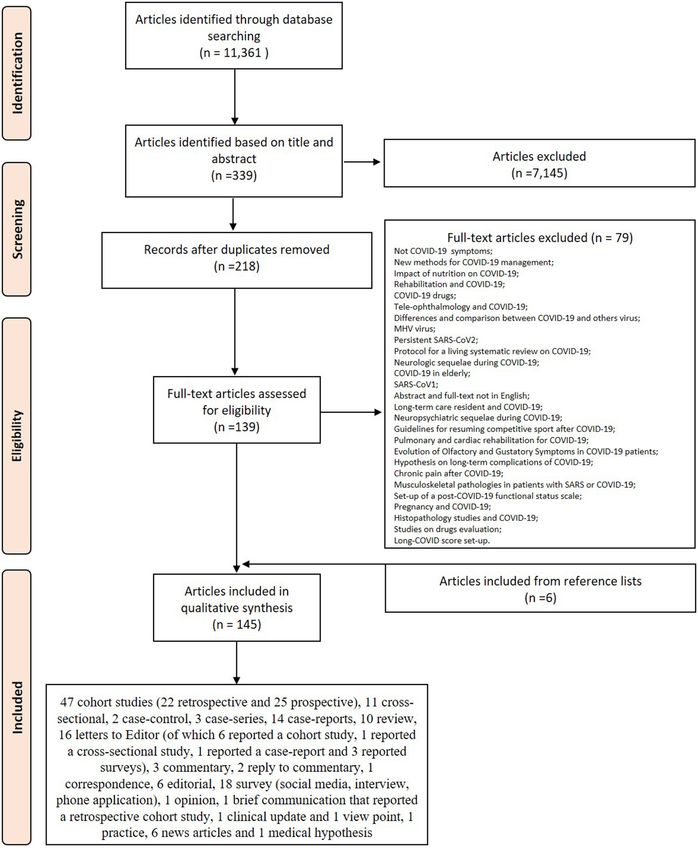
strategy and study inclusion and exclusion criteria are detailed 107). Abnormal lung functions and structural changes were
in Figure 1. reported up to 6 months after hospitalization in mild-to-
critical COVID-19 patients (25, 27, 28, 32, 34, 36, 39, 41),
Risk of Bias Assessment also with diffuse alveolar damage, desquamation of alveolar
Of the 145 articles eligible for the review, we found 54 cohort epithelial type II cells, fibrine exudation, hyaline membranes,
studies (28 prospective, 26 retrospective), six of which were scattered interstitial inflammation, monocytes, and macrophages
Frontiers in Medicine | www.frontiersin.org 3 May 2021 | Volume 8 | Article 653516Salamanna et al. The Post-COVID-19 Syndrome FIGURE 1 | PRISMA flowchart for the study selection. (23, 24, 34). Several authors reported that these persistent Latronico et al. showed that since residual abnormal chest- lung symptoms and dysfunctions correlated with prior COVID- X ray findings were detected in about 70% of critically ill 19 severity (19, 20, 24, 25, 27, 36, 38, 41). In this context, COVID-19 patients at 3 months, very few of them (∼12%) had Han et al. in a prospective study evaluating 114 severe persisting respiratory symptoms at 6 months (27). An anecdotal COVID-19 patients showed lung fibrotic-like changes in 35% study by Zhu et al. also reported long-term abnormal airway patients up to 6 months after infection (24). Differently, function for up to 11 months in a severe COVID-19 patient (44). Frontiers in Medicine | www.frontiersin.org 4 May 2021 | Volume 8 | Article 653516
Frontiers in Medicine | www.frontiersin.org
Salamanna et al.
TABLE 1 | Cohort (perspective and retrospective), cross-sectional, case-report, cases-series and case-control studies on long-term lungs symptoms, long-term neurological and olfactory symptoms, and widespread
long-term symptoms.
References Study type Study Patients COVID-19 Hospitalization ICU admission Baseline Method of Follow-up Long-term COVID-19
country and characteristics severity COVID-19 evaluating symptoms
period (numbers, symptoms long-term COVID-19
gender, age) symptoms
Persistent lungs symptoms and dysfunctions
Bellan et al. Prospective • Novara, • 238 Mild to-severe Yes 28 patients Fever, cough, DLCO , score for 120 days DLCO reduced to less than
(18) Italy patients: dyspnea, ageusia, posttraumatic stress 80% of the estimated value
• March 1 • 96 females anosmia, diarrhea, symptoms and for in 113 patients and less
and June • 142 males arthralgia, myalgia functional impairment than 60% in 34 patients.
29, 2020 • Mean age: Functional impairment
61 (50–71) in 53 patients
Chun et al. Retrospective New Haven, • 61 patients • 13 mild 30 patients 18 patients Dyspnea and Pulmonary function 45–67 Dyspnea (69%), cough
(19) CT • 44% • 30 cough tests, plasma days (58%). Pulmonary function
females non-critical biomarker profiling declined as acute COVID-19
56% males • 18 critical severity increased and not
• Mean age: correlate with symptoms.
53 (43–62) LCN2, MMP-7, HGF were
higher in ICU subjects and
inversely correlated with
5
pulmonary function
Daher et al. Prospective • Aachen, • 33 patients Severe Yes No • Increased Body 45 days Reduced DLCO and 6MWT,
(20) Germany • 11 females D-dimer plethysmography, and persistent fatigue and
• February– • 22 males • LDH activity and DLCO , blood gas dyspnea in most patients.
May 2020 • Mean age: CRP, ferritin, analysis (ABG), 6-min
64 ± 3 and IL-6 walk test (6MWT),
echocardiography,
laboratory tests
Ding et al. (21) Retrospective • Wuhan, • 112 NR Yes NR Fever, dry cough, CT scan 28 days Abnormalities in 98.1 % of
China patients: fatigue, chest lungs CT scans
• February– • 61 females distress, dyspnea, (ground-glass opacities,
March 2020 • 51 males myalgia crazy-paving pattern,
• Mean consolidation and linear
May 2021 | Volume 8 | Article 653516
age: 55.8 opacities)
The Post-COVID-19 Syndrome
Frija-Masson Retrospective • Paris, • 50 patients: • 12 mild Yes 8 patients Respiratory Spirometry, functional 30 days Impaired lung function in
et al. (22) France • 22 females • 17 symptoms residual capacity, total 54% of patients (restriction
• 4 March−1 • 28 males moderate lung capacity, DLCO and/or altered DLCO ), with a
April 2020 • Age ≤ 85 • 16 severe (single breath real-time mix of restrictive and low
• 5 CO/NH4 ) diffusion patterns
not classified
(Continued)Frontiers in Medicine | www.frontiersin.org
Salamanna et al.
TABLE 1 | Continued
Family Common Species Chromosome Ploidy 1C (Mbp) Glyphosate TSR NTSR Genome References
name number (2n) Resistant
Hall et al. (23) Retrospective • London, • 200 Moderate to- 89 patients 77 patients NR Dual energy CT or 30–45 40% of patients with
UK patients: severe high-resolution CT, days cardiorespiratory cause of
• May 2020 • 38.5 ventilation-perfusion breathlessness, i.e.
females scanning, spirometry, persistent parenchymal
• 61.5% echocardiography and abnormality pulmonary
males ECG embolism, cardiac
• Mean age: complications
54.8
± 15.0
Han et al. (24) Prospective • Hubei, • 114 Severe Yes NR Pneumonia CT scan 175 ± 20 Lung fibrotic-like changes in
China patients: days 35% patients, while in 65%
• December • 34 females patients complete
25, 2019 - • 80 males radiological resolution (38%)
February • Mean age: or residual ground-glass
20, 2020 54 ± 12 opacification or interstitial
thickening (27%)
Heiss et al. Case-reports Erlangen, • 1 male Severe Yes No Peripheral, CT scan MRI 90 days Residual pulmonary
(25) Germany • 60-year- multilobar areas of changes with patchy,
old ground-glass peripheral GGOs, and
6
Opacity (GGO) consolidations
Hu et al. (26) Retrospective • Wuhan, • 46 patients: • 36 Yes NR Fever, cough, CT scan 31 days Lung lesions completely
China • 19 females mild/moderate myalgia, fatigue, absorbed only in 28.57 % of
• 1 January • 27 males • 10 severe vomiting, or patients
2020–28 • Mean diarrhea
February 2020 age: 39.17
Latronico Prospective • Brescia, • 59 patients Critical Yes Yes Acute respiratory X-ray, spirometry 90–180 Chest X-ray and pulmonary
et al. (27) Italy • Median distress syndrome days function altered in 70% of
• February– age: 54–64 patients at 3 months; few
June 2020 patients had persisting
respiratory symptoms at 6
months
May 2021 | Volume 8 | Article 653516
Liang et al. Prospective Wuhan, China • 76 patients: • 69 Yes 9 patients NR Standard 90 days 42% of patients with
(28) • 55 females mild/general questionnaire; pulmonary function
The Post-COVID-19 Syndrome
• 21 males • 7 severe/critical pulmonary function abnormalities
• Mean age tests (total lung
41.3 capacity -TLC, DLCO ,
± 13.8 carbon monoxide
diffusion constant
(DLCO /VA)
(Continued)Frontiers in Medicine | www.frontiersin.org
Salamanna et al.
TABLE 1 | Continued
Family Common Species Chromosome Ploidy 1C (Mbp) Glyphosate TSR NTSR Genome References
name number (2n) Resistant
Liao et al. (29) Retrospective • Guangzhou, • 158 • 14 mild Yes 3 patients fever, fatigue, Peripheral blood 60 days Persistent elevation of IL-6
China patients: • 110 diarrhea, analyses (inflammatory associated with persistent
• January • 22 females moderate polypnea, anorexia cytokines expression), pulmonary lesions
22,–April • 88 males • 34 severe CT scan
10, 2020 • Mean age:
48.0
± 17.7
Manckoundia Case-report Dijon, France 49-year-old Mild No No Asthenia, fever, dry General practitioner 90 days Non-inflammatory tracheal
et al. (30) man cough, dysgeusia, consult hypersecretion
headache
Mo et al. (31) Cross- • Guangzhou, • 110 • 24 mild Yes NR NR Spirometry, DLCO 20 ± 6 DLCO anomalies in 47.2% of
sectional China patients: • 67 days in patients, total lung capacity
• February– • 55 females moderate mild cases; in 25.0%, forced expiratory
March 2020 • 55 males • 19 severe 29 ± 8 volume in 1 s (FEV1) % in
• Mean days in 13.6%, forced vital capacity
age: 49.10 moderate (FVC) % in 9.1%, FEV1/FVC
cases; 34 in 4.5% and small airway
± 7 days function in 7.3% of patients
in severe
7
cases
Moreno-Perez Prospective • Alicante, • 277 • 34.3% mild 182 NR NR Spirometry, chest 70 - 98 Spirometry alterations
et al. (32) Spain patients: • 65.7% severe radiology days present in 9.3% patients,
• February– • 47.3% while in radiographs in
April 2020 females 18.9%
• 52.7%
males
• Median
age: 62.0
Ramakrishnan Retrospective • Atlanta, • 107 NR NR NR Fever, cough, Lung auscultation, 30 days 10% of with dyspnea and
et al. (33) USA patients: smell or taste ECG fatigue
• April, 2020 • 26 males alteration
• 81 females
May 2021 | Volume 8 | Article 653516
• Mean
age: 55
The Post-COVID-19 Syndrome
Shah et al. Prospective • Vancouver, • 60 patients: NR Yes NR Dyspnoea, cough Pulmonary function 90 days More than half of patients
(34) Canada • 32% testing (PFT), 6 min with lung function and chest
• March- females walk test (6MWT), imaging abnormalities
May 2020 • 68% males high-resolution CT of
• Median the chest
age: 67
(Continued)Frontiers in Medicine | www.frontiersin.org
Salamanna et al.
TABLE 1 | Continued
Family Common Species Chromosome Ploidy 1C (Mbp) Glyphosate TSR NTSR Genome References
name number (2n) Resistant
Sonnweber Prospective Innsbruck, • 109 • 22 mild 87 patients 18 patients NR CT scan, serum 60 days Iron deficiency in 30% of
et al. (35) Austria patients: • 34 biomarkers patients, anemia in 9%.
• 44 females moderate Increased inflammation
• 65 males • 35 severe markers levels, such as IL-6
• Mean • 18 critical and C-reactive protein in
age: 58 anemic patients. 38% of
patients with
hyperferritinemia associated
with severe lung pathologies
Tabatabaei Retrospective Kashan, Iran • 52 patients: Severe/critical Yes 11 patients Fever, fatigue, CT scan, serum 90 days 42.3% with residual
et al. (36) • 20 females dyspnea, GGO, biomarkers pulmonary disease. General
• 32 males consolidation, and poor health status in the
• Mean age: mixed pattern domains of functional
50.17 impairment (64%), fatigue
± 13.1 (69%), QoL (72%)
Trinkmann Prespective • Heidelberg, 246 patients: Mild to- 20 patients 2 patients Olfactory loss, Spirometry and body- 68 ± 16 Lower lung function even in
8
et al. (37) Germany Mean age: 48 severe cough, pyrexia, plethysmography days younger SARS-CoV-2
• March– ± 15 dyspnoea, sore convalescents with few
June 2020 throat, rhinitis, comorbidities
thoracic pain, limb
pain, cephalgia,
fatigue
Truffaut et al. Retrospective • Brussels, • 22 patients: Severe Yes Yes NR Pulmonary function 90 days 55% of patients with
(38) Belgium • 6 females test (PFT), 6-min restrictive pattern ± altered
• March– • 16 males walking distance test DLCO . 65% with a 6MWDT
June 2020 • Mean age: (6MWDT), dyspnoea below 80% and 52% were
54.6 (modified Medical free from exertional
± 10.9 Research Council dyspnoea according to
(mMRC) mMRC scale
May 2021 | Volume 8 | Article 653516
van den Borst Prospective • Nijmegen, • 124 • 27 mild Yes Yes NR CT scan Clinical Frailty 90 days 90% of patients with
et al. (39) The patients • 51 Scale (CFS) residual pulmonary
The Post-COVID-19 Syndrome
Netherlands • 50 females moderate Pulmonary function parenchymal abnormalities
• 23 April - • 74 males • 26 severe tests (DLCO , TLC)
15 • Mean age: • 20 critical
July 2020 59 ± 14
(Continued)Frontiers in Medicine | www.frontiersin.org
Salamanna et al.
TABLE 1 | Continued
Family Common Species Chromosome Ploidy 1C (Mbp) Glyphosate TSR NTSR Genome References
name number (2n) Resistant
van Gassel Retrospective March–May 48 patients Severe Yes Yes Severe pneumonia Pulmonary function 90 days Reduced total lung capacity
et al. (40) 2020 testing (PFT), i.e. and diffusion capacity in 23
spirometry, lung and 36 participants,
volumes, DLCO respectively, but no airway
adjusted for Hb, chest obstruction on PFT.
high-resolution CT Ground-glass opacities in
(HRCT) 89% of cases. Signs of
imaging, and reticulation, bronchiectasis,
6-minute-walk test bronchiolectasis in 67% of
(6-MWT) cases
Weerahandi Prospective • New York, • 152 Severe Yes 101 NR Patient-Reported 30–40 Shortness of breath in 74%
et al. (41) USA patients: Outcomes days of patients; 35.1% patients
• April 15, • 57 females Measurement require home oxygen after
2020, • 95 males Information System hospital discharge
• Mean (PROMIS®) Dyspnea
age: 62 Characteristics
instrument
Yao et al. (42) Case-report • China • 1 female Mild Yes No Multiple patchy Lungs biopsy 14 days Diffuse alveolar damage,
9
• January 27, • 78-year- shadows in both extensive desquamation of
2020 old lungs proliferative type II alveolar
epithelial cells, exudative
monocytes and
macrophages
Zhao et al. Retrospective • 3 tertiary • 55 patients: • 4 mild Yes NR Gastrointestinal CT scan, pulmonary 90 days Abnormalities of pulmonary
(43) hospitals of • 23 females • 47 symptoms, function test function and chest
Henan • 32 males moderate headache, fatigue, radiography in three
Province, • Mean • 4 severe dyspnea, cough, quarters of patients. Higher
China age: 47.74 sputum, olfactory, D-dimer level at admission
• 20 and gustatory predict impaired DLCO 3
January−24 dysfunctions months after discharge
February 2020
May 2021 | Volume 8 | Article 653516
Zhu et al. (44) Case-report • Hubei, 30-year-old Severe Yes NR Dry cough, fever, Chest CT, laboratory 11 months Abnormal airway function,
China male emphysema in examination results, cough, chest pain, chest
The Post-COVID-19 Syndrome
• January 2020 both upper lungs, lung function tightness, and shortness of
with ground glass examination, sleep breath, unstructured sleep
density at the edge monitoring, sex apnea hypopnea syndrome,
hormones, sperm and nocturnal sleep
morphology and hypoxemia
activity
(Continued)TABLE 1 | Continued
Frontiers in Medicine | www.frontiersin.org
Salamanna et al.
Family Common Species Chromosome Ploidy 1C (Mbp) Glyphosate TSR NTSR Genome References
name number (2n) Resistant
Persistent neurological symptoms and olfactory dysfunctions
Boscolo- Prospective Treviso, Italy 183 patients Mild NR No Fever, dry cough Interviews 60 days 18.6% of patients with
Rizzo or coughing up altered sense of smell or
(45) mucus, loss of taste
appetite, felt tired,
altered sense of
smell or taste
Caronna et al. Prospective • Barcelona, • 130 Mild-to- 80% 8.5% Headache, fever, Neurological 45 days 74.6 % of patients had
(46) Spain patients: severe malaise, myalgia, assessment headache. At follow-up
• 28 • 66 females dizziness, cough, 37.8% of these had
March−22 • 64 males dyspnea, chest persistent headache (50%
April 2020 • Mean pain, with no previous headache
age: 53.9 expectoration, history)
odynophagia, loss
of smell/taste,
diarrhea
D’Ascanio Case-control • Santa • 43 Mild 20 patients No Anosmia, A 7-question survey 30 days Resolution of anosmia or
et al. (47) Croce COVID-19 hyposmia, instrument, subjective hyposmia in ∼85% of
Hospital patients headache olfactory dysfunction patients
10
AORMN, • 25
Fano- healthy controls
Pesaro,
Italy
• 1 February–
April
24,
• 2020
Dani et al. (48) Case-series London, UK • 6 female NR No No Gastrointestinal Echocardiogram 21 days Orthostatic intolerance
patients symptoms, upper syndromes (orthostatic
• Age: 26– respiratory tract hypotension, vasovagal
50 years symptoms, chesty syncope, postural
cough, flu-like orthostatic tachycardia
symptoms syndrome)
May 2021 | Volume 8 | Article 653516
Fjaeldstad Retrospective • Denmark • 109 Mild No No Fever, headache, Subjective > 30 days 28% and 20% of patients
The Post-COVID-19 Syndrome
et al. (49) • 22 April−4 patients: fatigue, dyspnea, chemosensory not experienced
May 2020 • 79 females cough sputum, function improvement respectively of
• 30 males olfactory, their olfactory and gustatory
• Mean gustatory loss function, whereas 44% and
age: 39.4 50% fully recovered
olfactory and gustatory loss
respectively
(Continued)Frontiers in Medicine | www.frontiersin.org
Salamanna et al.
TABLE 1 | Continued
Family Common Species Chromosome Ploidy 1C (Mbp) Glyphosate TSR NTSR Genome References
name number (2n) Resistant
Galal et al. Cross- • Aswan, • 430 Mild-to-critical 103 patients 20 patients Myalgia, fever, A 4-point Likert scale 30 days Myalgia (60.0%), arthralgia
(50) sectional Egypt patients: restriction of daily (57.2%), restriction of daily
• 18 July−31 • 274 activities, memory activities (57.0%), sleeping
August 2020 females loss troubles (50.9%),
• 156 males nervousness and
• Mean age: hopelessness (53.3%),
37.4 anorexia (42.6%), chest pain
± 12.6 (32.6%), gastritis (32.3%),
cough (29.3%) and dyspnea
(29.1%)
Gallus et al. Retrospective • Sassari, • 48 patients: Mild No No Fever, dyspnea, Tonal pure tone 14 days 8.3% patients reported
(51) Italy • 37 females cough, thoracic audiometry, a vHIT from the hearing loss, 4.2% tinnitus,
• April- • 11 males pain, asthenia, and SHIMP test second 8.3% dizziness, 2%
May 2020 • 37 (77%) myalgia, diarrhea, negative spinning vertigo, 2%
Mean conjuntivitis, swab dynamic imbalance, 6.3
age: 45 general malaise, static imbalance
sore throat,
headache,
cutaneous rash,
11
hypo-anosmia,
hypo-ageusia
Guedj et al. Case-report Marseill, • 54-year-old • 1 severe Yes Yes Acute respiratory Whole-body 30 days Hypometabolism of the
18
(52) France man • 1 moderate distress syndrome, F-FDG PET olfactory/rectus gyrus on
• 62-year- anosmia or the two patients
old man ageusia
Hellmuth Case-report San • 33-year-old Mild No No Neck pain, fatigue, Cerebrospinal fluid • 149 • Deficits in working
et al. (53) Francisco, woman fever, cough, and blood analyses, days memory and digit span
CA, USA • 56-year- myalgias, and MRI • 72 days backwards with high
old woman non-migrainous average attentional skills
headaches, • Word finding difficulties,
cognitive inefficient learning, and
symptoms decreased organization
May 2021 | Volume 8 | Article 653516
leading to
missed deadlines
The Post-COVID-19 Syndrome
Lim et al. (54) Case-report UK 55-year-old Mild Yes No Fever, myalgia, CT scan, MRI, 52 days Persistent psychotic
woman cough, Addenbrooke’s symptoms
breathlessness, Cognitive
anosmia, ageusia, Examination-III
headache
(Continued)Frontiers in Medicine | www.frontiersin.org
Salamanna et al.
TABLE 1 | Continued
Family Common Species Chromosome Ploidy 1C (Mbp) Glyphosate TSR NTSR Genome References
name number (2n) Resistant
Lu et al. (55) Prospective • Fuyang • 60 patients: • 47 mild Yes NR Fever, cough, Diffusion tensor 90 days 68.33% of patients with
No.2 • 26 females • 12 severe gastrointestinal imaging (DTI), 3D disruption to
People‘s • 34 males • 1 critical symptoms, high-resolution T1WI micro-structural and
Hospital, • Mean age: neurological sequences functional brain integrity
China 44.10 symptoms during infection and 55% of
• January - • 39 age and them maintain the same
February 2020 • sex- symptoms after 90 days
matched
non
COVID-
19 controls
Mendez et al. Prospective • Valencia, • 179 Mild-to severe Yes 34 patients NR Standardized 60 days 58.7% presented at least
(56) Spain patients instruments evaluating moderate neurocognitive
• March - • 74 females neurocognitive decline, 39.1% psychiatric
April • 105 males function, psychiatric morbidity, and ∼40% had
• Mean morbidity, and QoL poor QoL
rage: 22–81
Moein et al. Prospective • Tehran, Iran • 82 patients: • 58 mild Yes No Fever, cough, 40-item University of 40–60 96% of patients with smell
12
(57) • 21 • 28 females • 30 breathlessness, Pennsylvania Smell days loss during infection. At
March−3 • 45 males moderate headache, Identification Test follow-up, the test scores of
May, 2020 • Mean • 12 severe myalgia, shivering, (UPSIT) 63% of the retested patients
age: 45.53 sweating, were normal. However, the
gastrointestinal mean UPSIT score at that
symptoms, time continued to remain
malaise, tinnitus, below that of age- and sex
bloody sputum matched healthy controls
Negrini et al. Case-series • Milan, Italy • 9 patients: • 4 Yes 5 patients NR Mini-Mental State 30 days General cognitive decay in
(58) • 3 March−8 • 3 females mild/moderate Examination (MMSE) 33.3% of patients, with a
April, 2020 • 6 males • 5 severe test specific decline in attention,
• Mean memory, language, and
age: 60 praxis abilities. The cognitive
decay appears to be
May 2021 | Volume 8 | Article 653516
associated with the length
of stay (in days) in ICU
The Post-COVID-19 Syndrome
Novak et al. Case-report Boston, USA 64-year-old NR No No Cough, dyspnea CT scan 20 days Probable orthostatic
(59) woman hypoperfusion syndrome
and painful small fiber
neuropathy in post- COVID
disease.
(Continued)Frontiers in Medicine | www.frontiersin.org
Salamanna et al.
TABLE 1 | Continued
Family Common Species Chromosome Ploidy 1C (Mbp) Glyphosate TSR NTSR Genome References
name number (2n) Resistant
Panda et al. Prospective • New Delhi, • 225 • 145 mild No No Otolaryngologic Ear, Nose and Throat 28 days 96% of the patients
(60) India patients: • 80 asymptomatic symptoms, fever, (ENT) symptoms regaining ENT function at
• 23 • 63 females cough, dyspnea, evaluation follow-up
April−29 • 159 males gastrointestinal
June 2020 • 3 symptoms
transgenders
• Mean
age: 34.96
Pilotto et al. Retrospective • Brescia, • 165 Moderate-to Yes NR NR Montreal Cognitive 180 days Fatigue (34%),
(61) Italy patients: severe Assessment (MoCA) memory/attention (31%),
• February– • 50 females score sleep disorders (30%).
April 2020 • 115 males 37.4% of patients with
• Mean age: neurological abnormalities,
64.8 i.e. cognitive deficits
± 12.6 (17.5%), hyposmia (15.7%),
postural tremor (13.8%)
Pritza et al. Retrospective • Thessaloniki, • 90 patients: • 45 mild Yes 10 patients Olfactory and Questionnaires 61 days 8.57 % patients with
13
(62) Greece • 37 females • 35 gustatory persistent hyposmia
• March– • 53 males moderate dysfunction
April 2020 • Mean age: • 10 severe
55.8
• ± 17.3
Raahimi et al. Case-report Portsmouth, 46-year-old Severe Yes Yes Sensory loss in his Cerebrospinal fluid 90–150 At 90 days intermittent
(63) UK man feet, progressing analysis, ECG, CT days neuropathic pain and
to gait scan, MRI, spirometry paraesthesia in distal limbs
unsteadiness and were present. At 150 days
distal lower limb improvement in nerve
weakness function, with normalizing
distal motor latencies
Sampaio Case-report Recife, Brazil 40-year-old Mild No No Diarrhea, cough, MRI, intracranial 85 days Persistent anosmia and
May 2021 | Volume 8 | Article 653516
Rocha-Filho woman fatigue, myalgia, magnetic resonance headaches
et al. (64) anosmia, facial angiography
The Post-COVID-19 Syndrome
pain, headache
Tobechukwu Case-report Red Bank, 46-year-old Mild Yes No Fever, chest pain, X-ray, CT scan. MRI 90 days Delirium and allucinations
et al. (65) USA woman vomiting, cough,
confusion
(Continued)TABLE 1 | Continued
Frontiers in Medicine | www.frontiersin.org
Salamanna et al.
Family Common Species Chromosome Ploidy 1C (Mbp) Glyphosate TSR NTSR Genome References
name number (2n) Resistant
Ugurlu et al. Retrospective • Çorum, • 42 patients: Mild No No Fever, cough, Brief smell 90 days Full recovery in 85.7% of
(66) Turkey • 23 female dyspnea, diarrhea, identification test patients. Olfactory
• March– 19 male sore throat, nasal dysfunction persisted in
June 2020 Mean age: drip, nasal 14,3% of patients
41.2 obstruction,
± 14.6 headache
Vaira et al. Prospective • University • 138 Mild-to- Yes NR Chemosensitive Self-administered 60 days 5.8 % with moderate to
(67) • Hospital of patients: severe dysfunction olfactory and severe olfactory dysfunction,
Sassari, • 70 females gustatory 4.3 % with significant taste
San Paolo • 68 males psychophysical tests disorder. Four patients with
Hospital in • Mean in outpatients, combined chemosensitive
Milan, and age: 51.2 Connecticut dysfunctions, 4 patients with
Bellaria- Chemosensory isolated smell impairments
Maggiore Clinical Research and two patients with
Hospital in Center orthonasal isolated taste disorders
• Bologna, Italy olfaction test in
hospitalized patients
Yan et al. (68) Cross- • California, 46 patients NR NR NR NR 10-point scale score 16 days Olfactory dysfunction
sectional USA for sense of smell reported by 23 patients (17
• 9 reported no loss, 5 were
March–April unreachable, 1 died). At
14
29, 2020 follow up 78% of patients
with chemosensory
dysfunction
Widespread persistent symptoms
Abdallah et al. Case-report • Philadelphia, 30-year-old Mild No No Chest pain, fever, X-ray, CT scan 8 months Chest pain, dyspnoea, and
(69) USA man anosmia fatigue, intercostal neuralgia
• March 2020
Arnold et al. Prospective • Southmead 110 patients 27 mild Yes No NR Chest radiograph, 83 days Most (74%) patients with
(70) Way, Bristol 65 moderate spirometry, exercise persistent symptoms
• 30 March 18: severe test, bloods, and (notably breathlessness and
and 3 health-related quality excessive fatigue) with
June 2020 of life (HRQoL) reduced HRQoL
questionnaires
May 2021 | Volume 8 | Article 653516
Buonsenso Cross- • Rome, Italy • 129 Mild-to severe 6 patients 3 patients NR Questionnaire 162.5 ± 35.7% had 1 or 2
et al. (71) sectional • March– children: 113.7 days symptoms and 22.5% had 3
The Post-COVID-19 Syndrome
November 2020• 62 females or more. 52.7% had at least
• 67 males one symptom 120 days or
• Mean age: more after diagnosis.
11 ± 4.4 Fatigue, muscle and joint
pain, headache, insomnia,
respiratory problems and
palpitations are the main
reported symptoms
(Continued)TABLE 1 | Continued
Frontiers in Medicine | www.frontiersin.org
Salamanna et al.
Family Common Species Chromosome Ploidy 1C (Mbp) Glyphosate TSR NTSR Genome References
name number (2n) Resistant
Buselli et al. Case-report Azienda 50-year-old Mild No No Dry cough, Pneumology ≥ ys Persistent fatigue and
(72) Ospedaliero- woman asthenia, myalgia, examination, CT scan, dysphonia
Universitaria diarrhea, fever, neurological
Pisana, Pisa, dyspnea, examination with brain
Italy headache, fatigue, scan, cardiology
dysphonia examination with
echocardiograph,
pulmonary ultrasound
and ENT specialist
examination
Carfi et al. Retrospective • Fondazione • 143 • 21 mild Yes 18 patients Fatigue, dyspnea, EuroQol visual analog 60 days At follow-up, only 12.6% of
(73) Policlinico patients: • 104 joint pain, chest scale patients with no COVID-19
Universitario • 53 females moderate pain, cough, related symptom, while 32%
• Agostino • 90 males • 18 severe anosmia, sicca had 1 or 2 symptoms and
Gemelli • Mean syndrome, rhinitis, 55%had 3 or more. Main
IRCCS, age: 56.5 red eyes, persistent symptoms were
Rome, Italy dysgeusia, fatigue (53.1%), dyspnea
• 21 April – headache, sputum (43.4%), joint pain, (27.3%)
29 May, production, lack of and chest pain (21.7%).
2020 appetite, sore
throat, vertigo,
myalgia, diarrhea
15
Carvalho- Prospective • Tours • 150 Non-critical Yes No Dyspnea, fever, Clinical algorithm 30 and 60 At 30 days 68% of patients
Schneider University patients: weight loss, chest days with at least one symptom
et al. (74) Hospital, • 84 females pain, headache, and 66% at 60 days.
France • 66 males asthenia, myalgia, Anosmia/ageusia: 28% at
• 17 • Mean gastrointestinal 30 days, 23% at 60 days.
March−3 age: 49 symptoms, Dyspnea: 36.7% at 30 days,
June, 2020 anosmia, ageusia 30% at 60 days. Asthenia:
50% at 30 days, 40%) at 60
days. Persistent symptoms
at 60 days significantly
associated with age 40–60,
hospital admission and
abnormal auscultation at
symptom onset
May 2021 | Volume 8 | Article 653516
Chen et al. Cross- • 12 • 361 • 327 mild Yes NR NR Chinese version of 30 days Health-related quality of life
The Post-COVID-19 Syndrome
(75) sectional Hospitals in patients: • 34 severe Short-Form 36-item (HRQoL) was poor among
Wenzhou, • 175 questionnaire (SF-36) COVID-19 patients at
Zhejiang, females follow-up
China • 186 males
• 17 • Mean
January−20 age: 47.22
March,
2020
(Continued)Frontiers in Medicine | www.frontiersin.org
Salamanna et al.
TABLE 1 | Continued
Family Common Species Chromosome Ploidy 1C (Mbp) Glyphosate TSR NTSR Genome References
name number (2n) Resistant
Cirulli et al. Prospective • Nevada, 233 patients Mild 8 patients No Fever, headache, Self-reported short 30 and 90 43.4% of patients with
(76) USA asthenia, fatigue, and long-term days symptoms longer than 30
• April– diarrhea, ageusia, symptoms days, 24.1% with at least
September 2020 dry cough, chest one symptom after 90 days.
pain, bone and Long-term symptoms were
joint pain, red anosmia, ageusia, difficulty
eyes, dizziness, concentrating, fatigue,
anorexia dyspnea, memory loss,
confusion, headache, heart
palpitations, chest pain,
pain with deep breaths,
dizziness, and tachycardia
D’Cruz et al. Prospective June–July • 119 Severe Yes Yes Pneumonia X-ray, CT scan, clinical 51–67 Persistent fatigue (68%),
(77) 2020 patients: outcomes, symptom days sleep disturbance (57%)
• 45 females questionnaires, mental and breathlessness (32%),
• 74 males health screening, post-traumatic stress
• Mean age: physiologic (4MGS disorder (25%), anxiety
58.7 and STS) al testing (22%) and depression
± 14.4 (18%). 4MGS was slow in
38% and 35% desaturated
16
by ≥4% during the STS test
Erçalik et al. Retrospective • Istanbul, • 206 • 153 mild Yes Yes Fever, cough, Pain assessment 45.99 ± 40.7% of the patients had
(78) Turkey patients: • 48 dyspnea, runny using a numeric rating 14.64 days chronic pain for at least 3
• March– • 105 moderate nose scale months before COVID, and
May 2020 females • 5 severe this rate increased to 82.5%
• 101 males during COVID and to 55.1%
• Mean age: after COVID
56.24
± 16.99
Galván-Tejada Case-control • Zacatecas • 219 NR Yes NR NR Questionnaire 60 days Chills, dyspnea, anosmia or
et al. (79) Mexico patients: dysgeusia, nausea or
• July– • 141 vomiting cough, red eyes as
September recovered persistent symptoms in
May 2021 | Volume 8 | Article 653516
2020 • 78 controls COVID-19 patients
• 51%
The Post-COVID-19 Syndrome
females
• 49% males
• Mean age
female:
39.14
Mean age
male: 39.01
(Continued)TABLE 1 | Continued
Frontiers in Medicine | www.frontiersin.org
Salamanna et al.
Family Common Species Chromosome Ploidy 1C (Mbp) Glyphosate TSR NTSR Genome References
name number (2n) Resistant
Hosseini et al. Case-report Qom, Iran 48-year-old Mild No No Fever, chills, Laboratory Tests, CT 30 days Persisten advanced
(80) man weakness, scan, ECG atrioventricular block
lethargy, myalgia
Huang et al. Prospective Wuhan, China • 1733 Mild to-severe Yes 76 patients NR Questionnaires, 186 days Fatigue or muscle weakness
(81) between patients physical examination, (63%), sleep difficulties
January−7 • 48% blood tests, CT scan, (26%) were the most
May 2020 females 6-min walking test common symptoms.
• 52% males Anxiety or depression was
• Median reported among 23% of
age: 57.0 patients
Isoldi et al. Prospective • Latina, Italy • 15 children: Mild No No Fever, hyperemia Laboratory (blood, 180 days Two patients with
(82) • April– • 7 females of the pharynx urine, feces) tests, hyperfiltration exhibited high
June 2020 • 8 males (53.3%), ECG blood pressure levels at
• Median abdominal diagnosis, and persistence
age: 12.2 swelling, tender to of a prehypertension at
the touch (33.3%), 6-month follow-up
active conjunctival
injection (6.7%)
Iqbal et al. Cross- • Karachi, • 158 • 112 mild Yes 13 patients NR Questionnaire 20–90 Fatigue (82.9%), poor sleep
17
(83) sectional PAK patients: • 33 days quality (56.3%), anxiety
• September– • 87 females moderate (53.2%), dyspnea (50%),
December • 71 males • 13 severe joint pain (47.5%) were the
2020 • Mean age: most prevalent
32.10 post-discharge
± 12.42 manifestation
Jacobs et al. Prospective • New • 183 • 160 mild Yes 23 Fatigue, shortness PROMIS® 35 days Fatigue (55.0%), dyspnea
(84) Jersey, patients • 23 severe of breath, cough, instruments to identify (45.3%), muscular pain
USA • 38.5% lack of taste, symptoms and quality (51%), lower odds rating
• 22 March– females muscular pain, of life parameters general health (41.5%),
April 16 • 61.5% diarrhea, lack of quality of life (39.8%),
males smell, production physical health (38.7%),
• Mean age: of phlegm, mental health (43.7%) and
57 headache social active role (38.7%)
May 2021 | Volume 8 | Article 653516
• 61.5% male
The Post-COVID-19 Syndrome
Khalaf et al. Cross- • Assiut, • 538 • Mild-to- 51.3% of 6.5% of NR Online questionnaire 83 days Fatigue (59.1%), sense of
(85) sectional Egypt patients severe patients patients fever (46.5%), anorexia
• August– • Mean age: • (61.3% (24.3%), diarrhea (24.3%),
October 2020, 41.17 ± mild, 31% loss of taste and smell
14.84 moderate, (22.3%), headache (21.4%),
• 45.9 7.6% severe) cough (20.8), dyspnea
females (21%)
• 54.1% males
(Continued)Frontiers in Medicine | www.frontiersin.org
Salamanna et al.
TABLE 1 | Continued
Family Common Species Chromosome Ploidy 1C (Mbp) Glyphosate TSR NTSR Genome References
name number (2n) Resistant
Ludvigsson Case-report • Stockholm, • 5 children Mild No No Fever, dyspnea, NR 6–8 Fatigue, dyspnoea, heart
et al. (86) Sweden • Mean age: abdominal pain, months palpitations or chest pain,
• October 2020 12 upper respiratory headaches, difficulties
• 4 girls symptoms, concentrating, muscle
• 1 boy dizziness, extreme weakness, dizziness, sore
fatigue, cough, throats
lost taste and
smell, headache,
abdominal pain,
diarrhea, nausea,
norexia
Mandal et al. Cross- London, UK • 384 Mild-to-critical Yes 54 patients NR CT scan, blood tests, 54 days Persistent breathlessness
(87) sectional patients 11-point (0–10) scale (53%), cough (34%) fatigue
• Mean age: score (69%), depression (14.6%),
59.9 elevated d-dimer (30.1%)
• 38% and C reactive protein
females (9.5%), abnormal chest
• 62% males radiographs (38%)
18
Mahmud Prospective • Dhaka, • 355 • 221 mild Yes Yes Fever, cough, Telephonic interview At least 30 46% of patients developed
et al. (88) • Bangladesh patients • 93 respiratory days long-term symptoms.
• June– • 148 moderate distress, anosmia, Post-viral fatigue (70%) was
August 2020 females 41 severe anorexia the most prevalent
• 207 males headache, symptom. Post-COVID
• Mean lethargy features are significantly
age: 39.8 higher among female
Martin et al. Retrospective • USA 9,989 Mild- to Yes NR NR Electronic health 90–180 Persistent neuropsychiatric,
(89) • March– patients severe records days pulmonary, metabolic, and
September coagulopathic phenotypes
2020
Pellaud et al. Retrospective • Fribourg, • 196 • Mild Yes 49 patients NR Data collected by 30 days Among 117 patients
(90) Switzerland patients: • Moderate electronic health discharged from hospital
May 2021 | Volume 8 | Article 653516
• March– • 77 females • Severe/Critical records or by within 30 days after the
April 2020 • 119 males telephone beginning of symptoms,
The Post-COVID-19 Syndrome
• Mean 63% reported persistent
age: 70 symptoms. The main
persistent symptoms are
asthenia (67%), respiratory
symptoms (56%),
anosmia/dysgeusia (10%)
(Continued)Frontiers in Medicine | www.frontiersin.org
Salamanna et al.
TABLE 1 | Continued
Family Common Species Chromosome Ploidy 1C (Mbp) Glyphosate TSR NTSR Genome References
name number (2n) Resistant
Petersen Retrospective • Tórshavn, • 180 Mild-to- 8 patients No Fatigue, fever, Questionnaire 125 days 53.1% reported persistence
et al. (91) Faroe patients moderate headache, chills, of at least one symptom,
Islands • Mean age: and loss of smell 33.3% reported one or two
• 22 April−16 39.9 ± and taste symptoms and 19.4% three
August 2020 19.4 or more symptoms. Most
• 98 females prevalent persistent
• 82 males symptoms: fatigue, loss of
smell and taste, arthralgias
Raman et al. Prospective Oxford, UK • 58 patients: Moderate to- Yes 21 patients Fever, malaise, MRI of the brain, 60–90 • 64% of patients
(92) March–May • 24 females severe shortness of lungs, heart, liver, days experienced
2020 • 34 males breath, cough, kidneys, 6-minute breathlessness and
• Mean age: dysgeusia, walk (6MWT) test, 55% fatigue. MRI,
55 ± 13 anosmia, diarrhea, spirometry, abnormalities in lungs
chest pain, cardiopulmonary (60%), heart (26%), liver
headache, exercise test (CPET), (10%), and kidneys (29%).
vomiting questionnaires, blood • Impaired cognitive
tests performance and reduced
six-minute walk distance
19
Rosales- Retrospective March–May • 118 Mild to-severe Yes 7.6% of Fever, cough, Physician consultation 50 days 62.5% of patients reported
Castillo et al. 2020 patients: patients dyspnoea, persistence of symptoms:
(93) • 44.1 diarrhea, ageusia, dyspnoea (31.4%), asthenia
females myalgia, anosmia, (30.5%), myalgia (13%),
• 55.9% chest pain, cough (5%), anosmia
male headache, (1.7%), and ageusia (1%)
• Mean expectoration
age: 60.16
Saeed et al. Case-report Lahore • 48-years- Mild No No Dry cough, fever, Dermatological 60–90 Hair shedding: telogen
(94) old- abdominal consulting days effluvium
woman discomfort and
• 42-years- diarrhea
old-
May 2021 | Volume 8 | Article 653516
woman
• 32-years-
The Post-COVID-19 Syndrome
old-
woman
• 37-years-
old- woman
(Continued)Frontiers in Medicine | www.frontiersin.org
Salamanna et al.
TABLE 1 | Continued
Family Common Species Chromosome Ploidy 1C (Mbp) Glyphosate TSR NTSR Genome References
name number (2n) Resistant
Saiful Islam Cross- • Bangladesh • 1,002 Mild to- 208 patients NR Fever and fatigue Online questionnaire 30 days 20% of patients reported
et al. (95) sectional • September– patients: severe persistent symptoms. The
October 2020 • 422 most reported persistent
females symptoms were diarrhea
• 580 male (12.7%) and fatigue
• mean age (11.5%). 48% of
= 34.7 participants had moderate
± 13.9 to severe depression
Smane et al. Retrospective • Riga, Latvia • 30 children: • 5 No No Fever, rhinorrhoea, Physician assessment 101 days 70% patients completely
(96) • July 2020 • 13 females asymptomatic cough free of any
• 17 male • 24 mild COVID-19-related
• Mean • 1 moderate symptoms, while 30% had
age: 9.2 at least one symptom (fever,
joint pain, headache,
anosmia, ageusia,
microhaematuria)
Sofian et al. Case-series • Arak, Iran • 10 patients Mild-to No No Fever, dry cough, CT scan 60 days Dry cough, headache,
(97) • February– • 9 females moderate nasal congestion, severe sweating, shivering,
20
April 2020 • 1 male weakness, high loss of smell, mild on/off
diaphoresis, loss fever, and diarrhea, weight
of smell, fatigue loss
Stavem et al. Cross- • Lørenskog, • 451 Mild No No Fever, loss of Mixed-mode survey 117 days 53 % of woman and 67 %
(98) sectional Norway patients: smell, headache, of men with no persistent
• Until 1 • 253 dry cough, symptoms. Fatigue and
June 2020 females myalgia, chills, dyspnoea are common
• 198 males dyspnea, sore about 60 days
• Mean throat,
age: 49.7 gastrointestinal
manifestations
Sykes et al. Retrospective Hull, UK • 134 Mild to-severe Yes 20% patients Breathlessness, X-ray, standardized 113 days 86% of patients reported at
(99) patients: myalgia anxiety, clinical assessment, least one residual symptom:
May 2021 | Volume 8 | Article 653516
• 46 females fatigue, low mood, questionnaires for breathlessness (60%),
• 88 males sleep disturbance dyspnea, and quality anxiety (47.8%), extreme
The Post-COVID-19 Syndrome
• Median of life fatigue (39.6%), low
age: 58 mood (37.3%), and sleep
disturbance (35.1%).
Females reported most
residual symptoms including
anxiety, fatigue, and myalgia
(Continued)You can also read


