POSTURE STATEMENT FORCE FOR THE FUTURE - 2021 NATIONAL GUARD BUREAU
←
→
Page content transcription
If your browser does not render page correctly, please read the page content below
2021 NATIONAL GUARD BUREAU

POSTURE
STATEMENT                    FORCE FOR THE FUTURE
3 CNGB EXECUTIVE 25 BUILDING
OVERVIEW PARTNERSHIPS
17 FIGHTING Forging productive alliances
that attract new partners
AMERICA’S WARS
Providing the Army and Air
Force lethal forces 28 SOLDIERS, AIRMEN
capable of fighting in an array AND FAMILIES
of complex environments
Providing programs that ease
the burden military service
20 SECURING THE places on Guard members and
their families
HOMELAND
Training and legal authorities
enable unsurpassed domestic
response capability
TABLE OF CONTENTS
Force for the Future
EXECUTIVE
                       OVERVIEW
                       A COMPLEX, EVOLVING
                       SECURITY ENVIRONMENT
                       WILL REQUIRE GREATER
                       RELIANCE ON THE
                       NATIONAL GUARD

3 Executive Overview
Executive Overview 4
            Force for the Future
             By General Joseph L. Lengyel Chief, National Guard Bureau

T
       oday’s National Guard plays a vital role in the security and welfare of our      The National Guard also represents a tremendous value to the American taxpayer.
       nation. On any given day, approximately 30,000 Guardsmen carry out               Personnel costs for our citizen-soldiers and citizen-airmen are significantly lower,
       Federal missions around the world, and an additional 10,000 Guardsmen            when not activated, than our Active Duty counterparts. We are a force that
conduct State and Federal missions within the United States and its territories.        allows for the rapid expansion of the Army and the Air Force. When we are not
National Guardsmen are part of an operational force nearly 450,000 strong that          activated, we offset risk in capacity, allowing for modernization and recapitalization
provides strategic depth to our nation’s Army and Air Force.                            that benefits the Active, National Guard, and Reserve forces. We are the primary
                                                                                        combat reserve of the Army and Air Force. Furthermore, National Guardsmen
The National Guard brings unique relationships, authorities, and flexibility to         leverage civilian skill sets in a military capacity, and conversely bring military training
the Joint Force. Due to the complex global security environment marked by               and knowledge to civilian communities.
rapid technological change, these attributes are instrumental in implementing the
Department of Defense’s (DoD) National Defense Strategy (NDS). The National             As the Joint Force faces increasing demands in all corners of the globe, and with
Guard directly supports the three tenets of the NDS: building a lethal force ready      the ever-present threat of natural disasters and other unforeseen events taking
for any fight, strengthening alliances and seeking new partnerships, and reforming to   place within our borders, the National Guard supports the NDS and serves the
improve performance and affordability.                                                  American people at home through three core missions: Warfight, Homeland, and
                                                                                        Partnerships.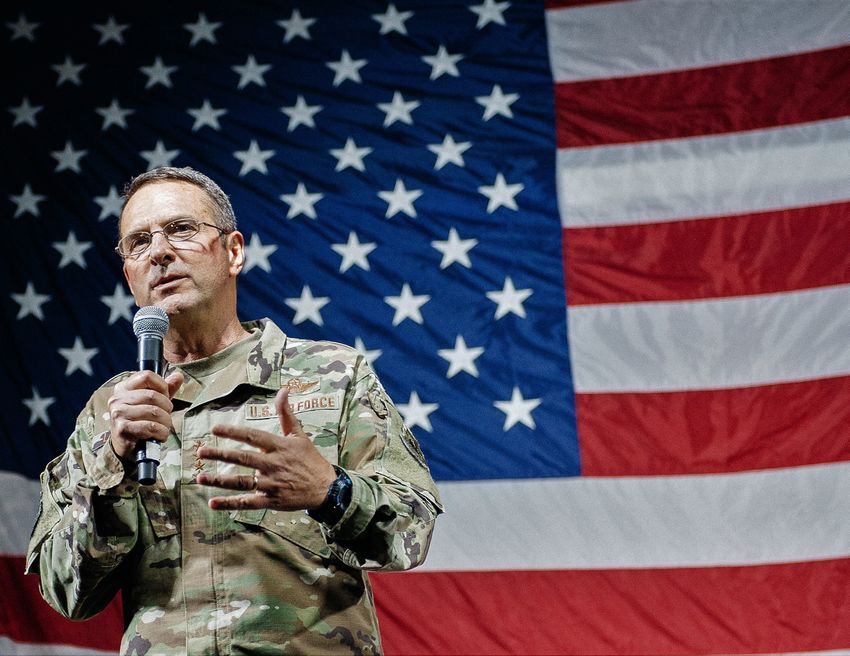
WARFIGHT
The warfight is a primary mission and at the heart of everything the National Guard      across the National Guard, dynamic employment and global operations will require
does. Being ready to fight and win America’s wars drives our training, our equipment     more of our service members than ever before. In order to fully leverage readiness
and maintenance requirements, and our recruitment efforts. While we are able to use      that lives in the National Guard and to empower our Guard men and women,
our training and equipment for State missions and DoD mission support, we provide        mobilization requirements need to be predictable. This structure, predictable in time
ready forces to Combatant Commanders.                                                    but geographically agile, will afford the DoD greater flexibility during this period of
                                                                                         great power competition.
Our current threat environment requires the National Guard to be prepared for
complex, global operations in the most demanding conditions. With the rise of China      This flexibility in employment also requires an enterprise approach to modernization
and Russia, we have shifted our focus from counterinsurgency operations to great         of the Total Force in order to remain deployable, sustainable, and interoperable with
power competition. China and Russia are undermining the international order through      the Active Components. The Guard requires parity in our training, facilities and
various means, exploiting all domains to change the character of warfare. We remain      equipment. There is only one standard for readiness, and there should be only the
poised to surge to augment the Joint Force for national security threats from Iran,      highest standard for our equipment. Without parity, we cannot integrate with the
North Korea, and non-state violent extremists.                                           Active Components; if we cannot integrate, we cannot be the lethal force necessary
                                                                                         to help deter, fight, and win America’s wars. Training, facilities, and equipment must
The changing and global nature of threats shapes the warfight, and the National Guard    strive for parity to keep our Guardsmen interoperable and our country competitive.
is evolving rapidly to meet new demands. We are the principal combat reserve of the
Army and Air Force, making up 20 percent of the entire Joint Force providing strategic   A prime example of a Fiscal Year (FY) 2019 action that supports National Guard
depth in support of combatant commands. Since 9/11, more than a million Guardsmen        parity is the arrival of F-35s to the Vermont Air National Guard. The presence
have mobilized and deployed; many have deployed multiple times. While the model          of this cutting edge capability within the National Guard demonstrates a new
of one weekend a month and two weeks a year provides the foundation of readiness         commitment to the recapitalization and modernization necessary to ensure Guard
                                                                                         readiness and interoperability.

5 Executive Overview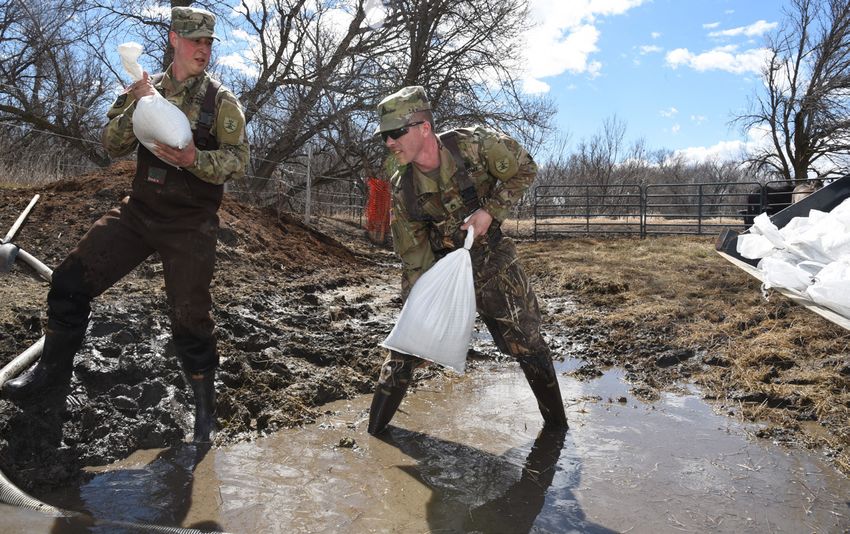
HOMELAND
                                                                                             National Guard cyber support to State and local municipalities in 2019 are an indication
                                                                                             of the future cyber environment; and our actions demonstrate both the effectiveness
The National Guard serves a dual State and Federal role within our borders.                  and value of the Guard’s cyber capabilities.
Guardsmen can be found in nearly every county of the United States, and this proximity
allows us to respond quickly to any threat that endangers our homeland. Our skills,          The National Guard is often at its most visible in American communities in the
developed for and honed through the warfight, can play an important part in a unified        aftermath of natural disasters, and 2019 was no exception. The National Guard
response during domestic emergencies, and allow Guardsmen to assist first responders         responded to snowstorms, wildfires, and floods, and provided full-spectrum recovery
in times of crises. The United States strives to never let the fight reach our borders.      and support to all those affected by Hurricane Dorian. Our collaboration with State,
However, the reality of today’s security environment makes clear our homeland is no          local, and Federal (including military) entities helps the National Guard respond quickly
longer a sanctuary. Cyber threats and new weapons’ technology extend the reach of            and effectively in times of disaster. In addition, we are constantly training and are
our adversaries.                                                                             ready to respond to incidents in the homeland, whether natural or man-made. We are
                                                                                             America’s military first responders in times of disaster.
National Guard Missile Defenders in places such as Fort Greely, Alaska, Schriever Air
Force Base, Colorado, and Vandenberg Air Force Base, California, protect our homeland        The National Guard also provides support to civilian law enforcement agencies through
and stand ready to support DoD’s efforts to adapt to the challenge of advancing missile      DoD’s National Guard Counterdrug Program. Through this program, the National
threats that can reach our shores. The National Guard plays a critical role in our DoD’s     Guard has provided support to more than 300 Federal, State, local, tribal, and territorial
cyber enterprise and are a valuable resource to the States. More than 3,900 Soldiers         civilian law enforcement agencies across all 54 states and territories for more than
and Airmen make up the Guard’s cyber force. On a routine basis, these professionals          30 years. While Guardsmen do not conduct law enforcement missions, they provide
directly support the U.S. Cyber Command’s Cyber Mission Forces (CMF) construct.              expertise such as analysis support, communications, and linguist services to law
Additionally, our National Guard cyber teams, at the direction of their States, used their   enforcement entities. This helps law enforcement combat cartels, positively reach at-
expertise to respond to ransomware attacks in Texas, Louisiana, California, Colorado,        risk youth, and seize billions of dollars in illegal narcotics. This program is another way
and Montana.                                                                                 the National Guard is making a difference in the homeland.
                                                                                                                                              Executive Overview 6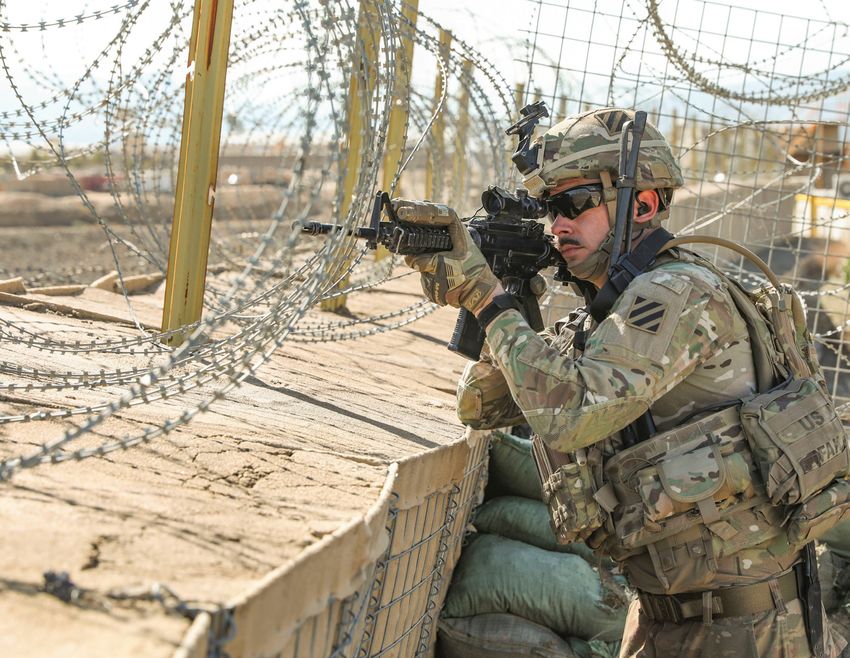
Partnerships
    “By working together with our                    The National Guard is unique in the depth and

       allies and partners, we share
                                                     breadth of its relationships. Whether its security
                                                     cooperation activities with international partners or

       the burdens and responsibility
                                                     emergency response coordination with State and
                                                     local governments, or collaborating within the federal

       for our common defense.”
                                                     interagency process, these relationships strengthen
                                                     alliances and partnerships.

                                                     Partnerships are vital to our military strength and
                                                     success. Every day, our allies and partners join us
                                                     in deterring war and preserving a free and open
                                                     international order. By working together with
                                                     our allies and partners, we share the burdens and
                                                    responsibility for our common defense. These
                                                    relationships also offer unique perspectives and
                                                    positions that help us understand and access critical
                                                   regions of the globe.

                                                 When building alliances with foreign nations, the
                                                 National Guard’s State Partnership Program (SPP) is
                                                one of the premier security cooperation initiatives within
                                               DoD. The SPP is a scalable and tailored approach to
                                              security cooperation that formally links a state’s National
                                             Guard with the armed forces of a partner country. The
                                            National Guard consults and coordinates with combatant
                                            commanders, U.S. Embassies and their country teams, and
                                            host nations to understand the full range of issues they face.
                                            SPP events are led by respective state adjutants general who
                                           seek engagements on a broad array of interests that are
                                           beneficial to both nations.

                                           Today, 84 countries around the world are partnered with the
                                           National Guard through this program. Through the SPP, we
                                          do more than conduct military-to-military engagements; we
                                          leverage whole-of-society relationships and capabilities. These
                                         partnerships also help us counter malign influence, support
                                         combat and security operations deployments, and assist with
                                        disaster response. Given the benefits of this program, consistent
                                        funding is critical to the continued success of the SPP, and the
                                        long-term advancements of our national security interests.

                                        Owing to our role as State-controlled militias, the National Guard
                                        inherently has close relationships with state and local agencies
                                        and officials. Our skills and abilities developed for the warfight—
                                        including manpower, training, leadership, organization, logistics and
                                        communications—augment Governors’ and community partners’
                                        emergency response strategies, ultimately responding to the needs
7 Executive Overview                    of Americans in the homeland.
CNGB’s THREE PRIORITIES
       Readiness | People | Innovation

 Three Priorities for the Future of the Guard
   Today’s National Guard is the finest in its history. However, we must not become
 complacent and must continue to evolve for the threats ahead. We will be responsive
  to global trends and prepare for the challenges of the future by committing to three
                      priorities: Readiness, People, and Innovation.
                                                                             Executive Overview 8
PRIORITY #1: READINESS
  Guard Soldiers and Airmen support DoD missions across every geographic
  combatant command and respond to disasters in communities across the
  nation. As an operational force, we provide strategic depth to the Army
  and Air Force. We must remain interoperable in light of increasing global
  demands, train and equip our Guardsmen, and maintain our facilities to this
  standard.

  The National Guard needs functional facilities to accomplish critical domestic
  response and warfight missions. We cannot be ready for the challenges of
  the future with yesterday’s training, equipment, or facilities. Like the need for
  cutting edge equipment, our Soldiers and Airmen deserve the best facilities
  while serving our communities or preparing for overseas operations.

  The Army National Guard (ARNG) is committed to
  generating forces that are both warfighting-capable
  and governor-responsive. Combatant Commanders
  depend upon ARNG Soldiers during every phase of
  conflict abroad and governors depend upon them
  during emergencies at home.

9 Executive Overview

PRIORITY #1: READINESS Continued
In FY 2019, the ARNG contributed to missions in Afghanistan, Kuwait, Jordan, Qatar,    combat training centers. The ARNG’s primary focus in FY 2020 is to sustain
Ukraine, Kosovo, Eastern Europe, the Horn of Africa and the Sinai Peninsula. ARNG      gains in recruiting and address challenges in retention that threaten readiness.
units also conducted vital, multinational exercises and performed more than 2          All of these activities will be overlaid with deployments and exercises for tens of
million duty days while assisting communities during devastating hurricanes, floods,   thousands of our Citizen-Soldiers around the world.
winter storms and wildfires.
                                                                                       Given this level of activity, ARNG leaders are managing the cumulative impacts of
In its Federal role, the ARNG’s primary task is to generate combat-ready forces for    training and operations to ensure we keep faith with Families and civilian employers.
the U.S. Army and the Joint Force. The Army designates select ARNG formations          Doing so is essential to support the people who underwrite our Soldiers’ service
as Army Response Forces (ARF) that are available to rapidly deploy and conduct         year after year.
contingency operations. Additionally, four ARNG brigade combat teams and
enablers will complete decisive-action training rotations at the Army’s premier
                                                                                                                                       Executive Overview 10
PRIORITY #1: READINESS Continued
The Air National Guard (ANG) commitment to In addition, the National Guard remains a valued and space intelligence experts in Ohio monitor space
readiness provides our nation and Air Force with loyal partner to our national security space enterprise. threats. Most recently, space electronic warfare units
significant flexibility. After more than two decades Our National Guard space units ensure we dominate from California and Florida returned from overseas
as a proven operational force, the ANG has become that domain as it gains prominence in warfare. Since deployments that were critical to combatant command
a critical component to the nation’s strategic the United States Space Force was formally established success. For the future success of our newest service,
deterrence, operational capability, and first-in capability. by the December 20, 2019 National Defense it is vital the National Guard’s expertise and capabilities
Furthermore, the ANG possesses strategic capacity Authorization Act, the National Guard has supported continue to be available to the Space Force enterprise.
across each of the Air Force Core Competencies: Air and will continue to support the newest military
and Space Superiority; Intelligence, Surveillance, and service. Specifically, the National Guard supplies Readiness requires that our leaders remain focused
Reconnaissance; Rapid Global Mobility; Global Strike; the Department of Defense 100 percent of its unit- on the mission and empower our men and women to
and Command and Control. equipped, surge-to-war operational reserve component reach our objectives.
space force structure. To date, the National Guard
In FY 2019, the men and women of the Air National provides 40 percent of the operational expeditionary
Guard supported 14,692 deployments to 52 countries space electronic warfare capabilities in the Space Force,
and on any given day, there are more than 5,000 and is rapidly growing to 60 percent with the addition
Guard Airmen serving around the world in support of two squadrons in Guam and Hawaii. Furthermore,
of the combatant commands. The Air National the National Guard retains decades of space-related
Guard’s focus on readiness assures dominance in depth and expertise. For example, every day the space
air, space, and cyberspace. We do so by preparing professionals at Clear Air Force Station Alaska monitor
21st century Air Guardsmen for today’s fight, while missile threats in the Pacific, and National Guard
building for tomorrow’s fight. Our objective is to
provide our nation with an operational and lethal
force with rapid response capability, which is fully
interoperable with the United States Air Force and
the Joint Force, and able to deter aggressors
and defeat threats to our national interest.
11 Executive OverviewExecutive Overview 12
PRIORITY #2:
PEOPLE, FAMILIES, AND EMPLOYERS
No one who puts on a uniform serves service to their country. We must recruit
alone. This is particularly true in the the very best men and women, therefore
National Guard, where our Guardsmen we must also have competitive incentives—
balance service with civilian careers. We such as education benefits. We must share
strive to balance the needs of both our our story, our history, our legacy.
drilling and full-time Guardsmen with
the demands of the mission, and provide We also have a responsibility to support
support to the families of our service men the Guardsmen in our ranks. We are
and women. emphasizing mental health and resilience
for our Soldiers and Airmen through the
Our Guardsmen come from communities Suicide Prevention and Readiness Initiative,
all across the country, bringing with them which helps Guard units identify risk factors
diverse cultures, experiences, and skills. and effective intervention techniques.
Our National Guard culture values diversity Through the Warrior Resilience and Fitness
and inclusion, which are fundamental Innovation Incubator, the National Guard
to organizational readiness and help us is also taking a grassroots approach to find
reach and maintain the highest standards. ways to address mental health crises at a
We are at our best when we reflect the local level.
communities we serve.
To support our Guard members’ families,
To build for the future, we must recruit we provide family readiness programs,
people with the right skills and experience. employment assistance programs, and
That is why focusing on active duty service ensure that families know where to turn if
members who are transitioning to civilian they need help. Family programs not only
life is a critical piece to our recruitment. benefit service members and their families,
We want to ensure we capture the talent but also have a positive effect on a unit’s
and skills of these service members and morale and readiness.
show them the benefits of continuedPRIORITY #3:
INNOVATION
We have a responsibility to
improve the National Guard—
to leave it better than we
found it, so we can be ready
for the challenges of the
future. Innovation—whether in
business processes, technology,
partnerships, or culture—is in
our DNA. We must constantly
look forward, educating and
empowering our Guardsmen to
implement innovative measures.
Technology has radically shaped
our lives, and it has radically
reshaped our national defense.
Success no longer goes to the
country that develops a new
technology first—it goes to the
country that adapts its way of
fighting fastest. The National
Guard continues to be a catalyst
for DoD’s technological initiatives,
including artificial intelligence,
robotics, biotechnology, “big data,”
and advanced computing.
13 Executive OverviewConclusion
The National Guard traces its lineage back 383 years. In
that time, we have fought in every American war, responded
to our countrymen in need, and developed partnerships
that have strengthened our national defense. However,
we are just getting started. With the incredible skills and
talents of our men and women, we are ready for today and
building for the future.
We will undoubtedly face new challenges, but our values,
our vision, and our willingness to fight and secure our
nation runs deep. Today and tomorrow, the National Guard
is Always Ready, Always There.
Executive Overview 14Army Guard SNAPSHOT 335,500 Soldiers, 13 command & control headquarters, 8 divisions, 27 brigade combat teams, 42 multi- functional brigades, 56 functional support brigades, 1 security force assistance brigade and 2 Special Forces groups. 24,776 buildings, 1,397 firing ranges, and 110 training centers in 2,431 communities. Provides the Army 39% of its operational forces. 15 Executive Overview
Air Guard
MANPOWER CONTRIBUTION
TO FIVE CORE AREAS:
SNAPSHOT
15% of Air, Space and Cyber Superiority.
26% of Command and Control / Intelligence,
Surveillance and Reconnaissance.
24% of Agile Combat Support.
107,100 23% of Rapid Global Mobility.
17% of Global Strike.
AIRMEN 1,058 AIR GUARD AIRCRAFT
Provides 36% of Air Force’s tanker capability.
Provides 34% of Air Force’s fighter / attack capability.
ACROSS Provides 30% of Air Force’s airlift capability.
Operates 15 of 16 Aerospace Control Alert sites.
90 WINGS Provides 20% of Air Force’s overseas MQ-9 Reaper
unmanned aerial vehicle capability.
Executive Overview 16FIGHTING
AMERICA’s WARS
Providing the Army and
Air Force a Lethal Force
17 Fighting America’s WarsProven in Combat
The National Guard has supported more than one million overseas
deployments to Iraq, Afghanistan, Kuwait, the Balkans, Guantanamo Bay,
the Sinai, and other locations since 9/11.
Guard Soldiers and Airmen served on every continent and in
every Combatant Command in more than 70 countries last
year.
More than 16,000 Army Guard Soldiers are deployed in
support of missions in Afghanistan, Kuwait, Bahrain, Jordan,
Qatar, Ukraine, Poland, Kosovo, Eastern Europe, the Horn of
Africa, Central and South America, and the Sinai Peninsula.
More than 1,200 Guard Airmen from 48 units served in nine
different locations while filling 33% of the Total Force’s civil
engineer needs overseas last year.
The Air Guard is providing 25% of the Total Force’s Distributed
Common Ground System (a system that produces military
intelligence for multiple military branches) capacity
in direct support of the overseas Combatant
Commanders.
Virginia and Maryland’s 29nd Infantry Division
and Texas’ 36th Infantry Division will provide
command and control of all Army forces in
Kuwait and Jordan in FY 2020 as part of
Operation Spartan Shield.
North Carolina’s 30th Armored Brigade
Combat Team is currently supporting
Operation Spartan Shield in FY 2020 to
deter aggression on the Arabian Peninsula.
Minnesota’s 1st Brigade, 34th Infantry
Division will assume this mission in FY21.
Fighting America’s Wars 18Proven in
Combat Continued
Three Infantry Brigade Combat Teams
(BCTs) will be the primary maneuver
forces supporting major overseas
training exercises.
Idaho, Montana, and Nevada’s
116th Armored BCT will
participate in the Defender ‘20
Exercise in Europe where it will
train with NATO and European
partners.
Vermont, Connecticut,
Massachusetts, Louisiana and
Colorado’s 86th Infantry BCT, and
Alabama’s 256th Infantry BCT will
participate in the Pacific Pathways
and Defender Series exercises.
These brigades will train with allies
E R Q UALIFIED across Australia, Japan, Indonesia
R A N G and Hawaii as part of a large-scale
combat exercise.
The Army Guard is providing 47% of
the aircraft and 55% of the personnel
supporting U.S. Central Command
aviation missions overseas.
South Carolina’s Staff Sgt. Jessica
Smiley and Pennsylvania’s Sgt.
Danielle Farber are the first National
Guard enlisted women to graduate
from the U.S. Army’s Ranger School
at Fort Benning Ga. Smiley and
Farber join a small group of women
who have earned a Ranger tab. West
Virginia’s 1st Lt. Emily Lilly was
the first National Guard woman to
graduate in 2018.
19 Fighting America’s WarsSECURING the
HOMELAND
Delivering rapid, unified response
capabilities after disaster strikes
Securing the Homeland 20Unmatched
Capabilities
National Guard forces logged more than
2.1 million man-days in FY 2019 supporting
state and federal homeland missions such
as natural disasters, search and rescue and
explosive ordnance disposal.
Guard forces were called up by their states
235 times in FY 2019.
The National Guard responded to 63
natural disasters in FY 2019, including 7
hurricanes or tropical storms, 19 floods, 20
winter storms, and 12 fires.
Air Guard personnel protect the airspace
over America by operating 15 of the 16
NORAD Aerospace Control Alert sites
and the Eastern and Western air defense
sectors. Guard ACA pilots flew 1,935
sorties in FY 2019 -- 1,696 scramble
sorties (practice and real- world) and 239
Operation Noble Eagle sorties.
To allow effective communication between
local, state and federal emergency
agencies, National Guard Joint Incident
Site Communications Capability teams
set-up and operated a “self-contained
communications package” at the Super
Bowl and numerous other major events and
exercises last year.
Air Guard members performed 26,406
man-days of engineer, construction and
medical missions as part of Innovative
Readiness Training in FY 2019 providing
critical services to underserved American
communities while gaining real-world
experience that prepares them for wartime
missions.
21 Securing the HomelandRapid
Responders
•The 57 full-time National Guard
Weapons of Mass Destruction
Civil Support Teams carried out
3,023 missions in FY 2019 ranging
from no-notice call-outs to identify
substances, to supporting national
security events, to training with
state partners. CSTs can typically
respond in 1 to 3 hours.
The National Guard runs 17
battalion-sized (nearly 2,400
people) Chemical, Biological
Radiological Nuclear (CBRN)
Enhanced Response Force
Packages or CERFPs in 17 states
capable of responding in 3 to 6
hours.
The Guard operates 10 brigade-
sized (5,210 people) Homeland
Response Forces, capable of
responding in 6 to 12 hours.
National Guard Soldiers and
Airmen comprise 55 percent
of the Defense Department’s
chemical, biological, radiological,
nuclear (CBRN) response
capability.
Nearly 2,700 Army Guard Soldiers
are executing DoD support to
the Department of Homeland’s
mission to secure the Southwest
border.
Securing the Homeland 22Securing the Homeland 23
CYBER CENTRIC
There are more than 3,900 Army and Air National Guard personnel serving in 59 DoD cyber units in 40 states.
On a routine basis, Guard cyber professionals directly support the U.S. Cyber Command.
At the direction of their states, 27 states used Guard members in a non-federal status to support state and local
agencies in 2019. This support included response and remediation of cyber incidents; cyber defense analysis; cyber
incident response planning; election security planning, threat assessment, and interagency planning.
National Guard cyber teams responded to ransomware attacks in Texas, Louisiana, California, Colorado and Montana
in 2019.Taking Billions in COUNTERDRUG
Drugs off the Street PROGRAM
More than $11.2 billion of illicit
drugs, weapons, property, and
currency are off the streets
thanks in part to the efforts of
approximately 2,500 National
Guard Counterdrug professionals
assisting civilian law enforcement
agencies throughout the 50 states, 3
and territories and DC.
To combat the opiate epidemic, the
National Guard assisted over 560
state and local law enforcement
agencies and over 330 community-
based organizations.
Nearly 70,000 civilian law
enforcement members from over
10,050 federal, state and local
training centers, community-based
organizations and the military were
trained at the National Guard’s five
counterdrug schools, an increase of
more than 20% from last year.
National Guard aviation crews
flew more than 11,430 hours
assisting civilian law enforcement
in conducting operations to detect,
disrupt, interdict, and curtail drug-
trafficking and associated criminal
activities. Their efforts alone
contributed to the seizure of more
than $1.6 billion in illicit drugs,
weapons, property and currency.
Securing the Homeland 24BUILDING PARTNERSHIPS COMMITMENT AND TRUST ATTRACTING NEW PARTNERS 25 Building Partnerships
Building Partnerships 26
PRODUCTIVE PARTNERSHIPS
Competition with rivals demands greater cooperation with partners. The SPP is a cost-effective, versatile program that provides the
The National Guard’s network of 84 allies and partners through the DoD and decision-makers a proven tool to help address today’s
State Partnership Program (SPP) provides our nation a great advantage security challenges and a wide range of potential future threats.
and directly supports competition objectives outlined in the National The National Guard’s prowess in disaster response at home and
Defense Strategy. proven combat capability overseas makes it an attractive partner
Through the SPP, National Guard and partner nation personnel learn to nations faced with military and non-military threats.
together, work together, and prepare - if necessary - to fight together. The National Guard anticipates up to five additional
National Guard Soldiers and Airmen conducted more than 1,200 partnerships in 2020.
SPP activities worldwide in support of Geographic Combatant
Commands in FY 2019.
Since 9/11, 27 SPP partner countries have contributed troops to
coalition operations -- 15 of those SPP countries deployed forces
alongside their National Guard partners.27 Building Partnerships
U.S. European Command - 22
Albania / New Jersey (2001)
Armenia / Kansas (2002)
Azerbaijan / Oklahoma (2002)
Bosnia / Maryland (2003)
U.S. Northern Bulgaria / Tennessee (1993)
Croatia / Minnesota / (1996)
Command - 1 Czech Republic / Texas, Nebraska (1993)
Estonia / Maryland (1993)
Rhode Island / Bahamas (2005)
Georgia / Georgia (1994)
Hungary / Ohio (1993)
Kosovo / Iowa (2011)
U.S. Southern Command - 23
Latvia / Michigan (1993)
Lithuania / Pennsylvania (1993)
Argentina / Georgia (2016) Macedonia / Vermont (1993)
Belize / Louisiana (1996) Moldova / North Carolina (1996)
Bolivia / Mississippi (1999) Montenegro / Maine (2006)
Chile / Texas (2008) Poland / Illinois (1993)
Romania / Alabama (1993)
Colombia / South Carolina (2012) Serbia / Ohio (2005)
Costa Rica / New Mexico (2006) Slovakia / Indiana (1993)
Dominican Republic / Puerto Rico (2003) Slovenia / Colorado (1993)
Ecuador / Kentucky (1996) Ukraine / California (1993)
El Salvador / New Hampshire (2000)
Guatemala / Arkansas (2002)
Guyana / Florida (2003) U.S. Central
Haiti / Louisiana (2011)
Honduras / Puerto Rico (1998) Command - 5
Jamaica / District of Columbia (1999) Jordan / Colorado (2004)
Kazakhstan / Arizona (1993)
Nicaragua / Wisconsin (2003) Kyrgyzstan / Montana (1996)
Panama / Missouri (1996) Tajikistan / Virginia (2003)
Paraguay / Massachusetts (2001) Uzbekistan / Mississippi (2012)
Peru / West Virginia (1996)
U.S. Pacific
Regional Security System: Antigua and
Barbuda; Barbados; Dominica; Grenada; St.
Kitts and Nevis; St. Lucia; St.Vincent and Command - 9
Grenadines / Florida,Virgin Islands (2006) Bangladesh / Oregon (2008)
Suriname / South Dakota (2006) Cambodia / Idaho (2009)
Trinidad-Tobago / Delaware (2004) Indonesia / Hawaii (2006)
Uruguay / Connecticut (2000) Malaysia / Washington (2017)
Mongolia / Alaska (2003)
Venezuela / Florida / (1998) Philippines / Hawaii, Guam (2000)
Thailand / Washington (2002)
STATE
Tonga / Nevada (2014)
Vietnam / Oregon (2012)
U.S. Africa
Command - 14
PARTNERSHIP Benin / North Dakota (2014)
Botswana / North Carolina (2008)
Djibouti / Kentucky (2015)
Ghana / North Dakota (2004)
PROGRAM
Kenya / Massachusetts (2015)
Liberia / Michigan (2009)
Morocco / Utah (2003)
Niger / Indiana (2016)
Nigeria / California (2006)
Rwanda / Nebraska (2019)
Senegal / Vermont (2008)
South Africa / New York (2003)
Togo / North Dakota (2014)
Tunisia / Wyoming (2004)28 Soldiers, Airmen And Families
SOLDIERS, AIRMEN
and FAMILIES
Providing programs that help ease the
sacrifice for Guard members, familiesProductive
Programs
The National Guard Joint Service
Support portal was accessed more
than 1.4 million times in FY 2019, a 20%
increase over last year.
The Army National Guard Family
Assistance Centers addressed more
than 1.2 million resource and referral
inquires and outreach calls in FY 2019
at 400 geographically dispersed National
Guard armories and Reserve centers.
The services most used were finance, ID
Cards / DEERS, and community outreach.
Air National Guard Airmen and Family
Readiness Program Managers reached
nearly 225,000 service members and
their families in FY 2019 by assisting
Airmen and families with adapting to the
challenges associated with military life.
Army National Guard Child and Youth
Services conducted over 2,900 events for
over 49,000 Army Guard family members
ages 6-18 in an effort to promote
resilience and sustain the quality of life
through high-quality support services and
enrichment programs.
The Joint Yellow Ribbon Reintegration
Program helped over 72,975 service
members and their families connect with
their local community support services
before, during, and after deployments by
overseeing 773 nationwide events during
FY 2019.
Soldiers, Airmen And Families 29Productive Programs continued
The Air National Guard’s Warrior and Survivor Care program coordinated
continuous needs-based assistance through the Air Force Wounded Warrior
Program for 416 Air National Guard wounded, ill and injured and their families
through FY 2019 with reach-back support to an additional 822 Air Guard veterans
(1,238 total).
National Guard behavioral health professionals assisted more than 141,000
service members during FY 2019. Over 73,000 were assisted through group
psycho-education and informational briefings. Psychological health professionals
provided more than 40,000 consultations in FY 2019. All Guard behavioral health
professionals work collaboratively with community partners to establish a holistic
system of care for all.
Air National Guard Airman and Family Readiness Program Managers reached nearly
230,000 service members and their families in FY 2019 by assisting them with
military life challenges. The Air National Guard program conducted 4,345 events
across 90 Wings, providing service to 193,121 service members, veterans, and their
families.
The NGB Employment Support Program reached 145,916 Guard members
regarding job opportunities and provided assistance to 64,836 Guard
members, their families, veterans and other reserve component
members. The effort resulted in over 6,300 job referrals and
nearly 1,500 hires. Each state has a program support
specialist.
Transition Assistance Advisors impacted the lives
of nearly 136,043 service members and veterans
in FY 2019 by providing support, advocacy and
information. Advisors are located at each National
Guard Joint Forces Headquarters to provide
resource and referral information for such issues
as education, employment,VA healthcare
enrollment, and disability claims.
The Army Guard provided slightly
over $32.9 million in Federal Tuition
Assistance benefits to more
than 15,830 soldiers enrolled in
approximately 66,928 courses in FY
2019.
30 Soldiers, Airmen And FamiliesProductive Programs
continued
Air National Guard Airman and Family
Readiness Program managers conducted
1,190 workshops and provided nearly 20,000
individual and family counseling sessions in
FY 2019. Topics included financial readiness,
transition, employment opportunities, social
support groups, and family life programs.
Army Guard Family Readiness Support
assistants supported more than 3,400 Family
Readiness Groups, providing orientation
training for volunteers. More than 4,497
registered volunteers worked 309,404 hours
in support of Army Guard families. According
to www.pointsoflight.org the current
volunteer hourly rate is $24.69; a monetary
value of $7,297,836.
Army Guard Survivor Outreach Service
coordinators assisted 46,794 surviving family
members in FY 2019, an increase of 150
family members over last fiscal year.
The Army Guard’s Military Funeral Honors
team rendered honors at 117,000 Service
member funerals in FY 2019. The funeral
honors team is projected to conduct over
115,000 requests to render burial honors for
veterans and retirees in FY 2020.
The Army Guard’s Citizen-Soldier-for-Life
team provided over 141,000 career readiness
services, over 74,000 employment services
and over 34,000 financial readiness services
to all 50 states, 3 territories and the District
of Columbia in its first year of existence.
The Army Guard’s Casualty Operations state
program provided 682 casualty assistance
and notification officers to families of the
Army National Guard, Reserve, and Active
component in FY 2019.
Soldiers, Airmen And Families 31Productive Programs continued Army Guard Unit Ministry Teams performed over 6,486 religious services for 68,564 Guard Soldiers in 2019. Chaplains also successfully intervened in 1,169 instances involving Soldiers contemplating suicide. In addition, they visited 1,401 personnel in hospitals, conducted 213 weddings and referred over 5,848 Guard Soldiers for additional support services. Army Guard chaplains also conducted over 743 military funerals and 990 military memorial services. The Army Guard’s Strong Bonds Program held nearly 600 training events for 10,365 married and single soldiers and 10,131 family members. The events increase soldier and family readiness through relationship education and skills training resulting in readiness, retention, and wellness. The program quadrupled its outreach to the Private-to- Specialist demographic from 904 in FY18 to 4,096 in FY 2019. The National Guard’s Sexual Assault Prevention and Response Program continues its commitment to eliminate sexual assault and harassment from its ranks by providing training, services and advocacy to victims of sexual assault. There are currently 173 full-time, nationally certified Sexual Assault Response Coordinators, as well as an additional 1,090 part-time nationally certified SARCs and victim advocates. The Army National Guard trained 916 total Master Resilience Trainers (MRTs) in FY 2019. The addition of these trainers brings the total number of Army Guard MRTs to 7,086. The Army National Guard provides 54 Suicide Prevention program managers; one to each state, territory, and DC. These managers provided advanced training to 96,737 Soldiers and family members in FY 2019, enabling them to recognize the signs of suicide in themselves and others, have the confidence and skills to intervene appropriately, and connect those in need to military and community resources. The National Guard Bureau signed a memorandum with the Veteran’s Administration to increase the number of mobile Vet Centers available to Guard members during weekend training. The number of Guard members seeking Vet Center services increasing by nearly 40% last year. 32 Soldiers, Airmen And Families
CHALLENGE PROGRAM
There are 41 National Guard Youth ChalleNGe
and 5 Job ChalleNGe academies across the
country. More than 179,000 cadets have
graduated the program since 1993.
The 5-1/2 month Youth ChalleNGe in-residence
course takes at-risk, 16- to18-year-olds and
teaches them the life skills and self-discipline
needed to succeed, while helping them to earn
credits toward high school diplomas or prepare
them for a GED.
9,235 student cadets graduated from the
National Guard’s Youth ChalleNGe program
in 2019. More than 95 percent of all 2019
ChalleNGe graduates earned their high school
diploma (29%), obtained their GED (19%), or
returned to high school (47%).
The 5-month Job ChalleNGe in-residence
program allows some Youth ChalleNGe
graduates to obtain job certifications, credentials
or apprenticeships to facilitate obtaining living
wage jobs. Since the initial pilot in 2015, the Job
ChalleNGe Program (JCP) has awarded high
demand career certifications to more than 881
graduates.
The federal per-student-cost for a ChalleNGe
graduate averages $19,235 compared to the
nearly $31,500 for a youth in juvenile custody for
the same time period.
Soldiers, Airmen And Families 33To SPACE and BEYOND
The training Guard members conduct to support DoD There are seven National Guard states (AK, CA, CO,
space missions, also allows our Soldiers and Airmen to FL, HI, NY, OH) and one territory (Guam) engaged in
bolster space capabilities, when requested, at home. space operations, providing both offensive and defensive
capabilities to the Army and Air Force.
The National Guard provides our nation and DoD
partners a proven capability by supplying 100 percent Long-standing partnerships with state and local space
of its unit-equipped, surge-to-war operational reserve entities, in both the public and private sectors, allows for
component space force structure. seamless integration and response.
To date, the National Guard provides 40 percent of The National Guard provides a wide range of duty status
the operational expeditionary space electronic warfare and statutory options for federal missions (Titles 10
capabilities in Space Force, and is rapidly growing to 60 and 32, U.S. Code) that allow decision-makers maximum
percent with the addition of two squadrons in Guam and flexibility to meet current and future space challenges.
Hawaii.
The National Guard offers people with space-related
expertise an excellent opportunity to serve their state,
nation while maintaining a civilian career.
PERFECT
PARTNER
“YOU ACTUALLY CAN’T
DO THE SPACE MISSION WITHOUT THE
NATIONAL GUARD. THE NATIONAL
GUARD IS THE PERFECT PARTNER.”
— AIR FORCE GEN. JOHN HYTEN,
VICE CHAIRMAN, JOINT CHIEFS OF STAFFYou can also read


