Q1 2021 RESULTS 29TH APRIL 2021 - NATWEST GROUP - INVESTORS
←
→
Page content transcription
If your browser does not render page correctly, please read the page content below

Q1 2021
Results
29th April 2021

Alison Rose
Chief Executive Officer

                          2
Q1’21 results highlights

Good Q1’21 operating
performance
                                                                      £844m                          £102m                           £620m
Supporting our customers;                                       Operating profit before      Impairment release in Q1’21     Attributable profit in Q1’21,
                                                                 impairments in Q1’21,         11bps of customer loans      compared to £288m at Q1’20
strong net lending growth
                                                              down from £1,321m in Q1’20
Further cost reduction
achieved in Q1

Impairments: small release
reflects good book releases
and government support
mitigating level of defaults
                                                                      £2.2bn                          £72m                             18.2%
Strong capital base and
                                                              Net Lending Growth in Q1’21,   Cost reduction in Q1’212 vs.      Q1’21 CET1 Capital Ratio
liquidity position                                                up 3% on Q4’20 on an                 Q1’20                    Down 30bps on Q4’20
                                                                    annualised basis1                                         Includes c.100bps of IFRS 9
£1.1bn directed buy back                                                                                                            transitional relief
completed

1.   Net lending to customers across the UK and RBSI retail
     and commercial businesses, excluding UK Government
     lending schemes
2.   Other expenses, excluding OLD and Ulster Bank RoI                                                                                                       3
     direct costs
Strategic priorities will drive
sustainable returns

Our Purpose led
strategy will drive
sustainable returns for
shareholders

Strategic priorities
delivered through:

Sustainable growth with
an intelligent approach to
risk

Simplification and cost
efficiency

Portfolio discipline and
effective deployment of
capital

                                  4
Sustainable growth with an
 intelligent approach to risk
                                                    Debit & Credit card spending (1)                  Personal loan & Credit Card demand (1)
Supporting our                                                                                        New Cards and Loans issued (‘000)
                                                    Monthly spend £bn (Rebased 100 = Mar’20)
customers through the                          120                                                    20
recovery                                       100                                                    15

Debit and credit card                           80                                                    10

spending improving from                         60                                                     5

February                                        40                                                     0
                                                      Apr-20    Jul-20    Oct-20      Jan-21 Mar-21    Apr-20   Jul-20   Oct-20   Jan-21 Mar-21
Demand for personal                                              Debit Card     Credit Card                     Personal Loans    Credit Cards
loans and new credit                            ▪     Apr-21 Credit and Debit Card spend ahead
cards accelerating over                               of average Q1’21 levels5
Q1                                                   Strong mortgage demand in Q1,                    New Government Schemes
                                                     Retail Banking                                   Pay As You Grow (BBLS)2
Strong and improving                                 Gross new mortgage lending (£bn)                 •    c.105k accounts invited3 to use the
gross new mortgage
                                                                                                           BBL Pay As You Grow portal
lending                                                                                  9.6
                                                                               8.4                    ▪ c.14k applications to date
                                                         6.1       6.7
New Government
schemes launched with                                                                                 Recovery Loan Scheme4
moderate demand                                                                                       •    c.3k applications in the first week
1.
2.
     Data relates to Retail Banking
     Data as at 26th April 2021
                                                        Q2’20     Q3’20       Q4’20     Q1’21         •    Now seeing c.100-150 applications
3.
4.
     Payments commencing in 60 days or under
     Data as at 23rd April 2021
                                                                                                           per day
5.   Based off data to mid-April-21                                                                                                              5
Simplifications and cost
efficiency
                                            We are a relationship bank for a digital world with high levels of digital engagement
NatWest Group is a
relationship bank                           Video Banking                               Mobile
for a digital world
                                                             c.13k                                        7.9m
Accelerating digital
                                             Typical weekly appointments in Q1’21                Active Mobile Users in Q1’21
transformation to deliver
                                                compared to c.7k typical weekly                       up 2.6% on Q4’204
income growth and drive
                                                     appointments Q4’203
cost efficiencies

61%1 of retail customer base
exclusively use digital
channels to interact with us,
compared to 58% at FY’202                   Artificial Intelligence                      Online

68%6 of Commercial                                            3.0m                                        9.5m
Banking sales via digital                         Cora Conversations in Q1’21              Digitally Active Customers in Q1’21
channels in Q1’21 compared
                                                       up 11% on Q4’205                               up 1% on Q4’204
to 67%6 at FY’20

Cost reduction continued in                  42% required no human intervention
Q1’21                                                     in Q1’213
1.   Based on March’21 monthly data
2.   Based on December’20 monthly data
3.   Across Retail Banking
4.   Across Retail and Business Banking
5.   Across Retail and Commercial Banking                                                                                        6
6.   Based on average yearly data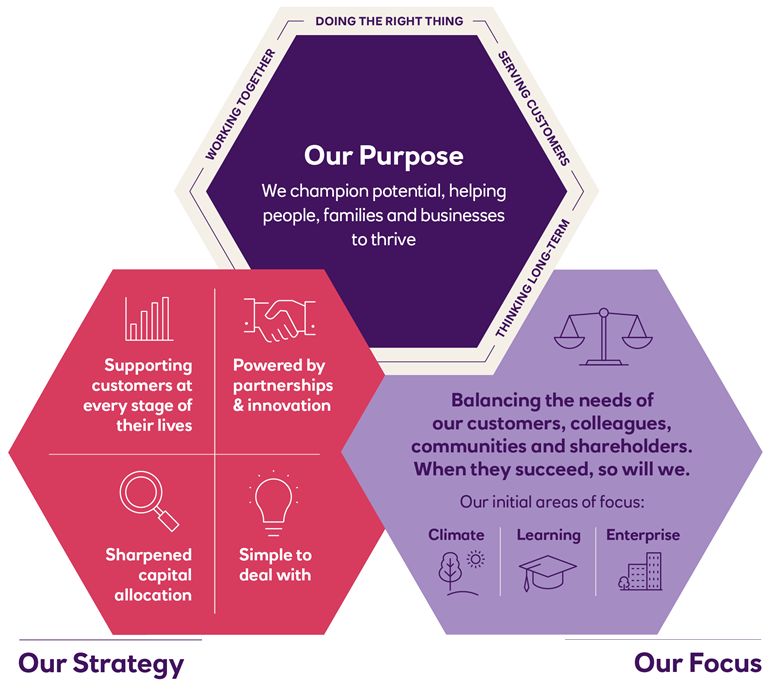
Portfolio discipline and
effective deployment of capital
                                  CET1 Capital Ratio 18.2%, down 30bps on Q4’20
Actively managing
capital                           ▪ Directed Share Buy Back of £1.1bn, 66bps impact on CET1 ratio

First directed buy back
completed                         NatWest Markets and Ulster Bank

Proactive management of           ▪ NatWest Markets RWAs now at £26.5bn, down £0.4bn on Q4’20
Retail and Commercial             ▪ Negotiations with AIB about the sale of Ulster Bank’s portfolio of performing
Banking to optimise capital,        commercial loans ongoing
manage credit risk and
drive sustainable returns         Portfolio Sales and Synthetic Trades

Legacy capital stack              ▪ Commercial Banking: RWAs down £0.6bn due to active capital management
managed to optimise
regulatory efficiency
                                  Managing non-equity capital

                                   ▪ Repurchased c.£1.6bn of Tier 1 and Tier 2 capital securities, c.5bps of CET1
                                     impact, c.£49m annual coupon savings

                                                                                                                    7
Portfolio discipline and
effective deployment of capital
Delivering against our
Growth: Targeting lending growth Cost: Targeting c.4% per annum
targets to drive
above market rate through to 20231 reduction in other expenses2
sustainable returns for
shareholders
Strategic priorities delivered
3.0% 4.5%
through: Annualised Net Lending Cost reduction in
Growth in Q1’211 Q1’212
▪ Sustainable growth with Up £2.2bn vs Q4’20 £72m vs. Q1’20
an intelligent approach
to risk
Capital: Target 13-14% CET1 Capital Ratio by FY’23
▪ Simplification and cost
efficiency
▪ Portfolio discipline and 18.2%
effective deployment of Q1’21 CET1 Capital Ratio
capital
1. Net lending to customers across the UK and RBSI
retail and commercial businesses, excluding UK
Government lending schemes
2. Other expenses, excluding OLD and Ulster Bank RoI
8
direct costsKatie Murray
Chief Financial Officer
9Focused on generating
shareholder value
Good Q1’21 operating £m Q1'21 Q4'20 Q1’20 vs. Q4'20 vs. Q1'20
performance Net interest income 1,931 1,971 1,942 (2.0%) (0.6%)
Non-interest income 728 564 1,220 29% (40%)
Income up 5% on Q4’20
Total income 2,659 2,535 3,162 4.9% (15.9%)
driven by mortgages and
Other expenses (1,639) (1,821) (1,714) (10%) (4%)
seasonally higher NatWest
Markets Strategic costs (160) (326) (131) (51%) 22%
Litigation and conduct costs (16) (194) 4 n.m. n.m.
Other expenses down 10% Operating expenses (1,815) (2,341) (1,841) (22%) (1%)
on Q4’20 driven by bank Operating profit before
levy and ongoing net cost 844 194 1,321 335% (36%)
impairments
reduction Impairment releases/ (losses) 102 (130) (802) (178%) (113%)
Operating profit 946 64 519 1378% 82%
Impairment release reflects
Tax (233) (84) (188) n.m. 24%
low level of defaults and
small improvements in Attributable profit/ (loss) 620 (109) 288 (669%) 115%
underlying credit metrics RoTE 7.9% (1.4%) 3.6% 9.3ppt 4.3ppt
10Focused on generating
shareholder value
Net Interest Income2 £m
Net interest income Group NII 1,971
support from mortgage (11)
(1)
(38) 42
growth (27) 1,931 Group NII
Banking net interest Banking NII 1,973 1,938 Banking NII
income stable in the
quarter, excluding impact
of lower day count NWM NII (2) Group Day Retail Commercial Private Other (7) NWM NII
Q4’20 Count Banking Banking Banking Q1’21
Mortgage growth at wider
margins supported Bank
Bank Net Interest Margin1 bps
NIM (+1bp)
166
Structural hedge impact (3) 164
of 3bps in Q1, in line with 0 1
guidance
Q4’20 Yield Curve Central Liquidity Mix and Price Q1’21
1. Bank net interest margin and Bank average interest
473 480
earning assets exclude NWM from NatWest Group plc
figures. Average Interest Earning Assets1, £bn
2. May not cost due to rounding 11Focused on generating
shareholder value
Gross yields of interest earning banking assets, %1
NIM drivers: customer
loan and deposit rates 3.5 3.34
3.22
stabilising
3.0
2.88 2.82 2.81
3.11 3.07 2.73
Retail Banking
Gross asset yields and 2.48
2.73 Commercial Banking
funding costs broadly 2.5 2.27 2.65 2.65
2.07
stable on Q4’20 to 1.84% 1.94
2.0 1.85 1.84
and 0.49%, respectively NatWest Group
0.0
Retail Banking loan yield Q4’19 Q1’20 Q2’20 Q3’20 Q4’20 Q1’21
impacted by lower
unsecured balances. Costs of interest bearing banking liabilities, %2
Mortgage margin on back 1.5
book up 12bps to 1.59%
1.11
Commercial loan and 1.0 0.86
0.75
0.67
deposit rates stable
0.50 0.49
0.5 0.38 0.36 NatWest Group
0.20
0.13 0.10 0.08 Retail Banking
1. For NatWest Group plc this is the gross yield on the IEAs of the
banking business; for Retail and Commercial Banking it represents 0.18 0.18 Commercial Banking
the third party customer asset rate. 0.0 0.13 0.01 0.01
2. For NatWest Group plc this is the cost of interest-bearing liabilities 0.02
of the banking business; for Retail and Commercial Banking it
represents the third party customer funding rate.
Q4’19 Q1’20 Q2’20 Q3’20 Q4’20 Q1’21 12Focused on generating
shareholder value Gross loans and advances1,2, quarter on quarter, £bn
Loan book stable in the Other (2.4)
quarter Group 372.4 0.6
2.7 (0.7) 371.0 Group
NWM 9.5 8.4 NWM
Gross banking loans Banking
362.9 RCF4 (0.3) 362.6
broadly stable in the Banking
Mortgages Unsecured Government Wholesale ex Q1’21
quarter with £3.1bn growth Q4’20 lending schemes government
across UK & RBSI Retail & lending schemes
Commercial businesses 473 Average Interest Earning Assets3, £bn 480
Strong mortgage growth
Gross loans and advances1,2, year on year, £bn
partly offset by ongoing
unsecured credit
repayment Other (4.9) 371.0 Group
13.5 8.4 NWM
Group 364.0
Government lending (1.8)
13.7 13.6 RCF4 (8.0) Banking
schemes offset by other NWM 362.6
Banking 350.3
commercial loan
Q1’20 Mortgages Unsecured Government Wholesale ex Q1’21
repayments lending schemes government
1. May not cast due to rounding lending schemes
2. Loans – amortised cost and FVOCI, as detailed in the
segment and sector analysis on page 15 and 17 of the
NWG IMS Q1’21. 422 Average Interest Earning Assets3, £bn 480
3. Bank average interest earning assets NatWest Group plc
excluding NWM.
4. Revolving credit facilities for our Commercial Banking 13
customers.Focused on generating
shareholder value
Non Interest Income1 £m
Non interest income 1,105
impacted by lockdown 95
888
48 794
437 44 742
645
Income from trading 375 1
74 Other operating income
298 122 162
activities up 33% over Income from trading activities
Net fees and commissions Group
Q4’20 due to seasonally
573 522 506
higher customer activity 465 452
Retail & Commercial net Q1’20 Q2’20 Q3’20 Q4’20 Q1’21
fees and commissions2
4.3% lower than Q4’20 Retail & Commercial Businesses’ Fees and Commissions 2 £m
due to lower card and 560 413 465 491 470 Net fees and commissions R&C
lending fees, both
impacted by the lockdown 664
578 610 597 Fees and commissions receivable
529
240
212 226 224 Payment services
196 Lending (credit facilities)
169 162 138
Credit and debit card fees
133 140 Invest. Mgmt, underwriting, other
129 90 118 123 107 Fees and commissions payable
1. Excluding all notable items per slide 25. 126 110 108 99 128
2. Retail & Commercial Businesses’ Fees and
Commissions are calculated as Natwest group
excluding Natwest Markets, central items and
(104) (116) (113) (119) (127)
other 14
Q1’20 Q2’20 Q3’20 Q4’20 Q1’21Focused on generating
shareholder value
Other expenses ex Operating Lease Depreciation and Ulster ROI Direct 1, £m
On track to meet FY’21 1,717 1,606
cost reduction target of
183 72
around 4%1 1,534 1,534
Other expenses ex-OLD
and Ulster1 down £72m
versus Q1’20, equivalent
to 4.5%
Q4’20 Q1’21 Q1’20 Q1’21
Strategic costs of £160m
in Q1’21 include £81m Strategic costs, £m
Property
relating to Redundancy Technology
and NatWest Markets 326 NWM direct
refocus 88
Redundancy,
ex. NWM
38 Other
50 160 160
24 131 24
61 14 14
1. Other expenses excluding Operating Lease
30 30
Depreciation (OLD) and Ulster Direct Cost.
51 51
Operating Lease Depreciation £35m in Q1’21,
£36m in Q1’20 and £35m in Q4’20. Ulster Bank
89
ROI Direct costs of £70m in Q1’21, £72m in Q1’20 41 41
and £69 in Q4’20.
2. Q1’20 breakdown not disclosed Q4’20 Q1’21 Q1’20(2) Q1’21 15Intelligent and consistent
approach to risk
Impairment release as Impairment charge/(release) by segment
defaults remain low, Retail
Banking
Private
Banking
Commercial
Banking
RBSI Ulster
NatWest
Group
provision for economic Q1’21 (£m) 34 - (117) (2) (12) (102)
uncertainty maintained
Q1’21 (bps) 8 - (43) (5) (27) (11)
No change to economic Q4’20 (£m) 65 26 10 27 (1) 130
assumptions in Q1’21
Q4’20 (bps) 15 61 4 81 (2) 14
Improvement in
underlying risk drives
Stage 1 & 2 net releases
Movement in ECL1, £m
Stage 3 default charges
6,186
benefit from £17m 0
(198) 56
expected debt sale gain 58
(308)
5,794
Write-offs at average
historical levels
Q4’20 Chg in Chg in risk Chg in risk Judgemental Write-offs Q1’21
1. May not cast due to rounding 2.Change in risk
metrics and exposure for Stage 1 and Stage 2 assets; Economic metrics: metrics: S33 changes4 and other
3. Change in risk metrics and exposure for Stage 3 Forecasts S1 & S22
assets; 4. Changes in post model adjustments for Stage
1, Stage 2 and Stage 3 16Intelligent and consistent
approach to risk
Gross Loans & Advances by stage1,2 £bn, Q1’21 Spotlight on sectors in focus for management, Q1’21
Diversified risk profile Total loans and advances1,3, £bn
with limited change in
Q1 Stage 2 Airlines
Transport
1.9
18.3% 4.8
Stage 3 loans £6.1bn or
1.6% of group loans, Stage 3 1.6%
down from 1.7% at Q4’20 Retail 9.2
£371.0bn £26.8bn
ECL coverage has
reduced to 1.6% from 9.4
80.1% Leisure
1.7% due to good book Stage 1
1.5
releases and write-offs Oil and Gas
Staging of total loans and advances, Q1’21 Staging of sectors in focus for management 2,3, Q1’21
Focus sectors affected by
Stage Loans, £bn1 ECL, £bn ECL cov, % Stage Loans, £bn1 ECL, £bn ECL cov, %
COVID-19 down 2% over
Stage 1 297.0 0.5 0.2 Stage 1 14.7 0.0 0.3
Q4’20 to c.£27bn, just
Stage 2 67.9 2.9 4.3 Stage 2 11.4 0.7 5.8
£0.7bn in Stage 3
Stage 3 6.1 2.4 39.0 Stage 3 0.7 0.3 46.7
Total 371.0 5.8 1.6 Total 26.8 1.0 3.9
1. Loans – amortised cost and FVOCI.
2. May not cast due to rounding. Total Q4’20 372.4 6.2 1.7 Total Q4’20 27.4 1.2 4.3
3. Includes: Airlines and aerospace, Land transport and
logistics, Leisure, Oil and Gas and Retail sectors. Subset of
Corporate Loans, see pg17 of the NatWest Group plc’s 17
Q1’21 IMS.Robust balance sheet with
strong capital & liquidity levels
Strong capital position CET1, (%)1
post £1.1bn directed
buy back 0.5
18.5 (0.7)
0.3 (0.1) 18.2
CET1 ratio 18.2% down (0.2)
0.3% from Q4’20 (1.0)
17.2
Share buy back and 2021 Q4’20 Attrib. Profit RWA Directed 2021 Other Q1’212 IFRS 9 Fully
adj. IFRS 9 Adjusted Buy Back Dividend Transitional Loaded
dividend accrual reduced unwind FX and Pension Accrual arrangements2
ratio by 0.8% Contribution
RWA reduced by £5.6bn. RWA, £bn
Includes £1.3bn FX benefit
and £1.0bn benefit from 170.3
procyclicality
(4.8)
(0.5) 0.6 (0.9) 164.7
Q4’20 Credit Risk Counterparty Market Risk Operational Risk Q1’21
Credit Risk
1. May not cast due to rounding.
2. Including IFRS9 Transitional adjustment at 100% reducing to 18
75% in 2022.Robust balance sheet with
strong capital & liquidity levels
CET1 headroom above Headroom above Liquidity coverage ratio
Robust balance sheet medium term target1,2 minimum UK leverage remains well above min UK
requirements requirement
post LME and
repayment of TFSME
420-520bps 295bps c.£64.9bn
c.£7.0-8.6bn of headroom in Q1’21 headroom above minimum surplus liquidity over minimum
We have shaped a business requirements requirement
that should operate at a 18.2% 6.2%
CET1 ratio of between 13% 165%
158%
to 14% by FY’23 13-14%
Our CET1 ratio is now 420-
3.25% 100%
520bps or c.£7.0-8.6bn 9.0%
above our target range 2.5% MDA1
and more than double our 2.0%
Maximum Distributable
Amount 4.5%
1. Refer to detailed disclosure in Q1’21 IMS. Headroom
presented on the basis of target CET1, and does not Q1’21 FY’23 target Q1’21 UK BoE Mimimum Min Q4’20 Q1’21
reflect excess distributable capital. Headroom may vary CET1 Ratio Leverage Ratio Requirement requirement
over time and may be less in future.
2. Based on assumption of static regulatory capital
requirements.
3. NatWest Group plc’s Pillar 2A requirements are set on a
nominal capital basis which results in an implied 9.0% Capital Pillar 2A3
MDA. 56.25% of the total Pillar 2A requirement must be
Capital conservation buffer Pillar 1
met from CET1 capital. Pillar 2A requirement is
expected to vary over time and is subject to at least
annual review. 19Alison Rose
Chief Executive Officer
20Investment case
Focused on generating
shareholder value
Purpose-led, long term
decision making 1 We have shaped a business that
should operate at a CET1 ratio of
between 13% to 14% by 2023
driven by our strategic A purpose led, customer 420-520 bps or c.£7.0-8.6bn headroom to
focused business with
priorities capability to grow
target CET1 ratio in Q1’21 and more than
double our Maximum Distributable Amount
We are: Intelligent and consistent
• Generating resilient approach to risk
2
performance
Expect to generate a ROTE of 9-
• Supporting our
Focus on simplification and 10% by 2023
customers and
taking costs out
growing
• Investing to accelerate
our digital Robust balance sheet with NatWest Group intends to maintain
transformation to strong capital & liquidity levels ordinary dividends of around 40% of
better serve our
3
attributable profit and aims to
customers distribute a minimum of £800 million
Focused on generating
shareholder value per annum from 2021 to 2023 via a
combination of ordinary and special
dividends
21Q&A
22Appendix
23Guidance unchanged since FY’20
2021 financial targets and outlook Medium-term targets and outlook
Costs We plan on reducing other expenses, excluding OLD, by around 4% in comparison to 2020, excluding any change in the Expect annual cost reduction of around 4%, excluding
direct cost base of Ulster Bank RoI. We also expect to incur strategic costs of around £0.8 billion during 2021 from the the impact of the phased withdrawal from the Republic
continued refocussing of NatWest Markets and resizing of the Group’s cost base. of Ireland, along with continued strategic cost reduction.
Impairments Our full year 2020 impairment loss rate was 88 basis points of gross customer loans. We expect that the full year 2021 n/a
loss rate will be at or below our through the cycle guidance of 30-40 basis points, with losses driven by a combination of
the developing economic outlook for the UK and Republic of Ireland and the level of economic distress experienced by
our personal and commercial customers as government support measures scale down and restrictions ease.
Capital n/a CET1 ratio of between 13% to 14% by 2023.
Returns n/a 9-10% ROTE by 2023
RWA We expect NatWest Group RWAs, including Ulster Bank RoI, to be in the range of £185-195 billion, when including on a We anticipate RWA inflation from Basel 3 amendments
proforma basis the impact of Bank of England’s mortgage risk weight changes and other model changes introduced on 1 to be less than 5% of RWAs as at 31 December 2020 and
January 2022. The impact of the mortgage regulatory changes is expected to be around £12 billion, subject to the timing currently expect implementation in 2023. The details of
and quantum of any procyclicality before implementation and based on the FY’20 book size and weighting. The £12 Basel 3 amendments remain subject to regulatory
billion equates to an anticipated book risk weight of 15% which is subject to change. We expect minimal reduction in uncertainty on both quantum and timing.
RWAs in Ulster Bank RoI in 2021 as a result of the completion of the strategic review announced. Other changes in RWAs
will be driven by the level of procyclical inflation driven by the economic outlook, downgrades in the credit quality and As a result of the decision to withdraw from the Republic
assessments in the commercial book and ongoing demand for lending from our customers. of Ireland, we would expect the level of RWAs to reduce
in the coming years, and for this withdrawal to be
capital accretive for NatWest Group across the multi-
year process.
NWM We expect NatWest Markets exit and disposal costs and the impact of Commercial Banking capital management actions Medium term RWA target of £20bn.
to total a combined £0.3 billion in 2021. In 2021 we also expect to achieve the majority of the remaining NatWest Markets
RWA reduction towards the medium term target of £20 billion.
Lending We are targeting above market rate lending growth across our UK and RBS International retail and commercial Supporting this we are targeting above market lending
businesses, excluding UK Government financial support schemes growth per annum across our UK and RBS
International retail and commercial businesses
Dividends Subject to economic conditions being in line with, or better than, our central economic forecast, NatWest Group intends to maintain ordinary dividends of around 40% of attributable
and profit and aims to distribute a minimum of £800 million per annum from 2021 to 2023 via a combination of ordinary and special dividends. NatWest Group intends to maintain the
required capacity to participate in directed buybacks of the UK Government stake and recognises that any exercise of this authority would be dependent upon HMT’s intentions and
pay-outs is limited to 4.99% of issued share capital in any 12 month period.
1 This presentation contains forward-looking statements, please see Forward-Looking Statements on slide 35 24Notable items
Q1'20 Q2'20 Q3'20 Q4’20 FY’20 Q1’21
£m
Metro Bank mortgage portfolio acquisition loss - - - (58) (58) -
FX recycling (loss)/gain in Central items & other (64) (39) 64 (1) (40) -
IFRS volatility in Central items & other1 (66) 55 49 45 83 (1)
Retail Banking Debt Sale Gain - 3 4 1 8
Commercial Banking fair value and disposal (loss)/gain (19) 8 1 (27) (37) (14)
NatWest Markets asset disposals/strategic risk reduction2 - (63) (12) (8) (83) (4)
Own Credit Adjustments (OCA) 155 (102) (34) (43) (24) 2
Share of gains/(losses) under equity accounting for Business Growth Fund
16 (1) (46) 8 (22) 121
Liquidity Asset Bond sale gain/(loss) 93 17 1 2 113 -
Loss on redemption of own debt - - (324) - (324) (118)
Notable Items in Total Income - Total 115 (122) (297) (81) (384) (14)
Bank Levy - - (11) (156) (167) -
Strategic Costs (131) (333) (223) (326) (1,013) (160)
Litigation & Conduct 4 85 (8) (194) (113) (16)
Notable Items in Total Expenses – Total (127) (248) (242) (676) (1,293) (176)
Cost:income ratio – reported3 57.7% 70.9% 74.5% 92.2% 72.9% 67.8%
Cost:income ratio – excluding notable items3,4 55.7% 58.8% 57.6% 69.2% 60.1% 60.8%
Return on tangible equity – reported3 3.6% (12.4%) 0.8% (1.4%) (2.4%) 7.9%
Return on tangible equity – excluding notable items3,4 3.7% (9.3%) 5.7% 4.8% 1.2% 9.8%
1. IFRS volatility relates to derivatives used for risk management not in IFRS hedge accounting relationships and IFRS hedge ineffectiveness
2. Asset disposals/strategic risk reduction in 2020 relates to the cost of exiting positions and the impact of risk reduction transactions entered into, in respect of the strategic announcement on 14 February 2020.
3. Refer to the Appendix of Company Announcement for details of the basis of preparation and reconciliation of non-financial and performance measures
4. Excludes all notable income and cost items shown in the tables above except Bank Levy which is included. 27% tax rate assumed on all notable items excluding Litigation & Conduct costs and Bank Levy where no tax shield is
assumed 25Tangible net asset value
£m Share count Pence
31 December 2020 31,712 12,129 261
Directed buy back and pension1 (1,505) (591) 1
Attributable profit 620 - 5
Foreign exchange (348) - (3)
Other reserves / share issuance (353) 22 (3)
Net change (1,586) (569) -
31 March 2021 30,126 11,560 261
1. In March 2021, there was an agreement with HM Treasury to buy 591 million ordinary shares in the Company from UK Government Investments Ltd (UKGI), at 190.5p per share, including £14m of fees. This triggered
NatWest Group plc to contribute £500 million to its main pension scheme in line with the memorandum of understanding announced on 17 April 2018. After tax relief, this contribution reduced total equity by £365 million.
26Q1’21 Customer loan growth by product and sector
Total loans to customers (amortised cost), £bn
Retail Banking
3.0
166.0
163.0
(0.2)
7.3 7.1 (0.3)
3.8 3.5
Q4’20 Q1’21 Q4’20 Q1’21 Q4’20 Q1’21
Mortgages Personal advances Cards
Commercial Banking
(0.5)
32.4 31.9 (0.5) (0.2)
21.5 21.4 21.2 (0.2) 0.1
21.0
14.8 14.6 13.5 13.6 (0.1)
(0.4)
5.9 5.8
1.6 1.2
Q4’20 Q1’21 Q4’20 Q1’21 Q4’20 Q1’21 Q4’20 Q1’21 Q4’20 Q1’21 Q4’20 Q1’21 Q4’20 Q1’21
SME & Real Corps Specialised Business Commercial - EU
Other
Mid Corps Estate & Institutions Business Banking Divestment 27Customer Loans and Deposits
Loans, £bn1 Deposits, £bn
Q4’20 Q1’21 Q4’20 Q1’21
Retail Banking 172.3 174.8 171.8 179.1
Private Banking, ex government schemes 16.7 17.2 32.4 33.5
Commercial Banking, ex government schemes 95.6 93.5 167.7 169.4
RBS International 13.3 14.7 31.3 33.3
UK & RBSI Retail and Commercial, Ex Government Schemes 297.9 300.1 403.2 415.3
Scheme Lending 12.9 13.5 0 0
UK & RBSI Retail and Commercial Net Lending / Customer Deposits 310.8 313.6 403.2 415.3
NatWest Markets 8.4 7.5 2.6 2.4
Ulster Bank RoI 18.0 16.9 19.6 18.4
Central 23.3 20.7 6.3 17.2
Net loans to customers / Customer deposits 360.5 358.7 431.7 453.3
Impairment provisions 6.0 5.6
Gross Loans to Customers 366.5 364.3
Gross Loans and Advances to Banks 6.8 7.1
Gross Loans to Customers not in scope for ECL assessment (0.9) (0.4)
Gross Loans and Advances2 372.4 371.0
1. May not cast due to rounding.
28
2. Loans – amortised cost and FVOCI, as detailed in the sector analysis on page 17 of the Q1’21 NWG IMSStructural Hedge1
2020 2019
Incremental Total Period end Average Total Incremental Total Period end Average Total
Income Income notional Notional Yield Income Income notional Notional Yield
(£m) (£m) (£m) (£m) % (£m) (£m) (£m) (£m) %
Equity
structural 478 580 23 24 2.43 399 644 25 27 2.36
hedging
Product
structural 543 958 125 115 0.83 183 1,094 111 111 0.99
hedging
Other
Structural 119 150 21 20 0.73 61 166 21 21 0.79
hedges
Total 1,140 1,688 169 159 1.06 643 1,904 157 159 1.20
1. Further details can be found on page 230 of the FY’20 ARA. 29Interest rate sensitivity
2020 +25 basis points parallel upward shift -25 basis points parallel upward shift
Year 1 Year 2 Year 3 Year 1 Year 2 Year 3
(£m) (£m) (£m) (£m) (£m) (£m)
Structural Hedge 37 118 199 (37) (118) (199)
Managed Margin 319 380 387 (258) (285) (292)
Other 15 - - (20) - -
Total 371 498 586 (315) (403) (491)
2019 +25 basis points parallel upward shift -25 basis points parallel upward shift
Year 1 Year 2 Year 3 Year 1 Year 2 Year 3
(£m) (£m) (£m) (£m) (£m) (£m)
Structural Hedge 31 97 168 (27) (90) (154)
Managed Margin 195 195 196 (158) (127) (128)
Other (14) - - 15 - -
Total 212 292 364 (170) (217) (282)
1. Further details can be found on page 232 of the FY’20 ARA. 30IFRS 9 Economic Assumptions1 - unchanged in Q1’21
UK GDP – Annual Growth (%) UK Unemployment rate – annual average (%)
Probability 5 Year 5 Year
Scenario 2021 2022 2021 2022
weighting Average Average
20% 9.0 2.6 3.6 5.6 4.5 4.4
Upside
40% 4.5 4.2 3.1 6.3 6.3 5.7
Base Case
Downside 30% 2.6 4.6 2.8 8.5 7.7 7.1
Extreme 10% (4.6) 6.1 1.3 12.3 12.0 9.7
downside
1. Full details of the assumptions on GDP and unemployment can be found on page 173 and 174 of the FY’20 ARA. 31CET1 Ratio Drivers – target 13-14% CET1 by FY’23
Key Drivers of CET1 ratio1:
CET1 ratio Earnings
We target an improvement in ROTE to 9-10% by FY'23
We intend to distribute a minimum of £800m per annum through
18.2% Shareholder distributions dividends while retaining capacity to participate in Direct Buy Backs
Dividend-linked pension £500m pre-tax contribution paid in Q1’21. Further £1bn pre-tax
contributions accrual, with a maximum of £500m per annum
13 – 14% £1.7bn benefit of 100% at Q1’21, will unwind to 75% in FY’22, 50%
IFRS 9 unwind FY’23, 25% FY’24. Will also be affected by stage migration which
remains uncertain
RWA consumption is dependent on loan growth and mix
Lending volumes
In 2021 we expect to achieve the majority of the remaining RWA
NatWest Markets refocus reduction towards the medium term target of £20bn
We expect to incur inflation due to negative credit rating migration,
RWA procyclicality timing is dependent on economic development
We expect mortgage risk-weight inflation of around £12bn based
on balances at end 2020, and other model changes to be
introduced on 1 Jan 2022. Procyclicality may bring part of this
forward into 2021.
Q1’21 Target Regulation
We anticipate RWA inflation from Basel 3 amendments to be less
FY’23
than 5% of RWAs as at FY’20 and currently expect implementation
in 2023, subject to regulatory uncertainty on both quantum and
timing
1. This presentation contains forward-looking statements, please see Forward-Looking Statements on slide 35 and Outlook Statement on page 9 of NatWest Group plc FY’20 Company Announcement 32ESG – Progress against targets
2020 progress
ENTERPRISE 1,230 new entrepreneurs supported with the Accelerator programme, and a further 14,200 through Business
The biggest Builder
supporter of 10,000 hours of coaching delivered to business owners, over 1,000 Enterprise support events reaching more
enterprise in the than 45,000 attendees
UK & RoI £1bn funding for female entrepreneurs1 fully deployed, fund recently doubled to £2bn
LEARNING 2.9m financial capability interactions: Financial Health Checks, MoneySense, saving goals and fraud awareness
Enhancing financial training (against our 2.5m target)
capability and the 600k customers helped to start saving2 (targeting 2m by 2023)
skills of our
>760 Interns, Graduates and Apprentices hired and a commitment to hire a further 1k by end 2021
colleagues
Only 0.8% of exposure3 is to Oil & Gas, with 15.8%3 reduction (to ~£4.1bn). Developed methodology to assess
CLIMATE8 credibility of transition plans of Oil & Gas majors and coal customers4.
A leading bank in Achieved Net Zero Carbon in 2020 for own operations5
the UK
£12bn climate and sustainable funding and financing. We expect to exceed our £20bn target during 20216
& RoI helping to
address the $600m NatWest Group Green Bond issued
climate challenge Launched Green Mortgages and joined partnerships to help customers and colleagues move to electric
vehicles
Estimated emissions for 4 high carbon emitting sectors7
1. Announced in Jan 2020. 2. Includes instances where customers had existing savings with other banks and transferred them to their NatWest Group account. 3. Based on gross lending (amortised cost and FVOCI) and related off
balance sheet exposures. Reduced by £775m from ~£4.9bn at Dec 2019. 4. Customers engaged in coal (thermal and lignite) related mining, trading, power generation and supply activities. 5. Achieved through a combination of
emission reductions (partially offset by increased emissions from work from home) and the purchase of carbon credits. 6.Under the NatWest Group’s 2021 Climate and Sustainable Finance Criteria. 7. ~45% of gross lending and
investment balances at Dec 2019. 8. Refer to the “Climate related disclosures report” for further details.
33Supporting our customers through Covid-19
Payment Holidays
Total Loans, £bn, (% Share of Book)
Q4’20 4.1 (c.4%) 2.4 (c.1%) 6.5
Q1’21 2.5 (c.2%) 1.9 (c.1%) 4.4
Commercial Banking Retail Banking Mortgages
Government Lending Scheme Approvals
Approved value of c.£14.4bn under government schemes in Commercial Banking, NatWest Group’s share of the total lending c.19%1
Total Approved Loans in Commercial Banking, £bn
BBLS 6.1 1.8 9.1
0.2 0.7 0.5
CBILS 3.2 4.0
0.5 0.1 0.5 0.1
CLBILS 1.3
0.7 Q2’20 Q3’20 Q4’20 Q1’21
34
1. Of approved schemes, according to Data per HM Treasury available on 21st March 2021Cautionary and Forward-looking statements The guidance, targets, expectations and trends discussed in this presentation represent NatWest Group (and where applicable N WM Group) management’s, current expectations and are subject to change, including as a result of the factors described in the “Risk Factors” on pages 345-362 of the NatWest Group plc 2020 Annual Report and Accounts, as well as the Risk Factors on pages 156-172 of the NWM 2020 Annual Report and Accounts, respectively. Cautionary statement regarding forward-looking statements Certain sections in this document contain ‘forward-looking statements’ as that term is defined in the United States Private Securities Litigation Reform Act of 1995, such as statements that include the words ‘expect’, ‘estimate’, ‘project’, ‘anticipate’, ‘commit’, ‘believe’, ‘should’, ‘intend’, ‘will’, ‘plan’, ‘could’, ‘probability’, ‘risk’, ‘Value-at-Risk (VaR)’, ‘target’, ‘goal’, ‘objective’, ‘may’, ‘endeavour’, ‘outlook’, ‘optimistic’, ‘prospects’ and similar expressions or variations on these expressions. In particular, this document includes forward-looking statements relating, but not limited to: the Covid-19 pandemic and its impact on NatWest Group; future profitability and performance, including financial performance targets (such as RoTE) and discretionary capital distribution targets; ESG and climate related targets, including in relation to sustainable financing and financed emissions; planned cost savings; implementation of NatWest Group’s Purpose-led strategy, including in relation to the refocusing of its NWM franchise and the digitalisation of its operations and services; the timing and outcome of litigation and government and regulatory investigations; the implementation of the Alternative Remedies Package; balance sheet reduction, including the reduction of RWAs; capital, liquidity and leverage ratios and requirements, including CET1 Ratio, RWAes, Pillar 2 and other regulatory buffer requirements and MREL; funding plans and credit risk profile; capitalisation; portfolios; net interest margin; customer loan and income growth and market share; impairments and write-downs, including with respect to goodwill; restructuring and remediation costs and charges; NatWest Group’s exposure to political risk, economic risk, climate, environmental and sustainability risk, operational risk, conduct risk, cyber and IT risk and credit rating risk and to various types of market risk, including interest rate risk, foreign exchange rate risk and commodity and equity price risk; customer experience, including our Net Promotor Score (NPS); employee engagement and gender balance in leadership positions. Limitations inherent to forward-looking statements These statements are based on current plans, expectations, estimates, targets and projections, and are subject to significant inherent risks, uncertainties and other factors, both external and relating to NatWest Group’s strategy or operations, which may result in NatWest Group being unable to achieve the current plans, expectations, estimates, targets, projections and other anticipated outcomes expressed or implied by such forward-looking statements. In addition, certain of these disclosures are dependent on choices relying on key model characteristics and assumptions and are subject to various limitations, including assumptions and estimates made by management. By their nature, certain of these disclosures are only estimates and, as a result, actual future results, gains or losses could differ materially from those that have been estimated. Accordingly, undue reliance should not be placed on these statements. The forward-looking statements contained in this document speak only as of the date we make them and we expressly disclaim any obligation or undertaking to update or revise any forward-looking statements contained herein, whether to reflect any change in our expectations with regard thereto, any change in events, conditions or circumstances on which any such statement is based, or otherwise, except to the extent legally required. Important factors that could affect the actual outcome of the forward-looking statements We caution you that a large number of important factors could adversely affect our results or our ability to implement our strategy, cause us to fail to meet our targets, predictions, expectations and other anticipated outcomes or affect the accuracy of forward-looking statements described in this document. These factors include, but are not limited to, those set forth in the risk factors and the other uncertainties described in NatWest Group plc’s Annual Report on Form 20-F and its other filings with the US Securities and Exchange Commission. The principal risks and uncertainties that could adversely NatWest Group’s future results, its financial condition and prospects and cause them to be materially different from what is forecast or expected, include, but are not limited to: risks relating to the COVID-19 pandemic (including in respect of: the effects on the global economy and financial markets, and NatWest Group’s customers; increased counterparty risk; NatWest Group’s ability to meet its targets and strategic objectives; increased operational and control risks; increased funding risk; future impairments and write-downs); economic and political risk (including in respect of: uncertainty regarding the effects of Brexit; increased political and economic risks and uncertainty in the UK and global markets; changes in interest rates and foreign currency exchange rates; and HM Treasury’s ownership of NatWest Group plc); strategic risk (including in respect of the implementation of NatWest Group’s Purpose-led Strategy, including the re-focusing of the NWM franchise and NatWest Group’s ability to achieve its targets); financial resilience risk (including in respect of: NatWest Group’s ability to meet targets and to resume discretionary capital distributions; the competitive environment; counterparty risk; prudential regulatory requirements for capital and MREL; funding risk; changes in the credit ratings; the adequacy of NatWest Group’s resolution plans; the requirements of regulatory stress tests; model risk; sensitivity to accounting policies, judgments, assumptions and estimates; changes in applicable accounting standards; the value or effectiveness of credit protection; and the application of UK statutory stabilisation or resolution powers); climate and sustainability risk (including in respect of: risks relating to climate change and the transitioning to a low carbon economy; the implementation of NatWest Group’s climate change strategy and climate change resilient systems, controls and procedures; increased model risk; the failure to adapt to emerging climate, environmental and sustainability risks and opportunities; changes in ESG ratings; increasing levels of climate, environmental and sustainability related regulation and oversight; and climate, environmental and sustainability related litigation, enforcement proceedings and investigations); operational and IT resilience risk (including in respect of: operational risks (including reliance on third party suppliers); cyberattacks; the accuracy and effective use of data; complex IT systems (including those that enable remote working); attracting, retaining and developing senior management and skilled personnel; NatWest Group’s risk management framework; and reputational risk); and legal, regulatory and conduct risk (including in respect of: the impact of substantial regulation and oversight; compliance with regulatory requirements; the outcome of legal, regulatory and governmental actions and investigations; the replacement of LIBOR, EURIBOR and other IBOR rates; heightened regulatory and governmental scrutiny (including by competition authorities); implementation of the Alternative Remedies Package; and changes in tax legislation or failure to generate future taxable profits). The information, statements and opinions contained in this document do not constitute a public offer under any applicable legislation or an offer to sell or a solicitation of an offer to buy any securities or financial instruments or any advice or recommendation with respect to such securities or other financial instruments. 35
You can also read


