RAPID BUSES, ROAD AND RAIL - GROUND TRANSPORT SOLUTIONS TO MEET MELBOURNE AIRPORT'S PASSENGER GROWTH TO 2050 - Tourism & Transport Forum
←
→
Page content transcription
If your browser does not render page correctly, please read the page content below

RAPID BUSES, ROAD AND RAIL
GROUND TRANSPORT SOLUTIONS TO MEET MELBOURNE AIRPORT’S
PASSENGER GROWTH TO 2050

JULY 2013
Membership of Tourism
& Transport Forum

Tourism & Transport Forum (TTF) is a national, member-funded
CEO forum, advocating the public policy interests of 200 leading
corporations and institutions in the Australian tourism, transport,
aviation and investment sectors

For further information please contact:
Justin Wastnage | Director, Aviation Policy | jwastnage@ttf.org.au
Martin Gray | Policy Officer |mgray@ttf.org.au

Contents

EXECUTIVE SUMMARY ............................................................................................... 4
Ensuring transport choice for Melbourne Airport ................................................................ 4

SUMMARY OF RECOMMENDATIONS ....................................................................... 6
      List of figures ........................................................................................................................................................... 6

MELBOURNE AIRPORT – THE NEXT 30 YEARS ............................................................ 7
Forecast demand .................................................................................................................... 7

ACCESSING MELBOURNE AIRPORT .......................................................................... 8
Internal airport transport ......................................................................................................... 8
Broader road network ............................................................................................................. 9

BUILDING FOR GROWTH ......................................................................................... 11
Role of government............................................................................................................... 12

FUTURE PRIORITIES ................................................................................................... 13
      Rapid buses: Improve bus access and priority .............................................................................................. 13
      Road: Upgrade freeway infrastructure ...........................................................................................................13
      Rail: Construct a train line to Melbourne Airport ........................................................................................... 13

RAPID BUSES ............................................................................................................ 14
Government-managed bus network.................................................................................. 14
      Expansion of SmartBus services ........................................................................................................................ 15
      Regional buses .................................................................................................................................................... 16
      Signal priority ........................................................................................................................................................ 16
SkyBus ...................................................................................................................................... 17
      Enhanced bus priority ........................................................................................................................................18
      Pricing ...................................................................................................................................................................19
      Myki compatibility ............................................................................................................................................... 20

ROAD ....................................................................................................................... 22
Tullamarine Freeway widening ............................................................................................ 22
Managed motorways (intelligent transport systems) ....................................................... 24
Sunbury Road and Bulla Bypass........................................................................................... 25

RAIL .......................................................................................................................... 26
Melbourne Airport Rail Link Study ........................................................................................ 27
Global comparison ................................................................................................................ 29
Importance of airport rail to the visitor economy ............................................................. 31
Fares ......................................................................................................................................... 32

CONCLUSION .......................................................................................................... 34
EXECUTIVE SUMMARY
Ensuring transport choice for Melbourne Airport
Melbourne Airport, as Australia’s first purpose-built airport, reflects the optimism of its age. The
considered planning of the 1960s has given Victoria not only one of the country’s most important
aviation assets, but also one that still has significant room to grow. Melbourne Airport has 24-hour
operations and is set to expand its runway networks.

Today Melbourne Airport is Australia’s second busiest by passenger movements and the dominant
passenger and air freight gateway to southern Australia.

By 2033, Melbourne Airport is expected to have more than 60 million passenger movements a year;
more than existing demand for the primary airports of Los Angeles, Paris or Hong Kong.

This matters to the people of Victoria. They are rightly proud of their airport, not least because it
contributes $1.47 billion to Victoria’s gross state product and directly supports more than 14,000
jobs. This is set to grow to 23,000 by 2033, bringing a doubling in GSP contribution to $3.2 billion.

However, the access needs of the airport must be given more serious and focused attention by the
state and federal governments to support the airport operator’s plans for significant infrastructure
investment. If Melbourne Airport is to reach its full potential, land transport to the terminals needs
to be expanded in three areas: rapid bus, road and rail.

Road access to Melbourne Airport is reaching capacity

Rapid growth in the number of passengers travelling through the airport, combined with rising traffic
volumes across greater Melbourne, has constrained access to the airport. Without significant
investment, congestion will increasingly threaten the airport’s potential.

By 2026, projections show an additional 60,000 road trips will be made to Melbourne Airport each
day and passengers and workers will be delayed unless capacity improvements are delivered. Of
greatest concern is the Tullamarine Freeway, which carries three quarters of all airport traffic. A
widening of the freeway is urgently needed.

Melbourne Airport’s internal road network is also under considerable pressure. Over the next five
years, Melbourne Airport will invest $200 million in internal road upgrades and expansions, including
the construction of a major new access point through the Airport Drive extension project.

Melbourne Airport’s responsibility to fund surface transport infrastructure is limited to the airport
precinct. To ensure the airport can operate to its maximum capabilities, governments also need to
ease transport bottlenecks across the broader network, now and into the future.

                                        Tourism & Transport Forum | Rapid Buses, Road and Rail at Melbourne Airport | 4
Public transport must play a greater role in Melbourne Airport’s future. Victoria’s road network has
served Melbourne Airport well in the 40 years since its opening, however the time has now come to
complement this with greater public transport access to the airport.

Transport to Melbourne Airport is dominated by cars and taxis. Currently only 11 per cent of airport
users travel on public transport. As Melbourne Airport grows, this share will have to rise if road
congestion and parking availability are not to thwart the expected air passenger growth.

The Melbourne Airport Master Plan for 2013-2018 foresees up to a quarter of all airport users
completing their journeys by public transport by 2022. In the longer term this will rise to a third, a
figure consistent with international cities with similar-sized populations and airports.

Rapid buses now, road upgrades next, rail later

To reach this target, no single public transport option will suffice: bus and rail networks will both
have to be expanded to meet the needs of airport travellers. In the immediate term, Melbourne’s
bus network can be improved and reworked to better service outer regions’ access to the airport.

In the medium term, improvements to the airport express shuttle bus service SkyBus must be
prioritised. This includes the creation of dedicated high occupancy vehicle lanes from the airport to
central Melbourne and possibly other destinations. SkyBus will continue to be the direct link to the
CBD but will need innovative ways of avoiding the freeway congestion.

Ultimately, Melbourne Airport will need the rail link its planners foreshadowed in its original design.
The Victorian government has had the foresight to preserve the necessary assets to do so. Now is
the time to draw on this prescience, committing to the construction of a rail link before 2025.

The state government’s preferred rail route uses the existing suburban network. This would offer a
new travel option to the millions of Victorians in metropolitan Melbourne and regional Victoria.

The preparation of Melbourne Airport’s draft master plan during 2013 provides an opportunity to
reform airport public transport. In Melbourne Airport, Victoria has a competitive advantage in
aviation infrastructure, particularly its curfew-free operation and capacity to expand; failing to
ensure this is supported by efficient surface transport represents a foregone opportunity.

This report advocates the key infrastructure projects and policy reforms required to ensure
Melbourne Airport is capable of managing significant forecast growth.

This growth will only be possible if a range of transport options is available to every passenger.
Melbourne Airport needs a rail link, but also more bus services to suburbs not connected to the rail
network. The airport also needs its major roads kept free of congestion for both cars and the rapid
bus that will link it to the city for decades to come.

It is possible to do all these things and it is possible to do them in a way that delivers short term relief
while solutions for the medium to longer term are developed.

                                          Tourism & Transport Forum | Rapid Buses, Road and Rail at Melbourne Airport | 5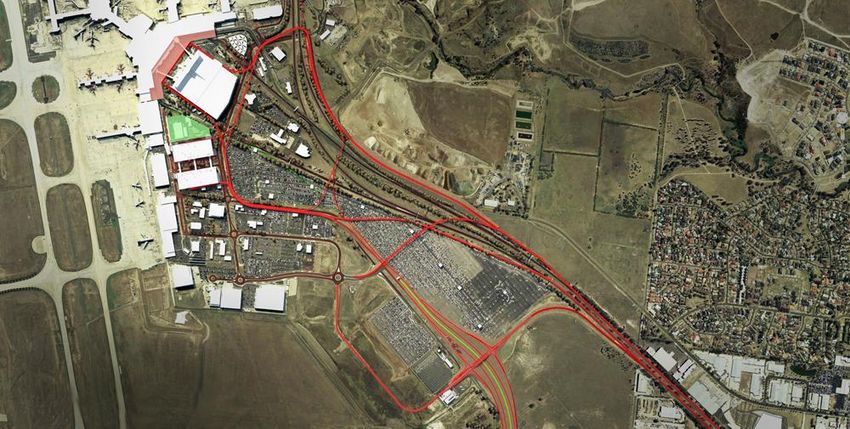
Summary of Recommendations

Recommendations (page)
RAPID BUSES
Reroute SmartBus 902 to connect with Melbourne Airport (p15)
Establish an orbital bus service running from the airport to Melbourne’s western suburbs (p15)
Improve regularity and hours of bus services to nearby regional centres including Sunbury and Craigieburn (p16)
Expand signal priority rollout for all SmartBus services to Melbourne Airport (p16)
Establish express lane for SkyBus on the Tullamarine Freeway (p19)
Enforce and improve signage for CityLink express lane (p19)
Maintain employee discounts for SkyBus services (p20)
Integrate SkyBus with the myki smartcard system (p21)
ROAD
Widen Tullamarine Freeway between the M80 Ring Road and Melbourne Airport (p23)
Expand National Managed Motorways program to the Tullamarine Freeway (p24)
Duplicate Sunbury Road and construct the Bulla Bypass (p25)
RAIL
Construct a rail link to Melbourne Airport within 15 years (p28)
Ensure Melbourne Airport rail link fares are price competitive (p32)

            List of figures
 Figure     Description ............................................................................................................. Page
 Figure 1 Melbourne Airport passenger numbers, forecast ..................................................................... 7
 Figure 2 Land transport mode share ....................................................................................................... 8
 Figure 3 Melbourne Airport precinct map .............................................................................................. 8
 Figure 4 Proposed elevated road, Melbourne Airport ............................................................................ 9
 Figure 5 Outline of major surface transport projects ........................................................................... 13
 Figure 7 Domestic low fare passengers as a proportion of total .......................................................... 20
 Figure 6 Tullamarine Freeway car volume ............................................................................................ 22
 Figure 8 Albion East alignment.............................................................................................................. 27
 Figure 9 Rail links at top 20 international airports in 2012 ................................................................... 30

                                                         Tourism & Transport Forum | Rapid Buses, Road and Rail at Melbourne Airport | 6
Melbourne Airport – the next 30 years
Melbourne is Australia’s second busiest airport, representing the major aviation hub for the
continent’s south. Contributing $1.47 billion to Victoria’s gross state product and supporting more
than 14,000 jobs, Melbourne Airport is a key economic driver for the state. As Victoria’s only major
international airport, it also plays a unique role in the tourism industry, facilitating more than $8
billion in spending by interstate and international visitors each year

Melbourne Airport is the largest of the few major Australian airports to operate without a curfew.
Curfew-free operations generate an additional two million passengers every year and add $590
million to the Victorian economy. 24-hour operations have also contributed to Melbourne Airport’s
position as Australia’s busiest airport for air freight export, responsible for around 40 per cent of
Australia's air freight export market.

Central to the growth of Melbourne Airport has been the rapid expansion of Victoria’s tourism
industry. Over the past five years, growth in international visitor arrivals to Victoria has outstripped
every other state, at nearly triple the national average. This has a crucial impact on the Victorian
economy as whole, with tourism supporting 73,200 businesses and employing 204,000 people, which
accounts for more than seven per cent of state employment. Central to this success is the
convenient and efficient aviation link that Melbourne Airport provides, which contributes more than
$1 billion to Victoria’s interstate domestic tourist revenues each year alone.

Forecast demand
Increased business, freight and leisure activity are driving rapid growth in aviation demand at
Melbourne Airport. Passenger numbers are expected reach an estimated 40 million by the end of
the decade, and more than 60 million by 20331. This will be accompanied by ongoing growth in non-
aviation activities, including the future expansion of the airport landside business precinct.
                                                                                                       Melbourne Airport is targeting
FIGURE 1 MELBOURNE AIRPORT PASSENGER NUMBERS, FORECAST
 AIR PASSENGER MOVEMENTS THROUGH MELBOURNE AIRPORT, FINANCIAL YEAR                                     additional      development   of
     65
                                                                                                       20,000 square metres per
    Millions

     60                                                            FORECAST

     55
     50
                                                                                                       annum in its draft master plan
     45
     40
                                                                                                       depending          on     market
     35                                                                                  Total         conditions.       If the current
     30                                                                                  Domestic
     25
                                                                                         International transport mode share prevails,
     20
     15                                                                                                the number of vehicle trips to
     10
      5                                                                                                the airport is forecast to grow
      0
                                                                                                       from 62,000 to 140,000 by 20332
  Source: Air Passenger Movements through Capital and Non-Capital City Airports to 2031,
                                                                                                       (see figure 1).
    Bureau of Infrastructure, Transport and Regional Economics. 2012

1
  Melbourne Airport Master Plan 2013 – People, Place, Prosperity. Preliminary Draft, Melbourne Airport, May
2013 p103.
2
  Ibid. p114.
                                                               Tourism & Transport Forum | Rapid Buses, Road and Rail at Melbourne Airport | 7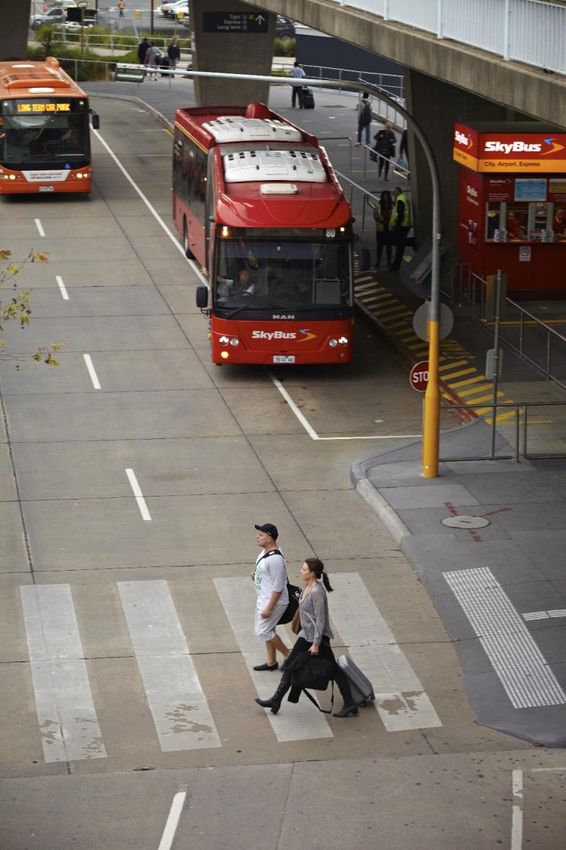
Accessing Melbourne Airport
FIGURE 2 – LAND TRANSPORT MODE SHARE                      At present, access to Melbourne Airport relies
                                                          predominantly on private transport.            In 2011
                         Other
                          1%                              approximately 64 per cent of trips were undertaken by
                             Bus                          private vehicle and another 17 per cent by taxi, with a
                             12%
                                                          further six per cent by hire car. Bus services represent
                Taxi (inc.                                only 12 per cent of trips (see figure 2).
                Hire cars)
                   23%
                                              Car
                                              64%         High private vehicle mode share, rapid growth in airport
                                                          demand and rising congestion across greater
                                                          Melbourne have led to increasingly constrained access
 Source: Melbourne Airport Master Plan 2013               to Melbourne Airport particularly in peak travel periods.

Internal airport transport
Melbourne Airport’s draft master plan recognises the need for major investment in the ground
transport network and identifies four main areas for improvement in the next five years. This
                                                       includes additional internal road capacity
FIGURE 3 MELBOURNE AIRPORT PRECINCT MAP
                                                       through upgrades to existing roads; the
                                                       development of ground transport hubs to
                                                       facilitate passenger pick-up and drop-off;
                                                       multi-mode access; and additional road
                                                       capacity and access points into the airport.
                                                       The latter includes plans for the
                                                       development of a major new access point
                                                       through the Airport Drive extension
                                                       project due for completion in 2016.

                                                                           A longer-term solution to improve traffic
                                                                           flow on the airport road network includes
                                                                           the proposed development of a single-
                                                                           direction, elevated high-capacity loop road
                                                                           system to supplement the existing road
                                                                           network, providing better access from
                                                                           freeways and more efficient utilisation of
                                                                           the airport road network.

                                                                           Melbourne Airport plans to build the loop
                                                                           road in stages over several years, with the
                                                                           first stage expected to begin in 2015.
 Source: Melbourne Airport

                                                    Tourism & Transport Forum | Rapid Buses, Road and Rail at Melbourne Airport | 8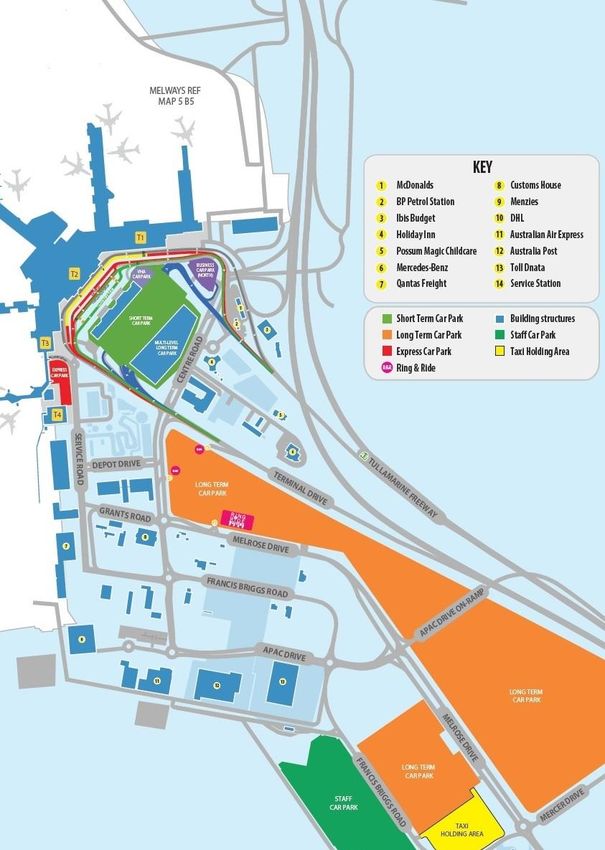
Broader road network
Although a number of upgrades are required to meet increased demand, overall Melbourne Airport
is serviced by a comprehensive and well-developed road network. Located 22km north-west of the
CBD, Melbourne Airport is adjacent to a radial (Tullamarine) and orbital (Western Ring Road)
freeway. In free-flow conditions, access from Melbourne Airport to the CBD can be achieved in less
than 20 minutes along the Tullamarine Freeway, which carries 75 per cent of airport traffic.

Similarly, located 6km from the M80 Ring Road, Melbourne Airport has direct links to the city’s only
east-west motorway, linking the airport to greater Melbourne. As a result, Melbourne Airport is well
positioned to provide airport users a direct link to the Melbourne CBD and to facilitate dispersal
across broader metropolitan Melbourne and regional Victoria.

Despite being well positioned in relation to Melbourne’s road network, unprecedented growth has
resulted in arterial roads servicing Melbourne Airport reaching capacity and suffering heavy
congestion. Peak traffic volumes on the Tullamarine Freeway have doubled in the past decade,
leading to considerable delays, particularly between Melbourne Airport and the M80 Ring Road. The
section of the freeway north of Essendon Airport is the most congested in Melbourne, particularly
around the Mickleham Road interchange and at Melbourne Airport interchange.

FIGURE 4 PROPOSED ELEVATED ROAD, MELBOURNE AIRPORT

 Source: Melbourne Airport

                                        Tourism & Transport Forum | Rapid Buses, Road and Rail at Melbourne Airport | 9
Passenger transport
Increased road congestion not only affects private passenger vehicles and taxis, it also significantly
impacts public transport. SkyBus, the shuttle bus operating between the CBD and the Airport along
the Tullamarine Freeway, provides access for around 10 per cent of airport users. However,
congestion is diminishing performance, with peak SkyBus services now recording delays of up to 39
minutes during peak times compared to off-peak travel times of 20 minutes.

                                                                     The primary cause of delays for SkyBus
                                                                     services is insufficient segregation
                                                                     from private vehicle traffic. From
                                                                     Melbourne Airport to the M80, there
                                                                     are no dedicated bus lanes on the
                                                                     Tullamarine Freeway, subjecting buses
                                                                     to escalating delays during peak times.
                                                                     Further south, the CityLink Motorway,
                                                                     which runs from Strathmore to
                                                                     Melbourne CBD, operates a priority
                                                                     express lane in peak periods
                                                                     exclusively for buses, hire cars and
                                                                     taxis.

                                                                     However, the express lane remains
                                                                     unenforced, limiting the ability of
                                                                     SkyBus to provide fast and consistent
                                                                     journey times between Melbourne
                                                                     Airport and the CBD.

                                                                     Melbourne Airport can also be
                                                                     accessed through the public bus
                                                                     network, with services operating to
                                                                     the city’s outer east and south as well
                                                                     as nearby regional centres including
  Source: Melbourne Airport
                                                                     Sunbury and Craigieburn.

There is considerable scope to expand the bus network servicing Melbourne Airport, assisting in
reducing congestion but also improving access for regional centres to aviation facilities and jobs. The
recent relocation of public bus services, including the 901 SmartBus, into the main terminal forecourt
should support greater utilisation of these services for passengers and airport staff alike.

                                        Tourism & Transport Forum | Rapid Buses, Road and Rail at Melbourne Airport | 10
Building for growth
Despite the challenges brought by increased growth, Melbourne Airport is capable of expansion and
was always designed to grow. When the Tullamarine site was selected for the new Melbourne
International Airport in 1959, provision was made for a third, and an eventual fourth, runway, as well
as corresponding noise buffer zones. Similarly, terminal expansions in the precinct’s south, an
additional access road from the Western Ring Road, and a dedicated rail line have been planned for
extensively. In this regard, Melbourne Airport has been explicitly designed for expansion to meet
Victoria’s aviation capacity well into the future.
Users of Melbourne Airport, and accordingly Victoria
Melbourne Airport is investing $200 as whole, have benefitted substantially from continued
million in landside transport over and significant investment into the region’s road
the next five years networks. This has flown from the long-sighted vision
for the airport, developed over a period of more than
50 years. To ensure the continued success of Melbourne Airport and the significant competitive
advantage it brings to Victoria, this program of continual works to meet increased aviation demand
must continue, with full support from the Victorian and federal governments.
As part of continual development to meet growing aviation activity at Melbourne Airport, landside
access upgrades have been progressively developed. This investment will reach unprecedented
levels in coming years, with Melbourne Airport committing $200 million over the next five years to
improving landside transport access.
Source: Melbourne Airport
Tourism & Transport Forum | Rapid Buses, Road and Rail at Melbourne Airport | 11Role of government
Although these investments by the airport operator will go a long way to accommodating demand
within Melbourne Airport, there is a considerable need to expand transport infrastructure across the
broader network. Following the commencement of flights on the proposed third runway, Melbourne
Airport’s aviation capacity will increase significantly, placing unprecedented pressure on the
surrounding road network.
To ensure Melbourne Airport remains accessible, a fundamental shift is required in the way land
transport access to airports is governed and funded. At present, airport surface transport remains a
disjunct between state and federal priorities, with little ownership of decision making or investment
by either party. With airports a federal responsibility and urban transport a state responsibility,
access to major airports has too often been ignored.
Source: City of Melbourne
TTF recognises that the establishment and expansion of Infrastructure Australia, and more broadly,
the increased role of the federal government in funding urban transport infrastructure represents a
positive step to address this. However, there is still considerable scope to create a more productive
partnership between governments in this field. Airports represent unique and significant drivers of
economic activity and their efficient use requires greater cooperation and coordination between
governments.
More broadly, the failure to address land transport access to airports is partly attributable to a lack of
recognition of the growth in aviation demand as a proportion of economic activity. Between 1990
and 2010, total airline passenger movements Australia’s 10 largest airports grew almost four times
faster than the Australian population.
Tourism & Transport Forum | Rapid Buses, Road and Rail at Melbourne Airport | 12Future priorities
Despite the significant program of current works (see figure 5), development of the next generation
of surface transport must begin now. The projected long-term demand forecasts for both airport
access and broader traffic volumes for the airport region indicate that additional infrastructure
investment is essential.
FIGURE 5 OUTLINE OF MAJOR SURFACE TRANSPORT PROJECTS
Project Outline Key benefits Status
Airport Drive Four lane extension, providing a By 2026 will carry up to 23 per Undergoing development
extension secondary southbound airport cent of airport traffic, removing approvals process
entry point 12,500 vehicles each day from
congested Terminal Drive
APAC Drive on- Additional entry to Tullamarine Redirect up to 15 per cent of Completed 2012
ramp Freeway from airport, allowing southbound traffic away from
more efficient exit for city-bound congested roads
traffic
Francis Briggs Road Extension of Francis Briggs Road, Reduce traffic on Melrose Drive Completed 2013
linking with Melrose Drive to improve freight and staff car
park access
Elevated Loop Single direction high-capacity Reduce congestion and delays To be built in stages from
Road elevated road allowing through increased capacity and 2015
intersection-free access to terminal reduced congestion
precincts
Melrose Drive Duplication of airport’s only Effectively doubles road capacity Completed 2013
duplication southerly entry point on Melrose Drive
Southern Precinct Major redevelopment of existing Improved ground transport Development approved –
Project – Stage 1 Terminal 3 and around Terminal 4 interchange with multi-level road phase 1 expected
with capacity to cater for an and parking spaces with completion mid-2015
additional 10 million passengers improved public transport access
per year
Terminal forecourt Construction of pick-up lane and 1- Significantly reduces congestion Completed 2013
redevelopment minute parking bays within from vehicles stoppages
terminal forecourt
Following the approval of the Melbourne Airport Master Plan, TTF recognises the need to provide a
range of options to meet rising demand in land transport access. As a result, TTF has outlined a set
of recommendations to address airport access under three broad principles.
Rapid buses: Improve bus access and priority
Road: Upgrade freeway infrastructure
Rail: Construct a train line to Melbourne Airport
Tourism & Transport Forum | Rapid Buses, Road and Rail at Melbourne Airport | 13Rapid buses
Government-managed bus network
While increasing road capacity between Melbourne Airport and the CBD as well as construction of an
airport rail link are fundamental priorities, access to Melbourne Airport must also be designed to
better support dispersed suburban areas.
Melbourne Airport’s catchment area reaches every corner
More than half of trips to Melbourne
of greater Melbourne and across Victoria as a whole. To
Airport begin outside the
provide for outer-suburban and nearby regional centres,
metropolitan region
improvements to bus networks are a versatile and
affordable mechanism to improve airport access.
FIGURE 7: DISTRIBUTION OF MELBOURNE AIRPORT AIR PASSENGERS IN VICTORIA
Buses play an important and rising role in Melbourne’s transport task, providing the flexibility and
affordability to service the city’s expanding outer suburbs. Over the past five years, Melbourne has
experienced an unprecedented expansion of the metropolitan bus service. In 2011-12 alone,
Melbourne’s bus patronage rose by almost 16 per cent.
Despite this growth, many of Melbourne’s outer suburbs still remain devoid of adequate public
transport access. BusVic in 2011 indicated that more than 55,000 homes on the metropolitan fringe
are outside walking distance of buses, trains and trams3. This has been a growing trend with recent
3
Trains buses to slow to catch Melbourne’s outer sprawl, Herald Sun, 6 October 2011
Tourism & Transport Forum | Rapid Buses, Road and Rail at Melbourne Airport | 14housing development, with 43 per cent of housing lots developed between 2004 and 2009 beyond
the reach of the public transport network.
There is significant potential to expand and reform the bus network to better service Melbourne
Airport. This will be vital to better accommodate outer suburban areas, reduce congestion by
minimising car trips, and accommodate growth in the lead up to construction of an airport rail link.
Expansion of SmartBus services
The SmartBus orbital service, which provides long-distance routes across greater Melbourne, has
considerably expanded bus coverage for cross-suburban trips in Melbourne. Since its introduction in
2000, the SmartBus network has achieved unprecedented success. In 2009, the SmartBus 903 Red
Orbital became Melbourne’s most popular bus route, carrying more than 16,000 passengers per day.
In 2011 alone, total SmartBus patronage increased by over 40 per cent.
Expanding SmartBus access to Melbourne Airport represents a cost-effective measure to improve
access to outer-suburban areas. The decision in 2011 to extend the SmartBus 901 service to
Melbourne Airport has been an important initiative for widening the bus catchment area as well as
integrating with the rail network by linking with Broadmeadows station.
Melbourne Airport recently relocated the 901 bus stop in front of the terminal, rather than its
previous terminus in the service roads adjacent to the Tigerair terminal (T4). As such, the 901 to
Broadmeadows station becomes the airport’s interim rail link.
Integration should be extended to the SmartBus 902 service, which runs from Chelsea to the Airport
West shopping centre in Essendon. Extension of this to Melbourne Airport would further strengthen
the airport’s connectivity to Melbourne’s outer east and south.
Further, introduction of additional SmartBus routes to Melbourne Airport should be considered. In
particular, an orbital service running north-south through Melbourne’s west would be of significant
benefit. This would represent an important interim measure to provide access to these rapidly
expanding areas prior to completion of the rail link.
RECOMMENDATIONS
Reroute SmartBus 902 to connect with Melbourne Airport
Establish an orbital bus service running from the airport to Melbourne’s western suburbs
Tourism & Transport Forum | Rapid Buses, Road and Rail at Melbourne Airport | 15Regional buses
The rapid growth of regional centres north of Melbourne will spark significant increased demand for
airport access. In particular, Sunbury and Craigieburn are undergoing strong growth and remain key
catchment areas for the airport.
The proportion of employees at Existing bus services to nearby regional centres remain
Melbourne Airport living in limited, resulting in relatively low public transport
Melbourne’s outer west will double mode share for airport users. Improving bus access for
in the next 20 years regional centres remains an important initiative for
improving regional access. This will be particularly
important for catering to airport employees who are increasingly living in nearby regional centres.
RECOMMENDATION
Improve regularity and hours of operation for bus services to nearby regional centres
including Sunbury and Craigieburn
Signal priority
The biggest inhibitor to increasing public transport mode share for airports is ensuring travel times
are competitive and reliable. At present, non-segregated bus services to and from the Melbourne
Airport are increasingly delayed by congestion on Melbourne’s arterial road network.
For bus services to Melbourne Airport to be attractive in terms of reliability and speed, greater
separation from private vehicle traffic is required. Signal priority represents an important
mechanism to achieve this. At present, a number of SmartBuses are equipped with systems to
communicate requests for priority at traffic lights to remain on schedule. This feature will prove
critical to bus reliability in light of rising congestion on Melbourne’s orbital freeways. VicRoads is
currently undertaking a trial of satellite navigation-based signal priority for SmartBuses on Springvale
Road and Blackburn Road.
Despite being a relatively recent initiative on the bus network, signal priority for tram services in
Melbourne has proven highly effective in improving service reliability performance in congested
areas. For example, the use of active priority on Swanston Street, which included providing green
light time extension and minimum phases for tram services, has reduced delays by up to one third.
To ensure the SmartBus network is capable of maintaining the reliability and travel times to remain
competitive, roll out of signal priority measures across all SmartBus services to Melbourne Airport
must be a key priority.
RECOMMENDATION
Expand signal priority rollout for all SmartBus services to Melbourne Airport
Tourism & Transport Forum | Rapid Buses, Road and Rail at Melbourne Airport | 16SkyBus
The SkyBus service, the shuttle bus operating between the CBD and Melbourne Airport, represents
the primary mass transit mode for airport users. The role of SkyBus as a fast and affordable public
transport service has risen significantly in the last decade, now catering for roughly seven per cent of
all airport users.
For at least the next decade, SkyBus will remain the most important passenger transport asset for
accessing Melbourne Airport. Despite the Victorian government’s commitment to build the airport
rail link, its completion remains a medium to long-term prospect. In the interim, the need for a mass
transit link to Melbourne Airport is imperative. SkyBus presents the most viable option to achieve
this, capable of accommodating the significant rise in public transport patronage if a number of
infrastructure and service reforms are delivered.
Case study: Ben Gurion Airport Fast Lane – Tel Aviv
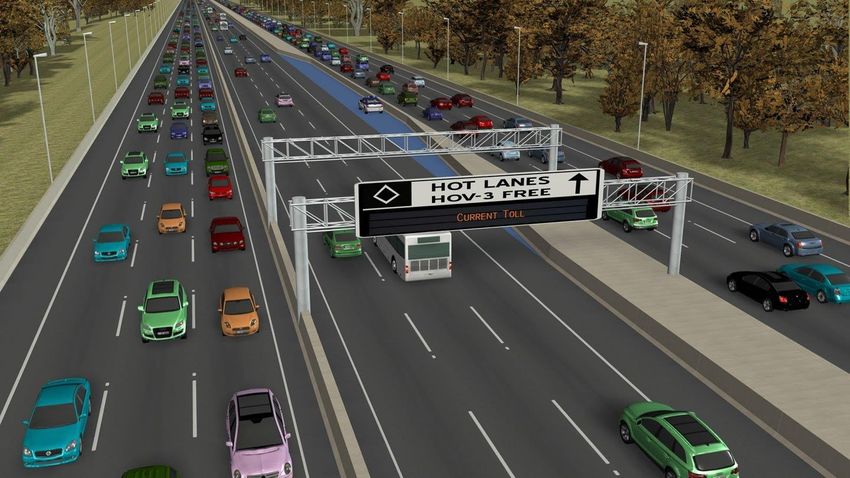
High Occupancy Vehicle (HOV) lanes provide fast and
reliable travel times for public transport users and
those choosing to carpool. However, this can come at
the expense of other traffic. To address this, High
Occupancy Toll (HOT) lanes, which provide free or
discounted access for high occupancy vehicles but a
higher rate for others, are increasingly popular. HOT
lanes also use variable tolling to manage traffic
volumes in real time, ensuring a minimum level of
speed and reliability.
Photo: E Milrod/Haaret’z
In 2011, the Fast Lane, Israel’s first HOT lane, was opened between Tel Aviv’s international airport, Ben Gurion
Airport, and the city. The lane is free for buses, taxis and cars with three or four occupants, depending on traffic
volumes. Other vehicles pay a toll, which is adjusted in real time to respond to congestion levels. This
guarantees travel times for airport users, ensuring speeds stay above 70km/h.
A free shuttle bus also runs along the Fast Lane, allowing motorists to alight at a major park-and-ride facility
halfway between the city and the airport. This allows travellers from regionally dispersed areas who may not
have access to public transport to use it for the final and most congested part of the trip.
Since opening in 2011, the lane has achieved considerable success in reducing travel times for public transport
with minimal impact on other road users. At present, average capacity is running at 80 per cent over
conventional lanes – delivering a more efficient service for both public and private transport.
Tourism & Transport Forum | Rapid Buses, Road and Rail at Melbourne Airport | 17Enhanced bus priority
The ability for SkyBus to increase patronage is entirely contingent on its ability to provide fast and
reliable travel times for airport users. Patronage growth that followed road improvements to help
safeguard its performance demonstrates this fact. For example, the widening of a number of
sections of the Tullamarine Freeway has contributed to a 50 per cent rise in demand for the service
in two years.
For SkyBus to maintain optimal performance and
Without improved priority, SkyBus increase its mode share, the next round of road
journey times could increase by one upgrades is now required. Congestion along the
to two minutes every year Tullamarine Freeway is reaching critical levels, impacting
the service’s reliability. Travel times for SkyBus services
during peak times often reach 40 minutes and can be as long as 51 minutes in the morning and 59
minutes in the afternoon peak, compared to 20 minutes for off-peak times4.
Photo: SkyBus
SkyBus will suffer from deteriorating performance unless buses are given greater priority status,
insulating them from increased congestion. Of particular concern is the section of the Tullamarine
Freeway from Melbourne Airport to the beginning of the CityLink in Strathmore, which currently has
no dedicated high occupancy vehicle lane. Using existing emergency lanes on the Tullamarine
Freeway, a dedicated service lane for SkyBus and other high occupancy vehicles could be established
without reducing road space for private vehicles.
4
SkyBus lane faces fight, Adam Carey, The Age, 4 January 2013.
Tourism & Transport Forum | Rapid Buses, Road and Rail at Melbourne Airport | 18Further south, the CityLink Motorway, which runs from Strathmore to Melbourne CBD, operates a
priority express lane in peak periods exclusively for buses, hire cars and taxis. However, use of this
lane remains relatively unenforced, limiting the ability of SkyBus to provide fast and consistent
journey times between Melbourne Airport and the CBD.
Ensuring that the CityLink express lane is used only by permissible vehicles will significantly improve
the speed and reliability of SkyBus services. This should include enforcing fines for non-complying
vehicles, as well as improved awareness for drivers including improved signage and differentiated
lane colouring.
The establishment of dedicated bus priority will allow SkyBus to emerge as the first-stage mass
transit link to Melbourne Airport that is required, well in advance of the completion of a rail link. The
proposed bus lane reforms would allow SkyBus services to operate every 2 to 3 minutes during peak
times, carrying approximately 1200 passengers an hour with a maximum 20-minute journey time.
The Victorian government should consider widening the Tullamarine Freeway for designated bus
lanes. This would improve the reliability and efficiency of SkyBus, as well as taxi and hire car services,
increasing its attractiveness for airport users. This would not only provide a valuable service for
airport users, but would also create an important dedicated north-south corridor for Melbourne’s
wider bus network.
RECOMMENDATIONS
Establish express lane for SkyBus on the Tullamarine Freeway
Enforce and improve signage for CityLink express lane
Pricing
While SkyBus remains considerably cheaper than
many other forms of transport to Melbourne Airport, Typical low cost flight Sydney to
pricing reform does represent an important lever to Melbourne - $90
increase mode share.
Estimated taxi fare from Melbourne
One effective mechanism to achieve this is to target Airport to Melbourne CBD - $60
on-site employees. Employees making a daily
commute are significantly more influenced by
decreases in price for public transport. SkyBus’s discount for employees has been a successful
scheme in this regard and should be maintained over the long term.
Tourism & Transport Forum | Rapid Buses, Road and Rail at Melbourne Airport | 19FIGURE 6 DOMESTIC LOW FARE PASSENGERS AS A PROPORTION OF TOTAL Similarly, the rapid increase in
low cost flights has opened up
50% aviation to a price sensitive
45% market that is equally price
40%
sensitive regarding land transfer
35%
to and from the airport.
30%
25%
20% With domestic low-cost flights
15% often less than $100, airport
10%
transfers represent a significant
5%
proportion of total travel costs.
0%
Melbourne Adelaide Sydney Brisbane Perth Canberra
Source: Bureau of Infrastructure, Transport and Regional Economics
This is particularly important for
Melbourne Airport, which holds the highest proportion of low cost flights of any mainland capital
(see figure 7). The airport is the hub for Tigerair (formerly Tiger Airways), the low cost carrier of the
Virgin Australia group, as well as welcoming many flights from Qantas’s Jetstar and other budget
airlines. As a result, ensuring public transport options are price competitive is particularly vital to
increase public transport mode share for airport users.
RECOMMENDATION
Maintain employee discounts for SkyBus services
Myki compatibility
Despite being the dominant public transport carrier for Melbourne’s major airport, SkyBus is not
integrated with Victoria’s public transport smartcard. Melbourne’s myki card is now the only
payment method across Melbourne’s entire train, tram and bus networks. The addition of the
SkyBus service, which still relies on paper ticketing, would make travel on this service more attractive
for commuters.
Myki tickets are available on all
Integrating the SkyBus service with myki is particularly passenger transport modes in
important to support the 15,000 people working at Melbourne except SkyBus
Melbourne Airport. Allowing this group, who are
significantly more likely to already own a myki card, to use it to travel to and from work represents
an important opportunity to increase public transport mode share.
The introduction of myki on SkyBus services is also a critical initiative for improving the visitor
experience. The introduction of the myki Visitor Pack in 2012 was designed specifically to encourage
interstate and overseas visitors to use public transport, providing them with additional information
on the city and its attractions. As Australia’s second largest airport, Melbourne Airport represents a
large proportion of international visitors’ first impression of Australia. As a result, SkyBus represents
the first public transport experience. Failing to provide myki capabilities for SkyBus not only sets a
poor first impression; it also fails to encourage visitors to use public transport from the start,
significantly reducing the likelihood that they will use it later in their trip.
Tourism & Transport Forum | Rapid Buses, Road and Rail at Melbourne Airport | 20Melbourne Airport has agreed to facilitate the installation of myki ticket vending machines in its
international and domestic terminals to support greater utilisation of public transport by airport
passengers.
RECOMMENDATION
Integrate SkyBus with the myki smartcard system
Case Study: SEEQ go Card
A smartcard designed specifically for tourists, which includes airport transfers, reduces the
uncertainty associated with using public transport upon their arrival to a new city. This
encourages public transport patronage, improves the visitor experience and presents an
important marketing opportunity for major attractions.
In south east Queensland, the SEEQ go card offers visitors three or five consecutive calendar
days on all TransLink bus, train or ferry services. This includes two journeys on the Airtrain to
Brisbane Airport. By offering unlimited time-based fares, the SEEQ go card gives visitors an
all-access pass, which is most appropriate given they are familiar with a city’s zone and fare
structure.
Integrated ticketing designed for visitors also promotes visitation to tourist attraction by
including maps, attraction guides and discounts. The SEEQ go card offers over $700 in offers
and discounts at more than 80 key tourist attractions, theme parks, accommodation providers,
restaurants and more.
Photo: Brisbane Airport Corporation
Tourism & Transport Forum | Rapid Buses, Road and Rail at Melbourne Airport | 21Road
At present, access to Melbourne Airport is undertaken entirely by road. However, rapid growth in
aviation demand, as well as non-airport related traffic, has seen the cost of congestion continue to
rise. The effect of this is compounded by the fact that traffic to and from the airport is concentrated
on a small number of arterial roads, limiting options for airport users.
To ensure Melbourne Airport remains accessible, existing road infrastructure must be upgraded and
used more efficiently. Below is an outline of the most critical reforms required to ensure the road
network servicing Melbourne Airport is capable of meeting expected growth.
Tullamarine Freeway widening
The Tullamarine Freeway (M2), the freeway heading south-east from Melbourne Airport towards
Melbourne CBD, carries 75 per cent of all traffic to and from Melbourne Airport. In favourable traffic
conditions, the Tullamarine Freeway provides a 20 minute connection to the Melbourne CBD via
private car, taxi and bus.
As Melbourne’s major north-south artery, the Tullamarine Freeway also plays a vital role in the
region’s wider transport system. A rise in traffic volumes across Melbourne’s north and north-west,
as well as increased airport use, has led to a significant rise in congestion. Over the past ten years,
traffic volumes over the entire freeway have nearly doubled during peak times.
FIGURE 7 TULLAMARINE FREEWAY CAR VOLUME
An additional 20,000 cars
1800 use the road each day on
2001-02 volume (average) the section of the
1600
2011-12 volume (average)
1400 Tullamarine Freeway
1200 connecting directly to
1000 Melbourne Airport,
Cars
800 between the M80 Ring
600
Road and Mickleham Road
400
(see figure 6).
200
0
The congestion effect of
0:00
1:00
2:00
3:00
4:00
5:00
6:00
7:00
8:00
9:00
10:00
11:00
12:00
13:00
14:00
15:00
16:00
17:00
18:00
19:00
20:00
21:00
22:00
23:00
this growth has been
Source: Vicroads compounded by the
limitations of Melbourne Airport’s internal road network, with overflow from the airport spilling onto
the freeway. This has resulted in travel times during the peaks now declining below the 80km/h
average speed threshold required for optimal freeway performance5. Of particular concern is the
congestion caused in the afternoon due to the significant overlap between the commuter and flight
peak.
5
Traffic Monitor 2010-2011 August 201, Vicroads.
Tourism & Transport Forum | Rapid Buses, Road and Rail at Melbourne Airport | 22Widening the Tullamarine Freeway between the M80 Ring Road and Melbourne Airport from four to
six lanes is critical to accommodate this growth in demand. Doing so would free up capacity during
peak times on the airport’s primary access route, resulting in shorter and more reliable trips for
airport users as well as other traffic. The ability of the two additional lanes to improve traffic
performance would be significantly enhanced by the
The Tullamarine Freeway carries recent completion of the M80 Tullamarine Freeway
three quarters of all traffic to and interchange flyover, allowing rapid distribution from the
from Melbourne Airport Tullamarine Freeway across Melbourne’s orbital road
network.
Over one fifth of all passengers at Melbourne Airport use taxis or hire cars for their journey. This
important mode of transport provides access to parts of metropolitan Melbourne and regional
Victoria not served by public transport. Taxis and hire cars also provide a fast, efficient service for
business travellers direct to their meeting place. This important service could be jeopardised by road
congestion.
Source: Melbourne Airport
As the Tullamarine Freeway reaches capacity and beyond, airport users will increasingly suffer from
reliability and travel time variations. This unpredictability forces individuals and businesses to make
changes to travel plans that cost both time and money. This is a particularly crucial concern for
airport users, who often face rigid deadlines. To avoid the most adverse impacts of rising congestion,
funding should be provided to begin works through the next round of the Nation Building Fund.
RECOMMENDATION
Widen Tullamarine Freeway between the M80 Ring Road and Melbourne Airport
Tourism & Transport Forum | Rapid Buses, Road and Rail at Melbourne Airport | 23Managed motorways (intelligent transport systems)
Managed motorways use a range of intelligent transport systems to maximise the efficient capacity
of existing motorway assets. These include priority access for high occupancy vehicles, limiting
freeway entry and varying speed limits based upon traffic conditions. This is achieved using traffic
sensing equipment that adjusts measures to ensure traffic volumes are optimised in real time,
delivering improved reliability and enhanced productive capacity.
Managed motorways can be a highly effective means of increasing the efficiency of major arterial
roads, ensuring high speeds are maintained. Managed motorways can also reduce other negative
road-based externalities, reducing road-based emissions and fatalities by around 30 per cent. These
methods can also be implemented for 40 - 60 per cent of the cost of lane widening.
This potential has been recognised by Infrastructure Australia, which estimates that electronic
freeway management could deliver $500 million in economic benefits nationwide. In 2011-12, the
Australian government committed $61.4 million for the development of Managed Motorways
systems in all eastern state capitals. The Tullamarine Freeway represents a vital opportunity for the
expansion of this program, ensuring the airport’s primary access point operates efficiently.
Source: The Transit Coalition
Technology can also play a role in helping to manage traffic on the airport road network, including
access to the main terminal precincts. This can include tools such as licence plate recognition
technology to support initiatives which can deliver more efficient utilisation of terminal access
infrastructure through congestion charging or peak period management.
RECOMMENDATION
Expand National Managed Motorways program to the Tullamarine Freeway
Tourism & Transport Forum | Rapid Buses, Road and Rail at Melbourne Airport | 24Sunbury Road and Bulla Bypass
Rapid urban growth to the north and west of Melbourne Airport will place an increasing demand on
road access. This will be driven by growth in the Sunbury-Diggers Rest Growth Corridor, which is
expected to eventually house a population of 71,000.
Trips from the north to the airport will
increase significantly, driven by
employee growth. Within the next two
decades, 20 per cent of the precinct’s
workforce will come from the outer
west. In addition, trips from the north to
inner Melbourne will be accommodated
by Melbourne Airport’s main feeder
roads, increasing overall congestion.
Sunbury Road will be forced to
accommodate the vast majority of
growth, which is already suffering delays
and traffic congestion. While a longer-
term project than upgrades to
Melbourne Airport’s southern entry
points, duplication of Sunbury Road, as
well as the construction of a bypass at
Bulla, will be vital to meet demand.
RECOMMENDATION
Duplicate Sunbury Road and construct the Bulla Bypass
Tourism & Transport Forum | Rapid Buses, Road and Rail at Melbourne Airport | 25Rail
Melbourne Airport was one of the first international airports to be designed to allow for the future
inclusion of a rail line. A proposal was put forward for a high-speed rail line to the airport during its
construction in 1965 by the then premier, Henry Bolte, which did not proceed at the time. Since
then, increased private vehicle mode share, concerns regarding adequate patronage and cost, as well
as the expansion of Avalon Airport outside Geelong, have all contributed to the stagnation of
progress towards a rail link to Melbourne Airport.
After decades of inaction, there is now a pressing need to ensure a rail link to Melbourne Airport is
delivered. Modelling conducted by Melbourne Airport suggests that once passenger movements
reach 40 million, a dedicated rail link will be required to effectively move passengers to and from the
airport. With current growth in visitor arrivals, this target is expected to be reached in little over a
decade.
There is now sufficient demand for both aviation and train travel to warrant a rail link to Melbourne
Airport. In the decade since 2001, air passenger trips and
patronage on trains in Melbourne have both grown by an Melbourne Airport was one of
unprecedented 70 per cent. the first international airports
to be designed for a rail link
Similarly, road congestion surrounding Melbourne Airport
has now become a critical issue, demanding that public transport mode share increase substantially.
TTF recommends that the Victorian government commit to completing an airport rail link within 15
years.
Tourism & Transport Forum | Rapid Buses, Road and Rail at Melbourne Airport | 26Melbourne Airport Rail Link Study
In March 2013 Public Transport Victoria released a study on the viability of a rail link to Melbourne
Airport6. The study assessed 80 different alternatives, which were narrowed to a shortlist of four
route options:
Albion East, using land reserved in 2001 and the existing Sunshine rail corridor
Direct tunnel link through central and north Melbourne
Craigieburn link, through existing Craigieburn line and new track through West Meadows
Flemington link, through existing Flemington line and rail tunnel
Of these four alternatives, the Albion East alignment proved to be the most viable. The Albion East
design follows the route preserved in 2001, then connects with existing rail tracks from Sunbury
within the Sunshine corridor and with the
FIGURE 8 ALBION EAST ALIGNMENT
Melbourne Metro rail tunnel, extending the link
to Melbourne's east.
As the Albion East alignment uses land and
track preserved since 2001, it performed highly
in terms of cost and environmental impact.
Similarly, by connecting into the proposed
Melbourne Metro, the East Albion alignment
delivers high patronage potential, allowing
direct connections to Melbourne’s south-east
suburbs as well as the regional cities of
Bendigo, Ballarat and Geelong.
The Albion East alignment is the best outcome
for both commuters and government. It
delivers greatest patronage and connection
facilities within a competitive travel time.
Similarly, due to effective corridor preservation,
it is more cost and environmentally efficient.
Source: Public Transport Victoria
While construction of a direct tunnel would
provide a faster journey between the CBD and the Airport, this would cost double either the Albion
East or Craigieburn alignments. Further, it would only provide limited connections to Melbourne’s
wider rail network.
TTF believes that a rail line to Melbourne Airport is of most benefit if it expands public transport
access to the airport, rather than simply mimicking the existing one. With appropriate investment in
6
Melbourne Airport Rail Link Study – Final Technical Report, Parsons Brinkenhoff for Public Transport Victoria. March 2013
Tourism & Transport Forum | Rapid Buses, Road and Rail at Melbourne Airport | 27You can also read


