GET ON BOARD WITH AUCKLAND TRANSPORT - Request for Information Consultation Document
←
→
Page content transcription
If your browser does not render page correctly, please read the page content below
< Contents

GE T ON BOARD WITH
AUCKL AND TR ANSPORT
Request for Information Consultation Document – Part 1

Review Date: October 2019

                                     1
< Contents

Contents
Glossary  .  .  .  .  .  .  .  .  .  .  .  .  .  .  .  .  .  .  .  .  .  .  .  .  .  .  .  .  .  .  .  .  .  .  .  .  .  .  .  .  .  .  .  .  .  .  .  .  .  .  .  .  .  .  .  .  . 3   AUCKLAND PUBLIC TRANSPORT  .  .  .  .  .  .  .  .  .  .  .  .  .  .  .  .  .  .  .  .  .  .  .  .  .  .  .  .  . 15
Foreword  .  .  .  .  .  .  .  .  .  .  .  .  .  .  .  .  .  .  .  .  .  .  .  .  .  .  .  .  .  .  .  .  .  .  .  .  .  .  .  .  .  .  .  .  .  .  .  .  .  .  .  .  .  .  .  . 4                Brief History  .  .  .  .  .  .  .  .  .  .  .  .  .  .  .  .  .  .  .  .  .  .  .  .  .  .  .  .  .  .  .  .  .  .  .  .  .  .  .  .  .  .  .  .  .  .  . 16
A Future Rail Franchise Agreement  .  .  .  .  .  .  .  .  .  .  .  .  .  .  .  .  .  .  .  .  .  .  .  .  .  .  .  .  .  .  .  . 6                                                               Growth .  .  .  .  .  .  .  .  .  .  .  .  .  .  .  .  .  .  .  .  .  .  .  .  .  .  .  .  .  .  .  .  .  .  .  .  .  .  .  .  .  .  .  .  .  .  .  .  .  .  .  . 16
ABOUT AUCKLAND  .  .  .  .  .  .  .  .  .  .  .  .  .  .  .  .  .  .  .  .  .  .  .  .  .  .  .  .  .  .  .  .  .  .  .  .  .  .  .  .  .  . 7                                                    Central Government .  .  .  .  .  .  .  .  .  .  .  .  .  .  .  .  .  .  .  .  .  .  .  .  .  .  .  .  .  .  .  .  .  .  .  .  .  .  .  . 17
           Overview .  .  .  .  .  .  .  .  .  .  .  .  .  .  .  .  .  .  .  .  .  .  .  .  .  .  .  .  .  .  .  .  .  .  .  .  .  .  .  .  .  .  .  .  .  .  .  .  .  .  .  . 8                  Future Growth – Major Project Plans .  .  .  .  .  .  .  .  .  .  .  .  .  .  .  .  .  .  .  .  .  .  .  .  . 19
           Location .  .  .  .  .  .  .  .  .  .  .  .  .  .  .  .  .  .  .  .  .  .  .  .  .  .  .  .  .  .  .  .  .  .  .  .  .  .  .  .  .  .  .  .  .  .  .  .  .  .  .  .  . 8               Future Growth – Patronage Projections .  .  .  .  .  .  .  .  .  .  .  .  .  .  .  .  .  .  .  .  .  . 20
           Population .  .  .  .  .  .  .  .  .  .  .  .  .  .  .  .  .  .  .  .  .  .  .  .  .  .  .  .  .  .  .  .  .  .  .  .  .  .  .  .  .  .  .  .  .  .  .  .  .  .  . 9                   Policy Context  .  .  .  .  .  .  .  .  .  .  .  .  .  .  .  .  .  .  .  .  .  .  .  .  .  .  .  .  .  .  .  .  .  .  .  .  .  .  .  .  .  .  .  .  . 21
           Economy  .  .  .  .  .  .  .  .  .  .  .  .  .  .  .  .  .  .  .  .  .  .  .  .  .  .  .  .  .  .  .  .  .  .  .  .  .  .  .  .  .  .  .  .  .  .  .  .  .  . 10                       Growth  .  .  .  .  .  .  .  .  .  .  .  .  .  .  .  .  .  .  .  .  .  .  .  .  .  .  .  .  .  .  .  .  .  .  .  .  .  .  .  .  .  .  .  .  .  .  .  .  .  .  . 23
           Governance .  .  .  .  .  .  .  .  .  .  .  .  .  .  .  .  .  .  .  .  .  .  .  .  .  .  .  .  .  .  .  .  .  .  .  .  .  .  .  .  .  .  .  .  .  .  .  . 11                           Future Growth Story – Major Project Overview,
           Transport .  .  .  .  .  .  .  .  .  .  .  .  .  .  .  .  .  .  .  .  .  .  .  .  .  .  .  .  .  .  .  .  .  .  .  .  .  .  .  .  .  .  .  .  .  .  .  .  .  . 11                      Patronage Projections .  .  .  .  .  .  .  .  .  .  .  .  .  .  .  .  .  .  .  .  .  .  .  .  .  .  .  .  .  .  .  .  .  .  .  .  .  . 24

           Population Growth  .  .  .  .  .  .  .  .  .  .  .  .  .  .  .  .  .  .  .  .  .  .  .  .  .  .  .  .  .  .  .  .  .  .  .  .  .  .  .  .  . 12                                        Role Of The New Zealand Transport Agency .  .  .  .  .  .  .  .  .  .  .  .  .  .  .  .  .  . 26

ABOUT AUCKLAND TRANSPORT . . . . . . . . . . . . . . . . . . . . . . . . . . . . . .13                                                                                                  THE OPPORTUNITY .  .  .  .  .  .  .  .  .  .  .  .  .  .  .  .  .  .  .  .  .  .  .  .  .  .  .  .  .  .  .  .  .  .  .  .  .  .  .  .  .  . 27
                                                                                                                                                                                                  Rail Overview .  .  .  .  .  .  .  .  .  .  .  .  .  .  .  .  .  .  .  .  .  .  .  .  .  .  .  .  .  .  .  .  .  .  .  .  .  .  .  .  .  .  .  .  .  . 28
                                                                                                                                                                                        THE PROJECT .  .  .  .  .  .  .  .  .  .  .  .  .  .  .  .  .  .  .  .  .  .  .  .  .  .  .  .  .  .  .  .  .  .  .  .  .  .  .  .  .  .  .  .  .  .  . 41
                                                                                                                                                                                                  Why A New Rail Operating Contract For Auckland? .  .  .  .  .  .  .  .  .  .  . 42
                                                                                                                                                                                                  Commitment To Contestability  .  .  .  .  .  .  .  .  .  .  .  .  .  .  .  .  .  .  .  .  .  .  .  .  .  .  .  .  .  . 43
                                                                                                                                                                                                  Who Auckland Transport Is Looking For  .  .  .  .  .  .  .  .  .  .  .  .  .  .  .  .  .  .  .  .  . 44
                                                                                                                                                                                                  Market Engagement .  .  .  .  .  .  .  .  .  .  .  .  .  .  .  .  .  .  .  .  .  .  .  .  .  .  .  .  .  .  .  .  .  .  .  .  .  .  .  . 45
                                                                                                                                                                                                  High Level Timeframe  .  .  .  .  .  .  .  .  .  .  .  .  .  .  .  .  .  .  .  .  .  .  .  .  .  .  .  .  .  .  .  .  .  .  .  .  .  . 46
                                                                                                                                                                                                  Probity .  .  .  .  .  .  .  .  .  .  .  .  .  .  .  .  .  .  .  .  .  .  .  .  .  .  .  .  .  .  .  .  .  .  .  .  .  .  .  .  .  .  .  .  .  .  .  .  .  .  .  . 47
                                                                                                                                                                                                  Contact Information .  .  .  .  .  .  .  .  .  .  .  .  .  .  .  .  .  .  .  .  .  .  .  .  .  .  .  .  .  .  .  .  .  .  .  .  .  .  .  . 47
< Contents

Glossary
AC           Auckland Council                           EMU    Electric multiple units
AT           Auckland Transport                         ETCS   European Train Control System
ANAA         Auckland Network Access Agreement          GPS    Government Policy Statement on Land Transport
ARDP         Auckland Rail Development Programme        LTMA   Land Transport Management Act 2003
ATAP         Auckland Transport Alignment Project       MDBF   Mean Distance Between Failure
ATOC         Auckland Transport Operating Centre        NNCC   Northern Network Control Centre
BTC          Britomart Transport Centre                 NZTA   New Zealand Transport Agency
CCO          Council-Controlled Organisation            O&M    Operation and maintenance
CRL          City Rail Link                             PTOM   Public Transport Operating Model
CRRL         City Rail Link Limited                     RLTP   Regional Land Transport Plan
DMU          Diesel multiple units                      RPTP   Regional Public Transport Plan

                                                    3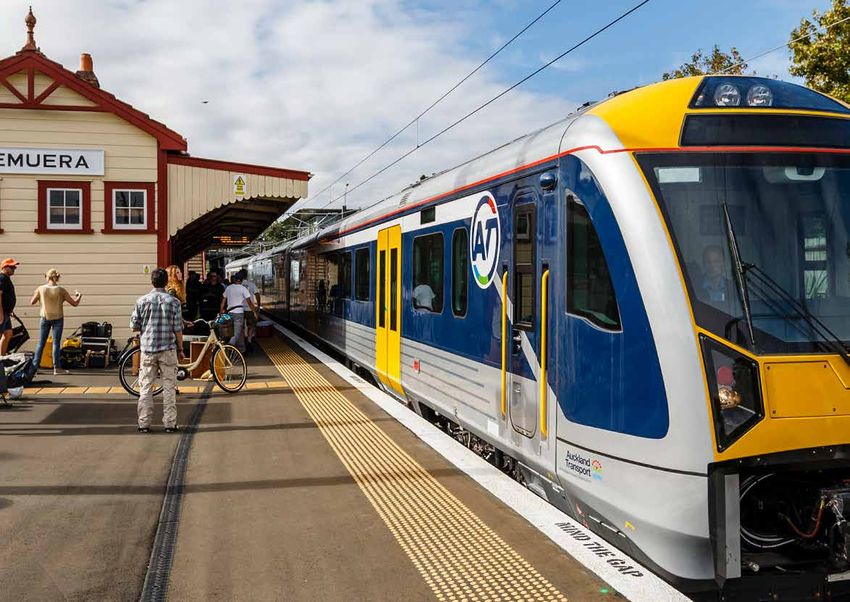
< Contents

FOREWORD

                                MAR K L AM B ERT,
                                E XEC U TIVE G EN ER AL
                                                                               Many commuters have realised there’s no better way to cut through
                                MANAG ER I NTEG R ATED
                                                                               the city’s traffic. The opening of Britomart Station in 2003 was a key
                                N E T WO R K S , AU CK L AN D
                                                                               year: allowing trains back into the city centre. So too was the merger
                                TR ANSP O RT                                   of seven councils into one, in 2010.
                                There’s never been a better time to
                                                                               Today, we have one Auckland Council and a determination to
                                get involved in rail in Auckland.
                                                                               reinvigorate the region’s rail services. We also have a central
                               Just last year, trips on Auckland’s             government that recognises the national and global implications
                               commuter trains exceeded 20.5 million           of congestion: congested roads and motorways hinder economic
                               – a record high. It’s a stark contrast to       activity and growth; air pollution, speeding vehicles and physical
1994 when patronage was closer to a million and by 2045, boarding’s            inactivity are causing harm; and road traffic produces a third of
are forecast to be 60 million.                                                 Auckland’s greenhouse gas emissions.

So what’s happened in the intervening quarter-century? And what’s              All of which we’ve known for years; the difference now is we’re acting
planned for the next?                                                          – and electric trains are one solution. In 2013, AT took delivery of its
                                                                               first electric train. By the end of 2015, we had 57.
For starters, Auckland’s population has grown rapidly – 600,000 more
people since 1994. That’s not only meant more cars on our roads, but           Quieter, shinier and carrying up to 232 seated passengers each, these
more potential rail patrons too. Many new residents have come from             have revolutionised Auckland rail. They made it attractive to those
countries with a lot of commuting by rail: the UK, India, China.               commuters who’d used ‘comfort’ as an excuse to stay in their cars and
                                                                               made it possible to move the increasing numbers of commuters faster

                                                                           4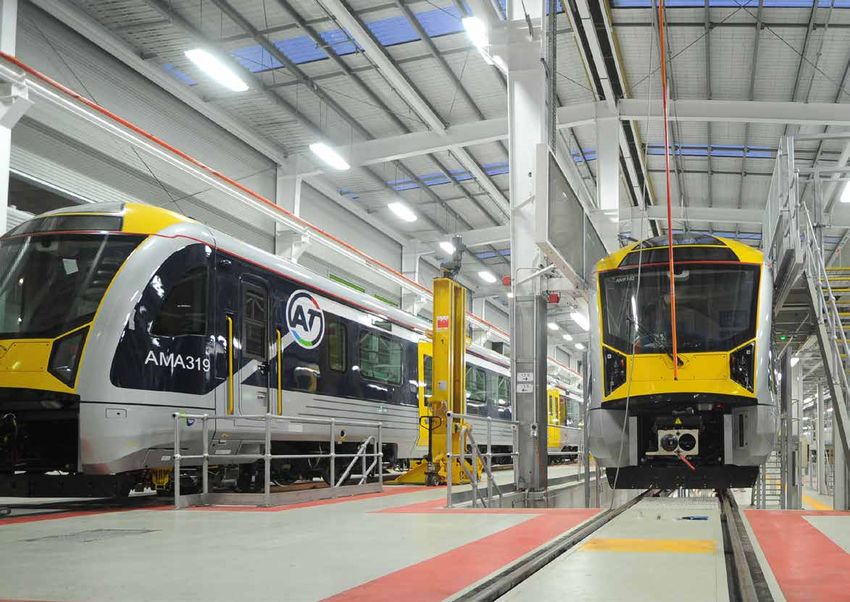
< Contents

and more reliably. Most importantly, they sent a strong signal that we
value off-road transport, and that it has a future.

Indeed, the future of Auckland rail is very bright: Under construction
is the City Rail Link, which once completed in 2024, will be our first
‘underground’. This October, we will start to receive the first of 15
more electric trains. Two light rail lines are being investigated for
those areas not serviced by trains. Further electrification and extra
stations are also being considered.

In total, more than $8 billion has been earmarked for rapid transit
investment over the next decade.

It certainly represents a coming of age for Auckland, as one of the
Asia-Pacific region’s leading cities.

And it’s why, as I said at the start, there’s never been a better time to
get involved in rail in Auckland.

We trust you’ll agree and look forward to hearing how you can be a
part of Auckland’s growing rail proposition.

                                                                            5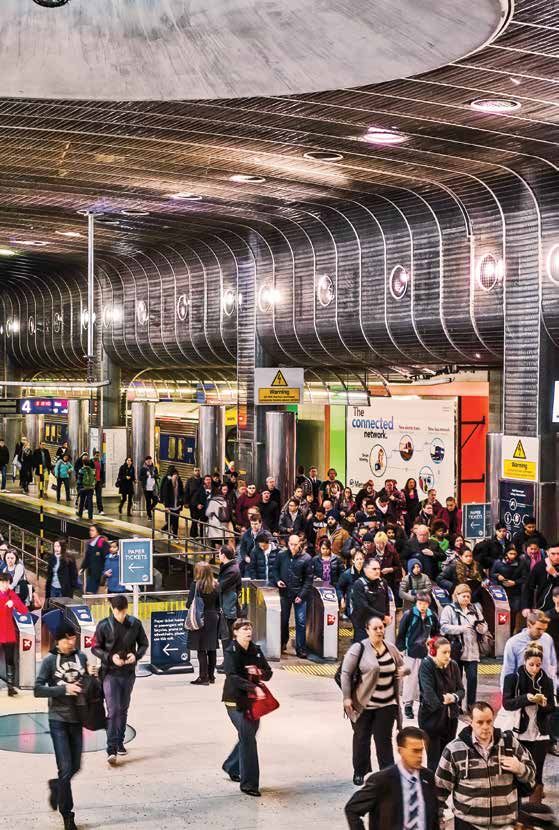
< Contents

A FUTU RE R AIL FR AN CH ISE AG REEM ENT – INTRO D U CIN G A N E W O PER ATIN G
ENVI RO N M ENT AN D G E T TI N G YO U R FEED BACK
The current rail operating contract for Auckland metropolitan services        engagement with the market to present AT’s objectives in relation to
has been in place for a number of years, with Transdev operating the          the procurement and to communicate the operating and commercial
concession since 2004 through a series of contract renewals.                  model elements that are currently under consideration.

Auckland Transport (AT) now wishes to undertake a tendering process           Under the proposed operating model, the rail services operator would
for a future rail franchise agreement, effective from 2021.                   assume greater responsibility and control across various operational
                                                                              elements of rail services provision than occurs now.
Development of a new rail franchise agreement provides an
opportunity to review how AT engages with, and allocates
                                                                              This consultation document is presented in two parts. Its purpose is to:
responsibilities to, the rail services operator.
                                                                              • Part 1 – Introduce the Auckland metropolitan rail
AT is considering moving towards a more vertically integrated
                                                                                franchise opportunity
operating environment for rail services, to capture the benefits of the
rail operator having greater responsibility for, and control over, rail       • Part 2 – Gather information and feedback from the market on
service delivery for the next phase of public transport and rail growth
                                                                                the optimal scope of the future rail franchise (i.e. the extent of
in Auckland.
                                                                                responsibilities that might be performed by the rail operator across
Greater vertical integration is expected to remove and simplify                 the rail value chain in Auckland) and how the future rail franchise
interfaces, deliver greater efficiency and better customer and safety           agreement is best structured commercially to balance the interests
outcomes.                                                                       of the future rail operator and the objectives of AT.

To inform the scope of the tender process, AT is undertaking early

                                                                          6
< Contents

ABOUT AUCKL AND

                  7
< Contents

OVERVI E W                                                                     LOC ATIO N
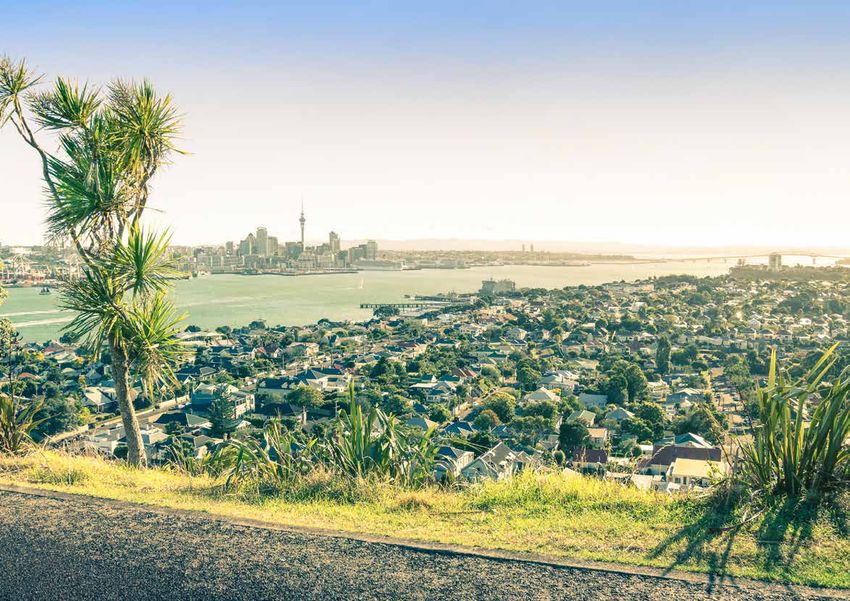
Auckland has long been known as a place abundant in opportunities.             Auckland is one of 13 regions in New Zealand, located approximately
                                                                               400km from the top of the North Island.
Its first name, Tāmaki Makaurau, means ‘Tāmaki desired by many’ – a
reference to the resources and strategic vantage points that attracted         The region takes its name from the town founded in 1840 on the
Māori and then other settlers.                                                 shores of the Waitemata Harbour, one of three large harbours in the
                                                                               region.
Located near the top of Aotearoa New Zealand, Auckland’s temperate
climate, peaceful harbours and fertile volcanic soils made it as               Indeed, Auckland is defined by the waters that surround it: the Tasman
attractive then, as it is now.                                                 Sea on its western flank, Pacific Ocean to the east, and the Waikato
                                                                               River down south.
Today, Auckland is home to almost 1.7 million people – around 35% of
the national population.                                                       Likewise, its weather is wet much of the year, even during its warm
                                                                               summers, with 180-220 days of rain per year.
It’s also the country’s economic engine room, generating nearly 40% of
GDP and providing 37% of all jobs.                                             This abundance of water has a direct bearing on Auckland’s transport
                                                                               system, with weather events that can present challenges, but to
It’s the gateway to a booming national tourism industry too,                   roading in particular.
welcoming at least 71% of all visitors to the country through its
international airport and downtown cruise ship terminal.                       In total, Auckland’s regional borders encompass 4,894 square
                                                                               kilometres (1,890 square miles) – about triple the size of Greater
And it’s growing rapidly, posing further opportunities as well as unique       London.
challenges, especially when it comes to transport.

                                                                           8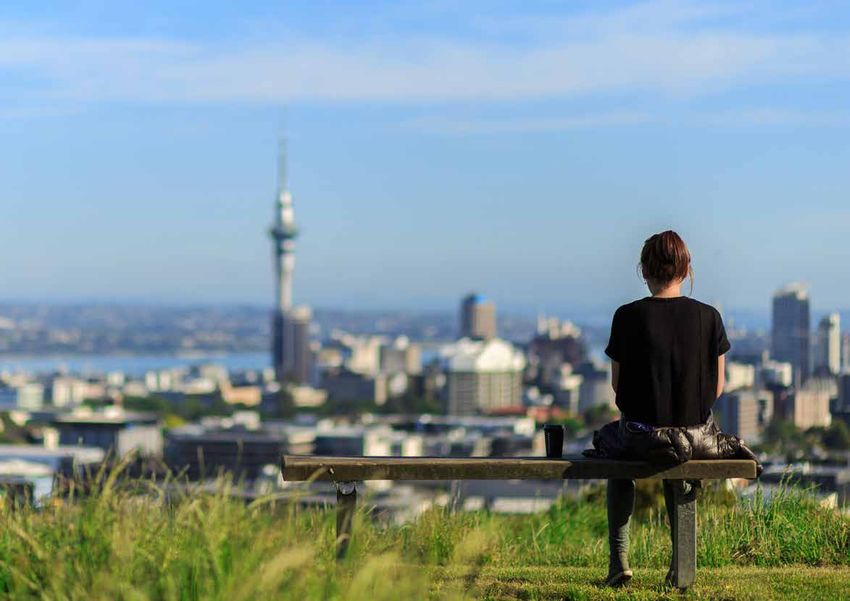
< Contents

P O PU L ATIO N
Auckland is New Zealand’s most populous region with an estimated              Indeed, immigration to New Zealand has largely been into Auckland,
population of almost 1.7 million, as of 30 June 2018.                         with the proportion of residents born overseas rising from 32% in 2001
                                                                              to 39% in 2013.
The majority live in its urban agglomeration, built up around the
Waitemata and Manukau Harbours, straddling the country’s main state           Income disparities exist here, and the southern parts of Auckland’s
highway.                                                                      urban area are recognised as being of lower prosperity.

Population density in this urban area is roughly equivalent to Sydney         Providing an affordable and efficient transport network for all
but higher than other big cities in Australia and rising as housing           Aucklanders is thus a priority, especially as the region grows rapidly
becomes more intensified.                                                     and disproportionately to the rest of New Zealand.

Outside the core area are dozens of satellite towns and villages, many
of which service the surrounding rural communities. Around 12% of the
population resides in predominately rural areas.

Auckland’s population is currently quite young, with a median age
of 33.9 – the lowest in the country and three years below the New
Zealand median.

It’s more ethnically diverse than the rest of the country too: with 11%
identifying as Māori, 15% as Pasifika and 27% with an Asian ethnicity.

                                                                          9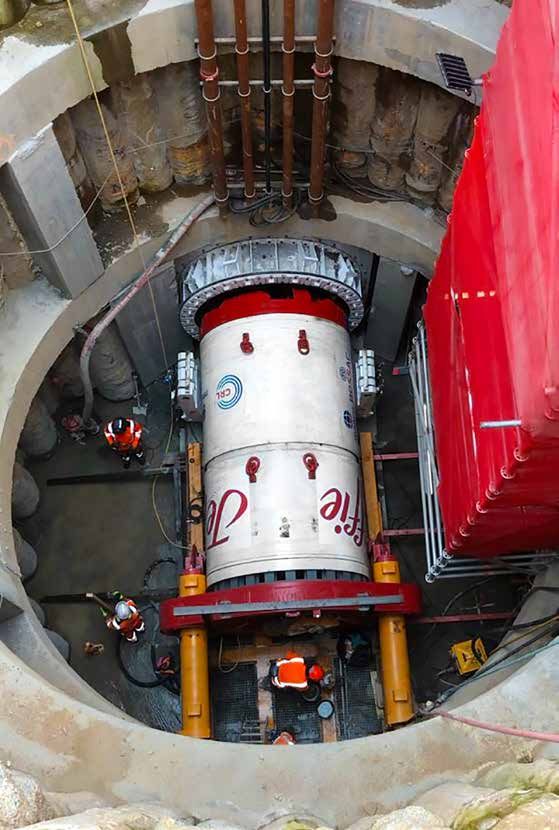
< Contents

ECO N O M Y
Auckland is the commercial centre of New Zealand, generating
almost 40% of national GDP.

Auckland is the commercial centre of New Zealand, generating almost
40% of national GDP.

Key industries include science and technology, food and beverage,
construction, tourism, screen and creative arts, and education.

Many major local and international companies have a commercial
presence in the region, whether in the form of manufacturing facilities
in industrial areas, or headquarters within the city centre.

Auckland provides jobs for over 730,000 people, mostly in the services
and manufacturing sectors but also farming in the outlying districts.          urban areas, including covered suburban malls as well as traditional
                                                                               high streets.
Ports of Auckland is the country’s biggest port, handling almost a
million containers per year; while Auckland Airport processes close to         Tourism makes a major contribution to the region’s economy, with over
two million passengers per year.                                               seven million guest nights per year, or 17.5% of the national total.

Retail centres are found throughout the region, especially in the main         All of which is made possible by the region’s transport network.

                                                                          10
< Contents
GOVER NAN CE responsible for managing transport within the region.
Auckland Council (AC) is the governing body for the entire Auckland AT’s purpose is to contribute to an efficient, effective and safe
region. Established by the Local Government (Auckland Council) Act Auckland land transport system in the public interest.
2009, it combined the functions of seven city and district councils and
one regional council.
TR ANSP O RT
Their 2010 merger created an authority with responsibility for Auckland’s post-war growth was mainly outwards not upwards,
overseeing all civic and environmental activities within the region, creating sprawling suburbs connected principally by roads.
what’s known as a “unitary authority”.
But spending on this infrastructure has not kept up with population
Council comprises its elected governing body and local boards, as growth, and Auckland’s roads are becoming increasingly congested,
well as staff organisation and semi-autonomous council-controlled costing billions in lost productivity.
organisations that run many essential services.
Today, the region’s key transport assets include 220km of motorway
The governing body includes the Mayor and 20 councillors who and a public transport system which includes train, bus and ferry
are democratically elected every three years, along with 149 services.
representatives on 21 local boards.
Auckland is one of only two cities with an urban rail network (the other
The Act also created the Independent Māori Statutory Board being Wellington), with lines running east, west and south of the city
independent of the council, tasked with advancing the interests of centre.
Māori in Tāmaki Makaurau.
Buses enjoy higher patronage due to their greater network coverage
Among six Council-controlled organisations is AT, a statutory entity
11< Contents
and with no rail on the North Shore, buses perform the mass transit P O PU L ATIO N G ROW TH
role on the North Shore via the Northern Busway. The opportunity to
Auckland’s estimated population of 1.7 million in 2018 compares
expand the bus network is balanced with the need to manage road
with just over 1.4 million in 2013 – equivalent to a 21% increase in just
congestion.
five years.
To address this congestion, Auckland Council is now working closely
This rapid growth is expected to continue, with a mid-range estimate
with central government on traffic planning and infrastructure funding.
of 2.3 million people by 2048.
In 2018, central government agreed on the Auckland Transport
Auckland’s working-age population (those aged 15 and over) is
Alignment Project, earmarking $28 billion over the next decade on
growing faster than elsewhere too – ensuring it will remain a centre for
transport upgrades.
employment.
Rail was a major beneficiary, including funding for the City Rail Link
But its residents are getting older, with those over 65 due to tip
(CRL) and additional electric trains, as well as an ambitious plan for
350,000 by 2033 – double the number in 2013. This in itself is going to
light rail – all of which AT will play a role in developing.
have direct impacts on services including transport.
Such changes are why Auckland is committed to investing billions
in its transport system over the next decade; to future-proof its
infrastructure and ensure Auckland remains ‘a place desired by many’.
12< Contents
ABOUT AUCKL AND TR ANSPORT
13< Contents
AT is a Council-Controlled Organisation (CCO) of Auckland Council, • AT receives its funding primarily from the New Zealand Transport
established in 2010 to contribute to an efficient, effective and safe Agency (NZTA) and Auckland Council. Annual expenditure on
Auckland land transport system. Auckland’s transport system is approximately $1.1 billion. In the
financial year ended 30 June 2018, AT’s $687 million of capital
AT manages and controls the Auckland land transport system on expenditure included $468 million on public transport.
behalf of Auckland Council, and in 2018, transported over 92 million
passengers. This investment in the transport network is driven by five strategic
themes that align with transport outcomes in the Auckland Plan.
Core responsibilities include:
These strategic themes are underpinned by AT’s four strategic
• Planning and funding all of the region’s transport services priorities:
(excluding state highways). This includes the design, build,
management and promotion of most of Auckland’s public
transport (bus, train and ferry) infrastructure and services, and Deliver integrated Improve the
integrated services urban regeneration effectiveness and
efficiency of the
transport network
• Governance over its supply partners and the efficient use of public
funds by those supply partners
• Management of publicly held assets across the Auckland region
worth $19.8 billion Develop options to Achieve closer
improve the safety of integration with
the transport system central Government
transport planning
and funding
14< Contents
AUCKL AND PUBLIC TR ANSPORT
15< Contents
B RI EF H IS TO RY Dedicated busways and ferry terminal upgrades have improved travel
on other public transport modes too, and e-ticketing has allowed
Public transport has been part of Auckland life since the 1850s, when
greater integration across the network.
horse-buses and ferries would run goods and workers between the
new town and its satellite settlements. Public transport is popular again, due to a combination of investment
The first train line in the North Island was built through Auckland in in infrastructure and education, and frustration with road congestion.
1873, then an electric tramway was introduced in 1902, before it was
switched off in 1956. G ROW TH
As elsewhere, the rise of the motorcar saw a switch in focus to roads, From 2003 to 2017, Auckland’s public transport patronage increased
with viaducts, motorways and a new harbour bridge creating low 63% - more than double its rate of population growth. More recently,
density suburbs that were harder to service with public transport. patronage in the year to December 2018 rose 5.2% year-on-year.
Indeed, rail was almost completely removed in the 1980s, before civic In July 2019 Auckland public transport reached the significant
leaders started acknowledging the issue of traffic congestion, by milestone of 100 million passenger trips over the past 12 months, the
reinvesting in trains. highest annual total since 1951 (when there were 105 million) and
testimony to the strategy, planning and implementation that AT and
A watershed year was 2003, when the downtown Britomart Station our predecessors have undertaken to transform public transport in
opened, allowing trains back into the heart of Auckland for the first Auckland over the last decade (and earlier).
time in over 70 years.
Buses remain the most accessible option for most Aucklanders due to
Since then, rail patronage has steadily risen, allowing further investment its geography, with 69.1 million boardings in 2018.
in new trains, double-tracking, station upgrades and electrification,
which have in turn made rail more efficient and attractive. Rail boardings have increased with new modern trains and stations
16< Contents
and reached 20.6 million in 2018 – a 34% increase in four years.
A rail patronage target of 20 million trips per year, originally set by the
New Zealand Government for funding of the City Rail Link (CRL), was
achieved at the end of 2016, three years ahead of schedule.
If current growth persists, Auckland’s annual public transport
patronage will hit 120 million within five years, breaking the record set
during World War II.
CENTR AL GOVER N M ENT
In recent years, central government has become more involved in the
management of Auckland transport due to the economic impact of
congestion.
Environmental considerations are also key, including a determination
to honour New Zealand’s carbon reduction commitments, and mitigate
the health effects of excessive road traffic.
The NZTA is the link between central government policy and the
operations of the transport sector nationwide.
NZTA’s main objective is “to contribute to an effective, efficient and
17< Contents
safe land transport system”, with funding for local projects available
through the National Land Transport Fund.
Its partners include local bodies such as Auckland Council, who are
primarily responsible for managing roads within their boundaries as
well as AT and regional councils in other parts of the country who are
responsible for the planning, procurement and contracting of public
transport.
NZTA’s functions include managing funding of the land transport
system, managing the state highway system, managing regulatory
requirements and overseeing regional public transport plans.
Its activities are guided by central government’s policies on land
transport outlined in the Government Policy Statement (GPS) on Land
Transport.
The GPS sets out how funding is to be allocated for the next decade,
to achieve desired results across all transport activities including public
transport.
GPS 2018 prioritises a safer transport network and lowering emissions
and recognises the important role that rail can play in achieving those.
18< Contents
FUTU RE G ROW TH – MA J O R PROJ EC T PL ANS
Auckland Council and central government are committed to fixing of $1.8 billion has been set aside.
Auckland’s traffic congestion, with a recent shift in focus from roading
to public transport. Other discretionary projects include electrification of the rail line to
Pukekohe, 50km south of the city centre, with new stations added
In 2018, the revised Auckland Transport Alignment Project (ATAP) and the creation of a third main rail line between the Westfield to
earmarked $28 billion for transport investment over the next decade, Wiri section of the Southern Line to separate freight and passenger
including $8.4 billion for rapid transit (rail, light rail, busway). services.
A significant amount of funding will come from a new regional fuel Add to the mix a central government plan to trial a commuter service
tax introduced in July 2018, which is expected to raise $1.5 billion by between Auckland and Hamilton, starting in 2020, and it’s obvious
2028. rail’s time has come again in New Zealand.
Priorities include the City Rail Link, already underway, which will finally Improvements to the bus network will complement rail too, with AT
see two-way trains travelling through Auckland’s city centre via its first now working to integrate modes including using buses to connect
underground rail line. The CRL is due for completion in 2024. commuters with rail.
Additional electric trains will see the current fleet of 57 grow to 72 Boosting Auckland rail services in such ways will not only help ease
with delivery starting from October 2019, with new maintenance and congestion but also reduce carbon emissions, especially given New
storage facilities. Zealand’s abundance of clean, renewable hydroelectricity.
Light rail is set to make a comeback too, to areas not currently
serviced by trains, including a city-to-airport link. Initial ‘seed funding’
19< Contents
FUTU RE G ROW TH – PATRO NAG E
PROJ EC TIO NS
Patronage on all public transport services is expected to grow by 62%
by 2028, to almost 150 million boardings.
This is based on a population of 2 million and boardings rising from 57
to 75 per capita.
Train patronage is projected to grow faster – by 115% – from 20 million
boardings in 2018 to around 43 million by 2028.
Much of that increase in train patronage will happen once the City Rail
Link is operational, from 2024.
Of note is that these figures do not include the potential impact of the
planned city-to-airport light rail line, as there is uncertainty about likely
customer catchments and delivery time frames.
Once operational, light rail is expected to significantly increase
patronage.
20< Contents
P O LIC Y CO NTE X T investment across transport modes and implementation of new
funding mechanisms. This procurement will give effect to the
Procurement of a rail services operator in Auckland sits within a wider
Auckland Plan and consider how proposed contracting arrangements,
and highly complex matrix of local political, regulatory, social and
commercial and financial settings and operator incentives support
economic considerations.
Auckland wide objectives.
Auckland’s rapid growth brings significant opportunities and
For AT, achieving the outcomes and priorities of the Auckland Plan
challenges for the public transport market, and procurement of a rail
is linked with meeting key targets for increasing public and active
services operator must be considered in the context of the integrated
transport mode share, reduced greenhouse gas emissions, improved
transport programme for investment and priorities, including the GPS;
accessibility, lower congestion, delivery of services and freight, travel
Regional Land Transport Plan (RLTP), Regional Public Transport Plan
time savings and the delivery of transport infrastructure priorities over
(RPTP), Auckland Transport Alignment Project (ATAP), the Auckland
the next three decades.
Plan, the rapid transit network and other AT undertakings.
In line with this, AT’s Statement of Intent outlines improving safety
The GPS establishes the Government’s strategy, priorities and focus
across the network, delivering an efficient and effective transport
for land transport investment over the next 10 years. The key strategic
priorities of the GPS, safety and access, are closely aligned with AT’s network, a focus on the customer, ensuring value for money and
priorities and shared goals for the rail franchise procurement process. urban regeneration and placemaking as the key priorities for the next
three years. The role of the rail operator is critical to ensuring these
The Auckland Plan 2050 establishes the long-term framework for objectives can be met and all other transport modes are adequately
Auckland’s growth and development and articulates the need to supported. Themes such as bringing a one network approach to
manage Auckland’s transport network as a single system. With engaging with the customer, and understanding rail’s role within the
integrated transport planning over land use, prioritised and optimised wider network, will be critical to the success of the rail franchise.
21< Contents
The Regional Public Transport Plan sets the commercial, policy and
strategic changes to AT’s public transport system over the next 10
years. This plan enables AT to manage performance and objectives
for the wider public transport network and focuses AT’s efforts on
increasing customer access, service and experience. Rail procurement
engenders the ideas of expanding and enhancing network structure,
integrated services and quality, and customer interface, while ensuring
the operator is prepared for the implementation of next generation
transport initiatives.
The implementation of new partnering-based operating contracts,
in accordance with the Public Transport Operating Model, coupled
with wider AT policy objectives and the strategic direction of the
GPS, provides an opportunity for AT to deliver against broader public
transport contracting and investment requirements while ensuring
transport objectives such as safety, increased customer experience
and growth in use of public transport are met.
.
22< Contents
G ROW TH
Rapid population growth in Auckland, lower fuel prices and a buoyant
economy have led to substantial growth in travel demand across
the Auckland region. On the back of these factors and substantial
investment in the public transport network, particularly rail, public
transport usage uptake in Auckland is increasing, with annual public
transport boardings increasing by 31% from 2013 to 2017. In 2018,
Auckland experienced 92.3 million boardings on public transport. Rail
has played a particularly significant role in driving this growth, with
rail boardings doubling between 2013 and 2017 from 10 million to 20
million per annum.
To nurture the anticipated population growth and its increased
pressure on the Auckland transport network, the Auckland Transport
Alignment Plan (ATAP) was introduced by the Auckland Council and
the New Zealand Government. The ATAP represents $28 billion of
investment into transport projects in the Auckland region over the next
10 years to deliver a transport network that is accessible and efficient.
ATAP is focused around public transport, walking and cycling,
improving safety, and realising environmental, health and growth
outcomes. Significant committed projects include investment into
CRL, light rail and additional electric trains.
23< Contents
FUTU RE G ROW TH S TO RY – MA J O R PROJ EC T OVERVIE W, PATRO NAG E PROJ EC TIO NS
Against the backdrop of AT’s policy positions sits AT’s transport operator is critical.
specific plans and programmes of work, including the Auckland Rail
Development Programme (ARDP). The ARDP is a joint AT and KiwiRail High growth is expected to continue in rail patronage across the rail
passenger and freight infrastructure plan from 2016 – 2045, setting franchise term. AT anticipates rail patronage will increase from its 20.9
out the network and infrastructure investments required to meet a million passenger boardings in 2018 to exceed 30 million boardings by
proposed rail patronage forecast of 60 million rail trips by 2045. To 2030 and 60 million boardings by 2045.
meet the requirements and ambitions of each phase, or decade, of
the programme, AT is working to ensure the contractual framework
underpinning the rail franchise best prepares and supports the
operator to deliver a level of service that meets and anticipates growth
across the network, while being mindful of the infrastructure works
required to increase network capacity.
The first two investment phases in the ARDP (Decade 1: 2016–25 and
Decade 2: 2026–35) span the anticipated contract term for the Future
Rail Franchise Agreement.
For AT to meet requirements such as 10 minute services at peak, 15
minute services off peak and at weekends, accommodating increased
freight services across the network, electrification of the Papakura to
Pukekohe section, additional train sets and opening up of the network
with CRL, a partnering contract with a capable and engaged rail
24< Contents
Rail
Patronage Growth - 2003 to 2027
35,000,000
5
30,000,000
1 Britomart Train Station Opens - July 2003
25,000,000
4
First EMU revenue service starts - April 2014
3 2
Rail Patronage
20,000,000
Electrification completed - September 2014
15,000,000 3 Additional 15 EMUs will be introduced
10,000,000
2
CRL open and Future EMU introduction to satisfy
4 CRL growth demand
1,000,000
1 5
Pukekohe Extension electrification expected
to be completed - end 2025
0
FY2000
FY2001
FY2002
FY2003
FY2004
FY2005
FY2006
FY2007
FY2008
FY2009
FY2010
FY2011
FY2012
FY2013
FY2014
FY2015
FY2016
FY2017
FY2018
FY2019
FY2020
FY2021
FY2022
FY2023
FY2024
FY2025
FY2026
FY2027
Year
25< Contents
RO LE O F TH E N E W ZE AL AN D TR ANSP O RT AG EN C Y
The Land Transport Management Act 2003 (LTMA) provides for central process and will support AT in the development of a procurement
government funding for public transport, and other transport related strategy that ensures its procurement objectives – value for money,
activities, through the NZ Transport Agency. achieving competitive and efficient markets, ensuring fair competition
across suppliers - are met over the life of the Future Rail Franchise
This funding is then matched by regional funding through AT. Under Agreement. The options determined based on this, and future market
the LTMA, the NZTA has an independent statutory function to approve engagement, will form the basis of AT’s Procurement Strategy
procurement procedures that are designed to deliver the best value for required for NZTA endorsement, approval and funding.
money.
NZTA also advises and works with approved organisations to ensure
that the procurement objectives are being met. This involves collecting
and analysing data to identify the effect of procurement decisions,
identify what is working well and enable evidence-based solutions
to procurement issues. Performance indicators include patronage,
revenue, fleet, service performance, safety and customer satisfaction
information.
NZTA is AT’s funding and procurement partner throughout this
26< Contents
THE OPPORTUNITY
27< Contents
R AI L OVERVI E W
History of rail contract and why we are going through this process
The current contract governing rail operations in Auckland has been
in place since 2004, with only minor modifications during that time.
Consequently, the operating and commercial model, risk allocation
and incentive mechanisms are no longer considered optimal for the
purpose of delivering a modern metropolitan rail service in which
customers are at the heart.
AT and our funding partner the NZTA are therefore highly motivated
to attract strong market interest in the Auckland rail franchise
opportunity, to ensure a fair, open and contestable tender process.
Current and potential scope of rail operating contract
Currently rail operations in Auckland are delivered through a relatively
narrow scope, with many rail-related functions delivered or managed
directly by AT. Procurement of a new rail franchise signals a strategic
shift away from this current operating model.
The current passenger rail operational model is vertically separated
with a number of entities performing different roles. Responsibility for
the operational functions are split across four key parties:
28< Contents
Responsibility Entity Roles
Policy, Governance and Revenue Protection Auckland Transport Funding; specification of service; policy; ticketing; stations; and warranted transport
officers
Operations Transdev Rail operations; Onboard safety and security; managing the track access agreement and the
diesel maintenance agreement on ATs behalf; EMU cleaning; and management of stabling
facilities.
Construcciones y Supply, maintenance and repair of electric multiple units (EMU); graffiti removal;
Auxiliar de Ferrocarriles and management and upkeep of the maintenance depot
(CAF) Contractual relationship directly with AT, managed and funded by AT
KiwiRail Maintenance of diesel multiple units (DMU)
Contractual relationship with Transdev and funded by AT
Network KiwiRail Train control; Network operations and maintenance and renewal
Contractual relationship directly with AT and funded by AT
Contract managed by Transdev on ATs behalf.
AT is moving toward a more integrated operating environment for rail An underlying premise in selection of the future operating model is
services, to capture the benefits of the rail operator having greater that full vertical integration is not feasible under the current legislative
responsibility and control for service delivery for the next phase of environment, with below rail infrastructure continuing to be owned
rail and public transport growth in Auckland. Greater integration and operated by KiwiRail.
is expected to remove and simplify interfaces and deliver greater
efficiency and better customer and safety outcomes. The proposed new operating model, and supporting commercial
model, is described in Part 2 of this consultation pack.
29< Contents
Description of rail network, service coverage and
frequency, relevant metrics
The transport network in Auckland is undergoing significant change
with major projects over the next decade including the CRL, expansion
of the Wiri stabling and depot facilities, a third main line between
Westfield and Wiri, new rolling stock procurement, electrification
between Papakura and Pukekohe, next generation ticketing, light rail,
motorway developments, ferry services procurement, bus rapid transit
and new infrastructure development required to service greenfield
developments.
All of these factors need to be considered against continued
patronage growth. Between 2003 and 2017, Auckland’s population
grew 28% while public transport patronage increased by 63%. For the
12 months to December 2018, Auckland public transport patronage
totalled 92.3 million trips across the network, placing increasing strain
on the existing infrastructure and services. The rail patronage target of
20 million trips per year by 2019, originally set by central government
for funding of the CRL, was achieved at the end of 2016, three years
ahead of schedule.
30< Contents
Currently the network: Despite the significant growth in rail patronage and a much-improved
service delivered by new electric trains, Auckland’s current public
• Runs 10 minute services during peak and 20 minutes off peak transport network has substantial shortcomings. A current constraint
that applies to the Auckland rail network is the maximum train
• Is 94.3km in route length, 195 km of track (CRL will add another
frequency at the Britomart Station. With only two lines feeding the five
3.4kms of track)
platforms in this terminal station, the maximum planning capacity is
• Gauge: 1,067 mm (3 ft 6 in) 20 trains per hour. With six trains on each of the three main lines in the
peak – Southern, Eastern and Western – and two trains per hour on
• EMUs: 57 CAF 3-car EMUs; Additional 15 CAF 3-car EMUs
the Onehunga line, the peak period is at maximum capacity.
(2020)
• DMUs: Eight ADL/ADC sets; decommissioned when the Once this constraint has been addressed, with CRL turning Britomart
electrification extension between Papakura and Pukekohe is into a through-station, it will be possible to run up to 24 services per
completed hour, each way, through the Link, with initial plans for 18 services
per hour in the peaks. This means that the expected rapid increase
• Number of rail stations: 40; two more will be added with in patronage as the railway progressively takes a greater share of
CRL, and potentially 3 more planned as part of the Pukekohe demand with other modes being highly constrained, can be met with
electrification project. additional train services.
• 90,000 boardings per day
• 3,726 services per week
31< Contents
Customer satisfaction
Public transport customer satisfaction surveys are undertaken
quarterly. Figures reported are based on 12 month rolling average
results from the four most recent quarterly surveying waves. The most
recent 12 month period is reported as of March 2019.
Rail remains the mode with the highest overall rating for the ninth
consecutive period. However, after an increasing trend from Mar 2016
to Sep 2017, overall satisfaction for trains has flattened and currently
sits at 92%.
The vehicle, safety during the trip, helpfulness of staff and the
station overall were all attributes which had high performance for rail
customers and a strong influence on overall satisfaction.
Value for money continues to be the most important attribute for
rail customers but has one of the lowest scores. Other important
attributes with ratings below 85% satisfaction for rail customers include
the AT Contact Centre, information available and the PT system overall
32< Contents
!
33< Contents
City Rail Link and impact of the rail system, and close a significant gap in customer service
The CRL Project is a significant infrastructure project designed to levels, better matching public transport demand and supply.
enhance the capacity and performance of Auckland rail services and
New rail transport growth statistics suggest that by 2035, CRL stations
improve transport outcomes in Auckland.
will need to cope with 54,000 passengers per hour at peak travel
CRL is the largest transport infrastructure project ever to be times, rather than the original estimate of 36,000. CRL is seen as ‘a
undertaken in New Zealand, and is currently forecasted to open game-changer’ for Auckland in terms of the economic and social
in 2024 for revenue passenger services. CRL is a 3.45km twin- benefits that follow from the provision of frequent, accessible, on-time
tunnel underground rail link up to 42 metres below the city centre and efficient public transport services.
transforming the downtown Britomart Transport Centre into a two-
way through-station that connects the Auckland rail network in an It is expected that the future rail operator will provide input to the
improved manner to enable more efficient, frequent journeys. CRL is latter stages of CRL’s detailed design and manage sub-projects to
jointly funded by the NZ Government and Auckland Council. City Rail ensure seamless operational delivery from day one.
Link Limited (CRLL) which came into being on 1 July 2017, has full
governance, operational and financial responsibility for CRL, with clear With this in mind, AT has identified a number of key enablement
delivery targets and performance expectations. The project’s total cost projects that will require substantial involvement by the operator:
was estimated with a funding envelope of $4.4b.
• Driver training
CRL will improve travel options and journey times. From Mt • Assist contractor with commissioning and acceptance testing
Eden Station it will take only three minutes to get to the uptown requirements
Karangahape Station, six minutes to the mid-town Aotea Station and
• Day One operational readiness
nine minutes to the downtown Britomart Station. In this way, CRL will
provide a considerable step-change in the capacity and performance • Aspects of final detailed design
34< Contents
• Station operations
• Customer service
• EMU tranche three procurement and commissioning
• Staff facilities
• Safety management
Rolling stock
CAF is contracted to supply EMUs and to undertake maintenance of
the EMU fleet until October 2025. Currently the rail services operator
is expected to liaise with CAF on day-to-day operational matters,
however there is no contractual relationship between the operator
and CAF, with AT responsible for the day-to-day performance of CAF.
Under the proposed operating model for the Future Rail Franchise,
the operator will be responsible for managing the CAF maintenance
contract via a direct contractual relationship , and post 2025, directly
with the future maintenance provider selected by the rail operator.
AT has a number of inter-related rolling stock projects underway and
planned:
• Delivery of 15 new three-car sets to accommodate demand growth,
with two units per month scheduled from October 2019. These
35< Contents
units will be covered under a warranty aligned with the existing CAF • Planning for the third tranche of rolling stock requirements to cater
maintenance contract expiry in 2025. The introduction of the second for CRL capacity increases is expected to commence in 2019, with
batch of 15 EMUs enhances and strengthens the train fleet to 72 delivery of stock estimated to commence in 2022, based on current
three car sets from the existing 57 three car sets. The additional timelines. AT is expecting a sharp growth in patronage when CRL
trains are intended to meet peak service constraints and improve opens in 2024. This may require 20-35 additional EMUs to cover
timetable resilience up to the opening of CRL in 2024. Testing and services and maintenance, subject to further patronage modelling
commissioning of the 15 new EMUs and upgrade of the European and solidifying the CRL timetables. The future rail operator may be
Train Control System (ETCS) in the original 57 EMUs is expected to expected to undertake programme management of the sourcing
and delivery, as well as commissioning and acceptance of the new
be completed prior to the appointment of the Future Rail Franchise
rolling stock, transitioning into operation and ongoing maintenance
Agreement in 2021
as part of the overall fleet
• Minor overhauls for the 15 new units is estimated to commence in
• CAF will undertake minor overhauls of the 57 original units from
2024. Each overhaul is expected to take one train out of service
2020
for a fortnight for the work to be completed over a period of two
and half years, which is expected to traverse beyond the current • Major overhaul of the original 57 three car sets is kilometre based
maintenance contract. The scope of the work is defined in the EMU and may commence as early as 2024, depending on the impact
of service growth. Major overhaul is the overhaul maintenance
maintenance plan and is able to be carried out within the existing
activities carried out at 1.28 million kilometres. At this point in time,
Wiri depot infrastructure
it is expected that the major overhaul of a single EMU set will take
• Expansion of depot and stabling facilities is in the planning phase four to five weeks to complete and will be carried out within the
and the timing and design of deliverables will be confirmed. The existing maximum number of trains allowable out of service, which
expansion factors in stabling and maintenance requirements for is three out of 57. AT is working with the current operator and CAF
mid-life overhauls and new growth units to stagger the workload of units to smooth the overhaul programme
36< Contents
and shift to a condition-based maintenance regime to alleviate Expansion of maintenance depot and stabling
pressure on overhaul requirements. The major overhaul is expected To accommodate the major overhauls of the EMUs, and to
to start in mid-2024 and extend to 2029. accommodate future tranches of EMUs, the existing maintenance
Maintenance performance has improved significantly over the last 12 depot and stabling yards at Wiri require modification and expansion.
months. Fleet availability has remained steady over the same period, For this purpose, AT recently purchased additional land adjacent to the
with fleet availability performance at 99.93%, just under the 100% existing maintenance depot.
target. Reliability measured by monthly fleet Mean Distance Between
The concept design includes an additional building for a centralised
Failure (MDBF) peaked at 544,340km in August 2019, well above
northern train control, operations facilities and rolling stock
target.
component maintenance. It is envisaged that all maintenance activities
Pressure on train availability is expected to increase over the life of the will continue to be undertaken in the existing depot.
Future Rail Franchise Agreement, as the fleet ages, services increase,
AT is using Lean Process methodology and computer modelling to
increased network constraints arise through the introduction of CRL,
map the existing operator and maintainer workflows, to optimise the
and with trains out of service for overhauls.
design of the new facilities and enhancements of both process and
layout of the existing facility.
Rolling stock maintenance
The current EMU Maintenance Agreement with CAF expires in October While the overall Wiri expansion programme is managed by AT
2025. It is at this point that the warranties for the original 57 EMUs and and will be in advanced design stages by the time that the new rail
the second tranche of 15 EMUs expires, although some components franchise commences, AT expects that the franchisee will play a role in
will have already reached and exceeded the limit of their warranty the final design stages and during construction.
period.
37< Contents
Other projects, project delivery, role of operator Additional AT-led projects that will require operator input include:
Significant investment is being made in Auckland’s transport • Integrated Rail management Centre (IRMC)
network to create an integrated rapid transit system. Auckland
faces high traffic congestion, costing the city’s economy over $1 • Driver assist and ETCS introduction
billion annually, and an integrated transport network, including
development across the public transport network, is critical to • Third main between Westfield and Wiri
combating growing pressure on existing infrastructure.
• Electrification between Papakura and Pukekohe
The provision of light rail between the City Centre, Mangere and West
• Future stabling and maintenance strategy
Auckland is likely to occur during the rail franchise term. Network
integration across rail, light rail and other modes will be critical to • Further rolling stock planning, procurement, testing, commissioning
providing improved customer experience and increased transport and acceptance
options for current and future users.
• Further detail as to these projects will be provided in future market
AT is also investing in implementation of a next-generation
engagement.
ticketing system, through the national ticketing programme, Project
NEXT. AT will work with the operator to understand the impact
of implementation, the role of the operator in relation to this, the
allocation of roles and responsibilities under the Future Rail Franchise
Agreement, and the potential complexity of transition from the
existing HOP ticketing solution and possible impacts on the operator
and AT’s already extensive range of investment and projects.
38< Contents
Below Rail Infrastructure • Review and work with the Auckland Network Timetable Committee
The Auckland Network Access Agreement (ANAA) sets out AT’s to agree Track Possession Plans, above the Track Possessions
access rights and responsibilities in relation to the Auckland rail Allowance
network, network provider KiwiRail’s performance obligations and • Participate in the process of progressive refinement of the Track
the relationship between AT and KiwiRail. Under the ANAA, the Possession Plan and do its best to mitigate the adverse effect of
rail operator is nominated as a party to the agreement through a changes; and
deed of accession which provides for certain rights and obligations,
• Agree all extensions of boundaries or times of planned Track
enabling the operator to manage the ANAA on AT’s behalf, and direct
Possession, as set out in the Track Possession Plan
operator management of the performance of KiwiRail. The operator’s
obligations in respect of the ANAA are also mirrored in the existing • Agree all extensions of boundaries or times of planned Track
rail operating contract. Additionally, all payments under the ANAA Possession, as set out in the Track Possession Plan.
are paid directly from AT to KiwiRail, with the operator responsible for
reviewing invoices and recommending payment. KiwiRail has a “best endeavours” obligation to meet service standards
under the ANAA which increases the complexity of managing
As part of the operator’s role under the ANAA, the operator is performance across the network and AT has observed an increase in
entitled to: excepted risk claims in relation to network management by KiwiRail.
To better manage the relationship between access provision and
• Request changes to KPI Achieve Benchmarks and KPI Fail Limits rail operations, AT has convened a working group with AC, the rail
in relation to maintenance and performance standards, subject to operator and KiwiRail, to develop the next Network Management
agreement by the Access Provider Plan under the ANAA. The scope of the working group has been
• Utilise abatements as a remedy for failure to meet KPI targets widely defined to recognise a significant expansion in services and
includes a review of the ANAA governance process and opportunities
• Approve changes to Permanent Speed Restrictions in place at
to improve effectiveness.
commencement of the AANA
39< Contents
Current metrics, future targets
Current performance levels for key metrics are performing at:
Customer Satisfaction Punctuality
92% 92.98%
June 2019: 92.8%
Sept2019: 91.7%
August
2019
Reliability Right Time Starts
98.4% 84.01%
The punctuality threshold is currently set at five minutes (4’59”).
However, we are aiming to move the punctuality threshold to a three-
minute performance target before the commencement of CRL revenue
services in 2024, i.e. Right Time Arrivals/On-time to Three (0 to 2:59
minutes).
40< Contents
THE PROJECT
41< Contents
WH Y A N E W R AIL O PER ATIN G CO NTR AC T
FO R AU CK L AN D?
The current contract that governs rail operations in Auckland has been
in place since 2004, with only minor modifications during that time.
Consequently, the operating and commercial model, risk allocation
and incentive mechanisms are no longer considered optimal for the
purpose of delivering a modern metropolitan rail service in which
customers are at the heart.
Currently rail operations in Auckland are delivered through a relatively
narrow scope, with many rail-related functions delivered internally
or managed directly by AT. This procurement signals a strategic shift
away from this current operating model.
A range of options have been considered on which the future
operational and commercial models for the Auckland rail franchise
could be based. These options sit on the continuum of horizontal to
vertical integration of rail operations. In other words, they represent
the spectrum of activities within the metropolitan rail value chain that
could be either managed directly by AT or outsourced to our future rail
operating partner.
42< Contents
To inform the scope and design of the future Auckland rail franchise, CO M M ITM ENT TO CO NTES TAB I LIT Y
and to ensure that the agreement is optimised to balance the interests
AT is committed to encouraging market interest throughout the
of the operator and the objectives of AT, we wish to learn from
procurement process to ensure we receive the best responses possible
experienced rail operators and providers what matters most to them
and deliver value for money for both AT and funding partner NZTA.
and what they believe constitutes best practice in metropolitan rail
franchising. Maximising market interest in the Auckland rail franchise is critical
to driving competitive tension through the procurement. Designing
To this end, we are continuing to engage with the market to
a proposition that is attractive to the market underpins AT’s
communicate the opportunity, explain what we are looking for, and
procurement strategy. This will be achieved through:
seek input from the market to help us design the optimal operating
and commercial framework that will underpin the future rail operating • Ensuring interested operators are aware of the proposition and have
franchise for Auckland. an equal opportunity to provide feedback on the process and the
proposed commercial and operating framework.
• Designing a rail franchise scope, risk allocation and commercial
model that is attractive to the market while meeting AT’s objectives
of delivering a customer centric rail experience within value for
money considerations.
43< Contents
WH O AU CK L AN D TR ANSP O RT IS transport network, and reflect AT’s ongoing commitment to deliver
the transport system that best meets the needs of Aucklanders and
LOO K I N G FO R
supports the Auckland Plan’s objective to become a place to be
AT has identified five objectives that will guide the operating and desired by many.
commercial framework design, the procurement process, and
ultimately the appointment of a rail services operator under the AT is seeking to partner with a rail operator who is best able to meet
Future Rail Franchise Agreement. These objectives take into account these objectives:
the specific characteristics and the wider objectives of the Auckland
Improve Safety for all users of the rail network
Increase Customer Experience across all aspects of Improve Accountability of the operator and develop
rail and ensure the customer is at the centre of both a contractual framework that enables the operator to
AT and the rail operator’s business successfully deliver procurement outcomes, while
measuring and incentivising performance
Increase Operational and Commercial Efficiency Achieve Value for Money outcomes for AT and our
across the rail network funding partner, the New Zealand Transport Agency
44You can also read


