2 Rapidly Evolving - Broadband Commission
←
→
Page content transcription
If your browser does not render page correctly, please read the page content below

2
    Rapidly Evolving
    Technologies

     Due to rapidly evolving digital technologies      (in North America and northern Europe)
     and new business opportunities, the digital       and regions with lower average connection
     economy is growing rapidly, but unevenly.         speeds (Africa, and some countries in Latin
     Despite some confusion due to marketing           America and Asia). Seven out of the top ten
     hype1, ITU data suggest that the milestone of     largest companies by capitalization in the
     half the world’s population online will soon      world in Q3 2017 are digital companies with a
     be achieved. Viewpoint 1 describes how            strong digital component to their business2.
     access to broadband infrastructure can be
     extended to create an inclusive Information
                                                       Viewpoint 1: Expanding Access to
     Society. At the same time, strong inequalities
                                                       Broadband Infrastructure with the 4 Is
     between countries persist in terms of speed
     of access (Figure 2), as well as differences in   Our goal is to bring better technologies
     how connectivity is used (Viewpoint 2). Figure    and services to those already connected,
     2 shows average global connection speeds          and to connect the unconnected. The
     in early 2018, with significant differences in    latest ITU data reveal that some 52%
     speed observed between the fastest regions        or 3.7 billion of the world’s population

     Figure 2: Average Connection Speeds Globally, by Country, 2018

     Source: Akamai

10   The State of Broadband 2018
Table 1: Estimates of the Global Market: 2015, 2016, 2017, 2020 and 2021
2015 2016 2017 2020 2021
Mobile cellular 7.2 bn (ITU) 7.4 bn (ITU) 7.74 bn (ITU) 8.3 bn (GSMA) 8.4 bn (GSMA)
subscriptions 7.2 bn (GSMA) 7.5 bn (GSMA) 7.8 bn (E) 8.4 bn (E) 8.6 bn (E)
7.2 bn (E) 7.5 bn (E)
Unique mobile 4.6 bn (GSMA) 4.8 bn (GSMA) 5 bn (GSMA) 5.4 bn (GSMA) 5.5 bn (GSMA)
phone users 5.0 bn (E) 5.1 bn (E) 5.3 bn (E) 5.7 bn (E) 5.8 bn (E)
5.4 bn (Cisco)3
LTE subscriptions 1.1 bn (GSMA) 1.8 bn (GSMA) 2.6 billion 4.1 bn (GSMA) 4.5 bn (GSMA)
1.1 bn (E) 1.9 bn (E*) (GSMA) 3.5 bn (ABI) 5.3 bn (E)
1.37 bn (ABI 2 bn (Strategy 2.8 bn (E*) 4.8 bn (E)
Research)4 Analytics5) 3.6 bn (4G Am)
1.068 bn (GSA)
5G subscriptions -/- -/- -/- 70 m (GSMA) 220 m (GSMA)
55 million (E) 190 million (E)
Mobile broadband 3.2 bn (ITU) 3.65 bn (ITU); 4.2 bn (ITU) 6.5 bn (GSMA) 6.9 bn (GSMA)
subscriptions 3.4 bn (GSMA) 4.1 bn (GSMA) 4.8 bn (GSMA) 7.0 bn (E) 7.5 bn (E)
3.6 bn (E) 4.5 bn (E) 5.3 bn (E*)
Smartphone 3.3 bn (GSMA) 3.9 bn (GSMA) 4.5 bn (GSMA) 5.9 bn (GSMA) 6.2 bn (GSMA)
subscriptions 3.3 bn (E) 3.8 bn (E) 4.4 bn (E*) 5.8 bn (E) 6.3 bn (E*)
Fixed broadband 820m (ITU) 884m (ITU) 979m (ITU) 1.1 bn (E*) 1.2 bn (E*)
(ITU) 1bn (E*)
Internet users (ITU) 3.21 bn (ITU) 3.49 bn (ITU) 3.58 bn (ITU) 4.16 bn (ITU) -/-
Facebook users 1.59 bn MAU 1.71 bn MAU 2.13 bn MAU -/- -/-
1.04 bn DAU6 1.13 bn DAU 1.4 bn DAU
(Dec 2015)
LINE users 215 million 217 million 207 million 203 million -/-
Sina Weibo users 222 million 313 million 392 million 411 million -/-
Vkontakte users 66.5 million 77.8 million 81.1 million 97 million -/-
WeChat users 600 million* 806 million 963 million 1 billion -/-
Smartphone stock 2.2 bn (Del) -/- -/- 2.1 bn (BI)7 -/
Source: Various. EST = Estimate. BI= Business Intelligence; Del = Deloitte; Facebook, E = Ericsson Mobility Report June 2018
at: https://www.ericsson.com/assets/local/mobility-report/documents/2018/ericsson-mobility-report-june-2018.pdf GSMA
= GSMA database.
MAU = monthly active users; DAU = daily active users.
* Mid-year figures. https://investor.fb.com/investor-news/press-release-details/2018/Facebook-Reports-Fourth-Quarter-and
-Full-Year-2017-Results/default.aspx and https://zephoria.com/top-15-valuable-facebook-statistics/
The State of Broadband 2018 11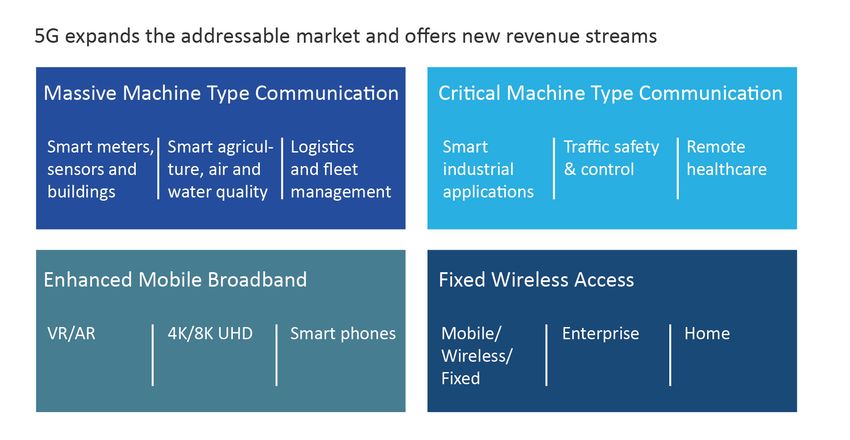
currently remain unconnected (ITU,                 economic growth and job creation
     2018). We need to redouble our efforts             in countries around the world.
     to bring the power of ICTs to all nations,
     all people and all segments of society.        •   Inclusivity: The digital divide takes
     Investment in ICT infrastructure is                many forms. More than two billion
     an absolute priority; we can never                 adults still don’t have a formal
     take investments in infrastructure for             bank account, but 1.6 billion of
     granted, and need to do more to create             these do have access to a mobile
     environments conducive to investment in            phone. Digital financial inclusion
     ICTs. “4 I’s” – Infrastructure, Investment,        can help boost poverty eradication,
     Innovation and Inclusivity – are central           job creation, gender equality and
     to ITU’s strategy to leverage the power            women’s empowerment. ITU has
     of ICTs to expand access to broadband              teamed up with several partners
     services, and help accelerate the                  to launch a new programme to
     achievement of all the SDGs:                       accelerate digital financial inclusion.
                                                        Digital inclusion also needs locally
     •   Infrastructure: Today, broadband               relevant content, and interfaces that
         networks are critical infrastructure,          feature text-to-speech and voice-
         as important as roads, railways,               recognition capabilities to enhance
         water and power networks. In                   accessibility for people with specific
         LDCs, by end 2017, the number                  needs, indigenous peoples and
         of mobile-cellular subscriptions               those with disabilities. Ensuring
         reached about 700 million, with a              equal access to the information
         penetration of 70%. Next-generation            society is a moral imperative.
         ICT infrastructure will power many
         digital solutions, from smart cities       The scale of the infrastructure that must
         to public & financial services.            be built or upgraded to bridge the
                                                    digital divide and deploy emerging
     •   Investment: Innovative financing           technologies is huge and expensive –
         mechanisms and PPPs are needed             ITU estimates that connecting the next
         to create a better environment             1.5 billion people will cost USD 450
         for investment (especially for             billion. ITU’s World Radiocommunication
         hard-to-reach areas), which cut            Conference 2019 will determine the
         across industries and sectors. And         foundations for 5G and use of spectrum
         policy-makers need assistance in           to meet the ever-growing demand for
         strengthening digital development          broadband services and applications.
         strategies and adopting an enabling        I’m happy to report that good progress
         environment. An ITU/UNCTAD survey          was achieved in the set of technical
         found that less than 25% national          requirements and criteria agreed for 5G
         broadband strategies include details       by ITU-R Study Group 5 in November
         on infrastructure investments8.            2017. ITU has developed a set of 5G
                                                    performance targets, preparing the
     •   Innovation: In emerging markets,           ground for new applications such as
         ICTs are helping farmers to monitor        automated driving, remote medical
         prices, health workers to respond          diagnosis and surgery, and advanced
         to emergencies, and borrowers to           virtual reality (VR). In this way, we can
         connect with lenders. In developed         close the gaps between the digital
         and developing markets alike,              haves and have-nots, and help create
         entrepreneurs and tech MSMEs are           an inclusive information society for all.
         at the forefront of industry disruption.
         Every year, at ITU Telecom World, ITU      Source: Mr. Houlin Zhao, Secretary-General of ITU and
                                                    co-Vice Chair of the UN Broadband Commission.
         focuses on supporting the success
         of these innovators, who drive socio-

12   The State of Broadband 2018
Chapter 2
Figure 3: Growth in Number of Users of Messaging and Hybrid Networks, 2011-2017

Source: Various, including Activate.com.

In addition to infrastructure and basic access,    According to some estimates, some 2.5
growth in data must also be considered.            quintillion bytes of information are generated
Estimates of data growth are generally difficult   daily, while Google alone is estimated to
to come by, but Cisco estimates that traffic       store over ten Exabytes of data on a daily
over the Internet will grow by over 20% a          basis12. IDC/EMC (2014) reported that “the
year between 2015-20209, and that by 2021,         digital universe is doubling in size every two
global IP traffic will reach an annual run rate    years and will multiply ten-fold between
of 3.3 zettabytes. Cisco also projects that, by    2013 and 2020” 13. More recent IDC estimates
2021, 80% of all Internet traffic will be video,   put the size of the digital universe at around
up from 67% in 2016. OTT applications such         2.7 Zettabytes of data, but that by 2020, 30
as YouTube and Netflix are contributing to         Zettabytes of data will be generated annually.
this growth in data flows and Internet traffic,    However, there are some indications that
with strong growth in subscriber and user          inequalities in access to and use of intelligent
numbers for several key services (Figure 3).       connectivity may be growing (Viewpoint 2).

In terms of subscriber numbers, WhatsApp
                                                   Viewpoint 2: The Move from
(owned by Facebook) now offers messaging
                                                   Traditional Connectivity to Intelligent
and calling services to some 1.5 billion
                                                   Connectivity & Growing Inequality
users in over 180 countries10. Viber (owned
by Rakuten) currently offers calling, video        Five years into tracking the correlation
and messaging services to over 800 million         between ICT infrastructure maturity
people11. Facebook lists some 2.2 billion          and GDP growth, the 2018 Global
monthly active users (MAU) on Facebook             Connectivity Index (GCI) again
for Q1 2018, a 13% increase year-on-year.          finds that GDP returns among
Some 1.45 billion people on average log            countries with concentrated adoption
onto Facebook daily as Daily Active Users          of ICT infrastructure. Countries
(DAU) for March 2018, matching the growth          with less proactive investment
in MAU with a 13% increase year-on-year.           have seen less stellar results.
However, DAU and MAU are not measures
of data traffic, and use of Facebook varies
considerably in different regions of the world.
                                                   This year, the scope of the GCI was
                                                   broadened from 50 to 79 economies

                                                                            The State of Broadband 2018   13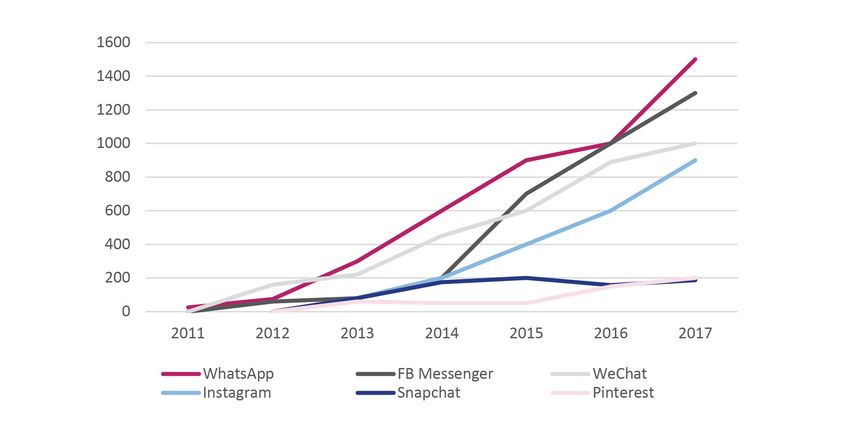
and AI was added as a new element in           positions to make progress in ICT
     the GCI equation, in addition to the five      infrastructure development – and
     enabling technologies (broadband, data         now AI – to climb the GCI S-curve
     centres, cloud, big data and IoT). AI is the   and drive greater GDP returns.
     next major general-purpose technology
     driving paradigm shifts in economic            Growth, however, has been uneven.
     and industrial activity. The influence of      The distance between countries at
     AI is trickling into all aspects of life.      the top and bottom of the GCI S-curve
                                                    continues to increase, indicating an
     Industries are embedding AI in all five        amplification of existing inequality.
     enabling technologies, transforming            Against this backdrop, it is vital that
     traditional connectivity into Intelligent      less developed economies in the GCI
     Connectivity to unleash new innovation         Adopter and Starter clusters prioritize
     and economic opportunities. New                ICT investment to stay competitive.
     business models, products, processes
     and services are emerging every day,           There is, however, good reason for
     accelerating growth towards a digital          optimism. In 2018, advanced economies
     economy worth some US$23 trillion by           find themselves on the cusp of new
     2025 and opening up a new economic             opportunities, while ‘Adopters’ and
     growth cycle. Further, this digital            ‘Starters’ are laying foundations for
     economy has grown 2.5 times faster             leapfrog growth through well-planned
     than global GDP over the past 15 years.        and focused ICT investments. As GCI
                                                    Frontrunners reach the limits of growth
     This year’s GCI saw scores rise                from current ICT investments, AI and
     incrementally across all countries.            Intelligent Connectivity are opening
     ‘Frontrunners’ or advanced economies           up a new economic growth cycle.
     on the GCI S-curve are using Intelligent       While no one can be sure where AI
     Connectivity to accelerate digital             will ultimately lead us, all can agree
     economy growth and unearth new                 that its potential is enormous, and will
     opportunities. Advanced economies              impact every aspect of how we live,
     are generally in better fiscal                 play, work and, potentially, even think.

     Box Figure: Intelligent Connectivity – The USD 23 Trillion Opportunity by 2025

     Source: Huawei.

14   The State of Broadband 2018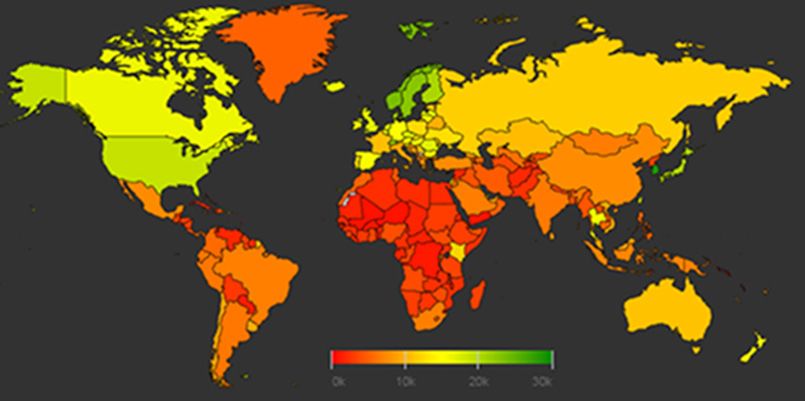
Chapter 2
2.1       Mobile Broadband                        in 80 towns over the first half of 2018 to
                                                  push out 4G to 70% of the population,
Strong growth in mobile broadband subscriber      including 95% of people in urban areas18.
numbers continues, driven in part by
consumer demand for applications. Point           Barely a decade on from the first launch of
Topic reports that fixed wireless technologies    4G, the first 5G trials have already started.
are increasingly giving way to 4G LTE-based       As the industry heads towards the commercial
mobile broadband access, with 4G LTE now a        introduction of 5G technology, investments
major means of getting broadband at home in       in 5G-enabling and candidate technologies
several regions – for example, Scandinavia and    are growing. Several MENA operators have
Eastern Europe14. The Inclusive Internet Index    commenced trials of 5G and are beginning to
(3i)15, commissioned by Facebook and the          map out spectrum strategies in conjunction
Economist Intelligence Unit, shows that access    with national regulatory authorities – for
to 4G networking services improved over the       example, Zain and Etisalat have conducted
last year, particularly in low-income countries   5G trials in Saudi Arabia, Kuwait and UAE.
where coverage almost doubled, from 9.1%
to 17.3%. ITU’s Global ICT Development            The first commercial deployments are
Index shows generally broad growth in ICT         likely in 2019, following approval of the
readiness, use and impact. Figure 4 shows the     international standards for 5G at WRC-2019.
number of subscribers globally, by generation     5G deployments will ramp up significantly
of mobile technology. LTE and higher              after 2020, and most developed economies
generation 4G technologies now account for        should enjoy the benefits of 5G by 2023 – for
over half of all global mobile subscribers.       example, China is predicted to have anywhere
                                                  between 200 million (GSMA) or one billion19
Speeds and coverage levels are increasing.        5G users by 2023. Most other markets will still
For example, Vodafone Italy has announced         benefit from 4G networks, already available
the launch of 1Gbps mobile service in Rome,       in 208 territories, according to the GSMA.
Naples and Palermo, and has begun 5G
trials in Milan16. In Singapore, the operators    Verizon Communications is already trialling
Singtel and StarHub have boosted mobile           fixed-wireless ‘5G’ residential broadband
services to 1Gbps, following successful trials    services in several markets in the US in 2018.
in 2017. Ooredoo Oman had covered 90%             Verizon had already trialled 5G residential
of the population with LTE network by mid-        applications in eleven markets in 201720.
201817. MTS Belarus has launched LTE services

Figure 4: Changing Mobile Coverage, by Type of Network, 2007-2016

Source: ITU.

                                                                          The State of Broadband 2018   15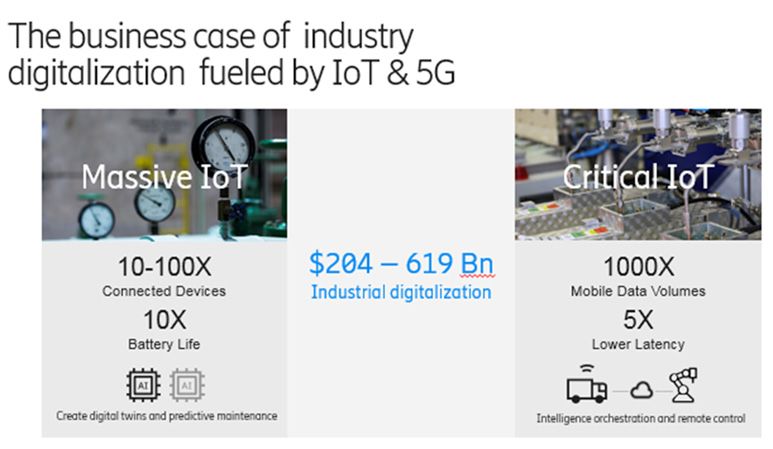
Verizon plans a 5G trial for Sacramento,           will be much more important for
     California, in late 2018, supported by             the developing countries, such as
     millimetre wave (mmWave) spectrum.                 smart transport systems, e-health,
                                                        education, smart grid, agriculture
     Ooredoo and Nokia are collaborating on             and disaster relief. Developing
     5G early trials starting in 2018 in Qatar,         and emerging economies are
     aiming to accelerate roll-out. Ooredoo             leapfrogging older technologies and
     considers that 5G innovation will help “deliver    becoming more mobile-oriented.
     superior mobile data experiences for our
     customers. 5G will catalyze mobility, industrial   5G will have significant economic
     networking, remote healthcare, virtual             impact on these economies. According
     reality, and ultra-high-definition video, and      to IHS, 5G/IMT-2020 will enable USD
     enhance our customers’ digital experience          12.3 trillion of global economic output
     and help them enjoy the Internet in new and        when its full impact is realized and
     exciting ways”21. Viewpoint 3 emphasizes the       developing countries can benefit
     importance of 5G, while Viewpoint 4 describes      from this opportunity without delay23.
     development of 5G in Saudi Arabia. Viewpoint       Many countries have established 5G
     5 describes KT Corp’s GiGA Story Smart             Taskforces to accelerate 5G, including
     Village Project to boost regional economic         India, UAE, Brazil, China, Turkey, Rep.
     growth in a province of the Rep. of Korea.         of Korea, Japan, Indonesia, South
                                                        Africa and Saudi Arabia. The EU has
                                                        also developed a 5G Action Plan.
     Viewpoint 3: The Importance of 5G
                                                        Source: Intel.
     First- and second-generation wireless
     networks were focused on voice services
     and the focus of 3G and 4G shifted                 Viewpoint 4: The Kingdom of Saudi
     toward data and mobile broadband.                  Arabia plans to test and roll out 5G
     While the focus on mobile broadband                services
     will continue with 5G, support for a much
                                                        Saudi Arabia is leading the way in the
     wider set of diverse usage scenarios
                                                        Middle East with the development of
     is expected. 5G is positioned as an
                                                        next-generation mobile broadband.
     intelligent network that supports data
                                                        Over 2017-2018, CITC, Saudi Arabia’s
     and analytics use cases, helping it reach
                                                        ICT regulator, awarded 160 MHz of
     out to drive new industries in ways
                                                        additional IMT spectrum in 700 MHz,
     not previously possible. 5G enables
                                                        800 MHz and 1800 MHz bands to mobile
     developing countries to make full use
                                                        operators STC, Mobily and Zain. Saudi
     of new technologies such as AI, cloud
                                                        Arabia is a regional leader in terms of
     computing, M2M and data analytics22.
                                                        awarded IMT spectrum in sub-GHz IMT
                                                        bands, which should help support the
     Over 90% of broadband subscribers
                                                        growth of mobile broadband network
     in developing countries use mobile
                                                        capacity, from 3G and 4G to 5G.
     broadband and it is vital to migrate to
     5G successfully to obtain the full benefits
                                                        To aid evolution of mobile broadband
     of mobile broadband. According to
                                                        towards the 5G and prepare the
     ITU-R Rec. M.2083, 3 major 5G/IMT-2020
                                                        necessary foundations, the National
     use scenarios include: (1) enhanced
                                                        5G Task Force was established in
     mobile broadband; (2) ultra-reliable
                                                        early 2018. The Task Force unites all
     and low-latency communications; (3)
                                                        stakeholders with an interest in 5G, such
     massive machine-type communications.
                                                        as government, operators, equipment
                                                        vendors and user groups. Specialized
     5G/IMT-2020 will provide new
                                                        work is carried out in 3 subcommittees
     applications and services for both
                                                        dealing with "5G Spectrum", "5G
     developed and developed countries.
                                                        Development" and "5G verticals".
     Some of the 5G/IMT-2020 applications
                                                        All the necessary 5G policies and

16   The State of Broadband 2018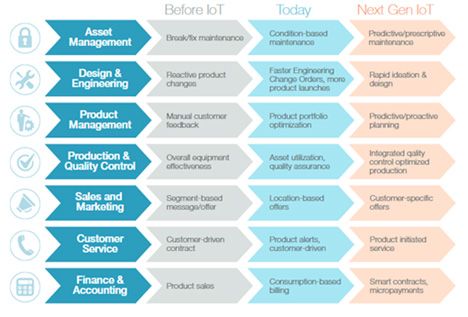
Chapter 2
supporting administrative provisions Viewpoint 5: The GiGA Story Smart
should be in place by end 2019. Village Project for Regional Economic
Growth
The Saudi Government is taking
an active role to create the best Korea Telecom (KT) launched the GiGA
conditions for the private sector to Story project to help improve residential
invest in developing and deploying living environments and solve social
5G, including measures for greater problems by providing Internet and
regulatory certainty vis-à-vis operators' ICT solutions to address digital divides.
business cases and technological The Rep. of Korea faces a serious
flexibility through Unified Licences, population decline in rural areas, due to
implemented since 2017. These will urbanization and demographic ageing.
be backed by timely availability The GiGA Story Project started in 2014
of 5G spectrum and the promotion in various locations in Rep. of Korea
of a 5G services ecosystem in 5G and Bangladesh, and Uiyaji Village
verticals, such as eHealth, Industry project was launched in PyeongChang
4.0 and Smart Cities, among others. Province, Rep. of Korea, in 2017.
As one of the first steps towards KT cooperated with the Government and
achieving 5G, CITC issued Test & local authorities in an early trial of 5G
Trial licenses to all three mobile to stimulate the rural economy. Uiyaji
operators in early May 2018. These Village is located near a local tourist
licenses allow the operators to pilot spot with 600,000 visitors annually, but it
5G technologies until end 2019 by did not have sufficient tourist attractions
utilizing 100 MHz channels in 3.6-3.8 to attract visitors. KT developed tourist
GHz band, with individual test sites content using ICTs. An AR technology
authorized in a speedy administrative and Media Wall with motion recognition
procedure. STC was the first operator functionality can help visitors to obtain
to start deploying 5G sites from early information on major attractions near
May 2018, starting in the Eastern Uiyaji Village. The AR service displays a
Region and spreading to the rest of the 360-degree VR image of the town market
country. These pilot deployments were and offers information on local products.
implemented with 5G NR equipment It is hoped that this platform will change
utilizing 100 MHz TDD channel in shopping habits and increase incomes
Band 42 configuration. All three Saudi through the sale of local specialties.
mobile operators are planning to
gradually expand their 5G equipped Since its launch in December 2017,
sites in 2018 and 2019 in anticipation Uiyaji Village has received over 1,000
of full nationwide commercial launch, visitors monthly and the profits of the
when fully 5G capable consumer local café have quintupled. In addition,
devices hit the market by mid-2019. the resident population has increased
by 9.6%. KT and the local government
The CITC is set to convert the test and will continue to cooperate to develop
trial licenses to full and exclusive 5G local products and improve living
spectrum awards in 3.4-3.8 GHz by mid- conditions using ICT solutions. In future,
2019. The awards of mm-wave spectrum KT is planning to further develop the AR
may follow by beginning of 2020 taking market and tourist content using its 5G
into account the decisions of ITU’s early trial for community development
WRC-19 on the subject and availability and economic growth using ICTs.
of 5G equipment on the market.
Source: KT Corp.
Source: CITC, Saudi Arabia http://news.itu.int/how-saudi
-arabia-is-paving-the-way-to-be-a-regional-leader-in-5g/.
The State of Broadband 2018 17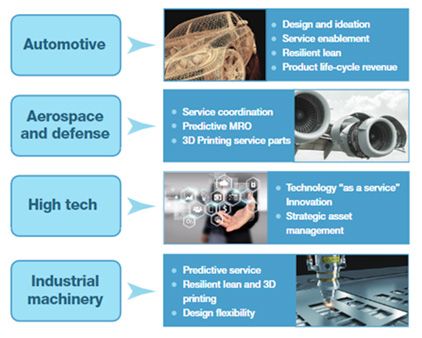
In Singapore, Singtel collaborated with             mobile network operators by Research ICT
     Ericsson in 2016 in a demonstration of live         Solutions showed that most operators have
     video streaming over 5G, which achieved a           experienced strong revenue growth due to an
     peak throughput of 27.5Gbps and latency             OTT-induced increase in data demand, which
     as low as 2 milliseconds. Early 5G trials by        generally outpaced declines in voice and SMS
     StarHub and M1 have achieved transmission           revenues25. The German research institute WIK
     speeds of 35Gbps. To encourage greater              notes, “consumers do not use Rich Interactive
     innovation and facilitate 5G trials, Infocomm       Applications and communication services as
     Media Development Authority (IMDA) waived           like-for-like substitutes; more often than not,
     frequency fees for 5G trials from May 2017 to       consumers use them complementarily”26.
     end 2019. Commercial deployments should             In this scenario, operators’ broadband
     happen from 2020 onwards, and IMDA has              access infrastructure enables consumers
     engaged the public in shaping 5G spectrum           to access online applications’ innovative
     requirements and regulatory provisions.             content, which in turn drives consumer
                                                         demand for operators’ broadband services.
     In Europe, the EU 5G Action Plan targets an
     early market introduction for 5G in 2020 and        For 5G, analysis by McKinsey (2018)
     a comprehensive roll-out up to 2025. Major          suggests that operators have two
     opportunities for 5G in Europe lie in the digital   options for investing in 5G27:
     transformation of major EU sectors (including
     automotive, manufacturing, energy, media            –   A ‘lean-in strategy’ in which operators
     and health sectors and other ‘verticals’). EU           prioritize 5G investments with the hope
     operators are ready for the launch of 5G                of accelerating commercial prospects.
     around 2020, but in mid-2018, the operator
     Elisa launched an early 5G trial in Finland         –   A more conservative approach, in
     using Nokia network equipment and Huawei                which operators delay 5G investments
     devices, including a “narrowband” IoT service.          as long as possible, while existing
                                                             networks are upgraded.
     The difficulty is that the investment needs
     for 5G are enormous, at a time of thinning,         When network upgrades are no longer
     if not declining, ARPUs for many operators          sufficient to support the increased traffic,
     in a number of countries, where operators           operators will need to build new macro-sites
     are seeing shifts in capitalization (as well as     or small cells to satisfy urban demand for
     revenues, in some cases) to Over-The-Top            capacity28. McKinsey’s analysis suggests that
     (OTT) players. According to the World Bank’s        many operators will embark on significant
     forthcoming “Data-Driven Development”               new build-out between 2020-2025. Some
     report, “telecom operators have developed           operators in the US are already in the process
     several responses to OTT. They have argued          of decommissioning 2G, while a number of
     for regulating OTTs that provide voice and text     European operators are planning to shut
     services in the same way they are. Some are         down their 3G networks around 2020.
     developing their own OTT products. Others are
     including large bundles of their own offerings      McKinsey foresees that Total Cost of
     such as free calls or text in packages. Many are    Ownership (TCO) for mobile access networks
     diversifying into opportunities in areas such       will increase (Figure 5), although the
     as cloud computing, IoT and mobile money.           increase will depend on data growth and
     Some are trying to do all of the above”24.          industry circumstances. Others argue that
                                                         5G technology may prove less expensive per
     However, the World Bank acknowledges                bit than previous generations. A range of
     that OTT players “not only compete with             players are investing in network infrastructure,
     telecom operators that provide video services,      including data centers, submarine cables,
     but are also responsible for [generating] a         fibre networks, servers and routers to help
     substantial portion of traffic going over the       deliver content to end-users, including
     networks”. For example, a study of African          operators, content and application providers.

18   The State of Broadband 2018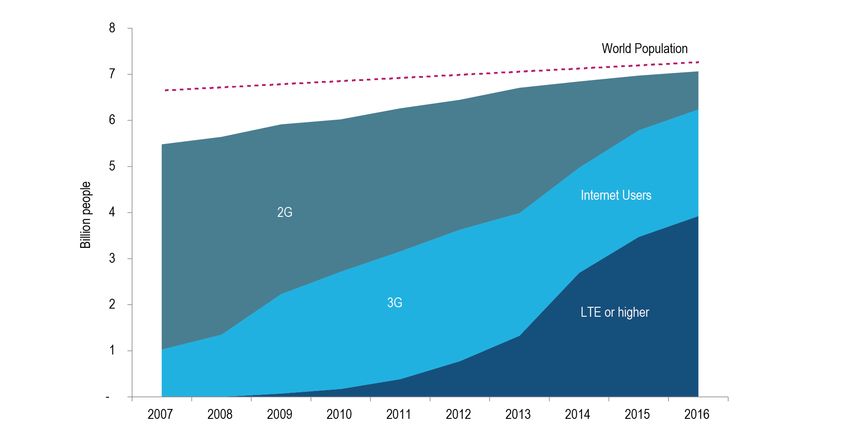
Chapter 2
Despite this mobile success story, from the residents are more likely than urban residents
perspective of operators and other players to have mobile-only service (Figure 6).
in the industry, fibre-based backhaul is still
vital for helping networks meet capacity and Smartphone penetration is also increasing
latency requirements for 5G, and supporting in most markets. Deloitte predicts that,
small-cell deployment in urban areas. In some by the end of 2023, the penetration of
countries, in recognition of their common smartphones among adults in developed
interests, OTT players and telcos have countries will exceed 90%, up 5% on 2018,
partnered to expand broadband connectivity while smartphone sales will amount to USD
in previously underserved areas. For example, 1.85 billion per year by 202330. Smartphones
Facebook, Airtel, and BCS recently completed offer improved performance due to 5G
a 770 km fibre build in Uganda to provide connectivity, higher transmission speeds,
backhaul to 3 million people and cross-border improved processors, additional sensors and AI
connectivity with neighboring countries. chips, software and memory. Data traffic from
smartphones surpassed voice traffic in 2009,
From the edge of cities to remote farms, and has grown since then at a tremendous
there are millions of people worldwide who rate. Close to 85% of mobile data traffic is
live in areas with few or no fibre or cable generated by smartphones today, expected to
connections. Although their homes may reach 95% by end of 2023 (Ericsson, 2018).
have copper phone lines, they may live
too far from the local telephone exchange Approximately 40 million smartphones were
for DSL connections to work well. If their sold in India in Q3 2017. With over 400
homes are over a mile from a central office million Indians connected by 2G phones,
but within four miles from a LTE cell phone India has passed the US to become the
tower, mobile may still offer the fastest second-largest smartphone market and is
Internet service available. Deloitte (2018) even gaining in global share against China.
suggests that this may be quite rare in the With monthly service prices often under
UK, France and other Western European USD5 and many phones subsidized to
countries, but it may be more common in USD25-35, Deloitte estimates 350 million
other countries29. In some countries, rural more Indians will be connected by 202031.
Figure 5: The Total Cost of Ownership for Mobile Access Networks will Increase
Source: McKinsey (2018), available at: https://www.mckinsey.com/industries/telecommunications/our-insights/
the-road-to-5g-the-inevitable-growth-of-infrastructure-cost?cid=other-eml-alt-mip-mck-oth-1802&hlkid=
4108a3016b4842dfac490f90465f61f4&hctky=9411404&hdpid=11560416-85ad-4de7-99a9-f0dc73b2ca57
Note: Total Cost of Ownership (TCO) includes capex and opex for radio access network and transmission, but not core net-
works. Data are based on 3 operators in a European country; results are rounded.
The State of Broadband 2018 19Figure 6: Data Mobile-Only Population for Urban and Rural Areas, Selected Countries, 2017
Source: Deloitte Global Survey of Mobile-Only Adults, August-October 2017. Deloitte TMT Predictions (2018), at: https://
www2.deloitte.com/global/en/pages/technology-media-and-telecommunications/articles/tmt-predictions.html
2.2 Fixed Broadband replaced with FTTH on a large scale in China,
and to some extent in other countries.
ITU records that there were 979 million fixed-
broadband connections by end 2017. Point For example, in early 2018, Algérie Telecom
Topic (2018) estimates the global number of announced the commercial launch of FTTH
fixed broadband connections slightly lower, at broadband services in several provinces, with
931.6 million by end 2017. The highest growth the Gigabit-capable direct fibre access network
quarterly was recorded in Africa, Asia, and being deployed to the rest of the country
Oceania, as these regions with high growth through further regional launches expected
potential continue to embrace new broadband through the year33. In the UK, BT’s Openreach’s
technologies. Nearly three-quarters of net fibre connections reached a record high of
additions in fixed broadband subscribers came 600,000 at end 2017, with plans to deliver
from East Asia, driven mainly by growth in FTTP to 3 million premises by the end of 2020,
China, which is adding some 15m broadband and 10 million homes and businesses by mid-
subscribers per quarter. China had already 2020s34. In Brazil, TIM Brasil launched a 2Gbps
passed a quarter of a billion fixed broadband FTTH service in October 2017 in Sao Paulo
subscriber milestone in Q1 2016, and and Rio de Janeiro, passing some 200,000
continues to grow at impressive speed, adding households at a cost of USD 455 per month35.
nearly 70 million FTTH connections over 2017. In the US, Verizon has stated that their costs
to pass a home with fibre have dropped
Point Topic reports that, in the year between significantly by 2017, down a large amount
Q4 2016 and Q4 2017, the number of from USD 700 in 200736. Viewpoint 6 describes
copper lines fell by 6% globally, while FTTH the development of broadband in Switzerland.
connections increased by 28%. The share of
fibre connections in total fixed broadband Meanwhile, one of the largest rural fibre
subscriptions continued to increase in all connectivity projects in history is underway
regions, with highest growth recorded in in India37. Over 100 million Indians are ready
Asia and Americas32. Figure 7 shows the to be connected with fibre, Wi-Fi and LTE.
technology market share by region for the Phase 1 is finished of India's BharatNet.
global regions for end 2017. Surprisingly, All 250,000 regional councils and 625,000
a drop in FTTx lines has been observed villages are expected to be reached by GPON
since 2016, due to this technology being fibre by March 2019. Most villages will have
20 The State of Broadband 2018Chapter 2
Figure 7: Technology Market Share by Region, Q4 2017
Source: Point Topic, available at: http://point-topic.com/free-analysis/world-broadband-statistics-q4-2017/.
local Wi-Fi from the local Post Office and/or 5G from end 2018. The fixed broadband
a program of local businesses. Backhaul for subscription rate in Switzerland is
telcos is included; Indian operators may use nearly 46%, at the top of international
BharatNet backhaul as they extend mobile comparisons, according to the OECD.
broadband coverage to rural populations.
The USD 15 billion project is primarily funded The Swiss Telecommunications Act of
by the Indian Universal Service Fund (USF). 1998 seeks to ensure that a range of cost-
Viewpoint 6 describes the development of effective, high-quality and nationally
broadband in Switzerland and the changes and internationally competitive
in the policy and regulatory environment telecommunication services are
needed to help stimulate its development. available to individuals and the business
community. It should also promote
effective competition in the provision of
Viewpoint 6: The Development of
telecom services and ensure a reliable
Broadband in Switzerland
universal service at affordable prices, for
Since liberalizing its telecom market all sections of the population throughout
in 1998, Switzerland has enjoyed a the country. The fixed broadband
dynamic market conducive to promoting market in Switzerland is characterized
competition and the more extensive by a strong incumbent, high DOCSIS
deployment of infrastructure. Over recent 3.0 cable population coverage and
years, significant investment has been considerable FTTH investments by the
made in the expansion of both fixed and incumbent and major local utilities. The
mobile networks. According to Akamai´s incumbent is rolling out FTTH, FTTS
“State of the Internet” report, Switzerland and FTTC in connection with vectoring
is one of the leading countries in the or G.fast, ensuring almost the entire
world in Internet connectivity with population will soon have coverage with
a next-generation access (NGA) a modern fixed network. Some 200 cable
population coverage rate of 94% and LTE operators cover 85% of the population
population coverage rate of almost 99%. with DOCSIS 3.0, and several have
LTE advancements have been widely announced plans to deploy DOCSIS 3.1.
deployed and now offer bandwidths of
up to 1 Gbit/s. Mobile operators have The entire population can access the
announced they will begin introducing universal broadband service, which
currently offers 3 Mbit/s. Some 94% of
The State of Broadband 2018 21all dwellings and businesses can obtain The “Digital Switzerland” strategy
fixed broadband services with at least 30 provides guidelines for government
Mbit/s and 85% can access 100 Mbit/s action and indicates where and how
or more. FTTH is currently deployed in authorities, academia, the private sector
more than 31% of households. However, and civil society must work together
the take-up of FTTH is still rather limited. in order to shape the transformation
process for the benefit of everyone. The
Initiatives by local utility companies to government has set the goal of ensuring
invest in FTTH in several major cities in that ultra-high-speed broadband will
2008 seemed to act as a trigger for the be market-driven and available in
incumbent operator to start investing all Swiss municipalities by 2020. The
in FTTH. To avoid duplication and to expansion of mobile networks (5G)
create a framework for FTTH roll-out, and the frequency resources required
the telecom regulator OFCOM launched for 5G, which are awarded by the
‘FTTH Round Table’ discussions for State, will play an important role.
market players. Following these round
tables, the incumbent operator and Maintaining an up-do-date regulatory
major local utility companies agreed on framework, which promotes competition
infrastructure-sharing and co-investment and investment in NGA technologies,
schemes based on a multi-fibre model. is crucial in order to prepare for future
Uniform technical standards (e.g. for challenges and to give Switzerland
the installation of fibre in individual excellent foundations for developing
dwellings) have been drawn up in a smart society. That is why in
various industry working groups. An September 2017, the Swiss Federal
intervention by the competition authority Council adopted a revision of the Swiss
(COMCO) ensured that agreements Telecommunications Act (revised in
between the incumbent operator and 2007). The present revision seeks to
utilities would not impede competition. adapt the law for new technological
developments and market evolution,
Cooperation activities agreed to date while improving transparency and
between the incumbent and some consumer protection. The ultimate
70 local utilities cover some 30% ambition remains unchanged – to
of all buildings in Switzerland. The adopt a market-driven approach,
implementation of a four-fibre-per- which fosters competition and thereby
household network could increase promotes investment and innovation.
roll-out costs by 10-20%, compared to
a single-fibre point-to-point network Source: OFCOM, Switzerland.
architecture. In return, it creates two
Figure 8 shows the increases in bandwidth
competing fibre networks, each with
and traffic speeds made possible through
one spare fibre. The incumbent and all
advances in access networks (top chart)
utilities offer wholesale access to their
and PON (bottom chart), while Table 2
FTTH network on commercial terms.
summarizes the key characteristics of the
main xDSL technologies. The development
In April 2016, the Swiss Federal Council
and deployment of ultra-reliable, low-latency
adopted the "Digital Switzerland"
and high-capacity networks are essential
strategy, whereby the Swiss Government
for future developments in IoT applications
seeks to support the digitization
(such as autonomous vehicles, which could
which affects all areas of life, for
require huge amounts of data38). Viewpoint 7
Switzerland to exploit opportunities
describes Microsoft’s innovative Project Natick
and address associated challenges.
to introduce an underwater data centre.
22 The State of Broadband 2018Chapter 2
Figure 8: Bandwidth and Traffic Speeds for PON
Source: ADTRAN (top chart); ITU (bottom chart).
The State of Broadband 2018 23Table 2: The Main xDSL Technologies
VDSL2 ADSL2+ SHDSL HDSL
Transmission mode Asymmetric & Asymmetric Symmetric Symmetric
symmetric
Pairs of Copper 1 1 1&2 1, 2 & 3
Frequency band 12MHz to 30 MHz 0.14MHz-2.2.MHz 196KHz
(down & up data) (down data)
Modulation DTM QAM TCPAM CAP/2B1Q
Bitrate (down/up) Up to 200 Mbit/s 12 Mbit/s up to 24 Up to 5.7 Mbit/s 2 Mbs bidirectional
bidirectional Mbit/s & 1 Mbit/s up (single pair)
to 1.4 Mbit/s
ReachChapter 2
of a standard shipping container. It is the Internet, with or without the active
as powerful as several thousand high- involvement of individuals. This includes
end consumer PCs with storage for laptops, routers, servers, tablets and
the equivalent of 5 million movies. It smartphones (often considered to form
is powered by renewable on-shore part of the “traditional Internet”), as these
wind and solar energy, and off-shore devices are integral to operating, reading
tide and wave power. Phase 2 aims to: and analyzing the state of IoT devices”39.
• Develop a full-scale prototype Gartner forecasts that 8.4 billion connected
subsea datacentre; things were in use in 2017, up 31% from
2016, and growing to 20.4 billion by 2020.
• Gain an understanding of the GSMA predictions are more conservative,
economics of undersea datacentre forecasting that the number of IoT connected
and TCO over its lifetime; devices will increase from 8 billion in 2017
to 13 billion in 2020 to exceed 25 billion in
• Efficiently deploy the prototype 2025. IDC forecasts are considerably higher,
within 12 nautical miles of the forecasting that some 80 billion IoT devices
coast at a depth of 100 meters; will be online by 2025, creating 180 Zetabytes
of data. According to Ericsson, the number of
• Demonstrate ‘Lights Out’ operation cellular IoT connections is expected to reach
over a deployment cycle of 5 years; 3.5 billion in 2023, with an annual growth
rate of 30%. Of the 3.5 billion cellular IoT
• Power the prototype from a connections forecast for 2023, North East Asia
nearby marine renewable is anticipated to account for 2.2 billion40.
energy sources; and
Viewpoint 8: The IoT as a Cornerstone
• Explore cloud datacentre
for Digitization
solutions offering less
resource-intensive options. IoT is a cornerstone in the ongoing
digitization of industries and society. The
Ultimately, data from this project may convergence of several technologies of
lead to more efficient datacentres that the Fourth Industrial Revolution such as
can be operated at lower cost and AI, cloud computing, drones, self-driving
less environmental impact than land vehicles or robotics. The IoT market
datacentres. Land datacentres need can be divided into two main types:
clean tap water for cooling, and the
evaporative cooling process leaves • Massive IoT – large number of
waste. Water is a precious resource. devices, platform transmitting low
Undersea datacentres can have their bit-rates of data, long battery life
own renewable power and no impact in devices. Typical use cases are
on water supply or electricity, or found in smart city solutions such as
land itself, and have the potential to logistics, smart meters, sensors and
contribute to digital transformation buildings, as well as in agriculture,
and help realize the SDGs. air and water quality management.
Source: Microsoft.
• Critical IoT – higher bit-rates of
data, low-latency, and improved
reliability, ultra-low latency and
5G technologies will support these
2.3 Internet of Things
requirements. Typical use cases
The OECD has defined the IoT as are found in advanced industrial
“encompassing all devices and objects applications, traffic safety and
whose state can be read or altered via control, remote healthcare.
The State of Broadband 2018 25Source: Ericsson.
IoT aims to meet specific requirements. A standardized approach can help
Basic, non-mobile, limited coverage unlock value. This complexity leads
cases may be served well by Wi-Fi and to the necessity of orchestration and
other technologies. IoT in networks collaboration to get to scale the true
implementing 3GPP technology is benefit of IoT. Interoperability can be
typically about wide area coverage, facilitated by using key standards:
high-end applications based on 5G
and applications where security is of – Lightweight specifications can
high importance. When deploying IoT, enable key device features
enterprises and application providers (including bootstrapping, firmware
can benefit from improved battery updates, error reporting, etc.).
management and the device control that
are offered by massive IoT networks. – Smart objects and reusable design
can build more complex objects
Openness in interfaces, combined in different IoT segments.
with open standardized device and
application design, is key in allowing By 2026, there could be a USD 619
reliable and secure solutions. Security billion revenue opportunity for
ranks highly in IoT surveys. With the telecom operators addressing industry
growing number of connected devices, digitalization with 5G technology,
the number of attack points increase. with the largest opportunities in
As critical infrastructures become manufacturing, energy and utilities,
connected, the potential for damage and and public safety. As 5G IoT becomes
data misuse is huge. Protecting personal integral to industry, 5G-enabled
information, company data, and critical revenues for operators will grow.
infrastructure are vital priorities, and Investments in 5G networks, business
security must span the IoT value chain. models and organizational adaptation
are also needed. Standards and alliances
are the vehicle for scale in IoT.
26 The State of Broadband 2018Chapter 2
Source: Ericsson. Ericsson’s The guide to capturing the 5G-IoT business potential https://www.ericsson.com/en/networks/
trending/insights-and-reports/5g-challenges-the-guide-to-capturing-5g-iot-business-potential
In the UK, the regulator OFCOM conducted a example, in 2017, the Telecommunications
study entitled “Review of latest developments Regulatory Commission of Jordan launched
in the IoT”, which identified applications with a green paper on IoT with the goal of inviting
the largest number of connections, examined comments from the industry and public at
which technologies are likely to be adopted, large on many facets of IoT deployment
and identified critical issues for regulation. It is including spectrum, security, addressing,
hoped that this study can give some assurance data analytics, permanent roaming, etc.
to operators, prospective licence holders and Similarly, in Saudi Arabia, CITC has launched
IoT partners on the views of the regulator. a public consultation to examine the
impact of the launch of IoT, virtual network
Governments in the Middle East are beginning operator licences and issues around IoT.
to look closely at the impact of IoT. For
Figure 9: How IoT is Driving Change
IoT Changes the Paradigm across Businesses Specific Manufacturing Sectors
Source: IDC, “The IoT Imperative for Discrete Manufacturers: Automotive, Aerospace and Defense, High-Tech, and Industrial
Machinery”, 2017, available at: https://www.sap.com/cmp/dg/sapleonardo-discrete-manufacturing-industries/typ.html
The State of Broadband 2018 27Table 3: Different Technologies Used for IoT
Government & Private Traditional Mobile Network
Non-MNO Service Providers
Sector Operators (MNOs)
High Mobility PMR/TETRA Satellite & HAPs 4G & 5G Mobile Broadband
Private LTE (rare) MVNOs LTE-Cat M1+
Private MVNO Legacy 2G and 3G
Satelllite Hybrids/multi-network
Vertical-specific
(e.g. auto)
Low Mobility Wi-Fi Wi-Fi NB-IoT (especially China)
Bluetooth, ZigBee SigFox, LoRa, other LPWA 4G/5G Mobile BB + M1
LoRa/LoRaWAN NB-IoT unlicensed Legacy 2G and 3G
CBRS/Multefire MVNOs Wi-Fi
NB-IoT unlicensed? Multi-network Some LoRa, SigFox
Other LPWA & industrial
Source: Disruptive Analysis/Rethink Wireless.
2.4 Towards the mobile environments, aircrafts and ships,
as well as for use in emergency situations.
Next Generation of
Integrating satellite connectivity into
Satellite Broadband terrestrial systems can help improve quality
of experience (QoE) by intelligently routing
There has been significant recent technological
traffic with different demands for speed
evolution in satellite technologies, which
and latency between delivery systems.
offer broadband capacity across the globe,
bringing reliable connectivity to the hardest-
Satellite technology can also help relieve
to-reach corners of the Earth41. High-
congestion and overloading of networks.
Throughput Satellite (HTS) systems can use
In future, it will support 5G and ensure
multiple spot beams and sophisticated ground
connectivity in times or areas where
infrastructure to provide speed and capacity
terrestrial networks are unavailable.
similar to terrestrial technologies in many
Lower frequency band satellite services
cases. Recently deployed and upcoming
are ideal for high-reliability and mobility
non-geostationary satellite orbit (NGSO)
applications, including safety services.
systems in low-Earth orbits can now provide
low-latency connectivity supporting a wide
Satellite systems should be given consideration
range of applications. And advances in satellite
as complementary solutions for next-
construction and competitive pressures are
generation broadband network deployments
reducing the cost of services for users.
in rural and remote areas, as well as in
diverse environments and deployment
Satellite connectivity is starting to compare
scenarios. Viewpoint 9 considers how
favourably with terrestrial wired solutions
partnerships can be used to advance satellite
in terms of cost versus capacity in many
connectivity, while Viewpoint 10 explores
developed and developing country scenarios.
the role of Governments in promoting
Advanced satellite systems have recently
connectivity using satellite broadband.
been launched or are planned for the
near future. As the technology and market
continue to evolve, satellite capabilities Viewpoint 9: Banding Together to Go
will continue to improve, while their cost Farther, Faster
will fall significantly, bringing satellite
services in line with terrestrial solutions. The satellite industry has benefited from
unprecedented innovation and technical
In terms of coverage, satellites are an improvements, enabling a revolution
effective means for reaching remote in the cost, quality and provisioning of
and rural areas, as well as passengers in broadband around the world. Smaller
ground terminals are more affordable
28 The State of Broadband 2018Chapter 2
Box Figure: Cost Comparison of Different Technologies
for Connecting the Final 10% of Customers
Capital Cost AUSD per Premises Activated (includes capitalised opex and the discounted value of replacement capex)
Source: Australia, National Broadband Network Implementation Study, 6 May 2010, Library of Parliament, at:
http://data.dbcde.gov.au/nbn/NBN-Implementation-Studycomplete-report.pdf
and easier to install than ever before, most economical solution (see figure).
often allowing for self-installation in Satellite is an integral part of the
several hours and without trained universe of broadband solutions, even in
technicians. Electronically steerable relatively mature markets, as illustrated
antennas are better suited to enable by the fact that the U.S. and Europe are
mobility services, allowing for satellites amongst the largest global markets
to communicate with terminals on for satellite broadband connectivity.
vehicles, trains, vessels and airplanes.
Smaller satellites in new orbits closer Satellite provides many advantages for
to Earth minimize latency issues. the deployment of broadband solutions:
High-throughput satellites (HTS) with
steerable spot beams can provide up to Instant Infrastructure – Antennas can
ten times the throughput of traditional be installed in hours, enabling remote
satellites, and be configured to cover villages to be connected in a couple
zones of high or imminent demand. of days. Thanks to recent innovations,
small and portable antennas can
Software-defined payloads now allow easily be transported (or even hand-
for the purchase of “off-the-shelf” carried) to even the most remote
satellites which, once in space, can be place and over rugged terrain.
modified to maximize their efficiency
and output by altering frequencies, Flexible/Re-usable – Satellites are
beams and throughput based on ideal for terrestrial operators to extend
demand. There are now ways to “refuel” their networks. Once the terrestrial
satellites in space, thus extending the network has reached a remote location,
in-orbit life span of a spacecraft by a satellite terminal can be re-installed
several years. Further, the current race at a different location, further away.
to introduce reliable, affordable and
reusable launch vehicles helps to make Scalable – Satellite solutions can
satellite services more economical. be easily scaled up to demand,
separately for upload and download
Technological advances are improving speeds, to grow with the requirement
the speed and quality of today’s satellite of usage on an ‘as needed’ basis.
solutions, as well as decreasing costs
and making satellite services more Solar-Powered – Today’s small
accessible for everyone. Satellite antennas require less power and can
communications can be tailored use solar panels to compensate for
according to user requirements and the lack of reliable power in many
in many cases provide the best and
The State of Broadband 2018 29locations and eliminate the need reformed and modernized their
for diesel generators and fuel. USF into the Connect America Fund
(CAF) to maintain voice services
Mobility Capabilities – Steerable and extend broadband-capable
antennas can ‘lock’ onto the satellite infrastructure. Through the CAF, the
and enable excellent mobility solutions FCC will use alternative approaches,
to airplanes, trains, vessels and such as satellite broadband, to address
vehicles. For example, medical vehicles the costliest areas, minimizing the
connected via satellite can serve as burden on consumers, and is also
‘mobile hospitals’, transferring test considering means-tested consumer
results and medical data to hospitals. subsidies for satellite service43. In
the Philippines, the Broadband Plan
Resilient – Satellite solutions are sets out future projects for broadband
resilient during natural disasters connectivity using satellite.
such as earthquakes or floods.
In conclusion, national governments
Source: Stephen Spengler, Intelsat. can truly make a difference in
bridging the broadband gap by taking
Viewpoint 10: The Role of Satellite in advantage of technologies such as
National Broadband Plans (NBPs) satellite to bring reliable connectivity
to unconnected areas and create an
Governments should strive to foster effective solution to expand Internet
markets that are accessible to all and reach. To support satellite connectivity
allow the innovative use of technologies. initiatives, governments should ensure
For satellite operators to be able to enter that they have an effective regulatory
the market, it is important that there is environment, are bolstering demand
a legal and regulatory structure that is and lowering the cost of infrastructure.
unboxed by legacy rules, or otherwise Governments are not alone in this
limit the number of independent endeavor, and can count on support and
service providers that are permitted to advice from international organizations
provide satellite services to consumers. and donor institutions to help broker
Competition between a large number of partnerships with private sector actors
market players encourages investment and through combined efforts to enable
in infrastructure, the provision of new the implementation of projects.
services, improvements in quality
and availability of lower prices42. Checklist for Utilizing Broadband
to Bridge the Digital Divide
Furthermore, governments should
take satellite technologies into The following checklist comprises
consideration in their NBPs. As such, it the ten top policy elements as a
is essential to add a strategy or specific starting point for countries willing
goal on satellite solutions for hard to to utilize satellite broadband to
reach areas. NBPs need to recognize help bridge the digital divide:
satellite technology as an essential
element to provide broadband access • Acknowledge the urgent need
to rural, remote or geographically to serve rural populations in
challenged areas of the country. government policies and regulations.
Governments need to leverage the
use of satellite technology in those • Identify rural, remote, and low-
areas where terrestrial broadband population density communities
technologies are not feasible. needing broadband coverage,
which cannot be served
In the United States, the Federal by terrestrial media.
Communication Commission (FCC)
30 The State of Broadband 2018Chapter 2
• Include satellite broadband • Identify potential partnerships
as an available alternative and with international organizations,
integral part of any NBP. multilateral development
banks, and satellite operators
• Identify region-wide needs and for specific projects.
develop projects to cover countries
on the same satellite coverage • Stimulate demand for broadband
footprint so as to share capacity. services by making services
affordable, increasing digital
• Acquire unbiased, professional, literacy, and ensuring that there is
technical, financial, and management relevant local content available.
expertise to develop optimal
network design on a case-by- • Conduct capacity-building
case basis, inclusive of rural workshops with stakeholders on
customer requirements. technical and policy issues.
• Consider new technologies available Source: Excerpt from ITSO-IADB (2016), “The Provision
of Satellite Broadband Services in Latin America and the
for the future broadband markets,
Caribbean”, page 104, available at: https://publications
such as HTS and/or medium .iadb.org/bitstream/handle/11319/7843/The-Provision-of
earth orbit (MEO) systems. -Satellite-Broadband-Services-in-Latin-America-and-the
-Caribbean.pdf?sequence=1& isAllowed=y .
• Consider, define, and implement Source: Patrick Masambu and Piotr Dmochowski-Lipski,
ITSO/EUTELSAT IGO.
financing policies for broadband
services in remote areas,
including broadband, USFs, tax
incentives and/or government
funding for pilot projects.
The State of Broadband 2018 31You can also read


