Reducing Complexity of Server Configuration through Public Cloud Storage
←
→
Page content transcription
If your browser does not render page correctly, please read the page content below
electronics
Article
Reducing Complexity of Server Configuration through Public
Cloud Storage
Sihyung Lee

                                          School of Computer Science and Engineering, Kyungpook National University, Daegu 41566, Korea;
                                          sihyunglee@knu.ac.kr; Tel.: +82-53-950-7284

                                          Abstract: Hosting networking applications typically involves a server publicly accessible over the
                                          Internet. However, preparing a server requires excessive time and effort, particularly for non-expert
                                          users. This is because users configure multiple elements including the server, host firewalls, and
                                          network firewalls, while considering their interactions. To address this problem, we propose a
                                          method that uses public cloud storage, such that all messages are communicated through the storage
                                          between the server and clients. As the storage is public and accessible over the Internet, users
                                          need not consider firewalls and can focus on configuring the server. We implemented the proposed
                                          method for web applications and evaluated its performance by accessing applications from 90 hosts
                                          in diverse locations. The evaluation showed that the proposed method does not incur extra delays
                                          and clients can access the applications as reliably as the current practice of configuring servers.
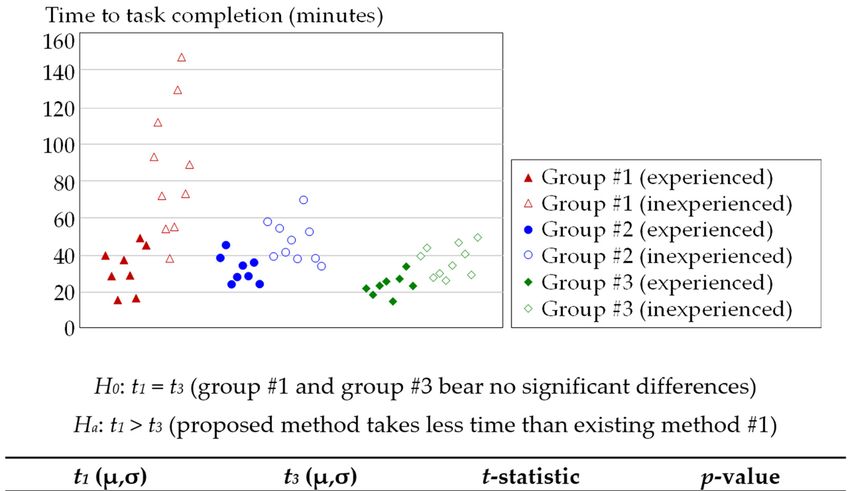
                                          We also recruited 54 participants and examined the time required to configure a server with the
                                          proposed method compared to configuration using current practice. This study demonstrated that
                                          the proposed method reduces configuration time from 40−60 to nearly 30 min. We believe that the
                                proposed method provides a basis for improving the manageability of server configuration.


Citation: Lee, S. Reducing                Keywords: server configuration; network configuration; public cloud storage; networking applications
Complexity of Server Configuration
through Public Cloud Storage.
Electronics 2021, 10, 1277.
https://doi.org/10.3390/                  1. Introduction
electronics10111277
                                                Many networking applications require servers visible over the Internet. For example,
                                          web, mail, chatting, and file-sharing services are provided on servers, such that the services
Academic Editor: George
                                          can be accessed from diverse locations. Such publicly accessible servers are often hosted on
Angelos Papadopoulos
                                          a temporary basis, for a variety of reasons. Software developers set up servers to validate
                                          that mobile applications operate correctly during development phases. Hobbyists run web
Received: 12 May 2021
Accepted: 26 May 2021
                                          sites to meet and quickly share photos and files. Gamers launch servers to play online
Published: 27 May 2021
                                          games. Teachers of real-time, online classes set up servers to provide a virtual laboratory
                                          for students, such that they can perform experiments and competitions during lectures.
Publisher’s Note: MDPI stays neutral
                                                In these temporary settings, it is desirable that a server can be set up with the least
with regard to jurisdictional claims in
                                          amount of delay and complexity, so that it can be accessed immediately on demand.
published maps and institutional affil-   However, for many, non-expert users (In this section, a user refers to the person who hosts
iations.                                  a networking application and thus needs to configure a server and firewalls), hosting a
                                          publicly accessible server takes significant time and effort [1,2]. This is largely because
                                          users must configure a combination of devices, i.e., a server, host firewall, and network
                                          firewall, and configuring all of them correctly and consistently requires a high level of
Copyright: © 2021 by the author.
                                          knowledge and experience [3,4]. Moreover, network firewalls are often not accessible for
Licensee MDPI, Basel, Switzerland.
                                          configuration, when users connect to networks outside their organizations or when they
This article is an open access article
                                          use public Wi-Fi.
distributed under the terms and                 Alternatively, users can rent a server managed by a server-hosting company. However,
conditions of the Creative Commons        renting a server accompanies payments, which can be a burden as they accumulate over
Attribution (CC BY) license (https://     time [5]. In addition, this type of server typically provides configuration environments
creativecommons.org/licenses/by/          different from users’ local machines (e.g., Linux vs. Windows), therefore, users must
4.0/).                                    learn these environments before they can fully use the service. The servers also allow a

Electronics 2021, 10, 1277. https://doi.org/10.3390/electronics10111277                                https://www.mdpi.com/journal/electronics
Alternatively, users can rent a server managed by a server-hosting company. How-
ever, renting a server accompanies payments, which can be a burden as they accumulate
over time [5]. In addition, this type of server typically provides configuration environ-
Electronics 2021, 10, 1277 2 of 19
ments different from users’ local machines (e.g., Linux vs. Windows), therefore, users
must learn these environments before they can fully use the service. The servers also allow
template offunctions
a template of predefined predefined functions
(e.g., (e.g.,
particular particular
types types and
and versions versions
of server of server languages
languages
and database and database
programs), programs),
which are notwhich
alwaysare not always customizable
customizable to usernor
to user preferences preferences
can nor can
they be easily ported to
they be easily ported to other servers [6].other servers [6].
This workon
This work concentrates concentrates
reducing the oncomplexity
reducing the of complexity of hosting
hosting a server. a server. In particular,
In particular,
we propose a method that requires the configuration of a single device—the user’s own user’s own
we propose a method that requires the configuration of a single device—the
machine, suchmachine, such can
that the user thatfully
the user can fully
customize customize
it and work init familiar
and work in familiar
settings withoutsettings without
the need to consider remote devices and their heterogeneous environments. The method The method
the need to consider remote devices and their heterogeneous environments.
uses public,
uses public, unpaid cloud unpaid
storage cloud storage and
and transmits transmits
messages andmessages and data
data through through this storage
this storage
(Figure 1). As the storage is free of charge and publicly accessible, no cost is incurred, and
(Figure 1). As the storage is free of charge and publicly accessible, no cost is incurred, and
the user is not required to configure firewalls.
the user is not required to configure firewalls.
Communications made through public storage,
accessible over the Internet
Services are accessed
from anywhere
User configures server functions
in own, local machine
Figure 1. Overview of proposed method.
Figure 1. Overview of proposed method.
We implementedWe implemented the proposed
the proposed method method
for web for web such
applications, applications,
that websuch that web messages
messages
and contents are transmitted through public storage. We
and contents are transmitted through public storage. We then made the applications ac-then made the applications
cessible over the Internet and measured its performance when accessed by 90 hosts inby 90 hosts in
accessible over the Internet and measured its performance when accessed
geographicallygeographically diverse
diverse locations. We locations. We demonstrated
demonstrated that the services thatcan
thebe
services
accessed canasbe accessed as
quicklyasand
quickly and reliably reliably
with as withmethods
the existing the existing methods
for hosting for hosting
servers. servers.
We also We also evaluated
evaluated
the manageability of the proposed method with a user study.
the manageability of the proposed method with a user study. A total of 54 participants A total of 54 participants
configured web applications either using the proposed method
configured web applications either using the proposed method or the existing methods, or the existing methods,
and we measured the times required to complete the configurations.
and we measured the times required to complete the configurations. The results showed The results showed
the proposed method can reduce configuration time from 40 −
that the proposed method can reduce configuration time from 40−60 to nearly 30 min, and 30 min, and
that 60 to nearly
such reductionsuch
wasreduction was50%
greater than greater
for than 50% for
non-expert non-expert
users. users. Thepointed
The participants participants
out pointed out
that the
that the proposed proposed
method method
is simpler, is simpler,
as only as local
a single only adevice
singlerequires
local device requires configuration.
configuration.
We summarize our contributions
We summarize our contributions as follows: as follows:
•
• We propose a method that reduces the complexity as well as costs involved in hosting
We propose a method that reduces the complexity as well as costs involved in hosting
a server for various networking applications. The current practice either requires
a server for various networking applications. The current practice either requires con-
configuring firewalls [3,4] or paying for renting a server [5,6]. Our proposed method
figuring firewalls [3,4] or paying for renting a server [5,6]. Our proposed method
eliminates the need to configure firewalls and incurs no cost, as it uses unpaid storage
eliminates the need to configure firewalls and incurs no cost, as it uses unpaid storage
that is publicly accessible. There exist other studies that relieve the difficulties of
that is publicly accessible. There exist other studies that relieve the difficulties of
server-hosting, and most of them propose user-friendly and centralized configuration
server-hosting, and most of them propose user-friendly and centralized configura-
interface [1,3,7]. Our work complements these studies; it further relieves the difficulties
tion interface [1,3,7]. Our work complements these studies; it further relieves the dif-
by reducing the number of devices to configure, as a user needs to configure a single
ficulties by reducing the number of devices to configure, as a user needs to configure
local device but no firewall or remote device. Table 1 compares the different methods.
a single local device but no firewall or remote device. Table 1 compares the different
• We equip the proposed method with techniques that reduce access times, since the
methods.
method relays messages through public storage and thus may incur delay. We evalu-
• We equip the ated
proposed method with
the techniques techniques that
by implementing thereduce access
proposed times,
method forsince
web the
applications and
method relaysthen
messages through public storage and thus may incur delay. We
by measuring its performance when accessed from 90 hosts that eval-are geographi-
uated the techniques by implementing
cally dispersed. thethat
We observed proposed method for
the applications canweb applications
be accessed as quickly as with
the current practice of hosting servers.
• We performed a user study to demonstrate the effectiveness of the proposed method
in reducing the complexity of server-hosting. We recruited 54 participants and asked
them to configure web applications either using the proposed method or the exist-
ing methods. The study showed that the proposed method reduced configurationsElectronics 2021, 10, 1277 3 of 19
times from 40−60 to nearly 30 min. We also identified reasons why the participants
experienced less difficulties with the proposed methods.
Table 1. Comparisons among different methods of server-hosting.
No Remote
No Firewall Configuration Device Configuration No Cost for Server Rent Functions Fully Customizable
1 Use own machine for server [3,4] × × # #
2 Rent server in server-hosting
# × × ×
company [5,6]
3 User-friendly interface [1,7] 1 4 4 4 4
4 Proposed method (this paper) # # # #
1 3 User-friendly interface supplements other methods—it can work on top of 1 , 2 , and 4 , thus its property can be either × or #,
depending on which method it operates on.
The remainder of this paper is organized as follows. In Section 2, we present previous
work and how this relates to the proposed method. In Section 3, we describe the proposed
method in detail. In Section 4, we demonstrate the performance of the proposed method,
and subsequently evaluate its manageability in Section 5. Finally, we conclude with an
outline of future work in Section 6.
2. Related Work
2.1. Difficulties in Network Configuration for Non-Expert Users
Several studies show that non-expert users continue to experience difficulty config-
uring networking devices and technologies, such as servers, firewalls, and routers. More
than 20% of home networking gear is returned, not because the equipment has technical
deficiencies, but because users experience difficulty installing and configuring them cor-
rectly [2]. Even after successful installation, devices require configuration changes and
ongoing maintenance, which often leads to connectivity failures [1] and privacy viola-
tions [8]. Troubleshooting tools exist, but are not always user-friendly; and looking up
solutions and asking questions on online forums is difficult as many users are unfamiliar
with technical terms [9]. The situation becomes aggravated as more wireless devices are
connected to home networks; multiple different devices must be configured, their inter-
actions considered, and users must quickly learn complex heterogeneous configuration
environments [3].
2.2. More Usable and Manageable Network-Configuration Interfaces
To address the aforementioned difficulties, Jakobi et al. [3] suggest developing visual-
ized systems that non-expert users can better learn and understand. In fact, GUI-based
firewall configuration systems have largely replaced command-line-based systems in pro-
duction networks [10]. These systems can also be centralized, such that users can monitor
multiple devices and their interactions in a single screen [7]. Grinter et al. [1] points out that
future networking protocols must consider usability and understandability as major design
principles, because these principles have been neglected since the inception of the Internet.
Overall, previous studies propose user-friendly and centralized networking devices and
protocols. Our proposed method further relieves users from complicated configuration
tasks; it enables users to configure a single device without considering complex interac-
tions among multiple devices; furthermore, this single device is the user’s local machine,
so there is no requirement to connect to and configure remote machines, or to work in
heterogeneous, unfamiliar environments.
2.3. Various Uses of Public Storage
Public cloud storage is used for various purposes, the most frequent of which is
to backup and share data. In particular, the same data are often replicated in multiple
storage devices in different locations, so that the data can be quickly accessed from diverse
locations; furthermore, failures in one device do not affect the availability of the data. SuchElectronics 2021, 10, 1277 4 of 19
replication of data does not incur much delay, as popular storage networks are highly
optimized [11,12]. Our proposed method uses this fact to quickly deliver data from a sender
to a receiver; a sender writes data to the nearest machine in a storage network, which is
quickly synchronized with the machine nearest to the receiver, from which the receiver
reads data. Cloud storage can also save space and network bandwidth by informing a
client that a file does not have to be uploaded if it has already been received by the same or
different clients; this process may leak information about files in storage to arbitrary users,
so protection mechanisms can be implemented to prevent such leakage [13]. Our proposed
method can also benefit from these improved savings and protection.
The types of data shared in public storage differ. Hu et al. [14] propose to store
short video clips in adjacent, free storage, therefore consuming less storage and network
bandwidth of online social networks (e.g., Facebook, Twitter, and Instagram). The work by
Zhu et al. [15] uses public storage to store sensor data collected from multiple locations,
so that these data can be gathered in one place and processed together. In contrast to
previous work, our proposed method uses public storage to share data and transmit
messages between servers and clients. By doing so, we aim to simplify the configuration of
interactive applications that require publicly available servers.
Certain applications can be easily configured in cloud storage without using the
proposed method. For example, static web applications can be hosted by dragging and
dropping contents into storage and then by sharing the URL [16]. The proposed method is
not specific to static web applications but is developed for various networking applications
that require servers (more details are shown in Section 3.3); these applications perform
a wide range of functions, such as server-side code execution, corresponding access to
databases, dynamic content generation, authentication, and user-defined functions in
development phase. Configuration of these functions in not always supported in drag-and-
drop manner. Furthermore, the drag-and-drop type configuration uses cloud storage to
store files, whereas the proposed method uses cloud storage to relay messages between a
server and clients. As such, a user does not need to configure firewalls and can equip its
own machine with arbitrary server functions.
2.4. Relationships with Network Proxies
The proposed method can be considered to be using public cloud storage as a proxy.
A proxy is a machine that acts as an intermediary between a client and a server, such
that messages are delivered through the proxy, and it performs useful functions on behalf
of the server and client. One common function of proxy is to improve the performance
of networking applications; for example, a proxy caches static contents that are recently
accessed, so that subsequent accesses can quickly fetch the contents [17]; as another ex-
ample, a proxy distributes client requests to multiple servers, to balance load across the
servers [18]. Proxies are also used to secure a network; for example, a proxy authenticates
connections to a server and encrypts/decrypts messages for SSL (Secure Socket Layer)
sessions [19]; a proxy may also monitor each session and log important events [20].
Our proposed method has different objectives of using a proxy; it uses public cloud
storage to (i) simplify the complexity of server-hosting, since the storage is publicly acces-
sible and does not require firewall configuration; the proposed method also uses unpaid
storage to (ii) reduce costs involved in server-hosting. When doing so, the method caches
contents to improve performance, similarly to the previous uses of proxies.
3. Method of Communication via Public Storage
We first present an overview of the proposed method in comparison with previous
methods (Section 3.1). We then describe details of the method regarding how communica-
tion occurs through public storage services (Section 3.2). We also show that the proposed
method applies to various applications (Section 3.3).
Throughout Sections 3–5, we use the terms in Table 2. A provider refers to the person
who provides other people with a networking application, and a consumer refers to theElectronics 2021, 10, 1277 5 of 19
person who uses such an application. A server refers to a publicly accessible server, operated
by a server-hosting company. Such a server can be used by a provider to make a networking
application accessible to consumers. Storage refers to a publicly accessible, unpaid storage
facility on the Internet, such as the free space provided by DropBox, Google Drive, and
Baidu Cloud. We use the storage facility to replace servers.
Table 2. Description of terms.
Term Description
Provider Person who hosts a networking application that is accessible by other people
Consumer Person who uses the networking application arranged by a provider
Server Publicly accessible server, operated by server-hosting companies
Storage Publicly accessible, unpaid network storage
3.1. Overview of Proposed Method
We begin by describing two common methods of hosting a networking application
visible over the Internet. We then present the proposed method and contrast it with
existing methods. Figure 2 illustrates the two existing methods (Figure 2a,b, respectively)
along with the proposed method (Figure 2c). A cylinder represents a machine used by a
provider, consumer, server, or storage. An arrow represents data communicated between
machines. Word balloons show a sequence of operations required for consumers to access
the provider’s application; in addition to launching the application, the provider must
perform the operations in blue balloons; then the rest of the operations in white balloons
are automatically performed by the application. Please note that the provider’s work in
blue balloons is not necessary in the proposed method, as shown in Figure 2c. Each6 of
Electronics 2021, 10, x FOR PEER REVIEW of the
20
three methods in Figure 2a–c are explained in the following paragraphs.
① register, pay, configure for use of server
① configure host firewall
③ send request Server
Consumer Provider ③ send request
④ send response FW ④ send response
Consumer Provider
② configure network firewall
② push updates when needed
(a) Existing method #1 (b) Existing method #2
machine for
provider/consumer/server/storage
① send request via storage data sent over networks
Consumer Storage Provider firewall
FW
② send response via storage work performed by provider
work performed by application
(c) Proposed method (d) Legend
Figure
Figure2.2.Comparison
Comparisonofofprevious
previousmethods
methodswith
withproposed
proposedmethod.
method.
To address
Figure the shortcomings
2a shows of the existing
the first common method methods,
of hostingwe propose a method
a networking that uses
application. The
storage, as shown
provider’s in Figure
own machine 2c. We
is used to assume
host thethat the provider
application. already
To allow has an access
customers accountto for
the
the storage, asthe
application, free storage must
provider services are popular,
configure and
policies atmany
1 theusers have accounts
host firewall for one or
in the provider’s
more such services [21]. In the proposed method, all messages are sent via storage—the
sender first writes a message on the storage, which is then read by the receiver. As com-
pared to existing method #1 (Figure 2a), the provider does not need to configure firewalls
because the storage is publicly accessible. (Although firewalls do not prevent connection
to storage, each directory in the storage, by default, is accessible only by the owner. How-
ever, the owner can choose to allow or disallow a particular set of consumers [21]. ForElectronics 2021, 10, 1277 6 of 19
machine and 2 the network firewall in the access router. However, configuring a firewall
requires knowledge in networking and hence can be time-consuming and error-prone for
non-expert users [1–3,8,9]. Moreover, the provider cannot always gain access privileges to
network firewalls, e.g., when the provider is working outside the office and does not own
the router.
An alternative method is shown in Figure 2b. It uses an external server in a server-
hosting company, so the company is responsible for the configuration of firewalls. The
provider’s tasks are 1 to register for the server and then 2 to push application contents
to the server whenever updates are necessary. However, this often requires a monthly
payment; otherwise, functionality can be limited [5]. Even with a payment, the server
may support particular applications and options, and the provider is not always given full
control and freedom over the server, e.g., a web-server is provided with a set of templates
where certain scripts are disabled [6].
To address the shortcomings of the existing methods, we propose a method that uses
storage, as shown in Figure 2c. We assume that the provider already has an account for the
storage, as free storage services are popular, and many users have accounts for one or more
such services [21]. In the proposed method, all messages are sent via storage—the sender
first writes a message on the storage, which is then read by the receiver. As compared to
existing method #1 (Figure 2a), the provider does not need to configure firewalls because
the storage is publicly accessible. (Although firewalls do not prevent connection to storage,
each directory in the storage, by default, is accessible only by the owner. However, the
owner can choose to allow or disallow a particular set of consumers [21]. For example, an
arbitrary consumer is allowed to write a request in the directory configured to be writable
by every user; then the corresponding response is written to a directory accessible only by
the request’s sender). Compared to existing method #2 (Figure 2b), no payment is required
as the proposed method uses free storage space; furthermore, the provider has full control
of functionality because this is chosen and configured on the provider’s own machine.
One concern about the proposed method is potential delay—messages are sent via
storage, rather than being directly sent between consumer and provider. To reduce the
delay, we use the following techniques:
• Caching. We cache recently accessed data in storage, so that subsequent access to
the same data reads them directly from storage, rather than re-fetching the data from
the provider’s machine. This process is illustrated in Figure 3. We assume that the
storage is initially empty. 1 Consumer C1 requires item i, and because i does not
exist in storage, C1 requests i via storage; 2 then i is returned via storage; 3 neither
C1 nor the provider delete i, therefore, it remains in storage; 4 another consumer
C2 requires the same item i, and because i is already in storage, C2 reads it directly
from storage, saving time to send a request and receive the item. Cached data can be
deleted according to various policies, e.g., remove data that have not been accessed in
the past h hours.
• Packaging. If a set of items are requested together most of the time, we package
these items into a single file (e.g., tar or zip) and send it in the first response, therefore
removing the need for exchanging multiple pairs of request and response. For example,
in web applications, a request for an HTML document often leads to requests for
CSS (Cascading Style Sheets), JavaScript, and image files, all of which collectively
comprise the same web page; such items can be packaged and sent in a single response.
To further reduce delay, we package frequently accessed sets before launching the
application and pre-cache them in storage.comprise the same web page; such items can be packaged and sent in a single re-
sponse. To further reduce delay, we package frequently accessed sets before launch-
ing the application and pre-cache them in storage.
Our evaluation demonstrates that these techniques significantly reduce delay, such
Electronics 2021, 10, 1277 7 of 19
that consumers perceive only a minor delay, tolerable in comparison to existing methods
(Section 4).
① send request of item i via storage
C1 Storage Provider
② send response containing i via storage
C2 ③ i remains in storage
④ read i directly from storage
C* consumer machine
Figure3.3.Overview
Figure Overviewofofcaching
cachingmethod.
method.
3.2. Our
Requesting and Receiving
evaluation Data via
demonstrates Storage
that these techniques significantly reduce delay, such
that consumers
We defineperceive
two types only a minor delay,
of contents that a tolerable
networking in comparison
application to existingtomethods
provides consum-
(Section 4).items and dynamic items. Using these definitions, we describe the details of the
ers: static
proposed method. Static items are data that do not change on user input and thus can be
3.2. Requesting and Receiving Data via Storage
prepared before a consumer requests them; whereas dynamic items are those that are made
upon We define and
request two cannot
types ofbecontents
prepared thatinaadvance.
networking application
Table 3 presentsprovides
examples to of
consumers:
static and
static itemsitems
dynamic and indynamic items. Using
three networking these definitions,
applications. we describe
In file-sharing the details
applications, of the
most files
proposed
are static method.
because fileStatic itemsdo
contents arenot
data that dochange
typically not change
upon on
useruser input
input. and and
In web thusgame
can
be prepared before
applications, a consumer
both static requests
and dynamic them;
items whereas
exist. dynamicand
We package items are static
cache thoseitems
that are
but
made upon request and cannot be prepared in advance. Table 3 presents
not dynamic items, because dynamic items are not predetermined and are generated examples of static
ac-
and dynamic
cording items
to user in upon
input three request.
networking applications. In file-sharing applications, most
files are static because file contents do not typically change upon user input. In web and
Table 3.game applications,
Example both
of static and static items
dynamic and dynamic
in popular items exist. We
networking package and cache static items
applications.
but not dynamic items, because dynamic items are not predetermined and are generated
Application according to Static
userItems
input upon request. Dynamic Items
File sharing Most files being shared
CSS, JavaScript, image,of
Table 3. Example and HTML
static files notitems inUser
and dynamic authentication
popular result, contents retrieved
networking applications.
Web
generated on user input by database query
Application Static Items Dynamic Items
Game Maps, images, audio/video clips User status updates, chatting messages
File sharing Most files being shared
Figure CSS, JavaScript, image, and HTML User authentication result, contents
Web 4 illustrates each step of the proposed method in detail. The first step is shown
in Figure 4a, with the following steps then illustratedretrieved
files not generated on user input for eachbyofdatabase query
three different cases,
when Game
the desired item is cached in storage (Figure
Maps, images, audio/video clips
4b), when
User a
status static item
updates, is requested
(Figure 4c), and when a dynamic item is requested (Figure chatting
4d).messages
Figure 4 illustrates each step of the proposed method in detail. The first step is shown
in Figure 4a, with the following steps then illustrated for each of three different cases, when
the desired item is cached in storage (Figure 4b), when a static item is requested (Figure 4c),
and when a dynamic item is requested (Figure 4d).
• Step 1 . The provider initiates the networking application and prepares to serve
consumer requests (Figure 4a). Then the following steps 2 − 4 repeat until the
provider terminates the application.
• Step 2 . A consumer peeks at storage to see whether the desired item is cached
(Consumers can learn which files exist in the storage by subscribing to changes
in the storage. For example, when we use the DropBox desktop application, we
can immediately see updates on a shared DropBox folder, because the application
subscribes to changes in the folder [21]). If so, the consumer reads the cached item
from storage (Figure 4b). Otherwise, the consumer sends a request to the provider via
storage (Figure 4c,d). Please note that multiple consumers can exist and perform these
functions simultaneously.Electronics 2021, 10, 1277 8 of 19
• Step 3 . The provider processes received requests. If multiple requests exist in the
queue, they are processed in order of arrival—the earliest request is processed first.
If a request requires a static item, the provider returns it immediately via storage
(Figure 4c). If the request requires a dynamic item, the provider generates this item
and returns it as soon as possible (Figure 4d). When waiting for dynamic items to be
generated, the provider can process the next request.
• Step 4 . After receiving the requested item, the consumer deletes it from storage if
it is dynamic (Figure 4d). Static items remain in storage for future use, i.e., they are
cached (Figure 4c) (We target situations where users require a server temporarily, and
where this server caches contents that do not exceed the free capacity provided by
public cloud storage, i.e., 2−15 GB in general [21]. Therefore, our proposed method
does not scale storage space, e.g., as Azure Scaffold does [22]. However, when more
caching space is required, cached data can be deleted according to various policies,
e.g., remove data that have not been accessed in the past h hours; one can also use
cloud storage with larger free space, e.g., 1 TB [23]). The provider also deletes the
Electronics 2021, 10, x FOR PEER REVIEW completed request from storage (Figure 4c,d). The deletions prevent storage8 from of 20
being cluttered by temporary files.
① initiate application
Provider
(a) First step, common for all three cases in (b−d)
Consumer Storage Provider Consumer Storage Provider
Consumer Storage
② send request via storage ② send request via storage
② read
cached item
③ return static item
via storage ③ generate dynamic item
and return it via storage
④ delete request
from storage ④ delete item and request
from storage
(b) Desired item cached (c) Static item requested (d) Dynamic item requested
Figure 4. Sequence diagram of proposed method in three different situations.
Figure 4. Sequence diagram of proposed method in three different situations.
• Step
We now ①. describe
The provider
rulesinitiates the networking
for writing and readingapplication
messages in and prepares
storage. to serve
Many con-
requests
sumer requests (Figure 4a). Then the following steps ②−④ repeat
and items can be simultaneously written to storage, when multiple consumers access theuntil the provider
sameterminates
provider, and the application.
thus it should be possible to differentiate between them.
• Step ②. A consumer peeks at storage to see whether the desired item is cached (Con-
• Request. A request is written to the /request/ folder in storage, which is configured
sumers can learn which files exist in the storage by subscribing to changes in the
to be writable by consumers allowed to access the application. A request has a file
storage. For example, when we use the DropBox desktop application, we can imme-
name of the form userID_sequenceNum; userID is the consumer’s ID in storage;
diately see updates on a shared DropBox folder, because the application subscribes
sequenceNum is the index of the request by the consumer, starting from zero, used
to
to changes in the
differentiate folder [21]).
multiple If so,from
requests the consumer reads the cached
the same consumer. item from
The request storage
for an item
(Figure 4b). Otherwise, the consumer sends a request to the provider via
contains this item’s ID, and a single request can ask for multiple items by including storage (Fig-
a
ure 4c,d).
list of theirPlease note that
IDs. Figure multiple
5 shows consumers
an example can existsteps
as follows, and perform these functions
2 −1 and 2 −2 together
simultaneously.
comprise step 2 in Figure 4, and similarly, steps 3 −1 and 3 −2 comprise step 3 in
• Figure③.
Step 4. The provider
In step processes received requests. If multiple requests exist in the
2 −1, consumer #1 writes a request to /request/ folder in storage.
queue,
This they are
request hasprocessed
a filenameinconsumer1_000,
order of arrival—the
and itearliest
asks forrequest is processed
file1.html. In step 2first.
−2,
If a request requires a static item, the provider returns
the provider reads this request and prepares the requested item. it immediately via storage
(Figure 4c). If the request requires a dynamic item, the provider generates this item
and returns it as soon as possible (Figure 4d). When waiting for dynamic items to be
generated, the provider can process the next request.
• Step ④. After receiving the requested item, the consumer deletes it from storage if
it is dynamic (Figure 4d). Static items remain in storage for future use, i.e., they aredifferentiate multiple requests from the same consumer. The request for an item con-
tains this item’s ID, and a single request can ask for multiple items by including a list
of their IDs. Figure 5 shows an example as follows, steps ②−1 and ②−2 together
comprise step ② in Figure 4, and similarly, steps ③−1 and ③−2 comprise step ③
Electronics 2021, 10, 1277 in Figure 4. In step ②−1, consumer #1 writes a request to /request/ folder in storage. 9 of 19
This request has a filename consumer1_000, and it asks for file1.html. In step ②−2,
the provider reads this request and prepares the requested item.
• Response. • AnResponse.
item returnedAn item returned
by the by the
provider provider
is written toisthe
written to the /root
root folder folder / in storage if
in storage
if the item canthe
be item
sharedcanbybeallshared by all otherwise,
consumers; consumers;itotherwise,
is written to it is written /userID/
a private to a private /userID/
folder, which is configured to be readable only by
folder, which is configured to be readable only by the requester. In step ③−1 of Fig- the requester. In step 3 −1 of
Figure 5, the provider writes the requested item file1.html
ure 5, the provider writes the requested item file1.html to the /consumer1/ folder, to the /consumer1/ folder,
which is then read by consumer #1 as shown in step 3 −2.
which is then read by consumer #1 as shown in step ③−2.
• Packaged • Response.
Packaged Section 3.1,Inwe
InResponse. Section
mention3.1, packaging
we mention packaging
items to reduce items to reduce delays.
delays.
We explain how to package items and how to process packages. Before launching a launching a
We explain how to package items and how to process packages. Before
networkingthe
networking application, application, the provider
provider identifies identifies
static items and static
then items and then
packages packages those
those
often requested together (We can automate the process of identifying and packaging
often requested together (We can automate the process of identifying and packaging
static items [24], so it will not be a burden for the provider). The file name of a package
static items [24], so it will not be a burden for the provider). The file name of a pack-
is itemID_[p]; trailing [p] indicates that the file is a package; itemID is the ID of the
age is itemID_[p]; trailing [p] indicates that the file is a package; itemID is the ID of
item requested first and that leads to the request for other items in the package (e.g., if
the item requested first and that leads to the request for other items in the package
a request for a.html entails subsequent requests for b.css and c.js, then the file name of
(e.g., if a request for a.html entails subsequent requests for b.css and c.js, then the file
the package becomes a.html_[p]). When a consumer requests itemID, the provider
name of the package becomes a.html_[p]). When a consumer requests itemID, the
returns itemID_[p] if it exists, so that the consumer does not need to send further
provider returns itemID_[p] if it exists, so that the consumer does not need to send
requests; otherwise, itemID is returned. When the storage space is sufficiently large
further requests; otherwise, itemID is returned. When the storage space is sufficiently
to accommodate all packages, the provider can choose to pre-cache the packages in
large to accommodate all packages, the provider can choose to pre-cache the pack-
storage before launching the application, so that consumers can read desired packages
ages in storage before launching the application, so that consumers can read desired
directly from storage without sending requests.
packages• directly from storage
Variation in Messagewithout sending
Format. Therequests.
precise format of requests and responses can
• Variation in Message
vary depending on the networking of
Format. The precise format requests and
application. Forresponses
example,can vary applications,
in web
depending onrequests,
the networking application. For example, in web applications, requests,
and responses can use the HTTP format, therefore using most of the features
and responses can use the
supported HTTP
by this format,This
protocol. therefore using
will also reduce mosttheofcost
theoffeatures sup-
implementation, because
ported by thiswe protocol. This will also reduce the cost of implementation, because
can reuse most HTTP server and client codes. We describe this implementation in we
can reuse most HTTP
Section 4. server and client codes. We describe this implementation in
Section 4.
Consumer #1 Storage Provider
/request/
②-1 write request to storage
filename: consumer1_000 ②-2 read request from storage
content: /consumer1/
file1.html
③-1 write requested item
to storage
③-2 read requested item
from storage filename: file1.html
content:
… (omitted) …
Figure 5. Example of writing
Figure and reading
5. Example messages
of writing in storage.
and reading messages in storage.
3.3. Applications of Proposed Method
We investigate which networking applications can be hosted by the proposed method.
This method works well with most applications that provide static items as these items
can be quickly delivered via storage through packaging and caching. Two such popular
applications are file sharing (e.g., FTP) and web (e.g., HTTP), as shown in Table 3. In
contrast, applications that mainly provide dynamic items may not take full advantage of
caching as dynamic items depend on the current input of particular users and are not always
reusable. However, we find that dynamic items can be delivered with minimum delay,
which is unnoticed or tolerable most of the time (Section 4.2). Such applications include
email transfer (e.g., SMTP), text messaging (e.g., AIM), gaming (e.g., Garry’s Mod) and
Internet telephony (e.g., SIP). In addition to the applications mentioned above, the proposed
method can host many custom applications that require publicly accessible servers. TheseElectronics 2021, 10, 1277 10 of 19
applications include both mobile and desktop applications in various scenarios. For
example, during the development phase of a mobile application, the developer can use the
proposed method and evaluate networking functions.
In Sections 4 and 5, we evaluated the proposed method for representative applications,
i.e., web applications. However, we do not expect strikingly different results with other
applications because the simplified steps and performance enhancements apply similarly
across different applications.
4. Performance Evaluation
We implemented the proposed method for web applications and evaluated its perfor-
mance. We selected web applications, because they comprise a large portion of Internet
traffic, nearly 60% [25]. It also delivers a mix of static and dynamic items; hence, we can
evaluate the performance of transmitting both. The details of the experiment are explained
in Section 4.1 and the results of our evaluation are presented in Section 4.2.
4.1. Experimental Setup for Web Applications
We evaluated three different scenarios, as illustrated in Table 4, and compared their
performance. Scenario #1 is when the provider hosts the web-server on its own machine.
This corresponds to existing method #1 in Figure 2a, where the provider must configure
firewalls in the host and network. Scenario #2 is when the web-server is hosted by a
server-hosting company. This corresponds to existing method #2 in Figure 2b, where the
provider must register for the server and push updates. Scenario #3 is when storage is used
as a communication channel. This corresponds to the proposed method in Figure 2c, where
the provider neither configures firewalls nor uses paid services. For each of scenarios #1−3,
Electronics
Electronics 2021, 10, xElectronics
2021,PEER
10, x FOR FOR we
REVIEWPEER 2021,
measure 10, xthe
REVIEW FORtime
PEERrequired
REVIEW to access web services from over 90 consumer hosts. 11 The
of 20 11 of
details of each scenario are explained in the following paragraphs.
Table 4. Three
Table scenarios,
Table
4. Three of which
4. Three
scenarios, we4.
of Table
scenarios,
which evaluated
ofThree
we which performance.
scenarios,
we
evaluated of which
evaluated we evaluated performance.
performance.
performance.
Scenario Scenario
#1 #1 Scenario
Scenario#1 #1 Scenario
Scenario Scenario
#2 #2
#2 Scenario #3
Scenario #2 Scenario Scenario
#3 #3 Sce
Provider Provider Provider
Provider Provider Provider
register
register & & register &
Provider Provider Pr
configureconfigure configure push push push
firewallsfirewalls FW firewalls
FW FW updates updates updates
Server Server Server Storage Storage St
… … …
… … … … …
… … Consumer … Consumer … …
… Consumer … ConsumerConsumer … Cons
Consumer
Consumer Consumer
Consumers access web services Consumers
in pro- access
Consumers web
access web services hosted
Consumers
Consumers access
access web webin
services services
pro-
Consumers inConsumers
pro-
access Consumers
web access access
web web
services services
hosted byhosted by
Consumers
Consumers accessby
Consumers
access web
web Consumers
access
ser- web ser-
vider’s machine vider’s machine services hosted
server-hosting by
server-hosting
company company vices via storagevices v
vider’s machine services in provider’s machine
server-hosting company vices via
services viastorage
storage
server-hosting company
The 90 consumer
The 90 consumer machines The 90 consumer
machines
were machines
were geographically
geographically were dispersed:
dispersed: geographically
48 hosts in 48Asia dispersed:
hosts in Asia 48
(China, hos
(Chin
KoreaForandscenario
Korea #1, Singapore),
and
Singapore), we30ran
Koreaan and
hosts Apache
30 North
in hosts HTTP
Singapore),
in North
America server [26]inwith
30 America
hosts
(Canada and athe
North
(Canada MySQL
America
and and
US), database
the (Canada
US),
12 hostsand[27]
and12 the
in hostsUSi
on the provider’s
Europe machine,
Europe (Portugal,
(Portugal, and which
Spain, Europe
Spain, has These
the (Portugal,
and
UK). a 3.4
the GHz
Spain,
UK). CPU
These
machines (Intel
and machines
the
wereUK).inCore
These
werei7-6700
machines
in
residential (Intel,
residential
areas were
and Santa in resident
areas
aca- and aca
Clara,
demicCA, USA))networks,
demic
networks, and they
and an demic
8 and
GB
usedRAM.
they We also
networks,
used
Windows 10, configured
and
Windows they
8, used
and10, 7. 8,
Thehost
Windows
and and
7.
data Thenetwork
10,
rates data8, these
in and firewalls
rates 7.locations
inThe to location
data
these rates
allow external
vary between connections
vary 100
between
Mbps100 andto
vary the
Mbps
1 Gbps.server.
between
andFor For
100
1 Gbps.
each scenario
Mbps
For
of and
each
the #2,
1of
three we
Gbps.
the registered
For each
three
scenarios, theoffor
scenarios,
same a web-hosting
the the
threesame scenarios,
90 consumer the s
90 consume
service
machines [28] with an option
machines
accessed accessed
the web of services
8 GBweb
machines
the memory,
accessed
services
for 15
the
one-week GBweb
for disk space,
services
one-week
period and
period
(from 1 TB
for Monday
one-week
(fromof traffic
toperiod
Monday per to
Sunday) day.
(from
in Mondi
Sunday)
This option
November was
2020,sufficient
November to
2020,the
so that soperform
November
measurement our
that the2020, experiments
so
measurement that the
results are without
results
not are excessive
measurement
affected not by thedelay.
results
affected are
by theWe peculiarities
not
peculiarities thenof by th
affected o
pushed web application
particularparticular contents
days,particular
locations,locations, anddays,to
times.the
and server.
locations,
During For
times.days, scenario
During
this andthis
period, #3,
times.
the we used
During
period,
machines Google
the this Drive
period,
machines
mainly [29]machines
the
mainly
accessed accesse
as theweb
the storage facility
the web
services, with
services,
and 15not
didthe GB
andweb of services,
did
incur disk
not space.
extraincurandThe
heavy did
extra provider
not incur
heavy
network machine
extra
network
traffic and
heavy
traffic
that was itsthat
configuration
network
not was of
part traffic
notthe that
part of w
th
were the
experiment, same as those
experiment, used
such
such as video as for
experiment, scenario
such
video streaming
streaming #1, except
as video
and large-file that we
streaming
and large-file
downloads. modified
and the
Forlarge-file
downloads. HTTP
Fordownloads.
scenarios server
scenarios
#1−2, the #1−2, For th
sc
consumerconsumer
machinesmachines consumer
requested requested machines
web pages web requested
andpages
receivedand themweb pages
receivedeither and
them
from received
either fromthem
the provider either from
the provider
ma- ma
chine (forchine (for #1)
scenario orchine
scenariothe#1) (for
or the
server scenario
server
(for #1)
(for
scenario or#2).
theFor
scenarioserver#2).(for
scenario Forscenario
scenario
#3, #2).
#3, For
the consumer the scenario
ma- #3,mt
consumer
chines read chines
webread
pagesweb chines
frompages read
fromifweb
storage theypages
storage from
if they
were storage
were
cached bycachedif they
previous by were
previouscached
requests; by previous
requests;
otherwise, otherwisreq
the consumer the
machinesconsumer machines
requested and
the consumer machines requested and received the pages via storage. requested
received the and
pagesreceived
via the
storage. pages via storage.
We used We threeused
webthree We used
web
applications inthree
applications
SPECwebweb applications
in SPECweb
benchmark in SPECweb
benchmark
[31], [31],benchmark
as described as described
in Table [31], as d
in TabElectronics 2021, 10, 1277 11 of 19
codes using the Google Drive API [30], such that all messages were exchanged via storage,
as described in Section 3.2. Before launching the server, we packaged static items that
comprise the same web page—these packages remained and were cached in storage after
being first requested by a consumer. For all three scenarios, the provider machine was
placed in South Korea.
The 90 consumer machines were geographically dispersed: 48 hosts in Asia (China,
Korea and Singapore), 30 hosts in North America (Canada and the US), and 12 hosts
in Europe (Portugal, Spain, and the UK). These machines were in residential areas and
academic networks, and they used Windows 10, 8, and 7. The data rates in these locations
vary between 100 Mbps and 1 Gbps. For each of the three scenarios, the same 90 consumer
machines accessed the web services for one-week period (from Monday to Sunday) in
November 2020, so that the measurement results are not affected by the peculiarities of
particular locations, days, and times. During this period, the machines mainly accessed
the web services, and did not incur extra heavy network traffic that was not part of the
experiment, such as video streaming and large-file downloads. For scenarios #1−2, the
consumer machines requested web pages and received them either from the provider
machine (for scenario #1) or the server (for scenario #2). For scenario #3, the consumer
machines read web pages from storage if they were cached by previous requests; otherwise,
the consumer machines requested and received the pages via storage.
We used three web applications in SPECweb benchmark [31], as described in Table 5.
These applications 1 − 3 represent various types of services (e.g., customer-support and
online banking sites) and workloads (e.g., large-file downloads and database query), and
are designed by analyzing real web applications and server logs. Using the benchmark,
we populated the provider machine (for scenarios #1 and #3) and the server (for scenario
#2) with web and database contents. The benchmark also provides consumer behavior
as a state machine that details the sequence of web pages that consumers access, the
probability of accessing such web pages, and the time between consecutive accesses. For
example, in 1 customer-support application, a consumer may search for a manual, read
it, and then consider which page to visit for t seconds; t is determined according to a
Geometric distribution with a mean of 60; the consumer then searches for a software
patch and downloads it with 30% probability or browses product catalogs with 70%
probability. According to these state-machine models, the consumer machines accessed
the web applications. Each consumer machine emulated five consumers, because each
consumer remains inactive from time to time (e.g., when reading a manual or when
considering the next page to visit), so the 90 consumer machines together emulated a total
of 90 × 5 = 450 consumers.
Table 5. Summary of web applications used in the evaluation.
Application 1 Customer-Support 2 Online Banking 3 E-Commerce
Authenticate, login, and logout users; Authenticate, login, and
Search for and download software check transaction details and balance; logout users;
patches, drivers and manuals; check, add, and make payments browse and search for
Objective
browse product catalogs; to payees; computer systems to buy;
search for products modify user profile; add products to cart;
order checks purchase products in cart
4.2. Measurement Results
Based on the experimental setup, as described in Section 4.1, we measured the time
required to access the web applications. In particular, for each instance of access to a web
page, we measured the duration from when a page request is made till when the page
is fully received and rendered (for the two existing methods in scenarios #1−2), as this
is the response time perceived by a consumer [32]. For the proposed method in scenario
#3, a consumer machine checks storage for cached items before sending a request, thus
we measured the duration from when a consumer machine peeks at storage till whenBased on the experimental setup, as described in Section 4.1, we measured the time
required to access the web applications. In particular, for each instance of access to a web
page, we measured the duration from when a page request is made till when the page is
fully received and rendered (for the two existing methods in scenarios #1−2), as this is the
Electronics 2021, 10, 1277 response time perceived by a consumer [32]. For the proposed method in scenario12#3, a
of 19
consumer machine checks storage for cached items before sending a request, thus we
measured the duration from when a consumer machine peeks at storage till when the
page is fully
the page received
is fully and and
received rendered, as illustrated
rendered, in Figure
as illustrated 6 (Please
in Figure note note
6 (Please that athat
weba page
web
can consist of multiple items. For example, a request for an HTML document
page can consist of multiple items. For example, a request for an HTML document can can lead to re-
quests
lead tofor CSS, JavaScript,
requests and imageand
for CSS, JavaScript, files, all offiles,
image which allcollectively comprise the
of which collectively same web
comprise the
page.
same Inwebthispage.
case, In
thethis
measured time
case, the is from when
measured thefrom
time is first when
request is sent
the first (for scenarios
request is sent#1−2)
(for
scenarios
or from when#1−the
2) orfirst
from when
peek the firstispeek
at storage madeat(for
storage is made
scenario (for
#3) till allscenario
the items#3)
aretill all the
received
items
and are received and rendered).
rendered).
Measured Duration
If item is cached, read it
Consumer peeks at storage to see from storage Unpack read item if it is
whether desired item is cached packaged and render it
Otherwise, send a request
and receive item in response
Figure
Figure 6.
6. Measured
Measured time
time in
in performance
performance evaluation
evaluation for
for scenario #3.
scenario #3.
Table
Table 6 summarizes the measurement results. For each of the three web applications
①−③
1 − 3 andand each
each of of three
three scenarios #1−3,
#1−3,wewepresent
presentaaboxbox plot
plot to
to show
show the
the distribution of
measured
measured times.
times. Among
Amongthethethree applications ①−③,
three applications 1 − 3 ,① customer-support application
1 customer-support
had
had thethe largest
largest access
access times
times on
on average.
average. This
This isis because application ①
becauseapplication 1 often transmits
larger (i.e., software
larger files (i.e., softwarepatches
patchesand
anddrivers
driversofof sizes
sizes 10−10−100 MB),
100 MB), whereas
whereas applications
applications 2
Electronics 2021,
Electronics
Electronics 2021,
②
and
10,2021,
x FOR
10,
and
10,PEER
x FOR
③
3 send send
REVIEW
x PEER
FOR PEER
smaller
REVIEW
REVIEW
smaller pages
pages (You can also read


