Reducing Losses in Power Distribution through Improved Efficiency of Distribution Transformers - APEC Energy Working Group
←
→
Page content transcription
If your browser does not render page correctly, please read the page content below
Reducing Losses in Power Distribution
through Improved Efficiency of Distribution
Transformers

APEC Energy Working Group
January 2018
APEC Project: EWG 05 2016A

Produced by
International Institute for Energy Conservation (IIEC)
12th Floor, United Business Center II Building, 591, Sukhumvit
Road, Wattana, Bangkok – 10110 Thailand
Tel: +66 2 662 3460-4
Fax: +66 2 261 8615
Website: www.iiec.org

For
Asia-Pacific Economic Cooperation Secretariat
35 Heng Mui Keng Terrace
Singapore 119616
Tel: (65) 68919 600
Fax: (65) 68919 690
Email: info@apec.org
Website: www.apec.org

© 2018 APEC Secretariat

APEC#218-RE-01.1
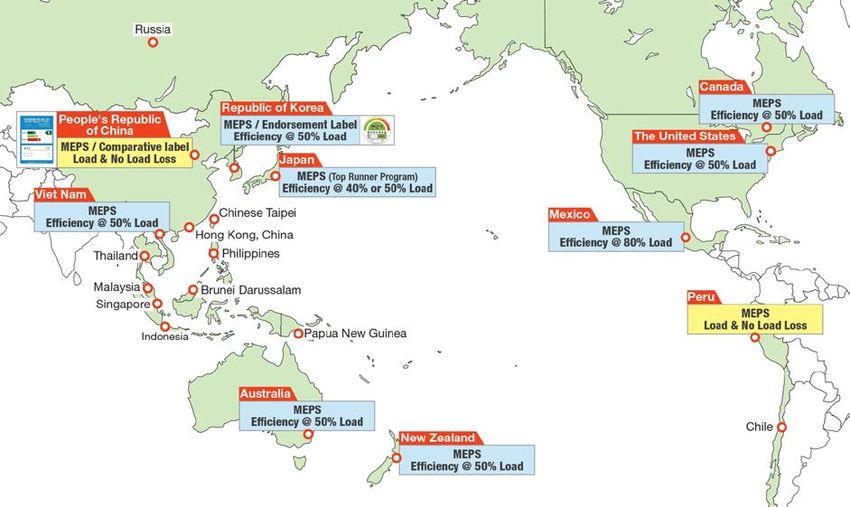
Table of Contents

1     EXECUTIVE SUMMARY........................................................................... 1

2     INTRODUCTION...................................................................................... 7
2.1   Background .................................................................................................................. 7
2.2   Overview of IEC 60076-20 Technical Specification............................................... 9

3     APPROACH AND METHODOLOGY ......................................................... 11
3.1   Step A – Compiling DT Data ................................................................................... 11
3.2   Step B – Defining DT Losses/Efficiency ................................................................ 12
3.3   Step C – Defining Analysis Parameters ................................................................ 12
3.4   Step D – Estimating Per-Unit Annual Energy Losses ......................................... 14
3.5   Step E – Economy Impact Analysis ....................................................................... 16

4     FINDINGS FROM ANALYSIS .................................................................. 18
4.1   The Philippines .......................................................................................................... 19
4.2   Thailand ...................................................................................................................... 21
4.3   The United States ..................................................................................................... 23
4.4   Viet Nam ..................................................................................................................... 25

5     CONCLUSIONS AND RECOMMENDATIONS............................................. 27
5.1   Conclusions ................................................................................................................ 27
5.2   Recommendations .................................................................................................... 27

6     ANNEXES ............................................................................................ 29
6.1   Annex A – MEPS for DTs in APEC Economies ................................................... 29
6.2   Annex B – IEC 60076-20 Energy Performance Levels ....................................... 30
6.3   Annex C – Economy Analysis ................................................................................. 34
6.4   Annex D – Emission Factors in APEC Economies .............................................. 75
6.5   Annex E – References ............................................................................................. 76

                                                                                                                                      i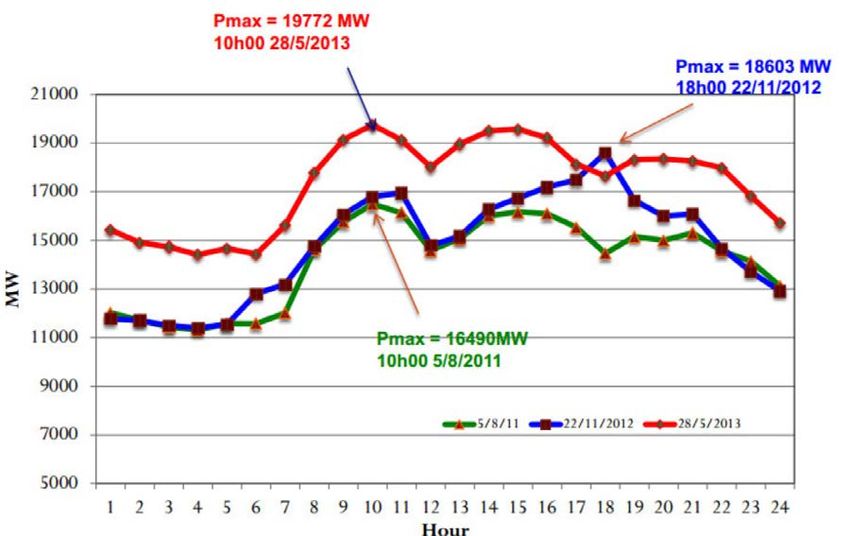
Table of Figures

Figure 2-1: MEPS for Distribution Transformers in APEC Economies ........................................................ 9

Figure 2-2: Efficiency of Three-Phase Distribution Transformers based on a Survey of World Practices
.............................................................................................................................................................................. 10

Figure 3-1: Overall Approach and Methodology for the Technical and Impact Analysis ........................ 11

Figure 3-2: Different Daily Load Curves for a Typical Distribution Transformer ....................................... 12

Figure 3-3: Daily Energy Losses under Different Load Curves ................................................................... 13

Figure 3-4: Different Designs of a 25 kVA Distribution Transformer at the same EIB50 ........................... 14

Figure 3-5: Estimation of Annual Energy Losses in Baseline Scenarios ................................................... 15

Figure 3-6: Estimation of Annual Energy Losses in IEC Scenarios ........................................................... 16

Figure 4-1: Maximum No-Load and Load Losses Requirements of IEC and Utilities in Thailand and Viet
Nam...................................................................................................................................................................... 18

Figure 4-2: Minimum Efficiency Index of IEC and Utilities in the Philippines and the USA .................... 18

Figure 4-3: Profiles of Utility Owned DT Stock in the Philippines ............................................................... 21

Figure 4-4: Profiles of Utility Owned DT Stock in Thailand.......................................................................... 23

Figure 4-5: Profiles of DT Stock in PG&E Networks..................................................................................... 24

Figure 4-6: Profiles of Utility Owned DT Stock in Viet Nam ........................................................................ 26

Figure 6-1: Institutional Arrangement of the Power Sector in the Philippines .......................................... 34

Figure 6-2: Electricity Consumption by End-Use Sector in the Philippines, 2012-2016.......................... 35

Figure 6-3: Monthly Peak Demand Profiles of Luzon Network ................................................................... 35

Figure 6-4: Monthly Peak Demand Profiles of Visayas Network ................................................................ 36

Figure 6-5: Monthly Peak Demand Profiles of Mindanao Network ............................................................. 36

Figure 6-6: Daily Load Profile of an Electric Utility in Mindanao ................................................................. 37

Figure 6-7: Profiles of Distribution Transformers installed in Three Distribution Utilities in Luzon and
Mindanao............................................................................................................................................................. 37

Figure 6-8: Typical Load-Efficiency Curve of NEMA TP-1 Compliant Distribution Transformer ............ 39

Figure 6-9: Different Daily Load Profiles for the Philippines Baseline Analysis ........................................ 40

Figure 6-10: Load vs Efficiency Curves of 50 kVA Distribution Transformer ............................................ 41

Figure 6-11: Per Unit Annual Energy Savings in kWh from Adoption of IEC 60076-20 in the Philippines
.............................................................................................................................................................................. 42

                                                                                                                                                                               ii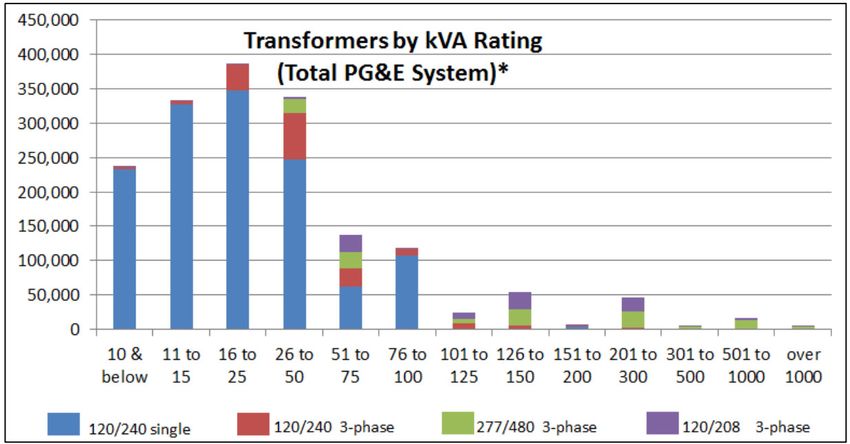
Figure 6-12: Per kVA Annual Energy Savings in % from Adoption of IEC 60076-20 in the Philippines
.............................................................................................................................................................................. 42

Figure 6-13: 50 kVA Per Unit Annual Energy Losses at Typical Load Factors in the Philippines
compared with PEI and EIB50 ........................................................................................................................... 43

Figure 6-14: 50 kVA Per Unit Annual Energy Losses at 50% Load Factor in the Philippines compared
with PEI and EIB50 .............................................................................................................................................. 43

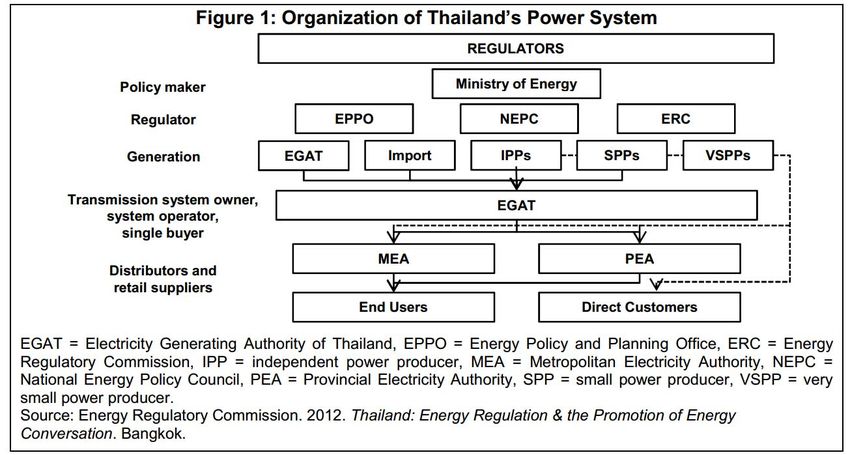
Figure 6-15: Structure of Thailand’s Power Sector ....................................................................................... 44

Figure 6-16: Electricity Consumption by Key End-Use Sectors in MEA and PEA’s Service Areas, in
Thailand ............................................................................................................................................................... 45

Figure 6-17: Annual Energy Demand Profiles of MEA and PEA ................................................................ 45

Figure 6-18: Daily Consumption Profiles of PEA’s Residential Customers .............................................. 46

Figure 6-19: Daily Consumption Profiles of PEA’s Small Commercial Customers .................................. 46

Figure 6-20: Daily Consumption Profiles of PEA’s Commercial and Public Sector Facilities................. 46

Figure 6-21: Daily Consumption Profiles of PEA’s Large Commercial and Industrial Customers ......... 47

Figure 6-22: Different Daily Load Profiles for Thailand Baseline Analysis ................................................ 49

Figure 6-23: Load vs Efficiency Curves of 500 kVA Distribution Transformer.......................................... 51

Figure 6-24: Per Unit Annual Energy Savings in kWh from Adoption of IEC 60076-20 in MEA’s Networks
.............................................................................................................................................................................. 52

Figure 6-25: Per kVA Annual Energy Savings in % from Adoption of IEC 60076-20 in MEA’s Networks
.............................................................................................................................................................................. 52

Figure 6-26: 500 kVA Per Unit Annual Energy Losses at Typical Load Factors in MEA’s Networks
compared with PEI and EIB50 ........................................................................................................................... 53

Figure 6-27: 500 kVA Per Unit Annual Energy Losses at 50% Load Factor in MEA’s Networks compared
with PEI and EIB50 .............................................................................................................................................. 53

Figure 6-28: Load vs Efficiency Curves of 160 kVA Distribution Transformer .......................................... 54

Figure 6-29: Per Unit Annual Energy Savings in kWh from Adoption of IEC 60076-20 in PEA’s Networks
.............................................................................................................................................................................. 55

Figure 6-30: Per kVA Annual Energy Savings in % from Adoption of IEC 60076-20 in PEA’s Networks
.............................................................................................................................................................................. 55

Figure 6-31: 160 kVA Per Unit Annual Energy Losses at Typical Load Factors in PEA’s Networks
compared with PEI and EIB50 ........................................................................................................................... 56

Figure 6-32: 160 kVA Per Unit Annual Energy Losses at 50% Load Factors in PEA’s Networks
compared with PEI and EIB50 ........................................................................................................................... 56

Figure 6-33: Map of Four North American Power Grid Interconnections .................................................. 57

                                                                                                                                                                               iii
Figure 6-34: Daily Demand Curves on June 21, 2017 ................................................................................. 58

Figure 6-35: Residential Load Profile supplied by PG&E’s 1-Phase Distribution Transformers ............ 59

Figure 6-36: Commercial and Industrial Load Profile supplied by PG&E’s 3-Phase Distribution
Transformers ...................................................................................................................................................... 59

Figure 6-37: Distribution Transformers installed in the PG&E System ...................................................... 61

Figure 6-38: Different Daily Load Profiles for the US Baseline Analysis ................................................... 62

Figure 6-39: Load vs Efficiency Curves of 25 kVA Distribution Transformer ............................................ 63

Figure 6-40: Per Unit Annual Energy Savings in kWh from Adoption of IEC 60076-20/DOE 2016 in
PG&E’s Systems ................................................................................................................................................ 64

Figure 6-41: Per kVA Annual Energy Savings in % from Adoption of IEC 60076-20/DOE 2016 in PG&E’s
Systems ............................................................................................................................................................... 64

Figure 6-42: Comparison of 25 kVA Per Unit Annual Energy Losses at Typical Load Factors in PG&E’s
System ................................................................................................................................................................. 65

Figure 6-43: Comparison of 25 kVA Per Unit Annual Energy Losses at 50% Load Factor in PG&E’s
System ................................................................................................................................................................. 65

Figure 6-44: Structure of the Power Sector in Viet Nam .............................................................................. 66

Figure 6-45: Electricity Consumption in Viet Nam, 1990 – 2013 ................................................................ 67

Figure 6-46: Share of Annual Electricity Consumption in Viet Nam in 2013 by EVN Power Corporation
.............................................................................................................................................................................. 67

Figure 6-47: EVN System Daily Load Profiles in 2011, 2012 and 2013 .................................................... 68

Figure 6-48: Profile of Utility Owned Distribution Transformers in Viet Nam, 2014 ................................. 69

Figure 6-49: Different Daily Load Profiles for Viet Nam Baseline Analysis ............................................... 71

Figure 6-50: Load vs Efficiency Curves of 250 kVA Distribution Transformer .......................................... 72

Figure 6-51: Per Unit Annual Energy Savings in kWh from Adoption of IEC 60076-20 in Viet Nam .... 73

Figure 6-52: Per kVA Annual Energy Savings in % from Adoption of IEC 60076-20 in Viet Nam ........ 74

Figure 6-53: 250 kVA per Unit Annual Energy Losses at Typical Load Factors in Viet Nam compared
with PEI and EIB50 .............................................................................................................................................. 74

Figure 6-54: 250 kVA Per Unit Annual Energy Losses at 50% Load Factor in Viet Nam compared with
PEI and EIB50 ...................................................................................................................................................... 74

                                                                                                                                                                               iv
Table of Tables

Table 2-1: Three Methods of Specifying Energy Performance of a Transformer in IEC 60076-20 ......... 9

Table 2-2: IEC 60076-20 Energy Performance Indicators for 50 Hz and 60 Hz Distribution Transformers
.............................................................................................................................................................................. 10

Table 3-1: NES Analysis Methods ................................................................................................................... 17

Table 3-2: Key Assumptions used in NES Analysis ..................................................................................... 17

Table 4-1: Summary of Annual Energy Savings and GHG Emission Reductions in selected APEC
Economies .......................................................................................................................................................... 19

Table 4-2: Economy-Specific Parameters for the Philippines, 2015 .......................................................... 19

Table 4-3: Annual Energy Savings per kVA of 50 kVA DT in the Philippines ........................................... 20

Table 4-4: Impact Analysis Results from Adoption of IEC 60076-20 in New Installation and Replacement
in the Philippines ................................................................................................................................................ 21

Table 4-5: Economy-Specific Parameters for the Thailand, 2015 .............................................................. 21

Table 4-6: Annual Energy Savings per kVA of MEA’s and PEA’s DTs...................................................... 22

Table 4-7: Impact Analysis Results from Adoption of IEC 60076-20 in New Installation and Replacement
in Thailand........................................................................................................................................................... 23

Table 4-8: Specific Parameters for PG&E’s Networks, 2015 ...................................................................... 24

Table 4-9: Annual Energy Savings per kVA of 25 kVA DT in PG&E’s Networks ..................................... 24

Table 4-10: Impact Analysis Results from Adoption of IEC 60076-20 in New Installation and
Replacement in PG&E’s Networks .................................................................................................................. 25

Table 4-11: Economy-Specific Parameters for Viet Nam, 2015 ................................................................. 25

Table 4-12: Annual Energy Savings per kVA of 250 kVA DT in Viet Nam ................................................ 26

Table 4-13: Impact Analysis Results from Adoption of IEC 60076-20 in New Installation and
Replacement in Viet Nam ................................................................................................................................. 26

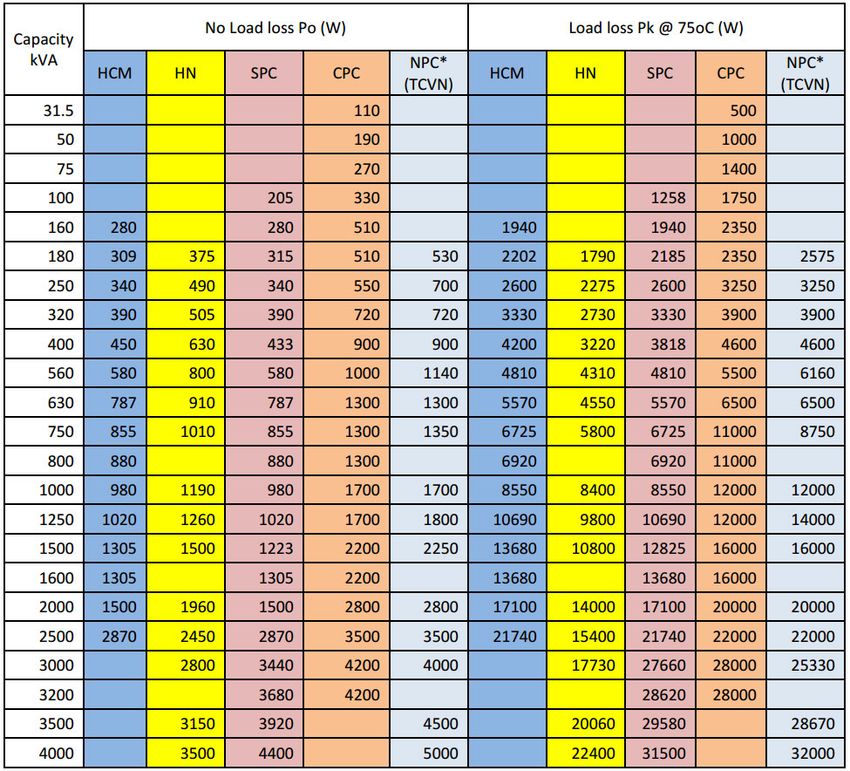
Table 6-1: Energy Performance Requirements for DTs in APEC Economies .......................................... 29

Table 6-2: Minimum Efficiency Values for Liquid-Immersed Distribution Transformers (DOE, 2010) .. 38

Table 6-3: Maximum No-Load and Load Losses for DTs procured by ECs ............................................. 38

Table 6-4: Per Unit Baseline Annual Energy Losses of 50 kVA Single-Phase Distribution Transformer
in the Philippines ................................................................................................................................................ 40

Table 6-5: Loss and Efficiency Values of 50 kVA Distribution Transformer.............................................. 41

Table 6-6: Analysis of per Unit Annual Energy Losses of Single-Phase 50 kVA 60Hz DT .................... 42

                                                                                                                                                                               v
Table 6-7: Key Data on Energy Sold and Distribution Networks of MEA and PEA, Thailand ................ 44

Table 6-8: Distribution Transformer Stock and Market in Thailand ............................................................ 47

Table 6-9: Maximum No-Load and Load Losses for Distribution Transformers, MEA ............................ 48

Table 6-10: Maximum No-Load and Load Losses for Single-Phase Distribution Transformers, PEA .. 48

Table 6-11: Maximum No-Load and Load Losses for Three-Phase Distribution Transformers, PEA .. 48

Table 6-12: Per Unit Baseline Annual Energy Losses of MEA’s 500 kVA Distribution Transformer..... 50

Table 6-13: Per Unit Baseline Annual Energy Losses of PEA’s 160 kVA Distribution Transformer ..... 50

Table 6-14: Loss and Efficiency Values of 500 kVA DT .............................................................................. 51

Table 6-15: Analysis of per Unit Annual Energy Losses of 500 kVA Distribution Transformer.............. 52

Table 6-16: Loss and Efficiency Values of 160 kVA Distribution Transformer ......................................... 54

Table 6-17: Analysis of per Unit Annual Energy Losses of 160 kVA Distribution Transformer.............. 55

Table 6-18: Minimum Efficiency Values for Liquid-Immersed Distribution Transformers (DOE, 2016) 60

Table 6-19: Per Unit Baseline Annual Energy Losses of 25 kVA Single-Phase Distribution Transformer
.............................................................................................................................................................................. 62

Table 6-20: Loss and Efficiency Values of 25 kVA Distribution Transformer ........................................... 63

Table 6-21: Analysis of per Unit Annual Energy Losses of 500 kVA Distribution Transformer.............. 64

Table 6-22: Utility Owned Distribution Transformer Stock in Viet Nam, 2014 .......................................... 68

Table 6-23: MEPS for Liquid-Immersed Distribution Transformers in Viet Nam (Table 1, TCVN
8525:2015) .......................................................................................................................................................... 69

Table 6-24: Maximum Losses Requirements of EVN Power Distribution Corporations ......................... 70

Table 6-25: Per Unit Baseline Annual Energy Losses of 250 kVA Three-Phase Distribution Transformer
.............................................................................................................................................................................. 71

Table 6-26: Loss and Efficiency Values of 250 kVA DT .............................................................................. 72

Table 6-27: Analysis of per Unit Annual Energy Losses of 250 kVA Distribution Transformer.............. 73

                                                                                                                                                                               vi
1 E XECUTIVE S UMMARY
This report was prepared for the Asia-Pacific Economic Secretariat (the “APEC Secretariat”) under the
“EWG 05 2016A – Reducing Losses in Power Distribution through Improved Efficiency of Distribution
Transformers” project. The specific objectives of the project are:
         •    To build the capacity of policy makers in understanding impacts of adopting IEC 1 60076-20
              technical specification for their economies in terms of electricity distribution loss reductions
              and Greenhouse Gas (GHG) emission reductions; and
         •    To come up with key policy recommendations in consultation with key stakeholders, such as
              utilities, manufacturers, standard making bodies etc.

Distribution Transformers in the Global and APEC Context
Distribution transformers (DTs) are the critical components of the electricity system powering our
modern society and they help lower voltages in distribution networks to the levels that are needed by
end users. Compared with other electrical equipment, DTs are generally very efficient, typically incurring
losses of just 2% to 3% in transforming electricity from one voltage level to another. However, DTs’
performance has major impacts on electricity use given the non-stop operation of the equipment over
its long service life, typically over 20 years.

Varying from economy to economy, technical losses in electricity networks range from a few percent to
15% to 20% of the total energy transported. On an average roughly one-third of these losses occur in
DTs. According to the U4E Policy Guide for Energy-Efficient Transformers 2, using more efficient
transformers in transmission and distribution networks can save nearly 5% of global electricity
consumption. By 2040, annual electricity savings of over 750 TWh are possible (equivalent to the annual
electricity generated by over 100 coal-fired power plants with a capacity of 1,000 MW), saving more
than 450 million tonnes of GHG emissions.

APEC has 21 member economies, and the word 'economies' is used to describe APEC member
economies because the APEC cooperative process is predominantly concerned with trade and
economic issues, with member economies engaging with one another as economic entities. To date,
10 APEC member economies have established the Minimum Energy Performance Standards (MEPS)
for DTs and the two major energy performance evaluation methods for DTs adopted by these APEC
member economies are: maximum no-load and load losses and efficiency values at a specific loading
factor (typically at 50% loading factor). Based on the LBNL study conducted in 2012 3, improvements of
the MEPS requirements for DTs in APEC economies could save up to 19% of DT losses by 2030,
equivalent to 30 TWh of electricity or 17 million tonnes of GHG emissions per year.

IEC 60076-20 Technical Specification
IEC 60076-20 technical specification, published in January 2017, gives methods of specifying a
transformer with an appropriate level of energy efficiency according to the loading and operating
conditions. The IEC technical specification document proposes two methods for defining an energy
efficiency index, i.e.,: Efficiency Index Method A (EIA) 4, and Efficiency Index Method B (EIB) 5, and
introduces three methods for specifying energy performance of a transformer, i.e., : 1) Peak Energy

1   The International Electrotechnical Commission (IEC) is the world’s leading organization for the preparation and
         publication of international standards for electrical, electronic and related technologies.
2   http://united4efficiency.org/wp-content/uploads/2017/11/U4E-TransformersGuide-201711-Final.pdf
3   APEC EWG 15/2012A: APEC Distribution Transformers Survey: Estimate of Energy Savings Potential from
       Increase in MEPS
4    Efficiency Index Method A (EIA): ratio of the transmitted apparent power of a transformer minus electrical losses
    including the power consumed by the cooling to the transmitted apparent power of the transformer for a given
    load factor.
5    Efficiency Index Method B (EIB): ratio of the transmitted apparent power of a transformer to the transmitted
    apparent power of the transformer plus electrical losses for a given load factor.

                                                                                                                    1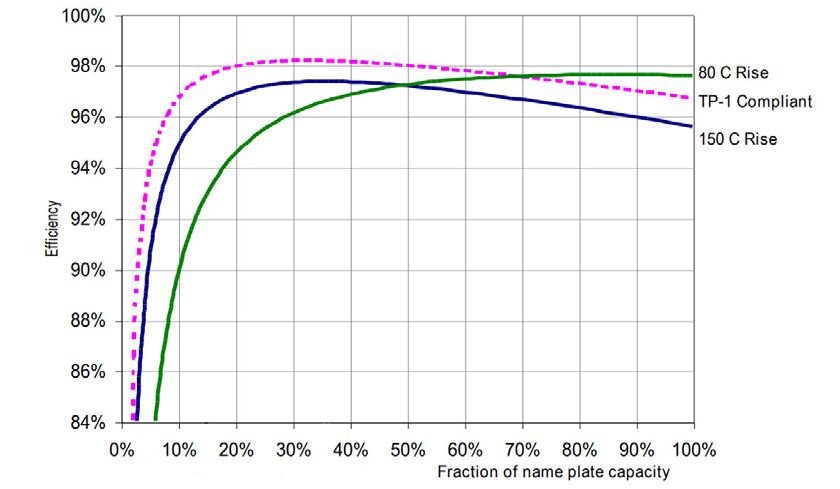
Index (PEI); 2) Maximum no-load and load losses; and 3) Efficiency index at a load factor of 50%.
Under each energy performance method, the IEC technical specification document provides two levels
of energy performance requirements:
                    •    Level 1 recommendations are defined as “basic energy performance” requirements; and
                    •    Level 2 recommendations are defined as “high energy performance” requirements.

It should be noted that the above energy performance recommendations for 50 Hz and 60 Hz DTs are
not fully harmonized, as only PEI values (computed by method A) can be applied for both frequencies.
The recommended maximum no-load and load losses cover only 50 Hz DTs, while efficiency index
values (computed by method B) for 50 Hz and 60 Hz DTs are neither identical nor comparable. As for
the 60 Hz transformers, level 1 values are in compliance with the United States Department of Energy
(US DOE) ruling 2010 and level 2 are compliant with the amended ruling 2016. In addition to the 3
methods of defining energy performance of DTs, IEC 60076-20 technical specification also provides
details on a loss capitalization (or total cost of ownership – TCO) and suggestion on additional
requirements on energy performance parameters, e.g., total losses, efficiency at another load factor
and/or power factor.

Analysis Approach and Methodology
Energy losses incurred in a particular DT are highly dependent on the load-efficiency curve and
operating patterns. Each DT has a unique load-efficiency curve depending on its no-load and load
losses. These loss values depend on the choices of core materials and winding which directly impact
cost of DTs. DT designers can design DTs with different no-load and load losses but deliver the same
efficiency value at a specific loading factor, e.g., 50% or EIB50, as Design A, B and C shown in the figure
below.

                        99.30%

                        99.10%

                        98.90%

                        98.70%
   Efficiency (%)

                        98.50%
                                                                                                                                                              Design A
                        98.30%                                                                                                                                Design B

                        98.10%                                                                                                                                Design C

                        97.90%

                        97.70%

                        97.50%
                                 0%
                                      5%
                                           10%
                                                 15%
                                                       20%
                                                             25%
                                                                   30%
                                                                         35%
                                                                               40%
                                                                                     45%
                                                                                           50%
                                                                                                 55%
                                                                                                       60%
                                                                                                             65%
                                                                                                                   70%
                                                                                                                         75%
                                                                                                                               80%
                                                                                                                                     85%
                                                                                                                                           90%
                                                                                                                                                 95%
                                                                                                                                                       100%

Source: Analysis by IIEC

For utility-owned DTs, operating patterns of a specific kVA rating depend on types and behaviors of
customers connected to that particular DT. For example, during weekdays, residential customers tend
to use more electricity before and after working hours, while office buildings generally use more
electricity during office hours. Different operating patterns and load-efficiency curves of DTs could result
great variations of energy loss estimations, ranging from 9% to 74% higher losses compared with the
ideal flat load curve, as illustrated in the diagram on the following page.

                                                                                                                                                                         2
Ideal Case Worst Case Realistic Case
1 1 1
0.8 0.8 0.8
0.6 0.6 0.6
0.4 0.4 0.4
0.2 0.2 0.2
0 0 0
00:00:00 02:00:00 04:00:00 06:00:00 08:00:00 10:00:00 12:00:00 14:00:00 16:00:00 18:00:00 20:00:00 22:00:00 00:00:00 00:00:00 02:00:00 04:00:00 06:00:00 08:00:00 10:00:00 12:00:00 14:00:00 16:00:00 18:00:00 20:00:00 22:00:00 00:00:00 00:00:00 02:00:00 04:00:00 06:00:00 08:00:00 10:00:00 12:00:00 14:00:00 16:00:00 18:00:00 20:00:00 22:00:00 00:00:00
6,000 26%-74% Higher Losses
Daily Energy Losses (Wh)
5,000
9%-24% Higher Losses
4,000
3,000
2,000
1,000
-
Ideal Case Worst Case Realistic Case
Design A (NL=66W, LL=264W) 3,102 4,587 3,588
Design B (NL=30W, LL=408W) 3,102 5,397 3,854
Design C (NL=96W, LL=144W) 3,102 3,912 3,367
Source: Estimation by ICA
The previous studies on potential energy loss reduction from energy efficient DTs did not consider
impacts of load-efficiency design curves and daily load profiles (or load curves) of DTs. The analysis
in this report takes into consideration different load-efficiency curves and daily load profiles when
estimating energy losses of DTs. The most common kVA rating of DTs in the selected APEC economies
was identified and annual energy losses were estimated based on 4 different load-efficiency design
curves (baseline, Design A, B and C) 6 and 4 different daily load profiles (flat, residential, commercial
and industrial) 7. As a result, 16 combinations of per-unit annual energy losses were computed in each
selected economy. National Energy Savings (NES) in each selected economy over the next 20 years
were then projected based on comparison of the baseline model with Design A, B and C.
The proposed analysis approach and methodology require comprehensive data on DT population by
kVA rating, market size and demand profiles of different end-use sectors. Despite the project team’s
relentless efforts in data gathering, only utility-owned DT data from the Philippines, Thailand, the USA
and Viet Nam were obtained. Considering this, the analysis in this report focused on liquid-filled utility-
owned DTs in these 4 economies.
6 4 different load-efficiency design curves include: 1) Baseline model with typical no-load and load losses
requirements or MEPS; 2) Design A model with IEC 60076-20 level 2 energy performance; 3) Design B
model with low no-load losses and high load losses at IEC 60076-20 EIB50 level 2; and 4) Design C model
with high no-load losses and low load losses at IEC 60076-20 EIB50 level 2.
7 4 different daily load profiles include: 1) Flat load curve; 2) Residential load curve; 3) Commercial load curve; and
4) Industrial load curve. In each selected economy, the flat load curve has a loading factor equivalent to an
annual average loading factor of the economy grid, while the residential, commercial and industrial load
curves are based on the survey findings.
3Key Findings of Data Collection and Analysis
Based on utility data from the 4 selected economies, the most common kVA ratings vary from economy
to economy:
• The Philippines – 50 kVA single-phase 60 Hz
• Thailand (Metropolitan Electricity Authority) – 500 kVA three-phase 50 Hz
• Thailand (Provincial Electricity Authority) – 160 kVA three-phase 50 Hz
• The USA (PG&E) – 25 kVA single-phase 60 Hz
• Viet Nam – 250 kVA three-phase 50 Hz
It is found that 60 Hz utility-owned DTs generally follow US DOE regulations on EIB50 for energy
performance specifications, while 50 Hz utility-owned DTs normally use no-load and load losses as
energy performance specifications. It is also found that the IEC 60076-20 level 2 “high energy
performance” requirements are not necessarily more stringent than the existing utilities’ procurement
regulations for these common kVA ratings in the selected economies. As DTs are generally very
efficient, improvements of DTs’ efficiency are small, usually less than 1%. Therefore, adoption of IEC
60076-20 level 2 for utility-owned DTs delivers very marginal improvements in economies where
utilities’ procurement regulations are stringent, such as MEA in Thailand of which load losses
requirements are actually more stringent than IEC 60076-20. However improvements can be more
attractive in economies where utilities’ procurement regulations are less stringent, for example PEA in
Thailand and Viet Nam.
EIB50 gained from adoption of IEC 60076-20 Changes in DT Losses from Adoption of IEC
0.35% 60076-20
60.0%
0.30%
50.0%
0.25%
40.0%
0.20% 30.0%
0.15% No-Load
20.0%
Loss (W)
0.10% 10.0%
Load Loss
0.05% 0.0% (W)
-10.0% Thailand (MEA), Thailand (PEA), Vietnam, 250 kVA
0.00%
500 kVA 3- 160 kVA 3- 3-phase, 50Hz
Philippines, Thailand Thailand USA (PG&E), Vietnam, 250 -20.0%
phase,50Hz phase,50Hz
50 kVA 1- (MEA), 500 (PEA), 160 25 kVA 1- kVA 3-phase, -30.0%
phase, 60Hz kVA 3- kVA 3- phase, 60Hz 50Hz
phase,50Hz phase,50Hz -40.0%
Analysis energy demand profiles in the selected economies reveals that total system load factors range
from 66% to 88%, and daily load profiles of different end-use sectors vary greatly with maximum loading
factors from 58% for residential end-use to 91% for industrial end-use. Applying different DT designs
(Design A, B and C) that meet IEC 60076-20 level 2 EIB50 energy performance requirements in these
different operating environments deliver combinations of positive and negative energy savings results,
as illustrated below.
Flat Load Profile Residential Load Profile
35% 35%
30% 30%
25%
25%
20%
20%
Design A 15% Design A
15%
Design B 10% Design B
10% Design C Design C
5%
5%
0%
0% -5% Philippines Thailand (MEA) Thailand (PEA) USA Vietnam
Philippines Thailand (MEA) Thailand (PEA) USA Vietnam
-5% -10%
4Commercial Load Profile Industrial Load Profile
35% 35%
30% 30%
25%
25%
20%
20% 15%
Design A Design A
15% 10%
Design B Design B
10% 5%
Design C Design C
0%
5%
-5% Philippines Thailand (MEA) Thailand (PEA) USA Vietnam
0% -10%
Philippines Thailand (MEA) Thailand (PEA) USA Vietnam
-5% -15%
The analysis results also show that PEI and EIB50 cannot predict magnitudes of energy savings gained
when DTs’ loads deviate from the ideal case with loading factors are far greater or lower than the
efficiency index measurement points. The analysis results reveal that Design C (with low load losses
design) is the most suitable design as it is able to deliver positive energy savings under all operating
environments in the selected economies.
Potential annual energy savings and GHG emissions resulting from adoption EIB50 level 2 Design C
DTs for utility-owned DTs in the selected economies summarized in the table below. Considering that
IEC energy performance levels for 50 Hz and 60 Hz DTs are neither identical nor comparable, it is not
recommended to compare the saving results achieved from applying the same IEC energy performance
level in 50 Hz and 60 Hz power supply systems.
Table 1: Summary of Annual Energy Savings and GHG Emission Reductions in selected APEC
Economies
EIB50 Level 2 (Design C)
Utility Owned
GHG Emission
Popular Utility- DT Installed Annual Energy
Economy Reduction
Owned DTs Capacity Savings (GWh)
(ktCO2e)
(MVA)
2030 2037 2030 2037
Single-Phase, 60
Philippines 16,200 1 78 134 39 68
Hz, 50 kVA
Three-Phase, 50
Thailand Hz, 160 kVA (PEA) 47,655 1,394 2,210 795 1,260
& 500 kVA (MEA)
Single-Phase, 60
USA 186,000 2 652 1,012 402 624
Hz, 25 kVA
Three-Phase, 50
Viet Nam 41,015 1,578 2,503 890 1,412
Hz, 250 kVA
1 Estimated installed capacity of DTs in three distribution utilities (two in Luzon, one large and one small,
Note:
and one in Mindanao)
2 Aggregated capacity of DTs installed in the PG&E system
Conclusions, Recommendations and Next Steps
Utilities and energy efficiency policy makers from APEC economies and ASEAN member economies
participating in consultation workshops organized by the project agreed in principle that PEI and EIB50
are simple and easy-to-compare energy performance indicators. However energy losses of a DT at a
specific loading factor cannot be estimated using PEI, and EIB50 will only be meaningful and more
accurate for comparing DTs when loading factors are close to 50%. It is virtually impossible to predict
uncertainty of EIB50 as it depends on DT designs (no-load and load loss values).
Considering that diversity of daily load profiles (or load curves) and loading factors for different end-use
sectors (e.g., residential, commercial and industrial sectors) could result in great variations of energy
losses in DTs with the same EIB50, the workshops’ participants acknowledged that no-load and load
5losses allow for better estimation of the actual energy losses of DTs under different operating conditions.
The participants also acknowledge that IEC 60076-20 high energy performance (level 2) for no-load
and load losses do not necessarily offer more stringent energy performance requirements for all utilities
in APEC and ASEAN.
The analysis in this report found that variations of energy losses at a specific loading factor due to
diversity of daily load profiles are generally less than 5%. Changes in the overall loading factor typically
deliver a greater impact on DT energy losses than diversity of daily load profiles. Load profile data from
the selected economies generally demonstrates high loading factors of more than 50%. DTs with lower
load losses (Design C) are therefore more effective in reducing energy losses than adoption of DTs
with lower no-load losses, higher PEI or higher EIB50 with high load losses.
Based on findings from the analysis, it is recommended that more stringent energy performance levels
(specifically for no-load and load losses requirements which are the most favorable approach by APEC
and ASEAN utilities) should be recommended by IEC 60076-20 to provide guidance for utilities, private
sector users and policy makers to go beyond the current level 2 requirements. Development of more
stringent recommendations should be carried out in consultation with the industry. Other general
recommendations for utilities, private sector end-users and policy makers pertaining to adoption of IEC
60076-20 are as follows:
• With limited data on energy demand profiles, adoption maximum no-load and load losses
requirements, using IEC 60076-20 as the guideline, for procurement of DTs is recommended.
This approach gives flexibility in estimation of energy losses for different kVA rating DTs
allocated for different types of consumers.
• Adoption of DTs with lower load losses will deliver greater energy savings for utilities in the
selected APEC economies. However cost and benefit analysis should be conducted to
understand the most economical DT designs under different operating environments.
• More resources are needed in collecting demand data and understanding typical loading
factors of common kVA ratings used in different end-use sectors. These will assist in
determination of the energy performance parameters for DTs that best reflect the actual
situation.
Utility and non-utility policy makers can initiate the works on DT MEPS by focusing on the most common
kVA rating, and the following key immediate steps are recommended for utility and non-utility policy
makers in APEC and ASEAN to initiate the works on DT MEPS.
a) Establish a dedicated working group to manage data collection activities on demand profiles
for utility-owned and privately-owned DTs in their responsible economy;
b) Conduct on-site measurements of DTs’ load profiles and determine average loading in different
end-use applications;
c) Coordinate with DT manufacturers to determine key design parameters for cost/benefit analysis
of different DT designs for operation under different load profiles and loading factors;
62 I NTRODUCTION
IEC 60076-20 technical specification for power transformer energy efficiency were recently issued in
January 2017 and it specifies methods for evaluating energy performance of distribution transformers
(DTs), as well as recommends energy performance levels for both 50 Hz and 60 Hz DTs. This technical
and impact analysis report was prepared to provide: (1) an analysis of the technical of the differences
and commonalities between the economy and utility standards for energy performance of DT and IEC
60076-20; and (2) an analysis of the impact of changing from the existing energy performance
requirements or Minimum Energy Performance Standards (MEPS) in the selected APEC member
economies (see Box 1) to the energy performance levels as recommended by IEC 60076-20 in terms
of energy savings.
This report was prepared for the Asia-Pacific Economic Secretariat (the “APEC Secretariat”) under the
“EWG 05 2016A – Reducing Losses in Power Distribution through Improved Efficiency of Distribution
Transformers” project. The specific objectives of the project are:
• To build the capacity of policy makers in understanding impacts of adopting IEC TS 60076-
20 for their economies in terms of electricity distribution loss reductions and GHG emission
reductions; and
• To come up with key policy recommendations in consultation with key stakeholders, such as
utilities, manufacturers, standard making bodies etc.
Box 1: Asia Pacific Economic Cooperation (APEC)
APEC has 21 member economies (mentioned below). The word 'economies' is used to describe
APEC member economies because the APEC cooperative process is predominantly concerned with
trade and economic issues, with member economies engaging with one another as economic
entities.
Australia Japan Philippines
Brunei Darussalam Republic of Korea Russia
Canada Malaysia Singapore
Chile Mexico Chinese Taipei
People's Republic of China New Zealand Thailand
Hong Kong, China Papua New Guinea United States
Indonesia Peru Viet Nam
2.1 BACKGROUND
Distribution transformers (DTs) are the critical components of the electricity system powering our
modern society. By helping to lower voltages in distribution networks to the levels that are needed by
end users, they comprise part of the voltage transformation system enabling high-voltage power
transmission and distribution (T&D) necessary to lower overall network energy losses. A brief
introduction on DT is given in Box 2.
Compared with other electrical equipment, DTs are generally very efficient, typically incurring losses of
just 2–3% in transforming electricity from one voltage level to another. However, the fact that almost all
electricity is passed through transformers prior to its final use means that opportunities to reduce losses
in DT are highly significant for improving the efficiency of electricity networks as a whole. Varying from
7economy to economy, technical losses in electricity networks range from a few percent to 15-20% of
the total energy transported. On an average roughly one-third of these losses occur in DTs 8.
Box 2: Characteristics of Distribution Transformer
The International Electrotechnical Commission (IEC) which is the international standard organization
defines a transformer as an “electric energy converter without moving parts that changes voltages
and currents associated with electric energy without change of frequency”. While there are slight
differences in the definition of a distribution transformer, most countries define them as transformers
with a highest winding voltage at or below 36 kV. Additional information on characteristics of
distribution transformers is given below:
• There are two main types of distribution transformers: liquid-immersed or liquid-filled and
dry types. The liquid-immersed transformers are the more common ones as they tend to
be more efficient and compact and are used in almost all distribution utility applications.
The dry transformers are mostly used in commercial buildings and industrial customers,
as well as electric utilities, largely in areas where electricity leaks are more costly.
• Losses in transformers are split into no-load losses and load losses. No-load losses are
independent of load, implying that they do not increase with the increased loading on the
transformer. Load losses, sometimes referred to as “winding losses” or “copper losses”,
are losses in the transformer windings when it is under load.
• The combination of no-load losses and load losses means that each transformer has an
optimum loading point when it is most efficient and the actual losses incurred will increase
or decrease non-linearly as the load moves away from the optimum point.
Electric utilities around the world have specifications on losses and efficiency of DTs installed in their
distribution networks, approaches in measurement of DTs’ losses and computation of DTs’ efficiency
generally follow either IEC standards for 50 Hz DTs or NEMA standards 9 for 60 Hz DTs, which are not
fully compatible. Regardless of how losses and efficiency are measured, increasing the level of MEPS
for DTs represent significant energy savings potential in electricity distribution networks.
As for the APEC economies, the existing MEPS requirements are specified as maximum no-load and
load losses and efficiency values at different loading factors, as shown in Figure 2-1 (more details on
MEPS requirements are given in Annex A). Based on the LBNL study conducted in 2012 10,
improvements of the MEPS requirements for DTs in APEC could save up to 20% of DT losses by 2030,
equivalent to 32 TWh of electricity per annum, reducing CO2 emissions by 18 Mt.
8 PROPHET II: The potential for global energy savings from high-efficiency distribution transformers, Final report
– November 2014, the European Copper Institute
9The National Electrical Manufacturers Association (NEMA) is the association of electrical equipment and medical
imaging manufacturers based in the US. NEMA standards for electrical equipment are popular among countries
with 60Hz supply.
10 APEC EWG 15/2012A: APEC Distribution Transformers Survey: Estimate of Energy Savings Potential from
Increase in MEPS
8Figure 2-1: MEPS for Distribution Transformers in APEC Economies
2.2 OVERVIEW OF IEC 60076-20 TECHNICAL SPECIFICATION
IEC 60076-20 technical specification, published in January 2017, gives methods of specifying a
transformer with an appropriate level of energy efficiency according to the loading and operating
conditions. The technical specification document proposes two methods (A 11 and B 12) of defining an
energy efficiency index and introduces three methods to specify energy performance of a transformer
as specified in Table 2-1.
Table 2-1: Three Methods of Specifying Energy Performance of a Transformer in IEC 60076-20
Method 1: Method 2: Method 3:
Minimum PEIs No-load and Load Losses Efficiency Indexes at a
Load Factor of 50%
The Peak Energy Index (PEI) is The no-load and load losses The efficiency at a defined
the highest value of efficiency at rated power for power factor and at a
index method A that can be rationalization of transformer particular load factor (typically
achieved at the optimum value cores and coils for at 50%)
of load factor (when no-load transformers generally
loss equals load loss) PEI produced in large volumes
should be used in conjunction
with either a total cost of
ownership (TCO) approach or
any other mean of specifying
the load factor
11Efficiency Index Method A (EIA): ratio of the transmitted apparent power of a transformer minus electrical losses including
the power consumed by the cooling to the transmitted apparent power of the transformer for a given load factor.
12Efficiency Index Method B (EIB): ratio of the transmitted apparent power of a transformer to the transmitted apparent
power of the transformer plus electrical losses for a given load factor.
9For each method, the technical specification document provides two levels of energy performance
requirements. Level 1 recommendations are defined as “basic energy performance” requirements, and
level 2 recommendations are defined as “high energy performance” requirements. Recommended
minimum PEI values have been developed from 50 Hz transformer data but they are also applicable to
60 Hz transformers, while recommended maximum no-load and load losses cover only 50 Hz
transformers. As for the efficiency index, method B at 50% load factor, the technical specification
document recommends two separate sets of efficiency indexes for 50 Hz and 60 Hz transformers. As
for the 60 Hz transformers, level 1 values are in compliance with the United States Department of
Energy (US DOE) ruling 2010 and level 2 are compliant with the amended ruling 2016. Summarized in
the table below are applicability of IEC 60076-20 energy performance indicators for 50 Hz and 60 Hz
DTs. More details on IEC recommendations on energy performance levels are given in Annex B.
Table 2-2: IEC 60076-20 Energy Performance Indicators for 50 Hz and 60 Hz Distribution
Transformers
Energy Performance Indicator 50Hz DT 60Hz DT
Minimum PEI (Method A)
Maximum load losses & no-load losses
Minimum Efficiency Index at a load factor of 50% (Method
B)
In addition, IEC 600076-20 also provides different levels of efficiency index values at 50% loading for
single- and three-phase DTs, from 5 kVA to 1,000 kVA on single-phase and from 15 kVA to 3,150 kVA
on three-phase. 5 Tiers of efficiency index, Tier 1 is the least efficient and Tier 5 is the most efficient,
are calculated based on equations developed from the survey and analysis of existing world standards
and regulations in 2013. Shown in the figure below are different efficiency Tiers for 50 Hz and 60 Hz
three-phase DTs.
Liquid-Filled, Three-Phase (50Hz) Liquid-Filled, Three-Phase (60Hz)
100.00% 100.00%
99.50% 99.50%
Efficiency at 50% Load Factor (Method A)
Tier 1 Tier 1
Efficiency at 50% Load Factor
Tier 2 Tier 2
99.00% 99.00%
Tier 3 Tier 3
Tier 4
Tier 4
98.50% Tier 5 98.50%
Tier 5
EIA50 -
Level 1 EIB50 -
EIA50 - Level 1
Level 2 98.00% EIB50 -
98.00%
Level 2
97.50%
97.50%
kVA Rating kVA Rating
Figure 2-2: Efficiency of Three-Phase Distribution Transformers based on a Survey of World
Practices
103 A PPROACH AND M ETHODOLOGY
The project intended to cover all APEC member economies and non-APEC ASEAN member
economies 13, i.e., Cambodia, Lao PDR and Myanmar, as additionally requested by ICA. The analysis
on the impact of adoption of the IEC 60076-20 technical specifications was carried out using an Excel
spreadsheet model which computes per unit annual energy losses of a selected kVA rating of DT under
different daily load profiles and loading factors. The overall approach and methodology for the technical
and impact analysis comprises several steps, as illustrated in Figure 3-1.
Step A: Compiling Step B: Defining Step C: Defining Step D: Step E: National
DT Data DT Losses/ Analysis Estimating Per- Impact Analysis
Classifications by Efficiency Parameters Unit Annual
kV/KVA Energy Losses
Typical Load Profiles Extrapolation
for Different End-
Use Sectors at the APEC
Baseline 100
2 x PG&E DTs for Residential Customers
Baseline Economy Level
Scenario
90
80
Scenario - Baseline
70
60
50
40
MEPS/ Utilities’
30
- IEC 60076-20
20
Per Unit Annual
10
0
Procurements
00:00-01:00
01:00-02:00
02:00-03:00
03:00-04:00
04:00-05:00
05:00-06:00
06:00-07:00
07:00-08:00
08:00-09:00
09:00-10:00
10:00-11:00
11:00-12:00
12:00-13:00
13:00-14:00
14:00-15:00
15:00-16:00
16:00-17:00
17:00-18:00
18:00-19:00
19:00-20:00
20:00-21:00
21:00-22:00
22:00-23:00
23:00-24:00
Energy Losses - Savings
Annual Load Factor
Energy Demand of PEA
GWh
12,000
11,500
2016
11,000
10,500 2015
10,000 2014
9,500 2013
9,000
IEC 60076-20 8,500
Jan Feb Mar Apr May Jun Jul Aug Sep Oct Nov Dec
IEC 60076-20
Scenario Scenario
DT designs to meet Key Variables:
- Load losses/no Per Unit Annual
efficiency Electricity Tariff
load losses Energy Losses
requirements (current/
- Efficiency at 50%
projection),
load
Emission Factor,
- Peak efficiency
index discount rate,
service life
Figure 3-1: Overall Approach and Methodology for the Technical and Impact Analysis
3.1 STEP A – COMPILING DT DATA
The technical and impact analysis undertaken by this project required detailed inputs of several market
and operating parameters in each economy, including but not limited to:
• Stock of installed DTs classified by kV and kVA;
• Popular kVA rating of DTs;
• Typical load profiles of different end-use sectors, seasonal variation and load factors;
• Average loading factor or average RMS loading;
• Current energy performance standards for DTs;
• Trend and projection of electricity tariff;
• Electricity emission factor;
• Expected service lifetime of DTs.
The project employed various data gathering methods including questionnaires distribution, direct
interviews and secondary researches. The project was able to compile data from questionnaires and
13 The Association of Southeast Asian Nations (ASEAN) is a regional intergovernmental organisation comprising
ten Southeast Asian states, including Brunei Darussalam, Cambodia, Indonesia, Lao PDR, Malaysia, Myanmar,
the Philippines, Singapore, Thailand and Viet Nam.
11direct interviews for Peru, the Philippines, the Chinese Taipei, Thailand and the United States. However
data from Peru and the Chinese Taipei does not include current energy performance standards for DTs.
Sufficient data for Viet Nam was also gathered from the recent studies commissioned by ICA and other
secondary resources. The data shows that most utility-owned DTs in these countries are liquid-
immersed DTs. In view of this, the analysis in this report will focus on existing energy efficiency
requirements of utility-owned DTs in five countries, i.e., the Philippines, Thailand, the United States,
and Viet Nam vis-à-vis the IEC 60076-20 technical specifications for liquid-immersed DTs.
3.2 STEP B – DEFINING DT LOSSES/EFFICIENCY
For the baseline scenario, maximum losses and efficiency values of DTs are based on either the
economy's MEPS or values specified in the utilities’ procurement documents. For the IEC 60076-20
scenario, level 2 energy performance recommendations on no-load and load losses and EIB50 will be
used for 50 Hz DTs and only level 2 energy performance recommendations on EIB50 will be used for 60
Hz DTs. The PEI recommendations for 50 Hz are equivalent to the no-load and load losses
recommendations hence the PEI values will not be referenced.
3.3 STEP C – DEFINING ANALYSIS PARAMETERS
Step C defines three sets of important parameters necessary for estimation of per-unit annual energy
losses of a DT. These include: 1) typical daily load profiles for different end-use sectors; 2) annual load
factor; and 3) typical DT designs to meet EIB50 requirements. Impacts of these parameters is discussed
in the below sections.
3.3.1 Impacts of Daily Load Profile Diversity
The technical and impact analysis in this report takes into consideration the impacts of different daily
load profiles on energy losses incurred in DT. For utility-owned DTs, daily load profiles or load curves
of a specific kVA rating depend on types and behaviors of customers connected to that particular DT.
For example, during weekdays, residential customers tend to use more electricity before and after
working hours, while office buildings generally use more electricity during office hours. Figure 3-2
illustrates three different daily load profiles, i.e., ideal, worst and realistic case, with an average loading
factor of 50%.
1
0.8
Ideal Case
0.6
Worst Case
0.4
Realistic Case
0.2
0
00:00:00 04:00:00 08:00:00 12:00:00 16:00:00 20:00:00 00:00:00
Source: Presentation on EWG 05 2016A – Reducing Losses in Power Distribution through Improved Efficiency of
Distribution Transformers, 48th Meeting of APEC-EGEE&C, Peru, September 2016
Figure 3-2: Different Daily Load Curves for a Typical Distribution Transformer
12You can also read


