Resource Assessment for County Donegal - Donegal Fuel Resource Survey and Biomass Demand - November 2012 - raslres
←
→
Page content transcription
If your browser does not render page correctly, please read the page content below
Resource Assessment
               for County Donegal
Donegal Fuel Resource Survey and Biomass Demand

                                 November 2012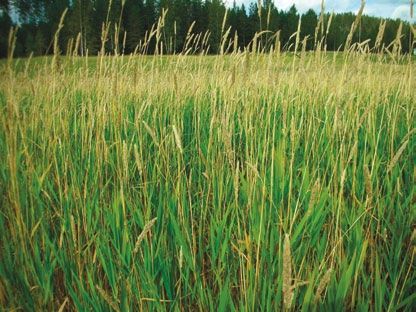
SWEDEN
                                                                                                                  NORWAY
                                                                         ICELAND
                                                                                           FAROE
                                                                                          ISLANDS                                          FINLAND

                                                                                           SCOTLAND

                                                                                     NORTHERN                  DENMARK
                                                                                      IRELAND
                                                                           Western
                                                                           Region

                                                                                         IRELAND
                                                                                                     UNITED
                                                                                                   KINGDOWM

       What is RASLRES?
       RASLRES (Regional Approaches to Stimulating Renewable Energy Solutions) is an EU bioenergy
       project led by the WDC and funded under the Northern Periphery Programme of INTERREG IVB. The
       total project budget is €2.8 million over three years. Commencing in September 2009, RASLRES
       aims to increase the uptake of locally produced bioenergy solutions through the development and
       implementation of market development models. The project focus is on pilot actions in regard to
       wood energy, energy crops and marine biomass fuels.
       RASLRES is an international partnership which includes:
       gg     Western Development Commission – Ireland
       gg     Action Renewables – Northern Ireland, UK
       gg     Environmental Research Institute, North Highland College – Scotland
       gg     Municipality of Norsjö – Sweden

       In the Western Region RASLRES supports the growth of the wood energy sector by delivering
       practical services to market players and by informing policy development. During 2010 and 2011
       RASLRES delivered a range of actions with a focus on selected pilot projects. The project aims to:
       gg     build sustainable local loops of wood fuel supply and demand via new (or existing) wood fueled
              boilers
       gg     offer best practice approaches to support industry development
       gg     help build critical mass and scale in the wood energy sector of the region
       gg     support investment plans and help secure project finance

       RASLRES adopts a full supply chain approach - looking at the energy chain from supply (i.e. fuel
       producers / processors) to demand (i.e. energy users). The services to the wood energy sector include:
       gg     provision of a range of impartial technical and business advisory support services to selected
              clients progressing wood energy projects in the region
       gg     generation of market information and intelligence to support the sector e.g. resource
              forecasting from private sector forestry, assessment of energy crop potential, technical and
              business case studies
       gg     accessing of international expertise and facilitation of networking with EU markets

Disclaimer: All reasonable measures have been taken to ensure the quality, reliability, and accuracy of the information in this report. This report is intended
to provide information and general guidance only. If you are seeking advice on any matters relating to information on this report, you should contact the
WDC with your specific query or seek advice from a qualified professional expert.
Table of
                                                                                                    Table of Contents

Table of Contents
 Introduction                                                                                                      3

 The Forest Estate                                                                                                 3

 The Donegal Forest Estate                                                                                         4

 Age Profile		                                                                                                     5

 The Resource                                                                                                      6

 Regional and County Energy Balance and the Requirement for Renewable Energy                                       8

 Barriers to Market Development                                                                                    13

 Proposals for CHP and Bio Refinery - Market Potential and Impacts                                                 17

 Meeting the Market Demand                                                                                         19

 Importation		                                                                                                    20

 Conclusions                                                                                                       21

Resource Assessment for County Donegal   Donegal Fuel Resource Survey and Biomass Demand   November 2012                1
2 Resource Assessment for County Donegal Donegal Fuel Resource Survey and Biomass Demand November 2012
Introduction                                                                    Introduction

Introduction
This Resource Assessment is one of seven individual County based resource          DONEGAL
assessments prepared by RASLRES and this series follows on from the Regional
Wood Fuel Resources completed by RASLRES in April 20101. The purpose of the
initial regional report was to outline the sources and availability
of wood based fuels and model various supply scenarios at a
regional level.                                                              SLIGO LEITRIM

A second study completed by RASLRES examined the                                       MAYO
Regional Heat Market and Biomass Demand Estimates for                                             ROSCOMMON
20202. That study determined the demand for biomass at
a Regional and County level by interpreting the National
                                                                                         GALWAY
Renewable Heat Targets for 2020 agreed by the EU and the
Irish State. The study determined the quantity of wood based
fuels required to meet the 2020 targets.
                                                                                          CLARE
The renewable heat market has the potential to create
considerable levels of employment across the Western Region
and to provide long-term stable markets for low value
wood fuels which can compete with fossil fuels and so
reduce and fix energy prices for end users. In addition,
there are environmental benefits – reductions in CO2
emissions.
The Biomass Heat target is one of a number of national targets which will require significant quantities
of wood biomass. Other sectors for which national targets have been set include CHP, Co-Firing. These
coupled with other markets Bio-Refining, Biomass export and possibly animal bedding will compete with the
Biomass Heat Sector for resources.
The purpose of this report is to provide Local Authorities and other interested parties with an overview of
the potential supply of wood based biomass and estimated demand for renewable heat market within each
county. It will also highlight the issues regarding the potential impacts of large scale projects such as Bio-
Refineries and/or Combined Heat and Power (CHP) plants on county and regional supply chains. At present
there is more than sufficient wood available to meet current demand for wood biomass (estimated to be
about 60,000odt3 annually – most of this is used by sawmills to kiln dry timber) and there is considerable
potential to grow the biomass market from within existing supplies without straining the resource.
Local wood biomass resources are finite and as demand for biomass increases from some or all of the
above markets, planners will require a greater understanding of the available resources at both a county and
regional level. The increased demand for wood biomass will stimulate increased rates of afforestation and
potentially a shift from main stream agriculture into short rotation coppice (SRC) or other energy crops. This
will increase the volume of truck movements hauling the fuel stock from its source to where it is consumed.
At present there are a number of large scale projects being considered for the region should one or a number
of these progress to construction it is likely that the local fuel supply will have to supplement with imported
materials from within the EU and 3rd party countries. The point of importation and the additional traffic
volume generated will need to be given careful consideration because of the urban location of the region’s
ports.

1
    http://www.raslres.eu/wp-content/uploads/2010/05/RASLRES-WP3-SS-Wood-fuel-resource-assessment-v01-2010_5_6.pdf
2
    http://www.raslres.eu/wp-content/uploads/2010/05/RASLRES-WP3-SS-Regional_Energy_Balance_Method_Results_
    Mar2010-v01-2010_3_16.pdf
3
    Oven dry tonnes.

Resource Assessment for County Donegal     Donegal Fuel Resource Survey and Biomass Demand        November 2012                  3
The Donegal Forest Estate
The Donegal Forest
The Forest Estate
In 2010 the National Forest Estate was estimated to be 745,500ha or 11% of the land mass. By this date
the Western Region’s4 forest estate accounted for 40% of the National Estate - the actual area planted
had reached 295,000ha or 12% of the total land area of the Western Region. 37% of the privately owned
forests and 42% of the public owned forest are situated within the western region. Table 1 summarises the
distribution and ownership of the forest estate at national, regional and county levels.
Ownership by Area Ha Ownership by % Forest Cover %
Level
Private Public Total Private Public
National 347,652 397,805 745,456 47% 53% 11%
Regional 127,842 166,821 294,664 43% 57% 12%
Regional Ownership as % of
37% 42%
National
Counties
Clare 28,234 23,360 51,594 55% 45% 16%
Donegal 22,615 36,407 59,022 38% 62% 12%
Galway 18,887 38,926 57,813 33% 67% 10%
Leitrim 12,553 12,599 25,152 50% 50% 16%
Mayo 23,289 34,465 57,754 40% 60% 11%
Roscommon 12,945 8,436 21,382 61% 39% 9%
Sligo 9,319 12,628 21,947 43% 57% 12%
Table 1 – Forest Distribution and Ownership at National, Regional and County levels – Source: Forest Service 2011
The Donegal Forest Estate
Size and Ownership
The size and ownership of the county’s forest estate and therefore its productive capacity relative to its heat
demand has a direct bearing on the county’s ability to meet its share of National Targets for two reasons.
If a county has a high heat demand but a small forest estate then the demand may out strip the potential
supply and the ownership can determine where harvest is sold. At present, most of the timber (suitable
for biomass) produced by public sector forests are sold on long-term contracts to state owned boardmills.
Therefore, it is expected that increasing demand from the biomass market will be met by increasing supplies
from private sector forests.
By the end of 2010 the forest estate in county Donegal had reached 59,020ha which is approximately 12.2%
of the county’s area. This is slightly above the national average of 10.8%. Figure 1 illustrates ownership
of the forest estate within the county. Private ownership accounts for 22,615ha or 38.3% of the total area.
Over the last five years the county’s private estate has increased by 1,067ha, accounting for nearly 3% of
the national planting programme and is the second lowest afforestation rate in the region for the period ’06
to ‘10. This low rate of planting reflects the increasing number of restriction such SPAs and the exclusion
of unenclosed land with low productivity, both of which are reducing the availability of land suitable for
afforestation, rather than recent reductions in the grants rates. Furthermore, proposed changes in the
4
The Western Region refers to the following counties; Clare, Donegal, Galway, Leitrim, Mayo, Roscommon and Sligo.
4 Resource Assessment for County Donegal Donegal Fuel Resource Survey and Biomass Demand November 2012Age Profile Age Profile Common Agriculture Policy (CAP) may limit the transfer of land out of routine agriculture into forestry post 2014. The proposals have yet to be negotiated, but should they come into effect as currently outlined, only 5% of area currently deemed as agricultural would be eligible for afforestation. Public afforestation accounted for only 18ha over the same timescale (5 years). The figures for public owned forests include all state agencies; Coillte, (amenity and productive forests) and National Parks being the main stakeholders. The forecast discussed below includes the expected yields in all forests. Figure 1 – Ownership of the Donegal Forests - Source: Forest Service and ITGA 2012 Yearbook Age Profile As indicated above the increased demand for biomass is expected to be met by the increasing volume harvested within the private sector. The age profile of the private estate is one of the key factors in determining the annual harvest area and volume produced. Figure 2 illustrates the age profile of the private estate in Donegal. Figure 2 – Age Profile Private Estate – Source: Forest Service 2010 and ITGA Yearbook 2012 In terms of developing the biomass market the age groups 11 to 15 and 16 to 20 are of most interest as these forests are currently at or rapidly approaching the age of first thinning. (Thinning is the removal of a portion of the crop at a rate which does not reduce the overall production of the site and it is therefore considered to be sustainable). These age classes comprise 12,000ha. Their harvest product will be new to the market and will substantially increase the volumes of available timber over the next 10 years. Plantations in the 21 Resource Assessment for County Donegal Donegal Fuel Resource Survey and Biomass Demand November 2012 5
The Resource
                                                                The Resource
    to 25 and 26> groups, if not already thinned are unlikely to be thinned in the future as they will be past the
    recommended age of first thinning.
    The age profile for the public forests are not readily available, however, it is safe to assume that the age profile
    is evenly distributed as the yield forecasts only fluctuate moderately during the period, which suggests that
    a similar area will be harvested annually.
    The timber harvested during thinnings and clearfells in both the public and private estates are used to supply
    a number of markets. These are discussed in the following section.

    The Resource
    Wood based biomass comes from three main sources:

    gg      Private Forests
    gg      Public Forests
    gg      Sawmill residues generated from logs purchased from both the private and public forests

    When logs are harvested they are generally graded according to their diameter and stem quality; these
    ‘assortments’ are given in table 2. The two assortments of most interest to the biomass sector are the
The Resource Figure 3 Potential Yields – Source: COFORD 2011 The potential yield for 2012 is expected to be 259,000m³. The yield fluctuates between 196,000m³ and 590,000m³ - but generally it increases through the period of the forecast. Currently the small diameter roundwood produced by the public sector is retained to meet existing contracts with publicly owned boardmills. This situation may change in the future as the boardmills which are situated in the south east begin to source suitable raw material from the private sector within the south east region. Residues are produced when sawmills process round logs into sawn timber. There are three forms of residues; bark, sawdust and woodchips. Residues are also known as co-product. Approximately 50% of the volume of timber delivered as logs to a sawmill ends up as co-product. A significant amount of the co-product is already being used in sawmills to generate heat to kiln dry timber and at a number of other facilities to generate process heat. Figure 4 – Private Sector Pulpwood Logs and Co-product – Source: COFORD 2011 Resource Assessment for County Donegal Donegal Fuel Resource Survey and Biomass Demand November 2012 7
Regional and County
      Regional and County Energy Balance and the Requirement for Renewable Energy

    There are a number of reasons for the variations which occur in the supply of logs to the market. Different
    annual planting rates – planting rates have fluctuated since in the 1980s the lowest private planting rate
    recorded for Donegal was in 1985 - 3.64ha, the highest was in 1995 – 2544ha. Thinning commences between
    the ages of 15 and 18 so the amount of land available for thinning is depended on the amount of land planted
    15 to 18 years earlier. A second factor – thinning is cyclical and therefore the area scheduled for thinning
    increases year on year as the plantations mature which increases volume of pulpwood produced. However,
    as the crop matures the average log size increases and therefore, less pulpwood is produced per ha from
    mature plantations. The forest management assumptions i.e. thinning or non-thin - areas which are left
    unthinned due to site exposure, soil type and conditions or plantation size – reduce the volume of pulpwood
    produced in the early years but increase it in the later years as these areas are clearfelled.
    As the private estate matures and average log sizes increase in later thinnings the amount of palletwood and
    sawlog increases. This increases the amount of timber processed by sawmills which increases the volume
    of co-product generated by sawmills. Figure 4 above shows that as the private sector matures the volume of
    co-product increases from 2020 onwards.
    The peaks in production in 2025 and 2027 reflect the peak in planting rates in the mid 90s which are in a
    thinning cycle and the start of clearfelling in the private sector. The areas planted between 2010 and 2020
    will compensate for the loss of production from areas clearfelled.
    The volume of co-product generated within a county depends on the level sawmilling which is basis within
    the county. Sawmilling capacity in Donegal is low relative to the size of its forest estate. Therefore, most of
    the sawlog, palletwood and stakewood produced in Donegal are exported to other counties or to Northern
    Ireland. As a result the co-product associated with round wood sourced in Donegal is generated outside the
    county. This movement within the region and outside make forecasting woodfuel supplies at a county level
    difficult.

    Regional and County Energy Balance and the Requirement for
    Renewable Energy
    An Energy Balance describes the supply of and demand for energy across various sectors of the economy
    and the contributions made by various fuel types. Energy Balance studies can be prepared at international
    levels such as EU, National level or at regional and county levels. Typically, the energy market is divided into
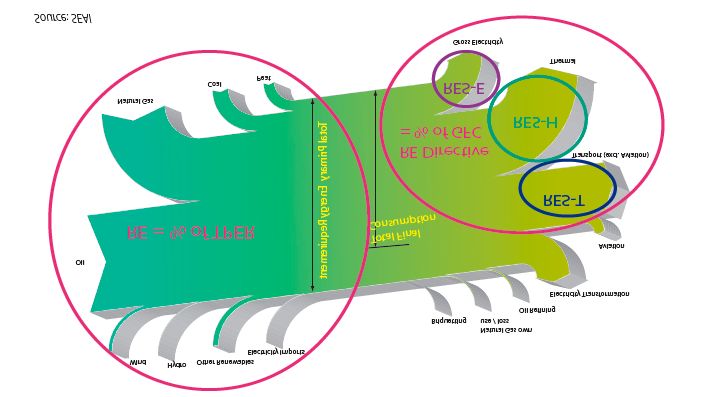
    three major groups; Electricity, Transport and Heat. Figure 4 illustrates the energy balance for Ireland based
    on data relating to 2011 and published by SEAI in June 2012. The red circle on the left shows the total energy
    inputs and the fuel types used to supply Irish demand. This is known as Total Primary Energy Requirement
    (TPER). It is clear from the illustration that Ireland is very dependent on fossil fuels which accounted 95.1%,
    (inputs with oil and natural gas accounted for 82% of total inputs). Renewables accounted for 4.6% and the
    balance is made of wastes and imported electricity. The red circle on right shows the total amount of energy
    consumed in the three main energy markets Electricity, Transport and Heat. This is known as Total Final
    Consumption (TFC). The fuel used for aviation and energy lost to the system during conversion and delivery
    are shown as exiting the system.

8                Resource Assessment for County Donegal           Donegal Fuel Resource Survey and Biomass Demand   November 2012
Regional and County Energy Balance and the Requirement for Renewable Energy
Energy balances are used for planning long-term energy markets and to set realistic goals for switching
from one fuel type to another and for setting renewable energy targets for each of the three principle market
sections.
In 2007 the EU agreed legally binding commitments regarding climate and energy; known as 20:20:20 by
2020 these commitments set out below5:
1. 20% reduction in greenhouse gases by 2020
2. 20% increase in energy efficiency by 2020
3. 20% of the EU’s energy consumption to be from renewable sources by 2020.
The directive 2009/28/EC on the promotion of energy derived from renewable sources sets out how the EU
is to achieve the 20% target by 2020. This Directive also requires each member state to prepare a National
Renewable Energy Action Plan which sets targets for each energy sector, electricity generation, heating and
transport. Ireland has agreed to an overall renewable energy target of 16% 2020. Each energy sector has
been given a specific target for 2020 these are:
1. Electricity – 40% by 2020. SEAI estimated that in 2011 – 17.6% was achieved.
2. Transport – 10% this target is to be achieved by a combination of a 4% biofuels obligation and an
increase in the number of electric cars to 10% by 2020. By 2011 renewables contributed 3.6%
3. Heat – 12% of the heat market. SEAI estimated the contribution made by renewables for 2010 was 5%.
At this level Ireland would be falling behind on the required growth rates if the national target is to be
achieved by 2020.
SEAI’s provisional estimates for 2011 indicate that Ireland’s renewable sector contributed 5.9%6 to overall
energy demand. This suggests that the renewables market needs to treble in size if the overall national target
is to be achieved by 2020. At present only the electricity sector seems to be making sufficient progress to
meet its target.
5
http://www.dcenr.gov.ie/NR/rdonlyres/03DBA6CF-AD04-4ED3-B443-B9F63DF7FC07/0/IrelandNREAPv11Oct2010.pdf
6
http://www.seai.ie/Publications/Statistics_Publications/Renewable_Energy_in_Ireland_2011.pdf
Resource Assessment for County Donegal Donegal Fuel Resource Survey and Biomass Demand November 2012 9Regional and County Energy Balance and the Requirement for Renewable Energy
The Regional Energy Balance & Biomass Heating Demand Estimates for 20207 examines the total demand
from Heat Sector. Demand in the Heat market comes from the following sectors; Residential, Industrial
and Services. Due to poor data collection at regional and county levels various CSO indices are used to
convert National Data to demand estimates for both regional and county levels. The estimate for renewables
assumes that wood based biomass will account for 85% of the renewable heat market target for 2020.
Table 3 sets out the National, Regional and County estimates for wood biomass demand assuming the 2020
targets are achieved. The standard unit of measurement for biomass is the “oven dry tonne” (odt). By 2020
Co. Donegal would require approximately 38,000 oven dry tonnes (odt) of biomass to meet its share of
national targets.
To convert m³OB to oven dry tonnes the volume of timber expressed in m³OB is divided by approximately 2.5.
County
Sector ‘000odt National Regional
CE DL GY LM MO RN SO
Residential 584 105 15 20 31 4 17 8 9
Industry 423 77 13 11 26 3 12 6 6
Services 240 35 6 7 9 1 6 3 3
1,247 35 35 38 66 8 35 17 18
Table 3: Demand for Wood Biomass in 2020 – Requirements in expressed as ‘000 odt – Source: Regional
Energy Balance – RASLRES 2010
Achieving the county targets as set out in the Regional Energy Balance will require a great deal of planning
and highlights the need for the full engagement of all stakeholders; Local Authorities (Planning Section,
Environment Section, Roads and Facilities Managers etc.), Industrial and Commercial Sectors, State Bodies
(Teagasc, NPWS and Forest Service), Heat Entrepreneurs, Forest Managers and Forest Owners Public and
Private. The most important of these are the Private Forest Owners as it is from this sector that the increase
in overall timber supply for the county is to come and key to meeting the county’s target for biomass target
for 2020.
The Regional Wood Fuel Resource Survey – RASLRES April 2010 examines the demand and supply at a
regional level and used four scenarios to model the supply of wood to the heat market. These scenarios
modelled the supply side using a number of assumptions which have an impact on the availability of wood to
the heat market. The scenarios and the assumptions are set out below:
1. Scenario 1 – full availability of roundwood and associated co-product from both the public and private
sectors. This scenario assumes that all of the pulpwood is supplied to the heat market is supplied
directly from the forest. It also assumes that all of the co-product generated in sawmills derived from
palletwood and sawlog produced in Donegal is made available to the Donegal heat market.
2. Scenario 2 – full availability of roundwood and co-product from the private sector only. This scenario
assumes that all of the material sourced from the public sector is used to supply existing contracts and
therefore not available to the local heat market.
7
http://www.raslres.eu/wp-content/uploads/2010/05/RASLRES-WP3-SS-Regional_Energy_Balance_Method_Results_
Mar2010-v01-2010_3_16.pdf
10 Resource Assessment for County Donegal Donegal Fuel Resource Survey and Biomass Demand November 2012Regional and County Energy Balance and the Requirement for Renewable Energy
3. Scenario 3 – 60% availability of roundwood and co-product from the private sector only. As with
scenario 2 above this scenario assumes that the only available material will be sourced from the private
sector. Furthermore, it assumes that only 60% of the potential private sector supply is available to the
local heat market. The reduced supply to the heat market maybe as a result of competition from other
non-heat markets which yield a better return or where the costs of harvesting and road transport result
in the woodchip being uncompetitive with fossil fuels.
4. Scenario 4 - 35% availability of roundwood and co-product from the private sector only. As with
scenarios 2 and 3 above scenario 4 assumes 35% availability from the private sector. This situation
may arise if the rate of boiler deployment does not keep pace with the increasing rate of harvesting.
Forest owners, particularly those with small plantations and/or high harvesting costs will require long
term, stable locally based markets for large volumes of low value pulpwood logs. This is exactly the type
of market provided by a local biomass heat market. Therefore, if demand for wood fuel is low because
of low installation rates many plantations will remain unthinned because poor returns to forest owners.
The results of the modelling are presented in Figure 5a below. As stated above the expected demand from
the biomass market for Donegal in 2020 will be 38,000odt. Under scenario 1 – all material being available
there is a potential supply surplus of 65,000odt. It is unlikely that this situation will arise because currently
most of the pulpwood produced by the public sector forest is retained to supply long-term contracts with
board mills. Therefore the private sector will have to meet the majority of the demand.
Scenario 2 suggests that if all of the pulpwood and associated co-product harvested in the private sector is
made available to the heat market there will be a shortfall of about 5,000odt. A shortage of this sized could
easily be met by adjusting harvesting schedules in the private sector or by purchasing pulpwood from the
public sector.
Scenarios 3 and 4 may arise if certain market conditions apply – low rates of boiler installation or increased
demand for stakewood which attracts a better price. If the rate of boiler installation remains at its current
level there will be insufficient demand and economies of scale required to justify harvesting in remote or
small plantations.
The RASLRES study Wood Energy Installations8 states that there is 1 wood fuelled (woodchip and wood
pellet) boiler installations in Donegal totalling 4,410kW of installed capacity of which 3,500kW are fuelled
by woodchip. These boilers require about 2,500 to 2,800odt annually which is approximately 7% of what is
required to achieve the county’s 2020 target. If a low rate of demand persists only a quarter of the potential
production available from the private sector modelled in scenario 4 – 35% of private sector woodlands
would find a market. This suggests that currently the major barrier to the development of the local wood
fuelled heat market is the low rate of installations. Therefore, it is essential that installation rate increases
dramatically over the next 6 or 7 years.
If Co. Donegal is to meet its renewable heat targets the private sector forests must be fully mobilised and the
public sector will have to make some contribution to the supply chain.
8
http://www.raslres.eu/wp-content/uploads/2011/06/Wood-Energy-Installations-WR-2011.pdf
Resource Assessment for County Donegal Donegal Fuel Resource Survey and Biomass Demand November 2012 11Regional and County Energy Balance and the Requirement for Renewable Energy
Figure 5a – County Donegal Results Scenarios 1 to 4 Roundwood and Co-Product included – Source: DARE
Ltd.
The supply of biomass modelled above and presented Figure 5a assumes that both pulpwood and co-
product are available in varying volumes according to each of the scenarios. However the market is further
complicated because the amount of co-product available will depend on where the pallet and sawlog are
processed. The quantity of co-product produced within a county depends on the number and size of sawmills
based within the county relative to the volume of timber harvested in that county. Co. Donegal has a number
of small scale sawmills, therefore most of the palletwood and sawlog is exported to sawmills based in other
counties or to mills based in Northern Ireland. This means that the vast bulk of co-product associated with
timber harvested in Donegal is generated outside the county and not readily available to the Donegal heat
market.
To illustrate the impact caused by the loss or removal of co-product from the heat market a second set of
scenarios were modelled where only round logs (pulpwood) is available and co-product is excluded but the
participation rates remain the same i.e. Full Private and Public Sector, Full Private Sector only, 60% Private
Sector and 35% Private Sector. The results are presented in Figure 5b.
Figure 5b – County Donegal Results Scenarios 1 to 4 Roundwood only
12 Resource Assessment for County Donegal Donegal Fuel Resource Survey and Biomass Demand November 2012Barriers to Market Barriers to Market Development Again, the results modelled in scenario 1, full availability of logs from both the public and private sectors, there is sufficient supply to meet the estimated demand for 2020. However, in scenario 2, full private sector pulpwood only, the supply of pulpwood would be 23,000odt or approximately 60% of the potential demand. The shortfall will be about 15,000odt per annum. The results for scenarios 3 and 4 are; supply 14,000odt or 37% of market demand and 8,000odt or 21% of market demand respectively. The results modelled above for scenarios 3 and 4 and presented in Figure 5b still suggest that the biggest barrier to market development is the low rate of wood chip boiler installations. At present demand is estimated to 2,500odt to 2,800odt per annum which is equivalent to 23% of material available modelled in scenario 4 – pulpwood only. Therefore, demand needs to increase four fold before supply constraints impact on the market in the worst case (scenario 4 Figure 5b). To put this in context the installed capacity of wood chip boilers would need to increase from 3,500kW to 10,000kW to 12,000kW depending on the operating hours and the duration of the heating season or from 15 boilers to 25 to 30 boilers depending on boiler size. Even this modest expansion would not achieve counties biomass targets. The scenario 2 would allow for a much greater expansion from the current 3.5MW (3,500kW) to 28.7MW before supply becomes a constraint as set out in Figure 5b. Expansion beyond this level will require the use of wood fuels (co-product and wood pellets) imported into the county, much of which would have been exported as logs to sawmills or by the greater use of wood fuels sourced from public sector forests within the county. Barriers to Market Development There are a number of factors which act as barriers to the development of the wood energy in the private sector woodlands. The impact of each barrier will change as the market matures. In most counties the biggest barrier is a lack of demand from the wood chip market which has stagnated. However, the addition of the boiler to Connacht Gold site will stimulate demand in the private sector. Other factors also act as barriers to market development and the main barriers are list below it is important to remember that the impact of each and its priority will change over time and others may arise in the future but the main ones are listed below: 1. Stagnation of demand and low rates of boiler installation 2. Lack of awareness and/or understanding amongst potential end users 3. Lack of awareness and/or understanding of the process of harvesting 4. Plantation size 5. Access to plantations along public and private roads. 6. Competition from other markets for pulpwood These barriers are discussed in greater detail below. 1. Stagnation of the wood chip market In recent years the number of boilers installed annually has decreased and with the removal of the grant aid, end users must now fund the entire cost of the boiler installation. Woodchip boilers are considerably more expensive to install but the fuel cost are stable and cheaper than fossil fuels. Given the current economic climate and difficulties accessing funding many potential end users in the private sector are not considering wood fuel at present. Public Sector bodies with high stable heat loads are the best opportunity at present, given the Government’s drive for greater energy efficiency and requirements to reduce greenhouse gas emissions. An unpublished RASLRES survey of eight publicly owned buildings in Co. Donegal suggests that if these buildings were switched from fossil fuels to woodfuels demand for woodchip in the county would increase by 1,000odt per annum. This increase would require an additional harvest area of circa. 150ha per annum supporting 10 to 12 farm families and support the six months work for harvesting crews and transport plus increased activity for chip suppliers. Resource Assessment for County Donegal Donegal Fuel Resource Survey and Biomass Demand November 2012 13
Barriers to Market Development

     2. Lack of awareness and/or understanding amongst potential end users
     In some cases potential end users are not aware of the alternatives to fossil fuels thankfully this number
     is now falling. There are still some misconceptions regarding the quality and reliability of supply and the
     location of wood chip suppliers. At present there is one supplier operating in the western region who has
     attained certification from the Wood Fuel Quality Assurance scheme (WFQA). This scheme certifies that the
     wood chip is produced in compliance with EU standards and that the moisture content and chip size comply
     with heat supply agreements and that the timber used to produce the wood chip has been sources from
     sustainable managed plantations and has been legally felled. Further information regarding installations,
     suppliers of wood chip and the WFQA is available from www.RASLRES.eu and www.WFQA.ie

     3. Lack of awareness and/or understanding amongst forest owners
     Forestry is a long term investment and once planted and the premia secured many owners let the management
     of their plantations slip down the list of priorities. In some case the ownership of the plantation may change
     and the new owner might not be familiar with forest management processes and the processes involved in
     bring timber to the market. The National Forestry Inventory NFI completed in 2007 estimated that only 25%
     of the private estate ready for thinning at that time had been thinned. This highlighted the need to put in place
     a forum through which forest owners could improve their understanding of forest management. The Forest
     Service and Teagasc and many of the Leader Companies in the region have promoted the development of
     producer groups. There are a number of producer groups scattered throughout the region at various stages
     of development.
     Donegal has the most active and developed producer group in the country – Donegal Woodland Owners
     Association DWOS. This producer group represents the interests of owners who own plantations situated
     in the county. They have put huge effort into getting owners actively involved in the management of their
     plantations and have adopted a group approach to the harvesting and marketing of the timber products. The
     group have also developed a small scale ESCO contract model where the DWOS will install, finance and
     maintain log gassifiers boilers. These boilers are ideal for small scale installations and the fuel handling is
     labour intensive creating employment opportunities for members. Similar projects exist in other counties
     through the region.
     The County Clare Wood Energy Project CCWEP has led the way in this area and it has a membership of c.
     450 and represents an area of 4,500ha. The county has been divided up into 21 geographical clusters. Once
     a cluster is identified the owners can seek tenders from suppliers via the CCWEP website for the following
     services; inventory, road construction, harvesting and other forest management activities. By adopting the
     cluster approach sufficient economies of scale are achieved making the works more attractive to contractors.

     4. Size of plantations
     The average size of privately owned plantations in the western region is 9ha with a median of 5.5ha, making
     it difficult to achieve any economies of scale in terms of roading and harvesting – some these plantation have
     been excluded from the thinnings forecast. However, the yield is included in the expected clearfell volume.
     If these plantations are to be harvested they need to be grouped so that economies of scale can be achieved
     - this is one of the strengths of the producer group approach to harvesting.

     5. Access to Plantation along Public and Private Roads
     Forest Roads - A critical issue over the coming years will be the construction of forest roads. At present
     forest owners are eligible for grant aid for the construction of Forest Roads. To be eligible a plantation must
     be within two years of thinning. There is a three to four year window within which thinnings must be carried
     out if the stability of the crop is to be assured. Failure to do so will leave the crop vulnerable to wind throw.
     The available funding is limited and is decided on a year to year basis. Without grant aid many plantations

14                 Resource Assessment for County Donegal   Donegal Fuel Resource Survey and Biomass Demand   November 2012
Barriers to Market Development will be left unthinned because the cost of roading relative to the value of the material harvested cannot be justified. Evidence from the Cork and Galway Forest Producers Group Project confirms this to be the case. If long-term funding is not put in place and this issue is not resolved many owners will leave their plantations unthinned, thereby reducing the supply of wood to the biomass and other timber processing sectors in the short and medium term. This timber would not be lost entirely but instead of having a regular supply on a five year cycle there would be a once off yield at the end of the rotation as unthinned areas are clearfelled. Figure 6 presents a summary of the required level of investment and amount of road to be constructed using the current scheme rates of 20 linear meters per ha and a maximum rate of 700 euro per ha. The cost for the period 2012 to 2026 would be approximately €4.7m and the length of road required would amount to 158km servicing an area of 7,875ha scheduled for first thinning. Further roading will be required to services areas schedule for clearfelling. The figure assumes that roads are constructed two years in advance of thinnings. Figure 6 – Roading requirement areas scheduled for first thinning – Source: COFORD 2009 Access via public roads – Local Authorities have become more concerned regarding potential damage to or the inability of some local roads to support the weight of timber lorries. It is becoming more common for Local Authorities to restrict the weights to be carried on 3rd class roads to approximately 15t. This restriction means that the timber has to be double handled increasing the cost of harvesting significantly. By way of example, a plantation due for clearfell was recently granted a new felling licence which included a new weight restriction on the access road. The weight restriction was not in place on the previous felling licence which is still valid. The cost of harvesting under the old licence was agreed at €18/t. However, to comply with the weight restriction imposed by the new licence the timber has to be hauled from the forest to a transfer depot on a main road where it is reloaded for onward shipping. This has increased the cost of harvesting by €2.50 to €3.00 per tonne, the average cost has increased from €18/t to €22/t. This increases the harvesting cost by €12,375 or represents a 15% increase in the cost of harvesting. If this increase was applied to a thinning the returns would not cover the cost of harvesting. These restrictions should they continue to be applied will significantly reduce the volume of timber harvested and may jeopardise the region’s timber processing industry. Most of the sawn timber produced in Ireland is exported to the UK and Europe and our exports must compete with timber produced in areas where scale and direct access to markets means that the price for sawn timber is low. Irish timber will not be able to compete if our cost base increases at the rates described above. If the adhoc nature approach to harvesting was removed by using the COFORD forecast model to identify plantations in an area which are due for thinning, the thinning dates could be moved forward or back so that all of the timber to be harvested in the area would be harvested within a specified time frame. This process Resource Assessment for County Donegal Donegal Fuel Resource Survey and Biomass Demand November 2012 15
Proposals for CHP
          Proposals for CHP and Bio Refinery - Market Potential and Impacts

     could be repeated in line with thinning cycles. This would enable forest owners, the Forest Service and
     Local Authorities to plan for road repairs and also provide detailed information to the processors as to the
     availability of timber within their areas. This information would allow timber processors secure a greater
     proportion of their timber closer to the mills thereby reducing road haulage costs. Some of these savings
     could be used to offset the cost of double handling or result in higher prices paid to forest owners which
     in turn would encourage more forest owners to thin their plantations. It is the authors understanding that
     Coillte, the Forest Service and Local Authorities already discuss harvest plan and transport routes using
     information similar to that on which the COFORD forecast is based.
     The recently enacted planning legalisation now stipulates that some forest entrances require planning
     permission. It is not clear from the legislation exactly which forest entrances require planning permission
     and those that don’t. This situation and the cost associated with planning permission need to be agreed at a
     National Level.

     6. Competition from other Markets
     Competition for the wood resource will come from various markets, at a large scale these markets include;
     CHP, Co-Firing and Bio refining. On a small scale competition will come from the stake and fencing market
     and animal bedding. As stated above, Ireland’s National Targets for Renewable energy extend to electricity
     generation market and it is acknowledged that wind power will be largest supplier of renewable power to the
     grid. However, two other generation types CHP and Co-Firing will compete for wood biomass.
     The Government have set very ambitious targets for both of the sectors:

     gg      CHP – 800MWe by 2020, this target includes both renewable and fossil fuelled CHP plants. By 2010
             installed capacity had reached 307MWe of which 284MWe were operational.
     gg      Co-Firing to replace 30% of the energy inputs by 2015 this will require approximately 900,000t of
             biomass annually. The three mid-land peat fired plants are to deliver this target. Moneypoint in Co. Clare
             are still assessing the possibility of co-firing.

     Combined Heat and Power (CHP) plants serve two markets because they generate electricity and heat at the
     same time. Most of the energy inputs i.e. woodchip or other fuel, is recovered as either electricity which is
     sold to the grid and the heat which can be used in district heating networks or to supply process heat to a
     factory. SEAI estimated that the overall efficiency of CHP to be 84%. New plant in the “high-efficiency class”
     recover from the total input between 85% and 95% making CHP an extremely energy efficient process and
     maximises the returns from a limited resource. There are three wood fuelled CHP plants operation on the
     island of Ireland.
     Co-Firing refers to the substitution of a fossil fuel, usually coal or peat, with biomass. An example of this
     would be peat fired power station in Edenderry, Co. Offaly. At present Edenderry consumes about 110,000t
     of wet woodchip and other biomass annually. This is set to increase to 300,000t per annum by 2015. In a
     co-firing plant the only energy recovered is electricity, most of the heat element is not recovered - the heat
     generated is lost to the atmosphere through water cooling towers. Co-firing recovers about 30% of the
     energy inputs which is a very poor recovery rate from a finite resource.
     The introduction of the Renewable Heat Incentive (RHI) in Northern Ireland will impact on the demand for
     wood fuel in the border region, Donegal, Donegal and Leitrim. Under this scheme end users receive an
     incentive for using renewable fuels ranging from 1.5p/kWh up to 6.2p/kWh. For a typical 350kW boiler,
     running at full load for 2890 hours delivering 1012MWh per annum the incentive received could be as high as
     £15,180stg per annum. This amounts to a subsidy of about £46stg per tonne of woodchip delivered at 35%
     moisture content. These incentives are payable for twenty years and will no doubt promote greater rates of
     boiler deployment in Northern Ireland and inevitably heat entrepreneurs will have to look south to secure
     supplies.

16                    Resource Assessment for County Donegal            Donegal Fuel Resource Survey and Biomass Demand   November 2012
Proposals for CHP and Bio Refinery - Market Potential and Impacts The stake and fencing and animal bedding markets are expected to continue at the current rates and while they experience increased competition from the biomass markets it is likely that they will be able to secure their requirements because of a price premium paid for better quality logs suitable for stake production. At present the premium is four times the value of logs destined for the woodchip market. Proposals for CHP and Bio Refinery - Market Potential and Impacts Over recent years there have been several announcements regarding the development of the CHP sector across the western region. Planning permission has been granted for one CHP plant in North Mayo. Imperative Energy has also announced plans to develop a CHP/Bio refinery plant at Claremorris, Co Mayo. Combined Heat and Power plants have the potential to deliver significant benefits to the region in terms of employment stimulation, diversification for farm enterprises and rural incomes, stable energy prices not to mention the potential environmental benefits. RASLRES is aware of seven CHP proposals throughout the region. The total installed capacity for these proposed plants at present is approximately 124MWe (311MWth). Data regarding fuel requirement was received from six of the proposed plants their total annual demand is estimated to be 1085kt wet weight basis. Most of the plants intend to use wood as their primary fuel and where possible to source this locally. The annual demand estimates for these plants range from 60,000 green tonnes to 350,000 green tonnes per annum. Therefore, it is necessary to assess potential combined impacts of these plants at a regional and county level as it unlikely that any county will be able to accommodate even a small scale plant without drawing fuel supplies from neighbouring counties. It is also critical to know where the plants are based and that there is sufficient heat demand close to the CHP to ensure that all of the heat produced is used. The demand must also be considered in the light of targets and existing markets. If these plants are to be constructed within the region planners must assess each one with an understanding of the available fuel resources and the demand from other plants with in the region. The following section is intended to give planners an understanding of some of the issues involved in establishing a sustainable CHP and Bio Refining industry. CHP is the most efficient use of fuel in that approximately 85% of the energy inputs are recovered in the form of electricity exported to the grid and heat sold on as process heat or for space heating. The Commission for Energy Regulation (CER) hosted a consultation process the aim of which was to agree exactly what constitutes “useful heat”. Useful heat is defined in the CER consultation paper as “heat produced in a cogeneration process to satisfy an economically justifiable demand for heating or cooling”. Examples include process heating, space heating, district heating and the use of exhaust gases for drying. The CER outlined two options in the consultation paper. Following the consultation process the CER have decided that “useful heat” shall include heat sold on to 3rd parties and heat recycled back into the plant to process and dry fuel stocks. Promoters of CHP must also comply with other conditions relating to the sale of heat to 3rd parties and that such sales are economically justifiable and would otherwise be met at market conditions. The rollout of CHP in the western region will impact on the regions heat market and the extent of this impact will depend largely on were a plant is situated. If a CHP plant is situated adjacent to a medium sized town or industrial area and the heat is sold to 3rd parties as process heat or as spacing heating through a district heating network then the heat supplied will displace an existing heating system, in most cases this will an existing fossil fuel system. In these circumstances the existing heat market may increase moderately but the percentage met by renewables will increase substantially. If the CHP plant which is not connected by way of a district heating network to either a town or industrial complex it will not displace any of the existing heat market. Therefore, any heat generated will increase the overall size of the heat market. RASLRES has estimated that 217,000odt will be required to meet the Regions 2020 renewable heat targets. The combined fuel requirement for the six CHP plants for which data was supplied is 477,000odt. Heat accounts Resource Assessment for County Donegal Donegal Fuel Resource Survey and Biomass Demand November 2012 17
Proposals for CHP and Bio Refinery - Market Potential and Impacts

     for 71.5% of the output of these plants, therefore, it could be argued that 341,000odt of the fuel input is part of
     the Region’s heat market. This in theory implies that CHP could meet 157% of the Region’s 2020 renewable
     heat market estimates. However the reality is that by allowing recycling of heat, the regional heat market will
     increase to provide heat for new manufacturing processes associated with the proposed CHP plants. The size
     of this increase will only become apparent as when developers make their plans and how they intend to treat
     the heat generated known to Local Authorities. The impact of this increase demand is discussed below. By
     locating a CHP plant close to an existing heat load there is the possibility to displace fossil fuels.
     Previous RASLRES studies have indicated that by 2020 the total potential forest based biomass resource
     in the region is 526,000odt (Public and Private sector woodlands and Co-product). If the current market is
     assumed to continue then a significant quantity of the resource will be diverted into other markets including
     the existing biomass market. The total demand from all markets will be 816,000odt which exceeds the
     potential supply by 289,000odt. Figure 7 illustrates the composition of the market and assumes that all the
     heat generated by CHP is included as useful heat.

       Notes:

       1.     Potential CHP includes fuel requirement for both heat and power and that all heat produced is
              deemed to be useful heat
       2.     The Region’s Share of National targets for Co-Firing and Board Mill requirements are based on the
              Regions forest area circa 36%
       3.     Current Biomass market estimated to be 40,000odt
       4.     An allowance is included for continued demand for the stake market

     Figure 7 – Regional Supply and Market Demand 2020

18                 Resource Assessment for County Donegal            Donegal Fuel Resource Survey and Biomass Demand   November 2012
Importation Importation
Meeting the Market Demand
In the short to medium term conventional forestry cannot meet the potential increase in demand because of
the length of time between planting and 1st thinning – from 15 to 20 years. There are a few ways in which
the shortfall identified in Figure 1 can be met;
1. Locally sourced energy crops.
2. Importation of biomass from outside the region or from other countries.
3. Utilisation of biomass fraction of waste or agricultural residues
4. Development of further feedstock conversion technology (e.g. torrefaction9)
Table 4 presents the current levels of deployment for energy crops in the western region. It must be
remembered that these crops are likely to be grown under contract. The source is the SEAI Bioenergy Maps
2011.
Crop Current Area ha Oven dry tonnes/year Toe/year Potential Area ha
Miscanthus 240 2888 897 433,721
SRC 44 891 176
420,328
Willow 39 785 155
Table 4 – Current and potential energy crop production – Source: SEAI Bioenergy maps 2011
The shortfall in Figure 7 is 289,000odt which converts to approximately 130,072toe. If miscanthus were
used to meet this level of demand, it would require the planting of about 35,000ha by 2020. If short rotation
coppice (SRC) were used the level of planting required would be 33,000ha by 2020. This would amount to
1.5% of the total geographical area of the region. This would require an investment of approximately €70m
and would represent a major shift in the agriculture base.
The Bioenergy maps have indicated that energy crops could provide significant quantities of biomass within
25km of each proposed plant and that all of the shortfall could theoretically be met by planting energy crops
within 50km of the proposed plants. Further studies are required to determine which energy crops are best
suited to a given area. Where possible this information should be gathered during the initial or concept phase
of project development as the fuel mix will need to be considered during the design phase of the biomass
plant and an over dependence on a scarce or imported fuel may put a project at risk.
The ideal situation would be for project promoters and growers to enter into an option agreement which
specifies the terms and condition of a supply contract and is executed by the promoter once all necessary
permissions for the project have been granted. The option agreement would have a specified duration. This
method would allow detailed planning of the fuel supply and mix. Once permissions have been secured the
construction time for a plant would be up to two years. This lead in time would facilitate the establishment of
the energy crops which take three to five years to mature, thereby limiting the operational phase for which
fuel may need to be imported. This approach would also demonstrate to the CER, Planning Authorities,
financiers and the end user that there is a secure, traceable fuel supply in place and there is firm basis for
long term energy price stability.
9
Torrefaction is pre-treatment technology to make biomass more suitable for cofiring applications. It is a thermo chemical treatment
method carried out under atmospheric conditions in the absence of oxygen.
Resource Assessment for County Donegal Donegal Fuel Resource Survey and Biomass Demand November 2012 19Importation
Importation
Importation
The option to import biomass is also open to project promoters. Some of those who provided data have said
that it is their intention to import significant quantities of biomass in the short term, while trying to establish
energy crops on long term contracts with local growers. However, there are a number of considerations
which must be addressed before opting for importation in the long term. Demand for internationally traded
biomass is likely to increase as a large number of biomass plants with good access to port infrastructure
are built in the UK and Europe. The majority of the fuel required for some of these plants will be imported,
increasing the demand for internationally traded biomass which leaves Irish biomass procurers operating
in a very competitive supply chain. At a policy level energy security must be considered as importation of
biomass is just substitution of one imported fuel with another.
The island of Ireland enjoys a disease free status under the European Plant Health Directive, this status
benefits our agricultural, horticultural and forest industries all of which contribute significantly the national
exchequer through taxation and exports. The importations of significant quantities of biomass increase
the risk of accidental introduction of pests and/or disease which would have devastating consequences
for timber production through loss of vigour or the total destruction of the commercial conifer crops and
undermine our disease free status and the image of our products abroad.
The Forest Service is charged with the inspection and control of wood imports. They have given the
following advice regarding the importation of wood biomass; wood fuels sourced from within the EU require
as a minimum a plant passport identifying the source, type of material and compliance with phytosanitary
regulations. Some EU areas are excluded because of bark beetles and other forest pest and diseases. The
Forest Service has also confirmed that timber sourced from the Americas will have to be heat treated to
prevent the spread of nematodes and other sources will be considered on a case by case basis.
At present there are no proposals to require the fuel be certified to FSC or PEFC standards as is the case
in the UK. The certification of fuels provides greater confidence that the source is managed in a sustainable
manner.
Moving low value bulky fuels requires significant logistical planning and the cost of road transport and
shipping will have a significant impact on the cost of fuel delivered to a CHP plant. Therefore, if biomass
is imported it needs to be through the port closest to the plant to minimise transport costs. There are
a number of ports operating on the west coast through which biomass could be imported; Foynes and
Limerick, Galway, Sligo and Killybegs. Galway and Sligo are restricted in the size of vessel which can be
accommodated. Acceptable vessel sizes range from 3,500dwt to 4,500dwt. Foynes and Killybegs can handle
larger vessels in the Panamax Class.
The most efficient way of importing biomass would in the form of wood pellets at 8%MC as they are energy
dense containing 17GJ/t or 11GJ/m³ loose volume. Woodchip at 50%MC contains approximately 8.4GJ/t or
2.5GJ/ m³ loose volume. Table 5 illustrates the relationship between moisture content, energy content and
the frequency of shipments and truck loads assuming deliveries through both small ports and the larger
ports. If either of the smaller ports, Galway and Sligo were used the number of loads delivered would exceed
400 per annum to meet the maximum theoretical biomass imports i.e. 1.1 loads per day. Using the larger ports
would reduce frequency to approximately one load every 10 days.
Assuming that either a volume (72m³) or weight (24t) restriction applies to road haulage between 26,100 and
26,760 truck journeys will be required to move the biomass from the ports to the CHP plants. Table 5 below
demonstrates the logistics involved in importing and transferring the biomass from the ports to processing
plant.
20 Resource Assessment for County Donegal Donegal Fuel Resource Survey and Biomass Demand November 2012You can also read


