SCIENCE AND ENGINEERING - QUT
←
→
Page content transcription
If your browser does not render page correctly, please read the page content below

SCIENCE AND
                              ENGINEERING

A GUIDE TO UNDERGRADUATE STUDY 2020
ENGINEERING                INFORMATION TECHNOLOGY      SCIENCE
Chemical process           Computer science            Biological
Civil                      Information systems         Chemistry
Computer and               Games and interactive       Earth
software systems           environments                Environmental
Electrical                                             Physics
                           MATHEMATICS
Electrical and aerospace
                           Applied and computational   URBAN DEVELOPMENT
Mechanical                 mathematics                 Construction management
Mechatronics               Operations research         Property economics
Medical                    Statistics                  Quantity surveying and
                                                       cost engineering
                                                       Urban and regional planning
Discovering how to improve lives by solving a range of real-
    world problems will be crucial in the future workforce. Many
    of the jobs available today were unheard of a decade ago—
    for example, mobile app developers, big data analysts and
    driverless car engineers. With the rise of new technologies
    like block chain, nanosensors and autonomous vehicles, the
    jobs of tomorrow will be redefined.

    Science and engineering
    for a changing world
    QUT courses will give you the skills to thrive in the real world.

    Read on to see how we’ll prepare you for the future, and
    explore courses and experiences that are open to you at
    QUT. If you are still considering your study options, there's a
    Match My Skills quiz you can take too.

                       Take the quiz to find a future that
                       matches your interests and skills.

    Scan the QR codes throughout the book with your iPhone
    camera or Google Lens to unlock more information.

    We acknowledge the Turrbal and Yugara people of the lands on which QUT now stands. Paying respect to their Elders,
    lores, customs and creation spirits. We recognise that these lands have always been places of learning and teaching.

    We also recognise the important role all Aboriginal and Torres Strait Islander people play within the QUT community.

b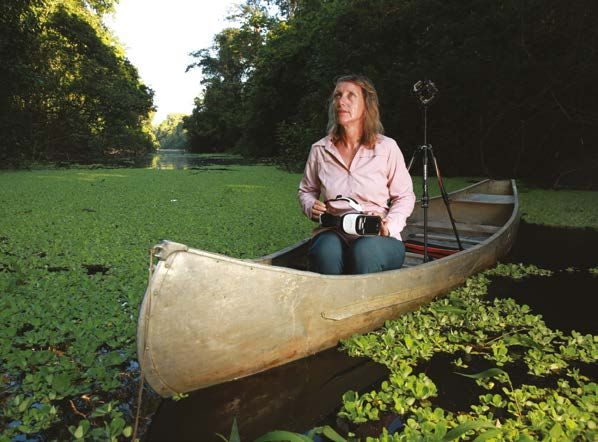
Contents
02   Why choose STEM at QUT?

03   Science and engineering on campus

04	Scholarships, leadership development and
    student support

06   International experience

08   Expert teaching and real-world research

SINGLE DEGREES

10   Bachelor of Engineering (Honours)

     12   Civil

     13   Chemical process

     14   Computer and software systems

     15   Electrical

     15   Electrical and aerospace

     16 Mechanical

     16 Mechatronics

     17   Medical

18   Bachelor of Information Technology

     20 Computer science

     20 Information systems

21	Bachelor of Games and Interactive
    Environments

22   Bachelor of Mathematics

     24 Applied and computational mathematics

     24 Operations research

     25 Statistics

26   Bachelor of Science

     28 Biological sciences

     28 Environmental science

     29 Earth science

     30 Chemistry

     31   Physics

32   Bachelor of Urban Development (Honours)

     33 Construction management

     34 Quantity surveying and cost engineering

     35 Urban and regional planning

36   Bachelor of Property Economics

DOUBLE DEGREES

37	Double degrees in the Science
    and Engineering Faculty

40   Honours programs

41   How do I apply?

43   Science and engineering at a glance

                                                  1
Why choose STEM at QUT?
    We want to change the world to make it a better place.          Relevant connections
    And we know you do, too. Study in the areas of science,
                                                                    Our longstanding relationships with leading industry
    technology, engineering, mathematics (STEM) and urban
                                                                    partners, both domestically and internationally, offer you
    development will give you the skills and knowledge you need
                                                                    outstanding mentoring opportunities and real-world
    to be able to drive change.
                                                                    experiences including overseas internships, work experience
                                                                    placements and site visits.
    Our future demands STEM
                                                                    QUT’s Science and Engineering Faculty partners with:
    Given that about 75 per cent of the fastest growing
                                                                    • BMW Group                        • Engineers Without
    occupations over the next five years require STEM skills,
                                                                    • Boeing Australia                   Borders Australia
    having the agility to be able to switch careers, grasp new
                                                                    • Brisbane Airport                 • SAP
    opportunities or even start a business will stand you in
    good stead.                                                       Corporation                      • Schlumberger
                                                                    • CSIRO                            • Shell
    At QUT, we design our courses to ensure you graduate future-
                                                                    • Energy Queensland                • Stryker.
    focused. We teach you the latest scientific advances and
    technologies, and how to apply these to some of the biggest
                                                                    Student clubs and projects
    challenges we are facing in society—challenges in agriculture
    and the environment, health and medical advances,               University isn’t just about study, it’s also about getting
    technology and infrastructure, and energy and resources.        involved and experiencing new things. You can join a range
                                                                    of student-led projects and clubs. QUT Motorsport, Robotics
                                                                    Club, QUT esports, Engineers Without Borders, Women in
    Learn from, and in, the best
                                                                    Technology, LabRats, Natural Resource Society and Next
    World-class teaching and strong industry connections
                                                                    Generation Property are just some of the groups where
    ensure our degrees are relevant and applicable.
                                                                    you can make leadership and team member contributions,
    You’ll have access to technology and facilities that support    and work with your peers to make a difference. For more
    your studies, including high-tech teaching spaces, high-        information visit qut.edu.au/science-engineering/student-
    performance computing and visualisation facilities, and         experience
    advanced scientific instruments.
                                                                    Flexibility
    In the workplace                                                A key feature of all our courses is the flexibility to tailor
    Work integrated learning (WIL) at QUT gives you the             your degree to your interests and career aspirations.
    opportunity to combine workplace activities with study,         We encourage you to shape your degree through
    assessment and support.                                         complementary study areas.

    Through WIL you can network with industry professionals,        STEM double degrees also offer relevant and interesting
    experience day-to-day life in your chosen career, work on       study combinations to suit your interests and ambitions.
    real projects, and develop your business and personal skills.
    With workplace experience and connections, you’ll be more
    competitive when you graduate.

2
Science and engineering
on campus
Gardens Point campus                                           Science and Engineering Centre
If you study within the Science and Engineering Faculty,       Our Gardens Point campus features a $230 million Science
you will be based at Gardens Point campus, where you will      and Engineering Centre, with one of the world’s largest
experience state-of-the-art laboratories, workshops and        digital interactive learning and display spaces, The Cube.
research facilities that mirror real-world environments.
                                                               The centre is also a home for collaborative and
With more than 30 000 students, Gardens Point is a prime       interdisciplinary discovery with researchers in the QUT
location in Brisbane’s city centre beside the Brisbane River   Institute for Future Environments developing ways to make
and City Botanic Gardens.                                      our natural, built and virtual environments more sustainable,
                                                               secure and resilient.
Facilities at Gardens Point include:
• computing and science         • licensed bar                 This state-of-the-art teaching and learning environment,
  laboratories                  • Gardens Theatre              unmatched anywhere in Australia, will inspire you to reach
• cafés and food court                                         your potential and exceed your goals.
                                • QUT Art Museum
• indoor FINA-standard,         • Old Government House         The centre is open to students, the community, schools
  50-metre swimming pool          including William Robinson   and teachers. For details of events and engagement
  and a gym                       Gallery                      opportunities visit thecube.qut.edu.au
• esports arena                 • QUT medical centre and
• bookshop and retail outlets     counselling                  Great facilities
• Oodgeroo Unit                 • childcare centre.            The science and engineering labs and workshops house
                                                               the latest high-tech equipment and computer software to
Our campuses are well serviced by public transport including
                                                               provide you with the ultimate hands-on learning experience.
a free shuttle bus between Gardens Point and Kelvin Grove
campuses. Visit qut.edu.au/campuses-and-facilities             As part of the support for student projects and research,
                                                               there is an extensive range of electronics parts, kits and
                                                               equipment available free or for loan. QUT’s undergraduate
                                                               students have a 24/7 electrical lab available, a workshop,
                                                               and access to training in PCB design, soldering, 3D printing,
                                                               laser cutting and more.

                                                                         Partnerships with industry
                                                                         The Boeing/QUT partnership gives us the opportunity
                                                                         to inspire the next generation through real-world
                                                                         undergraduate internships, mentoring opportunities,
                                                                         graduate recruitment and research projects.

                                                                         Chris Smith
                                                                         General Manager Operations, Boeing

                                                                                                                               3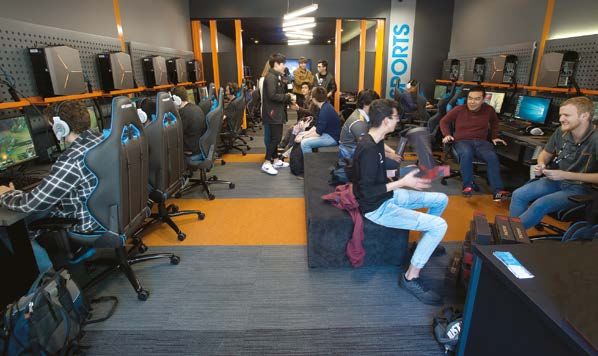
Scholarships, leadership
    development and student support
    QUT offers a range of scholarships, bursaries and                 Women in Information Technology Merit
    development programs to support you throughout your               Scholarship
    studies. Visit qut.edu.au/scholarships for full details.
                                                                      Up to six scholarships are available to Queensland Year
                                                                      12 female domestic students with an OP 1-5 who want to
    Scholarships for high achievers                                   enrol full time in an undergraduate information technology
    QUT’s Excellence Scholarships and Sport Scholarships are          degree. Applications close on 15 November 2019.
    awarded to students who have demonstrated outstanding
    achievement in academic, sport or creative fields. As well        Scholarships for students experiencing
    as financial support, students have access to leadership          financial hardship
    and development activities, and the opportunity to build
                                                                      In conjunction with the Equity Scholarships Scheme, we
    professional networks.
                                                                      offer several scholarships and bursaries to support students
                                                                      from low-income backgrounds. Students are assessed
    Westpac Scholars Trust                                            on financial need, not academic results. All low-income
    The Westpac Scholars Trust is helping to create a better          students are encouraged to apply through the Equity
    future for all Australians by awarding 100 scholarships           Scholarships Scheme.
    a year, forever. The Trust delivers scholarships aimed at
    investing in a new generation of brilliant young Australians      Dean’s Scholars Program
    who are driven to challenge, explore and set new benchmarks
                                                                      Our Dean’s Scholars Program is a focused leadership
    in innovation, research and social change. Awarded on merit,
                                                                      program for outstanding students undertaking any single
    applications close November.
                                                                      or double degree in the Science and Engineering Faculty.
                                                                      Dean’s Scholars are an elite group of students who have
    Scholarships and support for Aboriginal and                       demonstrated high academic achievement and aspire to be
    Torres Strait Islander students                                   future leaders.
    Aboriginal and Torres Strait Islander students commencing
                                                                      As a Dean’s Scholar, you can expect to more fully develop
    an eligible undergraduate degree in the Science and
                                                                      and utilise your leadership skills in STEM-linked careers
    Engineering Faculty can apply for a range of scholarships
                                                                      through industry experience, international exchange
    and loan schemes to assist them throughout their studies.
                                                                      programs, professional development and mentoring.
                                                                      Our industry sponsors are:
    Women in Engineering Scholarship
                                                                      • AMPC
    The Women in Engineering Scholarship encourages and
                                                                      • Australian Centre for Robotic Vision
    supports female students entering their first year of full-time
                                                                      • Bechtel
    engineering study. Recipients are also eligible for the Monique
                                                                      • Boeing Australia
    Cramer Award. Applications close on 15 November 2019.
                                                                      • Energex
                                                                      • Technology One.

                                                                      Students who are awarded a merit scholarship and achieve
                                                                      a grade point average (GPA) of 6.0 or above in their first
                                                                      semester will be invited to apply for a place in the Dean’s
                                                                      Scholars Program from Semester 2.

                                                                      To find out more visit qut.edu.au/science-engineering/
                                                                      deans-scholars-program

                                                                         Get connected
                                                                         Being a Westpac Scholar is an invaluable opportunity.
                                                                         Having the Westpac Scholars Trust team available to me
                                                                         is a huge boon. From helping me with résumés and job
                                                                         interviews to potentially being an option for a job after
                                                                         I graduate, being connected to the Westpac team is
                                                                         something I’m incredibly grateful for. I would never have
                                                                         expected so much to have come out of that little form I filled
                                                                         out at the end of Year 12.

                                                                         Sophie Jones

4
QUT esports
           QUT is home to Australia’s first official university-endorsed esports program, and the first dedicated
           on-campus gaming arena.
           The purpose-built facility with 27 high-tech gaming computers on our Gardens Point campus is used for training,
           competitions and socialising, as well as for researching the industry, its players, and games development.
           We also offer Australia’s first university esports scholarships. There are five $10 000 scholarships for exceptional
           League of Legends gamers offered in the elite athlete category.

Study support
We know the leap from high school to university can be a
challenge, and so can returning to university study after a
break. That’s why we offer study assistance programs such
as STIMulate. STIMulate helps students in all courses build
and maintain skills in maths, science and IT.

We also offer bridging programs in Chemistry,
Mathematics B and Physics to prepare you for university
studies. Bridging programs are recommended if you
didn’t complete the subject at school and may be useful
if it’s been a while since you’ve studied. See the course
information for assumed knowledge subjects. For advice
about bridging courses or interstate equivalent subjects
visit qut.edu.au/assumed-knowledge

QUT foundry
At QUT we seek to amplify your degree through the
development of your entrepreneurship competence. The
QUT foundry is the place to meet other like-minded students
from across the university interested in learning about,
and practising entrepreneurship. With events like Ideas
Launched, mentors and experts for you to meet, and other
learning opportunities and programs, QUT foundry is the                      A rewarding journey
place to co-work on entrepreneurial ideas and is the hub for                 Growing up, Ezekiel Nimpaye was a refugee of the civil
all things entrepreneurship at QUT.                                          war in Burundi, Africa. After he relocated to Australia, he
                                                                             commenced his Year 10 studies and dreamed of studying
                                                                             engineering.
                                                                             The scholarship he received from QUT’s Learning Potential
                                                                             Fund helped him focus on his studies.
                                                                             After Ezekiel graduated in 2016, he travelled to his home
                                                                             village to visit his family, before starting his career with a
                                                                             graduate engineering role.

                                                                                                                                              5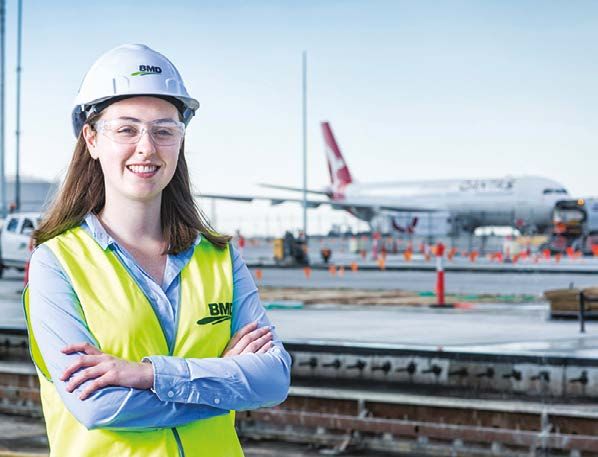
International experience
    Take the opportunity to study or work overseas while            Exchange
    completing your course and you will gain valuable
                                                                    We have links with international institutions in 32 countries
    experiences that will prepare you to work globally.
                                                                    around the world. Many of these institutions are renowned
    We actively encourage and support you to undertake              for their excellence in STEM, and offer a great opportunity to
    an international experience. It’s an ideal opportunity to       expand your horizons both personally and academically.
    complement your QUT degree with a new study area, or
                                                                    You can complete one or two semesters at a partner
    boost your international and industry skills through an
                                                                    university and enjoy life overseas while building invaluable
    internship. You will also explore a new country, experience a
                                                                    international connections at universities such as:
    new culture and make new friends.
                                                                    • Korea Advanced Institute of Science and Technology
    Participating in an exchange program requires initiative,         (Korea)
    commitment and flexibility. These are qualities employers       • University of Stuttgart (Germany)
    value highly, so the professional and personal skills you       • Politecnico di Milano (Italy)
    develop while overseas can give you an edge in the job
                                                                    • University of Copenhagen (Denmark)
    market.
                                                                    • École Polytechnique de Montréal (Canada)
    Potential exchange, study tour and internship destinations      • Rensselaer Polytechnic Institute (USA)
    include:                                                        • Purdue University (USA).
    • Austria            • Hong Kong           • South Africa
    • Canada             • Ireland             • Spain
    • Czech Republic     • Italy               • Sweden
                                                                       100+ partner institutions
    • Denmark            • Netherlands         • Taiwan                80+ industry partners
    • Finland            • Norway              • United Kingdom        30+ countries
    • France             • Singapore           • United States of
                                                 America.

                                                                        Get set for your career
                                                                        During my time at QUT, I gained as much practical
                                                                        experience as possible. In my second year, I and
                                                                        seven other students completed a two-week
                                                                        property internship in Indonesia through the New
                                                                        Colombo Plan mobility grant. In my final semester, I
                                                                        am studying at the National University of Singapore,
                                                                        after completing a month-long internship at Cistri in
                                                                        their Singapore office. These local and international
                                                                        internships and scholarships have been integral in
                                                                        securing work after graduation.

                                                                        Caitlin Clarke

6
Internships                                                         2000 international students
Internships offer the best of both worlds. While you gain           from more than 100 countries
international experience you will also develop practical            study STEM at QUT.
skills that will strengthen your qualifications. Choose from
industry- or lab-based internships that will offer you a
competitive edge in your area of interest. It’s another avenue   Short-term opportunities
for QUT students to gain highly valuable experience.             Not enough time for a full semester of exchange? A short-
Our students have undertaken internships with BMW,               term program, typically from one to six weeks in duration,
Fraunhofer, Hochtief and other industry leaders in locations     can offer a great alternative.
around the world such as Canada, France, Germany,                These options, including study tours and language
Hong Kong, Iceland, Japan, Norway, Turkey and the United         programs, are available at selected partner institutions with
Kingdom.                                                         demonstrated strengths across the Science and Engineering
                                                                 Faculty disciplines.

                                                                 To learn more about exchange and internship opportunities
                                                                 visit qut.edu.au/study/overseas-study-and-exchange

                                                                                                                                 7
Expert teaching
    and real-world research
    Learn from the experts                                             400+ researchers
    Our researchers work in key STEM areas, aiming to solve            working towards new discoveries.
    some of the major challenges facing society and the planet
    such as sustainable development and climate change,
                                                                    Real research experience
    energy and food security, an ageing population and chronic
                                                                    QUT gives you the opportunity to connect with leading
    disease, and information dissemination and security.
                                                                    researchers at hospital-based facilities, environmental living
    Many of these leading researchers will be your lecturers.       laboratories, aerospace centres and QUT-based institutes.
    Their experience, passion and knowledge will be shared with
                                                                    Our Vacation Research Experience Scheme is an opportunity
    you as part of your studies.
                                                                    to delve into the world of research by working with active
                                                                    researchers on a real project for a period of six to 10 weeks.
    Research-based learning
                                                                    It offers a challenging environment and is ideal if you’re keen
    Our research informs and enhances all aspects of teaching.      to investigate your potential for a career in research. Visit
    Through our research-based learning approach you will           qut.edu.au/undergraduate-research-experience
    develop the critical thinking and entrepreneurial skills that
    are essential in graduate-level positions.
                                                                       Among the top 10 universities                         in
    Throughout your studies you will have the opportunity to
    explore research themes and projects. You can take your            Australia for PhD completion.
    passion further and extend your undergraduate degree with
    an honours program. For more information about honours,
    please refer to page 40.

                                                                       Research that helps others
                                                                       My PhD research brings together polymer science
                                                                       and engineering in an emerging field called
                                                                       biofabrication, with the aim of helping patients
                                                                       who have lost bone as a result of accidents, birth
                                                                       defects or diseases such as cancer.
                                                                       We are developing solutions to 3D print
                                                                       bioresorbable scaffolds containing the patient’s
                                                                       own cells, through the creation of patient-specific
                                                                       3D designs, so the implants perfectly fit the
                                                                       individual patient.
                                                                       These bioactive implants will begin to rapidly
                                                                       regenerate the patient’s own tissue while
                                                                       degrading; ultimately healing the bone defect.

                                                                       Naomi Paxton
                                                                       Inaugural recipient of the Ezio Rizzardo Polymer
                                                                       Scholarship

8
QUT robot
world-first
QUT's underwater robot RangerBot transformed into Larvalbot, becoming ‘mother’ to hundreds of millions of baby corals in
a world-first special delivery coinciding with annual coral spawning on the Great Barrier Reef. Large volumes of coral spawn
were captured and transferred into fine mesh pools for almost a week until the larvae was ready to be resettled. LarvalBot
then gently squirted the larvae onto dead reef areas, allowing it to settle and transform into baby corals. Helping grow the
Great Barrier Reef builds on the pioneering robotics technology by QUT’s robotics team, led by Professor Matthew Dunbabin,
originally developed to help control the crown-of-thorns starfish.
Managing biodiversity
The impact of invasive, non-native plant
species like African lovegrass is increasing
dramatically. It dominates native pastures,
reducing biodiversity and essential
ecosystem functions. We worked with
local landholders, using their knowledge
combined with our scientific methods to
develop solutions. This approach could be
useful for understanding and managing
other invasive plants and animals.
Associate Professor Jennifer Firn
9BACHELOR OF
Engineering (Honours)
2019 OP (including adjustments) 9 Your engineering degree
2019 selection rank (including adjustments) 82
2019 ATAR (including adjustments) 81.85
Engineering core units 8 units
QTAC code 412502
+
Campus Gardens Point
Primary major 16 units
Duration 4 years full time
Assumed knowledge English (4 SA) and Maths B (4 SA) Choose one of eight majors from chemical process, civil,
computer and software systems, electrical, electrical and
OP Guarantee Yes aerospace, mechanical, mechatronics or medical engineering.
Entry February and July
+
Complementary study 8 units
As an engineer, anything is possible. Engineers make things Second major or two minors
happen by developing practical solutions for real-world
challenges across all industries.
Second majors
Why choose engineering at QUT? Choose a second engineering discipline or explore different
Your QUT degree is all about real-world application. A perspectives from another study area, which may include
combination of industry connections, student-led projects, aerospace, computer and software systems, construction,
international study tours and access to multimillion- electrical, environmental, mechanical, medical, structural,
dollar facilities add up to a rich and challenging learning or transport engineering; applied economics and finance;
experience. computational and simulation science; or logistics
management.
Our engineering degree features common units in the first
year, giving you the opportunity to explore the full range of
Minors
engineering majors before you choose your specialisation.
• computational and • materials
simulation science • physics for engineers
Teaching excellence
• engineering construction • robotics
Our teachers are leaders in their field, respected by and • engineering structures • thermofluids
connected to industry. This ensures your learning is relevant
• environmental • motor racing vehicle
and up-to-date.
management design
• science and mathematics
Student group projects education
You will have the chance to join a range of student-
You can also choose minors from across the university to
led projects and clubs in areas such as formula racing,
provide insights into specific areas. This might also include
aerospace, international aid and women in engineering.
language studies or an international exchange.
The honours edge
Mid-year entry
QUT’s engineering degree includes honours-level content
You can commence this course in February or July, giving
integrated throughout the course. The advanced knowledge
you the flexibility to start studying as soon as possible.
and skills will benefit you in your professional career, future
research and study.
Double degrees
• architecture • interaction design
Learn in the workplace • business • landscape architecture
Our work integrated learning program • industrial design • mathematics
provides you with quality experience under the • information technology • science
supervision of a certified engineer, ensuring For more information see pages 37–39.
you’ll be work ready.
Year 12 subject scheme
Create your future QUT’s Year 12 subject scheme offers an adjustment of
Your course content is focused on real-world engineering. two selection ranks for students who complete and pass
Through the selection of your major, second major or minor Engineering Technology, Aerospace Studies, Maths C,
options, you can tailor your course to suit your career Physics, a language other than English, or university
aspirations, and develop skills that distinguish you from other subjects in secondary school. For more information visit
graduates. qut.edu.au/apply/adjustment-schemes
Professional recognition
QUT engineering degrees have professional accreditation
from Engineers Australia (EA). EA is a signatory to the
Washington Accord, which permits graduates to work in
various countries across the world.
If you are in Year 11 or below, check the subject information on page 41.
10 For more detail about this course and entry requirements, see the online course information at qut.edu.au/studyEngineer your future
In my second year of study I received a scholarship through QUT with the company BMD Constructions. This included part-
time employment for the duration of my degree. While working at BMD I took part in a project called Constructionarium,
which was an incredible opportunity to plan, manage and build a six-metre structure all within a week. This was a brilliant
experience that taught me a lot about real-life engineering.
Sarah Skea
So many options
My choice to study at QUT came down to
the range of elective units I could do, the
Formula SAE team and the international
opportunities offered with industry
connections. Throughout my degree, design
units always involved the opportunity
to build and test my own creations,
benchmarked against the rules and my
peers. My involvement in QUT Motorsport
led me to win a global competition to work
in Formula One.
Jaden Partridge
11ENGINEERING
Civil
Civil engineers plan, design, construct, operate and maintain Your course
a variety of structures and facilities—from roads and
factories to railways and harbours. They are also involved Year 1
with the assessment of the impact of projects on the natural • common units and overview of engineering majors
and social environment. Civil engineers are responsible for • foundation principles in engineering, engineering
producing safe, economical and environmentally sound mathematics and sustainability
• hands-on activities/projects
infrastructure for the wider community.
Year 2
Why choose this major?
• application of fundamental engineering science
Civil engineers are in demand and they are well paid. As a knowledge in design areas
civil engineer, you could be involved in a project from design • geotechnical, fluids and sustainable engineering, and
engineering statistics and mathematics
stage to construction and completion.
• practical experience in our laboratories
You will be eligible for professional membership in Australia
and overseas, giving you more employment opportunities. Year 3
Throughout your studies you will gain both broad knowledge • geotechnical and water engineering, and steel
and specialisations so you will be better equipped to start construction, highway and transport engineering
• skills in report writing and seminar presentation
work in professional practice.
Year 4
Career outcomes
• a major project showcasing your acquired skills
Civil engineers can work as a consultant or project manager, • advanced communication skills in report writing and
or as a municipal, structural, transport, geotechnical or seminar presentation
water engineer. You may gain employment in government • work integrated learning experience
or semi-government agencies, construction firms, power
generating authorities, mining firms, property development
or consulting engineering firms.
Pathway
If you’re concerned you won’t meet the OP/selection rank,
consider a TAFE/QUT dual award—an Associate Degree in
Civil Engineering combined with the Bachelor of Engineering
(Honours) (Civil). Visit qut.edu.au/upgrading
Solve real-world problems
Engineering combines all the things that I was
interested in during school: maths, science,
design and problem solving. Mechatronics
allows me to develop my skills in these areas
and apply them to building the world of the
future. Over the summer holidays, I completed
a 10-week undergraduate research experience
through QUT’s Vacation Research Experience
Scheme program. I worked with a senior
researcher to develop the electronic control and
communications systems for an autonomous
surf life-saving robot that can be directed
through the surf to people in distress.
Jarod Lam
If you are in Year 11 or below, check the subject information on page 41.
12 For more detail about these courses and entry requirements, see the online course information at qut.edu.au/studyENGINEERING
Chemical Process
Chemical process engineers design, develop and optimise Your course
industrial processes to make the huge range of products on
which modern society depends (for example, oil and gas, Year 1
plastics, water, food and beverages, minerals, paper, sugar • common units and overview of engineering majors
and chemicals). Chemical process engineers may design • foundation principles in engineering, engineering
equipment, control chemical reactions and operate industrial mathematics and sustainability
• hands-on activities/projects
processes.
Year 2
Why choose this major?
• classical system modelling, analysis and control design
Chemical process engineering prepares you for a lifelong • chemistry knowledge and skills
career with a wide variety of industries and career options. • fluid mechanics
During your course you will study chemistry, mathematics, • knowledge of individual factory equipment
thermodynamics, fluid mechanics, process and equipment
design, as well as process management. You will develop Year 3
skills to approach complex and multidisciplinary areas. • processing factory management
• thermodynamics knowledge and skills
• modelling of a process
Career outcomes • experience in a specific industry (minerals)
Chemical process engineers may work directly in a
processing company, consulting, operations or a design Year 4
office. Chemical process engineers work in a wide range • process control and design of real life processes
of process industries that make both commodities and • advanced skills in thermodynamics, fluid dynamics and
consumer products. industrial chemistry
• in-depth process and equipment design
• a research project
Transferable skills
It was certainly a change to go from working for a coal seam
gas company to making chocolate, but the skills I learnt at
QUT were highly transferable. I frequently have to think on my
feet and work with a team to create innovative solutions for
problems that arise, which is what I like best about my job.
Imogen Kerr
Real-world impact
As an energy consultant I help deliver renewable energy
solutions that save councils money and bring Australia
closer to the 2030 emission reduction target. I’ve worked
on the installation of a geothermal power plant in Winton—
Australia’s first grid-connected geothermal plant to
generate electricity using low temperatures. QUT prepared
me with assessments that challenged my thinking and an
emphasis on real-world applications.
Mike Fideli
13ENGINEERING
Computer and Software Systems
Computer and software engineers create and modify Your course
software programs such as operating systems, applications
software and communications software, as well as software Year 1
embedded in devices ranging from mobile phones to GPS, • common units and overview of engineering disciplines
satellites and aircraft flight systems. • foundation principles in engineering, engineering
mathematics and sustainability
• hands-on activities/projects
Why choose this major?
You will graduate with a background in electrical engineering Year 2
with an embedded systems specialisation, along with • software development, computer programming skills and
software design and implementation skills. This will provide writing software for engineering problems
opportunities to work across industries including banking • fundamentals of electronics, electronics circuit design,
telecommunications and networking protocols
and finance, government, education, transportation,
entertainment, science and medicine.
Year 3
• software engineering principles including formal software
Career outcomes engineering processes and modern software engineering
practices
Software engineers are employed in a wide variety of
• microprocessors and embedded digital systems
industries. They may work in engineering firms, for example • application of systems engineering principles to a real-
specialising in rail or vehicle transport, traffic management world project
or construction. They may also work in information
technology-specific industries in software architecture, Year 4
cyber-security or as an embedded software engineer, and in • a major project showcasing your knowledge of software
organisations such as Microsoft, Google and Amazon. engineering principles
• embedded systems and security
• additional electives can be chosen
• work integrated learning experience
Electrical
Electrical engineers design, research, develop, plan, Your course
manufacture and manage electrical systems and devices
which underpin modern economies and contribute to quality Year 1
of life. They work with a range of products, ranging from • common units and overview of engineering majors
heavy power generators to tiny computer chips, across • foundation principles in engineering, engineering
many industries. mathematics and sustainability
• hands-on activities/projects
Why choose this major?
Year 2
QUT’s strong industry links, real-world lecturers and practical • electrical engineering knowledge and writing software to
focus ensure you will be work ready, with the ability to design solve engineering problems
and maintain cutting-edge products for the information and • fundamentals of electronics and electrical engineering
design
communication industries. You will develop practical skills
• concepts in electronics, telecommunications and software
through laboratories and design projects. design
Career outcomes Year 3
Electrical engineers are employed in the power industry, • advanced units in control, power systems, electronics,
signal processing and telecommunications
robotics, manufacturing, mining and bio-engineering. • skills in report writing and seminar presentation
Opportunities are also found in the telecommunications
industry, mining and transport sectors, as well as computer Year 4
and transmission industries, and in service industries, large • a major project showcasing your acquired skills
industrial groups and small innovative private firms. • advanced communication skills in report writing and
seminar presentation
• work integrated learning experience
If you are in Year 11 or below, check the subject information on page 41.
14 For more detail about these courses and entry requirements, see the online course information at qut.edu.au/studyENGINEERING
Electrical and Aerospace
Aerospace avionics engineering involves design, Your course
development, manufacture and maintenance work on the
electronic systems of military and civilian aviation, defence Year 1
systems, spacecraft, satellites and uninhabited aerial • common units and overview of engineering majors
vehicles (UAVs). An electrical and aerospace engineer • foundation principles in engineering, engineering
often specialises in areas such as aircraft control systems, mathematics and sustainability
• hands-on activities/projects
navigation and communications, robotics or electronic
systems.
Year 2
• aerospace industry terminology, work practices and
Why choose this major? aviation safety
QUT is a major player in national avionics research and has • fundamentals of flight, aerodynamics and performance
including wind tunnel testing and flight simulation
strong partnerships with government and industry. You will
• manned and unmanned aircraft systems including basic
be involved in research projects such as fixed-wing UAV and sensing, guidance, control navigation and surveillance
rotorcraft, aerospace vision systems, aircraft control systems technologies.
and autopilot design. Through field trips you will gain a
first-hand view of aerospace avionics, and engage with QUT Year 3
engineers and researchers in the field. • classical system modelling, analysis and control design
• unmanned aircraft mission design, planning and
simulation
Career outcomes • systems engineering methodologies, and techniques and
You may work with the Royal Australian Air Force, Royal application
Australian Navy, the Defence Research Centre, or the
Civil Aviation Authority. There are also career options Year 4
• advanced system modelling, analysis and control design
with aerospace companies such as Boeing, Australian
• applied estimation, path planning, guidance and control
Aerospace, Raytheon and aircraft maintenance and
• advanced unmanned aircraft system design, build,
aeronautical consulting services, as well as in electronics, analysis and testing
communications, process control, instrument manufacture • a one-year project and work integrated learning
and automotive equipment. experience
Students that shine
Taylah Griffin is a proud Gangalu woman, a
QUT electrical and aerospace engineering
graduate and recent recipient of the
Aboriginal and Torres Strait Islander
Student STEM Achievement Award. The
awards, offered by the BHP Foundation
and CSIRO, recognise outstanding
achievements of Aboriginal and Torres
Strait Islander students and professionals
in the areas of STEM. Since graduating
Taylah has secured a position as a
graduate systems engineer with Boeing
Defence Australia.
15ENGINEERING
Mechanical
Focusing on the principles of force, energy and motion, Your course
mechanical engineers use their understanding of design,
manufacture and operational processes to create, improve Year 1
and maintain systems and machinery spanning multiple • common units and overview of engineering disciplines
industries. Mechanical engineers keep pace with technology • foundation principles in engineering, engineering
to enhance safety, economic vitality and sustainability. mathematics and sustainability
• hands-on activities/projects
Virtually every aspect of life is touched by mechanical
engineering.
Year 2
• engineering science knowledge in design, dynamics,
Why choose this major? fluid mechanics, manufacturing and mathematics
fundamentals
You receive a thorough grounding in the engineering
• computational fluid dynamics and engineering drawing
sciences and hands-on, practical experience in real-world
• practical experience in our laboratories
problem solving and application of theory in a program that
is strongly oriented towards industry needs. This will ensure
Year 3
you are fully prepared to work in every aspect of mechanical
• knowledge and skills in professional areas including
engineering. design
• solids modelling, materials and manufacture,
instrumentation and control, dynamics, thermodynamics
Career outcomes and stress analysis
You may work in Australia and overseas in roles such as a
consultant, project manager or technical adviser in industries Year 4
including manufacturing, mining, refrigeration and air • a major project that showcases your acquired skills
conditioning, transportation and mechanical handling. • communication skills in report writing and seminar
presentation
• work integrated learning experience
Mechatronics
Mechatronics engineering is the design and maintenance Your course
of machinery with electronic and computer control systems,
such as aircraft and power generators, to work in the high- Year 1
tech fields of automated systems and robotics. Typically, a • common units and overview of engineering majors
mechatronic system picks up signals from the environment, • foundation principles in engineering, engineering
processes them to generate output signals, transforming mathematics and sustainability
• hands-on activities/projects
them, for example, into forces, motions and actions.
Year 2
Why choose this major?
• engineering science knowledge in design, dynamics,
Mechatronics engineering is a growth industry, combining fluid mechanics, manufacturing and mathematics
fundamentals
the disciplines of mechanical, electrical and electronic
• technical computing, computational fluid dynamics and
engineering, and computing. You will benefit from QUT’s engineering drawing
close links with industry and may be involved in projects such • practical experience in our laboratories
as QUT Motorsport and the aerospace avionics Uninhabited
Aerial Vehicle Outback Challenge. Year 3
• knowledge and skills in professional areas including
Career outcomes design and thermodynamics
• electronics, microprocessors and mechatronics,
You may work as a consultant, project manager, designer operations management and machines
or maintenance and instrumentation engineer in a wide • advanced communication skills
variety of industries. These include manufacturing plants of
consumer products, computer peripherals manufacturers Year 4
or maintenance companies, automobile and aerospace • mechatronic systems design, instrumentation and control,
and computer intelligence
manufacturing industries, primary production and mining,
• an industry-based project that showcases your acquired
communication companies, research organisations, food skills
and food processing industries, and software development • work integrated learning experience
companies.
If you are in Year 11 or below, check the subject information on page 41.
16 For more detail about these courses and entry requirements, see the online course information at qut.edu.au/studyENGINEERING
Medical
Medical engineering integrates engineering principles with Your course
human physiology to design systems and products that
improve the quality and effectiveness of patient care. Year 1
Medical engineers design, manufacture and service medical • common units and overview of engineering majors
and surgical equipment, ranging from surgical instruments • foundation principles in engineering, engineering
to implants, and assistive technologies. mathematics and sustainability
• hands-on activities/projects
Why choose this major?
Year 2
You will undertake professional experience and hands- • engineering science knowledge in materials, dynamics
on activities such as hospital and industry site visits and fluid mechanics
throughout the course. You may also be involved in industry- • engineering design, drawing and solid modelling
based projects, overseas study, work opportunities and • human anatomy and physiology
• practical experience in our laboratories
groundbreaking research through the QUT Institute of Health
and Biomedical Innovation and the QUT Medical Engineering
Year 3
Research Facility.
• knowledge and skills in areas including biomechanics,
biofluids and stress analysis
Career outcomes • biomedical engineering design, ethics, sustainability and
regulation
Graduates may find employment in hospitals as clinical
biomedical engineers, in firms concerned with design,
Year 4
manufacture, supply and maintenance of medical, health
• biomaterials and modelling and simulation techniques
and sporting equipment, in occupational health agencies,
• a major project that showcases your acquired skills
and in research institutions. Biomedical engineers may be • advanced communication skills
involved in the design of new devices and the assessment of • work integrated learning experience
engineering solutions to medical problems.
Reach new
heights
Medical engineering student and
entrepreneur, Rob Joseph, has invented a
shape-shifting beanie to give snowgoers a
comfortable alternative to a helmet. Soft
and flexible like a beanie, the helmet has a
special lining that turns into an extremely
efficient shock absorber when under
impact. With crowdfunding underway,
this will be the first product to market for
ANTIordinary, the start-up Rob has co-
founded with fellow QUT students.
17BACHELOR OF
Information Technology
2019 OP (including adjustments) 11 Your information technology degree
2019 selection rank (including adjustments) 77
2019 ATAR (including adjustments) 76.50
IT core units 6 units
QTAC code 418801
+
Campus Gardens Point
Primary major 10 units
Duration 3 years full time, 6 years part time ❑
Assumed knowledge English (4 SA) and Maths A, B or Choose from computer science or information systems
C (4 SA) +
OP Guarantee Yes Complementary study 8 units
Entry February and July Second major or two minors
Why choose information technology at QUT? Minors
At QUT, you can build an IT qualification that satisfies • data-centric computing • enterprise systems
your interests and supports your career aspirations. You’ll
• business process • user experience
learn from experts, gain hands-on experience and have
management (BPM) • information systems
opportunities for internships in Australia and overseas.
• computational and • intelligent systems
Our IT degree features common units in the first year, giving simulation science • mobile applications
you the opportunity to explore the IT majors before you • computer science • networks and security
choose your specialisation.
You can also choose minors from across the university.
You might also include language studies or an international
Employability
exchange.
With a QUT degree you can pursue your IT career across
a diverse range of industries including aviation, mining,
Mid-year entry
engineering, finance, creative industries, networking and
communications. Our interactive learning spaces and real- You can commence this course in February or July, giving
world approach will ensure you are in demand as a problem you the flexibility to start studying as soon as possible.
solver and innovator.
Double degrees
Learn from the experts • business • law
Our lecturers are experts in their field and include award- • creative industries • mathematics
winning teachers and world-renowned researchers. All have • digital media • science
strong connections with industry, ensuring you’ll graduate • engineering • secondary education
with the capabilities a career in IT demands—both now and • interaction design
into the future.
For more information see pages 37–39.
Best educational experience Professional recognition
QUT students rated their overall educational Graduates are eligible for membership of the Australian
experience in IT at 82.5%, the highest in Computer Society (ACS). ACS accreditation is internationally
recognised by the Seoul Accord.
Queensland and well above the national
average (QILT Student Experience Survey
2016 and 2017). Pathway
If you are concerned you won’t meet the OP/selection
rank, consider a TAFE QUT dual award. Visit qut.edu.au/
International study upgrading
Our links with key universities throughout Europe, Asia and
the Americas give you options for overseas study through Games and interactive environments
our exchange program.
Our suite of IT programs also includes the Bachelor
of Games and Interactive Environments. It is the most
Create your future successful degree of its kind in Queensland, with strong
You can follow your passion and shape your future career connections to local games industries, as well as other
through your choice of major, second major and minor study industry partners in game-based technology. For more
areas. information see page 21.
You can pursue two IT disciplines, or explore different
perspectives such as computational and simulation science.
❑
The availability of evening classes is not guaranteed.
If you are in Year 11 or below, check the subject information on page 41.
18 For more detail about this course and entry requirements, see the online course information at qut.edu.au/study2018 QUT Outstanding Alumni Award winner
I’m currently working at Gremlin in the US as a Principal Site Reliability Engineering. I break systems on purpose and
make them more resilient—that’s chaos engineering.
When I was a little girl, I got on the internet and thought it was the most boring place ever because it wasn’t made for
11-year-old girls. I thought, hey, I should build things on here.
You should totally study tech—it’s never going away. Why not be there, where you can be a pioneer in a really exciting space?
That’s the coolest thing ever.
Tammy Butow
Watch the video to
hear more about
Tammy's story.
Connect with industry
I completed my major industry project
based at software company, TANDA.
I helped re-design one of their products
which is used by businesses for tracking
staff attendance. I helped conceptualise
the product’s features and design its
appearance and functionality. It helped me
develop my technical skills and understand
how this knowledge translates from
university to the pace of the real world.
My work experience at uni led to a user
interface and experience designer position
with TANDA. Now I’m working there as a
product designer.
Kelvin O’Shea
19INFORMATION TECHNOLOGY
Computer Information
Science Systems
Computer science involves using hardware and software Information systems focuses on identifying organisational
to design and build systems to solve complex problems or requirements and designing effective IT systems solutions.
issues associated with efficiency, usability and security. It It may involve working with large database applications
can be applied to mobile computing, artificial intelligence, for business, the application of new technologies to
robotics and large-scale information management involving business opportunities, as well as the identification and
information retrieval and web search engines. implementation of packaged software.
Why choose this major? Why choose this major?
You can customise your degree to suit your interests. You will Information systems gives you the skills to shape the
learn software development and networked systems, with industries of the future. You will develop expertise in working
the opportunity to gain specific expertise in areas such as with people, data, business processes and technology to find
information security, networks and communications, intelligent innovative solutions.
systems, data-centric computing or user experience.
Career outcomes
Career outcomes You could work as a business analyst, information systems
Career opportunities are abundant and graduates work consultant, domain expert, chief technology officer, chief
in roles such as software developer, systems analyst, information officer, manager, executive or entrepreneur.
programmer, mobile application developer, website Opportunities also exist in business process management,
developer, user experience designer, network administrator, social media and mobile application development, or as
security analyst, computer scientist, systems programmer information technology innovators within enterprises,
or data mining specialist. consulting companies or a new start-up.
Your course
Year 1 Plus
• common units and overview of IT majors For the computer science major:
• design and build principles and application • programming principles and computer-based systems
• information technologies and their impact For the information systems major:
• modelling information systems and the business of information
technology
Year 2
Computer science major Information systems major
• discrete structures, software development and networks • business process modelling, business analysis and corporate
• application design and development skills systems
• practical, hands-on experience and problem-solving skills • project management skills
• choose second major/minor study units • practical, hands-on experience and problem-solving skills
• choose second major/minor study units
Year 3 Plus
• a major project that showcases your acquired skills For the computer science major:
• second major/minor study units • advanced concepts of algorithms and complexity
For the information systems major:
• advanced concepts of enterprise architecture
Create new technology
I really enjoyed the spread of the first-year subjects. It gave a great
grounding for choosing computer science as my major.
My final-year project, using Unreal Engine 4, made me rethink how I
approach my coding to maximise efficiency and function, a valuable skill
I need now in my job.
I work for a PR firm in the city, creating new technology for their clients.
I get to work on some amazing stuff, like augmented reality and smart
geolocation. I love the diversity and continue to learn on the job!
Alex Griffiths
If you are in Year 11 or below, check the subject information on page 41.
20 For more detail about these courses and entry requirements, see the online course information at qut.edu.au/studyBACHELOR OF
Games and Interactive Environments
2019 OP (including adjustments) 11 Career outcomes
2019 selection rank (including adjustments) 77
You may find employment as a games programmer, games
2019 ATAR (including adjustments) 76.50
designer, simulation developer or designer, animator,
QTAC code 418102 user experience specialist, application developer, quality
Campus Gardens Point assurance specialist, sound designer, mobile application
Duration 3 years full time developer, or in film and television special effects.
Assumed knowledge English (4 SA) and Maths A, B or
C (4 SA) In addition, your strong design and programming skills
OP Guarantee Yes can open up jobs such as web developer, digital product
Entry February
strategist, multimedia designer, virtual and augmented
reality developer, software developer or technical officer.
Games development is the fastest growing sector of the
Double degrees
worldwide audiovisual market. Brisbane is a nexus of
• business
innovation for games and interactive digital experiences,
producing games for a worldwide audience and receiving • mathematics
international recognition. • science
For more information see pages 37–39.
Why choose this course?
Learn about games and interactive environments from Professional recognition
experienced industry educators. This course is collaboratively The software technologies major within this course is
taught by QUT’s Science and Engineering and Creative accredited by the Australian Computer Society (ACS).
Industries faculties, so you will learn creative, design and ACS accreditation is internationally recognised by the
technology skills from experts in their respective fields. Seoul Accord.
You will gain experience in the whole process of game and
interactive media development—from initial ideas and design Your course
to analysing products, cultural impact and industry trends,
through to the development and publication of a final product. Year 1
• computer games, building IT systems and industry insights
• introduction to design and games production
Choose your future • start your major in animation, game design or software
technologies
Develop expertise in your area of interest.
Choose from majors in animation, Year 2
game design or software technologies. • design and development skills
Add studies in graphic design, screen • gain interdisciplinary skills via your major/minor study units
production, interactive and visual design, • practical, hands-on experience
entrepreneurship, scriptwriting, or other
complementary studies chosen from across Year 3
• advanced concepts of games and interactive environments
the university.
• a major project that showcases your acquired skills
• specialist skills in your chosen area
Make game development your career
This course helped me to develop a much deeper
understanding of the industry I want to work in.
Specifically, I enjoyed learning about gamification and
the surprisingly diverse range of sectors looking to apply
game theory. This helped me to fully realise just how much
games have to offer, as well as reinforcing my investment
and excitement in my career.
QUT equips graduates with everything they need to
create compelling and innovative game experiences, of a
highly professional standard.
Pierre Medeiros
21You can also read


