Seal-Options Webinar Webinar - Sarah Mulroy-Clinical Specialist Prosthetics
←
→
Page content transcription
If your browser does not render page correctly, please read the page content below

Seal-Options Webinar

Webinar

Sarah Mulroy- Clinical Specialist Prosthetics

Introduction

                                                                         Seal-In X-Classic
            3 New Seal-Rings Options
            • Suitable for both TT and TF Seal-In X use:
            • Feature an Easy glide coating- no need for donning spray
            • More Form proof- prevents stretching
            • Feature a textile donning aid- for ease of donning
                                                                          Seal-In X-Grip

            Casting and modification methods:
            • Unity Elevated Vacuum for TT and TF
            • NU-FlexSIV (subischial socket design)

                                                                         Seal-In X-Volume
            Pro-Flex® family update:
            • NEW Pro-Flex® XC Torsion and NEW Pro-Flex® LP Torsion
            • Improved durability
                                                                                             Seal-In X TF   Seal-In X

3/25/2018                                                                                                          1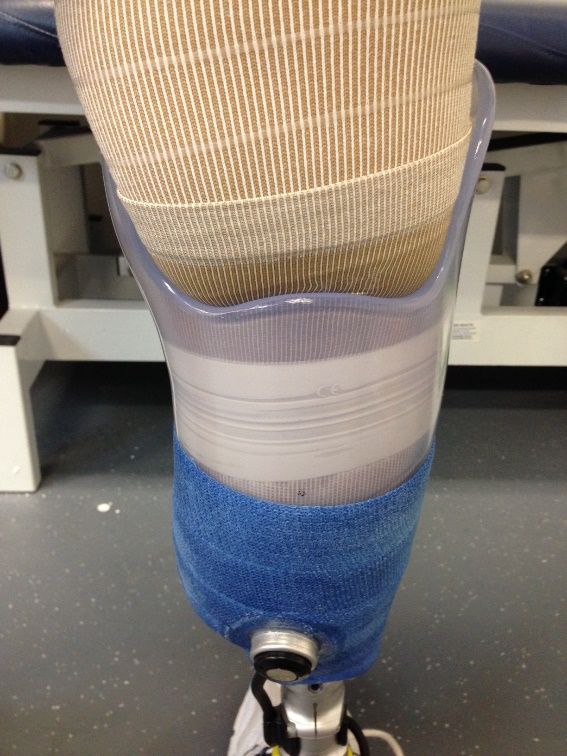
Previous Seal Ring offering

                                          • Liner profile
                                              - Standard, Conical
                                          • Available seal sizes
                        Seal-In X             - 26,28,30,32,35,38,41,44,47,51,55,60,65,70
                      Transfemoral        • Seal height
                                              - 70mm
                                          • No textile donning aid
                                          • Spray needed for DONNING

                                          • Liner profile
                                              - 3mm, 6mm
                                          • Available seal sizes
                         Seal-In X            - 20,22,24,26,28,30,32,35,38,41
                        Transtibial       • Seal height
                                              - 50mm + 65mm textile
                                          • Textile donning aid
                                          • Spray needed for DONNING
3/25/2018                                                                                   2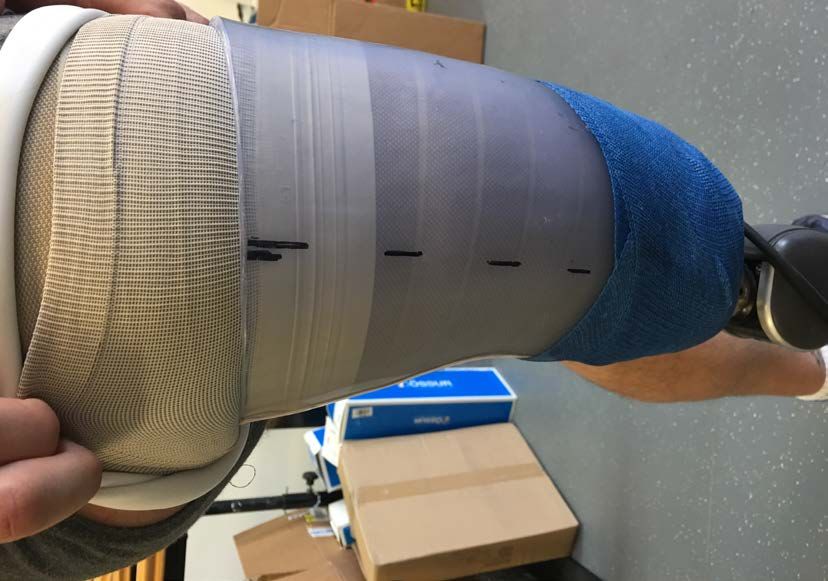
Seal-Ring Options- No Donning Spray required

            • The Seal-In Rings consist of a hypobaric membrane        Seal-In X-Classic
             and textile donning aid

            • Easy-glide (unique anti-friction coating) makes
             donning and doffing a prosthetic socket easier,
             without the use of lubricant aids
                                                                        Seal-In X-Grip

            • When the ring is correctly positioned onto a donned
             Iceross Seal-In X Liner, it will be held in tension
             against the silicone bands on the exterior surface of
             the liner, then compressed against the interior
                                                                       Seal-In X-Volume
             surface of the prosthetic socket.
                - This creates a distal vacuum chamber that reliably
                  suspends the residual limb in the prosthesis
                                                                                           Seal-In X TF   Seal-In X

3/25/2018                                                                                                             3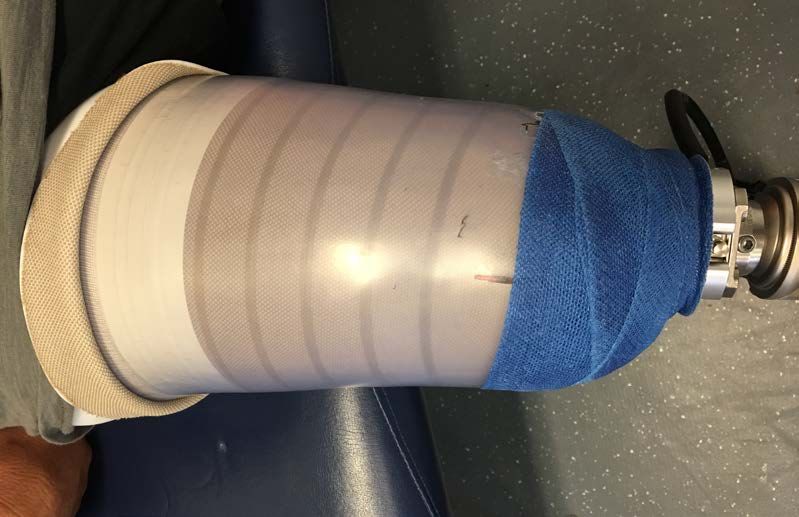
Seal-Ring Options- No Donning spray required

            Seal-In X-Classic                                           Seal-In X TF        Seal-In X
                                                                       - Standard or     - 3mm or 6mm -
             - Improved version of current Seal-In X TT Seal with        - Conical -
               Easy Glide coating and more stable stretching
               properties
             - The classic day-to-day seal ring

            Seal-In X-Grip
            - An adapted movable version of the Seal-In X5 seal
            - For good rotational control

            Seal-In X-Volume
            - An adapted movable version of Dermo Seal-In and
              Seal-In TF (HSM)
            - Accomodates more volume reduction than the other                 Available seal sizes
                                                                    20,22,24,26,28,30,32,35,38,41,44,47,51,55,
              two options                                                             60,65
3/25/2018                                                                                                 4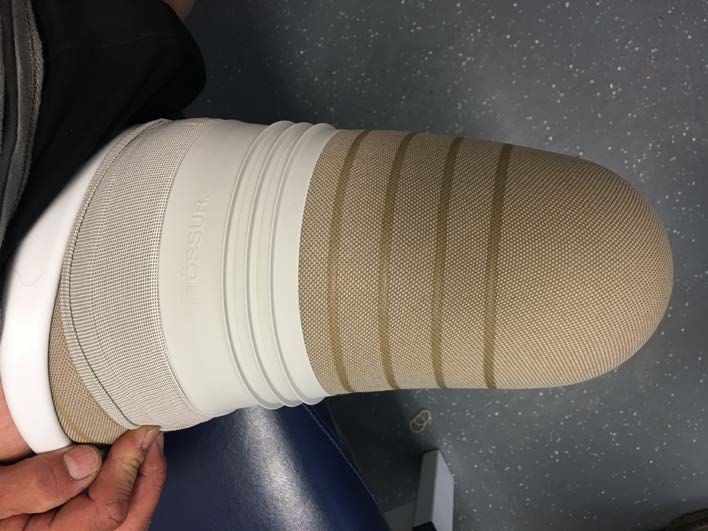
Benefits of Seal-In®

            Benefits of Seal-In®                                                                         Additional benefits of movable seals:

             • Reduces:                                                                                     • General ease of using liner – easier inverting
                – pistoning                                                                                   compared to fixed seal
                – volume fluctuations                                                                       • Ease of donning socket – no spray needed
                – shear forces/pressure
                                                                                                            • Custom seal positioning accommodating
                                                                                                              individual residual limb shape
             • Improves:
                – skin management and health                                                                • Seal can be moved within the day for
                – balance/stability                                                                           relieve/comfort
                – proprioception                                                                            • Potential to use different seals for different
                – gait symmetry                                                                               occasion
                – standing/sitting/kneeling movements                                                       • Easier for socket making compared to fixed
                – mobility                                                                                    seal liners since casting is done on liner
                                                                                                              without the seal

H. Goliad, N. A. Abu Osman, A. Sarahi, S. Ali, and N. A. Razak, “Transtibial prosthesis suspension systems: Systematic review of literature,” Clin. Biomech. vol. 29, no. 1, pp. 87–97, Jan. 2014.
H. Gholizadeh, N. A. Abu Osman, A. Eshraghi, S. Ali, and N. A. Razak, “Transfemoral prosthesis suspension systems: Systematic review of literature,” Am J Phys Med Rehabil 2014.
G. K. Klute, B. C. Glaister, and J. S. Berge, “Prosthetic liners for lower limb amputees: A review of the literature,” Prosthet. Orthot. Int., vol. 34, no. 2, pp. 146–153, Jun. 2010.

3/25/2018                                                                                                                                                                                      5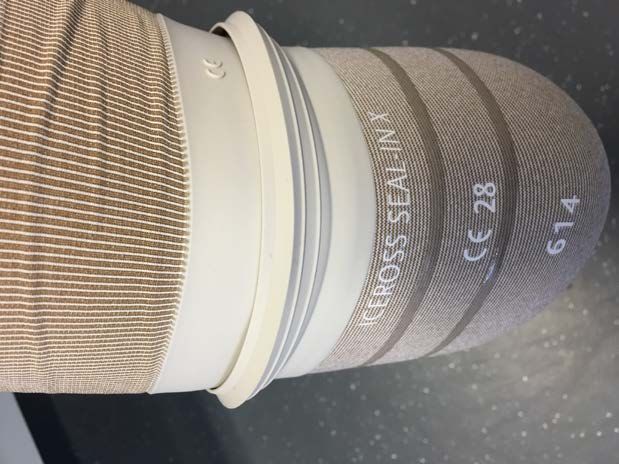
Features and benefits of new seals

     Feature                        Benefit

            Seal Options              Three different seal types to accommodate different user needs or activities

                                      Improves ease of donning:
            Textile donning aid            – Easier to position seal
                                           – Easier to operate seal for users with impaired hand dexterity
                                      •   Simplifies DONNING process, seal is ready to use as is
                                      •   Less dust attraction
                                      •   Eliminates the following negatives of previous non-coated seals:
            Easy-Glide coating              – When not enough lubrication, seal tends to wrinkle
                                            – Seal moves proximal when donning, resulting in excessive stretching which
               Warning! Alcohol                leads to size inconsistency
              spray will damage
              Easy Glide coating
                                            – Swelling of the seal due to absorption of used spray/ lotion which leads to size
                                               inconsistency
                                      Size consistency over time due to more stable stretching properties (seal might be
            More stable               experienced as stiffer). Users will initially experience some stretching but once the seal
            stretching properties     has adapted to the residual limb shape, the stretching and size should stabilise. The
                                      tighter the initial fit, the more initial stretching will occur.
3/25/2018                                                                                                                          7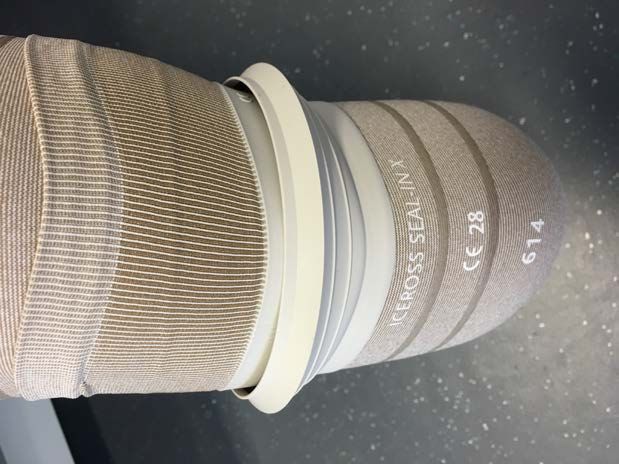
Indicated User Profile

            Indicated User Population                          To measure residual limb length:
            • Transtibial and Transfemoral amputees            • Transtibial: From MPT to distal end
            • Low to high impact levels                        • Transfemoral: From perineum to distal end, with
            • Sufficient residual limb length                    the tissue hanging down
            • Cognitive ability for safe usage
            • Conical residual limbs can be addressed by use
              of a distal cup

            Contraindications
            • Extreme volume fluctuation
            • Extremely short residual limbs- refer to table
            • Cognitive limitations hindering safe usage

3/25/2018                                                                                                     8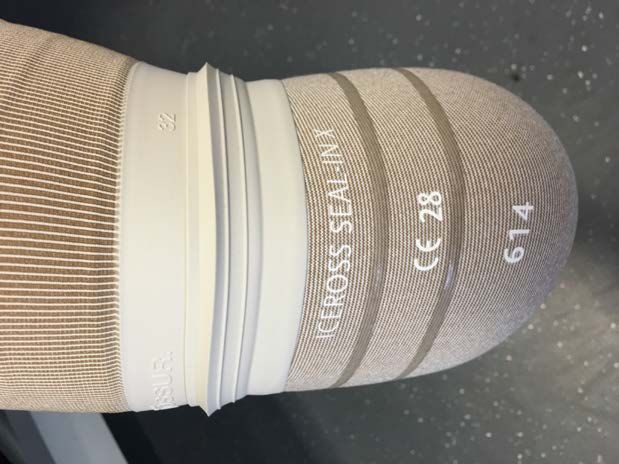
Product Dimensions

                 Seal-In X-Classic                    Seal-In X-Volume

                                     Seal-In X-Grip
3/25/2018                                                                9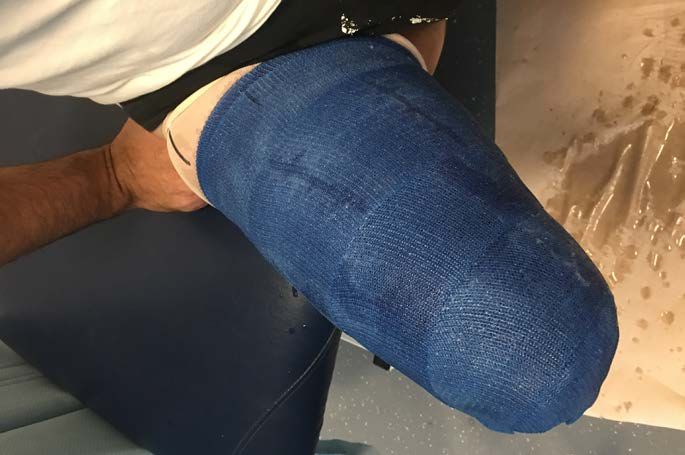
Size Selection – Utilising Seal-In® X Kit

        The preferred method of determining correct size is by utilising an Iceross Seal-In X kit
        1. Place Seal-Ring from the Iceross Seal-In X Kit at appropriate location on liner, considering the
           recommended distance between lowest socket edge and uppermost seal lip (Figure 1).
        2. Assess for any deformation of the Seal-Ring and residual limb. The Seal-Ring should sit securely in place
           without excessive compression (Figure 2).
        3. If the Seal-Ring does not fit at the appropriate location, select another size or relocate if appropriate, to
           obtain proper tension.

                           Figure 1                                                    Figure 2
3/25/2018                                                                                                                  10
Size Selection – Measuring directly on the Residual Limb
1. Measure the circumference (cm) at optimal location, directly on skin
2. Refer to the graph in Figure 1 to estimate correct Seal-Ring size
Figure 1
Examples:
• Circumference of 40cm corresponds to device sizes 44 or 47
• Circumference of 26cm corresponds to device sizes 28 or 30
3/25/2018 11Seal Sizing-Old seals VS New Seals
• Previous Seal version was prone to stretching/swelling over time
• This could result in seal migrating to a more proximal position
• New seals= More FORM PROOF
• Seals may feel ‘stiffer’ to user but will initially stretch and adapt to residual limb shape and become more
stable and consistent in size
Old seals tended to stretch and therefore New seals are more form-proof and will
move more proximal over time hold their position better
3/25/2018 12Seal-Ring Sizing: X-Grip example
Seal Ring too Large: Seal-
Ring-lacking proximal
Seal Ring too tight, seal connection to liner
Seal Ring is optimal size,
compressing the liner no proximal gapping or
compression of liner
3/25/2018 13Seal-Ring Sizing: X-Volume example
Seal too large-wide gap Optimal seal size: small Seal ring too tight-liner
gap but may be partially compressed
touching
3/25/2018 14Seal-In® X: Seal Placement
• Avoid extreme proximal seal
placement. Seek feedback from
the user.
• More proximal is not always better
for suspension
• Measure minimum 6cm below
MPT
• Seal should remain below trim line
for security
3/25/2018 15Daily Care and Cleaning: Easy-Glide Coating
NB: The residual limb should be inspected daily by the user, to verify that skin/limb health is satisfactory
Cleaning:
• Rinse the silicone portion of the Seal-Ring with water daily, and dry with a lint-free cloth. This will
prevent the build-up of dirt and other residue, which may affect the Seal-In properties and hygiene of
the Seal-Ring overtime.
Do NOT use soap or any other cleaning aids to clean the Seal-Ring
Do NOT use boiling water
Using soap or alcohol/donning spray will remove Easy-Glide Coating
Warranty: Össur offers a 6-month (from invoice date)
3/25/2018 16Retrofitability
• Retrofitability is dependent on the socket fit, current liner type and whether it is for TF or TT
• Evaluate on an individual basis as a part of good practice of evaluating socket fit
• Clinical study shows strong indication that seal options can retrofit to previous sockets
• Clinical Study included 30 amputees using HSM, Seal-In X5, Seal-In V, Seal-In X - majority of users were retrofitted
General Recommendation:
• Transtibial:
- For TT and tight socket fit, the X-Classic and X-Grip seals may fit but X-Volume likely not
- For TT and loose socket fit the X-Classic and X-Volume seals may fit, but likely not X-Grip.
- X-Volume will likely not fit for the smaller sizes and triangular shaped sockets
• Transfemoral:
- For TF and tight socket fit, all Seal-In X Seals, X-Classic, X-Grip and X-Volume, may fit
- For TF and loose socket fit, X-Classic and X-Volume may fit, but likely not X-Grip
- For TF it should be noted that Seal-In X TF is 5mm thinner distally than other Iceross Seal-In TF liners-
therefore you may require the use of distal pads
3/25/2018 17Retrofitability
NB. Table is for guidance only. Retrofit shall in all cases be tested on individual basis.
Seal-In X Retro- Seal-In X Retro-
Current Seal-In Liner Socket fit Current Seal-In Liner Socket fit
Seal fitability Seal fitability
Classic Classic
Loose Grip Loose Grip
Volume Volume
Seal-In X5 Seal-In X5*
Classic Classic
Tight Grip Tight Grip
Volume Volume
Classic Classic
Transfemoral
Loose Grip Loose Grip
Volume Volume
Seal-In V Seal-In HSM*
Classic Classic
Transtibial
Tight Grip Tight Grip
Volume Volume
Classic Classic
Loose Grip Loose Grip
Volume Volume
Dermo Seal-In Seal-In X
Classic Classic
Tight Grip Tight Grip
Volume Volume
Classic
Loose Grip * Seal-In X5 liners are 5mm thicker distally compared to Seal-In X TF. Possible
Volume to add patch to distal end
Seal-In X
Classic Is not retrofitable
Tight Grip Is retrofitable
Volume Could be retrofitable in larger sizes, but not in smaller sizes
* Socket fit reference: Loose fit - up to 8ply, Tight fit - less than 3ply. 1ply=0.4mm
3/25/2018 18Unity® Elevated Vacuum: Advantages of vacuum suspension
• Very firm suspension providing excellent security
and improved proprioception
• Elevated vacuum tends to assist in maintaining more
constant limb volume, thereby decreasing the need
to add additional socks
• Elevated vacuum assists with wound healing by
improving circulation through the residual limb
• Provides good distal comfort for bony and sensitive
distal ends; as long as the socket fits properly with
good volume and length matching
3/25/2018 19Primary benefits of the Unity® system
⁺ SLEEVELESS: Increased knee flexion range (TT) with greater comfort and user
acceptance
⁺ LIGHT WEIGHT AND DISCREET: 130g added weight and housed within foot shell
⁺ SIMPLE AND EFFICIENT: Quick and easy to elevate and release vacuum levels
Unity ®
⁺ INDEPENDENT PUMP: does not depend on shock mechanisms and can be added to a
Unity ® to meet every mobility need.
wide range of performance Flex-Foot® systems
⁺ VOLUME STABILISATION: Optimises socket stability, proprioception and comfort
throughout the day while limiting the need to add socks
⁺ INCREASED RELIABILITY: Minimises risk of leaks and puncture issues associated with
sleeve dependent vacuum methods
⁺ Integrates PERFORMANCE FLEX-FOOT technology to meet all activity requirements
3/25/2018 20Unity® TT Casting and Modification
Cast
• Measure circumferences and M/L
• Take Neutral Cast (1 Elastic and then rigid)
• Proximal to Distal wrap
• 3-5° Knee flexion
Check Socket
• Avoid tightening the cast and distorting the limb shape
• Casting under vacuum is NOT required
Modification
• Correct M/L dimension
• Level out seal area on positive (if using Seal-in V)
• Global reduction 3-5% from patient measures depending
on tissue consistency
• For larger residual limbs reductions of 6% are possible for
definitive fittings
Note: Unity™ should not be used as a remedy
for already wide sockets or to counteract • Remove 6mm distally
discomfort in existing sockets. Cavities and too • If using Unity TT/TF valve-use valve insert (dummy)
wide sockets can cause pain and/or serious before pulling check socket
injury
3/25/2018 21TF Casting and Modification
• Standard plaster cast- Casting over Seal-Ring is not required
• Use elastic plaster then rigid
• Do a graduated reduction of 3-5% proximally from patient measures
• Reduce up to 6mm distally (with Unity application)
3/25/2018 22Subischial Socket Design: NU-FlexSIV
• Ryan Caldwell and Stephania Fatone have worked with Northwestern University- developed a teachable
technique for flexible subischial vacuum sockets:
Northwestern University Flexible Sub Ischial Vacuum Socket
(NU-FlexSIV Socket)
• NU-FlexSIV trim lines typically sit 25mm below the ischial tuberosity and 50mm below the greater
trochanter
Lower trim lines achieved by:
• Global compression of soft tissue to relieve pressure on the distal femur
• Utilises TT/TF liners which are undersized 10-30% depending on tissue consistency
• Definitive socket consists of a full flexible inner socket and carbon fibre outer socket
• User benefits from increased ROM as socket wall no longer limits movement
• Research has shown that elevated vacuum increases socket comfort with the Nu-FlexSIV
6Prosthetics and Orthotics International: Northwestern University Flexible Subischial Vacuum Socket for persons with transfemoral amputation-Part 1: Description of technique. Stefania Fatone and Ryan Caldwell
7Prosthetics and Orthotics International: Northwestern University Flexible Subischial Vacuum Socket for persons with transfemoral amputation: Part 2 Description and Preliminary evaluation. Stefania Fatone and Ryan Caldwell
3/25/2018 23Recommended Liners
Relax 3C Cushion:
– Users with soft tissue
– Recommend downsizing 10-15%
Synergy Cushion:
– Users with firm tissue
– Recommend downsizing 20%
– Users with a mixture of firm and soft tissues, or users with
prominent/bony distal end
– Recommend downsizing 30%
Seal-In X TF:
– Long TF/TK
– Sport applications
– When using a sleeve is not preferred
– Recommend downsizing 15-20%
6Prosthetics and Orthotics International: Northwestern University Flexible Subischial Vacuum Socket for persons with transfemoral amputation-Part 1: Description of technique. Stefania Fatone and Ryan Caldwell
3/25/2018 24Subischial Casting Method
• Mark Anterior Mid-line and Adductor Longus
• Cast with client sitting, with residual limb flexed at
90° and abducted using Fibreglass tape
• Start casting proximally on the lateral side,
wrapping medially
• Take note of how easy/hard it is to remove the
mould
• Classify the residual limb as symmetrical or
asymmetrical
• Casting tape: 404DP
6Prosthetics and Orthotics International: Northwestern University Flexible Subischial Vacuum Socket for persons with transfemoral amputation-Part 1: Description of technique. Stefania Fatone and Ryan Caldwell
3/25/2018 25Modification
• Transfer Anterior reference mark and
line of progression to positive model
• Reduce cast to recommended
reductions
P
• Focus reduction in the proximal
posterior and lateral area, flattening L
them into a ‘boomerang’ shape
• Blend in these modifications creating
a round barrel like shape
• Smooth rest of cast removing any
bumps
8Notes from AAOP meeting, Chicago Illinois, March 2017 “NU-FlexSIV workshop’
3/25/2018 26Nu-FlexSIV socket with Seal-In® X TF and X-Grip
Bring the seal as proximally as
possible
Look for even compression of seal
Seal too large-will buckle
when donning
3/25/2018 27Seal-In® X Classic and Volume example (Nu-FlexSIV socket)
Seal-Ring too big- lacking
distal contact to the liner
Check Seal in sitting- look for even
compression of the seal, and
check for any gaps/loss of contact
Optimal Seal size: small gap
but may be partially touching
3/25/2018 28Seal-In® X Grip example (Nu-FlexSIV socket)
Position ring as proximally as
possible
Ensure even seal compression
proximally
3/25/2018 29Pro-Flex® Family- NEW Additions
Pro-Flex K2-K3 Pro-Flex XC K3-K4 Pro-Flex LP K2-K4
Rated to 125kg Rated to 166kg Rated to 166kg
Pro-Flex XC Torsion K3-K4 Pro-Flex LP Torsion K3-K4
Rated to 147kg Rated to 147kg
3/25/2018 30Pro-Flex® XC Torsion with Unity
• C-shaped design provides 10mm of vertical compression
• Axial compression up to 6mm
• The torsion-shock unit compensates for physiological rotation and
vertical shock absorption of lost joints
• Increases user comfort- reduces stress on the residual limb
• Improved durability over the Vari-Flex XC Rotate
– Adjusted materials to ensure complete compatability
– Increased surface area of the rod
– Self lubricating rod with thicker grease
– Knurl surface pattern which holds the torsion cell in place is
more rough to prevent slip
• Unity compatible
3/25/2018 31Comparison test: Pro-Flex® XC Torsion
Development of play for Pro-flex® XC Torsion VS Vari-Flex® XC Rotate:
0.250
Proflex XC Torsion
0.200
Variflex XC Rotate
0.150
Play [mm]
0.100
0.050
0.000
0 1000000 2000000
Cycles
3/25/2018 32Pro-Flex® LP
Pro-Flex® LP • Pro-Flex LP introduces a patent pending blade lay-up technology.
• Mid-blade is reversed tapered allowing more flex anteriorly.
• Posterior part of the mid-blade is thinner and gets gradually thicker
anteriorly towards the sole blade attachment bolts.
• Functional ankle joint center of Pro-Flex LP is closer to anatomical
LP Vari-Flex®
than LP Vari-Flex
• Pro-Flex LP offers greater ankle range of motion than other feet with
low build height (LP Vari-Flex)
• Improved physiological gait
• Increased function and satisfaction
Pro-Flex LP is recommended for clients up to 166kg with longer residual
limbs (where clearance is an issue) and moderate to high impact levels.
3/25/2018 33Test Results
• Progressive stiffness of Pro-Flex® LP
Toe-Keel Stiffness Characteristics
1400
• Much lower stiffness during the first part of the loading 1200
curve for Pro-Flex® LP compared to LP Vari-Flex® 1000
Load (N)
800
• Clinically, this indicates: 600
400
- lower resistance to initial dorsiflexion for Pro-Flex® LP,
200
meaning less moment needed from the residual limb 0
0 10 20 30 40
to load the foot Deformation (mm)
- higher displacement for the Pro-Flex® LP indicates LP Vari-Flex Vari-Flex Pro-Flex LP Pro-Flex
more ankle range of motion with the same load. All samples cat 5 size 27 tested with foot cover.
3/25/2018 34Pro-Flex® LP Torsion
• Pro-Flex® LP Torsion incorporates a torsion-shock unit
• The Torsion-shock unit compensates for physiological rotation and vertical shock absorption of lost joints
• Reduces shear stress and socket pressures
• The middle blade is reversed tapered allowing for more dynamics
• Unity Compatible
• Rated to 147kg
3/25/2018 35Seal-Ring Part Numbers
Iceross Seal-In X-Classic: Iceross Seal-In X- Volume:
I-SXC0XX Sizes: 20-65 I-SXV0XX Sizes: 20-65
Ring Kits: Ring Kits:
I-RXC001 Sizes: 26-51 I-RXV001 Sizes: 26-51
I-RXC004 Sizes: 20-65 I-RXV004 Sizes: 20-65
Seal-In X TF:
Iceross Seal-In X-Grip: Standard: I-8532XX
I-SXG0XX Sizes: 20-65 Conical: I-8632XX
Ring Kits:
I-RXG001 Sizes: 26-51 Seal-In X TT:
I-RXG004 Sizes: 20-65 3mm: I-4443XX
6mm: I-4446XX
3/25/2018 36Summary
3 new Seal Rings compatible for both TT and TF Seal-In X liners:
• X-Classic
• X-Grip
• X-Volume
• All feature textile donning aid for ease of donning
• Easy Glide Coating- No donning spray required
Additions to Pro-Flex Range:
• Pro-Flex® LP Torsion
• Pro-Flex® XC Torsion-Featuring increased durability
3/25/2018 37You can also read


