STATE AIR TRENDS & SUCCESSES - THE STATS REPORT 2020 EDITION
←
→
Page content transcription
If your browser does not render page correctly, please read the page content below

STATE AIR
 TRENDS &
SUCCESSES
The StATS Report
    2 0 2 0   E D I T I O N
The Association of Air Pollution Control Agencies, or AAPCA, is a national, non-profit, consensus-driven organization focused on assisting state
and local air quality agencies and personnel with implementation and technical issues associated with the federal Clean Air Act. Created in
2012, AAPCA represents 48 state and local air pollution control agencies, and senior officials from 23 state environmental agencies currently sit
on the AAPCA Board of Directors. AAPCA is housed in Lexington, Kentucky as an affiliate of The Council of State Governments. More informa-
tion about AAPCA may be found by visiting www.cleanairact.org.

  State Environmental Agencies Currently Represented on the AAPCA Board of Directors

                                                                                                        Alabama            Nevada
                                                                                                        Arizona            North Carolina
                                                                                                        Arkansas           North Dakota
                                                                                                        Florida            Ohio
                                                                                                        Georgia            Oklahoma
                                                                                                        Hawaii             South Carolina
                                                                                                        Indiana            Tennessee
                                                                                                        Kentucky           Texas
                                                                                                        Louisiana          Utah
                                                                                                        Maine              West Virginia
                                                                                                        Mississippi        Wyoming
                                                                                                        Missouri

  Footprint of AAPCA State Members

State members of the AAPCA Board of Directors have primary responsibility for protecting air quality
for a significant portion of the country, as reflected in the following statistics:

       An estimated                          NEARLY 40%                                                     63% of total energy production
                                             of U.S. Gross Domestic Product in 2018
  151.5 million
                                                                                                              IN THE UNITED STATES IN
                                                                                                                  2017, INCLUDING:

  AMERICANS                           Approximately 47% of U.S. Total Manufacturing Output                 58% of total net electricity
                                                                                                                  generation
    about 46% of the                  & 5.9 million manufacturing jobs as of October 2019
  total U.S. population                                                                                      49% of wind generation
                                       ABOUT                                                                  73% of coal production
                                                           of U.S. operable petroleum
   An average population
 growth from 2000–2019
                                       66%                 refining capacity in 2019                              75% of crude oil
                                                                                                                    production
  of approximately 24%,                                                                                          67% of natural gas
   compared to national                An estimated 48% of Highway                                                  production
 population growth of 17%              Vehicle-Miles Traveled
THE ASSOCIATION OF AIR POLLUTION CONTROL AGENCIES

Foreword .  .  .  .  .  .  .  .  .  .  .  .  .  .  .  .  .  .  .  .  .  .  .  .  .  .  .  .  .  .  .  .  .  .  .  .  .  .  .  .  .  .  .  .  .  .  .  .  .  .  .  .  .  .  .  .  .  .  .  .  .  .  .  .  .  .  .  .  .  .  .  .  .  .  .  .  .  .  .  .  .  .  .  .  .  . 4
Introduction. .  .  .  .  .  .  .  .  .  .  .  .  .  .  .  .  .  .  .  .  .  .  .  .  .  .  .  .  .  .  .  .  .  .  .  .  .  .  .  .  .  .  .  .  .  .  .  .  .  .  .  .  .  .  .  .  .  .  .  .  .  .  .  .  .  .  .  .  .  .  .  .  .  .  .  .  .  .  .  .  .  .  . 5
Types of Air Quality Data and Metrics. .  .  .  .  .  .  .  .  .  .  .  .  .  .  .  .  .  .  .  .  .  .  .  .  .  .  .  .  .  .  .  .  .  .  .  .  .  .  .  .  .  .  .  .  .  .  .  .  .  .  .  .  .  .  .  .  .  .  .  .  . 6
    AIR QUALITY SUCCESSES IN AAPCA MEMBER STATES. .  .  .  .  .  .  .  .  .  .  .  .  .  .  .  .  .  .  .  .  .  .  .  .  .  .  .  .  .  .  .  .  .  .  .  .  . 7
    AAPCA Member States: Growth Indicators and Emissions Reductions .  .  .  .  .  .  .  .  .  .  .  .  .  .  .  .  .  .  .  .  .  .  .  .  .  .  .  .  .  .  . 8
    Air Quality.  .  .  .  .  .  .  .  .  .  .  .  .  .  .  .  .  .  .  .  .  .  .  .  .  .  .  .  .  .  .  .  .  .  .  .  .  .  .  .  .  .  .  .  .  .  .  .  .  .  .  .  .  .  .  .  .  .  .  .  .  .  .  .  .  .  .  .  .  .  .  .  .  .  .  .  .  .  .  .  .  . 9
       Ozone. .  .  .  .  .  .  .  .  .  .  .  .  .  .  .  .  .  .  .  .  .  .  .  .  .  .  .  .  .  .  .  .  .  .  .  .  .  .  .  .  .  .  .  .  .  .  .  .  .  .  .  .  .  .  .  .  .  .  .  .  .  .  .  .  .  .  .  .  .  .  .  .  .  .  .  .  .  .  .  .  .  .  . 9
       Fine Particulate Matter.  .  .  .  .  .  .  .  .  .  .  .  .  .  .  .  .  .  .  .  .  .  .  .  .  .  .  .  .  .  .  .  .  .  .  .  .  .  .  .  .  .  .  .  .  .  .  .  .  .  .  .  .  .  .  .  .  .  .  .  .  .  .  .  .  .  .  .  . 11
    Electricity Sector Emissions Reductions .  .  .  .  .  .  .  .  .  .  .  .  .  .  .  .  .  .  .  .  .  .  .  .  .  .  .  .  .  .  .  .  .  .  .  .  .  .  .  .  .  .  .  .  .  .  .  .  .  .  .  .  .  .  .  .  . 14
       Oxides of Nitrogen. .  .  .  .  .  .  .  .  .  .  .  .  .  .  .  .  .  .  .  .  .  .  .  .  .  .  .  .  .  .  .  .  .  .  .  .  .  .  .  .  .  .  .  .  .  .  .  .  .  .  .  .  .  .  .  .  .  .  .  .  .  .  .  .  .  .  .  .  .  .  .  . 15
       Sulfur Dioxide.  .  .  .  .  .  .  .  .  .  .  .  .  .  .  .  .  .  .  .  .  .  .  .  .  .  .  .  .  .  .  .  .  .  .  .  .  .  .  .  .  .  .  .  .  .  .  .  .  .  .  .  .  .  .  .  .  .  .  .  .  .  .  .  .  .  .  .  .  .  .  .  .  .  .  .  . 16
    Greenhouse Gases and Energy .  .  .  .  .  .  .  .  .  .  .  .  .  .  .  .  .  .  .  .  .  .  .  .  .  .  .  .  .  .  .  .  .  .  .  .  .  .  .  .  .  .  .  .  .  .  .  .  .  .  .  .  .  .  .  .  .  .  .  .  .  .  .  .  . 18
    Toxic Air Releases .  .  .  .  .  .  .  .  .  .  .  .  .  .  .  .  .  .  .  .  .  .  .  .  .  .  .  .  .  .  .  .  .  .  .  .  .  .  .  .  .  .  .  .  .  .  .  .  .  .  .  .  .  .  .  .  .  .  .  .  .  .  .  .  .  .  .  .  .  .  .  .  .  .  .  . 19
    State Compliance and Enforcement Activity .  .  .  .  .  .  .  .  .  .  .  .  .  .  .  .  .  .  .  .  .  .  .  .  .  .  .  .  .  .  .  .  .  .  .  .  .  .  .  .  .  .  .  .  .  .  .  .  .  .  .  .  . 21
    Section Notes: Air Quality Successes in AAPCA Member States.  .  .  .  .  .  .  .  .  .  .  .  .  .  .  .  .  .  .  .  .  .  .  .  .  .  .  .  .  .  .  .  .  .  . 22
    AMERICAN LEADERSHIP IN AIR QUALITY. .  .  .  .  .  .  .  .  .  .  .  .  .  .  .  .  .  .  .  .  .  .  .  .  .  .  .  .  .  .  .  .  .  .  .  .  .  .  .  .  .  .  .  .  .  .  .  . 23
    America’s Footprint. .  .  .  .  .  .  .  .  .  .  .  .  .  .  .  .  .  .  .  .  .  .  .  .  .  .  .  .  .  .  .  .  .  .  .  .  .  .  .  .  .  .  .  .  .  .  .  .  .  .  .  .  .  .  .  .  .  .  .  .  .  .  .  .  .  .  .  .  .  .  .  .  . 24
    America’s 2019 Air Trends Report. . . . . . . . . . . . . . . . . . . . . . . . . . . . . . . . . . . . . . . . . . . . . . . . . . . . . . . . . . . . . .24
    World Trends. .  .  .  .  .  .  .  .  .  .  .  .  .  .  .  .  .  .  .  .  .  .  .  .  .  .  .  .  .  .  .  .  .  .  .  .  .  .  .  .  .  .  .  .  .  .  .  .  .  .  .  .  .  .  .  .  .  .  .  .  .  .  .  .  .  .  .  .  .  .  .  .  .  .  .  .  .  .  . 25
       Fine Particulate Matter.  .  .  .  .  .  .  .  .  .  .  .  .  .  .  .  .  .  .  .  .  .  .  .  .  .  .  .  .  .  .  .  .  .  .  .  .  .  .  .  .  .  .  .  .  .  .  .  .  .  .  .  .  .  .  .  .  .  .  .  .  .  .  .  .  .  .  . 25
       Carbon Dioxide Emissions. .  .  .  .  .  .  .  .  .  .  .  .  .  .  .  .  .  .  .  .  .  .  .  .  .  .  .  .  .  .  .  .  .  .  .  .  .  .  .  .  .  .  .  .  .  .  .  .  .  .  .  .  .  .  .  .  .  .  .  .  .  .  .  .  . 26
    Section Notes: American Leadership in Air Quality.  .  .  .  .  .  .  .  .  .  .  .  .  .  .  .  .  .  .  .  .  .  .  .  .  .  .  .  .  .  .  .  .  .  .  .  .  .  .  .  .  .  .  .  .  .  . 27
    AIR QUALITY TRENDS IN THE UNITED STATES. .  .  .  .  .  .  .  .  .  .  .  .  .  .  .  .  .  .  .  .  .  .  .  .  .  .  .  .  .  .  .  .  .  .  .  .  .  .  .  .  .  .  .  . 28
    Criteria Air Pollutant Trends. .  .  .  .  .  .  .  .  .  .  .  .  .  .  .  .  .  .  .  .  .  .  .  .  .  .  .  .  .  .  .  .  .  .  .  .  .  .  .  .  .  .  .  .  .  .  .  .  .  .  .  .  .  .  .  .  .  .  .  .  .  .  .  .  .  . 29
       Concentration Trends. . . . . . . . . . . . . . . . . . . . . . . . . . . . . . . . . . . . . . . . . . . . . . . . . . . . . . . . . . . . . . . . . . . . . . 29
       Emissions Trends. .  .  .  .  .  .  .  .  .  .  .  .  .  .  .  .  .  .  .  .  .  .  .  .  .  .  .  .  .  .  .  .  .  .  .  .  .  .  .  .  .  .  .  .  .  .  .  .  .  .  .  .  .  .  .  .  .  .  .  .  .  .  .  .  .  .  .  .  .  .  .  .  . 29
       Emissions Sources. . . . . . . . . . . . . . . . . . . . . . . . . . . . . . . . . . . . . . . . . . . . . . . . . . . . . . . . . . . . . . . . . . . . . . . . . 31
    Visibility Progress. .  .  .  .  .  .  .  .  .  .  .  .  .  .  .  .  .  .  .  .  .  .  .  .  .  .  .  .  .  .  .  .  .  .  .  .  .  .  .  .  .  .  .  .  .  .  .  .  .  .  .  .  .  .  .  .  .  .  .  .  .  .  .  .  .  .  .  .  .  .  .  .  .  .  . 32
    Greenhouse Gas Trends .  .  .  .  .  .  .  .  .  .  .  .  .  .  .  .  .  .  .  .  .  .  .  .  .  .  .  .  .  .  .  .  .  .  .  .  .  .  .  .  .  .  .  .  .  .  .  .  .  .  .  .  .  .  .  .  .  .  .  .  .  .  .  .  .  .  .  .  .  . 34
       Carbon Dioxide and Methane. .  .  .  .  .  .  .  .  .  .  .  .  .  .  .  .  .  .  .  .  .  .  .  .  .  .  .  .  .  .  .  .  .  .  .  .  .  .  .  .  .  .  .  .  .  .  .  .  .  .  .  .  .  .  .  .  .  .  .  .  .  . 34
       Energy-Related Carbon Dioxide Emissions .  .  .  .  .  .  .  .  .  .  .  .  .  .  .  .  .  .  .  .  .  .  .  .  .  .  .  .  .  .  .  .  .  .  .  .  .  .  .  .  .  .  .  .  .  .  .  .  .  .  . 35
    Hazardous Air Pollutant Trends .  .  .  .  .  .  .  .  .  .  .  .  .  .  .  .  .  .  .  .  .  .  .  .  .  .  .  .  .  .  .  .  .  .  .  .  .  .  .  .  .  .  .  .  .  .  .  .  .  .  .  .  .  .  .  .  .  .  .  .  .  .  .  . 36
    Section Notes: Air Quality Trends in the United States. .  .  .  .  .  .  .  .  .  .  .  .  .  .  .  .  .  .  .  .  .  .  .  .  .  .  .  .  .  .  .  .  .  .  .  .  .  .  .  .  .  .  . 37
Other Air Quality Resources . .  .  .  .  .  .  .  .  .  .  .  .  .  .  .  .  .  .  .  .  .  .  .  .  .  .  .  .  .  .  .  .  .  .  .  .  .  .  .  .  .  .  .  .  .  .  .  .  .  .  .  .  .  .  .  .  .  .  .  .  .  .  .  .  .  .  .  . 38

                                                                                                                  STATE AIR TRENDS & SUCCESSES: THE StATS REPORT                                                                                                              3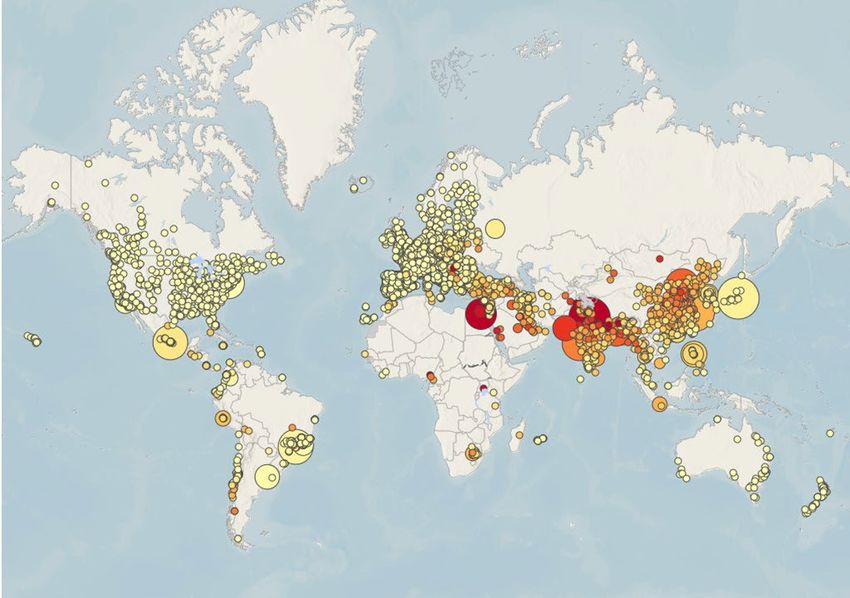
THE ASSOCIATION OF AIR POLLUTION CONTROL AGENCIES

Foreword

Dear Readers,
This year, the United States celebrates the 50th Earth Day and the importance of the natural environment. It is also a time to reflect on the
tremendous environmental progress that has been made in the United States in the past half century. Americans today enjoy cleaner air
than they did 50 years ago, and trends show the environment will continue to benefit from the protections provided by state, local and
federal planning. We, the state and local members of the Association of Air Pollution Control Agencies (AAPCA), have dedicated our careers
to improving air quality and we are proud of this progress.

AAPCA is a consensus-driven organization of 48 state and local air agencies focused on assisting members with implementation of technical
issues associated with the Clean Air Act. AAPCA’s Board of Directors is comprised of senior officials from 23 geographically diverse member
states’ environmental protection agencies. This diversity strengthens our members’ ability to learn from new perspectives that help foster
the development of innovative and effective strategies to address air quality. Consensus principles encourage and promote a focus on com-
mon issues as we work to implement the Clean Air Act, and work with federal co-regulator partners to address those issues.

As AAPCA’s current president, I am pleased to present our annual publication, State Air Trends & Successes: The StATS Report. State and local
air quality agencies are responsible for making complex planning decisions affecting air quality in their communities that have unique so-
cial and economic factors to consider, and The StATS Report highlights the progress in air quality made while accommodating these factors.
That progress is evidenced in a variety of air quality measures and indicators, including:

• From 1990 to 2018 in AAPCA Member States, aggregate emissions of the six criteria air pollutants for which there are national ambient air
  quality standards (NAAQS) were reduced by 53 percent, while Gross Domestic Product rose 281 percent, vehicle miles traveled increased 68
  percent, and population increased 48 percent.
• Over the 20-year period from 1997 to 2017, emissions of nitrogen oxides from electric utilities in AAPCA member states were reduced by
  more than 82 percent, while sulfur dioxide emissions in this sector were reduced 88 percent.
• Emissions of air toxics in AAPCA member states were reduced by 350 million pounds from 2008 to 2018.
These statistics, and other metrics cataloged in this report, convey the remarkable improvements in air quality that have been made. As Air
Directors, we recognize that our work is not done. We will continue to engage with our federal partners and other stakeholders to continue
this progress.

                                                                                K A R E N H AY S
                                                                                Chief, Air Protection Branch
                                                                                Georgia Environmental Protection Division
                                                                                President, AAPCA

                                                             STATE AIR TRENDS & SUCCESSES: THE StATS REPORT                                     4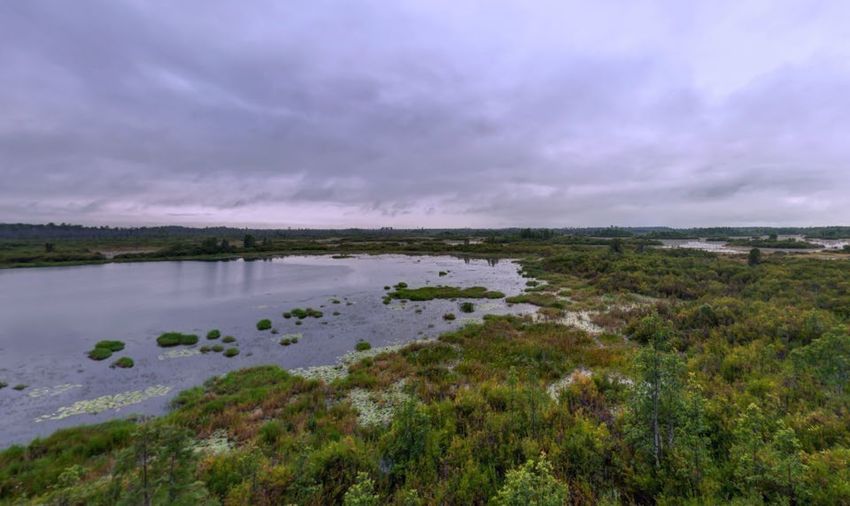
THE ASSOCIATION OF AIR POLLUTION CONTROL AGENCIES

Introduction

Environmental Milestones and The StATS Report
2020 is a year of environmental milestones for the United States, highlighted by the observation of the 50th year of the Environmental Pro-
tection Agency (U.S. EPA) on December 2, which is marked by the swearing in of William Ruckelshaus in 1970 as the Agency’s first Adminis-
trator. Earth Day, which has become an international event, also enters a fifth decade this year. With noteworthy accomplishments to laud at
each of those half-century marks, the most significant achievements might be attributable to another 50th happening in 2020: the passage
of the Clean Air Act Amendments of 1970. Over that span, the federal Clean Air Act—with further amendments in 1977 and 1993—has
been foundational to the nation’s substantial environmental progress.

The 2020 edition of AAPCA’s State Air Trends & Successes: The StATS Report documents the United States’ success in improving air quality
under the Clean Air Act and underscores the Act’s vital framework of cooperative federalism that delegates regulatory and planning au-
thority to state and local air agencies. In virtually every measure, the air in the United States is vastly cleaner and clearer today than it was
in 1970—a period that has seen Gross Domestic Product grow by nearly 300 percent. This progress has been achieved through complex
technical analyses, such as monitoring and modeling, that is undertaken by air agencies to guide planning efforts that accommodate social,
geographic, and economic factors.

As the title alludes, The StATS Report relies on statistics and data analysis to catalogue long-term air quality trends. This report provides data
from publicly available sources (see page 6 of this report, “Types of Air Quality Data and Metrics”) to show the tremendous progress across
several key air quality metrics. Among the trends highlighted are emissions and ambient levels of criteria air pollutants, greenhouse gases,
visibility in national parks, air releases of toxic chemicals, enforcement activity, and, where applicable to provide context, the trend lines of
economic and social growth indicators that could indicate an impact on air quality.

The 2020 edition of State Air Trends & Successes is presented in three sections: air quality trends in AAPCA Member States; the international
context of air quality in the United States; and, long-term national air quality trends. Where comparable data is available, this report also
spotlights areas where AAPCA Member States have demonstrated leadership in air pollution control.

Air Quality in 2020: Current Challenges, Emerging Issues, and Future Opportunities

Benchmark environmental achievements provide cause for celebration as well as an informational basis for meeting ever-more-difficult tar-
gets requiring ever-more-complex work. As jurisdictional and technical experts, state and local agencies not only continue to develop plans
for maintaining and improving air quality across the United States, but also increasingly serve as critical checkpoints for emergent issues
facing communities. These issues range broadly—from the regional impacts of wildfires to emerging compounds like per- and polyfluo-
roalkyl substances (PFAS) and ethylene oxide to background concentrations of air pollutants—and necessitate balancing limited financial,
technological, and staff resources.

As resource priorities evolve, environmental agencies have strived to maximize funding through strict budgeting, creative programming, and
best practices. In part, air agency budgets, to an extent reliant on emissions fees from permitted sources, have been impacted by the successes
that characterize air pollution control work. State and local air agencies, for example, collect fees for pollutant emissions on a per-ton basis from
major sources through the Title V Operating Permit program, established as part of the 1990 Clean Air Act Amendments, but have seen ma-
jor decreases in revenue from the program as it meets its primary goal: driving emissions down to create better air quality. Coupled with these
decreases is the difficulty in effecting further emissions reductions to meet national ambient air quality standards (NAAQS) and progress other
air pollution control goals.

Despite emergent challenges and changing budget structures, the definable progress that has been made under the Clean Air Act underscores
the core role of environmental agencies. Entering the third decade of this century, state and local agencies remain at the forefront of modern air
pollution control efforts and are more experienced and technologically equipped than in 1970. Informed by process improvements in planning,
permitting, training, rule development, and compliance and enforcement work, and with technological advancements, such as mobile moni-
toring labs or using meteorological and satellite observations, agencies are better able to understand air quality issues, engage communities,
and provide the leadership that has resulted in the trends highlighted in this report.

                                                                STATE AIR TRENDS & SUCCESSES: THE StATS REPORT                                          5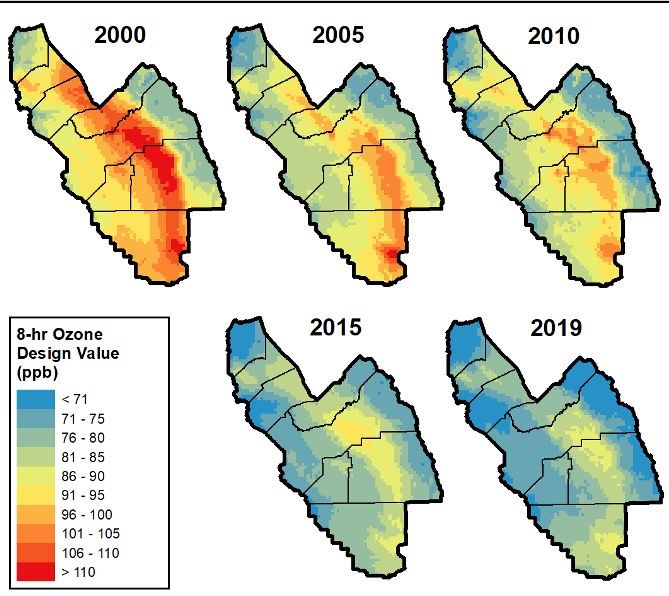
THE ASSOCIATION OF AIR POLLUTION CONTROL AGENCIES

Types of Air Quality Data and Metrics

This report primarily relies on data from the U.S. Environmental                            ment/non-attainment designations, evaluate State Implementation
Protection Agency (EPA) and other federal agencies, such as the                             Plans [SIPs] for non-attainment areas, perform modeling for permit
U.S. Energy Information Administration (EIA), to evaluate air quality                       review analysis, and prepare reports for Congress as mandated by
trends. These include metrics for criteria air pollutants, hazardous air                    the Clean Air Act.”4
pollutants, visibility progress in national parks and wilderness areas,
and greenhouse gases, with sources provided below each chart or                             U.S. EPA reports on long-term air quality trends by preparing data
graph and in the notes for each section. Also included in this report                       analyses that show the overall trend lines for pollutant concentra-
are case studies and short excerpts from other relevant analyses,                           tions and emissions. Primary sources that inform this report include:
which include direct links to the source and data.
                                                                                            • Criteria air pollutant concentration data that are pulled from EPA’s
                                                                                              analysis of the Air Quality System that looks at long-term trends in
Criteria Air Pollutant Data                                                                   air quality.5
                                                                                            • Data showing emissions trends of the criteria pollutants are
An important set of indicators for measuring ambient air quality are
                                                                                              pulled from U.S. EPA’s Air Pollutant Emissions Trends Data,6 which
the air pollutants that are regulated under the federal Clean Air Act.
                                                                                              includes “all criteria pollutants National Tier 1” and relies on the Na-
The Clean Air Act directs U.S. EPA to establish national ambient air
                                                                                              tional Emissions Inventory (NEI). The NEI is “a comprehensive and
quality standards (NAAQS) for air pollutants, the “attainment and
                                                                                              detailed estimate of air emissions of criteria pollutants, criteria pre-
maintenance of which in the judgment of the Administrator, based
                                                                                              cursors, and hazardous air pollutants from air emissions sources
on such criteria and allowing an adequate margin of safety, are
                                                                                              … released every three years based primarily upon data provided
requisite to protect the public health.”1 NAAQS have been set for
                                                                                              [to the Emissions Inventory System] by State, Local, and Tribal air
six “criteria” pollutants: carbon monoxide (CO), sulfur dioxide (SO2),
                                                                                              agencies for sources in their jurisdictions and supplemented by
ground-level ozone (O3), fine particulate matter (PM2.5), lead (Pb),
                                                                                              data developed by the US EPA.”7
and nitrogen dioxide (NO2).2
                                                                                            • Design values, which are computed and published annually by
Section 109 of the Clean Air Act requires EPA to establish both                               U.S. EPA and defined as “a statistic that describes the air quality
primary and secondary NAAQS. Primary NAAQS are “standards the                                 status of a given location relative to the level of the NAAQS …
attainment and maintenance of which … are requisite to protect                                typically used to designate and classify nonattainment areas, as
the public health,” while secondary NAAQS “specify a level of air                             well as to assess progress towards meeting the NAAQS.”8
quality the attainment and maintenance of which … is requisite to
protect the public welfare from any known or anticipated adverse                            Other Air Quality Data
effects associated with the presence of such air pollutant in the am-
bient air.”3 U.S. EPA and the Clean Air Scientific Advisory Committee                       In addition to tracking criteria air pollutants, U.S. EPA also maintains
review the adequacy of the NAAQS according to the statute. Individ-                         data and develops analyses on multiple other air quality programs.
ual NAAQS may differ in form (for example, annual fourth-highest                            The Toxic Release Inventory (TRI) provides a consistent set of data
daily maximum 8-hour concentration average over three years, for                            over time for hazardous air pollutants (or air toxics).9 Visibility progress
ozone), level (often measured in parts per billion or micrograms per                        is tracked as part of the Regional Haze Program, with long-term
cubic meter), and averaging time (from one hour up to one year).                            trends available in U.S. EPA’s yearly Air Quality Trends Report.10 Green-
                                                                                            house gas data are pulled primarily from U.S. EPA’s annual Inventory of
Nationally, ambient air pollution data from thousands of monitors                           U.S. Greenhouse Gas Emissions and Sinks11 and U.S. EIA reports, such as
across the United States is collected by U.S. EPA and state, local, and                     the Annual Energy Outlook,12 and analyses of greenhouse gas data.
tribal air pollution control agencies and provided to the Air Quality
System. These data are used to “assess air quality, assist in attain-

1
    42 U.S.C. §7409(b)(1).                                                                  7
                                                                                               More information on the NEI can be found here. 2017 NEI data released February 2020.
2
    A chart of the primary and secondary NAAQS by pollutant can be found here.              8
                                                                                               U.S. EPA, Air Quality Design Values.
3
    42 U.S.C. §7409.                                                                        9
                                                                                               U.S. EPA, 2018 Toxic Release Inventory National Analysis, February 2020.
4
    U.S. EPA, Air Quality System. EPA notes that the AQS “also contains meteorological      10
                                                                                               U.S. EPA, Our Nation's Air: Status and Trends Through 2018 (Visibility trends here),
    data, descriptive information about each monitoring station (including its geographic      July 2019.
    location and its operator), and data quality assurance/quality control information.”    11
                                                                                               U.S. EPA, Inventory of U.S. Greenhouse Gas Emissions and Sinks: 1990-2018,
5
    Links to data summary files for national trends can be found here.                         April 2020.
6
    Data can be found here. EPA notes: “The latest version of the 1970 – 2017 data show     12
                                                                                               U.S. EIA, Annual Energy Outlook 2020, January 29, 2020.
    the trends for Tier 1 categories which distinguish pollutant emission contributions
    among major source types … As inventory methods are improved over time, for
    some emission sources and improved estimation method may be applied ‘backwards’
    to previous year trend estimates.”

                                                                              STATE AIR TRENDS & SUCCESSES: THE StATS REPORT                                                          6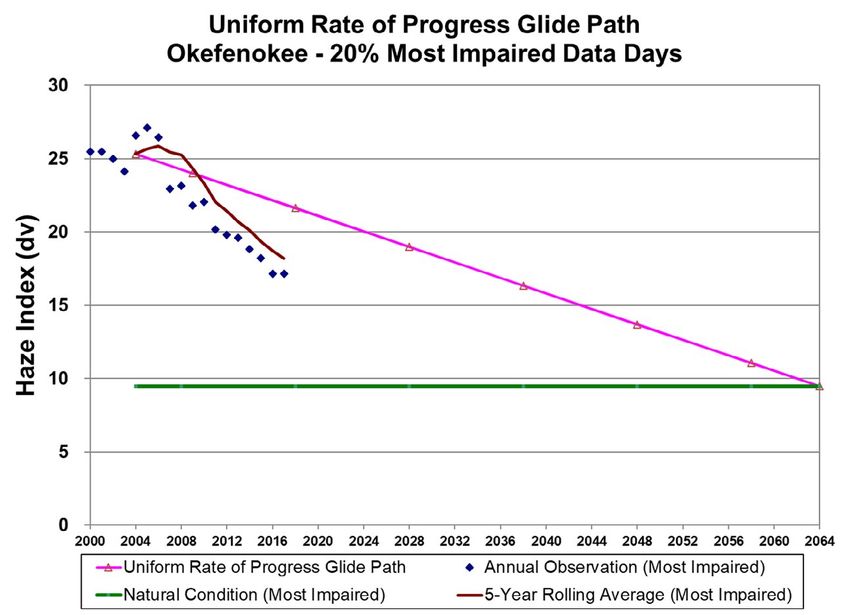
THE ASSOCIATION OF AIR POLLUTION CONTROL AGENCIES

            AIR QUALIT Y
     SUCCESSES IN AAPCA
         MEMBER STATES

                         STATE AIR TRENDS & SUCCESSES: THE StATS REPORT   7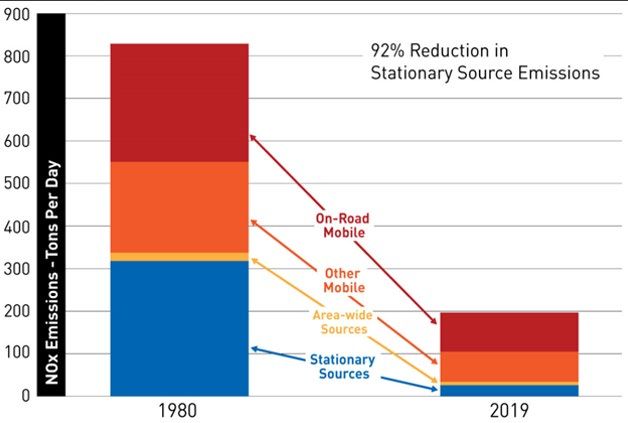
THE ASSOCIATION OF AIR POLLUTION CONTROL AGENCIES

AAPCA Member States | Growth Indicators and Emissions Reductions

Since 1990, AAPCA Member States have overseen substantial emissions reductions and air quality progress while experiencing significant
growth. Through 2017, AAPCA Member States were responsible for a 53-percent reduction in the combined emissions of the six criteria air
pollutants for which there are national ambient air quality standards, or NAAQS.1 These emissions reductions were alongside the following
economic and social indicators trends:

• Through 2018, a 281-percent increase in Gross Domestic Product (GDP), including accounting for nearly 40 percent of total U.S. GDP2;
• An approximately 70-percent increase in vehicle miles traveled from 1990 to 20183;
• A nearly 45-percent increase in population, representing more than 46 percent of the total U.S. population in 20194; and,
• A 32-percent increase in energy production from 1990 to 2017, while producing 63 percent of total U.S. energy in 2017.5

                              AAPCA Member States: Comparison of Growth Areas and Emissions (1990–2019)
                                               AAPCA Member States: ComparisonAAPCA
                                                                               of Growth
                                                                                     Member
                                                                                         AreasStates:
                                                                                               and Emissions
                                                                                                      Comparison of Growth Areas and Emissions
 300%                                         300%                     1990 – 2019                       1990 – 2019
                                                                                                                                                 Gross Domestic Product                           Gross D
                                                                                                                                                        +281%

 250%                                         250%

 200%                                         200%

 150%                                         150%

 100%                                         100%
                                                                                                                                                 Vehicle Miles Traveled                           Vehicle M
                                                                                                                                                         +68%

 50%                                           50%

                                                                                                                                                                            Population
                                                                                                                                          Energy Production                   +45%        Energy Product
                                                                                                                                               +32%                                            +32%
  0%                                             0%
        1990    1997   1998    1999   2000   2001   2002
                                                      1990 2003
                                                             1997 2004
                                                                    1998 2005
                                                                           1999 2006
                                                                                  2000 2007
                                                                                         2001 2008
                                                                                                2002 2009
                                                                                                       2003 2010
                                                                                                              2004 2011
                                                                                                                     2005 2012
                                                                                                                            2006 2013
                                                                                                                                   2007 2014
                                                                                                                                          2008 2015
                                                                                                                                                 2009 2016
                                                                                                                                                        2010 2017
                                                                                                                                                               2011 2018
                                                                                                                                                                      2012 2019
                                                                                                                                                                             2013          2014     2015

                                                                                                                                                                    Aggregate Emissions
                                                                                                                                                                           -53%
 -50%                                          -50%

-100%                                         -100%

Sources: Bureau of Economic Analysis, data available here; U.S. Office of Highway Policy Information, data available here; U.S. Census Bureau, data available here; U.S. Energy
Information Administration, State Energy Data System (SEDS): 1960-2017; U.S. EPA, Air Pollutant Emissions Trends (Data file: “State Average Annual Emissions Trend”).

“It makes sense for state and local air pollution agencies to take the lead in carrying out the Clean Air Act. They are able
 to develop solutions for pollution problems that require special understanding of local industries, geography, housing, and
 travel patterns, as well as other factors … State, local, and tribal governments also monitor air quality, inspect facilities
 under their jurisdictions and enforce Clean Air Act regulations.”
                                                                                                            Source: U.S. EPA, The Plain English Guide to the Clean Air Act, April 2007.

                                                                      STATE AIR TRENDS & SUCCESSES: THE StATS REPORT                                                                         8
THE ASSOCIATION OF AIR POLLUTION CONTROL AGENCIES
Air Quality | Ozone
U.S. EPA’s online Green Book indicates that there were 47 areas in the United States designated nonattainment or maintenance for the 2008
8-hour ozone national ambient air quality standard (NAAQS) of 0.075 parts per million (ppm), with 14 located partially or fully in AAPCA
Member States.6
Design values7 based on monitoring data from U.S. EPA’s Air Quality System show that areas designated in AAPCA Member States averaged
a 15-percent reduction in ambient concentrations of ozone from 2006 to 2018. The table below shows the percent change in design values
for areas previously designated nonattainment in AAPCA Member States over this period.8
PERCENT CHANGE IN
DESIGNATED AREA OZONE CONCENTRATIONS
2006–2018
Atlanta, GA -23.16%
Baton Rouge, LA -15.66%
Charlotte-Rock Hill, NC-SC -25.53%
Chicago-Naperville, IL-IN-WI 1.28%
Cincinnati, OH-KY-IN -11.76%
Cleveland-Akron-Lorain, OH -11.90%
Columbus, OH -17.86%
Dallas-Fort Worth, TX -16.48%
Houston-Galveston-Brazoria, TX -14.29%
Knoxville, TN -23.86%
Memphis, TN-MS-AR -15.85%
Phoenix-Mesa, AZ -4.94%
St. Louis-St. Charles-Farmington, MO-IL -9.76%
Upper Green River Basin, WY -18.75%
Source: U.S. EPA, Air Quality Design Values (Data file: “Ozone design values, 2018”).
STATE AIR TRENDS & SUCCESSES: THE StATS REPORT 9THE ASSOCIATION OF AIR POLLUTION CONTROL AGENCIES
Air Quality | Ozone
AAPCA Member States: Percent Change in Design Value for Areas Previously
AAPCA Member States: Areas Previously Designated Nonattainment for the
Designated
2008Nonattainment for the
Annual NAAQS for Ozone 2008
Percent Ozone
Change NAAQS
in Design (2006–2018)
Value History
2006 – 2018
10%
Atlanta, GA
Baton Rouge, LA
5%
Charlotte-Rock Hill, NC-SC
Chicago-Naperville, IL-IN-WI
0%
Cincinnati, OH-KY-IN
Cleveland-Akron-Lorain, OH
-5%
Columbus, OH
Percent Change
-10% Dallas-Fort Worth, TX
Houston-Galveston-Brazoria, TX
-15% Knoxville, TN
Memphis, TN-MS-AR
-20%
Phoenix-Mesa, AZ
St. Louis-St. Charles-Farmington,
MO-IL
-25%
Upper Green River Basin, WY
AAPCA Average
-30%
AAPCA Member States: Design Value History for Areas Previously Designated
Nonattainment for the
AAPCA Member 2018
States: Ozone
Design NAAQS
Value History for(2006–2018)
Areas
Previously Designated Nonattainment for the 2008 Annual NAAQS for Ozone
0.1
2006 – 2018
Atlanta, GA
Baton Rouge, LA
0.095
Charlotte-Rock Hill, NC-SC
Chicago-Naperville, IL-IN-WI
0.09
Cincinnati, OH-KY-IN
0.085 Cleveland-Akron-Lorain, OH
Concentrations, ppm
Columbus, OH
0.08
Dallas-Fort Worth, TX
Houston-Galveston-Brazoria, TX
0.075
Knoxville, TN
2008 Ozone NAAQS
0.07 Memphis, TN-MS-AR
Phoenix-Mesa, AZ
0.065
St. Louis-St. Charles-Farmington,
MO-IL
Upper Green River Basin, WY
0.06
Source: U.S. EPA, Air Quality Design Values (Data file: “Ozone design values, 2018”).
STATE AIR TRENDS & SUCCESSES: THE StATS REPORT 10THE ASSOCIATION OF AIR POLLUTION CONTROL AGENCIES
Air Quality | Fine Particulate Matter
U.S. EPA’s Green Book indicates that a total of 39 areas in the United States were designated non-attainment for the 1997 fine particulate
matter (PM2.5) NAAQS of 15 micrograms per cubic meter (μg/m3), measured by the three-year average annual mean concentration.9
Of the designated nonattainment areas, 24 were partially or completely located within AAPCA Member States. The table below shows the
percent change in design values for these locations from 2007 to 2018, with an average reduction in PM2.5 concentration of more than 32
percent for AAPCA Member States.10
PERCENT CHANGE IN
DESIGNATED AREA PM2.5 CONCENTRATIONS
2007–2018
Atlanta, GA -25.19%
Birmingham, AL -30.46%
Canton-Massillon, OH -35.21%
Charleston, WV -44.44%
Chattanooga, AL-TN-GA -30.71%
Chicago-Gary-Lake County, IL-IN -25.90%
Cincinnati-Hamilton, OK-KY-IN -30.00%
Cleveland-Akron-Lorain, OH -23.61%
Columbus, OH -35.38%
Dayton-Springfield, OH -36.96%
Evansville, IN -31.58%
Greensboro-Winston Salem-High Point, NC -33.08%
Hickory-Morganton-Lenoir, NC -31.20%
Huntington-Ashland, WV-KY-OH -44.76%
Indianapolis, IN -34.59%
Knoxville, TN -6.06%
Louisville, KY-IN -36.05%
Macon, GA -31.11%
Martinsburg-Hagerstown, WV-MD -40.00%
Parkersburg-Marietta, WV-OH -42.34%
Rome, GA -25.56%
St. Louis, MO-IL -29.79%
Steubenville-Weirton, OH-WV -34.03%
Wheeling, WV-OH -32.09%
Source: U.S. EPA, Air Quality Design Values (Data file: “PM2.5 Design Values, 2018”).
STATE AIR TRENDS & SUCCESSES: THE StATS REPORT 11THE ASSOCIATION OF AIR POLLUTION CONTROL AGENCIES
Air Quality | Fine Particulate Matter
AAPCA Member States: Design Value History for Areas
AAPCA Member States: Design AAPCA Member States:
Value History Design forValue History
Areas for Areas
Previously
ated NonattainmentPreviously
for the Designated
Designated Nonattainment
1997Nonattainment
Annual for forthe
NAAQSPM1997
2.5
(2007–2018)
Annual
forNAAQS
Fine for Fine Particulate Matter
Particulate Matte
17
2007 – 2018 2007 – 2018
Atlanta, GAAtl
Birmingham,Bir
AL
16 Canton-Massillo
Ca
1997 & 20061997 & 2006
PM2.5 NAAQSPM2.5 NAAQS Charleston,Ch
WV
Chattanooga,
Ch AL
15
Chicago-Gary-La
Ch
Cincinnati-Hamil
Cin
14 Cleveland-Akron
Cle
Columbus, OH
Co
13 Dayton-Springfie
Da
2012
2012
Concentration, μg/m3
AAPCA Member States: Design Value History for Areas PM2.5PM 2.5 NAAQS
NAAQS Evansville, IN
Ev
Previously Designated Nonattainment for the 1997 Annual NAAQS for Fine Particulate Matter
2007 – 2018 Greensboro-Win
Gr
17
12 Atlanta, GA Hickory-Morgant
Hic
Birmingham, AL
Huntington-Ashl
Hu
16 Canton-Massillon, OH
11 1997 & 2006 Indianapolis,Ind
IN
PM2.5 NAAQS Charleston, WV
AAPCA Member States: Design Value History for Areas Knoxville, TN
Kn
Chattanooga, AL-TN-GA
Previously Designated
15 Nonattainment for the 1997 Annual NAAQS for Fine Particulate Matter
2007 – 2018 Chicago-Gary-Lake County, IL-IN Louisville, KY-IN
Lo
10
Atlanta, GA Cincinnati-Hamilton, OK-KY-IN
Macon, GA Ma
14 Birmingham, AL Cleveland-Akron-Lorain, OH
Martinsburg-Hag
Ma
Canton-Massillon, OH Columbus, OH
9 1997 & 2006 Parkersburg-Ma
Pa
13 PM2.5 NAAQS Charleston, WV Dayton-Springfield, OH
2012
Concentration, μg/m3
tes: Design Value History for Areas Chattanooga, AL-TN-GA PM2.5 NAAQS Evansville, IN Rome, GA Ro
for the 1997 Annual NAAQS for Fine Particulate Matter
Chicago-Gary-Lake County, IL-IN Greensboro-Winston Salem-High Point, NC
St. Louis, MO-IL
St.
2007 – 2018 812
Atlanta, GA Cincinnati-Hamilton, OK-KY-IN Hickory-Morganton-Lenoir, NC
Steubenville-We
Ste
Birmingham, AL Cleveland-Akron-Lorain, OH Huntington-Ashland, WV-KY-OH
Wheeling, WV-O
Wh
11 Canton-Massillon, OH Columbus, OH Indianapolis, IN
7 1997 & 2006
PM2.5 NAAQS Charleston, WV Dayton-Springfield, OH Knoxville, TN
2012
s PM2.5 NAAQS
Chattanooga, AL-TN-GA Evansville, IN Louisville, KY-IN
ne Particulate Matter
10
Chicago-Gary-Lake County, IL-IN Greensboro-Winston Salem-High Point, NC Macon, GA
Atlanta, GA Cincinnati-Hamilton, OK-KY-IN Hickory-Morganton-Lenoir, NC Martinsburg-Hagerstown, WV-MD
9
Birmingham, AL Huntington-Ashland, WV-KY-OH Parkersburg-Marietta, WV-OH
Cleveland-Akron-Lorain, OH
Canton-Massillon, OH Columbus, OH Indianapolis, IN Rome, GA
Charleston,
8 WV Dayton-Springfield, OH Knoxville, TN St. Louis, MO-IL
2012
Chattanooga, AL-TN-GA PM2.5 NAAQS Evansville, IN Louisville, KY-IN Steubenville-Weirton, OH-WV
Chicago-Gary-Lake County, IL-IN Greensboro-Winston Salem-High Point, NC Macon, GA Wheeling, WV-OH
7
Cincinnati-Hamilton, OK-KY-IN Hickory-Morganton-Lenoir, NC Martinsburg-Hagerstown, WV-MD
Cleveland-Akron-Lorain, OH Parkersburg-Marietta, WV-OH
Source: U.S. EPA, Air Quality Design Values (DataHuntington-Ashland,
file: “PM2.5 DesignWV-KY-OH
Values, 2018”).
Columbus, OH Indianapolis, IN Rome, GA
Dayton-Springfield, OH Knoxville, TN St. Louis, MO-IL
2012
PM2.5 NAAQS Evansville, IN Louisville, KY-IN Steubenville-Weirton, OH-WV
Greensboro-Winston Salem-High Point, NC Macon, GA Wheeling, WV-OH
Hickory-Morganton-Lenoir, NC Martinsburg-Hagerstown, WV-MD
Huntington-Ashland, WV-KY-OH Parkersburg-Marietta, WV-OH
Indianapolis, IN Rome, GA
Knoxville, TN St. Louis, MO-IL
Louisville, KY-IN Steubenville-Weirton, OH-WV
Macon, GA Wheeling, WV-OH
Martinsburg-Hagerstown, WV-MD
Parkersburg-Marietta, WV-OH
Rome, GA
St. Louis, MO-IL
Steubenville-Weirton, OH-WV
Wheeling, WV-OH
STATE AIR TRENDS & SUCCESSES: THE StATS REPORT 12THE ASSOCIATION OF AIR POLLUTION CONTROL AGENCIES
AAPCA BEST PRACTICES IN
AIR POLLUTION CONTROL
Each year, AAPCA awards Best Practices that identify
ground-breaking technology, innovative approaches, and
2017
exemplary operations in the field of air pollution control, • National Ambient Air Quality Standards (NAAQS)
with particular focus on activities that are directly trans- Exceedance Reports
ferable to the operation of an air pollution control agency. Georgia Environmental Protection Division, Air Protection Branch
Below are recipients of AAPCA Best Practices since 2015:
• Pollutants of Concern Table Implementation
2019
Kentucky Division for Air Quality
• Standardization of an Engineer’s Notebook for
• Data Verification Procedures Title V Permitting
Georgia Environmental Protection Division Wyoming Department of Environmental Quality, Air Quality
Division
• Ozone Design Value Predictor Tool
North Carolina Division of Air Quality
• Louisville Community Workshop Series 2016
(Local Government Best Practice) • Air Protection Branch 101 Training
Louisville Metro Air Pollution Control District Georgia Environmental Protection Division, Air Protection Branch
2018 2015
• Georgia State Implementation Plan Processing • AirCom: Florida Division of Air Resource
Procedures Management’s New Compliance and Enforcement
Georgia Environmental Protection Division, Air Protection Database and Field Inspection Tool
Branch Florida Department of Environmental Protection
• Toxicity Factors Database • FAIR: Florida Air Inspector Reference
Texas Commission on Environmental Quality Florida Department of Environmental Protection
• Inventory, Monitoring, Permitting, and Compliance • Promoting Energy Efficiency at Commercial and
Tracking (IMPACT) Web-based Data System Industrial Facilities in North Carolina
Wyoming Department of Environmental Quality, Air Quality North Carolina Division of Air Quality
Division
STATE AIR TRENDS & SUCCESSES: THE StATS REPORT 13THE ASSOCIATION OF AIR POLLUTION CONTROL AGENCIES
Electricity Sector Emissions Reductions
In the two decade period from 1997 to 2017, AAPCA Member States experienced above a 30-percent increase in energy production.11 Over
this same period, sulfur dioxide (SO2) and oxides of nitrogen (NOX) emissions declined substantially.
In the electricity sector, SO2 emissions in AAPCA Member States decreased 88 percent, from 8,758,000 tons in 1997 to 991,000 tons in 2017,
while NOX emissions went from 4,243,000 tons in 1997 to 757,900 tons in 2017, a reduction of 82 percent.12
AAPCA Member States: Energy Production Compared to SO2 and NOX
AAPCA Member States: Energy Production Compared to
Emissions
SO2 and from the Electricity
NOX Emissions from theSector (1997–2017)
Electricity Sector
1997 – 2017
10,000 60,000,000
9,000
SO2 50,000,000
8,000
7,000
40,000,000
Energy Production (billion Btu)
Emissions (thousand tons)
6,000
5,000 30,000,000
NOX
4,000
20,000,000
3,000
2,000
10,000,000
1,000
0 0
1997 1998 1999 2000 2001 2002 2003 2004 2005 2006 2007 2008 2009 2010 2011 2012 2013 2014 2015 2016 2017
Total Energy Production
Sources: U.S. Energy Information Administration, State Energy Data System (SEDS): 1960-2017; U.S. EPA, Air Pollutant Emissions Trends Data (Data file: “State Average Annual
Emissions Trend”).
Power Plant Emissions | SO2 and NOX Trends
U.S. EPA’s preliminary 2019 Power Plant Emissions Data demonstrate that “For the first time since the start of the Acid Rain Program (ARP),
annual emissions of SO2 and NOX emissions are both under a million tons,” with a decline from 2018 of 23 percent for SO2 emission and 14
percent for NOX emissions.
Source: U.S. EPA, “EPA’s 2019 Power Plant Emissions Data Demonstrate Significant Progress,” February 19, 2020. Data available here.
STATE AIR TRENDS & SUCCESSES: THE StATS REPORT 14THE ASSOCIATION OF AIR POLLUTION CONTROL AGENCIES
Electricity Sector Emissions Reductions | Oxides of Nitrogen
Data from U.S. EPA’s Clean Air Markets Programs13 show that AAPCA Member States reduced electricity sector emissions of oxides of nitro-
gen (NOX) by an average of nearly 75 percent from 1990 to 2018.14
AAPCA Member States: Percent
AAPCA Reduction
Member in NO
States: Percent Emissions
Reduction
X in NOXfrom the Electricity
Emissions Sector
in the Electricity Sector(1990–2018)
1990 – 2018
40%
20%
0%
-20%
-40%
-60%
-80%
-100%
1990 2000 2005 2018
Alabama Arizona Arkansas Florida Georgia Indiana
Kentucky Louisiana Maine Mississippi Missouri Nevada
North Carolina North Dakota Ohio Oklahoma South Carolina Tennessee
Texas Utah West Virginia Wyoming AAPCA Average
Alabama (-162,855)
Arkansas (-17,068)
AAPCA Member States: Share of Arizona (-39,901)
Florida (-249,438)
NOX Emissions Reductions in the
Georgia (-203,187)
Electricity Sector (1990–2018)
(tons of NOX reduced)
Other States Indiana (-355,192)
(-1,926,721)
From 1990 to 2018, electricity sector
NOX emissions in the United States de- Kentucky (-297,608)
clined by 84 percent, from 6.4 million Louisiana (-57,186)
tons to 1.02 million tons. AAPCA Mem- Maine (-3,374)
ber States accounted for 64 percent of Missouri (-143,385)
Mississippi (-35,538)
these reductions, or 3.45 million tons.15
North Carolina (-170,295)
North Dakota (-66,774)
Wyoming (-65,883) Nevada (-44,374)
West Virginia (-294,506)
Ohio (-483,425)
Utah (-40,910)
Oklahoma (-69,232)
Texas (-347,242)
South Carolina (-84,446)
Tennessee (-227,315)
Source: U.S. EPA, “Annual NOX Emissions from CSAPR
and ARP Sources, 1990 –2018,” December 2019.
STATE AIR TRENDS & SUCCESSES: THE StATS REPORT 15THE ASSOCIATION OF AIR POLLUTION CONTROL AGENCIES
Electricity Sector Emissions Reductions | Sulfur Dioxide
U.S. EPA’s Clean Air Markets Programs data show that AAPCA member states decreased their emissions of sulfur dioxides (SO₂) from the
electricity sector by an average of nearly 80 percent.16
AAPCA Member States: Percent Reduction in SO Emissions from the Electricity Sector (1990–2018)
AAPCA Member States: Percent Reduction in SO2 Emissions in the Electricity Sector
19902 – 2018
60%
40%
20%
0%
-20%
-40%
-60%
-80%
-100%
1990 2000 2005 2018
Alabama Arizona Arkansas Florida Georgia Indiana
Kentucky Louisiana Maine Mississippi Missouri Nevada
North Carolina North Dakota Ohio Oklahoma South Carolina Tennessee
Texas Utah West Virginia Wyoming AAPCA Average
Alabama (-516,604)
Arkansas (-17,387)
AAPCA Member States: Share of Arizona (-103,419)
Florida (-615,939)
SO2 Emissions Reductions in the
Georgia (-860,700)
Electricity Sector (1990–2018)
(tons of SO2 reduced)
Other States
(-4,374,344) Indiana (-1,430,667)
Nationally, electricity sector SO₂
emissions went from 15.7 million tons
in 1990 to 1.2 million tons in 2018 a
92-percent reduction. AAPCA Member Kentucky (-949,923)
States accounted for nearly 70 percent
Wyoming (-49,850) Louisiana (-60,523)
of these SO₂ emissions reductions, low- Maine (-10,687)
ering SO₂ emissions from 10.9 million West Virginia (-922,833)
Missouri (-673,119)
tons in 1990 to 888,600 tons in 2018.17 Utah (-23,316)
Mississippi (-115,881)
North Carolina (-314,929)
Texas (-251,320) North Dakota (-83,903)
Tennessee (-794,793) Nevada (-52,435)
South Carolina (-160,572) Ohio (-2,125,038)
Source: U.S. EPA, “State-by-State SO2 Emissions from Oklahoma (-70,997)
CAIR and ARP Sources, 1990-2018,” December 2019.
STATE AIR TRENDS & SUCCESSES: THE StATS REPORT 16THE ASSOCIATION OF AIR POLLUTION CONTROL AGENCIES
VISIBILITY Then and Now in the
PROGRESS Okefenokee Wilderness Area
The Okefenokee Wilderness Area (managed by
the U.S. Fish and Wildlife Service) is one of three
Federal Class I areas in Georgia. Located in the
south-central part of Georgia, the Okefenokee
Wilderness Area (Figure 1) covers 343,850 acres
and is the headwaters of the Suwannee and St.
Marys Rivers. It is one of the world’s largest intact
freshwater ecosystems and provides habitats for
many threatened and endangered species. It is a
wild and beautiful natural area where visitors can
experience a level of solitude not often found in
an increasingly technological society.
The Okefenokee Wilderness Area has benefitted
from the collaborative effort of state, local, and
federal stakeholders through the Regional Haze
Program. Statewide SO2 emissions in Georgia
were reduced 93 percent between 2000 and
2017; NOX emissions in Georgia were reduced Figure 1. Okefenokee Wilderness Area photo taken from https://www.fws.gov/refuge/Okefenokee.
by 60 percent during this same time period. As
a result, visibility at the Okefenokee Wilderness
Area increased from 19 miles to 44 miles on the
20 percent most impaired visibility days.
U.S. EPA’s Regional Haze Rule requires each Class
I area to achieve natural conditions by the year
2064. Progress is measured by comparing the
5-year average haze index (dv) to the uniform rate
of progress (URP) glide path at each Class I area.
The monitoring data through 2017 indicates that
the Okefenokee Wilderness Area is well below the
2018 URP glide slope target (Figure 2). In fact, the
Okefenokee Wilderness Area is currently meeting
the 2028 URP target. This is more than 10 years
ahead of schedule!
Figure 2. Annual and 5-year rolling average haze index (dv) on the 20% most impaired days compared
against the uniform rate of progress glide path and natural conditions for the Okefenokee Wilderness Area.
STATE AIR TRENDS & SUCCESSES: THE StATS REPORT 17THE ASSOCIATION OF AIR POLLUTION CONTROL AGENCIES
Greenhouse Gases and Energy
From 2000 through 2017, energy production in AAPCA Member States increased nearly 35 percent. During this same time, AAPCA Member
States decreased energy-related carbon dioxide (CO2) by 278,500,000 metric tons, from 3,239 million metric tons in 2000 to 2,960 million
metric tons in 2017.18
AAPCA Member States: Total Energy Production Compared to Energy-Related
Carbon Dioxide Emissions (2000–2017)
60,000,000 3,400
50,000,000 3,300
Emissions, Million Metric Tons
Energy Production, billion Btu
40,000,000 3,200
30,000,000 3,100
20,000,000 3,000
10,000,000 2,900
0 2,800
2000 2001 2002 2003 2004 2005 2006 2007 2008 2009 2010 2011 2012 2013 2014 2015 2016 2017
Energy Production in AAPCA Member States AAPCA Member CO2 Emissions
Sources: U.S. Energy Information Administration (EIA), Energy-Related Carbon Dioxide Emissions by State, 2005-2016, February 27, 2019; U.S. EIA, State Carbon Dioxide
Emissions Data, October 23, 2019; U.S. EIA, State Energy Data System (SEDS): 1960-2018.
During the 20-year period from 1997 to 2017, U.S. EPA’s data tracking of state CO₂ emissions from fossil fuel combustion show that AAPCA
Member States averaged a 14-percent reduction.19
AAPCA States: Percent Change in
AAPCA Member States: Percent Change in Carbon
Carbon Dioxide Dioxide
Emissions from Emissions from Fossil Fuel Combustion (2000–2017)
Fossil Fuel Combustion
2000 – 2017
80%
60%
40%
20%
Percent Change
0%
-20%
-40%
-60%
-80%
2000 2001 2002 2003 2004 2005 2006 2007 2008 2009 2010 2011 2012 2013 2014 2015 2016 2017
Alabama Arizona Arkansas Florida Georgia Hawaii Indiana Kentucky
Louisiana Maine Mississippi Missouri Nevada North Carolina North Dakota Ohio
Oklahoma South Carolina Tennessee Texas Utah West Virginia Wyoming AAPCA Average
Source: U.S. EPA, “State CO2 Emissions from Fossil Fuel Combustion, 1990–2017,” November 2019.
STATE AIR TRENDS & SUCCESSES: THE StATS REPORT 18THE ASSOCIATION OF AIR POLLUTION CONTROL AGENCIES
Toxic Air Releases
AAPCA Member States: Share of Total Total U.S. Reduction:
Reduction of Toxic Air Releases Reported to 573.3 Million Pounds
the Toxic Release Inventory (2008–2018)
AAPCA Member
U.S. EPA’s 2018 Toxic Release Inventory (TRI) National
Reduction:
Analysis documents a 49.5-percent decrease in 348.8 Million Pounds
reported toxic air releases in the decade spanning
from 2008 to 2018, from more than 1.15 billion
pounds to 581 million pounds.20 AAPCA Member
States were responsible for nearly 350 million
pounds of the 573-million-pound reduction, over
60 percent of the national total.21
AAPCA Member States: Annual Share of United States Reduction in Toxic Air Releases (2008–2018)
2008 2009 2010 2011 2012 2013 2014 2015 2016 2017 2018
0
-100,000,000 AAPCA Member Reductions
-200,000,000
-300,000,000
Other State Reductions
-400,000,000
-500,000,000
-600,000,000
-700,000,000
Source: U.S. EPA Toxic Release Inventory Explorer, 2019 TRI Factsheets.
STATE AIR TRENDS & SUCCESSES: THE StATS REPORT 19THE ASSOCIATION OF AIR POLLUTION CONTROL AGENCIES
CASE San Joaquin Valley Emission
STUDY Reductions and Ozone Improvements
The San Joaquin Valley’s challenges in meeting national ambient air quality standards are unmatched in the nation due to the region’s
unique combination of geography, meteorology, and topography.
In light of these challenges, and to achieve the Valley Air District’s mission of improving air quality and public health for all Valley residents,
the Valley Air District, working with the California Air Resources Board, has developed and implemented numerous air quality plans to
reduce emissions from stationary and mobile sources. These air quality plans have led to the adoption of nearly 650 of the most stringent
rules in the nation, as well as the development and implementation of strong voluntary incentive programs that have invested more than
$2.8 billion of combined funds in clean-air projects. Over the past several decades, these air quality improvement efforts have reduced NOX
emissions (a primary precursor for the formation of both ozone and PM2.5 in the San Joaquin Valley) from mobile and stationary sources
by over 75 percent, including a greater than 90 percent reduction from stationary sources under the Valley Air District’s jurisdiction. These
emissions reductions have resulted in significant air quality progress towards meeting the health-based federal ozone and PM2.5 standards.
With respect to addressing ozone, Valley residents have experienced measurable and sustained ozone air quality progress. The San Joaquin
Valley is the only region to attain an ozone standard after having been classified as Extreme Nonattainment (1-hour standard), and is now
on the verge of attaining the 1997 ozone standard (also after classified as Extreme). Building on these improvements, the San Joaquin
Valley continues to make significant progress towards attaining the 2008 and 2015 ozone standards.
More information: San Joaquin Valley Air Pollution Control District report to SJVUAPCD Governing Board on air quality in the San Joaquin Valley during the 2019 summer ozone
season (December 19, 2019).
STATE AIR TRENDS & SUCCESSES: THE StATS REPORT 20THE ASSOCIATION OF AIR POLLUTION CONTROL AGENCIES
State Compliance and Enforcement Activity
According to U.S. EPA’s Enforcement and Compliance History Online (ECHO), state air quality agencies are the leaders in full compliance
evaluations related to the federal Clean Air Act, conducting full compliance evaluations for nearly 14,000 facilities in 2019.22 U.S. EPA states
that a full compliance evaluation “is a comprehensive evaluation of the compliance status of the facility. It looks for all regulated pollutants
at all regulated emission units, and it addresses the compliance status of each unit, as well as the facility’s continuing ability to maintain
compliance at each emission unit.23
Number of Facilities with a Full Compliance Evaluation (2011–2019)
18,000
16,000
14,000
12,000
Number of Facilities
10,000
8,000
6,000
4,000
2,000
0
2011 2012 2013 2014 2015 2016 2017 2018 2019
State EPA
Source: U.S. EPA’s National Air Activity Dashboard, part of ECHO.
Further, AAPCA Member States averaged a total of 317 full compliance evaluations per state in 2019, whereas the national average was 271.
Average Number U.S. Average | 271
of Facilities with
a Full Compliance
Evaluation (2019) AAPCA Member State Average | 317
Source: U.S. EPA’s National Air Activity Dashboard, part of ECHO.
STATE AIR TRENDS & SUCCESSES: THE StATS REPORT 21THE ASSOCIATION OF AIR POLLUTION CONTROL AGENCIES
Section Notes | Air Quality Successes in AAPCA Member States
1
U.S. EPA, Air Pollutant Emissions Trends Data. Data file: “State Annual Emissions Trend.”
2
U.S. Bureau of Economic Analysis, data available here.
3
U.S. Office of Highway Policy Information, data available here.
4
U.S. Census Bureau, Population estimates 1990–2000; 2000–2010; 2010–2019.
5
U.S. Energy Information Administration, State Energy Data Systems (SEDS): 1960–2017.
6
U.S. EPA’s Green Book contains a history of areas designated nonattainment or maintenance under the NAAQS. EPA’s listing of areas desig-
nated nonattainment or maintenance for the 2008 ozone NAAQS can be found here.
7
EPA defines a design value as “a statistic that describes the air quality status of a given location relative to the level of the [NAAQS].” More
information is available here.
8
U.S. EPA, Air Quality Design Values (Data file: “Ozone Design Values, 2018”). Data for this chart is based on overlapping three-year averag-
es beginning with 2006–2008 and ending with 2016–2018.
9
U.S. EPA’s listing of areas designated nonattainment or maintenance for the 1997 annual PM2.5 NAAQS can be found here. In 2012, the
NAAQS for PM2.5 was lowered to 12 μg/m3, based on an annual arithmetic mean averaged over three years (the 2006 review maintained
the 1997 NAAQS).
10
U.S. EPA, Air Quality Design Values (Data file: “PM2.5 Design Values, 2018”). Data for this chart is based on overlapping three-year averages
beginning with 2007–2009 and ending with 2016–2018.
11
U.S. Energy Information Administration, State Energy Data System (SEDS): 1960–2017.
12
U.S. EPA, Air Pollutant Emissions Trends Data (Data file: “State Annual Emissions Trend”).
13
More information on U.S. EPA Clean Air Markets Programs can be found here, and include the Acid Rain Program (ARP), the Cross-State
Air Pollution Rule (CSAPR), and the CSAPR Update.
14
U.S. EPA, “Annual NOX Emissions from CSAPR and ARP Sources, 1990–2018,” December 2019.
15
U.S. EPA, “State-by-State NOX Emissions from CAIR and ARP Sources, 1990–2018,” December 2019.
16
U.S. EPA Air Markets Division, Progress Report: Emissions Reductions (Sulfur Dioxide (SO2) Figures).
17
U.S. EPA, “State-by-State SO2 Emissions from CAIR and ARP Sources, 1990–2018,” December 2019.
18
U.S. Energy Information Administration (EIA), Energy-Related Carbon Dioxide Emissions by State, 2005–2016, February 27, 2019 (Table 1.
State energy-related carbon dioxide emissions by year, unadjusted (2005–2017)); U.S. EIA, State Carbon Dioxide Emissions Data, October
23, 2019 (Data file: “Summary”); U.S. EIA, State Energy Data System (SEDS): 1960–2017 (Data file: “Primary energy production in Btu”).
19
U.S. EPA, “State CO2 Emissions from Fossil Fuel Combustion, 1990–2017,” November 2019.
20
U.S. EPA, 2018 Toxic Release Inventory (TRI) National Analysis, February 2020.
21
U.S. EPA Toxic Release Inventory Explorer, 2019 TRI Factsheets.
22
Data from U.S. EPA’s National Air Activity Dashboard, part of Enforcement and Compliance History Online (ECHO).
23
U.S. EPA, How We Monitor Compliance (section: “What is a Clean Air Act Evaluation?”). EPA indicates that a full compliance evaluation
includes: “a review of all required reports and the underlying records; an assessment of air pollution control devices and operating condi-
tions; observing visible emissions; a review of facility records and operating logs; an assessment of process parameters, such as feed rates,
raw material compositions, and process rates; and a stack test if there is no other way to determine compliance with the emission limits.
STATE AIR TRENDS & SUCCESSES: THE StATS REPORT 22THE ASSOCIATION OF AIR POLLUTION CONTROL AGENCIES
AMERICAN
LEADERSHIP IN
AIR QUALIT Y
STATE AIR TRENDS & SUCCESSES: THE StATS REPORT 23THE ASSOCIATION OF AIR POLLUTION CONTROL AGENCIES
America’s Footprint
Internationally, the United States ranks as a leading nation in population, Gross Domestic Product (GDP), and energy production:
• In 2018, U.S. GDP represented nearly a quarter of the gross world product,1 and has risen steadily over the past half-decade, from $1.012
trillion in 1970 to $20.58 trillion in 2018.2
• In terms of total energy production, the U.S. ranks second only to China, according to the International Energy Agency (IEA).3 Energy
production in the U.S. increased approximately 107 percent from 1960 to 2017.4 Further, from 2000 to 2017, the nation became 19 percent
more energy self-sufficient—up to 92 percent, the highest percentage of energy self-sufficiency the United States has obtained.5
• The U.S. ranks third in total population, behind only China and India.6 Since 1960, the U.S. has experienced an 81-percent growth in popula-
tion, including a 46-millon-person increase in the years ranging from 2000 to 2019.7
America’s 2019 Air Trends Report
U.S. EPA’s 2019 report, Our Nation’s Air: Status and Trends Through 2018, charts the emission trends of criteria air pollutants and carbon diox-
ide (CO₂) in the United States since 1970, as compared to several economic and social growth indicators, including GDP, population, vehicle
miles traveled (VMT), and energy consumption, including the following trends8:
• An increase in GDP of 275-percent, ranking first in the world by nearly $6.9 trillion9;
• A 60-percent increase in population, from 203 million people in 1970 to 331 million in 201810;
• Energy consumption grew 44 percent, from 67.7 thousand trillion Btu in 1970 to 97.6 thousand trillion Btu in 201711; and,
• A 191-percent increase in VMT, from approximately 1.1 trillion miles in 1970 to 3.25 trillion miles in 2018.12
Over the same period, from 1970 to 2018, the United States reduced aggregate emissions of the six criteria air pollutants by 74 percent.13
United States: Comparison of Growth Areas and Emissions (1970–2018)
United States: Comparison of Growth Areas and Emissions
1970 – 2018 Gross Domestic Product
300% 275%
250%
Vehicle Miles Traveled
191%
200%
Percent Grown / Reduction
150%
100% Population
60% Energy Consumption
49%
50%
Carbon Dioxide Emissions
0% 22%
1970 1980 1990 1995 1996 1997 1998 1999 2000 2001 2002 2003 2004 2005 2006 2007 2008 2009 2010 2011 2012 2013 2014 2015 2016 2017 2018
Aggregate Emissions of
-50% Criteria Air Pollutants
-74%
-100%
Source: U.S. EPA, Our Nation’s Air: Status and Trends Through 2018, July 2019 (Section: “Economic Growth with Cleaner Air”).
STATE AIR TRENDS & SUCCESSES: THE StATS REPORT 24THE ASSOCIATION OF AIR POLLUTION CONTROL AGENCIES
World Trends | Fine Particulate Matter
In 2018, the World Health Organization (WHO) mapped the annual mean ambient fine particulate matter concentrations by city population,
based on data from 2016 to 2018. The map demonstrates that the majority of the United States has lower fine particulate matter levels than
most of the rest of the world.14
Annual mean ambient PM2.5 (μg/m3)—from measurements (2018 Update)
Mean PM2.5 (μg/m3)
>110
60
25,000,000
20,000,000
15,000,000
10,000,000THE ASSOCIATION OF AIR POLLUTION CONTROL AGENCIES
World Trends | Carbon Dioxide Emissions
Using data from the International Energy Agency (IEA), the chart below highlights carbon dioxide (CO₂) emissions from the world’s three
most populated nations—China, India, and the United States. Between 2007 and 2017, the U.S. reduced CO₂ emissions by 926 million metric
tons (16 percent) while China increased emissions by 2.8 billion metric tons (43 percent) and India increased emissions by 901 million metric
tons (71 percent).15 Over that period, the U.S. also decreased CO₂ emissions per capita by nearly 23 percent, while both China and India
experienced significant per-person increases.16
Carbon Dioxide Emissions
Carbon Change Change
Dioxide Emissions by Country (Baseline 2007)
by Country
(Baseline 2007)
80%
70%
60%
50%
40%
Percent Change
30%
20%
10%
0%
2007 2008 2009 2010 2011 2012 2013 2014 2015 2016 2017
-10%
-20%
-30%
United States China India
Source: International Energy Agency, Data and Statistics (Total CO₂ Emissions per Country).
STATE AIR TRENDS & SUCCESSES: THE StATS REPORT 26You can also read


