Technical Specifications of Hydro-meteorological, Geodetic, Geotechnical and Seismic Instruments - Doc. No. CDSO_TS_DS_01_v1.0 - DRIP
←
→
Page content transcription
If your browser does not render page correctly, please read the page content below
Technical Specifications of
Hydro-meteorological, Geodetic,
Geotechnical and Seismic
Instruments
Doc. No. CDSO_TS_DS_01_v1.0

January 2018

                                Central Water Commission
                                Ministry of Water Resources,
                    River Development & Ganga Rejuvenation
                                        Government of India
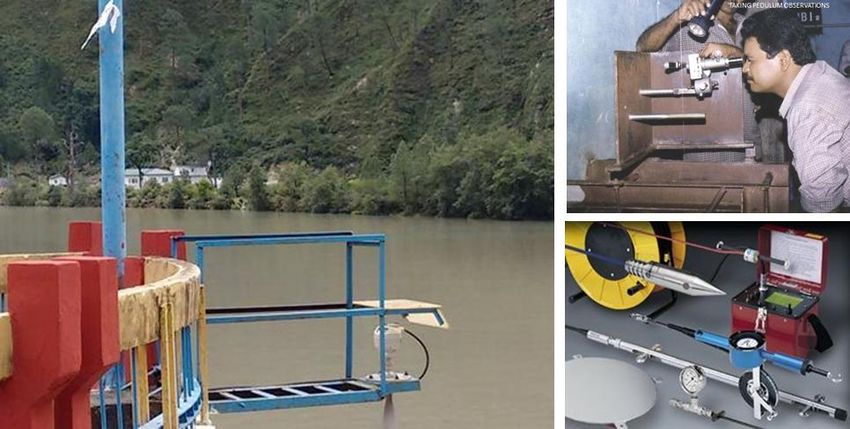
Front cover photograph: Water level sensor at Ichari Dam, Uttarakhand (left), Readout Unit for the normal plumb line at Idukki Dam, Kerala and general view of different types of instruments (right). Copyright © 2018 Central Water Commission. All rights reserved. This publication is copyright and may not be resold or reproduced in any manner without the prior consent of Central Water Commission.
Government of India
      Central Water Commission
    Central Dam Safety Organisa on

     Technical Specifica ons of
  Hydro‐meteorological, Geode c,
Geotechnical and Seismic Instruments
              for Dams

                    January 2018

        Dam Safety Rehabilita on Directorate
               3rd Floor, New Library Building
                          R. K. Puram
                     New Delhi ‐ 110066
Government of India
Central Water Commission
Central Dam Safety Organization
The Technical Specification of Hydro-meteorological, Geodetic Geotechnical and Seismic Instruments has been
published for the first time in January, 2018 under the Dam Rehabilitation and Improvement
Project (DRIP).
Disclaimer
The Technical Specification of Hydro-meteorological, Geodetic Geotechnical and Seismic Instruments in no way
restricts the dam owner in digressing from it. The Central Dam Safety Organization or the
Central Water Commission cannot be held responsible for any actions based on these
specifications. Appropriate discretion may be exercised while preparing and implementing dam
instrumentation programme.
For any information, please contact:
The Director
Dam Safety Rehabilitation Directorate
Central Dam Safety Organisation
Central Water Commission
3rd Floor, New Library Building (Near Sewa Bhawan)
R. K. Puram, New Delhi – 110066.
Email: dir-drip-cwc@nic.inFOREWORD
The health and safety of our existing and new dams are of paramount importance for
sustainable utilization of these valuable assets, besides protecting people, property, and the
environment. The Dam Rehabilitation and Improvement Project (DRIP) taken up by the
Central Water Commission (CWC), with financial assistance from the World Bank,
emphasizes the pivotal role played by instrumentation in assessing the health of a dam.
The main purpose of instrumentation in a dam is to monitor the safety of the structure and
to warn of any changes that could endanger the safety of a dam as well as to provide a
confirmatory check in design assumptions and methods of computation presently in vogue.
Instrumentation is effective and worthwhile only if it provides sufficient and reliable data
from which the safety and performance of the dam can be reasonably and reliably evaluated.
Likewise, a mere collection of data is of no value unless a critical and timely interpretation
and evaluation of recorded data is done and remedial measures adopted to ensure the
continued safety and satisfactory performance of the structure. The quality of installed
instruments plays a very prominent role in getting accurate data. Instruments for long-term
monitoring should be rugged and easy to maintain and should be capable of being verified or
calibrated. A well instrumented dam shall impart better health monitoring and rehabilitation
which is very much required more so in the context of prospective legislation on dam safety.
There has been an urgent need for a uniform set of Technical Specifications which can be
used for instrumentation by dam owners to bring longevity and sustainability with the
uniform output of information for making all analyses simpler, accurate and meaningful. The
specifications of instruments play a very critical role in procuring, installing and operation of
high quality and reliable instrumentation to perform reliably and accurately in the adverse
environment. Specifications have to be clear, concise, complete and correct so that there is
less chance of misunderstanding, delay, and conflict. The procurement specifications of
instruments are also to be combined with field services of installation, calibration, data
collection, transmission, analysis, interpretation and presentation for a suitable time period.
This document entitled Technical Specifications of Hydro-meteorological, Geodetic, Geotechnical and
Seismic Instruments has been finalized by CPMU in consultation with leading national and
international agencies as well as experts working in the field of dam instrumentation. I am
sure these specifications will be of immense help to the Water Resource Departments as well
as other agencies for their use for preparation of a suitable dam instrumentation plan.
I sincerely hope that this compilation will be quite useful especially for the engineers of dam-
owning agencies and water resources engineers handling dam safety and rehabilitation efforts
for all dams.
(N.K. Mathur)
New Delhi Member (Design & Research)
January 2018 Central Water Commission
Doc. No. CDSO_TS_DS_01_v1.0 Page iThis page has been left blank intentionally. Doc. No. CDSO_TS_DS_01_v1.0 Page ii
PREFACE

   The Central Water Commission (CWC), with financial help from the World Bank, started the
   Dam Rehabilitation and Improvement Project (DRIP) to repair about 250 large dams in
   seven States. Instrumentation plays a very vital role in ensuring the safety of dams in this
   Project. It is proposed to install hydro-meteorological, geodetic, geotechnical and seismic
   instruments in dams under DRIP. It is also proposed to automate the whole process of data
   acquisition, processing, analysis and interpretation. This will help in taking timely appropriate
   remedial action.
   For achieving this task, it is necessary that there is complete uniformity in the technical
   specifications of instruments that will be installed by various implementing agencies (IAs).
   IAs in the State Governments might not have the necessary ability in the field of
   Instrumentation. The DRIP Central Project Management Unit (CPMU) has undertaken this
   work of compilation of Technical Specifications of Hydro-meteorological, Geodetic,
   Geotechnical and Seismic Instrumentation on the advice of World Bank. A committee
   headed by Chief Engineer (Dam Safety Organisation), CWC and consisting of experts from
   CWC and renowned institutes viz. CWPRS, CSMRS, NGRI, IIT Roorkee, (National Centre
   for Seismology, IMD) as members was formed to complete these technical specifications.
   The instrumentation has been so planned that analysed and processed data of
   instrumentation shall be available on real time basis to network connected State
   Governments, CWC and authorised Specialized Institutes for giving their inputs and
   feedback for proper action by dam owning authorities for ensuring the safety of dams.
   The present compilation consists of technical specifications of hydro-meteorological,
   geodetic, geotechnical and seismic instruments and the associated data recording instruments
   and processing software. The publication of these specifications will be very useful specially
   to all DRIP Implementing Agencies as well as other dam owners for procurement of dam
   instruments, installation, commissioning, putting in service, operation and maintenance, etc.

Doc. No. CDSO_TS_DS_01_v1.0                                                                 Page iii
This page has been left blank intentionally.

Doc. No. CDSO_TS_DS_01_v1.0                                        Page iv
Technical Specification of Instruments                                             January 2018

Technical Specifications Review Committee

Chairman              Gulshan Raj            Chief Engineer, Dam Safety Organization, Central
                                             Water Commission, New Delhi

Past Chairman         (i) Naresh Kumar       Former Chief Engineer, Dam Safety Organisation,
                          Mathur             Central Water Commission, New Delhi

                      (ii) T K Sivarajan     Former Chief Engineer, Dam Safety Organisation,
                                             Central Water Commission, New Delhi

Member Secretary      Pramod Narayan         Director, Dam Safety Rehabilitation Directorate
                                             and Project Director, DRIP, Central Water
                                             Commission, New Delhi

Committee Members

Vivek Tripathi        Director, Concrete & Masonry Dam Designs (East & North East),
                      Central Water Commission, New Delhi

Yoki Vijay            Former Director, Instrumentation Directorate, Central Water
                      Commission, New Delhi

Rajesh Kumar          Director, River Data Directorate, Central Water Commission, New Delhi

O P Gupta             Director, FE & SA Directorate, Central Water Commission, New Delhi

Dr. M L Sharma        Department of Earthquake Engineering, IIT Roorkee, Uttarakhand

Dr. D Srinagesh       Chief Scientist, National Geophysical Research Institute, Hyderabad

Dr. K R Dhawan        Scientist - D, Central Water and Power Research Station (CWPRS),
                      Pune

S L Gupta             Scientist - E, Central Soil and Materials Research Station (CSMRS),
                      New Delhi
Dr. P R Baidya        Scientist, National Center for Seismology, Ministry of Earth Sciences,
                      New Delhi

Doc. No. CDSO_TS_DS_01_v1.0                                                                 Page i
Technical Specification of Instruments January 2018
Team Involved in Preparing Technical Specifications
Pramod Narayan Director, Dam Safety Rehabilitation Directorate and Project
Director, DRIP, Central Water Commission, New Delhi
Manoj Kumar Deputy Director, Dam Safety Rehabilitation Directorate,
Central Water Commission, New Delhi
Saurabh Sharan Deputy Director, Dam Safety Rehabilitation Directorate,
Central Water Commission, New Delhi
Bikram Kesharee Patra Assistant Director, Dam Safety Rehabilitation Directorate,
Central Water Commission, New Delhi
Vinod Kumar Kapoor Deputy Team Leader, Egis India, Consultant, DRIP
Dr. Ashok Kumar Dhawan Dam Instrumentation Specialist, Egis India, Consultant, DRIP
Pankaj Kumar Awasthi & Digital Support, Egis India, Consultant, DRIP
Anil Kumar
Doc. No. CDSO_TS_DS_01_v1.0 Page iiTechnical Specification of Instruments January 2018
TABLE OF CONTENTS
FOREWORD ................................................................................................................................................... i
PREFACE ...................................................................................................................................................... iii
Table of Contents ...................................................................................................................................... iii
1. Specifications Of Hydro-Meteorological Instruments ............................................... 1
1.1 Water Level Recorders .............................................................................................................. 1
1.1.1 Shaft Encoder Type .................................................................................................... 1
1.1.2 Radar Type................................................................................................................... 2
1.1.3 Ultrasonic Sensor Type............................................................................................... 3
1.1.4 Bubbler Type ............................................................................................................... 4
1.1.5 Pressure Transducer Type .......................................................................................... 5
1.2 Automatic Weather Station....................................................................................................... 7
1.3 Automatic Rain Gauge ............................................................................................................ 10
2. Specifications Of Geodetic Instruments .................................................................................... 12
2.1 Total Station .........................................................................................................................12
2.2 Survey Targets or Reflectors for Opto-Electronic Measurements ..................................12
3. Specifications Of Geotechnical Instruments ........................................................................... 13
3.1 Piezometer............................................................................................................................13
3.2 Temperature Sensor ............................................................................................................14
3.3 Joint Meter / Crack Meter ..................................................................................................15
3.4 Uplift Pressure Measurement System ................................................................................16
3.5 Tilt Meter..............................................................................................................................17
3.6 Normal Plumb Line.............................................................................................................18
3.7 Inverted Plumb Line ...........................................................................................................19
3.8 Automatic Pendulum Readout ...........................................................................................20
3.9 V-Notch Weir For Flow Measurement .............................................................................21
3.10 Multiple Point (3 Point & 5 Point) Bore Hole Extensometer .......................................22
3.11 Inclinometer .......................................................................................................................23
3.12 Stress Meter ........................................................................................................................24
3.13 Strain Meter ........................................................................................................................25
3.14 No Stress/Strain Meter .....................................................................................................26
4. Specifications Of Seismic Instruments ...................................................................................... 27
4.1 Strong Motion Accelerographs (built-in accelerometer) ..................................................27
4.2 Broadband Seismometers ...................................................................................................30
4.3 Data Acquisition Systems (DAS) and its accessories ........................................................32
Doc. No. CDSO_TS_DS_01_v1.0 Page iiiTechnical Specification of Instruments January 2018
5. Specifications Of Data Recorders, Multiplexers, And Software ....................................... 35
5.1 Data Recorder ......................................................................................................................35
5.2 Multiplexer ...........................................................................................................................35
5.3 Software................................................................................................................................36
5.3.1 Data Capture And Processing ...................................................................................... 37
5.3.2 Data Storage .................................................................................................................... 37
5.3.3 Data Display .................................................................................................................... 37
Doc. No. CDSO_TS_DS_01_v1.0 Page ivTechnical Specification of Instruments January 2018
1. SPECIFICATIONS OF HYDRO-METEOROLOGICAL
INSTRUMENTS
1.1 WATER LEVEL RECORDERS
1.1.1 SHAFT ENCODER TYPE
Functional Requirement: To measure the reservoir water level
Design Requirements: The equipment offered should conform to the following technical
specifications:
Feature Value
Operating ambient From -20 to + 60 °C
Conditions
temperature range
Site
Operating humidity 5 to 100%
Altitude 0 to 2500 metres
Sensor type Shaft encoder based incremental rotary position sensor
with digital display
Range 1 to 100 metres
Resolution 3 mm or less
Accuracy 0.025% FSO
Output interface SDI-12 / RS 485 / 4-20 mA / compatible with data
Sensor
logger
Power supply 12 V DC or switch rated for 12 V DC
Linearity --
Damping --
Skewness --
Digitisation rate --
Lightning protection Required
Material Corrosion resistance metal (stainless steel or
aluminium)
General Features
Enclosure Lockable (key) box provided by the supplier to be
mounted in a stilling well or gauge hut, with IP65 or
NEMA 4 protection
Tools Complete tool kit for operation and routine
maintenance
Doc. No. CDSO_TS_DS_01_v1.0 Page 1Technical Specification of Instruments January 2018
Feature Value
Graduated tape The tape should be of high quality to withstand a harsh
and humid environment, should not get twisted or
wrinkled during operation.
Accessories Sensor mounting support, floats, graduated tapes
(metric), wheel, counterweight, and cabling
Protection NEMA 4 or IP65
Manuals Full documentation and maintenance manual in
English
1.1.2 RADAR TYPE
Functional Requirement: To measure the reservoir water level
Design Requirements: The equipment offered should conform to the following technical
specifications:
Feature Value
Operating ambient -20 to + 60°C
Conditions
temperature range
Site
Operating humidity 0 to 100%
Altitude 0 to 2500 metres
Sensor type Microwave non-contact sensor
Range 15 m/20 m/35 m/40 m/70 m/75 m
Resolution 3 mm or less
Accuracy 0.02% FSO
Beam angle: ≤ 16 °
Sensor
Output interface SDI-12 / RS 485 / 4-20 mA / compatible with data logger
Power supply 10-15 V DC
Linearity --
Damping --
Skewness --
Digitization rate --
Doc. No. CDSO_TS_DS_01_v1.0 Page 2Technical Specification of Instruments January 2018
Feature Value
Lightning protection Required
Material Corrosion resistance metal (stainless steel / aluminium or
PVC)
Enclosure The sensor shall be easy to dismount and replace in the event
of a malfunction.
Tools Complete tool kit for operation and routine maintenance
General Features
Accessories Sensor mounting support, cables and other accessories as
required
Protection NEMA 4 or IP65
Manuals Full documentation and maintenance manual in English
Horizontal mounting Above FRL, below a bridge girder wherever available
/ installation otherwise horizontal cantilever arrangement from a mast /
arrangements wall / pedestal
Radar sensor should have display feature for diagnostic purpose
1.1.3 ULTRASONIC SENSOR TYPE
Functional Requirement: To measure the water level
Design Requirements: The equipment offered should conform to the following technical
specifications:
Feature Value
Operating ambient From -20 to + 60°C
Conditions
temperature range
Site
Operating humidity 0 to 100%
Altitude 0 to 2500 metres
Sensor type Ultrasonic non-contact sensor
Range Up to 10 metres
Resolution 3 mm or less
Sensor
Accuracy 0.02% FSO
Output interface SDI-12/RS 485 /4-20 mA/compatible with data logger
Power supply 10-15 V DC
Linearity --
Doc. No. CDSO_TS_DS_01_v1.0 Page 3Technical Specification of Instruments January 2018
Feature Value
Damping --
Skewness --
Digitisation rate --
Lightning protection Required
Material Corrosion resistance metal (stainless steel / aluminium or
PVC)
Enclosure The sensor shall be easy to dismount and replace in the
General Features
event of a malfunction.
Tools Complete tool kit for operation and routine maintenance
Accessories Sensor mounting support, cables and other accessories as
required
Protection NEMA 4 or IP65
Manuals Full documentation and maintenance manual in English
1.1.4 BUBBLER TYPE
Functional Requirement: To measure the water level
Design Requirements: The equipment offered should conform to the following technical
specifications:
Feature Value
Operating ambient From -20 to + 60 °C
Conditions
temperature
Site
Operating humidity 0 to 100%
Altitude 0 to 2500 metres
Sensor type Continuous bubbling system and non-submersible
transducer
Range 15 to 30 psi (0.1 to 0.2 MPa)
Resolution 0.0001 psi or less (0.7 Pa or less)
Sensor
Accuracy 0.1% FSO
Output interface SDI-12 / 4-20 mA / RS485, compatible with data logger
Power supply 11 to 15 V DC
Average current drawTechnical Specification of Instruments January 2018
Feature Value
Bubble Rate Programmable 30 to 120 bubbles per minute
Desiccators The bubbling mechanism and the non-submersible
transducer must be equipped with a desiccating system to
keep the system from malfunctioning for a period not less
than one year.
Linearity --
Damping --
Skewness --
Digitisation rate --
Lightning protection Required
Tools Complete tool kit for installation and routine maintenance
General Features
Accessories Sensor mounting support, cables and other accessories as
required
Enclosure NEMA4 or IP65
Manuals Full documentation and maintenance instructions in
English
1.1.5 PRESSURE TRANSDUCER TYPE
Functional Requirement: To measure the water level
Design Requirements: The equipment offered should conform to the following technical
specifications:
Feature Value
Operating ambient From -20 to + 60°C
Conditions
temperature
Site
Operating humidity 0 to 100%
Altitude 0 to 2500 metres
Sensor type Pressure Sensor
Operating range Up to 30 metres of water column
Sensor
Resolution 3 mm or less
Accuracy 0.02% FSO
Output interface SDI-12 / RS 485 / 4-20 mA / compatible with data
logger
Doc. No. CDSO_TS_DS_01_v1.0 Page 5Technical Specification of Instruments January 2018
Feature Value
Power supply 10-15 V DC
Linearity --
Damping --
Skewness --
Digitisation rate --
Lightning protection Required
Material Corrosion resistance metal (stainless steel / aluminium or
PVC)
Enclosure The sensor shall be easy to dismount and replace in case
General Features
of a malfunction.
Tools Complete tool kit for operation and routine maintenance
Accessories Sensor Mounting support, cables and other accessories as
required
Protection NEMA 4 or IP65
Manuals Full documentation and maintenance manual in English
Doc. No. CDSO_TS_DS_01_v1.0 Page 6Technical Specification of Instruments January 2018
1.2 AUTOMATIC WEATHER STATION
Functional Requirement: To measure the weather parameters
Design Requirements: The equipment offered should conform to the following technical
specifications:
Feature Value
Operating ambient From -20 to + 60 °C
Conditions
temperature
Site
Operating humidity 0 to 100%
Altitude 0 to 2500 metres
Sensor type Platinum resistance or less or equivalent
Range -20 to +60 °C
Resolution ± 0.1 °C
Accuracy Within ± 0.2 °C in the entire working range
Response time 10 second or less
Air Temperature Sensor
Self-aspirated To ensure a continuous supply of air. free from turbulence,
water droplets and radiation
Power supply 12 V DC or switch rated for 12 VDC
Accessories All accessories for mounting the instrument; e.g. special
cross arm clamps or flag, if any, shall be provided.
Linearity --
Damping --
Skewness --
Digitisation rate --
Lightning protection Required
Sensor type Capacitive/ solid state humidity sensor
Relative Humidity Sensor
Range 0 to 100%
Resolution 1%
Accuracy ±3% or less
Power supply 12 V DC or switch rated for 12 V DC
Response time 10 seconds or less
Linearity --
Doc. No. CDSO_TS_DS_01_v1.0 Page 7Technical Specification of Instruments January 2018
Feature Value
Damping --
Skewness --
Digitization rate --
Lightning protection Required
Sensor type Ultrasonic sensor (no moving parts)
Range 0 to 60 m/s for speed and 0 to 360 degrees for direction or
better
0.1 m/s for Speed; + 1 degree for direction
Wind Speed and Direction Sensor
Resolution
Accuracy + 0.5 m/s or less for wind speed, + 5 degree or less for
wind direction
Response time Less than 1 second lag in operating range
Mounting All accessories for mounting the instrument e.g. special
cross arm clamps or flag if any shall be provided.
Linearity --
Damping --
Skewness --
Digitisation rate --
Lightning protection Required
Sensor type Temperature compensated
Range 600 to 1200 hPa
Resolution ± 0.1 hPa
Air Pressure Sensor
Accuracy ± 0.2 hPa
Power supply 12 V DC or switch rated for 12 V DC
Linearity --
Damping --
Skewness --
Digitisation rate --
Lightning protection Required
Sensor type ISO Class 1 Pyranometer (CMP 11 or better)
Radia
Senso
Solar
tion
r
Threshold 120 W/m2 of direct solar irradiance
Doc. No. CDSO_TS_DS_01_v1.0 Page 8Technical Specification of Instruments January 2018
Feature Value
Methodology Alternate shading of sensor to account for sky radiation
Spectral range 400 nm to 1100 nm
Range 0 to 2000 W/m2
Resolution 1 W/m2
Accuracy (including 3% or less
temperature
compensation)
Linearity --
Damping --
Skewness --
Digitisation rate --
Lightning protection Required
Operating temperature -20 to 60 oC
Diameter of the pan 1.2 m or more
Accuracy +/- 1%
Evaporation- Pan Specification
Accessories As required for complete installation of the sensors and
equipment
Material Clean cast seamless acrylic plastic tubing or brass sheet
Platform Rot resistant timber treated with creosote or another
effective wood preservative.
Graduation In millimetres.
Linearity --
Damping --
Skewness --
Digitisation rate --
Lightning protection Required
Material Corrosion resistance metal (stainless steel, aluminium, or
PVC)
Features
General
Tools Complete tool kit for operation and routine maintenance
Accessories Sensor mounting support, cables and other accessories as
required
Doc. No. CDSO_TS_DS_01_v1.0 Page 9Technical Specification of Instruments January 2018
Feature Value
Manuals Full documentation and maintenance manual in English
Output interface SDI 12/RS 485/ 4-20 mA/ compatible with data logger
1.3 AUTOMATIC RAIN GAUGE
Feature Value
Operating ambient From -20 to + 60 °C
Site Conditions
temperature range
Operating humidity 0 to 100%
Altitude 0 to 2500 metres
Sensor type Tipping bucket with siphon
Range 0 to 500 mm/h
Material UV resistant plastic or corrosion-resistant metal
(aluminium, stainless steel), shock and vibration resistant
Rim diameter Receiver/collecting funnel diameter: 200 ± 0.3 mm
diameter with machined aluminium 200 mm rim or
equivalent
Resolution 0.2 mm
Sensor
Accuracy 2% of intensity (up to 10 cm/h)
Output interface SDI-12 / RS 485 / 4-20 mA / compatible with data
logger
Power supply 12 V DC or switch rated for 12 V DC
Linearity --
Damping --
Skewness --
Digitisation rate --
Lightning protection Required
General Features
Material Corrosion resistance metal (stainless steel or aluminium)
Enclosure Lockable (key) box provided by the supplier to be
mounted in Stilling well or Gauge hut, with IP65 or
NEMA 4 protection
Tools Complete tool kit for operation and routine maintenance
Doc. No. CDSO_TS_DS_01_v1.0 Page 10Technical Specification of Instruments January 2018
Feature Value
Graduated tape The tape should be of high quality to withstand a harsh
and humid environment, should not get twisted or
wrinkled during operation.
Accessories Sensor Mounting support, cables (power and signal), and
other accessories as required. Complete tool kit for
installation and routine maintenance giving full details.
Protection NEMA 4 or IP65
Manuals Full documentation and maintenance manual in English
Doc. No. CDSO_TS_DS_01_v1.0 Page 11Technical Specification of Instruments January 2018
2. SPECIFICATIONS OF GEODETIC INSTRUMENTS
2.1 TOTAL STATION
Automatic total station Automatic / manual total station with 0.5” second accuracy, least
0.5" count 0.1, reflectorless range of 500 m, range with reflector of
4000 m, RS-232 interface communication side cover (USB-Host,
USB-device ports and Bluetooth), laser plummet, quick guide and
container with protective cover, single side keyboard supplied with
all accessories
Manual total station 1" Manual total station with 1-second accuracy, least count 0.1,
reflectorless range of 500 m, range with reflector of 7500 m, RS-
232 interface communication side cover (USB-Host, USB-device
ports and Bluetooth), laser plummet, quick guide and container
with protective cover, single side keyboard supplied with all
accessories
2.2 SURVEY TARGETS OR REFLECTORS FOR OPTO-ELECTRONIC
MEASUREMENTS
Bi reflex targets A convergence bolt made of 12 mm x 170 mm galvanized steel
rebar with SS threaded stud shall be securely attached to the
exposed rock or shotcrete surface. The bolt shall be provided with
a plastic cap with a breaking point serving as an adapter for the
mounting of a reflector with a marked centre point. This device
shall be designed for high precision measurements with two axes
of rotation and to be observable from both sides. The
manufacturing accuracy must be better than ± 0.1 mm to achieve
an overall accuracy of ± 1 mm within the measuring section. The
targets must be replaceable without loss of precision.
Prism targets i. Used if the distance from the total station is less than 140 m.
ii. The plastic reflector shall be replaced by a positive-centred
prism with the same standard as the reflector above.
iii. Used if the distance from the total station is up to 600 m.
Doc. No. CDSO_TS_DS_01_v1.0 Page 12Technical Specification of Instruments January 2018
3. SPECIFICATIONS OF GEOTECHNICAL INSTRUMENTS
3.1 PIEZOMETER
Functional Requirement: To measure the pore water pressure
Design Requirements: The equipment offered should conform to the following technical
specifications:
Feature Value
Operating ambient From -20 to + 60°C
temperature
Site Conditions
Compensated From 0 to + 60 °C
Temperature Inbuilt
compensation
Operating humidity 5 to 100%
Altitude 0 to 2500 metres
Sensor type Vibrating wire piezometer in stainless steel housing with
stainless steel filter stone, thermistor, unvented
Operating range 3 kg/cm2, 5 kg/cm2 , 7.5 kg/cm2 , 10 kg/cm2 (Project
Specific)
Over range 1.5 x rated pressure
Over range effect ±0.1% F.S. up to 150%
Resolution 0.025% F.S. (minimum)
Accuracy ±0.1% F.S
Sensor
Output interface SDI-12 / RS 485 / 4-20 mA /compatible with data
logger
Power supply 10-15 V DC
LinearityTechnical Specification of Instruments January 2018
3.2 TEMPERATURE SENSOR
Functional Requirement: To measure temperature
Design Requirements: The equipment offered should conform to the following technical
specifications:
Feature Value
Operating temperature -20 to + 60 °C
Conditions
range
Site
Operating humidity 5 to 100%
Altitude 0 to 2500 metres
Type Resistance type
Coil resistance 140 to 160 Ohm @ 25°C
Surge arrestor Citel 90 V gas discharge tube
Over range 0 to +80 °C
Over range effect ±0.1% F.S. up to 150%
Resolution 0.05°C
Sensor
Accuracy 1% F.S
Dimensions Approximately 20 mm diameter x 120 mm length
Cable 1m, 2 core shielded
LinearityTechnical Specification of Instruments January 2018
3.3 JOINT METER / CRACK METER
Functional Requirement: To measure deformation across joints/cracks
Design Requirements: The equipment offered should conform to the following technical
specifications:
Feature Value
Operating temperature -20 to + 60 °C
Conditions
range
Site
Operating humidity 5 to 100%
Altitude 0 to 2500 metres
Type Vibrating wire
Operating range 12.5 mm, 25 mm, 50 mm (Project Specific)
Over Range 1.25 x range
Resolution 0.025% F.S.
Sensor
Accuracy ±0.2% F.S ( ±0.1% F.S. optional)
LinearityTechnical Specification of Instruments January 2018
3.4 UPLIFT PRESSURE MEASUREMENT SYSTEM
Functional Requirement: To measure uplift pressure
Design Requirements: The equipment offered should conform to the following technical
specifications:
Feature Value
Operating temperature -20 to + 60 °C
Conditions
range
Site
Operating humidity 5 to 100%
Altitude 0 to 2500 metres
Type Mechanical, vibrating wire
Operating range 10 kg/cm2
Over Range 1.50 x Range
Over range effect ± 0.1% F S
Resolution 0.025% F.S.
Sensor
Accuracy ±0.1% F. S.
Temperature compensation Inbuilt
Linearity --
Damping --
Skewness --
Digitisation rate --
Lightning protection Required
Enclosure Stainless steel, IP 68
Accessories Sensor mounting support, cables and other accessories as
Features
General
required
Protection IP 68 or NEMA-4
Manuals Full documentation and maintenance manual in English
Doc. No. CDSO_TS_DS_01_v1.0 Page 16Technical Specification of Instruments January 2018
3.5 TILT METER
Functional Requirement: To measure rotation
Design Requirements: The equipment offered should conform to the following technical
specifications:
Feature Value
Operating temperature -20 to + 60°C
Conditions
range
Site
Operating humidity 5 to 100%
Altitude 0 to 2500 metres
Type Vibrating wire / MEMS biaxial
Operating range ±10 °C
Temperature limit Insulated enclosure
Resolution ± 0.05 mm/m (8 arc seconds)
Accuracy ±0.1% F. S.
Sensor
Size (l x b x h) 162 x 90 x 145 mm (App.)
Tilt plate size 142 x 24 mm high (App.) aluminium alloy
Cable 4 core shielded
Linearity --
Damping --
Skewness --
Digitisation rate --
Lightning protection Required
Enclosure Stainless steel
Accessories Sensor mounting support, cables and other accessories as
Features
General
required
Protection IP 68 or NEMA-4
Manuals Full documentation and maintenance manual in English
Doc. No. CDSO_TS_DS_01_v1.0 Page 17Technical Specification of Instruments January 2018
3.6 NORMAL PLUMB LINE
Functional Requirement: To measure displacement
Design Requirements: Plumb line device shall have long-term stability and all its components
shall be robust and protected against corrosion. It shall be provided with two travelling
telescopes (one each for the X and Y axes) for measurement of displacement. To facilitate
observation from the same direction, one of the telescopes to have a right angle prism before the
objective lens. This helps the observer in taking both X and Y readings from the same place, and
also saves floor space. The equipment offered should conform to the following technical
specifications:
Feature Value
Operating temperature -20 to + 60 °C
Conditions
range
Site
Operating humidity 5 to 100%
Altitude 0 to 2500 metres
Measuring method Travelling telescope
Focus range 250 to 500 mm
Measuring range ± 50 mm ±75 mm (Project Specific)
Table size Table size 625 x 625 mm (approximately)
Resolution 0.01 mm
Measuring Method / Sensor
Accuracy 0.1 mm
Suspension wire Stainless steel wire 1 mm diameter suspended from
collet on a rectangular bar grouted at the top
Suspension Weight 10 kg.
Oil Tank PVC 40 litre capacity
Damping oil SAE 40
Linearity --
Damping --
Skewness --
Digitisation rate --
Lightning protection Required
Accessories Mounting support, cables and other accessories as
Features
General
required
Manuals Full documentation and maintenance manual in English
Doc. No. CDSO_TS_DS_01_v1.0 Page 18Technical Specification of Instruments January 2018
3.7 I NVERTED P LUMB L INE
Functional Requirement: To measure Displacement
Design Requirements: Plumb line device shall have long-term stability and all its components
shall be robust and protected against corrosion. It shall be provided with two travelling
telescopes (one each for the X and Y axes) for measurement of displacement. To facilitate
observation from the same direction, one of the telescopes to have a right-angle prism before the
objective lens. This helps the observer in taking both X and Y readings sitting at the same place
and also saves floor space. The equipment offered should conform to the following technical
specifications:
Feature Value
Operating temperature range -20 to + 60 °C
Conditions
Site
Operating humidity 5 to 100%
Altitude 0 to 2500 metres
Measuring method Travelling telescope
Focus range 250 to 500 mm
Measuring range ±50 mm
Table size Table size 625 x 625 mm (approximately)
Resolution 0.01 mm
Measuring Method/Sensor
Accuracy 0.1 mm
Suspension wire Stainless steel wire 1 mm diameter. Suspended from
hollow float in tank filled with water
Suspension weight 8 kg.
Oil tank Fibreglass, 800 mm diameter x 500 mm height
Float material PVC
Damping oil SAE 40
Linearity --
Damping --
Skewness --
Digitisation rate --
Lightning protection Required
Accessories Mounting support, cables, and other accessories as
Features
General
required
Manuals Full documentation and maintenance manual in English
Doc. No. CDSO_TS_DS_01_v1.0 Page 19Technical Specification of Instruments January 2018
3.8 A UTOMATIC P ENDULUM R EADOUT
Functional Requirement: To measure displacement
Design Requirements: Automatic pendulum readout, designed to make accurate
measurements of the relative movements of normal and inverted pendulums, to be installed as
an electronic upgrade for an existing system. Unless specified otherwise, the system shall be
limited to the measurement of horizontal (radial/tangential) deflections. The unit is to be
supplied with suitable mounts. The equipment offered should conform to the following technical
specifications:
Feature Value
Operating temperature range -20 to + 60 °C
Conditions
Site
Operating humidity 5 to 100%
Altitude 0 to 2500 metres
Measuring method Automatic
Resolution 0.01 mm minimum
Accuracy Accuracy 0.1 mm minimum
Measuring Method
Data communication 4-20ma EIA RS485
Data storage 2000 data sets Data storage 2000 data sets minimum
minimum
Linearity --
Damping --
Skewness --
Digitisation rate --
Lightning protection Required
Accessories Mounting support, cables and other accessories as
Features
General
required
Manuals Full documentation and maintenance manual in English
Doc. No. CDSO_TS_DS_01_v1.0 Page 20Technical Specification of Instruments January 2018
3.9 V-N OTCH W EIR F OR F LOW M EASUREMENT
Functional Requirement: To measure flow of water
Design Requirements: Weirs are typically installed in open channels such as streams to
determine discharge (flow rate). The basic principle is that the discharge is directly related to the
water depth above the crotch (bottom) of the V; this distance is called head (h). The V-notch
design causes small changes in discharge to have a significant difference in depth allowing more
accurate head measurement than with a rectangular weir. The equipment offered should
conform to the following technical specifications:
Feature Value
Site Conditions
Operating Temperature Range -20 to + 60 °C
Operating Humidity 5 to 100%
Altitude 0 to 2500 metres
MEASURING METHOD:
(a) Electronic type Vibrating wire seepage measurement system shall be designed to
measure a flow rate of around 0-100 litre/second. The seepage water
would be collected in a concrete reservoir and made to flow over a V-
notch weir. The rate of seepage water flow is calculated from the level of
water over the weir.
The system to consist of a thin stainless steel plate 90o V-notch weir, a
submersible cylinder and a vibrating wire load cell. The submersible
cylinder to be permanently suspended from low capacity vibrating wire
load cell mounted on a stilling well or a gage well such that the cylinder
hangs inside the overflow water from the weir. Any change in the water
level would affect the vertical thrust on the submersible cylinder. The
output proportional to the water level (and flow) to be transmitted to the
observation room through a four core jelly filled cable.
Type Vibrating wire
Flow range 100 litre/second
Over range capacity 150%
Sensitivity 0.01 litre with read-out unit
Accuracy ± 1% fs
Operating -20 to 60oC
temperature
(b) Mechanical Seepage measurement system shall be designed to measure a flow rate of
type around 0 to 50 litre/second. The seepage water would be collected in a
concrete reservoir (by the civil contractor) with suitable filters to make
the flow as nearly streamline as possible and made to flow over a V-
notch weir. The rate of seepage water flow is calculated from the level of
water over the weir. The V-notch weir is graduated directly in flow in
terms of litre/second.
The instrument shall conform to IS 7436 (Part 1)
Doc. No. CDSO_TS_DS_01_v1.0 Page 21Technical Specification of Instruments January 2018
3.10 MULTIPLE POINT (3 P O I N T & 5 P O I N T ) BORE HOLE
EXTENSOMETER
Functional Requirement: To measure deformation at various depths
Design Requirements: The equipment offered should comply with the following technical
specifications:
Feature Value
Operating temperature range -20 to + 60 °C
Conditions
Site
Operating humidity 5 to 100%
Altitude 0 to 2500 metres
Type Vibrating Wire
Operating range 100 mm
Resolution 0.01 mm
Accuracy ± 0.5 mm.
Sensor
Linearity --
Damping --
Skewness --
Digitisation rate --
Lightning protection Required
Enclosure Stainless steel
General Features
Manuals Full documentation and maintenance manual in English
Accessories Connecting rods, protective pipes, measuring head
assembly, grouting jigs, hydraulically inflatable anchors
Protection IP 68 or NEMA-4
Doc. No. CDSO_TS_DS_01_v1.0 Page 22Technical Specification of Instruments January 2018
3.11 INCLINOMETER
Functional Requirement: To measure inclination
Design Requirements: The equipment offered should comply with the following technical
specifications:
Feature Value
Operating temperature range -20 to + 60 °C
Conditions
Site
Operating humidity 5 to 100%
Altitude 0 to 2500 metres
Type Vibrating wire
Probe Biaxial (Length 500 mm)
Operating range ± 15°
Resolution 0.01 mm
Sensor
Accuracy ± 0.02% FS.
Linearity --
Damping --
Skewness --
Digitisation rate --
Lightning protection Required
Enclosure Stainless steel
Features
General
Manuals Full documentation and maintenance manual in English
Accessories Special casing tubes and fixtures for connection
Protection IP 68 or NEMA-4
Doc. No. CDSO_TS_DS_01_v1.0 Page 23Technical Specification of Instruments January 2018
3.12 STRESS METER
Functional Requirement: To measure stress in concrete/masonry dams
Design Requirements: The equipment offered should comply with the following technical
specifications:
Feature Value
Operating temperature range -20 to + 60 °C
Conditions
Site
Operating humidity 5 to 100%
Altitude 0 to 2500 metres
Type Vibrating wire with thermistor
Thermistor Temperature compensated
Operating range ± 80 kg/cm2
Over range limit 150% of range
Overall dimensions 200 mm dia x 7 mm thick (App.)
Resolution 10 kPa (0.1 kg/cm2) with readout unit
Sensor
Accuracy ± 0.5% FS normal
± 0.1% FS optional
Linearity --
Damping --
Skewness --
Digitisation rate --
Lightning protection Required
Enclosure Stainless steel
Features
General
Manuals Full documentation and maintenance manual in English
Accessories --
Protection IP 68 or NEMA-4
Doc. No. CDSO_TS_DS_01_v1.0 Page 24Technical Specification of Instruments January 2018
3.13 STRAIN METER
Functional Requirement: To measure strain in concrete/masonry dams
Design Requirements: The equipment offered should comply with the following technical
specifications:
Feature Value
Operating temperature range -20 to + 60 °C
Conditions
Site
Operating humidity 5 to 100%
Altitude 0 to 2500 metres
Type Vibrating wire with thermistor
Thermistor Temperature compensated
Operating range ± 1500 µɛ (Microstrain)
Over range limit 150% of range
Resolution ± 1 µɛ (Microstrain)
Accuracy ± 0.5% FS normal
± 0.1% FS optional
Linearity < 0.5% FS
Damping --
Sensor
Skewness --
Digitisation rate --
Lightning protection Required
Vibration resistance Mechanical vibrations with 4 g and 5 to 100 Hz
Frequency datum 800 Hz or more
Surge protection 1.5 KVA
Cable Type 4 conductor to twisted pair, 22 A WG
Thermal co-efficient of 12.0 ppm / ºC
expansion
Temperature sensitivity 5 mm over operating temperature range
General Features
Enclosure Stainless steel
Manuals Full documentation and maintenance manual in English
Accessories --
Protection IP 68 or NEMA-4
Doc. No. CDSO_TS_DS_01_v1.0 Page 25Technical Specification of Instruments January 2018
3.14 N O STRESS/STRAIN METER
Functional Requirement: To measure true stress/strain in concrete/masonry dams
Design Requirements: The equipment offered should conform to the following Technical
Specifications:
Feature Value
Operating temperature -20 to + 60 °C
Conditions
range
Site
Operating humidity 5 to 100%
Altitude 0 to 2500 metres
Type Vibrating wire with thermistor
Thermistor Temperature compensated
Operating range ± 1500 µɛ (microstrain)
Over range limit 150% of range
Resolution ± 1 µɛ (microstrain)
Accuracy ± 0.5% FS normal
± 0.1% FS optional
Sensor
Linearity --
Damping --
Skewness --
Digitisation rate --
Lightning protection Required
Vibration resistance Mechanical vibrations with 4 g and 5 to 100 Hz
Frequency datum 800 Hz or more
Surge protection 1.5 KVA
Enclosure Stainless steel
Features
General
Manuals Full documentation and maintenance manual in English
Accessories --
Protection IP 68 or NEMA-4
Doc. No. CDSO_TS_DS_01_v1.0 Page 26Technical Specification of Instruments January 2018
4. SPECIFICATIONS OF SEISMIC INSTRUMENTS
4.1 STRONG MOTION ACCELEROGRAPHS (BUILT-IN
ACCELEROMETER)
Functional Requirement: To measure dynamic response of dam
Design Requirements: The equipment offered should conform to the following technical
specifications
Feature Value
Transducers Triaxial, force balanced, orthogonal oriented transducers (two
horizontal and one vertical) along with the data acquisition system
in a single sealed unit.
Full scale Range User selectable +0.5 g, +1 g, +2 g, +4 g
Frequency response Flat (within +3dB) to ground acceleration in the range of DC to
at least 200Hz
Dynamic range of >130 dB
accelerometer
Linearity Better than 1% of full scale
Cross axis sensitivity Less than 1% of full scale
Clip level Greater than the full scale range
Leveling Bubble level indicator for leveling the transducer.
Orientation Suitable mark to indicate the direction of relative orientation of
the transducer.
Frequency response curve Frequency response curve of the unit along with information
and system information regarding transfer function including poles, zeros and
normalization factor should be provided (for each sensor as per
the serial number)
Calibration Calibration facility from the data acquisition system locally or
remotely from central recording station through DAS
Anchoring Provision for anchoring the accelerograph unit to the seismic pier.
Number of channels Three
ADC Independent 24-bit digitizers, one for each channel
Sampling rate User selectable upto 1000 SPS per channel
Dynamic range of A/D 130dB or more @ 100sps
converter
Input voltage range of to be matched with the accelerometer output
A/D converter
Doc. No. CDSO_TS_DS_01_v1.0 Page 27Technical Specification of Instruments January 2018
Feature Value
Channel-to-channel skew None
System response ±3 dB flat from DC to nyquist frequency
Noise level Noise level of the unit including the accelerometer and the data
acquisition system should be less than 0.001% of the full scale
level in the frequency range from DC to 50Hz
Timing System i) Internal GPS receiver based timing system
ii) Timing accuracy of +10μsec or less when GPS is locked
iii) Record of GPS status information
iv) GPS antenna should be enclosed in weather proof sealed
enclosure with lightning protection.
Recording mode i) Both continuous and triggered recording mode
ii) Triggering: The DAS should be capable of recording the
acceleration data in the STA/LTA ratio trigger, threshold
trigger and time window
iii) Trigger selection: Independent selection for each channel
iv) Pre-event Recording length: User selectable from 1 to 30 sec
in steps of 1 sec
v) Post event length: User selectable up to 90 sec or more
Data storage i) User accessible compact flash card
ii) The compact flash card should have the capacity of 32GB or
more.
iii) The compact flash card should be rugged and industrial grade
suitable to withstand extreme temperature variations.
iv) The bidder should attach the data sheet of the compact flash
card to be supplied with the DAS.
Recording format i) Standard seismic data in a format that is compatible with
Windows and Linux platforms.
ii) Conversion utilities to miniseed, SAC, SEISAN, ASCII
formats to be provided.
DAS firmware should i) Web browsing support/ communication over TCP/ IP
support protocol.
ii) Full Duplex communication between field station and
Central Receiving Station (CRS)
iii) Triggered or continuous data transmission
iv) Support off-the- shelf communication equipment
v) Extensive error correction
vi) The DAS should be capable of recording the accelerometer
data on the local compact flash card as well as support real-
time data telemetry to a central site through VSAT telemetry
network simultaneously.
Doc. No. CDSO_TS_DS_01_v1.0 Page 28Technical Specification of Instruments January 2018
Feature Value
vii) DAS should have facility to retrieve the old data in the
compact flash card from Central Recording Station manually
through VSAT network.
viii) DAS should have the facility to check the state of health of
the system including system voltage, temperature, GPS status
etc.
ix) DAS should be able to issue an alert and start the
communication in case of earthquake detection or failure of
state of health parameter.
x) DAS should have the facility for Calibration of the
Accelerometer
Communication i) Ethernet Interface for real time telemetry
ii) RS-232 interface for real time telemetry / parameter setup
iii) In built modem
iv) Ethernet port, RS-232 port, USB port should be provided
Power i) Total Power consumption < 3.0 watts at 12V DC (including
accelerometer and DAS)
ii) Status display indicators for power to be provided
iii) Provision to connect external 12V battery source
iv) Supply power isolated from signal ground
v) Reverse voltage protection
vi) Over voltage protection
vii) DAS should resume data acquisition automatically when the
power is restored after disruption.
Operating temperature -20° to 60° C
Humidity Up to 100% RH
Enclosure Accelerometer and DAS should be enclosed in weather and shock
proof sealed single enclosure with lightning protection.
Cables i) Power cable to external Battery of 2m length to be provided
with each unit
ii) The Ethernet cable to connect DAS to VSAT IDU with end
connectors (2m length) to be provided
iii) DAS-GPS antenna cable length of at least 20 meters length
with end connectors
Notes i) All the hardware, software and cables required for parameter
setting, data retrieval from the DAS at field seismic station
and data storage should be provided and described.
ii) Detailed user manual, data sheet and calibration data sheet of
the accelerograph should be provided.
Doc. No. CDSO_TS_DS_01_v1.0 Page 29Technical Specification of Instruments January 2018
4.2 BROADBAND SEISMOMETERS
Functional Requirement: To measure seismic ground motion
Design Requirements: The equipment offered should conform to the following technical
specifications:
Feature Value
Transducers Tri-axial, force-balanced, broadband velocity transducer with
electronic feedback in a single sealed module.
Frequency response Flat response (within +/- 3dB) to ground velocity in the range of
120 secs to 50Hz.
Dynamic range ≥ 135 dB @ 5Hz.
Output voltage ± 20V
Damping 0.7 of critical
Generator constant Atleast 750 V/m/sec.
Linearity Better than 1% of full scale
Cross axis sensitivity Less than 1 % of full scale
Mass centering Mass centering automatic on external command locally and
remotely from the central recording station through DAS.
Control unit for mass position monitoring and mass centering (if
any) to be provided.
Calibration facility Calibration facility from Data Acquisition System
Frequency response Frequency response curve of the unit along with information
curve regarding transfer function including poles and zeros should be
provided (for each sensor as per the serial number)
Noise response Noise response must be below the USGS Low Noise Model in the
frequency range of 35 secs to 5 Hz. Test reports of the sensor
noise over the full pass band should be provided.
Leveling Bubble level indicator for leveling the transducer.
Orientation Suitable mark to indicate the direction of relative orientation of the
transducer
Mass locking Mass locking Should have a robust locking and safety mechanism
during transportation
Enclosure The sensor should be housed in a shockproof and waterproof
enclosure.
Cabling Low-loss shielded Seismometer-DAS cable of at least 20 meters
with end connectors.
Connectors The connectors also should be waterproof and rust proof
Doc. No. CDSO_TS_DS_01_v1.0 Page 30Technical Specification of Instruments January 2018
Feature Value
Operating temperature –20° to 60°C
range
Humidity up to 100% RH
Power consumption < 2.0 watts at 12V DC
Protections 1. Reverse voltage protection
2. Over voltage protection
Thermal insulation cover An airtight thermal insulation cover should be provided
carry case Rugged field carry case for seismometer should be provided..
Supporting documents Detailed user manual / data sheets / calibration data sheet to be
provided
Doc. No. CDSO_TS_DS_01_v1.0 Page 31Technical Specification of Instruments January 2018
4.3 DATA ACQUISITION SYSTEMS (DAS) AND ITS ACCESSORIES
Feature Value
Number of channels Three
ADC resolution Three independent 24-bits digitizers, one for each channel
Dynamic range Greater than or equal to 135dB @ 100sps.
Input Full scale Range should match the sensor output with full scale at ±20V
(40Vpp)
Common mode rejection Greater than 70dB.
ratio
Electromagnetic Immunity to Electromagnetic interference
interference
System noise The overall system noise should not be more than 2-3 counts of
24-bits system on a RMS basis in the frequency range of
0.00833 to 50Hz.
Sampling rate 1) User-selectable up to 500 sps per channel in the different
data streams (at least two or more).
2) Simultaneous recording at different sampling rates in
different streams (two or more), both in continuous and
trigger modes.
Trigger parameters Trigger parameters should be user selectable.
Gain User selectable multiple gain settings
Sensor control 1) Calibration facility for Broadband seismometer
2) Mass position monitoring for Broadband seismometer
3) Mass centering on command for Broadband seismometer
RAM At least 4 MB
Recording capacity 1) Mass storage media 16GB or more and hot swappable.
2) One spare mass storage media of same capacity for each
digitizer to be supplied.
3) The mass storage media should be rugged and industrial
grade suitable to withstand extreme temperature variations.
The bidder should attach the data sheet of the mass storage
media to be supplied with the DAS.
Recording mode The DAS should be capable of recording on the local mass
storage media as well as support real-time data telemetry to a
central site through VSAT telemetry network simultaneously.
Recording format Standard seismic data in a format that is compatible with
Windows and Linux platforms with proven compression
Doc. No. CDSO_TS_DS_01_v1.0 Page 32Technical Specification of Instruments January 2018
Feature Value
technique. Conversion utilities to SAC, SEISAN, ASCII formats
to be supplied.
Communication ports 1) USB and / or serial port connectivity to a local terminal
for parameter setting and data downloading
2) Ethernet port (10/ 100 Base- T) supporting TCP/IP.
3) The Ethernet cable to connect DAS to VSAT IDU with
end connectors (length 2m) to be provided
DAS firmware DAS firmware should support the following features:
1) Web browsing support/ communication over TCP/ IP
protocol.
2) Full Duplex communication between field station and
Central Receiving Station (CRS) Triggered or continuous
data transmission.
3) Support off-the- shelf communication
equipment
4) Extensive error correction
5) Status display indicators for power, data acquisition,
SOH, GPS status etc. should be provided on the
front/top panel.
6) DAS should have facility to retrieve the old data in
the storage media from Central Recording Station
manually through VSAT network.
7) Provision for checking state of health information like
battery voltage, temperature, memory used and
available, GPS status, sensor mass position etc. locally
and remotely from the central recording station.
GPS Timing system 1) UTC timed with digitally controlled precision VCXO
clock phase locked to GPS
2) Timing accuracy less than 0.1mSec when GPS is locked
3) Free running TCXO accuracy of 1 ppm over
wide temperature range.
4) GPS receiver electronic circuit should be inside the
DAS with Antenna exposed outside.
5) Antenna cable length should be 20 mts or more with end
connectors.
6) Antenna should be enclosed in water tight and can
work effectively in extreme climatic condition.
7) Rust proof GPS mounting rod and accessories to be
provided.
8) Antenna cable should be laid through thick plastic conduit
pipe from roof-terrace to the digitizer.
Power requirements 1) Supply voltage 10-24V DC.
2) Power consumption: Less than 2W at 12V DC recording 3
channels at 100sps, continuous mode data acquisition
3) Supply power should be isolated from the signal
Doc. No. CDSO_TS_DS_01_v1.0 Page 33You can also read


