THE GENERAL DATA PROTECTION'S (GDPR) IMPACT ON DATA-DRIVEN BUSINESS MODELS: THE CASE OF THE RIGHT TO DATA PORTABILITY AND FACEBOOK - ITU
←
→
Page content transcription
If your browser does not render page correctly, please read the page content below
ITU Journal: ICT Discoveries, Special Issue No. 2, 9 Nov. 2018

   THE GENERAL DATA PROTECTION’S (GDPR) IMPACT ON DATA-DRIVEN BUSINESS MODELS:
             THE CASE OF THE RIGHT TO DATA PORTABILITY AND FACEBOOK

                                                Moritz Böhmecke-Schwafert, Crispin Niebel
                                                              TU Berlin

Abstract – The General Data Protection Regulation (GDPR) has recently come into force and will have wide
implications for the digital economy and the business models of various tech firms, as well as providing new
opportunities for innovation. The GDPR aims to provide consumers with the control of their personal data,
provide trust in the digital economy and harmonize data protection throughout the EU pursuant to the
Digital Single Market strategy. This paper attempts to analyze and outline how the GDPR might change the
data-driven business models (DDBMs) of firms, yet nonetheless they may lead to a variety of positive effects.
Indeed, the principles and individual rights in the GDPR tackle monopolistic structures (and lock-ins), and
they can increase the quality of data and digital provisions as a result of competitive pressures, as well as
promoting consumer trust in the digital market. One of the individual rights and newer features introduced
by the GDPR, namely the right to ‘data portability’, will be considered with regard to the case of its impact
on Facebook’s DDBM.

Keywords – Business models, data economy, data portability, Facebook, GDPR, innovation, trust

1. INTRODUCTION

The surge in digital technologies and platforms in                            The structure of this paper is as follows: Section two
recent years and the progression towards a digital                            will provide an overview of the data economy,
economy has at its core the monetization of                                   digital business models, the GDPR and data
personal data and the use of ‘Big Data’ to create                             portability. Section three will outline Facebook’s
value (see [1]). Hence, many firms have capitalized                           business model within Hartmann et al.’s [1]
on data-driven business models (DDBMs) such as                                framework illustrating the impact of the GDPR’s
the social media company Facebook Inc. that                                   right to data portability with consideration of
became a global leader and a multibillion-dollar                              consumer trust, the nature of the digital economy,
business in less than one decade.                                             digital markets and competition, as well as
                                                                              interoperability between platforms.
The introduction of the EU General Data Protection
Regulation (GDPR) introduces sweeping changes to                              2. BACKGROUND
the     digital   environment,       most     notably
compromising traditional business models and                                  2.1      Data economy
mechanisms regarding the collection, processing
and use of personal data. It should be noted that, the                        Data has become an integral part of our way of life.
totality of the GDPR with its various principles and                          The gathering of data and its subsequent
rights interacting with one another will have a far                           commercialization has transformed contemporary
more widespread and multidimensional impact on                                economies, politics, societies and cultures. In the EU
DDBMs that cannot be captured within the limited                              for example, the value of the data economy is
scope of this paper. Rather, using Hartmann et al.’s                          continuously increasing. In 2016, the value was
[1] taxonomy for DDBM of start-ups as a basis of                              calculated to be EUR 300 billion (1.99% of the EU’s
analysis, the paper seeks to provide a case study                             GDP) and is estimated in 2020 to be EUR 739 billion
outlining the effects of one of the more unique                               (4% of the EU GDP) [2]. Indeed, over the last
features of the GDPR, namely data portability on the                          few decades multinational companies have
DDBM of the social media company Facebook.                                    mushroomed with several of them ascending very

                                                   © International Telecommunication Union, 2018
     Some rights reserved. This work is available under the CC BY-NC-ND 3.0 IGO license: https://creativecommons.org/licenses/by-nc-nd/3.0/igo/.
                   More information regarding the license and suggested citation, additional permissions and disclaimers is available at
                                                  https://www.itu.int/en/journal/002/Pages/default.aspx
ITU Journal: ICT Discoveries, Special Issue No. 2, 9 Nov. 2018
swiftly to the top of the Fortune 500 list and whose its accumulation and use can provide exponential
source of revenue and business models are financial rewards for an enterprise [15]. As a result,
dependent on the gathering and use of personal in the digital age what has often arisen are data-
data. driven business models (DDBMs).
2.2 Business models The collection, control and analysis of large
amounts of user data can provide firms working in
A business model reflects how a firm attracts and the digital markets with a competitive advantage
provides value to consumers and converts this into [16]. Not only can the user data help personalize
a financial profit [3]. A successful business model and increase the quality of services provided but
can differentiate a firm from its competitors, also, more importantly, allows for more targeted
provide huge financial returns and can ultimately advertising. Providing targeted advertising
create a paradigm shift in how an industry functions opportunities is often the major source of revenue
and conducts business. An early example is the for many digital companies and is the alternative
development by engineers of a shipping container (and often more lucrative) format of creating value
which was a result of Malcolm McLean’s (who beyond traditional direct payment mechanisms.
owned a trucking company) ambition to make the Consequently, as the user data provides such large
loading and unloading of ships with cargo more streams of services, many digital platforms are
efficient. Sport sponsorship is another example and offered for ‘free’ attracting a large consumer base
allows for not only brand exposure and recognition and subsequently, further increasing the amount
but also the subsequent sales of products and and value of the collected data. There is a variety of
merchandise for supporters. The rise of budget formats of DDBMs but the majority of the big
airlines such as Southwest Airlines and, more players in the digital markets can fall under three
recently, EasyJet provide a further example. Air general categories. These are search engines,
travel was made less luxurious when tickets could e-commerce and social networks [16]. In this paper
be booked directly online, where processes are we focus on social networks, of which Facebook is
standardized and made more efficient allowing for the most dominant player and which relies on
cheaper air travel [3]. network effects i.e. “The more members a social
network has, the more attractive it is for the
2.3 Digital business models individual member” [16, p.7]. This is further
exacerbated by a lack of interoperability among
With an increase in digitization and the emergence social platforms where consumers are incentivized
of the digital economy, the variety as well as the to join the largest network. As a result, a lock-in
complexity of different business models has only occurs as consumers cannot transfer their personal
increased. As a result, academic literature analyzing data to another provider. This can lead not only, to
digital business models has flourished (see for competitive issues, but also to the accumulation of
example [4], [5], [6], [7], [8], [9], [10], [11], [12], even more personal information (or risk being
[13]). The seminal business model research and removed).
canvas done by Osterwalder et al. [14] has had a
profound impact in the start-up world. The canvas 2.4 GDPR
consists of nine components: key partners, key
activities, key resources, cost structure, value The GDPR is an EU regulation that came into force
proposition, customer relationships, channels, on the 25th of May 2018 and replaced the former
customer segments and revenue streams. Indeed, 95/46/EC Data Protection Directive. It is the most
the digital economy and the exponential comprehensive piece of data protection legislation
possibilities it provides not only allows for a to date and unlike its predecessor, is a regulation
multitude of business models in meeting new and thus harmonizes data protection law
customer desires but also in creating value for both throughout the EU member states.
consumers as well as firms. Most significantly, is the
development of alternative forms of gaining profits In the GDPR it is stated that:
beyond the traditional direct payment methods.
This is best represented by the opportunities This regulation is intended to contribute...to
provided by big data. Big data refers to high-volume, economic and social progress, to the strengthening
high-velocity and a large variety of information, and and the convergence of the economies within theITU Journal: ICT Discoveries, Special Issue No. 2, 9 Nov. 2018
internal market, and to the well-being of natural to another controller. The right of data portability
persons [17, Recital 2] and especially the stated ‘encouragement’ for
interoperability introduces a new paradigm within
Indeed, it has the aim to create “...trust that will the digital economy and compromises the dominant
allow the digital economy to develop across the position and business models of certain large tech
internal market” [17, Recital 7]. The GDPR applies to firms most notably, Facebook. With the importance
all processors and controllers of personal data of big data for many DDBMs, the data portability
(information that makes a person identifiable). feature of the GDPR introduces competitive
Whereas a controller outlines the reason and pressure in the digital markets (especially for
format of the processing of personal data, a Facebook) where combined with various principles
processor is the one who conducts the processing of the GDPR (e.g. data minimization) as well as other
[18]. The main principles of the GDPR are the rights (e.g. right to erasure), data portability
following: lawfulness, fairness and transparency; provides consumers with leverage.
purpose and storage limitation; data minimization;
integrity and confidentiality; and accountability. 3. GDPR’S INDIVIDUAL RIGHT TO DATA
The GDPR attempts to provide users with control of PORTABILITY AND FACEBOOK’S DDBM
their data and the principles reflect the spirit of the
GDPR (which in many cases does not provide With the rise in social media, the US company
specific rules) and thus, very difficult to navigate Facebook has established market leadership.
around. Failure to show compliance can lead to Initially developed as a small social communication
maximum fine of 4% of global turnover or website used at elite universities in the US, it has
20 million, whichever is more [18]. Furthermore, grown to become a global, multi-billion dollar social
the GDPR establishes fundamental rights, namely: networking company with more than 2.19 billion
the ‘right to be informed’, the ‘right of access’, ‘the monthly active users [19]. In addition to their own
right of rectification’, the ‘right to erasure’, the ‘right social network platform, Facebook Inc. acquired
to restrict processing’, the ‘right to data portability’ other companies such as the digital photo service
the ‘right to object’, and rights related to automated Instagram, the instant messaging service
decision-making including profiling. Other aspects WhatsApp, and the virtual reality technology
of the GDPR include data protection by design and provider Oculus VR amongst others [20], [21], [22].
default, showing proof of consent for processing as Since 2013, the corporation’s revenue streams grew
well as having the duty to report certain personal from 7.87 billion to 40.7 billion US dollars with a net
data breaches among others. In light of the central income of 15.9 billion in 2017 [19]. Facebook
role the control, collection and use of vast amounts harnesses the data economy of billions of their
of user data plays for DDBM, the GDPR’s principles users to derive patterns of preferences and brand
of data minimization, transparency, purpose affiliation. As a result, they can provide brands with
limitation to name a few as well as certain extremely targeted advertisement opportunities
individual rights enclosed in the GDPR strongly and market insights [23].
compromises the status quo of certain DDBMs and
certain firms’ revenue streams. According to strategist Tom Goodwin, Facebook
evolved to become the “...world’s most popular
2.5 The GDPR’s right to data portability media owner [that] creates no content...” itself
[24 p. 6]. The quality and quantity of this content is
One of the most prominent new features of the driven by the users and their data. As indicated
GDPR is the right to data portability. The right above, the generation of content, the targeting of
allows individuals to obtain the personal data advertisements and the individual’s utility of the
(without hindrance) that they have given a social media platform rely heavily on network
controller “… in a structured, commonly used and effects [16]. These features call for an approach to
machine-readable and interoperable format…” [17, analyze Facebook with a specific focus on the
Recital 68]. This right applies when processing has data-driven nature of their business model. For this
been based on consent, when you need to fulfil a purpose, we rely on the comprehensive data-driven
contract or when the processing has been done business model framework of Hartmann et al. [1],
through automated mechanisms. This right allows who analyzed business model data of a hundred
the user to not only obtain a copy of their personal data-driven start-ups and deduced a taxonomy that
data but also the ability to transfer this information structures a DDBM into six dimensions and thirty-ITU Journal: ICT Discoveries, Special Issue No. 2, 9 Nov. 2018
five sub-dimensions. For the scope of this paper, we user’s browsing behavior with the use of ‘cookies’.
will focus on the first level of dimensions and These gather user data on previously visited, as well
analyze and discuss only the effect of the GDPR’s as subsequent visited websites. In addition, they can
individual ‘right to Data Portability’ on the specific track users on other websites which have
dimensions of Facebook’s DDBM. integrated Facebook products such as the ‘like’
buttons or social logins [25].
External data refers to commercially acquired data
from third party providers and represents a smaller
share of Facebook’s data pool. The company
announced in a press release in March 2018 to shut
down the acquisition of third-party data from data
analytics and polling companies such as Experian.
However, they still gather and exchange data with
the advertisers that are active on Facebook such as
with certain customer loyalty programs [26].
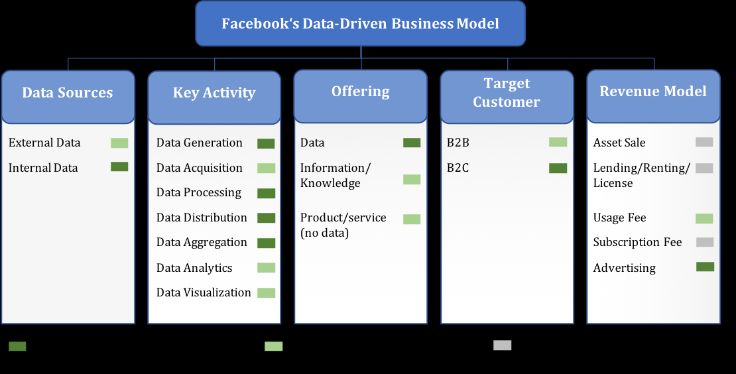
Fig.1 – The impact of GDPR’s right to data portability on the
DDBM of Facebook based on an adaptation of The internal data source component of Facebook’s
Hartmann et al., 2016 [1] business model is very likely affected by the GDPR’s
individual right to data portability. Previously,
Fig. 1 depicts an adapted illustration of the users of platforms such as Facebook experienced a
dimensions identified by [1]. As a result of the lock-in effect because of the switching costs
limited scope of the paper, we do not include the associated with leaving their data at the former
dimension ‘cost advantage’ in the discussion. We platform (e.g. if they wanted to switch from
adapt Hartmann et al.’s [1] framework and have Facebook to Google+). The GDPR’s right to data
deduced dimensions in order to categorize portability addresses this lock-in which is
Facebook’s business model in detail and discuss the important as lock-ins according to Shapiro and
effects of the GDPR’s ‘right to data portability’ on Varian [27], distort competition by establishing
each level if applicable. The dark green color market barriers. These arguments are also valid for
indicates where this individual right is very likely to Facebook’s external data usage, but we conclude
influence Facebook’s data-driven business model. that they are less likely to affect the business model
The light green color points to a likely impact. The and not in a similar holistic way as the amount of
grey color suggests that this dimension is either not internal data. Before the GDPR came into force,
relevant for Facebook’s DDBM or that the individual Facebook already offered a ‘Download-your-
right to data portability will not likely play a role for information-feature’. It was further improved to
the business model. ensure compliance with the requirements that
users’ data be formatted in a ‘structured’,
3.1 Data sources ‘commonly used’ and ‘machine-readable’ way. This
might be realized by interoperable data formats
Hartmann et al. [1] differentiate between two types such as JSON, CSV or XML. Facebook now offers the
of data source: internal and external data. Internal possibility to export their data in JSON and CSV
data is the key component of Facebook’s data pool formats. In addition, they also have to ensure that
and includes the data provided by the users they can transfer this user data to other data
themselves. Facebook processes data on the user’s controllers (such as their competitor Google+) and
own status updates, contact info, timeline features, vice versa, incorporate structured data of new users
visited and saved events, messages, photos and coming from other data controllers [18]. These data
videos, contact and friend history, access devices, controllers could also be established companies or
visited and interested events, likes, pokes and start-ups seeking to establish a new business model
comments. Moreover, Facebook collects data on the (e.g. in a niche) using data that users allow to be
usage of “...games and other applications...” exported from social media sites such as Facebook
[23 p.528]. In addition, Facebook potentially also to their systems. Thus, we hypothesize that the
processes the amount of time users spend on GDPR’s right to data portability can also spur
certain components, of the platform such as on innovation as it is outlining interoperability
other pages and profiles. Facebook also tracks their standards.ITU Journal: ICT Discoveries, Special Issue No. 2, 9 Nov. 2018
3.2 Key activity interest) and express their opinion, affiliations and
interests freely. User can build up a representative
Under the dimension ‘Key Activity’, Hartmann et al. social eminence that might be also relevant in their
[1] cluster seven data-related activities (see Fig. 1). professional lives (e.g. ‘content creators’ as well).
As highlighted before, Facebook generates a large
data pool of internal and external data (‘Data Companies and organization however, use the
Generation’), processes this data and provides some platform to interact with the users as their
of the data itself as well as analytical insights (potential) customers and in order to place targeted
(‘Processing’) to other companies that advertise on advertisements. The social context, i.e. the digital
the platform. According to their press release [28], footprint that every individual Facebook user
they stopped the acquisition of third-party data). produces, enables sophisticated and effective
However, the exchange of data with their targeting [31]. Moreover, the company is offering
advertising clients can be perceived indirectly as several ad analytics tools and application
‘Data Acquisition’. For example, with the ‘Facebook programming interfaces (APIs). The sheer number
Ad Manager’ tool, where the company offers a of APIs and developer kits such as the Graph API
dashboard to the advertisers, distributes the allows for the integration of Facebook in various
aggregated data (‘Aggregation’ and ‘Distribution’) other websites and applications adding further
and analyze and visualize insights (‘Analytics’ and value to them by including the social context of
‘Visualization’). Moreover, the vast number of APIs Facebook’s data pool.
such as the ’Facebook Ad API’ and other Marketing
APIs, provide an interoperability of certain The GDPR’s right to data portability is very likely to
aggregated user data for advertisers and partners impact Facebook’s offering. There are vast
that are then able to import this data into their opportunities to expand the platform’s business
systems [29]. model based on the possibility to import data from
other platforms. Theoretically, the regulation
GDPR’s right to data portability and the push for a makes it possible to integrate the data of other
more interoperable collection of data, provides digital platforms and offerings within another
opportunities for companies such as Facebook to platform given the user’s consent. The
increase the quality and value of their data, as well requirements for interoperability are complex
as that of their analytics tools and improve the however, and the regulation remains vague
quality of consumer targeting for advertisements. (arguing simply with a required ‘machine-readable’
Indeed, this could even increase revenues as their format). Certainly, these requirements have to be
key activity could become more valuable. refined in the future in order to achieve pure
interoperability, for example, allowing social media
3.3 Offering users to network with each other across different
platforms [32]. As an example, Facebook could offer
The dimension offering describes the value that is an import function for data that the music
created by a DDBM and substitutes the common streaming platform ‘Spotify’ stores from their users
dimension ‘value proposition’ which is known from (given the user’s consent for the data export) and
other business model analysis frameworks such as expand their business model with the additional
from [8] or [14]. It describes the concrete product data. The regulation sets a cornerstone for an
or service value that is offered to the clients [1]. interoperability standard with an innovation-
spawning character. It might spur business model
Facebook is a multi-sided platform. These platforms innovations from niche start-ups that specialize in
are characterized by direct interactions between certain data that users might export of e.g. Facebook
multiple distinct types of clients [30]. Consequently, and develop an offering around this data.
it also unifies different offerings outlined here very
briefly: For private individuals, the platform allows 3.4 Target customer
users to connect and interact with other individuals
such as friends, family members or colleagues via Hartmann et al. [1] use the generic classification of
profile pages, chat messengers, groups etc. business-to-business (B2B) and business-to-
Moreover, it allows the user to consume partially customer (B2C) models to classify customer
tailored content (e.g. via posts of other users or segments. Their analysis revealed that many of the
pages of corporates, organizations or persons of analyzed start-ups targeted both types of customerITU Journal: ICT Discoveries, Special Issue No. 2, 9 Nov. 2018
relationships [1]. The same holds true for Facebook by December 2017 [19]. The more users Facebook
and the nature of their multi-sided platform. has, the larger the potential reach of the
Facebook initially had a B2B business model that advertisements or Facebook pages that seek to
enabled the interaction of distinctive users on their engage with customers (pre-/after-sale customer
platform. As described in the previous ‘Offering’ service, acquisitions etc.). Moreover, the more users
section, it also became a B2B business model by and their data Facebook has, the more patterns can
opening the platform to advertisers that can be derived to contextualize user demographics.
interact with (potential) customers, increase their Consequently, the advertisers can engage with
brand reach and place their advertisements within users more precisely based on the patterns derived
the social context of the users. It is also a platform from data on age, gender, education and work
for content providers of any kind that could evolve history, likes or groups.
from a user (B2C) to an advertiser (B2B)
relationship. In addition, the platform is also The GDPR’s right to data portability is very likely to
characterized by its B2B business with third-party impact parts of the revenue model of Facebook’s
developers that have to pay for example, fees from DDBM. On the one hand, the regulation should
user transactions in their developed applications on empower users to individually shift their data to
the Facebook platform [19]. competitors (such as Google+) which could
jeopardize Facebook’s ad-based revenues. Indeed,
The GDPR’s right to data portability is very likely to with less data, their algorithms for pattern-
impact Facebook’s B2C business. Users are less recognition in ‘Big Data’ are of less value and
locked-in to the platform as they can theoretically targeted advertisements might deteriorate.
move their data more easily to competitors. The Moreover, the reach of advertisements decreases
B2B business might also be influenced by the with less users which would make the platform less
regulation in an indirect way. The offering from attractive for advertisers and third-party content
Facebook to its business clients deteriorates with providers. On the other hand, Facebook can also
less users in the B2C business. Moreover, increase their user base by being able to import user
Facebook’s ad analytics tools have to provide their data in a structured format of e.g. competitors or
advertising customers with the ability to export even other digital offerings and platforms. For
data and potentially also import data in a structured ‘payments and other fees’ this effect might be more
way. Hence, advertisers on the platform might also indirect. Furthermore, increasing the sovereignty of
gain from the right to data portability because the Facebook’s users over their data might increase
integration of ad-relevant data from other trust in the platform, which potentially increases
platforms to Facebook’s ad analytics tools is the willingness to share personal data and thus the
theoretically facilitated. value of the users for Facebook’s advertising-based
revenue model. However, as a consequence of more
3.5 Revenue model stringent data protection and awareness,
advertisement-based companies such as Facebook
In their DDBM taxonomy, Hartmann et al. [1] define might consider transforming their revenue models.
seven different revenue models (see Fig. 1). Indeed, during the congressional hearing of
Currently, Facebook is provided to the individual Facebook’s Founder and CEO Marc Zuckerberg on
user (B2C) free of charge. The users are paying April 10th, 2018 with regards to the Cambridge
indirectly by opting in to data storage and sharing Analytica case, rumors spread that a second ad-free
of their data. subscription-based alternative version of Facebook
might emerge [33].
The key revenue source for Facebook however, are
advertising fees from their B2B business (see [19]). 4. CONCLUSION
In 2017, ‘advertisement revenue’ accounted for
more than 98% of the total revenue This paper attempted to outline the impact of the
($12,779 million), while ‘payments and other fees’ GDPR on DDBM by adapting Hartmann et al’s [1]
hold only a small share of the total revenue taxonomy using as an explorative case study, data
($193 million) such as payment transactions in portability’s impact on Facebook DDBM. Five
Facebook games. Facebook reported a 14%-year- dimensions of Facebook’s DDBM were outlined
to-year increase for both daily active users namely ‘Data sources’, ‘Key activity’, ‘Offering’,
(1.40 bn) as well as monthly active users (2.13 bn) ‘Target customer’ and ‘Revenue model’. DevelopingITU Journal: ICT Discoveries, Special Issue No. 2, 9 Nov. 2018
this case study using Hartmann’s et al.’s [1] [7] Brousseau, E., Penard, T. (2007). The
taxonomy is a useful practical first step in economics of digital business models: A
conceptualizing the effect of the GDPR on DDBMs framework for analyzing the economics of
and can be further expanded and used as a tool in platforms. Review of Network Economics. 6(2).
analyzing the effect on other firms. Overall, data pp. 81-110.
portability will very likely impact the way Facebook
gathers, generates and processes data, as well as its [8] Chesbrough, H., Rosenbloom, R. (2002). The
relationship with its customers and its revenue role of the business model in capturing value
model based on targeted advertising. However, this from innovation: Evidence from Xerox
might not be necessarily a negative prospect. Data Corporation's technology spin-off companies.
portability tackles lock-in and subsequent Industrial and Corporate Change. 11 (3).
monopolies where competitive pressure might pp. 529–555.
increase the quality of data collected (i.e. quality of
quantity) and services provided, as well as [9] Hedman, J., Kalling, T. (2003). The business
providing more consumer trust in online platforms model concept: theoretical underpinnings
especially considering recent damaging scandals and empirical illustrations. European Journal
concerning Facebook. of Information Systems. 12. pp. 49-59.
REFERENCES [10] Peña M., Díaz‐Garrido E., Sánchez‐López J.
(2018). The digitization and servitization of
[1] Hartmann, M. P.; Zaki, M.; Feldmann, N.; manufacturing: a review on digital business
Neely, A. (2016). Capturing value from big models. Strategic Change 27(2). pp. 91-99.
data – a taxonomy of data-driven business
models used by start-up firms. International [11] Schallmo D., Williams C., Boardman L (2017).
Journal of Operations & Production Manage- Digital transformation of business models-
ment. 36. 1382 - 1406. best practise, enablers and roadmap.
International Journal of Innovation Manage-
[2] European Commission (2018). Building a ment. 21 (8). p. 17.
European data economy. retrieved from
https://ec.europa.eu/digital-single-market/ [12] Zott C., Amit R., Massa L. (2011). The Business
en/policies/building-european-data- Model: recent developments and future
economy on July 21st, 2018. research. Journal of Management. 7 (4).
pp. 1019-1042.
[3] Teece D. (2010). Business Models, Business
Strategy and Innovation. Long Range [13] Vendrell-Herrero F., Parry G., Bustinza,
Planning. 43, pp.172-194. Gomes E. (2018). Digital business models:
taxonomy and future research avenues.
[4] Afuah A, Tucci C., (2001). Internet Business Strategic Change. 27 (2). pp. 87-90.
Models and Strategies: Text and Cases.
McGraw-Hill, Boston. [14] Osterwalder, A., Pigneur, Y. and Clark, T.
(2010). Business model generation. A
[5] Applegate, L. M. (2001). Emerging e-business handbook for visionaries, game changers and
models: Lessons from the field. HBS challengers, Wiley, Hoboken, NJ.
No. 9-801-172. Harvard Business School.
Boston, MA. [15] Gartner (2018). Gartner IT Glossary.
Retrieved from https://www.gartner.com/it-
[6] Amit, R., & Zott, C. (2001). Value creation in glossary/big-data on July 21st, 2018.
e-business. Strategic Management Journal. 22.
pp. 493-520. [16] Monopolies Commission (2015). Competition
policy: the challenge of digital markets.
Special report No. 68.ITU Journal: ICT Discoveries, Special Issue No. 2, 9 Nov. 2018
[17] General Data Protection Regulation (2016). [25] Facebook (2018b). Facebook Login. Re-
Retrieved from https://eur-lex.europa.eu/ trieved from https://developers.facebook.
legal-content/EN/TXT/?uri=uriserv:OJ.L_. com/docs/facebook-login/ July 21st, 2018.
2016.119.01.0001.01.ENG on July 21st, 2018.
[26] Hatmaker, T. (2018). Facebook will cut off
[18] ICO Website (2018). Guide to the General access to third party data for ad targeting.
Data Protection Regulation (GDPR). TechCrunch. Retrieved from https://techc-
Retrieved from: https://ico.org.uk/for-orga- runch.com/2018/03/28/facebook-will-cut-
nisations/guide-to-the-general-data-protect- off-access-to-third-party-data-for-ad-target-
ion-regulation-gdpr/ on July 21st 2018 ing/ on July 21st, 2018.
[19] Facebook (2018a). Annual report for 2017. [27] Shapiro, C., H.R. Varian (1999). Information
Retrieved from https://s21.q4cdn.com/ Rules. Harvard Business School Press.
399680738/files/doc_financials/annual_rep
orts/FB_AR_2017_FINAL.pdf on July 21st, [28] Facebook (2018c). Shutting Down Partner
2018. Categories. Retrieved https://newsroom.fb.
com/news/h/shutting-down-partner-
[20] Facebook (2012). Press release: Facebook to categories/ from July 21st, 2018.
Acquire Instagram. Retrieved from
https://newsroom.fb.com/news/2012/04/f [29] Facebook (2018d). Marketing API. Retrieved
acebook-to-acquire-instagram/ on July 21st, from https://developers.facebook.com/docs
2018. /marketing-apis/ on July 21st, 2018.
[21] Facebook (2014a). Press release: Facebook to [30] Parker, G., Van Alstyne, M. & Jiang, X. (2016).
Acquire Oculus. Retrieved from https:// Platform Ecosystems: How Developers Invert
newsroom.fb.com/news/2014/03/facebook the Firm. Boston University Questrom School
-to-acquire-oculus/ on July 21st, 2018. of Business. Research Paper No. 2861574.
[22] Facebook (2014b). Press release: Facebook to [31] Tran, T. P. (2017). Personalized ads on
Acquire WhatsApp. Retrieved from https:// Facebook: An effective marketing tool for
newsroom.fb.com/news/2014/03/facebook online marketers. Journal of Retailing and
-to-acquire-oculus/ on July 21st, 2018. Consumer Services, Vol. 39, pp. 230-242.
[23] Patterson, A. (2012). Social-networkers of the [32] Engels, B. (2016). Data portability among
world, unite and take over: A meta- online platforms. Internet Policy Review. 5(2).
introspective perspective on the Facebook
brand, Journal of Business Research. 65(4). [33] Business Insider (2018). Mark Zuckerberg
pp. 527-534. just hinted that Facebook could offer a
paid version one day. Retrieved from
[24] McAffee, A.; Brynjolfsson, E. (2017): Machine, https://www.businessinsider.de/mark-
Platform, Crowd: Harnessing Our Digital zuckerberg-always-a-version-of-facebook-
Future. W. W. Norton & Company. free-2018-4?r=US&IR=T on July 21st, 2018.You can also read


