The Legacy of the Pandemic: How Covid-19 is Reshaping Economic Policy in the EU
←
→
Page content transcription
If your browser does not render page correctly, please read the page content below
April 2021

                              The Legacy of the Pandemic:
                              How Covid-19 is Reshaping Economic
                              Policy in the EU

                              Marco Buti and George Papaconstantinou1

                              ABSTRACT

                              The economic policy response to the Covid pandemic broke new ground, in
                              terms of its ambition, the tools used, and its institutional characteristics. This
                              paper argues that three sets of factors explain this: our evolving understanding
                              of macroeconomics; the nature of the current crisis; and the policy learning
                              from the financial crisis. It also reviews the emerging institutional landscape
                              at EU level, with its combination of rules-based and institutional features, and
                              assesses the critical factors for successful implementation of the Recovery and
                              Resilience Plans at national level. The paper finally contends that four sets of
                              issues will be important in shaping the legacy of the pandemic for European
                              integration: redefining the new boundaries between state and market; revisiting
                              the nature of subsidiarity; reconnecting the EU domestic with the global agenda;
                              and learning to respond to longer term structural shifts.

                              1. The EU: A History of Resilience
                              The EU is navigating its third crisis in the space of a single decade, following the
                              eurozone financial crisis and the migration crisis. Jean Monnet famously stated that
                              ‘Europe will be forged in crises and it will be the sum of solutions adopted for those
                              crises’. Indeed, as in previous crisis episodes, the policy solutions are to be found at
                              the intersection of what economic policy suggests and political reality and institutions
                              allow, and reflect a combination of principles, flexibility and pragmatism. But every
CEPR POLICY INSIGHT No. 109

                              crisis has its own characteristics, and prompts its own response. This crisis is
                              different, and the policy response, with the Next Generation EU initiative at its heart,
                              is breaking new ground.

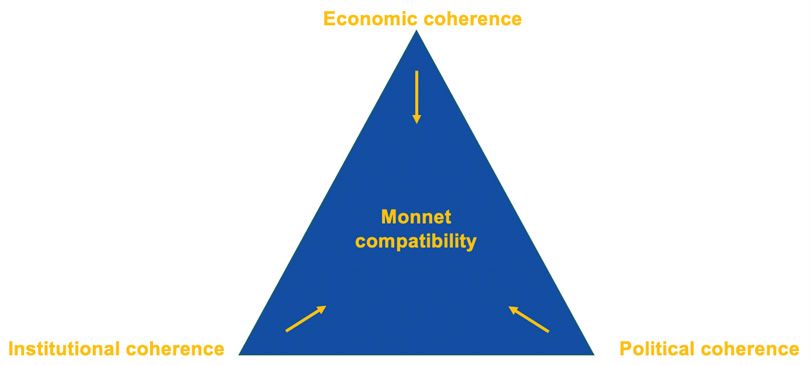
                              Successful crisis response needs to pass what could be called the ‘Monnet Compatibility
                              Test’ (see Figure 1). It needs to be economically coherent, marshalling the policy tools
                              and mechanisms that provide for an effective crisis response, addressing root causes,

                              1   European Commission and European University Institute, respectively. Marco Buti writes in his personal capacity. We
                                  thank Moreno Bertoldi for useful comments and Oscar Polli for excellent research assistance.
2
and allowing European economies to recover, while minimising the damage. In the
complex EU institutional framework, it also needs to have institutional coherence,
leveraging common governance mechanisms while respecting both subsidiarity and
the EU Treaties. Finally, it needs to be politically coherent, maintaining citizens’
support in what tend to be traumatic and divisive periods. Unfortunately, combining
all three proves to be a very difficult task.
Figure 1 The Monnet Compatibility Test
April 2021
In this paper, we (loosely) apply the Monnet Compatibility Test to the economic policy
response to the pandemic. Section 2 reviews policy decisions taken at EU and national
level to tackle the economic fallout of Covid-19. The following three sections sketch out
the reasons why the current response is different and more ambitious than the policy
response to the financial crisis: the evolution of our understanding of macroeconomics
(section 3), the nature of the current crisis (section 4), and the policy learning from
the financial crisis (section 5). We then review the changes in EU governance and
the conditions for success of the national Recovery and Resilience Plans under Next-
Generation EU (sections 6 and 7, respectively). In the final section, we examine the
factors that will shape the legacy of the pandemic for European integration.
2. The Covid Economic Policy Repsonse
Faced with what amounted to a ‘sudden stop’ of economic activity because of the
lockdowns and the simultaneous supply and demand shock in economic systems, the
economic policy response at the level of EU Member States was generally swift and
decisive. It was aimed at maintaining liquidity through cash, debt and guarantees,
ensuring households can delay payments, and workers receive pay-checks even in
quarantine or if temporarily laid off; at the same time preventing mass insolvencies,
ensuring firms have cash flows to pay workers and suppliers, especially among small
and young businesses. The logic was to focus on disaster relief first, followed by policies
to facilitate the recovery.
CEPR POLICY INSIGHT No. 109
EU member states differed both in generosity and in their mix of policy instruments,
reflecting in part diverse underlying fiscal conditions. Such differences, however, were
significantly less prominent than in the eurozone crisis, so that taken together, the
overall fiscal effort, as well as the liquidity provisions, added in 2020 to a substantial
2,5 trillion euro response (see Table 1), with a significant part of the effort carried over
into 2021.3
Table 1 National and EU responses to the Covid crisis
Fiscal Liquidity
National, EU-27 2020 measures 500bn 2500bn
SURE, ESM, EIB 540bn
EU
NG-EU 390+bn 360bn
ECB PEPP 1850bn
Source: European Commission
While the economic response first came at the national level, it was decisions by the
EU institutions (ECB, Commission, Council) that set the stage for recovery and altered
the discourse on economic policy and governance moving forwards. In a benign
environment of low interest rates, the ECB quickly adopted a key role in ensuring
the crisis did not spill over to financial markets, and moved to stabilise markets for
sovereign debt. It expanded its targeted and non-targeted refinancing operations,
April 2021
amended its collateral policy (expanding accepted collateral and eligibility, reducing
haircuts) and crucially both renewed and expanded its asset purchases programme,
while inaugurating the large mission-specific Pandemic Emergency Purchase
Programme (PEPP), which included flexibility in the capital key and issuance share.
At the level of the European Commission, the early activation of the general escape
clause in Stability and Growth Pact (SGP) rules allowed member states to proceed
with large scale fiscal relaxation. This was supplemented by measures for liquidity
provision aimed at protecting firms (the relaxation of state aid rules allowing the
activation of national guarantees, and coupled with increased overall lending capacity
by the EIB), safeguarding jobs (Commission borrowing and lending to governments
to finance expenditures related to short time work - SURE) and assisting sovereigns
(for the euro area, the decisions on European Stability Mechanism (ESM) pandemic
crisis support).
In terms of EU decision-making however, the seminal moment was the July 2020
EU Council decision (European Council 2020), which put in place a new fiscal and
governance framework. This built on a Franco-German proposal, that for the first
time allowed for direct transfers to countries, in addition to loans, and on proposals by
the Commission to finance such combined grants and loans by borrowing in markets
and temporarily lifting the ‘own resources’ EU ceiling. The resulting EU Recovery
Plan has two pillars (European Commission 2021c): a new recovery instrument of
€750 billion, which involves funding raised on financial markets for 2021-2024 (Next
Generation EU); and a reinforced long-term EU budget for 2021-2027 (€1.1 billion).
Together, these are aimed at assisting Member States to recover and ‘build back
better’, by aligning public and private investment with broader EU goals – notably its
green and digital agenda.
These decisions represent a clear break with precedent. This is true in terms of
CEPR POLICY INSIGHT No. 109
instruments (the use of grants, the push for new ‘own resources’, the issuance of
common debt on the part of the Commission); institutional mechanics (the return of
the Community method); as well as in terms of the sheer magnitude of the underlying
fiscal effort and liquidity provision.
In terms of the magnitude of the effort and its adequacy to the task at hand, we
would be amiss if we did not make reference to the ongoing debate comparing the EU
response with that of the United States.4
There are a number of elements to this debate: first, whether the US policy response is
economically appropriate (discussion focusing on the output gap versus the war-like
crisis response) and conversely whether in comparison, the EU effort is too timid;
second, what secondary impact the heating of the US economy will have on the EU
economy (Andersson et al. 2021, ECB 2021).
On the first issue, whilst the jury is still out, given its composition, the $1.9tr is likely
not to display a huge multiplier, so the impact on inflation may turn out less than
feared. Moreover, the infrastructure plan announced by President Biden at the end of
March will be spread over 10 years and will be partly financed by higher taxes, which
will limit its stimulative impact. While there is no doubt that in headline numbers
the fiscal expansion in the EU will remain lower than that in the United States, in
terms of composition, its quality will be higher and should give rise to stronger fiscal
multipliers.
Still, given the sheer size of the US fiscal and monetary stimulus, consolidated growth
April 2021
over the next two years will likely be higher in the United States than in the EU.
Because of this, on the second issue, Europe is likely to benefit from positive demand
spillovers, whilst the negative spillovers, arising from higher interest rates and a
stronger dollar, are more likely to affect emerging market economies, especially those
holding a large share of dollar denominated debt.
However one judges the EU economic policy stance vis-a-vis that of the United States,
the decisions taken do represent a significant ‘stepping up’ and a break with past
EU policy. What has underpinned this shift? We contend that three broad factors
have driven what we are observing. The first is the evolution in our understanding
of macroeconomic policy beyond the EU - the new macro paradigm. The second is
the different nature of the current crisis. And the third is policy learning from the
eurozone financial crisis. Together, these explain why decisions taken to date differ
in scope and nature from those in the financial crisis and potentially set the stage for
closer European economic and political integration post-crisis.
3. How Macroeconomics Has Changed
Keynes famously quipped about the power of the ideas of economists and their
influence in policy-making that ‘madmen in authority, who hear voices in the air, are
distilling their frenzy from some academic scribbler of a few years back’. While this
description may not be particularly flattering to politicians, it nevertheless retains
an element of truth. Though not always, economic policy-making often follows the
evolution of academic understanding in the field – with a lag. And over the course of
the last two decades, the paradigm of macroeconomic policy in open economies has
shifted.
There is nothing new here of course; over the long-term, the consensus in
CEPR POLICY INSIGHT No. 109
macroeconomics has constantly evolved, chiefly in response to crises or to an apparent
disconnect between theory and reality. In this vein, the global financial crisis led to a
change of the thinking in macroeconomics around a number of issues. Chief among
these is the insufficient focus on the complex role of banks and of financial institutions
in general in the economy, and the associated risks related to liquidity and eventually
solvency for economic stability. The nature of macro financial linkages have become
more important in the economic discourse.
A related set of issues centres on the possibility of secular stagnation in economies
(Summers 2013, Teulings and Baldwin 2014), an old concept that has seen some
resurgence, suggesting that a number of factors (ranging from demographics to5
globalisation and the debt overhang) are dragging down the equilibrium real interest
rate as well as long-term growth, despite advances in technology and productivity. In
an environment characterised by persistently deficient aggregate demand, economies
would be operating at the ‘effective lower bound’ (ELB), which is, however, higher than
the equilibrium real interest rate: this is captured in Figure 2 by r0* being lower than
rL , the rate at the ELB.
The policy implications of this shift in macroeconomic thinking are stark and are
already having an impact on policy-making consensus, including in Europe. They
relate to a number of policy issues and tools: the overall macro policy stance, our
understanding of debt sustainability, the mix of fiscal and monetary policy, and the
role of central banks.
In a situation of persistent excess savings, with economies operating at, or close to, the
ELB and little or no inflation, there are strong arguments for a macroeconomic policy
stance that attempts to counteract chronically deficient aggregate demand and reach
April 2021
full-employment output with a more expansionary stance of fiscal policy (bringing
the economy from point B to point E in Figure 2). This would seem to reverse the
overarching emphasis on ‘prudent’ fiscal policies that dominated over a long period.
A corollary relates to the size of fiscal deficits and debt sustainability. In an environment
of persistently low interest rates, there is increasing support from academic writing
for higher ‘upper bounds’ of fiscal positions as well as a discussion on the quality of
fiscal expenditures that enter into their measurement. Equally, with debt to GDP levels
historically high, the emphasis on establishing debt sustainability has complemented
the focus on headline debt to GDP ratios with a more complex analysis reflecting i.a.
the capacity to service debt.
Figure 2 Policy Mix at the Effective Lower Bound
CEPR POLICY INSIGHT No. 109
Central to this new policy discussion is the fiscal-monetary policy mix and the role
of central banks. Operating at or near the ELB, central banks including the ECB
have increasingly resorted to unconventional measures, with an emphasis on asset
purchases. This has raised a number of issues. The first is the delimitation between
fiscal and monetary policy: the expansion of their portfolio with government securities
effectively blurs the lines between classic monetary policy and government finance.6
The second - and related - is their call to governments (repeatedly by the ECB) to step
up fiscal policy so as to avoid central banks bearing the brunt of policy adjustment:
this is based on the awareness that, in the presence of a very large demand shortfall,
the Keynesian spillovers dominate the spillovers via public debt sustainability2. And
the third is their increasingly important role in acting as a safety valve in avoiding
disruption emanating from the financial sector.
The need to ensure a ‘congruent’ policy mix (Bartsch et al. 2021) underpins an
evolution in the relations between monetary and fiscal authorities in Europe. The
ongoing monetary strategy review undertaken by the ECB and the review of the
macroeconomic surveillance framework launched by the Commission, whilst
institutionally independent, will need to result ex post in a coherent framework in
both the short run and in the medium to long run.
4. The Different Features of the Covid Crisis
April 2021
The second broad reason explaining the different policy response at EU level is the
features of the Covid-19 crisis compared to the eurozone crisis. In Table 2, we attempt
to capture this difference along several dimensions. As argued in Buti (2020b), a key
difference relates to the exogenous nature of the pandemic shock. Whilst a number of
policy circles viewed the eurozone crisis as self-inflicted because of reckless behaviour,
such arguments did not gain traction in the case of the pandemic. The way in which
the eurozone crisis unfolded also tainted the narrative on its nature: the discovery
of massive cheating in Greece’s budgetary accounts implied that the financial crisis
was ‘read’ through fiscal lenses. This didn’t happen during the pandemic. The risk of
fragmentation between countries, regions or sectors as a result of the Covid-19 shock
– which some have characterised as a K-shape recovery – has also justified such help
to be delivered via multi-year investment and reform programmes.
These differences in the nature and incidence of the crisis allowed for a completely
different political narrative to develop, which eventually culminated in a very
different policy response. In the eurozone crisis, the prevailing narrative was one of
moral hazard; avoiding it implied the design of policies that could demonstrate policy
mistakes had consequences. Creditors dictated the rescue conditions. The leading role
of the European Council within an intergovernmental setting was the way to impose
those conditions. At a second stage, the rationale for a collective response was the
preservation of the euro.
In contrast, the narrative during the current crisis is almost completely devoid of
moral hazard elements. The focus is on a common threat that requires a common
response. Countries who were hit hardest could benefit from EU solidarity. This also
allowed policymakers to avoid operating under the so-called ‘ultima ratio’ doctrine,
where the EU help would come only at the very end, after all domestic actions by
vulnerable countries had been exhausted, and was actually conditional on such
CEPR POLICY INSIGHT No. 109
actions been undertaken.
The devastating and sudden impact of the pandemic triggered what is commonly
considered a very fast response by EU standards: in addition to the prompt action by
the ECB, the Commission made sweeping proposals in May 2020 and by end-2020 an
agreement at EU level had been achieved. Additionally, the parliamentary ratification
of the increased ceiling of the ‘own resources’ part of the EU budget (necessary to
2 When Keynesian spillovers prevail and monetary policy is pushed against the ELB, fiscal dominance is actually
achieved via excessive fiscal prudence, thereby turning on its head Sargent and Wallace ‘unpleasant monetarist
arithmetic’ (Sargent and Wallace 1981). See Buti (2020a).7
allow the Commission to borrow in markets) is planned to be completed in Spring
2021; under normal circumstances, that process would take between two and three
years. It is important that delays are not incurred in the present phase of the final lap
of the ratification process and the roll out of the RRPs (see below).
Table 2 Comparing Crises
Eurozone Crisis Covid Crisis
Fiscal shock and/or financial Combined supply and demand
Source
sector imbalances shock
Endogenous and asymmetric Exogenous and common in
Nature
in origin origin
Severe; asymmetrical on Severe; asymmetrical on
Impact
countries countries (and sectors)
Full economic shock felt over Immediate economic shock
Timing
1-2 years over 1-2 quarters
April 2021
Recovery Slow, but durable Fast(er), but fragmented
5. Policy Learning from the Financial Crisis
The eurozone financial crisis put EU governance rules and institutions in a stress
test, as the very existence of the common currency area was called into question.
As a result, old rules had to be reinterpreted, new policy tools were devised, new
institutions were created, and an overhaul of the EU economic governance started
in earnest. However, to justify rescue plans in creditor countries, there was an urge
to return to normality, withdraw the fiscal support and start implementing the rules
again as quickly as possible. Whilst the institutional and political conditions at the
time make ex-post rationalisation a treacherous exercise, it is fair to conclude that the
response to the eurozone crisis was sub-optimal.
In our view, the main lessons from the eurozone crisis which are relevant for devising
the response to the Covid crisis are the following (see also Buti 2020b):
First, monetary policy has to be very forceful to stop self-fulfilling dynamics, or the
realisation of negative equilibria. Whilst the ECB reacted very quickly in the summer
of 2007, with liquidity provisions at the first signs of market dislocations, it was
more hesitant compared to other central banks in relaxing the monetary stance and
embarking on asset purchases. It was only in summer 2015, in the aftermath of the
‘whatever it takes’ statement by Mario Draghi, that the ECB came to be perceived by
the markets as standing fully behind the integrity of the eurozone. A certain amount
of risk sharing is needed in the Economic and Monetary Union (EMU), either openly
via national budgets, or indirectly via the ECB balance sheet – yet for a time this was
in short supply.
CEPR POLICY INSIGHT No. 109
Second, after a very severe shock, early withdrawal of fiscal stimulus is very costly.
Analyses pioneered by Olivier Blanchard (see Blanchard and Leigh 2013, 2014) showed
that fiscal multipliers are much higher under large negative output gaps, especially if
monetary policy approaches the effective lower bound. Again, in retrospect, after a
strong fiscal expansion in 2009 which helped stem the negative shock, EU countries
were too quick to ‘declare victory’ and embark in sharp fiscal retrenchment.
Third, achieving an appropriate euro area fiscal stance only via horizontal coordination
of national policies is exceedingly difficult. During the eurozone crisis, countries with
fiscal space focused on their domestic situation and refused to use it, whilst countries with
fragile fiscal conditions frantically searched for a fiscal space they objectively did not have.8
As a consequence, when the appropriate fiscal stance at the aggregate level was
attained, this was usually via the wrong country distribution, which also meant lower
effectiveness due to lower multipliers. The intergovernmental forma mentis at the
time, led to the ruling out of a central fiscal response, either at EU or eurozone level,
which meant a failure of subsidiarity.
The response to the pandemic benefitted from learning the lessons of the eurozone
crisis. As recalled above, both the ECB and national fiscal policies reacted swiftly and
massively. In addition, the commitment to keep a supportive fiscal stance in 2021 and
2022, helped by extending the General Escape Clause of the SGP to 2022 (European
Commission 2021b), showed the awareness of maintaining support to the economy
for as long as it takes. This was clearly communicated by monetary and policy
authorities on both sides of the Atlantic, who stressed that the risk of doing too little
largely outweighed that of doing too much. Finally, the Next Generation EU (NG-
EU) initiative ensured a degree of vertical policy coordination and complemented the
national fiscal expansions.
April 2021
In sum, through the prism of the Monnet Compatibility Test, the policy response
during the eurozone crisis did not fully meet the economic and institutional criteria.
Judging by the large support to NG-EU also in so-called ‘frugal countries’ (see
European Parliament 2021, European Commission and European Parliament 2021),
one can conclude that the political compatibility is also more likely to be met this time
round, compared to the political divisiveness which marred public opinion during the
eurozone crisis.
6. Getting the EU Governance Right
Over the past several years, a growing debate has emphasised the importance of
institution building relative to a purely rules-based system. Mario Draghi has made
this point forcefully in comparing the effectiveness of monetary policy to fiscal policy
coordination and response (Draghi 2019).
To be sure, during the financial crisis there was a strengthening of rules-based
coordination and institution building. However, as illustrated in Table 3, this took
a very specific complexion: both the main new institution – the ESM – and the
most important strengthening of fiscal rules – the Fiscal Compact – were not only
intergovernmental in nature, but the adoption of the latter was a condition for the
adoption of the former. The first pillar of the Banking Union – the Single Supervisory
Mechanism (SSM) – was instead supranational, but the second pillar - the Single
Resolution Board (SRB) - was mixed; at the same time, the necessary third pillar – the
single deposit guarantee system or EDIS – is still under discussion.
On the contrary, the main innovations during the response to the pandemic had a very
clear supranational status: this is the case for the Recovery and Resilience Facility,
CEPR POLICY INSIGHT No. 109
within NG-EU. The support for short time work, SURE, has an intergovernmental
component, since borrowing by the Commission takes place on the back of guarantees
provided by national budgets. However, it is clearly identified in the markets and the
public as a Community instrument and indeed this is one of the reasons for the market
success and large access by member states compared to the ESM pandemic facility.9
Table 3 Coordination processes in the EU: institution-building vs.
rules-based coordination
Coordination
Financial Crisis Covid-19 Crisis
mode
• European Financial
Stability Facility (EFSFS)/
European Stability • Recovery and Resilience
Mechanism (ESM) Facility (RRF)
Insititution • Single Supervisory • Support to mitigate
Mechanism (SSM) unemployment risks in an
Building • Single Resolution Board emergency (SURE)
(SRB) • ESM Pandemic Crisis
• European Fiscal Board Support (PCS)
(EFB)/National Fiscal
Councils (NFCs)
• Fiscal Compact
• SGP General Escape Clause
Rules-Based • Strengthened SGP
• [Review of the Six-Pack and
• Macroeconomic Two-Pack]
Imbalances Procedure
Key: Intergovernmental / Supranational / Mixed
April 2021
In sum, the response to the Covid 19 crisis is proving very different to that prevailing
during the eurozone crisis. What is emerging is a more balanced institutional
landscape with a more robust combination of rules-based and institutional features,
which has the potential to lead to more effective vertical coordination. Once again,
the Monnet Compatibility Test, most notably institutional coherence, appears to be
better satisfied in the current situation. This evolving institutional landscape should
also be reflected in the outcome of the ongoing review of the EU macroeconomic
policy framework.
7. Making Sure the Covid Response Works - Looking
at Member States
For the politics to be conducive to more EU integration, there is one essential
precondition: that the novel mechanisms and tools currently put into place to address
the economic fallout from the Covid pandemic are indeed successful in helping
European economies ‘build back better’, and are widely seen as doing so. This implies
that the degree of success of national efforts based on EU funding goes beyond the
positive impact on member state economies; they will provide a narrative for the
evolution of overall EU governance as well.
The timeline for the Recovery Plan process is now fully set out, but the effective use of
the large sums involved in the time horizon prescribed represents a huge challenge, as
‘Next Generation EU’ funds require committing the resources by the end of 2023 and
completing the payments by the end of 2026 (European Council 2020). To this end,
Member States are currently finalising with the Commission their national Recovery
and Resilience Plans (RRPs), setting out a detailed reform and investment agenda
CEPR POLICY INSIGHT No. 109
based on specific guidelines (European Commission 2021a) and offering a narrative
consistent with overall EU objectives (Table 4).10
Table 4 Recovery and Resilience Plans: content and processes
Narration Internal Consistency of NRRPs
From objectives to
General objectives Cost estimation Monitoring
projects
• Addressing the
challenges and
priorities of
the European • Final &
Semester intermediate • Total costs
objectives • Correspondence • Accompanying
• Stengthening measures
growth, • Individual between costs
resilience and job projects and and impacts on (reforms,
creation investment employment and investments)
timeframes the economy • Monitoring
• Contributing to procedures
economic and • Implementation • Possible other EU
social cohesion and acheivement funding
indicators
• Contributing to
the green/digital
transition
Source: Adapted from Buti and Messori (2020)
April 2021
As member states complete their RRPs and move to the implementation phase, a
number of issues will be critical for success:
• Governance structures. The new funding tools embody new conditionality
rules, as well as milestones and targets for funds disbursement. As a response,
EU Member States have been putting in place new governance arrangements
for the design and implementation of what will be in many cases a defining
national effort. While one size does not fit all and arrangements will vary, they
will need to embody a ‘whole of government’ approach under a strong central
direction, with the required flexibility of different administrative structures.
Interestingly, this transition seems to be proving easier for countries with
experience from support programmes during the eurozone crisis.
• Investments plus reforms. A crucial element of the new Recovery Plan is
the ‘twinning’ of investments with reforms in national interventions. It will
be important for this complementarity of reform elements and investments
to be present in substance in both the design of RRPs as well as in their
implementation, going beyond simple ‘box-ticking’ and a formal adherence
to rules, and to ground these on an overarching growth strategy in each
country based on green/digital transitions.
• Conditionality and ownership. During the eurozone crisis, the heavy
conditionality imposed on programme countries meant that in many cases
lack of ‘ownership’ in individual countries undermined the reform effort. A
new balance needs to be found under the Recovery Plan, where conditionality
is lighter and linked to adequately addressing all or a significant subset of
country-specific recommendations made in the context of the European
Semester that are relevant for recovery and resilience. While respecting
this new setup, the review process will need to reflect this conditionality
in a substantive and rigorous way, as it relates to both the efficiency of the
use of funds in individual cases, as well as more broadly the future of EU
CEPR POLICY INSIGHT No. 109
governance.
• Digital and climate. In order to ‘recover and transform’, the twin digital and
green transitions have been put at the heart of RRPs. Ensuring the national
plans (and their methodology/metrics) attain the digital and climate targets
and guaranteeing the ‘do-no-significant-harm’ principle will be important
in this respect, as will be ensuring the additionality of EU funding in these
areas, leveraging and not simply displacing private investment projects. In
addition, as a number of green and digital projects will be similar across
countries, a process of peer-exchange and learning from best practices in
implementation should prove useful.11
• Transnational spillovers. By design, the Recovery Plan prioritises national
investments, and their ‘ownership’ will be national, not EU-wide. In the
digital and climate areas however (and even beyond those), there are strong
externalities and network spillovers. Neglecting these in the appraisal of
projects at national level will result in the loss of an important opportunity
to push forward European value-added and European public goods aspects.
• Fiscal sustainability. Once the pandemic is over and support is gradually
and carefully withdrawn, members states will be left with higher levels of
national debt and will have to reverse current fiscal positions. This is why
it is important for RRPs to include measures that improve the quality of
taxes and of public expenditure and thereby support fiscal sustainability
over the medium-term, and clearly distinguishing one-off from recurrent
expenditures.
• Granularity. For many EU countries, the funding linked to their RRPs
will represent a one-off opportunity to reset their national economies.
Experience shows that implementing such large investment efforts rests
on a host of factors: having clear milestones, setting well-defined targets,
April 2021
adopting proper audits and controls, a robust economic impact assessment
and cost estimates, and complementarity with other EU funds. It is this type
of granularity that links the design of RRPs to a successful implementation
phase.
• Stakeholders. Despite their technical elements, and especially since the
RRPs will combine reforms and investments towards transformation, their
success will hinge on being embedded in societal acceptance. The timing
and quality of the involvement of national stakeholders will therefore be
important in accompanying the process, and operating at different levels
(from central to local), of national administrations and government.
8. Conclusions – Post-Covid Shaping Factors
In addition to its human, economic and social toll, Covid-19 is forcing us to rethink
attitudes and policies across a number of areas that go beyond the critical success
factors of the economic policy response. Some of the issues that stand out could be
grouped under four distinct headings: the new emerging boundaries between state
and market; revisiting the notion of subsidiarity in the new environment; reconnecting
the EU/domestic with the international/global agenda; and the need for EU economies
and policy-making to deal with longer-term structural shifts taking place.
1. Defining the new boundaries between state and market. As the pandemic
ripped through European societies, it brought with it a new realisation of
the importance of well-functioning health systems, as well as the ability
of national governments and the EU collective to protect Europeans. This
simple realisation is concretely translated in a number of policy shifts, or
ongoing discussions, which may break new ground: from an emerging
paradigm for fiscal balances and policy mix, to a new social compact (with
CEPR POLICY INSIGHT No. 109
higher minimum wages, a universal basic income, more progressive tax
systems) or to the debate on strategic autonomy in key sectors/products that
would increase resilience at national and EU level (encapsulated in the shifts
from ‘just in time’ to ‘just in case’). In all these areas, what is underlying
is a rethink of the balance between what is provided by states and what is
determined mainly by market forces. This policy shift is evident across most
EU nations, as well as in the United Kingdom and the United States. In
a medium-term perspective, it will be crucial that the renewed emphasis12
on strong social protection does not hamper – but actually enhances – the
reallocation of factors of production. Shifting from on-the-job protection to
in-the-market protection will be a key challenge.
2. Revisiting subsidiarity. A related issue concerns the balance of what
belongs to the domain of national policy in member states and what is a
matter for the EU collective. This gives a new twist to the discussion on
subsidiarity, as can already be seen by the decisions around the EU Recovery
Plan or the proposals on a European health union. The pandemic revealed
the need for coordination at EU level and forced cooperation in a number of
areas, from travel rules to vaccine procurement. Post-crisis, there will be a
review of what has worked and what has not: on certain issues, coordination
of national policies will suffice; on others, direct supply at EU level will be
needed. As health is a global public good, there will be a need to ‘elevate’
a number of issues surrounding the prevention and management of future
pandemics to the to EU level. At the same time, the pandemic has highlighted
the importance of rebuilding a more ‘dense society’, achieving solidarity
through a sense of belonging, and not just from the services delivered by
April 2021
the national welfare state. This would suggest moving policy delivery in the
opposite direction, to the local level, closer to citizens. In Einaudi’s tradition
of marrying economic freedom and social cohesion, in the post-Covid world,
the role of communities and intermediate bodies will be enhanced (Einaudi
1949, Gigliobianco 2010)3.
3. Reconnecting the EU domestic with the global agenda. Covid-19 is also
pushing the EU to reconnect the domestic with the global agenda. This is
where the other dimension of strategic autonomy belongs - the one dealing
not with global supply chains but instead with new geo-economic relations.
In a situation of geopolitical re-ordering, with difficult trade relations and
blocs in flux, upgrading the global role of the EU will be essential in order
to be able to influence the discussion on European and global public goods
(not just health and pandemics, but also climate and digital governance), as
well as avoid beggar-thy-neighbour policies in areas such as trade or finance.
The domestic ramifications of a more assertive global role of the Union are
substantial: the Single Market will need to provide a more ‘indigenous’
source of growth and enhance the robustness of Europe’s value chains;
macroeconomic policies will have to reduce the dependency from external
demand, acknowledging that persistent current account surpluses are a
source of vulnerability. It is also in this context that one should reflect on the
need to complete the EMU; while bringing to a conclusion the reforms that
started with the eurozone crisis is important in terms of better functioning of
the EU and increasing its resilience to shocks, it is also essential for bolstering
the international role of the euro and thereby increasing the weight of the
European Union on the global economy. The issuance of common EU debt
under Next Generation EU will also help to increase the attractiveness of
the euro4.
4.Responding to longer term shifts. The final Covid policy take-away
CEPR POLICY INSIGHT No. 109
concerns the need to respond to longer term structural shifts. In the pandemic,
everything digital thrived. At a first level, this clearly requires a European
push to digital - and indeed the EU Recovery Plan is supposed to help the
EU ‘recover and transform’ with the twin digital and green transitions. At
the same time, the dominance of digital raises new policy issues regarding
regulation and competition in digital platforms, as well as issues around
3 The role of communities in breaking the rural-urban divide and the ‘third pillar’ in finding a new balance between the
market and the state are explored by Collier (2018) and Rajan (2019).
4 The huge success of EU debt issuance under the programme SURE shows the large appetite in financial markets for
common euro-denominated bonds.13
protection of workers in a new online environment. The changes brought
by Covid will also force a broader rethink of the role and nature of work, the
role and rights of remote workers and even the new meaning of ‘essential
workers’.
The policy response to the current crisis has broken new ground. At the same time,
the difficulties with vaccines delivery and uncertainties on the follow up at national
level on Next Generation EU have shown that the latest advances will need to be
consolidated. Whether the response to the pandemic marks a fundamental shift in
the paradigm of European integration – and hence ultimately meets the Monnet
Compatibility Test - or it remains an ‘exceptional one-off’ under extreme duress, will
depend on addressing the four shaping factors highlighted above.
References
Andersson, M, C Checherita-Westphal, R Gomez-Salvador, L Henkel and M Mohr
April 2021
(2021), ‘Economic developments in the euro area and the United States in 2020’,
ECB Economic Bulletin Issue 2/2021, Frankfurt: European Central Bank,
Available at: https://www.ecb.europa.eu/pub/economic-bulletin/focus/2021/
html/ecb.ebbox202102_01~922a4dfa85.en.html.
Bartsch, E, A Bénassy-Quéré, G Corsetti, and X Debrun (2021), ‘It’s All in the Mix:
How Monetary and Fiscal Policies Can Work or Fail Together’, Geneva Report on
the World Economy No. 23.
Blanchard, O and D Leigh (2013), ‘Growth Forecast Errors and Fiscal Multipliers’,
IMF Working Paper 13/1, Washington: International Monetary Fund.
Blanchard, O and D Leigh (2014), ‘Learning about Fiscal Multipliers from Growth
Forecast Errors’, IMF Economic Review, 62(2), pp. 179-212.
Buti, M. (2020a), ‘Economic Policy in the Rough: A European Journey’, CEPR Policy
Insight No. 98, Available at: https://cepr.org/sites/default/files/policy_insights/
PolicyInsight98.pdf.
Buti, M (2020b), ‘A tale of two crises: Lessons from the financial crisis to prevent the
Great Fragmentation’, VoxEU.org, 13 July, Available at: https://voxeu.org/article/
lessons-financial-crisis-prevent-great-fragmentation.
Buti, M and M Messori (2020), ‘Next Generation EU: An interpretative guide’, LUISS
Policy Brief, June.
Collier, P (2018), The Future of Capitalism: Facing the New Anxieties, New York:
HaperCollins.
CEPR POLICY INSIGHT No. 109
Draghi, M (2019), ‘Twenty Years of the ECB’s monetary policy’, Speech by Mario
Draghi, President of the ECB, ECB Forum on Central Banking, Sintra, 18 June
2019, Available at: https://www.ecb.europa.eu/press/key/date/2019/html/ecb.
sp190618~ec4cd2443b.en.html.
Einaudi, L (1949), Lezioni di politica sociale, Torino: Einaudi, 1977.
European Central Bank (2021), ‘ECB staff macroeconomic projections for the euro
area’, March, Frankfurt: European Central Bank, Available at: https://www.ecb.
europa.eu/pub/pdf/other/ecb.projections202103_ecbstaff~3f6efd7e8f.en.pdf.14
European Commission (2021a), ‘Guidance to Member States Recovery and Resilience
Plans – Part 1’, SWD(2021) 12 final, 22 January, Brussels, Available at: https://
ec.europa.eu/info/sites/info/files/document_travail_service_part1_v2_en.pdf.
European Commission (2021b), ‘Communication - One year since the outbreak of
COVID-19: fiscal policy response’, COM(2021) 105 final, March, Brussels, Available
at: https://ec.europa.eu/info/sites/info/files/economy-finance/1_en_act_part1_
v9.pdf.
European Commission (2021c), ‘Recovery plan for Europe’, ec.europa.eu, Available at:
https://ec.europa.eu/info/strategy/recovery-plan-europe_en.
European Commission and European Parliament (2021), ‘Future of Europe’, Special
Eurobarometer 500 - First Results, March, Brussels: European Commission’s and
European Parliament’s Directorates-General for Communication, Available at:
https://ec.europa.eu/commfrontoffice/publicopinionmobile/index.cfm/Survey/
April 2021
getSurveyDetail/surveyKy/2256.
European Council (2020), ‘Special meeting of the European Council (17, 18, 19, 20 and
21 July 2020) – Conclusions’, EUCO 10/20, Available at: https://data.consilium.
europa.eu/doc/document/ST-10-2020-INIT/en/pdf.
European Parliament (2021), ‘Parlemeter 2020: A Glimpse of Certainty in Uncertain
Times’, Eurobarometer Survey 94.2 of the European Parliament - A Public Opinion
Monitoring Study, December, Brussels: Directorate-General for Communication,
European Parliament, Available at: https://www.europarl.europa.eu/at-your-
service/files/be-heard/eurobarometer/2020/parlemeter-2020/en-report.pdf.
Gigliobianco, A. (2010), Luigi Einaudi: Economic Freedom and Social Cohesion, Serie
Saggi e Ricerche Volume VI, Bari: Editori Laterza.
Rajan, R. (2019), The Third Pillar: How Markets and the State Leave the Community
Behind, London: Penguin Press.
Sargent, T J and N Wallace (1981), ‘Some unpleasant monetarist arithmetic’, Federal
Reserve Bank of Minneapolis Quarterly Review, 5(3): 1-19.
Summers, L (2013), ‘IMF Economic Forum: Policy Responses to Crises’, speech at the
IMF Fourteenth Annual Research Conference, Washington, DC, 9 November,
Available at: http://larrysummers.com/imf-fourteenth-annual-research-conference-
in-honor-of-stanley-fischer/.
Teulings, C and R Baldwin (eds.) (2014), Secular Stagnation: Facts, Causes, and Cures,
A VoxEU.org eBook, London: CEPR Press.
CEPR POLICY INSIGHT No. 10915
ABOUT THE AUTHORS
Marco Buti is the Chief of Staff of the Commissioner for the economy, Paolo
Gentiloni, and was Director-General for Economic and Financial Affairs at the
European Commission between 2008 and 2019. He has been the Commission
Finance Deputy at G7 and G20. A graduate of the universities of Florence
and Oxford, he has been visiting professor at various universities in Europe.
He has published extensively on Economic and Monetary Union, the political
economy of European integration, macroeconomic policies, welfare state
reforms and global governance. His new book, revisiting his contributions to
the policy elaborations in Europe over the past decade, will be published in
October 2021.
George Papaconstantinou is Professor of International Political Economy and
Director of Executive Education at the School of Transnational Governance
of the European University Institute. He holds a PhD in economics from the
April 2021
London School of Economics and has served as a senior economist at the
OECD. As Greece’s Finance Minister at the outset of the eurozone crisis, he
played a key role in the negotiation and implementation of Greece’s first
support programme and its associated economic, financial and structural
policies. He is the author of Game Over - The Inside Story of the Greek Crisis
and Whatever It Takes - The Battle for Post-Crisis Europe.
THE CENTRE FOR ECONOMIC POLICY RESEARCH
The Centre for Economic Policy Research (CEPR) is a network of over 1,500
research economists based mostly in European universities. The Centre’s goal
is twofold: to promote world-class research, and to get the policy-relevant
results into the hands of key decision-makers. CEPR’s guiding principle is
‘Research excellence with policy relevance’.
A registered charity since it was founded in 1983, CEPR is independent of
all public and private interest groups. It takes no institutional stand on
economic policy matters and its core funding comes from its Institutional
Members and sales of publications. Because it draws on such a large network
of researchers, its output reflects a broad spectrum of individual viewpoints
as well as perspectives drawn from civil society. CEPR research may include
views on policy, but the Trustees of the Centre do not give prior review to its
publications. The opinions expressed in this report are those of the authors
and not those of CEPR.
Chair of the Board Sir Charlie Bean
Founder and Honorary President Richard Portes
President Beatrice Weder di Mauro
Vice Presidents Maristella Botticini
Philippe Martin
CEPR POLICY INSIGHT No. 109
Ugo Panizza
Hélène ReyYou can also read


