Title: RORO Presented By: Flavio Batista - staging.files.cms.plus.com
←
→
Page content transcription
If your browser does not render page correctly, please read the page content below
Title: RORO Presented By: Flavio Batista
Key                 What are the main challenges for
                    car makers towards 2030?
                                                       What strategies should car makers
                                                       pursue to take advantage of the
                                                       shifts in the industry?
questions
                    How must the supply chains         How do we adapt to this new
Evolving the RORO   change to meet the developments    customer reality?
                    towards 2030?
Industry

                                                                                           3
1   The World Economy and Global Automotive Shipments
The Roll-On Roll-Off
Industry Report            Strategic Sourcing Has Given Rise to Port Proliferation and
                       2   Regional Customization

                       3   A Fleet Under Pressure

                           Disruptive Change and Preparing for the Future
                       4

                                                                                         4
The world economy has begun to decelerate in 2019

World economic growth rates (GDP) %, 2018-2026      Comments

                                                    The global risks are rising are increasing.

                                                    • Unemployment is approaching historical
                                                      lows across markets; wage growth is
                                                      improving

                                                    • The strong dollar will remain in effect as
                                                      US monetary policy tightens and trade
                                                      disputes accelerate the flight to safety

                                                    • Manufacturing growth will decelerate as
                                                      global growth weakens

                                                    • PMI indicates weaker growth

                                                    • Levels of debt approaching the breaking
                                                      point

                                                    • Inflationary pressure remains within
                                                      global central bank targets, easing cycle
                                                      ending

                                                    • The consumer outlook is slowing; trade
                                                      pressures are weighing on growth
 Source: IHS Markit, IMF
                                                                                                   5
Automotive Deepsea Volumes Will Experience Modest Growth
Global LV sales expected to see a CAGR of 1.9% Deepsea LV volumes expected to see a CAGR of 2.3%
Million units, per sales region, 2018-2026 Million units, 2018-2026
Imported 17.471
Domestic Global auto market growth CAGR
+1.91% 2018-2025
510
108.9
-0.7%
+1.92%
17.5
93.7 93.0 94.8 422
15.0 15.2 15.5
AS-NA,18-25;
Export decrease 551
Japan (-263k)
S Korea (-23k)
India (-66k)
New volume
493
China (+108k)
+1.90%
91.4 196
78.6 77.8 79.3
181
15.008 131
240 128
82
52 62
EU-ME
2026
AS-AF
AS-SA
AS-EU
AS-ME
Others
AS-NA
NA-AS
EU-NA
SA-NA
#N/A
NA-EU
2018
2018 2019 2020 2021 2022 2023 2024 2025 2026
Forecast
Source: IHS Markit / GMI
6
Market Snapshot - RORO

  Top 3 biggest milestones in 2019       Top 3 challenges om 2020          Top 3 biggest opportunities in 2020
○ Kept volume at around 17M            ○ New regulations – IMO2020 –      ○ Short Sea Mexico/USA
○ Ford announced will stop selling       2050 Zero Emission               ○ Growing presence of startup Car
  sedans in the US market except for   ○ Segment Diversification within     companies (ex. Rivian)
  the Mustang (SUV market)               Ports                            ○ Digitalization – Cars, Terminals,
○ IMO 2020 - VLSF                      ○ Port Fragmentation                 ships

                                                                                                                 7
1   The World Economy and Global Automotive Shipments
The Roll-On Roll-Off
Industry Report            Strategic Sourcing Has Given Rise to Port Proliferation and
                       2   Regional Customization

                       3   A Fleet Under Pressure

                           Disruptive Change and Preparing for the Future
                       4

                                                                                         8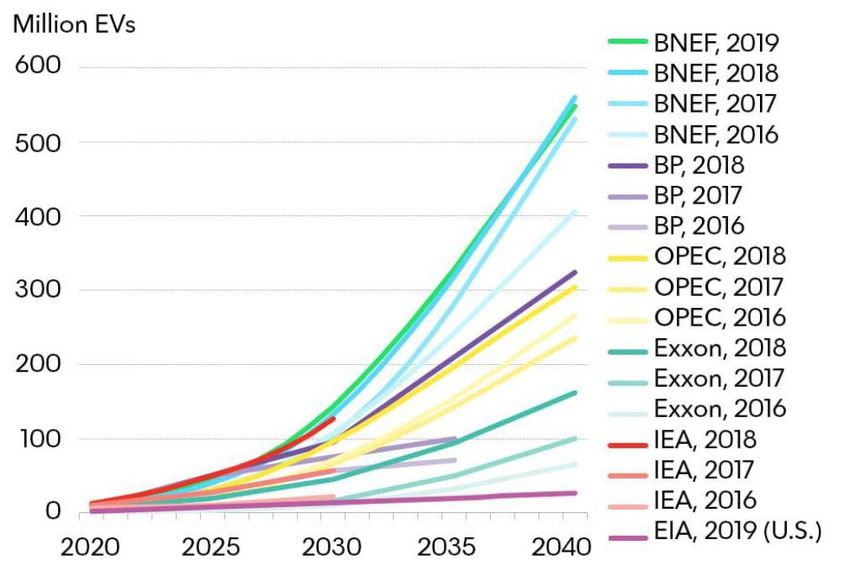
Key Trends – Automotive shipments
In 1990, 5 countries contributed to 80% of the world production
In 2020, manufacturing is more fragmented, with 12 countries contributing to the same 80%
The main manufacturing countries in 1990... The main manufacturing countries in 2020...
Share of global production, aggregate share, in %, 1990 Share of global production, aggregate share, in %, 2020
% of total Aggregate share, % % of total Aggregate share, %
32 100 32 100
30 30
90 90%
90
28 90% 28
26 Aggregate share 80 26 80
80% 80%
24 Share of total 24
22 70 22 70
20 20
60 60
18 18
16 50 16 50
14 14
40 40
12 12
10 30 10 30
8 8
6 20 6 20
4 4
10 10
2 2
0 0 0 0
Unknown
Brazil
Poland
Italy
Argentina
Morocco
United States
Germany
Mexico
Spain
Indonesia
Malaysia
Other smaller
Romania
China
Canada
Russia
Slovakia
Hungary
Japan
France
Turkey
Iran
Czech Republic
Thailand
South Korea
India
United Kingdom
South Africa
United States
Italy
Brazil
Poland
Argentina
Germany
Indonesia
Mexico
Malaysia
Other smaller
Spain
Romania
Russia
Hungary
China
Turkey
Slovakia
Japan
France
Canada
Iran
Czech Republic
Belgium
South Africa
Thailand
India
United Kingdom
South Korea
Source: IHS Markit / GMI
9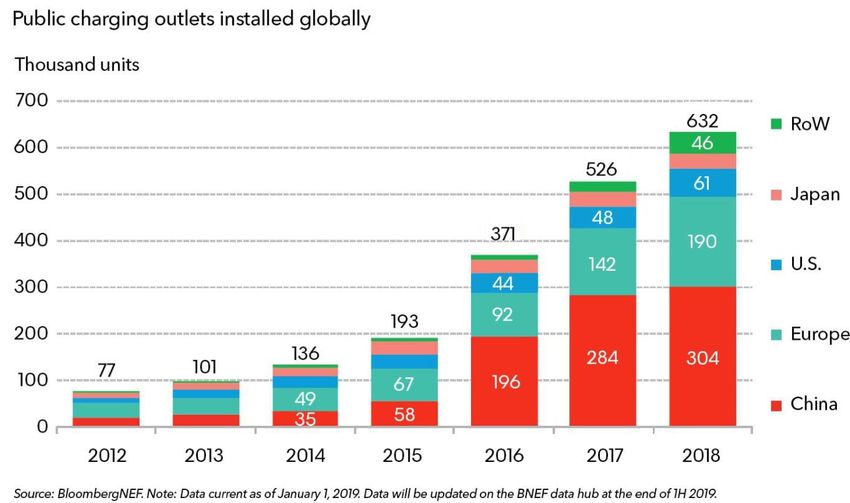
Flexible manufacturing, cars get less components and final assembly can be
done anywhere
EVs contains significant less parts than conventional vehicles   A few experiments in tooling, prototyping
                                                                       3D printing allows Porsche
•    Less parts in electric vehicles compared to                       to create obscure parts for
     vehicles with conventional combustion engine                      Classic cars –Feb18                Ford produces the largest
                                                                                                          ever 3D printed metal
     reducing the need for complex production                                                             automotive–Feb19
     facilities, send as SKD                                      Volkswagen opens
                                                                  advanced 3D printing
•    OEMs do already today use flexible platforms                 center – Jan19                     PSA Group puts 3D printing to use for
     in production                                                                                   cars chassis –Jan18

•    When cars get selfdriving customers will have
                                                                  A radical rethink –Divergent- hope to change the paradigm
     even higher desire for quality in production
                                                                  from monolithic, billion dollar factories to networks of
•    3D printing allow manufacturers to produce at                smaller, 3D printing-driven plants:
     the local markets.

       •   Manufacturers have to balance benefits of
           scale vs transportation. 3D print might be
           more relevant for particular parts the last
           2% adjustments to the car
       •   Hard to compete with efficiency at
           automotive manufacturers plants

    Source: GMI
                                                                                                                                             10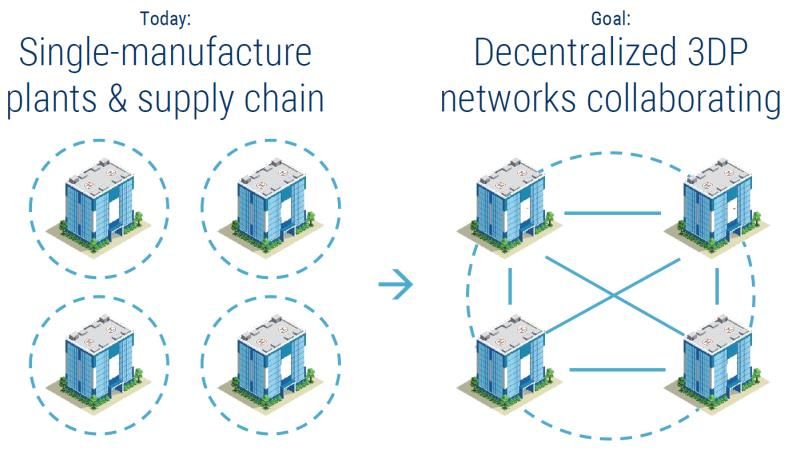
The complexity is driving
        increased post-production Port
        processing

o Strengthen end-to-end coordination and visibility with one
  single point of responsibility

o Manage time, quality and lead time to strengthen supply chain
  performance & optimize cost

o Homologation efficiencies where factories are not able to
  make market-specific changes to base products

o Ensure consistent quality to the dealers with less unprofitable
  time spent in their shop

                                                                    11
1 The World Economy and Global Automotive Shipments
The Roll-On Roll-Off
Industry Report Strategic Sourcing Has Given Rise to Port Proliferation and
2 Regional Customization
3 A Fleet Under Pressure
Disruptive Change and Preparing for the Future
4
12Current markets do not justify new ordering activity (Q3 2019 report)
Car Carrier Fleet Orderbook Fleet and demand growth
# vessels equal or above 4000 CEU Percent
14 6 Growth y-o-y
4%
3%
2%
6
1%
0%
-1%
2 2018 2019 2020 2021
Demand growth Net fleet growth
Order book 2019 2020 2021
• No new orders were confirmed in the quarter* • Deep-sea shipments forecasted to increase with about 2% per year
• One vessel was delivered, one vessel recycled in the quarter • Marginal net fleet growth (if any) expected for several years
Source: Clarksons Platou *for vessels above 4000 CEU
131 The World Economy and Global Automotive Shipments
The Roll-On Roll-Off
Industry Report Strategic Sourcing Has Given Rise to Port Proliferation and
2 Regional Customization
3 A Fleet Under Pressure
Disruptive Change and Preparing for the Future
4
14The traditional auto business model will be disrupted
-more risk in the medium/long term than it has ever been
Bloomberg NEF and Bank of America
1) Transportation is costly and inefficient, making the sector ready for disruption.
2) In cities 40% of car trips are less than two miles (20 minutes bike ride). Clean disruption of Energy
and Transportation (Tony
3) On average cars idle 95% of the time. Seba):
Within 10 years of the regulatory
4) Sharing will disrupt the transportation industry.
approval of driverless vehicles, 95
percent of U.S. passenger miles
5) Auto manufacturers fighting to take a share of this part of the industry (GM and JLR investing in Lyft). travelled will be served by on-
demand, autonomous electric
vehicles owned by companies
providing Transport as a Service,
which we call TaaS.
–The Collapse of the ICE vehicle
and Oil industries.
Source: Bloomberg NEF, Tony Seba
15Our industry is changing –disruptive changes ahead
Electrification Mobility models Autonomy Flexible manufacturing New entrants
• New routines handling • New customers • Changing operational
cargo (operational, risk) processes • Less finished units to be • Parts suppliers more
• Impact on car sales transported deep sea
• important
• New players • Enter new segments Maintaince of vehicles
• More larger parts like • Old OEMs only hardware
• New manufacturing like: • Longer term, significant batteries and frame to
changes in the market provider
locations • After-sales services / be moved
size possible (up or • New customers
• El. a catalyst for other maintaince
down)
trends • Fleet management
Source: GMI
16Electrification in the left lane for the auto industry
-rollout is very much a political and regional issue
Comments on electrification of LVs
• All global auto manufactures realize the
need for being present in the EV segment
after Dieselgate
• smaller OEMs like JLR and Mazda
• “pro-fuel cell” Toyota
• «Low end» brands like Skoda
• Sports car producer Porsche (Taycan)
• Hybrids only for a middle stage
• UK and France to forbid conventional
combustion engines from 2040
• China’s New Energy Vehicles (NEV) policies
foster EV growth by domestic players. China
also plan to ban conventional combustion
engines
• China could become a production hub for electric
vehicles, with significant export
Source: EV Volumes, Bloomberg
18Trends
Automated terminal operations: autonomous logistics changes the role
of the supply chain
The advent of new technologies allows for developments in Land-based logistics
In a not too distant future:
o Cars, vessels and terminal infrastructure to communicate
wirelessly to track flows and information
o Cars will drive themselves onto vessels and around the
terminal
o Significant efficiency improvements
o Quality improvement
o Opportunities for increased utilization in terminals
o Loading & discharging operations to be optimised
o Full transparency on location of units & inventories
19Trends
The «uberization» of things and the Airbnb model of «ownership»
Does it matter to us?
The The
old new
model model
The The
old new
model model
20Autonomy will be the new normal
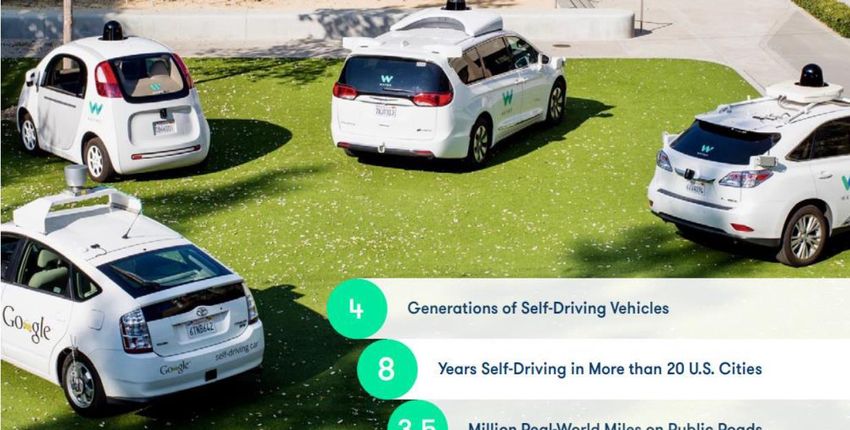
-not here yet – but much closer than we thought. Waymo a pioneer within self-driving, planning to go full scale by 2020
Waymo – the veteran among self-driving players partner up
Autonomy aim to give several benefits: Waymo has harvested data for more than 8 years
• Reduce accidents (reduce with >90% however not
accident-free, as we saw with Uber in March -18)
• Increase comfort / free up time for driver
• Improve fuel economy / reduce emissions
• Reduce tearing of cars
1. After spinning out as a formal Alphabet company in
• Might reduce need for roads as the self driving cars can December 2016, Waymo began truly driverless testing
drive closer in 2017.
• Less time spent searching for parking (supporting 2. Waymo has partnered up with FCA and ordered
environment) “Thousands of new Chrysler Pacifica minivans ahead of
its robotaxi service launch”.
• Tech less costly (LIDAR, camera, sensor etc.) 3. Waymo vehicles have by early 2019 driven 6 million
Selected partnerships & deals miles and the company do tests of L4+ self driving
• Audi A8 to be delivered with level 3 in 2017, Tesla expect today.
to reach level 5 by 2020
• 4 Generations of Self-Driving Vehicles
• Self-driving might start in public services first • 8 Years Self-Driving in more than 20 US cities
• 3.5 million real-world miles on public roads
• 2.5 Billion self-driven miles simulated in 2016
• Public perception / legal issues / ethics
Source: PWC / GMI
21Auto industry in fast paced change – from product to service
Mobility models transformed by user demand and technology… …but demand for transportation will continue to grow
Annual car sales, million units
Autonomous
23 116
35 10
«Owned «Shared
94
Autonomy» autonomy»
“RoboCab” scenario
Asset owned Asset shared to make reduction New drivers or
significantly higher previously
– total sales at unsatisfied demand
~60m units in 2030
«Shared
«Today»
Human driven
Mobility»
2018 Growing Less private New shared 2030
middle class vehicles vehicles
Source: Morgan Stanley, McKinsey, RolandBerger
22Thank You
23You can also read


