Ubiquitous Display: Visual Experience Improvement Drives Explosive Data Growth - By Huawei, BOE, and CAICT
←
→
Page content transcription
If your browser does not render page correctly, please read the page content below

Ubiquitous Display:
    Visual Experience Improvement Drives
                   Explosive Data Growth

By Huawei, BOE, and CAICT
Contents
                                                         Flat-Panel Display Approximat-
                                                         ing the Human Visual Limit
                                                         4.1 Flat-Panel Display Technology Suits
                                                         Human Eyes

                                                         4.1.1 Industry Development History
                     Visual Experience Re-
                     quirements Drive Display            4.1.2 Screen Parameter Requirements

                     Technology Upgrade                  4.1.3 Mainstream View Points in the Industry

                     3.1 Human Visual Features           4.2 Technologies Such as Cloud Computing
                                                         and AI Help High-Quality Content Production

01          02
                     3.2 Continuously Increasing Human
                                                         4.3 Development Trend of Flat-Panel Display

                                                         04
                     Visual Experience Requirements

                     03
Preface   Overview
05 06
                                                                             Challenges for Net-
                                                                             works
                                                                             7.1 Network Upgrades Driven
                                                                             by Video Experience

                                                                             7.2 Network KPI Requirements
                                                                             of Various Video Experience
                                                                             Phases

                                                                             7.3 Target Network for Superb

                                                                                                             08
                                                                             Visual Experience

                                                                             07
Immersive 3D VR Display                 Light Field Is the Ideal                                             Future
Resolution Requires Im-                 Form of Future Display                                               Prospects
provement                               Technology

5.1 Steady Development of VR            6.1 Light-Field Display Technology
Display Technologies                    Is in the Initial Stage

5.1.1 VR Display Principle              6.2 Light Field Content Production
                                        Has High Requirements on
5.1.2 High Definition Is the Greatest
                                        Computing Capabilities
Challenge for VR Display Technologies
                                        6.3 Development Trend of
5.1.3 Increasing Definition of VR
                                        Light-Field Display Technologies
Screens

5.2 Diverse VR Content Display Modes

5.3 Development Trend of Immersive
3D VR Display
Ubiquitous Display: Visual Experience Improvement
Drives Explosive Data Growth

    01 Preface
                  Digitalization and intelligentization are fostering a new information revolution. Ubiquitous display and
                  connectivity have become important elements in the ICT infrastructure industry, and consumers' increas-
                  ing demands for experience accelerate the transformation.

                  The visual system is humanity's dominant medium of information reception. Therefore, improving visual
                  experience is the top priority in display technology innovation. The industry has progressed from tradition-
                  al SD to HD and then to UHD 4K. Displayed colors have become more vivid and the pictures are clearer,
                  even allowing fine details to be seen. 8K large screens with further improved resolution are entering the
                  market, leading industry development toward ultimate and ubiquitous display.

                  However, even ultimate 2D experience pales in comparison to genuine human experience. Immersive
                  virtual reality (VR) will become the entrance to the digital world. Consumers now demand 360° panoram-
                  ic observation, free movement, and interaction in a virtual environment for the ultimate VR experience.
                  VR is still in the initial development stage and is far from providing ultimate experience. To build a truly
                  lifelike virtual world, the VR industry must collaborate with the wider technological industry.

                  In the double G (gigabit home broadband and 5G) era, networks will accelerate business digitaliza-
                  tion with faster transmission speed and ultra-low latency.

                  The double G era will be characterized by four key trends. First, big data techniques allow gleaning
                  insights from massive data, making information refining results more regular and universal. Second, the

  01                                                                                           Preface
Ubiquitous Display: Visual Experience Improvement
                                                                                                         Drives Explosive Data Growth

edge computing architecture will eliminate barriers to cross-region data sharing and provide a basic environment for
widespread application of machine learning. Third, the rapid development of data openness platforms promotes informa-
tion aggregation and sharing, generating more value. Fourth, as the final part of information transmission, data visualiza-
tion demands will increase rapidly. To integrate naturally with human behavior, human-machine interaction will evolve
from single-screen display to multi-screen/cross-screen display, from SD to UHD (4K/8K), and from purely visual interac-
tion to multisensory interaction.

With the development of communications technologies, China's network has made great strides under the drive of
innovation and efficiency. The enterprises represented by Huawei Technologies Co., Ltd. (Huawei) have made unremitting
efforts to develop communications technologies, and are the cornerstone of rapid economic and technological transforma-
tion. Continued development of cutting-edge technologies such as edge computing, big data, and artificial intelligence will
reshape people's lives with the support of stronger communications infrastructure. Simultaneously, the development of
display technologies has been silently fueling China's communications industry. In just 20 years, China has leaped from
relying on import of cathode ray tubes (CRT) to mass production of LCD products and now to flexible OLED technologies
and independent R&D. As a key display technology company in China, BOE Technology Group Co., Ltd. (BOE) developed
multiple display technologies and actively explores man-machine interaction to support the steady rise of China's broader
ICT industry. Communications technology and human-machine interaction technology complement each other. In the
double G era, ultra-high bandwidth and display interaction will become the mainstay of social progress and business
transformation.

This white paper is jointly produced by BOE, China Academy of Information and Communications Technology (CAICT), and
Huawei. It explores the limits of visual information development from the perspective of visual experience requirements,
provides insights and forecasts for future development trends, and explores the probability of network indicator require-
ments and solutions from the perspective of service scenarios. This white paper will help industry partners conceptualize
visual experience information and increase product competitiveness. Meanwhile, Huawei iLab is willing to work with
industry partners to push the visual limit all the way to the information limit.

                          Preface                                                                                              02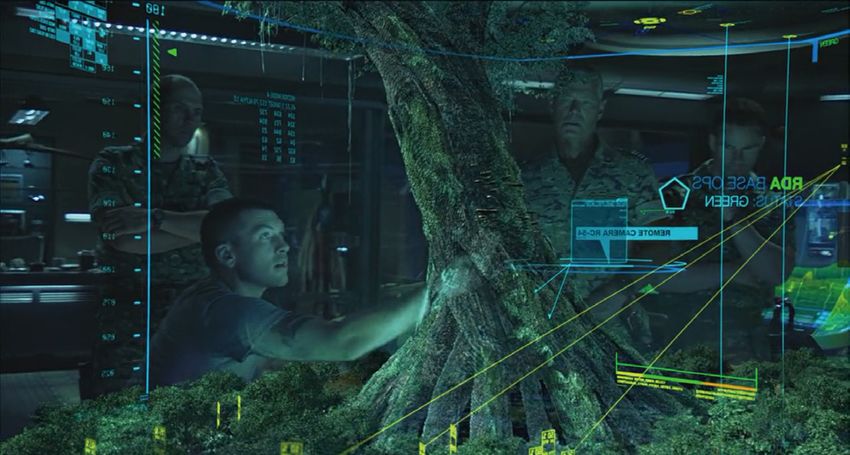
Ubiquitous Display: Visual Experience Improvement
Drives Explosive Data Growth

    02 Overview
Most of information humans receive comes from vision. Progressing toward natural interfacing with human
vision, display technology may be divided into three phases: flat-panel display, immersive 3D VR display, and
light-field display.

   In the flat-panel display phase,                  VR provides immersive 3D visual         Light field technology can be
   the 4K/8K resolution nearly                      experience. However, resolution         used to restore the actual
   reaches the limit of human eyes.                 remains a bottleneck in develop-        scenario and improve the visual
   In the future, the color gamut,                  ment. Ultimate VR experience            experience. Although this
   frame rate, and 3D display                       requires at least 60 pixels per         technology is not yet mature, the
   technologies can be further                      degree (PPD). That is, the resolution   whole industry has a great
   optimized to provide better visual               of the display terminal must reach      development potential in terms
   experience.                                      16K (binocular), and the full-view      of content collection, production,
                                                    resolution of the content must          and terminal display.
                                                    reach 24K. Current headsets can
                                                    provide a PPD of only 20.

This white paper collects industry insights and data and finds that the entire display industry is booming.

       If the price remains unchanged, product performance more than doubles every 36 months, and this period is shorten-
       ing. In the communications field, optical fiber capacity doubles every 36 months, and IP network performance
       doubles every 18 months. The display and communications fields are redefining Moore's Law and challenging
       the Shannon limit, as digital visual experience continues to accelerate toward the human visual limit.

       Throughout the development history of the industry, full introduction of a new product stage takes about four years:
       The period from 2006 to 2010 saw the introduction of FHD 2K. From 2012 to 2016, 4K was introduced and the
       penetration rate of UHD 4K climbed to 40%. 2018 was the start of a new epoch of 8K. It is estimated that the
       penetration rate of UHD 8K in displays over 65 inches will exceed 20% by 2022.

       In the double G era, improved communications capabilities will support myriad UHD display applications. 2K will
       become the baseline video and display requirement, 4K will become the mainstream requirement, and 8K will
       become mainstream for sports matches, hot event live streams, and movies. 8K display will also become a new
       benchmark for high-end consumer electronics products.

       By 2020, fast LCD will be the optimal display solution for VR. With a 60 Hz refresh rate and less than 5 ms response
       time, latency-induced dizziness can be effectively mitigated, meeting VR display requirements and reducing VR
       hardware costs. Later, with the development of optical technologies, micro OLED will become the best solution
       for VR display. The response time of less than 0.1 ms minimizes dizziness. The wide color gamut of over 80%
       and 10000:1 high contrast bring perfect display effects. The weight of the devices will be greatly reduced,
       improving user comfort.

  03                                                                                         Overview
Ubiquitous Display: Visual Experience Improvement
                                                                                            Drives Explosive Data Growth

From flat panel to VR/AR and then to light field, the more advanced a display technology, the lower
its maturity and the farther it is from meeting the visual limit of human eyes. However, VR/AR and
light field are without doubt ideal display technologies for the future. VR with higher resolution and
light field with more layers of depth information will bring users a visual experience closer to the
real world. Meanwhile, ultimate visual experience brings massive data, posing challenges for
network transmission.

     Flat panel phase: Carrier-grade 4K requires 50 Mbit/s bandwidth, and ultra-high 4K requires
     75 Mbit/s bandwidth. Considering multi-screen concurrency in homes, the required bandwidth
     will reach 200 Mbit/s.

     As flat panel visual experience evolves towards immersive visual experience and Cloud VR
     starts from full-view 8K resolution, home broadband needs to evolve to gigabit-level, the
     existing network faces challenges, home Wi-Fi needs to be optimized, and GPON needs to be
     upgraded to 10G PON. For strong interaction services, CDN downshifting and edge computing
     must be used to keep latency low, and the network architecture needs to be reconstructed.

     In the future, the evolution of immersive visual experience to holographic light fields will
     increase data volume by an order of magnitude. Therefore, networks of the post–double G
     era, such as 10 gigabit or terabit HBB/6G, need to be supported.

              Overview                                                                                            04
Ubiquitous Display: Visual Experience Improvement
Drives Explosive Data Growth

                   Visual Experience Requirements
    03             Drive Display Technology Upgrade

About 83% of information humans receive comes from vision.
With the popularity of video entertainment, various digital
images fill people's lives. Visual information requires massive
data, from images, videos, and VR to light fields, and from SD
to HD and then to UHD. Humans' pursuit of visual experience
is gradually increasing, so what level is required to approxi-
mate the human visual limit? Benchmarking to the experience
of human eyes looking at the real world, the human visual
limit can be defined as a state when human eyes cannot dis-
tinguish between digital content and real-world content in
terms of image definition, color saturation, and display laten-
cy. This is closely related to human visual features.

   3.1 Human Visual Features

          Color perception
          There are two types of photoreceptors in the
          human retina: rods and cones. Rods provide        Human eyes'
          scotopic vision, and cones provide color          relative sensitivity
          vision. Human eyes can perceive visible light    V(λ)
          at wavelengths ranging from 380 nm to 780         [%]
          nm and have different sensitivity to light at      100
          different wavelengths. Experiments show
                                                              80           Night vision      Daytime vision
          that human eyes are most sensitive to light
          at the 555 nm wavelength during the day-            60
          time. Therefore, in the daytime, red and            40
          purple colors perceived by human eyes               20
          appear slightly dark and the brightest colors                                                                      λ
                                                                                                                             (nm)
                                                               0
          sensed by human eyes are yellow and green.                 400     450   500    550   600    650    700      750    800
          As shown in the following figure, the visual
                                                                         Figure 3-1 Visual sensitivity of human eyes
          sensitivity curve moves leftwards slightly at
          night.

  05                               Visual Experience Requirements Drive Display Technology Upgrade
Ubiquitous Display: Visual Experience Improvement
                                                                                              Drives Explosive Data Growth

Color depth is a representation of the number of visible colors. The color depth of 8 bits (that is, the grayscale
value between 0 and 255 is divided into 2 to the 8th power) allows representation of 256 distinct colors. Human
eyes can distinguish more than 10 million colors. Therefore, a 24-bit color depth is required to achieve the color
resolution limit of human eyes.

Brightness perception
In addition to color classification, human eyes can perceive color intensity. Light intensity of a unit area of an
object is represented by brightness (unit: nit), and human eyes' perception of brightness ranges from 10-3 to 106
nits. When the brightness is 3000 nits, which is close to the brightness of the natural environment during a sunny
day, human eyes can view objects comfortably.

Contrast perception
Human eyes can perceive a wide range of brightness, but they cannot view the same image with extremely high
and low brightness simultaneously. This introduces the concept of contrast, that is, the ratio of the maximum
brightness to the minimum brightness of a luminous surface. Human eyes can perceive images with a contrast
range of about 1000:1 (appropriate brightness) to 10:1 (extremely high or low brightness). The contrast of a pro-
jection screen is about 100:1.

FOV and visual discrimination
The field of view (FOV) of human eyes can reach about124 ° . The FOV of the area that human eyes can focus on
is about 25°, and an FOV of 60° brings the most comfortable visual perception.

Human eyes have a strong ability to discriminate object details. The discrimination of human eyes with 1.0 vision
can reach 60 PPD. That is, human eyes can discriminate two objects 30 cm away from each other at a distance of
1 km.

Persistence of vision
The persistence of human visual perception is the premise of active images. When light stimulates human eyes, it
takes a certain period of time from the establishment of visual images to the disappearance of these visual
images. This lag is referred to as persistence of vision, which in humans is about 0.05 to 0.2s. Therefore, as long
as the image refresh frequency is greater than 20 Hz, the human visual system perceives continuous active
images. This is also the basis for the typical movie frame rate of 24 FPS or higher, which is sufficient to ensure
continuous image perception. To provide good visual experience, the frame rate should reach 60 FPS, 90 FPS, or
even 120 FPS. For example, for latency-sensitive services such as VR and AR, the frame rate must be greater than
60 FPS.

Depth perception
Depth perception is one of the most important features of human eyes. Human eyes can perceive stereoscopic
space or objects because there is a parallax in human eye imaging. After two images with a parallax are synthe-
sized in the brain, stereoscopic vision will be presented so the depth information of the object can be perceived.

                 Visual Experience Requirements Drive Display Technology Upgrade                                    06
Ubiquitous Display: Visual Experience Improvement
Drives Explosive Data Growth

   3.2 Continuously Increasing Human Visual Ex-
       perience Requirements

Industry research shows that human eyes can perceive stereoscopic vision mainly due to psychological percep-
tion, motion parallax, and accommodation.

Psychological perception: Psychological perception means that what human eyes perceive may not be a 3D
object, but a 3D "illusion" produced by the brain when it is "deceived" by some means. The means include:

       01
                  Affine: When human eyes look at two objects of the same size, the image
                  of the nearer object is larger.

                                           Occlusion: On the same line of sight, a near object can occlude a distant

                                02         object, and the human visual system can determine the relative position
                                           of these objects based on the occlusion relationship.

                  Shadow: When unidirectional light is present, the shadow of an object can
                  help the human visual system to determine the stereoscopic shape of the

       03
                  object. For example, for either a sphere or a cylinder, human eyes obtain a
                  round image when looking at it directly, and cannot discriminate the
                  actual shape. However, if light shines on the side of the object to produce a
                  shadow, human eyes can easily discriminate the sphere and cylinder.

                                           Transcendental prophet: Human brains have the ability to learn and

                                04
                                           remember. For objects that have been encountered in the real world,
                                           even if they are displayed in 2D images, human brains can automatically
                                           perceive their 3D shape.

                  Binocular parallax: The image locations of an object seen by the left and
                  right eyes are different. This feature deceives human brains to produce

       05         stereo vision effects as long as there is a parallax between the image loca-
                  tions of a plane image seen by the left and right eyes. A larger parallax
                  brings a more obvious stereo effect. This principle is used in 3D movies.

  07                               Visual Experience Requirements Drive Display Technology Upgrade
Ubiquitous Display: Visual Experience Improvement
Drives Explosive Data Growth
Through these psychological effects, flat-panel displays (such as mobile phone screens and TV screens) can
produce 3D effects without changing the display mode itself. That is, no 3D object or model is displayed.
Motion parallax Accommodation
In the real world, human eyes can obtain different With both motion parallax and binocular parallax,
visual images of objects by observing them from the visual experience of VR is extremely close to the
different angles. Using motion parallax, human real world. However, in real-world scenarios, when
brains can determine the shape and size of objects. human eyes focus on near objects, distant objects
The most typical application is VR, although VR become blurred, and vice versa. VR cannot simulate
imaging still uses binocular parallax. In a 3D theatre, this feature, called accommodation. In VR, users
no matter how you move your position, the images always focus on the VR screen regardless of whether
you see are always at the same angle of view. In VR, they are focusing on near or distant objects. This
however, you can move your body freely to see produces a depth perception conflict in users' brains,
images from different angles. causing effects such as dizziness. Light-field display is
the best solution to this problem, because the light
field can record the direction information of light, so
as to provide images of different depths.
Psychological perception can produce 3D illusions, while motion parallax and accommodation can provide stereo vision
approximating real-world perception. Therefore, from the perspective of visual experience, display technology develop-
ment can be divided into three phases of development toward the human visual limit: flat-panel display, immersive 3D VR
display, and light-field display.
Accommodation
Motion parallax
Psychological perception
Light-field display
Immersive 3D VR display
Flat-panel display
Figure 3-2 Three phases of display technology development
Visual Experience Requirements Drive Display Technology Upgrade 08Ubiquitous Display: Visual Experience Improvement
Drives Explosive Data Growth
Flat-Panel Display Approximating
04 the Human Visual Limit
For flat-panel display, a resolution of 2K/2.5K for small screens such as those of mobile phones and tablets can reach the
human visual limit, whereas large screens such as those of TVs require a resolution of 4K/8K. In terms of resolution,
flat-panel display is close to the human visual limit. However, other parameters, such as wide color gamut, high refresh
rate, and contrast, are still being optimized for flat-panel display to approximate the human visual limit from various
dimensions.
4.1 Flat-Panel Display Technology Suits Human
Eyes
4.1.1 Industry Development History
Flat-panel displays are widely used. Their earliest application was in film.
Films are played by projecting images on screens using light. If price remains
unchanged, the perfor-
With the emergence of cathode ray tubes (CRTs), images are digitalized. The
mance of display products
most typical application of CRTs is TVs and outdated computer monitors.
must be at least doubled
Their screens are curved in both the horizontal and vertical directions, causing
every 36 months. This
image distortion, reflection, and poor visual experience.
period is now being
Currently, the most common display technologies include light emitting diode shortened.
(LED) and liquid crystal display (LCD). LED allows display of images by con-
trolling light emissions of semiconductor light-emitting diodes. The LED dis- Wang Dongsheng,
play has high brightness, long service life, and large angle of view. It can be chairman and founder of
flexibly extended and seamlessly stitched. It mainly applies to indoor and out- BOE
door large-screen billboards. LCD displays different images by rotating liquid
crystal molecules in liquid crystal pixels. The modular design and high-integra-
tion chip design directly reduce circuit power consumption and heat emission. In addition, LCDs are light and pro-
vide high-quality images. Currently, LCD is the mainstream display technology in the market and is widely used in
screens of mobile phones, tablets, TVs, and computers.
Human eyes' pursuit of visual experience is endless. For small-screen products such as mobile phones, the organic
light-emitting diode (OLED) technology can provide a wider color gamut and higher contrast than LCD, and is
gradually applied to high-end flagship phones. For large screens, the micro-LED technology (LED miniaturization
and matrix technology) implements micrometer-level pixel spacing. Each pixel can be controlled and driven inde-
pendently. The resolution, brightness, contrast, and color gamut of each pixel are better. However, the micro-LED
technology is not mature or applied on large scale.
09 Flat-Panel Display Approximating the Human Visual LimitUbiquitous Display: Visual Experience Improvement
Drives Explosive Data Growth
Film
CRT display
LCD and LED display
OLED and LTD display
Figure 4-1 Development history of the flat-panel display technology
4.1.2 Screen Parameter Requirements
According to industry research, when the number of pixels exceeds 60 at each angle of view, human eyes will not
feel the film grain effect or screen-door effect. That is, the value of PPD is greater than 60. The value of PPD
depends on the FOV and the number of pixels on the screen.
⁄
px
PPD = FOV
Here FOV indicates the FOV of human eyes in the horizontal or vertical direction, and px indicates the number of
pixels in the direction.
Flat-panel display is mostly common in mobile phones and TVs. Generally, phone screens are viewed from about
30 cm away from human eyes, whereas TV screens are viewed from about 2.5 m away. The following table lists
the relevant specifications.
Terminal Mainstream Watch Distance Horizontal Mainstream Horizontal
Size
Type (Unit: Inch) (Unit: m) FOV Resolution PPD
Mobile phone 6 0.3 25° 2560*1440 102
TV 55 2.5 27.5° 4096*2160 148
Table 4-1 Screen specifications of mobile phones and TVs in typical scenarios
Flat-Panel Display Approximating the Human Visual Limit 10Ubiquitous Display: Visual Experience Improvement
Drives Explosive Data Growth
In typical scenarios, the PPD of mainstream 6-inch 2.5K mobile phones can reach 102, and the PPD of 55-inch 4K
TVs even reaches 148, both exceeding the resolution requirement of 60 PPD. Of course, for TVs, the 55-inch size
cannot provide ultimate home theatre experience. TVs with 100-inch and 120-inch screens will gradually become
available. This requires 8K resolution to achieve the vision effect of 55-inch 4K TVs. To promote the development of
the 8K industry, BOE proposed a strategy of simultaneously promoting 8K, popularizing 4K, replacing 2K, and
making good use of 5G. This accelerates the construction of the 8K UHD industry ecosystem. In 2017, BOE started
delivering 110-inch 8K and 75-inch 8K UHD displays to customers including Huawei.
In terms of resolution, both small-screen products and large-screen products can reach the human resolution limit.
However, from the perspective of visual experience, parameters including the color gamut, refresh rate, and con-
trast require further optimization. For example, the high dynamic range imaging (HDR) technology and 4K resolu-
tion at the 144 Hz refresh rate can be used to further improve visual experience.
2018 was the start of a new epoch of HDR display. In 2017, to pursue ultimate experience, the electric
HDR is an image enhancement technology, which competition industry launched a display with a
makes the dark part of images deeper without refresh rate of 1080P@240 Hz. In 2018, the refresh
losing details and makes the bright part brighter rate for high resolution displays even reached
while retaining image authenticity. In addition, 4K@144 Hz.
HDR increases the contrast and color gamut of
images.
4.1.3 Mainstream View Points in the Industry
The active-matrix organic light-emitting diode (AMOLED) technology is gradually being applied to mobile
phone displays.
However, thin-film transistor LCD (TFT-LCD) remains the dominant technology in these displays. In recent years,
AMOLED has developed rapidly in the mobile phone field and has become popular in the high-end mobile
phone market. Currently, mid-range and high-end phone models of all brands are adopting AMOLED. Simulta-
neously, AMOLED has the potential for flexible display. With the gradual improvement of peripheral accessories,
AMOLED flexible display will have a larger space for rapid growth in the future.
LCD is still the mainstream technology of TV displays.
TFT-LCD is the mainstream technology, comprising almost all market share. The new technology, AMOLED,
offers good color performance but remains at the exploration phase in the consumer market due to factors such
as yield rate and cost. The price of a device using the AMOLED technology is much higher than that of the
device using LCD technology. Therefore, large-scale AMOLED application in the terminal market is distant.
In the foreseeable future in the TV field, TFT-LCD will become the mainstream technology and continue to
improve. 2018 marked the start of a new epoch of 8K entering the introduction stage. Throughout the develop-
ment history of the industry, full introduction of a new product stage takes about four years: The period from
2006 to 2010 saw the introduction of FHD 2K. From 2012 to 2016, 4K was introduced and the penetration rate
of UHD 4K climbed to 40%. It is estimated that the penetration rate of UHD 8K in displays over 65 inches will
exceed 20% by 2022.
11 Flat-Panel Display Approximating the Human Visual LimitUbiquitous Display: Visual Experience Improvement
Drives Explosive Data Growth
4.2 Technologies Such as Cloud Computing and
AI Help High-Quality Content Production
The flat-panel display technology is mature, but corresponding high-quality content is lacking. This is because high-quality
content is slow and expensive to produce. Rendering of computer graphics (CG) is especially costly, consuming a lot of
computing resources. For example, image rendering for the film Avatar used 4000 servers and took up to one year.
The popularization of UHD technologies such as 4K and 8K shocks the traditional media production industry. Media pro-
duction requires technical innovation from the aspects of on-site photography, storage, transmission, and distribution. To
address the challenges of traditional media production, cloudification of media production is inevitable.
In cloudification of media production, original audio and video information is uploaded to the cloud through private lines.
Cloud servers provide powerful cluster computing services, which enable the photographed 4K/8K videos to be efficiently
edited on the cloud and finally transmitted to user terminals.
In addition to content editing on the cloud, low resolution and frame rate of original filming can be improved using
cloud-based image enhancement to enhance viewing experience.
Video image enhancement improves video visual effects by frame insertion and super-resolution. Frame insertion uses
time domain information between adjacent frames to calculate a transition frame, improving video smoothness.
Super-resolution uses spatial information to calculate interpolation pixels, improving resolution.
3D display can bring better visual experience than 2D display, and it is an important direction for future development of
flat-panel display technology. 3D content will primarily be produced by using 3D media sources, but some classical 2D
media sources can be augmented with 3D visual effects using 2D-to-3D video conversion technology.
The film Titanic is a typical case of 2D-to-3D video conversion. The 2D film was well received by audiences. However, if
most scenarios use 3D display technology, it would bring more vivid visual effects. In 2012, the 3D Titanic produced using
the 2D-to-3D video conversion technology was released. It took more than two years to turn 2D into 3D, because it was
time-consuming and cumbersome to capture the depth information of images frame by frame. With the recent rapid
development of AI technologies, algorithms can be applied to 2D-to-3D video conversion. This will greatly improve conver-
sion efficiency and release more high-quality 3D media sources.
The data volume of 3D media sources is twice that of 2D media sources of the same time duration. Using special compres-
sion algorithms, the network bandwidth requirement of 3D media sources can be reduced to only about 1.5 times that of
2D media sources.
Flat-Panel Display Approximating the Human Visual Limit 12Ubiquitous Display: Visual Experience Improvement
Drives Explosive Data Growth
With new technologies such as cloud computing and AI, complex computing can be migrated to the cloud, reduc-
ing content production cost and improving efficiency. However, uploading raw materials to cloud servers brings
huge uplink network requirements.
4.3 Development Trend of Flat-Panel Display
Billy Lynn's Long Halftime Walk, a 2016 war drama directed by Ang Lee, was unique for using the 4K 3D 120 FPS form,
which set a new bar for the film industry. The frame rate of typical films is only 2K 25 FPS, but in this film, Lee chose the
higher specifications, not only to improve image quality, but also to provide a high-definition scenario allowing audiences
to immerse themselves in the vivid scenes. This form displays the fear and death of war to the fullest extent and brings a
new understanding for wider audiences.
In 2019 MWC, BOE and Huawei jointly conducted foldable phone projection and 8K+5G live display. They used Huawei's
foldable phone, the Mate X, to project online 4K content through 5G signals to BOE 110-inch 8K UHD display in real time.
They also used 8K UHD cameras to shoot the scenery on the coast of Barcelona in real time and transmitted the captured
images to BOE 110-inch 8K UHD display in 5G ultra-high speed long-distance mode, demonstrating ultimate visual
experience.
Figure 4-2 Huawei Mate X + BOE 110-inch Figure 4-3 Huawei 5G CPE Pro + BOE 110-inch
8K UHD projection 8K live broadcast
The high-resolution, high-frame-rate, and 3D display form not only brings better visual experience, but also helps to
express the concept of video content transmission. This is the key trend of future plane vision development. The
flat-panel display technology continues to mature. With the help of cloud computing, high resolution and high frame
rate content like Billy Lynn's Long Halftime Walk will become more prevalent, and flat-panel display will gradually
approximate the human visual limit. In the double G era, improved communications capabilities will support
myriad UHD display applications. 2K will become the baseline video and display requirement, 4K will become
the mainstream requirement, and 8K will become mainstream for sports matches, hot event live streams, and
movies. 8K display will also become a new benchmark for high-end consumer electronics products.
13 Flat-Panel Display Approximating the Human Visual LimitUbiquitous Display: Visual Experience Improvement
Drives Explosive Data Growth
Immersive 3D VR Display Resolu-
05 tion Requires Improvement
Although flat-panel technology supports 3D imaging, it does not provide mobile parallax. With users viewing the same
image at different angles, and the experience lacks the full sensation of reality. VR provides users with 3D immersive
experience and creates a path to the visual limit. Many factors affect VR experience, including the resolution, FOV, color
gamut, refresh rate, screen response time, and degrees of freedom (DOF). Resolution is the primary determinant, and
VR poses high requirements on it. Full-view 8K VR content is equivalent to only 480p traditional video. To achieve 4K
video-level resolution, the full-view resolution of VR must reach 24K.
5.1 Steady Development of VR Display
Technologies
5.1.1 VR Display Principle
The two core components in a VR HMD are its lens and screen. By 2020, fast LCD will be the opti-
When using a convex lens, if the object is within the focal length mal display solution for VR. With a
of the lens, a magnified image is displayed. VR display is based 60 Hz refresh rate and less than 5
on the magnifying glass principle. The screen is within the focal
ms response time, latency-induced
dizziness can be effectively mitigat-
length of the lens. In this way, the user's eyes can see the
ed, meeting VR display requirements
magnified content on the screen on the other side of the lens.
and reducing VR hardware costs.
VR content
Later, with the development of
optical technologies, micro OLED
will become the best solution for VR
display. The response time of less
VR screen Lens
than 0.1 ms minimizes dizziness. The
wide color gamut of over 80% and
10000:1 high contrast bring perfect
1 x focal length
display effect. The weight of the
Human eye devices will be greatly reduced,
improving user comfort.
Xiao Shuang, VR/AR Department
of BOE
Figure 5-1 VR display principle
Immersive 3D VR Display Resolution Requires Improvement 14Ubiquitous Display: Visual Experience Improvement
Drives Explosive Data Growth
5.1.2 High Definition Is the Greatest Challenge for VR Display Technologies
Due to its special display mode, VR poses higher requirements on screen refresh rate, response delay, FOV, and
resolution.
If the screen refresh rate is too low or the response time is too long, the user may feel dizzy. The screen refresh
rate of entry-level VR must be at least 60 Hz and the response delay must not exceed 5 ms. Currently, most
HMDs offer refresh rates of 90 to 120 Hz, and the response delay can be less than 3 ms, meeting requirements.
VR is intended to be an immersive experience, so the FOV is key. If the FOV of the VR header is less than that of
human eyes, about 110°, black edges appear around the image, which severely affects the visual experience.
Currently, the FOV of most HMDs can reach 100°, and some even reach 200°. Therefore, the FOV has little
impact on VR experience.
The current bottleneck to improving VR experience is the definition, especially granules and screen-door effect
on images. The reasons for unclear VR images are as follows: First, the content of VR needs to be evenly
distributed in 360°, but the FOV of human eyes is only about 110°; therefore, some pixels are outside the FOV at
any given time. Second, the VR image should fill the entire FOV, making the pixels per degree (PPD) lower than
traditional display products. Moreover, it is technically difficult to achieve high definition on the normally small
screens of HMDs. Currently, VR screens have only 3K to 4K resolution, which can display 8K content. However,
the visual experience is equivalent to only 480p traditional video.
Binocular Resolution Horizontal Resolution of 360° Resolution of Equivalent
of VR Screens PPD VR Content Video Experience
2K (1920*960) 10 4K 240P
4K (3840*1920) 21 8K 480P
8K (7680*3840) 32 12K 720P
16K (15360*7680) 64 24K 4K
Table 5-1 Equivalent viewing experience of VR and traditional video in various resolutions
The PPD of 8K 360° VR content is only 21, whereas human eyes need more than 60 PPD to perceive granule-less
pictures. Therefore, the target binocular resolution of VR screens is 16K. At this resolution, VR viewed definition
is equivalent to that of traditional 4K videos.
15 Immersive 3D VR Display Resolution Requires ImprovementUbiquitous Display: Visual Experience Improvement
Drives Explosive Data Growth
Display
Lens
Now Target
PPD=px/fov
20 60
PPD Gap
Figure 5-2 PPD requirements for VR screens
In addition to improving overall screen definition, the display effect can be optimized according to the special
physiological structure of human eyes. The fovea centralis in the macula is the most sensitive area in the retina.
The fovea centralis has a stronger resolving ability than the surrounding area, and its sensitive angle is about 5°.
In view of this, it is sensible to improve the definition of the middle area of the VR screen at the expense of the
definition of the surrounding area and edges, improving visual experience and reducing the technical require-
ments of the screens.
5.1.3 Increasing Definition of VR Screens
The screen pixel density of entry-level VR devices is about 500 PPI, and that of consumer-level devices is about
800 PPI. Both OLED and LCD screens can meet the requirements. However, to reach the professional level, the
screen pixel density must be at least 1600 PPI, making LCD advantageous. The micro OLED technology will be
applied in the future. It can exceed 3000 PPI and the response time is within 1 ms, meeting development
requirements of the VR/AR industry.
Display technology specification Market positioning
~3000 PPI Professional-level: Micro OLED
RT < 1 ms; 90 Hz to 120 Hz
~1600 PPI
RT < 3 ms; 90 Hz to 120 Hz Consumer-level: LCD
~800 PPI
~500 PPI Entry-level: LCD and OLED
RT < 3 ms; 90 Hz
Market capacity
Figure 5-3 Technical requirements for VR display in different market positioning
Immersive 3D VR Display Resolution Requires Improvement 16Ubiquitous Display: Visual Experience Improvement
Drives Explosive Data Growth
The whole VR/AR industry began developing rapidly around 2016. By 2017, the pixel density of VR/AR small
screens was 500–700 PPI, and the resolution was 2K; in 2018, the resolution was 800–900 PPI, and the resolution
was 3K. Now, VR/AR screens have reached and in some cases exceeded 1000 PPI, the resolution has reached 4K,
and the refresh frequency has increased to 120 Hz. As a leader in the display industry, BOE has released near-eye
small screens with 5600 PPI using Micro OLED. This will be applied to VR/AR products in the future, further improv-
ing Micro OLED's visual experience.
2K 3K 4K
500–700 PPI 800–900 PPI Over 1000 PPI
Figure 5-4 Development trend of VR screen resolutions
5.2 Diverse VR Content Display Modes
Unlike traditional video content, VR brings users a pure immersive virtual experience. The following types of VR content
need to be displayed: traditional video sources, splicing of real-word shooting, and 3D model rendering.
Traditional 2D/3D sources can also be viewed in VR. This is VR IMAX. Although this display mode depends on existing
sources, it can provide large-screen visual experience that surpasses traditional video experience. VR IMAX has become a
basic function of HMDs on the market.
Figure 5-5 VR IMAX
17 Immersive 3D VR Display Resolution Requires ImprovementUbiquitous Display: Visual Experience Improvement
Drives Explosive Data Growth
Splicing of real-word shooting is mainly used for VR 360° video production. The principle is to distribute multiple cameras
on a spherical surface, control all cameras to perform synchronized shooting at the same frame rate, and finally combine
pictures taken by each camera to form a spherical video. Currently, VR 360° cameras can shoot in full-view 24K resolution.
However, due to limited decoding capability of terminal chips, most VR content is still in 8K.
Distribution through networks
Shooting Splicing Stream servers Display on terminals
Figure 5-6 VR 360° video production process
VR 360° videos differ from traditional videos only in terms of viewing mode. Traditional video formats are still used.
Viewing VR 360° content on a traditional video player simply compacts the 360 spherical picture into a rectangular picture.
You can only truly view VR 360° video on VR devices.
Figure 5-7 VR video spherical picture and rectangular picture display
VR 360° videos can bring immersive video experience, but require high video resolution. The full-view 8K video watching
experience is equivalent to that of traditional 480p video. To achieve 4K TV experience, the full-view resolution must reach
24K, requiring Gbps-level network transmission rate.
3D model rendering is mainly used for VR games or animation production. A material model is built in the client in
advance. When a user experiences VR, the HMD or external locator collects information such as actions, gestures, and
instructions in real time, and then renders and displays the image within the current FOV. In this manner, immersive
experience with 6 DOFs can be provided, immersing the user in the virtual world.
Immersive 3D VR Display Resolution Requires Improvement 18Ubiquitous Display: Visual Experience Improvement
Drives Explosive Data Growth
3D model
Rendering Display on terminals
User instruction
Figure 5-8 VR game making process
5.3 Development Trend of Immersive 3D
VR Display
VR can be applied to myriad scenarios, such as live
sports event broadcast, VR cinema, VR 360° video, VR
social networking, and VR gaming. VR has a broad
market development space, and hardware sales are one
major component of this space. In addition, companies
can profit from providing value-added services (for
example, additional charging for VR sports event broad-
cast) and advertisements. Therefore, the VR industry has
a promising future.
VR provides users with 3D immersive experience, but the
current VR visual experience is still entry-level. Both the
screen and content resolution require improvement.
At Mobile World Congress (MWC) 2018, BOE and
Huawei jointly demonstrated the 8K VR surround effect,
the world's first mature 8K VR display solution. The
solution eliminates the screen-door effect by improving
resolution and creates a more natural and realistic
immersion feeling, greatly improving VR user experience.
Figure 5-9 8K VR display experience of
BOE at MWC 2018
19 Immersive 3D VR Display Resolution Requires ImprovementUbiquitous Display: Visual Experience Improvement
Drives Explosive Data Growth
At CES 2019, many VR vendors demonstrated their new-generation products, such as V901 of Skyworth, G2
4K of PICO, and Odin of DEUS. All had 4K screen resolutions, a large improvement over 3K in 2018. According
to Huawei iLab research, 4K screens need to display full-view 8K contents. Therefore, with the increase of VR
screen resolution this year, more 8K VR content will be produced.
During production of VR content with higher resolution, the splicing, modeling, and rendering steps have high
requirements on terminal computing capabilities. Cloud computing is the best choice for VR content produc-
tion.
In addition to head-mounted VR, naked eye VR will be gradually used in public spaces, such as in shopping
malls. Naked eye VR is a closed three-dimensional space that is confined through a three-sided or five-sided
LED screen. In this space, people feel the 3D immersive visual effect without using a device such as an HMD.
Figure 5-10 Naked eye VR
Immersive 3D VR Display Resolution Requires Improvement 20Ubiquitous Display: Visual Experience Improvement
Drives Explosive Data Growth
Light Field Is the Ideal Form of
06 Future Display Technology
2D images can only generate a stereoscopic "illusion" for human eyes by blocking, shadow, and affine. VR/AR can achieve
3D visual experience using binocular parallax. However, VR/AR displays can only focus on a plane with a fixed distance,
regardless of the intended distance. Long-time use may cause weariness of human eyes. In the future, as the amount of
information displayed in the display interaction increases, holographic interaction will become the display mode of choice.
Among present technologies, holographic display is most likely to be realized using light field technology.
A light field refers to a field in which light passes through each point in each direction, which can record and present
different depths of different objects in actual scenarios, reproducing the 3D scenario visually.
6.1 Light-Field Display Technology Is in the Initial
Stage
A light field has a large amount of data to be collected, including the intensity and direction information of the light
reflected by the surface of objects. Therefore, there are many possibilities for rendering and image generation, and images
of the object in different angles and light conditions can be obtained.
The light field content may be displayed in an ordinary screen, or may be displayed by using a VR/AR or even in naked eye
hologram mode.
Flat-panel display
Ordinary flat-panel display is the simplest display mode of the light field. It can display images of different depth and view
from one or more flat-panel screens. The required volume of data is determined by multiplying the number of screens by
the data volume required for a common flat-panel video. This has relatively low requirements on the rendering and dis-
play technologies, and is easy to implement in light field applications. For example, in the security field, a light field
camera may be used instead of a traditional camera. Compared with a single picture, a multi-view multi-depth picture
may better assist in manual or intelligent monitoring.
VR/AR light-field display
With the help of VR/AR, a 3D effect can be presented in a light field. Using multiple cameras to shoot objects from differ-
ent directions, 3D modeling can be performed, and light information of objects on different angles can be obtained by
using a light field rendering algorithm. Using VR/AR, users can view the object from various angles and feel the real sense
of light change.
Light-field display can be used in scenarios such as product marketing, goods (such as antique) display, and Internet celeb-
rity live broadcasts. If a user is interested in a product, they can learn about it through light-field display. Similarly, in the
live broadcast scenario, with the light-field display, the audience no longer watches a celebrity on the screen, but can inter-
act with them from various angles.
21 Light Field Is the Ideal Form of Future Display TechnologyUbiquitous Display: Visual Experience Improvement
Drives Explosive Data Growth
In addition to the inside-to-outside light-field display, the most typical application is the outside-to-inside Welcome to light
fields released by Google. Users can view the contents in a spherical area by using an HMD. This spherical region is the
space occupied by the cameras that collect the light field information. When a user changes their angle of view, the light
changes accordingly. This light-field display may be used for VR tourism to provide a more realistic visual experience to
users.
Figure 6-1 VR light-field display (source: Welcome to light fields)
Using the VR/AR display technology, if all data recorded in the light field is transmitted to the VR/AR HMD or local com-
puter and the local terminal performs real-time rendering and calculation, this imposes high requirements on the storage
space and real-time rendering capability of the local terminal. Therefore, cloud-based storage and rendering will become
mainstream for this light-field display mode. Cloud servers perform real-time rendering of the user's current perspective,
and transmit the rendered image to their VR/AR terminal in real time. This transmission requires Mbps-level network
bandwidth. Due to real-time interaction with the cloud, the rendered picture of a new perspective must be presented
quickly after the user turns their head, posing high requirements for network delay. A cloud-to-terminal network
round-trip time (RTT) of 20 ms, excluding delay from the collection end to the cloud, is a basic initial requirement.
Holographic light-field display
VR/AR can help achieve three-dimensional multi-view light-field display. However, there remains a gap in experience
between wearing an HMD and seeing the real world with naked eyes. In the future, naked eye holography will be the best
form of light-field display. However, this technology is not yet mature. It remains in the demo phase in labs and is far from
commercial use.
Currently, holographic light-field display mode mainly includes holographic film and multi-view light-field display. For clear
display, the amount of data required by the holographic film display is much larger than that of traditional flat-panel dis-
play. According to research by DGene, the data of a 4K resolution hologram reaches 600 Mbps. The multi-view light-field
display technology presents 3D effects through multiple sub-views. The required data volume is the number of sub-views
multiplied by the data volume of a single sub-view, the latter being related to the resolution of the sub-view. If the resolu-
tion reaches 4K, the data volume in each sub-view reaches dozens of Mbit/s. In the laboratory, the data volume required
for multi-view projection display and tensor light-field display is similar. Certainly, there is redundant overlapping data
between multiple sub-views. With the improvement of compression, the amount of data transmitted over the network can
be greatly reduced, but this poses higher requirements on the decoding capability of terminals. To achieve ultra-high defi-
nition 3D holographic imaging as shown in Avatar, the data will reach Tbps level.
Display technology companies are proactively investing in holographic display technology. In the current phase, technolo-
gies such as light field, space optical modulation, optical diffraction, and eye tracking are being combined. This allows
naked-eye simple multi-view, multi-intersection, and 3D display technology to be achieved on LCD screens, approaching
the theoretical effect quality of holographic display interaction.
Light Field Is the Ideal Form of Future Display Technology 22Ubiquitous Display: Visual Experience Improvement
Drives Explosive Data Growth
6.2 Light Field Content Production Has High
Requirements on Computing Capabilities
The production of light field content requires a professional light field camera. A traditional camera can only record
(x,y,z,λ,t) information of a light ray, where (x,y,z) indicates the position, λ indicates the wavelength, and t indicates
that the light changes over time. In addition to recording information in these five dimensions, a light field camera can
also record direction information of a light ray, that is, information of seven dimensions in (x,y,z,θ,φ,λ,t), where (θ,φ)
indicate the included angles between the light ray and the horizontal plane and the vertical plane. Therefore, compared
with traditional content production, light field content production involves recording and processing more data.
In addition to traditional indicators such as image resolution and FOV, the main indicators of light field camera imaging
performance include angle resolution and field of parallax (FOP). FOP indicates the angle range of the aperture from
which light emitted by a point on the object can enter the camera, and the angle resolution indicates the number of
beams that are split in the FOP range.
Currently, mainstream consumer-level light field cameras use light field collection based on a microlens array, which is
added between the imaging sensor and the lens of a traditional camera. As shown in Figure 6-2, the light of a point on
an object in an FOP is divided into 4 x 4 beams by a microlens; that is, the angle resolution of the light field camera is 4
x 4. The camera collects light in 16 directions at the same time, and records 16 pixels.
The resolution of the view image depends on the angle resolution of the light field camera. The angle resolution
represents the discretization of the scene that is collected. The larger the angle resolution, the more detail the camera
collects. However, the resolution of the view image is reduced. Therefore, considering the resolution of the view image
and the detail of the object, both the resolving capability of the imaging sensors and the number of microlenses must
be improved. However, it is difficult to improve the resolution of the imaging sensors of a single camera, with 8K being
the general limit. Therefore, the resolution of each view is about 480p. Limited by the resolution of the imaging sensors
of a single camera, the amount of data collected by light field cameras based on the microlens array is equivalent to
that of traditional cameras.
Camera
Imaging sensor lens
FOP
Microlens array
A
Angle View image
resolution resolution
Figure 6-2 Schematic diagram of light field data collection based on microlens array
The volume of the consumer-level light field camera is generally small and limited to space. The FOP, angle resolution,
and view image resolution of these cameras are relatively small, making it difficult to record objects in detail. Therefore,
a professional light field camera generally uses multiple cameras arranged in an array structure to replace the original
microlens. This improves the FOP and makes available enough space for arranging the cameras, improving the angle
resolution.
23 Light Field Is the Ideal Form of Future Display TechnologyUbiquitous Display: Visual Experience Improvement
Drives Explosive Data Growth
Imaging
4 x 4 camera array sensor Lens
FOP
A
Figure 6-3 Schematic diagram of light field data collection based on camera array
Using the camera array, the angle resolution is the number of cameras. The resolution of the view image is the resolu-
tion of a single camera. The resolution of the view image can be high (such as 2K or 4K). Much information of the
actual object can be recorded, but the amount of data is huge, being the number of cameras times the data volume of
a single camera. There can be dozens to hundreds of cameras, and the data of a single camera can reach 6–12 Gbps. If
content is modeled locally, the original data can be compressed by thousands of times, to Gbit/s or even hundreds of
Mbit/s. However, the required local servers are expensive. Dozens of servers with high-end graphics cards are required,
costing over USD100,000. In the future, local and cloud collaborative production can be used to reduce the cost of local
servers, in turn posing great challenges to network bandwidth and latency.
6.3 Development Trend of Light-Field Display
Technologies
Currently, light-field display technologies are limited to single-layer screen displays, such as a mobile phone screen and
a VR/AR screen, and cannot manifest the advantages of multiple viewpoints and multi-layer focusing of the light field
technology. For example, when human eyes look at a near object and a distant object, the focus planes are different.
However, when displayed on a single-layer screen, the two objects can only be shown on the same plane, potentially
causing conflicts with human brain perception, causing visual fatigue after long-time viewing. Multi-plane display is the
trend of light field technology. A close-up view of an image can be displayed on a plane near the user's eyes, and a
distant view can be displayed on a farther plane, precisely restoring the real world that the human eyes see. This
technology is gradually being applied to VR/AR screens, such as the Magic Leap One.
In addition to multi-plane display, light-field display can also realize multi-view display. Current TVs can only display
specific views. Users see the same picture from different angles. With light field technology, when a user changes their
line of sight, they can feel the change in the angle of the image, making the visual experience closer to real-life experi-
ence. The industry is currently able to display 45 viewpoints. With the development of display technologies, the
multi-view light-field display technology will continue to mature. In the future, living rooms will no longer have regular
4K/8K TVs, but 4K/8K multi-view TVs. The network requirements will double as the number of viewpoints increase.
Light Field Is the Ideal Form of Future Display Technology 24Ubiquitous Display: Visual Experience Improvement
Drives Explosive Data Growth
One-to-one mapping
Cameras Corresponding sub-pixel
……
Data volume of N
channels of videos
Collection end Display end
Figure 6-4 Schematic diagram of multi-view display
The best display form of the light field technology is naked eye hologram. The 3D holographic image can be seen
directly without using auxiliary devices such as VR/AR HMDs. Avatar is a classic science fiction movie. In it, the 3D
holographic sand table was extremely impressive. This is the holographic display form and the best visual experience of
the light field technology.
Figure 6-5 3D holographic sandbox in Avatar (Source: Avatar)
Holographic display has a wide range of application scenarios, such
as in conferencing, other communication, and concerts.
Currently, teleconferencing mainly includes telephone and video
conferencing, and there is a lack of presence. With holographic
technology, the holographic images of participants around the world
can be transmitted to the conference room, as if they were discussing
face to face. The technology can also be applied in communications,
bringing distant relatives closer. There are already attempts to apply
the technology to concerts, such as the Michael Jackson, Hatsune
Miku, and Deng Lijun concerts. However, these concerts were
displayed by holographic film projection instead of "true" holography.
With the development of holographic technology, in the future,
holographic film will be replaced by directly displaying the images.
This method is more stereoscopic and closer to the actual scene in
projection mode, bringing users a more vivid visual experience. Figure 6-6 Holographic remote conferencing
25 Light Field Is the Ideal Form of Future Display TechnologyYou can also read


