Urban Development Index (UDI): A Comparison between the City of Rio de Janeiro and Four Other Global Cities - MDPI
←
→
Page content transcription
If your browser does not render page correctly, please read the page content below
sustainability

Article
Urban Development Index (UDI): A Comparison
between the City of Rio de Janeiro and Four Other
Global Cities
Rafael Molinaro 1 , Mohammad K. Najjar 2 , Ahmed W. A. Hammad 3 , Assed Haddad 4                        and
Elaine Vazquez 5, *
 1    Departamento de Construção Civil, Universidade Federal do Rio de Janeiro, Rio de Janeiro 21941-909, Brazil;
      rafael_molinaro@poli.ufrj.br
 2    Centro Universitário Gama e Souza (UNIGAMA), Rio de Janeiro 22621-090, Brazil; mnajjar@poli.ufrj.br
 3    Faculty of Built Environment, UNSW Sydney, Sydney 2052, Australia; a.hammad@unsw.edu.au
 4    Programa de Engenharia Ambiental, Universidade Federal do Rio de Janeiro,
      Rio de Janeiro 21941-909, Brazil; assed@poli.ufrj.br
 5    Programa de Engenharia Urbana, Universidade Federal do Rio de Janeiro, Rio de Janeiro 21941-909, Brazil
 *    Correspondence: elaine@poli.ufrj.br

 Received: 4 January 2020; Accepted: 19 January 2020; Published: 22 January 2020

 Abstract: One of the methods to assess the urban development of a city is to allocate indicators that
 quantify its efficiency in performing various functions, such as urban mobility, security, sustainability,
 and economy, among others. The motivation of this work is the fact that the city of Rio de Janeiro,
 although widely known and admired around the world for its natural beauty, has a wide negative
 notoriety regarding its urban functionality. There is a critical need for investment in the city’s
 infrastructure in order to improve the quality of life of its population. The novelty of this work is
 in proposing an index that quantifies the urban functionality of the city of Rio de Janeiro and that
 represents urban development. The research focuses on optimizing investments in infrastructure
 and hence increasing the urban performance offered by the city of Rio de Janeiro. In the proposed
 methodology for modeling the Urban Development Index (UDI), this work presents the model
 structure made from a knowledge-based urban development assessment model (KBUD/AM), the
 determination of the indicators, the selection of the cities, the data collection from primary and
 secondary sources and the use of statistical techniques for data normalization and scaling. The
 research aims to quantify, compare and evaluate the level of urban development of Rio de Janeiro,
 performing benchmarking with other four global cities (Stockholm, Shanghai, Boston, and Cape
 Town). Cities are ranked for their UDI to make the comparison more straightforward. Based on
 the results, Rio de Janeiro ranks second to last among the five cities studied, with an UDI of 0.395,
 only slightly better than Cape Town. The results confirm that the city of Rio de Janeiro has several
 deficiencies, especially in the education, safety and health sectors, and is very far from most of
 the other developed cities. The city of Rio de Janeiro should promote investments in research and
 development. Finally, this work confirms that Rio de Janeiro must tackle security problems as a
 matter of priority.

 Keywords: Urban Development Index; knowledge-based urban development (KBUD); comparative
 analysis; Rio de Janeiro; Brazil

1. Introduction
    Cities can be characterized as a set of interconnected systems comprised of transportation and
energy networks, waste collection depots, sewage treatment plant, paving and urban buildings. Such

Sustainability 2020, 12, 823; doi:10.3390/su12030823                          www.mdpi.com/journal/sustainability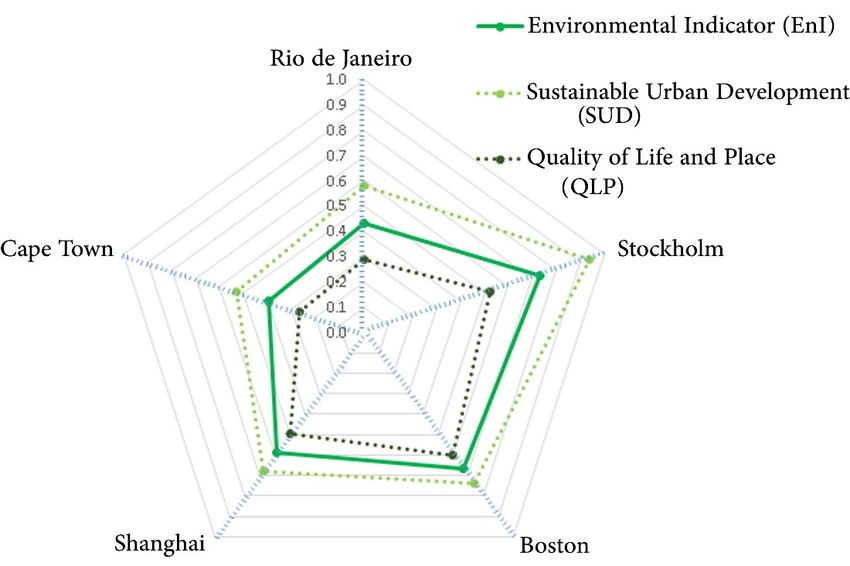
Sustainability 2020, 12, 823                                                                           2 of 25

elements make up the urban infrastructure and provide a high quality of life for its inhabitants [1–4].
The quality of life in an urban region is influenced by several elements, such as environmental quality,
safety, quality and service delivery, government and others [5]. To assess the performance of a city
(i.e., the level of functioning), the Urban Development Index (UDI) can be utilized, which provides a
measure of the level of sustainable development in a city [6]. In this context, there is a high necessity to
determine patterns and predictions that allow the evaluation of the UDI, a process that involves the
amalgamation of several indicators to guide better policy decisions and resource allocations for the
development of a society [7].
       The city of Rio de Janeiro is the second largest city in Brazil in terms of population, with more than
12 million residing in it (6.0% of the national population) [8]. The city is recognized as the Brazilian
cultural capital and has recently received the title of First World Capital of Architecture by the United
Nations Educational and Cultural Organization (UNESCO) [9]. Unfortunately, the city is also linked
to the huge presence of slums (urban conglomerates of the low-income population, usually illegally
occupied) that show the great social disparity experienced by the entire Brazilian population, along
with levels of insecurity to which they are subjected [10]. In 2010, Rio de Janeiro was presented in a
favorable context on the international scene, with the victory in its applications to host the 2014 World
Cup and the 2016 Olympics [11], in addition to other major events such as Rio +20 in 2012, World
Youth Day 2013 and the Confederations Cup 2013. Unfortunately, at the 2014 World Cup and the 2016
Olympics, the “wonderful city” was taken to mean insecurity, poor infrastructure and poor quality of
life, suffering criticism from the international press [12,13]. Furthermore, the city is facing critical urban
problems with the advent of more expensive, more exclusionary, more fragmented and more privatized
city districts [14,15]. Other problems such as the high level of homicide, thefts and the dominance
of criminal groups over some territories are pointed out as negatively impacting public safety [16].
Urban mobility issues (i.e., how to make a person transition from the car to public transport) [17],
and the lack of public policies for housing and sanitation generate a disorderly and irregular sewage
disposal [18]. According to the United Nations, Brazil occupies the 79th ranking out of 189 countries in
terms of the highest Human Development Index (HDI), behind countries like Venezuela, Sri Lanka
and Cuba [19]. Meanwhile, the municipality of Rio de Janeiro occupied the 45th rank amongst the
Brazilian municipalities with the highest HDI [20].
       The unstructured urban environment of Rio de Janeiro requires the application of more investments
in the infrastructure of the city to improve the quality of life of its population [21,22]. In addition, a
reference point is required to assess the actual condition expressed by the city [6]. At this level of the
analysis, performing benchmarking against other cities around the world could facilitate understanding
and exposing the underlying issues with the urban performance of Rio de Janeiro [23].

Justification for the Study
     Quality of life in cities is a multidimensional subject and, in this respect, its evaluation is a
challenge [24]. In the recent literature, a large number of studies focused on the quality of life
in cities [25–27]. The environmental index is strongly connected with quality of life [24,28,29].
Other indices also affect the quality of life in cities, such as governance, economy, mobility, safety,
quality and service provision [30]. Good urban performance is directly related to effective and
balanced joint development between the social, environmental and economic sectors of sustainable
development [31–34].
     Studies in the literature have highlighted that many factors can directly or indirectly affect
sustainable urban development levels, indicating that the potential index system scale is large [35].
This research aims to quantify, compare and evaluate the level of urban development in Rio de Janeiro
in relation to four other chosen global cities (Stockholm, Shanghai, Boston, and Cape Town). The
novelty of this work is in determining an index, denominated as the UDI, that quantifies the urban
functionality of the city, and that represents urban development. The research focuses on optimizing
the investments in the infrastructure and increasing the urban performance offered by the city of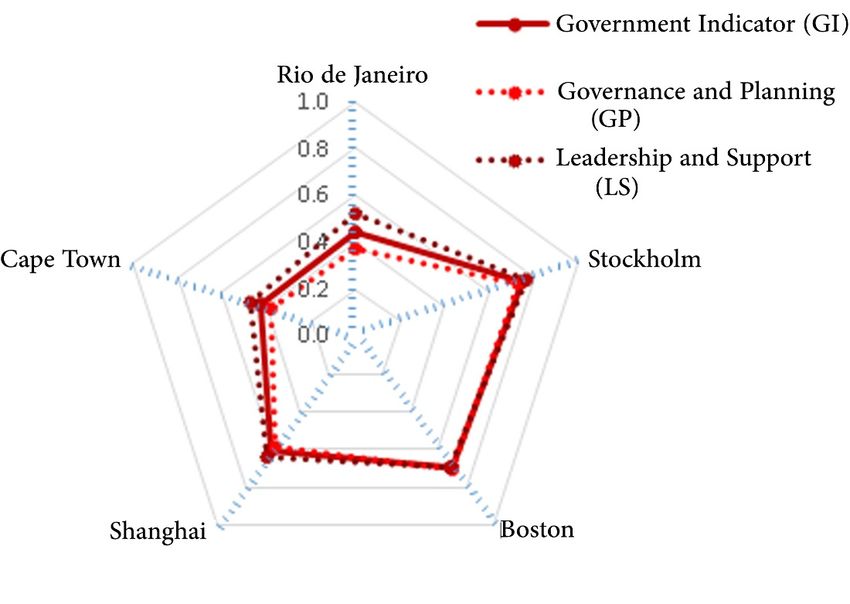
Sustainability 2020, 12, 823                                                                        3 of 25

Rio de Janeiro. Data-based modeling was applied from the knowledge-based urban development
(KBUD) methodology, in order to obtain a UDI for Rio and the other selected cities. As a scientific
contribution, this study will make it possible to observe the particularities of the urban functioning
of Rio de Janeiro compared to the other cities studied, as well as identifying the possibilities of
urban evolution.

2. Materials and Methods—Urban Development Index (UDI)
     In this section, the definition of the model structure to be used in this study must be defined as
a prior step for the modeling of the UDI. Once the structure is defined and based on Carrillo et al.,
2014 [36], the following steps are taken: (i) determination of the indicators that will provide the data
for the formulation of the UDI; (ii) selection of cities; (iii) data collection from primary and secondary
sources; (iv) use of statistical techniques for data normalization and scaling. The following items
describe in detail the definition of model structure and the next four steps of the methodology.

2.1. Definition of the Model Structure
      There are several models for quantifying urban development; however, many of these models
consider only a category of analysis or a limited number of them, being somewhat superficial to be
applied to the elaboration of a representative index [37]. In addition, one should choose a model that
can be used for all cities analyzed, regardless of their development pattern or geographic location. In
these terms, HDI is the most widespread and well-known index when comparing countries, cities or
localities in general [38]. This index was first created in 1990 and then modified in 2010, taking into
consideration three components: (i) life expectancy, (ii) education and (iii) gross domestic product
(GPD) per capita [39]. The index has several flaws, becoming redundant and generally presenting the
same result obtained with GDP per capita, as well as evaluating only three components that do not
faithfully reflect what is intended to be measured [40].
      In the literature, several studies presented some of the most popular indices in the scientific
academy and international bodies such as the City Development Index (CDI), the Global Cities Index
(GCI), the Global Power City Index (GPCI) and the Global City Competitiveness Index (GCCI). [41,42].
Some of these indices use models that encompass few or only one category of analysis and are too
low to analyze the urban performance of a city as a whole [37]. In these terms, this paper presents a
proposal for modeling a new index, absorbing the most relevant indicators and parameters to target
the scope of satisfactorily representing urban development from Rio de Janeiro. Therefore, the starting
point is to adopt the knowledge-based urban development assessment model (KBUD) [43–48], as it is
an indicator-based evaluation model that aims to measure the level of urban development, and can
undergo changes that meet the desired analysis [49].
      The KBUD methodology was applied based on the notion that, with the development of society
and the means of production, cities have goals to attract and retain knowledge resources, technologies,
patents, and productivity. In other words, the old model of the search for natural and physical means
(commodities, ores, raw materials) has been replaced with one that is focused on human capital,
services, and products with an informational origin of knowledge [49,50]. This model has been used in
cities that want to improve their infrastructure, attract more investments and provide prosperity and
high quality of life to their inhabitants. [51,52] Initially, KBUD was implemented as a form of urban
development in small cities only. Then, it was developed and applied with large global knowledge
bases such as Austin, Barcelona, Helsinki, Manchester, Melbourne and Singapore. Recently, there has
been an increase in the application of KBUD in emerging cities such as Beijing, Dubai, Istanbul, Kuala
Lumpur, Monterrey and Shenzhen [53–55].
      The KBUD methodology consists of an index composed of 32 singular indicators that form eight
groups and four categories. The 32 unique indicators measure features such as the analytical capacity,
comparability, geographic coverage, availability and relevance of data [50,52,54,55]. When collecting
the associated data, it was necessary to perform a normalization process of the singular indicators,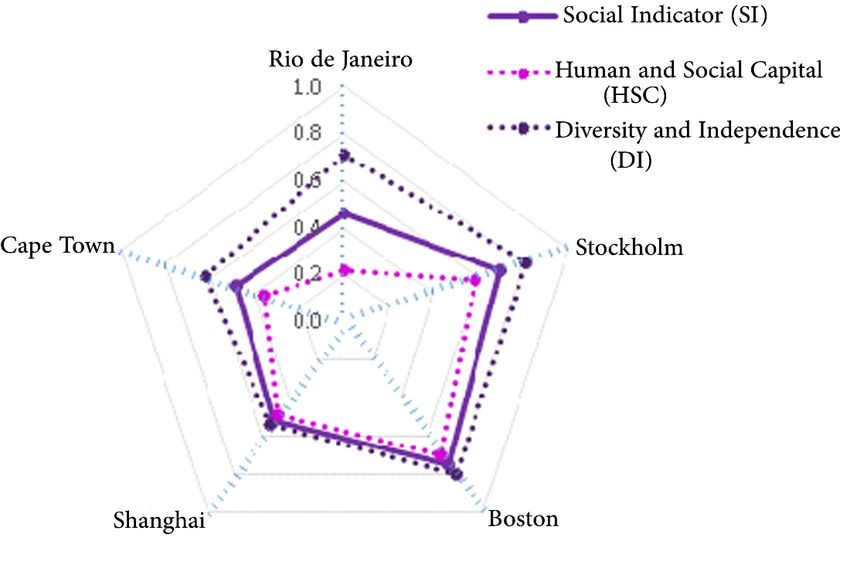
Sustainability 2020, 12, 823                                                                       4 of 25

since most data have different units and orders of magnitude and it was impracticable to apply a simple
arithmetic operation. Taking into consideration the already normalized indicators, an equal weight
was adopted for the eight groups of indicators, which were macroeconomics (ME), innovation and
technology (IT), human and social capital (HSC), diversity and independence (DI), sustainable urban
development (SUD), quality of life and place (QLP), governance and planning (GP), and leadership
and support (LS) [6]. In these terms, the ME group quantitatively represents the economy of the
examined city (i.e., the economic size of the city and its inhabitants worldwide) [56,57]. The IT group
illustrates the effort of the city to update and modernize its economic production [56,57]. The HSC
group seeks to measure the individual and collective development of the population [58,59]. The
DI group describes the characteristics of the populations of cities and the level of social imposition
applied by their governments [56,57]. The SUD group characterizes the attempt to create urban spaces
that remain functional and viable over time [56,57]. The QLP group assesses the urban conditions
that allow for good living and housing in the cities [56,57]. The GP group addresses the macro issues
of governance, attractiveness and strategic planning of each city [56,57]. The LS group analyzes the
mechanisms used by the national government of each city to ensure transparency and good economic
and social results [56,57]
      Similarly, equal weight was adopted for each group with each two forming the four categories
of mid-level indicators that refer to the four development pillars of KBUD, namely economy, society,
environment and governance [6,58,59]. Finally, equal weight is adopted for each category, which
together formed the overall high-level composite indicator [6].

2.2. Indicators Determination to Formulate the UDI
      In line with the KBUD approach presented in the previous subsection, the proposed model of this
study consisted of an index composed of the same 32 singular indicators. Singular indicators were
normalized and were then divided into eight groups, namely (ME), (IT), (HSC), (DI), (SUD), (QLP),
(GP), and (LS) [56].
      The presented eight groups were then paired in order to determine the four main categories of
analysis that provided one indicator and which referred to the three pillars of sustainable development
(economy, society, and environment), as well as the fourth pillar (government). Overall, the indicators
were economy and technology, society and culture, urban and environmental, and government [60].
Each field of analysis provided an independent indicator: economic indicator (EI), social indicator (SI),
environmental indicator (EnI) and government indicator (GI) [60]. The EI encompasses the economic
and technological fields. This indicator represents quantitatively and qualitatively the capacity of each
city to generate economy and innovation, leveraging its financial and technological power [60]. The
SI represents the social and cultural fields, and refers to the characteristics of the population of each
city, taking into consideration its intellectual and cultural productive capacity and its diversified and
sustainable development [60]. The EnI characterizes the urban structuring and organization, involving
the environmental and housing sustainability of cities [60]. The GI indicates the level of effectiveness
and transparency of government institutions in securing the means for a well-functioning city [60].
Finally, a single global index was composed by adopting an equal weight for each of the four categories,
which resulted in the UDI [60].

2.3. City Selection
      The use of the term benchmarking may be beneficial for a better understanding of the index,
as it provides a reference point for the interpretation of measured results [23]. More appropriately,
the term city benchmarking was used, which was defined as a “system of socioeconomic indicators
that constitute a control panel in the diagnostic phase of the urban strategic planning process” [61].
Considering such comparative analysis, it was possible to identify the key elements, peculiarities, and
deficits that will help define the future strategy to be implemented in urban development [62]. Thus, a
city benchmarking with five other cities was performed in order to obtain a more accurate analysis of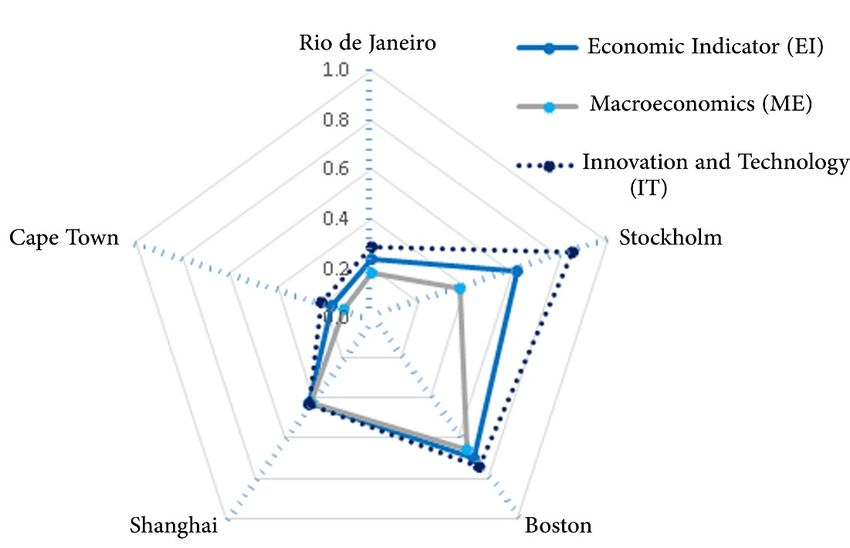
Sustainability 2020, 12, 823                                                                                 5 of 25

the values found for the indicators and the UDI of the city of Rio de Janeiro, aiming at obtaining the
city position in relation to the others.

2.4. Collection of Data
     The next step after selecting cities was to collect data from the 32 indicators using primary and
secondary sources. At this level of the analysis, Table 1 presents the eight indicator groups. In addition,
Table 1 illustrates the four main categories of analysis that provided independent indicators such
as (EI), (SI), (EnI) and (GI), as well as their 32 unique indicators. Table 2 provides an explanatory
description of each of the 32 singular indicators and bibliographic references.

  Table 1. Description of the eight indicator groups, four analysis categories, and their 32 singular indicators.

          Analysis Categories                  Indicator Groups                     Singular Indicators
                                                                                            GDP
                                                                                  International companies
                                             macroeconomics (ME)
                                                                                 Foreign direct investment
                                                                                   Urban competitiveness
        economic indicator (EI)
                                                                                       Innovation
                                                                                Research and Development
                                        innovation and technology (IT)
                                                                                        Smart city
                                                                                          Patents
                                                                                         Education
                                                                                        Universities
                                        human and social capital (HSC)
                                                                                          Health
                                                                                        Connectivity
           social indicator (SI)
                                                                                       Immigration
                                                                                         Freedom
                                       diversity and independence (DI)
                                                                                Socioeconomic Dependence
                                                                                      Unemployment
                                                                                   Environmental impact
                                        sustainable urban development                  Sustainability
                                                     (SUD)                            Urban density
                                                                                      Urban mobility
    environmental indicator (EnI)
                                                                                       Quality of life
                                                                                       Cost of living
                                         quality of life and place (QLP)
                                                                                        Residency
                                                                                          Safety
                                                                                Government Effectiveness
                                                                                  Electronic Governance
                                        governance and planning (GP)
                                                                                         Tourism
                                                                               Urban planning and resilience
      government indicator (GI)
                                                                                        Corruption
                                                                                            Taxes
                                          leadership and support (LS)
                                                                                          Inflation
                                                                                       Social equality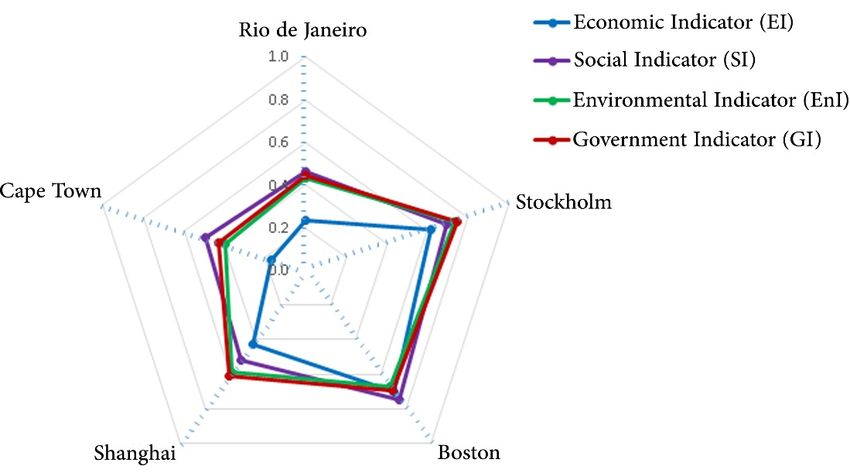
Sustainability 2020, 12, 823                                                                                    6 of 25

                 Table 2. Description of the 32 singular indicators and their bibliographic references.

       Singular Indicators                              Description and Bibliographic Reference
 GDP                                Gross domestic product (GDP) per capita in purchasing power parities in USD [63]
 International companies            Number of headquarters of the world’s 500 largest companies by market value [64]
 Foreign direct investment          List of international participation in foreign direct investment [65]
 Urban competitiveness              Global Urban Competitiveness Index Score [66]
 Innovation                         Global Innovation Index Score [67]
 Research and Development           Share of GDP for research and development [68]
 Smart city                         Smart cities global index score [69]
 Patents                            Patent Cooperation Treaty patent applications per million inhabitants [70]
 Education                          The ratio of public spending on education to GDP [71]
 Universities                       University ranking best placed international ranking [72]
 Health                             Value in International Health Index [73]
 Connectivity                       National inhabitants with fixed broadband access per 100 inhabitants [74]
 Immigration                        International Ranking Score in the Immigration Tolerance Category [75]
 Freedom                            International Personal Freedom Index Score [76]
 Socioeconomic Dependence           The ratio between the elderly and the economically productive population [77]
 Unemployment                       Unemployment Rate [78]
 Environmental impact               CO2 emissions in metric tons per capita [79]
 Sustainability                     Global ranking of sustainable cities [80]
 Urban density                      Population density in inhabitants per km2 [81]
 Urban mobility                     Global Sustainable Urban Mobility Ranking [82]
 Quality of life                    International Ranking in Quality of Life [83]
 Cost of living                     International Ranking on Cost of Living [84]
 Residency                          Accessibility to the housing by the international index [85]
 Safety                             International Index on Personal Safety [86]
 Government Effectiveness           Government Effectiveness [87]
 Electronic Governance              International Electronic Government Index Score [88]
 Tourism                            Number of international visitors per year [89]
 Urban planning and resilience      Ranking in International Index for Urban Planning and Resilience [90]
 Corruption                         International Corruption Index Score [91]
 Taxes                              Percentage of a tax burden on GDP [92]
 Inflation                          Inflation Rate [93]
 Social equality                    Income inequality level in gini coefficient [94]

2.5. Data Normalization
      Statistical normalization was performed to scale values in relation to the maximum and minimum
values available in the research dataset. Thus, it was expected to obtain a numerical value that
represented the performance of cities in terms of the full sampling available. A value of (1) represented
that the city occupies the best position, or holds the best result for that indicator worldwide, or at least
among all the cities analyzed in the sources. Similarly, a value of (0) corresponded to the worst possible
performance for that singular indicator. The data normalization was conducted in accordance with
Equation (1), as follows:
                                                     I gross − Imin
                                            Inorm =                                                      (1)
                                                     Imax − Imin
where:

Inorm —normalized value of the singular indicator;
Igross —gross value;
Imin —minimum value among all present in the consulted source;
Imax —maximum value among all present in the consulted source.

     The direction of some indicators was evaluated, and the normalized value of (1) was subtracted
for the negative or ranking indicators. Twelve indicators were adjusted, namely socioeconomic
dependence, unemployment, environmental impact, sustainability, urban density, urban mobility,
quality of life, cost of living, urban planning and resilience, taxes, inflation, and social equality. For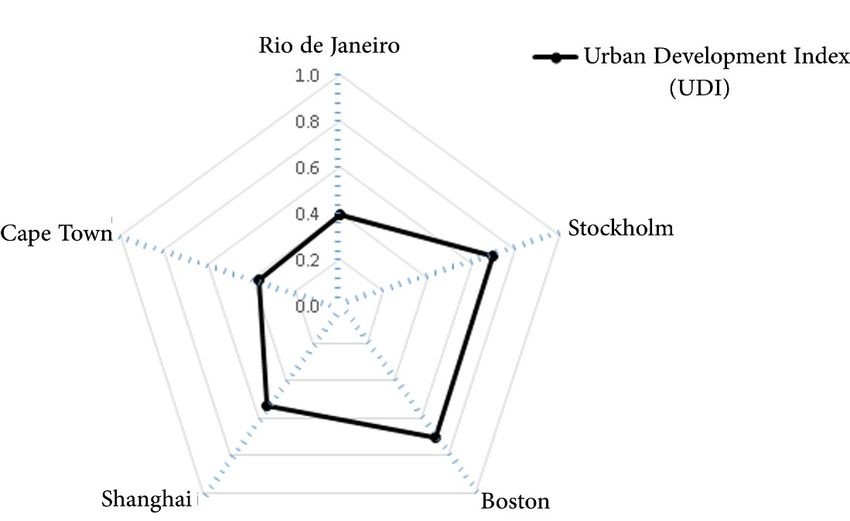
Sustainability 2020, 12, 823                                                                          7 of 25

the cases of indicators of negative character or denoting rankings, normalization was conducted via
Equation (2), as follows:
                                                    I gross − Imin
                                        Inorm = 1 −                                             (2)
                                                    Imax − Imin
where:

Inorm —normalized value of the singular indicator;
Igross —gross value;
Imin —minimum value among all present in the consulted source;
Imax —maximum value among all present in the consulted source.

     After normalizing the 32 indicators, equal weight was adopted for all indicators that formed the
lower-level eight groups of indicators already cited, from an arithmetic average of four indicators.
Similarly, an equal weight was adopted for each group which formed the mid-level four categories of
indicators already mentioned. Finally, equal weight was adopted for each category, which together
formed the higher-level global composite indicator, giving the UDI measure, as presented in Equation
(3).
                                                   n
                                                  X   CATi
                                           UDI =                                                   (3)
                                                        n
                                                     i=1

where:

UDI—value of the Urban Development Index;
CATi —categories that make up the UDI;

3. Results
      Benchmarking Rio De Janeiro against five other cities was performed in order to obtain a more
accurate analysis of the values found for the UDI. The first criteria for choosing cities was their
requirement to be global cities [95], and their geographical position. This work proposes selecting
cities with very distinct locations, which in themselves have unique characteristics, cultures, and
particularities, as well as different geographical positions. Two cities that have a very high urban
development in comparison to Rio de Janeiro were considered, with the cities being amongst ones
with the highest urban performance in the world, namely Stockholm in Sweden and Boston in the
United States. These cities will be referred to as the “model cities”. Two cities that have development
characteristics comparable to Rio de Janeiro were filtered in a preliminary analysis. They are important
cities of emerging countries and they include Shanghai in China and Cape Town in South Africa [96];
these cities are referred to as “comparative cities”. Considering the criteria adopted, the UDI of Rio de
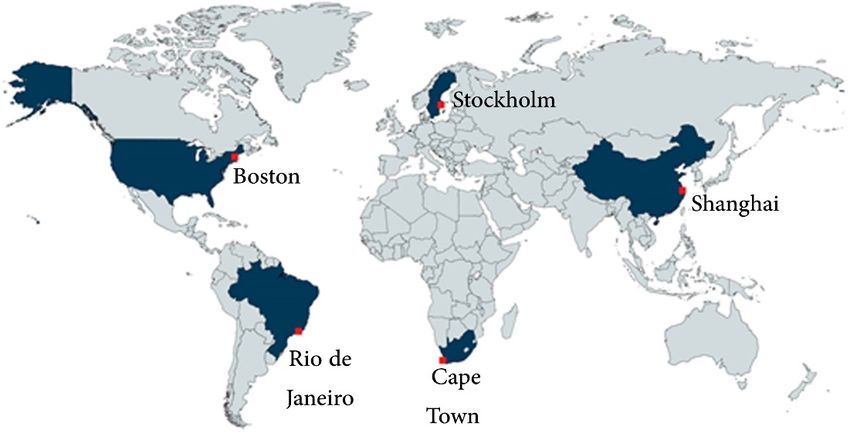
Janeiro was expected to be below the model cities and to rank among the comparative cities. Figure 1
illustrates the countries of origin of the cities studied and locates them geographically.
      Defining the structure of the adopted model, as well as the selection of the examined five cities
could facilitate the collection of data for 32 indicators in the five examined cities. The gross values were
then obtained, which were normalized according to Equations (1) and (2) to homogenize the quantities
and to scale the values obtained for the examined cities. Then, the indicators were joined to form
the lower-level eight groups and four mid-level categories of analysis, in addition to the high-level
composite UDI, which measures the various fields of urban functionality considered. The results of the
analysis are presented in absolute values, rankings, and radar charts, facilitating the visualization and
interpretation of the information.
      Some characteristics and primary information of the analyzed cities are presented in Table 3. The
cities were ranked based on their national rankings in the latest HDI update [19].
were then obtained, which were normalized according to Equations (1) and (2) to homogenize the
quantities and to scale the values obtained for the examined cities. Then, the indicators were joined
to form the lower-level eight groups and four mid-level categories of analysis, in addition to the high-
level composite UDI, which measures the various fields of urban functionality considered. The results
of the analysis
Sustainability 2020, 12,are
823 presented in absolute values, rankings, and radar charts, facilitating8 of
the25
visualization and interpretation of the information.
Figure
Figure 1.
1. Cities
Citiesconsidered
consideredin
inthe
theanalysis.
analysis.
Table 3. Primary characteristics of the studied cities.
Some characteristics and primary information of the analyzed cities are presented in Table 3.
The cities wereCity
ranked based onCountry
their national rankings
Populationin the latest
AreaHDI
(km2update
) [19].
HDI Ranking
Rio de Janeiro Brazil 11,990,000 1.917 79◦
Table 3. Primary characteristics of the studied cities.
Stockholm Sweden 1,565,000 414 7◦
Boston United States 7,315,000 9.189 13 ◦
City Country Population Area (km2) HDI Ranking◦
Shanghai China 24,115,000 4.015 86
RioTown
Cape de Janeiro SouthBrazil
Africa 11,990,000
3,980,000 1.917 816 79° 113◦
Stockholm Sweden 1,565,000 414 7°
Boston United States 7,315,000 9.189 13°
3.1. Presentation of Absolute Values of 32 Singular Indicators
Shanghai China 24,115,000 4.015 86°
The practical
Capedescription
Town of theAfrica
South 32 singular indicators in the
3,980,000 816five examined cities is presented in
113°
Table 4, considering the maximum and minimum value for each indicator. It is noteworthy to point
out Presentation
3.1. that all dataofwere obtained
Absolute Valuesfrom
of 32the references
Singular indicated in Table 2. However, a clear difference
Indicators
can be observed between the values of model cities and the values of comparative cities. The former
The practical description of the 32 singular indicators in the five examined cities is presented in
generally have better values for the indicators studied. For the maximum and minimum values, it
Table 4, considering the maximum and minimum value for each indicator. It is noteworthy to point
is important to declare that outliers—atypical values very discrepant in relation to the others - were
out that all data were obtained from the references indicated in Table 2. However, a clear difference
disregarded so as not to impair the normalization process.
can be observed between the values of model cities and the values of comparative cities. The former
generally have better values for the indicators studied. For the maximum and minimum values, it is
important to declare that outliers—atypical values very discrepant in relation to the others - were
disregarded so as not to impair the normalization process.Sustainability 2020, 12, 823 9 of 25
Table 4. Absolute values of the 32 maximum and minimum indicators.
Indicators/Cities Rio de Janeiro Stockholm Boston Shanghai Cape Town Max. Min.
GDP 14,176.0 56,250.0 76,204.0 24,065.0 14,086.0 93,849.0 4036.0
International companies 2 1 2 7 0 20 0
Foreign direct investment 1.61% 1.31% 14.18% 4.16% 0.46% 15.60% 0.00%
Urban competitiveness 0.42 0.79 0.81 0.84 0.33 1.00 0.00
Innovation 41 48 53 47 37 56 16
Research and
1.17% 3.16% 2.74% 2.11% 0.73% 4.30% 0.07%
Development
Smart city 3.94 6.95 6.81 4.6 3.46 7.24 2.76
Patents 3.45 320.11 173.14 15.2 6.26 335.16 0
Education 5.90% 7.70% 4.90% 4.00% 6.00% 14.60% 0.60%
Universities 30.30 59.30 100.00 77.60 43.90 100.00 23.50
Health 43.33 66.01 76.46 60.45 72.13 85.45 37.45
Connectivity 13.70 37.70 33.85 26.86 2.99 50.25 0.00
Immigration 7.20 8.70 8.50 2.80 6.30 10.00 0.00
Freedom 69.39 88.07 78.30 37.88 77.77 92.07 25.19
Socioeconomic
43.80 58.50 51.20 37.70 52.50 17.40 111.60
Dependence
Unemployment 13.10% 6.30% 4.10% 3.90% 27.50% 0.30% 50.00%
Environmental impact 5.03 5.29 19.9 8.49 9.49 0.32 54.41
Sustainability 84 2 22 76 97 1 100
Urban density 6300 3700 800 6000 4900 500 47,400
Urban mobility 63 9 46 27 66 1 100
Quality of life 118 23 35 103 94 1 231
Cost of living 99 89 70 7 170 1 209
Residency 0.34 1.14 1.53 0.29 0.9 9.87 0.03
Safety 22.22 52.61 67.68 46.33 30.03 88.26 14.82
Government
41.80 96.20 92.80 68.30 65.40 100.00 0.00
Effectiveness
Electronic Governance 0.73 0.89 0.88 0.68 0.66 0.92 0.06
Tourism 1370 2080 1740 6120 1370 21,470 710
Urban planning and
126 16 21 57 143 1 165
resilience
Corruption 37 84 75 41 43 89 9
Taxes 34.40% 49.80% 26.00% 20.10% 26.90% 1.40% 64.07%
Inflation 4.17% 1.60% 2.10% 1.80% 5.40% −0.90% 41.50%
Social equality 48.70% 24.90% 47.00% 42.20% 62.50% 23.70% 63.20%
3.2. Presentation of the Normalized Values of the 32 Singular Indicators
The normalization of the values in Table 4 is presented in Table 5, according to Equations (1) and (2).
Attention should be given to the character of the discussed indicators, whose lower absolute
numbers represent a better performance (rankings or negative indicators); these should have their
normalization adjusted so that a lower gross value sets a higher normalized value. Due to the applied
normalization, considering the maximum and minimum values among all available sources, and not
only among the analyzed cities, there are also parameters whose values for the five studied cities are
totally low or high. This means that for that parameter, all five cities are far from extreme values. This
setting is easily observed in the parameter “World Companies”, where the highest normalized value is
only (0.350). This is due to the fact that the major world cities—New York, Los Angeles, London, Paris,
Tokyo and Beijing—which have the largest headquarters of these companies, are not present in the
analysis [95].
Similarly, in the “housing” category, all cities have low values; that is, all cities are considered
expensive to live in, a situation already expected because they are metropolises with high economic
prospects. In contrast, the five cities obtained good values in the parameters “Urban density” and
“Electronic governance”. The first is due to the fact that no city analyzed is part of South Asia, the
region with the worst urban density [82]. The second is related to the fact that all cities are part of
developed or emerging countries, while the source researched has data from various countries of the
world, including highly underdeveloped nations such as Central African countries [88].Sustainability 2020, 12, 823 10 of 25
Table 5. Normalized values of the 32 indicators.
Indicators/Cities Rio de Janeiro Stockholm Boston Shanghai Cape Town
GDP 0.113 0.581 0.804 0.223 0.112
International companies 0.100 0.050 0.100 0.350 0.000
Foreign direct investment 0.103 0.084 0.909 0.267 0.029
Urban competitiveness 0.424 0.786 0.812 0.837 0.328
Innovation 0.625 0.800 0.925 0.775 0.525
Research and Development 0.260 0.731 0.632 0.482 0.157
Smart city 0.263 0.935 0.904 0.411 0.156
Patents 0.010 0.955 0.517 0.045 0.019
Education 0.379 0.507 0.307 0.243 0.386
Universities 0.089 0.468 1.000 0.707 0.267
Health 0.123 0.595 0.813 0.479 0.723
Connectivity 0.273 0.750 0.674 0.534 0.060
Immigration 0.720 0.870 0.850 0.280 0.630
Freedom 0.661 0.940 0.794 0.190 0.786
Socioeconomic Dependence 0.720 0.564 0.641 0.785 0.627
Unemployment 0.742 0.879 0.924 0.928 0.453
Environmental impact 0.913 0.908 0.638 0.849 0.830
Sustainability 0.162 0.990 0.788 0.242 0.030
Urban density 0.876 0.932 0.994 0.883 0.906
Urban mobility 0.374 0.919 0.545 0.737 0.343
Quality of life 0.491 0.904 0.852 0.557 0.596
Cost of living 0.529 0.577 0.668 0.971 0.188
Residency 0.032 0.113 0.152 0.026 0.088
Safety 0.101 0.515 0.720 0.429 0.207
Government Effectiveness 0.418 0.962 0.928 0.683 0.654
Electronic Governance 0.788 0.969 0.956 0.728 0.705
Tourism 0.032 0.066 0.050 0.261 0.032
Urban planning and resilience 0.238 0.909 0.878 0.659 0.134
Corruption 0.350 0.938 0.825 0.400 0.425
Taxes 0.473 0.228 0.607 0.702 0.593
Inflation 0.899 0.934 0.929 0.941 0.854
Social equality 0.367 0.970 0.410 0.532 0.018
3.3. Results of the Eight Indicators Groups
Starting from the normalized values, an arithmetic average was made for every four indicators,
forming the eight analysis groups; ME, IT, HSC, DI, SUD, QLP, GP, and LS. These values are presented
in Table 6.
Table 6. Indicators of the eight Groups.
Indicators/Cities Rio de Janeiro Stockholm Boston Shanghai Cape Town
ME 0.185 0.375 0.656 0.419 0.117
IT 0.290 0.855 0.744 0.428 0.214
HSC 0.216 0.580 0.698 0.491 0.359
DI 0.711 0.813 0.802 0.545 0.624
SUD 0.581 0.937 0.741 0.678 0.528
QLP 0.288 0.527 0.598 0.496 0.270
GP 0.369 0.726 0.703 0.582 0.381
LS 0.522 0.767 0.693 0.644 0.472
The output results of Table 6 can be summarized as follows:
• For the ME group, the scarcity of headquarters of world companies present in the studied cities
compared to the main world cities decreases the group indicator values for all. Boston ends upSustainability 2020, 12, 823 11 of 25
having the best result largely because of the large economy of the USA [97], which guarantees
high values in foreign direct investment and per capita GDP indicators.
• For the IT group, Stockholm presents itself as the best performing city, with high indicators in
all four parameters. It is essential that cities that have not performed well in macroeconomic
measures, and therefore do not yet have a solid economic base, try to improve their economic
development by investing in innovation and technology.
• For the HSC group, the group indicator is broadly aligned with the HDI [19], with the exception
of Boston, which has high performances due to the university indicator.
• For the DI group, Stockholm is the most diverse and independent city among the five cities.
• For the SUD group, Stockholm presents the best balance between sustainable urban land use and
environmental impacts. Even on many islands, Stockholm has an organized and connected urban
network and a clean energy matrix [98].
• For the QLP group, the city of Boston has the best result, which also reflects a good economy [97].
• For the GP group, the Stockholm group stands out for its good strategic planning [98].
• For the LS group, once again the excellent performance of Stockholm is highlighted, which despite
not being the leading city, presents excellent values considering its poor performance due to its
high taxes, characteristic of the welfare state, and Scandinavian social welfare [99].
3.4. Results of the four Indicators Category
The eight groups were then joined in pairs, determining the four main categories of analysis:
economic-technological, socio-cultural, urban-environmental and governmental in order to obtain one
indicator for each: EI, SI, ENI, and GI, respectively, as presented in Table 7.
Table 7. Indicators of the four Categories.
Indicators/Cities Rio de Janeiro Stockholm Boston Shanghai Cape Town
EI 0.237 0.615 0.700 0.424 0.166
SI 0.463 0.697 0.750 0.518 0.491
EnI 0.435 0.732 0.670 0.587 0.399
GI 0.446 0.747 0.698 0.613 0.427
The output results of Table 7 can be summarized as follows:
• For the EI measure, Boston achieves the best result among the five cities, followed by Stockholm,
driven by the major USA national economies [97], and Swedish technological and innovative
pioneerism [70], respectively.
• For the SI measure, it highlights an unexpected low for Stockholm city, where the presence of the
Scandinavian welfare state would indicate good results for this category [98].
• For the EnI measure, it characterizes the urban structuring and organization involving the
environmental and housing sustainability of cities. For this category, the best performing city was
Stockholm. The worst places were Rio de Janeiro and Cape Town, respectively.
• For the GI measure, it indicates the level of effectiveness and transparency of government
institutions in securing the means for a well-functioning city. Because of this, model cities have
high values, with an average of 0.722, while comparative ones naturally have lower values, with
an average of 0.520.
3.5. Determination of Urban Development Index (UDI)
The UDI for each examined city is the result of grouping the four categories presented in Table 7.
Hence, the final values obtained for the composite indices are shown in Table 8, which includes three
rows. The ranking positions in the HDI of these cities and the final ranking in relation to the HDI and
UDI are presented, in order to assist the observation of how the cities are positioned among themselves.Sustainability 2020, 12, 823 12 of 25
Table 8. Urban Development Index (UDI).
Indicators/Cities Rio de Janeiro Stockholm Boston Shanghai Cape Town
Indicator UDI 0.395 0.698 0.705 0.535 0.371
Final Ranking UDI 4 2 1 3 5
Ranking Position HDI 79◦ 7◦ 13◦ 86◦ 113◦
Final Ranking HDI 3 1 2 4 5
The first conclusion is the non-confirmation of the relationship between the UDI and the HDI. The
values do not follow the same linearity as the HDI. Stockholm, for example, has a worse performance
in comparison to Boston for the UDI, while it has the highest HDI compared to the same city, ranking
7th worldwide [19]. Additionally, Shanghai performs well below the model cities, but well above Cape
Town and Rio de Janeiro.
Rio de Janeiro, the reference city of the work, ranks as the second to last among the five examined
cities, obtaining a better income only than the South African city of Cape Town. It should also be
pointed out that the values do not represent a scale where a 1000 UDI denotes the city with the
largest urban development in the world and one with a value of 0.000, the worst. Such conditions are
impossible, since for a city to reach the UDI value of 1000 (0.000), it should be the best/worst of all
sources, for the 32 indicators.
4. Discussion
Having all the results for the singular indicators, groups, categories, and UDI facilitates interpreting
and discussing the indicators for the five cities and determining what each city should look for to
improve its urban performance. As this work focuses on the city of Rio de Janeiro, the results are
shown in radar graphs for an easy interpretation and comparison of the outputs. Hence, the two model
cities will be presented on the right of the graphs, the two comparative cities will be presented on the
left of the graphs, and Rio de Janeiro is presented in the center of the graphs.
4.1. Economic Indicator (EI)
The results for the economic indicator and the related groups are illustrated in Figure 2, which
shows that the value of the ME group in the examined cities is lower than IT. This difference is found to
be much smaller in comparative cities compared to model cities. This is due to the representativeness
of each group. ME refers to the economic quantity of cities, and how much that city and its country
move towards the world economy. IT represents the economic quality of the examined cities and the
ability to use their knowledge base to optimize their economical production. High investment in IT
tends to represent an increase in EM in the long term [6]. Thus, cities with a low ME value should
focus their investments on technological and innovative knowledge, aiming to improve their economic
performance. Similarly, cities with high macroeconomic levels must also maintain good levels in IT to
conserve their positions.
Higher values for ME are obtained from major cities in countries of high attractiveness and
international financial movements, such as the five major cities in the world [95]: New York, London,
Tokyo, Los Angeles and Paris. This condition is easily observed when comparing the values obtained
for Boston, an American city with a strong world economy, and cities in developed countries that
have a smaller national economy, such as Stockholm [97]. Nevertheless, Boston is not the main city of
its country economically [100], which justifies the low absolute values obtained by all cities (Boston
achieves the best performance among cities with a value of (0.656). It is also verified that although the
national greatness influences the indicator, the economic importance of the city individually in the
global context is what governs it. Rio de Janeiro is just ahead of Cape Town, being the second to last of
all analyzed.
When analyzing the values for IT, as presented in Figure 2, the great performance of Stockholm is
highly realized, with a value of (0.855). This comes back to the fact that this city is among the mostexamined cities and the ability to use their knowledge base to optimize their economical production.
High investment in IT tends to represent an increase in EM in the long term [6]. Thus, cities with a
low ME value should focus their investments on technological and innovative knowledge, aiming to
improve their economic performance. Similarly, cities with high macroeconomic levels must also
maintain
Sustainabilitygood
2020, levels
12, 823 in IT to conserve their positions. 13 of 25
Higher values for ME are obtained from major cities in countries of high attractiveness and
international financial movements, such as the five major cities in the world [95]: New York, London,
innovative and technological cities in the world [101,102]. The Swedish capital seeks to improve its
Tokyo, Los Angeles and Paris. This condition is easily observed when comparing the values obtained
economy and urban competitiveness by investing in new patents and research, presenting elements that
for Boston, an American city with a strong world economy, and cities in developed countries that
make up a smart city [103]. In this group, the discrepancy between the model and comparative cities is
have a smaller national economy, such as Stockholm [97]. Nevertheless, Boston is not the main city
more evident, presenting averages of (0.658) and (0.295), respectively. This scenario is discouraging
of its country economically [100], which justifies the low absolute values obtained by all cities (Boston
for comparative cities and Rio de Janeiro, as they have low values in both groups in this category.
achieves the best performance among cities with a value of (0.656). It is also verified that although
Such cities should intensify their investments in innovation, technology, research, and development
the national greatness influences the indicator, the economic importance of the city individually in
in order to attract more foreign investments and retain human capital, as well as contributing to
the global context is what governs it. Rio de Janeiro is just ahead of Cape Town, being the second to
greater economic production that guarantees more financial inputs to be invested in other areas of
last of all analyzed.
urban development.
Figure 2.
Figure Comparative radar
2. Comparative radar chart
chart for
for the
the economic
economic indicator
indicator (EI).
(EI).
At the analyzing
When compositethe category,
valuesBoston and
for IT, as Stockholm
presented in illustrate the great
Figure 2, the best results, while Rio
performance de Janeiro
of Stockholm
outperforms
is only with
highly realized, CapeaTown.
value of The main This
(0.855). strengths
comesofback
the city arefact
to the due to national
that indicators,
this city is among thedriven
most
innovative and technological cities in the world [101,102]. The Swedish capital seeks to [98]
by the Brazilian position in relation to other emerging economies such as South Africa and the
improve its
size of the city and its population [81]. The city of Rio de Janeiro has intermediate
economy and urban competitiveness by investing in new patents and research, presenting elements values in foreign
investment,
that make up direct research
a smart and development,
city [103]. In this group,and theworldwide
discrepancy enterprises.
between the Furthermore,
model andRio de Janeiro
comparative
should pursue a policy similar to Stockholm city by increasing investment in research
cities is more evident, presenting averages of (0.658) and (0.295), respectively. This scenario is and development,
patents and fostering
discouraging entrepreneurship
for comparative cities and[104],
Rio dein Janeiro,
order to asattract
they ahave
widelowrange of foreign
values in bothinvestment and
groups in this
headquarters of major world companies. This could, in turn, guarantee better
category. Such cities should intensify their investments in innovation, technology, research, and GPD values, increasing
the urban competitiveness
development of the city
in order to attract itself.
more foreign investments and retain human capital, as well as
contributing to greater economic production that guarantees more financial inputs to be invested in
4.2. Social Indicator (SI)
other areas of urban development.
Thethe
At results obtained
composite for theBoston
category, social indicator and itsillustrate
and Stockholm groups forthecities can be seen
best results, whileinRio
Figure 3. The
de Janeiro
two groups forming the category have discrepant values, with HSC having
outperforms only Cape Town. The main strengths of the city are due to national indicators, driven values less than DI for
all the
by cities. The Brazilian
Brazilian positionfragility
in relationin promoting a good economies
to other emerging quality of life
suchand
as social
South development
Africa [98] andtothe its
inhabitants is marked when analyzing the values obtained for HSC, presenting the worst results among
the cities (0.216). Rio de Janeiro has poor levels of health [73,105,106], allied to a weak distribution of
connectivity and broadband access to its population that justifies this position [74,107].
Education and university indicators are inversely related, as presented in Figure 3. For instance,
cities with higher values for universities already have a well-defined and solid educational base,
needing smaller investments in education to improve their education, such as Boston and Shanghai;
for these cities, efforts are instead focused on maintaining their high levels. Stockholm stands out in
its quest to increase its performance by gaining greater international recognition for its universities,among the cities (0.216). Rio de Janeiro has poor levels of health [73,105,106], allied to a weak
distribution of connectivity and broadband access to its population that justifies this position [74,107].
Education and university indicators are inversely related, as presented in Figure 3. For instance,
cities with higher values for universities already have a well-defined and solid educational base,
needing smaller
Sustainability 2020, 12,investments
823 in education to improve their education, such as Boston and Shanghai; 14 of 25
for these cities, efforts are instead focused on maintaining their high levels. Stockholm stands out in
its quest to increase its performance by gaining greater international recognition for its universities,
maintaining
maintainingan aninvestment
investmentof of7.70%
7.70%of ofnational
nationalGDPGDPin ineducation
education[71]. [71]. Unfortunately,
Unfortunately,Rio RiodedeJaneiro
Janeiro
needs a great effort, since it has the worst performance in the universities indicator,
needs a great effort, since it has the worst performance in the universities indicator, with an extremely with an extremely
low
lowscore
scoreof of(0.089),
(0.089),while
whileBrazilian
Braziliannational
nationalinvestment
investmentin ineducation
education(5.90%
(5.90%of ofGDP)
GDP)isisonly
onlyslightly
slightly
above
above the average of 5.26% of the other examined cities [71]. Additionally, health incentiveswere
the average of 5.26% of the other examined cities [71]. Additionally, health incentives were
undermined
undermined by by the crisis in
the crisis in the
thecity
cityofofRio
RiodedeJaneiro,
Janeiro,taking
taking into
into consideration
consideration that,
that, in 2016,
in 2016, the the
city
city had the worst percentage investment in the country [108]. Considering
had the worst percentage investment in the country [108]. Considering the ID group, the value for the ID group, the value
for
thethe Brazilian
Brazilian city
city confirms
confirms the thesolid
soliddemocracy
democracythat thatBrazil
Brazilpresents
presents inin relation
relation to
to other
other emerging
emerging
countries
countries[109].
[109]. Moreover,
Moreover,the themain
mainadvantage
advantageof ofthe
thecountry
countryisisthethelow
lowsocioeconomic
socioeconomicdependence
dependence
experienced
experienced in in comparison
comparison with with thethe more
more developed
developed countries,
countries, especially
especially in in Europe,
Europe, which
which are are
undergoing
undergoing an aging process of their population [110]. However, the country has a young and
an aging process of their population [110]. However, the country has a young and
economically
economically activeactive population
population and and aa high
highpercentage
percentageof ofunemployment
unemployment levels levels[75],
[75],which
whichcould
could
influence the use of the productive force in
influence the use of the productive force in their cities.their cities.
Figure 3. Comparative radar chart for the social indicator (SI).
Figure 3. Comparative radar chart for the social indicator (SI).
Comparing the Brazilian city with Shanghai, one can see that the reality of Brazil and China are
quite different. The Chinese city has high values in HSC and low values in DI, while the situation is
totally the opposite in Brazil. This is due to the stricter character of the Chinese government, which,
although more interventionist and less liberal [109], promotes good levels of education, health, and
connectivity to its population. On the other side, the Brazilian government guarantees a broader
democracy, with great freedom and acceptance of immigrants, but with low levels of human and social
development. For the composite category, Boston leads the group, whereas Rio de Janeiro is the worst
performer, followed by Cape Town and Shanghai. The lessons learned from this category interfere with
the directions to be taken in Brazil, where greater investment should be made in health and education,
promoting improvements in the public health network and enabling better performance of national
universities, technically empowering the population. Allied to this should come incentives to industry,
commerce and service, taking advantage of the country’s large production mass in order to leverage its
economy and better remunerate its population. Democratic foundations must be maintained, with
permissive immigration policies.
4.3. Environmental Indicator (EnI)
The results obtained for the environmental indicator and its groups for cities can be seen in
Figure 4, which illustrates that the value of the SUD group in all cities is higher than the QLP group.Sustainability 2020, 12, 823 15 of 25
Analyzing the values
Sustainability 2020, 12, 823 of the indicators that form the SUD group shows that there is a reversal 16 of of
26
positions related to the most developed and emerging countries for the environmental impact indicator.
increasing
The model the costs
cities, of the
being in city as a whole
developed without
countries, bringing
absorb the qualitative returns by
impacts generated to the
thepopulation.
large industry Highof
costs countries,
their could leadpresenting
to clutteredmuch land higher
occupation and inappropriate
greenhouse gas emission site construction,
levels comparedwhich to thein someof
values cases
the
leads to slumcities.
comparative processes. Rio de
The only Janeiro must
exception tackle its which
is Stockholm, securityhasproblems
a modern, as aclean
matter of priority.
industry with The
few
city is considered one of the most dangerous in the world [119] and its quality
environmental impacts [111]. The city of Rio de Janeiro appears as a leader in this singular indicator. of life is largely
influenced
This comes by this
back toold
the problem, confirmed
fact that the by its worst performance
clean hydropower-based in theinindicator,
energy matrix with
Brazil [112] anda value of
policies
(0.101). Cerqueira (2018) [120] highlights some solutions that can be adopted in
to reduce greenhouse gas emissions [113] have boosted the performance of the Brazilian cities. Despite the city to make it
safer. The researcher suggests changes to be made to the police, making it smarter
the good values for environmental impact, Brazilian cities fail to perform well in the sustainability and information-
driven, such
indicator. Onasthe
the other
creation of anthe
hand, interconnected
model cities police system,
are able execution
to balance theirbased on strategic
environmental planning,
impacts by
and improved counterintelligence and homicide
investing in smart technologies and sustainable urban elements. investigation services.
Figure 4. Comparative radar chart for the environmental indicator (EnI).
For the group
4.4. Government indicators
Indicator (GI) for density and urban mobility, Boston stands out more than the others.
While Rio de Janeiro and Cape Town are generally very populous cities [81] and with poorly developed
urbanThe resultsinfrastructures,
mobility obtained for thewithgovernment indicator and itselements
no intermodality-promoting groups for
andcities are illustrated
few available in
mobility
Figure 5,Boston
options, whichprovides
presentsitsthe categorywith
population of government as connected
an urban fabric, the most with
balanced in modes
various relationofto the
travel
discrepancy of the groups that form it. GP and LS have close values that follow the same
and intelligent systems [114], and a more balanced and sustainable population density [81]. The
linearity for
all cities. At this level of the analysis, the GP group analyzes the effectiveness and modernization of
damage caused by a heavily populated city is intensified when its mobility is not developed. The
the national governments of the cities analyzed, as well as urban planning, resilience level (the ability
high demand for locomotion and the scarce and inefficient supply cause an increase in urban traffic,
of a city to adapt and remain whole after disasters and crises) and their attractiveness. It is a group
crowding of wagons and public vehicles and increased time spent on transportation.
of macro indicators, which aim to illustrate general and comprehensive characteristics of the policies
Rio de Janeiro should be based on the Asian urban mobility model, exemplified by the analysis
adopted by city governments.
of the city of Shanghai, which, although it has a very large population, its inhabitants are able to
move efficiently daily, with diverse transport modalities and a well-developed infrastructure [115].
Investing in intermodal connections to Rio to serve all regions without overburdening one type of
transport, as well as expanding metro and rail networks and upgrading their components is essential
for improving their urban mobility. In addition to this, it should incorporate smart urban elements into
its infrastructure to increase the level of sustainability in the city, such as the automation and use of
LED lamps in street lighting [116], a more efficient urban waste collection and sorting service [117],
and more stormwater reuse and disposal devices [118].
For the QLP group, the starting point for the analysis is the cost of living and housing indicators.
A city with a high cost of goods, services, and housing must, in return, have a high quality of life andSustainability 2020, 12, 823 16 of 25
security, generating a return for the population, as is the case with Scandinavian cities [96]. However,
this dynamic is easily observed only in less densely populated cities. However, cities with a large
population, such as comparative cities [78], generate a high demand for housing and services, thus
increasing the costs of the city as a whole without bringing qualitative returns to the population. High
costs could lead to cluttered land occupation and inappropriate site construction, which in some
cases leads to slum processes. Rio de Janeiro must tackle its security problems as a matter of priority.
The city is considered one of the most dangerous in the world [119] and its quality of life is largely
influenced by this old problem, confirmed by its worst performance in the indicator, with a value of
(0.101). Cerqueira (2018) [120] highlights some solutions that can be adopted in the city to make it safer.
The researcher suggests changes to be made to the police, making it smarter and information-driven,
such as the creation of an interconnected police system, execution based on strategic planning, and
improved counterintelligence and homicide investigation services.
4.4. Government Indicator (GI)
The results obtained for the government indicator and its groups for cities are illustrated in
Figure 5, which presents the category of government as the most balanced in relation to the discrepancy
of the groups that form it. GP and LS have close values that follow the same linearity for all cities. At
this level of the analysis, the GP group analyzes the effectiveness and modernization of the national
governments of the cities analyzed, as well as urban planning, resilience level (the ability of a city to
adapt and remain whole after disasters and crises) and their attractiveness. It is a group of macro
indicators, which aim to illustrate general and comprehensive characteristics of the policies adopted
by city governments.
Sustainability 2020, 12, 823 17 of 26
Figure 5. Comparative radar chart for the government indicator (GI).
LS corresponds Figure 5. Comparative
to specific elementsradar chart for the government
of government indicator
monitoring, (GI). their transparency
evaluating
and the control mechanisms of the economy and income distribution to the population. It is worth
LS corresponds to specific elements of government monitoring, evaluating their transparency
noting the evaluated dynamics for the corruption and tax indicators; high values in both indicators
and the control mechanisms of the economy and income distribution to the population. It is worth
show a very unfavorable situation, with the population paying high rates to the government. Such a
noting the evaluated dynamics for the corruption and tax indicators; high values in both indicators
situation is observed for Brazilian cities only, which have negative performances in both. In addition,
show a very unfavorable situation, with the population paying high rates to the government. Such a
the category of government has the characteristic of influencing the others. The government part
situation is observed for Brazilian cities only, which have negative performances in both. In addition,
of the city is responsible for urban planning, public investment guidelines, and city management
the category of government has the characteristic of influencing the others. The government part of
and maintenance. Hence, Brazilian cities must prioritize the development of a more transparent
the city is responsible for urban planning, public investment guidelines, and city management and
maintenance. Hence, Brazilian cities must prioritize the development of a more transparent
government. High taxes should guarantee them the inputs needed for high public investments in
infrastructure and urban development. On the other side, the high value does not necessarily reflect
a bad feature, as seen in Stockholm; a city with high taxes that produce high investments and returns.You can also read


