Wairarapa College - 2021 Year 10 Course Information Booklet With Wisdom and Courage Kia Mātau Kia Māia
←
→
Page content transcription
If your browser does not render page correctly, please read the page content below

Wairarapa College

         2021
     Year 10
Course Information
     Booklet
     With Wisdom and Courage
        Kia Mātau Kia Māia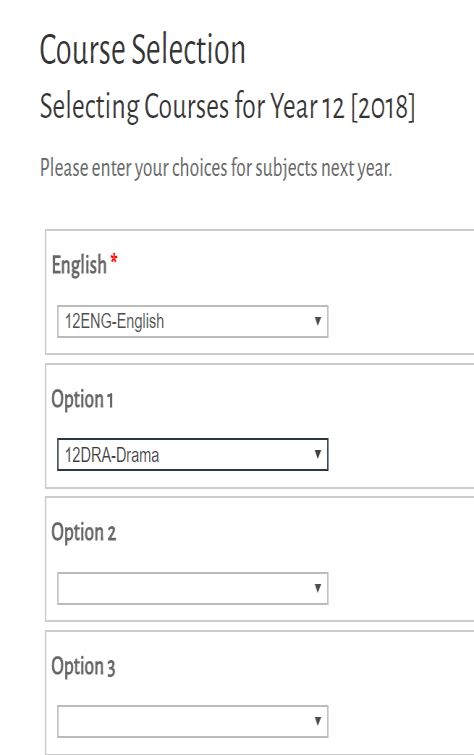
Table of Contents
  Heads of Department & Teacher in Charge ....................................................................................................... 3
  Pastoral Support ................................................................................................................................................. 3
  Senior Leadership Team ..................................................................................................................................... 3
Year 10 Information ................................................................................................................................................ 4
  Choosing a Course .............................................................................................................................................. 4
  Te Aho o te Kura Pounamu or more commonly known as Te Kura ................................................................... 5
  KAMAR Portal Instructions ................................................................................................................................. 7
  Compulsory Subjects ......................................................................................................................................... 8
  Option Subjects ................................................................................................................................................. 9
Supported Learning Centre .................................................................................................................................. 14
  Course Progression........................................................................................................................................... 15

                                                                                                                                                                    2
GENERAL INFORMATION
Heads of Department & Teacher in Charge
Agriculture & Horticultural Science Mr Dan Grace
Art Mr Nikolai Kokx
Biology Ms Kathryn Houliston
Chemistry Dr Lynton Baird
Commerce (Accounting / Economics) Mr Dave Jones
Digital Technology Mr Richard Swallow
Classical Studies Mrs Kate Murray
English Ms Joanne Charles
Geography / Social Studies / Tourism Mrs Charmaine Nelson
Health Ms Esther Lanser
History Mrs Jenna Katia
Food & Nutrition / Hospitality Mrs Sam Jones
French Mrs Jo Brunskill
Japanese Mrs Cathy Mabey
Drama Mr Bevan Connell
Language Resource Mrs Ella Kokx
Library Mr Ewan Hyde
Mathematics Mr Mike van Woerkom
Māori Whaea Huria Robens
Media Studies Mr Richard Wallis
Music Ms Belinda Carey
Physical Education / Sports Studies / Mr Willie Schaefer
Sports Academy
Science / Physics Mr Hansel Wiramanaden
Supported Learning Centre Mrs Amanda Kawana
Technology / Design & Visual Communication Mr Lindsay Moore
Transition / Retail / Gateway Mrs Beth Pottinger
Pastoral Support
Year 9 Deans Mrs Kate Murray
Mr Alistair Payne
Year 10 Deans Ms Kathryn Houliston
Mr Willie Schaefer
Year 11 Dean Mr Jaco le Roux
Ms Karyn Saunders
Year 12 Dean Mr James O’Connor
Year 13 Dean Mrs Cathy Mabey
E-Dean Mr Richard Wallis
Guidance Counsellor Mr Paul Adamson
Careers Adviser Mrs Beth Pottinger
Senior Leadership Team
Acting Principal Ms Michele Whiting
Deputy Principal – Year 11 Mrs Pam Redpath
Assistant Principal - Year 12/13 Mr Mark Williams
Assistant Principal – Year 10 Mrs Jo Bisset
Assistant Principal – Year 9 Mr Aaron Perkins
3GENERAL INFORMATION
Year 10 Information
This section has been prepared to assist students in making an informed choice about the option subjects they
will take in Year 10.
The Year 9 Option Structure is designed to give students the opportunity to try as many options as possible.
This wide selection must, in Year 10, be balanced with the need to prepare students to cope confidently with
the courses in Senior School. Some option subjects at senior level must have been studied in the Junior School.
At Year 10, students have a choice to study two full year options. Options are seldom able to be changed once
the decision has been made.
It is recommended that students and their parents read this information carefully. The option information can
be accessed via our school website: www.waicol.nz. Students may discuss their choices with their Group
Teacher, their current Option Teachers, Year 9 or 10 Deans or the Senior Leaders. Careers Advice is available
from the Careers Advisor – Mrs Beth Pottinger
Use this information to find out which Year 10 options you would most like to study and where these subjects
will lead in following years.
Choosing a Course
Students should choose their options carefully with several things in mind.
Ability How good are you at a subject and how easily do you understand it? Your grades
and your knowledge of your ability.
Interest What do you enjoy doing? You may enjoy a subject because of the work, or
because you seem good at it.
Occupation At present, you may not know what career pathway you would like to do. If you
have ideas though, you can find out what subjects might be needed by researching
careers at: www.careers.govt.nz
Subject Choice Go through the list of option subjects. Put a tick alongside each possibility and
investigate those subjects thoroughly.
Course Structure – Compulsory Subjects
These are selected automatically, (there is no need to select on the portal)
English 8 periods per 10-day cycle
Mathematics 8 periods per 10-day cycle
Science 8 periods per 10-day cycle
Social Studies 8 periods per 10-day cycle
Physical Education 4 periods per 10-day cycle
Health Education 2 periods per 10-day cycle
4GENERAL INFORMATION
Options
At Year 10, students can choose to study:
• TWO full Year options
Full Year Options include:
Visual Art, Music, Drama, Agriculture, French, Māori, Japanese, Economics, Resistant Materials Technology,
Design & Visual Communication, Digital Technology, Food & Nutrition.
Digital Learning Core Class (DLCC)
(English, Science, Maths, Social Studies, PE/Health)
Students can choose to learn in all these core classes with a device supplied from home. Please go to our
website to apply.
11ENGD
10DLCC 11SCID
11MATD
Te Aho o te Kura Pounamu or more commonly known as Te Kura
There is an alternative online platform available to students. The criteria is: that we do not offer the subject at
Wairarapa College or there is a clash in a student’s timetable.
More information and courses can be found on https://www.tekura.school.nz/ there are a wide range of
subjects on offer.
See Mrs Redpath if you need further information on: predpath@waicol.nz
5GENERAL INFORMATION
6GENERAL INFORMATION
KAMAR Portal Instructions
Please note that option selection is only available when using the parent password. This is so that there will be
a conversation with your child to make these important decisions.
The KAMAR Portal will be open from Friday 7 August 2020 and closes on
Friday 28 August 2020.
If you do not have a password, or you are unable to submit your choices online for any reason, please contact
the college office.
1. Go to the Wairarapa College Website www.waicol.nz
2. Select KAMAR from the top menu
3. Login using the parent username and password
4. Choose Course Selection from the menu. Below is an example at Year 12.
5. Press the save button at the bottom of the page.
7GENERAL INFORMATION
Compulsory Subjects
10ENG – Year 10 English
Assessment: Common tests & end of year exam
Materials More English Basics – Highly recommended
Course Description Year 10 students will use and enjoy a variety of texts and will begin to understand the
power of language to enrich and shape lives. Visual, written and spoken processes
will be explored.
Course leads to: Year 11 English.
10MAT- Year 10 Mathematics
Assessment: Topic tests & end of year exam
NCEA Level 1 Measurement Internal: AS91030 (3 credits)
Materials NuLake MiNZC5 – Highly recommended
Course Description All strands of the NZ Curriculum are covered and include: Number, Algebra, Patterns
& Graphing, Measurement, Statistics, Right-angled triangles, Geometric Reasoning
and Transformation Geometry.
Students will be given the opportunity to gain NCEA Level 1 credits via Measurement
A/S 91030 3 credits.
Course leads to: Year 11 Mathematics. The HOD will decide, based on the year’s results, which class to
place students in.
10SCI – Year 10 Science
Assessment: Topic tests, practical assessments & end of year exam
NCEA Level 1 Internal: AS90953
Materials SciPad Book 2 – Highly recommended
Course Description Students work through thematic based topics. The topics cover a range of scientific
theories. Students will have opportunities to do practical work linked to science skills.
There is an opportunity to sit a NCEA Level 1 internal standard at the end of the
course.
Course leads to: Year 11 Science. The HOD will decide, based on the year’s results, which class to
place students in.
10SOC – Year 10 Social Studies
Assessment: Inquiry based projects & end of topic tests
Materials None
Course Description Social Studies explores how societies work. Students learn about people and places
around Aotearoa New Zealand and the World. They also learn about how people can
participate in society as informed and responsible citizens. Units of work include:
Future Focus (Sustainability/Globalisation), Human Rights, Near Neighbours
(Australia/Asia), current events/global awareness, and career choices.
Course leads to: Year 11 Geography, History, Economics
8GENERAL INFORMATION
10PE – Year 10 Physical Education & Health
Assessment: Mixture of formative and summative assessment
Materials None
Course Description A practical based course that challenges students to participate in a range of physical
activities. Topics include: ABL, Fitness and physiological responses, Invasion games
and improving performance, biomechanics, Invent a game, net/wall games.
Health – Body image, Hauora, Drugs & Alcohol, Sexuality, Nutrition.
Course leads to: 11 Physical Education or 11 Practical Physical Education
10SPO – Year 10 Sports Academy
Entry Requirements: Top sports performer – application and trial process
Assessment: Mixture of practical and written assessments
Materials Workbook – Highly Recommended
Course Description A course designed to cater for talented athletes. Students are required to apply for
selection and will be tested. Limited to one class of students. The course will cover
training methods and principles, sport nutrition, specialist skill training.
Course leads to: 11 Physical Education or 11 Sports Academy
Option Subjects These are the subjects to select. Choose two.
10VAR – Year 10 Visual Art
Entry Requirements: None
Assessment: Standard Based Assessments
Materials: A3 clear file
Course Description: This course develops student’s practical skills, knowledge and ideas in the Visual
Arts. Topics covered include: Traditional/Contemporary artist models, Photoshop,
Sculpture, Drawing, Painting and Multimedia.
Why this subject: The Visual Arts prepares students for the creative industries such as Design, Artist,
Creative director, Museum Curator, Animation and Film.
This subject is required for students wishing to take Visual Art at Level One.
Course leads to: Year 11 Visual Art
10MUS – Year 10 Music
Entry Requirements: You must be receiving lessons in an instrument or voice or be willing to undertake
them. All students are expected to be involved in a school music group and
contribute to concerts throughout the year.
Assessment: Solo Performance, Group Performance, Composition and Music Technology and
Theory
Materials: 20-page Yellow Clearfile
Course Description: This course aims to develop student’s essential skills of performing in front of an
audience and understanding music theory. The student will learn how to compose
for a range of purposes and develop skills in using music technology to assist them.
Why this subject: Students have a lot of fun putting together bands and performances. Music develop
your powers of expression by learning how to present yourself confidently in
performance and composition. It also develops very practical technological skills
that prove valuable in the field of new technology.
Course leads to: Year 11 Music
9GENERAL INFORMATION
10DRA – Year 10 Drama
Entry Requirements: Passed Year 9 Drama OR have prior theatre skills
Assessment: Internally assessed with an end of year exam
Materials None
Course Description This option course is aimed at providing a basic introduction to acting and
knowledge, an understanding of Theatre in all its aspects and finally fostering and
encouraging dramatic performances in the individual student.
Why this subject: The skills and qualities developed by students in drama, such as teamwork,
creativity, leadership and risk-taking are assets in all subjects and all areas of life.
Drama stimulates the imagination and allows students to explore issues and
experiences in a safe and supportive environment.
Course leads to: Year 11 Drama
10AGH – Year 10 Agriculture
Entry Requirements: Open Entry
Assessment: Unit tests and projects
Course Description: Year 10 Agriculture covers farm safety, farming and land use in New Zealand, soil
types and management practices, plant and pasture management, animal systems
and management practices.
Why this subject: Agriculture forms the backbone for many New Zealand communities, and is one of
the country’s biggest export earners. If you are interested in farming, animals,
crops or soils, then agriculture is the subject for you. Whether you are looking at
farming as a career, or have a general interest in agricultural science, studying
agriculture will give you a greater understanding of how farming works and its
relationship to the land.
Course leads to: Year 11 Agriculture and Horticultural Science
10FRE – Year 10 French
Entry Requirements: Year Nine French or by negotiation with the HOD
Assessment: Unit tests and projects
Course Description: This course further develops on the introductory topics and understanding started
in Year 9. The topics include: Me and My Family; Weather; Daily Routines; At
Home; Eating Out; Around Town; Paris and Holidays. From Year 10, students may
apply to go on our Biennial French trip to Tahiti.
Why this subject: Studying a foreign language can improve your analytical and interpretative
capacities; this may mean better success in school across all subjects. Connecting
with other cultures can help to expand personal horizons, build tolerance and help
to develop problem solving skills; increasingly businesses are working with
companies in other countries and employers are seeking people who are skilled,
versatile and adaptable.
Course leads to: Year 11 French
10GENERAL INFORMATION
10MAO – Year 10 Māori
Entry Requirements: Year Nine Te Reo Māori or have attended Kura Kaupapa
Assessment: There is an assessment at the end of each topic. Assessments cover all the skills of
Listening, Speaking, Reading and Writing. (Speaking includes a presentation as well
as interactions).
Course Description: This course covers topics such as Toku Whānau (Family), Toku Kainga (Home), Toku
Kura (School)
Why this subject: Te Reo Māori is an official language of NZ; Year 10 Te Reo Māori continues to offer
the opportunity to foster its growth and maintenance. Students become
increasingly aware of their part in the world as New Zealanders, they become
confident speakers and cultural participants. This leads to leadership roles in the
College and community.
Course leads to: Year 11 Te Reo Māori
10JAP – Year 10 Japanese
Entry Requirements: Year Nine Japanese Students (or by negotiation with Mrs Mabey)
Assessment: There will be assessments throughout the year with the focus on understanding
and communicating in Japanese. There may be an exam in Term 4 which will be
based on listening and reading skills.
Course Description: This course further develops on the introductory topics of Year 9, continuing to use
Japanese scripts and Kanji. The topics include: Daily Routines; Descriptions; School
Subjects and Life; Hobbies and Sports; Birthdays and Special Occasions; School
Trips. You will extend your ability to interact confidently in a variety of everyday
situations. Education Perfect subscription.
Why this subject: Studying a foreign language can improve your analytical and interpretative
capacities; this may mean better success in school across all subjects. Connecting
with other cultures can help to expand personal horizons, build tolerance and help
to develop problem solving skills; increasingly businesses are working with
companies in other countries and employers are seeking people who are skilled
versatile and adaptable.
Course leads to: NCEA Level 1 Japanese (Year 10 Japanese will be a requirement)
10ECO – Year 10 Economics and Financial Literacy
Entry Requirements: Open Entry
Assessment: Unit tests and assignments.
Course Description: Students are taught to become financially literate. Students learn how to manage
their income through personal budgeting. They learn how to calculate the actual
monetary cost of borrowing money and buying on credit. How credit cards work
and the advantages and disadvantages of these. Consumer law and Accounting are
also explained. The Accounting unit is included so students can make an informed
choice about taking it at Year 11. Those students going onto tertiary study and want
to study Business, will need both Economics and Accounting at University. Lots of
enquiry learning using eTV and the internet.
Why this subject: To gain practical financial life skills. financial literacy, an essential life skill in today’s
global economy. Learn how to make wise and informed decisions about money.
Course leads to: Year 11 Economics & Year 11 Accounting
11GENERAL INFORMATION
10DVC– Year 10 Design & Visual Communication
Entry Requirements: A positive attitude to learning, coupled with a flair for design and some creativity.
Assessment: National curriculum Level 5 visual design, drawing, product design
Materials: Recommended Materials: A3 clear file
Course Description: Students will use a range of graphical modes and media in design contexts to create
interesting and varied design solutions.
Why this subject: This subject gives student opportunities to experience how to draw using freehand
sketching, modelling, rendering, and drawing techniques. It gives students the skills
and knowledge to progress to Level 1 Design and Visual Communication
Technology. (Graphics).
Course leads to: Year 11 - Design and Visual Communication (Graphics)
10MT –Materials Technology (Hard Materials)
Entry Requirements: A creative inquiring mind with a good work ethic
Assessment: National curriculum Level 5 practical and design projects
Materials: Recommended Materials: A4 clear file (20 sheet)
Course Description: Technology is: Intervention by Design. Students will spend a full year in a workshop
(wood/metal) depending on teacher and classroom availability. The focus is on the
designing, and testing of materials for suitability and making specified products.
Why this subject: Students who have an interest in designing and making products in resistant
materials should apply for this course. The course is workshop based and includes
instruction in how to use a range of hand and power tools safely and efficiently
when developing a product or prototype. It gives students the skills and knowledge
to progress to Level 1. It also has a strong design focus allowing students to take
Year 11 DVC the following year as a stand alone subject.
Course leads to: Year 11 DVC or a Level 1 Pathways course
10DIT– Year 10 Digital Technology
Entry Requirements: A keen interest in what makes a computer work and the applications it can
integrate with. An ability to think critically and problem solve
Assessment: Three Level 1 Unit Standards
Materials: Earbuds
Course Description: This course aims to investigate a wide variety of computer related tasks, both
theoretical and practical. Units of work cover PC hardware, html, css, print design,
image manipulation, e Safety, programming, electronics, computer science,
robotics and database skills.
Why this subject: The Year 10 Digital Technology course aims to develop to develop a range of skills
to improve Digital Literacy. Problem solving, and critical thinking is encouraged so
that students can develop their own digital outcomes. This will be achieved by
using a range of computer software and hardware. Areas investigated will be
programming, file management, robotics, game development and web site
development using tools such as Raspberry Pi, robot virtual worlds, android phones
and a range of programming applications. There is an opportunity to sit Unit
Standard papers and gain credits towards your NCEA portfolio.
Course leads to: Year 11 Digital Technology
10FNT– Year 10 Food and Nutrition
Entry Requirements: Open entry
12GENERAL INFORMATION
Assessment: Health and Physical Education Curriculum. Written and Practical Assessments
Materials: Students are required to bring a container to take their food home in.
Course Description: The students are taught to make nutritious food choices through analysing their
diets and implementing change. They learn how to plan, cook and prepare food
safely. Students learn how to cook food on a budget using local and seasonal
produce as well as cook food from different cultures. Practical is an important part
of the course and participation is compulsory. Students will cook every other
lesson. The course also covers a Hospitality Unit Standard where students will get
the opportunity to gain 2 credits towards NCEA Level 1.
Why this subject: To gain valuable cooking skills and become nutritionally literate. An essential life
skill in today’s climate of processed food.
Course leads to: Level 1 Food and Nutrition and Level 1 Hospitality
13GENERAL INFORMATION
Supported Learning Centre
Our Vision
• To encourage and provide learning opportunities for all students to develop skills and enable them to
live as independently as possible.
Aim
• To provide a quality learning environment and individualised programmes for students with
intellectual and/or physical impairments who have ORS funding.
• Specialist teachers and teacher aides provide support enabling all students to achieve their individual
learning intentions.
Outline of our Programme
• All programmes are IEP (Individual Education Plan) based.
• All students pursue an academic programme based on the NZ Curriculum which is adapted, where
necessary, to suit the individual needs. Programmes can be carried out in the mainstream, in the
Supported Learning Centre or a combination of the two. Students who are able, come and go
through the gate as staff would.
• Sensory programmes are also offered to those students who require it.
• All students are enrolled in the South Pacific Education Course (SPEC) and work towards certificates at
an appropriate level. This programme is now NZQA approved at the higher levels. SPEC also offers
sensory units for the Very High Needs students. Wairarapa College has been awarded an Excellence
Award for outstanding achievement and commitment to SPEC Courses. The only school in the
Wairarapa with such an award.
• Technology is very important in the Supported Learning Centre; we have a computer pod and five
iPads available for the students. Power links, spinners and switches are also regularly used by our
Very High Needs students.
• All students are encouraged to participate fully in the life of Wairarapa College, attending College
assemblies, cultural and sporting events.
• Students are able to remain in the Supported Learning Centre until the end of the year they turn 21.
Prior to each student leaving they will be involved in a Path Plan, which helps identify their future
path and what steps are needed to reach that.
Subjects Taught in the SLC
• English, Mathematics, Science, Physical Education, Alternative Physical Education, Integrated Studies,
South Pacific Education Courses (SPEC), Life Skills/Practical Skills, Visual Art, Music, Drama/Dance,
Sensory, Cooking, Social Skills, Health, Active Learning.
Electives Available in the SLC
• Work Experience, Swimming, Gym and Riding for the Disabled, King Street, Futsal, Zumba, Special
Olympics, Sports Exchanges.
Please contact Amanda Kawana (Head of Department) if you have any further questions or would like to
arrange a visit. akawana@waicol.nz
14Course Progression
Shaded Courses are compulsory
Year 9 Year 10 Year 11 Year 12 Year 13
NCEA Level 1 NCEA Level 2 NCEA Level 3
Music (9MUS) Music (10MUS) Music (11MUS) Music (12MUS) Music (13MUS)
Drama (9DRA) Drama (10DRA) Drama (11DRA) Drama (12DRA) Drama (13DRA)
Visual Art (9VAR) Visual Art (10VAR) Visual Art (11VAR) Visual Art (12VAR) Painting (13PNT)
WaiCol On Stage (9WOS) Photography (12PHO) Photography (13PHO)
Economics (9ECO) Economics (10ECO) Economics (11ECO) Economics (12ECO) Economics (13ECO)
Accounting (11ACC) Accounting (12ACC) Accounting (13ACC)
English Literature (11ENGLF) English Literature (12ENGLF) English (13ENG)
English (9ENG) English (10ENG) English General (11ENGG) English General (12ENGG)
English Literacy (11ENGL) English Bridging (12ENGB)
English Digital (11ENGD) English Literacy (12ENGL)
Media Studies (11MST) Media Studies (12MST) Media Studies (13MST)
Food and Nutrition Food and Nutrition Food and Nutrition (11FNT) Food and Nutrition (12FNT) Food and Nutrition (13FNT)
(9FNT) (10FNT) Hospitality (11HOS) Hospitality (12HOS) Hospitality (13HOS)
French (9FRE) French (10FRE) French (11FRE) French (12FRE) French (13FRE)
Te Reo Māori(9MAO) Te Reo Māori (10MAO) Te Reo Māori (11MAO) Te Reo Māori (12MAO) Te Reo Māori (13MAO)
Japanese (9JAP) Japanese (10JAP)
Design & Visual Design & Visual Design & Visual Design & Visual Design & Visual
Communication (9DVC) Communication (10DVC) Communication (11DVC) Communication Communication
(12DVC) (13DVC)
Digital Technology Digital Technology Digital Technology (11DIT) Digital Technology (12DIT) Digital Technology (13DIT)
(9DIT) (10DIT) Information and Information and Information and
Communication Technology Communication Technology Communication Technology
(11ICT) (12ICT) (13ICT)
Mathematics Mathematics 11 Mathematics 1, 2, 3 12 Mathematics 1 & 2 Calculus (13MTC)
(9MAT) (10MAT) (11MAT) (12MAT) Mathematics (13MAT)
Maths Digi (11MATD) 12 Maths Financial (12MATF) Statistics (13MTS)
Physical Education (9PE) Physical Education (10PE) Physical Education (11PED) Physical Education (12PED) Physical Education (13PED)
Practical Physical Education
(11PPE) Sports Studies (12SPO) Sports Studies (13SPO)
Health (9HEA) Health (10HEA) Health (11HED) Health (12HED) Health (13HED)
Sports Academy (9SPA) Sports Academy (10SPA) Sports Academy (11SPA) Sports Academy (12SPA)
Science (9SCI) Science (10SCI) Science 1 (11SCI1) Science (12SCI)
Science 2 (11SCI2) Biology (12BIO) Biology (13BIO)
Science Digi (11SCID) Chemistry (12CHE) Chemistry (13CHE)
Physics (12PHY) Physics (13PHY)
Agriculture Agriculture Agricultural and Horticultural Agricultural and Horticultural Agricultural and
(9AGR) (10AGR) Science (11AGH) (11AGP) Science Horticultural Science
(12AGH) (12AGP) (13AGH) (13GFP)
Social Studies Social Studies Geography (11GEO) Geography (12GEO) Geography (13GEO)
(9SOC) (10SOC) History (11HIS) History (12HIS) History (13HIS)
Classical Studies (12CLS) Classical Studies (13CLS)
Psychology (12PSY)
Material Technology Material Technology Pathways to Building Technology (12TEC) Technology (13TEC)
(9MT) (10MT) (11PTB) Pathways to Building Pathways to Building BCITO
(12PTB) 13(PTB)
Pathways to Engineering Pathways to Engineering Pathways to Engineering
(11PTE) (12PTE) (13PTE)
Pathway to Work Transition (12TRA) Transition (13TRA)
(11PTW) Gateway (12GAT) Gateway (13GAT)
Tourism Studies (12TOU) Tourism Studies (13TOU)
ESOL ESOL ESOL ESOL ESOL
15You can also read


