What's the Hydro-Fracking Rush? - What's the Hydro-Fracking Rush? - Protecting new York's Air, LAnd, wAter And PeoPLe
←
→
Page content transcription
If your browser does not render page correctly, please read the page content below
Protecting New York’s Air,
Land, Water and People
 What’s the Hydro-Fracking Rush?

 What’s the Hydro-Fracking Rush?
Land, Water and People
Protecting New York’s Air,
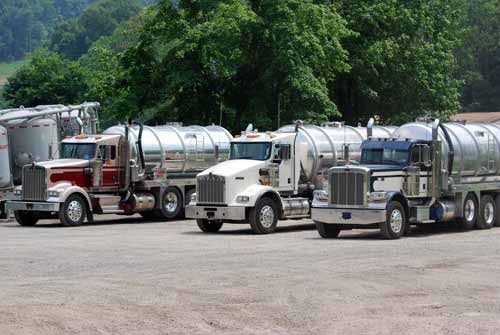
Table of Contents
        Executive Summary.....................................................................................................iii
            Reasons to Wait......................................................................................................iv
        Introduction...................................................................................................................1
        What is Hydro-Fracking?..............................................................................................2
            Multiple well spacing..............................................................................................2
            The phases of the hydro-fracking process............................................................3
        Inherent Risks of Hydro-Fracking Shale......................................................................4
            Radioactivity............................................................................................................4
            Cocktail of Hydro-Fracking Chemicals..................................................................6
        Hydro-fracking Waste Products: Cuttings, Brine & Flowback...................................8
            Drill Cuttings............................................................................................................8
            Production Brine.....................................................................................................8
            Flowback Fluid........................................................................................................9
        Hydro-Fracking Waste Lagoons...................................................................................10
        Monitoring and Enforcement......................................................................................11
            Local Governments.................................................................................................11
            State Agencies........................................................................................................11
            Federal Exemptions................................................................................................12
        Policy Solutions............................................................................................................13
        Conclusion.....................................................................................................................15
        Endnotes........................................................................................................................15

      Acknowledgements
      Protecting New York’s Air, Land, Water and People: A Case for Enacting a Moratorium on
      Hydro-fracking is produced by Citizens Campaign Fund for the Environment and could not have
      been prepared without the generous support of the Park Foundation and members of Citizens
      Campaign for the Environment. This document could not have been possible without dedicated
      citizens and professionals committed to protecting New York’s air, land, water, and people from
      the adverse impacts associated with hydro-fracking. For more information on the concerns with
      hydro-fracking activities and resources, please visit www.citizenscampaign.org/hydrofracking

      Report Contributors:
      Lead Author – Sarah Eckel, Policy Analyst
      Editor – Dereth Glance, Executive Program Director
      Layout & Design – Scott Norton, CNY Outreach Coordinator

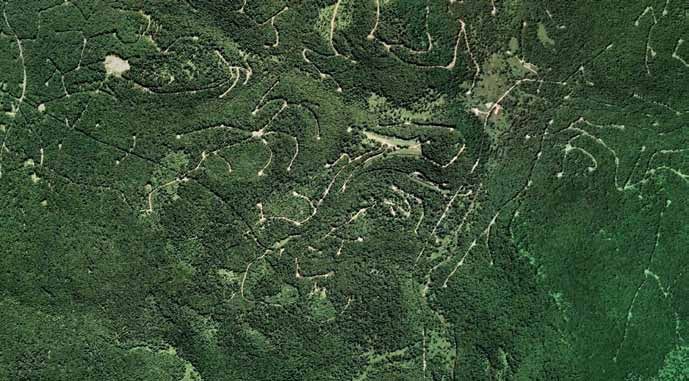
      Cover photo: Red Lake House Allegany State Park
      Flickr- addicted eyes- used with limited permission.
      Citizens Campaign for the Environment (CCE) is a non-partisan
      advocacy organization, supported by over 80,000 members, working
      to protect public health and the natural environment.
                                                                                                  For more about CCE, please visit:
                                                                                                       www.citizenscampaign.org

      Note: This report was prepared with the best information available at the time. We welcome any new information as
      we strive to make this report as accurate and up-to-date as possible.

ii      Protecting New York’s Air, Land, Water and People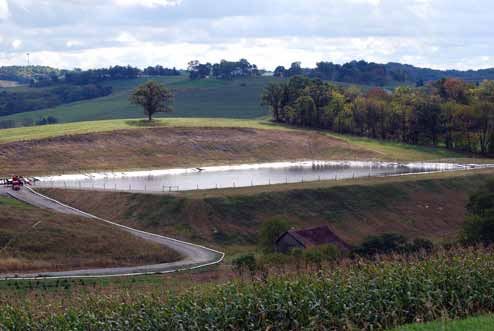
Executive Summary industry has been busy exploiting its exemptions
from every major federal environmental
N amed for the exposed outcrop in Marcellus,
NY, the Marcellus Shale formation exists
below much of New York State from the
statute. The result is the destruction of drinking
water supplies, overtaxed water treatment
infrastructure, and killing tens of thousands of
Catskills to the Allegany forest. Natural gas fish and other aquatic life. New York does not
exists in small pockets of the fragile shale. have to repeat these same mistakes.
Recently, the oil and gas industry has begun
using High Volume Hydraulic Fracturing, or In September 30, 2009 The New York State
Hydro-Fracking to drill thousands of feet below Department of Environmental Conservation
the surface to recover natural gas. Hydro- (DEC) released the draft Supplemental Generic
fracking uses millions of gallons of water per Environmental Impact Statement on the Oil,
well and generates millions of gallons of toxic, Gas and Solution Mining Regulatory Program
corrosive, and radioactive waste. Well Permit Issuance for Horizontal Drilling and
High-Volume Hydraulic Fracturing to Develop
Hydro-fracking New York’s shale formations, the Marcellus Shale and Other Low-Permeability
including the Marcellus and Utica Gas Reservoirs herein referred to as the
formation pose inherent risks to human and “dSGEIS”. This 800+ page document is filled
environmental health while increasing burdens with speculation, now outdated information,
on local governments, health departments, and seeks to establish a regulatory program
and taxpayers. Especially problematic is the to govern hydro-fracking without adequate
lack of federal protection for drinking water, staff, cumulative impact assessments, and by
air quality, water treatment infrastructure, and placing unfunded mandates on agencies and
landowner liability. local governments with no regulatory power.
In 2005, influenced by gas drilling giants The dSGEIS fails to provide a clear plan for
Halliburton and Chesapeake Energy, the 110th treating millions, if not billions, of gallons of
Congress and President Bush exempted hydro- radioactive and corrosive fracking wastewater;
fracking operations from critical Safe Drinking ensure New Yorker’s are protected from
Water Act and Clean Water Act protections and increased exposure to the known carcinogen,
public comment opportunities provided by the Radon; and it fails to protect New York’s
National Environmental Policy Act. amazing surface and groundwater resources
from contamination by spills, accidents, and
From Texas to Pennsylvania, the oil and gas storm events.
q
Legend
Marcellus Shale and Hamilton Group Outcrop
Clinton
Marcellus Shale Fairway
Franklin
Extent of the Marcellus Shale in New York St. Lawrence
Essex
Jefferson
Lewis
Hamilton
Warren
Oswego
Orleans Washington
Niagara Oneida Herkimer
Monroe Wayne
Genesee Fulton Saratoga
Onondaga
Ontario Madison Montgomery
Erie Schenectady
Seneca Cayuga
Wyoming Rensselaer
Livingston
Yates Otsego
Cortland
Schoharie Albany
Chenango
Tompkins
Schuyler
Chautauqua Cattaraugus Allegany Steuben Greene
Delaware Columbia
Chemung Tioga
Broome
Ulster
Dutchess
Sullivan
0 50 100 Miles Orange
Putnam
RocklandWestchester
FIGURE 4.12
MARCELLUS SHALE FAIRWAY Suffolk
IN NEW YORK STATE Nassau
Source:
Technical Support Document to the - US Geological Survey, Central Energy Resources Team (2002)
Draft Supplemental Generic - New York State Museum - Reservoir Characterization Group
Environmental Impact Statement - Nyahay et al. (2007)
8/10/2009 -- 3:10:00 PM
What’s the Hydro-Fracking Rush? iii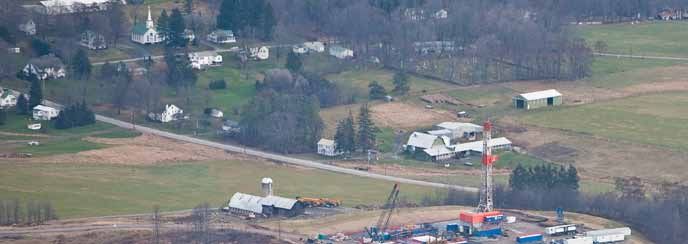
q
Legend
Utica Shale Outcrop
Source:
Utica Shale Fairway - modified from Nyahay et al. (2007) Clinton
Extent of the Utica Shale in New York Franklin
St. Lawrence
Essex
Jefferson
Lewis
Hamilton
Warren
Oswego
Washington
Orleans
Niagara Oneida Herkimer
Monroe Wayne
Fulton Saratoga
Genesee
Onondaga
Cayuga Madison Montgomery
Ontario
Erie Seneca Schenectady
Wyoming Rensselaer
Livingston
Yates Otsego
Cortland Albany
Schoharie
Chenango
Tompkins
Schuyler
Chautauqua Cattaraugus Allegany Steuben Greene
Delaware Columbia
Chemung Tioga
Broome
Ulster
Sullivan
Dutchess
0 50 100 Miles Orange Putnam
RocklandWestchester
FIGURE 4.7
UTICA SHALE FAIRWAY Suffolk
IN NEW YORK STATE Nassau
Technical Support Document to the
Draft Supplemental Generic
Environmental Impact Statement
the NYS Department of Health—which has
To protect human health and the environment, no regulatory power over hydro-fracking—to
the DEC should withdraw the dSGEIS and the actively monitor hydro-fracking chemicals and
New York State should adopt a moratorium radioactive waste concerns, assure drinking
for time to gain the full scientific and policy water protection, and assist local county health
understanding of hydro-fracking risks and departments on water well investigations and
consequences. complaints.
Local governments are only given the ability
Reasons to Wait to regulate local roads and assess property
Thoughtful consideration and action on these taxes on gas wells. However, local health
critical issues can avoid the largest potential departments are required to facilitate and
environmental and public health disaster in conduct complaints of water quality violations.
New York State history. Additionally, energy companies are expected
to consult with local governments on their
Science should guide policy, not local planning documents, while giving these
quantify contamination local governments no recourse if those plans
Due to innumerable drinking water problems are violated.
associated with hydro-fracking, on October
The only responsible solution is to enact a
29, 2009 Congress approved United States
moratorium on hydro-fracking to ensure New
Environmental Protection Agency (EPA) to
York’s clean water and energy future. New
study drinking water effects from hydro-
York needs leadership of conscience to allow
fracking. New York State should consider and
time for regulators, landowners, taxpayers,
incorporate this scientific knowledge before
policymakers and citizens to understand the
permitting hydro-fracking operations in the
true consequences to our flowing streams,
state.
infamous lakes, protected watersheds, pure
The enforcement farce aquifers and our pocketbooks. We need
In the midst of the bleakest budget crisis in leadership to ensure the proper treatment
recent memory, New York State lacks the and disposal of the toxic, radioactive, and
funding and the trained professionals to abundant waste produced as a by-product
ensure enforcement of any hydro-fracking of this industry-preferred extraction method
operation in the state. The dSGEIS directs for the natural gas deposits contained in the
Marcellus and Utica shale.
iv Protecting New York’s Air, Land, Water and People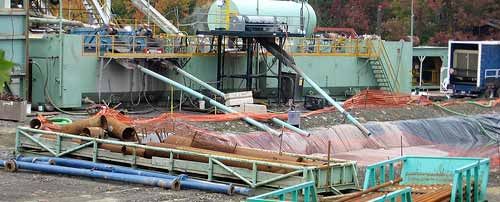
Introduction

O     il and gas companies are eager
      to   use    unconventional,    resource-
intensive drilling methods to recover natural
                                                  supplemental regulations to the GEIS to
                                                  consider the environmental impacts of high
                                                  volume horizontal hydraulic fracturing, herein
gas from shale deposits in New York State.        referred to as hydro-fracking.
New York relies upon natural gas for 24% of its
                                                  Released on September 30, 2009, the DEC’s
energy supply. Oil and gas companies propose
                                                  draft Supplemental Generic Environmental
to recover natural gas by combining hydraulic
                                                  Impact Statement (dSGEIS) failed to assess
fracturing of the shale with horizontal gas
                                                  the real impacts of hydro-fracking. Hydro-
drilling wells.
                                                  fracking is being used across the country
New York’s natural gas demand is primarily        from Texas to Wyoming to Pennsylvania with
met through sources from the Gulf Coast and       dire consequences. These states rushed into
Canada. New York State sits atop one of the       hydro-fracking without properly regulating
largest shale formations in the United States,    the industry practice and now face problems
which contains natural gas.                       including   contaminated    drinking  water
                                                  supplies and overtaxed wastewater treatment
Oil and gas drilling activities in New York       facilities.
State is regulated by a Generic Environmental
Impact Statement (GEIS) adopted in 1992.           In general, the dSGEIS is flawed, needs to be
Due to the increased interest in recovering       withdrawn, and highlights the insurmountable
natural gas supplies from “unconventional         challenges to properly regulate this industry. To
shale formations” by using high volume            protect New York’s air, land, water and people,
hydraulic fracturing, Governor Paterson           a moratorium on hydro-fracking is needed to
directed the New York State Department of         avoid drilling New York into environmental
Environmental Conservation (DEC) to issue         and economic ruin.

                                                                          What’s the Hydro-Fracking Rush?   1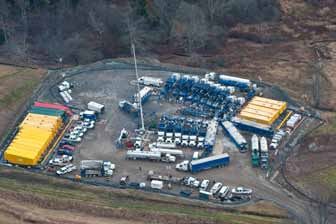
What is Hydro-Fracking?

    L   arge deposits of natural gas are estimated to be
        located deep within New York’s shale formations. The
    natural gas is trapped in pockets, or veins, where the shale
    naturally fractured during settling. Hydro-fracking is a
    more commercially viable method to extract natural gas
    from deep shale formations, including the Marcellus and
    Utica. The hydro-fracking process uses two (2) to seven
    (7) million gallons of water mixed with chemicals for each
    gas well to fracture rock. Once fractured, the natural gas
    is released from isolated veins within the shale formation.
    To capture a commercially viable amount of gas from the
    deep shale formations, the gas well is drilled vertically
    to approximately 500 feet above the formation. Next, the
    wellbore is drilled horizontally to tap the tiny pockets of                                 Figure 1.
    gas in the shale. The length of a typical horizontal wellbore
    in Pennsylvania is drilled 4,500 feet.

    Multiple            well spacing
    In July 2008, Governor Paterson signed the Well-Spacing Law1 to allow multiple wells to be
    drilled from one well-pad. A single well typical land disturbance is approximately 3 acres. A
    partial reclamation occurs with the production phase, leaving 1.5 acres disturbed. In the case of
    a multi-well pad, land disturbance is increased to 5 acres of land and 3 acres are left disturbed
    during gas production. A total of 10 wells can be drilled per pad.
    Drawbacks to drilling multiple gas wells per pad include the concentration of waste generated
    during the hydro-fracking process.2 The waste streams are discussed below, and it is important
    to remember that waste generated by a multi-well pad is multiplied by how many wells are sited
    for that pad.

2    Protecting New York’s Air, Land, Water and People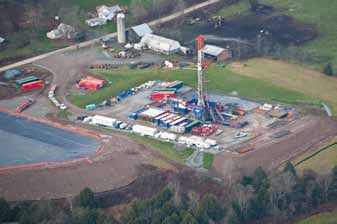
The   phases of the hydro-fracking process
                                                 1.     Drilling - First the land 500 ft. above
                                                 the target formation is cleared during the
                                                 vertical drilling phase. Next, a larger drill
                                                 rig begins angling the drill bit to create the
                                                 horizontal drilling bore. Drilling mud is added
                                                 and drill cutting waste generation is created.
                                                 Drilling mud is used by to cool and power the
                                                 drill. Drilling mud can be 1) water-based; 2)
                                                 potassium-chloride/polymer-based with a
                                                 mineral oil lubricant; or 3) synthetic oil-based.3
                                                 Drill cuttings are the rocks from the drilling
                                                 process. They are stored temporarily on-site
                                                 and depending upon the type of drilling mud
                                                 used, cuttings could be classified as hazardous
                                                 waste. The initial drilling process can take up
                                                 to two months.4

 2. High Volume Hydraulic Fracturing - After
    the well is drilled, it is then fractured.
    Water is combined with chemical
    additives to form the fracturing fluid,
    or frack fluid. Each hydro-fracked well
    requires between 2-7 million gallons of
    frack fluid, comprised of 2% chemical
    mixture. Approximately 30% of the
    frack fluid flows back up to the surface
    as flowback fluid.        Flowback fluid
    generates the largest amount of waste
    for the gas wells. The hydro-fracking
    process takes approximately 4 months
    to complete from preparation to waste
    disposal.

                                                 3.    Production    -   Following fracking,
                                                 the drilling rigs are removed and the gas
                                                 production phase begins- when natural
                                                 gas is extracted. Production brine is a
                                                 by-product of this phase of the process.

                               See page 8 for a detailed discussion of Hydro-fracking waste streams.

                                                                           What’s the Hydro-Fracking Rush?   3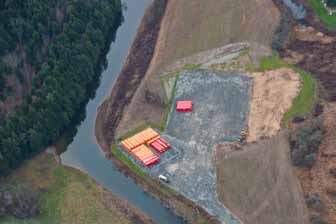
Inherent Risks of Hydro-Fracking Shale
    Using high volume hydro-fracking techniques to extract natural gas and other natural resources
    from shale formations, including the Marcellus and Utica, pose significant risks of adverse
    impacts to land, air, water, and people.

             Chief concerns include human and environmental exposure to:
             ☢☢ Radioactivity, from Radium – 226 and Radon, which both naturally occur in
                    the Marcellus shale
             ☢☢ The cocktail of hydro-fracking chemicals injected into the ground, proposed
                    to be stored in open lagoons, transported on public roadways, and treated at
                    unidentified water treatment plants
             ☢☢ Cumulative air emissions from open hydro-fracking waste lagoons and
                    associated gas drilling operations

    Radioactivity

    T  he DEC warns that “…activities that have the potential to concentrate NORM need to come
       under government scrutiny to ensure adequate protection.5” The radioactivity of Marcellus
    Shale is a natural physical attribute of the shale, and this type of radioactivity is described as a
    NORM or Normally Occurring Radioactive Material.6 NORMs generally pose little to no human
    health or environmental risk due to their natural isolation deep below the Earth’s surface.
    Appendix 13 of the dSGEIS includes well sampling from 13 conventional vertical wells drilled in
    the Marcellus Shale formation. These wells are currently producing gas in New York State, and
    their production brine contains elevated levels. In fact, over 80% of the DEC’s tests for Radium-226
    exceed the U.S. EPA recommended safe drinking water standards of 5 picocuries/Litre (pCi/L).
    Production brine positive for radioactivity would have to be treated as radioactive waste and could
    not be treated at a publicly owned sewage treatment facility. The dSGEIS fails to identify facilities
    to properly treat and dispose of liquid radioactive waste. In addition to the high levels of radiation
                                                                 from production brine, flowback fluid
        Radiation Levels from Conventional Gas                   is positive for Radium-226, with levels
                  Wells in New York State                        ranging between 2.58- 33 pCi/L. The
                                                                 dSGEIS data is limited to samples
      Town, County                 Measured Radium-226           from Pennsylvania and West Virginia.7
                                      (in picoCuries/Litre)      Additional testing for radioactivity
      Caton, Steuben                          2,472              is needed in New York, as well as a
      Orange, Schuyler                        2,647              clear and accountable plan for proper
      Orange, Schuyler                       16,030              treatment and disposal for flowback
      Orange, Schuyler                       13,510              fluid exceeding EPA standards for
      Caton, Steuben                          7,885              Safe Drinking Water.
     Troupsburg, Steuben                                  5,352
     Woodhull, Steuben                                    4,049              Figure 2 presents Radium-226 levels
     Reading, Schuyler                                   15,140              from conventional vertical gas wells
     Oxford, Chenango                                     1,779              drilled in New York’s Marcellus Shale.
     Dix, Schuyler                                        6,125
     Dix, Schuyler                                       10,160
      EPA Safe Drinking Water Standards for Radium-226 is 5 pCi/L
                                                                  Figure 2

4    Protecting New York’s Air, Land, Water and People
Human Health Effects from Radium9
       ☢☢ Long term exposure to radium increases the risk of developing several diseases
       ☢☢ Inhaled or ingested radium increases the risk of developing such diseases as
           lymphoma, bone cancer, and diseases that affect the formation of blood, such
           as leukemia and aplastic anemia

       ☢☢ External exposure to radium’s gamma radiation increases the risk of cancer in
           all tissues and organs at varying degrees

       ☢☢ The greatest health risk from radium is from exposure to its radioactive decay
           product radon. It is common in many soils and can collect in homes and other
           buildings.

           There is no safe level of radon – any exposure poses some risk of cancer
                                          -United States Environmental Protection Agency

Radon
Radon occurs naturally as a decay product of Radium-226, and therefore is present in rocks
and soils. The build up of radon is what leads to its deadly risks. Radon exposure is the second
leading cause of lung cancer in the United States, after smoking.10 Radon build up in homes
Onondaga County, New York led to discovery of the radioactive nature of Marcellus shale.

        Estimates from the National Academy of Sciences on Radon11
       ☢☢ 15,000-22,000 Americans die every year from radon-related lung cancer
       ☢☢ Radon in drinking water causes an additional 180 cancer deaths
           annually
       ☢☢ Almost 90% of those projected deaths were from lung cancer from the
           inhalation of radon released to the indoor air from water
       ☢☢ About 10% were from cancers of internal organs, mostly stomach
           cancers, from ingestion of radon in water

                                                                         What’s the Hydro-Fracking Rush?   5
Cocktail            of     Hydro-Fracking Chemicals
    Numerous combinations of chemicals are added to millions of gallons of water to facilitate
    hydro-fracking. Risk for human and environmental exposure is greatest from potential spills.
    The following Hydro-Fracking Chemical Table
    (figure 3) summarizes the hydro-fracking additive
    class, provides a brief description of its purpose,
    provides examples of chemicals companies
    could use, and the final column summarizes key
    environmental and health concerns associated
    with the specific chemical example. The intent
    of this table is to provide a general overview of
    the types of additive classes used in fracking
    and the additive’s purpose. The information
    highlights fracking chemicals disclosed to DEC and
    published in the dSGEIS. While some chemicals
    were disclosed, the specific chemical cocktails are
    “proprietary information” and only disclosed to
    the DEC, and withheld from the public.
    This table represents a sample of hydro-fracking chemicals proposed to be injected into the
    ground, stored in open lagoons, transported on public roadways, and treated at unidentified
    water treatment plants. Not all of these additive classes will be used at every well; the exact
    composition of the frack fluid is mostly determined by the energy company with consideration
    given to the site-specific geology.

6    Protecting New York’s Air, Land, Water and People
Additive Type Description Examples Health Effects of Chemicals
Proppant “Props” open fractures Sand (Sintered Prolonged exposure to sintered bauxite dust can cause
and allows gas /fluids to bauxite; zirconium respiratory tract infection and irritation to skin and eyes.
flow more freely to the oxide; ceramic Zirconium Oxide can be slightly hazardous in case of
well bore beads) eye contact, skin contact, inhalation or indigestion.
Chronically, it can be toxic to the upper respiratory tract,
and can produce organ damage.
Acid Cleans up perforation Hydrochloric acid A clear, colorless, fuming, poisonous, highly acidic
intervals of cement and (HCl, 3% to 28%) aqueous solution of hydrogen chloride, HCl, used as
drilling mud prior to a chemical intermediate and in petroleum production,
fracturing fluid injection, ore reduction, food processing, pickling, and metal
and provides accessible cleaning. The EPA regulates HCl as a toxic substance
path to formation
Breaker Reduces the viscosity of Peroxydisulfates Peroxydisulfates can be mixed with sodium, potassium,
the fluid in order to release or ammonia. Depending upon what is used there are
proppant into fractures varying degrees of irritation to skin and eyes. Mostly
and enhance the recovery strong irritants based upon prolonged exposure.
of the fracturing fluid Prolonged exposure to ammonium persulfates may
cause skin burns and ulcerations.
Bactericide/ Kills organisms that could Gluteraldehyde; Gluteraldehyde is hazardous in case of skin contact,
Biocide contaminate methane 2-Bromo-2-nitro-1,2- eye contact, ingestion, and inhalation. Severe
gas and kills bacteria propanediol over-exposure can result in death. 2-Propanediol
to promote proppant decomposes on heating or on burning producing toxic
delivery and corrosive fumes including hydrogen bromide and
nitrogen oxides. Reacts with some metals, amines and
alkaline compounds.
Clay Stabilizer Prevents swelling and Salts (eg. Potassium Chloride can cause eye and skin irritation.
migration of formation Tetramethyl Ingestion will cause gastrointestinal irritation and
clays which could block ammonium chloride) inhalation will cause respiratory tract infection. Lab
pore spaces thereby Potassium chloride experiments have resulted in mutagenic effects.
reducing permeability (KCl)
Corrosion Inhibitor Reduces rust formation on Methanol Methanol is toxic: drinking 10 ml will cause blindness,
steel tubing, well casings, and as little as 100 ml will cause death. It is used as an
tools, and tanks. antifreeze, solvant, and fuel.
Crosslinker Increases fracturing Potassium hydroxide Pure potassium hydroxide forms white, deliquescent
fluid viscosity to carry crystals. It dissolves readily in water, giving off heat
more proppant into the and forms a strongly alkaline, caustic solution. It closely
fractures. resembles sodium hydroxide and has similar uses.
Friction Reducer Allows fracture fluids to Sodium acrylate- Environment Canada lists sodium acrylate as a possible
be injected at optimum a c r y l a m i d e carcinogen, expected to be toxic and bioaccumulative
rates and pressures by c o p o l y m e r ; and has flagged this as a chemical of concern for
minimizing friction. polyacrylamide further testing. The building block of PAM acrylamide is
(PAM) a known carcinogen, mutagen, and a bioaccumulative
toxic.
Gelling Agent Increases fracturing Guar gum Guar gum is generally not hazardous during normal
fluid viscosity, allowing handling
the fluid to carry more
proppant into the fractures
Iron control Prevents the precipitation Citric acid; Thioglycolic Acid is extremely hazardous in case of
of metal oxides which thioglycolic acid eye contact. It is very hazardous in case of skin contact,
could plug off the ingestion, and inhalation. Severe over-exposure can
formation result in death.
Scale Inhibitor Prevents the precipitation A m m o n i u m Ammonium chloride has severe corrosive effect on
of carbonates and sulfates chloride; ethylene brass and bronze, and is hazardous in case of eye
glycol; polyacrylate contact. It is slightly hazardous in case of skin contact
(irritant, sensitizer), of ingestion, of inhalation. Ethylene
Glycol is antifreeze
Surfactant Reduces fracturing fluid M e t h a n o l ; Isopropanol is poisonous if taken internally, and is a
surface tension thereby isopropanol major component of rubbing alcohols. The propylene is
aiding fluid recovery a byproduct of petroleum refining
Figure 3
What’s the Hydro-Fracking Rush? 7Hydro-fracking Waste Products: Cuttings, Brine & Flowback
Drill Cuttings
The rock or “drill cuttings” along with the drilling lubricant or “mud” that return to the surface
during the drilling process are stored on-site in open-lined storage pits or contained in steel
tanks. For a multi-well pad, the DEC proposes to permit central storage of drill cuttings for the
duration of drilling operation.13 Cuttings are stored either stored temporarily on-site in an open
lined storage pit or contained in a steel tank. Final disposal of cuttings is dependent upon the
specific chemical composition of the drilling mud. The 1992 GEIS allows on-site burial of drill
cuttings using air and freshwater drilling methods, while pits storing cuttings generated by
polymer- or oil-based drilling muds must be removed by permitted hauler and disposed at a
solid waste landfill.14, 15
Differences in Amounts of Cutting Waste Generated Per Well
Well Type Vertical Well Horizontal Well
Depth of Well 7,000 ft down 7,000 ft down + 3,000 ft out
Amount of Cuttings 125 cubic yards 165 cubic yards
Source: dSGEIS- pp.5-29-30
The dSGEIS describes the
vertical portion of the gas well
Not Your Grandfather’s Gas Well: drilled using compressed air or
Differences between horizontal drilling and vertical drilling freshwater mud as the drilling
1. Larger rigs with longer per well drilling time; fluid. The horizontal portion of
2. A higher likelihood of multi-well pads; the gas well can be drilled with
3. Using drilling mud rather than air to cool and power water-based, potassium chloride/
the drill; polymer-based with a mineral oil
4. The volume of rock cuttings associated with high lubricant, or synthetic oil-based
volume hydro-fracking. drilling mud. According to the
1992 GEIS, used drilling mud is
source: DEC-dSGEIS page 5-21
typically reconditioned for use at
other wells.16
Production Brine
The concentrated fluid that flows out of a producing gas is known as production brine. Due to
Marcellus shale’s marine origin, the production brine contains high levels of total dissolved solids
(TDS or salts). Per day, between 300-6300 gallons of brine can be generated and each gallon
requires secure on-site storage and a disposal plan.22,23 On-site brine must be stored in steel
tanks, and the DEC is open to constructing pipelines to transport brine off-site.24 Disposal options
under consideration include underground injection, deliver to unspecified treatment plants,
and road spreading.25 In January 2009, DEC Division of Solid and Hazardous Materials notified
haulers that road spreading for production fluid had to have a “beneficial use determination”
prior to use on New York’s roadways.26
“In the snowbelt, road salts can be a major pollutant in both urban and rural areas. Snow runoff
containing salt can produce high sodium and chloride concentrations in ponds, lakes, and bays. This
can cause unnecessary fish kills and changes to water chemistry.”
--US Environmental Protection Agency
http://www.epa.gov/OWOW/NPS/roads.html
8 Protecting New York’s Air, Land, Water and PeopleFlowback Fluid
The flowback fluid contaminated with the chemicals used for fracking and any contaminants
from the shale itself. The combination of chemicals used depends on the specific geology of the
site and company preference. Each company creates their own cocktail of chemicals.
The public does not have an accurate account of what chemicals will be used in their community
as not all chemicals used for hydro-fracking have been disclosed.
Some of the chemicals have been disclosed in the dSGEIS,17 but this is not comprehensive list.
The list was compiled based on voluntary disclosure by the gas companies to DEC. The dSGEIS
states that:
Any product whose name does not appear…was not evaluated in this SGEIS either because no
chemical information was submitted to the Department or because the product was not proposed
for use in fracturing operations at Marcellus shale wells or other wells targeting other low
permeability gas reservoirs.18
Proper treatment and disposal of this liquid waste poses a great risk. Current water treatment
infrastructure cannot meet existing demand and increasing treatment capacity for radioactive
and corrosive hydro-fracking wastewater. The DEC estimates that over the next 20 years it
will conservatively need $36.2 billion19 to meet New York’s current for gaps in wastewater
infrastructure. Adding millions and potentially billions of gallons of flowback water to water
treatment plants will severely impair New York’s ability to protect its water bodies and local
economies.
“The composition of flowback water changes with time, depending on a variety of factors…
ѳѳ The concentrations of total dissolved solids (TDS), chloride, and barium increase;
ѳѳ The levels of radioactivity increase,
ѳѳ Calcium and magnesium hardness increases;
ѳѳ Iron concentrations increase, unless iron-controlling additives are used;
ѳѳ Sulfate levels decrease;
ѳѳ Alkalinity levels decrease, likely due to use of acid; and
ѳѳ Concentrations of metals increase.20”
The DEC attributes these changes to the shale formation, frack fluids, and operations control.
What it clearly demonstrates is the need for a waste disposal plan that meets the needs of the
changing composition of this liquid waste.
What’s the Hydro-Fracking Rush? 9Hydro-Fracking Waste Lagoons
C entralized impoundments are hydro-
fracking liquid waste lagoons that store
freshwater and flowback fluid for dilution
and reuse to service gas wells in a four-mile
radius.28 The lagoons themselves can be
five acres, with an additional footprint that
includes setbacks, access roads for trucks,
and pipelines. Significant environmental and
risks exist with hydro-fracking waste lagoons.
Without covers to prevent contact, wildlife
could be attracted to the open liquid pools.
While the DEC recognizes that: “Cover
systems may be used to further restrict
access by birds and other wildlife,29” the DEC is not mandating covers on open hydro-fracking
waste lagoons. Additionally, the hydro-fracking liquid contained in the open lagoons could be
released into the environment in the case of a storm event or pit liner failure.
These waste lagoons also threaten the air we breathe. Cumulatively, hydro-fracking lagoons may
be a significant source of air pollution. Figure 4 was developed by the DEC and was included in
the dSGEIS.30 It depicts the anticipated annual waste emissions of a hydro-fracking waste lagoon.
While much remains to be seen on the actual impacts of centralized impoundment areas, the
DEC says:
If sufficient information is not provided before the SGEIS is finalized …then any required site
specific environmental reviews in New York must be based on the operator’s analysis, reviewed
by the Department, of actual flowback data collected within reasonable proximity to the well pads
that will be serviced by the proposed surface impoundment.31
The lack of information surrounding the exact composition of flowback fluid and what this will
mean to New York’s environment certainly warrant additional tests before this is included in the
scope of a generic environmental impact statement. A generic environmental impact statement is
based upon the fact that “environmental impacts of separate actions having generic or common
impacts.32” The entire dSGEIS discusses the fact that chemicals, geology, and impacts will vary
depending on what shale is drilled, which company drills it, and where the drilling occurs. This
is at odds with a generic impact.
10 Protecting New York’s Air, Land, Water and PeopleMonitoring and Enforcement
Local Governments
Throughout the dSGEIS the public and municipalities are reminded that the DEC has the role
of lead agency in the siting of oil and gas wells.36 In relation to gas wells, local governments
are can only regulate local roads and assess property taxes on gas wells. Real costs must be
borne by someone. For example, the dSGEIS tasks local health departments to facilitate and
conduct complaints of water quality violations. Additionally, energy companies are expected
to consult with local governments on their local planning documents, while giving these local
governments no recourse if those plans are violated.
1. County health departments are directed to facilitate and conduct initial investigations into
water well complaints, unless the complaint is made during active operations.37
2. Gas companies are encouraged to consult with local governments taxing local government
staff time. Specifically, gas companies are directed to consult with local planning documents
including open space plans and agricultural plans.38 The mechanism for accountability is
unclear.
State Agencies
Department of Environmental Conservation
The DEC has a clear mandate regarding oil and gas drilling:
The Department regulates the drilling, operation and plugging of oil and natural gas
wells to ensure that activities related to these wells are conducted in accordance
with statutory mandates found in the ECL. In addition to protecting the environment
and public health and safety, the Department is also required by Article 23 of the ECL
to prevent waste of the State’s oil and gas resources, to provide for greater ultimate
recovery of the resources, and to protect correlative rights.3 ECL §23-0303(2) provides that DEC’s
Oil, Gas and Solution Mining Law supersedes all local laws relating to the regulation of oil and
gas development except for local government jurisdiction over local roads and the right to collect
real property taxes. Likewise, ECL §23-1901(2) provides for supersedure of all other laws enacted
by local governments or agencies concerning the imposition of a fee on activities regulated by
Article 23.33
However, the DEC Division of Mineral Resources has less than 20 staff statewide. How is it
plausible for the DEC to regulate and monitor a boom in resource-intensive hydro-fracking gas
wells across the state? DEC staff is required to on-site for casing and cementing operations
as well as for pressure tests. The DEC is proposing that proposed the driller maintain a log
of inspections, but it is unclear what personnel will perform these inspections, and with what
frequency, if drilling exponentially increases across the state.
Department of Health
Although the Department of Health (DOH) lacks a primary role in the
regulatory process, their expertise was integral to the dSGEIS. DOH staff
expertise was incorporated on such issues as toxicity of chemicals, drinking
water standards, and setbacks. According to the dSGEIS, the DOH will review new proposed
hydraulic fracturing additives, NORM issues, and assist county health departments with water
well investigations and complaints.34 DOH will also regulate the operation, design, and quality
of public water supplies; assure water sources are adequately protected; and set standards for
constructing individual water supplies.35
What’s the Hydro-Fracking Rush? 11Public Service Commission
The NYS Public Service Commission is responsible for pipeline siting and
traditionally pipelines are sited following a successful gas well. The unnecessary
“flaring” of natural gas until the pipeline siting process is complete is
disconcerting. This inefficient and wasteful process will result in the release of
unnecessary quantities of greenhouse gas emissions. New York State needs a
comprehensive, transparent, coordinated, and publicly accountable approach
to permitting wells and siting pipelines
Federal Exemptions
The oil and gas industry has some form of exemption from every major federal environmental
statute, allowing the industry to set its own standards and leaving the American people to rely
upon the goodwill of oil and gas energy giants to protect their health and environment.
Highlights of Oil and Gas Industry Exemptions From Federal Statutes
Safe Drinking Water Act (SDWA) Resource Conservation and Recovery Act
Hydraulic fracturing operations are completely (RCRA)
exempted from regulation under SDWA and The Solid Waste Disposal Act of 1980 exempts
Underground Injection Control of fracking fluid oil field waste from Subchapter III of RCRA until
was defined to exempt it from EPA regulation of the EPA could prove the wastes were a danger to
Underground Injection Control. human health and the environment. In 1988 EPA
made a regulatory determination that oil field waste
Clean Water Act (CWA)
should be exempted because of adequate state
Expanded the definition of oil and gas operations and federal regulations. This includes produced
and activities to include the construction of the drill waters, drilling fluids, and associated wastes.
site, waste management pits, access roads, in-field
treatment plants and transportation infrastructure. Clean Air Act (CAA)
Eliminated “sediment” as a pollutant in managing The CAA states that the oil and gas industry will
stormwater run-off from drill pad site and all oil and not be aggregated together to determine if they
gas field construction activities and operations. are subject to Maximum Achievable Control
Technology for each source. The exemption
National Environmental Policy Act (NEPA)
also extends to pipeline compressors and pump
Weakened environmental review process by stations in some instances.
presuming that some oil and gas related activities
should be analyzed and processed by the Interior Toxic Release Inventory under the
and Agricultural Departments under categorical Emergency Planning and Community
exclusions, which does not provide for a public Right-to-Know Act (EPCRA)
comment period.
The oil and gas industry is exempted from
Comprehensive Environmental Response, reporting under section 313 of EPCRA, even though
Compensation and Liability Act it generally meets the requirements established for
reporting.
(a.k.a. Superfund)
The list of covered hazardous substances section
101(14) excludes crude oil and petroleum.
12 Protecting New York’s Air, Land, Water and PeoplePolicy Solutions
A ction is needed now. Landowners are being approached in New York to sign leases to
natural gas companies for access to their land and to recover natural gas from shale using
hydro-fracking. Thousands have already signed leases. Hydro-fracking is a resource-intensive
and hazardous waste producing extraction method of natural gas. Hydro-fracking pose
unprecedented environmental, human health, and taxpayer risks. Regulating hydro-fracking has
proved impossible due to the laundry list of environmental exemptions the oil and gas industry
secured during the previous Administration, which is only compounded by a cash-strapped
state and woefully understaffed Department of Environmental Conservation.
The legislative tasks before New York State are great to ensure New York’s a sustainable clean
water and energy future. Hydro-fracking for natural gas in New York’s shale will create abundant
liquid waste streams that threaten public health, drinking water supplies, and air quality. The
construction of new roads and increased truck traffic fragments our open space, increases air
pollution, and industrializes rural New York. Local governments and taxpayers must be protected
from increasing and expensive burdens, like road maintenance, public health monitoring,
environmental enforcement, and aging water treatment infrastructure. Enacting a moratorium
allows New York State to sincerely contemplate welcoming a risky energy extraction industry
exempted from environmental protections.
To protect human health and the environment, CCE is calling for the DEC to withdraw the dSGEIS
and is urging the New York State Legislature to enact a moratorium to gain the full scientific and
policy understanding of hydro-fracking risks and consequences. Thoughtful consideration of the
loopholes, standard industry practices, and waste stream solutions could avoid the potentially
largest environmental and public health disaster in Empire state history.
During the moratorium, CCE urges local, state, and federal policy makers and regulators to
ensure protection of human health and the environment by:
1. Banning high volume hydro-fracking in sensitive watersheds including, but not limited to,
sole-source aquifers and unfiltered drinking water supplies.
2. Recognizing and enforcing the protections, including the ban on interbasin water
transfers and compulsory return of clean water to the source watershed, of the Great
Lakes-St. Lawrence River Basin Water Resources Compact, enacted by Congress and the
NYS Legislature in 2008.
3. Ensuring increased coordination between critical state agencies to protect the public heath
and our environment while allowing permitted natural gas extraction to be efficiently
delivered to market.
4. Establishing a Community Clean Water Protection Fund. Any permitted hydro-fracking
activity should require the company to establish a dedicated, interest bearing fund to
mitigate unforeseen water and public health impairments resulting from modern natural
gas drilling techniques in New York’s shale formations to protect taxpayers and our
shared natural resources.
5. Prohibiting proposals to drill in state lands from being covered by a generic permitting
process. Individual review ensures an opportunity for the public to provide comment and
guidance on how the public’s land will be used.
6. Mandating cumulative impact assessments for air, water, public health, and wildlife from
hydro-fracking activities, including:
What’s the Hydro-Fracking Rush? 13a. Adding new gas wells on an approved well-pad;
b. Centralized freshwater storage;
c. Waste capacity of a central flowback storage lagoon;
d. Increased truck traffic and associated diesel particulate pollution; and
e. Habitat fragmentation from drilling access roads and pipeline infrastructure.
7. Restoring environmental and public health protections of key federal statutes, including
the Safe Drinking Water Act, Clean Water Act, National Environmental Policy Act to cover
high volume hydro-fracking practices by the oil and gas industry.
8. Empowering local governments and involved state and local agencies, including the
Health Departments, to assess fees on the industry and assist in regulatory oversight of
high volume hydro-fracking operations
14 Protecting New York’s Air, Land, Water and PeopleConclusion
New York State should learn from her neighbors. Pennsylvania was caught off-guard by the
hydro-fracking industry’s wastewater treatment needs. The PA Department of Environmental
Protection ordered wastewater treatment facilities to limit the amount of hydro-fracking
wastewater accepted to 1% of the plants volume, primarily due to elevated Total Dissolved
Solids (TDS) levels. Five times saltier than seawater, hydro-fracking wastewater is impairing
the health of Pennsylvania’s waters as well as corroding the intake pipes for other electricity-
producing plants.27
In closing, enacting a moratorium on hydro-fracking is necessary and reasonable to provide
time for our State Leaders to ensure New York’s clean water and energy future. New York needs
leadership of conscience to allow time for regulators, landowners, taxpayers, policy makers and
citizens to understand the true consequences to our flowing streams, infamous lakes, protected
watersheds, pure aquifers and our pocketbooks. We need leadership to ensure the proper
treatment and disposal of the toxic, radioactive, and abundant waste produced as a byproduct of
this industry-preferred extraction method for the natural gas deposits contained in the Marcellus
and Utica shale.
Endnotes
1. http://www.state.ny.us/governor/press/ 22. dSGEIS- p. 5-128 Brine Storage
press_0723084.html 23. dSGEIS- pp.5-126-127 Production Rate
2. dSGEIS- page 5-20 24. Ibid.
3. dSGEIS- p. 5-28 25. dSGEIS p. 5-129 Brine Disposal
4. dSGEIS- pp. 5-124-125 Table 5.15- Primary 26. dSGEIS; Appendix 12 - Beneficial Use
Pre-Production Well Pad Operations Determination (BUD) Notification
5. dSGEIS. p.4-36 Regarding Roadspreading
6. Ibid. 27. http://www.post-gazette.com/
7. dSGEIS p. 5-110 Table 5-10- pg/08322/928571-113.stm; http://www.
Concentrations of NORM constituents propublica.org/feature/wastewater-
based on limited samples from PA and from-gas-drilling-boom-may-threaten-
WV monongahela-river; http://files.dep.state.
8. dSGEIS; Appendix 13 - NYS Marcellus pa.us/AboutDEP/AboutDEPPortalFiles/
Radiological Data from Production Brine RemarksAndTestimonies/
9. http://www.epa.gov/rpdweb00/ TestimonySAC022509.pdf
radionuclides/radium.html#affecthealth 28. dSGEIS. p. 5-113
10. Ibid. 29. dSGEIS. pp. 5-113-114
11. Ibid. 30. dSGEIS. p. 6-108
12. dSGEIS- pp. 5-29-30 31. dSGEIS. pp. 7-95-96
13. dSGEIS- p. 5-28 Reserve Pits on Multi-Well 32. dSGEIS p. 1-3 Generic Environmental
Pads Impact Statements
14. dSGEIS- p. 5-119 Reserve Pit Liner from 33. dSGEIS p. 1-2 Regulatory Jurisdiction
Mud Drilling 34. dSGEIS. p. 8-5
15. dSGEIS. Table 5-2 pp. 5-30-31 35. dSGEIS. p. 2-17
16. dSGEIS- p. 5-118 Cuttings from Mud 36. dSGEIS. p. 1-2
Drilling 37. dSGEIS. p. 8-5
17. dSGEIS- page 5-28 Drilling Mud 38. dSGEIS. p. 8-4
18. Tables 5-3 and 5-4. pp. 5-35-40
19. dSGEIS. p. 5-34
20. http://www.dec.ny.gov/chemical/42383.
html
21. dSGEIS- p. 5-106 Temporal Trends in
Flowback Water Composition
What’s the Hydro-Fracking Rush? 15Capital Central Western
Long Island Hudson Valley Connecticut
District New York New York
744 Broadway 735 Delaware
225A Main St. 19 Court St, Lower Level 129 Church St, Suite 221 466 Westcott St, 2nd Fl
Albany, NY Rd, Box 140
Farmingdale, NY White Plains, NY New Haven, CT Syracuse, NY
12207 Buffalo, NY
11753 10601 06510 13210
518-772-1862 14223
516-390-7150 914-997-0946 203-785-9080 315-472-1339
518-461-9947 716-831-3206You can also read


