Woodland Creation - UK Parliament
←
→
Page content transcription
If your browser does not render page correctly, please read the page content below
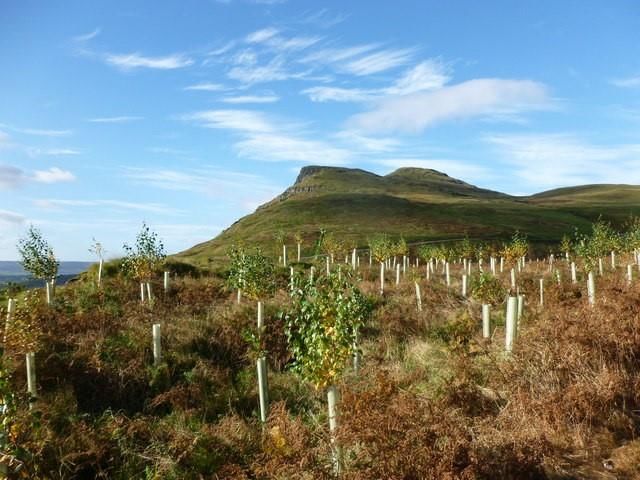
POSTNOTE
                                                                                                      Number 636 January 2021

Woodland Creation
                                                                     Overview
                                                                     ◼ Creating new woodland is widely agreed to
                                                                       be necessary for the UK to meet its 2050
                                                                       net zero greenhouse gas emissions target.
                                                                     ◼ All woodlands have the potential to take up
                                                                       and store CO2, produce timber, enhance
                                                                       biodiversity and deliver other benefits,
                                                                       including recreation and reduced flooding.
                                                                     ◼ The amount of CO2 taken up and other
                                                                       benefits or negative effects of woodland
                                                                       creation depend on where and how
                                                                       woodland is established, tree species
                                                                       present, site conditions and management.
Large-scale woodland creation is being                               ◼ Constraints on woodland creation include
promoted internationally to mitigate climate                           economic viability, land tenure, cultural
change. It can also supply other benefits, such                        values, permanence of land use change and
as improving biodiversity, air and water quality.                      environmental sensitivities.
This POSTnote summarises key factors                                 ◼ Incentives for woodland creation include
influencing how much carbon is taken up by                             government grants and carbon payments.
woodland, the different objectives of woodland                         Support could be increased through private
creation, constraints to increasing UK tree                            finance for multiple environmental benefits.
cover and different finance options.

Background                                                          Government has an overarching commitment to create 30,000
In July 2019, the UK legislated for a target of net zero national   hectares (ha) of woodland per year by 2025, 14,15 up from
GHG emissions by 2050 (PN-594).1 Analyses by the UK’s               13,660 ha in 2019–2020.12 If achieved, the commitments in Box
independent Climate Change Committee (CCC) indicate that            1 would create a total of 26,900 ha of woodland in 2025.
greenhouse gas removal (GGR) will be needed alongside rapid
emissions reduction to reach this target (PN-618, PN-549).2,3
                                                                    Sequestering carbon with trees
Growing trees draw carbon dioxide (CO2) from the atmosphere         The ‘carbon stock’ is the total amount of carbon stored on the
through photosynthesis and store some of this carbon in wood        land in plants and soil at a given time. A woodland is a ‘carbon
and in the soil; a process known as carbon sequestration.4,5        sink’ when it is overall removing and storing (sequestering)
Although there are concerns it could distract from emissions        carbon from the atmosphere (i.e. GGR), whereas a ‘carbon
reduction,6–8 increasing tree cover is one of the few proven        source’ transfers carbon to the atmosphere on balance. 16 In
GGR methods,4,5,9,10 and can deliver other benefits.                most instances, woodland growth on UK farmland will act as a
                                                                    carbon sink, increasing the carbon stock on the land by a finite
The UK has lost much of its historic forests and associated         amount over several decades.17 The rate of sink will be initially
range of habitats,11 and the UK’s 13% tree cover is well below      slow when trees are young, goes through a rapid phase, and
the European average of 37%.12,13 The CCC has recommended           then tails off as the woodland reaches maturity.4
increasing UK tree cover from 13% to 18%, improving
woodland management and adopting agroforestry to contribute         Site conditions
to the UK’s net zero target.3 This could annually sequester 15      On average across global temperate regions, 60% of woodland
million tonnes of CO2-equivalent GHGs (MtCO2e/year) by 2050.3       carbon is in the soil,18 although this varies greatly. The impact
The devolved administrations have their own woodland creation       of woodland creation on soil carbon stocks depends on the
targets, strategies and grant schemes (Box 1). The UK               existing amount of soil carbon and the level of ground
                                                                    disturbance caused by tree establishment (Box 2).19

The Parliamentary Office of Science and Technology, Westminster, London SW1A 0AA
02072192840 post@parliament.uk post.parliament.uk @POST_UK
POSTNOTE 636 January 2021 Woodland Creation Page 2
Box 1: Tree planting targets and grants Box 2: Influence of trees on soil carbon
◼ England. 2340 ha of woodland was planted in 2019–20.12 Soil organic carbon (SOC) usually increases in woodland on
Funding is available from the Countryside Stewardship non-peat soils, due to the addition of leaf, branch and root
scheme.20 The UK Government’s 25 Year Environment litter.16 This process continues, albeit slowly, even when
Plan goals require woodland creation,21 with relevant woodland reaches maturity.18 However, mechanical ground
provisions in the Agriculture Act 2020 and Environment preparation – clearing existing vegetation and improving
Bill 2020 (CBP-8702, CBP-8824). A planting target is drainage for tree establishment – disturbs the soil and can
expected and the Government announced funding for cause temporary or permanent SOC loss, depending on
6000 ha/year of woodland creation until 2025 in the previous land use and soil type.17,43
March 2020 Budget,22 with further support through the
Environmental Land Management scheme from 2024. 23,24 Soil in arable fields is typically low in carbon due to regular
cultivation for annual crops, so any woodland creation can
◼ Scotland. 11,050 ha of woodland was planted in 2019–
2020,12 with a target of 18,000 ha/year by 2024–2025.25 increase SOC.44 In contrast, uncultivated pasture and shallow
peat soils often have high SOC,43,45 which can be reduced
Funding is available through the Forestry Grant Scheme. 26
The rate of tree planting has increased from 4760 ha in through inappropriate ground preparation for trees.44,46
Woodland becomes a net carbon sink once sequestration in
2016–17 when the Mackinnon report was published.27
◼ Wales. 80 ha of woodland was planted in 2019–20.12 woody biomass compensates for this,17,32,43 and SOC
eventually recovers to pre-disturbance levels or above.46–48 A
There is a target of 2000 ha/year from 2020,28 with
funding available through the Glastir scheme.29 recent analysis has suggested that tree planting on shallow
peat can result in a net carbon source for several decades.33
◼ Northern Ireland. 200 ha of woodland was planted in
2019–20.12 Target of 900 ha/year from 2020 to 2030, 30 Deeper peat soils in functioning bogs slowly sequester
with funding through the Forest Expansion Scheme.31 carbon by forming peat from partially decayed vegetation
under waterlogged conditions. Historic tree planting schemes
drained the bogs, preventing further formation and causing
The timing of when woodland becomes a net carbon sink substantial SOC loss. 9% of the UK’s deep peats are
depends on tree growth, productivity and soil carbon,17,32 which degraded under forestry.49 Woodland creation on peat
in turn are influenced by site fertility and climate.33 deeper than 50 cm is now prohibited under the UK Forestry
Standard.49,50 Some argue that woodlands should be created
Long-term management and end use on higher value agricultural land to avoid all peat soils.33,51
If woodland is retained in a landscape, individual trees keep on
growing and sequestering carbon. This is broadly cancelled out increase net carbon sequestration as the woodland regrows.16
by some trees dying as the woodland ages,34 but carbon in This will reach a limit once new HWPs start replacing earlier
dead wood and soils can build up on a centuries timescale in wood products that have reached their end of life.17,52 As 80%
old-growth forests.35 The average carbon stock depends on the of wood used in the UK is imported,53 increasing domestic
frequency and severity of disturbances such as fires, storms, production could also reduce transport and overseas land use
droughts, pests and diseases that result in tree death or emissions.8
damage (and temporary carbon losses). 4,17 Although mature
woodland has a finite stock, it can continue to store carbon and Considerations in woodland creation
deliver other benefits (Box 3).36 Different stakeholders have differing objectives when creating
woodland (Box 3), which influence decisions on where
Harvested wood products woodland should be created, how it should be established, and
Some of the carbon sequestered in trees can be removed from what tree species should be included. The UK Forestry Standard
woodland in harvested wood products (HWPs). Along with soil sets out legal requirements and good practice guidelines for
disturbance caused by felling operations, 32 this reduces the sustainable forest management in the UK, and is used to assess
woodland’s carbon stock until trees regrow. 16 Reforestation of grant and planning applications.50
recently deforested sites ultimately only restores the carbon
stock previously lost and does not mitigate ongoing GHG Where to increase tree cover
emissions.6 However, some uses of HWPs may contribute to The possible benefits delivered by woodland are determined by
emissions reduction: location and can be modelled across landscapes.8,54,55 The
◼ Fencing, packaging, pallets. These have a relatively short modelling results depend on which benefits are desired, and
lifespan,37 but manufacturing such products from other site choice for woodland creation needs to account for local
materials may be more emissions-intensive.17,38 priorities.55–57 For example, creating woodland near urban areas
◼ Construction. Wood can replace fossil fuel intensive maximises recreation opportunities, with substantial social
materials such as steel.39–41 Under 20% of UK HWPs are used value.58 Trees are an integral part of urban green
in construction,37 but is increasing, in part through use of infrastructure, delivering a range of benefits (PB-26), but
resilient engineered products like cross-laminated timber.38,42 increasing urban tree cover is challenging.59,60
◼ Bioenergy. The emissions mitigation benefits of wood
bioenergy are contested,17 but bioenergy with carbon Woodland opportunity maps attempt to identify, at a coarse
capture and storage (BECCS) is predicted to play a major scale, land suitable for trees, avoiding priority habitats for
role in climate change mitigation (PN-618).2 biodiversity, peat soils and the most productive farmland. 51,61–64
They do not indicate land availability or other constraints to
HWPs are only a temporary carbon store; carbon will be woodland creation. Opportunity mapping typically finds that
released when the wood decays.16,17 However, on a timescale growing trees on low-quality arable land and cultivated
of decades, increasing long-term timber use in buildings can grassland has the maximum potential to increase biodiversityPOSTNOTE 636 January 2021 Woodland Creation Page 3
replacing dead trees and controlling grey squirrels and deer
Box 3: Non-carbon reasons for woodland creation
◼ Timber. Timber sales are the chief source of income for (PN-303, PN-325). Saplings are typically protected from deer
woodlands and are important for the rural economy in and livestock browsing by fencing, or plastic tubes in the case
parts of the UK. It requires expert woodland management of small-scale broadleaf planting. Later, thinning out can
and site appropriate species.65,66 improve the growth of remaining trees for timber and create
◼ Biodiversity. Woodland creation on agricultural land of open spaces and habitat patches benefiting biodiversity.
low habitat value is likely to increase biodiversity
locally,65,67–70 and benefit movement of wildlife across Agroforestry
landscapes.71–73 Just increasing woodland cover does not Agroforestry systems integrate agriculture and trees.106 This
necessarily benefit woodland species; the ability of species
includes planting fruit, nut or timber trees in wide-spaced rows
present to move between woodlands, the species of tree,
and the area, age and the management of woodland are across arable or pasture fields, along with shelterbelts (blocks
all key.72,74,75 Woodland creation should also be excluded of trees protecting crops and livestock from bad weather),
from existing biodiverse non-woodland habitats.50,76 hedges and small farm woodlands.107 Well-designed
◼ Game. Some land managers create and manage agroforestry can positively benefit agricultural productivity and
woodland to improve the sporting value of land, improve farm economic viability while delivering environmental
particularly for pheasant shooting.77–80 High pheasant
benefits.108–112 As such, agroforestry practices can increase tree
densities can decrease biodiversity locally, but the
woodlands and associated habitats have wider biodiversity cover across all agricultural land classes without compromising
benefits.81,82 food production and may appeal to more land managers than
◼ Flooding. Uptake and interception of water by trees and large-scale woodland creation.113
increased infiltration of water into woodland soils can
mitigate local flooding following heavy rainfall;83–86 Natural processes
contributing to catchment natural flood management Natural regeneration can lead to the development of new
(PN-623). For maximum benefit, the location of new woodland on previously open ground. This natural colonisation
woodlands should be spatially targeted. or regeneration can contribute to rewilding approaches,114,115
◼ Water quality and soil erosion. Broadleaf woodland
which generally seek to restore self-regulating natural
alongside rivers and streams can stabilise watercourse
banks,87,88 and benefit aquatic biodiversity by reducing processes (PN-537). Advantages of relying on natural processes
water temperature fluctuations.89–91 Trees can also include reduced risk of soil carbon loss (Box 2) and biodiversity
intercept nutrients and sediment washed off farmland, benefits from the diverse structure of natural tree growth, and
although grassy strips are generally more effective.92,93 locally adapted seed could increase woodland resilience. Some
◼ Air quality. Tree leaves can absorb the pollutant NGOs argue that natural processes should be the ‘default’
ammonia from the air,94 reducing damage to sensitive
means of creating woodland,116 but current grant schemes are
habitats from deposition on vegetation and soil (PN-
458).95–97 Removal of air pollutants by UK woodland saved not well suited to this.
£938 million of health costs in 2017.98
◼ Recreation, health and well-being. Woodland can Success depends on the availability of seed sources such as the
provide recreation opportunities, benefiting physical proximity of existing woodland. This could result in natural
health and mental well-being (PN-538).99 processes taking decades to create woodland or in the
dominance of a single early-arriving species like birch. Deer
browsing (eating tree vegetation, particularly young stems) also
and soil carbon, and the least impact on agricultural production.
needs to be prevented through costly fencing or shooting to
Compared with remote upland sites, these land types are also
allow trees to establish. Such factors can result in unreliable
likely to be readily accessible, both with machinery for tree
near-term (decadal) carbon sequestration from woodland
planting and management, and for public recreation. In
creation via natural processes compared with planting
addition, siting trees in hedgerows, along rivers and streams, in
trees.117,118 There is a lack of research in the UK to determine if
agroforestry systems, and small copses in gullies, steep
natural processes can deliver the magnitude or speed of carbon
banksides and difficult-to-manage field corners can increase
sequestration required to meet net zero targets.17
tree cover and sequester carbon with little or no loss of
farmland productivity.56,100–105 Tree species choice
Apart from Scots pine, all commercial conifer species grown in
How to increase tree cover the UK are non-native and were mostly introduced in recent
Woodland creation is not only achieved by planting trees; trees
centuries for timber production (such as Sitka spruce or
can be planted outside of woodland (such as in agroforestry
Corsican pine). Conifers account for 51% of the UK’s tree cover
systems), and on some sites woodland can establish from
and 92% of timber harvested from woodlands in 2019,
naturally available seeds. These methods can differ in cost,
although the proportions differ between UK countries.12,53,119
reliability of establishment and delivery of benefits.
Most common broadleaf species are native (such as oak or
Plantations beech) or were introduced sufficiently long ago to be
The vast majority of intentional woodland creation in the UK in considered naturalised (such as sycamore or sweet chestnut)
recent decades has relied on government-funded tree and are more valuable for biodiversity and other benefits (Box
planting,17 and is the most appropriate option for timber 3).68,69 For instance, 25% of UK species of conservation concern
production. Tree species choice and management requirements rely on native trees as a habitat or as a food source.120
depend on objectives, but careful planting and management
In optimal conditions, commercial conifer species grow and
increases the success of tree establishment and growth.
sequester carbon more rapidly than native broadleaves but
Management can include weeding to improve tree growth;POSTNOTE 636 January 2021 Woodland Creation Page 4
have a smaller total carbon stock as mature woodland.17 The land is cheaper.142,143 Land prices and the economic viability of
CCC includes both in their woodland creation scenarios,121 some farms is in part underpinned by the structure of current
because of the different timescales of sequestration.122 There agricultural subsidies,139,144 which are due to change in England
are concerns that focusing solely on speed of carbon from 2024 with the introduction of the Environmental Land
sequestration may result in monoculture plantations of fast- Management scheme.23 However, moving from annual
growing species that deliver few other benefits.36,56 However, agricultural revenue streams to long-term woodland-based
the UK Forestry Standard already requires diverse planting, with income is challenging.145 The CCC has called for a review of the
a maximum of 75% of one species planted in a woodland.50 tax treatment of woodland to ensure there is no tax
disadvantage of land use change from agriculture to forestry. 146
Resilience to pests and diseases
Many of the UK’s tree species are threatened by invasive pests Land tenure
and diseases (PN-394), such as ash dieback.123 Loss of tree 30–40% of UK farms are tenanted, with an average tenancy
species can have significant financial costs,124 and reduce duration of 3.7 years.121 Landlord permission is often required
carbon storage in woodlands.8,17 The UK’s nursery industry for, or tenancy agreement clauses may prevent, tree
would need to expand to achieve tree planting targets with UK- planting.138 Tenant farmers are also disincentivised from
grown saplings.8,125 Resilience can be increased by diversifying creating woodland as they are unlikely to see any return on
woodland species composition to include minority native their investment.79,139 The party that owns carbon sequestered
broadleaves like lime and hornbeam, along with non-native on tenanted farmland in a landlord-tenant relationship (and
species that have previously been trialled in the UK (such as therefore is able to sell the credits generated) is unclear.147
Macedonian pine or Japanese red cedar). Increased tree
species diversity has been linked to greater biomass production Land manager values, skills and expertise
and soil carbon storage in woodland.126–128 Farming and forestry are widely viewed as mutually exclusive
land uses.79,113,139 Resistance to tree planting can arise from
Adaptation to climate change
farmland being seen as ‘too good’ for woodland, a cultural
Climate change will affect the suitability of tree species in sites
desire to continue producing food, the permanence of forestry
across the UK, both directly through changes in temperature
limiting future land use options, and lack of awareness of the
and precipitation, and indirectly through altered frequency and
benefits of woodland creation.79,80,138,145,148–151 Many farmers
severity of disturbance events such as fire and arrival of pests
lack the skills, expertise and machinery to establish and
and diseases.64,129–131 This will also impact future land suitability
manage woodland,138,139 suggesting a need for advice and
for forestry or agriculture.132,133 Where biodiversity is a key
information to upskill farmers.79 Existing woodland owners also
management objective, the UK’s native tree species may be
identify a lack of skilled forestry contractors as a barrier to
sufficiently genetically diverse to be able to adapt to climate
expanding their woodlands.138,140,141
change.134 However, for timber production, if species
adaptation does not occur fast enough, assisted migration of Financing woodland creation
climate-adapted seedstock from warmer and drier locations Challenges with current government grants for woodland
may be necessary, such as French or Spanish seed for southern creation include insufficient payment rates, complexity of
England.135 Other adaptation options include enhanced tree applications, prescriptive planting requirements and
breeding and altered woodland management. changeability of schemes.79,80,138,140,141,152 For example, grants in
England are only available for woodland creation greater than 3
Constraints to woodland creation
ha,20,26,31 whereas Scotland and Wales support plantings above
The rate of woodland creation is increasing, but UK targets are
0.25 ha,29,153 or 0.2 ha in Northern Ireland.31 In addition to
not legally binding and during the past decade have been
restrictions on tree density and species composition, this makes
missed due to economic, land tenure, values (including
small-scale woodland creation financially unviable and limits
permanence of land use) and financing challenges.14,136,137
integration of trees into farming landscapes.
Economic viability The UK Government intends to involve private finance in
A key problem for forestry, if timber is the only source of woodland creation.21 ‘Blended finance’ refers to mixed public-
income, is the several decades required to achieve a return on and private-sector funding,154 which could include private
investment from establishment and management costs.138,139 payments for ecosystem services such as carbon sequestration,
Depending on the price of timber, woodland creation is often improved water quality or reduced flooding. 21,155 Separate
uneconomic.113 Government grants and/or private payments for payments for multiple benefits can be stacked to finance
carbon sequestration and other ecosystem services are widely otherwise unviable creation projects,156 as pioneered by the
perceived as necessary to incentivise woodland creation by Landscape Enterprise Networks (LENs) approach in
mitigating, at least in part, the early costs of management. Cumbria.154,157 Voluntary private payments for carbon offsets
Woodland creation also has an opportunity cost associated with verified through the Woodland Carbon Code are already part-
the income foregone from other possible uses of that land. funding UK projects, with a government-guaranteed price
Land is often more valuable if used for agriculture or available through the Woodland Carbon Guarantee.157–159
development.138,140,141 This is a constraint in lowland areas near Examples of small-scale local markets exist for non-carbon
towns and cities, particularly in southern England. This is ecosystem services, such as improved water quality and
reflected in land prices and is one reason why most large-scale reduced flooding (PN-627), via platforms including NatureBid,
woodland creation occurs in the uplands and Scotland where EnTrade and LENs.160–162
POST is an office of both Houses of Parliament, charged with providing independent and balanced analysis of policy issues that have a basis in science and technology.
POST is grateful to Matt Jordon for researching this briefing, to the BBSRC for funding his parliamentary fellowship, and to all contributors and reviewers. For further
information on this subject, please contact the co-author, Dr Jonathan Wentworth. Parliamentary Copyright 2021. Image copyright © CC BY-SA2.0 Alan O'DowdPOSTNOTE 636 January 2021 Woodland Creation Page 5 Endnotes 31. DAERA (2020). DAERA forestry grants. Department 1. BEIS (2019). UK becomes first major economy to of Agriculture, Environment and Rural Affairs. pass net zero emissions law. GOV.UK. 32. Mayer, M. et al. (2020). Tamm Review: Influence of 2. Committee on Climate Change (2019). Net Zero: The forest management activities on soil organic carbon stocks: A UK’s contribution to stopping global warming. Committee on knowledge synthesis. For. Ecol. Manag., Vol 466, 118127. Climate Change. 33. Matthews, K. B. et al. (2020). Not seeing the carbon 3. Climate Change Committee (2020). The Sixth Carbon for the trees? Why area-based targets for establishing new Budget - The UK’s path to Net Zero. woodlands can limit or underplay their climate change 4. Broadmeadow, M. et al. (2003). Forests, Carbon and mitigation benefits. Land Use Policy, Vol 97, 104690. Climate Change: the UK Contribution. 12. Forest Research. 34. Stephenson, N. L. et al. (2014). Rate of tree carbon 5. Royal Society (Great Britain) et al. (2018). accumulation increases continuously with tree size. Nature, Greenhouse gas removal. Vol 507, 90–93. 6. Lewis, S. L. et al. (2019). Comment on “The global 35. Luyssaert, S. et al. (2008). Old-growth forests as tree restoration potential”. Science, Vol 366, eaaz0388. global carbon sinks. Nature, Vol 455, 213–215. 7. Friedlingstein, P. et al. (2019). Comment on “The 36. Seddon, N. et al. (2019). Grounding nature-based global tree restoration potential”. Science, Vol 366, eaay8060. climate solutions in sound biodiversity science. Nat. Clim. 8. Natural Capital Committee (2020). Advice on using Change, Vol 9, 84–87. nature based interventions to reach net zero greenhouse gas 37. Crane, E. (2020). Woodlands for climate and nature: emissions by 2050. A review of woodland planting and management approaches in 9. Griscom, B. W. et al. (2017). Natural climate the UK for climate change mitigation and biodiversity solutions. Proc. Natl. Acad. Sci., Vol 114, 11645–11650. conservation. Report to the RSPB. 10. (2009). Combating climate change – a role for UK 38. Beyer, G. et al. (2011). Tackle Climate Change: Use forests. An assessment of the potential of the UK’s trees and Wood. 84. woodlands to mitigate and adapt to climate change. The 39. Amiri, A. et al. (2020). Cities as carbon sinks— synthesis report. Stationery Office. classification of wooden buildings. Environ. Res. Lett., Vol 15, 11. Hayhow, D. B. et al. (2019). The State of Nature 094076. 2019. The State of Nature partnership. 40. Harmon, M. E. (2019). Have product substitution 12. Forest Research (2020). Forestry Statistics 2020. A carbon benefits been overestimated? A sensitivity analysis of compendium of statistics about woodland, forestry and primary key assumptions. Environ. Res. Lett., Vol 14, 065008. wood processing in the United Kingdom. 41. Sathre, R. et al. (2010). Meta-analysis of greenhouse 13. FAO (2020). Global Forest Resources Assessment gas displacement factors of wood product substitution. 2020. FAO. Environ. Sci. Policy, Vol 13, 104–114. 14. Defra (2020). Tree planting on the up in England - 42. Waugh, A. et al. (2018). 100 Projects UK CLT. 324. Defra in the media. Waugh Thistleton Architects. 15. Johnson, B. (2020). Boris Johnson: Now is the time 43. Vanguelova, E. et al. (2018). Afforestation and to plan our green recovery. restocking on peaty soils – new evidence assessment. 43. 16. Morison, J. I. L. et al. (2012). Understanding the ClimateXChange. carbon and greenhouse gas balance of forests in Britain. 44. Guo, L. B. et al. (2002). Soil carbon stocks and land Forestry Commission. use change: a meta analysis. Glob. Change Biol., Vol 8, 345– 17. Matthews, R. (2020). ERAMMP Report-36 Annex-4: 360. Climate Change Mitigation. in Environment and Rural Affairs 45. Ostle, N. J. et al. (2009). UK land use and soil carbon Monitoring & Modelling Programme (ERAMMP). National Forest sequestration. Land Use Policy, Vol 26, S274–S283. in Wales Evidence Review. Welsh Government. 46. Vanguelova, E. I. et al. (2019). Impact of Sitka 18. Pan, Y. et al. (2011). A Large and Persistent Carbon spruce (Picea sitchensis (Bong.) Carr.) afforestation on the Sink in the World’s Forests. Science, Vol 333, 988–993. carbon stocks of peaty gley soils – a chronosequence study in 19. Hong, S. et al. (2020). Divergent responses of soil the north of England. For. Int. J. For. Res., Vol 92, 242–252. organic carbon to afforestation. Nat. Sustain., Vol 3, 694–700. 47. Dawson, J. J. C. et al. (2007). Carbon losses from soil 20. Rural Payments Agency (2020). Woodland Creation and its consequences for land-use management. Sci. Total grant: Countryside Stewardship (from 15 July 2020). 88. Environ., Vol 382, 165–190. 21. Defra (2018). A Green Future: Our 25 Year Plan to 48. Zerva, A. et al. (2005). Soil carbon dynamics in a Improve the Environment. Sitka spruce (Picea sitchensis (Bong.) Carr.) chronosequence on 22. HM Treasury (2020). Budget 2020: Delivering on our a peaty gley. For. Ecol. Manag., Vol 205, 227–240. promises to the British people. 49. Sloan, T. J. et al. (2018). Peatland afforestation in 23. Defra (2020). The Path to Sustainable Farming: An the UK and consequences for carbon storage. Mires Peat, 1– Agricultural Transition Plan 2021 to 2024. 66. 17. 24. Defra (2020). Nature Recovery Network. GOV.UK. 50. Forestry Commission (2017). The UK Forestry 25. Scottish Government (2020). Protecting Scotland, Standard. GOV.UK. Renewing Scotland. 51. Sing, L. et al. (2020). Analysis of Land Suitability for 26. Scottish Forestry (2019). The Forestry Grant Scheme. Woodland Expansion in Scotland: update 2020. A guide to grant options for woodland creation. Scottish ClimateXChange. Government. 52. Law, B. E. et al. (2011). Forest sector carbon 27. Mackinnon, J. (2016). Analysis of Current management, measurement and verification, and discussion of Arrangements for the Consideration and Approval of Forestry policy related to climate change. Carbon Manag., Vol 2, 73– Planting Proposals. 28. Scottish Government. 84. 28. Welsh Government (2018). Woodlands for Wales. 53. John Clegg & Co et al. (2019). The UK Forest Market The Welsh Government’s Strategy for Woodlands and Trees. Report. Issue 21. 29. Welsh Government (2020). Glastir Woodland Creation 54. Bailey, N. et al. (2006). Maximising the natural capital Rules Booklet Version 9. Welsh Government Rural Communities benefits of habitat creation: Spatially targeting native woodland - Rural Development Programme for Wales 2014 - 2020. using GIS. Landsc. Urban Plan., Vol 75, 227–243. 30. DAERA (2020). Poots’ planting pledge. Department 55. Verhagen, W. et al. (2016). Effects of landscape of Agriculture, Environment and Rural Affairs. configuration on mapping ecosystem service capacity: a review
POSTNOTE 636 January 2021 Woodland Creation                                                                                         Page 6

of evidence and a case study in Scotland. Landsc. Ecol., Vol           80.         Lawrence, A. et al. (2010). Landowners’ attitudes to
31, 1457–1479.                                                         woodland creation and management in the UK. 66. Forest
56.        Woodland Trust (2020). Emergency Tree Plan for the          Research.
UK. How to increase tree cover and address the nature and              81.         Sage, R. B. et al. (2020). Summary review and
climate emergency.                                                     synthesis: effects on habitats and wildlife of the release and
57.        Broadmeadow, S. et al. (2014). Opportunity mapping          management of pheasants and red-legged partridges on UK
for woodland creation to reduce diffuse water pollution and            lowland shoots. Wildl. Biol., Vol 2020,
flood risk in England and Wales. Forest Research.                      82.         Mason, L. R. et al. (2020). The impacts of non-native
58.        Bateman, I. J. et al. (2013). Bringing Ecosystem            gamebird release in the UK: an updated evidence review. RSPB
Services into Economic Decision-Making: Land Use in the United         Research Report No. 66. 170. RSPB Centre for Conservation
Kingdom. Science, Vol 341, 45–50.                                      Science, Sandy, UK.
59.        Doick, K. J. et al. (2020). Historic Urban Tree Canopy      83.         Marshall, M. R. et al. (2014). The impact of rural land
Cover of Great Britain. Forests, Vol 11, 1049.                         management changes on soil hydraulic properties and runoff
60.        Forestry Commission (2019). Urban Tree Challenge            processes: results from experimental plots in upland UK:
Fund. GOV.UK.                                                          IMPACT OF LAND MANAGEMENT CHANGE ON RUNOFF
61.        Terra Sulis Research (2020). Opportunity Woodland           PROCESSES. Hydrol. Process., Vol 28, 2617–2629.
Mapping in England. Report to Friends of the Earth.                    84.         Rotherham, I. D. (2015). Issues of water and
62.        Welsh Government Glastir Woodland Creation -                flooding for trees, woods and forests. Arboric. J., Vol 37, 200–
Opportunities Map.                                                     223.
63.        Sing, L. et al. (2013). Woodland expansion in               85.         Filoso, S. et al. (2017). Impacts of forest restoration
Scotland: an assessment of the opportunities and constraints           on water yield: A systematic review. PLOS ONE, Vol 12,
using GIS. Scott. For., Vol 67, 9.                                     e0183210.
64.        Bell, G. et al. (2020). Tree Suitability Modelling –        86.         Confor (2016). Forestry and Flooding.
Planting Opportunities for Sessile Oak and Sitka Spruce in             87.         McIvor, I. R. et al. (2007). Structural root growth of
Wales in a Changing Climate. Environment Systems Ltd.                  young Veronese poplars on erodible slopes in the southern
65.        Confor (2020). Biodiversity, forestry and wood. An          North Island, New Zealand. Agrofor. Syst., Vol 72, 75–86.
analysis of the biodiversity benefits of modern forestry and           88.         Hubble, T. C. T. et al. (2010). The role of riparian
wood production.                                                       trees in maintaining riverbank stability: A review of Australian
66.        Greig, S. (2015). A Long Term Carbon Account for            experience and practice. Ecol. Eng., Vol 36, 292–304.
Forestry at Eskdalemuir. Confor.                                       89.         Johnson, M. F. et al. (2015). Seeing the landscape for
67.        Quine, C. P. et al. (2010). Plantations of exotic tree      the trees: Metrics to guide riparian shade management in river
species in Britain: irrelevant for biodiversity or novel habitat for   catchments. Water Resour. Res., Vol 51, 3754–3769.
native species? Biodivers. Conserv., Vol 19, 1503–1512.                90.         Garner, G. et al. (2015). Inter-annual variability in
68.        Stephens, S. S. et al. (2007). Forest Plantations and       the effects of riparian woodland on micro-climate, energy
Biodiversity: A Fresh Perspective. J. For., 7.                         exchanges and water temperature of an upland Scottish
69.        Bremer, L. L. et al. (2010). Does plantation forestry       stream. Hydrol. Process., Vol 29, 1080–1095.
restore biodiversity or create green deserts? A synthesis of the       91.         Hannah, D. M. et al. (2015). River water temperature
effects of land-use transitions on plant species richness.             in the United Kingdom: Changes over the 20th century and
Biodivers. Conserv., Vol 19, 3893–3915.                                possible changes over the 21st century. Prog. Phys. Geogr.
70.        Burton, V. et al. (2018). Reviewing the evidence base       Earth Environ., Vol 39, 68–92. SAGE Publications Ltd.
for the effects of woodland expansion on biodiversity and              92.         Udawatta, R. P. et al. (2010). Agroforestry and grass
ecosystem services in the United Kingdom. For. Ecol. Manag.,           buffer effects on water quality in grazed pastures. Agrofor.
Vol 430, 366–379.                                                      Syst., Vol 79, 81–87.
71.        Hodgson, J. A. et al. (2011). Habitat re-creation           93.         Cole, L. J. et al. (2020). Managing riparian buffer
strategies for promoting adaptation of species to climate              strips to optimise ecosystem services: A review. Agric.
change. Conserv. Lett., Vol 4, 289–297.                                Ecosyst. Environ., Vol 296, 106891.
72.        Whytock, R. C. et al. (2018). Bird-community                94.         Patterson, P. H. et al. (2008). The Potential for Plants
responses to habitat creation in a long-term, large-scale natural      to Trap Emissions from Farms with Laying Hens. 1. Ammonia.
experiment. Conserv. Biol., Vol 32, 345–354.                           J. Appl. Poult. Res., Vol 17, 54–63.
73.        Feber, R. (2017). The role of trees outside woods           95.         Dragosits, U. et al. (2006). The potential for spatial
(TOWs) in contributing to the ecological connectivity and              planning at the landscape level to mitigate the effects of
functioning of landscapes. Woodland Trust.                             atmospheric ammonia deposition. Environ. Sci. Policy, Vol 9,
74.        Irmler, U. et al. (2010). Species richness of saproxylic    626–638.
beetles in woodlands is affected by dispersion ability of species,     96.         Bealey, W. J. et al. (2014). Modelling agro-forestry
age and stand size. J. Insect Conserv., Vol 14, 227–235.               scenarios for ammonia abatement in the landscape. Environ.
75.        Lawton, J. (2010). Making Space for Nature: A review        Res. Lett., Vol 9, 125001.
of England’s Wildlife Sites and Ecological Network. Report to          97.         Rowe, E. et al. (2019). Trends Report 2019: Trends
Defra. 119.                                                            in critical load and critical level exceedances in the UK. Report
76.        Veldman, J. W. et al. (2019). Comment on “The               to Defra under Contract AQ0843, CEH Project NEC05708. 80.
global tree restoration potential”. Science, Vol 366, eaay7976.        98.         Office for National Statistics (2020). Woodland
77.        PACEC (2014). The Value of Shooting. The economic,          natural capital accounts, UK - Office for National Statistics.
environmental and social contribution of shooting sports to the        99.         Doimo, I. et al. (2020). Forest and Wellbeing:
UK.                                                                    Bridging Medical and Forest Research for Effective Forest-Based
78.        Oldfield, T. E. E. et al. (2003). Field sports and          Initiatives. Forests, Vol 11, 791. Multidisciplinary Digital
conservation in the United Kingdom. Nature, Vol 423, 531–              Publishing Institute.
533. Nature Publishing Group.                                          100.        NFU (2019). Achieveing Net Zero. Farming’s 2040
79.        Lawrence, A. et al. (2014). Private landowners’             goal. National Farmers’ Union.
approaches to planting and managing forests in the UK: What’s          101.        Morley, K. et al. (2012). Clough Woodland. Planting
the evidence? Land Use Policy, Vol 36, 351–360.                        new woodland. Moors for the Future Partnership.
POSTNOTE 636 January 2021 Woodland Creation                                                                                       Page 7

102.       Axe, M. S. et al. (2017). Carbon storage in hedge         124.      Hill, L. et al. (2019). The £15 billion cost of ash
biomass—A case study of actively managed hedges in England.          dieback in Britain. Curr. Biol., Vol 29, R315–R316.
Agric. Ecosyst. Environ., Vol 250, 81–88.                            125.      Confor (2019). Woodland carbon targets for the UK.
103.       Beckert, M. R. et al. (2016). Soil and tree biomass       126.      Gamfeldt, L. et al. (2013). Higher levels of multiple
carbon sequestration potential of silvopastoral and woodland-        ecosystem services are found in forests with more tree species.
pasture systems in North East Scotland. Agrofor. Syst., Vol 90,      Nat. Commun., Vol 4, 1340. Nature Publishing Group.
371–383.                                                             127.      Tilman, D. et al. (2014). Biodiversity and Ecosystem
104.       Upson, M. A. et al. (2016). Soil carbon changes after     Functioning. Annu. Rev. Ecol. Evol. Syst., Vol 45, 471–493.
establishing woodland and agroforestry trees in a grazed             128.      Martin-Guay, M.-O. et al. (2019). Implications of
pasture. Geoderma, Vol 283, 10–20.                                   contrasted above‐ and below‐ground biomass responses in a
105.       Fornara, D. A. et al. (2018). Land use change and soil    diversity experiment with trees. J. Ecol., Vol 108, 405–414.
carbon pools: evidence from a long-term silvopastoral                129.      (2016). Agriculture and Forestry Climate Change
experiment. Agrofor. Syst., Vol 92, 1035–1046.                       Impacts Summary Report, Living With Environmental Change.
106.       (2018). Temperate Agroforestry Systems. CABI.             130.      Ray, D. et al. (2010). Climate change: impacts and
107.       (2019). The Agroforestry Handbook - Agroforestry for      adaptation in England’s woodlands. Forestry Commission
the UK. Soil Association.                                            England.
108.       Kay, S. et al. (2019). Agroforestry is paying off –       131.      Kirby, K. J. et al. (2009). The adaptation of UK
Economic evaluation of ecosystem services in European                forests and woodlands to climate change. in Combating
landscapes with and without agroforestry systems. Ecosyst.           Climate Change - a role for UK forests. An assessment of the
Serv., Vol 36, 100896.                                               potential of the UK’s trees and woodlands to mitigate and adapt
109.       Torralba, M. et al. (2016). Do European agroforestry      to climate change. The Stationery Office, Edinburgh.
systems enhance biodiversity and ecosystem services? A meta-         132.      Gimona, A. et al. (2012). Woodland networks in a
analysis. Agric. Ecosyst. Environ., Vol 230, 150–161.                changing climate: Threats from land use change. Biol.
110.       Pent, G. J. (2020). Over-yielding in temperate            Conserv., Vol 149, 93–102.
silvopastures: a meta-analysis. Agrofor. Syst., Vol 94, 1741–        133.      Ritchie, P. D. L. et al. (2019). Large changes in Great
1758.                                                                Britain’s vegetation and agricultural land-use predicted under
111.       Jordon, M. W. et al. (2020). Implications of              unmitigated climate change. Environ. Res. Lett., Vol 14,
Temperate Agroforestry on Sheep and Cattle Productivity,             114012.
Environmental Impacts and Enterprise Economics. A Systematic         134.       Natural England et al. (2020). Climate Change
Evidence Map. Forests, Vol 11, 1321.                                 Adaptation Manual - Evidence to support nature conservation in
112.       Varah, A. et al. (2014). Delivering food production,      a changing climate, 2nd Edition. Natural England.
biodiversity and other ecosystem services in UK agriculture: can     135.       Whittet, R. et al. (2019). Genetic considerations for
agroforestry do it all? Agric. Environ. X, Vol Delivering Multiple   provenance choice of native trees under climate change in
Benefits from our Land: Sustainable Development in Practice,         England. Forestry Commission Research Report. Forestry
99–105.                                                              Commission.
113.       Hardaker, A. (2018). Is forestry really more profitable   136.       Marsh, S. (2020). Disappointing planting figures in
than upland farming? A historic and present day farm level           England still far below Government target. Woodland Trust.
economic comparison of upland sheep farming and forestry in          137.       BBC News (2020). Climate change: Wales lags behind
the UK. Land Use Policy, Vol 71, 98–120.                             on planting new trees.
114.       Dandy, N. et al. (2019). Rewilding forestry. For.         138.       Eves, C. et al. (2014). Analysis of the potential effects
Policy Econ., Vol 109, 101996.                                       of various influences and interventions on woodland
115.       Sandom, C. J. et al. (2019). Rewilding in the English     management and creation decisions, using a segmentation
uplands: Policy and practice. J. Appl. Ecol., Vol 56, 266–273.       model to categorise sub-groups - Volume 1: Summary for
116.       Rewilding Britain (2020). Reforesting Britain: Why        Policy-Makers. Defra.
natural regeneration should be our default approach to               139.       McAleenan, B. (2019). Bigger, Better Forests. Policy
woodland expansion.                                                  Exchange.
117.       Lamb, A. et al. (2016). The potential for land sparing    140.       Royal Forestry Society (2020). Woodland Creation
to offset greenhouse gas emissions from agriculture. Nat.            Opportunities and Barriers - survey results 2020.
Clim. Change, Vol 6, 488–492.                                        141.       Hemery, G. et al. (2020). Awareness, action and
118.       Harmer, R. et al. (2001). Vegetation changes during       aspirations in the forestry sector in responding to environmental
100 years of development of two secondary woodlands on               change: Report of the British Woodlands Survey 2020. 33.
abandoned arable land. Biol. Conserv., Vol 101, 291–304.             142.       Savills (2019). The Farmland Market.
119.       John Clegg Consulting Ltd (2016). Wood Fibre              143.       Savills et al. (2019). The Forestry Market.
Availability & Demand in Britain 2013-2035. Prepared for             144.       O’Neill, C. et al. (2020). Forest regeneration on
Confederation of Forest Industries (Confor), Forestry                European sheep pasture is an economically viable climate
Commission, UK Forest Products Association (UKFPA) & Wood            change mitigation strategy. Environ. Res. Lett.,
Panel Industries Federation (WPIF).                                  145.       Wynne-Jones, S. (2013). Carbon blinkers and policy
120.       Webb, J. R. et al. (2010). Managing for species:          blindness: The difficulties of ‘Growing Our Woodland in Wales’.
Integrating the needs of England’s priority species into habitat     Land Use Policy, Vol 32, 250–260.
management.                                                          146.       Committee on Climate Change (2020). Land use:
121.       Committee on Climate Change (2018). Land use:             Policies for a Net Zero UK.
Reducing emissions and preparing for climate change.                 147.       National Trust Personal Communication.
Committee on Climate Change.                                         148.       Allison, L. (1996). On Planning a Forest: Theoretical
122.       Dewar, R. C. et al. (1992). Carbon sequestration in       Issues and Practical Problems. Town Plan. Rev., Vol 67, 131–
the trees, products and soils of forest plantations: an analysis     143. Liverpool University Press.
using UK examples. Tree Physiol., Vol 11, 49–71.                     149.       Watkins, C. et al. (1996). Constraints on farm
123.       Broome, A. et al. (2019). Responding to ash dieback       woodland planting in England: a study of Nottinghamshire
(Hymenoscyphus fraxineus) in the UK: woodland composition            farmers. Forestry, Vol 69, 167–176.
and replacement tree species. For. Int. J. For. Res., Vol 92,        150.       Burton, R. J. F. (2004). Seeing Through the ‘Good
108–119.                                                             Farmer’s’ Eyes: Towards Developing an Understanding of the
POSTNOTE 636 January 2021 Woodland Creation                         Page 8

Social Symbolic Value of ‘Productivist’ Behaviour. Sociol.
Rural., Vol 44, 195–215.
151.       Church, A. et al. (2008). Landowner responses to
financial incentive schemes for recreational access to
woodlands in South East England. Land Use Policy, Vol 25, 1–
16.
152.       Urquhart, J. et al. (2010). Private Ownership and
Public Good Provision in English Woodlands. Small-Scale For.,
Vol 9, 1–20.
153.       Scottish Government (2016). Woodland Creation –
Small or Farm Woodland.
154.       BEIS (2019). Green Finance Strategy. Transforming
Finance for a Greener Future. HM Government.
155.       Dittrich, R. et al. (2019). A cost‐benefit analysis of
afforestation as a climate change adaptation measure to reduce
flood risk. J. Flood Risk Manag., Vol 12,
156.       Elliott, J. et al. (2019). New routes to decarbonise
land use with Natural Infrastructure Schemes. Green Alliance.
157.       3keel et al. (2020). Integrating Natural Capital
Schemes. Opportunity analysis for integrating carbon markets
into multifunctional landscape marketplaces, such as those
developed by the Landscape Enterprise Networks (LENs)
approach.
158.       Allen, M. et al. (2020). The Oxford Principles for Net
Zero Aligned Carbon Offsetting. 15. University of Oxford.
159.       Forestry Commission (2019). Woodland Carbon
Guarantee. GOV.UK.
160.       Curtis, T. Landscape innovation. 3Keel.
161.       Environment Agency et al. NatureBid.
162.       EnTrade EnTrade.
You can also read


