2016 USED CAR MARKET REPORT - Manheim
←
→
Page content transcription
If your browser does not render page correctly, please read the page content below

2016 USED CAR MARKET REPORT

21ST EDITION
2016 USED CAR MARKET REPORT

  2     A NOTE FROM JANET BARNARD, PRESIDENT, MANHEIM NORTH AMERICA

  4     Y EAR IN REVIEW AND OUTLOOK
        Autos have been a gem in an otherwise dull economy, with new unit sales in 2015 up 68 percent from 2009’s trough.
        Auto loans outstanding have grown from $700 billion in 2011 to over $1.1 trillion today.

12
   R EMARKETING INDUSTRY OVERVIEW
   NAAA-member auction sales rose 6.3 percent in 2015 to 9.3 million units, and volumes will continue to rise in 2016 and
        2017. Meanwhile, wholesale prices have been on an elevated progression for six years; increases in 2015 brought prices
        to near-record levels (just 1.2 percent short of the 2011 high). With wholesale auto transactions taking place through
        numerous buying channels, technology tools emphasizing speed and efficiency are more critical than ever.

22      D EALERS
        New vehicle sales increased for an unprecedented sixth consecutive year, and the total, 17.5 million, was a record.
        Franchised dealers also recorded increased used vehicle sales for the sixth straight year, while a record 2.5 million
        certified pre-owned units were sold. Dealers consigned 56.5 percent of all units sold at wholesale auctions in 2015.
         // Q&A with NADA Chairman Jeff Carlson
         // Q&A with NIADA President Frank Fuzy
         // Q&A with Raj Sundaram, Cox Automotive

45      R ENTAL
        Total rental car industry revenue reached a record $27.1 billion in 2015 even though revenue per unit remained flat.
        A downward adjustment in fleet size should allow for better revenue-per-vehicle numbers in 2016.

54      L EASING
        New lease originations reached an all-time high in 2015, just shy of 4 million units. An increase in off-lease returns in
        the years ahead will lead to an increase in CPO sales. In 2015, for example, CPO sales and off-lease volumes were
        nearly identical.

62      R EPOSSESSIONS
        The auto finance market topped $1 trillion in loans outstanding in 2015 thanks to record new vehicle sales and higher
        used unit volumes and pricing. Despite exceptional portfolio performance, repossessions grew modestly simply because
        of the larger number of contracts outstanding.

70      F LEETS
        New vehicles purchased by commercial fleets grew by more than 2 percent in 2015 to 629,000 units, the sixth
        consecutive yearly increase. While government fleet purchases declined slightly, commercial fleet purchases should
        continue to grow as a result of higher employment levels.

78
   S ALVAGE
   In 2015, the salvage marketplace experienced an increase in volume and moderate decrease in prices, while overall
        demand remained strong. Total loss vehicle prices dropped in concert with a decline in scrap metal prices. Consignors
        continue to sell an increasing number of clean-titled vehicles in salvage lanes when the vehicles have excessive miles
        or wear and tear.

82      I NTERNATIONAL
        Passenger car sales reached a record 89.4 million worldwide in 2015, with China retaining its position as the largest
        car market even though sales stagnated there. With U.S. new car sales continuing to rise and demand for vehicles
        strengthening in developing countries, look for a significant spike in used car exports.

92
   C OX AUTOMOTIVE
2016 USED CAR MARKET REPORT

A NOTE FROM JANET BARNARD

                                 2016 USED CAR MARKET REPORT

                                        2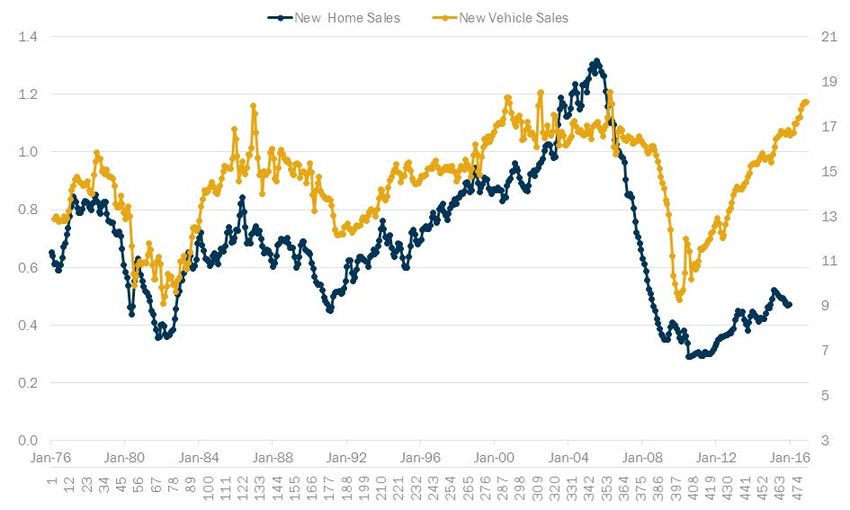
WE LIVE IN AN AGE OF ENDLESS POSSIBILITIES.
And, this reality is accelerating, as previously unforeseen developments
seem to arise every week. It requires us to think more deliberately
about our direction and how we will invest resources, focus our time
and meet changing client needs. We’ve reached a point in our industry
where our efforts depend upon strategic vision and intent.
For Manheim, this means delivering innovation, empowering our
dealer and commercial clients with new products and services,
and leading positive change in our industry.
As we look ahead to 2016 and beyond, Manheim will strive to
create greater levels of efficiency, enhance the client experience,
and partner with clients for success.
To support these objectives, we encourage you to explore the many facts, figures, and trend analyses
highlighted throughout our 21st annual edition of Manheim’s Used Car Market Report.
Drive Greater Levels of Efficiency
We recognize that efficiency is the new currency for our business. It is critical, especially in light of client
demands for speed and delivery, to support their profitability and future growth. They seek greater levels
of productivity in every aspect of their — and our — operations. In response, Manheim’s services range from
helping clients buy and sell vehicles efficiently via physical and digital channels, to improving the wholesale-
to-retail process by reducing time and steps associated with reconditioning, inspections and delivery.
Enhance the Client Experience
We believe delivering the optimal client experience will be the differentiator. That’s why we are investing
more than $150 million to develop new mobile apps, online self-service tools, financial solutions, and more
to enhance the experience for our clients and provide remote access to live sales anytime, anywhere.
Last year, we expanded our mobile auction network to bring the auction experience directly to dealers’
lots. By doing so, we reach underserved markets while helping dealers expand their customer base.
Partner for Success with Clients
Even in a digital world, Manheim believes that building deep, collaborative relationships with clients
contributes to new innovations and revenue streams. For example, when Hendrick Automotive Group
needed to find a better way to remarket trade-ins, it looked to Manheim to help create its first on-site
auction lane. In 2014, we opened Manheim Charleston (S.C.), a one-lane, retrofitted operation to take
wholesale trade-in vehicles from Hendrick’s 11 area facilities, consolidating its remarketing capabilities
and increasing efficiencies. And a year later, Manheim partnered with Hendrick again to establish
Manheim Charlotte (Concord, N.C.), a four-lane location that allows Hendrick to more efficiently source
and remarket vehicles for its 26 area dealerships. Working with this client, we created a solution that
could not have been imagined just a few years ago.
And for more than two decades, the Used Car Market Report itself has been a prime example of our
partnership with clients. Using research and expertise found in this report can help clients identify
optimal pricing, analyze buying and selling channels, and find inventory in a more coordinated way.
In the year ahead, we’re committed to delivering new and better ways to help clients succeed. As we
move forward, we invite you to challenge us to further innovate and make changes that truly lead to
2016 USED CAR MARKET REPORT
greater speed and efficiencies — and, ultimately, to your success.
Sincerely,
Janet Barnard
President, Manheim North America
3
2016 USED CAR MARKET REPORT

YEAR IN REVIEW AND OUTLOOK

                                 2016 USED CAR MARKET REPORT

                                        4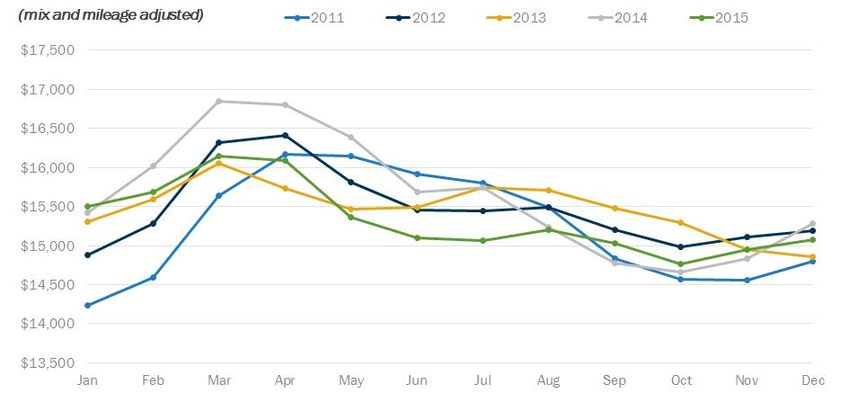
2015 HIGHLIGHTS
The economy added 2.7 million jobs in 2015, bringing the total increase
over the past six years to 12.5 million.

Homeownership rates hit a 48-year low in 2015; since 2006, the number
of single-family homes occupied by renters has grown 34 percent, while
the number occupied by owners has declined slightly.

Autos have been a gem in an otherwise dull economy. New unit sales in
2015 were up 68 percent from 2009’s trough, and auto loans outstanding
grew from $700 billion in mid-2011 to over $1.1 trillion today.

Only three times in the last 61 years has a double-digit increase in new
vehicle sales occurred when real GDP was growing less than 3.3 percent.
Those three years came consecutively: 2010, 2011 and 2012. Only once
                                                                           2016 USED CAR MARKET REPORT

have new vehicle sales increased in a year when GDP grew less than
1.5 percent. That year was 2013.

Dollar appreciation held back multinational profits and manufacturing in
the U.S., but not enough to erase overall economic growth. Look for a
repeat in 2016.

                                                                                  5
Whether you’re measuring unit sales, revenues, operating efficiency, or profits; whether you’re
focused on retail or wholesale; or whether you’re interested in new or used, it was another good year
for the automotive industry. The industry, however, has always been very cyclical (often, harmfully so),
so it is only natural to wonder when this pattern will inflect and what the trajectory will be.
The loss of jobs during the Great Recession was stunning. The peak to trough swing in
employment was 6.3 percent — that represented a loss of 8.8 million jobs. After steady
monthly increases starting in 2009, total employment made it back to its previous peak in
May 2014 — and now it is nearly 5 million higher.
All indications are that the good times will continue to roll awhile longer, and even when it rolls
over, the descent will be gradual. Why such optimism? From the macro perspective, the slower-than-
average recovery has created a more sustainable one. Excesses are not building up. Within the auto
industry, we do see growth that is significantly above the overall economy but, here too, no excesses.
The auto industry’s recovery has been driven by pent-up demand, structural industry shifts, exciting
new product, a credit environment that is extremely favorable (but not reckless), and other helpful
industry-specific factors. In other words, the growth was earned, not stolen from the future.
To be sure, the overall economy faces several downside risks (any one of which could topple the
less-than-robust recovery), but the odds of their happening in 2016 remain relatively low. Before
noting those possible threats, let’s review the more likely outlook for various forces in the economy.
“FULL EMPLOYMENT,” ANNUAL CHANGE IN U.S. EMPLOYMENT
NOT “ROBUST EMPLOYMENT”
The economy added 2.7 million jobs in 2015,
bringing the total increase over the past six years
to 12.5 million. That’s a number that just by itself
supports the strength of the auto industry. So
why haven’t things been even better? Because
when you combine all of the various labor market
metrics, it paints a picture of “full employment,”
not “robust employment.”
Consider, for example, that the labor force
participation rate hovers near 40-year lows,
wage growth has been mediocre, labor force
productivity growth is abysmal, and involuntary
part-time work remains high.
The loss of jobs during the Great Recession was
stunning. The peak to trough swing in employment
2016 USED CAR MARKET REPORT
was 6.3 percent — that represented a loss of 8.8 million
jobs. After steady monthly increases starting in 2009,
total employment made it back to its previous peak
in May 2014 — and now it is nearly 5 million higher.
Full-time employment, however, didn’t get back to
its previous peak until October of last year. And,
at the start of 2016, the number of people employed
full time was basically the same as it was way back
in November 2007. Given that, it’s not surprising
Source: Bureau of Labor Statistics
6
YEAR IN REVIEW AND OUTLOOK
that the health of the labor market varies as widely 2015. Relatedly, the number of job seekers per job
as ever with respect to different socioeconomic opening also hit a new low in 2015. Those conditions
and demographic groups. give households the confidence to borrow — and,
more important, lenders the willingness to lend. It
But even though the labor market has been less than also creates a virtuous circle where low delinquencies
robust, it has been exceptionally stable. Witness the further increase the willingness to lend, which in turn
steep drop in initial jobless claims. Adjusted for leads to higher spending and a healthy labor market.
employment, they were at all-time lows throughout
PERCENT CHANGE FROM PREVIOUS PEAK
Source: Bureau of Labor Statistics
INITIAL JOBLESS CLAIMS
2016 USED CAR MARKET REPORT
Source: Bureau of Labor Statistics
7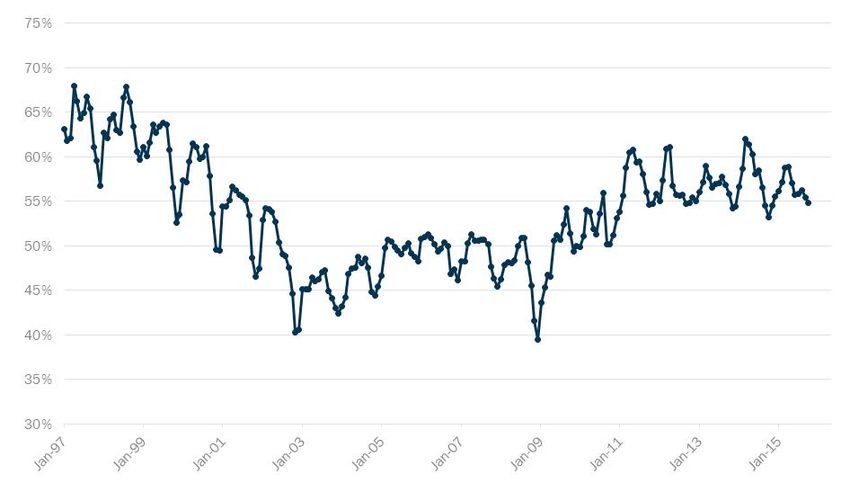
YEAR IN REVIEW AND OUTLOOK
THE FED MAKES ITS MOVE Fed’s not acting until mid-December, the dollar moved
The Federal Reserve hiked the targeted federal funds sideways for the remainder of 2015. Now, we have once
rate by 25 basis points at its mid-December meeting. again introduced the ingredients for another leg up in
(That was later in the year than most analysts were the dollar and the resulting downside to exports and
expecting at the start of 2015.) The action (and inaction multinational earnings — not to mention the impact on
before that) generated a lot of press coverage, and it is competitive dynamics in the auto industry. All of those
expected that the Fed will make a couple more hikes in issues are manageable, however.
2016; but both the availability and cost of retail credit
will remain supportive to the new and used vehicle What is of more concern is the possible volatility in
markets in 2016. capital flows created by a tightening Fed and easing
European Central Bank, Bank of Japan, and People’s
Where we will see the repercussions, if any, will be in Bank of China. The market reaction from mid-December
exchange rates, international capital flows, high-yield to the end of the year was positive. The first week of
spreads, and possibly a minor headwind to the real January, not so much — but there were a lot of other
estate market. Between September 2014 and March issues in play. Given the sensitivities of global economies,
2015, the U.S. dollar strengthened significantly against we expect the Fed will err on the side of caution in
the yen, the euro, and a broad basket of international 2016. Nevertheless, there are several economies around
currencies based on the scenario that the Fed would the world that could slip into a severe slide even without
tighten while other central banks eased. With the outside influences.
EXCHANGE RATES
PERCENTAGE GAIN IN U.S. DOLLAR FROM JANUARY 2014
2016 USED CAR MARKET REPORT
Source: Federal Reserve Board
8
YEAR IN REVIEW AND OUTLOOK
NEW HOME SALES VS. NEW VEHICLE SALES
Seasonally Adjusted Annual Rate— In Millions—3-month average
Source: U.S. Census Bureau
HOUSING: SOME BENEFITS, investment and mal-investment in real estate destroyed
BUT UNEVENLY DIVIDED the finances of many households in the last cycle; but
The causes and consequences of the Great Recession over the longer term, homeownership has served as a
were concentrated within the housing industry; safe, leveraged investment and retirement vehicle for
therefore, it was always expected that the recovery a population that saves too little. Additionally, rapidly
would be measured. It has been. Nevertheless, the rising rents have led to a significant, and growing,
improvements in the housing industry have contributed number of households that have excessively high rent-
to economic growth and household wealth over the to-income ratios. That is not the sort of thing that will
past several years. lead to a robust new and used car market in the future.
Home sales and starts remain well below their pre- The future course of housing will be a major determinant
recession levels, and the pace of recovery stands in stark of the economy’s strength since the contribution from
contrast to that of autos (an industry that housing used autos has probably peaked. And what that course will
to move in lockstep with); but with home values rising be is totally unclear. Optimists point to the large number
and mortgage obligations still well below their peak, net of millennials who will be entering (or have postponed)
equity in real estate has risen by more than $6 trillion their household formation stage in coming years, but
over the past four years and owners’ equity as a percent this may simply lead to more multifamily construction
2016 USED CAR MARKET REPORT
of value has returned to pre-recession levels. (already at a 30-year high) and more renting of single-
family homes. Those forces add to economic growth,
Unfortunately, that equity growth has only widened but they do not drive household wealth for the younger
the inequality of income and wealth in the U.S. — an generation or spread that wealth more evenly.
issue that is now so pronounced that it promises to
stifle future growth. Homeownership rates hit a 48-year It is also uncertain what the impact of higher mortgage
low in 2015. Since 2006, the number of single-family rates, and no easing in lending standards, will have on
homes occupied by renters has grown 34 percent, while the ability of first-time homebuyers (a group largely
the number occupied by owners has declined slightly. absent to date) to jump-start housing. It is clear, however,
Thus, the benefits of real estate price appreciation will that the benefits of refinancings are over. Over the past
not flow to many in the middle class. It is true that over- five years, there were over 23 million home refinancings.
9YEAR IN REVIEW AND OUTLOOK
OWNERS’ EQUITY AS % OF REAL ESTATE VALUE
Source: Federal Reserve Board
AUTO INDUSTRY CONTINUES TO In the graph presented here, each dot represents
OUTPERFORM THE OVERALL ECONOMY one of the 61 years between 1955 and 2015. The
Autos have clearly been a gem in an otherwise dull x-axis shows the annual percent change in real GDP
economy. New unit sales in 2015 were up 68 percent for that year, and the y-axis is the percent change
from 2009’s trough, and auto loans outstanding grew in new vehicle sales. Naturally, there is a strong
from $700 billion in mid-2011 to over $1.1 trillion today. correlation. And naturally, there will be outliers since
This outsized growth in the auto industry defied the it is based on simple annual percent changes.
historic relationship between new vehicle sales and
overall economic growth.
CHANGE IN NEW UNIT SALES VS. CHANGE IN REAL GDP: 1955–2015
2016 USED CAR MARKET REPORT
Source: Automotive News & Bureau of Economic Analysis
10YEAR IN REVIEW AND OUTLOOK
So how strange have the past six years been?
Consider this:
• Only three times in the past 61 years has a double-
digit increase in new vehicle sales occurred when real
GDP was growing less than 3.3 percent. Those three
years came consecutively: 2010, 2011, and 2012.
• Onlyonce have new vehicle sales increased in a
year when GDP grew less than 1.5 percent. That year
was 2013.
• 2014 and 2015 were closer to the trend line, but
still above it for the sixth consecutive year.
A WORLD CONNECTED BY CAPITAL AND CONFLICT
We ended last year’s Review and Outlook with the
same subhead as above. It certainly wasn’t the most
profound of statements, but it was prescient. Significant
terrorist events showed their ugly heads at both the
beginning and end of the year, and many of the months
in between. The capital conflict in 2015 was more
erosion than explosion. Dollar appreciation held back
multinational profits and manufacturing in the U.S., but
not enough to erase overall economic growth. Look for a
repeat in 2016.
Export/import activity as a share of GDP is considerably
less for the U.S. than for other major developed
countries, but that simple accounting doesn’t capture the
critical importance of international capital flows or the
dollar’s role as the world’s reserve currency. Our financial
markets are not immune to foreign economic forces, and
those outside influences will likely remain negative in
2016 as many of the other major world economies slow
and as other foreign central banks pursue policy that is
opposite of our own Federal Reserve’s.
To the automotive ecosystem (manufacturers, dealers,
lenders, and the many other auto-centered industries),
we offer the same advice as last year: “Pursue aggressive
innovation, but avoid the temptation to force growth.”
2016 USED CAR MARKET REPORT
112016 USED CAR MARKET REPORT
REMARKETING INDUSTRY
OVERVIEW
2016 USED CAR MARKET REPORT
122015 HIGHLIGHTS
The National Auto Auction Association estimates that member
auction sales rose 6 percent to 9.3 million units in 2015.
Wholesale prices (mix-, mileage-, and seasonally adjusted) increased
in both 2014 and 2015 on an average annual basis, and they have been
in an elevated range for six years.
Statistically speaking, the last four years have shown the least volatility
in wholesale pricing since the Manheim Index’s inception in 1995. At
year’s end, wholesale prices were only 1.6 percent below the all-time
high reached in May 2011.
For most dealers, auction cars make up 30 percent or more of their used
vehicle inventory. To maximize profitability, dealers must be increasingly
2016 USED CAR MARKET REPORT
efficient, precise, and sophisticated in order to pinpoint the vehicles they
need and bring them home on the money, time and time again.
Given the increase in commercial consignment sales in 2015 (especially
off-lease units), average mileage for vehicles sold at auction fell to its
lowest level since April 2002.
13REMARKETING INDUSTRY OVERVIEW
WHOLESALE VOLUMES CONTINUE TO GROW include direct sales between dealers (sometimes with
The National Auto Auction Association estimates that a wholesaler as an intermediary), commercial accounts
member auction sales rose 6 percent to 9.3 million selling directly to dealers or retail customers, and non-
units in 2015. (The final tally will be reported in the NAAA-member auctions. Despite the large volume in
first quarter of 2016.) The association further forecasts the other channels, it is the real-time, competitive-bid,
that volumes will continue to grow in 2016 and 2017 as price discovery in the auction channel that serves as the
increased retail activity drives dealer consignment higher benchmark for pricing in the other venues.
and past growth in new lease originations, finance
contracts outstanding, and business fleet purchases The individual chapters of this report will detail the
push commercial consignments up. future volume and remarketing challenges in the various
consignor segments. Clearly, however, the biggest
Total wholesale transactions in a given year are more growth in wholesale supplies in future years will come
than twice the NAAA-member volume. Other channels from off-lease units.
NAAA-MEMBER AUCTION VOLUMES
Source: NAAA annual survey
VEHICLE TRANSPORT
While wholesale volumes have increased to record highs, the growth of vehicle carriers
has not kept pace. Logistics and transportation services providers such as the recently
2016 USED CAR MARKET REPORT
rebranded Ready Logistics (formerly Ready Auto Transport) have responded by introducing
new efficiencies to their operations in order to meet delivery deadlines for consignors and
buying dealers. Performance-based metrics have driven these improvements, while millions
of dollars invested in new technology have led to automated processes that minimize costs
and speed days-to-delivery. With 70 percent of the transport industry made up of owner-
operators, tools developed by companies such as Ready Logistics have improved these
small businesses’ bottom lines.
14REMARKETING INDUSTRY OVERVIEW
REMARKETING VOLUMES IN 2015
Total Wholesale To Auction Auction
(In millions of units) Supply (includes online, offsite auctions not to grounding Share
dealer and non-NAAA-member auctions)
Dealer wholesale units 13.29 6.13 46.1%
Off-rental units 1.66 0.89 53.8%
Off-lease units 2.55 1.20 47.0%
Repossessions 1.60 1.29 81.0%
Other* 1.41 0.70 50.0%
Total 20.51 10.22 49.8%
*other
*Other includes
includes commercial
commercial and government
and government fleet,
fleet, company cars,company
and some cars, andvehicles
Canadian some Canadian vehicles Source: Manheim Consulting
WHOLESALE PRICING REMAINS STRONG exceptional credit conditions, higher employment levels,
Wholesale prices (mix-, mileage-, and seasonally record job stability, and the often overlooked factor of
adjusted) increased in both 2014 and 2015 on an increased dealership operating efficiencies.
average annual basis, and they have been in an
elevated range for six years. Clearly, 2015’s upward Statistically speaking, the last four years have shown
price movement defied market expectations (as analysts the least volatility in wholesale vehicle pricing since the
expected higher wholesale volumes would push prices Manheim Index’s inception in 1995. A lot of macro-
lower), but the price rise did not defy market realities. economic and industry factors contributed to that
Indeed, the increase in wholesale pricing reflected the stability; but also give credit to better and more efficient
record retail profit opportunities available to dealers in remarketing practices, which enabled commercial
2015. These record profits and near-record wholesale consignors to anticipate, respond to, and thus minimize
prices were the result of strong new vehicle pricing, impending swings in wholesale pricing.
MANHEIM USED VEHICLE VALUE INDEX
% CHANGE ON ANNUAL AVERAGE BASIS
2016 USED CAR MARKET REPORT
Source: Manheim Consulting
15REMARKETING INDUSTRY OVERVIEW
MANHEIM USED VEHICLE VALUE INDEX
BY MONTH
Source: Manheim Consulting
Wholesale pricing started 2015 strong with a significant
FINANCING increase in January, but then declined through May as
the spring market provided a less-than-normal bounce
With vehicle sales continuing to rise for dealers. In the second half of the year, however,
dealers posted quick inventory turns and reduced SG&A
in 2015, financing operations such as expenses. As a result, they were more comfortable with
NextGear Capital saw unprecedented bidding up prices at auction. Wholesale prices dipped in
growth. In NextGear’s case, more than November, but they rose again in December. At year’s
end, wholesale prices were only 1.6 percent below the
21,000 dealers borrowed from the all-time high reached in May 2011.
company in 2015 to acquire inventory.
As in other areas of the industry, PICKUP PRICES KEEP RISING
enhancing speed and efficiency Wholesale pricing for used pickup trucks has been
especially strong in recent years as a result of higher
were critical to increased customer pricing in the new truck market, greater demand
satisfaction. Technology improvements, created by construction activity, low gas and diesel
prices, and a wholesale supply that has grown more
including mobile platforms, allow slowly than some other vehicle segments. On a
customers to apply for, and receive, mileage-adjusted basis, pickup prices have risen nearly
25 percent over the past three years.
credit more quickly than ever, while
customer service call-times are at Compact cars have significantly underperformed the
overall market due to fierce price competition on the
record lows as teams communicate
2016 USED CAR MARKET REPORT
new vehicle side and shifting consumer preferences.
with dealers in real time (via phone, That segment was down over 5 percent in just the past
year and 8.4 percent over the past three years.
chat, email, and text). Continued
international expansion will be key
for NextGear in 2016, building on quick
and efficient entries into England and
Ireland last year.
16REMARKETING INDUSTRY OVERVIEW
PERCENT CHANGE IN WHOLESALE PRICES FOR SELECTIVE MARKET SEGMENTS
Source: Bureau of Labor Statistics
AGE AND MILEAGE SHIFTS FOR units fell in 2015 as dealers received newer trade-ins.
AUCTION SALES IN 2015 Still, with the average age of a vehicle in operation
Given the increase in commercial consignment sales remaining above 11 years and with total vehicle miles
in 2015 (especially off-lease units), average mileage of travel accelerating in the back half 2015, look for
for vehicles sold at auction fell to its lowest level since the average age and mileage of vehicles sold at auction
April 2011. And even the mileage of dealer-consigned to remain high.
INDUSTRY DISRUPTORS
The used car industry experienced disruptive activity in both the retail and wholesale
markets in 2015, primarily related to digital technologies. On the retail side, “omni-channel”
selling gained increased traction as even the largest retailers supplemented their traditional
offerings with online tools to facilitate the transaction process. For example, customers
may have researched and haggled over price online before coming into the dealership
to test-drive and purchase the vehicle at an already agreed-upon price. Others, such as
2016 USED CAR MARKET REPORT
MakeMyDeal and Carvana, offer a near online-only buying experience for the customer.
From a wholesale perspective, there continued to be increased use of digital channels —
in both open and closed selling environments — by OEMs and their captive finance arms.
Two other developments to watch: as ride-sharing (Uber, Lyft) continues its ascent,
including major investments by manufacturers, will higher utilization of vehicles lead to
a fleet-like ownership model in the industry? And how will volatility in international
economies impact the inventory supply of U.S. manufacturers?
17REMARKETING INDUSTRY OVERVIEW
FOUR WAYS DEALERS SUCCEED
SOURCING INVENTORY AT AUCTION
For most dealers, auction cars make up 30 percent or more of their used vehicle inventory.
To maximize profitability, dealers must be increasingly efficient, precise, and sophisticated in order
to pinpoint the vehicles they need and bring them home on the money, time and time again.
1. K
now exactly what to buy. It’s impossible, without the help of technology and tools, to know
how a specific vehicle’s color, equipment, mileage, ownership history, and trim level will play
against competing cars. Dealers who reinvent their acquisition strategies use this car-specific
precision to build auction shopping lists that include alternative choices if they can’t get the cars
they want the most.
2. Know where to buy. With increased competition to acquire auction cars, many dealers
recognize they need to expand their sourcing efforts beyond the local auction. The most
proficient dealers and buyers rely on technology to tell them where the cars they want reside
and to facilitate the transfer of the purchased units back to the dealership. The end result:
They are more efficient and productive buyers every time they go to an auction to supplement
their inventories.
3. B
uy at the right price. Dealers who reinvent their auction sourcing efforts eliminate the
guesswork that once guided their bidding on auction cars. Today, they know the maximum
they can afford to pay on every vehicle by using technology and tools to calculate each unit’s
profit potential (accounting for the costs of acquisition, transportation, reconditioning, etc.)
before they make a first bid.
4. Do it all faster. With technology, dealers and used vehicle managers can prepare for auctions
in minutes, not hours. They eliminate trips to auctions where the cars they need weren’t there in
the first place. They waste no time bidding on the wrong cars.
The good news for all dealers is that the effort needed to achieve these
operational imperatives won’t be as daunting as they may seem. vAuto, for
example, is developing a technology solution that, almost with the flip
of a switch, will soon help dealers gain a higher level of auction sourcing
efficiency and proficiency than previously possible.
Excerpted from Dale Pollak column in Used Car News
2016 USED CAR MARKET REPORT
Dale Pollak
18REMARKETING INDUSTRY OVERVIEW
PERCENT DISTRIBUTION OF AUCTION SALES BY MODEL YEAR
Source: Manheim Consulting
The model year distribution of vehicles sold at auction can’t be wasted sorting through multiple sources.
reflected these same trends. The share of sales Dealers should expect the most valuable vehicle
accounted for by vehicles from two and three model information aggregated in one place that provides a
years past hit a cyclical low as a result of low off-lease consistent and relevant decision-making experience.
volumes in 2011 and 2012. The share of sales accounted It’s not just about having more information; it’s about
for by these relatively new used units rose in 2015. having more information delivered in a way that
Nevertheless, the share of sales accounted for by speeds up the decision-making process.
vehicles from seven or more model years past remained
high at around 40 percent. Once the ideal car becomes available, it’s critical
that buyers act quickly before the opportunity is
lost to a competitor. Dealers no longer have the
BUYERS HAVE MORE OPPORTUNITIES luxury of waiting until they sign in online or arrive
AND MORE CHALLENGES at an auction to begin the purchase process. Mobile
Today, dealers have access to millions of vehicles every text notifications alert buyers immediately to an
single day across numerous buying channels. While opportunity no matter where they are and allow
this means abundant inventory opportunities exist, them to respond in minutes, reducing the time to
these options are potentially harder to sort through. close an important deal.
For example, expanding the buying radius allows access
to more vehicles, but it becomes critical to narrow the Additionally, proxy bidding has traditionally allowed
focus to specific inventory needs. So how are the most buyers to set automatic buying parameters to purchase
successful dealers sourcing and selecting inventory? the right vehicle when they can’t bid in person. This
Finding the right car, for the right price, in the right meant never allowing a good opportunity to pass by.
place, can only be accomplished with the right tools. Enhancements to that capability will soon allow dealers
to not only get the right car, but to get the right cars in
How are dealers finding the right cars? the exact volume that they need by using predefined
2016 USED CAR MARKET REPORT
The savviest dealers take advantage of cutting- rules to cut off bidding when a certain threshold is
edge technology to make it easier and faster to met. This will rapidly expand buying power, allowing
find inventory. Online search tools quickly isolate dealers to purchase more vehicles in less time— but
and highlight inventory based on the buyer’s most only for targeted inventory.
often searched vehicles and buying patterns. Search
recommendations allow a dealer’s most sought after What happens when a buyer has done all the right
vehicles to be “pushed” to the top of a search list, things, but still ends up with the wrong vehicle?
allowing the inventory to “find them first.” Purchase protection is critical for dealers to feel
confident when making purchase decisions. Major
Dealers need all the critical vehicle information readily opportunities may be missed without that peace of
available and easily accessible to react quickly. Time mind. Dealers have the flexibility —before and after
19REMARKETING INDUSTRY OVERVIEW
ASSURANCE
With the rise of online sales activity, the concept of “assurance” in the wholesale
marketplace has taken on increased visibility and importance. Whether through the
ability to access Condition Reports with High Resolution Images of the vehicle, detailed
inspections either prior to the auction or post-sales or a pure guarantee of quality
without an inspection, such as the DealShield product, dealers are seeking the peace
of mind that comes with buying with confidence. No longer do dealers need to be
concerned about mechanical or cosmetic issues that may have gone undetected.
Instead, they can focus on acquiring the right, front-line ready inventory for their
lots — making the wholesale-to-retail cycle quicker than ever.
the purchase—to back out of a vehicle acquisition driven through, and simulcast broadcasting to online
with offerings such as a sale day inspection, post-sale buyers. The smaller setting offers a more personalized
inspection, and buy-back guarantees. experience for in-lane buyers and additional inventory
selection for all online buyers through simulcast
How are dealers finding vehicles at technology. Manheim currently hosts more than
the right price? 29 mobile auction sales each month, with more than
Dealers have long used industry valuation tools such 100 dealers typically showing up at each sale.
as Manheim Market Report (MMR), NADA, Kelley
Blue Book (KBB), Black Book, and others to make an Additionally, competitive transportation options
informed decision on purchase price. These sources allow dealers to extend their inventory reach to more
continue to have value and remain an integral piece of locations without sacrificing profit margin. It’s not just
the purchase decision, yet dealers always ask for more the cost of transportation but also the time it takes to
detailed information to better support buying decisions. get the vehicle to the retail lot that is a consideration.
As the capabilities of these tools improve, dealers will
be able to adjust for color and condition to receive an Many strategies exist for dealers when it comes to
even more accurate valuation. Local market supply/ sourcing and selecting wholesale inventory. Finding the
demand dynamics will also be incorporated to ensure it right car, for the right price, in the right place sounds
is the right price for that particular dealer. simple but can be executed in countless ways with
various tools. Adopting technology, using tried and true
How are dealers finding vehicles valuation tools, and conducting business in a way that
in the right place? works best for dealers (whether that is inlane at the
As the used vehicle marketplace expands, it’s easier auction or online) will ultimately save time and money.
than ever to access the same inventory multiple ways— This will improve the efficiency of both the wholesale
standing in the lane at an auction, on a mobile device, and retail used vehicle market.
or from a computer. Dealers may prefer to search for
vehicles on their desktop yet access the saved search SELLERS RESPOND TO THE NEEDS OF BUYERS
from their mobile phone when they arrive at the
Looking at inventory disposition from the seller’s
auction to bid in person. Dealers want choices for
perspective, there are similar challenges. An increased
doing business, but it should be a similar experience
market supply makes it difficult to sell vehicles quickly
regardless of which way they choose. Technology and
and profitably. Additionally, the continued rise in off-
design improvements will make it effortless to move
lease volumes makes it essential to move inventory
2016 USED CAR MARKET REPORT
throughout channels seamlessly in a way that looks
faster than the competition. Fortunately, there are many
and feels the same.
tools and services that sellers in the wholesale market
Research shows that some dealers prefer to do business can rely on to give them an advantage.
closer to home with trusted sellers with whom they
One such tool relates to vehicle images and detailed
have an established relationship. The growth of
information that allows dealers to clearly and quickly
Manheim Mobile Auctions, with a 22 percent increase
assess what is wrong, or special, about a vehicle and
in the number of vehicles sold in the last two years,
provide greater confidence when buying. Manheim
highlights that. Through these mobile sales, the full
released Enhanced Vehicle Imaging in 2014, providing
auction experience is transported to a local seller’s lot
the highest-resolution vehicle images available coupled
including an auctioneer, a single auction lane with cars
with ‘heat map’ graphics that help buyers quickly
20REMARKETING INDUSTRY OVERVIEW
evaluate vehicle condition, both of which are offered little less on one car to make the sale of another happen
together within a Manheim Insight Condition Report. and avoid transportation costs back to the lot. The key
is having all the information to make the best decisions,
In a recent study conducted in partnership with Toyota not only about a single vehicle, but holistically across
Financial Services, Manheim reported that including the entire offered portfolio. Near-term advances will
high-resolution images improved buyers’ confidence in allow sellers one view of all registered vehicles through
Manheim condition reports by 18 percent. The same an interactive dashboard that provides sale day and
study showed a 26 percent gain in the number of bids historical information along with a valuation calculator.
per sale and conversion rates that were 17 percent This will enable dealers to make educated decisions that
higher. Condition reports, coupled with high-resolution ultimately lead to increased conversion rates.
images, provide additional trust in the purchase decision
for the buyer— and that translates into more sales. Time becomes more limited with the increasing
pressure to sell more quickly and for a higher profit.
Sellers are always looking for more exposure and greater Too often that means being spread thin across
visibility for their inventory to potential buyers. Future business functions. Sellers are increasingly relying on
online enhancements will allow for a vehicle scheduled third-party partners to take over some aspects of the
for a sale at a later date to appear in a buyer’s current business such as reconditioning, detailing, imaging,
search results. A motivated buyer would then have and transportation. Trusted and experienced partners
the option to immediately make an offer or buy now will allow them to focus on the core business of
at the seller’s list price instead of waiting for sale day. selling cars. This approach allows dealers to invest
This continuous inventory availability capability not in the strengths that differentiate them, creating a
only means more eyes on cars, but also more exposure sustainable competitive advantage.
outside of sale day for sellers. Buyers benefit from
getting the car faster, and sellers are able to remarket In 2016, time, tools, and educated decision-making
inventory quicker. It’s a win-win. across one’s business will remain critical for sellers.
Sellers will need to continue to rely on up-to-date
Selling more cars also means dealers have to make more industry tools and services to allow them to focus on
complex decisions. If the majority of vehicles in a sale are the core business, thus impacting the bottom line of
sold, a dealer may choose to hold out for a higher offer their businesses.
on the remaining vehicles to increase overall revenue. Or
if overall revenue is up, a dealer may be willing to take a
INSPECTIONS AND FRONT-LINE READY VEHICLES
For more than 70 years, Manheim has provided reconditioning and repair work for vehicles
for sale at auction. Today, Manheim has expanded the value it extends to dealers by
providing similar services for vehicle buyers beyond the auction. Manheim’s Retail Services
operation delivers front-line ready vehicles, allowing dealers to focus on their customers.
For example, a partnership with Sonic Automotive’s EchoPark used car stores has Manheim
providing reconditioning and mechanical work in Denver and Chicago, while another
partnership has Manheim prepping vehicles for retail sale at DriveTime dealerships.
In 2015, Manheim also enhanced its work on the inspection side of the business through
a strategic alliance with AiM (Alliance Inspection Management), an investment intended to
2016 USED CAR MARKET REPORT
bring greater quality and consistency to the vehicle inspection process. With an increasing
number of transactions migrating online, accurate and consistent inspection information is
becoming increasingly important to buyers looking for the best value and sellers looking
to move inventory quickly. The alliance is an effort to provide products, services and best
practices to efficiently support both wholesale and retail activities. Along the same lines,
Manheim is making its patented AutoGrade vehicle condition rating system available to the
remarketing industry, providing a new standard of accuracy and consistency.
212016 USED CAR MARKET REPORT
DEALERS
2016 USED CAR MARKET REPORT
222015 HIGHLIGHTS
In 2015, new vehicle sales increased for an unprecedented sixth
straight year, and the total, 17.5 million, was an all-time high.
Used vehicle sales at franchised dealerships have also increased for
six consecutive years.
Consolidation of dealerships continues; buy/sell activity was at its
highest level ever, with 184 transactions involving 444 franchises
occurring in the first nine months of 2015.
Manufacturer certified pre-owned (CPO) vehicle sales totaled a record
2.55 million units in 2015, the fifth straight year in which sales reached
a new plateau.
2016 USED CAR MARKET REPORT
After reaching a high of nearly 59 percent of all NAAA-member auction
sales in 2013, the dealer consignment share dipped to an estimated
56.5 percent in 2015, still high by historical standards.
23DEALERS
BUILDING ON SUCCESS WHILE FRANCHISED DEALERS GROW SALES,
EMBRACING CHANGE PROFITS, AND THEMSELVES
It’s hard to believe that only six years ago, automotive New vehicle sales hit new high. In 2015, new
retailing was in the depths of the recession — suffering vehicle sales increased for an unprecedented sixth
record losses, franchise terminations, and bankruptcies. consecutive year — and the total, 17.5 million, was a
The survivors have done more than just “live to fight record. New vehicle sales have clearly outperformed
another day.” They have triumphed — establishing an the overall economy — and one reason is product.
industry that effectively and efficiently meets the needs Manufacturers are offering quality products with
of today’s customers while maintaining the flexibility, the physical attributes, technology, and features that
and embracing the innovation, needed to meet the consumers desire. As a result, customers (aided by
coming transformation in the way cars are bought, attractive finance options) have been willing to pay
sold, and owned. higher transaction prices and manufacturers have not
To be sure, automotive retailing is not a monolithic had to resort to aggressive incentives to meet internal
industry, and as such, some segments have not fared sales projections.
as well, or advanced as far, as others. But’s there a Used vehicle volumes and profits also rise.
common thread for all dealers — when labor market Used vehicle sales at franchised dealerships have also
and credit conditions are favorable, it is inevitable increased six consecutive years, according to NADA. The
that dealers will tap into America’s love affair with percentage increases were much smaller than for new
the automobile and mobility to create new growth vehicles, but that is to be expected for a market that
opportunities. Since 2010, jobs and credit availability is much more stable over the economic cycle and that
have been growing, and thus, the success of dealers declined less than half as much as new vehicles during
comes as no surprise. the recession.
NEW CAR & LIGHT-DUTY TRUCK SALES
2016 USED CAR MARKET REPORT
Source: Automotive News
24DEALERS
USED VEHICLE RETAIL SALES BY FRANCHISED DEALERS
Note: CNW ceased reporting in 2015. NADA started reporting in 2015 using different methodology. Source: CNW Marketing Research, NADA
Despite narrowing gross margins, used vehicle Dealer groups had another good year. Financial
operations at franchised dealerships produced record reports from the seven publicly traded dealership
profits due to quicker inventory turns, reduced selling groups provide a good reflection of trends within the
expenses, and strong F&I income. In 2016, franchised franchised dealer body. Yes, the largest of the publicly
dealers will benefit from the growing off-lease volumes, traded dealers (CarMax) is an independent, but its
which means that quality used vehicle inventory will product offerings and price points are similar to those
literally be driven to their door. And that’s not to of a mainstream franchised dealer.
mention that the majority of returning lessees will buy
or lease another new vehicle from that dealer. With respect to unit volumes, the trend has been very
good. In the third quarter of 2015, the dealer groups
Consolidation continues. Franchised dealership posted their 25th consecutive quarterly increase on a
buy/sell activity last year was the most active ever, same-store basis. The same-store gains in the first nine
according to Kerrigan Advisors. They noted 184 buy/ months of 2015 averaged over 6 percent, and as noted
sell transactions involving 444 franchises in the first earlier, these dealer groups are also growing through
nine months of 2015. After spending $1.5 billion on acquisitions. In total, these seven dealership groups
acquisitions in 2014, the six publicly traded franchised retailed 1.5 million used units in 2015.
dealer groups increased outlays another 31 percent in
the first nine months. And they weren’t the biggest With respect to gross margins, however, the trend is
2016 USED CAR MARKET REPORT
acquirers. That distinction went to the large private not as pretty. These same dealer groups experienced
dealer groups using their own funds or backed by declining gross margins (on a year-over-year basis)
money from private equity and family offices. for almost as long. With higher throughput, quicker
inventory turns, higher transaction prices, reduced
High price-to-earnings ratios for the public groups selling expenses, and good F&I income, the reduced
and a low cost of funds in the capital markets have margins did not prevent record profits. View the
accelerated the consolidation in automotive retailing. narrower used vehicle margins as a sign of a competitive
It is also important that manufacturers are now more industry passing on some of its efficiency gains to
comfortable with the trend, given that large players and consumers. The narrowing of margins will, however,
new entrants are making long-term commitments to present a problem to dealers who have not yet adapted
the manufacturers’ brands as well as their own. to the changing marketplace.
25DEALERS
% CHANGE USED UNITS RETAILED — SAME STORE BASIS
PUBLICLY TRADED DEALERSHIP GROUPS
Weighted average for KMX*(CarMax),
AN (AutoNation), PAG (Penske Automotive
Group), SAH (Sonic Automotive), GPI (Group 1
Automotive), ABG (Asbury Automotive Group),
and LAD (Lithia Motors).
*KMX shifted forward one month to correspond with calendar quarter Source: Company filings
USED VEHICLE RETAIL GROSS MARGIN
PUBLICLY TRADED DEALERSHIP GROUPS
Sales-weighted average for KMX*(CarMax),
AN (AutoNation), PAG (Penske Automotive
Group), SAH (Sonic Automotive), GPI (Group 1
Automotive), ABG (Asbury Automotive Group),
and LAD (Lithia Motors).
2016 USED CAR MARKET REPORT
*KMX shifted forward one month to correspond with calendar quarter Source: Company filings
26DEALERS
Increased price transparency in the used vehicle market,
in addition to narrowing margins, also reduced the CERTIFIED PRE-OWNED SALES
range of grosses on individual transactions. Lacking
“home-run” (high-gross) deals, dealers can now ill
afford the outsized losses associated with buying
the wrong car at the wrong price. Hence, the need
for dealers to take a more data-driven approach to
inventory acquisition. And, for commercial consignors,
who often benefited from that one dealer paying
too much in a speculative bid, the need for getting
their portfolio in front of right buyer — the first time —
takes on added importance.
CPO sales: another year, another record.
In 2015, sales of manufacturer certified pre-owned
(CPO) units totaled a record 2.55 million units. It was
the fifth consecutive year in which sales reached a
new high, and 2016 promises to be the sixth such year
as growing off-lease volumes provide both the need
and ability for further growth. There is also the desire
to grow CPO sales, since they enable dealers to protect
gross margins, improve turn rates, or boost F&I and
service income. And, when CPO programs are properly
structured and effectively marketed by manufacturers
and dealers, the programs can provide all three of Source: Automotive News
those benefits simultaneously.
Note, however, that manufacturers that have long-
But, is there a natural limit for future CPO sales? After established CPO programs, high lease rates, and
all, the ratio of CPO sales to the number of new vehicles remarketing processes that keep a large share of
sold in the prior four years rose from little more than returning units within their dealer network often
2 percent a decade ago to more than 4 percent today. have CPO-to-prior sales ratios close to double digits.
And the share of total franchised dealer used vehicle And their dealers often have used vehicle operations
sales that were CPO units rose from 12 percent in 2010 where more than half of all used sales are accounted
to 17 percent in 2015, according to NADA. for by CPO vehicles. This means the CPO market has
CPO AS % OF NEW VEHICLE SALES OVER PRIOR 4 YEARS
2016 USED CAR MARKET REPORT
Source: Manheim Consulting
27DEALERS
USED VEHICLE RETAIL SALES BY INDEPENDENT DEALERS
Note: CNW ceased reporting in 2015. NADA started reporting in 2015 using different methodology. Source: CNW Marketing Research, NADA
at least the potential to continue its rapid growth. It price point of the vehicles they offer, others kept their
will be a matter of how much marketing muscle the price point and built in more goodwill policy work as
manufacturers want to put behind the programs — a reserve, some moved to the Lease-Here, Pay-Here
and, of course, the dealer’s ability to continue to earn model, others adjusted interest rates to coincide with
good profits on the sales. subprime lenders, and still others worked diligently to
capture more upfront money in the deal.
GREATER INVENTORY AVAILABILITY HELPS
INDEPENDENT DEALERS In recent years, many BHPH dealers have used down
As wholesale supplies grew in 2015, independent payment deferral programs to get a jump-start on
dealers were better able to secure inventory that met the tax selling season. And, in 2016, BHPH dealers
the needs of their individual customer bases. As a will also be able to take advantage of the new Tax
result, unit sales grew considerably faster than in the Refund Advance program that replaces the old
prior two years, and at a pace that was higher than Refund Anticipation Loans, which were viewed
that of franchised dealers. Earlier in this cycle, many askance by regulators.
independents suffered as a result of a lower flow
of wholesale units from franchised dealers, fewer What $5,000 will buy. Rising wholesale prices have
desirable trade-ins, and reduced auction supplies. often caused headaches for BHPH dealers as they
With all of those sources’ returning to normal volumes, need to find vehicles their customers can afford, but
independent dealers should have another good year which will also be capable of running the term of the
in 2016, especially if all-important credit conditions note with minimal repairs. To give a sense of just how
remain favorable. much wholesale prices have gone up over time in the
lower price tiers, we looked at the average mileage on
auction vehicles that sold between $4,000 and $6,000
2016 USED CAR MARKET REPORT
BHPH DEALERS ADAPT TO over the past 16 years. As seen in the graphic, if you
CHANGING CONDITIONS spent, on average, $5,000 for a vehicle at auction
The biggest challenge for Buy-Here, Pay-Here (BHPH) in 2000, you got, on average, a vehicle with 84,541
dealers in this cycle has been deep subprime lenders’ miles. Average mileage slipped over the following
buying down into the traditional BHPH customer base. three years as wholesale supplies grew and the overall
The customers left behind were the ones least likely pricing environment weakened. But between 2003 and
to pay. To handle this and other challenges, individual 2014, average mileage for the typical $5,000 auction
BHPH operators have developed a multitude of different purchase rose every year, except for the recession of
business models. No longer is there a “traditional BHPH 2008–2009. In 2015, BHPH dealers got a slight reprieve
model.” Some operators significantly increased the as the average mileage on a $5,000 auction purchase
dipped, but remained above 120,000 miles.
28DEALERS
WHAT $5,000 WILL BUY...
Average miles at time of sale all transactions between
$4,000 and $6,000 sold between April 1 and May 15
Excludes salvage Source: Manheim Consulting
DEALER CONSIGNMENT REMAINS THE commercial consignments grow more rapidly in the years
CORE OF AUCTION OPERATIONS ahead, it is likely that dealer sales will remain a high
After reaching a high of nearly 59 percent of all NAAA- and key component of auction volumes. In past cycles,
member auction sales in 2013, the dealer consignment commercial volumes sometimes pushed out dealer
share slipped to an estimated 56.5 percent in 2015. consignments due to limited physical capacity, as well
That’s still high by historical standards, and even as as prime lane and time slots. Not so today. Online sales,
DEALER CONSIGNMENT SALES AS % OF NAAA-MEMBER AUCTION VOLUMES
2016 USED CAR MARKET REPORT
*2015 is a Manheim Consulting estimate based on both internal and industry sources. Source: National Auto Auction
Association Surveys, 2001-2014
29You can also read


